9 September is the anniversary of the death of Mao Zedong, the founding architect of the People’s Republic. Looking back across history, the thinking, ideas and spiritual treasury of Mao as a leader always traverse time and space, still shedding brilliant light across the many fields of the present. His thought, of profound philosophical depth, stands like a towering cliff—a resilient calcium of the spirit—providing the many listless, outwardly imposing yet hollow sectors of contemporary society with a formidable power to rebuild spiritual subjectivity.
Over these decades, since the 85 Art Movement, Chinese contemporary art has achieved much and won notice on the global stage. Yet against the backdrop of an unprecedentedly prosperous art market and the growing international reach of Chinese artists, the rapid churn of global culture, contemporary currents of thought and science and technology has brought a profound spiritual challenge into ever sharper relief. Some Chinese contemporary artists have turned their practice inward, indulging in the joys and sorrows of the ‘small self,’ the trivial routines of daily life, or empty conceptual games—even commercialised images designed to please—and thus grown estranged from the sweeping contemporary process and social reality. A fading sense of history, a dilution of social responsibility, and a distance from the feelings of the broad masses have become latent anxieties that some artistic practices cannot afford to ignore.
In such an era, we cannot help but ask: whence comes the spiritual strength of the contemporary artist?
In a society of plural values and exploding information, how is the artist to fix his or her coordinates, so as not to drift within boundless individualism or a nihilistic market logic? Faced with these questions, to return to native intellectual resources—above all, to the spiritual world of a strategist as rich in practical wisdom and philosophical reflection as Mao Zedong—is not to seek simple answers or doctrinal guidance, but to enter into a serious, practically meaningful dialogue of ideas. This is not to ask the artist to replicate some particular artistic style or political discourse, but to seek out, within the core of his thought, those universal forces that transcend time and space and temper the spiritual character of the artist.
Mao Zedong Thought contains a path of sublimation by which the artist may build his or her spirit. This path can be elucidated through a philosophical framework—not Mao’s own words, yet one that captures the essence of his spirit with precision—namely: ‘see yourself, see the world, see the people.’
This formulation first became widely known through a certain popular culture, where it described the threefold realm of martial arts; yet the wisdom of Eastern philosophy it carries echoes, with startling isomorphism, the inner logic of Mao Zedong Thought. ‘Seeing yourself’ is the individual’s cognition of subjectivity and self-revolution; ‘seeing the world’ is the worldview and epistemology of discerning the laws by which the world moves; ‘seeing the people’ is the values and methodology of establishing flesh-and-blood bonds with the broadest masses. These three realms progress tier upon tier and form a single whole, together composing a complete spiritual vision that leads from the ‘small self’ to the ‘great self.’
Thus this essay does not aim to retell or eulogise Mao’s thought on art and literature, but to accomplish a creative contemporary translation. Taking these three realms as our instruments of analysis, we shall probe the texture of his philosophical texts and offer contemporary artists a map of spiritual growth to consult—exploring how, in an increasingly atomised world, one might re-establish a ‘great self’ that transcends the individual, takes root in reality, and holds all people in its heart. This is not only the finest tribute to a great historical figure, but a profound reflection on the role that ‘art’ can play in the age we inhabit.
I. The Artistic Outlook as a Premise: the Fundamental Position of ‘For Whom’
Before delving into the philosophical dimensions of Mao Zedong Thought, we must first return to his most direct and systematic treatment of art—the Talks at the Yan’an Forum on Literature and Art, published in 1942. In these talks he pointedly proposed “The question of for whom is a fundamental question, a question of principle.” Targeting such phenomena in Yan’an’s literary and art circles at the time as ‘raising standards behind closed doors’ and ‘cutting oneself off from the masses’—for instance, when some intellectuals held art to be ‘refined taste’ and scorned to represent workers, peasants and soldiers—he pointed out: “All our literature and art are for the broad masses of the people, and first of all for the workers, peasants and soldiers; they are created for the workers, peasants and soldiers, and are for the workers, peasants and soldiers to use.”
The birth of this document arose from an extraordinarily particular historical context—the war-torn years of the War of Resistance against Japanese Aggression and the revolutionary practice of the Yan’an base area. Yet the fundamental question about art that the document raises still resounds with startling clarity today. It is not only the key to understanding Mao’s thought on literature and art, but the logical starting point for all our subsequent discussion, for it first answers the most central and inescapable question of artistic practice: for whom, in the end, is our art?
(1)The Fundamental Question of ‘Whom to Serve’: Breaking Through Circles, Caring for the Masses
The Talks at the Yan’an Forum on Literature and Art state their purpose plainly, posing this core question directly: “Our problem is basically one of serving the masses and one of how to serve the masses.”
In the historical context of the time, he made clear: “All our literature and art are for the broad masses of the people, and first of all for the workers, peasants and soldiers; they are created for the workers, peasants and soldiers, and are for the workers, peasants and soldiers to use.” This assertion fundamentally overturned the artistic tradition of several thousand years that took scholar-officials, aristocrats and the bourgeoisie as its chief audiences, and placed the laurel of art upon the labouring people, long deemed ‘unfit for polite society.’ The scholar Hu Qiaomu, in Hu Qiaomu Remembers Mao Zedong (1994), noted that many of the intellectual artists in Yan’an at the time were bewildered by this, holding that art was elevated and wondering how it could serve ‘rough fellows’—and that Mao’s talk was precisely meant to untie this ‘knot’ in their thinking.
The contemporary translation of this stance is by no means a demand that today’s artists mechanically depict the images of workers, peasants and soldiers; rather, it requires a deep grasp of the spiritual substance behind it. It asks art to break through self-imposed elite circles and market barriers, and to cast its gaze upon broader social realities and more diverse social groups.
Mao once sharply criticised some intellectuals:
“In their mouths they speak daily of ‘popularisation,’ yet their feet rarely turn toward the masses,”
“If they regard themselves as the masters of the masses, as aristocrats towering above ‘inferiors,’ then no matter how great their talent, they are not needed by the masses, and their work has no future.” (Mao Zedong, Talks at the Yan’an Forum on Literature and Art, 1942)
Such vigilance against intellectuals cutting themselves off from the masses remains meaningful today. The scholar Dai Jinhua, in her book Invisible Writing: Cultural Studies in 1990s China (1999), observed when analysing contemporary culture that a culture’s true vitality lies in whether it can connect with the lived experience and emotional structures of the majority. This question of Mao’s precisely asks the artist to consider whether his or her own creation has the capacity for such connection, whether it can touch the most universal pulse of the age.
Having established the stance of ‘whom to serve,’ what follows is the method of ‘how to serve.’
Mao’s answer to this was resolute and clear:
“China’s revolutionary men of letters and artists, and those men of letters and artists who are promising, must go among the masses; they must go, for a long time and without any condition, with their whole heart and mind, among the worker, peasant and soldier masses, into the heat of struggle, to the one and only most vast and most abundant source.” (Mao Zedong, Talks at the Yan’an Forum on Literature and Art, 1942)
He sternly criticised the creative attitude of ‘shutting oneself in the house’ and ‘never stepping outside the door,’ holding that it could not yield truly powerful work. He offered a vivid metaphor: the ‘source’ is living water, the ‘stream’ is the processed product, and the work of art is the ‘stream’—but it must come from the ‘source.’ “The life reflected in works of literature and art can and should be higher, more intense, more concentrated, more typical, more idealised than ordinary actual life, and is therefore more universal.” This process from source to stream is the creative process of art, and the starting point of this process must be life.
This methodology of ‘immersing oneself in life’ poses an especially great challenge to the artist today. The production mechanism of contemporary art tends to fix the artist within the enclosed space of the studio, and the creative process increasingly depends on the appropriation of and response to second-hand documents, online imagery and established art-historical logic. Although this model of ‘concept first’ or ‘image production’ can also yield excellent, exquisite works, it often appears pallid and floating for lack of first-hand life experience and genuine emotional engagement.
The ‘immersion’ that Mao emphasised is not the skimming, flower-gazing sort of field collection, but an immersive experience of ‘breathing the same air and sharing the same destiny.’ He required the artist to ‘observe, experience, study and analyse all people, all classes, all the masses, all the living forms of life and struggle, all the raw material of literature and art, and only then is it possible to enter the creative process.’ (Mao Zedong, Talks at the Yan’an Forum on Literature and Art, 1942)
In effect this asks the artist to play, at once, the roles of sociologist, anthropologist and journalist. As the art historian Gao Minglu, advocating his ‘Yipai’ theory, wrote in the preface to his book On Yipai ‘Yipai’ is also a theory of creation. It is a complex narration unlike simple, intuitive representation; it is a comprehending, felt grasp of the complexity of the ‘relations of the world,’ and thus a more essential grasp. ‘Yipai’ does not advocate departing from reality; on the contrary, it calls for a yet deeper immersion in reality, or for reality to be part of itself. As the book states, he stresses that artistic creation should arise from the artist’s genuine encounter between individual life and social reality, and that only through the tempering of life’s ‘source’ can art acquire a solid texture and a moving warmth.
Having resolved the questions of stance and method, Mao went further to examine the question of the form of the artistic work—namely the celebrated dialectical relation of ‘popularisation and raising standards.’
He opposed both the tendency of speaking only of popularisation and catering to backward tastes—‘formulism and conceptualisation’—and the tendency of speaking only of raising standards and cutting oneself off from the masses—‘highbrow art.’ He pointed out: “What is popularised is relatively simple and easily grasped quickly by the broad masses. Works of a higher order, by contrast, are more refined, harder to produce, and often harder to spread swiftly among the broad masses.”
But he held that the two are not opposed; rather, they are interdependent and mutually transformable. “Our raising of standards is a raising of standards on the basis of popularisation; our popularisation is a popularisation under the guidance of raising standards.” (Mao Zedong, Talks at the Yan’an Forum on Literature and Art, 1942). He further used a vivid metaphor to clarify this relation: ‘delivering charcoal in snowy weather’ and ‘adding flowers to brocade.’ In the circumstances of the time, what the people most needed was ‘delivering charcoal in snowy weather’—that is, popularisation work—but this does not mean that the ‘adding flowers to brocade’ of raising standards was unimportant.
This dialectical thinking holds extremely important heuristic significance for reflecting on how contemporary art might balance its academic and its public dimensions.
Contemporary art often bars the public by virtue of its abstruse language and complex concepts, falling into the awkward predicament of ‘revelry within the circle, indifference without.’ On the other hand, some art that seeks to reach the public easily slides toward shallow entertainment or saccharine commercial tastes. Mao’s argument reminds us that a genuine ‘raising of standards’ is not an ostentatious display of profundity, but a higher-order refinement of life in terms of intellectual depth and artistic expressiveness—a refinement that should ultimately nourish the public’s aesthetic cognition. And effective ‘popularisation’ is not a lowering of standards either, but the dissemination of advanced thought, ideas and feeling through more creative and more vivid means, built upon a deep understanding of the public’s emotions and habits of reception. This demands of the artist both the scholarly spirit to boldly explore the frontiers of art and the willingness and ability to communicate and dialogue with the public.
In sum, the Talks at the Yan’an Forum on Literature and Art provide us with a solid base. The ‘stance of the people’ it establishes, the ‘method of practice’ it advocates and the ‘dialectical standard’ it elucidates together compose the embryo of a complete artistic worldview. This is the ‘preface’ to our understanding of how Mao Zedong Thought inspires the contemporary artist, and the necessary premise for the artist to commence the cultivation of the threefold realm of ‘see yourself, see the world, see the people.’
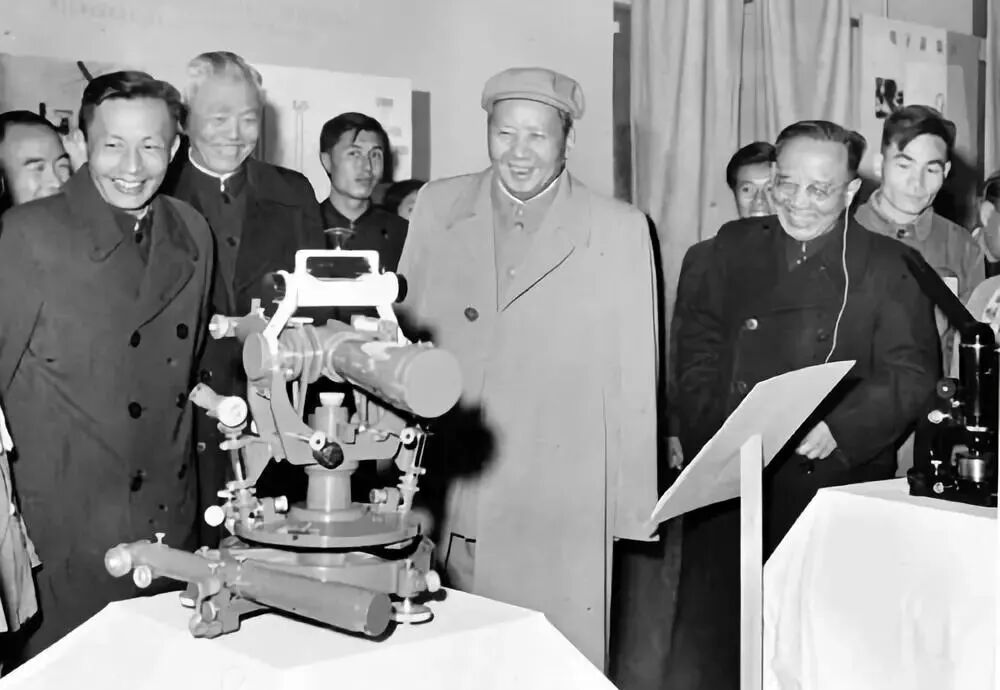
II. The Construction of the Spiritual World: A Philosophy Framed by ‘See Yourself, See the World, See the People’
Having established the fundamental stance of art’s ‘for whom,’ we may proceed to a more profound philosophical plane, to explore how an artist constructs his or her powerful spiritual world.
As stated earlier, this essay borrows the analytical framework of ‘see yourself, see the world, see the people’—one rich in Eastern wisdom—to present, in structured form, the complex system of Mao’s thought. These three realms correspond precisely to a complete set of philosophical reflections running from the theory of the subject, through epistemology, to the theory of values, and offer the artist a clear path of sublimation in spiritual growth.
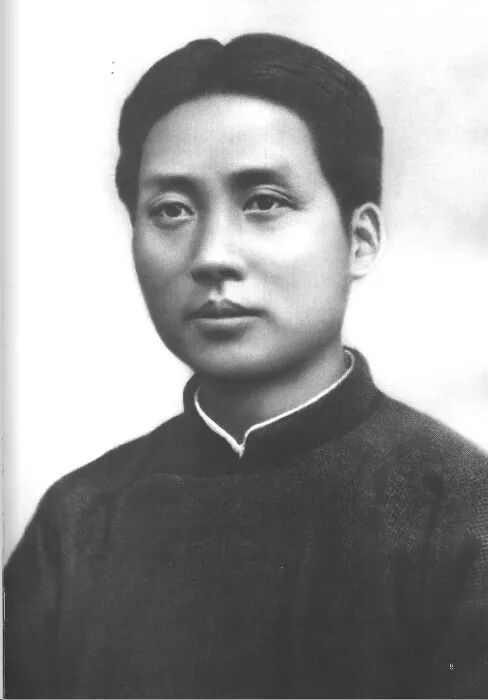
(1)‘Seeing Yourself’: From Individual Heroism to the Proletariat’s ‘Self-Revolution’
‘Seeing yourself’ is the starting point of all spiritual growth. It concerns how the artist comes to know the self, temper the self, and ultimately transcend the self.
In the development of Mao’s thought we can clearly discern a profound transformation—from an exploration of the ‘small self’ full of romantic colour to a remaking of the ‘great self’ in service of a grand historical mission.
1. The Exploration of the ‘Self’ in Youth: Recognising the Power of the ‘I’
In his youth Mao was deeply influenced by the various Western currents of thought then entering China. In his early manuscripts and letters he displays an extraordinarily strong self-consciousness and an ambition to transform the world.
In a letter to Li Jinxi in 1917, he wrote: “He who would move the empire must first move the empire’s hearts, and not merely its visible traces. To move their hearts, one must possess the great root and the great source.” Here the ‘great root and great source’ points, to a considerable degree, to the individual’s inner spiritual power.
He founded the Xiang River Review, and in its inaugural statement cried out: “The world is our world; the nation is our nation; society is our society. If we do not speak, who will? If we do not act, who will?” (Mao Zedong, inaugural statement of the Xiang River Review, 1919). This erupting sense of subjectivity and spirit of responsibility is precisely the initial stage of ‘seeing yourself’: a clear awareness of the ‘I’ as an independent individual—its existence, its value and its agency.
For the artist, this stage is crucial. Artistic creation is at root a highly individualised spiritual labour; without a strong self-consciousness, without a unique life experience and an independent intellectual character, no work of weight can be produced. Many great artists passed through a similar stage, full of personal heroism, in the early phase of their practice—they longed to prove, express and realise the self through their brush or their chisel. This is the fountainhead of artistic creativity, the first step of ‘seeing yourself’: affirming the ‘I,’ discovering the ‘I.’
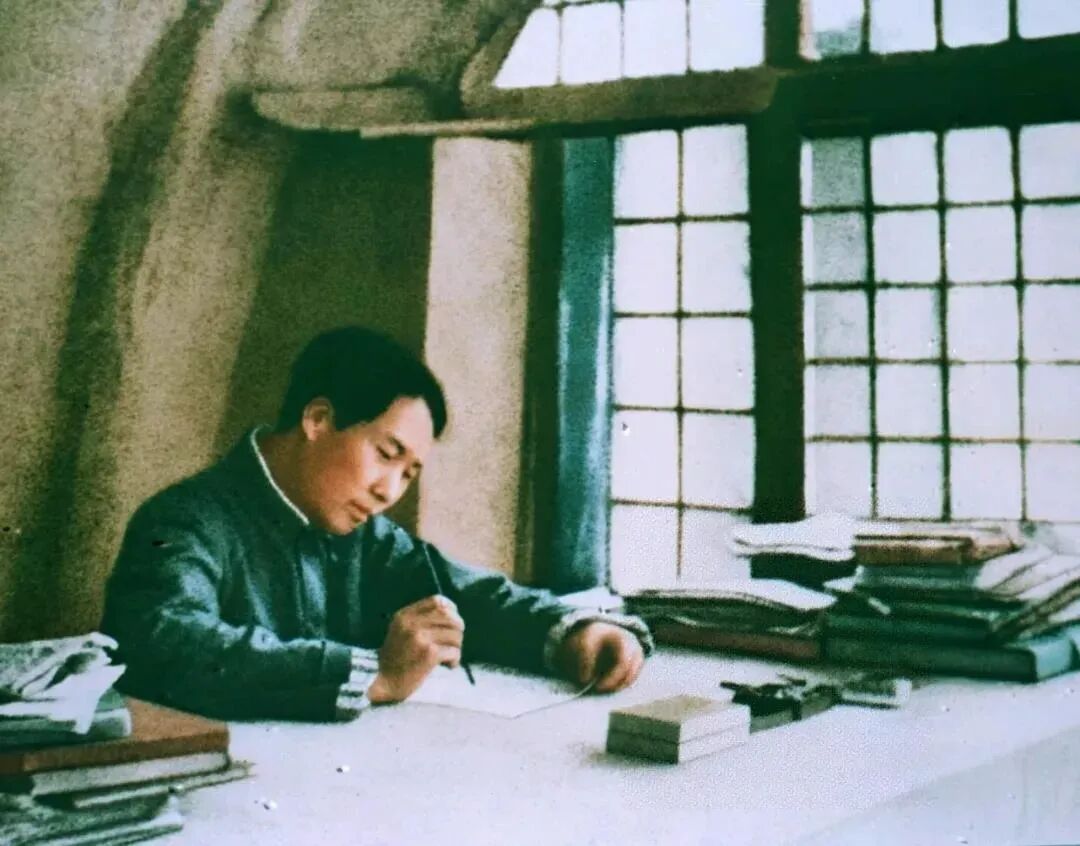
2. The ‘Self-Transformation’ of the Mature Period: Fusing the ‘Small Self’ into the ‘Great Self’
Yet Mao’s greatness lies in his not remaining at the level of personal heroism. As he threw himself into the great practice of the Chinese revolution, he came profoundly to realise that the foundations of the old world could not be shaken by individual effort alone. Gradually he consciously fused that passionate, romantic ‘small self’ into the ‘great self’ of the proletariat and the popular masses. This process is not a simple negation of the ‘self,’ but a sublimation to a higher plane, whose core methodology is ‘self-revolution.’
Mao first proposed, in his report The Role of the Chinese Communist Party in the National War to the Sixth Plenary Session in October 1938: “Communists should be models of seeking truth from facts and models of farsightedness and insight. For only by seeking truth from facts can the appointed tasks be fulfilled; only with farsightedness and insight can one avoid losing the direction of advance.” Seeking truth from facts is in essence a clear-sighted cognisance of and an active remaking of the intellectual’s own ideological weaknesses. And the style of ‘criticism and self-criticism’ he elevated to one of the three distinguishing styles of work of the Chinese Communist Party, setting it apart from any other political party.
In On Coalition Government he stated: “Whether or not we have serious self-criticism is also one of the conspicuous marks that distinguish us from other political parties.” (Mao Zedong, On Coalition Government, 1945). This ‘self-criticism’ requires the individual constantly to examine his or her own thought and conduct, and especially whether his or her stance still stands with the people and whether it has departed from reality.
This is a process of self-purification and self-elevation that is never satisfied and never slackens; its aim is to keep the individual’s thought, feeling and action in a high degree of accord with the interests of the broadest masses (all living beings) and the direction of history’s advance.
3. A Revelation for the Artist: Clear Self-Cognition and Sustained Self-Transcendence
Mao’s view of ‘self-revolution’ offers the contemporary artist profound insight into how to ‘see yourself.’ In today’s artistic ecology, the artist’s ‘self’ is often shaped by the market and the media into a ‘brand’ or a ‘persona’ that must be carefully maintained—a ‘self’ that is fragile and external. Yet genuine ‘seeing yourself’ is not this narcissistic, solitary self-admiration, but an introspective, critical self-cognition.
It requires the artist first to recognise his or her own limitations with clear eyes. Such limitations may arise from your class origin, your structure of knowledge, your social circle. Can an artist who has long lived in a great metropolis truly understand the reality of the countryside? Can an artist habituated to academic thinking break free of art history’s worn groove to embrace a living popular culture? To acknowledge and squarely face these limitations is the first step of ‘self-transformation.’
Next, it requires the artist consciously to break through these limitations through study and practice. Here ‘study’ means not merely reading, but learning from life and from the masses of the people. ‘Practice’ means leaving the studio and throwing oneself into broad social reality. Ultimately, the aim of ‘seeing yourself’ is to temper a ‘great self’ that both preserves an independent character and resonates in the same frequency as the age and the people. Such a ‘self’ will not produce artistic creation that is water without a source or a tree without roots, and can attain a deep and all-embracing power.

‘Seeing yourself’ resolves the question of the subject; ‘seeing the world’ resolves the question of the object—that is, how the artist knows and understands the world we inhabit.
If ‘seeing yourself’ is internal cultivation, then ‘seeing the world’ is vision and breadth. The most central philosophical part of Mao Zedong Thought—his worldview and epistemology—supplies us with a powerful and scientific method for how to ‘see the world.’
1. The Root of the Worldview: Materialist Dialectics as ‘Telescope’ and ‘Microscope’
Mao was a thoroughgoing materialist and a master of dialectics. He firmly believed that the world is material, objectively existing, and independent of human will. At the same time, this material world is not static, but full of contradiction and in eternal motion and change. In On Contradiction (1937) he set out this worldview systematically: “The law of contradiction in things, that is, the law of the unity of opposites, is the fundamental law of materialist dialectics.” He stressed that one must view problems from a connected, developing and comprehensive standpoint—both perceiving the universal connections among things and grasping the particular contradictions within different things, especially the principal contradiction.
For the artist, establishing a scientific worldview is a ‘fundamental transformation.’ It means the artist can no longer view the world with a static, isolated, taken-for-granted eye. Materialist dialectics is like granting the artist a special pair of spectacles that are at once ‘telescope’ and ‘microscope.’ As a ‘telescope,’ it helps the artist see the long-term trend of historical development, grasp the pulse of the age, and discern, behind the entangled complexity of social phenomena, the structural forces and the principal contradiction. Faced with globalisation, for instance, the artist must see not only the surface prosperity of consumer culture but, more importantly, the logic of capital, the clash of cultures and the intensification of inequality behind it. As a ‘microscope,’ it helps the artist penetrate to the interior of things and analyse the complex contradictions contained in concrete persons and concrete events. A person’s character, a family’s vicissitudes—within these one can find the interweaving of multiple contradictions, social, economic, cultural. Only with such a worldview does the artist’s ‘world’ become three-dimensional and profound, rather than flat and superficial.
2. The Core of Epistemology: ‘Practice Yields True Knowledge’ as the Sole Path
If materialist dialectics is the worldview, then On Practice (1937) is its epistemology; it answers how we may attain true insight into the ‘world.’
Mao stated categorically: “Truth is one; and who ultimately discovers truth depends not on subjective exaggeration but on objective practice. Only the revolutionary practice of the millions of the people is the sole criterion for testing truth.” He set out systematically the dialectical process of knowing: from practice to knowledge, and from knowledge to practice again, in an endless cycle. He stressed: “If you want knowledge, you must take part in the practice of changing reality. If you want to know the taste of a pear, you must change the pear and taste it with your own mouth.”
This epistemology is a fatal blow to all idealism and dogmatism that depart from reality. For artistic creation its significance is immeasurable. It directly constitutes the only viable path for the artist to ‘see the world’—to throw oneself into practice. The artist’s creation cannot spring merely from reading art-historical documents, cannot be merely a tautology of other artists’ works, and still less a fabrication behind closed doors out of thin air. True artistic inspiration and profound insight can come only from deep engagement with and personal practice in the real world. The artist’s body must become a ‘sensor’ perceiving the world, and the artist’s action must become a ‘touchstone’ for testing cognition.
3. A Revelation for the Artist: Discerning the Real Logic of the World
At the stage of ‘seeing the world,’ Mao’s thought offers the contemporary artist a fundamental revelation. It requires the artist not to remain merely at a superficial fascination with artistic form, or an affective depiction of social phenomena. The artist must strive to become a thinker, a researcher—to study philosophy, history, sociology, to understand the true operating logic behind the world we inhabit. Your work should not be merely a venting of emotion or a presentation of beauty, but a weighty ‘visual essay’ or ‘affective proposal’ advanced after your deep insight into the world.
‘Seeing the world’ demands that artistic creation not be conjured from the void, but take deep root in the deep engagement with and practice in the real world. The famous saying ‘without investigation, there is no right to speak’ is likewise a golden rule for the artist. Your studio should not be an ivory tower cut off from the world, but a ‘processing plant’ that handles and transforms the first-hand material gathered from the real world. Only when the artist has truly ‘seen the world’ can his or her work possibly possess a real force that moves the heart and an intellectual depth that penetrates history.
After ‘seeing yourself’ establishes the subject, and ‘seeing the world’ masters the method of knowing the world, the path of spiritual sublimation inevitably leads to its final value: who am I? For whom am I?
The highest point of arrival and the warmest underpinning of Mao Zedong Thought lies precisely in his profound conviction about and sincere feeling for the concept of ‘the people.’ This constitutes the realm of ‘seeing the people,’ which answers the artist’s question of ultimate concern.
1. The Cornerstone of the Historical Outlook: ‘The People, and the People Alone’
Mao’s historical outlook is a thoroughgoing materialist conception of history. In On Coalition Government he wrote that majestic assertion: “The people, and the people alone, are the motive force in the making of world history.” (Mao Zedong, On Coalition Government, 1945).
In the traditional elite conception of history, ‘the masses’ are often faceless, passive, even ignorant; history is written by emperors and generals, heroes and gifted men. Mao inverted this relation completely, pushing the popular masses to the centre of the historical stage and affirming them as the true makers of history and the decisive force of social transformation.
This historical outlook requires the artist fundamentally to change his or her attitude toward ‘the masses.’ The popular masses are no longer merely the ‘object’ depicted and pitied in the artist’s work; they are the subject of history, the source of wisdom and strength. When facing them, the artist should harbour not a condescending pity, but a respect and humility from the depths of the heart.
2. The Quintessence of the Methodology: ‘From the Masses, to the Masses’
If ‘the people make history’ is the worldview, then the ‘mass line’ is the corresponding methodology. In his important philosophical work Some Questions Concerning Methods of Leadership (1943), Mao distilled it into the pithy formulation: “In all the practical work of our Party, all correct leadership is necessarily from the masses and to the masses.” He explained the process concretely: “That is to say, take the views of the masses (views scattered and unsystematic) and concentrate them (through study turn them into concentrated and systematic views), then go to the masses and propagate and explain them, turning them into the masses’ views, so that the masses uphold them, manifest them in action, and test their correctness in the masses’ action.”
This idea is a highly illuminating model for the artistic creative process.
So-called ‘from the masses’ is the process by which the artist plunges into life and learns from the people. This is not merely collecting creative material, but understanding their thoughts and feelings, their loves and hates, and absorbing their lively language and simple, healthy aesthetic tastes. The life of the popular masses is itself a rich mine containing countless ‘scattered and unsystematic’ artistic deposits.
So-called ‘to the masses’ is when, having through one’s professional skill and artistic processing turned these raw materials from life into ‘concentrated and systematic views’ (that is, the work of art), the artist then presents the work to the people and submits it to their testing and judgement. Whether the work can move people, enlighten them, provoke reflection, be engaged with and even exchange energy with the people—this is the ultimate criterion of its value. This process is not one-off, but a recurring, ever-deepening cycle. In this process the artist is at once student and teacher, at once the portrayer of the people’s life and the elevater of the people’s spirit.
3. A Revelation for the Artist: Possessing Genuine Humility and Empathy
The realm of ‘seeing the people’ requires the contemporary artist to cultivate a deep, sincere humanistic care and capacity for empathy. In an age that ever more stresses individual feeling, this quality is especially precious. It means the artist’s vision cannot be confined to his or her own ‘tiny plot of land,’ but must penetrate the barriers of class, region and culture to feel the pulse and breath of a broader multitude.
‘Seeing the people’ first requires dismantling the arrogance of elitism. One must recognise that the popular masses are not only the ‘object of service’ of art, but its ‘living source.’ The artist’s inspiration, material and language—even the realisation of the final work’s value—all depend on this vast world composed of hundreds of millions of ordinary people. Next, ‘seeing the people’ requires the artist to possess a genuine capacity for empathy. This empathy is not cheap sympathy, but the ability to understand, by putting oneself in another’s place, the situation and feelings of others.
In the end, the artist who ‘sees the people’ will inevitably endow his or her work with a broad mind and a deep warmth. His art is no longer a monologue about the ‘I,’ but becomes a chorus of the ‘we.’ Through his creation he gives voice to those silenced groups, shines light upon realities that have been obscured, and forges connections among the feelings of our community—and this is one of the most sublime realms art can attain.
III. Revelations for the Contemporary Artist: Reconstructing the ‘Great Self’ in the Present
Through the foregoing analysis of the threefold realm of ‘see yourself, see the world, see the people’ within Mao Zedong Thought, we have sketched a complete path of the artist’s spiritual construction. Now we must focus these historical intellectual resources upon the present and enter into direct dialogue with the real problems of contemporary art, so as to distil revelations of an operational kind. In a globalised, commercialised contemporary society, reconstructing a ‘great self’ befitting our age is especially urgent and important.
(1)Transcending the ‘Small Self’ Mood, Establishing a Grand Concern that Resonates with the Present
A salient feature of contemporary art is the flourishing of individualism. Historically this is undoubtedly a progress; it liberated art from the accessory of grand narrative, enabling it to attend to individual value, subtle feeling and private experience. Yet when this individualising tendency is pushed to an extreme, it easily degenerates into a closed, narcissistic ‘small self’ mood. Artistic creation becomes a display of ‘moaning without cause’—an exhibition of personal emotion—or a bored replication of trivial daily life, lacking any channel of connection to a grander world.
The view of ‘self-revolution’ in Mao Zedong Thought offers us an excellent remedy. The ‘seeing yourself’ it points to has as its ultimate aim the fusion of the ‘small self’ into the ‘great self,’ thereby gaining greater energy and a broader vision. The revelation for the contemporary artist is this: personal experience is precious, but it cannot become the terminus of art. An excellent artist should be able to connect his or her personal experience with the age he or she inhabits, the nation to which he or she belongs, and even the common destiny of all humanity. Your pain may be the miniature of an age’s trauma; your joy may be the echo of a group’s upward growth.
The artist should consciously ‘transform’ himself or herself through study and practice, taking the initiative to understand history, care about politics, and reflect on the common problems our age faces—environmental crisis, technological ethics, and the like. Only when the artist’s ‘self’ collides with and merges into these grand socio-historical narratives can his or her work possibly transcend personal joys and sorrows and attain a spirit of the age that rings with clarion force and a historical thickness capable of traversing history.
(2)Rooting Oneself in the Real World, Tempering the Creative Method of ‘Practice Yields True Knowledge’
Born alongside the ‘small self’ mood is a creative method that departs from reality. On one hand, there is the tendency of the ‘studio artist.’ Some artists content themselves in the studio, producing work through the permutation and combination of second-hand images and established styles; their works are technically accomplished and formally perfect, yet for lack of the nourishment of real life they often appear hollow, cold, and lacking in vitality. On the other hand, there is the tendency of the ‘conceptual gamester.’ Some artists lose themselves in the terminological labyrinth of Western postmodern theory, turning artistic creation into a purely intellectual game and an in-circle debate; their works are obscure and incomprehensible, bearing no relation to the real world or public feeling.
Mao’s epistemology of ‘practice yields true knowledge’ is precisely a forceful critique of both tendencies. His saying ‘without investigation, there is no right to speak’ should become the motto of every artist. It requires the artist to leave the studio and go into the field, making social investigation and social participation a necessary path of artistic creation. The significance of this ‘practice’ is manifold.
First, it is the only route to first-hand material and to the arousal of genuine inspiration. The richness, complexity and drama of life far exceed any artist’s imagination.
Second, it is a method of testing and correcting one’s existing notions. When you truly penetrate into an unfamiliar community, you may discover how laughable and shallow many of your past taken-for-granted judgements were.
Finally, practice itself is a form of creation. The development of contemporary art long ago broke through the bounds of easel painting and sculpture; social intervention, community art, relational aesthetics and the like all stress the fusion of the artistic process with the process of social practice.
Thus the contemporary practice of ‘seeing the world’ is to encourage the artist to become a ‘fieldworker.’ You may, like an anthropologist, conduct long-term observation in a village or a factory; you may, like a social activist, launch an art project aimed at solving some concrete social problem; you may also, like a journalist, deeply investigate a neglected social event. Only through such a creative method rooted in the real world can art truly have substance in its speech and weight in its utterance, attaining an indisputable power.
(3)Bearing the Multitude in Mind, Cultivating the Social Responsibility to ‘Speak for the People’
Today, as the logic of the art market ever more dominates the artistic ecology, the price of an artwork often replaces its social value as the chief criterion of its success. This climate easily leads the artist to forget the social responsibility he or she bears, and to regard creation as a tool for chasing fame and gain. Against this backdrop, to re-raise Mao’s idea of ‘serving the people’ carries a special significance of ‘upholding the right and dispelling the false.’
Of course, the contemporary translation of ‘serving the people’ is by no means a demand that art regress to the instrumentalised, illustrative propaganda mode of the Cultural Revolution period. That would be precisely a rigidification and distortion of the spirit of the Talks at the Yan’an Forum on Literature and Art. Today, the artist’s social responsibility manifests in a deeper, broader humanistic care. It requires the artist, with keen insight and rich expressive power, to ‘speak for the people.’
It means the artist should take the initiative to turn his or her gaze upon those groups and issues marginalised and obscured within the mainstream field of vision. For example, attend to the living conditions of bottom-rung labourers, to the rights of persons with disabilities, to the cultural inheritance of ethnic minorities, and to the villages forgotten in the process of urbanisation.
Art can become a tool of ‘empowerment’: through the artist’s creation, these silenced groups gain visibility and a channel to speak. At the same time, it requires the artist, through his or her work, to criticise social injustice, reflect on historical trauma, stir the public’s thinking, and forge social consensus. Art may not be able directly to change the world, but excellent art can undoubtedly change the way people see the world—and that is precisely the starting point for advancing social cognition and progress.
Thus the contemporary practice of ‘seeing the people’ requires that, in creating, the artist hold a broader world in his or her heart and harbour a deep empathy for fellow human beings. Your work is not merely your personal expression; it is also an answer-sheet you submit to society, embodying your conscience, your courage and your sense of responsibility.
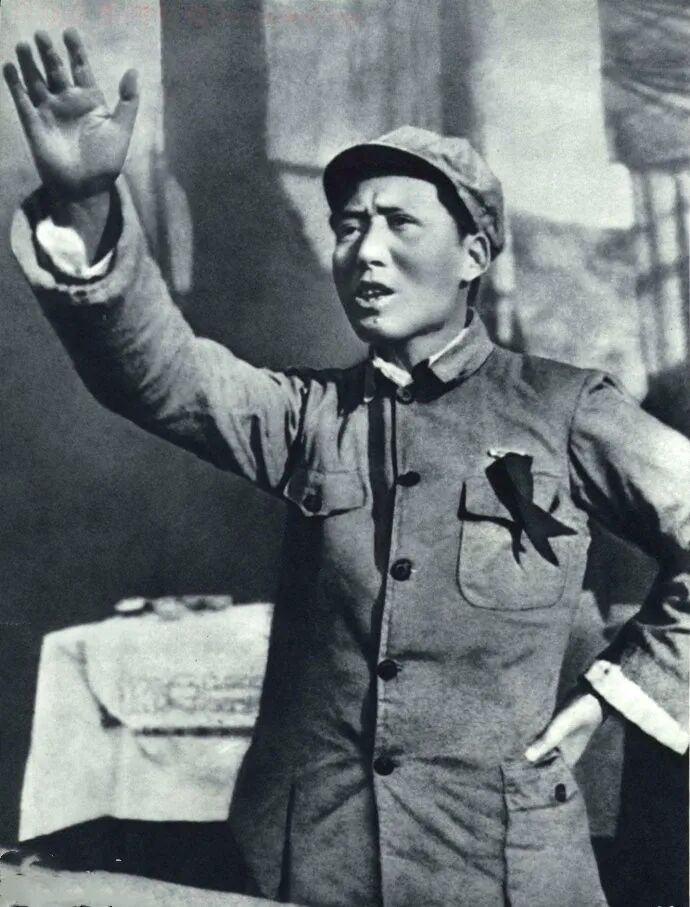
On this special day, as we revisit Mao’s thought, it is not to seek ready-made answers, but to conduct a profound spiritual dialogue, from which to draw the wisdom and strength that can nourish the present. This essay has borrowed the analytical framework of ‘see yourself, see the world, see the people’—one rich in the flavour of Eastern philosophy—to systematically sort out the inner logic within Mao Zedong Thought concerning the artist’s subjective construction, the shaping of worldview and the establishment of values. We have seen this to be a spiritual path of sublimation that advances tier upon tier and rises in a spiral.
‘Seeing yourself’ is, through the never-ceasing ‘self-revolution,’ clearly to know and ceaselessly to transcend one’s own limitations, to combine one’s personal artistic pursuit with a grand historical mission, and thereby temper a solid subjective character.
‘Seeing the world’ is, through the scientific worldview of materialist dialectics and the fundamental epistemology of ‘practice yields true knowledge,’ to discern the true laws by which the world operates, grasp the pulse of the age and society’s principal contradiction, and thereby attain a vast vision and a profound pattern.
‘Seeing the people’ is, through the materialist conception of history that ‘the people make history’ and the fundamental methodology of ‘from the masses, to the masses,’ to establish flesh-and-blood bonds with the broadest people, and with deep empathy and humility to draw from the people’s practice the ultimate nourishment and highest value of art, thereby achieving a warm and sublime soul.
Together, these three realms point the way for China’s contemporary artists—a path of sublimation from the closed, self-sufficient ‘small self’ to the open, all-embracing ‘great self.’ In an age where one easily loses oneself in personal emotion and market bubbles, this path is like a beacon, providing artistic creation with a clear spiritual direction.
To inherit this precious spiritual legacy today is not mechanically to replicate the concrete artistic forms or political slogans it assumed in a particular historical period, but deeply to comprehend and creatively to transform its eternal spiritual core: namely, that a truly great artist is necessarily a never-ceasing self-transformer, a persistent seeker of the world’s essence, and a speaker who harbours the deepest empathy for the broadest people. To fuse these three in one person, to experience with one’s own life, to quest with one’s own practice, and to present with one’s own work—only thus can one achieve the broad mind and the immortal work of an artist.
This, perhaps, is the meaning of our looking back and reflecting today—and the most sincere and profound tribute to the great historical figure who profoundly changed China’s destiny.
订阅艺术评论
订阅即赠《2024中国当代艺术关键词》内部思考笔记 PDF
每周免费获取最新当代艺术批评与研究