We are living through an age of the most “creation” yet the least “art”. This age seems to be shrouded by a prophecy long since declared yet never fully redeemed.
In 2022, at the Colorado State Fair’s art competition, a work titled “Théâtre D’opéra Spatial” (Space Opera Theatre) took top honours in the digital art category.
Resplendent and intricately baroque in its opulence and futuristic mystery, the image was produced without its creator, Jason M. Allen, ever lifting a traditional or digital brush; he merely deployed the AI image-generation tool Midjourney and entered precise textual prompts. The event landed like a boulder in a still pond, unleashing towering waves of debate over art, creativity and authorship. Supporters hailed the advent of a new epoch in which imagination would be wholly freed from technical constraint and anyone could become a maker of images; detractors lamented the devaluation of art and the collapse of human subjectivity.
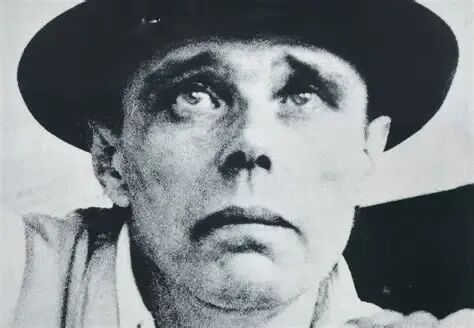
At the heart of this uproar echoes a far more profound and radical proclamation: Joseph Beuys’s galvanising insistence, over half a century ago, that “everyone is an artist”. Confronted with a reality in which an ordinary person can generate professional-grade imagery through algorithms, and a teenager can win tens of millions of followers on TikTok with nothing but a smartphone and an idea, we cannot help but pose the fundamental question: at a time when technology seems to make “everyone is an artist” possible, are we drawing closer to Beuys’s ideal, or, in a deeper sense, moving decisively away from it?
To plumb the depth of this question, we must first dispel a widespread misconception. The “art” Beuys spoke of does not refer narrowly to paintings or sculptures exhibited in galleries and traded at auction houses. For him, it was a definition bearing on the very essence of being human. He explained explicitly: “My objects are to be seen as stimulants to an understanding of my chief theoretical conception, which declares: everyone is an artist.” The “art” here is a practice he termed the “expanded concept of art” — the innate human capacity to shape the world through thought, language and action.
Thus the true nucleus of “everyone is an artist” lies in the capacity of every individual creatively to participate in the construction of society, and society as a whole is the grandest artwork awaiting collective shaping — the “social sculpture”. This definition liberates art from a material, elitist domain into a processual, democratic and universal practice concerning the human condition.
This essay unfolds precisely from that core understanding. It refuses to reduce Beuys’s slogan to a question of technological access, treating it instead as a lens through which to diagnose contemporary society.
We shall see how the barriers of cultural capital have not dissolved, how emancipatory creativity is converted under neoliberalism’s injunction to perform into the weight of self-exploitation, and how the invisible hand of the algorithm disciplines plural expression into homogenised content. Finally, in Part Four, we shall attempt to move beyond the binary of “empowerment” and “alienation”, seeking in contemporary art and social practice those threads that genuinely inherit the spirit of Beuys’s “social sculpture”, and exploring the possibility of re-forging the bond between creativity and social responsibility within education and new collaborative models.
This is not a simple application of Beuys’s thought but an ongoing dialogue with his spectre, projecting his utopian, impassioned diagnosis onto our own age — at once pregnant with infinite creative possibility and mired in systemic predicament. This essay seeks to expose the profound paradox contained within the proposition “everyone is an artist”, and to ask: today, what does it truly mean to become an “artist”?
Part One: Origins — the Symphony of Trauma, Thought and Epoch
To grasp the force of the assertion “everyone is an artist”, we must not treat it as an isolated slogan but restore it to the soil from which it grew. That soil was composed jointly of Joseph Beuys’s singular personal experience, his profound intellectual resources and a turbulent historical backdrop. It was no purely aesthetic notion, but a programme of action born of trauma, nourished by philosophy and ultimately pointed toward radical social transformation. His entire artistic career was a process of seeking material and social form for this idea.
(I) Trauma
Any inquiry into Beuys’s art must reckon with the near-mythic “Crimean plane crash”. In 1944, Beuys, then a pilot in the Luftwaffe of Nazi Germany, crashed his Stuka dive bomber on the Crimean peninsula. According to his own oft-repeated account, he was rescued in the frozen wastes by nomadic Tatars, who smeared his frostbitten body with animal fat and wrapped him in thick felt, restoring him from the brink of death. Whatever the degree to which this episode was poetically reconstructed by the artist, it became indisputably the “creation myth” of his private world, furnishing his entire practice with its most central vocabulary of materials and system of symbols.
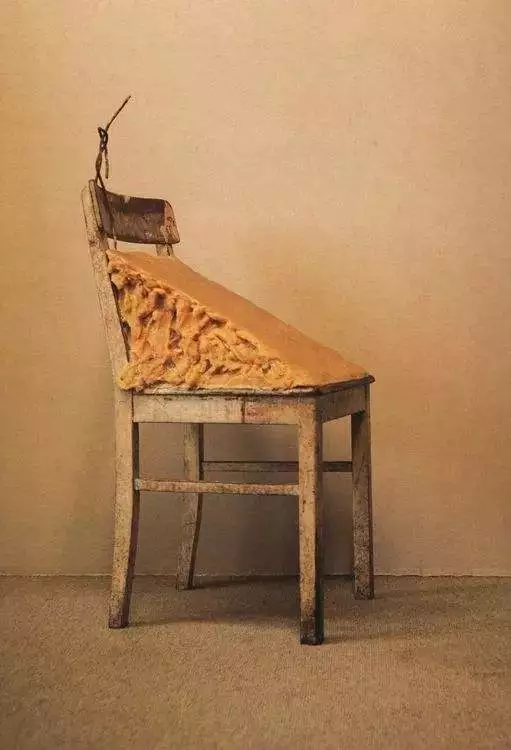
Fat and felt — these two primal, organic substances bound up with the instinct for survival — henceforth transcended their everyday properties and were elevated by Beuys into sculptural materials of profound philosophical import. In the work Fat Chair (Fettstuhl, 1964), a wedge of animal fat is piled at one corner of an ordinary wooden chair. The fat is not static; it melts and congeals with changes in temperature, assuming a life-like, unstable state. It symbolises formless, chaotic energy — a latent vitality. The chair, as a symbol of human reason, order and culture, stands in sharp confrontation and dialogue with the fat that represents chaos and instinct. What Beuys interrogates here is the transforming relation between two forces: how a rigid, cold social structure (the chair) is permeated and altered by a fluid, warm, organic energy (the fat).
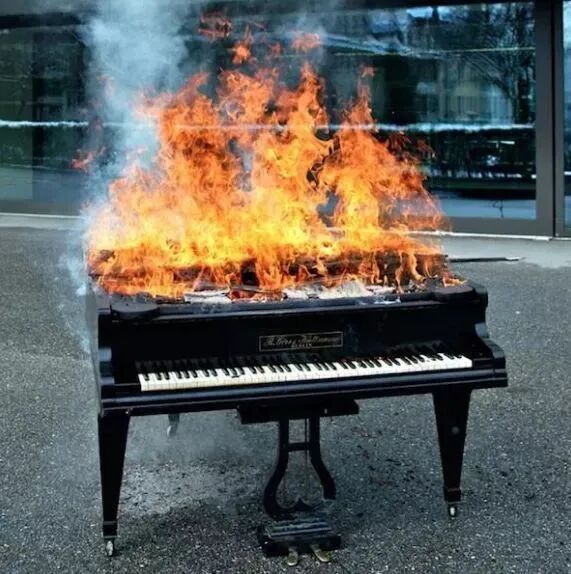
Felt, likewise, became a key element recurring throughout his art. In the 1966 work Homogeneous Infiltration (Piano), a grand piano is wholly wrapped in grey felt, a Red Cross planted on its body. The piano, the supreme emblem of Western classical civilisation and elite culture, has its sounding function utterly “suppressed” by the felt. Yet this suppression is not destruction but protection and transformation. Felt, a material renowned for its excellent insulating and warming properties, here acts like a vast “sound-proofing layer” or “thermal layer”, sealing and safeguarding the musical energy enclosed within the piano from the clamour of the outside world. The piece hints at a power of “silence”, a process of inner energy accruing. In Beuys’s system, felt represents a warm, enveloping, therapeutically protective layer that can shut out the external “cold” and promote the transformation of inner energy.
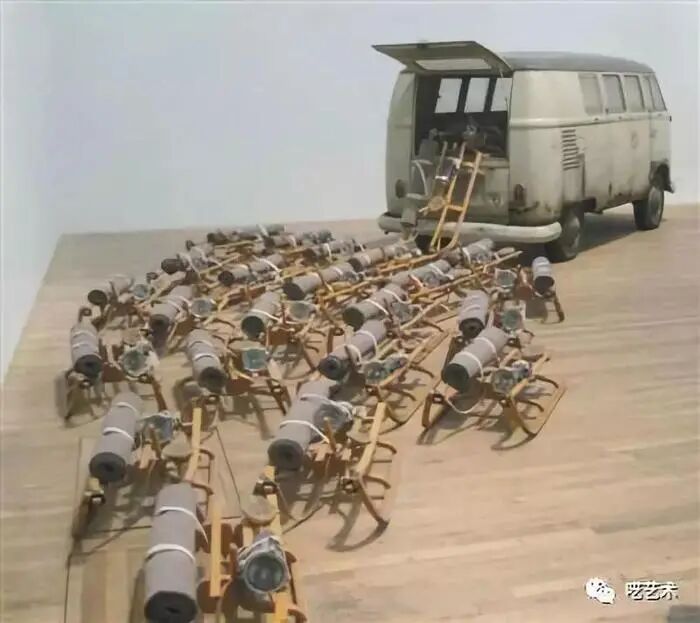
These two works, together with his grander installation The Pack (Snow Sledge), jointly established the material foundations of his “warmth theory”. The Pack (Das Rudel) comprises a Volkswagen and twenty-four sledges “pouring” from the car’s rear door, laden with felt blankets, fat and torches. It is like a post-apocalyptic scene of survival; the sledge, as the most primal means of transport and self-preservation, symbolises the possibility of humanity’s self-rescue through instinct (fat supplying energy, felt supplying warmth, the torch supplying direction) after the collapse of civilisation (the Volkswagen).
Seen at its source, Beuys’s art is a practice of “healing”. What he sought to heal was not merely the physical and spiritual wounds he personally suffered in war, but the profound crisis into which all of Germany — indeed Western civilisation as a whole — had fallen after fascism and materialism. He held that modern society, in over-emphasising reason, logic and the material, had induced a “coldness” and rigidity of spirit. The function of art, then, is to re-introduce the element of “warmth” — those chaotic, intuitive, spiritual, organic energies — to melt these frozen structures. He said: “The aim of my art is to free the human being, and thereby to free society.” This liberation is achieved precisely through such transformation of energy. Hence the first layer of meaning in “everyone is an artist”: every person possesses this inner, warm, creative energy and is capable of joining in the healing and reshaping of this “frozen” society.

Although Beuys’s thought is deeply rooted in his personal myth, its theoretical construction responds clearly to the internal currents of twentieth-century art history and is steeped in the German intellectual tradition, within which Rudolf Steiner’s anthroposophy forms its most central philosophical cornerstone.
The Spiritual Enlightenment of Anthroposophy
Steiner was an Austrian philosopher, social reformer and mystic whose anthroposophy sought a path of cognition leading to the spiritual world. Steiner held that the human being is not merely a material existence but a totality composed of “body, soul and spirit”, and that within every person lies a divine creative spark, the ultimate aim of education and society being to awaken this potential. This view directly prefigures Beuys’s idea of “everyone is an artist”, redefining creativity as an innate, universal human capacity rather than the prerogative of a few geniuses.
From Steiner, Beuys inherited a vital holistic worldview, holding that profound and organic connections exist between matter and spirit, individual and society, humanity and nature. This idea manifests in the recurring ritual elements and symbolic materials of his work: honey symbolises the orderly collective creativity of bee society, copper wire conducts invisible energy, fat stores the heat and warmth of life. All point to an organic, spiritualised cosmology. This mystical dimension distinguishes Beuys from purely political or socially critical artists; his “social sculpture” is not merely a political project but a deeply spiritual practice. As the art historian Caroline Tisdall observed: “For Beuys, art is the modern equivalent of magic, a means of transforming reality.”
Moreover, Steiner the philosopher’s theory of the “threefold social organism” furnished Beuys’s “social sculpture” with a direct social model. Steiner divided society into three relatively autonomous spheres: the cultural-spiritual, the political-legal and the economic. He argued that the cultural-spiritual sphere should pursue “freedom”, the political-legal sphere should realise “equality”, and the economic sphere should practise “fraternity”. Only when these three spheres check and balance one another and operate in concert can a healthy social organism be formed. Beuys internalised this ideal social model as the ultimate aim of his artistic practice; he believed that art, as the core force of the cultural-spiritual sphere, has the responsibility to permeate and transform the political and economic spheres, thereby achieving the healing and reshaping of society as a whole.
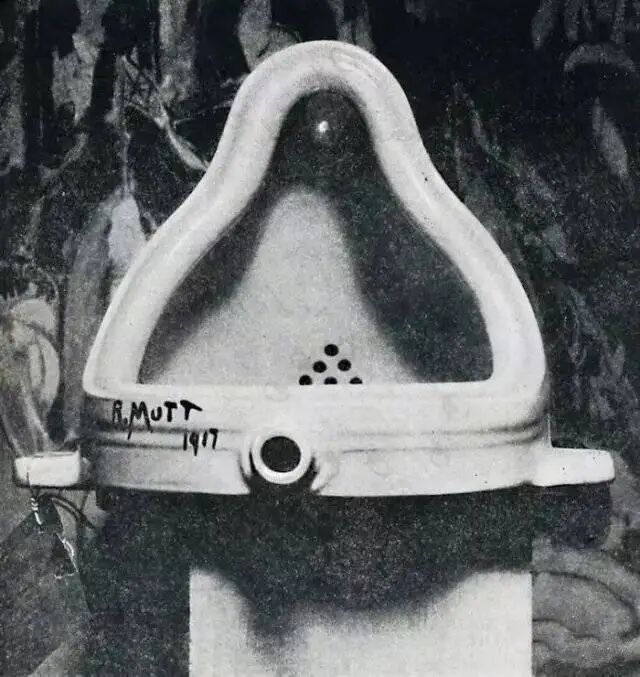
Transcending the Duchampian Legacy and the “Expanded Concept of Art”
In the currents of art history, Beuys responds clearly to the modernist legacy inaugurated by Marcel Duchamp. With his “readymades”, Duchamp overturned the definition of art, shifting its centre of gravity from the artist’s manual craft to the artist’s conceptual choice. Once an ordinary urinal is named Fountain by the artist and placed in an exhibition context, it becomes a work of art. Duchamp’s revolution lay in his revelation that “art” is not an intrinsic property of objects but a category defined by context, naming and institution.
Beuys keenly grasped the potential of Duchamp’s revolution, yet he was not satisfied with this “immaterialisation” confined to the level of concept and institutional critique. What he did was push the door Duchamp had opened toward a far broader social field. If art can be anything, why can it not be human thought, language and action? If the artist’s work is conceptual choice, does not everyone shape reality through their own thoughts and decisions? It was precisely along this logic that Beuys advanced his famous “expanded concept of art”.
In his view, sculpture should no longer be confined to shaping traditional materials such as wood, stone and bronze. He proposed a startling formula: “thinking equals sculpture”. The process of human thought is itself a shaping of formless ideas, a most fundamental “sculptural” activity. When this thought is articulated through language, it forms “language sculpture”; when it is further transmuted into action, it constitutes “action sculpture”. Ultimately, when the actions of all people converge to shape together the relations between human beings, social structures and political forms, they produce the highest form of artwork — the “social sculpture”.
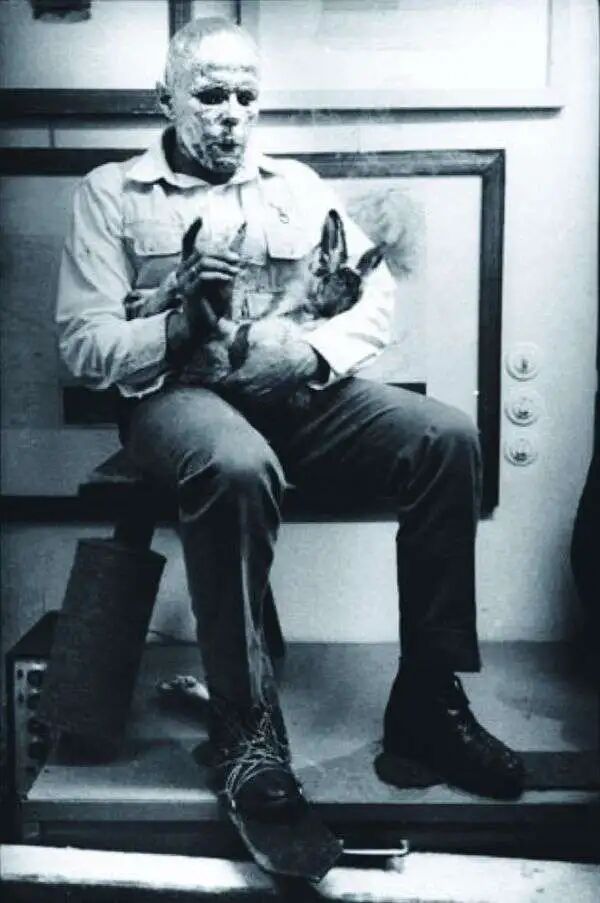
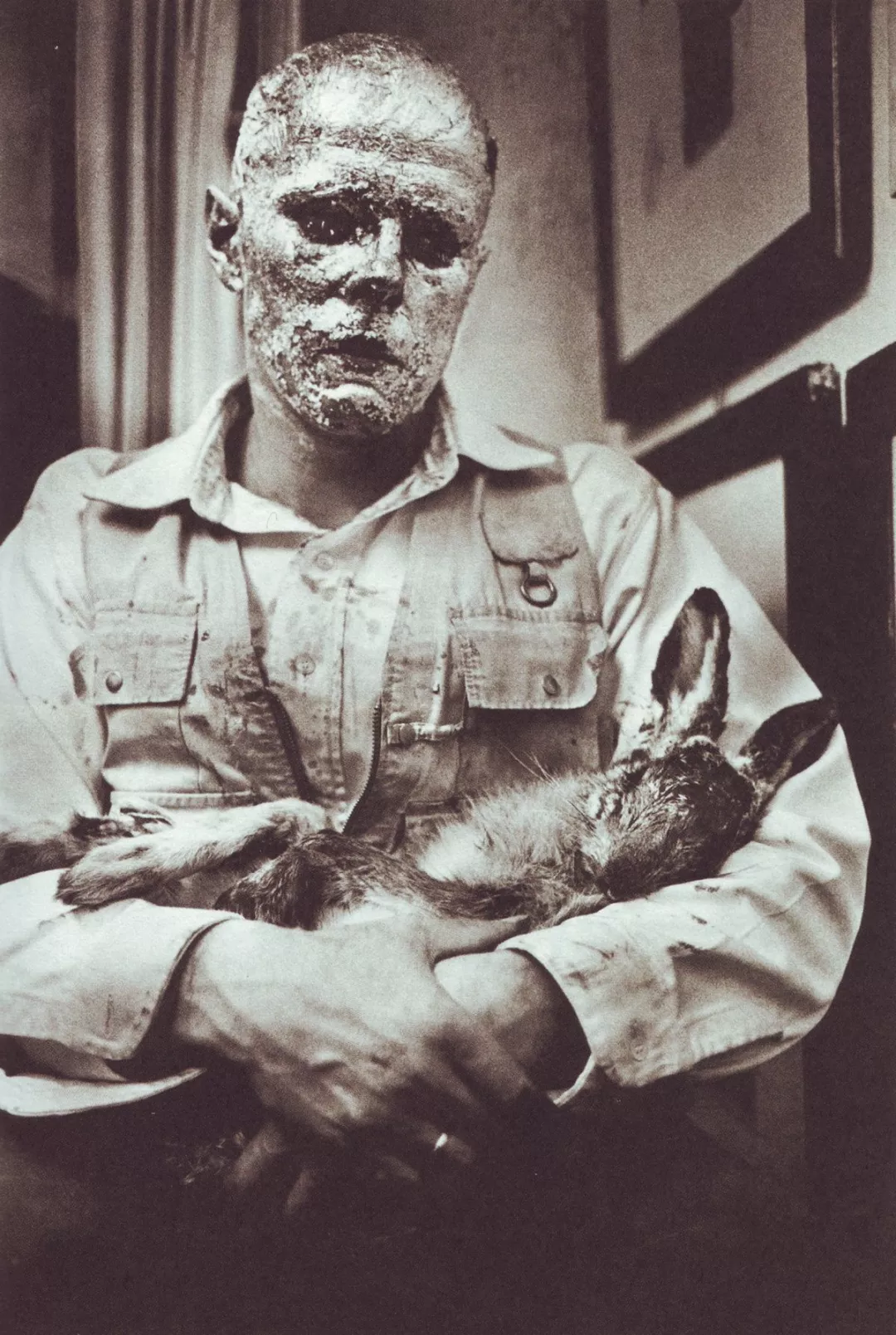
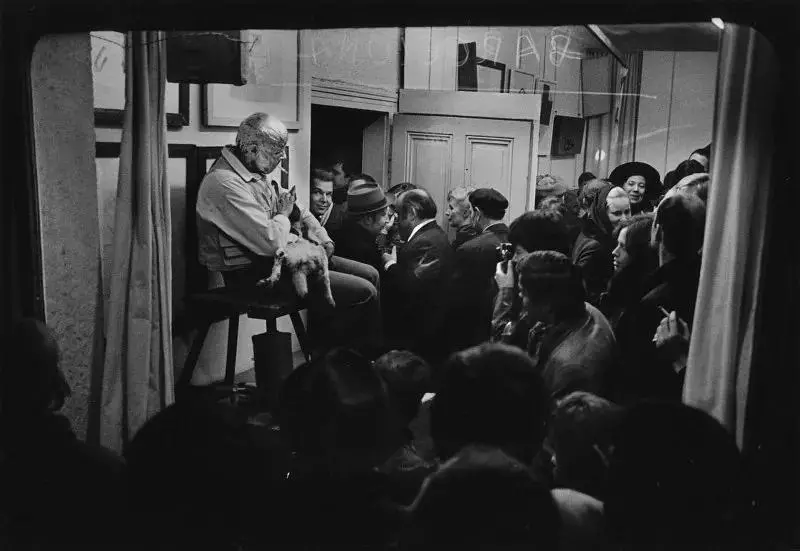
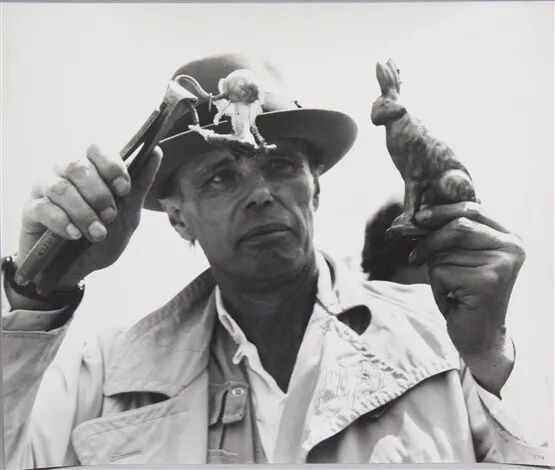
How to Explain Pictures to a Dead Hare (How to Explain Pictures to a Dead Hare), 1965, performance/video, 6’22”.
This theoretical turn finds its most vivid expression in his many “action” artworks. In the 1965 work How to Explain Pictures to a Dead Hare, Beuys coated his head in honey and gold leaf, cradled a dead hare, paced the gallery, and whispered into the hare’s ear, “explaining” the paintings on the wall to it. The audience, sealed behind glass, could only witness this mysterious ritual.
In this action, honey (symbolising the warmth and vitality of thought), gold leaf (symbolising spiritual value) and the dead hare (symbolising a rigid rationalism incapable of understanding art) form a complex symbolic network. Through this action, Beuys did not aim to convey a definite message but to open a contemplative field concerning communication, reason and intuition, life and death. The centre of gravity of art had shifted entirely from the painting on the wall (the object) to the interactive process between artist and hare (the event).
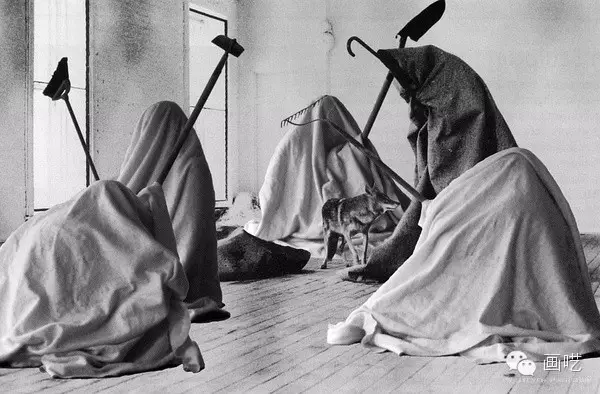
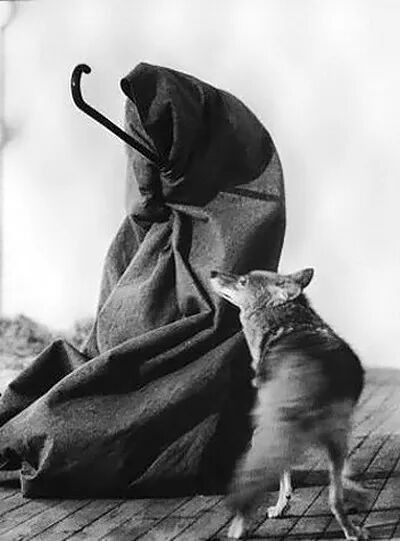
Yet more radical is the 1974 New York action I Like America and America Likes Me. Upon arriving in the United States, Beuys wrapped himself entirely in felt and was taken directly by ambulance to the gallery, where he shared a room for three days with a live coyote. Over those three days, he held a staff symbolising the spiritual guide and engaged the coyote in varied interactions, from standoff to gradual familiarity. The action is replete with metaphor for American social reality: the coyote symbolises the primal natural force oppressed by modern civilisation, and the souls of the slaughtered Native American peoples. Beuys, the shaman from the “Old World”, sought through this ritual cohabitation to enter into dialogue and reconciliation with this repressed force. The “material” of this work is no longer fat and felt but the artist, the animal, space, time and all the relations generated among them. It is a living, dynamic “sculpture” saturated with social and political allegory.
Through these practices, Beuys thoroughly transformed the definition of art from a noun (the work) into a verb (the process). Art is no longer about creating beautiful objects but about stimulating thought, fostering communication, healing trauma and reshaping relations. It is precisely upon this “expanded concept of art” that “everyone is an artist” gains its solid theoretical foundation. If the essence of art is shaping, then the teacher shapes students’ minds in the classroom, the politician shapes laws in parliament, the farmer shapes the ecology upon the land — every person, in their own post, participates through their actions in shaping this immense sculpture that is society. Art is thus liberated from the white cube of the museum and diffused into every corner of social life.
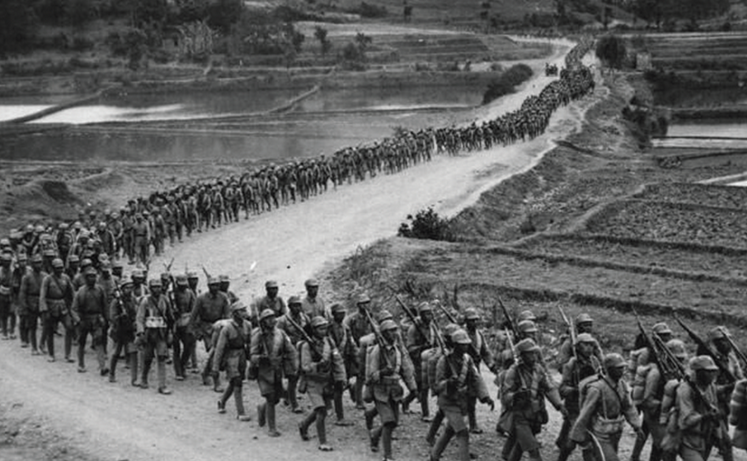
Beuys’s vision inevitably leads, in the end, to the political sphere. For him, “social sculpture” would be meaningless if it did not bring about a more democratic, more free and more ecologically conscious society. Thus the slogan “everyone is an artist” is, in essence, a political manifesto, its core concerning the redistribution of power.
The age in which Beuys advanced this idea was one of cultural reconstruction upon the spiritual ruins of post-war Europe. The atrocities of Nazism and the immense trauma of war led European intellectuals and artists as a whole to reflect deeply upon and criticise the West’s traditional value system and structures of authority. Beuys held that Nazism and the violence of war were the bitter fruit of an over-developed Western rationalism, and that art could supply a reparative force, rebuilding the harmonious relations between people and between humanity and nature. In this context, art was no longer decorative or purely aesthetic but assumed the social function of “social sculpture”. He declared: “Art is the only revolutionary force, the only science capable of changing human society.” This elevation of art to the height of social transformation directly answered the historical conjuncture of a post-war Europe urgently requiring the reconstruction of values.
The 1960s was further a period of global political turmoil and cultural revolution. Student movements, anti-war protests and civil-rights struggles erupted worldwide, challenging traditional structures of authority and ideology. In this atmosphere, Beuys actively participated in radical performance-art movements such as Fluxus. He held that art should not be confined to galleries and museums but should enter the public sphere and become a social practice in which everyone could participate. This view resonated, across the distance, with the critical theory of left-wing European thinkers of the time — Herbert Marcuse’s critique of modern industrial society in One-Dimensional Man, and Jürgen Habermas’s exploration of the public sphere. Beuys in effect offered a solution within the artistic field, answering his age’s urgent demand for democratisation and participation.
To put this idea into practice, Beuys undertook a series of scandalous actions. In 1967 he founded the “German Student Party”; though playful in form, its programme seriously addressed such issues as educational reform and environmental protection.
In 1971, when the Düsseldorf Academy of Art, where he held a teaching post, refused to admit students rejected by the authorities, he resolutely led these students in occupying the academy’s secretariat and proclaimed “everyone has the right to study”. This action ultimately led to his summary dismissal by the institution and triggered protracted legal proceedings and public debate. The “dismissal affair” itself became one of his important “social sculpture” works: it exposed the rigidity and exclusivity of the existing educational system and sparked broad discussion on the democratisation of education.
His political actions reached their apex at the Fifth Documenta in Kassel in 1972. Inside the exhibition hall he installed a space called the “Office of Direct Democracy”; across the hundred days of the exhibition he appeared in person every day to debate at length with visitors from around the world on every imaginable social theme — politics, economy, ecology, education. Not a single traditional artwork stood in the hall, only tables, chairs, a blackboard and an unceasing flow of conversation. Beuys proved through his own actions that dialogue itself is the highest form of art. He transformed the elite space of the art exhibition into a public square for deliberation — a laboratory of “social sculpture”.
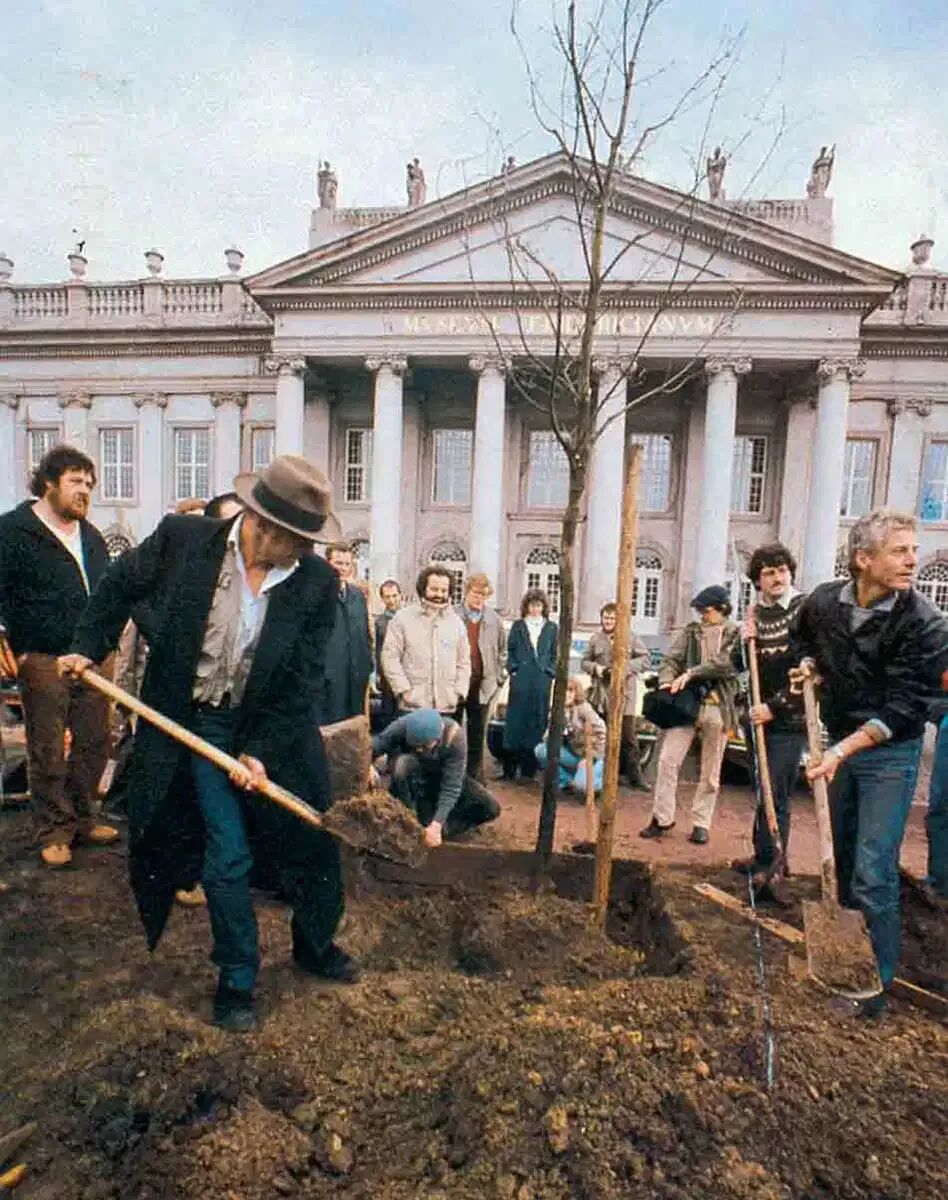
Subsequently he took an active part in founding the German Green Party, injecting ecological thinking into the political agenda. His grandest “social sculpture” project, 7000 Oaks (7000 Eichen, 1982), was launched at the Seventh Documenta. The project planned to plant seven thousand oak trees throughout Kassel, each accompanied by a basalt stone. At first, the seven thousand stones were piled before the museum, forming a vast, oppressive heap. With each tree adopted and planted by a citizen, the heap diminished by one. The process would last several years, until the last tree was planted and the pile vanished entirely. This work perfectly embodies the idea of “social sculpture”: it is a process sustained over years and requiring the participation of all society; it transforms a negative, weighty reality (the stone heap) through collective, organic, life-filled action (tree-planting) into a positive, ecological, sustainable future (an urban forest). Art is no longer an object completed solely by the artist but a protracted undertaking accomplished by society as a whole, aimed at improving the human environment.
At this point we can clearly discern three progressive strata within the slogan “everyone is an artist”. At the personal level, it points to the “warm” creativity innate to every person, springing from the instinct for life. At the level of art theory, it expands the definition of art from “object” to “process”, treating thought and action themselves as sculpture. At the socio-political level, it ultimately demands a thoroughgoing democracy — that every person attain the right and the responsibility of “co-creator” to shape a better society. Beuys’s utopia is precisely such an organism built jointly by countless awakened “artists”, suffused with creativity and vitality. This is the ideal yardstick by which we measure contemporary reality.
Part Two: Technology’s Empowerment — the Spectacle of “Creative Democratisation” in the Digital Age
Beuys’s era relied mainly on performance, lectures, blackboard diagrams and limited film documentation as media for disseminating his ideas. The “everyone”-participating social sculpture he envisaged remained, to a large extent, an ideal dependent on physical presence and elite initiative. Yet in the decades after his death, a profound technological revolution has, in unprecedented fashion, seemed to be turning his utopian vision into everyday reality. From the spread of the personal computer to the birth of the internet, from the rise of social media to the explosion of artificial intelligence, technology appears step by step to be dismantling the great barriers standing between ordinary people and “creation”, placing powerful means of expression into everyone’s hands. We may call this process the “democratisation of creation”.

The first wave of creative democratisation arose from a change in the tools themselves. In Beuys’s time, professional image-making required costly 16mm cameras and complex editing equipment, music production needed professional recording studios, and graphic design belonged to the realm of printing houses and specialist designers. These steep technical thresholds naturally excluded most people from the ranks of “creators”. Yet beginning in the late twentieth century, the development of digital technology set in motion a profound devolution of power.
Sony’s introduction in the late 1960s of the Portapak portable video camera is regarded as a precursor of this revolution. Artists such as Nam June Paik and Bruce Nauman used this relatively cheap and easy-to-operate device to inaugurate the era of video art, challenging the monopoly over image production held by broadcast television. This seed grew rapidly into a forest in the 1990s, with the spread of the personal computer and consumer-grade digital video (DV) cameras. Non-linear editing software such as Adobe Premiere compressed functions once belonging to professional editing suites onto the desktop of a personal computer. An ordinary university student could, in a dormitory, complete the shooting, editing, scoring and special effects of a short film — a technical accomplishment inconceivable mere decades earlier. The 1999 phenomenon low-budget horror film The Blair Witch Project, for instance, was shot on consumer DV; its rough, shaky image style became, on the contrary, a new aesthetic, proving that content and creativity can surpass technical barriers.
Entering the twenty-first century, the arrival of the smartphone pushed this tool revolution to its extreme. Apple’s 2010 advertising slogan — “If you don’t have an iPhone, then you don’t have an iPhone” — captured with precision the dawn of an era. The iPhone is not merely a phone; it is a “creation terminal” integrating a high-definition camera, a portable editing suite, a mobile recording studio and a global publisher. From filter photography on Instagram to the rise of the vlog and on to today’s short videos on TikTok, the smartphone has made visual storytelling a daily practice. An ordinary woman in a village in Guizhou can, through the account “The Seven Dong Sisters of Southeast Guizhou”, record and display her people’s traditional life and handicrafts, gaining the attention of millions of followers — an influence surpassing that of many professional documentary teams.
Meanwhile, comparable processes of democratisation are unfolding in other creative fields. Music-production software such as GarageBand and FL Studio lets anyone with a musical idea compose structurally complete electronic music in their bedroom. In writing and publishing, the appearance of blogs, official accounts and online literary platforms such as “Qidian” (China’s leading web-fiction site) has bypassed the cumbersome censorship and high thresholds of traditional publishing, giving rise to countless “grassroots” writers — works like Liu Cixin’s The Three-Body Problem, which first appeared as serialised posts on an online forum, eventually reaching a world audience. In graphic design, online platforms such as Canva, by offering vast template libraries and simple drag-and-drop operations, enable a small shopkeeper with no design background whatsoever to produce presentable posters and social-media advertisements for their business.
The significance of this revolution of tools goes far beyond cost reduction. It has fundamentally altered the very character of “creation”, transforming it from a “skill” requiring long professional training into a “literacy” accessible to nearly everyone. The creative energy inherent in every person, of which Beuys spoke, seems for the first time to have found so convenient and so powerful a material outlet.
(II) The Rise of Platforms: the Square of Display and Connection
If the spread of tools resolved the question of “how to create”, then the rise of internet platforms resolved the questions of “where to display” and “with whom to connect”. Under the traditional model, an artist’s work had to pass the screening of “gatekeepers” such as galleries, museums, publishers and record companies before entering the public eye. This was an elite, centralised system whose criteria of judgement were often internalised and opaque. The internet — especially the social-media platforms of the Web 2.0 era — constructed an entirely new, decentralised structure of display and dissemination.
The birth of YouTube (2005) was a landmark event. Its slogan “Broadcast Yourself” captured its subversiveness with precision. Anyone possessing video content could upload it for free and instantly reach a potential global audience. This gave rise to an entirely new identity — the “uploader” or “YouTuber”. PewDiePie, for example, through his humorous commentary style in game reviews, attracted over a hundred million subscribers, his commercial value and cultural influence rivalling those of traditional mainstream stars. The beauty vlogger Michelle Phan began by simply posting makeup tutorials on YouTube and ultimately built her own beauty empire. The rise of these “amateur influencers” proves that, under the new platform logic, individual creativity and charisma can bypass the selection mechanisms of traditional media and appeal directly to the public’s recognition.
Instagram built a visually centred social square. It is not only a platform for photographers to display their work but has become a visual-cultural practice in which the whole populace participates. Through filters, hashtags and the “Stories” function, ordinary people can effortlessly “aestheticise” and publish their daily lives. An ordinary traveller can, through carefully composed photographs and affecting captions, become a “travel blogger”; a homemaker who loves food can become a “food guru”. Here, “everyone is an artist” seems to be translated into “everyone is the aesthetic curator of their own life”. Works such as the Japanese artist Yayoi Kusama’s Infinity Mirror Rooms have gone virally across Instagram, with countless visitors taking selfies inside and uploading them; this user-generated content (UGC) itself becomes part of the work’s life, vastly extending its boundaries of dissemination.
And TikTok (Douyin), which has swept the globe in recent years, lowers the threshold of creation even further and renders the logic of dissemination yet more algorithmic. By providing vast music libraries, special-effects filters and easily imitated “Challenge” modes, it encourages users toward short, high-intensity creative mimicry and re-creation. A fifteen-second dance, a dramatic costume change, a cleverly timed edit — any of these may, boosted by the algorithm, garner tens of millions of views overnight. In the “#freezeframe” challenge, for instance, countless users imitate the frozen moments of films, creating endlessly varied, playful still-frame images. Here, creation is no longer the solitary expression of an individual but a networked, collectively participated “meme” carnival.
These platforms are not merely spaces of display but hubs of connection. Through mechanisms of subscription, likes, comments and shares, they establish unprecedented direct links between creators and audiences and among creators themselves, and give rise to various forms of “interest-based communities”. From the anime “secondary-creation” communities on Bilibili, to the “literature groups” on Douban, to the “fan-art” circles on Lofter, countless ordinary people who share a common passion engage in sustained, high-quality secondary creation and exchange around specific cultural products. This love-based, non-utilitarian collective creation, to a certain degree, precisely echoes the embryonic form of the “social sculpture” that Beuys advocated — the shaping of culture through joint action.
(III) The Shock of AI: the Creator’s Ultimate Lever?
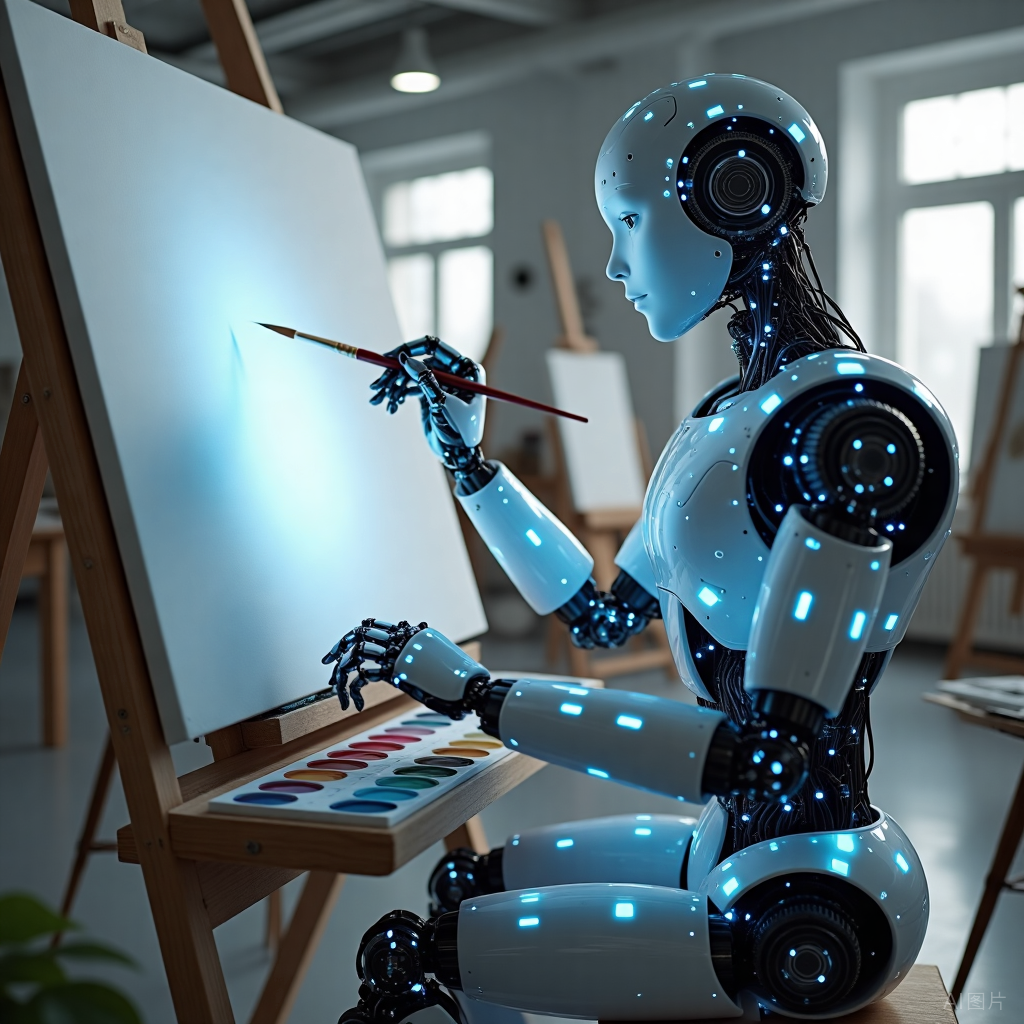
Just as we had come to think that smartphones and social media marked the endpoint of creative democratisation, the explosion of AI-generated content (AIGC) upended our imagination once again. Text-to-image models represented by Midjourney and Stable Diffusion, and text-to-video models represented by Sora and Runway, have driven the technical threshold almost to zero. The core of creation has shifted from mastery of software operation to the precise imagination of linguistic description — the so-called “prompt engineering”.
The Space Opera Theatre mentioned earlier is an exemplary case in point. Its creator, Jason M. Allen, admitted he was not skilled at drawing, yet he possessed a rich imagination and an understanding of art-historical styles. Through hundreds of iterations and selections of prompts, he ultimately “directed” this award-winning work. This event forces us to rethink the definition of “authorship”. If the invention of photography once liberated painting from the burden of “representation”, turning it toward Impressionism and abstraction, will the arrival of AI painting likewise liberate human creativity from the level of “execution” to that of pure “conception”?
The power of AI lies not only in image generation. Large language models such as ChatGPT can assist with writing, scripting and composing poetry. Music-generation models such as Suno AI can, from a user’s chosen style and lyrics, produce a complete song with vocals within seconds. And video models such as Sora can already generate short films of cinematic quality, coherent logic and rich detail from simple text descriptions. This means an ordinary person with no filmmaking skill whatsoever may, in the future, independently “produce” an animated short or a film trailer relying on nothing but a good story idea.
From this angle, AI seems the ultimate technological realisation of the proposition “everyone is an artist”. It encapsulates the most complex processes of artistic production behind a simple natural-language interface and places them within everyone’s reach. It becomes the creator’s “ultimate lever”, so that the realisation of individual imagination is no longer circumscribed by any technical, temporal or financial limit. Had Beuys witnessed all this, he might have been exhilarated by this outburst of potential, for in theory every person’s inner “thought sculpture” now possesses a powerful tool capable of being instantaneously “materialised” into visual and auditory form.
In summary, from the spread of tools to the rise of platforms and on to the shock of AI, technological development has undeniably advanced the “democratisation of creation” enormously, in form and at the point of entry. It has dispersed the power of expression from a handful of professionals into the hands of hundreds of millions of ordinary people, and given rise to a vast, vibrant body of user-generated content. An age that appears to promise “everyone can create, anytime can publish, everywhere can bear witness” has arrived. Yet is this seemingly bright picture the utopia Beuys envisaged? When we turn the camera from technology’s empowerment toward the workings of reality, a more complex, even more sombre picture slowly unfolds.

Part Three: The Predicament of Reality — Alienation and Discipline under Technological Empowerment
Technology’s empowerment paints an exhilarating blueprint, yet technology never operates in a vacuum. It is always embedded within specific social, economic and power structures, and shaped and disciplined by them. When we examine Beuys’s ideal — the “social sculpture” aimed at liberating human creativity and reshaping social relations — within the global order of contemporary neoliberalism and the platform logic of digital capitalism, we find that the democratisation of technology is, to a great extent, accompanied by a profound alienation. The liberation Beuys pursued has, in many contexts, been quietly displaced into a new form of control and exploitation.
(I) The Barrier of Cultural Capital: the Art World Has Not Disappeared
Although creative tools have been popularised, the power to recognise, name and price has not been democratised alongside them. The French sociologist Pierre Bourdieu, in his work The Rules of Art, proposed the theories of “field” and “cultural capital”, which furnish us with a sharp instrument for exposing this predicament. Bourdieu held that the art world is a relatively autonomous “field” possessing its own logic of operation, hierarchy of power and criteria of judgement. Within this field, an actor’s standing depends not only on their economic capital but, more crucially, on the “cultural capital” they possess — that is, the knowledge, taste, educational credentials and networks of connections sanctioned by the institution. Galleries, museums, biennials, auction houses, art academies and critics together constitute the field’s core of power; they are the producers and granters of “legitimacy”.
In the digital age, the reality of “everyone is an artist” is that although anyone can create, “not everyone can be recognised as an artist”. A huge chasm of cultural capital separates an illustrator with a million Instagram followers from an artist whose work is held in the collection of the Museum of Modern Art in New York. The former may possess the “popularity” of the mass market, while the latter possesses the “prestige” internal to the art field. This prestige can be converted into higher prices for works, more exhibition opportunities and a place inscribed in art history.
Take the street artist Banksy: his success in fact proves the power of the art field by contrast. Working anonymously and rebelliously in public space, he bypassed the traditional gallery system. Yet the very reason he ultimately attained global renown and staggering market value is that his work was “captured” by art critics, curators and collectors and drawn into the narrative of art history (as a representative of “urban art”). The “self-destruction” event of his work Girl with Balloon at a Sotheby’s auction was itself a sophisticated performance art deeply versed in the field’s rules of operation; by “attacking” the commercial system, it in fact vastly amplified its own cultural capital.
Similarly, many so-called “naïve artists” or “outsider artists”, such as Henry Darger, remained unknown in their lifetimes; only when “scouted” by the art world — curators, scholars — and furnished with a discourse of interpretation (such as the “purity of art brut”) could they be posthumously canonised as “masters”. This process is essentially one of “co-optation” or “consecration”, and it reaffirms the art field’s final authority over the definition of the “artist” identity.
Although digital platforms offer new channels of display, they too are rapidly undergoing “field-isation”. Major museums have opened social-media accounts to promote their exhibitions and collections through the platforms; renowned curators and critics have become opinion leaders online; and online art-trading platforms such as Artsy have even emerged, replicating and reinforcing the business model of traditional galleries. Thus digital space has not created a “utopia” parallel to the traditional art world but rather resembles an extension of it and a new competitive field. The work of an amateur creator, even if it garners an ocean of likes online, still often must seek the recognition of the traditional institution if it is to enter the temple of “art” proper. The barrier of cultural capital remains formidable.
(II) The Command of the Achievement Society: Everyone a “Creative Entrepreneur”
If the barrier of cultural capital exposes the predicament of “being recognised”, then the theory of the Korean-German philosopher Byung-Chul Han reveals the profound alienation within the very “act of creation”. In his books The Burnout Society and Psychopolitics, Han diagnoses a new mode of domination in contemporary neoliberal society. He argues that we have moved from a “disciplinary society” characterised by discipline and prohibition into an “achievement society” (Leistungsgesellschaft) that takes “performance” and “self-optimisation” as its slogans. In this society, domination no longer operates through external oppression but through an internal command: “You can!” The individual is no longer a passive exploitee but an active “self-entrepreneur”, constantly goading themselves to pursue higher efficiency and better performance.
Beuys’s liberation-laden phrase “everyone is an artist” has, under the logic of the achievement society, been unfortunately distorted and misappropriated. It is no longer a philosophical proclamation about liberating human potential but more like a professional demand made of everyone. A slogan originally meant to resist the capitalist division of labour now fits perfectly with the ideology of the “creative industries” and the “gig economy”. The identity of the artist — once a nonconformist role reflecting critically on social norms — has become an exemplary “model worker” to be emulated by all: flexible, autonomous, ceaselessly innovative.
The word “creativity” has shifted from a term describing artistic gift into a core metric for valuing all workers. Companies demand that employees possess “creative thinking”; cities strive to build “creative cities”; states vigorously develop a “creative economy”. Against this backdrop, the subtext of “everyone is an artist” becomes “everyone must be a ‘creative worker’”. This demand brings enormous, ubiquitous pressure. The social-media narrative of the “slash youth” encourages people to develop “creative” side-hustles alongside their main job — whether as vloggers, podcasters, independent designers or online writers. This seemingly autonomous and plural lifestyle is, behind the façade, often one of endless self-marketing, self-branding and self-exploitation.
A writer running a personal official account is responsible not only for creating content but also for layout, promotion, community management and business negotiation. An uploader updating videos on Bilibili must constantly chase trends, learn new editing techniques and interact with fans to maintain their traffic and “persona”. The boundary between their work and their life blurs, and rest time is encroached upon by anxiety. This condition is precisely that described by Byung-Chul Han: “The achievement-subject is both master and slave of itself… This self-exploitation is more efficient than external exploitation because it is accompanied by a feeling of freedom.”
Art, as Beuys conceived it — a liberating practice — is here alienated into a highly involutionary “performance” serving capital’s self-expansion. Art is no longer an end but a means to build a “personal brand” and realise “traffic monetisation”. The ultimate result of this whole-populace labour in the name of “creativity” is not a freer, more plural society but a more exhausted, more atomised one, in which everyone is imprisoned in the hamster wheel of self-optimisation, running without end.
Digital platforms are not merely spaces of display but “behaviour-shaping environments” precisely regulated by algorithms. The famous dictum of the Canadian communication theorist Marshall McLuhan — “the medium is the message” — acquires, in the algorithmic age, a wholly new and deeper meaning. The medium does not only transmit information; its very technological character shapes our modes of perception, habits of thought and social relations. The algorithms of social-media platforms are precisely such a shaping force.
The core business model of these platforms is the “attention economy” — that is, to prolong users’ time on the platform as far as possible and deliver precisely targeted advertising to them. To achieve this, algorithms are designed to identify and recommend content that most stimulates user interaction (likes, comments, shares). This traffic-oriented logic, like an invisible “hand of Leviathan”, covertly filters, disciplines and even narrows the “creativity” on the platform.
On TikTok, the algorithm rewards short videos with brisk rhythm, high information density and strong emotional impact. This leads to a certain homogenisation of content: rapid editing, brainwashing background music, dramatic reversals, standardised “challenge” formats. A creator who wishes to succeed must learn to cater to the algorithm’s “taste” rather than express the self purely. Their creative process shifts from an internally driven exploration into a constant pandering to external data feedback. This is a new kind of “digital enclosure”, in which creativity is displaced by “displayability” and “datafiability”.
Instagram’s “lookism culture” offers another example. The algorithm tends to recommend portraits and lifestyle photos that conform to mainstream aesthetic standards and are meticulously retouched. This has spawned the so-called “Instagram Face” (a standardised visage achieved through beauty filters and cosmetic surgery) and an “Instagram aesthetic” (minimalist composition, high-saturation colour, and the like). This visually normative regime, reinforced by the algorithm, shapes not only online taste but, in turn, affects offline reality, leading to a homogenisation of aesthetic taste and the exclusion of those who fail to measure up.
The rise of AI painting harbours similar risks. Although AI can generate infinitely varied images, its “imagination” is based on the vast datasets it has “learned” from. If these datasets themselves contain biases (for instance, the over-representation of Western art history, or stereotyped presentations of the female body), then AI-generated images are likely to reproduce and reinforce those biases unconsciously. At the same time, as ever more people use similar AI models and fashionable “prompts”, a new, algorithm-driven “AI aesthetic” may emerge — convergent in style and lacking genuine originality.
The art Beuys pursued is a subversive force capable of exposing and criticising social problems. Yet under the gaze of the algorithm, “creation” on platforms is often encouraged to develop in safer, more entertaining, more commercially logical directions. Content that is genuinely critical, experimental and demands deep reflection from users often fails to prevail in the traffic competition. Thus the situation of “everyone is an artist” may ultimately lead not to a public sphere of clashing ideas and a hundred flowers blooming, but to a society of “amusing ourselves to death” — one dominated by commercial logic and algorithmic power, awash with noise and spectacle.
(IV) The Attention Economy and Aesthetic Fatigue: the Nihilisation of Value
An inevitable consequence of mass creation is the infinite supply of content. In an age of information explosion, the scarcest resource is no longer content itself but the user’s attention. This structure of the “attention economy” raises a profound philosophical question: as the quantity of artworks tends toward infinity, will the value of “art” be diluted, even tending toward the nihil?
The German thinker Walter Benjamin, in The Work of Art in the Age of Mechanical Reproduction, presciently pointed to the dissolution of art’s “aura” by technologies such as photography and film. The “aura” refers to the unique presence of the artwork in a particular time and place, and its deep connection with history and ritual. Mechanical reproduction made artworks viewable anytime and anywhere, thereby stripping them of their sense of the sacred and of distance. In the digital age, this process of “de-auratisation” is pushed to its extreme. A world-famous painting such as the Mona Lisa can be endlessly copied, disseminated and turned into emoji and derivatives across the internet. Its image is everywhere, yet its “aura” as a unique artwork is exhausted in this inundation.
When “everyone is an artist” means that hundreds of millions of new photos, videos and pieces of music are uploaded to the internet every day, the perceptive capacity of ordinary viewers inevitably falls into a state of “aesthetic fatigue”. In the endless stream of information, we grow accustomed to consuming content with a swiftly scrolling finger, dwelling on any single work for ever shorter spans; deep, immersive aesthetic experience becomes ever harder. Art appreciation degrades from a spiritual activity requiring concentration and contemplation into a rapid, superficial consumption of visual stimulation.
This affects not only viewers but creators in profound ways. To stand out amid the ocean of content, creators are forced to adopt more shocking, more “eye-catching” strategies, pursuing instant sensory stimulation rather than lasting emotional resonance. This leads to the “spectacularisation” (Spectacle) and “involutisation” of content. Online “big-eater” eating broadcasts, for instance, court attention by challenging physiological limits; many short-video storylines, in order to seize the viewer within seconds, endlessly reverse and exaggerate, ultimately descending into melodrama and absurdity.
In this situation, the promise of “everyone is an artist” seems to have turned into its opposite. What it brings is not a universal elevation of artistic value but, to a certain degree, “inflation”. When everything can be art and everyone is speaking, the eventual result may be that nothing is special and no voice can truly be heard. Beuys’s profound vision of reshaping society through art risks being dissolved, amid the clamour of the attention economy, into a nihilistic, self-consuming carnival.
In sum, the cultural logic of neoliberalism and the platform architecture of digital capitalism together constitute a powerful system of “co-optation”. It appears to embrace the slogan “everyone is an artist” yet hollows it out in practice, transforming it from a liberating political project into an economic and ideological instrument serving the existing order of power. The democratisation of creation brings profound real-world predicaments — and this is precisely the starting point from which we revisit Beuys today and seek a new way out.
Part Four: Reconstructing the Future — in Search of a Contemporary “Social Sculpture”
Confronting both the immense potential brought by technology’s empowerment and the profound alienation revealed by our real-world predicaments, we can neither lapse into naïve technological optimism nor succumb to pessimistic cultural critique. The true way out may lie in returning to the core of Beuys’s thought — the original meaning of “social sculpture” — and, taking it as our reference, seeking in contemporary practice those creative forces that transcend individual expression and dedicate themselves to reshaping social relations. The emphasis of Beuys’s vision was never on producing more “artworks” but on stimulating a new “social practice”.
The possibilities of the future lie precisely in this turn from “object” to “event”, from individual to collective.
(I) Beyond the Artwork: Art as Social Practice
In the field of contemporary art, an important current can be seen as the direct heir of the spirit of “social sculpture” — namely “socially engaged art” or “participatory art”. The focus of such art is no longer the creation of a self-contained object for contemplative viewing but the initiation of a process, the construction of a platform, intervention into a concrete social issue and the invitation of public participation. Its value is measured by the social change it triggers, the human connections it builds and the public debate it provokes.
A model example is the American artist Theaster Gates’s Dorchester Projects in Chicago’s South Side. Gates bought several abandoned houses in his own neighbourhood and, rather than converting them into traditional artist studios or galleries, transformed them — through collaboration with local residents — into a “cultural centre” integrating a library, an archive, a cinema and a workshop. He collected the entire stock of a defunct bookshop and a university’s slide archive, and invited neighbourhood children to learn ceramics. Here, art is not an object hung on a wall but an action that repairs communal memory, provides public services and creates educational opportunity. Gates’s role is more that of a community organiser and cultural catalyst; his “sculptural” materials are architecture, books, human relationships and the future of the community. This is precisely the direct embodiment of what Beuys meant by “healing” social trauma through art.
The Cuban artist Tania Bruguera has pushed her artistic practice directly to the front line of political action. Her long-term project Immigrant Movement International is an artist-initiated community space established in Queens, New York. It provides local immigrant communities with free services such as legal counsel, language classes and art workshops, while also serving as the headquarters of a social movement organising political activity and fighting for migrant rights. Bruguera advanced the concept of “Arte Útil” (useful art), arguing that art should become a social tool capable of resolving real problems. Her practice blurs the boundary between art and social work, between art and political activism, directly answering Beuys’s call to define art as a force that shapes society.
Such practices, however, also confront profound challenges. The art historian Claire Bishop, in her book Artificial Hells: Participatory Art and the Politics of Spectatorship, offers a sharp critique of this kind of art. She cautions us against simply equating “participation” itself with political progressiveness. Many participatory-art projects may merely create a false, temporary harmony that masks the real social contradictions and power inequalities behind it. She asks: where is the “aesthetic” dimension of these projects? How do they differ from traditional social work? Bishop’s critique is important; it forces us to consider that a successful socially engaged art requires not only ethical goodwill but an “aesthetic” force capable of breaking convention and provoking profound reflection — a force enabling participants to view their own reality from a renewed, critical perspective. This is precisely what Beuys pursued in his performance art: through irrational, poetic, unsettling rituals, to jolt people’s rigid cognitive structures.
Although digital technology brings the risk of algorithmic discipline, its decentralised, networked character also makes possible a new form of collective creation more in keeping with the spirit of “social sculpture”. The open-source software movement is an early exemplar of this possibility. Projects such as the Linux operating system and Wikipedia are accomplished through the collaboration of tens of thousands of volunteers worldwide, who receive no direct economic reward; what drives them is the conviction of sharing knowledge and jointly building a public good. This is a quintessential “social sculpture” process: the “thought sculptures” (code, entries) of countless individuals converge to form an organic, ever-growing grand work that serves all humanity.
The Web 3.0 and blockchain technologies that have emerged in recent years, despite the speculative bubbles and controversy surrounding their early development, contain within their core ideas the potential to reconstruct the relations of creative production. Take the DAO (decentralised autonomous organisation) as an example: it is an organisational form operating through smart contracts on a blockchain, with no centralised leader, in which all members can participate in decision-making by vote. Some art-world DAOs are experimenting with new models of artistic creation, collection and patronage. A creative collective, for instance, might use a DAO jointly to decide a project’s direction, with the project’s proceeds automatically distributed to all contributors via smart contract. This offers a technical framework for a fairer, more transparent, more democratic collective creation.
In the broader cultural field, we also witness countless bottom-up practices of collective creation. In “fandom” culture, for instance, fans gather around their idols and produce a great deal of secondary creation — including fan art, video editing and fan-fiction writing. These creations are not merely displays of individual talent but constructions of communal identity and the maintenance of affect. Although irrational idolatry and conflict exist within them, the immense collective creativity erupting from shared passion that they display cannot be ignored.
The crux is how to guide this emerging collective creativity so that it transcends its internal circulation and joins with broader social issues. One possible direction is to use these collaborative tools to meet real-world challenges together. For example, using crowdsourced maps (such as OpenStreetMap) to draw rescue maps of disaster zones, using open-source collaboration platforms to translate vital public-health knowledge jointly, or organising online collective-creation events to speak out on a social issue (such as climate change or mental health). When these collective actions aim not merely at creating a digital product but at improving the circumstances of a real community, they come closest to Beuys’s ideal of “social sculpture”: everyone acts as an “artist”, contributing their creativity to jointly sculpt a more just and sustainable society.
(III) Education as the Core: Stimulating Creativity rather than Training Artists
At the terminus of Beuys’s system of thought we always return to “education”. One of the identities to which he devoted himself most in life was that of teacher. The very reason he broke with the institution at the Düsseldorf Academy of Art and founded the “Free International University” was his firm conviction that the fundamental path to a society where “everyone is an artist” lies in a thorough transformation of education.
The education he advocated was not vocational training to produce more professional painters. On the contrary, he opposed confining art education within the high walls of the art academy. He held that the core task of education is to stimulate every person’s innate creative potential and cultivate their ability to think and act by means of it. In one of his blackboard drawings he wrote: “Art = Capital”. Here “art” means human creativity, and “capital” means the most fundamental driving force of social development. A nation’s true wealth lies not in the deposits in its banks but in the creativity, imagination and agency of its citizens.
The realisation of “everyone is an artist” thus ultimately depends on an entirely new educational paradigm. This paradigm should be implemented beginning today, within our basic education. It means:
First, break down the barriers between disciplines. Integrate art, science and the humanities, so that students understand the world as an interconnected organic whole. Explain art, as Beuys did, through knowledge of biology, economics and mythography.
Second, shift from “indoctrination of knowledge” to “cultivation of ability”. The emphasis of education should not be how many facts students memorise but the cultivation of their critical-thinking capacity, problem-solving ability, capacity to collaborate with others and ability to express themselves. These are precisely the basic literacies required of a “social sculptor”.
Third, combine learning with practice. Encourage students to leave the classroom, observe their community, identify problems and attempt to propose solutions through their own creativity. A successful community-garden project, an in-depth social-investigation report, a design scheme aimed at improving the campus environment — these are all “artworks” of greater value than a perfect exam paper.
Finally, make “freedom” the highest principle of education. As Beuys conceived for his university, true learning occurs in transdisciplinary, free dialogue. The teacher’s role is not that of an authoritative transmitter of knowledge but that of an equal interlocutor and a stimulator of thought.
If we can advance toward such an educational ideal, then “everyone is an artist” will no longer be an empty slogan. It will become the underlying logic of our society’s operation. The citizens we raise — whatever profession they later pursue, doctor, lawyer, programmer, worker, farmer — will carry the self-awareness of an “artist”, aware that they are co-creators of this immense work that is society, and bear the responsibility to make it better through their work. This is perhaps the most precious, and the most challenging, legacy Beuys left us.
Let us return to that question:
In this age of technological empowerment, has Beuys’s “everyone is an artist” been realised?
After layer upon layer of archaeological excavation and probing, we can offer a dialectical answer. At the level of technological access, Beuys’s prophecy has, to a great extent, become reality. Digital tools and platforms have indeed, as never before, placed the power of creation in the hands of the masses, giving rise to an ocean of individual expression. Yet at the deeper level of social relations and structures of power that Beuys genuinely cared about, his vision has been gravely alienated. The cultural logic of neoliberalism has co-opted emancipatory creativity into capital-serving “performance”; the barrier of cultural capital in the art field still upholds the definitional authority of the elite; and the algorithmic governance of digital platforms disciplines our taste and expression in an ever more concealed manner. We seem to have entered a paradox in which “everyone can create, yet no one is truly free”.
This paradox reveals that the true realisation of “everyone is an artist” has never been a technical question but a political one. The crux is not whether we can manufacture more “works” but whether we can reshape the social structures that gestate them. A genuine “social sculpture” is not the individual’s self-display on social media but collective action capable of bringing about structural change.
Therefore, for us today, the value of Beuys’s slogan lies not in a static fact already accomplished but in a dynamic, eternal process of struggle that must be continually activated. It invites us to keep asking:
Are the technological tools in our hands augmenting our subjectivity, or reducing us to slaves of data? Is the “creation” we participate in challenging the existing structures of power, or unconsciously entrenching them? Is the “art” we pursue a self-amusement that flees reality, or a force that intervenes in and transforms reality?
The future of “everyone is an artist” does not lie in waiting for the next, more powerful AI model to appear. It lies in whether we can use the tools we already have critically, to forge new connections, organise new collectives and create new public value. It lies in the socially engaged art devoted to repairing communities, in open-source collaborative projects that pursue fairness and sharing, and above all in a profound educational revolution aimed at awakening everyone’s inner capacity and responsibility to shape the world.
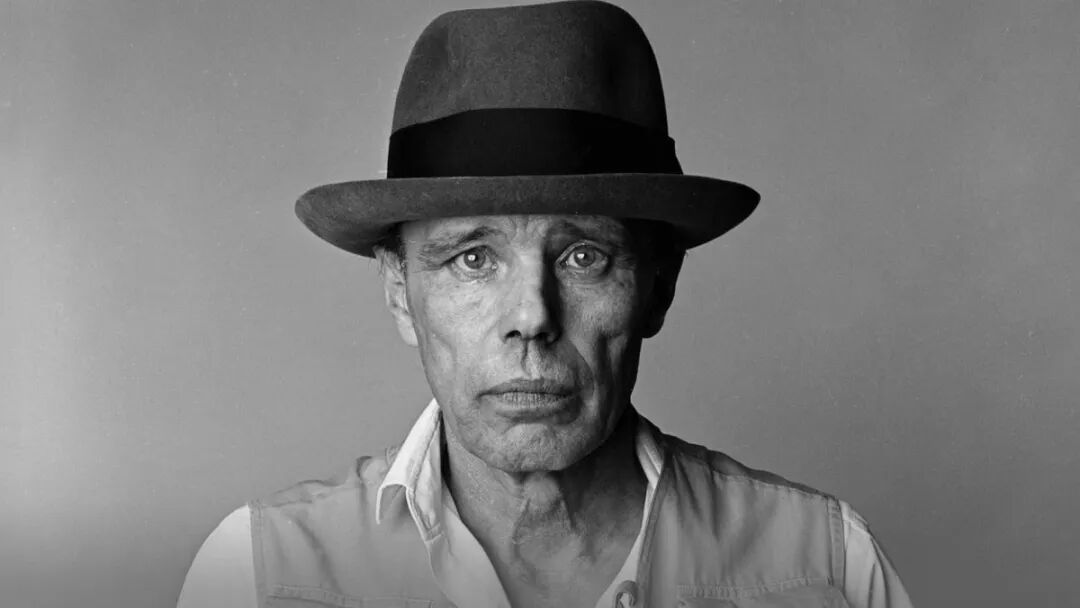
Joseph Beuys, this shaman in a felt hat and fisherman’s waistcoat, still has his spectre roaming our age. What he left us is not an easy answer but a weighty, hope-filled mission. This mission demands that each of us recognise we are not merely consumers and onlookers of this world but its creators and shapers. The ultimate meaning of “everyone is an artist” may be the highest affirmation of human agency, and an unending summons to a future more creative, more free and more just.
订阅艺术评论
订阅即赠《2024中国当代艺术关键词》内部思考笔记 PDF
每周免费获取最新当代艺术批评与研究