I. In the Age of AI’s Furious Ascent
In this age of AI’s furious ascent, how much dignity is left to realist painting?
To broach this question we need an angle. In 1883, the editor of a foreign magazine posed a strange question that would later be quoted repeatedly: if a tree falls on a deserted island, does it make a sound? Their answer was no. “Sound is the sensation aroused in the ear when air or some other medium is set in motion.” A year later, Scientific American restated the question in slightly different words: “Sound is vibration, transmitted to our senses through the mechanism of the ear, and recognised as sound only in our nerve centres. If there is no ear to hear, there is no sound.”
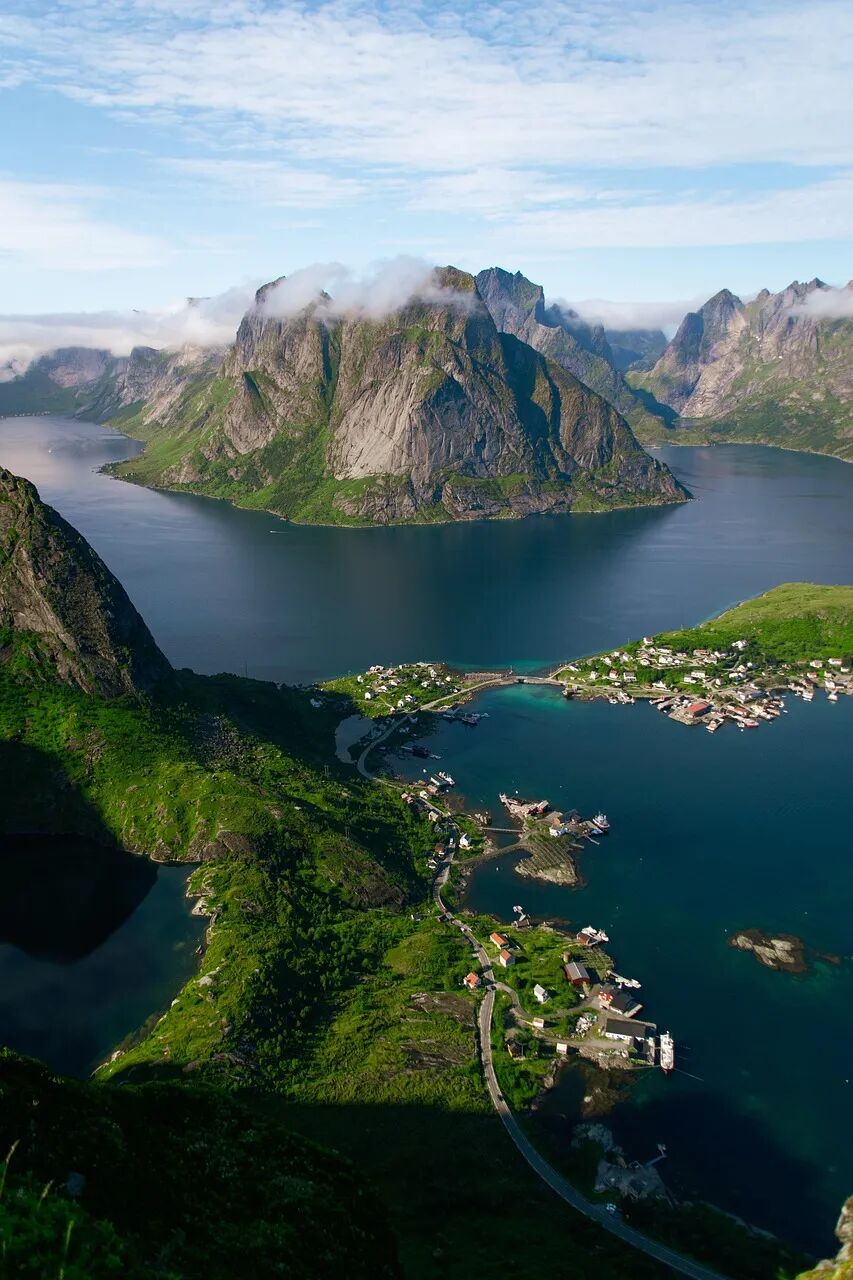
The American realist painter Anthony Waichulis introduces this paradox into the debate on AI art in his widely read essay. His argument looks simple, but its implications are devastating: colour, image and art are not properties of the environment but experiences that occur inside us. A work of art is like a piece of “software”, while the viewer’s beliefs, prejudices and knowledge are the “hardware”; the interaction between the two produces what we call the experience of art. This framework shifts the question of “what counts as art” away from the properties of the object and onto the structure of experience. Yet it is precisely this shift that furnishes realist painting with a more solid basis for its legitimacy in the age of AI than the notion of “handmade-ness” — and, at the same time, exposes those defences that treat “handmade-ness” as their sole rampart as fragile.
The combination of diffusion models and LoRA fine-tuning is, in essence, an industrial-grade statistical extractor. Anyone who downloads a few dozen to a few hundred images by Vermeer, Sargent or Van Gogh and runs a local LoRA training pass can, within a few hours, obtain a model that generates “Vermeer-style” or “Sargent-style” images without limit. The algorithm captures the eigenvectors of a given style in its pixel distribution across a vast corpus of images, then compresses them into a parameter file of a few dozen megabytes. Here, style is reduced to a set of weights.
The problem is that the great many people using these tools have no clear idea what they are doing. They mistake this statistical compression for “having mastered the masters’ language.” Someone who has never held an oil brush can generate thirty “portraits with the allure of Rembrandt’s chiaroscuro” in a single afternoon, and reap likes and inquiries. The market’s response is real: where there are buyers, there will be steady production. This forms a complete “mastery-in-a-flash” assembly line — except that its products are not paintings but visual hallucinations about paintings, turning it into a Dafen Village of the AI age.
Meanwhile, the unauthorised scraping of museum-grade Old Master datasets has escalated from an academic dispute into a legal battleground. In 2024, the Hangzhou Internet Court concluded China’s first case of a generative-AI platform infringing the right of communication through information networks, holding that a platform’s support for users uploading images to train LoRA and generate works substantially similar to the Ultraman character constituted contributory infringement. The logic of this ruling transfers directly to realist painting: if someone trains LoRA on Vermeer’s works and then uses it to mass-produce “Vermeer-style” commercial portraits, this is in essence no different from training a model on an anime character. The only difference is that Vermeer’s descendants will not sue for the right of publication (under Chinese law, the term of protection for all economic rights is the author’s lifetime plus fifty years after their death), whereas Ultraman’s rights-holder will.
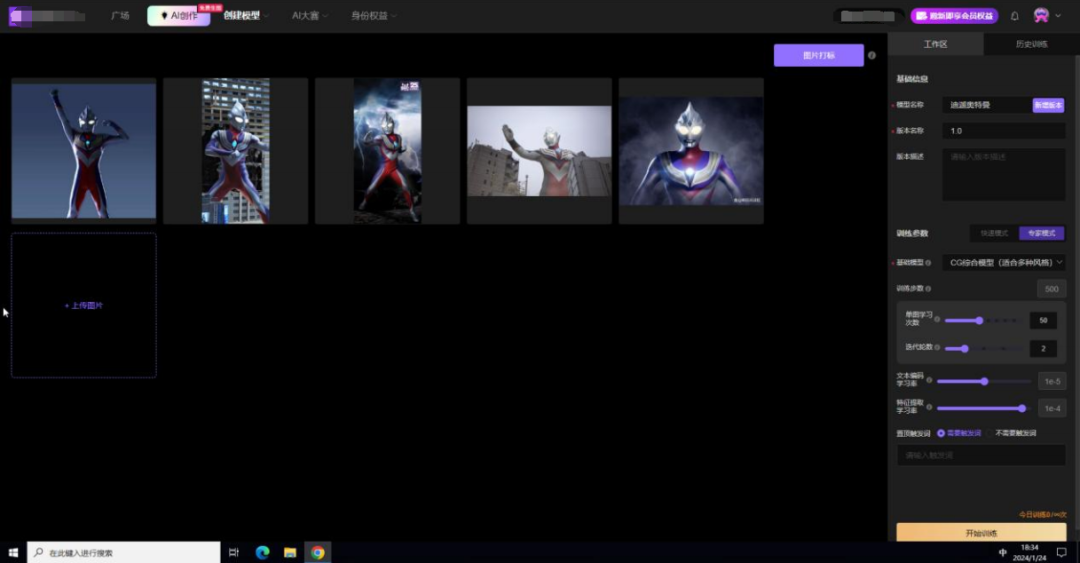
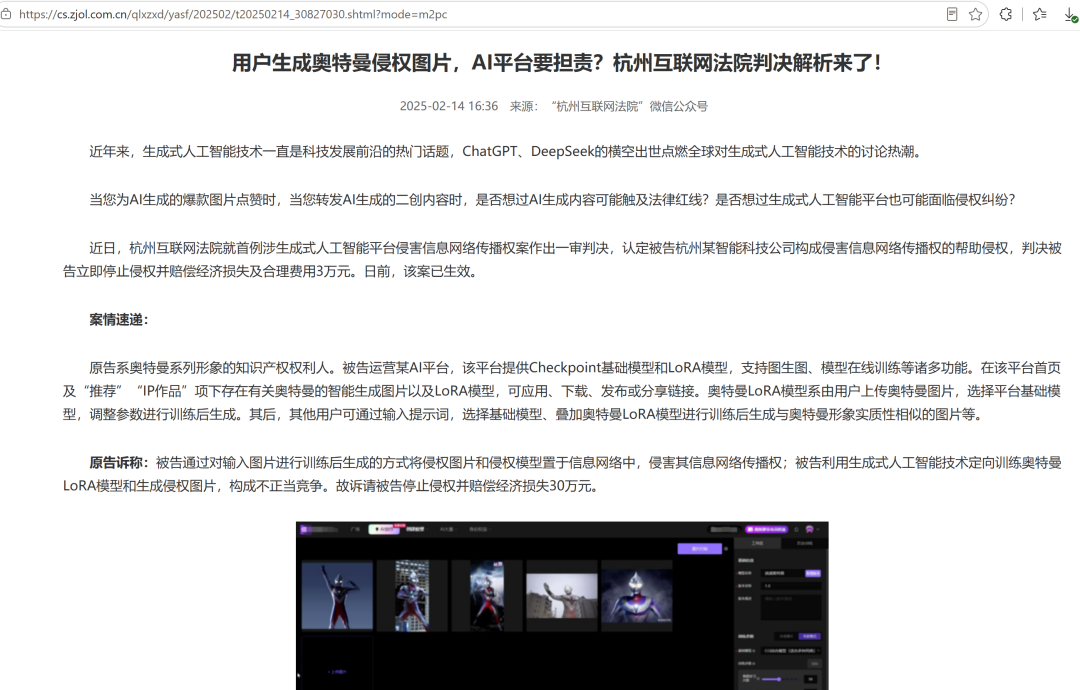
Reporting on the 2024 case in which the Hangzhou Internet Court concluded China’s first generative-AI platform infringement of the right of communication through information networks.
The core of traditional realist training lies in forging a unity of hand, eye and mind. The eye sees, the mind judges, the hand executes that judgement — and in the act of execution the hand feeds new information back to eye and mind, forming a continuous loop of correction. The speed and precision of this loop is what “skill” truly means. AI generation compresses all of this into a single prompt-entry action. You type a description, wait a few seconds, see an image, and say “not bad, generate a few more” — the whole process eliminates “waiting” and “uncertainty”, the two things that are in fact the most important cognitive resources in realist painting. A genuine realist oil painting takes weeks or even months, during which the painter passes through doubt, boredom, sudden clarity, unexpected discovery. These experiences seep into every brushstroke. AI-generated images contain none of this — not because the algorithm is incapable, but because the very time-scale of generation does not permit such cognitive states to arise.
The consequence is homogenisation. When training data is drawn mainly from a visual archive dominated by European and American Old Masters, the “realist style” produced by AI carries a certain cultural bias by nature. On the surface it “fuses the masters’ styles”; in reality it flattens regional and indigenous difference. These tools “limit the creative exploration of marginalised artists”, because they struggle to grasp linguistic nuance and cannot generate genuine local art forms. AI-generated images of non-Western cultures routinely exhibit a tendency toward “exoticisation” and “cultural appropriation”, with non-Western subjects distorted and simplified within the frame of a Western gaze. The seriousness of this consequence is no longer a technical matter; it concerns the structural power relations embedded in the training data.
The uncontrolled proliferation of LoRA style-distillation in realist circles has already spawned a full-fledged grey market. Many know perfectly well that this delivers results with half the effort: a pretty visual effect can stand in for everything art is supposed to be. In truth, in an age where AI grows ever more capable, the harder it becomes to tell apart AI’s pretty effects from lasting artistic achievement, the more behaviours of “passing off the spurious as genuine” and “faking competence” proliferate. Some even make a living from this, exploiting the gap between an ecology drifting ever further from art’s true purpose to turn a handsome profit. Aside from the creative value of the work itself, AI can help with everything else. Years ago, when Ye Yongqing was exposed for plagiarising obscure foreign artists, and other artists for copying photographs, this still seemed a threshold hard to cross — but today AI has simply flattened that threshold. To copy an AI’s output, copied so thoroughly that no one can tell, yet uncannily close to some master’s style, appears to count as a victory for art.
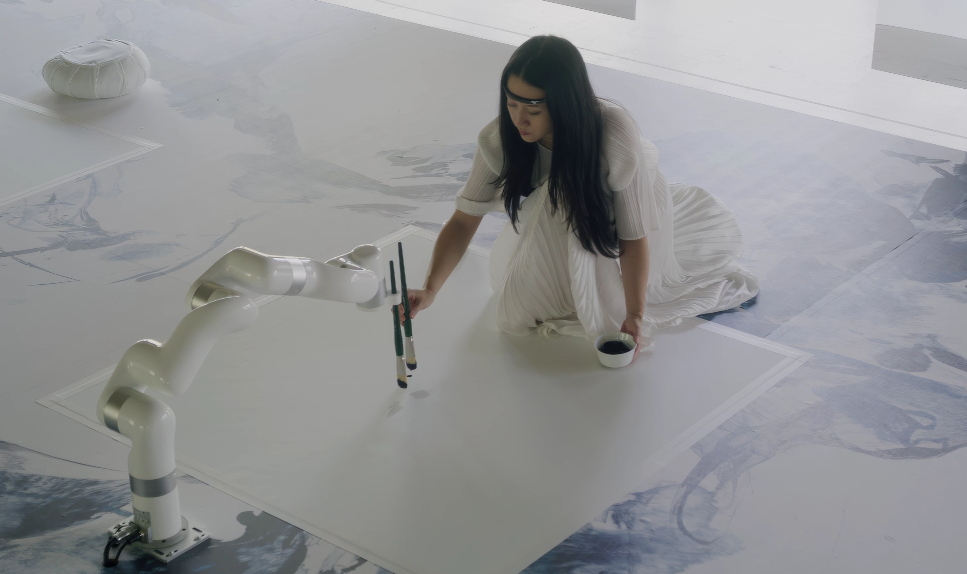
On this point, the work of artist Sougwen Chung offers a sharp contrast. Her RECURSIONS is a monumental handscroll created with two robotic arms, connected to the artist’s body through real-time EEG brainwave data and using two chemically incompatible ink systems: a water-based calligraphic ink that seeps into the linen, and a composite ink containing 99.99% pure silver that rests on the surface. When the two inks meet, the silver pushes the water aside, manufacturing a moment of separation within a single stroke. RECURSIONS is set to a total duration of 1,314 seconds — a homophone, in Chinese, for “a whole lifetime”. This is no arbitrary number. It marks the time-scale of a human–machine relation: not the few seconds needed to generate an image, but a span of time invested with the meaning of life. This is a model of human–machine collaboration — making the machine a part of oneself, rather than a visual shortcut for laziness and fakery.
The reflection of the artist Anthony offers an important voice from within realist painting itself. He advances a seemingly simple but deeply corrosive proposition: the art object is software, the viewer’s beliefs are hardware, and their interaction produces the artistic experience. The most important external factor shaping that experience is the viewer’s belief in the “difficulty of the artist’s performance”: the higher the difficulty, the more likely the experience is to be elevated into “beauty”. This supplies realist painting with a line of defence: the “traces of labour” produced by handwork — the hesitation of a brushstroke, the marks of revision, the varying thickness of paint — constitute the physical evidence through which the viewer perceives difficulty. AI-generated images can mimic the appearance of these traces, but cannot produce the temporality and embodiment behind them. Tools always mediate perception, but tools do not substitute for intention.
Deskilling strikes realist education in the art academy structurally. After the invention of photography, realist painting’s documentary function was taken over by the camera; after the arrival of AI, AI technology has substituted for realist skill — yet it has also liberated thought and creativity, even battering down the wall of technical competence that traditional art education spent centuries erecting. The core of art education must shift from training skilful tools (people who merely possess painting technique) back to cultivating genuine artists with independent thought, grounding and a distinctive eye. But most people still do not know how to do this; and the self-interested and consumerist trends that drift away from art’s true purpose push the art ecosystem into pressuring art students toward the easier path of quick fame and profit. A great many schools pretend to teach art, and tens of thousands of students pretend to study it, year after year mass-producing graduates who can only copy a few photographs — their professional skills and knowledge structures wholly obsolete. Such art education will simply be eliminated by AI at speed.
II.
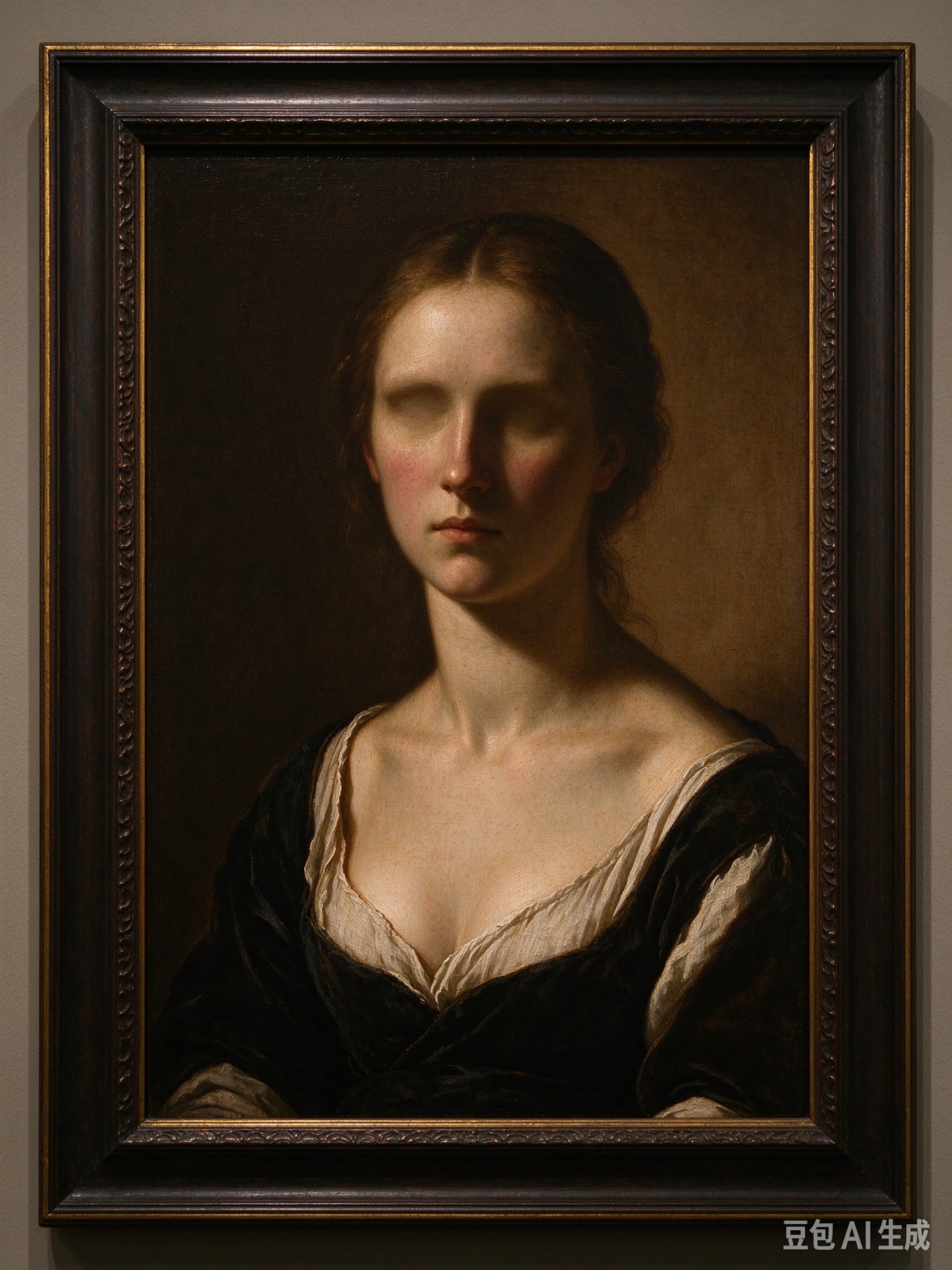
Some realist artists have already moved from “using open-source models to generate stylised images” toward “building privatised fine-tuning models based on their own archival work”. The BLK-Assist framework offers a concrete case: it uses parameter-efficient fine-tuning to train a diffusion model on a dataset curated by the artist themselves, turning it into “a contemporary disciple customised by the individual artist”. This framework demonstrates that human authorship can be demonstrated at several key stages: the curation of training data, the design of the fine-tuning process, and the selection of generated outputs.
Some working in AI have made progress on this front. Neuroaesthetic research is beginning to supply experimental evidence for the aesthetic value of “traces of labour”. AI-generated works lack the “traces of a bodily making-process”, and the immersive layer reached through embodied simulation is thereby weakened; the appreciator’s brain struggles to simulate the painter’s brushstroke movements. An AI researcher has proposed a two-tier analytic framework of “alignment” and “evocation”: alignment is defined as statistical template-matching, while evocation refers to the novel association of dispersed embodied memory fragments. AI-generated images are better at triggering the former, whereas the latter depends on the viewer’s embodied inference about the creative process. It is not that humans are innately hostile to machine products, but that the occurrence of aesthetic experience depends on a whole set of inferences about the creator’s intention, effort and presence — and when these inferences are falsified or suspended, the texture of aesthetic experience changes.
The practice of the Dutch photographer Janus van den Eijnden is a typical instance of the “surreal fiction” variant in European realist circles. His early work concentrated on capturing real-world subjects, but since 2022 he has used Stable Diffusion and MidJourney to create photorealist scenes that feel “familiar yet subtly distorted”. When a photograph presents an AI hallucination with all the seriousness of documentary photography, the realist technique itself is exposed as a formal container that can be conscripted by any content whatsoever.
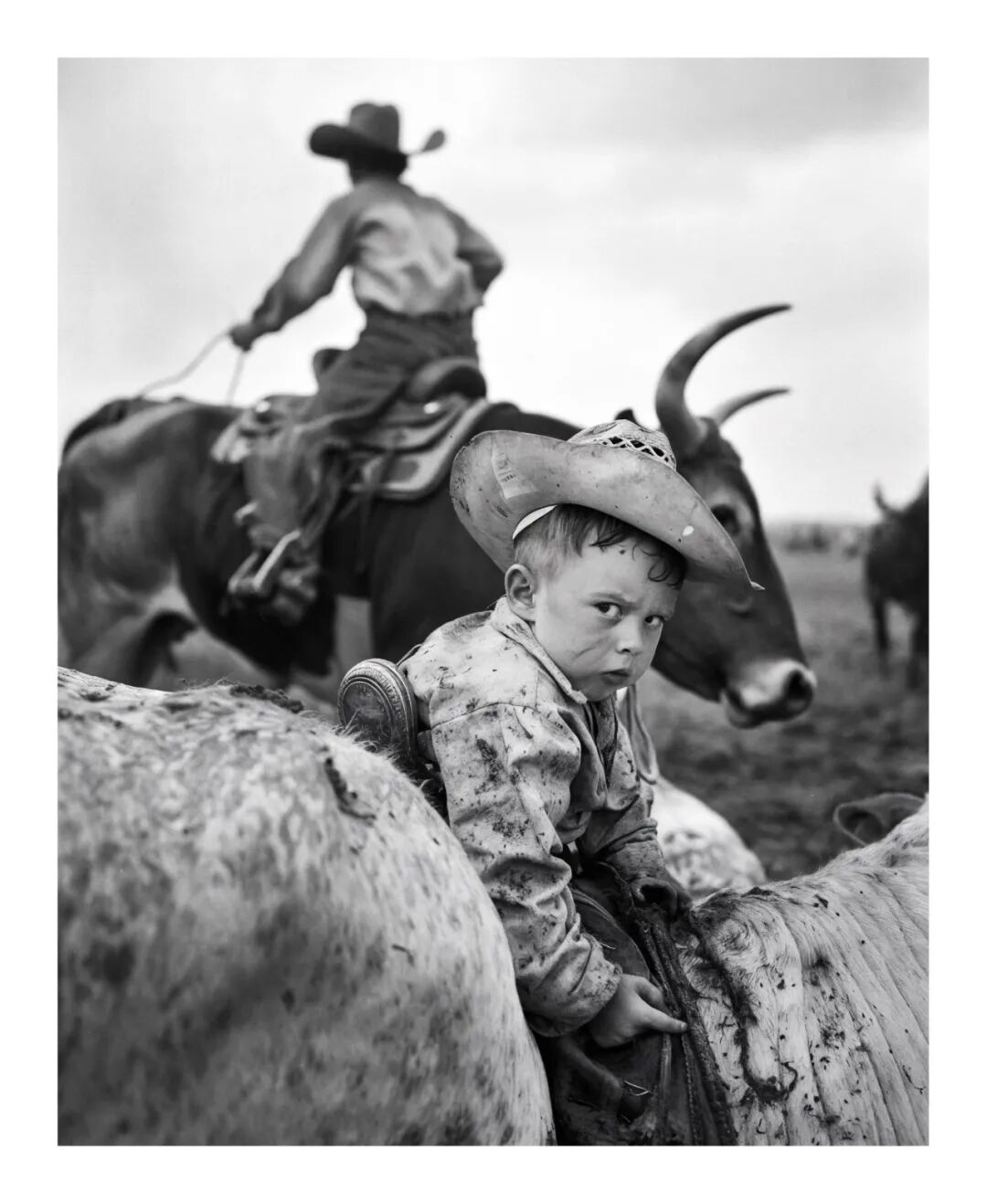
An Artsy survey of more than 300 galleries in 2026 reveals a telling dislocation: 57% of galleries already use AI in their daily work, mainly for administrative and communication purposes. Yet only 15% of galleries have received questions from collectors about AI art, and even when collectors inquire, they typically do not buy. 61% of galleries report that not a single one of their represented artists uses AI. 16% of collectors actively avoid AI-assisted works, and 41% of galleries say AI is “rarely mentioned” in collector conversations. Only 9% of the galleries surveyed regard AI-generated art as a legitimate new medium. The picture drawn by these figures is this: AI is infiltrating the operational layer of the art world from the back office, but from the front of house to the level of the works themselves, and on to its own legitimacy, it remains highly suspect.
From an environmental perspective, realist-painting experiments add a dimension hitherto neglected. Training a large model such as GPT-3 is estimated to emit the equivalent of 552 tonnes of carbon dioxide. The carbon, water and land footprint of AI data centres is rapidly expanding information and communication technology’s contribution to global warming; when, for instance, realist artists begin using painting to reflect on the carbon emissions of data centres and the “Anthropocene” landscape, they are in effect drawing AI’s material infrastructure into the picture. To depict these costs in realist painting constitutes a strange self-reference — using the “slowest” mode of visual production to scrutinise the material price of the “fastest”.
This price is the self-collapse of realist painting’s very reason for being. Photography was not the first technological wave to shock image production, and AI will not be the last. Placed within a longer historical sequence, the problems realist painting faces today reveal a recurring structural pattern: every democratisation of image-production technology dissolves some monopoly held by professional image-producers, and each time forces “the profession” to redefine itself.
In 1839, Daguerre announced the daguerreotype — the first democratisation — whose verisimilitude drew from Paul Delaroche, the history painter famed for realist portraiture, the cry: “From this day forth, painting is dead!” Photography replaced the expensive miniature portrait at astonishing speed and low cost, giving ordinary workers for the first time the possibility of having their likeness taken. What followed was the rapid contraction and transformation of the traditional portrait-painting trade. In the early period when photography gained social acceptance and was rapidly adopted, many portrait painters were forced to retrain as professional photographers. This was the first democratisation: recording reality was no longer the painter’s monopoly.
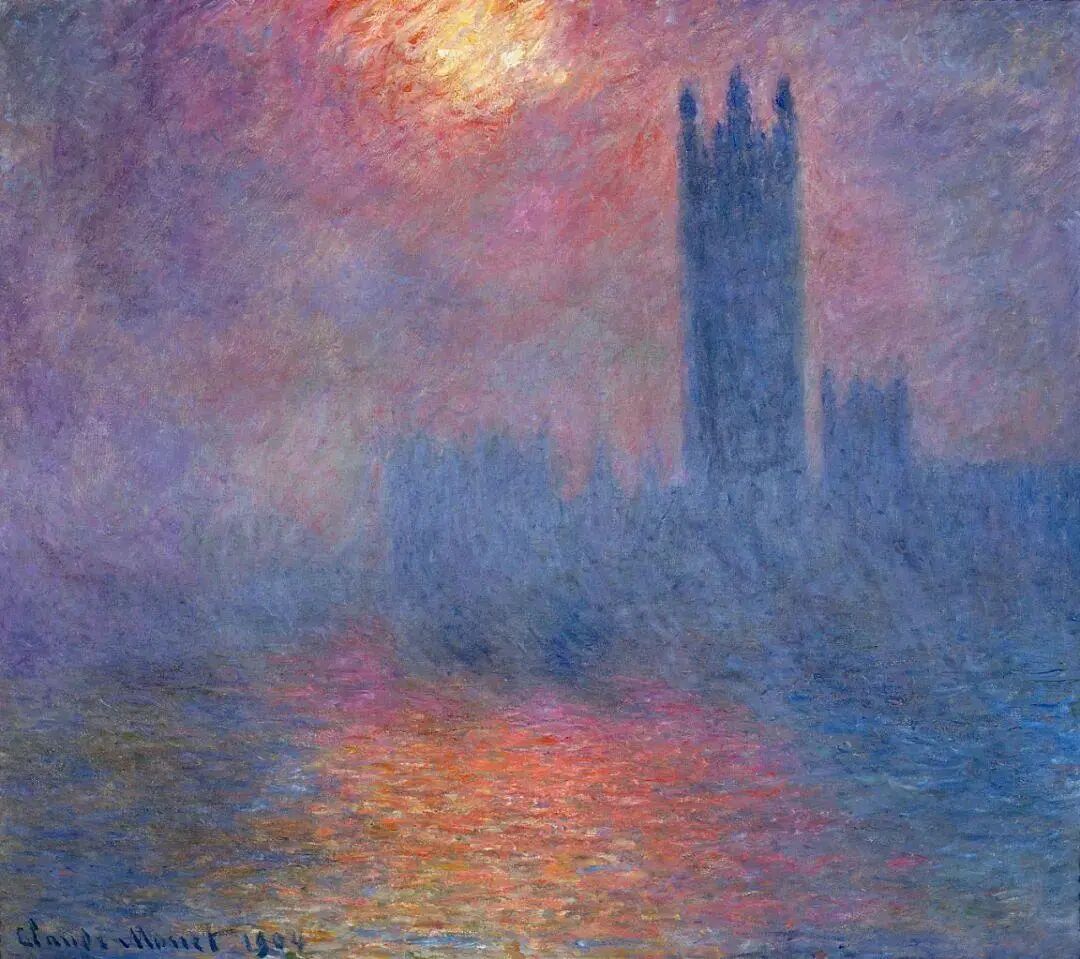
But photography’s shock did not kill painting. It was precisely after photography solved the puzzle of “painting things accurately” that the Impressionists, compelled yet also of their own accord, began to ask: “What else can painting be?” Monet turned to capturing fugitive light, Cézanne began disassembling the inner structure of objects, and Degas secretly used the camera to seize moments of movement, then artistically recomposed them on canvas. Photography “shifted aesthetics from ‘how to paint more accurately’ to ‘how to better preserve the real’, giving rise to wholly new forms such as photojournalism and documentary photography, and forcing painting toward Expressionism and abstraction”. When something becomes cheap, what becomes scarce is the lever. Photography made “realistic images” cheap, and the Impressionists thereby redefined the purpose of art: from “supplying better answers” to “asking better questions”.
The second democratisation came from the digital camera. It removed the marginal cost of exposure and made darkroom technique unnecessary; anyone with a digital camera or smartphone could take part in image production. This time it was commercial and news photographers who were hit hardest. The third democratisation came from social media, which removed the need for editors’ and publishers’ permission to circulate images — everyone could show their images to a global audience.
AI generation is the fourth democratisation, and it advances simultaneously along three dimensions: lowering the threshold of creation, eliminating technical friction, and making images infinitely reproducible. The daguerreotype’s trait of “requiring no knowledge of painting” is pushed to its extreme in AI generation: we need not even know the meaning of the prompts we write, yet the algorithm can still produce “looks-all-right” results according to probability. The fundamental difference between this round and the previous three is this: photography, the digital camera and social media each eliminated a part of the friction — recording, cost, distribution — whereas AI eliminates all friction at once: it needs no reality as reference, no device as intermediary, no technique as threshold. AI generation pushes this “friction relief” to its logical endpoint: zero friction.
Yet after every democratisation, the rebuilding of professional identity was never accomplished by defending old monopolies. After photography, painters survived not by “painting more accurately than the camera” but by “painting what the camera cannot capture”. After the digital camera, professional photographers survived not by “owning expensive equipment” but by “possessing a unique way of seeing”. After social media, professional photographers survived not by “controlling distribution channels” but by “offering depth-narratives that algorithmic recommendation cannot replace”.
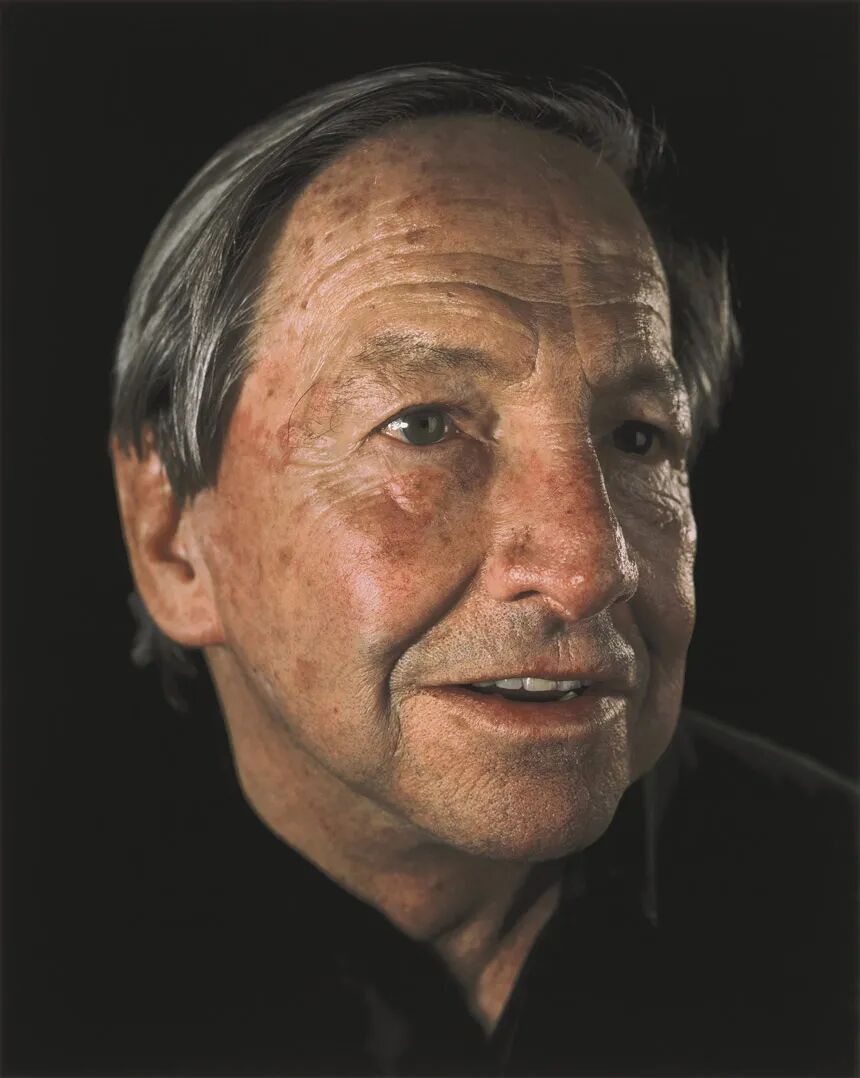
After AI generation, the one thing realist painters absolutely cannot rely on is “painting more like reality than AI”. What they need to find is “the question AI cannot generate”, and then answer it in realist terms. This is no easy road, but it is the only one. Whenever something that was once scarce suddenly becomes abundant, go in search of a new scarcity — for that is where the leverage lies.
Seen from another angle, to describe the crisis realist painting faces today with the blanket phrase “AI is shaking art” is to lose precision. For abstract painting, Expressionism, Conceptual art, installation and performance art are all far less exposed to AI’s impact than realist painting — and this asymmetry is itself an important clue.
Starting with abstract painting: the core value proposition of abstraction lies in formal innovation and the visual expression of human autonomous consciousness. AI’s strength is statistical pattern recognition and style extraction, which require vast numbers of existing visual samples to learn from. Abstract art precisely does not aim at “looking like something”; its value resides in conceptual innovation and the externalisation of individual consciousness — things an algorithm can scarcely obtain through statistical learning. Conceptual art’s core value proposition lies in conceptual operation. The significance of Joseph Kosuth’s One and Three Chairs is not how well the image of a chair is painted but the way it poses the question “what is a work of art?”. Conceptual art need not be beautiful, precise, or even handmade; its entire value lies in the quality of the idea. AI can generate images, but at least for now it cannot generate “thoughts about images”. As for performance art, installation art, bio-art and various experimental forms whose boundaries are hard to fix, AI is a fine tool, but it cannot directly replace the most central thing in these genres: the “I”.
Realist painting’s situation is entirely different. Its core value proposition has long overlapped heavily with AI’s capacity: visual verisimilitude. Once AI had already crushed humanity at “painting things accurately”, realist painting’s traditional competitive advantage was uprooted. What today’s AI does to photorealism is roughly what photography did to nineteenth-century Salon painting: it defeats it easily on its own home ground, and at a fraction of the token cost. Photorealism’s core is “to use photographs as source material and then reproduce them in paint, pencil or another medium with such obsessive precision that from a distance they read as high-resolution photography”. This “technical awe” was the main source of photorealism’s prestige — and that technical awe has now become the default filter of AI image generators.
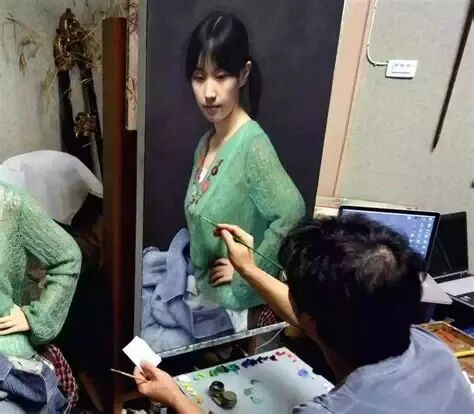
But “realist painting” is not a single category. Hyperrealist painting, which takes the photograph as reference and pursues pixel-level precision, is the most exposed to AI, because its core value proposition overlaps heavily with AI’s capacity. The expressive tradition of a Lucian Freud or a Francis Bacon is far less exposed, since its value lies not in precision but in the bodily energy and emotional intensity carried by the brushstroke. Figurative painting with strong conceptual content — Gerhard Richter’s photo-based practice, for instance — might even gain new resources from AI, because AI-generated images supply Richter-style “photo-painting” with an entirely new reservoir of material and a conceptual dimension.
An alumnus of the Sichuan Fine Arts Institute had their hyperrealist oil painting Prayer acquired by a collector for a five- to six-figure price (reported online, unverified), a work that “pursues ultimate visual truth through brushstrokes visibly fine to the naked eye”. In an era when AI image generation takes mere seconds, the decision to spend months or even years painting a hyperrealist work has motives far more complex than they appear. To borrow a line from Zao Wou-Ki: “See the world with your own eyes, not with others’ eyes, and not with your own eyes of the past. Everyone observes differently, and so styles differ.”
So the real question is not “will realist painting die” but “which kind of realist painting will die, and which will live”. Those hyperrealist works whose sole value proposition is “accurately reproducing the photograph” are undergoing the process of being defeated by AI on their own home ground — especially in the contexts where realist works appear at the National Art Exhibition, various major shows and all manner of informal art channels; such works can bring their makers substantial dividends, but the price will be the collapse of realist painting. Those figurative paintings that demote mimesis from “end” to “means”, using precise visual language to carry concept and critique, may on the contrary gain a new scarcity from AI’s monopolistic production of “visual truth”: not the scarcity of “painting accurately” but the scarcity of “why paint” and “who paints”.
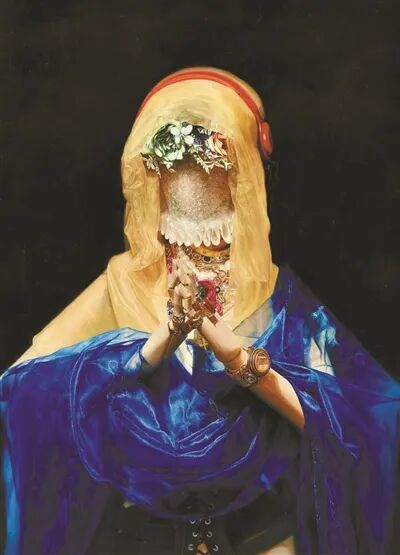
III. Realist Painting’s Way Out in the Age of AI Is Not Merely Aesthetic
Realist painting’s way out in the age of AI is not merely aesthetic but also political — and this political character is not an externally imposed stance but something that grows from the medium’s very essence.
Realist painting was once the most public and the most widely comprehensible visual form. It could be understood without art-historical training and felt directly without theoretical mediation. In nineteenth-century France, Courbet self-consciously disclosed radical political positions in his figurative painting, depicting ordinary labour and real scenes of life directly on the canvas. In 1950s Japan, Hiroshi Nakamura worked in a “reportage style” to create Sunagawa No. 5, depicting the conflict of farmers, activists and students in the protest against the expansion of a military base: “politics is seen from the side, through the artist’s eye”. In 1980s South Korea, the theory of the minjung art movement originated with artists who opposed the dictatorship; they criticised the art patronised by the authoritarian regime and strove to revive “resistance painting” and “realist painting”… The shared feature of these historical practices is this: realist painting’s publicness comes not from its likeness but from its being understandable, debatable and resonant for the general public. The transparency (or “legibility”) of realist language makes it naturally suited to carry social critique and collective memory. Abstract art can critique, but its critique must pass through theoretical mediation to be understood. Conceptual art can critique, but its critique requires the viewer to enter a specific art institution to be felt. Realist painting’s critique is direct: a viewer who sees a real person enduring real suffering in a real scene is moved without any theoretical preparation.
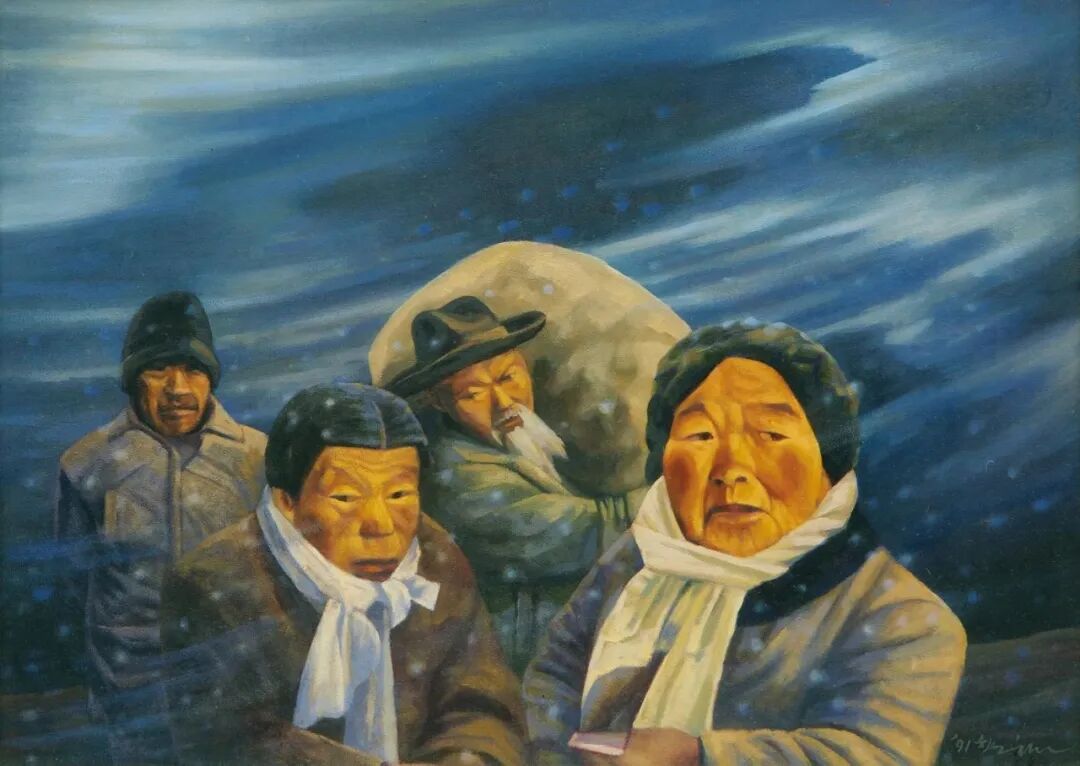
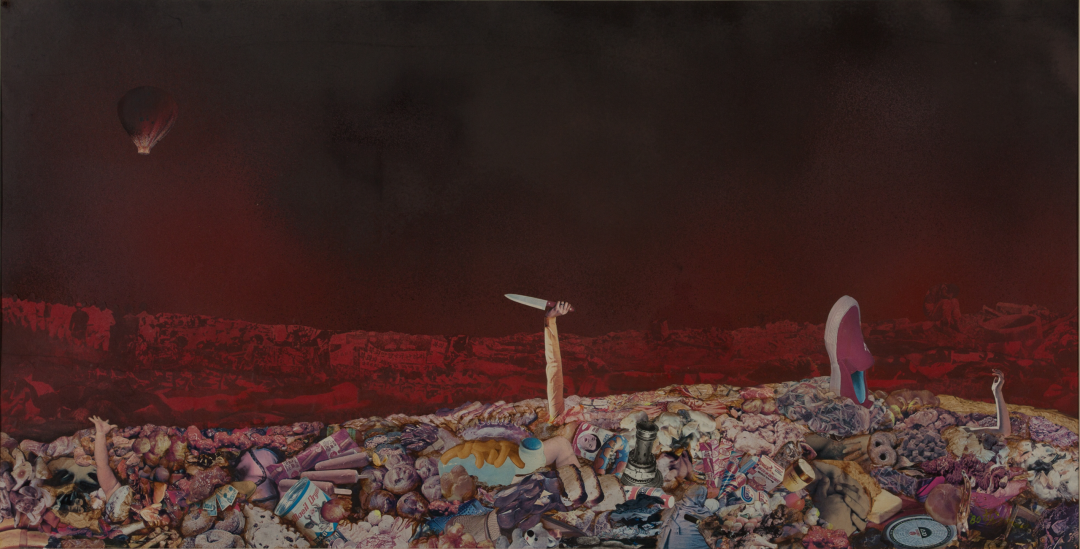
In an age where AI-generated images proliferate and visual experience is reshaped by algorithms, this “directness” is acquiring a new political significance. The more perfect, smooth and flawless the algorithmically generated image, the more precious the “imperfection” of handmade realist painting appears. This imperfection is not a technical defect but evidence of a body leaving its trace in a specific time. It can be said outright: when AI can generate infinitely many “correct” images, a handmade painting saturated with traces of hesitation, revision and choice is itself, by its very existence, a resistance to algorithmic homogenisation.
But here a strict distinction must be drawn between “presence” and Benjamin’s “aura”. Benjamin’s concept of “aura” rests on a specific historical condition: the uniqueness of the artwork is rooted in its physical existence in time and space, and in the historical sedimentation of ritual and cult value. For Benjamin, the aura vanishes in the age of mechanical reproduction because the reproduction can approach the original without limit, eroding the authority of the original’s “here and now”. Yet what realist painting faces in the age of AI is not a problem of reproduction but a problem of generation. AI need not copy your painting; it generates, from scratch, an entirely new image visually indistinguishable from it. The theory of “aura” deals with “the distance between original and copy”, whereas “presence” deals with “the distance between generation and making”. The former is spatial, concerning the participation in identity; the latter is temporal, concerning the irreversibility of process.
Merleau-Ponty’s concept of the “body schema” offers here a more precise analytic tool. For Merleau-Ponty, the body is not an object manipulated by consciousness but the medium through which we “have a world”. Once I am accustomed to driving, I know “I can get through” without comparing the width of the road to the width of the car; the body schema has already accomplished the spatial synthesis before any conscious judgement. The painter’s operation before the canvas is precisely the extreme exercise of this body schema: he need not pre-construct a complete image in his head before executing it; his judgement, correction and decision are different facets of the same process as the movement of his hand. The “presence” of a handmade realist painting is not, in Benjamin’s sense, “physical existence here and now” but, in Merleau-Ponty’s sense, “the externalisation and sedimentation of the body schema upon a specific material”. This externalisation is irreversible because it depends on a body’s immediate response within a concrete situation. The algorithm can generate a pixel array that looks like the result of such externalisation, but it cannot generate the process of externalisation itself.
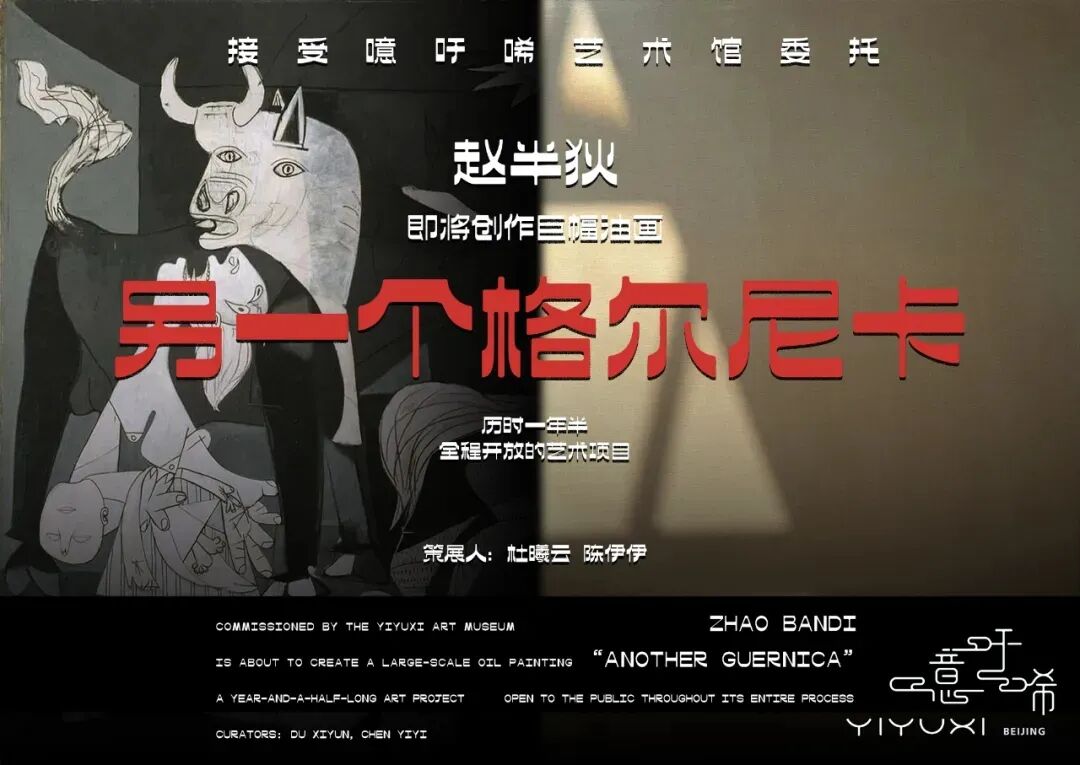
Zhao Bandi’s Another Guernica offers a contemporary example. The core of this project “lies in turning creation itself into an open social practice, so as to respond to a fundamental question of the age”. It is not the completion of a painting but a sustained, public, participable visual action — a practice that pulls realist painting out of the studio’s enclosed space into the public sphere, making painting once again a cultural event that can be discussed, disputed and held in common.
The political character of realist painting lies not in what political stance it expresses but in its upholding of an “ethics of presence” that algorithms cannot replace. The making of every handmade realist painting contains a link that cannot be replicated by algorithm: a concrete person, at a concrete moment, with a concrete body, making concrete decisions upon a concrete material. The political significance of this “ethics of presence” is that it upholds a direct, embodied viewing relation unmediated by algorithm. In a visual environment ever more mediated by algorithms — the recommendation algorithm decides what you see, the generation algorithm decides what what you see looks like, the recognition algorithm decides what what you see means… — handmade realist painting offers a possibility of “opting out”. Not opting out of technology, but opting out of the algorithm’s mediation of viewing. A viewer stands before a painting; their eyes touch the paint directly, their body faces the canvas directly. In this contact there is no algorithmic intervention, no recommendation, no optimisation, no generation.
Thus all strategies concerning “material return” and the “ethics of presence” rest on one premise: that the viewer can perceive the difference between handmade traces and algorithmic generation.
IV. There Is a Question
There is a question: what if the viewer’s capacity to perceive “handmade-ness” is itself degenerating?
The algorithm’s overproduction is creating a new visual relation — one that is not merely the inability to tell apart image-models and real referents, nor merely the dissolution of the boundary between true and false, reality and simulacrum, but a growing indifference toward these distinctions. When viewers can no longer tell “real” images from “manufactured” ones, and even feel “it doesn’t matter”, this inability to distinguish is itself no longer seen as a problem. It means viewers no longer ask “who painted this” or “what does this trace mean”, but merely consume the surface of the image.
This indifference is fatal to realist painting. If viewers do not care whether a painting is handmade or AI-generated, then the aesthetic value proposition of “traces of labour” loses its audience base. Neuroaesthetic research holds a theory: the human brain does show a measurable difference in aesthetic response between “hand-drawn by a human” and “rapidly generated by algorithm”, but this difference depends entirely on the viewer’s inference about the creative process. If the viewer lacks this capacity for inference (or does not care about it), the difference will simply not be perceived.
But the degeneration of viewers’ perception is not a uniform process. It depends on market signals, education level and viewing conditions. In the global commissioned-portrait market, a notable phenomenon is this: contemporary painters can sell portraits for one thousand to ten thousand dollars or RMB to clients anywhere in the world without needing a studio located in a Western country; platforms such as Instagram, Etsy, personal websites, online galleries, Patreon and direct commissioning have substantially lowered the barrier to finding clients, and the pool of potential clients worldwide is far larger than before. This means the economic survival of realist painting has not collapsed as many suppose; it has merely undergone a structural displacement — from the monopoly channel of gallery representation to a custom economy dealing directly with clients. Those portrait painters who can prove they are “really painting” are building trust through process transparency: showing videos of the creative process on social media, sharing drafts at every stage, letting clients see every decision from sketch to completion. This is not an aesthetic strategy; it is an economic survival strategy. And it in turn reinforces the viewer’s capacity to perceive “handmade-ness”: when a client personally watches a painter spend three months completing a portrait of their own family, their sensitivity to “traces of labour” is constructed in the course of that experience.
At the same time, an age that values the foundational skills of genuine creators is arriving. Consider the cases, frequently seen online, of self-proclaimed “AI artists” who apply for painting jobs yet cannot draw by hand in the practical test and are not hired; to confirm design ability and the corresponding capacity for revision, companies are making drawing tests routine. As technology advances, it is hard to say how far AI’s capacities will reach. Perhaps the eventual fate of so-called fully grounded realist artists is after all to be replaced by AI, or to arrive at the step of being “refined” and “distilled”. In the past, novice realist artists (or “painters-for-hire”) could earn a living by drawing simple portraits; now this work has been almost entirely taken over by AI. Those at the bottom face a survival crisis, mid-level painters lose their competitive edge, and top mature creators worry that the essence of art is being alienated. More noteworthy is the divergence painters display under the AI wave: some hold fast to traditional realist technique, treating it as an inviolable bottom line; others turn to “surreal fiction”, using realist technique to depict impossible scenes generated by AI; and yet others choose to exit painting altogether, moving toward creative fields unrelated to AI, and so on. This process of divergence has no clear direction, and guarantees the survival of no one.
Any honest discussion must include failure. In the discussions of AI and realist painting I have seen so far, success cases are quoted over and over, while failure cases are almost never mentioned. I have seen the figure paintings of a well-known domestic gongbi painter; in a short video she said she has embraced AI, claiming it helps her with colour. She will probably not disclose exactly which parts of her work are AI’s doing, because that would hurt her market. Yet AI’s function is by no means merely colour assistance — among the realist paintings we see, works produced by AI ghostwriters are everywhere. What I mean to say is that this attitude is understandable, but one cannot pass off the spurious without limit: taking realist images created with AI’s help and transferring them onto paper to keep the market going, harvesting dividends without end — this is no better than Japan, which cries “environmental protection” while discharging nuclear wastewater into the sea, or raves about art while pouring into it the pleasing nuclear wastewater of AI vision. Relying on AI to skip the bitter labour of realist training, yet holding forth about the irreplaceability of the hand, sneaking algorithmically generated results into the market while striking a pose of upholding tradition — the cost of evading hard thinking and stealing success can only be that everyone pollutes together, ending in collapse. To borrow a line from Lu Xun: “Trickery has its methods, and its effects, yet they are limited; therefore none who achieve great things by it have ever been known in history.”
On this point, I also want to speak of failure, for failure is precisely the most valuable analytical material, because it reveals the very limits of the way out.
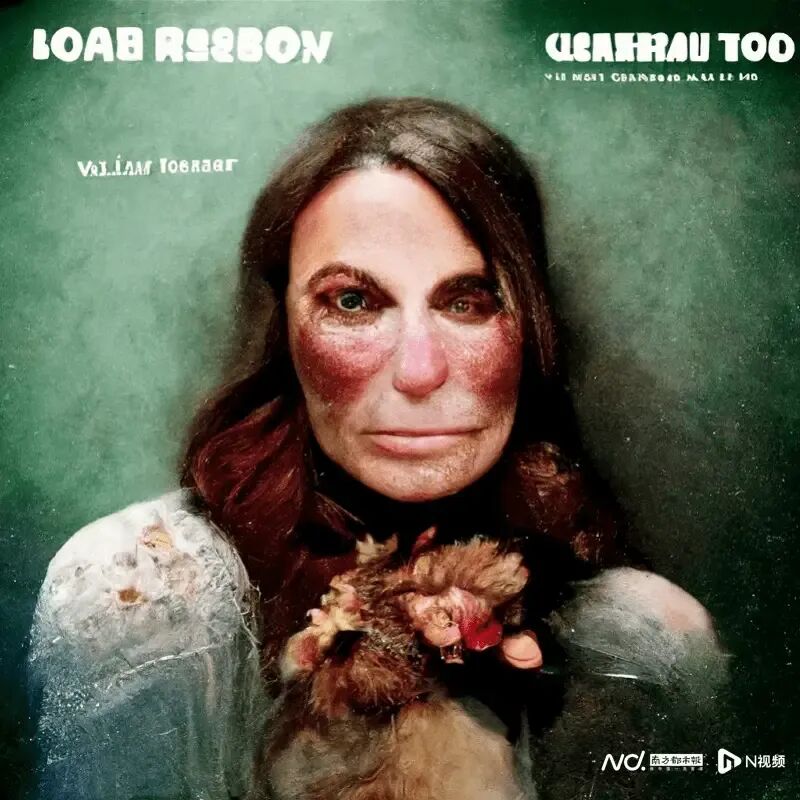
The story of the Swedish artist and writer Stefan (who often uses the alias Supercomposite) deserves to be told seriously. In 2022, while testing AI’s “negative prompt” function, she accidentally generated a red-faced, hollow-eyed female figure called “Loab”. The figure spread virally across social media and was described by commentators as “disturbing”, said to have “sparked lengthy ethical debates about visual aesthetics, art and technology”. Loab recurred across many generations of images, sometimes vanishing for several generations before reappearing, and often appeared alongside children in “horror” and “gore” scenes. Stefan says that collaborating with AI to make art is “ultimately very depressing and very limited”, that AI “creates a dopamine pathway in the brain. Pressing that button over and over, constantly getting results, is highly addictive”. She has stopped using AI and turned to writing film scripts, because the experience of AI art left her “utterly exhausted”.
Stefan’s mode of failure is this: the “emergent” features of AI generation (outputs that cannot be directly derived from the input) are at first exciting, but gradually become wearying. For no matter how “unexpected” the output, it is essentially the same system taking a random walk in the same latent space. You cannot “improve” through learning, because the system itself does not acknowledge improvement; it only acknowledges probability. “Failure” in handmade painting is a learning opportunity, because you can paint better next time. “Failure” in AI generation is merely a reason to press the button again, because the system does not learn from your feedback.
The second kind of failure is the self-repetition of private models. Some artists invest heavily in training private models based on their own work, only to find that what is generated is merely a statistical average of their existing output. The model cannot produce anything genuinely new, because its training data is everything the artist already knows. An artist’s growth depends on breaking out of their comfort zone, whereas the private model fixes precisely that comfort zone at the algorithmic level. Although the BLK-Assist framework demonstrates that human authorship can be proved at several stages, it does not answer a more fundamental question: if a model is trained only on your work, how does it help you become “unlike yourself”? This paradox is not a technical problem but a problem of creative logic — one the artist cannot break through, unless they have no intention of breaking through and merely perform an identity called “artist”.
The third kind of failure is the market’s indifference to “material return”. Some artists turn to large-scale, thickly painted, strongly tactile work, only to find the market unresponsive. The problem is not that these works are bad, but that their value propositions — “materiality” and “presence” — require the viewer to stand before the canvas in person to be felt. In today’s art ecology of an extremely developed internet, works dependent on physical presence are naturally at a disadvantage. A large-scale, thickly impastoed oil painting viewed on a phone screen and an AI-generated image may show no essential difference in visual presentation. The strategy of material return harbours an implicit premise: that the art market will pay a premium for “physical presence”. Whether this premise holds depends on the concrete structure of the market and the concrete preferences of collectors, and at present the outlook is not optimistic. But this is the very premise on which art can still be called “art” — it must be exhibited offline, a point I shall discuss at length elsewhere and will not elaborate here.
The fourth kind of failure is market exclusion caused by ethical controversy. Data in recent years show that even at the most elite auction houses, the buyer base for AI art remains extremely thin. These failures point to a shared conclusion: technical possibility does not equal artistic validity, and artistic validity does not equal market sustainability. Stefan failed because AI’s “emergence” is in the end only another form of poverty; the private model failed because it algorithmically fixes the logic of the artist’s growth; material return failed because the market’s channels of distribution no longer match its value proposition; ethical controversy failed because the market’s anxiety about legitimacy outweighs its curiosity. Between every link lies a chasm that must be crossed, and failure tends to occur in the crossing. Acknowledging the existence of these chasms is far more valuable than pretending they are not there.
V. The Way Out
To turn the question around: on what does a realist painter who refuses to use AI live today?
This question is more basic than all aesthetic discussion. If realist painters have no space for economic survival, then every discussion of the “ethics of presence” and “material return” is empty talk.
From the evidence available, the economic survival of realist painting is undergoing structural displacement. Works that depend on the artist’s creation and carry scarce meaning and humanistic value will continue to be collected by buyers as collectibles, while low-cost, highly customised AI-generated “inclusive art” will become a cultural consumer good favoured by the general public. This divergence is both a threat and an opportunity for realist painters. The threat: mid- to low-end realist works whose core selling point is “painting accurately” will be massively substituted by AI-generated “inclusive art”. The opportunity: the scarcity logic of the collectibles market will not disappear, but it grows more exacting — only works with genuine “irreplaceability” can enter the collectibles market.
I have thought long about what “human irreplaceability” means — which is, in truth, the way out for the realist painter facing AI. What I have arrived at is the following:
First, the most direct way out is to make the absurdities and glitches of AI generation the very subject of the picture. When AI generates a human face, it sometimes produces the wrong number of fingers, asymmetrical eyes, or some unnameable structural deformation. These “errors” are precisely the most honest manifestation of the algorithm’s limitations. To depict these errors precisely with realist technique constitutes a reverse deconstruction: not using AI to imitate human painting, but using human painting to dissect AI’s cognitive defects.
The second path is to push toward extreme materiality. If AI-generated images are visually indistinguishable from handmade painting, then handmade painting must shift the battlefield from “vision” to “touch”. When a viewer stands before a two-metre-high canvas and can see the shadows the paint casts under raking light, can imagine the painter’s bodily movements as they repeatedly worked a region, that experience is one no screen can provide. The archival property of the oil medium becomes important here: a painting’s physical existence is altered by time — its pigments oxidise, its canvas slackens, its sheen changes — and this temporality is itself part of the work. AI-generated images have no temporality, because they can be regenerated at any moment with identical output guaranteed. This is the second opportunity.
The third path is to transform realist painting from a display of technique in the studio into a conceptual practice in the field. Realist language combined with contemporary geopolitics, the climate crisis and sociological fieldwork can lend it a weight that AI-generated images cannot duplicate — a weight that comes from concrete places, concrete people and concrete material conditions. A possible example is a “Data Centre Landscapes” series: the realist painter travels to the sites of large AI companies’ data centres and depicts, with the most traditional oil technique, these buildings, cooling towers, power infrastructure and the surrounding natural environment. The significance of these paintings lies not in whether they “look like” their subjects but in restoring to visibility, tangibility and warmth a material reality that algorithms have abstracted away.
Fourth is to build a private model based on one’s personal creative archive. When a model is trained only on your work, its output is no longer a statistical average of “Vermeer style” but an algorithmic extension of your own visual language. The true advantage of the private model is that it can protect your visual language from being swallowed by external general-purpose models. When your work is used to train an open-source model, your style becomes, in statistical terms, a public resource. Building a private model means you actively participate in the control and pricing of your own visual data. This is only one approach, and it does nothing to advance the work itself; some say they add in other paintings, but that is probably no logic either, and so is most likely equally ineffective.
The fifth path exists in non-Western contexts, and its form differs fundamentally from the Western path. The AI Gemini robot of Hong Kong artist Victor Wong uses robotic arms and algorithms to create traditional Chinese ink landscape painting, its dataset drawn from NASA’s 3D lunar maps and stock-market data, where rises and falls in share prices are read as mountains and valleys, and the density of ink depends on changes in humidity. His works sell to private collectors for around twenty thousand US dollars, and he has undertaken projects for companies such as Cathay Pacific. The significance of this case is that it treats AI as a “translation tool”, translating non-visual data (lunar terrain, stock indices) into the visual language of traditional ink painting. This is not the Western narrative of “AI replacing the painter” but a place-based technological appropriation: using globalised technological tools to activate a local visual tradition. The same logic appears among artists in the Persian Gulf, who actively “appropriate” generative-AI tools not to imitate Western masters but to create new forms in dialogue with indigenous cultural symbols and aesthetic traditions. This strategy of “place-based appropriation” lies beyond the reach of Western-centred critical frameworks.
But all five paths rest on one premise: the user must be clear about what they are doing and why. A “realist artist” who is unclear about the sources of AI’s training data, who does not understand the basic working principles of diffusion models, and who does not reflect on the ethical consequences of their own use of AI — whatever they produce, they are merely pressing a button on the algorithm’s photocopier. Technical literacy is not the same as artistic literacy, but in this age, artistic literacy lacking technical literacy is crippled.
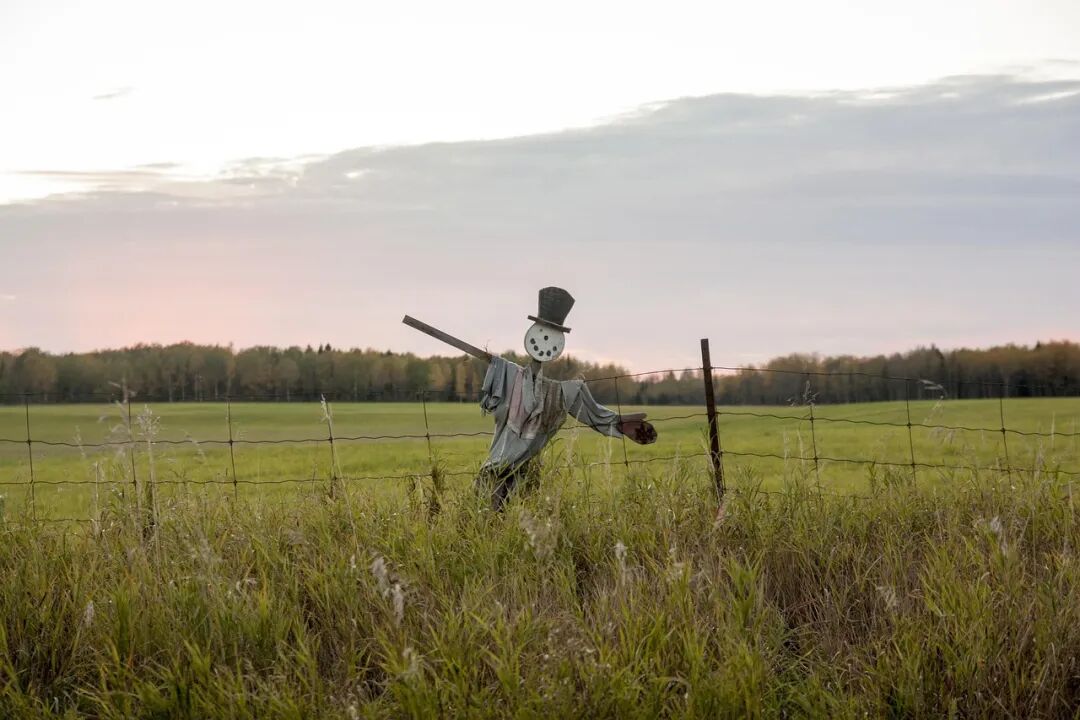
The ground realist painting now stands on is a ruin. The capacity to “paint accurately” as a standard of legitimacy is thoroughly past, and even the last shred of realist dignity has been utterly destroyed by the algorithm. Those who still pretend on the ruins that nothing has happened — who continue to use “hyperrealism” as their selling point, “master style” as their fig leaf, and pass off AI-generated underdrawings as handmade originals — are in essence running, atop the ruins, a con that has already been hollowed out. They harvest short-term traffic and capital, but what they sell is far more serious than they imagine: they sell the very qualification of the artist as a cognitive subject.
But a ruin does not mean an end. The invention of photography equally made the realist painters of the time feel the advent of doomsday. When Paul Delaroche saw the daguerreotype in 1839 he cried “painting is dead”, yet painting did not die. It relinquished its monopoly on “recording reality” and turned toward the various experiments of modernism. Today, AI is forcing realist painting to relinquish its monopoly on “generating realistic images”. This is a more painful relinquishment, because “realism” was once realist painting’s core self-identity. But the empty ground after relinquishment is precisely the starting point of reconstruction.
The basis of reconstruction is neither nostalgia for old skills nor surrender to the algorithm, but a more fundamental recognition: the value of realist painting lies not in its ability to produce “correct images” but in its capacity to occupy an irreplaceable position within the entire ecosystem of image production — a position that belongs to the body and to time, and to matter’s specific reactions under specific conditions, to the unique, unacceleratable lifetime a person spends before the canvas.
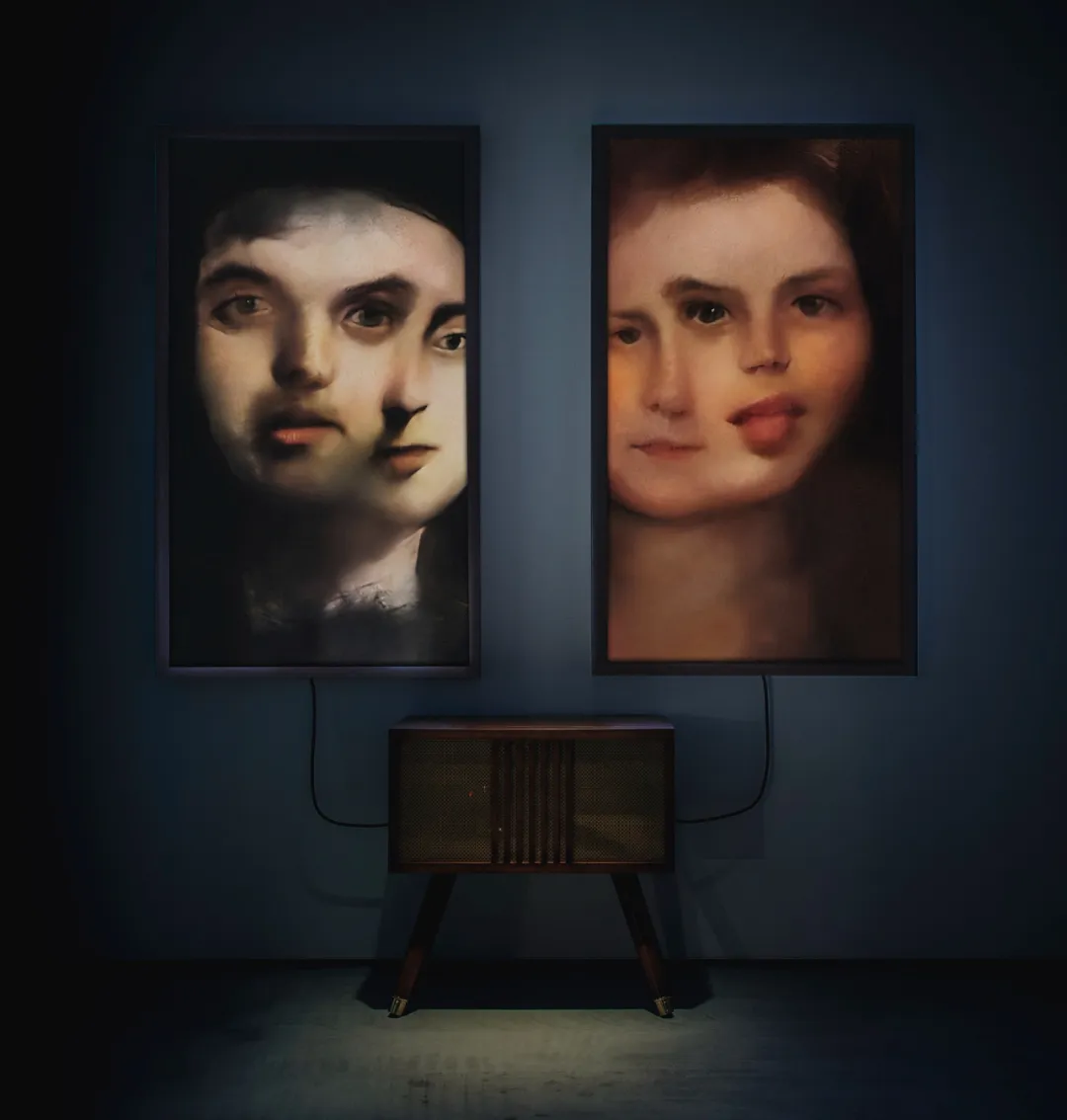
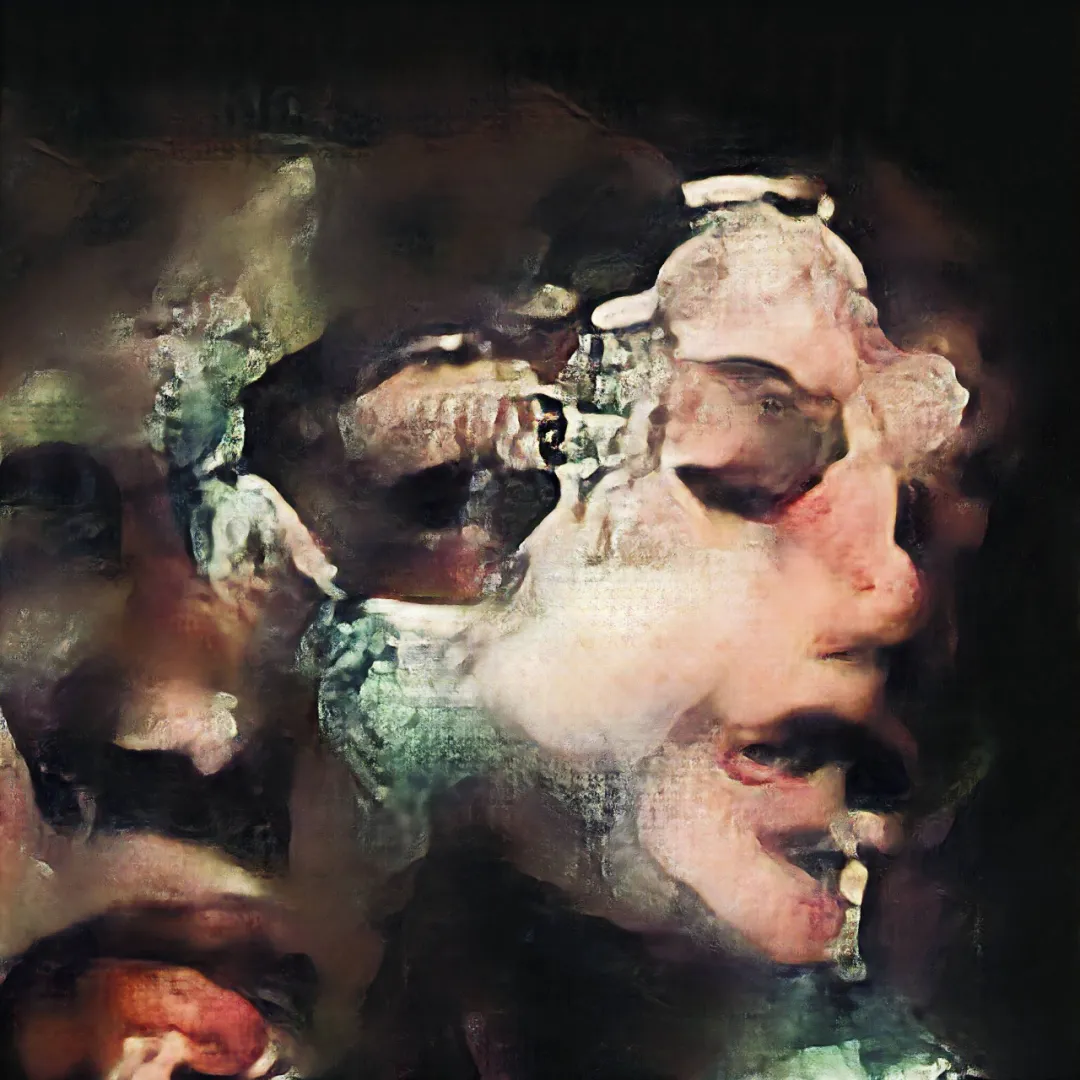
Presence is not aura. Aura is spatial, concerning the distance between original and copy. Presence is temporal, concerning the irreversibility between process and result. The algorithm can generate a pixel array that looks like handmade painting, but it cannot generate the process that turns the pixel array into a painting. The irreversibility of this process is where realist painting’s stronghold lies in the algorithmic age.
The history of photography offers the most persuasive reference. After photography solved the puzzle of “painting accurately”, the Impressionists redefined the purpose of art: from “supplying better answers” to “asking better questions”. Once AI has solved the puzzle of “generating realistic images”, realist painting needs to accomplish a structurally similar turn: from “who paints more accurately” to “who is painting, why, and for whom”.
This is not an easy turn. It demands that realist painters abandon the skill they most pride themselves on, to embrace a more uncertain value proposition harder to explain to the market. It also demands that viewers develop a new perceptual capacity — not to perceive “likeness” but to perceive “the quality of presence”. The value of a handmade realist painting lies not in its being more precise than an AI-generated image, but in every inch of its surface bearing a concrete person’s concrete decision within a concrete time.
Therefore, the true realist artist must accomplish an identity shift: from a displayer of technique to a poser of questions. Treat AI as the scalpel that stimulates thought, and the canvas as the physical line of defence against homogenisation. When realist painting no longer takes “likeness” as its goal but takes “presence” as its condition, “critique” as its drive and “matter” as its medium, it ceases to be an obsolete technology eliminated by the algorithm and becomes a cognitive practice that remains irreplaceable in the algorithmic age.
Upon the ruins, the only way out for realist painting is not restoration but reconstruction — with those things AI can never compile: a real body, one that grows tired, that hesitates, that spends its lifetime before the canvas. This body need not compete with the algorithm for speed. What it must do is keep alive the question the algorithm cannot answer — why, here and now, in this way, paint this thing. So long as this question is still asked, realist painting has not yet died. Otherwise, to use AI to generate ever prettier schemes and colours to whitewash the picture is merely self-deception within a finite art ecology.
订阅艺术评论
订阅即赠《2024中国当代艺术关键词》内部思考笔记 PDF
每周免费获取最新当代艺术批评与研究