Introduction: A Philosopher’s “Absence” and “Presence” in the Realm of Art
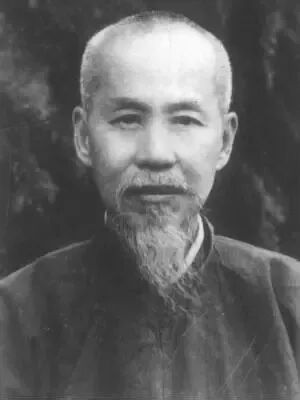
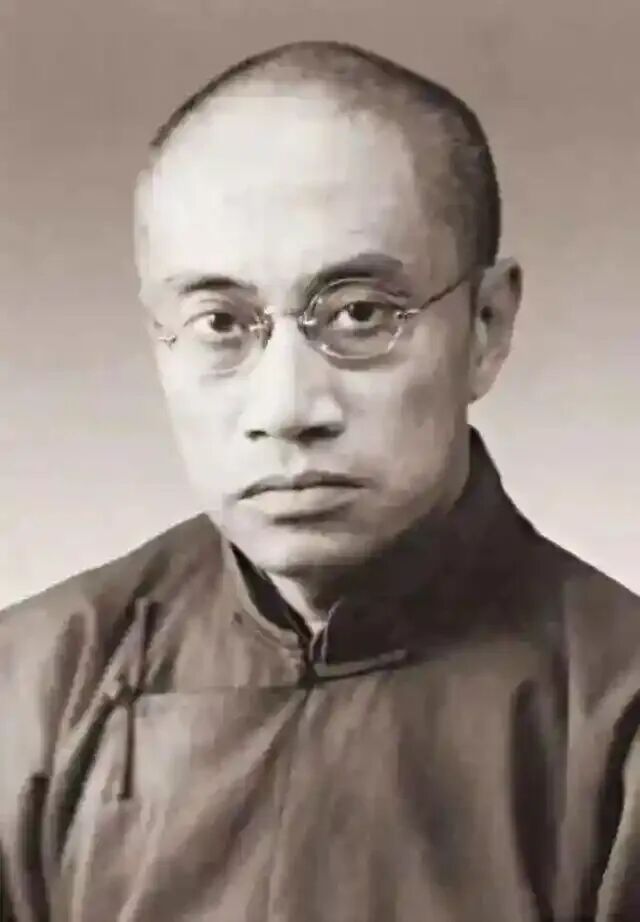
Mr Xiong Shili (1885–1968), among the most original and spiritually compelling thinkers in twentieth-century Chinese philosophy, forged his system of the “New Treatise on the Uniqueness of Consciousness” (Xin Weishilun), fusing the Yogācāra Buddhism of the Consciousness-Only school, the Confucian philosophy of mind, and the transformational cosmology of the Book of Changes. In doing so, he opened a rugged yet magnificent path for modern Chinese philosophy to reconstruct its cultural subjectivity and re-create its spiritual universe.
Mou Zongsan once praised his teacher thus: “In the past fifty years, the only man able to open up the perplexities of a new philosophy and to forge his own majestic vocabulary into a school of his own is Mr Xiong alone.” Yet when we follow the thread of intellectual history and seek this thinker’s direct traces in the realm of art, we encounter a meaningful “absence”. Among his vast writings, we find almost no systematic treatise on the philosophy of art comparable to Zong Baihua’s Strolls in Aesthetics or Deng Yizhe’s Collected Writings on Painting Theory. Whether in the rigorous speculation of the New Treatise on the Uniqueness of Consciousness or the pithy aphorisms of The Essentials of Xiong’s Teachings, art does not appear to be the central concern of his philosophical discourse.
This apparent “absence” in fact heralds a far more profound “presence”.
Xiong Shili’s thought is not a discursive account of art but rather an ontological foundation upon which artistic creation may establish itself. His philosophy flows like a powerful undercurrent: it does not directly prescribe technique or form, yet it fundamentally shapes the artist’s worldview, cosmology and conception of life, thereby providing the living source for an artistic practice endowed with Chinese cultural subjectivity and spiritual depth.
He is not the “legislator” of art but the “forger” of spirit. His ontology of the non-duality of substance and function, his cosmology of the non-duality of mind and matter, his cultural vision of “returning to the root to open the new”, and his cultivation theory of the unity of practice and ontological ground together compose a vast and profound philosophical system. Though this system says nothing explicitly of art, the great Way of art resides within it. It responds deeply to the core questions of Chinese art: wherein lies the truthfulness of art? What is the ultimate source of creation? How should the artist negotiate the relation between tradition and modernity? And what, in the end, is the relation between artistic creation and the cultivation of character?
This essay unfolds precisely within this dialectic of “absence” and “presence”. I have no wish to “invent” for Mr Xiong Shili an aesthetics he never wrote; rather, by delving deeply into his philosophical canon, I aim to illuminate the abundant artistic spirit latent within his system of thought.

I. The Foundation: Xiong Shili’s Core Philosophical Conceptions and Their Intrinsic Artistic Spirit
To grasp the latent radiance of Xiong Shili’s thought upon the field of art, one must first enter the core of his philosophy. His philosophy is not an external system of knowledge but an inward gongfu philosophy of spiritual “practice” that demands the lived verification of life. Its core conceptions — the non-duality of substance and function, the non-duality of mind and matter, the coalescence and expansion that generate change, returning to the root to open the new, and a cultivation theory that prizes intuition and embodied realisation — together build a vitalistic and unceasing cosmology of cosmic life.
This philosophical system offers no technical manual for artistic creation; rather, it fundamentally reshapes the artist’s way of seeing the world, understanding life and undertaking creation, laying a solid ontological foundation for art.
(1) “The Non-duality of Substance and Function”: The Ultimate Inquiry into the Truthfulness of Art
The cornerstone of Xiong Shili’s philosophy is his repeatedly expounded and dialectically subtle doctrine of the non-duality of substance and function. This idea constitutes the ontological core of his New Treatise on the Uniqueness of Consciousness and is the key that unlocks how his thought leads to art. The term “substance” (ti) does not denote a static entity outside the phenomenal world; it is the true ontological ground of all that exists — a ceaselessly generating, ever-changing, vigorously flowing current of life.
Xiong Shili declares at the outset of the New Treatise on the Uniqueness of Consciousness: “The ontological ground is not separate from function; function is the manifestation of substance, and substance is the substance of function. Substance and function are as one; they are not two things” (Xiong Shili, New Treatise on the Uniqueness of Consciousness, Shanghai Bookstore Publishing House, 2008). By “function” (yong) is meant the myriad things of the universe — infinitely varied, richly manifold — through which the cosmic ground manifests itself.
The crux of the non-duality of substance and function is to demolish the traditional metaphysical myth that severs ontological ground from phenomenon, entity from function, reality from appearance. Xiong Shili sharply criticises the old view that behind the shifting phenomena there lies an unchanging “suchness” as the ground; he calls this a “fragmented understanding”. He insists that “function is the manifestation of substance; apart from function there is no substance” — phenomena (function) are themselves the flowing manifestation of the ground (substance), inseparable like water and wave. He emphasises: “What I call substance is precisely great function; it is change. Change is real, not illusory.”
This profound ontological insight poses, directly, an ultimate question about the essence of artistic creation, striking at the very heart of art’s “truthfulness”. In Xiong Shili’s view, what we ordinarily call “realism” may in fact be the greatest “untruth”. If an artist devotes himself merely to depicting the “real world” as seen by his naked eye, what he captures and reproduces is not the original life-pattern of things — their “original appearance” — but only the appearance filtered, fixed and distorted by our senses, concepts and pragmatic ends. Xiong Shili names this world “grasped” by subjective intention the “mental appearance”. In his Random Notes from the Studio of Abiding he states plainly: “The painter’s rendering of things serves precisely to dismantle all the attachments of mental appearance that we accrue in practical life, and to reveal the original appearance of the myriad things of the cosmos.”
Thus the true task of art is not to imitate that world of “mental appearance” reified by our everyday cognition, but to “break attachment” — that is, to dispel the obscuring veil of subjective ideation, and to realise and manifest the vital, ever-flowing “original appearance” behind things.
The doctrine of the non-duality of substance and function offers a profound modern philosophical defence for Chinese art, and especially for the xieyi (idea-writing) spirit of literati painting. The “likeness beyond likeness” or “spirit-resemblance” pursued by literati painting is not, in essence, a clumsy imitation of outward form; on the contrary, it strives, through succinct and vital brush-and-ink (function), to capture and express the inner rhythm of life and cosmic spirit of landscape and bird-and-flower subjects (substance). When a painter depicts mountains yet “mountains are not mountains”, depicts water yet “water is not water”, he is practising the work of “breaking attachment” — transcending the mental appearance of a mountain’s physical shape or water’s chemical composition, and arriving directly at its original appearance as part of the universal flux.
Hence the truthfulness of art lies not in the precise reproduction of the appearances of “function”, but in whether it can, through “function” (the work’s form, brushwork, colour), manifest “substance” (the cosmic ontological ground of life). This does not negate the value of subtle observation. Even in gongbi (fine-line) painting, if its meticulous description breaks through the bonds of formal likeness and penetrates to the texture, growth-pattern and inner spirit of its subject, it too can become an effective path to realising the original appearance. As Xiong Shili says: “In the flowing evolution of the myriad transformations, one beholds the divine function of the ultimate reality.” The true meaning of art lies precisely in manifesting, from amid the ever-changing phenomena, an eternal and universal structure of real life.

Building on the ontology of the non-duality of substance and function, Xiong Shili further develops his cosmology of generation, whose core is the non-duality of mind and matter and the coalescence and expansion that generate change. This cosmology lifts the artist’s creative activity from a merely personal, psychological plane to a cosmological, metaphysical height, offering a powerful account of the ultimate source and sacred meaning of artistic creation.
The non-duality of mind and matter is a radical transcendence of the Cartesian mind–matter dualism of Western philosophy. Xiong Shili holds that our mind (spirit) and external matter (the material world) are not two utterly different entities but share the one, ever-generating cosmic ground as their source. In the New Treatise on the Uniqueness of Consciousness he argues: “Matter and mind were never two separate things. Through the vigorous dynamism of the ultimate reality issues the flowing of great function; and in its unceasing flow the cosmos is formed.” Mind is the manifestation of the “luminous intelligence” aspect of the ground, matter the expression of its “vigorous dynamism”; in essence the two are “the two faces of one body”. The implication for the artist is revolutionary. It means artistic creation is not an isolated “I” (subject) observing and depicting an external “it” (object). The creative process is, essentially, the artist — as a part of cosmic life — entering into an inward, profound communion and resonance with the life of all things. When the artist confronts landscape, he is not painting a rock or a tree; he is holding a dialogue of life with that rock and tree as manifestations of cosmic life. Creation thus becomes a life-experience of the unity of heaven and man, a unification of “my mind” and “the nature of things” at a higher level.
What, then, is the fundamental driving force of this flowing cosmic life? Drawing inspiration from the Book of Changes’ idea that “the way is borne by the interplay of yin and yang”, Xiong Shili creatively proposes the theory of “coalescence and expansion that generate change”. He holds that the cosmic ground itself contains two complementary and opposing fundamental functions or forces: “coalescence” (xi) and “expansion” (pi). In his treatise The Evolution of Qian and Kun he explains in detail: “Coalescence means gathering and contracting; expansion means issuing forth and unfolding.”
“Coalescence” is a force of condensation, contraction, inward gathering, tending toward unity; “expansion” is a force of diffusion, flowing forth, outward release, tending toward differentiation. The generation, change and destruction of all things in the cosmos are the result of the unceasing interaction and contention between these two functions of the ground. This contest of coalescence and expansion is precisely the manifestation of cosmic vitality.
Crucially, Xiong Shili regards human mental consciousness as the concrete embodiment of the coalescence–expansion functions within the person. He goes further still, equating “creation” — humanity’s highest spiritual activity — directly with the “expansion” function of the cosmic ground. In his Continuation of the Essentials of Xiong’s Teachings he states with finality: “Creation is absolutely unconditional; it is the function of expansion, the root that nourishes life, and must not be absent for a single day.” This claim confers upon artistic creation a cosmological status beyond compare. The artist’s creative activity is no longer merely the display of personal talent or skill, but one of the highest forms of the cosmic ground’s self-generation and self-manifestation.
Thus, in creating, the artist participates in and embodies, in the deepest sense, the cosmic function of “expansion”, becoming a conscious channel of the universal flux. This endows artistic creation with a metaphysical sacredness and necessity. It is not a dispensable pastime but the essential demand of life, the highest realisation of what it is to be human. Xiong Shili repeatedly stresses “vigorous dynamism” and “striving progress”; he holds that the meaning of life lies in unceasing, vigorous creation and practice, and that artistic creation is the most concentrated embodiment of this “vigorous spirit”.
(3) “Returning to the Root to Open the New”: A Methodology for Artistic Innovation
Confronting the tide of “wholesale Westernisation” in twentieth-century China, Xiong Shili advanced the cultural proposition of “returning to the root to open the new”. This is not only the path of his own scholarship but also provides fundamental methodological guidance for Chinese modern art on how to negotiate the relations of tradition and modernity, the local and the global.
“Returning to the root” means returning to the fundamental spirit and source of wisdom of Chinese culture. Xiong Shili holds that the “root” of Chinese culture lies in the humane spirit of Confucius and Mencius and the cosmic-life philosophy of the Book of Changes. He firmly opposes equating the “root” with rigid, external institutions or stale systems of knowledge. In The Essentials of Xiong’s Teachings he says: “By returning to the root I mean simply that one should not forget one’s root. The root is the crystallisation of our own inherent culture.” He believes that only by being deeply rooted in one’s own cultural soil can one gain genuine vitality and creativity. Blindly imitating the West leads only to the “loss of soul” of culture and the exhaustion of creativity.
“Opening the new” means, on the basis of “returning to the root”, undertaking a creative transformation that responds to the challenges of the age and opens up new cultural horizons. Xiong Shili is no conservative restorationist; he stresses that the “root” is a living thing that must continually grow and develop through interaction with reality. He advocates an open mind in studying and absorbing the essence of Western culture, especially its scientific spirit and logical method. Yet he holds that such learning must be self-directed — to “open my own new”, not to “pursue the other’s new”. In Chinese Philosophy and Western Science he proposes using Western scientific method to “dredge and clarify” China’s traditional wisdom so that it shines anew. This modern version of “Chinese learning as substance, Western learning as function” centres on the agency and inclusiveness of the substance.
“Returning to the root to open the new” offers Chinese contemporary artists a path for negotiating cultural identity. It encourages the artist to:
First, to establish a solid “cultural confidence”. One must not belittle oneself before the dominant discourse of Western art, but trust that China’s own cultural tradition harbours wisdom and spiritual resources comparable to any great thought in the world.
Second, to undertake “deep root-seeking”. This is not a superficial appropriation of traditional symbols (such as the dragon, phoenix or qilin), but a penetration to the core of Chinese philosophy, to realise its cosmology of the unity of heaven and man, its sense of ceaselessly generating life, and its ideal of inward transcendence of character.
Third, to undertake “creative transformation”. One must dare to re-interpret and express this classical wisdom through contemporary media and contemporary language. “Returning to the root to open the new” is the indispensable method for guiding Chinese contemporary art, within a globalised context, both to preserve its cultural subjectivity and to possess contemporary creativity.

In Xiong Shili’s philosophical system, epistemology and cultivation theory are inseparable. He holds that to grasp the ever-generating cosmic ground (the substance), one cannot rely merely on sense experience (“measuring wisdom”) or logical ratiocination (“comparative measurement”). For sense experience touches only fragments of phenomena, while logical reasoning easily sinks into a game of concepts; both belong to the sphere of “mental appearance” and cannot reach the “original appearance”. Xiong Shili proposes that to know the ground one must rely on a more fundamental, inward cognitive capacity, which he calls “innate wisdom” or “intuition”.
“Innate wisdom” is a direct, immediate wisdom that transcends the subject–object dichotomy. It does not seek outward but turns inward in contemplation. In the New Treatise on the Uniqueness of Consciousness Xiong Shili says: “Innate wisdom is the source of our own life, the ultimate reality of the cosmos … this wisdom is free of mentation, absolute.” To let innate wisdom manifest, one must undertake the work of “embodied realisation” through a profound personal cultivation.
By “embodied realisation” is meant using one’s whole life to personally verify and realise that ground. This requires the cultivator to break through the various “habitual tendencies” and “attachments” of everyday cognition, especially the “attachment to self” (taking the ego as an isolated entity) and the “attachment to things” (taking all things in the world as fixed, unchanging entities). Xiong Shili even holds that philosophy is in essence closer to poetry than to science, for it demands inward realisation and the investment of life.
This cultivation theory of the unity of practice and ontological ground demands of the artist far more than technical mastery. It means artistic creation is not merely the honing of a “craft” but a profound discipline of the heart-mind. Its implications for the artist are manifold:
First, preparation for creation is cultivation. Genuine creative inspiration does not come from external stimulation but from a profound inner stillness and purity. The artist must, through introspection, quiet contemplation and the clarification of mind, sweep away the dust of the heart, break fixed ideas and rigid cognitive patterns, and make his mind like a “bright mirror” that directly reflects the original appearance of cosmic life. Xiong Shili calls this state “freedom from mentation” — the shedding of the bonds of conceptual thought.
Second, the creative process is embodied realisation. In the moment of creation the artist should attain a state of “forgetting both object and self”. At this point subject and object no longer divide; the artist’s mind and the life-rhythm of the depicted thing become one. The flourish of brush and ink, the laying-on of colour, are the natural outflow of this inward realisation, not deliberate arrangement or design. This is precisely the philosophical basis of the traditional Chinese painting tenets “idea precedes the brush” and “vital resonance and living movement”.
Third, the character of the work is the manifestation of personality. Xiong Shili’s cultivation theory achieves a high congruence with the traditional Chinese art-theoretical notions that “character is the quality of the painting” and “calligraphy is as the person”. An artist whose heart is restless and full of cunning, however exquisite his technique, will find it hard to reach a lofty realm. Therefore, for the artist, the highest pursuit is not to create a perfect “work” but to shape, through the act of creation, an ideal “personality”. Artistic creation ultimately becomes a process of complete character-cultivation and life-realisation.

II. Thought Made Manifest: Xiong Shili’s Direct Statements on Art and Their Indirect Corroboration
Though Mr Xiong Shili’s philosophical system is vast and profound, his direct remarks on art scattered through his writings are few and fragmentary, like rare surviving relics. Scattered though they are, they often strike straight at the core of artistic problems, and become the echo of his philosophical thought within the concrete sphere of art.
More importantly, through an in-depth analysis of the case of Chen Zizhuang, a Sichuan painter profoundly shaped by his thought, we can clearly see how Xiong Shili’s seemingly abstract philosophical conceptions could be absorbed and internalised by an artist, and finally “developed” into a singular mode of brush-and-ink and an artistic realm of his own.
(1) Rare and Precious Insights on Art
In works such as Random Notes from the Studio of Abiding and The Essentials of Xiong’s Teachings, Xiong Shili occasionally offers his distinctive views on painting and calligraphy. Without exception, these views are permeated by his core ideas of “breaking attachment to reveal the source” and “the non-duality of substance and function”.
On painting, his most central view is the doctrine of “breaking attachment” already discussed. He holds that the painter’s purpose in rendering things is “to dismantle all the attachments of mental appearance that we accrue in practical life, and to reveal the original appearance of the myriad things of the cosmos”. This thesis is the cornerstone of his entire view of art.
He further explains that the “reality” we see in daily life is a product processed by our “discriminating mind” and “calculating mind” — an “image” reified by pragmatic ends and conceptual thought. True art, by contrast, uses an intuitive, holistic mode to penetrate this mist of mental appearance. He once gave the example that a newborn infant sees the world as an undifferentiated whole, without discrimination, which is closer to the original appearance. The artist’s task is, through cultivation, to return to a similar preconceptual, pure mode of seeing.
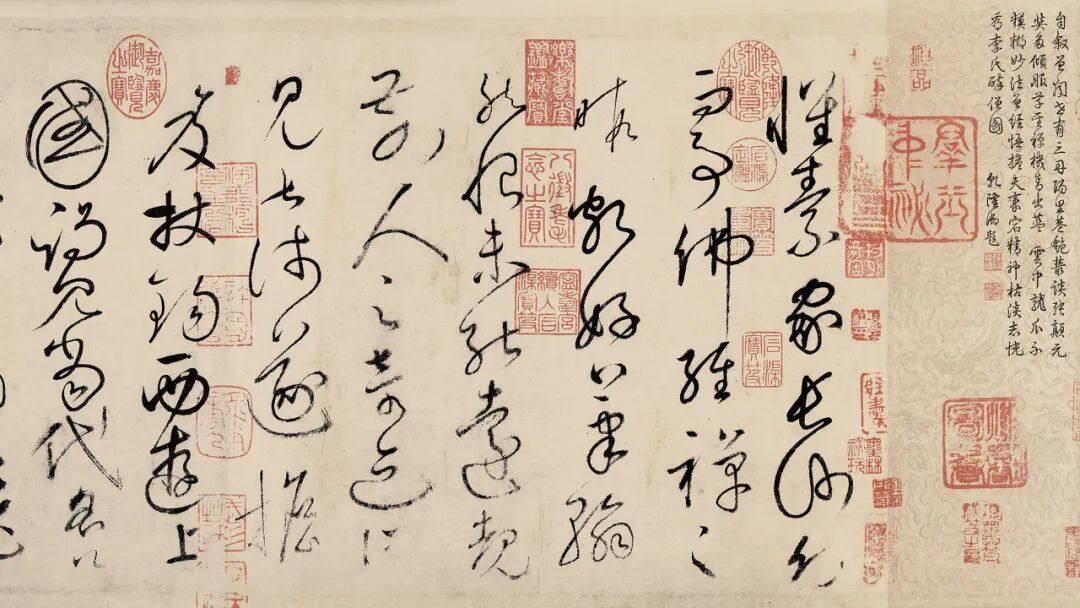
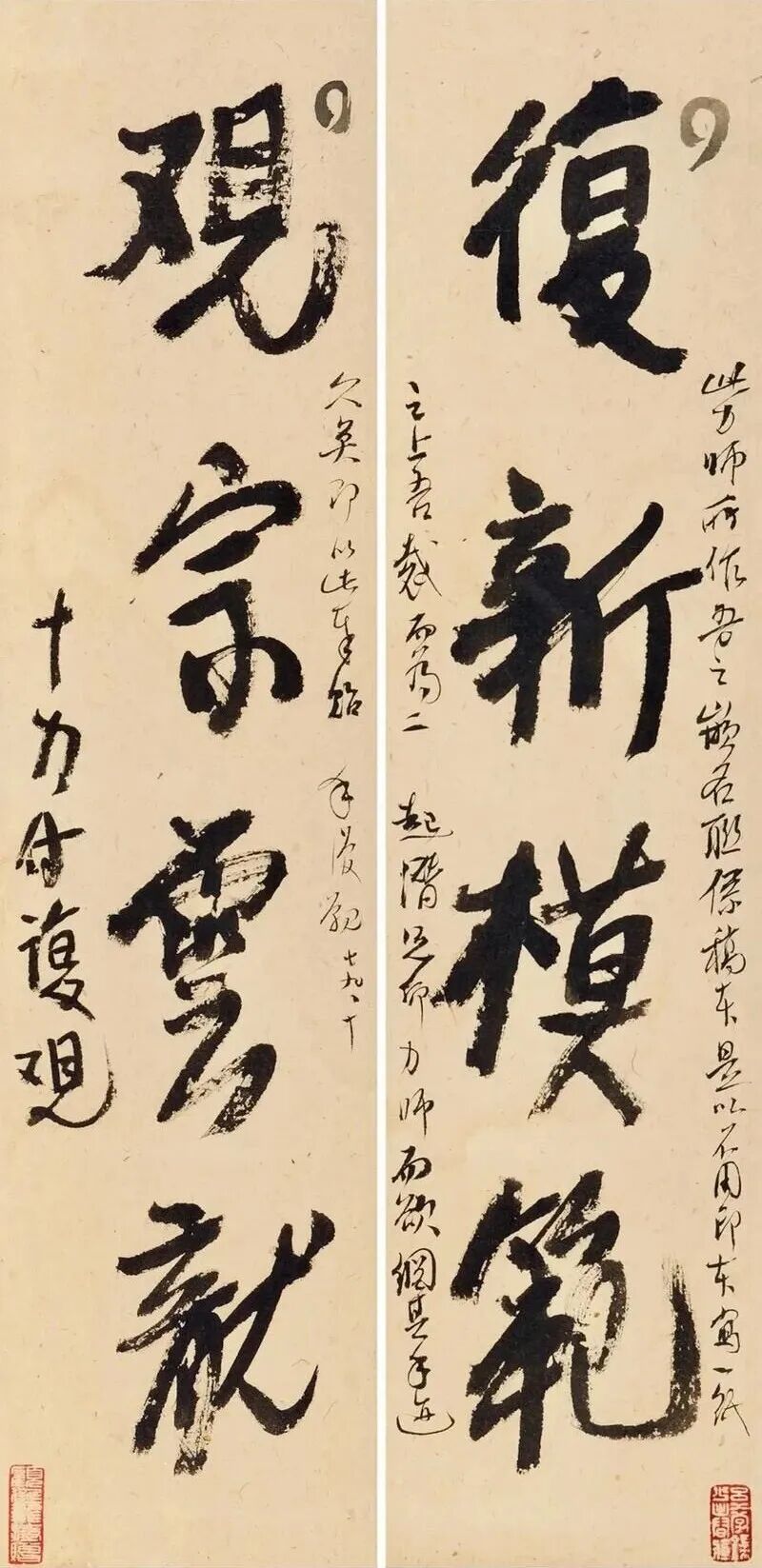
On calligraphy, Xiong Shili expresses the highest regard, considering it China’s “first art”. Behind this judgement lies profound aesthetic reflection. First, calligraphy is the art form that best embodies the non-duality of substance and function. The very line of calligraphy (function) is the direct outpouring of the writer’s vital breath and inner spirit (substance). The dryness or wetness, density or lightness of ink, the quickness or slowness, rise or fall of rhythm — each is the direct manifestation of the mind-nature. Second, calligraphy is highly abstract. Freed from the fetter of depicting objects, it uses the purest lines and structures to express the rhythm of the cosmos and the movement of life, which accords closely with his thought of breaking attachment to reveal the ground directly. Third, calligraphy best embodies the cultivation theory of the unity of practice and ontological ground. Every stroke is the crystallisation of decades of character-cultivation and brush-discipline, impossible to fake. A person’s spiritual realm is laid utterly bare in calligraphy. Xiong Shili’s praise of calligraphy is in truth an emphasis on an artistic ideal that takes life as source, cultivation as path, and the manifestation of spirit as aim.
(2) Case Study: Chen Zizhuang
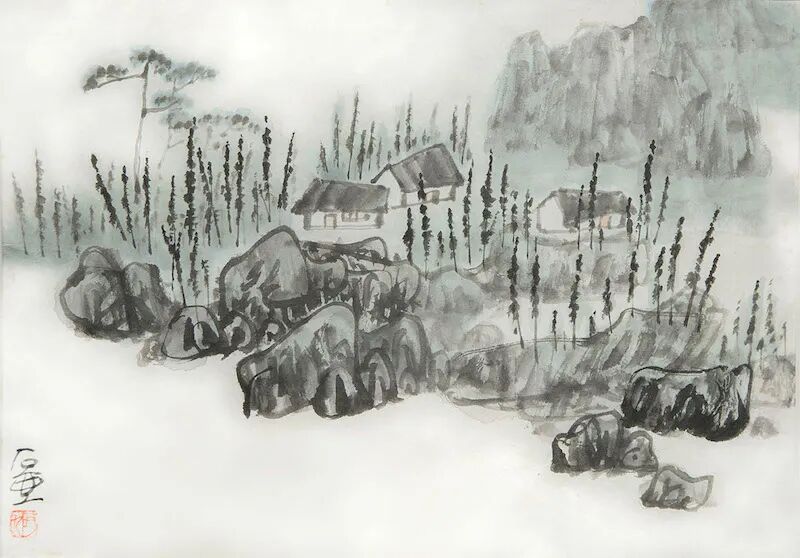
If Xiong Shili’s discourses on art are the “echo” of his thought in theory, then the artistic practice of the painter Chen Zizhuang (1913–1976) is its “development” in creation. Chen Zizhuang, styled Shihu (“Stone Pot”), was a highly original “reclusive master” of twentieth-century Chinese painting. Beset by hardship and obscurity in his lifetime, his artistic achievement won growing acclaim from the academy only after his death. A crucial reason his art reached such a high realm is that he was deeply nurtured and influenced by Xiong Shili’s thought.
The Source and Internalisation of Thought
In his youth Chen Zizhuang threw himself into revolution, later withdrawing to the countryside to devote himself to art as the times changed. Intellectually, he had direct or indirect contact with Mr Xiong Shili, who was also in Sichuan, and undertook a deep study and realisation of his philosophy, especially the New Treatise on the Uniqueness of Consciousness and The Essentials of Xiong’s Teachings. Unlike many painters who merely use philosophy as a decorative garnish, Chen Zizhuang genuinely internalised Xiong Shili’s thought as the fundamental mode of his observing the world, experiencing life and creating. In his recorded sayings on painting he repeatedly voices ideas consonant with Xiong’s — opposing “dead paintings made from photos”, stressing that “a painting is precious for having thought”, and pursuing “the unity of heaven and man” — all of which clearly reflect the deep imprint of Xiong Shili’s philosophy upon him.
The Embodiment of a “Vigorous and Striving” Creative Spirit in His Work
The most central spirit of Xiong Shili’s philosophy is the life-creative spirit of “unceasing vigour”. He opposes all forms of rigidity and stasis, advocating creative transformation on the basis of inheriting tradition. Chen Zizhuang’s art perfectly embodies this vigorous and striving creative spirit. In his early years he studied exhaustively the masters of the Song, Yuan, Ming and Qing, building an extremely deep foundation, yet he firmly opposed becoming a “slave” to the ancients.
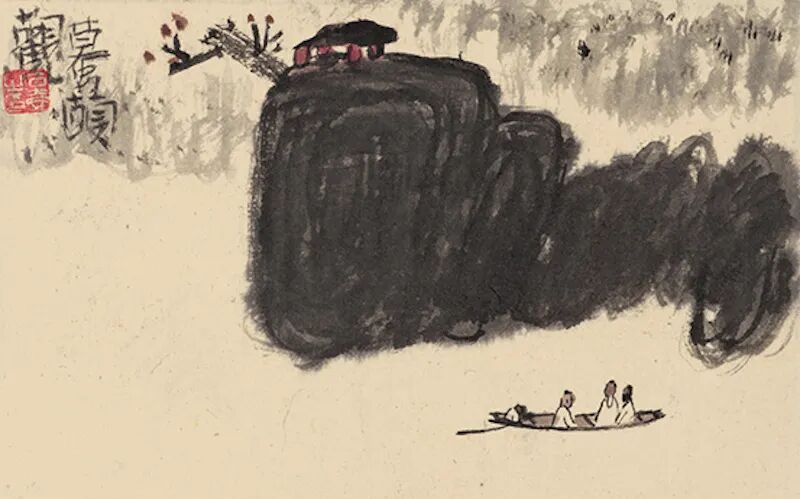
He once said: “I do not study the ancients — how much less the moderns? I take nature as my teacher and follow my own heart.” This courage to follow his own mind is precisely the concrete artistic practice of Xiong’s idea of returning to the root to open the new. In his work one finds no simple imitation of predecessors’ schemas, but a wholly new, inwardly-sprung, vital language of brush and ink. His landscapes are structurally strange and untrammelled, refusing any fixed formula. His brush appears childlike and awkward, yet is in fact full of inner force and the leaping of life. This is exactly the manifestation of the expansion function that Xiong Shili praised — the bursting-forth of life’s creativity.
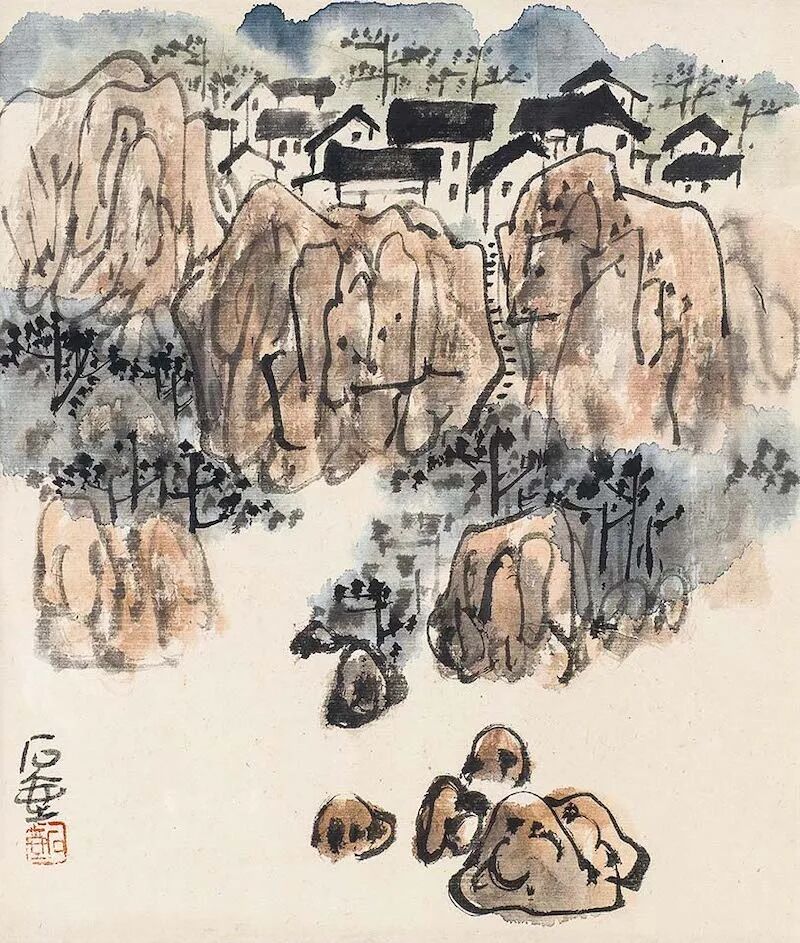
“The Interpenetration of Feeling and Reason”
Xiong Shili stresses that knowing the ground requires transcending sense and logic through innate wisdom or intuition — an embodied realisation that fuses emotional experience with philosophical speculation. Chen Zizhuang’s creative process is precisely this way of realising the interpenetration of feeling and reason. His painting is not an objective reproduction of the Sichuan landscape but a re-creation in which, after deeply entering nature and realising life, he fuses personal feeling, life experience and cosmic philosophy into one.
In his recorded sayings on painting he states: “Art is the unity of the true, the good and the beautiful; the true is the cognition of the objective world, the good is its affirmation or negation, and the beautiful is the unity of feeling and reason.” This coincides in spirit with Xiong Shili’s emphasis that philosophy must possess a “poetic heart”. In his works, a few strokes evoke a riverbank, a moored boat and distant hills; vast expanses of blank space and pale ink-wash conjure a poetic mood at once tranquil, remote and faintly solitary. Herein lies both his true feeling of mooring by night on the Jialing River (feeling) and his philosophical reflection on the emptiness and stillness of cosmos and life (reason). Feeling and reason achieve here a perfect unity.
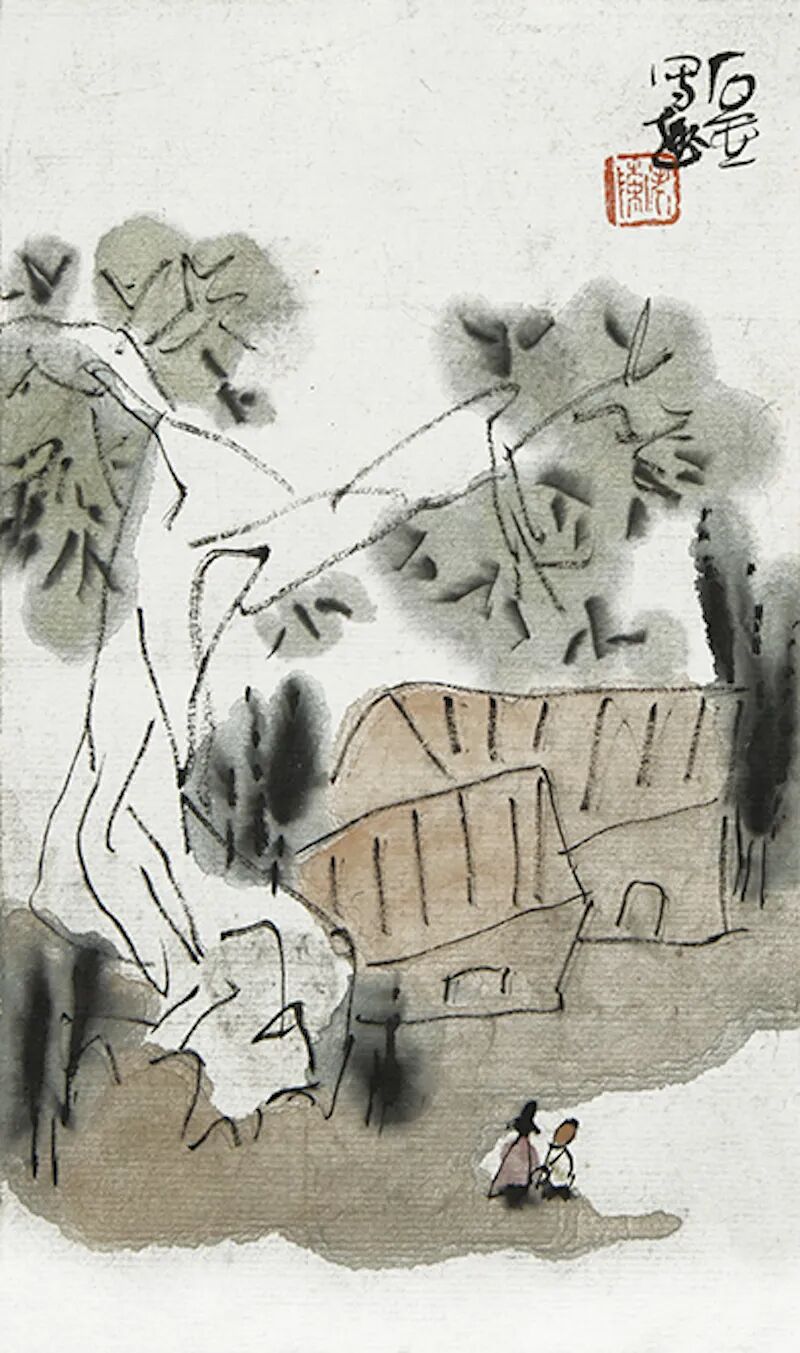
The Practice of “The Non-duality of Substance and Function”
Chen Zizhuang’s painting, especially his consummate late works, is an exemplary model of the non-duality of substance and function in painterly practice. In his pictures, brush-and-ink, form and colour — the function — are never isolated or present merely to show off technique, but serve, tightly and indivisibly, his inner spiritual intent and his apprehension of the ontological ground of natural life (substance).
Those seemingly casual, spontaneous dots and lines nonetheless precisely convey the desolation of autumn mountains, the tenacity of trees and the exuberant vitality suffusing the whole picture; brush and ink have wholly transcended the technical level to become the direct flow of his mind-nature. Form and content, technique and spirit, picture and mind-nature here attain the high unity of “function is immediately substance, substance and function are as one”. He himself said: “Painting is the embodiment of personality” — precisely the finest footnote to Xiong Shili’s cultivation theory of the unity of practice and ontological ground.
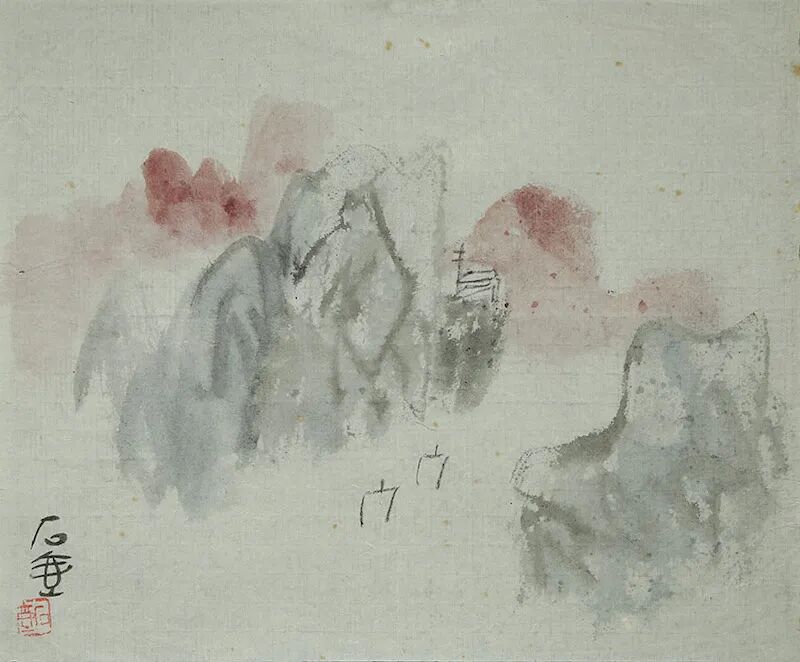
Through the case of Chen Zizhuang we can see clearly that Xiong Shili’s philosophy is by no means impractical metaphysics, but can be wholly transformed into a powerful inner drive that propels artistic creation and elevates the artistic realm. Chen Zizhuang’s art, with its profound philosophical content and unique language of brush-and-ink, proves that the ultimate achievement of a true artist depends not merely on his skill but on the depth of his thought and the height of his character.
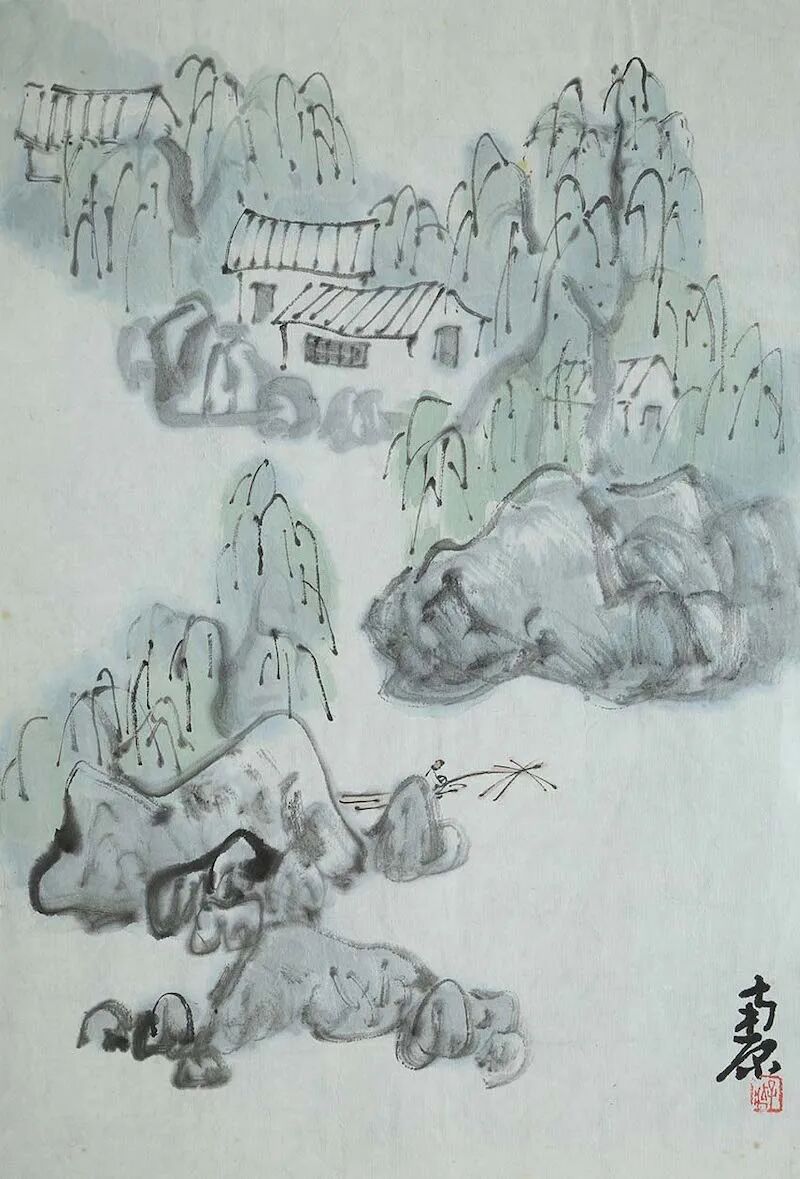
III. The Latent Resonance: The Macro Influence of Xiong Shili’s Thought on Contemporary Artistic Thinking
Beyond the sphere of art, the system of the New Treatise on the Uniqueness of Consciousness that Mr Xiong Shili constructed revises, through that treatise, the Yogācāra Buddhist theory that “all dharmas are only consciousness”, breaks the limitation of “severing substance from function”, and proposes the ontology of the non-duality of substance and function, establishing the original mind as the ultimate root of cosmos and human life and asserting that “the ground is function, function is the ground”. At the same time, through a theory of mind-nature he re-interprets the Confucian categories of humaneness (ren) and sincerity (cheng), defining humaneness as “the vigorous ontological ground of cosmic life” and linking sincerity to “the self-awareness and authenticity of the original mind”, thus connecting the theory of mind-nature with cosmology. His doctrine became directly a key source for Mou Zongsan’s “moral metaphysics” and Tang Junyi’s theory of the “nine realms of mind”, established the core theoretical framework for the school of modern New Confucianism, and influenced scholars such as Xu Fuguan and Qian Mu in their rethinking of the Confucian ontology.
The value of Xiong Shili’s thought reaches far beyond nourishing a handful of artists such as Chen Zizhuang. At a more macroscopic level, his philosophy offers Chinese contemporary art as a whole — especially as it confronts globalisation, commercialisation and the crisis of cultural identity — a profound and enduring stock of thought. Although in contemporary curatorial discourse, market talk or critical texts we rarely see direct citation of Xiong Shili, the latent resonance of his thought is manifest in the shaping of artists’ modes of thinking, in the construction of the value-dimensions of the art ecology, and in a deep call for cultural subjectivity. This constitutes a spiritual legacy that today still deserves our cherishing and vigorous excavation.
(1) Providing Chinese Contemporary Art with a Philosophically “Inward-turning” Path
Since the 1980s, the development of Chinese contemporary art has proceeded largely in dialogue, borrowing and even confrontation with Western modern and postmodern art. While this process broadened artistic horizons and enriched the artistic language, it also brought a persistent vexation: how to shake off dependence on Western artistic paradigms and criteria of judgement, and to establish a genuinely rooted, subjective contemporary art? Many practices either fall into a shallow imitation of the latest Western trends, or content themselves with manufacturing “Chinese symbols” that pander to Western imagination, lacking true intellectual depth and cultural grounding.
Amid this predicament, Xiong Shili’s philosophy offers Chinese contemporary art a vitally important, philosophically inward-turning path. He upheld all his life a “China-based” cultural stance, arguing that the reconstruction of Chinese scholarly thought must draw resources from its own great root and source, rather than trailing behind the West step by step. In The Essentials of Xiong’s Teachings he cries out: “Scholars of today have their thought dominated by the Westerners; they possess no independent spirit.” His emphasis on “independent thought” directly encourages contemporary artists to turn their exploratory gaze from external, Western artistic currents to internal, Chinese cultural wisdom.
This inward-turning path is concretely embodied in the following respects:
First, a turn in the root of value. Xiong Shili’s ontological thought pulls the ultimate value of art back from external social critique, political pop or formal play to an ultimate concern with, and inward experience of, life itself. It reminds the artist that the fundamental task of art is not to answer some Western theory, but to realise and manifest that great cosmic life universally present in you, in me, in all things.
Second, a turn in creative resources. He encourages artists to recognise that China’s Confucian, Buddhist and Daoist traditions are not mere antiques for nostalgic contemplation, but a living treasury of thought harbouring infinite wisdom and creative inspiration. The artist may draw from them unique conceptions of cosmos, life, mind-nature and time–space, and transform them into a contemporary artistic language.
Third, a turn in the aesthetic paradigm. Xiong Shili’s philosophy, especially his idea of the non-duality of substance and function, provides a solid philosophical basis for a contemporary transformation of the xieyi spirit or imagistic aesthetics — with Chinese cultural character, distinct from Western realism or pure formalism. It encourages artists to pursue an artistic realm of the union of inner and outer, the fusion of scene and feeling and the mutual generation of void and solid.
(2) Influence on the Art Ecology: Constructing Cultural Subjectivity
The latent influence of Xiong Shili’s thought on contemporary art is manifest not only in individual artists’ thinking but in the value-construction of the entire art ecology. At a time when consumerism and cultural nihilism grow ever more prevalent, the art ecology faces grave challenges. Art easily becomes the client of the market, a game of capital; artworks are equated with luxury goods, their spiritual value obscured by commercial price. Meanwhile, a relativist and nihilist attitude of “anything goes” deprives art criticism of standards and artistic pursuit of direction.
In such an ecological environment, Xiong Shili’s thought is at once a powerful medicine and a bright lantern. The core concern of his life lies in “re-establishing the great root and re-opening the great function” — rebuilding, for Chinese culture in an age of value-collapse, a solid spiritual fulcrum. This concern is of the utmost significance for rectifying the present ills of the art ecology.
First, Xiong Shili’s thought provides a spiritual weapon against the over-commercialisation of art. His emphasis on the unity of artistic creation and character-cultivation, his pursuit of the unity of practice and ontological ground, and his positioning of art as a sacred act participating in the universal flux all fundamentally locate the value of art on a metaphysical spiritual plane that transcends market price. They remind the whole art ecology that the ultimate aim of art is not to “sell” but to serve the Way (Dao) — the realisation of life and the completion of personality. This emphasis on the spiritual character of art is the most powerful bulwark against the complete commodification and entertainment-ification of art.
Second, Xiong Shili’s thought erects a value-yardstick against cultural nihilism. He firmly believes that the cosmos has a ceaselessly generating, ever-vigorous ultimate reality, and that human life communicates with this reality, its meaning lying in continual creation and realisation. This positive, vigorous philosophy of life is a fundamental negation of all nihilism, decadence and cynicism. It provides a root-standard for the value-judgement of art: whether a work can manifest this force and beauty of life, whether it can elevate the human spiritual realm, whether it can embody a vigorous, deep and vast aura. This offers art criticism a more fundamental value-dimension, transcending formal and market analysis.
IV. An Eternal Legacy: The Significance of Xiong Shili Today
After a century of turmoil, Chinese society has entered a wholly new historical stage. Amid the tides of globalisation and modernisation, we enjoy unprecedented material abundance and informational convenience, while at the same time facing the profound challenges of lost spiritual values, cultural-identity anxiety and confusion over the meaning of life.
Against such a backdrop, revisiting the spiritual legacy of Mr Xiong Shili carries a significance far beyond the purview of pure philosophy or art history. His thought stands like a lofty mountain range, offering us, amid the restless, fragmented landscape of contemporary culture, a solid coordinate where we may settle body and mind and fix our direction. For Chinese artists today this legacy is especially precious; it points the way, in at least three core dimensions, toward an artistic practice that is deeper, better rooted and more forceful.
(1) Holding Fast to China’s Cultural Root-position
The fundamental starting point and ultimate aim of Xiong Shili’s lifelong scholarship was the reconstruction of the Chinese nation’s cultural confidence. Born in an era of national weakness and the eastward spread of Western learning, he witnessed the widespread cultural inferiority and the radical current of wholesale Westernisation among his compatriots. He was grieved to the heart by this, and cried out: “We who are born into this age should each bear the responsibility of reviving the inherent culture of the East.” He was no narrow nationalist; rather, on the premise of a deep self-awareness of his own culture’s root, he advocated an open mind to select and absorb the strengths of Western learning. This cultural vision of returning to the root to open the new provides today’s artists, in a globalised context, with a fundamental compass for how to situate themselves.
In the field of contemporary art, globalisation is a double-edged sword. It brings unprecedented opportunities for international exchange, yet also a powerful pressure toward cultural homogenisation. The exhibition, market and discourse systems of the international art world still largely follow Western paradigms and standards. In such an ecology, Chinese artists easily fall into two errors:
One is to abandon their own cultural context, pandering to and imitating Western artistic trends, and ending up as “second-hand” Western artists;
The other is, in a manner that is sensationalising and superficial, to peddle cheap “Chinese symbols”, reducing a profound cultural tradition to an exoticism fit for Western consumption.
Xiong Shili’s spiritual legacy is precisely a powerful weapon against these two errors. It teaches the artist that true internationalisation is not Westernisation but something realised on the basis of a profound localisation. Only when an artist is deeply rooted in the cultural soil of his own nation and has a personal realisation of its spiritual wisdom can his work possess genuine originality and uniqueness, and contribute irreplaceable value to world civilisation. Xiong Shili’s thought provides today’s artists, in holding fast to their cultural root-position and building a cultural confidence that is “free to follow the heart, unhindered wherever it goes”, with the most solid philosophical cornerstone.
In an age where the logic of consumerism increasingly dominates everything, art faces the danger of being thoroughly reified. Artworks are treated as investment instruments, art activities as social embellishment, and an artist’s success equated with his market price. Against this backdrop, the inner motive of artistic creation is all too easily corrupted by external, utilitarian aims, and the joy of creation readily displaced by the pressure to succeed.
Xiong Shili’s philosophy of life offers powerful theoretical support for the de-reification and re-sacralisation of art. In his view, creation is the essence of the cosmos, the instinct of life, and the highest value of being human.
He repeatedly stresses that the cosmic ground is ever-vigilantly active, and that the meaning of life lies in participating in this vigorous, creative universal flux. In the New Treatise on the Uniqueness of Consciousness he writes with passion: “When function manifests, that is creation … the cosmos is inexhaustible, and creation is infinite.”
This thought raises artistic creation from a “profession” to a “vocation”; from “production” to “genesis”. It reminds the artist that the ultimate purpose of creation is not merely to produce a saleable object, but to realise a profound life-experience. The process of creation is the moment of the artist’s most exuberant vital outburst, the most concentrated condensation of his spiritual energy, and his most profound communion with the great cosmic life.
This infinite reverence for life-creativity can help the artist, amid the restless market environment, preserve inner steadfastness and guard the purity of creation. It lets the artist understand that so long as the creative process is sincere and full of vital passion, that process itself already possesses immortal value.
An important feature of contemporary society is the segmentation of fields and the fragmentation of the person. The artist is defined as a professional producer, and the evaluation of his work is often severed from his personal character and cultivation. This splitting of art from person frequently produces a phenomenon: the artist explores profound social or philosophical themes in his work, yet in real life may be a refined egoist.
Xiong Shili’s cultivation theory of the unity of practice and ontological ground is precisely a forceful critique of this splitting. He inherited and developed the Confucian traditions of inner sageliness and outer kingliness and the unity of knowledge and action, emphasising that true wisdom must be personally verified through the practice of life. For the artist, this means that artistic creation (outer kingliness) and the cultivation of personality (inner sageliness) form an indivisible whole. He holds that “what the learner learns is not merely the augmentation of knowledge, but the transformation of his dispositional endowment” (Xiong Shili, The Essentials of Xiong’s Teachings, Shanghai Bookstore Publishing House, 2007).
This thought provides a solid modern philosophical basis for the traditional Chinese art-theoretical notion that character is the quality of the painting. It demands that the artist not rest content with honing the technique of painting, but devote himself to elevating the realm of his own personality. The artist must, through a series of learning-for-oneself practices — reading, investigating principles, sitting in stillness, introspection — continually transform his dispositional endowment, break the attachment to self, and broaden his mind.
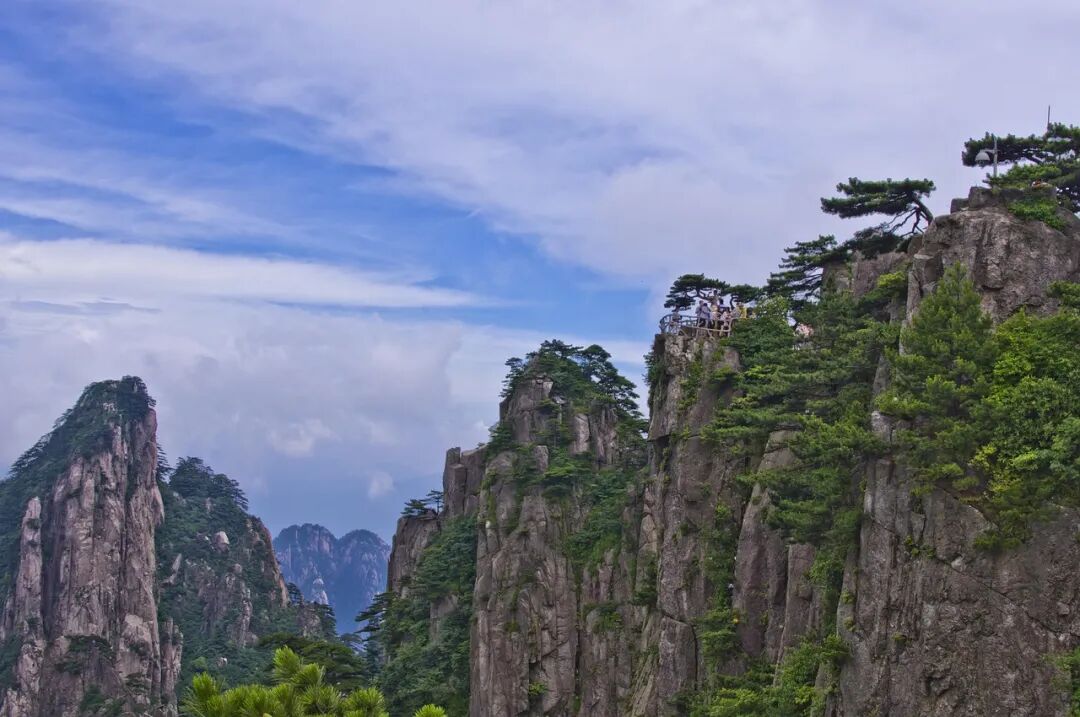
Only when the artist’s mind becomes as vast as heaven and earth, and his personality as deep and majestic as a high mountain, can his brush truly flow with works of vast and majestic aura. This pursuit of the realm of the union of inner and outer points the artist toward a path where art and life grow together. It lifts artistic creation beyond the scope of a profession, making it a calling worthy of a lifetime’s practice — one that shapes a complete personality and realises an ultimate care.
Conclusion:
In summary, although Xiong Shili never wrote systematically on art, his entire philosophical system provided Chinese art’s modern development with a Way to establish itself by, rather than with concrete techniques. His philosophy is like a profound bright mirror, reflecting the various predicaments art may face in modern society: cultural deracination, spiritual nihilism, over-commercialisation. Thus, with his unceasingly vigorous philosophy of life, he offers a fundamental direction for walking out of these predicaments.
His ontology of the non-duality of substance and function guides art beyond the superficial imitation of the mental-appearance world, back to a vital realisation of the cosmic original appearance, establishing a metaphysical foundation for art’s truthfulness. His cosmology of the non-duality of mind and matter and coalescence and expansion that generate change lifts artistic creation from an isolated personal act to a sacred practice participating in the universal flux, endowing the artist’s creation with ultimate meaning and value. His cultural vision of returning to the root to open the new provides a dialectical and wise chart for how Chinese contemporary art, amid the towering waves of globalisation, may hold fast to its cultural root-position and realise creative transformation. And his cultivation theory of the unity of practice and ontological ground profoundly reveals the inner unity of artistic creation and character-cultivation, calling for a sublime realm in which art and person are elevated together.
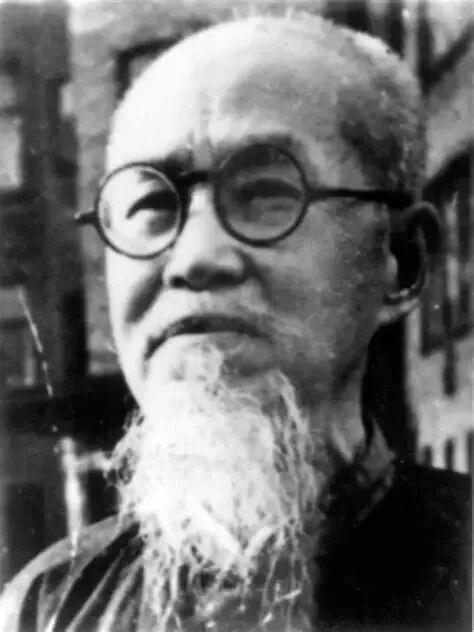
Although in today’s art world Xiong Shili’s name may still seem somewhat remote and unfamiliar, the spiritual dimension his thought represents has already permeated everything like salt dissolved in water — including that steadfast guarding of cultural subjectivity, that reverence for life-creativity, that persistent pursuit of the realm of inner–outer union — invisibly seeping into all artistic practices devoted to probing the spiritual core of Chinese culture.
For any Chinese contemporary artist unwilling merely to chase trends or to lose his bearing in the market’s clamour, returning to Xiong Shili and plunging into his vast and profound philosophical treasury is not merely a remedial lesson in knowledge but a homecoming of the spirit — for there is stored an inexhaustible fountain of wisdom sufficient to withstand the nihilism of the age and nourish the life of art.
订阅艺术评论
订阅即赠《2024中国当代艺术关键词》内部思考笔记 PDF
每周免费获取最新当代艺术批评与研究