This essay is the first in the ‘Contemporary Art Methodology’ series, written by Daxiong.
This essay examines how the ‘concept’ at the heart of a contemporary artist’s practice comes into being, and sets out a generative model of ‘concept’ for an artist’s creative methodology.
In a post-historical climate where the definition and boundaries of art grow ever more porous, understanding how an artist establishes the legitimacy, singularity and methodology of their practice has become a central question for the study of contemporary art. Tracing the theoretical shifts and historical lines running from modernism to contemporary art, this essay proposes a dynamic model of ‘concept generation’ to displace the static, formula-seeking models of the past.
In this model, an artist’s creative concept is not an isolated spark of inspiration but the product of a complex, dynamic interplay among five core drivers: the historical coordinate, the social context, medium self-awareness, the conceptual core, and personal experience. This essay runs to over twenty thousand words, in the hope that it may serve practising artists and those who work in the art world; my learning is shallow and my argument imperfect, and I can only hope that specialists will offer their criticism and correction.

The methodology behind any significant contemporary artist’s creative concept can be understood as the outcome of choices, combinations and reinforcements made within this five-dimensional framework:
These core drivers comprise five dimensions:
1. The Historical Coordinate
How does the artist position their practice within the long river of art history? As continuity with, or homage to, tradition — or as radical subversion and rupture?
2. The Social Context
To what extent does the artist’s work answer, intervene in, or critique the political, economic, cultural and technological realities of its time?
3. Medium Self-Awareness
How does the artist regard and deploy their medium of creation? As a transparent instrument for conveying concept — or as a thing whose materiality, historicity and limits are themselves the objects of exploration and critique?
4. The Conceptual Core
Behind the shifting forms of an artist’s output, is there a single, or a set of, stable, central philosophical or theoretical motifs that keep driving the work?
5. Personal Experience
How are the private elements of an artist’s identity (gender, ethnicity, class), bodily experience, and memories of life refined, transformed and injected into their public artistic practice?
The central argument of this essay is:
The creative method of any significant contemporary artist is determined by no single driver, but by the dynamic combination, negotiation and reinforcement of these five dimensions at differing weights and in differing modes. A further concern of this essay is to show that the model’s core value lies in revealing how different artists choose different paths and forge their own distinctive ‘combinations of drivers’.
(I) The ‘Contemporary’ Problem Posed: From ‘What to Paint’ to ‘Why Make’
When we walk into any contemporary-art biennial, museum or gallery today, the sensory and intellectual challenges we face are unprecedented. An apparently unremarkable industrial object, an obscure piece of footage, a baffling performance, even a social survey, may all be crowned with the name ‘contemporary art’. At the heart of this phenomenon lies a fundamental shift in the field: the centre of gravity in contemporary art has moved decisively from the technical question of ‘how to make’ to the conceptual question of ‘why make’.
The traditional value system, centred on formal beauty and technical virtuosity, has largely lost its purchase, replaced by a complex web built around concept, context, intention and interpretation. In 1995, the French philosopher Jean Baudrillard, in his book The Perfect Crime, asserted that art was disappearing into self-replication and over-interpretation — an extreme claim, yet one that captures with precision the absolute priority of concept in contemporary artistic practice.
The immediate consequence of this shift is a subversive change in the artist’s way of working. Where the modernist — Pablo Picasso or Jackson Pollock — still had, as their core task, the revolution and innovation of a formal language within a relatively fixed medium (painting, say), the contemporary artist resembles more a nomad of thought, a weaver of contexts, a poser of questions. No longer bound to a particular craft or material, they freely choose, mobilise or even invent the medium and strategy best suited to their concept. Creation is no longer simply a matter of ‘what to paint’ or ‘what to sculpt’, but of constructing a complete ‘discursive field’ in which the work, its title, its documentation, the artist’s statement and the viewer’s participation together form a text awaiting interpretation.
The core question thus arises: in an age when the very definition of ‘art’ has itself become a problem, how exactly does an artist establish the legitimacy, singularity and personal methodology of their practice?
Put differently: what are the internal mechanisms and external conditions that generate the influential contemporary-art concepts we have come to recognise?
Photographic work by Andre Malerba
Research into artists’ creative methods currently exists in a scattered, fragmentary state.
On one side, a great deal of art-historical research and criticism concentrates on the single-artist case study. Studies of this kind — Rosalind Krauss’s penetrating analysis of Surrealist photography, or Yve-Alain Bois’s close reading of Mondrian and Constructivism — undoubtedly offer valuable insight into particular artists’ work. Yet they tend to stop at the individual case, lacking a systematic comparative framework that could span different artists, media and epochs. The result is a body of research that resembles an archipelago: brilliant in isolation, but failing to cohere into a continuous continent of understanding.
On the other side, there is a tendency to mystify or oversimplify the creative process. The former reduces artistic creation to an ineffable ‘genius’ or ‘inspiration’ — a Romantic residue still deeply lodged in public consciousness, yet one that plainly evades any rational analysis of the creative process and drags art research into a kind of agnosticism.
The latter attempts to ‘distil’ from the bewildering plurality of artistic phenomena some fixed formula or evolutionary history of styles — reducing art history, say, to the linear narrative ‘after Minimalism came Post-Minimalism, then New Expressionism’. Clear as this is, it gravely flattens the diversity, complexity and non-linearity of contemporary practice. The art historian Terry Smith, in his What Is Contemporary Art?, writes that one of contemporary art’s defining traits is its ‘multi-temporality’ and ‘asynchrony’ — a totality no single linear narrative can capture.
These limitations show that we need a new line of research — one that transcends fragmentary case studies yet avoids rigid stylistic narration; one that acknowledges the complexity and individuality of creation while attempting to build an analytical framework with general explanatory power.
To argue for this model, the essay combines genealogy with in-depth case study. Drawing on the thinker Michel Foucault, the genealogical method traces the origins, transformations and ruptures of certain core concepts (‘appropriation’, ‘the body’, ‘the archive’) rather than constructing a linear chronicle. The case studies, meanwhile, take a series of paradigmatic artists in the history of contemporary art as samples for ‘dissecting the sparrow’-style analysis, so as to test and illuminate the model’s validity.
Part One: Genealogy
I. Defining the ‘Contemporary’
Before we go deeper into the artist’s methodology, we must first clarify the ecosystem in which it lives: ‘contemporary art’. Defining the ‘contemporary’ is far from a simple chronological matter; it is itself the starting point and central problematic of contemporary-art practice. The artist’s self-positioning within the field constitutes the first step in generating their methodology.
(I) The Debate over the Starting Point of ‘Contemporary Art’ and Its Significance
As to when exactly contemporary art begins, the art world holds several views that seem mutually contradictory yet each carries its own theoretical justification. The very divergence of these views reveals the complex connotations of the word ‘contemporary’.
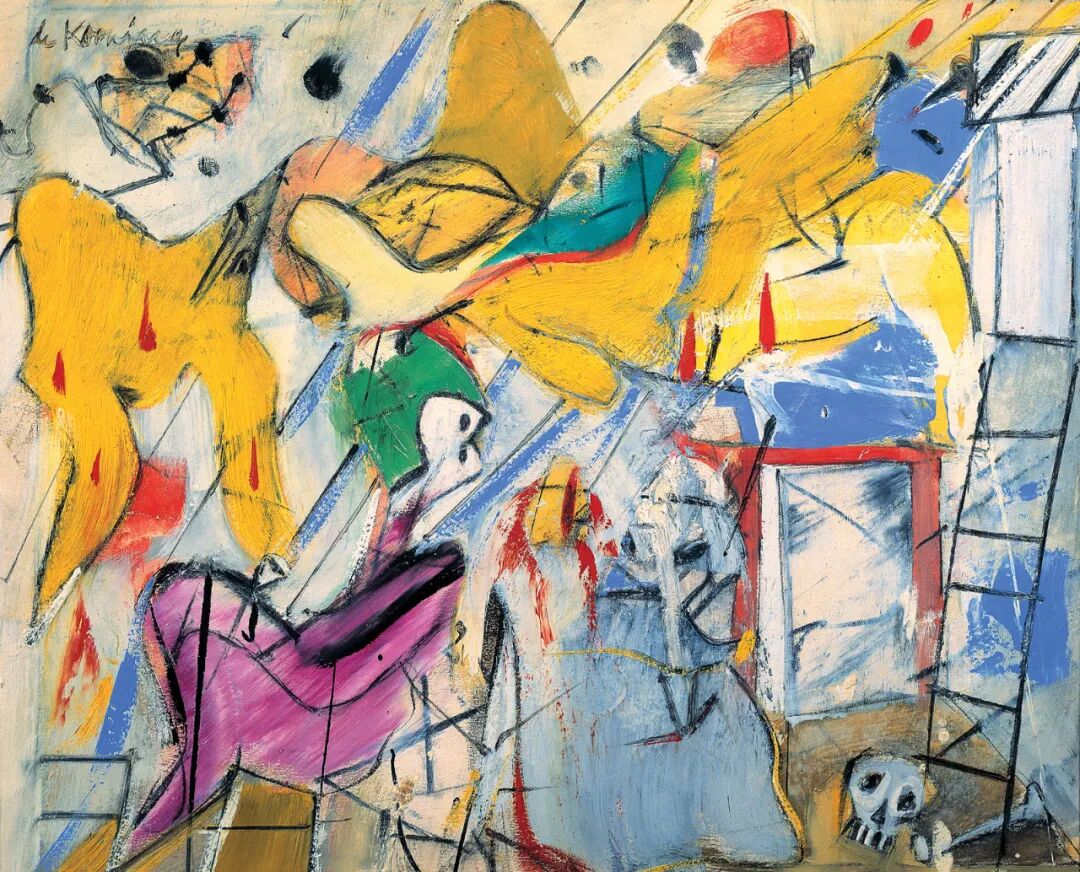
1. The post–Second World War (1945) as starting point: This view proceeds mainly from a macro perspective of social politics and cultural geography. The trauma of the war brought the Eurocentric cultural narrative to a decisive end, and the centre of art shifted irreversibly from Paris to New York. Abstract Expressionism, represented by Jackson Pollock and Willem de Kooning, can still be regarded formally as the apex of modernism, yet its creative mentality, market mechanisms, and close relation to the establishment of postwar American cultural hegemony already display new features.
In 1983, the art historian Serge Guilbaut, in his book How New York Stole the Idea of Modern Art, set out in detail how Abstract Expressionism was shaped into the artistic emblem of the ‘free world’ within America’s Cold War cultural strategy. From this angle, art began to be drawn deep into the global political order — a crucial dimension of the ‘contemporary’. Yet to treat Abstract Expressionism as the beginning of contemporary art remains contested, precisely because of its strongly modernist, formalist character.
2. The 1960s as starting point: This is currently the most mainstream and widely accepted view. The 1960s witnessed the eruption of a series of subversive art movements and currents of thought that together constituted a systematic rebellion against modernism’s core creeds.
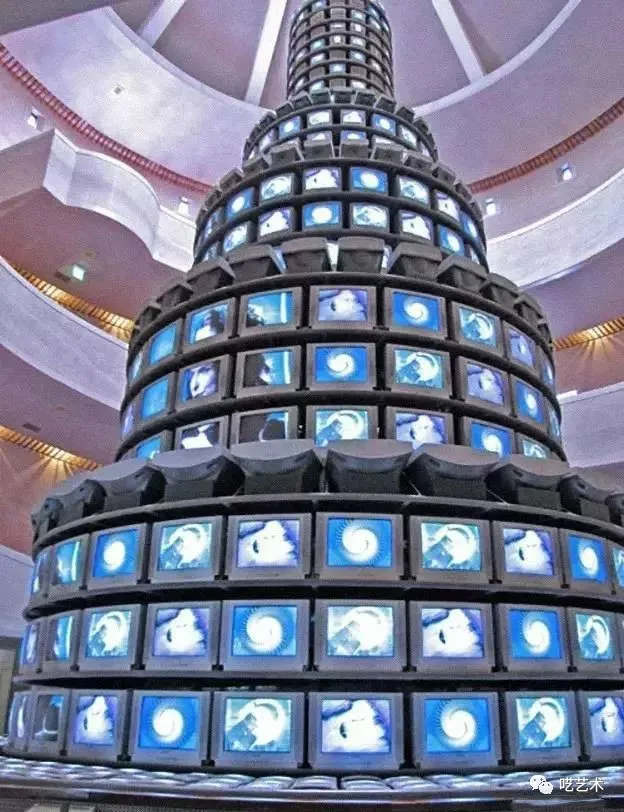
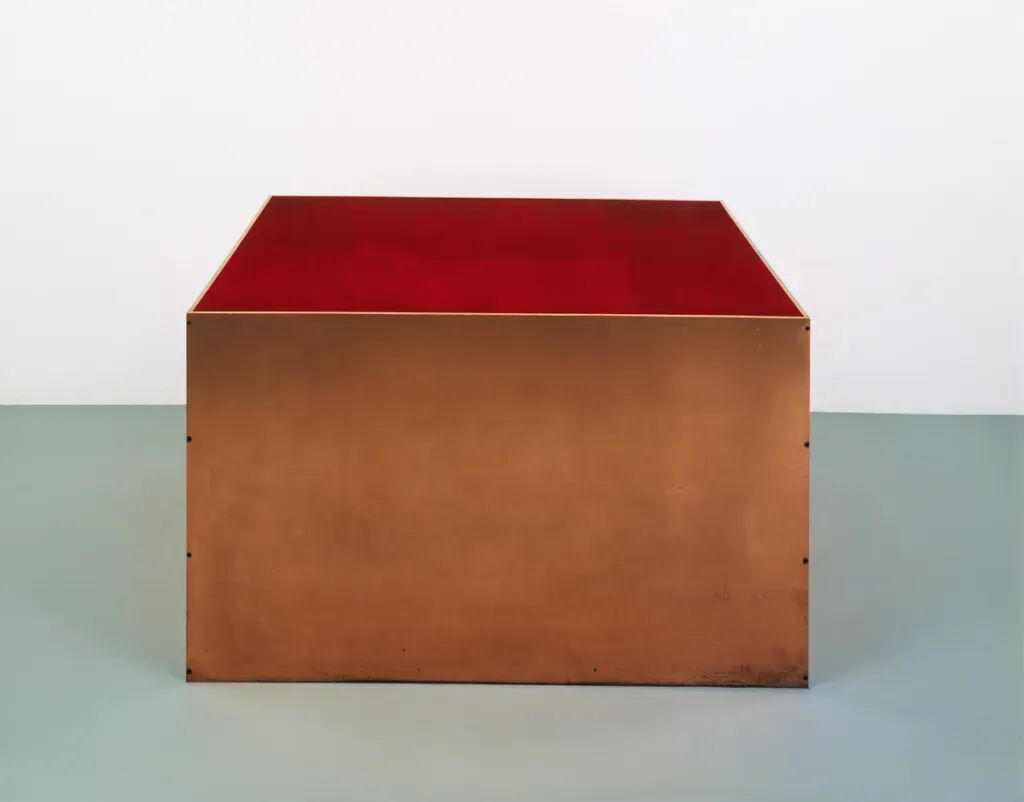
Pop art, Minimalism, Conceptual art and Fluxus, among others, no longer took the purification of medium and the renewal of form as their primary goals. Andy Warhol transposed consumer imagery directly onto the canvas, challenging the boundaries of originality and elite art; Donald Judd’s ‘specific objects’ made of industrial materials blurred the line between painting and sculpture; Lawrence Weiner declared that art could be nothing more than a linguistic statement; and Nam June Paik began to work with the television as a mass medium.
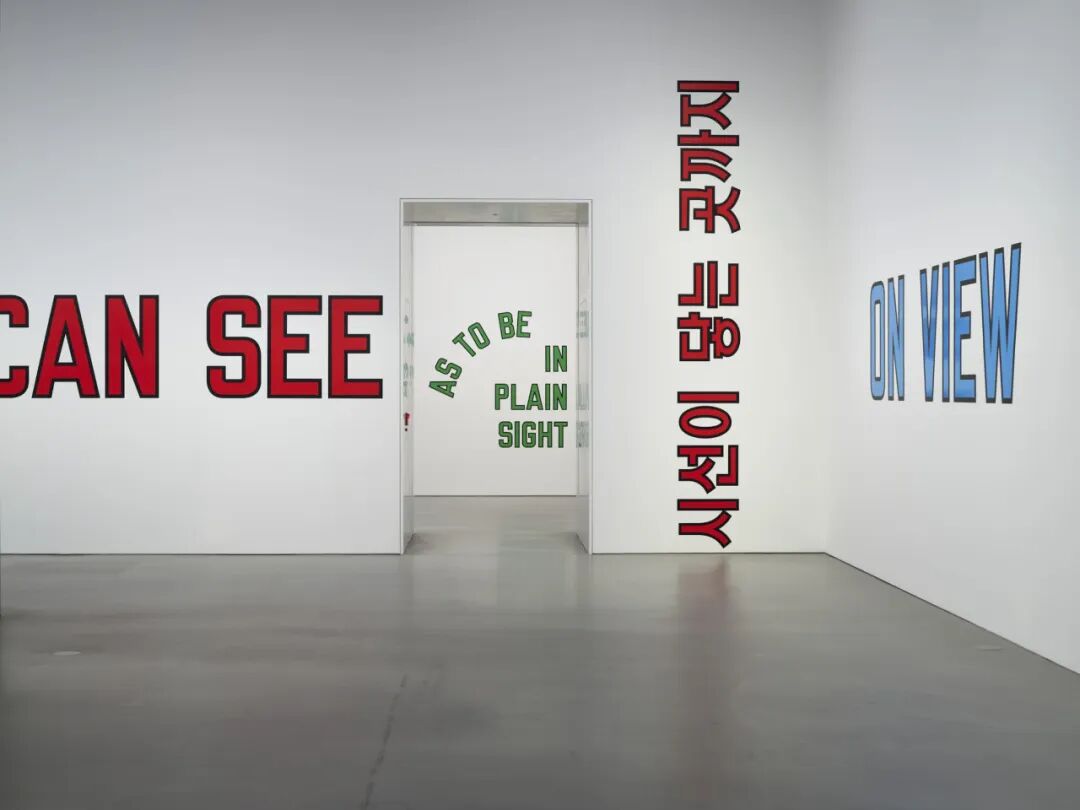
It was precisely thus that, in 1983, the German art historian Hans Belting, in his important book The End of the History of Art?, argued that it was from this period that art bid farewell to the ‘grand narrative’ with its internally unified logic and directional stylistic evolution, entering a ‘post-historical’ phase. Art no longer had a given direction; anything could become art. The 1960s are therefore seen as a decisive rupture, marking the full establishment of contemporary art’s plural, open, anti-essentialist character.
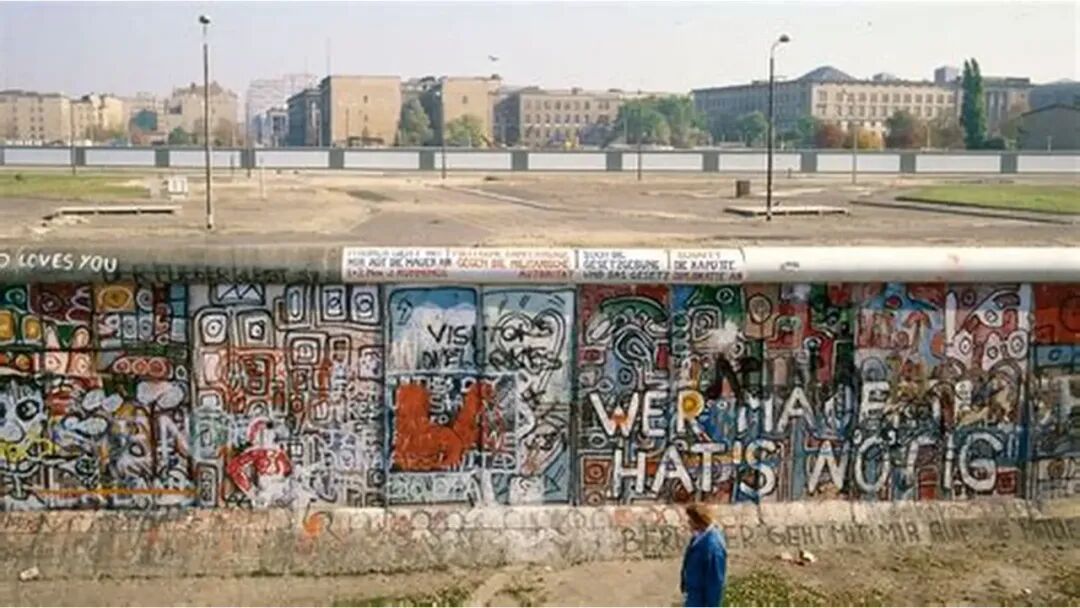
3. 1989 as starting point: This view, advanced by scholars such as the art historian Terry Smith and Hou Hanru, places greater emphasis on ‘globalisation’ as the core element in defining the ‘contemporary’. In 1989, the fall of the Berlin Wall symbolised the end of the Cold War and the opening of a genuinely global age.
In the same year, the exhibition ‘Magiciens de la Terre’ at the Centre Pompidou in Paris placed artists from all over the world (including Africa, Asia and Latin America) on the same platform as Western artists for the first time — a moment that marked the true breaking of the Western-centric art-historical narrative.
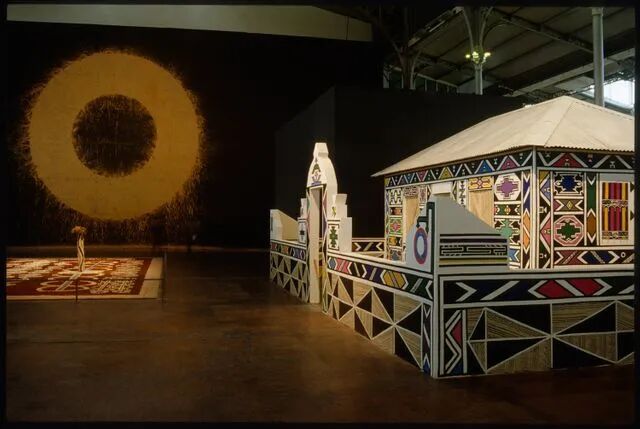
From then on, the identities of non-Western artists, postcolonial critique and cultural hybridity became central concerns of contemporary art. The participation of Chinese artists such as Huang Yong Ping and Gu Dexin marked a landmark event in Chinese contemporary art’s entry into the global field of vision. From this angle, the essence of the ‘contemporary’ is a ‘present continuous’ of global cultural exchange, collision and negotiation.
This very dispute over starting points matters more than any fixed date. It eloquently proves that the ‘contemporary’ is not a period of unified style (like ‘Baroque’ or ‘Impressionism’) but a perpetually open, self-defining ‘problem consciousness’.
It is a ‘field’, not a ‘road’. As the French sociologist Pierre Bourdieu put it, ‘the artistic field is a space full of struggles over power, capital and legitimacy’. In the contemporary context, the artist’s primary task is, within this uncertain field, to provide through their practice a provisional, personal answer to two questions: ‘What is art?’ and ‘Where does my art belong?’
The generation of methodology thus begins, first of all, with the artist’s conscious awareness of and strategic positioning within their own ‘contemporary’ context.
To understand the contemporary artist’s working method, we must clearly distinguish it from its predecessor, ‘modern art’. The difference is both rupturing and bound up in complex relations of continuity.
Modern art — roughly from Manet in the mid-nineteenth century to Abstract Expressionism in the mid-twentieth — can be summarised as driven by an ‘immanent negativity’ and a ‘linear evolutionism’. It pursued the avant-garde, that is, the continual establishment of its own value through the negation of predecessors. Impressionism negated Classicism’s chiaroscuro and subject matter; Cubism negated Impressionism’s single viewpoint; abstract art finally negated any representation at all. The core of this process, as Clement Greenberg summarised, is the ‘self-criticism’ and ‘purification’ of the medium. The modernist artist believed art to have an essence, and the progress of art history lay in the steady approach toward that essence. Modernist methodology is thus fundamentally ‘prescriptive’ and ‘inward’: the artist digs vertically and deeply within a given medium (painting, say).
Contemporary art, by contrast, marks a thorough overturning of this logic. Its most salient features are ‘pluralism’ and ‘non-movement’. Contemporary art no longer has a single overarching ‘-ism’ or ‘movement’; artists gather in loose, project-based, trans-regional formations rather than in style-unified schools. Its methodology is ‘horizontal’ and ‘outward’. No longer confined to a formal revolution within the medium, the artist turns toward the wider world beyond art: philosophy, sociology, politics, linguistics, popular culture, personal identity — all become objects of appropriation, citation and dialogue. If modern art’s keywords were ‘originality’, ‘purity’, ‘form’, then contemporary art’s are ‘context’, ‘appropriation’, ‘concept’, ‘hybridity’.
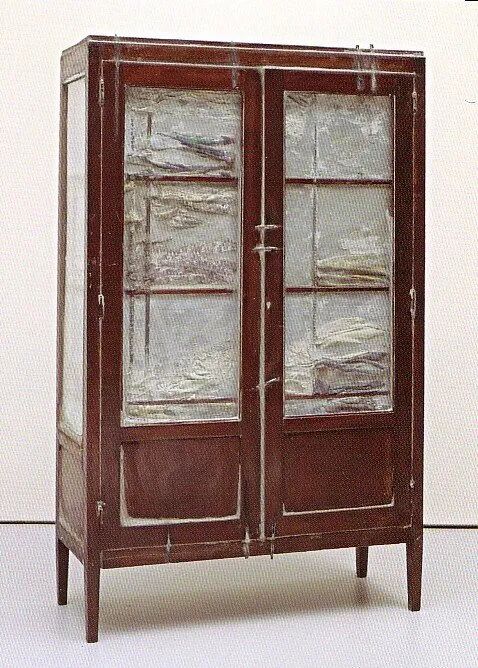
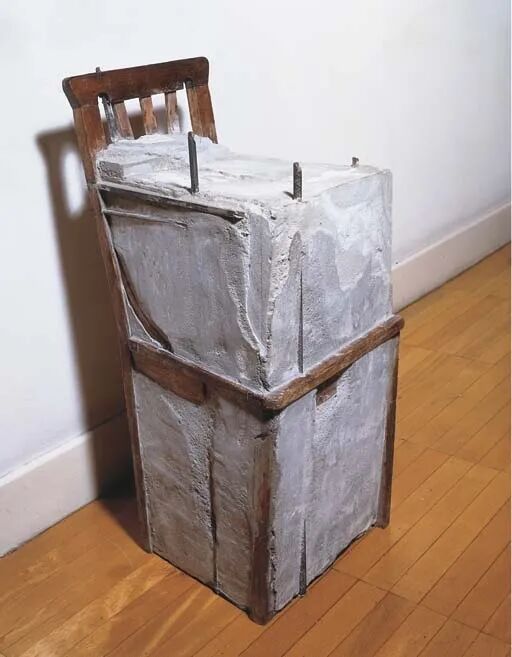
When Piet Mondrian worked, for instance, he cared about achieving a universal harmony through the purest of straight lines and primary colours — a philosophical inquiry conducted within the medium of painting. When a contemporary artist such as Colombia’s Doris Salcedo works, she may block up a space with furniture encased in concrete, or with an even more complex material language, in mourning for the disappeared of political violence. Here, the physical properties of furniture and concrete serve an external socio-political concept; the choice of medium is strategic, not essential. In her 1995 series Untitled, garments fragmented and embedded in concrete wardrobes, bedframes and the like form a silent memorial to the countless unnamed victims of Colombia’s civil war; the heaviness of the material against the softness of the cloth makes for a powerful tactile and emotional contrast. This is a typical contemporary strategy: the translation of matter serves the transmission of concept.
Yet rupture is not the whole story. Contemporary art also continues certain legacies of modernism, above all its spirit of self-criticism. Duchamp’s ‘readymade’, the ‘heresy’ within modernism, became contemporary art’s most important wellspring of thought. It was Duchamp who initiated the turn from the ‘retinal’ to the ‘conceptual’.
Contemporary art can thus be seen as the generalisation and normalisation of certain radical gestures of the modernist avant-garde (notably Dada and Surrealism). Artists inherit the avant-garde’s ambition to ‘break the boundary between art and life’, but practise it no longer in a utopian-revolutionary posture, but in ways that are more strategic, place-based and personal.

II. The Shift in Theoretical Coordinates: From Greenberg’s Formalism to Danto’s ‘Artworld’
If the previous chapter described the historical and phenomenal field of contemporary art, this one goes deeper into its theoretical core.
The formation of the contemporary artist’s methodology cannot be separated from a crucial shift in theoretical coordinates: the power to evaluate and define art moved from the work’s ‘form’ to the ‘interpretation’ surrounding it. The central figures in this transition are Clement Greenberg and Arthur Danto; the clash of their theories and the transfer of authority between them furnished the most important legitimising basis for concept generation in contemporary art.
(I) The ‘Legislator’ of Modernism: Clement Greenberg’s Formalism
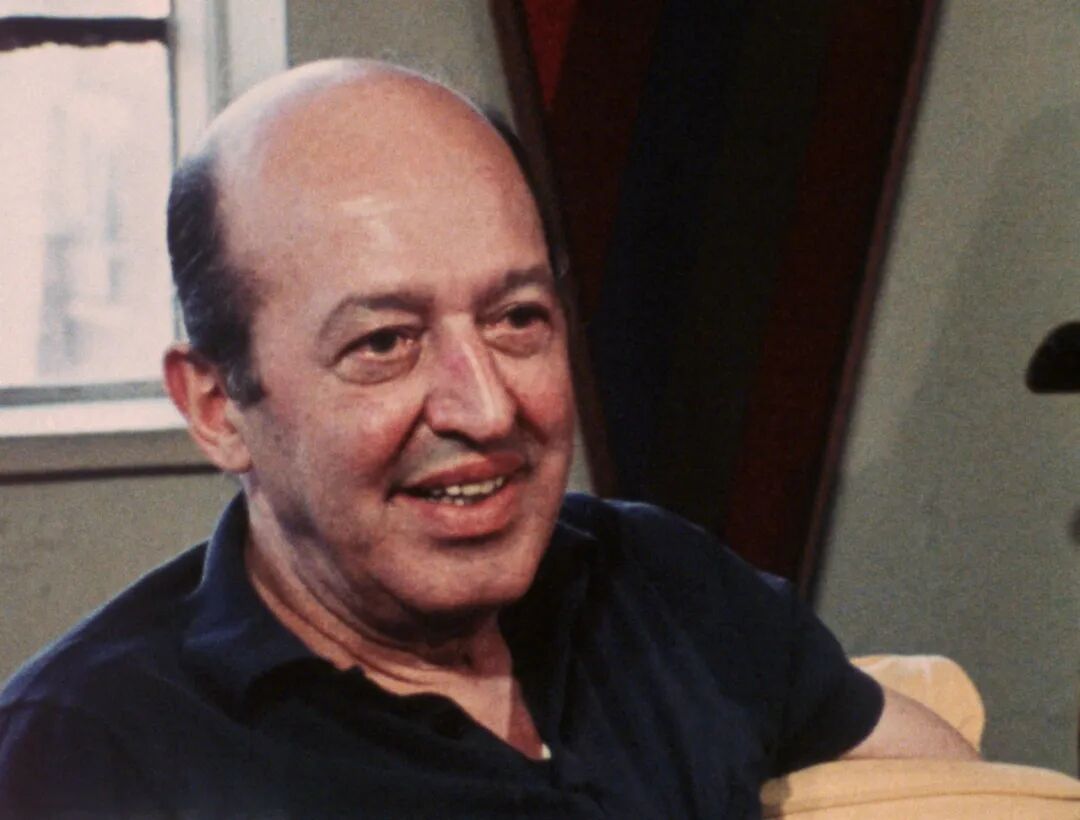
In the mid-twentieth century, Clement Greenberg was the most influential art critic in the Anglophone world — not only the standard-bearer of Abstract Expressionism but the very ‘legislator’ of late modernism as a whole. His theory conferred upon a particular artistic practice the aura of supreme historical necessity.
Greenberg’s core theory is concentrated in his famous 1960 essay ‘Modernist Painting’. He held that the essence of modernism lies in a Kantian ‘self-criticism’. Each art should attend to the unique properties of its medium and continually purify them, freeing itself from the ‘contamination’ of other art forms. What, for painting, is the fundamental property irreplaceable by any other art? Greenberg’s answer is ‘flatness’. He wrote: ‘The course of Modernist painting consists in an ever more candid acknowledgement of the picture plane’s flatness.’
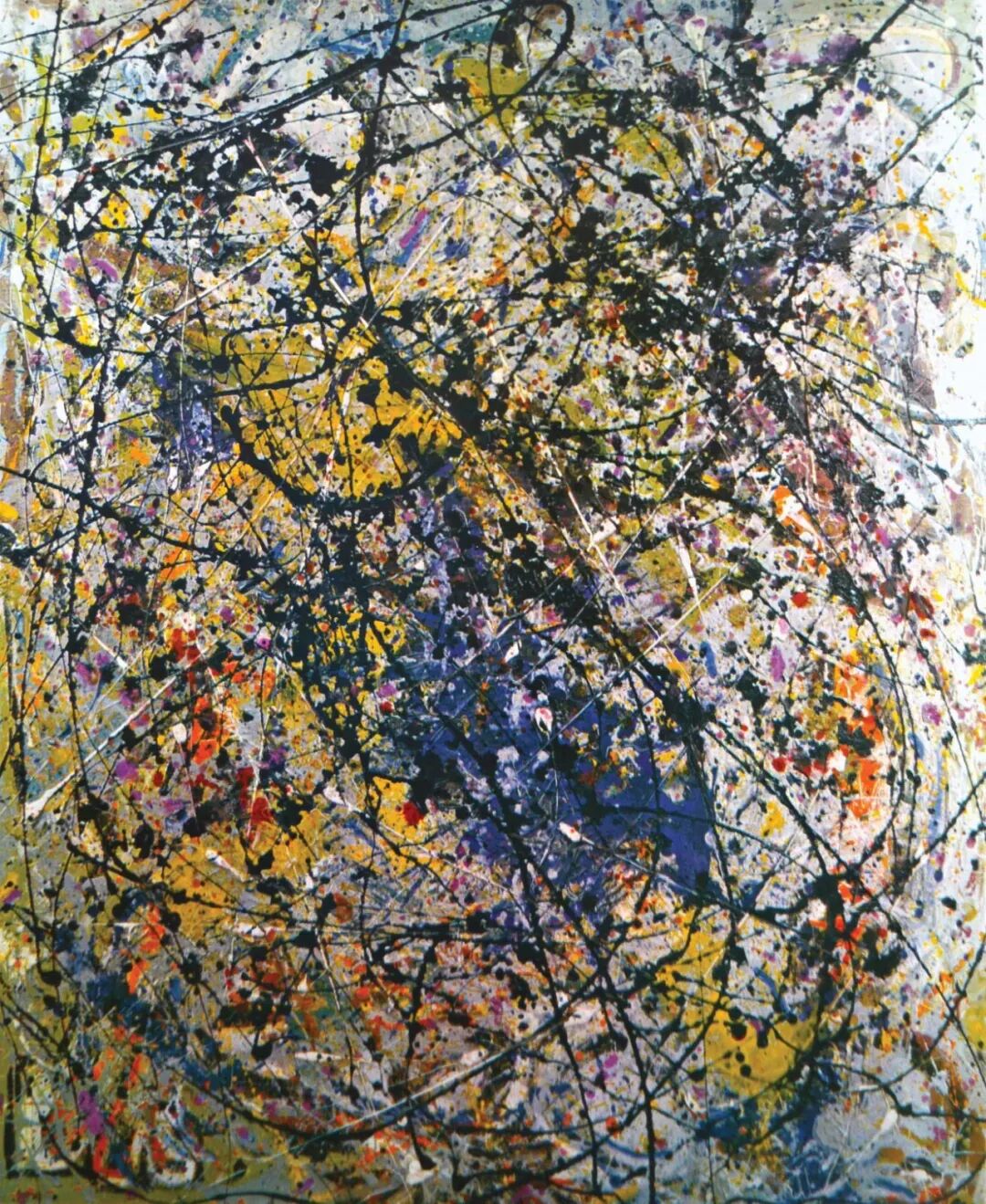
Thus, from Manet through Cézanne and Cubism to Abstract Expressionism, Greenberg portrayed the history of painting as a linear process of progressively shedding three-dimensional illusion, literary narrative and sculptural feeling, until it returns to and affirms its two-dimensional planarity. The greatness of Pollock’s ‘drip paintings’ lies likewise in the direct fusion of pigment and canvas, which abolishes the figure–ground distinction entirely and turns painting into a purely optical plane.
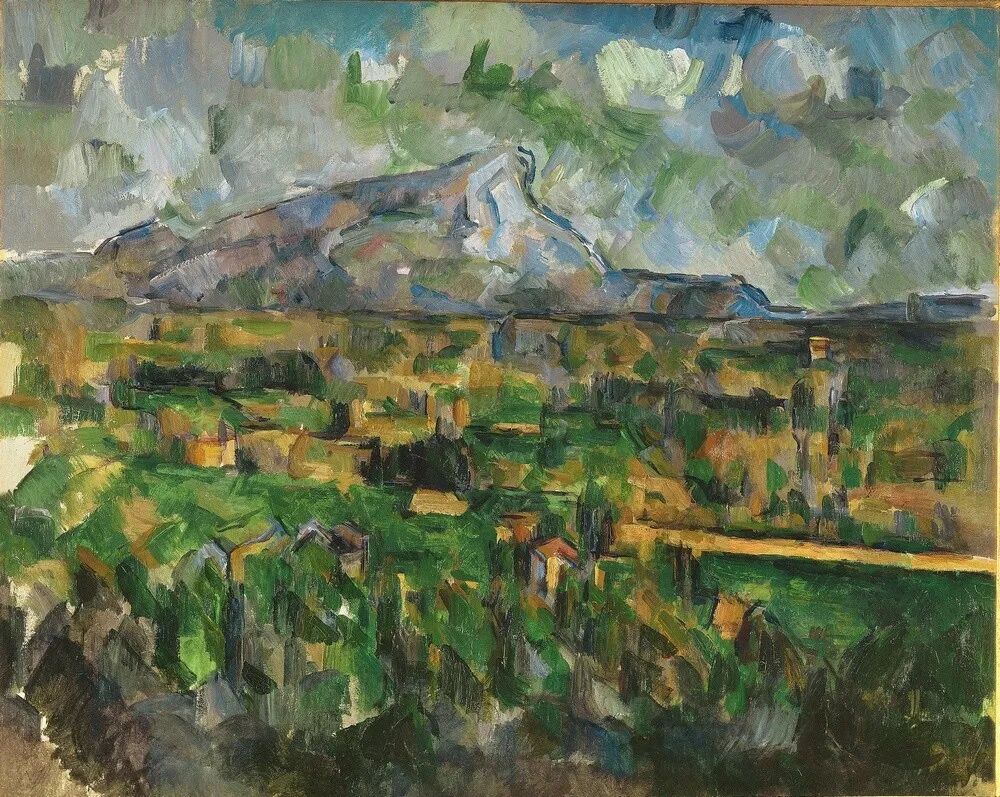
Greenberg’s theory is both powerfully explanatory and prescriptive. It offered artists a clear methodology: your work is to purify the medium you use. For the painter, this means exploring flatness, colour and the brushstroke itself; for the sculptor, volume, space and material. This formalist criticism supplied the New York School with a formidable theoretical weapon in the 1950s, enabling it to win out against Paris. Yet its very success bred its own crisis. Greenberg’s framework is exclusive and rigidly hierarchical. It dismissed every non-formalist inquiry — Surrealism’s narrativity, Dada’s anti-art gestures — as ‘kitsch’ or a deviation from the ‘main road’ of art history.
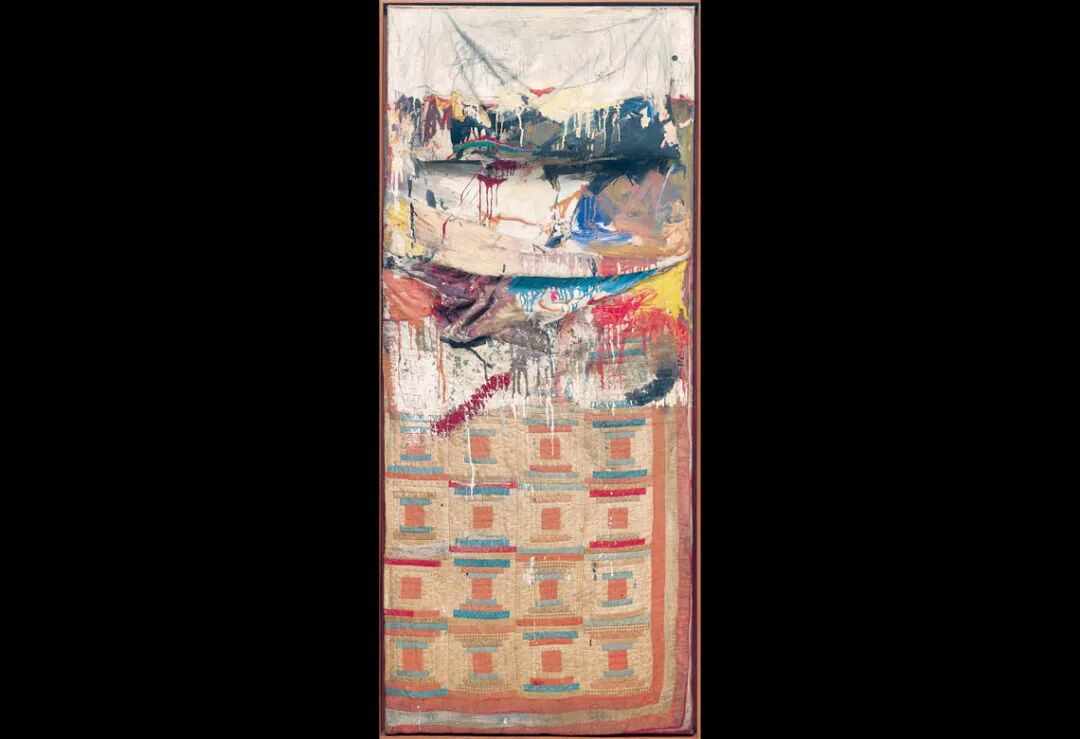
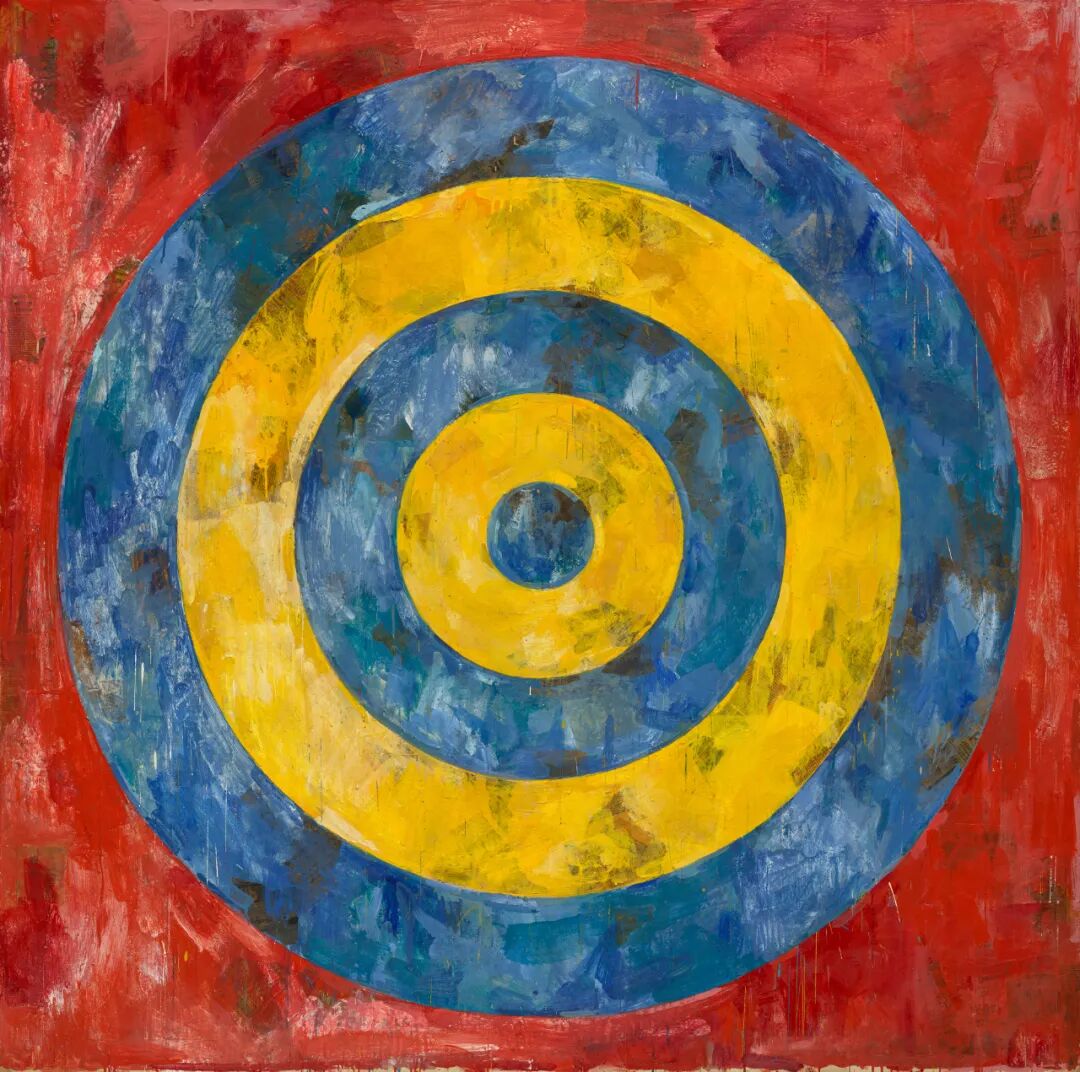
In the end, this prescriptive methodology hardened into a giant ‘father figure’, provoking fierce rebellion in the next generation of artists. Robert Rauschenberg’s ‘combine paintings’, such as Bed (1955) — a real pillow and quilt hung on the wall and smeared with paint — brazenly introduced everyday objects into painting and directly challenged Greenberg’s dogma of ‘purity’. Jasper Johns’s flags and targets of the United States questioned, by choosing images that were themselves flat and ready-made, whether ‘flatness’ is an essential property of painting or of its depicted object. These practices heralded a new artistic era that would no longer obey Greenberg’s laws. The decline of Greenberg’s theory cleared the ground for the rise of an entirely new artistic methodology based on concept rather than form.
(II) The Proclamation of the ‘End of Art’: Arthur Danto’s Philosophical Turn
If Greenberg was a critic wielding a ruler, then Arthur Danto is a philosopher who liberates thought. His theory supplied philosophical legitimacy to the new artistic forms that emerged from the 1960s onward and left the formalists at a loss.
The epiphany of Danto’s theory came in 1964, when he saw Andy Warhol’s Brillo Boxes at a New York gallery — boxes made of screen-print and plywood that looked almost identical to the Brillo scouring-pad cartons found in any supermarket. Danto realised sharply: why is Warhol’s box a work of art, while the supermarket’s box is not? No formal analysis can answer this, for their visual appearance is the same. Danto concluded that whether an object becomes art hinges not on what it ‘looks like’ but on how it is ‘regarded’.
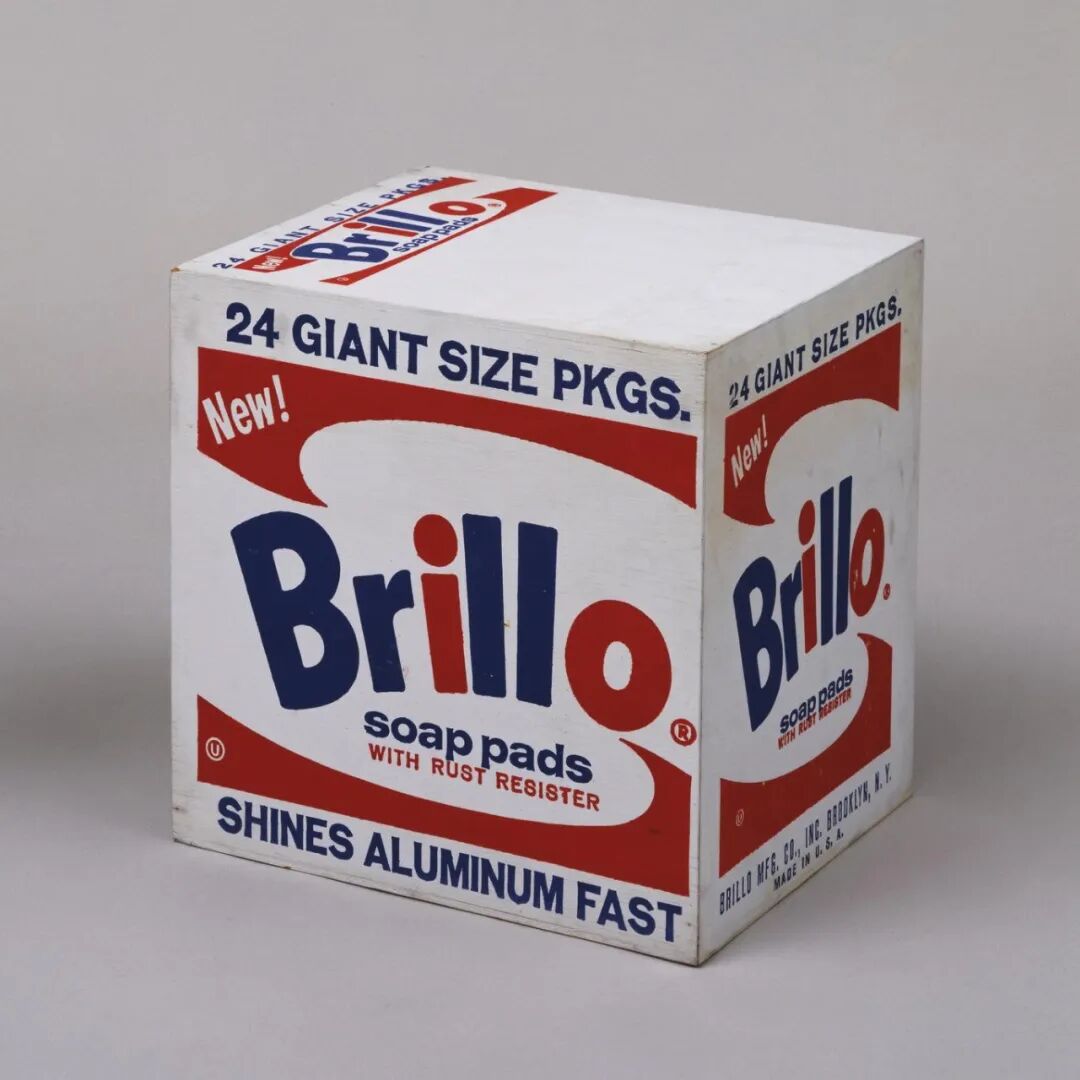
In his landmark essay ‘The Artworld’, published that same year in The Journal of Philosophy, Danto gave his answer. To become a work of art, an object requires two conditions: ‘an atmosphere of artistic theory, a knowledge of the history of art: the artworld.’ The ‘artworld’ is an invisible network composed of artists, critics, museums, collectors, theorists and historical knowledge. It is this network that endows an object with the status of ‘artwork’. Warhol’s Brillo Boxes are art because they are placed in a specific theoretical context: they respond to the elitism of Abstract Expressionism, ponder the relation between art and commercial reproduction, and interrogate the post-Duchamp ‘readymade’. The supermarket box lacks this interpretive ‘aura’.
In 1984, building on this theory, Danto elaborated his ‘end-of-art thesis’ in the essay ‘The End of Art’. Here ‘end’ does not mean that art-making ceases, but that the kind of art history described by Greenberg — with its internal direction of development and linear narrative logic — comes to an end. For Danto, Warhol’s Brillo Boxes mark the peak of art’s self-consciousness: art finally begins to ask directly the philosophical question ‘What is art?’. When art’s function shifts from ‘representation’ or ‘expression’ to ‘self-definition’, it completes its philosophical mission and enters a ‘post-historical’ stage. In this stage, art is wholly free in style; any style, medium or form is possible, because the criterion is no longer formal ‘progress’ but conceptual ‘aptness’ and ‘power’.
Danto’s theory revolutionarily shifted the centre of artistic creation from ‘formal exploration’ to ‘philosophical inquiry’ and ‘conceptual expression’. It opened the door of legitimacy to Conceptual art, Pop art, performance art, installation art — all practices that fail to meet traditional aesthetic standards in form. The artist’s working method is no longer the craftsman’s ‘making’ but the philosopher’s ‘questioning’. The artist must become the theorist of their own work; the core of their methodology lies in discovering a problem and finding the material or immaterial form that can most fully ’embody’ it.
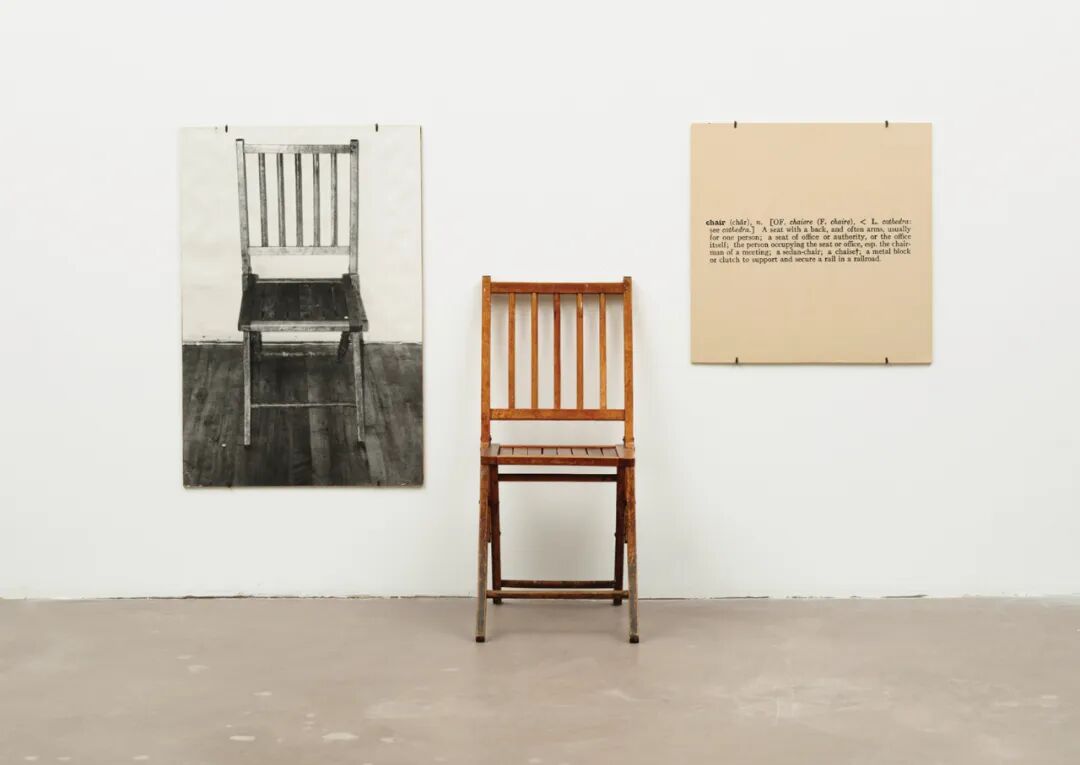
Consider, for example, the Conceptual artist Joseph Kosuth’s 1965 work One and Three Chairs, which juxtaposes an actual chair, a photograph of that chair, and the dictionary definition of the word ‘chair’. The work’s point is plainly not the formal beauty of any one chair, but the intuitive interrogation, through this juxtaposition, of the relation among ‘object, image and sign’. This is the perfect example of the contemporary-art practice Danto’s theory describes: art becomes a philosophical inquiry conducted in visual form. Danto’s theory constitutes the single most important theoretical background and authorising mechanism for the generation of concepts in contemporary artists.
Part Two: Method
III. Driver One: The Historical Coordinate — Dialogue, Appropriation and Rupture with Art History
No contemporary artist creates in a vacuum.
Whether consciously or not, their practice is placed within a vast coordinate system of art history. How does one position oneself in relation to this immense tradition — through dialogue, homage, parody, appropriation, or radical rupture? This constitutes the primary dimension in which the artist establishes their methodology. Once art enters its ‘post-historical’ phase, art history is no longer a linear burden to be overcome but a vast ‘database’ or ‘image supermarket’ that can be freely drawn upon, edited and recombined.
(I) The Herald of Concept: Marcel Duchamp and the ‘Readymade’
If contemporary art has a ‘godfather’, it is surely Marcel Duchamp. In a near-‘prophetic’ mode, he pre-enacted almost all of contemporary art’s core concerns and methods. His subversion of art history did not come through the invention of a new painting style but through a thorough questioning of the very foundations of ‘art’ as ‘art’.
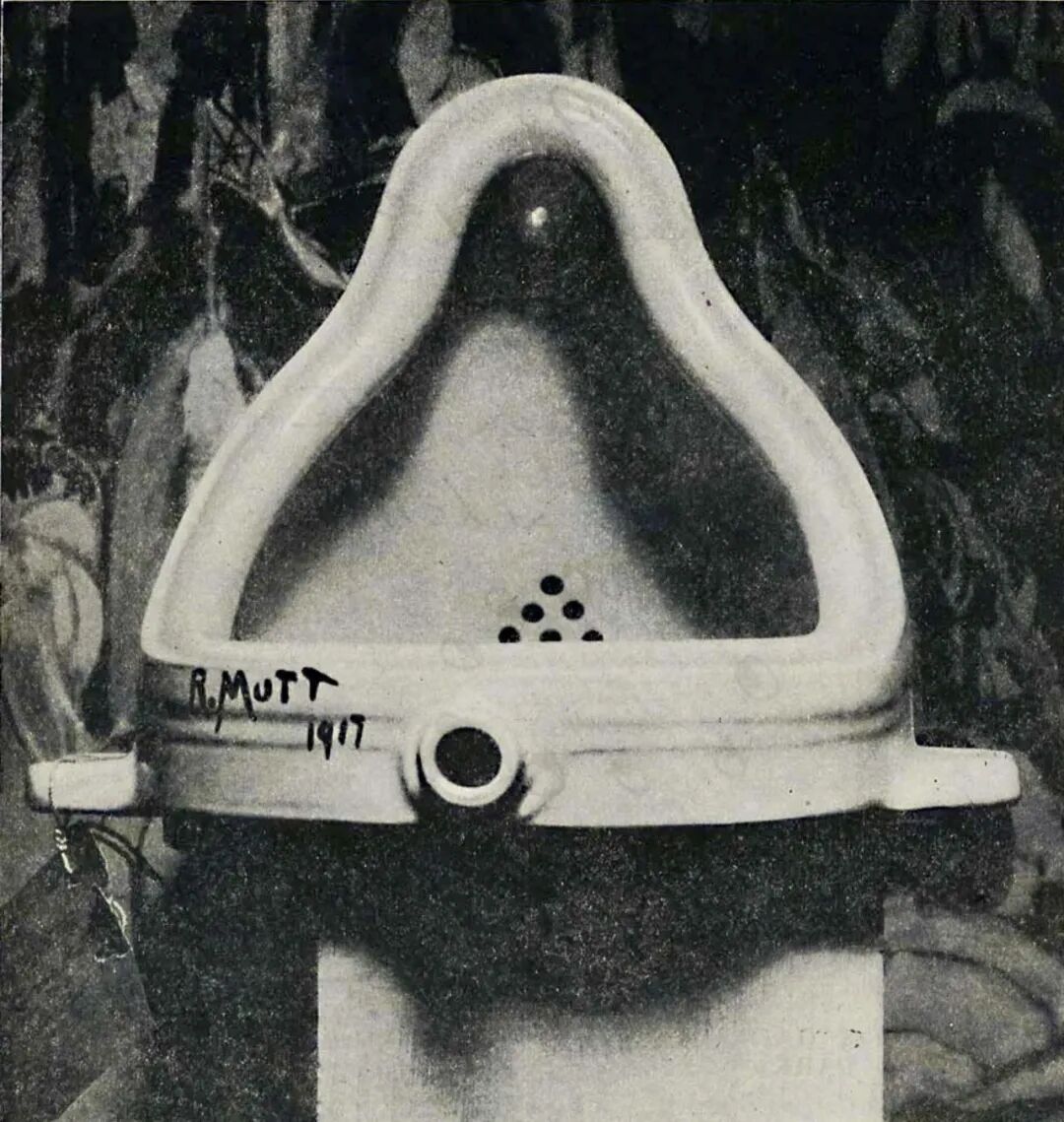
In 1917 Duchamp bought a urinal from a hardware shop, signed it with the pseudonym ‘R. Mutt’, titled it Fountain, and submitted it anonymously to the exhibition of the Society of Independent Artists in New York. In terms of contemporary-art legitimacy, the importance of this act can hardly be overstated. Through this simple gesture Duchamp passively yet clearly laid bare his methodology: creation is no longer about ‘making’ but about ‘choosing’ and ‘naming’.
He lifted a mass-produced industrial object out of its everyday functional context and placed it in the context of an art exhibition, thereby posing a thunderclap of a question: in whose hands lies the power to decide that something is a work of art? The craftsman’s hand, or the acceptance of the art institution (museum, exhibition, critic)? Fountain challenged the two most deep-rooted cornerstones of Western art history: first, ‘originality’ and the artist’s ‘manuality’; second, ‘aesthetics’, since a urinal is plainly unrelated to traditional beauty. Duchamp called this a ‘readymade’; at its core is an ‘intellectual decision’ rather than an ‘aesthetic pleasure’. In a letter to his sister he wrote that he wished to create an art ‘with no sense of beauty in it’.
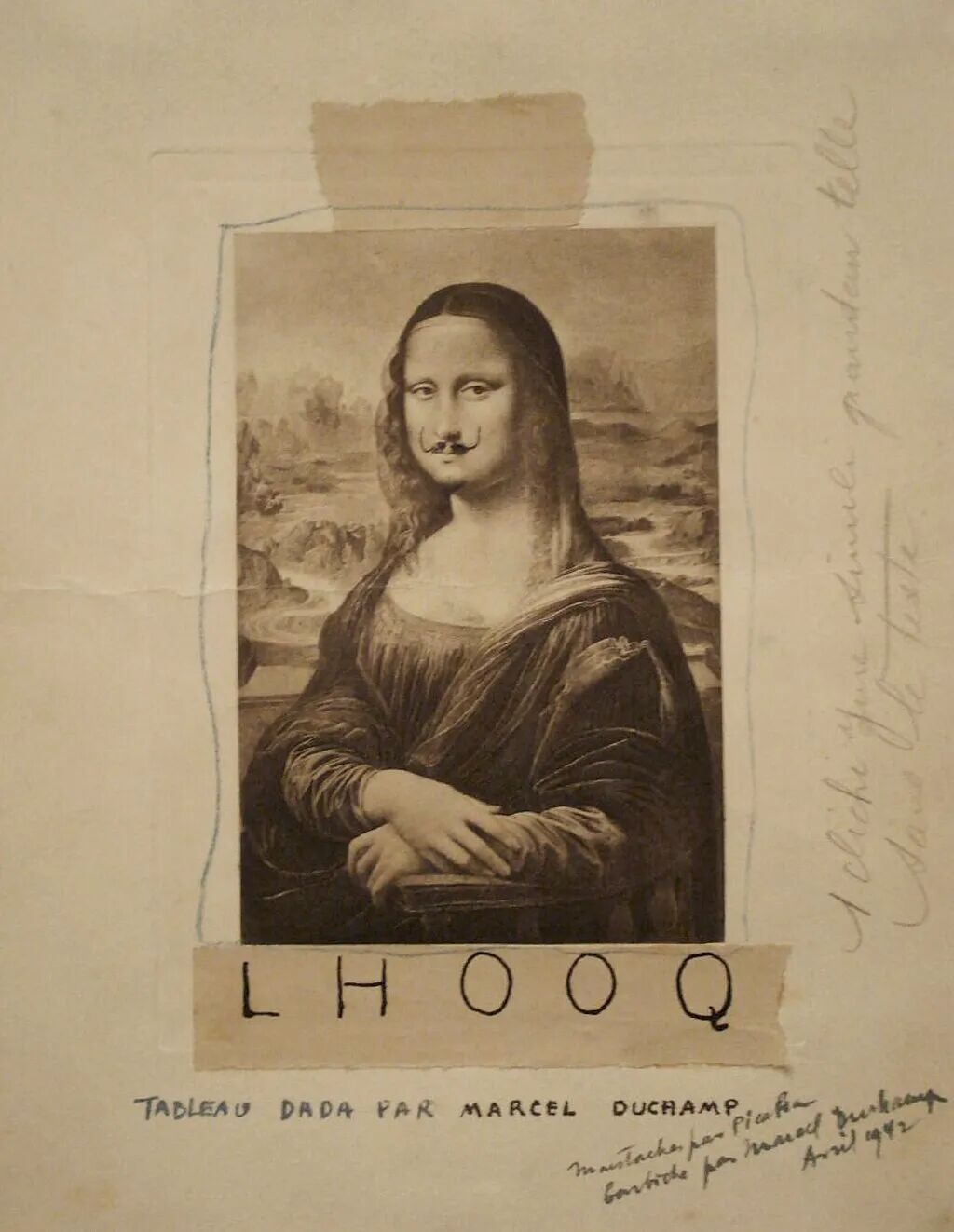
Duchamp’s methodology is essentially one of ‘creating through questioning’. Later works, such as the moustache he added to a reproduction of Leonardo’s Mona Lisa under the title L.H.O.O.Q. (1919), are likewise parodies and subversions of canonical art history. He was not painting a new picture but ‘operating’ on an existing cultural sign, producing an entirely new, subversive meaning through a slight alteration. This fundamental questioning of the art institution, authorship and the idea of originality made Duchamp the spiritual mentor of all subsequent Conceptual, Pop and appropriation artists. His practice positioned itself precisely at the coordinate of rupture with the whole of art history, thus opening a path for an entirely new artistic methodology.
(II) After the End of Painting: Gerhard Richter’s ‘Images’
Richter is among the greatest painters after the Second World War, yet his greatness lies precisely in his sustained suspicion of and inquiry into the medium of painting itself. His career can be read as a complex, profound dialogue with the history of painting conducted in the wake of the verdict ‘painting is dead’. His methodology: on the ruins proclaimed by painting’s death, to remake painting by questioning the medium itself.
In the 1960s Richter began his famous ‘photo paintings’. He selected photographs from various ready-made sources — newspapers, family albums, advertisements — and painted them meticulously onto canvas in an apparently objective, neutral manner. Yet in the final stage he would drag a dry brush or scraper lightly across the wet surface, producing a distinctive ‘blur’. Works such as Ema (Nude on a Staircase) clearly echo Duchamp’s celebrated Nude Descending a Staircase, No. 2, while the blurring lends the image a ghostly quality at once intimate and distant. This ‘blur’ is the core strategy of Richter’s methodology. It mimics photography’s out-of-focus effect while emphasising painting’s material brushwork; it affirms the image’s representational function even as it dismantles that representation to reveal its illusion. Richter once said: ‘I don’t want to imitate a photograph, I want to make one.’
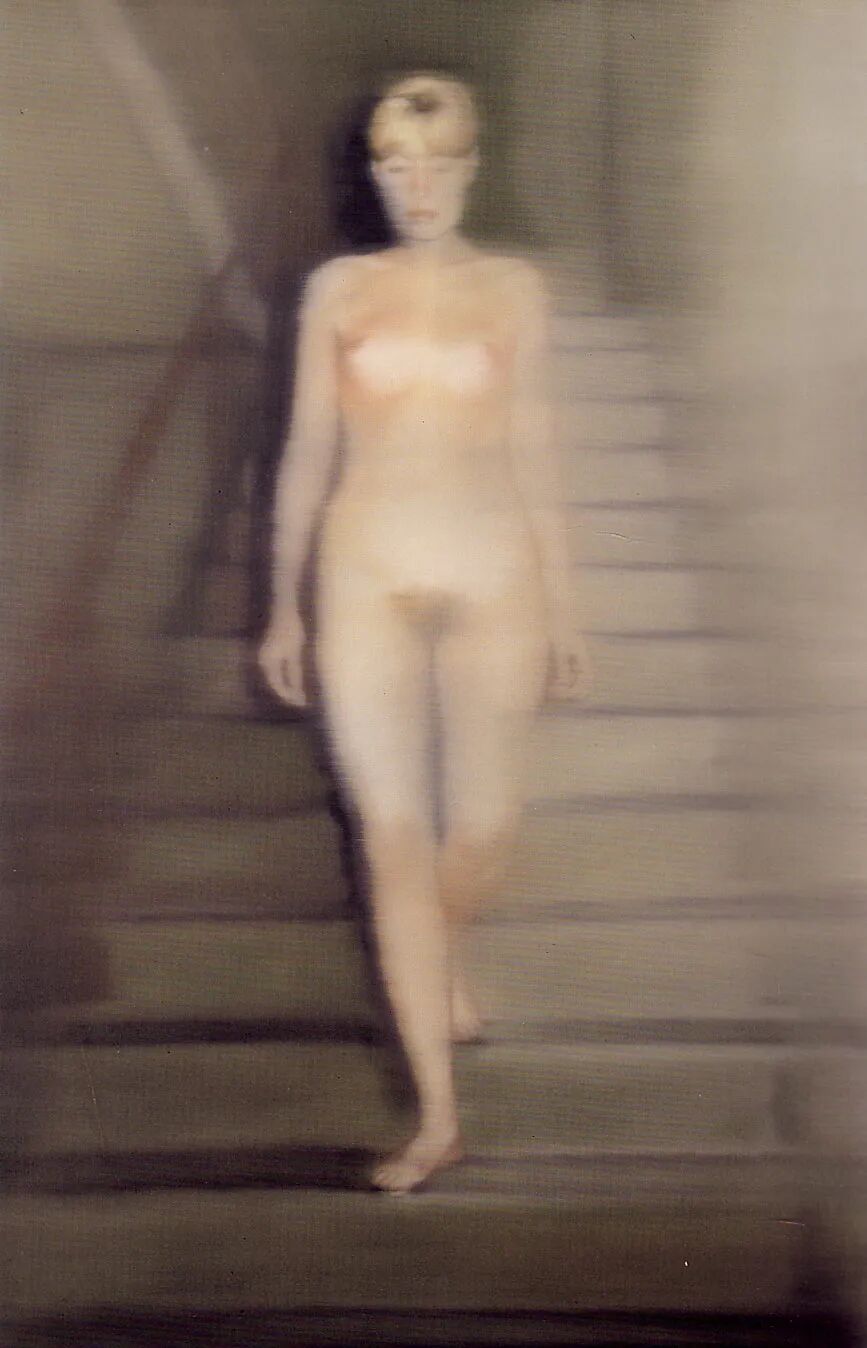
Through this method Richter opened an ambiguous middle ground between the two media of photography and painting. He neither embraces consumer imagery directly like the Pop artists nor trusts in painting’s immediate expressiveness like the traditional painter. His work always oscillates between ‘belief’ and ‘doubt’.
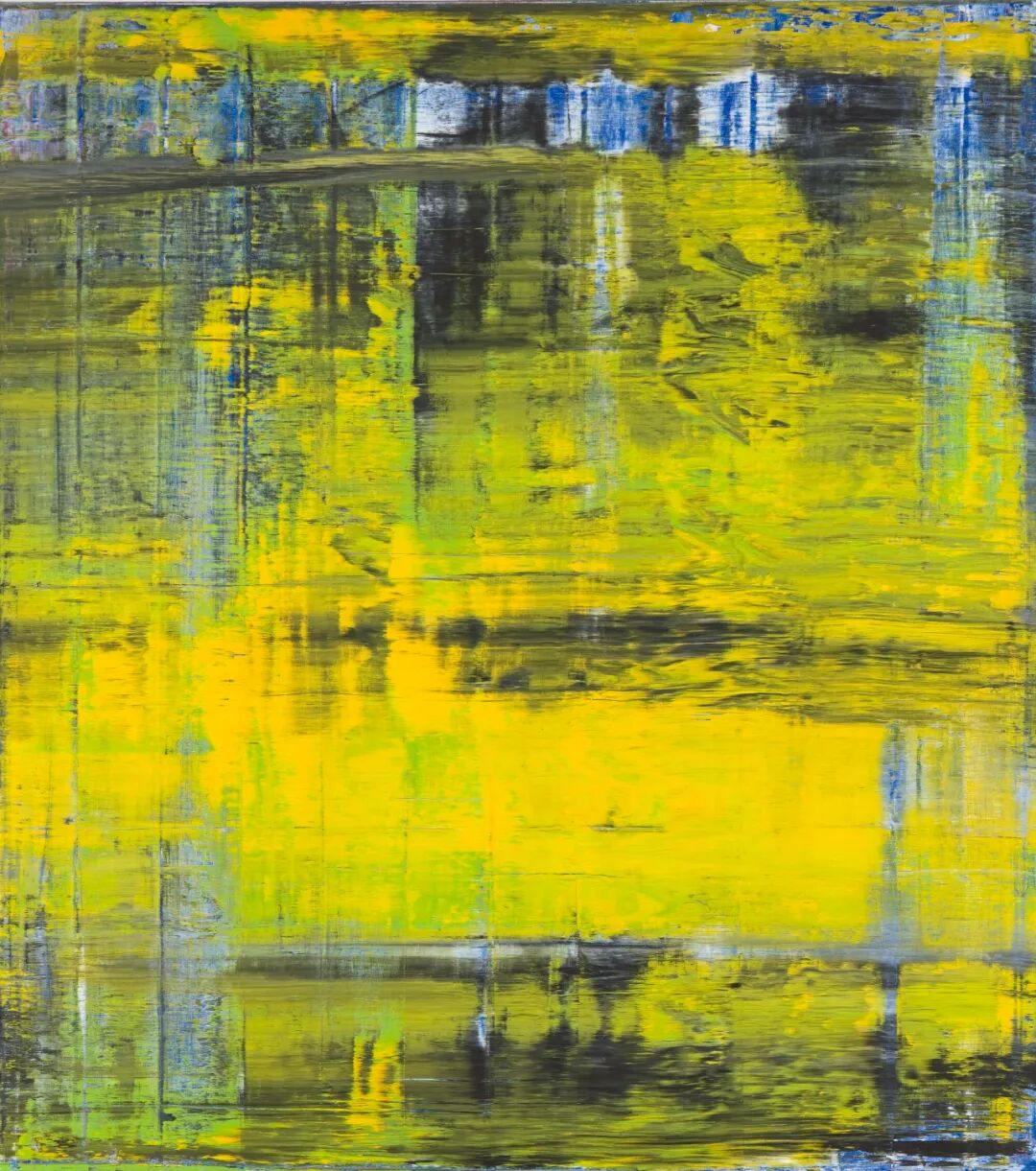
Later he developed an even more radical ‘abstract painting’, using a large homemade scraper to drag, overlay and scrape off pigment across the canvas again and again. The process is full of contingency; the artist seems to surrender complete control of the picture. These richly layered, colourful abstractions look like a homage to Abstract Expressionism, yet the mechanical, impersonal character of their making dissolves that school’s heroic posture. Richter’s abstractions do not express inner feeling so much as display the process and traces of the act of ‘painting’ itself. His methodology, grounded in a deep understanding of painting’s history (from Titian to Pollock), continually reflects on the question ‘what does painting mean today?’ through the introduction of photographic logic and mechanical means.
(III) The Politics of Appropriation: Sherrie Levine and Postmodernism
If Richter’s dialogue with history still carries a romantic melancholy, then by the ‘Pictures Generation’ artists of the 1980s the relation to art history had turned more radical, cold and politically critical. Artists represented by Sherrie Levine took ‘appropriation’ itself as their core methodology.
Levine’s best-known works are her direct re-photographs of historical male photography masters, such as Walker Evans and Edward Weston. In her series After Walker Evans she re-photographed, from exhibition catalogues, Evans’s classic photographs taken during the Great Depression, then exhibited these re-photographs as her own work. Visually, Levine’s works are almost indistinguishable from Evans’s originals. The act sparked enormous controversy at the time, striking directly at the core values of modernist art: originality, authorship and the unique aura.
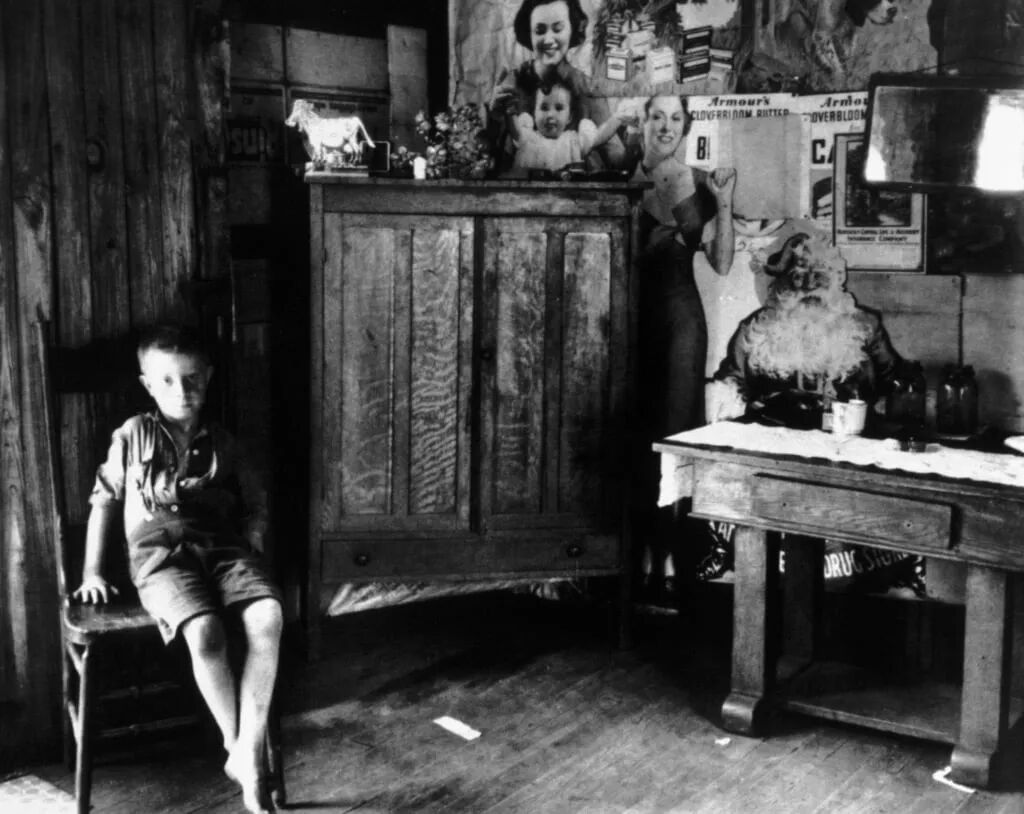
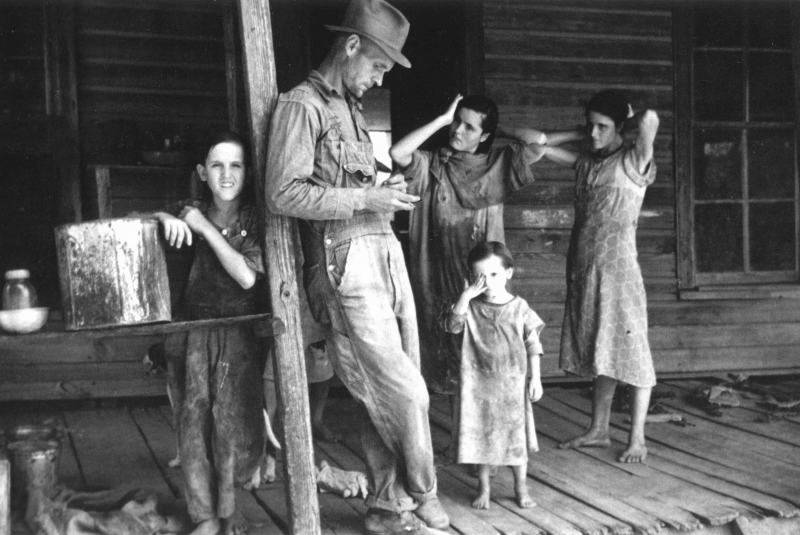
Levine’s methodology is: reproduction is critique. Her act is no simple plagiarism but a profound conceptual gesture. Through this extreme appropriation she aims to expose a series of problems obscured by art-historical narrative:
First, she challenges the myth of ‘authorship’. After Roland Barthes declared ‘the death of the author’, Levine demonstrated in practice that a work’s meaning is generated far more by the context of its circulation, reproduction and reception than by a mythic original creator.
Second, her practice carries a strong feminist critique. The objects she appropriates are almost exclusively the male masters of art history’s ‘pantheon’; by ‘making their works her own’ she points, with a calm violence, to how this grand narrative was written by male power, and how women artists were systematically marginalised and silenced within it. Her work seems to say: since history gives me no place, I will simply take yours.
Levine’s practice, together with that of Cindy Sherman, Richard Prince and others, launched postmodernism’s wave of appropriation. Prince appropriated the cowboy image from Marlboro cigarette advertisements; Sherman appropriated cinematic stereotypes of women. Their shared methodology: instead of creating new images, to reveal, through the ‘recontextualisation’ of existing ones, the hidden mechanisms of ideology, power and desire behind them. For them, the world we live in is already saturated with images; the artist’s task is no longer to add new images but to critically sort through and decode this ‘second-hand world of images’. This methodology treats art history (and the broader history of images) as a text open to arbitrary sampling and critical rewriting.
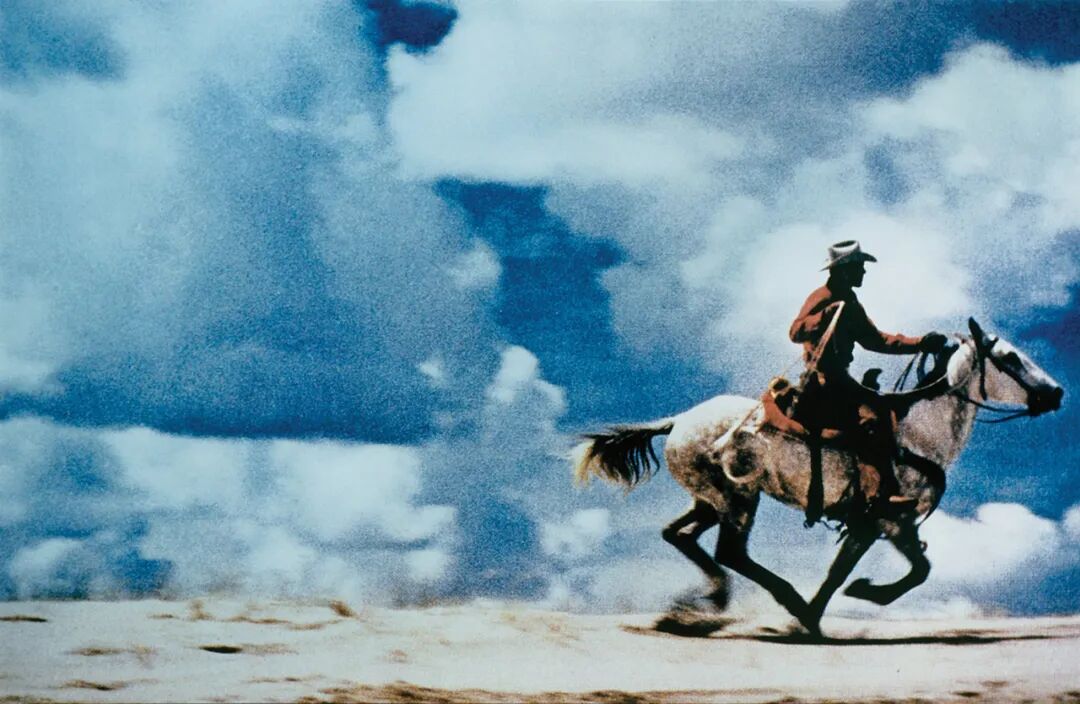
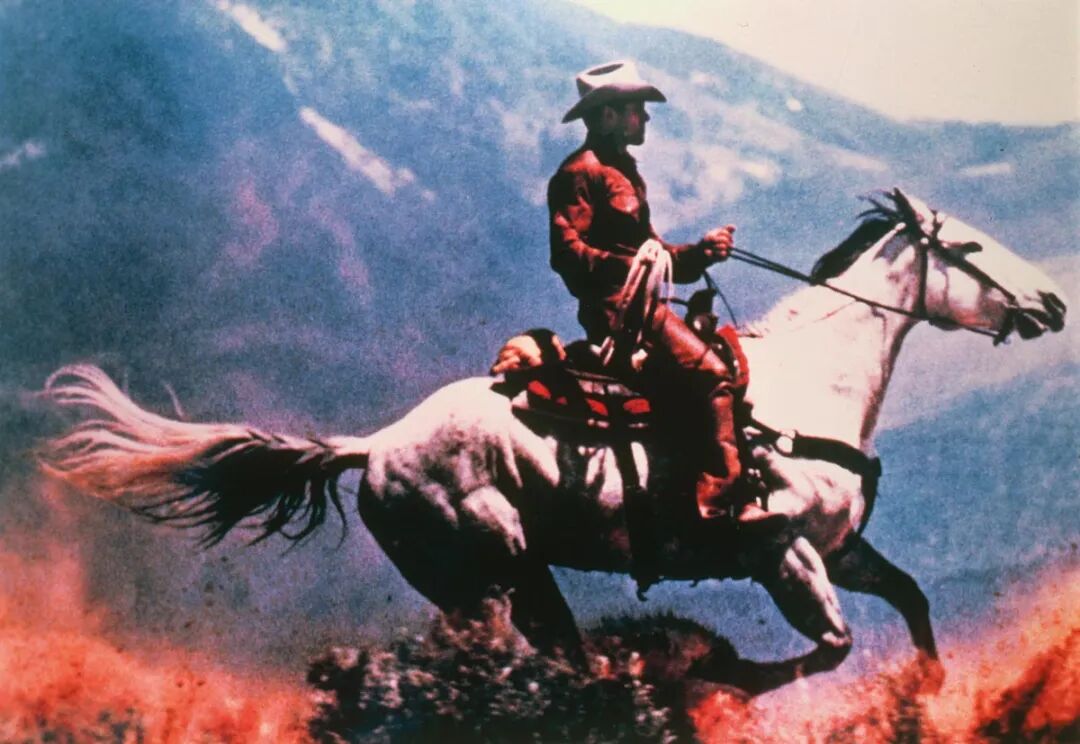
Beginning in 1983, Richard Prince produced a series of photographs titled Cowboys, showing American West cowboys in felt hats, on horseback, with spurs, against the vast, characteristically Western desert. Its prototype was an advertisement shot for Marlboro cigarettes. Again, by removing the advertisement’s text, re-photographing and enlarging it, Prince turned the work into something exclusively his own.
IV. Driver Two: The Social Context — As Intervener in and Critic of Reality
Another powerful driver of contemporary art arises from the artist’s direct response to the social context in which they are situated.
Art should no longer be a purely aesthetic activity sealed off in an ivory tower, but a tool that goes deep into reality, intervenes in society, and even seeks to change the world. From consumer society to global politics, from community-building to identity, social reality supplies the artist with inexhaustible material, themes and a field of action.
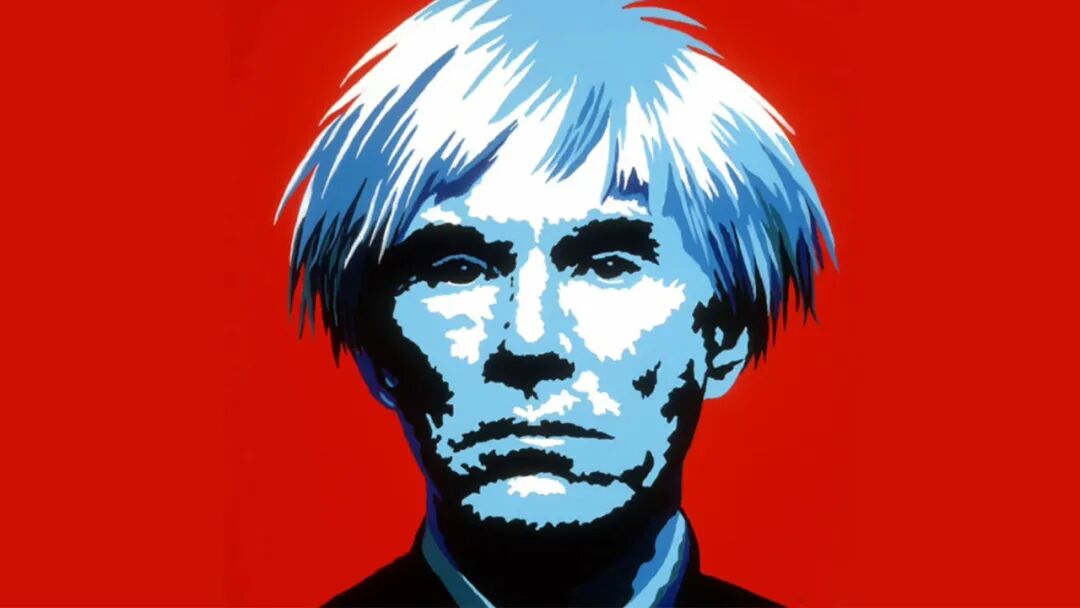
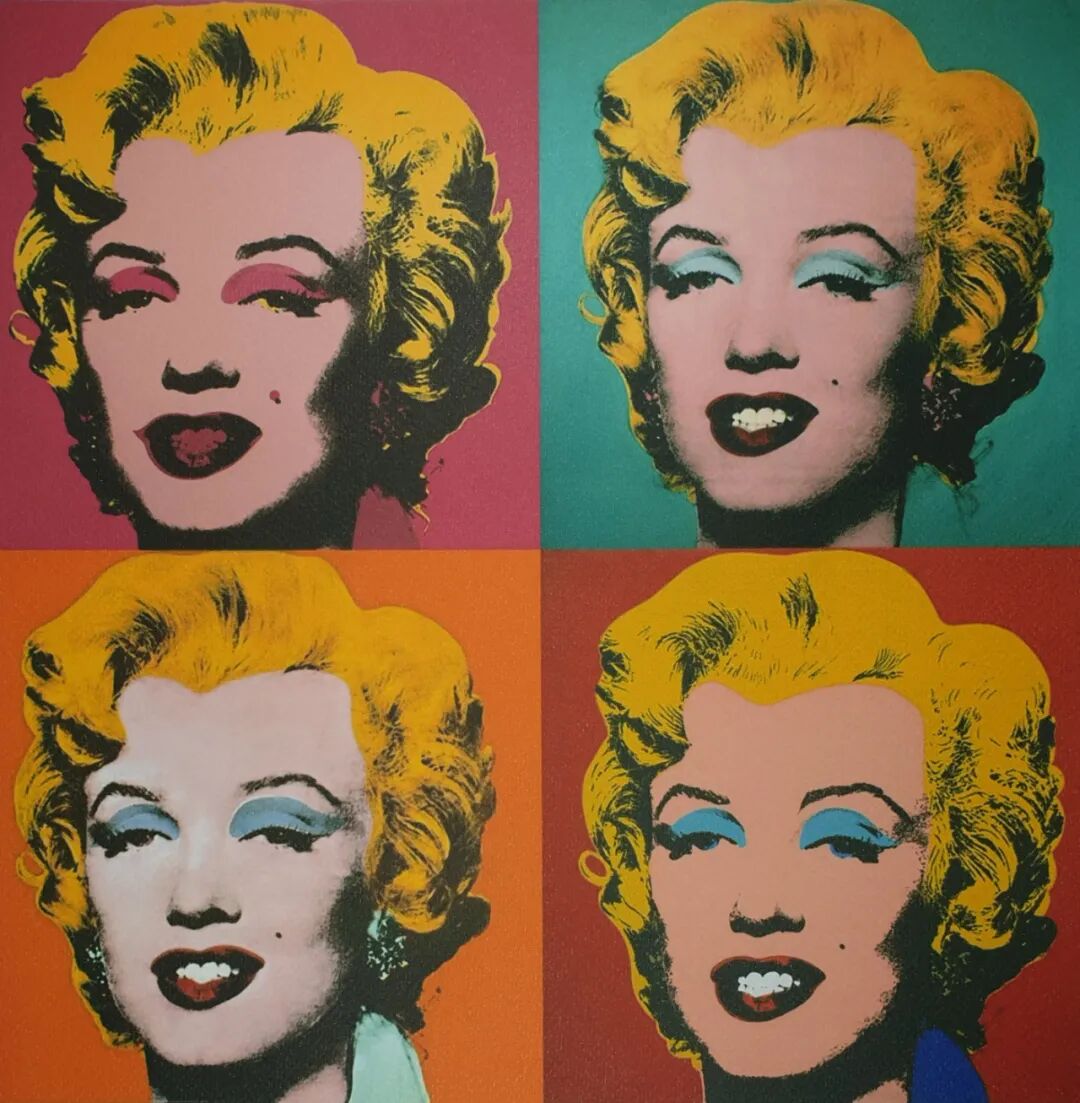
Andy Warhol is the emblematic figure of this driver. In an unprecedented way he bound art tightly to the burgeoning consumer society, mass culture and celebrity-worship of postwar America. His methodology can be distilled to a phrase: to reflect society through society’s own logic.
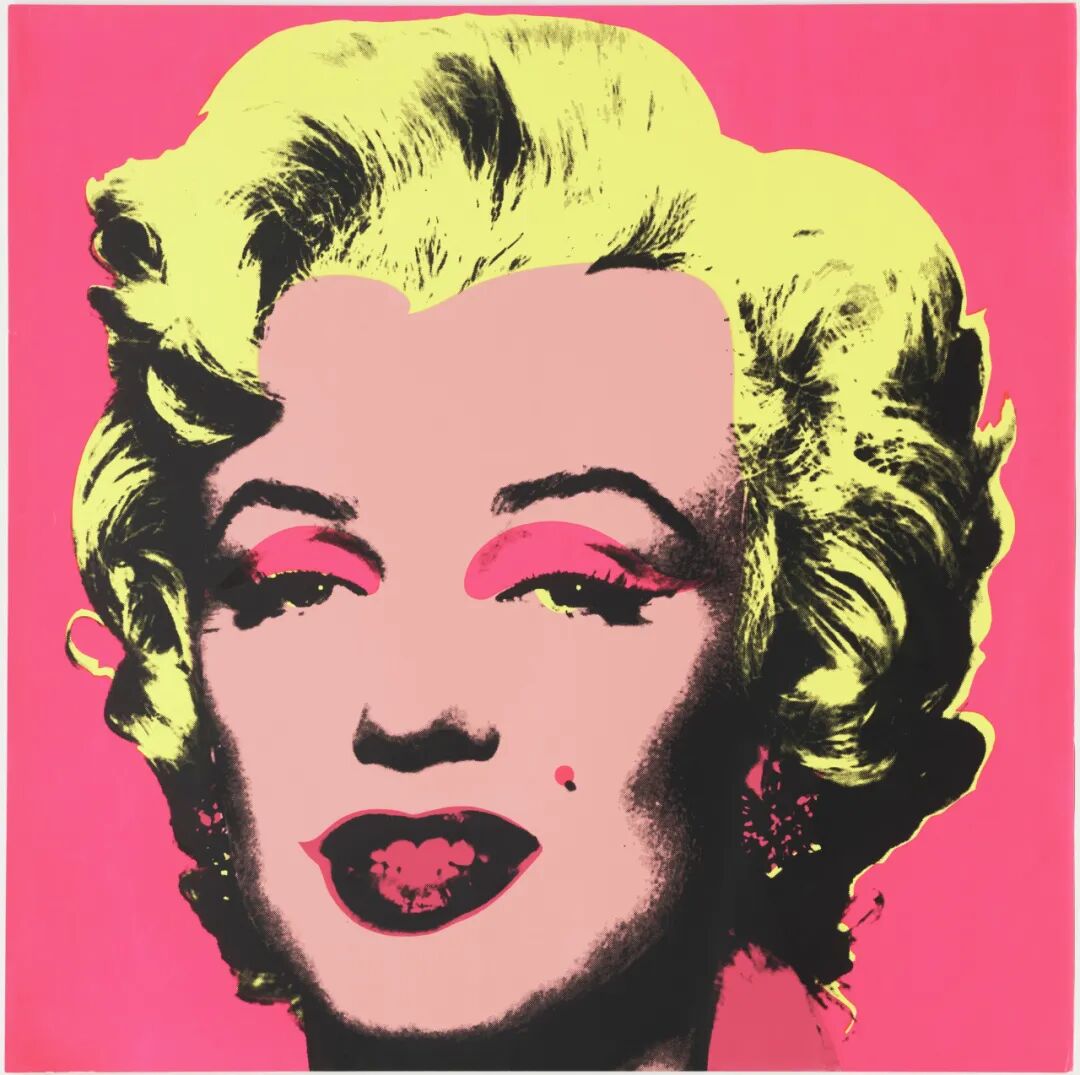
Warhol abandoned the heroic, personally emotional mode of Abstract Expressionism and faced the world with an indifferent, mechanical, impersonal posture. The subjects he chose were no longer myth, history or the inner self, but Campbell’s soup cans and Coca-Cola bottles from the supermarket shelf, and the Marilyn Monroe, Elvis and car-crash scenes from newspaper headlines — images the public knew best and could most readily lay hands on.
More important still was his chosen method of production — screen-printing. A semi-industrial reproductive technique common in commercial advertising, it allows images to be copied in large numbers, rapidly and almost without differentiation. By using screen-printing, Warhol imitated the logic of consumer society not only in content but in mode of production: standardisation, reproducibility, the erasure of individuality.
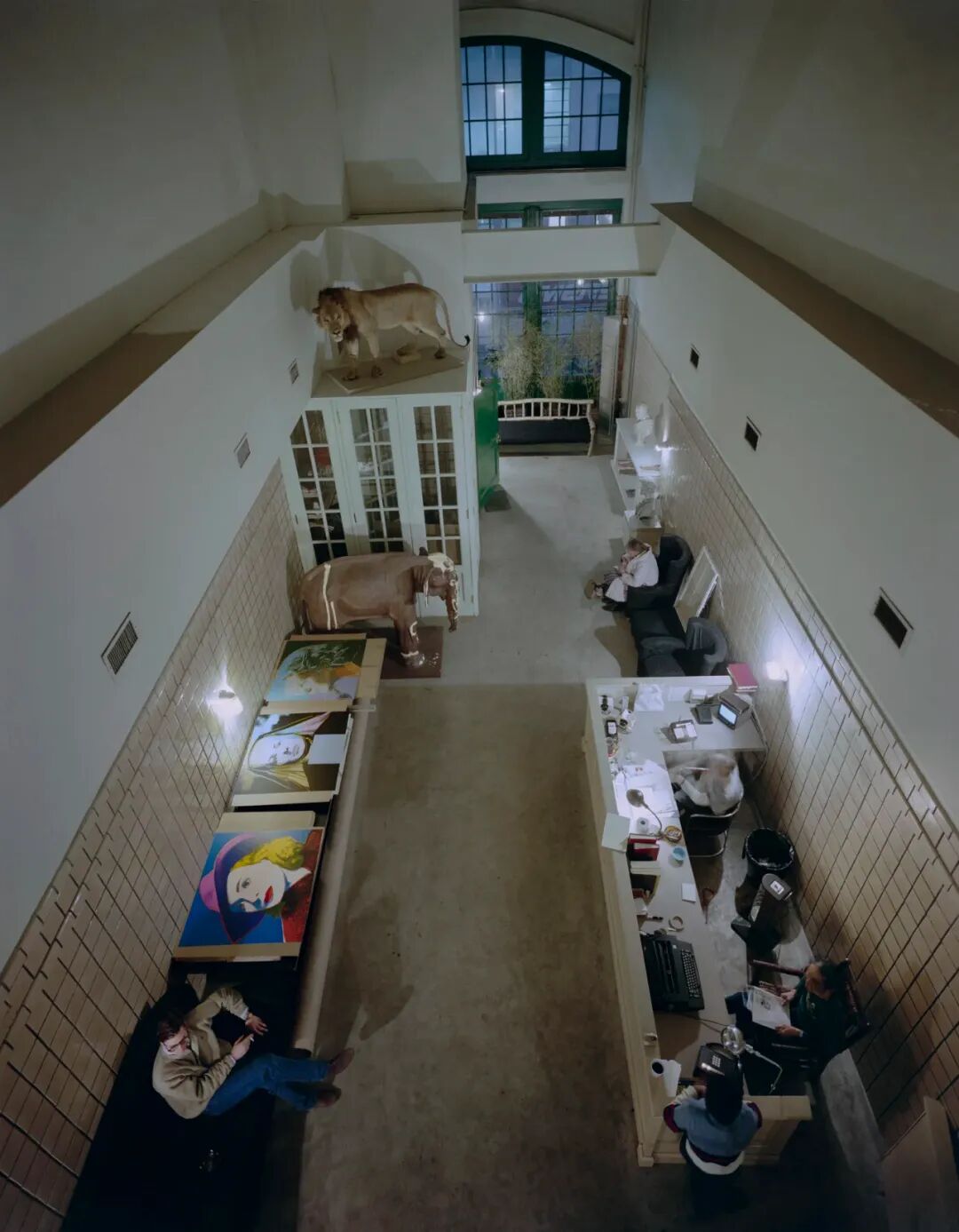
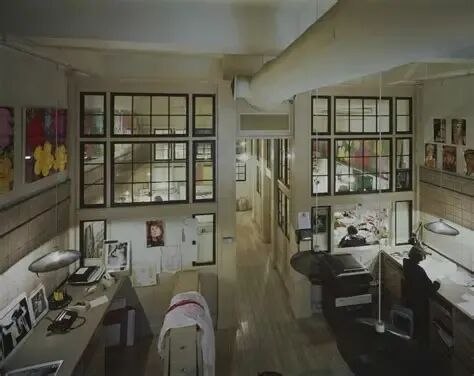
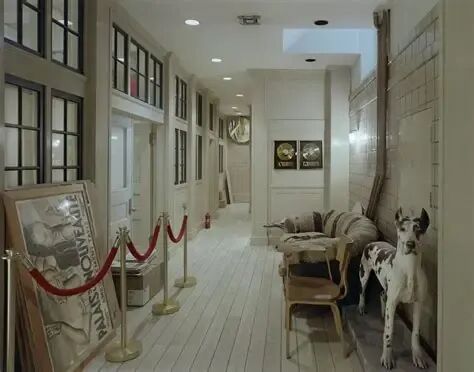
His studio, the ‘Factory’, was itself an embodiment of his methodology. Unlike the quiet, private traditional atelier, it was a social space and production line thronged with noise and celebrities, where assistants mass-produced Warhol’s works like workers on a shop floor. This posture was at once ironic and an embrace. Warhol’s work, like a vast mirror, coolly reflects the essence of consumer society: everything can be commodified, including art, celebrity and death. His famous dicta ‘I want to be a machine’ and ‘In the future, everyone will be world-famous for fifteen minutes’ precisely foretold the media-saturated age we inhabit today.
Warhol’s methodology is complex; he never made clear whether he was criticising or celebrating consumer society. This ambivalent, value-neutral stance is precisely the source of his work’s power. He was at once the cool observer of this consumer carnival and an active participant and beneficiary. By thoroughly commodifying the production and circulation of art, he revealed that in late-capitalist society the boundaries between art and commerce, between elite and mass culture, had long since dissolved. This ‘fighting poison with poison’ mode of intervention offered later artists a wholly new paradigm — one of coexisting with social reality rather than simply opposing it.
(II) ‘Everyone Is an Artist’: Joseph Beuys and ‘Social Sculpture’
If Warhol ‘reflects’ social reality, then the German artist Joseph Beuys sought to ‘transform’ society. The most important German artist after the Second World War, Beuys was deeply marked by the trauma of war and by humanist thought; he strove to expand art from a material production into a spiritual and social activity capable of healing society and awakening human creativity. His core idea is ‘social sculpture’, and his methodology: art is action, society is the material.
Beuys held that traditional art (painting, sculpture) had lost the power to change the world. The true material of art is no longer stone or pigment but human thought, language, action and relations. His famous declaration ‘Everyone is an artist’ does not mean everyone can paint, but that everyone possesses the capacity to shape society through creative activity. The artist’s task, then, is to awaken and channel this universal creativity through their own actions, thereby ‘sculpting’ the whole of society into a better form.
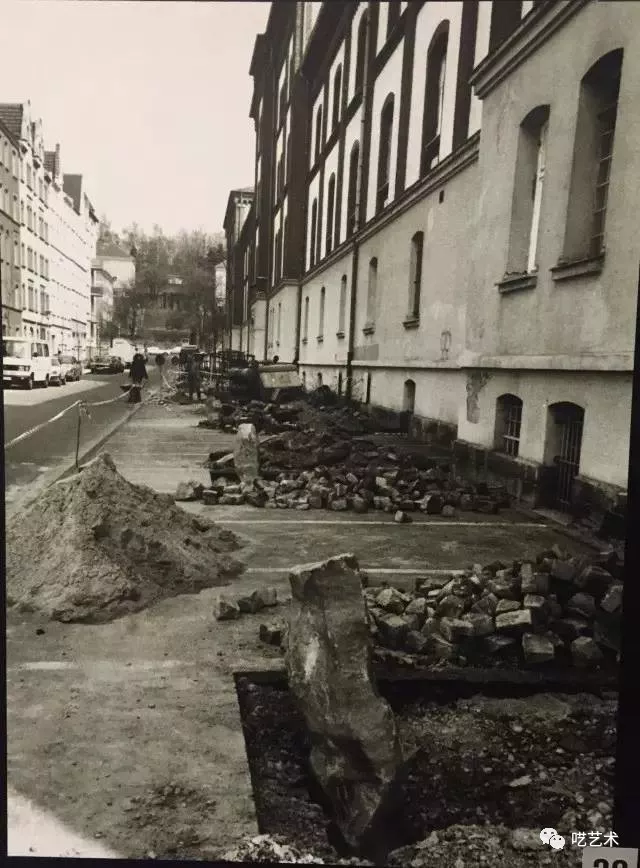
His work took extraordinarily diverse forms — performance, installation, lecture, political activity. In 1982, in his best-known work 7000 Oaks, Beuys launched in the German city of Kassel a vast project to plant seven thousand oak trees. The project spanned five years and required massive citizen participation and social collaboration. Here the artwork is no longer a static object but an ongoing social process that alters the city’s ecology and public space. The act of planting trees is itself a symbolic ‘sculptural’ activity, standing for ecological repair, social healing and hope for the future.
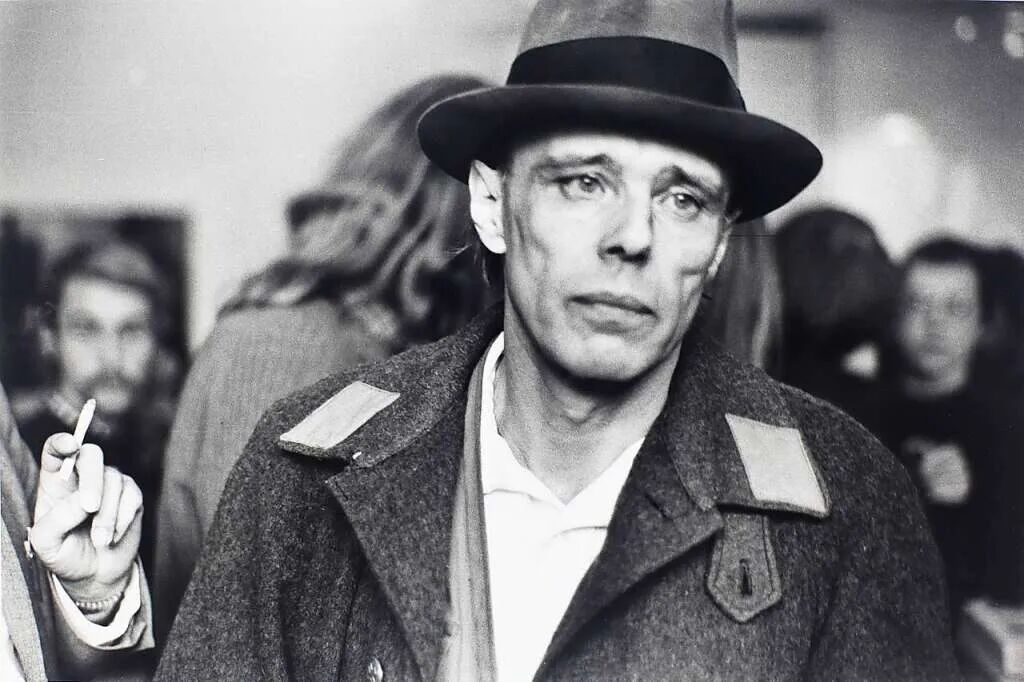
Beuys’s personal image — felt hat, fishing-vest, and the myth-laden materials of felt and fat he used repeatedly — all served his ‘shamanic’ positioning of the artist’s role. He saw himself as a medium able to bridge the spiritual and the real worlds and to heal social trauma. His methodology is a utopian ideal that thoroughly generalises art. Through founding the Free International University and engaging in Green Party politics, he extended artistic practice directly into education and politics. However contested his idealism, Beuys’s idea of ‘social sculpture’ vastly expanded the boundaries of art and profoundly influenced the later relational aesthetics, community art and all practices committed to social intervention. He proved that art can concern not only ‘things’ but also ‘events’ and ‘relations’.
V. Driver Three: Medium Self-Awareness — Probing the Boundaries of Technology, Material and Perception
Counterpart to the outward exploration of social context is another important, inward path: a deep, philosophical reflection on and experimentation with the medium of artistic creation itself. Reflection is the mark of contemporaneity; ‘experiment’ its rule.
Here ‘medium’ refers not only to traditional painting and sculpture but extends to photography, video, light, sound, the body, even the viewer’s perception itself. The artist no longer treats the medium as a transparent tool but makes its materiality, technical grammar and perceptual effects the core subject of the work.
(I) The Poetics of Video: Nam June Paik and Video Art
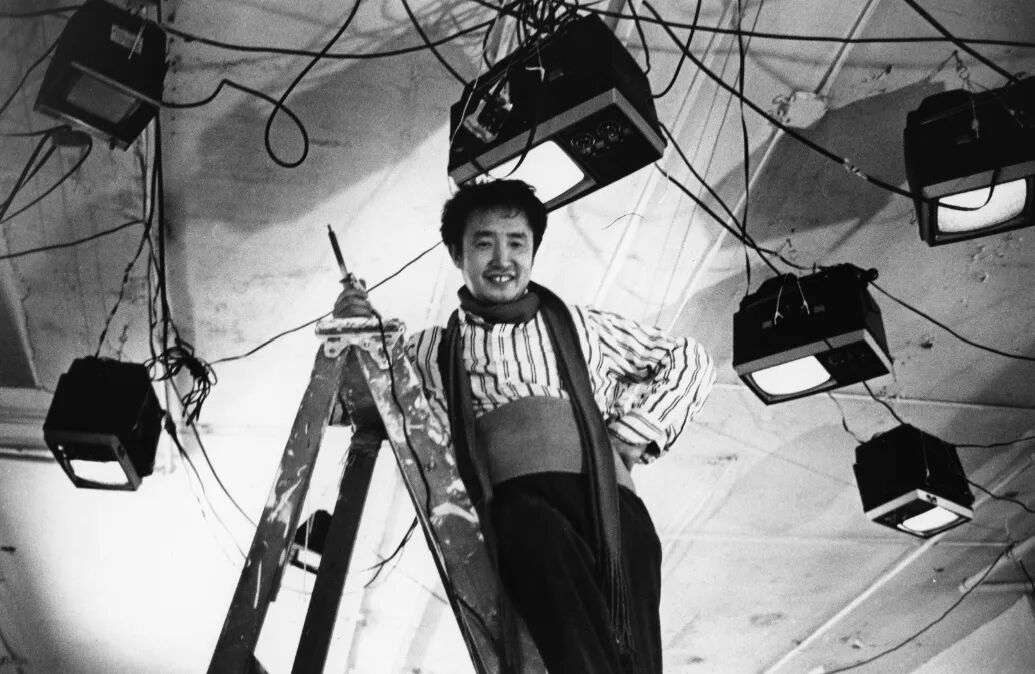
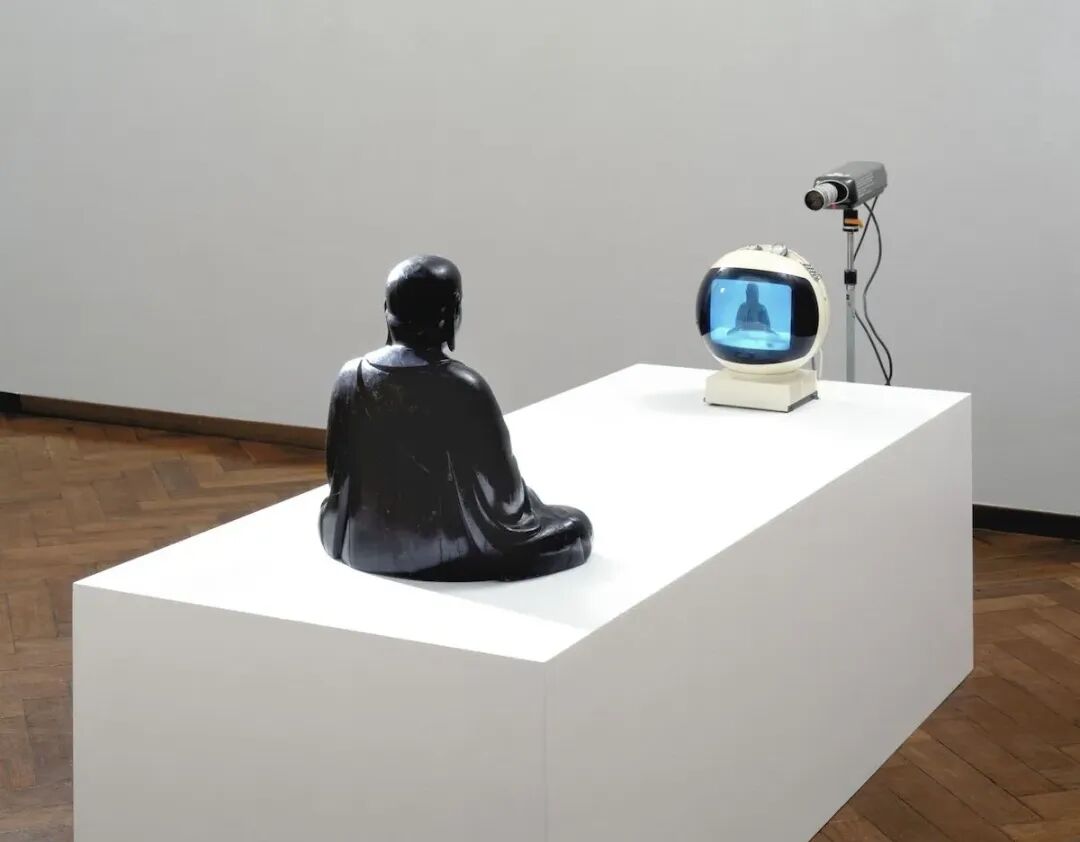
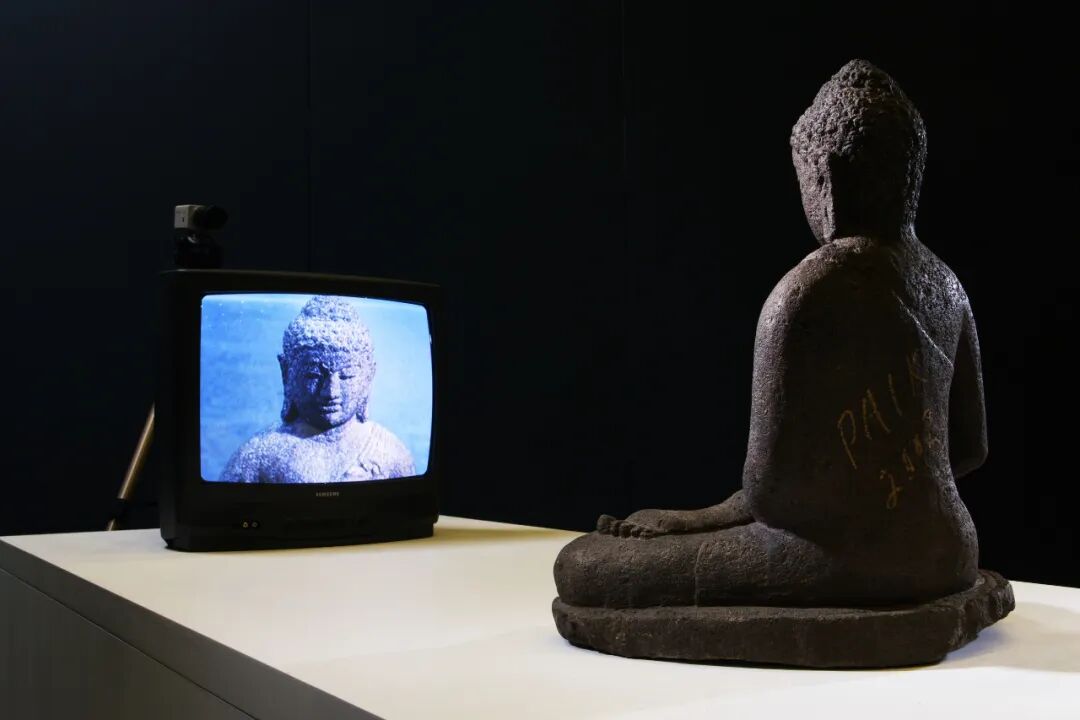
Hailed as the ‘father of video art’, Nam June Paik devoted his entire career to exploring the possibilities of the nascent medium of television and video. In an era when television as a mass medium was just emerging, Paik did not, like Warhol, merely use its content as material; he took the television set itself — the ‘glowing box’ — directly as sculptural material and creative tool. His methodology: to deconstruct and recompose the grammar of the technological medium.
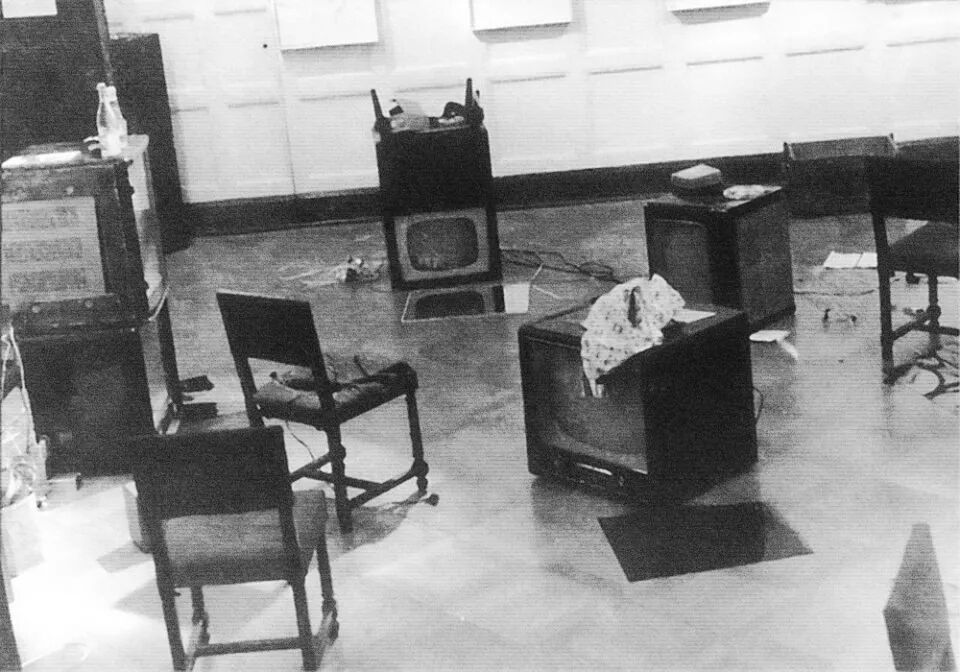
Paik’s early works are full of Fluxus experiment and a spirit of destruction. In his first solo exhibition in 1963, ‘Exposition of Music – Electronic Television’, he showed a dozen or so television sets that he had ‘treated’. Some had their pictures distorted by magnets into abstract lines; some were turned upside down; some had no picture at all, only shifting noise. In this way he freed the viewer from the passive reception of television content and redirected attention to the television as a ‘thing’ and a ‘technical system’, while also breaking television’s one-way logic of transmission and attempting to establish a bidirectional relation in which the viewer could participate and interact.
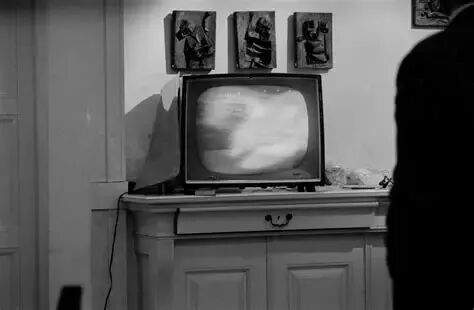
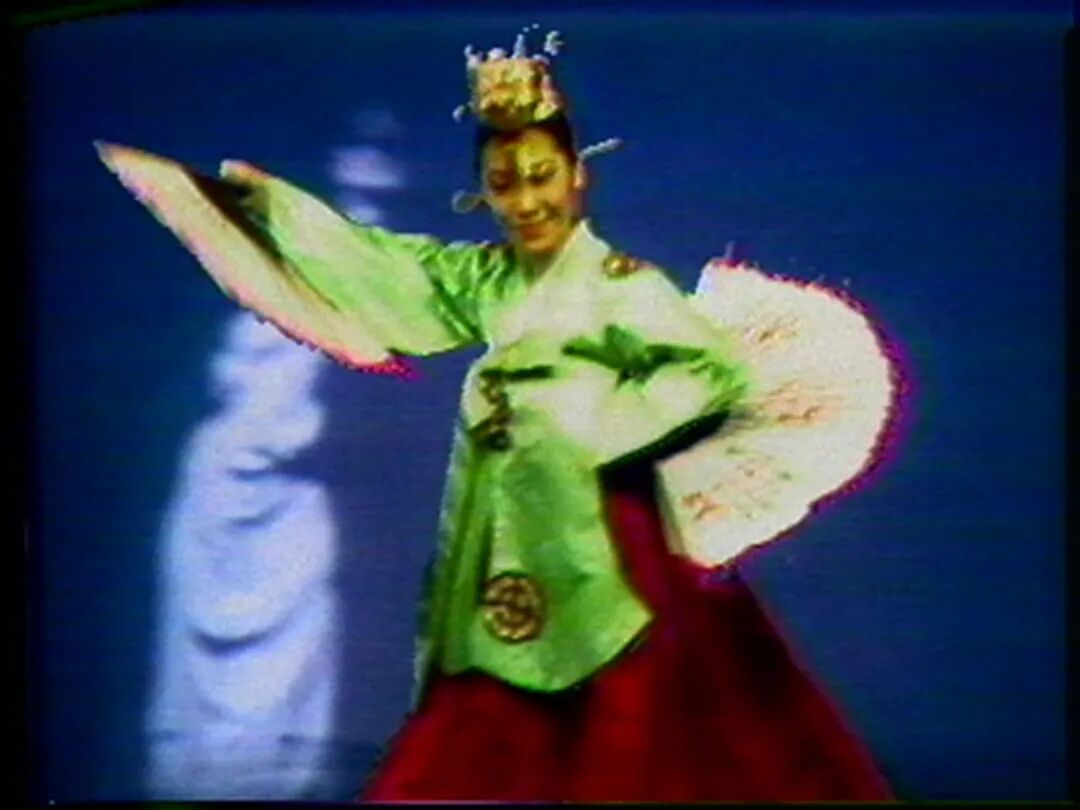
As technology advanced, Paik’s work grew more complex and grand. He began using multi-screen displays, video synthesizers and the like to create dazzling image collages. His 1973 work Global Groove is a typical example: it rapidly cuts together utterly unrelated footage — rock performance, traditional dance, avant-garde art, commercial advertising — set to psychedelic electronic music, prophesying an information-overloaded, globalised media environment.
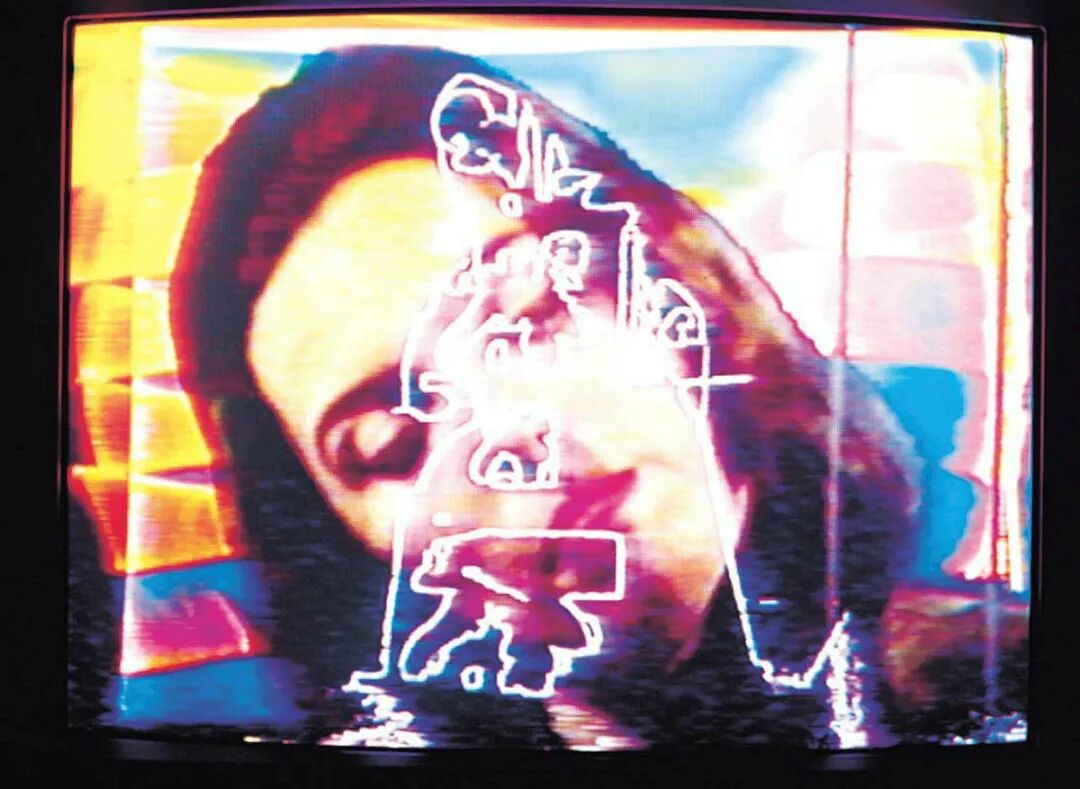
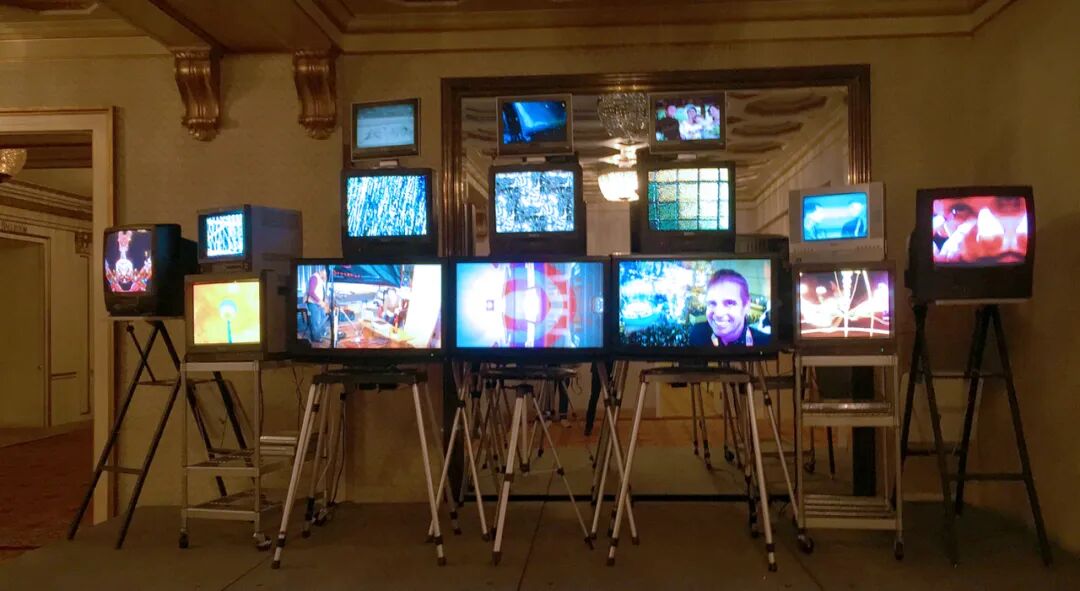
His famous declaration ‘information superhighway’ preceded the popularisation of the internet by two decades, revealing astonishing foresight. In his large-scale 1995 installation Electronic Superhighway: Continental U.S., Alaska, Hawaii, he arranged hundreds of television sets into the shape of the map of the United States, each state playing image fragments representing its cultural character. The work is at once a celebration of American cultural plurality and a profound reflection on how the medium shapes national perception.
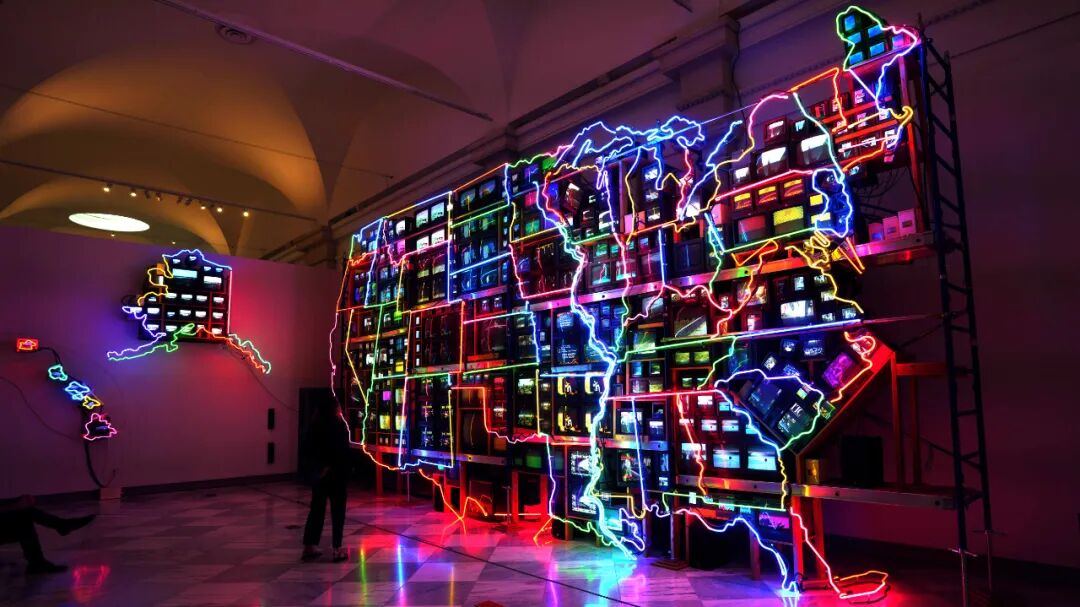
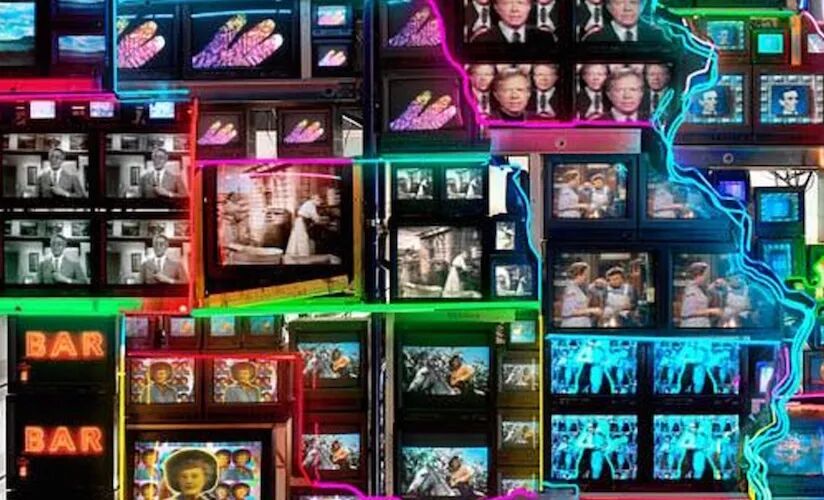
Paik’s methodology combines technological critique with cultural fusion. He embraced new technology, but not to praise it blindly; rather, through dismantling, recombining and parodying, he exposed its inner ideology and latent artistic possibilities. He also fused Eastern Zen thought with the Western spirit of Fluxus, lending the cold technological medium a poetic quality. He opened the way for all later new-media artists, proving that conscious reflection on the technological medium itself had become a core driver in the generation of contemporary-art ‘concept’.
(II) The Theatre of Perception: Olafur Eliasson and Phenomenology
The Danish–Icelandic artist Olafur Eliasson pushed the exploration of medium self-awareness from technical devices further into the immaterial, phenomenological realm. His chief creative ‘materials’ are natural elements such as light, water, fog, temperature and colour, while his ‘works’ are the unique perceptual situations he carefully constructs for the viewer. Methodology: to make the viewer’s process of perception the core of the work.
Eliasson is deeply influenced by phenomenological philosophy, especially Merleau-Ponty’s idea that body and world are indivisible. He holds that our understanding of reality is not objective but actively constructed by our bodies and senses within a specific environment. His art therefore aims to create ‘experimental models’ in which the viewer can become clearly aware of the very process of ‘watching’ and ‘perceiving’. He turns the museum from a place that displays static objects into a laboratory for staging a ‘theatre of perception’.
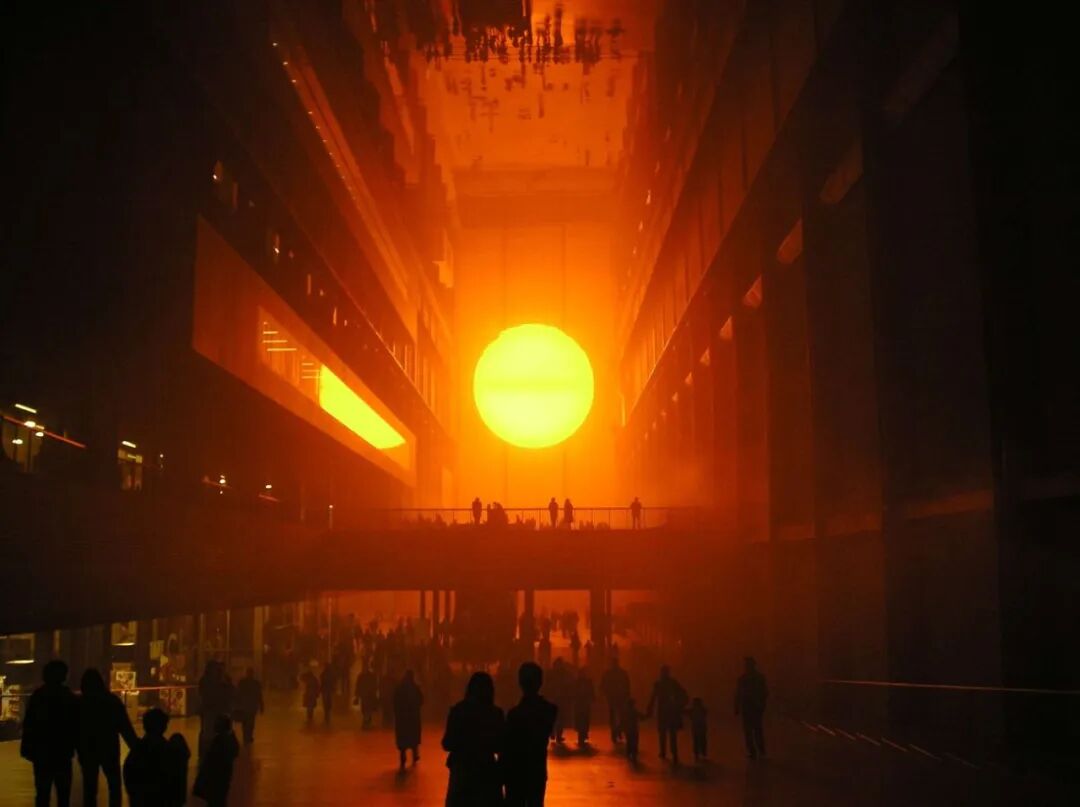
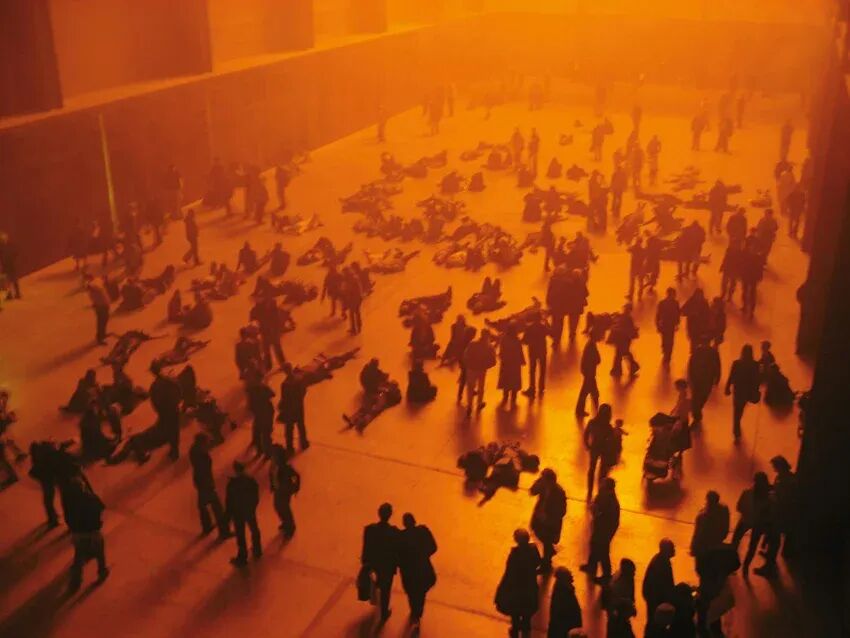
His best-known work is The Weather Project, shown in 2003 in the Turbine Hall of Tate Modern, London. Eliasson arranged hundreds of mono-frequency yellow lamps into a giant semicircular ‘sun’, while the ceiling was covered with mirrors that reflected the semicircle into a complete, awe-inspiring giant ‘solar disc’.
At the time, the entire hall was filled with a thin mist produced by humidifiers, and thousands of visitors streamed into the space, lying or sitting, bathed in a warm, apocalyptic yellow glow, gazing at their tiny reflections in the ceiling mirror. The work’s success lies in its not ‘representing’ a sun but creating an environment in which people collectively experience light, space, atmosphere and their own presence. The viewers’ responses became an inseparable part of the work. The relations of ‘seeing’ and ‘being seen’, of ‘individual’ and ‘collective’, are dramatically magnified within this field.
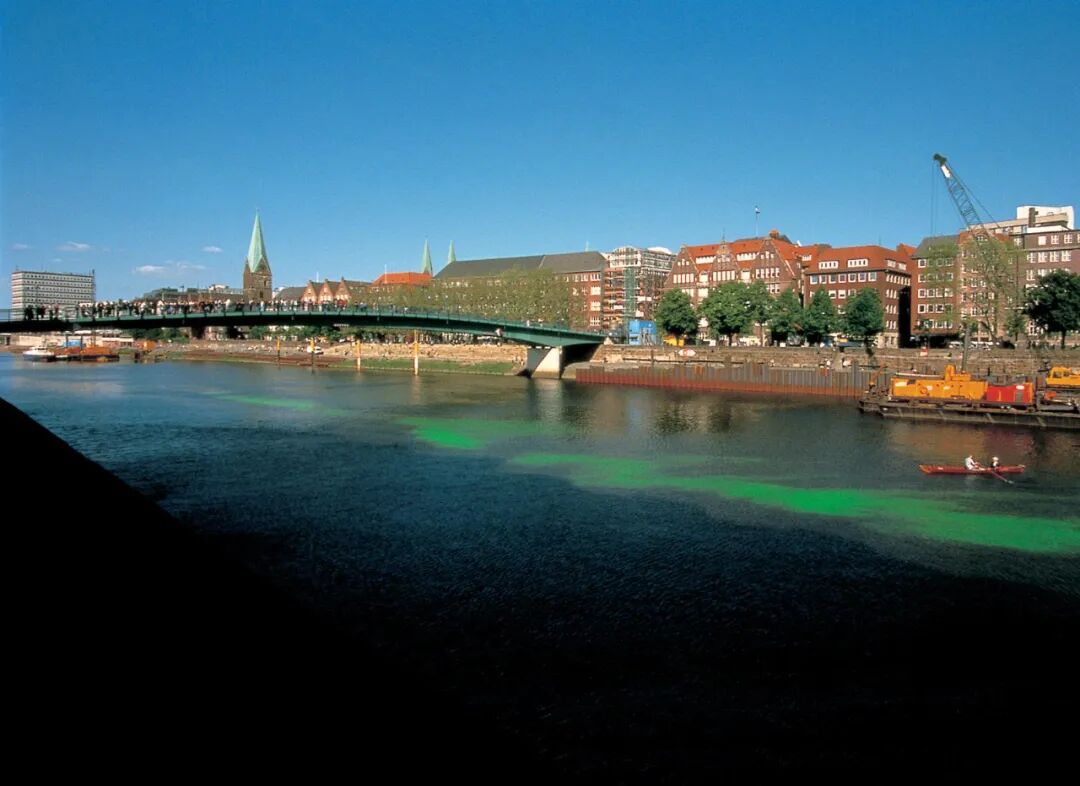
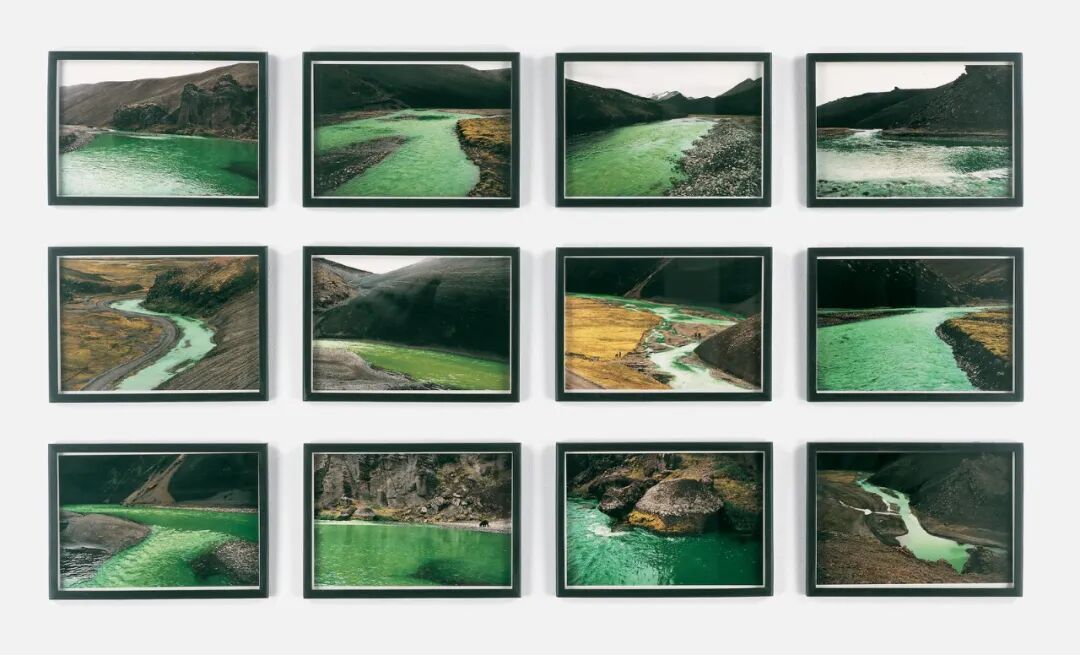
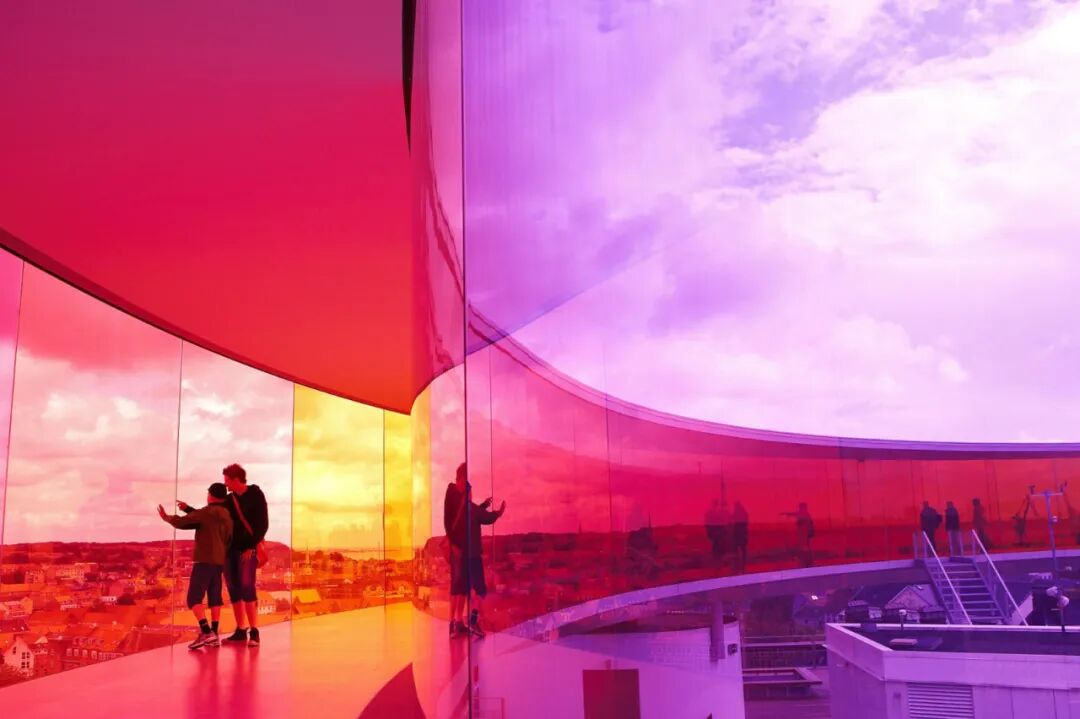
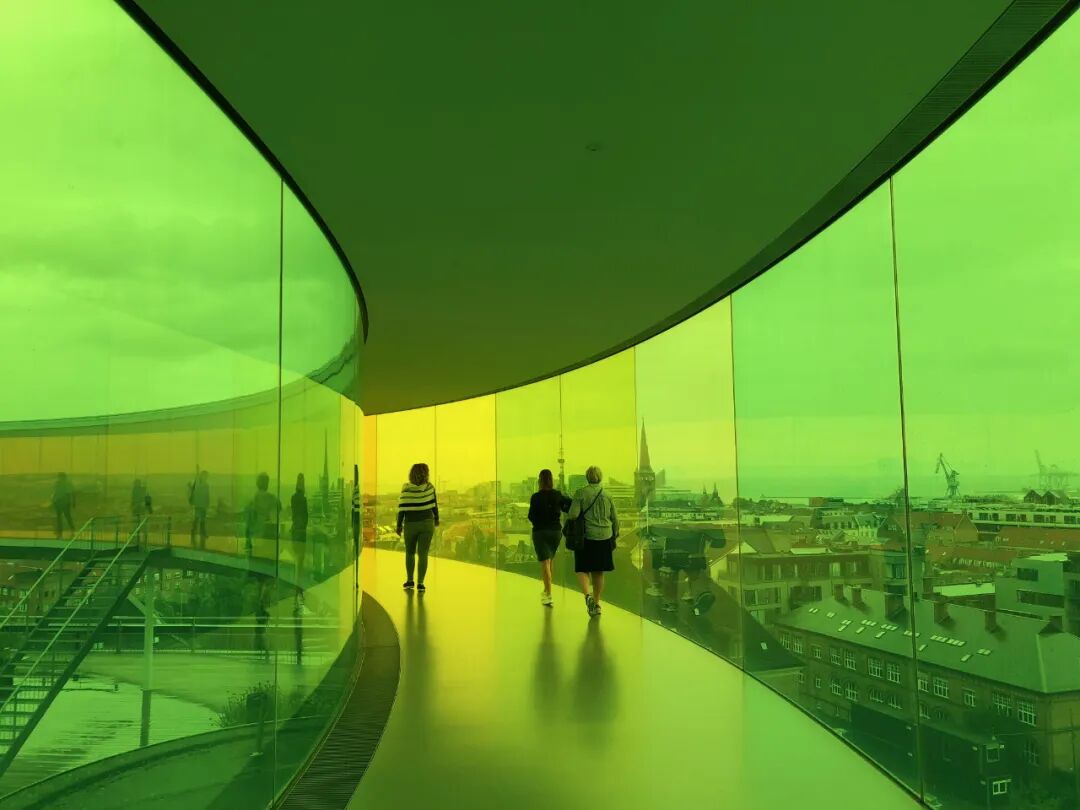
In other works — Green River (1998), in which he poured non-toxic fluorescent dye into rivers around the world, turning the water an eerie green to highlight the natural elements cities overlook; or Your Rainbow Panorama (2011), a circular glass walkway built on the roof of the ARoS Aarhus Art Museum in Denmark, letting visitors walk through a rainbow-like spectrum and view the city in an entirely new way — Eliasson consistently embodies one methodology: by precisely controlling basic elements such as light, colour and space, to ‘curate’ a sensory experience that leads the viewer to reflect on the relations between self and environment, nature and culture, reality and representation. His art does not show you what to ‘see’ but makes you think about how you ‘see’.
VI. Driver Four: The Conceptual Core — Philosophical Inquiry and Its Visual Translation
This driver points to practices that ground artistic creation directly upon a clear philosophical or theoretical motif.
For such artists, the artwork is the ‘visual evidence’ or ‘thought experiment’ of their philosophical thinking. Their creative process resembles a philosopher searching for the most apt example to illustrate an argument — a methodology expressed in its purest and most extreme form in the Conceptual art of the late 1960s.
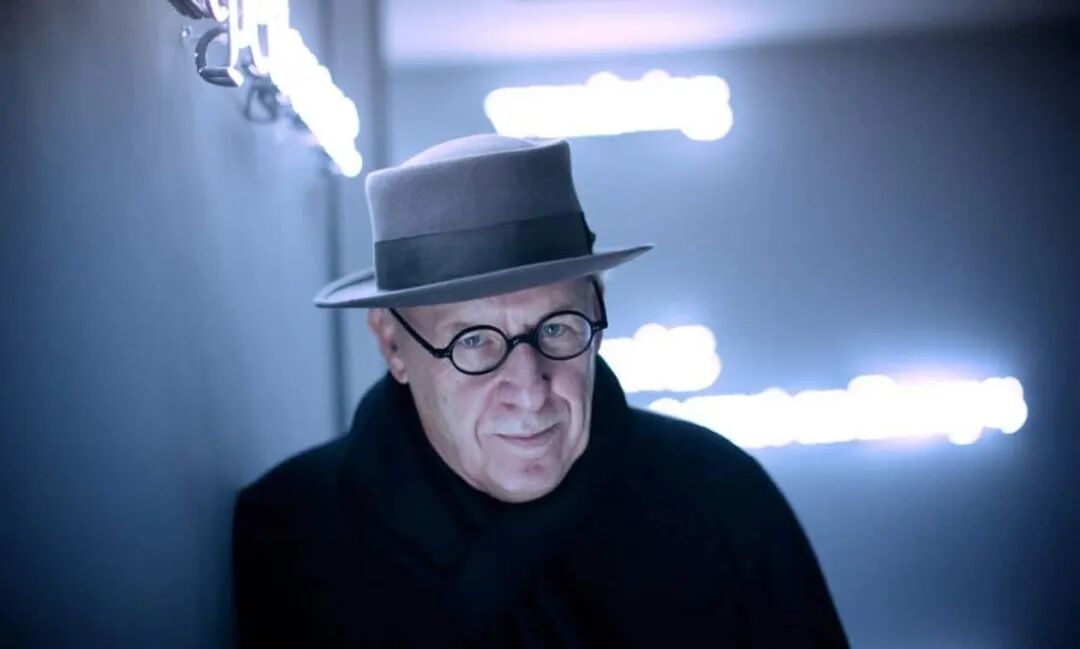
(I) Art as Definition: Joseph Kosuth and Conceptual Art
Joseph Kosuth is the most important and most theoretically self-aware standard-bearer of Conceptual art. Deeply influenced by the philosopher Ludwig Wittgenstein and the analytic philosopher A. J. Ayer, he strove to liberate art from the domain of aesthetics and turn it into a purely intellectual activity akin to linguistic analysis. His methodology: to present philosophical propositions directly as artistic problems.
For Kosuth, since Duchamp the only function of art has been to investigate art’s own essence. In his programmatic 1969 essay ‘Art after Philosophy’ he states plainly that art’s task is to ask, ‘analytically’, ‘what is the definition of art?’. Thus an artwork need no longer hold any visual appeal; its value lies entirely in how far it advances the discussion of art’s essence.
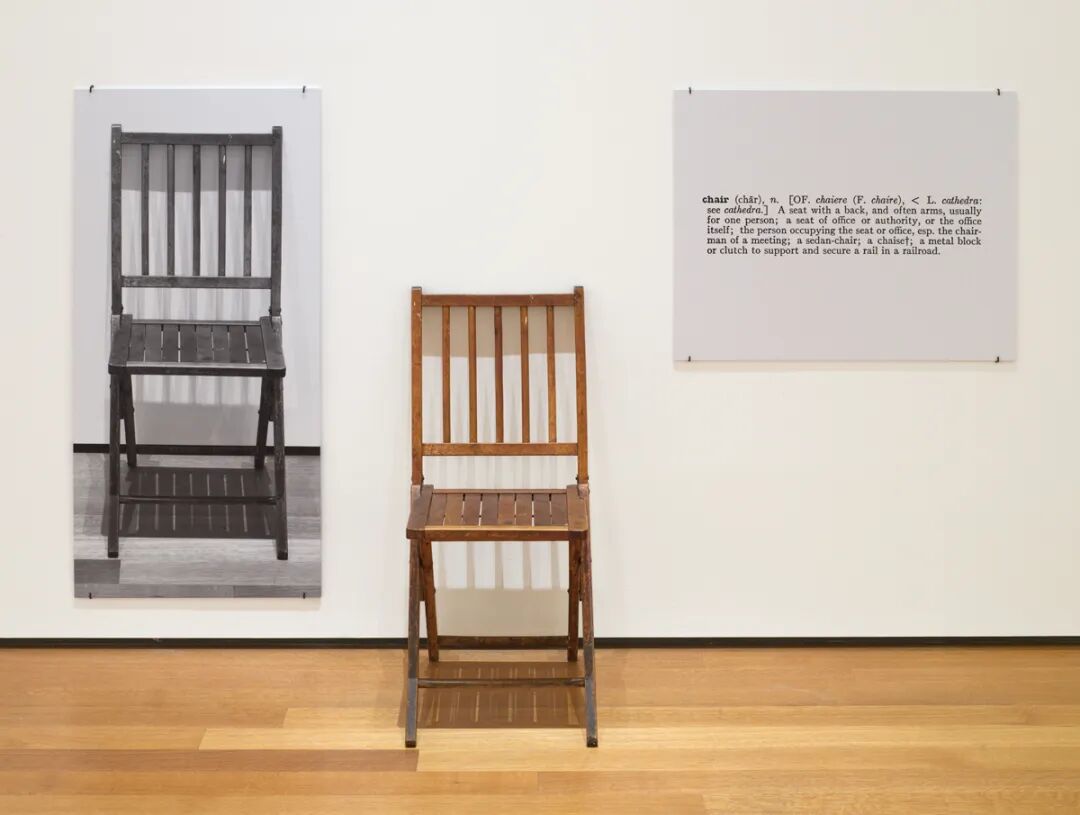
His most representative work, One and Three Chairs, perfectly illustrates this methodology. The work comprises three parts: an actual, foldable wooden chair; a life-size black-and-white photograph of that chair; and the dictionary definition of the word ‘chair’, photocopied, enlarged and pinned to the wall. Together the three form a single work. Through this juxtaposition Kosuth intuitively stages the classic philosophical problem — since Plato — of ‘form, object and representation’, and echoes Wittgenstein’s investigation in Philosophical Investigations of the relations among language, image and reality.
In this work the chair is ordinary, the photograph documentary, the text ready-made; the work’s point is plainly not the formal beauty of any part but the conceptual tension generated among the three. It forces the viewer to ask which is the ‘real’ chair — the material chair, the imaged chair, or the linguistically defined one? Through this question Kosuth is in fact asking: what is the essence of art? A material entity, a visual representation, or a conceptual definition? His answer is self-evident: the last.
In other works, such as the ‘First Investigation’ series, Kosuth exhibits dictionary definitions of words like ‘water’, ‘air’ and ‘meaning’ directly in ‘photo-text’ form. These works compress the visuality of art to its minimum, becoming almost pure text and philosophical argument.
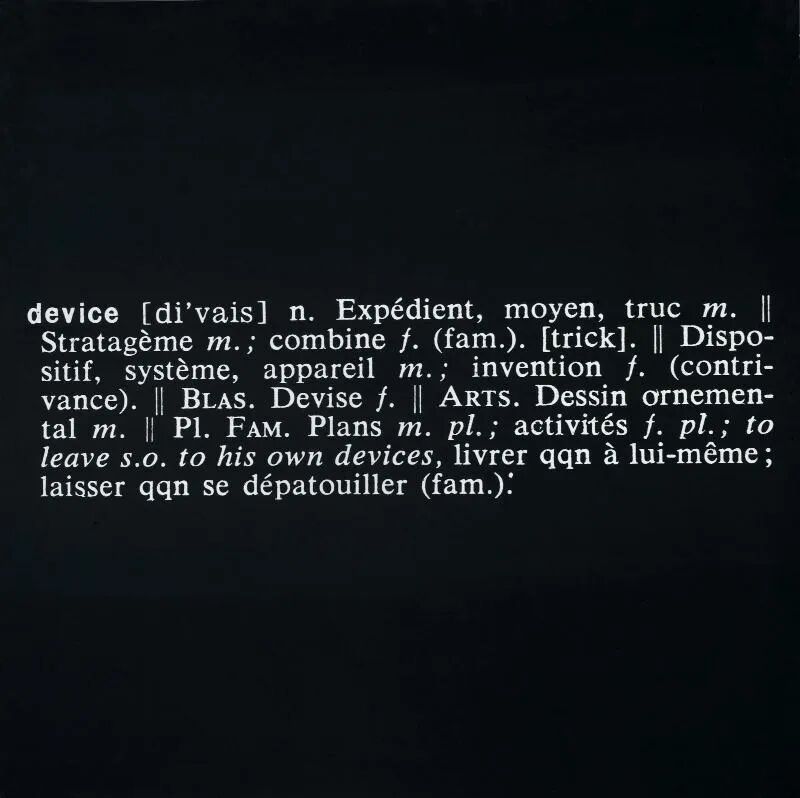
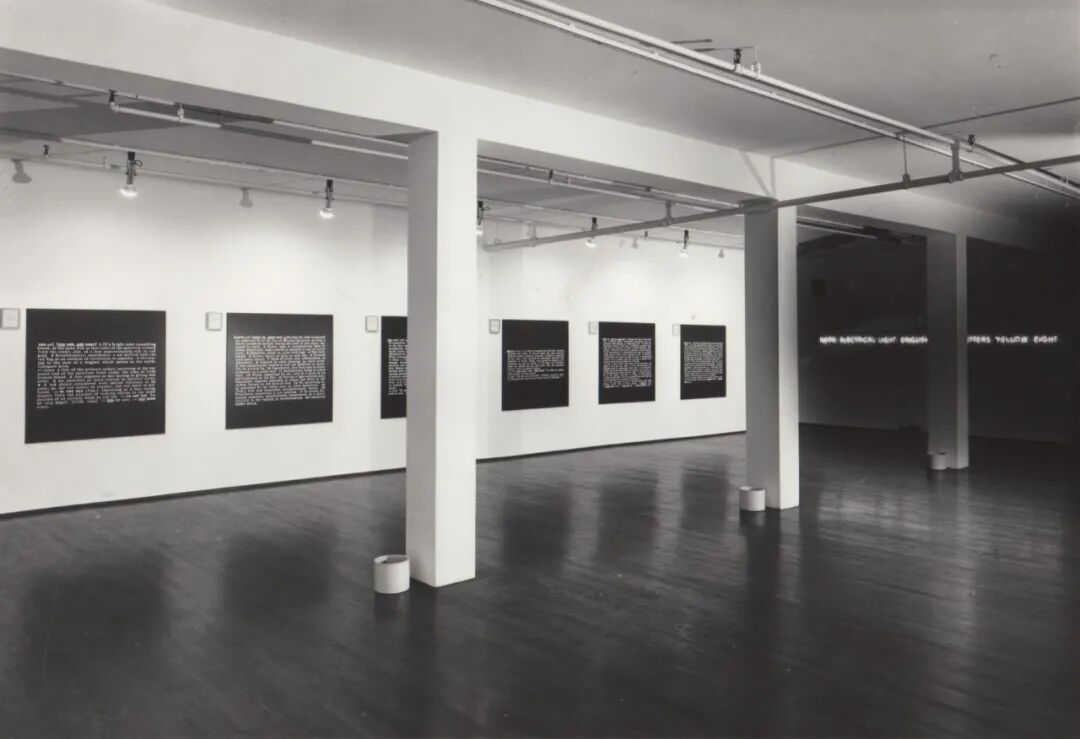
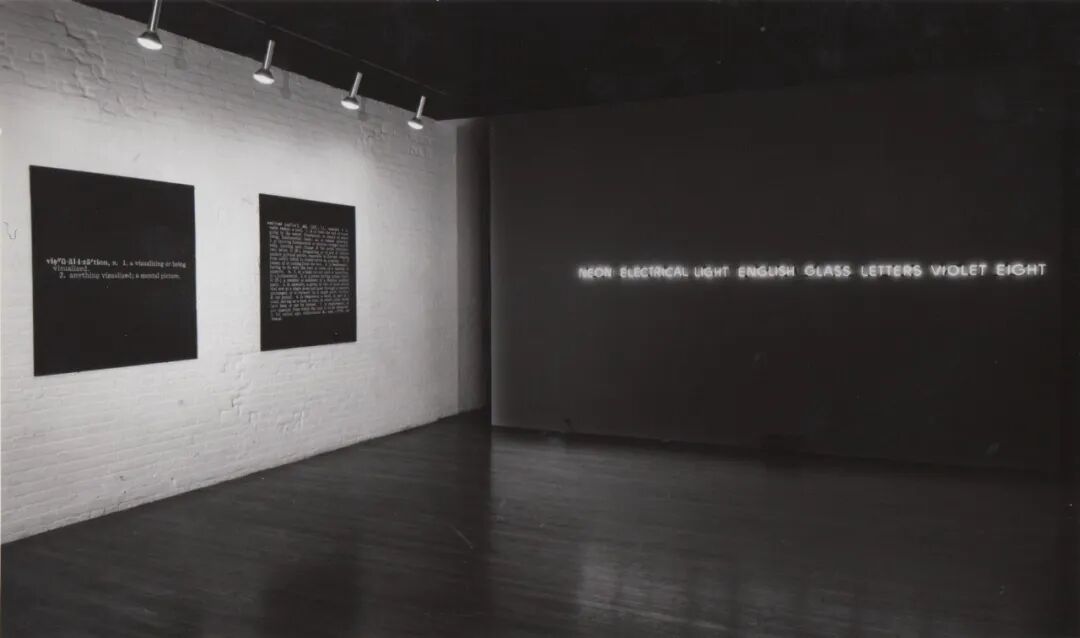
Kosuth’s methodology is the most radical and purest in Conceptual art: he holds that art is the definition of art, and the artist’s work is ceaselessly to propose, through artworks, a ‘tautology’ about that definition. Restricted in sensory appeal as this extreme form is, it thoroughly established the core contemporary-art principle that ‘concept precedes form’.
(II) The Logic of Minimalism: Sol LeWitt and Systemic Art
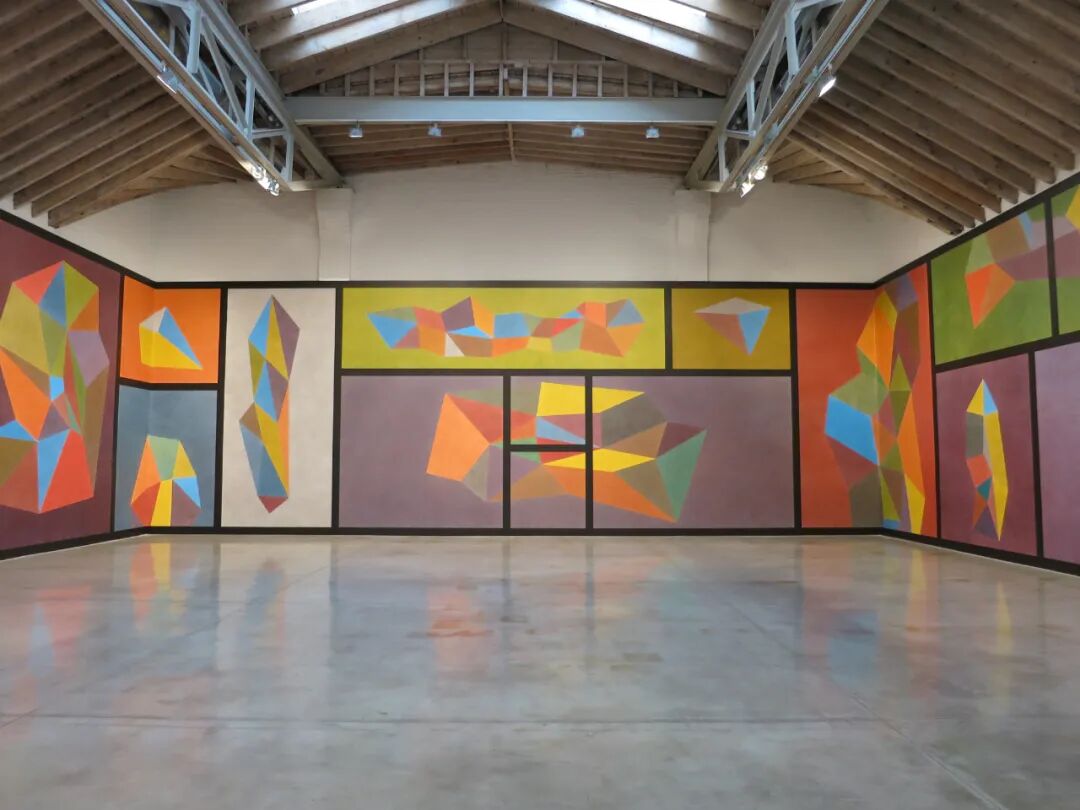
Sol LeWitt, alongside Kosuth a colossus of Conceptual art, offers another methodology equally grounded in rational logic but richer in visual possibility. If Kosuth is concerned with ‘definition’, LeWitt is concerned with ‘system’ and ‘rule’. His core idea: the concept is a machine for making art.
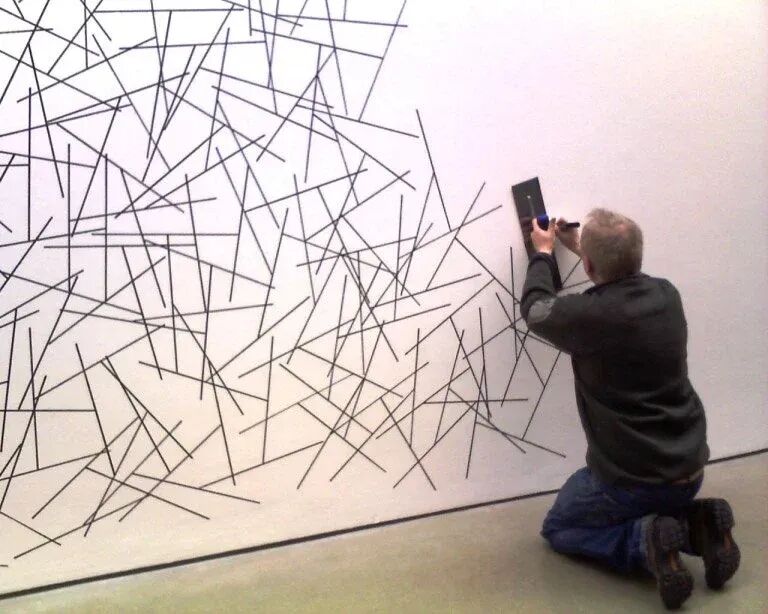
In ‘Paragraphs on Conceptual Art’, published in Artforum in 1967, LeWitt gave the classic statement of his methodology: ‘In conceptual art the idea or concept is the most important aspect of the work. When an artist uses a conceptual form of art, it means that all of the planning and decisions are made beforehand and the execution is a perfunctory affair. The idea becomes a machine that makes the art.’ This overturns the traditional understanding of the creative process. The core of creation is no longer the artist’s improvisation and emotional investment in the act of making, but the conception, beforehand, of a set of rules or a system. Once this ‘program’ is set, the work’s final form is already determined; the concrete execution can even be carried out by assistants or any other person.
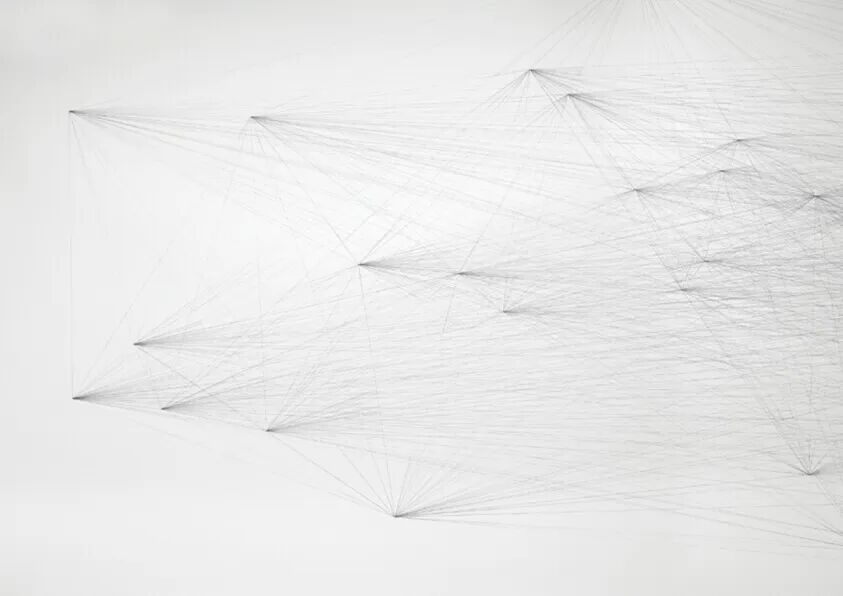
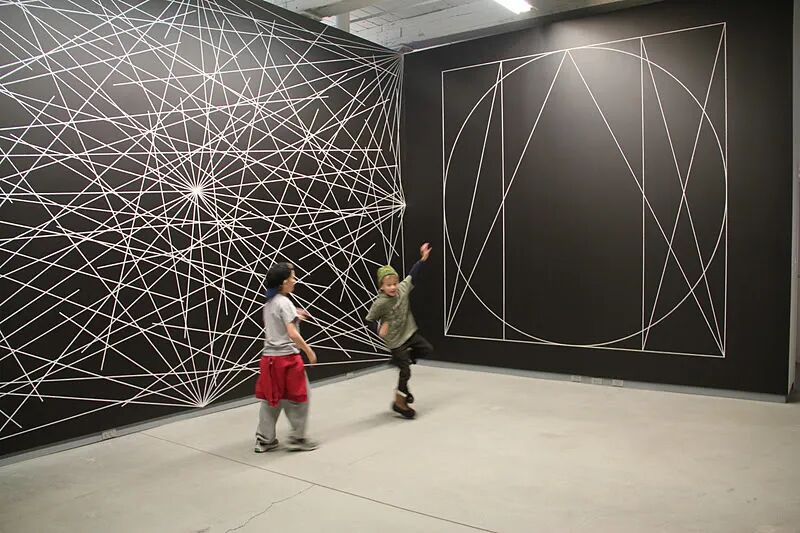
LeWitt’s best-known works are his ‘wall drawings’. These are not painted by his own hand but exist as sets of written instructions. Wall Drawing 118 (1971), for instance, specifies: ‘Place fifty points randomly on a continuous wall, all points to be connected by straight lines.’ The collector or museum that buys such a work acquires not a traditional painting but a certificate of instructions signed by the artist, along with the right to realise the work in a specific space. They must, per the instructions, hire a professional draftsman to execute the work on the wall, strictly observing the core rule of ‘random placement, straight-line connection’.
Thus each realisation of the same wall drawing in a different space may show slight visual differences owing to wall dimensions or minor variations in the draftsman’s execution (the precise position of points, the pressure of the line); yet these differences fall within the framework of the ‘instructional rules’, and the core concept behind the work — ‘complex form generated from simple rules’ — remains constant.
This methodology carries several important implications:
First, it thoroughly separates ‘concept’ from ‘material realisation’, further reinforcing the priority of concept.
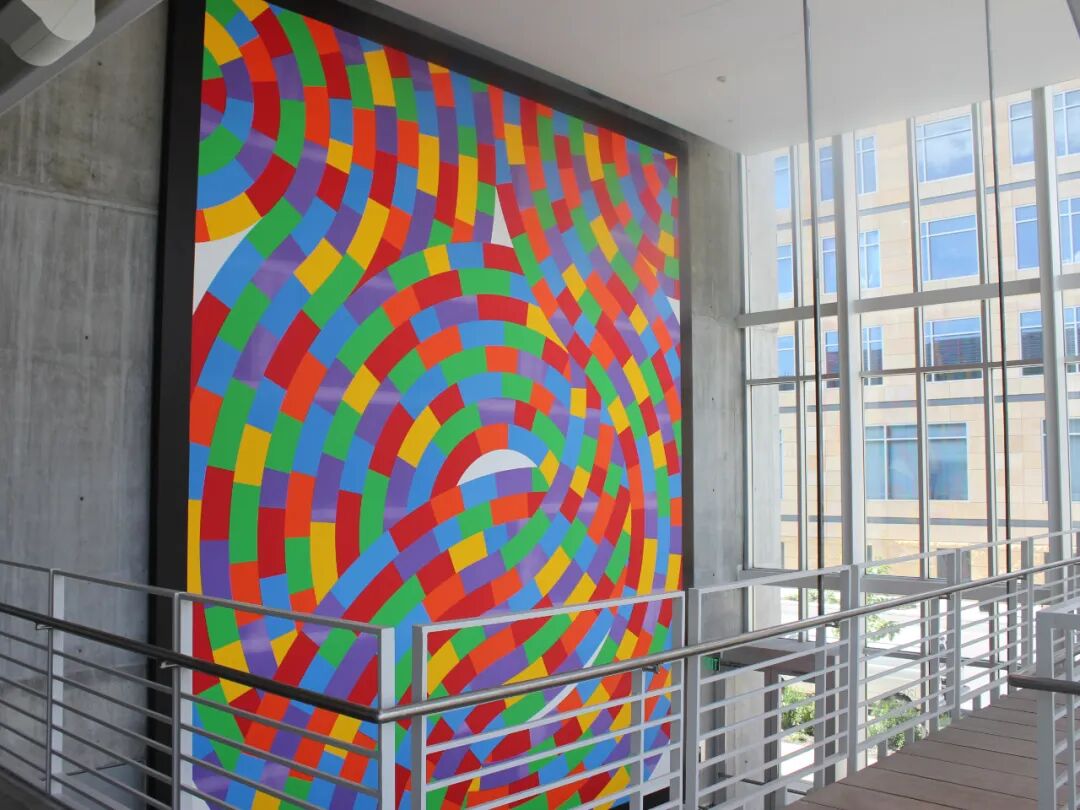
Second, it challenges the traditional status of the artwork as a unique, portable ‘commodity’; the wall drawing is temporary and site-specific, not easily bought and sold. Most important, LeWitt’s methodology introduces a ‘generative’ logic. The rules he sets are often very simple (for example, ‘from the four corners and the midpoints of the four sides, draw lines connecting them’), yet in combination these simple rules can generate visual forms of extreme complexity, richness and even beauty. Embedded here is a profound philosophical idea: the complexity of the world may arise from very simple underlying rules. His series of cube sculptures, too, is generated from the systematic permutation and variation of the cube.
LeWitt’s methodology is a calm, rational, impersonal system-building. It transforms artistic creation from a mysterious, emotional activity into an intellectual game based on logical deduction, akin to mathematics or architectural design. This rule-based generative art also became an important intellectual precursor to today’s computer art and algorithmic art.
VII. Driver Five: Personal Experience — The Politicisation of Body, Identity and Memory
Compared with the foregoing drivers, this dimension attends more closely to the source of the ‘subjectivity’ of artistic creation. The artist’s personal life experiences — body, gender, ethnicity, sexuality, traumatic memory and the like — are no longer private information to be hidden behind the work but are actively, strategically pushed to the foreground, becoming the core medium and critical subject of the work.
In this methodology, the slogan ‘the personal is political’ finds its fullest expression.
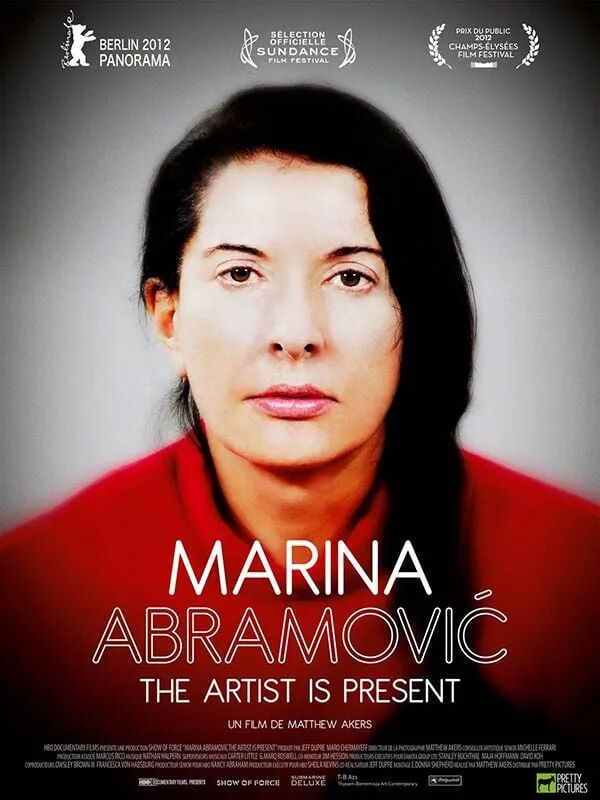
The Serbian artist Marina Abramović is a highly influential figure in performance art. Her practice is built almost entirely on a merciless exploration of the limits of her own body and psyche. Her methodology in brief: the body is a battlefield, experience is the work.
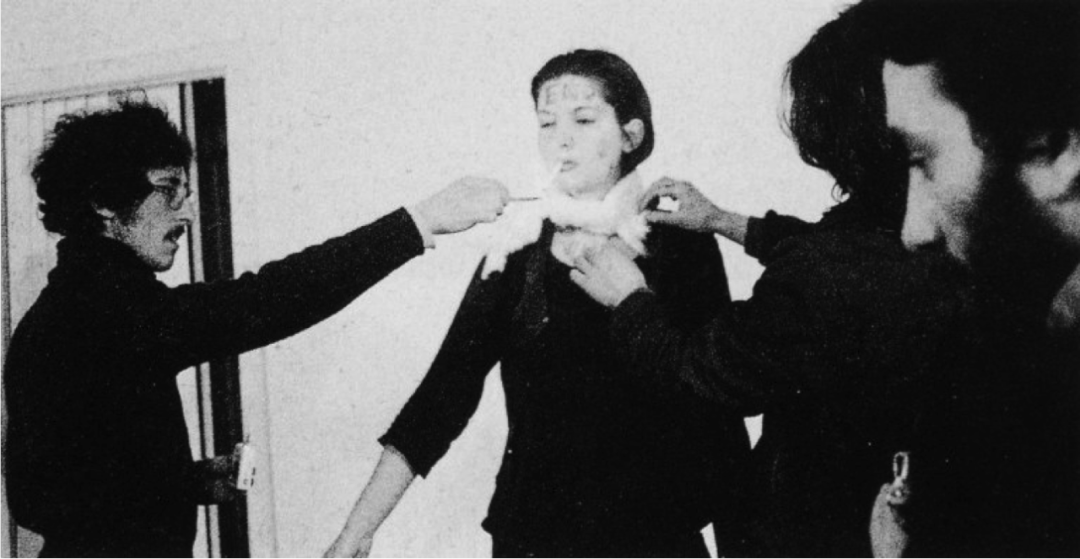
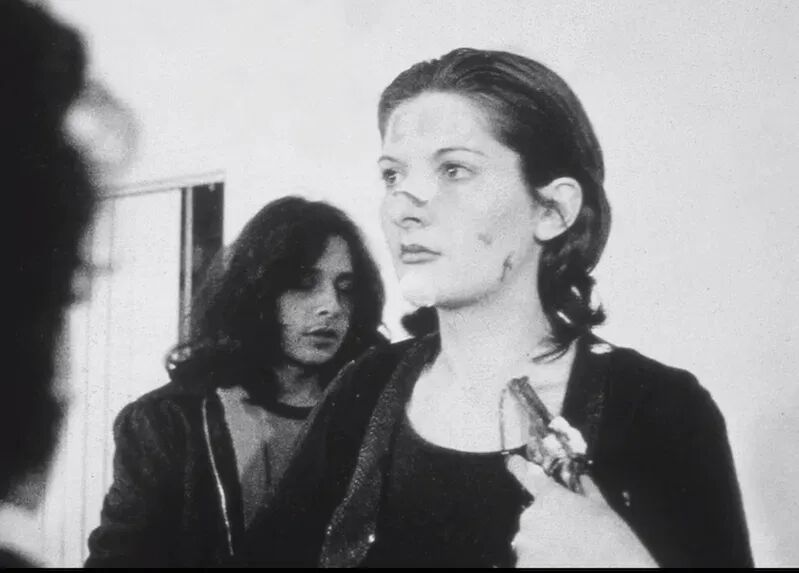
Abramović’s works of the mid-1970s were already notorious for their extremity and danger. In Rhythm 0 (1974), a performance made at a gallery in Naples, Italy, she stood still in a room for six hours (8 p.m. to 2 a.m.) with seventy-two objects laid out on a table — a rose, honey, scissors, a scalpel, a gun and a single bullet among them. She told the audience that for those six hours they were free to use these objects on her body as they wished, and that she would bear full responsibility.
At first the audience behaved gently — someone gave her a rose, kissed her, drew her portrait in lipstick; but after the third hour the behaviour spiralled out of control: her clothes were cut away until she was naked, her skin slashed with a knife and scratched by rose thorns, and someone even cut her neck to drink her blood. Most harrowing of all, a viewer loaded the bullet into the gun, aimed it at her head and even guided her finger onto the trigger, before other viewers intervened and stopped it.
When the six hours ended and Abramović emerged from her passive state and walked toward the crowd in tears, the very viewers who had abused her fled — unable to face a ‘person’ who had regained subjectivity, able only to accept her as an object. The work interrogates, in a chilling way, the violence and kindness, passivity and power relations buried deep in human nature; Abramović’s body becomes the vessel of a socio-psychological experiment that points straight at the essence of humanity.
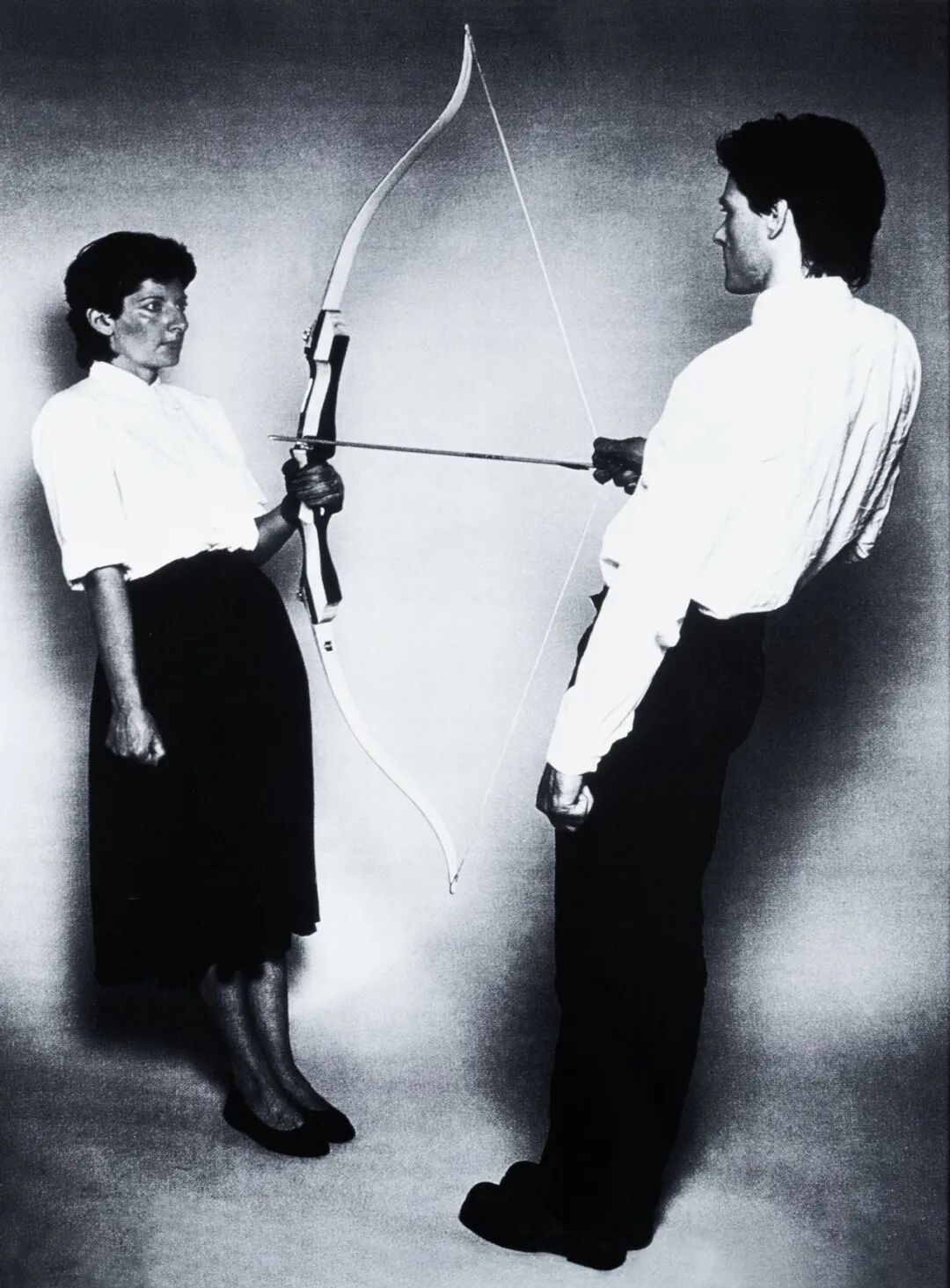
During the twelve years she worked with Ulay, they created a series of works exploring duality, trust and dependence. In the 1980 work Potential, Ulay drew a bow while Abramović held the arrow, its tip pointed straight at her own heart; the tension of bow and arrow was maintained by the lean of their bodies, and the slightest error could have meant death. The work presents, in an extremely dramatic and dangerous way, the trust and vulnerability between lovers.
Abramović’s methodology lies in transforming the body from a passively depicted ‘object’ into an actively acting, perceiving and enduring ‘subject’. By pushing the limits of pain, endurance and fear, she probes the existential experience common to all humans.
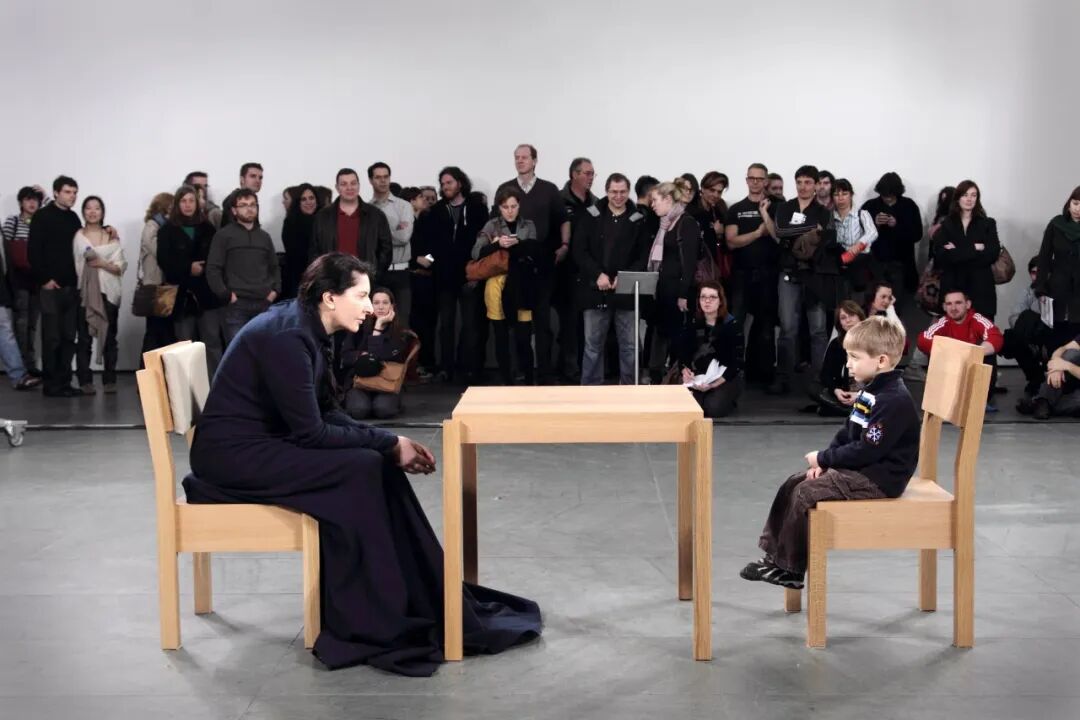
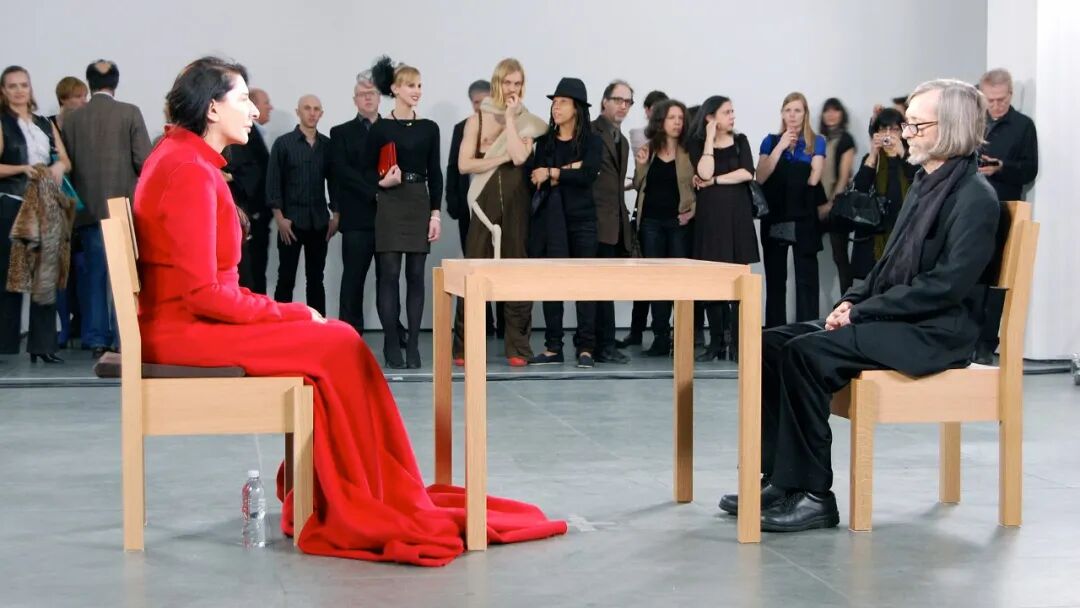
In later works such as The Artist Is Present, she sat silently for three consecutive months at the Museum of Modern Art in New York, holding a wordless gaze with over a thousand visitors. This seemingly static act, through prolonged staring, created a powerful, intimate emotional bond between artist and viewer. Many visitors wept during the gaze. It proves that even in the simplest form, the extreme use of bodily presence and the dimension of time can still produce profoundly deep artistic experience. Abramović’s practice established that the body itself can be contemporary art’s most powerful and direct medium.
(II) ‘Untitled Film Stills’: Cindy Sherman and the Construction of Identity
The work of the American artist Cindy Sherman shifts the exploration of personal experience from the physicality of the body to the social construction of identity. Throughout her life she has ‘performed’, but the roles she plays are not herself but the various feminine ‘types’ circulating in social culture. Her methodology: to deconstruct social identity through self-performance.
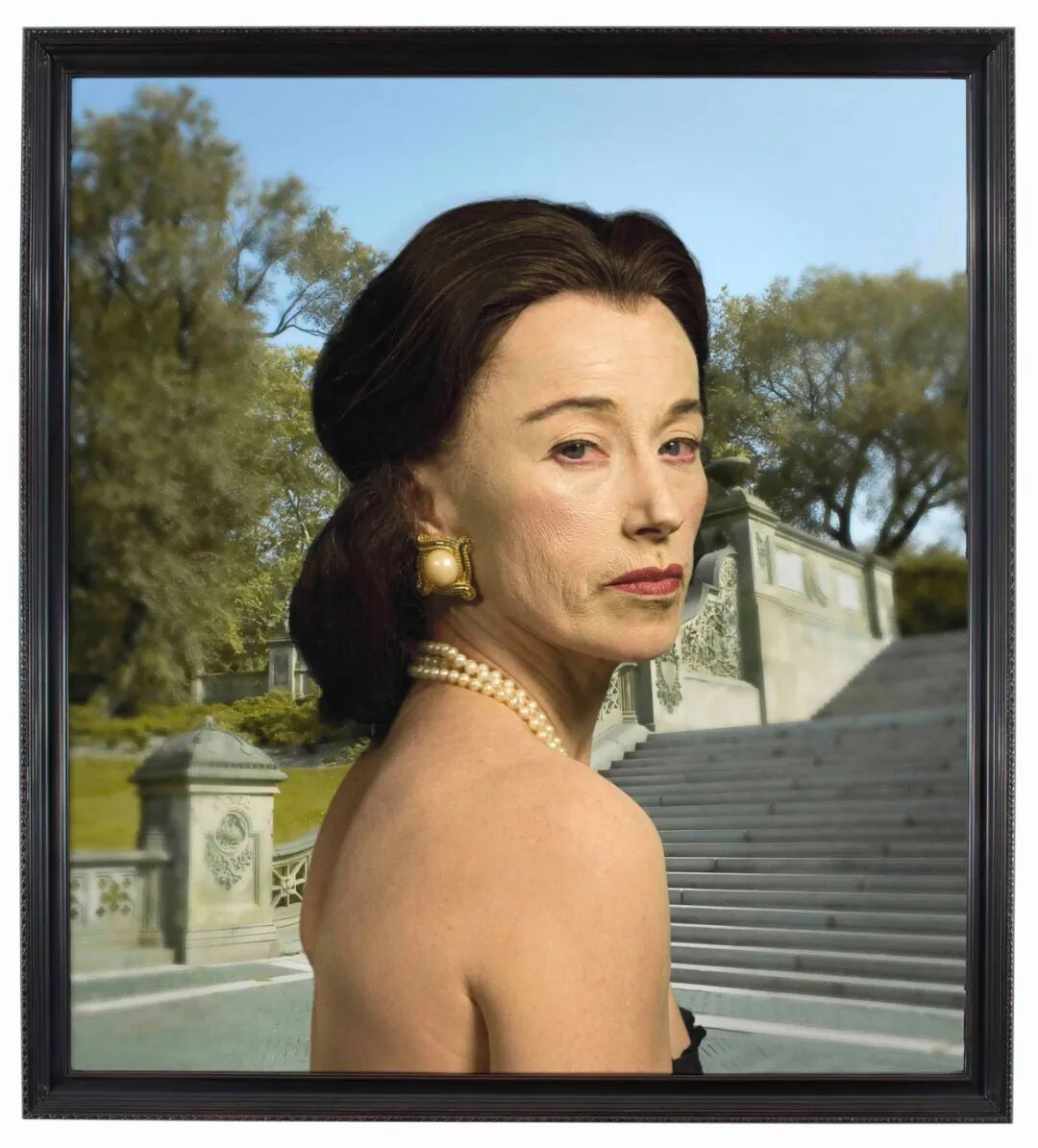
Sherman’s breakthrough was the series Untitled Film Stills. In the sixty-nine black-and-white photographs of this series, Sherman herself plays the heroine in various fictional film scenes: the lonely housewife, the seductive femme fatale, the startled office girl, the country girl waiting by the roadside… The photos look like stills from B-movies or film noir of the 1950s and ’60s, yet they never appeared in any film. Sherman served simultaneously as director, screenwriter, make-up artist, stylist and actress, carefully constructing each scene.
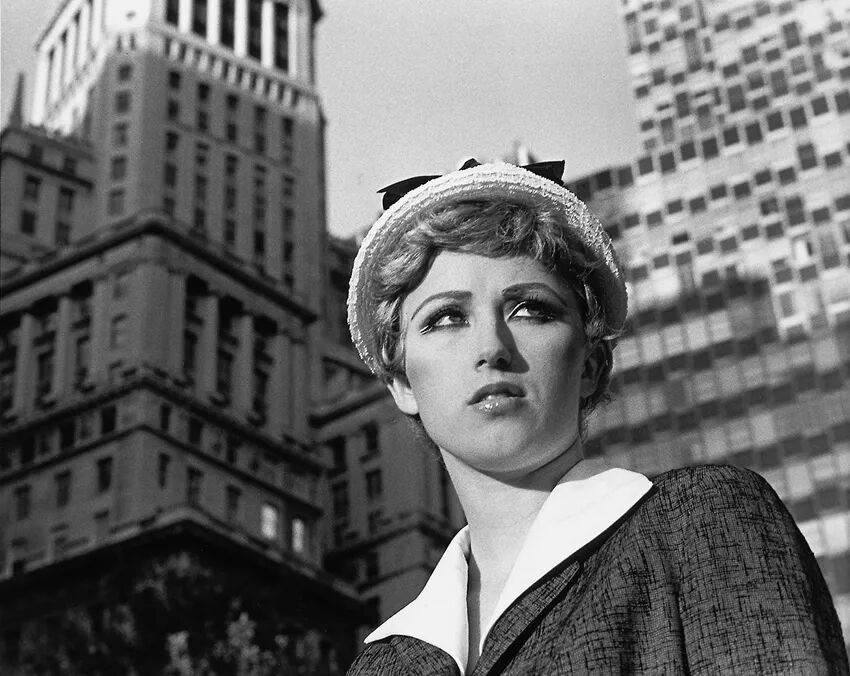
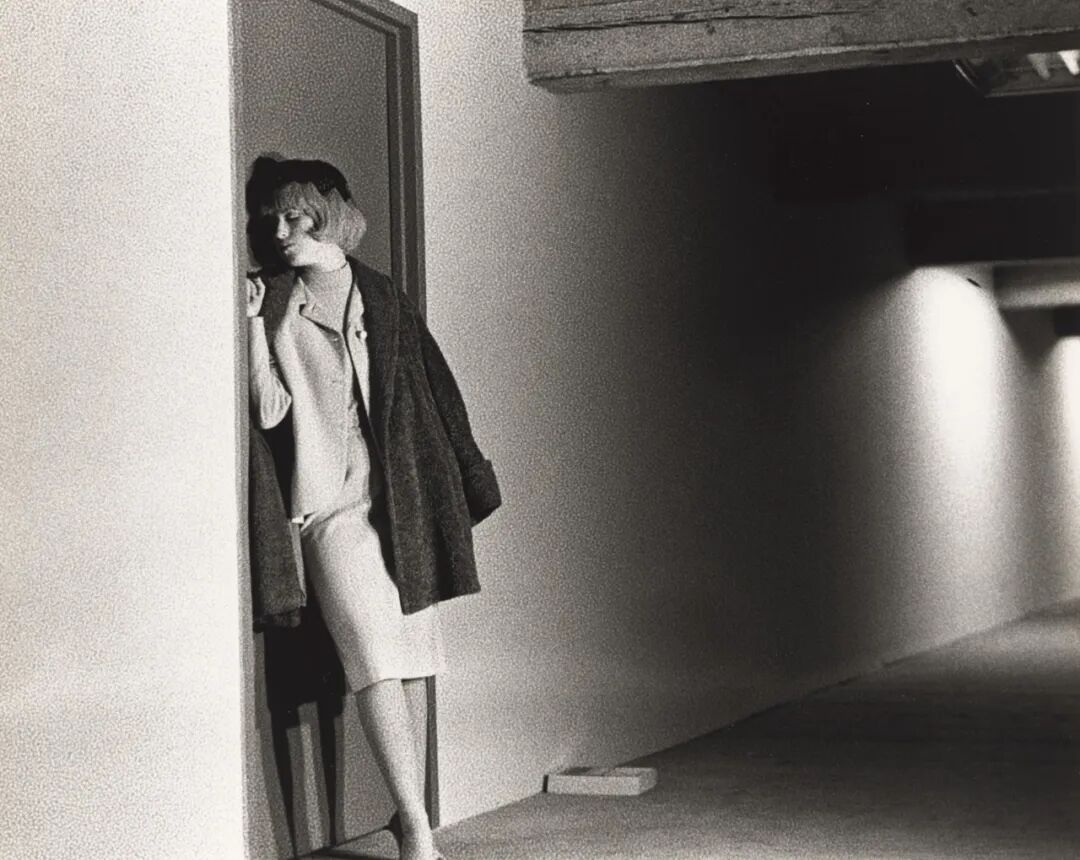
Through this series Sherman profoundly reveals how popular culture (especially cinema) shapes our understanding of ‘woman’ through recurring stereotypes. That we can ‘read’ these photographs is because the ‘archetypes’ of these feminine images have long been implanted in our minds. Sherman does not directly criticise these stereotypes; through imitation and re-enactment she lets the viewer themselves realise the fictiveness and constructedness of these images. She shows us that ‘femininity’ is not an innate essence but a series of socially encoded and performed ‘gestures’.
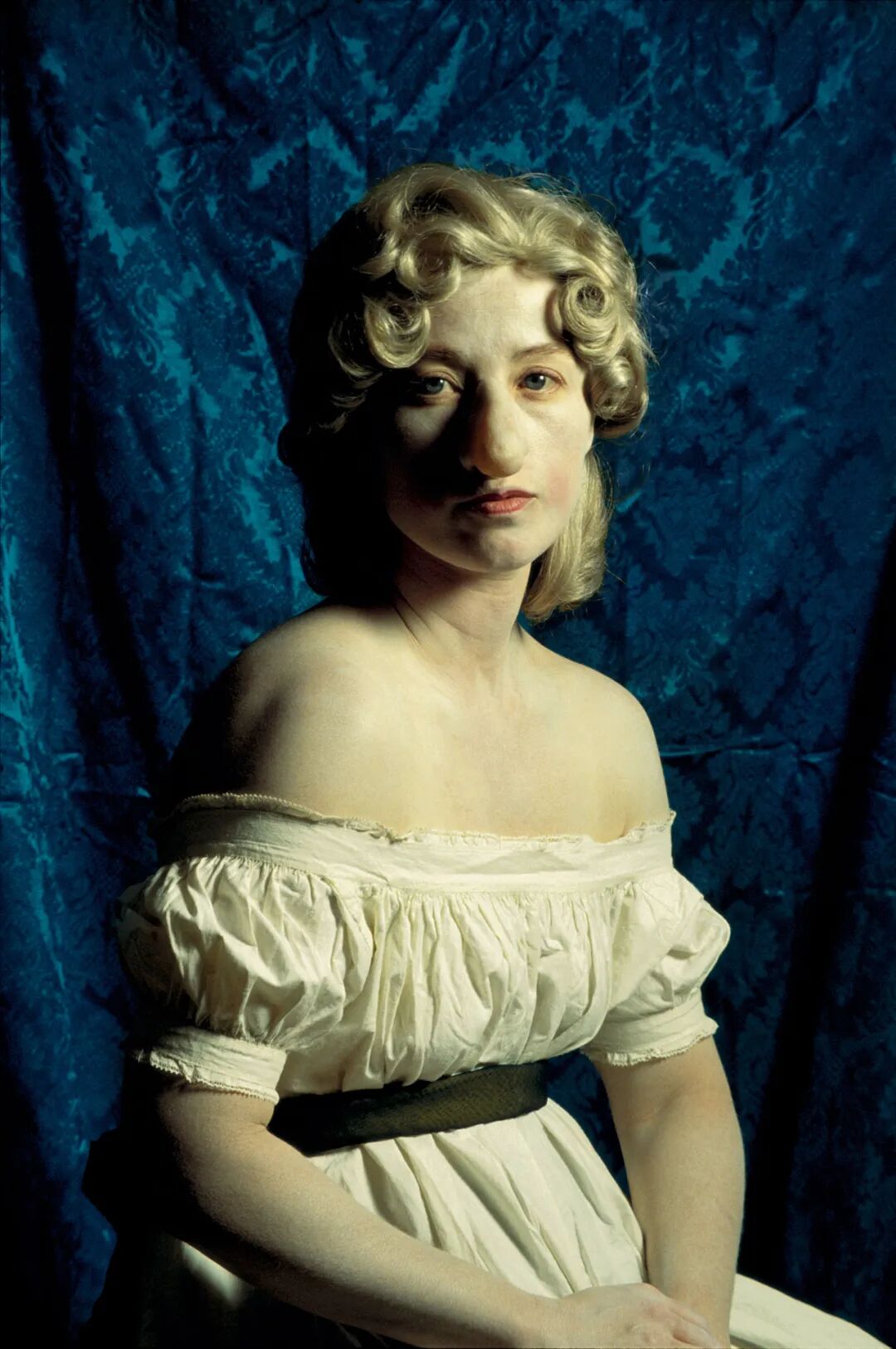
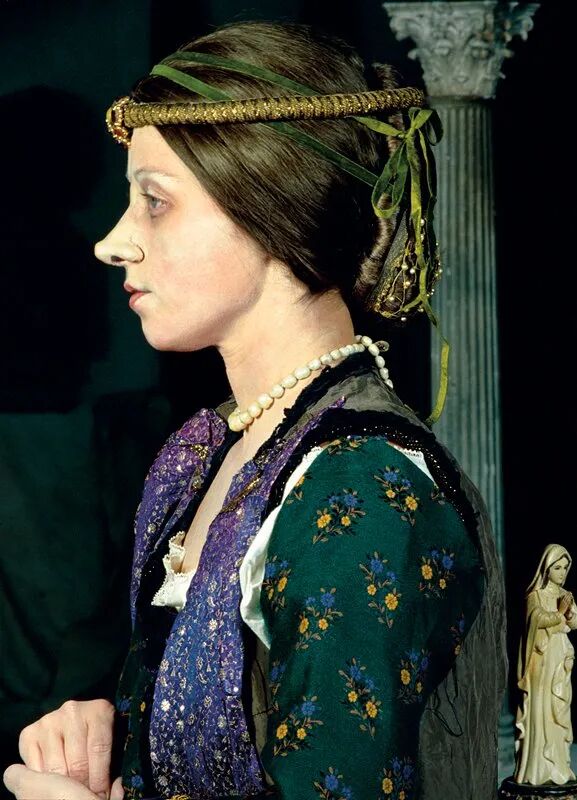
Sherman’s later work continues and deepens this methodology. In the History Portraits series she parodies the masterpieces of male Old Masters in Western art history, yet with crude prosthetics and comic make-up casts herself as the Madonna, the noblewoman or the mythological figure of the painting, thereby deconstructing the solemnity and authority of these canonical images.
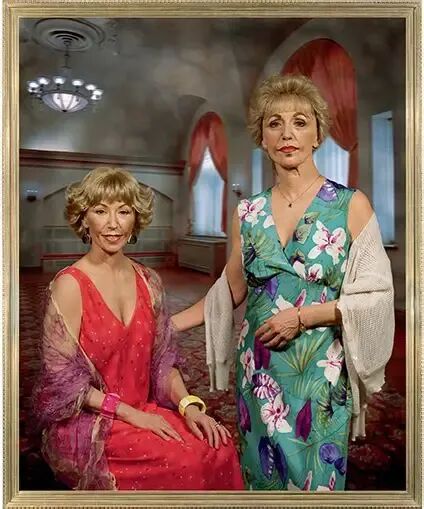
In the still later Clowns and Society Portraits series, she uses exaggerated make-up and expression to explore the sadness, disguise and ageing hidden behind identity.
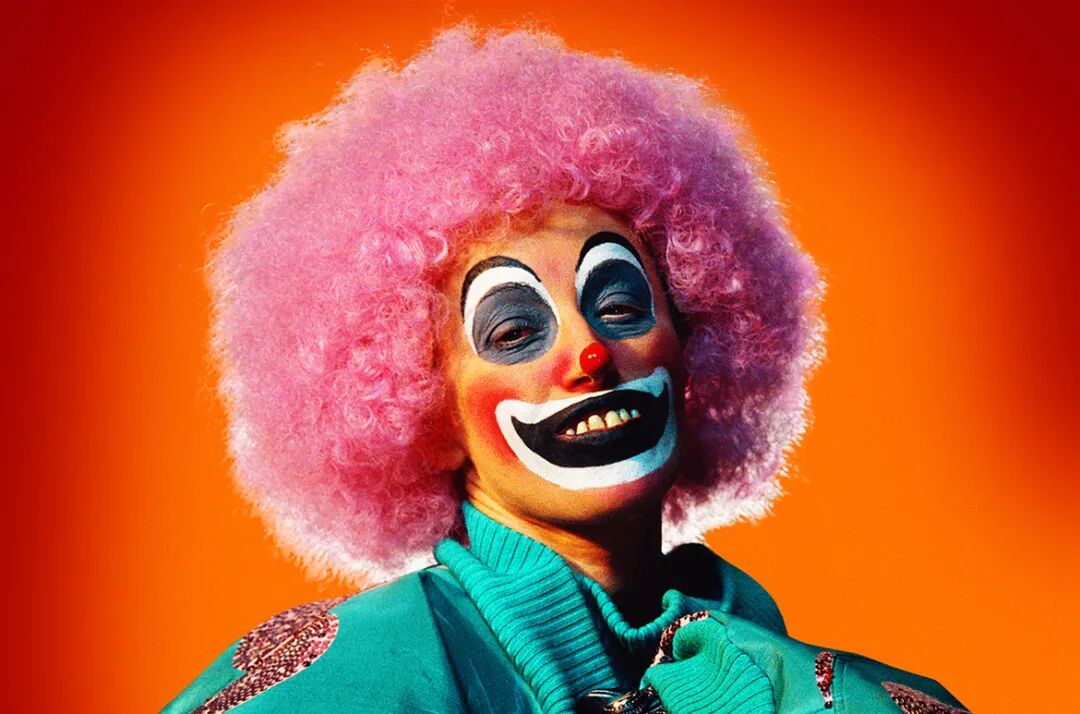
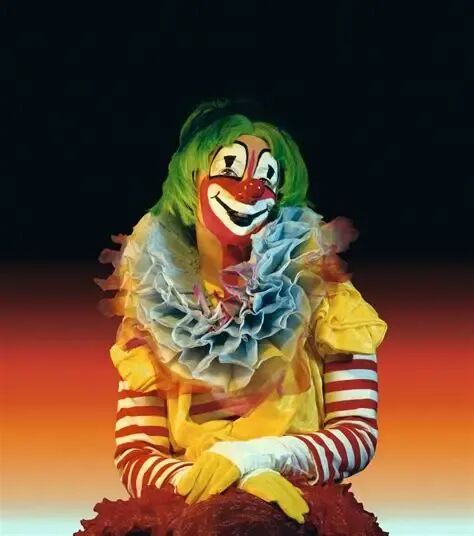
Sherman’s methodology is a visual practice grounded in post-structuralist and feminist theory. Across fifty years of art she has played over six hundred roles, deeply influenced by Judith Butler’s theory of ‘gender performativity’, which holds that identity is constructed through repeated acts. Her work continually probes the power relations of ‘looking’ and ‘being looked at’, and how images participate in the shaping and disciplining of identity. By making her own body and face a ‘canvas’ open to any inscription, she transforms the exploration of personal experience from an inward, psychological expression into a profound critique of external social and cultural codes.
VIII. How Concept Is Generated
This chapter formally proposes the components of the ‘dynamic model of concept generation’ and their internal dynamic relations. The model aims to answer the core question raised in the introduction: in the contemporary context, how is a distinctive creative methodology formed? The process is the result of five different drivers interacting and reinforcing one another. Any artist can use this model to construct their own ‘concept’.
(I) The Model’s Five Dimensions
We now formally define the model’s five core drivers; together they form a multi-dimensional analytical coordinate system:
1. The Historical Coordinate
This dimension measures the artist’s interactive relation with predecessors, tradition and the whole of art history. It comprises a range of strategic choices:
Continuity / Homage: an evolutionary exploration conducted within an existing tradition (painting, say).
Subversion / Rupture: an explicit resistance to or overturning of a dominant art-historical narrative or core value.
Appropriation / Parody: treating art history as an image database to be quoted, recombined, criticised or deconstructed.
Archaeology / Retrieval: rediscovering traditions or media forgotten by mainstream art history and endowing them with contemporary meaning.
Disregard / Starting Afresh: attempting to shed the burden of art history and seek an entirely new starting point in non-art fields (science, sociology), common in some outsider art or cross-disciplinary practice.
2. The Social Context
This dimension concerns the degree of relation between artistic creation and the social, political, economic and cultural realities of the artist’s time. Its modes of intervention include:
Reflection / Mirror: presenting a slice of social reality in a cool, objective or ambivalent manner.
Critique / Intervention: explicitly criticising a given socio-political issue and directly intervening through artistic action.
Healing / Building: aiming, through art projects, to repair social trauma, build community ties or propose utopian schemes of social improvement.
Documentation / Archive: systematically recording and archiving specific social groups, historical events or everyday reality in a manner akin to sociological or anthropological fieldwork.
3. Medium Self-Awareness
This dimension examines the depth of the artist’s reflection on their medium of creation (material, technique, form). It concerns not only ‘what to make with’ but, more, ‘how to regard what is used’.
Medium Purification: though central to modernism, some contemporary artists still explore the essential properties of a medium in specific contexts.
Medium Critique: taking the medium’s own history, ideology and limitations as the object of critique.
Medium Expansion: introducing non-traditional substances (light, water, sound, the body) or immaterial elements (time, relation, information) into artistic creation, extending the medium’s boundaries.
Cross-Medium Practice: the artist is not fixed to a single medium but switches and combines multiple media freely according to the needs of concept. This is the common working state of the contemporary artist.
The Post-Medium Condition: as proposed by Rosalind Krauss in ‘A Voyage on the North Sea’: Art in the Age of the Post-Medium Condition, the artist works in a field no longer defined by medium; their choices are strategic, not born of loyalty to any one medium.
4. The Conceptual Core
This dimension probes the relatively stable inner intellectual motif that drives the artist’s creation. This core often stems from the artist’s long-term preoccupation with a philosophical, theoretical or existential question.
Philosophical Translation: directly transforming a specific philosophical proposition (language philosophy, phenomenology) into visual or behavioural form.
System / Logical Generation: establishing a rational set of rules, algorithms or a system so that the artwork generates itself, emphasising concept over execution.
Existential Inquiry: a sustained visual probing of eternal human themes such as life, death, time and nothingness.
‘Meta’-Art: the artist’s core subject is art itself, persistently asking ‘what is art?’ and ‘how does art operate?’.
5. Personal Experience
This dimension measures how the artist transforms personal life experience — body, identity, memory, emotion, trauma — into a public artistic language.
Body as Medium: using one’s own body as the site of creation and endurance, exploring its physical and psychological limits.
The Construction and Deconstruction of Identity: creating around personal identity such as gender, ethnicity, class and sexuality, and probing the social constructedness and political character of identity.
Memory and Autobiography: taking personal or familial memory, trauma and private feeling as the source of creation.
The Poetics of Everyday Life: distilling from bland everyday life a poetry or concept of universal significance.

The key to this model lies in its ‘interaction’.
No significant artist is the product of a single dimension. Their success lies precisely in thinking deeply across multiple dimensions and finding a unique combination that holds an inner tension.
We can imagine this model intuitively with a five-dimensional radar chart: the five vertices stand for the five drivers, and each artist’s creative methodology forms a distinctive pentagon on this chart. The pentagon’s shape and area reveal the emphases and composition of their methodology.
Take three artists as examples:
Andy Warhol: his radar chart spikes sharply on the two dimensions of ‘Social Context’ and ‘Medium Self-Awareness’, forming a pointed angle. His direct reflection of consumer-society reality and his conscious use of screen-printing as a commercially reproductive medium form the core of his methodology. He also registers on the ‘Historical Coordinate’ dimension (his inheritance of Duchamp’s readymade concept), yet is extremely restrained on ‘Personal Experience’ (he deliberately cultivated a machinelike, impersonal persona).
Marina Abramović: her radar chart peaks on the two dimensions of ‘Personal Experience’ (especially the body) and ‘Historical Coordinate’ (she explicitly places herself within the historical lineage of performance art). Her work also touches the ‘Conceptual Core’ (energy, trust) and ‘Social Context’ (the viewer’s participation), yet her most fundamental driver originates in the body’s presence.
Gerhard Richter: his radar chart takes a relatively full and balanced shape, yet is especially strong on ‘Historical Coordinate’ and ‘Medium Self-Awareness’. He spent his life in dialogue with the history of painting and reflected most deeply on the relation between painting and photography. His ‘Conceptual Core’ (on truth and illusion, belief and doubt) is also clear, yet his work typically keeps its distance from direct social intervention or strong personal emotional expression.
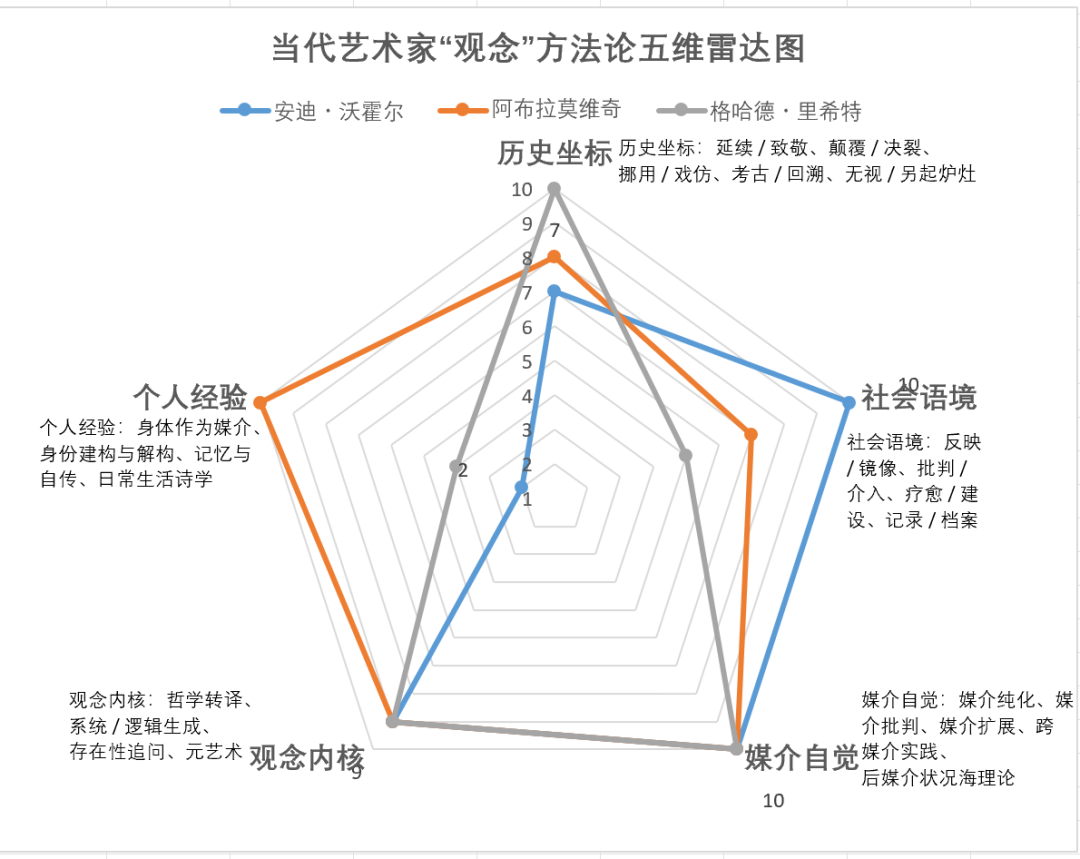
This model is not a ‘recipe’ for scoring or ranking artists but a ‘diagnostic tool’ and ‘analytical map’.
This model can help us:
1. To analyse artists systematically: moving beyond fragmentary, impressionistic criticism, to sort out an artist’s creative thread across the five dimensions and understand the composition of their methodology.
2. To conduct comparative study: comparing different artists within the same framework — for instance, though both use the body, Abramović and Cindy Sherman differ clearly in emphasis (physical limit versus identity performance); though both face society, Beuys and Warhol differ plainly in posture (transformation versus reflection).
3. To understand the evolution of art history: by observing changes in the ‘radar chart’ shapes of representative artists across periods, we can see the macro-shift in art’s concerns — for example, from the Conceptual art of the 1960s (strong on ‘Conceptual Core’ and ‘Historical Coordinate’) to the postmodernism of the 1980s (strong on ‘Historical Coordinate’ and ‘Social Context’) to the identity-politics art since the 1990s (strong on ‘Personal Experience’ and ‘Social Context’).
Ultimately, this concept model reveals that the contemporary artist, as a ‘generator of concepts’, works more like a ‘strategist’. Within the complex field constituted by five dimensions — the legacy of art history, present social reality, available media technology, inner philosophical inquiry and personal life experience — the artist must exercise sharp judgement, choice and inventive combination, thereby forging an irreplaceable artistic language and conceptual system of their own.
Conclusion
(I) Summary: A Cognitive Path from Disorder to Order
Beginning from the phenomenon of contemporary-art creation’s central turn toward concept, this essay aims to provide a systematic analytical tool for understanding how artists form their distinctive methodologies. Reflecting on the limitations of existing research, it rejects the search for a single, universal ‘methodology’ and instead builds an analytical framework called the ‘dynamic model of concept generation’.
The model’s core argument is that the concept and methodology of significant contemporary-art practice are not generated in isolation but arise from the dynamic interaction and combination of five core drivers — the ‘Historical Coordinate’, the ‘Social Context’, ‘Medium Self-Awareness’, the ‘Conceptual Core’ and ‘Personal Experience’. The key to understanding how contemporary artists form their creative concepts lies in understanding the process by which they choose, negotiate and creatively synthesise within the space of possibilities constituted by this model. The model offers us a cognitive path from disorder to order — a way to traverse the seemingly chaotic, standard-less surface of contemporary art and reach its inner generative mechanism. It stresses the contemporary artist’s identity as ‘researcher’ and ‘strategist’; their creation is a complex labour based on thought and perception, not a mere spark of inspiration or display of skill.

As an open system, the ‘concept-generation model’ draws its vitality from its capacity to continually absorb and explain new artistic phenomena. Standing at the present moment, we can clearly see that some entirely new, powerful technological and global issues are being integrated into the model as new variables, and may even, in the future, give rise to a sixth or seventh wholly new ‘driver’.
1. Artificial Intelligence and Algorithms as Drivers
In recent years, artificial-intelligence technologies represented by deep learning and generative adversarial networks (GANs) are profoundly changing the ecology of artistic creation. The Turkish multimedia artist Refik Anadol, for instance, uses vast databases and algorithms to create ever-shifting ‘data sculptures’; Mario Klingemann trains AI models to generate grotesque yet captivating portraits, and so on.
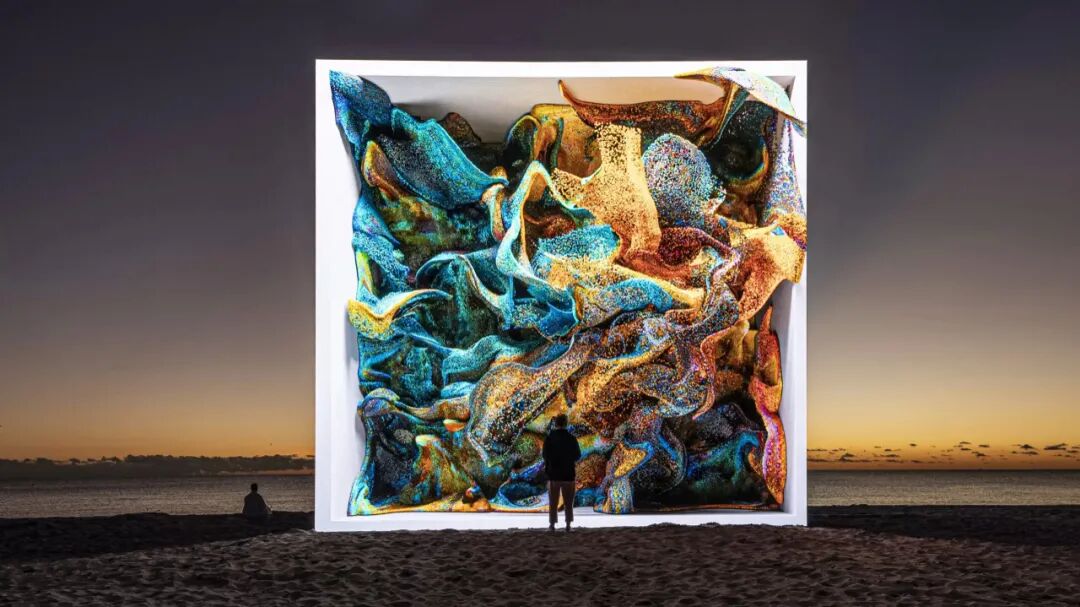
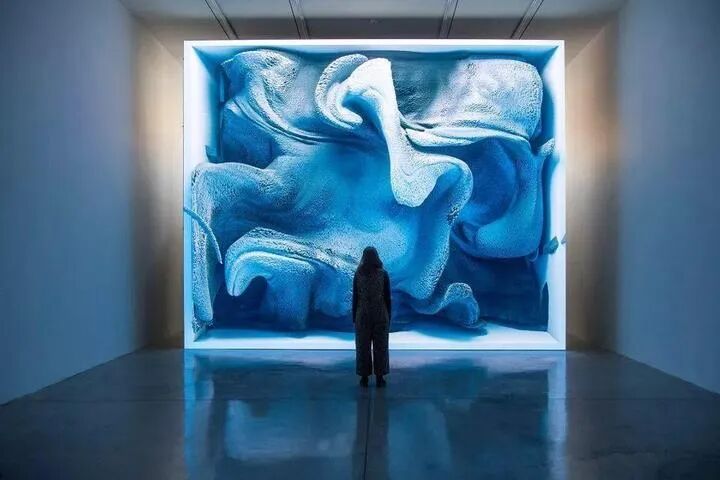
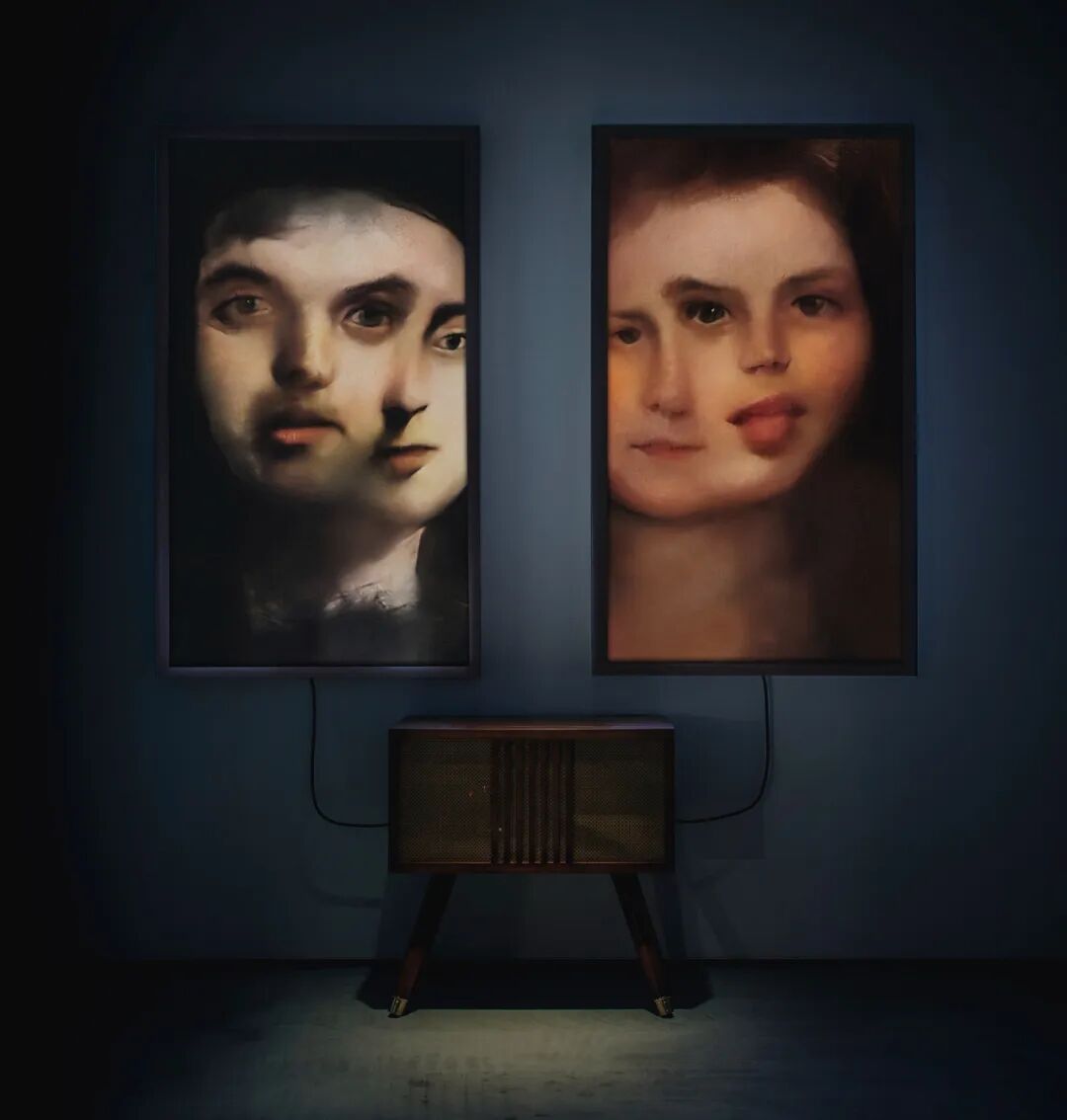
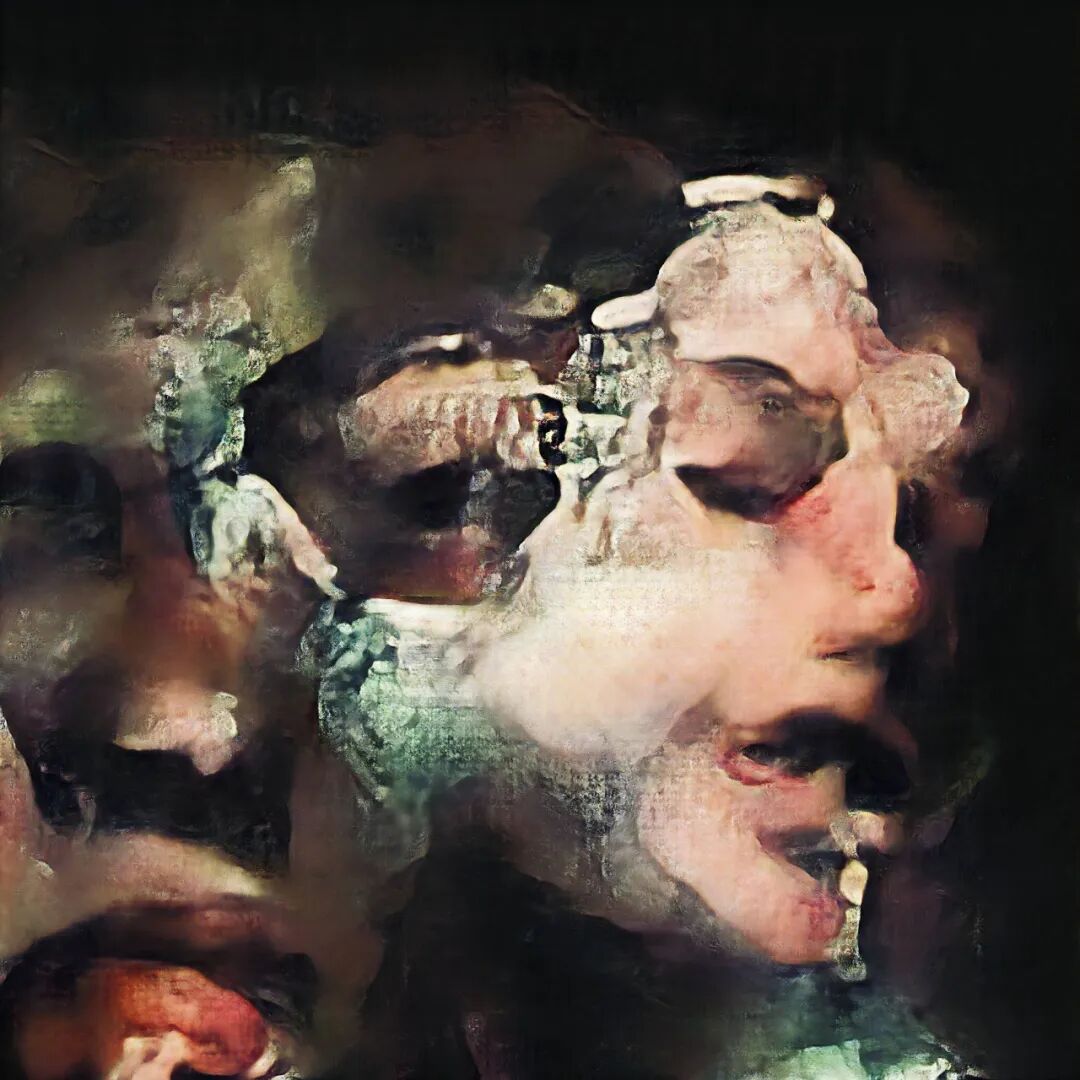
These practices have already gone beyond simple ‘medium self-awareness’; AI is no longer merely a new tool but is becoming a collaborator with a certain ‘autonomy’, even a wholly new ‘conceptual core’. It raises fundamental philosophical and ethical questions about ‘creativity’, ‘authorship’ and ‘consciousness’. One future trend in contemporary art will inevitably be that artists’ methodologies involve ever more how to ‘co-create’ with non-human intelligence, how to design an algorithm’s ‘worldview’, and how to reflect critically on the social impact of algorithmic power.
2. Biological Genes and Post-Humanism as Drivers
The rise of bio-art extends the medium of art directly to the underlying code of life.
In 2000, artists such as Eduardo Kac created the fluorescent rabbit Alba through genetic engineering — a glowing rabbit that sparked enormous ethical controversy.
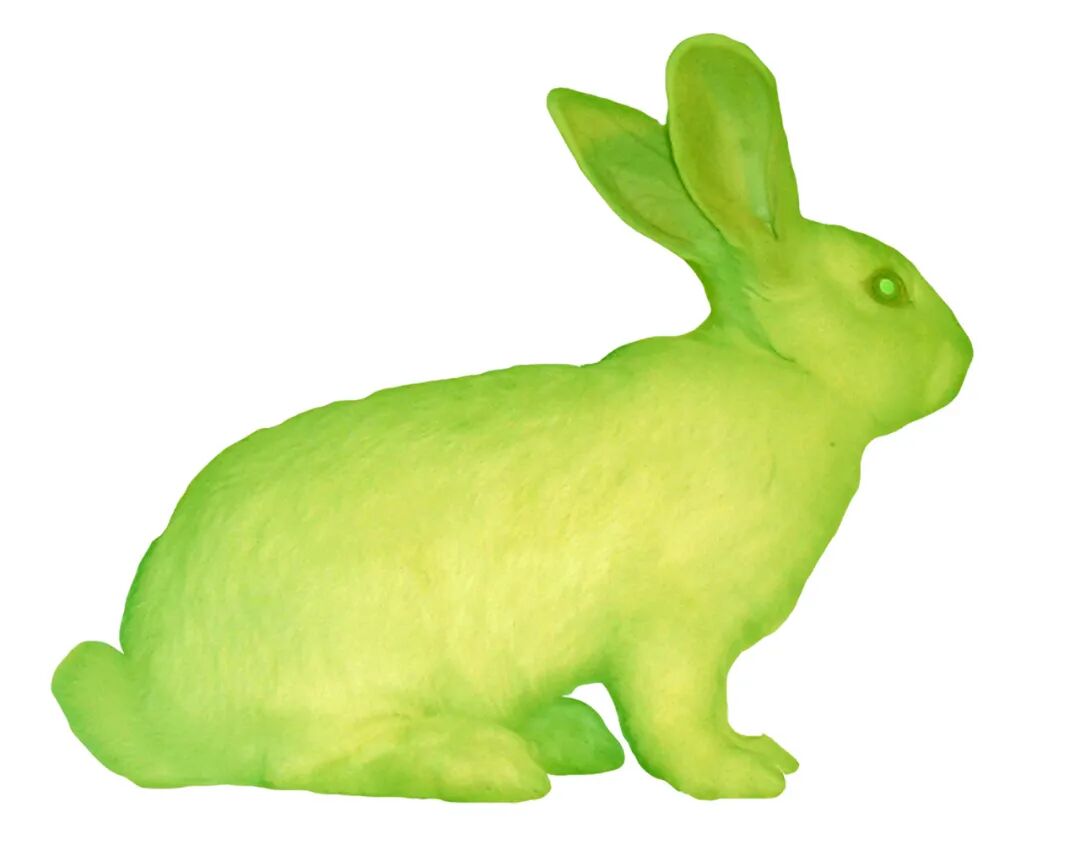
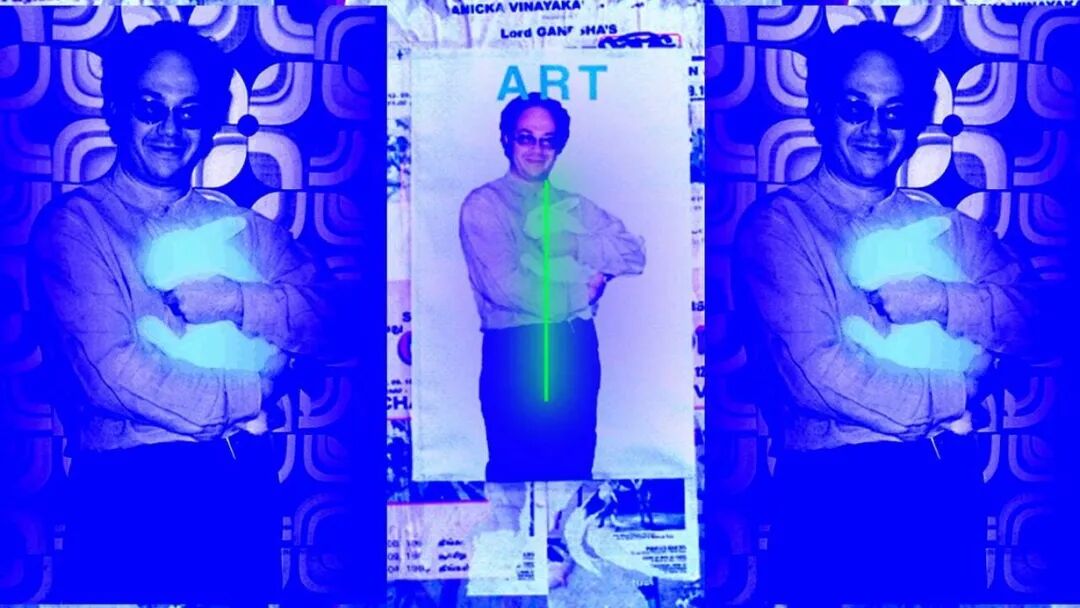
Eduardo Kac is a pioneer of bio-art. He proposed the concept of ‘bio-art’ in 1997 and clarified ‘transgenic art’ in 1998 — that is, using the gene as a creative medium to transmit artistic concept through the modification of an organism’s genes. GFP Bunny Alba is the best-known work of his ‘transgenic trilogy’; its core purpose is to break the boundary that ‘art exists only in the physical and visual domain’ and to probe the deep relation among ‘life, technology, ethics and art’.
The creation of GFP Bunny Alba relied on green fluorescent protein (GFP) technology, completed by Kac in collaboration with French scientists. The team first extracted from the Aequorea victoria jellyfish the gene that produces green fluorescent protein (the GFP gene) and technically improved it so that its fluorescent yield doubled compared with the original; they then used ‘microinjection into the fertilised ovum’ to precisely insert the modified GFP gene into the fertilised egg of an albino rabbit. Kac chose an albino rabbit because its white fur would not obscure the fluorescence and would show the glowing effect more clearly. After the genetically modified fertilised egg was cultivated, the rabbit ‘Alba’ was born; under ordinary light she was no different from a normal albino rabbit, yet under ultraviolet or specific blue light her body emitted an even green fluorescence. In the end Alba became an iconic symbol of the crossover between science and art.
Other artists work with tissue culture, synthetic biology and similar techniques. Joe Davis, for instance, takes synthetic biology as his creative medium; his classic work Microvenus converts the image of an ancient Germanic rune into binary code and re-encodes it into the DNA of E. coli. Through gene-editing technology the artist turns the micro-organism into a ‘living information carrier’, so that as the bacteria reproduce, the embedded artistic sign is copied and transmitted along with them. The work not only anticipated the scientific community’s exploration of DNA data storage but, using microscopic life as its vehicle, probes the ‘symbiotic relation between biology and information’ and provokes deep reflection on whether ‘life can be encoded and designed’.
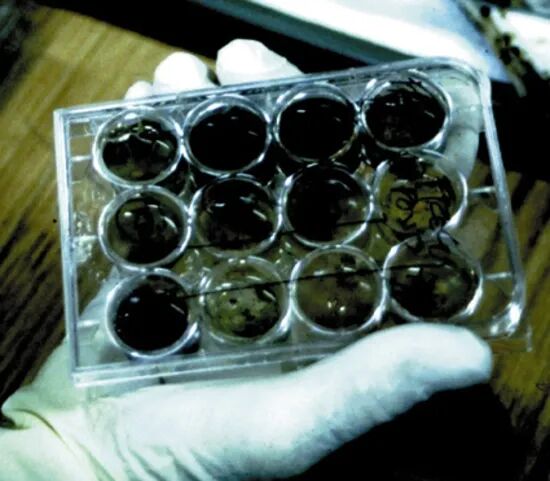
Such practice greatly reinforces the two dimensions of ‘Medium Self-Awareness’ and ‘Conceptual Core’, bringing art into the frontier debates on bioethics and a post-human future. When the artist can directly edit the blueprint of life, their methodology inevitably becomes deeply bound up with scientific experiment, ethics and a fundamental questioning of the definition of ‘human’, and the work’s concept gains a more profound contemporary significance.
3. Climate Change and the ‘Anthropocene’ as Drivers
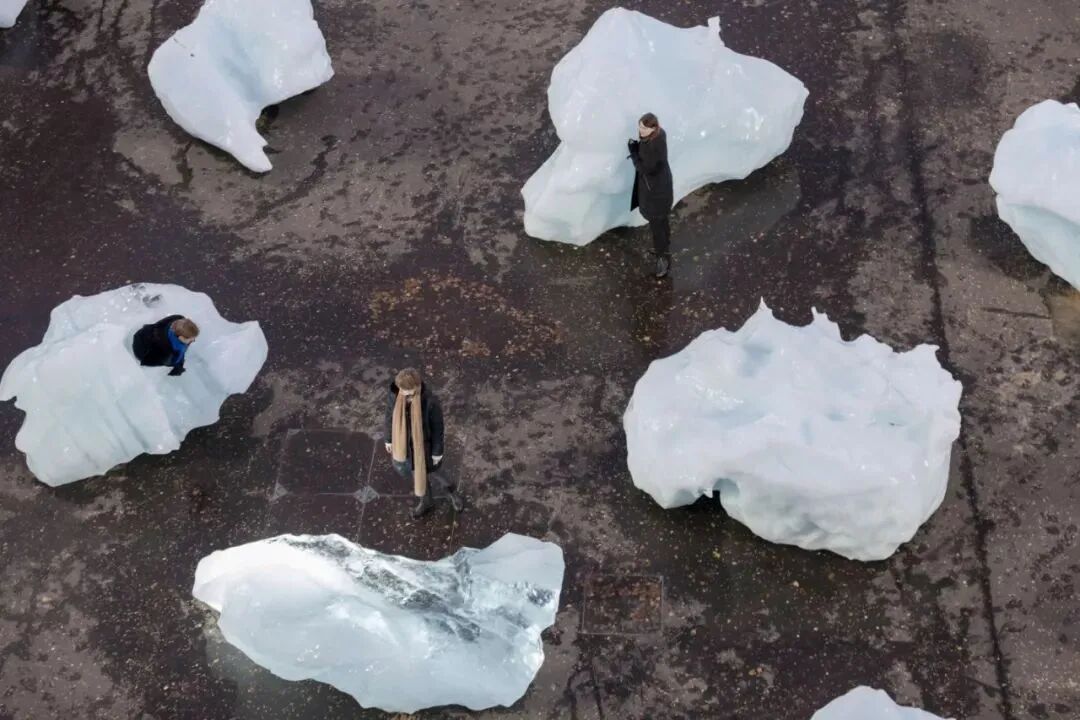
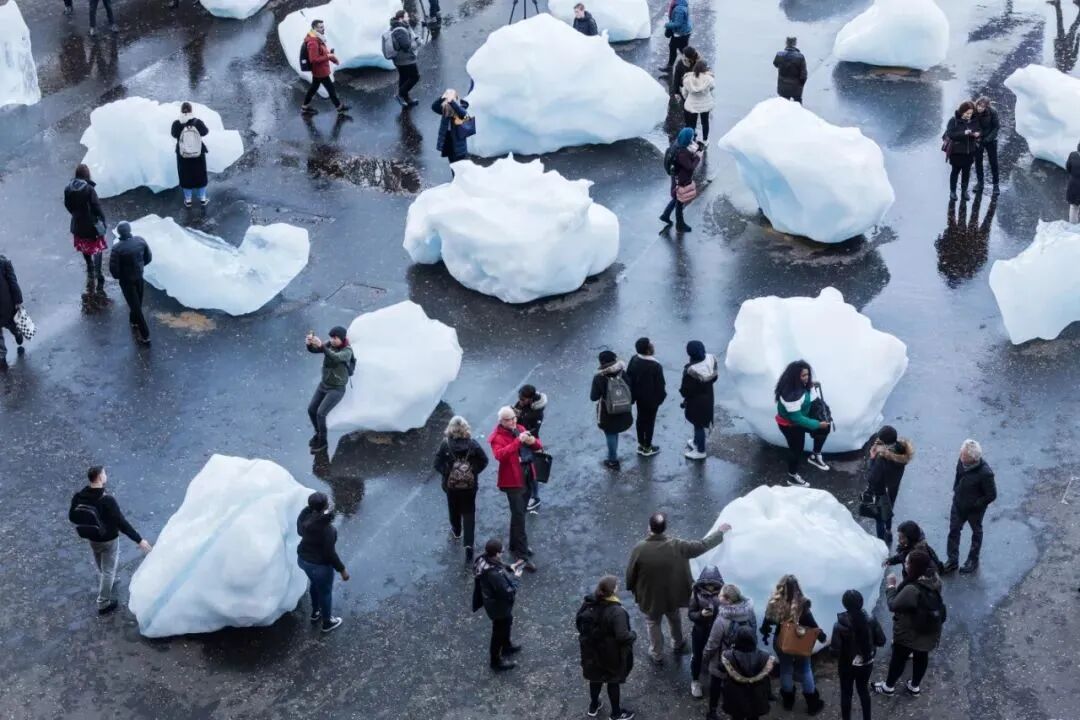
The global ecological crisis is becoming an inescapable, overwhelming ‘social context’. More and more artists focus their work on climate change, species extinction, ecological justice and related issues. Olafur Eliasson’s Ice Watch, for example, transported huge blocks of ice from Greenland to the centres of cities and let them melt, letting the public sense the urgency of climate change in the most direct way. Such practices push the driver of ‘Social Context’ to a global, even planetary, scale. Hence another trend in contemporary art: future artistic methodologies will likely involve more cross-disciplinary research (with scientists and ecologists), activist advocacy, and a profound reflection on the anthropocentric worldview.
In sum, the ‘concept-generation model’ not only sorts through the contemporary-art practice of the past half-century and more, but offers us a dynamic, extensible conceptual framework for understanding the artistic transformations now underway and yet to come.

Future artists will continue, within this complex network woven of history, society, technology, philosophy and personal experience, to seek new questions, invent new methods and generate artistic concepts we perhaps cannot yet imagine. The sustained observation and analysis of this dynamic generative process should remain an ongoing and challenging task in the contemporary artist’s working process.
订阅艺术评论
订阅即赠《2024中国当代艺术关键词》内部思考笔记 PDF
每周免费获取最新当代艺术批评与研究