I. On the Artist’s Failure
To speak of the artist’s failure, we must first admit an embarrassment: within the discourse field of contemporary art, “failure” has been over-decorated. It is either packaged as a prelude to success — the platitude that “failure is the mother of success” has circulated in studios for far too many years, consoling every young person whose exhibition was rejected or whose proposal was passed over; or it is romanticised into a moral posture, as if merely failing automatically placed one on the opposite side of the system, endowed with a certain undefiled purity. Both narratives are lies. Together they accomplish one thing: they render true failure invisible, and let the machine behind it keep running soundlessly.
It took me a long time to understand that failure is not a result but a process. It is not a label stuck onto a work after it reaches its end, but something the entire contemporary-art system necessarily produces as it operates. Like a machine, its design principles determine that it produces not only “success” but also “failure” — and the latter’s output far exceeds the former’s. This judgement sounds somewhat cold, but it is the true starting point for any discussion of failure. If we cannot set this judgement up, all later analyses of failure will degenerate into chicken soup for the soul or cynical complaining.
What this essay wants to do is rescue failure from the narrative of personal destiny and put it back in the structural position that is rightfully its own. I am not talking about “why a certain artist failed”, but about “how this system manufactures failure”. Where is its workshop? How is its assembly line laid out? By whom are its quality standards set? Why is its defective-product rate astonishingly high yet systematically ignored? This is a cross-section of a system. The one taking up the scalpel is not an onlooker, but someone who has stayed long enough inside this system and seen enough of those who exited in silence. This essay sings no hymn to failure, teaches no one how to succeed, and passes no judgement on any individual’s choice. It does only one thing: describe that machine, and then ask whether, beyond the machine’s roar, another way of living with failure exists.
II. Failure Is the Mother of Success
“Failure is the mother of success” has become, in contemporary-art circles, almost a reflex-like placebo, yet it conceals a fatal fact: success and failure are not a sequential relation but a symbiotic one. Once you define what is “good”, you simultaneously define what is “not good”; once you set the conditions for inclusion, you simultaneously set the conditions for exclusion. The standard of success and the standard of failure are two sides of the same standard, born on the same day, signed by the same hand.
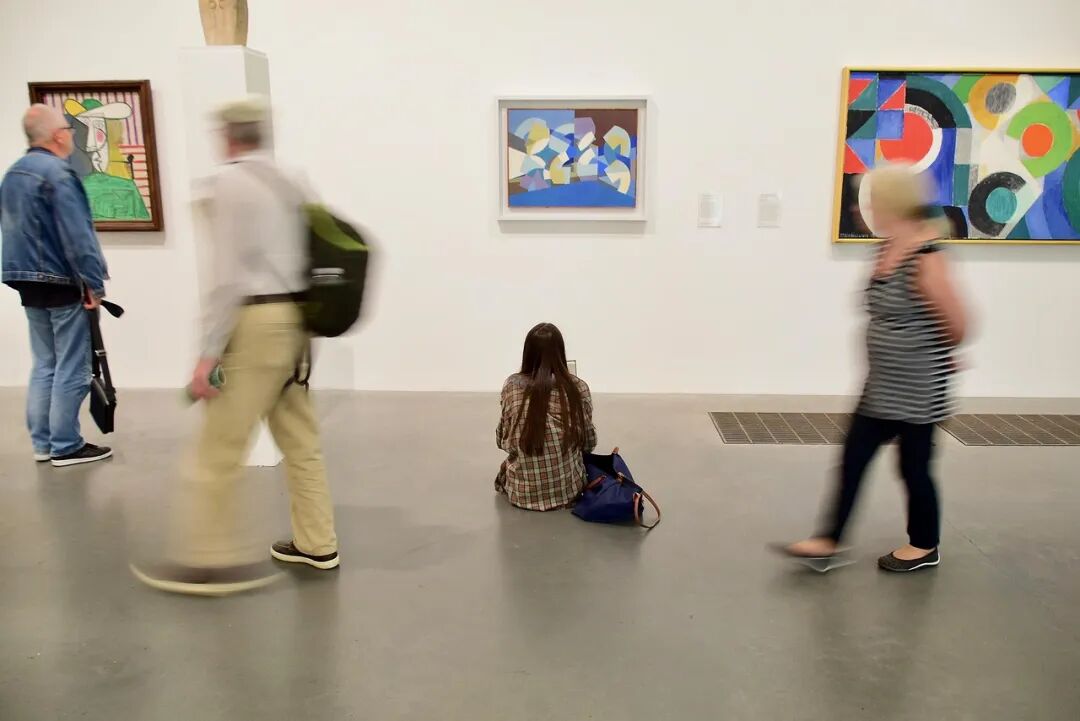
For instance, a work enters a museum collection, hung on the third floor, with standard lighting and a standardised label, yet almost no one walks up to it. Being collected is success; not being seen is failure. Both judgements are true at once, and empty at once. It is not that it succeeds first and then fails, nor that it fails first and then succeeds. It is the same work, the same position, the same evaluative system, within which two states coexist. This tells us something important: success and failure are not the natural attributes of a work; they are two shadows the system casts upon it. The size and shape of the shadow do not depend on the work itself, but on the position of the light source — and the light source is always in the system’s hand.
Seeing success and failure bound together, we realise they are in fact two processes of the same machine. This machine constantly sucks in raw materials — the artist’s time, body, imagination, material resources, social relations, and so on — and constantly outputs two states: one visible, recognised, endowed with value, which we call success; the other invisible, excluded, silenced, which we call failure. These two outputs are not essentially different; they are two exits on the same assembly line. The one sorting at the end of the line is not any concrete person, but a wholly anonymous, distributed evaluative system that needs no commander. Curators, gallery owners, collectors, critics, museum directors, auction-house experts, art-magazine editors — like the various roles in a great play, each does only his allotted part; no one need take responsibility for “manufacturing failure”, yet failure is produced in a ceaseless stream.
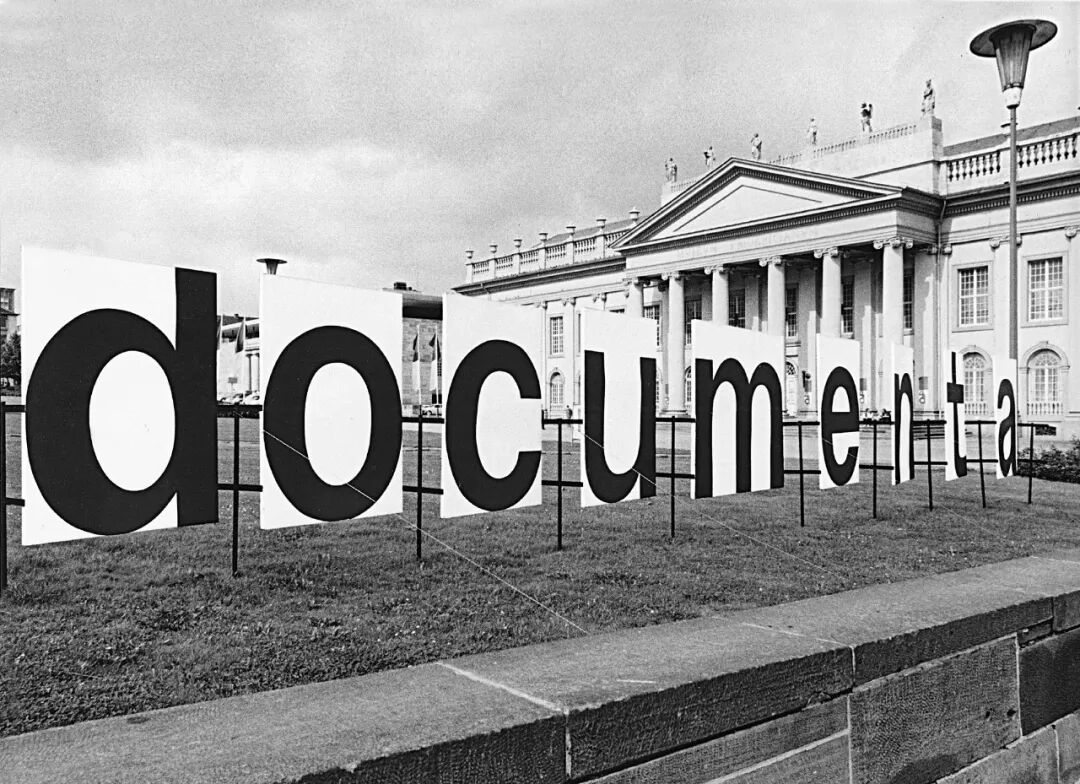
A database analysis covering institutions such as the Venice Biennale, documenta in Kassel, Art Basel, MoMA, Tate and the Centre Pompidou includes four thousand two hundred and seventy-nine artists. Hundreds of millions worldwide call themselves artists, or work as art students, art lovers, or professionals in art-related trades — yet over 99.5 per cent of these practitioners remain invisible. Every time this figure is cited, someone points out the methodological limits: different visibility thresholds yield different results, invisibility does not equal failure, and the value of place-based practice is not measured by international visibility. These reservations are all valid, but they cannot change a structural reality: the overwhelming majority of participants in the contemporary-art system have never obtained, and will never obtain, the success the system defines.
All our knowledge of art — from aesthetic judgement to historical narrative, from market price to scholarly evaluation — is built upon a sample of less than 0.5 per cent. If a medical study covered only 0.5 per cent of patients, no one would believe its conclusions. If a sociological survey contacted only 0.5 per cent of the population, no one would treat it as science. Yet in art we accept, almost without doubt, the narrative constructed by survivors, as if it were the whole truth.
This is not a statistical problem. It is about power.
III. How, Then, Does the System Sustain This Distribution
How, then, does the system sustain this distribution?
There is a dynamic principle called preferential attachment: those seen earlier are more easily seen again; those seen later are harder to see. It derives from the BA scale-free network model proposed by the scientometrician Price in 1976. Each display raises the probability of the next display; each discussion raises the probability of the next discussion. A power-law distribution, winner takes all. Not a conspiracy — a structure.
Bourdieu calls this structure the field: an arena where economic, cultural, social and symbolic capital are contested. Visibility is itself a form of symbolic capital: exhibition records, critical attention, market price are all its indicators. Capital can be converted — economic capital buys exhibition opportunities, exhibition opportunities increase symbolic capital, symbolic capital brings more economic capital. For those who already possess capital, this is a value-adding cycle: the more you have, the more you can display; the more you display, the more you have. For those lacking any form of capital — no money to maintain a studio, no connections to obtain exhibitions, no degree to gain critical recognition — this conversion game is simply not open to them. They are not in a dominated position within the field; they are not in the field at all.
This leads to a judgement more unsettling than “failure is a personal problem”: the artist’s failure is not a low position but the absence of a position. You are not in that position; you do not even qualify to be evaluated. To be criticised is to be mentioned; to be rejected is to have been seen. The most thorough failure has none of these — your name does not appear, not because “so-and-so is not good enough” but because there simply is no “so-and-so”. Critical essays do not discuss you, the exhibition catalogue has no place for you, the auction record cannot be searched for you. You are not a failure; you are a non-existent person. This failure has no form, no entry point into the system, no data point to be analysed. It is the zero degree of failure. Yet it is precisely the real situation of the vast majority of art practitioners. They did not lose the match; they never entered the arena. And the boundary of the arena is maintained by an extremely covert means: it puts up no sign, stations no gatekeeper; you may not even feel excluded, you only discover at some moment that the world called “contemporary art” has always been running in another dimension.
IV. Failure Is Manufactured
Failure is manufactured, not discovered. This proposition is worth unpacking.
In the usual understanding, failure seems a fact waiting to be discovered: the work is not good enough, the proposal not mature enough, the artist not talented enough, and so failure naturally occurs. But the actual process is the reverse. Failure is not an inherent attribute of the work. The work carries no physical quantity called “failure”. Failure is an evaluative result, the product of a collision between the work and a specific standard of evaluation. Change the standard, and the same work may not be a failure; change the era, and a failure of yesteryear may be re-identified as ahead of its time. This means the object of failure studies was never the work itself, but the evaluative system — or, more precisely, the relational state between the work and the evaluative system.
I know an artist who spent eighteen months doing fieldwork, staying with the women workers in an e-waste recycling plant, recording hands corroded by chemical solvents until their fingerprints disappeared. She believed these hands should be seen, that the white walls of the museum should be dirtied by them. After the proposal was submitted, the curator’s email was impeccably polite: “The committee gave your proposal serious consideration and finds it raises important questions, but the framework of this exhibition cannot accommodate this direction at present. We encourage you to continue developing this research.” Ironically, “important questions” is the polite formula for rejection, and “cannot accommodate at present” is the system speaking. The system has a framework; the framework has boundaries; what lies beyond the boundaries is not “bad” — it simply does not exist, is not allowed to exist.
So did she fail?
At what moment did this failure occur?
The occurrence of failure is not the instant the email arrived, but earlier — when the artist decided to make a “minor” subject into a “serious” work, when she chose an entry point not aligned with the current curatorial narrative, when her social capital was insufficient for any so-called expert or committee member to speak for her. The email was merely a confirmation. Failure had been manufactured before it was named.
And the system never says “you failed”. The system has a language of translation: “not suited to the current exhibition direction”, “the market has not yet formed a consensus”, “we suggest continued observation”, “it would be more powerful in a more fitting context”… None of these is “you failed”, yet their function is precisely to mark failure while sparing the system the role of vetoer. The system digests failure through translation, turning a veto into a postponement, a suggestion, a reserved possibility. Failure thus becomes invisible — not because it did not happen, but because the language of its happening is not the word “failure”. This translational mechanism is key to understanding failure in contemporary art. It means failure is often deferred, dispersed, anonymised. A work rejected by an exhibition is merely rejected, not yet failed. Failure needs time to be confirmed: rejected again after rejection, ignored again after ignoring, until enough evidence accumulates — the market unmoved, criticism silent, institutions not collecting, peers not citing… At some point a composite judgement naturally surfaces: “this person is no longer in the field”. This judgement carries no announcement, no date, no signature, yet it is more effective than any formal statement. You cannot find the “person who made the failure judgement”, because the judgement is dispersed, gradual, anonymous.
There is a more covert process, which occurs when a work is cut simultaneously by two mutually contradictory evaluative systems. The critic says: this approach has no further room to advance; a fascination with material, if not underwritten by a rupture at the cognitive level, is merely exquisite decoration. The gallerist says: this person’s understanding of material is bone-deep; look at this surface — it is not painting, it is growing; placed in the right collecting system, this would be very powerful. The same work, the same viewing, yet no reconciliation is possible between the two judgements. They are not even discussing the same object: one is discussing the work’s relation to the advance of art history, the other its fit with the collecting system. This is not a difference of taste; it is a fundamental rupture of the coordinate systems of evaluation. The critic exercises discursive power, the gallerist exercises market power; the two powers are subordinate to no one and may even exclude each other. Thus the artist is suspended in this fissure, the work unable to defend itself; he is powerless, watching his work lie in the crack, waiting for one power to fish it out, or for the crack to close and crush it. This is the first scene of how failure is manufactured: not by negation, but by being cut simultaneously by two mutually contradictory evaluative systems. The work does not fail overall; it succeeds in one coordinate and fails in another, and between the two coordinate systems there is no translational mechanism.
V. To Understand How the Contemporary-Art System Digests Heterogeneity
To understand how the contemporary-art system digests heterogeneity — that is, how it flattens the differing qualities of works — we must grasp two mechanisms that run throughout. They are not two types of failure but two modes of failure’s occurrence; they do not explain what failed, but how failure occurs.
The first mechanism: ineffective resistance. I mean those works with a clear intent to resist and a fairly radical form. Once they enter the system, the system does not strike back. It raises no obstacle; it lets them in, gives them a place, even packages them. And then they change. The white cube turns street graffiti into a picture on the wall. The biennale turns a political act of resistance into a paragraph in the exhibition catalogue. “Surface-level pluralism” turns a marginal group’s voice into a statistic of “this exhibition presents multiple perspectives”. The market turns anti-consumerist work into a scarce category at auction (“anti-consumerist”), which even becomes a selling point. The energy does not vanish; it is converted; the impact is stylised; the sting is aestheticised; provocation becomes a recognisable visual-language type — “oh, that radical type again”. When a radical becomes a type, it is safe. A type is manageable: it can be slotted into the exhibition route, made a topic of the academic symposium, used as a label for market positioning. Ineffective resistance is not the artist’s failure — the artist did resist — it is that the system wins, not by suppression but by conversion. You think you are striking the system; in fact the system is giving you an outlet for striking; you think your radicalism proves your independence, but in fact your radicalism is becoming advertising for the system’s openness.
The second mechanism: the displaced echo. The work has a sting in its native context. It targets a concrete problem, a concrete group, a concrete site. It has force because it is sharp. Then it travels. From a studio in Guangzhou to the Arsenale in Venice — eight thousand kilometres in spatial distance, far more in contextual distance. The Venice audience sees a “contemporary Chinese artwork”, not the concrete problem the work wanted to answer. What they read in it is “China”, “contemporary”, “political”, “metaphor” — these labels are a universal reading frame that translates the concrete problem into a general proposition intelligible within global art circulation. In the translation, the sting disappears. The echo remains, but it is now displaced; it reverberates in the climate-controlled exhibition space, becoming a decorative sign.
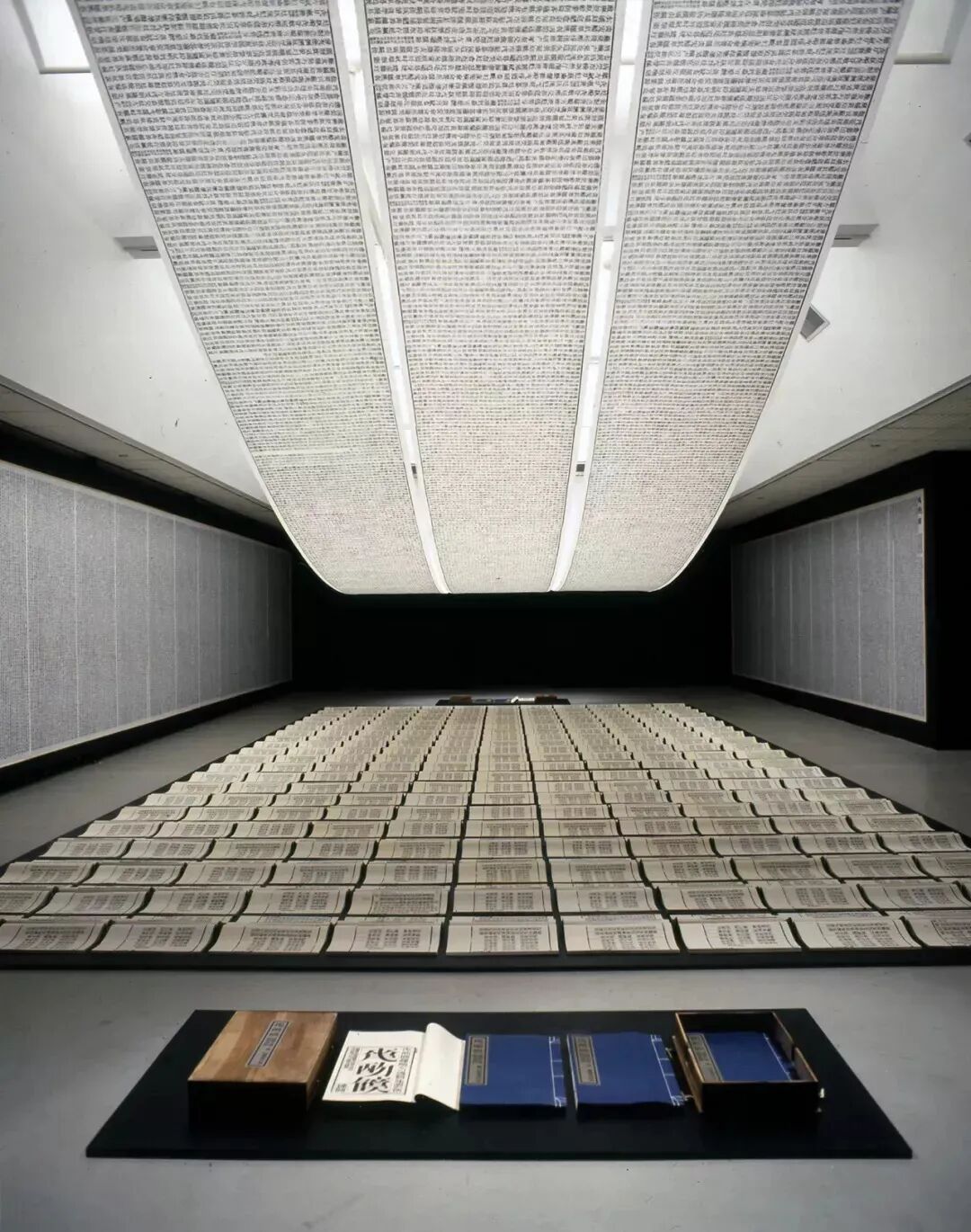
The displaced echo is not a failure of dissemination. The work truly was disseminated, and far. But the price of dissemination is the loss of its original sharpness. This is not a problem of dissemination technology, but of the contextual dependence inherent to art. Some works’ force is not stored in form but in context. When context changes, the force dissipates. Xu Bing’s *Book from the Sky* is the most precise case: those pseudo-characters no one can read were, in the Chinese context, an extremely violent critique of the power of writing — every literate person could feel the horror of “not recognising a single character” and the experience of being exiled from one’s own writing system. It is not abstract philosophy of language but cultural politics. When the work is placed in a Western exhibition space, what the Western viewer sees is not “unreadable Chinese” but “some mysterious Oriental script”; their strangeness to Chinese writing means “unreadable” is no longer a rupture the work manufactures, but a cultural distance they already possessed. The work shifts from a critique of the power of writing to a display of Oriental otherness. Context changed everything.
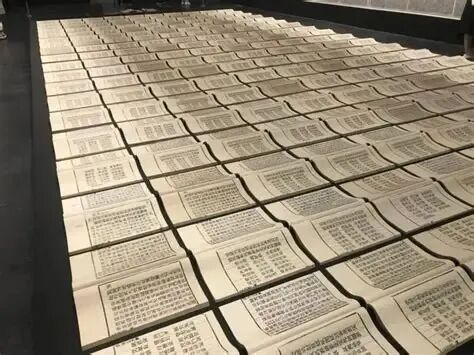
These two mechanisms reveal an uncomfortable fact: the system’s capacity to absorb heterogeneity far exceeds our imagination. It does not maintain order by exclusion — though exclusion would merely confirm the existence of heterogeneity. Like the 1993 Venice Biennale, where the Italian curator Achille Bonito Oliva, using Marco Polo’s “journey to the East” as his narrative frame, shaped non-Western art into the “unknown, exotic, alien landscape” seen from the Western perspective, reducing the complex, diverse Chinese contemporary art to an “Eastern specimen”, forcing artists to second-guess Western tastes to gain entry — Chinese artists had no say. This is not an entirely apt example, yet such events do give rise to an awareness of inequality, which in turn drives towards equality.
To this day, the contemporary-art system absorbs different works by inclusion. Once included, it places them in a fitting, harmless position that does not disturb the system’s continued operation, and everything goes on as before. This inclusion needs no conspiracy, no one plotting in a back room how to dissolve that work’s criticality; it needs only each node to do its job: the curator keeps curating, the gallerist keeps reckoning, the museum keeps collecting, the audience keeps looking at the influencer show on the second floor. The system’s digestion is distributed, automatic, needing no commander.
VI. Next, the Forms of Failure
Next, the forms of failure. But caution is needed here: the classification of failure cannot be like sticking labels on cans on a supermarket shelf. Failure is a three-dimensional structure; its layers permeate one another, and the surface symptoms are often separated from the deep mechanisms by several levels. So I would rather describe failure as three directions of force, acting respectively inside the work, at the moment the work crosses a boundary, and after the work enters the social machine. The same work may be pulled by several forces at once; the same work’s failure may migrate between layers. To understand failure, one must first understand this vertical permeability.
Failure inside the work begins, first, with the material body going wrong: the material betrays you — wood warps in humidity, metal discolours in oxidation, organic material rots during the exhibition. More covert is executive failure: the work’s design logic has built-in fragility, too low a fault tolerance; scalar failure: the work’s proportion to space and body is disordered; and linguistic failure: the exhaustion of the formal language. Most to be guarded against is that this exhaustion may, in the market, precisely be success — for a repeated schema is easy to recognise, easy to consume, easy to brand. The symbiosis of formal failure and market success is a key entry point for understanding the failure mechanism of contemporary art.
Then the collapse of the intellectual scaffold. It has at least three common forms:
Conceptual vacancy: the work cites Deleuze, Butler, Agamben, mentions nomadism, performativity, bare life, yet after reading you still do not know what on earth this artist is thinking — not because the thought is too deep, but because there is no thought there, only a rehearsal of thought (on this point, you may read my other essay, *How Contemporary Artists Can Systematically Develop Their Concepts*);
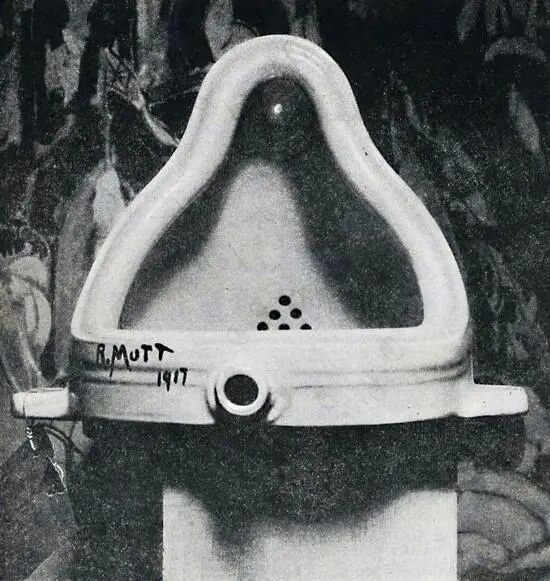
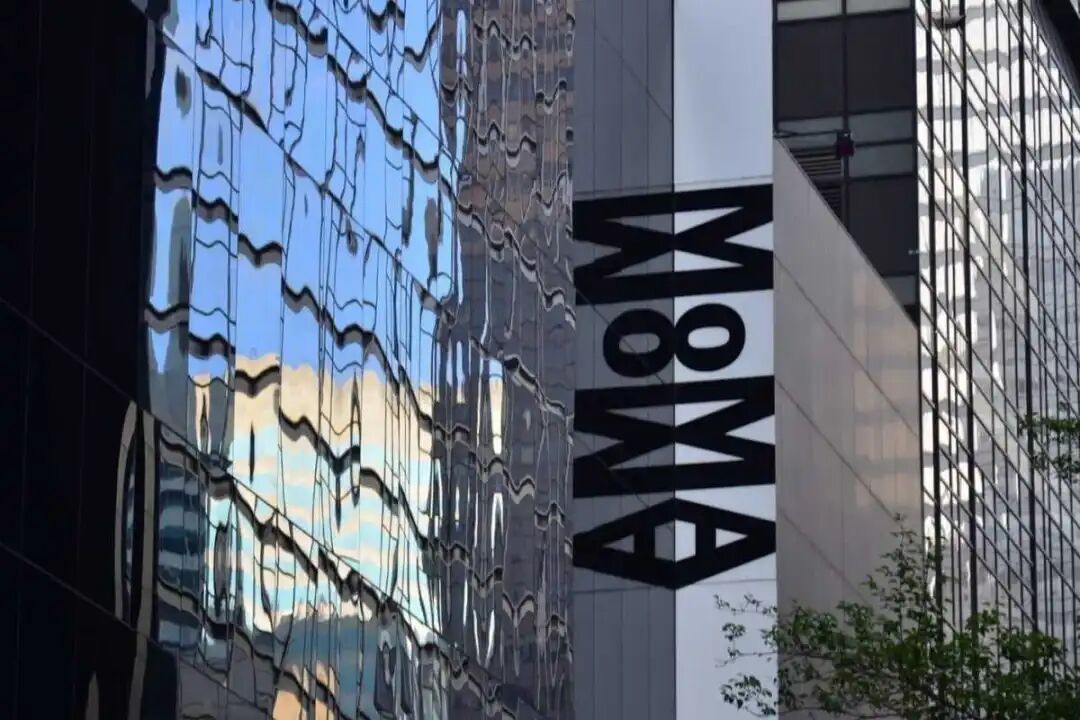
Over-packaging with theory: the work is reduced to an illustration of theoretical discourse; its existence is not for itself but to prove the legitimacy of some theoretical text, and the institutional environment rewards hollow packaging while punishing slow, deep cultivation; then there is conceptual self-cancellation — a work of “negation” represented by a gallery, sold at a high price, entering a private collection: does its “anti-market” identity, successfully traded in the market, negate its criticality? Duchamp’s *Fountain* and Cage’s *4′33″* are the most famous specimens of conceptual self-cancellation; from a posture of “anti-art” they became the most important “artworks” of the twentieth century. But Adorno refused this pessimistic conclusion: a work’s co-optation by the system does not mean its negating force is exhausted. *Fountain* entered MoMA, yet every time someone stands before it, the question “what is this supposed to be art?” remains sharp, because it touches not the attribute of a concrete work but the very legitimacy of the art institution.
At the moment the work crosses a boundary, it faces the rupture of translation. The core of contextual failure is untranslatable — not that language is untranslatable, but that the whole layer of lived experience, political memory and perceptual habit the work is embedded in is untranslatable. A viewer who has never lived in a place cannot acquire that experience; this is not lack of intellect but absence of the body. The body was not shaped by that context, so it lacks the experiential knowledge needed to decode it. Temporal failure is the dislocation of the time coordinate. Too early, and too late, are both failure; too early is mistaken for immaturity, too late for imitation. And waiting itself is the experiential form of temporal failure — the artist cannot control the rhythm of the receiving end, whose tempo is jointly determined by market cycles, curatorial winds, political conditions and the media agenda.
After the work enters the social machine, its fate is even less its own. Dissemination failure means being seen yet drowned out. The social-network algorithm optimises for “most likely to be clicked”, not “most valuable”, so the links of traffic-influencer painters on today’s networks, in WeChat on the phone, on Douyin — those high-saturation colours, clear visual centres, instantly recognisable styles, direct emotional stimulation — hold the advantage in the algorithm; visual experience that demands slow looking, context and prepared knowledge is at a structural disadvantage, and scholarly work needs no further comment. The gap in visibility is not tenfold or a hundredfold but ten-thousandfold and beyond. Institutional failure is the fundamental inability to get in.
Major museums have an unwritten rule: a work enters the collection because its relation to the existing collection is fitting — fitting means it can be slotted into an existing narrative thread without disturbing the narrative structure too much. The gatekeeper mechanism, the self-replication of curatorial taste, institutional conservatism, and quota politics (the indicator-isation of surface difference) operate crosswise as four modes of exclusion. Market failure is getting in but not selling. Failed auctions, low valuations, the bursting of bubbles, the selective co-optation of capital are all possible; price was never a signal of value but a signal of the distribution of power. This market is a deformed one — extremely low liquidity, highly asymmetric information, supply under monopolistic control — and to blame the failure of price on the work’s quality is to shift the consequence of power inequality onto the work itself.
The three layers are not a linear relation. A work may never reach the outermost layer, collapsing first in the innermost; a work may pass through all three layers and still fail — perhaps the cruelest case: it passes cleanly through every layer, only to find that all it has passed adds up, still, to not-success. The large body of practice that, after passing all screening mechanisms, still cannot be digested by the system — this residue is what should be the true object of study of *On Failure in Contemporary Art*.

VII. Having Set Out These Forms
Having set out these forms, we must add a dimension deeper than all of them. Failure has grades, has depths. To be negated means to be mentioned, yet that is still a kind of existence, still occupying a position in discourse. The most thorough failure is not negation but direct silence: your name does not appear, not because “so-and-so is not good enough” but because there simply is no “so-and-so”. This failure has no form, no entry point into the system, no data point to be analysed. It is the zero degree of failure.
In time, artistic failure is deferred, while the confirmation of success is immediate. A review, a hammer fall, a toast at the opening party. But once failed, overturning the failure requires waiting for an unpredictable moment — waiting for some curator not yet born, some magazine not yet founded, some standard of evaluation not yet formed. For instance, an artist in New York made his “clock-in” work, punching in once every hour for a year. No gallery would show it, no critic would write about it. In the New York art world of the time, he was a thorough failure. Twenty years later, the work was written into the history of contemporary art. Both the judgement then and the judgement twenty years later are accurate, pointing at the same object, the object unchanged; what changed was the temporal frame evaluating it.
This leads to a deeper question. We usually place failure on a linear time axis, as if time were neutral, uniform, impartial to all. The opposite is true. Time is the most covert dimension of power operation in the contemporary-art system. The system does not merely distribute visibility, capital and opportunity; it also distributes time — more precisely, it distributes “the time allowed to endure”. An artist graduates from the academy, enters the professional track, and the system gives him an implicit time window: three years, five, perhaps eight. Within this window, his attempts, failures, adjustments are tolerated, even encouraged. But the window closes. Not one day when someone suddenly notifies him “you have failed”, but his CV acquires an unexplained blank; his age no longer fits the funding bracket of “young artist”; curators begin to describe him as an “old face” rather than a “new discovery”. Time itself becomes the verdict.
This touches a question deeper than Bourdieu’s field theory. Field theory describes the distribution of capital in space, but does not adequately address the violence of the temporal dimension. An artist is not judged a failure at some fixed spatial position; his time is truncated. The art institution possesses the power to slice duration into segments, and each segment can be a verdict.
At this level, Bergson distinguished two kinds of time:
One is the spatialised, measurable, uniform time used by science and institutions — clock time, for instance;
The other is living, indivisible, qualitative duration — the time actually experienced by consciousness, for instance.
What is a studio’s time? It is duration. A painting worked on for two hundred hours — those two hundred hours are not two hundred homogeneous units; they are condensed, deformed, dense stretches of life. But when the work enters the channel of institutional evaluation, duration is forcibly stuffed into clock time: deadlines, exhibition cycles, market rhythm, the publication frequency of academic production. The crack between the two kinds of time is the covert place where failure is manufactured.
This is not a metaphor. An artist spends two years on a work; a curator spends thirty seconds deciding not to include it. Thirty seconds against two years. This is not an efficiency problem; it is a violent collision between two ontologies of time. The institution can do this because it monopolises the power to valorise time; it has the right to decide which stretch of duration is worth waiting for, which stretch can be ended within thirty seconds.
One level deeper: the temporality of failure also means the failure cannot extend his duration to that “later”. The institution truncates his time not because he is not good enough, but because the institution is intrinsically inclined to pronounce a final verdict within the present time-slice. And the “present” always belongs only to those who have already mastered the conditions of acceleration.
In the body, failure is material. Field analysis can tell you the structural conditions of capital scarcity; it cannot tell you that feeling. That feeling is the mark power leaves on the individual’s flesh — not a symbolic mark but a quite real one. And it has a class character: an artist with savings and family support can bear it; an artist maintaining a studio through part-time work may be destroyed by it. Take insomnia: insomnia is not a psychological problem; it is the body’s rebellion when working hours are indefinitely extended by uncertain waiting. Or stomach pain: stomach pain is no coincidence; it is the digestive system’s material protest against things “it cannot digest”, after repeatedly swallowing rejection. The body politics of failure is the terminal expression, at the level of the flesh, of failure’s class politics.
In space, failure is graded. To fail at the centre and to fail at the periphery are entirely different matters. Failure at the centre is a drama: the rejected exhibition, the bad review, the failed auction — these events occur under observation, can be discussed, analysed, converted into narrative. Failure at the periphery is silence: no one notices the middle-aged man who gave up painting to drive a taxi, no one records the woman teacher who held one solo show at the county cultural centre and never picked up a brush again. Their failures enter no narrative; they simply stop. The central failure has a safety net: he may lose his gallery but not his connections; his name at least appears in some archive. The peripheral failure has no safety net: one failure means total exit, no second chance, no revival match.
There is also an uncomfortable fact: the capacity to bear failure in contemporary art is highly unequal, and this inequality is being exploited by the system. An artist from a wealthy family — his parents can support him for three to five years after graduation with no stable income; the time he spends experimenting, failing, adjusting is a class privilege. An artist from a working-class family must begin earning in his first year after graduation; he must make market-safe work, or abandon art. This is not a difference of talent but of failure budget. The system preferentially filters out not the bad artists but those who cannot afford the cost of failure. This bias overlaps, across gender, race and class, with broader social inequality, producing a statistically highly skewed population of “successful artists”.
VIII. Thus Far
Thus far: who defines your failure? This is a question that must be asked.
Failure is not an objective attribute but an act of naming; it depends on who names it, from what position, with what power. In *The Order of Things* Foucault did something simple to the point of brutality: he opened a fictitious treatise on taxonomy and let the reader face a list that could not be classified. “Belonging to the Emperor”, “scented with perfume”, “having just broken the water pitcher” — placed together, what unsettles is not the content of the categories but that no common space exists between them at all. The classificatory system we are used to is self-consistent, closed, centred. Only when this habit is pierced do we realise: classification is not natural order but the work of power.
So it is with the classification of success and failure in contemporary art. Success possesses a whole rich vocabulary (breakthrough, advance, innovation, subversion, leadership, benchmark, milestone, and so on), each word carrying affirmative energy, each reinforcing a narrative about progress and value. Failure’s vocabulary is pitiably poor (outdated, behind the times, irrelevant, marginal, eliminated, etc.); these words are mostly negative, describing not the nature of failure itself but its distance from success. We can only describe failure in the frame of reference of success: “outdated” relative to “innovation”, “behind the times” relative to “advance”, “irrelevant” relative to “the core narrative”. Failure has no language of its own; it can only borrow the negative form of success to speak of itself.
The poverty of language produces a serious cognitive consequence: facing failure, we can only reduce it to personal attribution. “The work is not good enough”, “the exhibition not important enough”, “the practice not interesting enough” are logically tautologies — the definition of “not good enough” is “not recognised”; to explain “not recognised” by “not recognised” explains nothing, amounts to nonsense. Yet they are extremely effective in discourse. They convert structural exclusion into personal deficiency, the system’s product into individual destiny. This is power in Foucault’s sense: not someone’s prohibition, but a whole discursive machine that produces “true” and “false”, “normal” and “abnormal”, “success” and “failure”. When power and the system of knowledge establish a standard for the “successful artist”, they simultaneously produce the position of the “failed artist”. These positions did not precede power; they are power’s own creation.
When you fail, who says you have failed? The critic, the gallerist, the collector, the curator, the auction house, the algorithm, or yourself? These namers each stand in a different position, exercise a different power, with no translation between them. A critic’s word can keep a work out of the chain of critical narrative; a gallerist’s word can keep it out of the pipeline of value circulation; the auction hammer can stamp a seal on the column belonging to you in the whole symbolic-capital valuation system. While the quality of your work itself, the time and body you spent on materials, the eyesight you wore away in polishing — have no say in the clash of the two powers. Here is a colder structural fact: the ceiling of the successful and the floor of the failed are the same ceiling. When the system sets a ceiling for some, it simultaneously sets a floor for others.
IX. Next, a More Dangerous Topic
Next, a more dangerous topic: deliberate failure.
Duchamp turned a urinal upside down, signed it, and sent it to the Society of Independent Artists; it was rejected, and he quit the organising committee. Cage had a pianist sit silent before the piano for four minutes and thirty-three seconds. Xiamen Dada hauled all the exhibits to the square and burned them on the last day of the exhibition. A young Chinese artist, Ge Yulu, made his own name into a street sign and installed it on a Beijing road with no name; it was picked up by map software and used for four years, until exposed by the media and removed by the municipality — he perhaps knew the sign would be taken down sooner or later, and it was precisely the certainty of this “doomed failure” that gave the act its drama.
But almost all these “deliberate failures” later succeeded. Duchamp entered the textbooks. John Cage entered any history of contemporary art. The street-sign incident made the artist a known figure. Failure was reclaimed by the system and re-encoded as “underrated pioneer” or “overlooked genius”. Reclaimed failure loses its failing quality; it becomes a story of success, evidence of the system’s openness and a proof of the curator’s foresight. Real experiences of failure — economic hardship, blocked creation, being forgotten by society — are filtered out of the exhibition; what enters the exhibition is a purified, manageable, consumable “simulacrum of failure”. Baudrillard would recognise this operation: in the order of simulacra, signs no longer refer to the real; they refer to one another, forming a self-contained system. When the institution exhibits failure, what it exhibits is never the real experience of failure, but failure already institutionalised, already encoded, already endowed with narrative function.
More fatal is the class premise. When Duchamp “failed”, he already held a position in the New York art world. When Beuys proposed “social sculpture”, he was already someone who could speak with anyone. A young artist with no position who does the same thing will most likely not be written into art history; his deliberate failure will simply become real failure.
Sehgal is another extreme case: his work produces no material object at all, only interpersonal interactions created by trained interpreters — no photograph, no video, no contract; by market standards a thorough failure, yet his “uncollectability” instead produces scarcity, and scarcity produces a very high market premium. An artist of “deliberate failure” who ends up earning the most money from failure.
But Sehgal operated in the context of the top Western institutions; a young artist in the Global South who tries the same strategy faces not the institution creating a new category to accommodate him, but the institution simply ignoring him. In Silicon Valley, an entrepreneur with a Stanford degree and venture-capital connections can “learn from failure” and refinance after failing; a vocational-college student in a small city, with no family background, faces after failure the pursuit of creditors and discrimination in the job market. The same word “failure” corresponds to two entirely different life situations. Whether failure can be embraced depends on the social position of the failure.
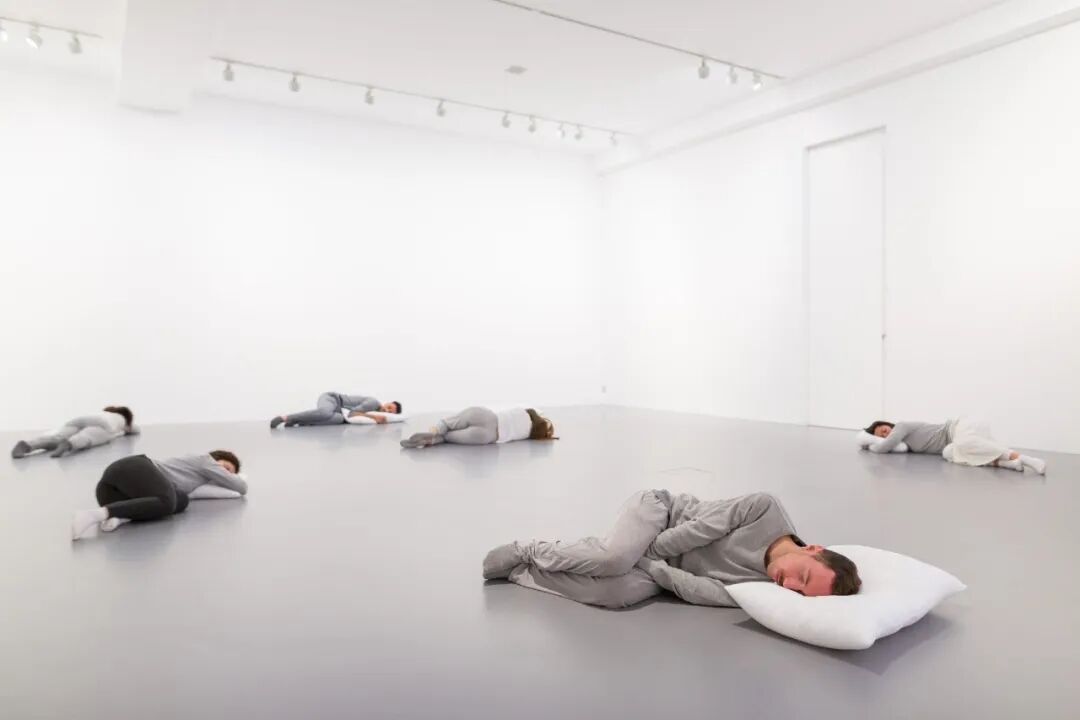
Here is a fundamental paradox worth remembering by every artist who wants to become famous through failure: true deliberate failure should be unsuccessful — unrecognised by the market, unabsorbed by the institution, uncanonised by criticism. But if it truly is unsuccessful, we would not know it; it would appear in no exhibition, no publication, no database. We can only discuss those “successful failures”. The completely invisible failures mentioned above (no record, no discussion, no trace) remain forever outside our field of vision. Perhaps it is precisely these invisible failures that matter most; they reveal the true boundary of the art system: not a boundary testable by strategic failure, but a boundary where even the test itself is not permitted.
Then, what is the only truly unreclaimable failure? It is the silent exit — that is, not making work, not holding exhibitions, not defining oneself by the identity of “artist”, disappearing beyond the system’s field of vision. Reclaiming requires discourse — discussion, evaluation, canonisation — and a silently exiting person cannot be discussed, evaluated, canonised; he simply disappears.
X. This Must Touch a More Fundamental Question
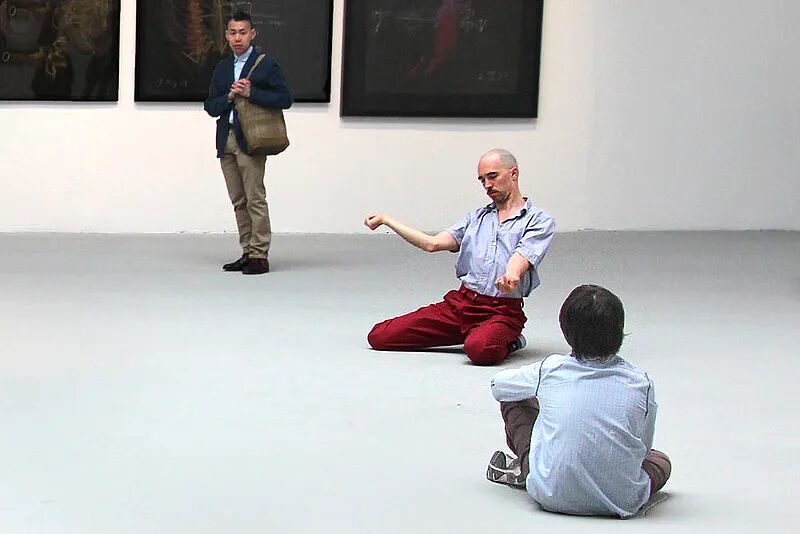
This must touch a more fundamental question: in what sense is “art” itself destined to fail?
If the whole meaning of art lies in “expression” — translating some inner, fluid, complex experience into an outer, fixed, limited form — then this act of translation is itself a failure. No work can exhaust the artist’s intent. That thing you feel in the studio, that makes you excited, keeps you awake, makes you think “this is it” — it is always larger, deeper, more complex than the work you can make. Once the work is finished, it betrays you. It is not the thing you felt; it is a wreck, a trace of that thing, a failed translation.
This is not passive nihilism; it is a basic fact about artistic creation. Blanchot and Bataille, each in his own way, explored this proposition: writing is not the path to meaning, writing is the path to the impossibility of meaning. The work is not the success of expression; the work is the monument to the impossibility of expression. In this sense, every truly serious work is a failure, because it honestly faces the unbridgeable crack between language, form, matter and experience.
If this proposition can be taken seriously, it will utterly change the artist’s relation to “failure”. If art itself is a doomed undertaking, then the boundary between systemic failure (rejection, neglect, oblivion) and ontological failure (the work can never reach where it wants to reach) grows blurred. Systemic failure is external, contingent, changeable; the ontological failure of art is internal, necessary, symbiotic with art. An artist who suffers only systemic failure yet does not understand art’s ontological failure will attribute all his pain to the system’s injustice and fall into resentment; but an artist who speaks only of ontological failure while ignoring systemic failure will aestheticise structural exclusion as metaphysical fate and thus abandon action. True clarity lies in seeing both failures at once, and letting neither dissolve the other. You know your work can never “succeed”, can never fully capture that thing you felt, can never reach the other’s mind without wear, still less escape the distortion of context and the co-optation of the institution. Yet you also know that some of the system’s exclusionary mechanisms are not metaphysical fate but concrete, historical arrangements of power that can be changed and can be reinforced.
Here, what cannot be avoided, is Adorno’s extremely sharp diagnosis in *Negative Dialectics*. Adorno insists on a core proposition: true negation is not a negation that can be sublated. In Hegel’s dialectic, negation is a moment on the way to a higher synthesis; negation is sublated, contradiction resolved, the whole process advancing to an affirmative endpoint. But Adorno says no — there is a negation that cannot be sublated. It refuses to be converted into fuel for advance, refuses to be reconciled at a higher level. It is the abyss itself.
Move this proposition into the contemporary-art institution: the institution’s attitude to failure is precisely Hegelian, advancing towards an affirmative result. The institution is willing to acknowledge failure, display failure, discuss failure, even set up special exhibition themes to process failure — but the premise of all these operations is that “failure must be narratable”, that it can be converted, within a larger frame of meaning, into affirmative value. Failure is sublated into “the price of the avant-garde”, “the inevitable path of exploration”, “the institution’s self-reflection”. In a word, failure is Hegelianised. But true negation is Adorno’s unsublatable negation; it refuses to be treated thus. It offers no meaning, does not allow itself to be converted into a narrative moment of advance, serves no affirmative purpose. The institution can tolerate critique, provocation, radicalism, because these can be stylised, priced, exhibited. But the institution cannot tolerate the abyss — that pure failingness which refuses to be endowed with meaning, refuses to be reclaimed as narrative resource.
This explains why some of the most radical deliberate failures end up as stories of success. Duchamp’s rejection became the core narrative of art history. Cage’s mockery became proof of avant-garde courage. Xiamen Dada’s burned works were canonised. All these failures underwent Hegelian sublation — negation became a higher affirmation, failure became a more dazzling success. Then, is there a failure truly unreclaimable? Adorno’s answer might be: only the failure that insists on being failure, refusing to be explained as “actually the prelude to success”. But this is almost an impossible position, because in the discourse field of contemporary art, the moment you claim your work is “truly failing”, that claim itself becomes a conceptual gesture, and a conceptual gesture can be commented on, analysed, collected. The system’s capacity to reclaim negativity is so strong that any posture attempting to stand outside the system may be re-encoded as a style within it. But this does not mean abandoning the question. Precisely because, before the system’s reclaiming capacity, all resistance appears suspect, we need to identify more precisely: in each process of failure being reclaimed by the system, what is left out? What cannot be digested by the machine of narrative? Look again at those silently exiting ones who have no manifesto, no archive, no quotable gesture — the pure negativity they carry may be the only residue the whole system cannot process.
XI. There Is a More Covert Layer
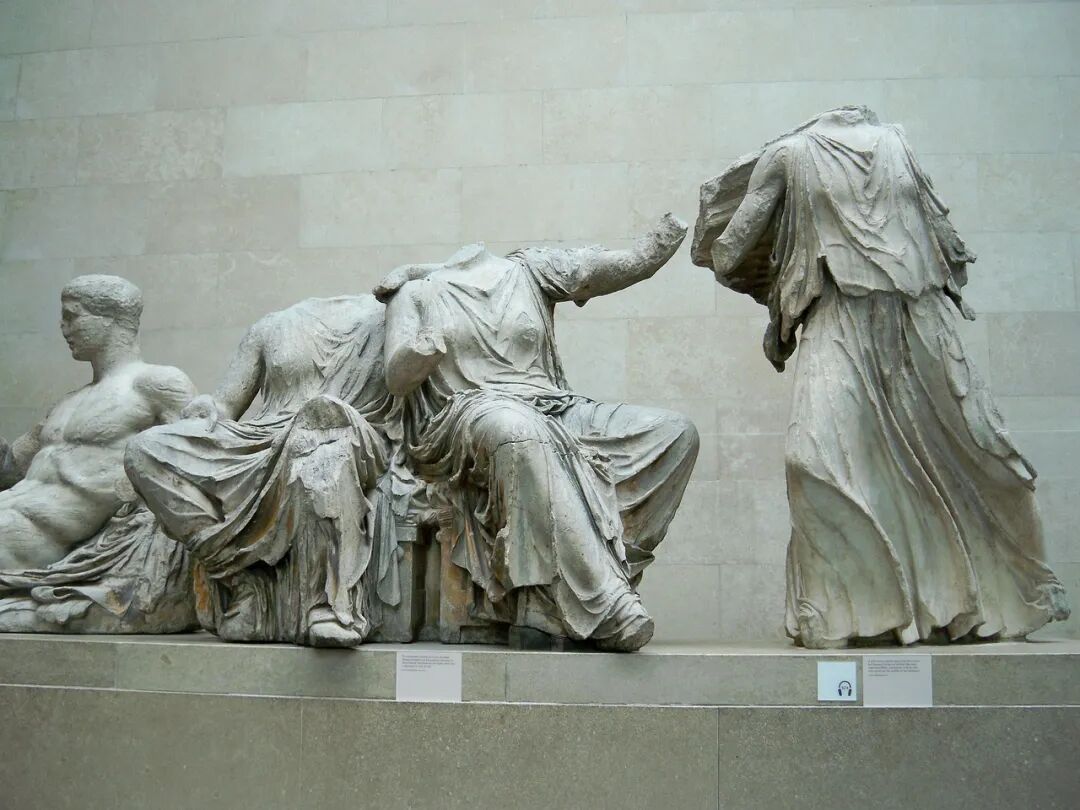
There is a more covert, and more dangerous, structure: the system’s apparatus of desire.
Lacan’s psychoanalysis can serve as a spur: desire is never spontaneous; desire is structured by the desire of the Other. What a person desires depends on the symbolic order in which he is placed, on what he thinks the “big Other” (Autre) wants — the “big Other” meaning the invisible system of rules that already exists before you are born, which everyone follows: the whole symbolic order, the linguistic and social norms, the collective discourse, the sum of law and culture. In the art field, the “big Other” is a whole anonymous, dispersed, yet all-pervading evaluative system — curators, collectors, critics, peers, media, algorithms. But what the artist desires is not success itself; what the artist desires is to be recognised by the “big Other”. This is a variation on Lacan’s famous line: the desire of the human is the desire of the Other.
This structure means failure is not merely a problem of external evaluation; failure has already been internalised as part of the artist’s structure of desire. When a work is rejected, what is struck is not only professional prospect but something deeper that touches the subject: your desire is judged illegitimate. The thing you desired — those impulses that excited you, that made you spend eighteen months with the recycling-plant women workers, that made you believe these hands should be seen — the “big Other” says: this is not important. This does not negate your technique or judgement; it negates your desire itself.
More toxic is that the system’s structure of desire is stratified. The failure of a central artist is tragedy; the failure of a peripheral artist is a statistic. An artist from a wealthy family — his failure carries a certain romantic colour; a person who gave up a comfortable life to pursue art, his predicament is itself a resource for narrative. But an artist from a working-class family — his failure has no narrative value; it is merely an ordinary story of returning to the starting point: a person tried to leave his class position, failed, and went back. The former’s failure can be aestheticised; the latter’s can only be moralised — lazy, not hard-working enough, no talent. This is not a difference of talent but of the qualification to be narrated.
There is an even more particular proposition: the system not only produces failure, it draws pleasure from it. This is not conspiracy theory; it is the unconscious of the structure. Think of those films, novels, biographies about failed artists — why are they attractive? Because the failure’s story provides a special pleasure: it both confirms the system’s cruelty and, by sympathising with the failure, lets the viewer feel he is kind, is deep. To some extent this resembles comedy: Guo Degang says Yu Qian’s straight-man role is top-tier, because Yu Qian controls the timing so well — if Yu Qian’s reaction were 0.25 seconds faster than Guo Degang’s, the punchline would fall flat. Here the failure we are discussing is consumed. The emotional experience the viewer gains from the failure narrative (sadness, sympathy, indignation) precisely consolidates the system’s legitimacy: see, how cruel this system is, yet I am the one who can see the cruelty; I am different from those who look only at success.
This structure of pleasure is a fatal temptation for the artist. The moment an artist begins to enjoy the image of “the failing self”, begins to dwell in the labels “bitter”, “marginal”, “misunderstood”, he has already fallen into another position the system has prepared for him: failure as identity performance. This position has its market, its audience, even its institutional support (some funding targets precisely “the marginal” and “the experimental”). But this is not a breakthrough; it is co-optation on another track.
XII. A Counter-Intuitive Conclusion
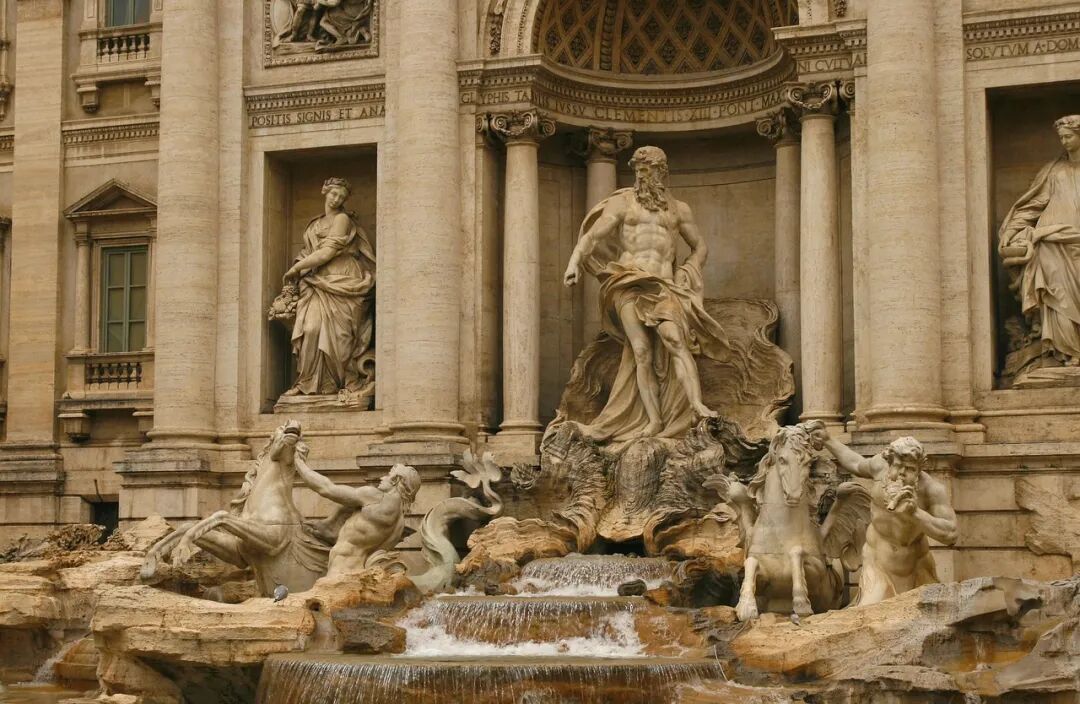
A counter-intuitive conclusion: success has a contracting effect; failure has an expanding effect.
Once a certain approach is proven successful, everyone imitates it, and the space of possibility contracts sharply. Over the past decade and more of global contemporary art, “installation plus video plus social engagement” became a widely copied template of success; almost every museum group show had such work: a large room with video, everyday-object installation beside it, an interactive zone in the corner. This template is successful — it looks professional, contemporary, profound — but when everyone uses the same template, innovation stalls. Failure is the reverse: when you find a path blocked, you try other directions, and the scope of exploration actually expands.
Bloom, in *The Anxiety of Influence*, mentions the “creativity of failure”: the later poet’s creativity comes not from learning from the precursor but from a creative misreading of him. He borrows Lucretius’s image of atoms swerving minutely as they fall in straight lines to describe this misreading — it is precisely this swerve that makes atoms collide and produces all things. A painter painting a blue square is not the product of a correct understanding of Malevich, but the result of a creative misreading of him. Without misreading, later art is only one correct citation after another. And this misreading is itself, in the traditional sense, a failure: you did not correctly inherit the predecessor. But it must be said that it is precisely this failure that opens new possibility.
Failure transmits information. You try to do something, but the system does not allow it, or it leads to an unexpected result; this information about the system’s boundary is the core resource of innovation. In science, failure is systematically recorded: scientists must record the parameters and results of every experiment, including failed ones; these records constitute a boundary map of knowledge — you know under what conditions what will not happen, and scientific progress is thus cumulative. In art, failure is almost unrecorded: an artist tries twenty material combinations in the studio, eighteen fail, two succeed; what you see is those two successful works, not those eighteen failures. The information contained in those eighteen failures is the basis of the artist’s innovative capacity, but this basis is implicit, existing only in personal experience and memory. If the artist stops creating or dies, this map disappears, and later artists must redraw it — that is, repeat the same errors.
But the opening of the space of possibility by failure has a cruel premise: the failure must have the means to keep exploring. If failure leads to the loss of material conditions (say, inability to maintain a studio, to buy materials, to obtain exhibition opportunities), then the result is not that this precious space of possibility is opened but that it is closed. Failure can produce innovation only when it can be borne. So the core of “trial and error” is not to try until success but to probe: each failure is a boundary test, these tests draw a map, and the capacity to innovate depends to a great extent on the richness of this map.
There is one more contemporary change to guard against: tolerance for failure is declining. Biennale budgets run from several million to tens of millions of euros; such scale means they “cannot fail” — at least they must succeed in media narrative and economic return. The pressure of “cannot fail” creates a special form of failure: mediocre success. Curators know the work must win good press, attract sponsors, make visitors photograph and share; curating becomes manageability of expectation — the safest choice is to invite already-recognised stars, choose already-seen topics, adopt already-validated modes of display. The biennale should be a place that allows failure, should show immature work, immature curatorial ideas, push boundaries — but under budget pressure the space that “allows failure” is compressed.
So an art system that cannot tolerate failure is also a system that cannot produce innovation.
XIII. Now, the Lens Back on China
Now, the lens back on China.
Our contemporary artists face a unique combination of multiple pressures — state, market and tradition — which do not appear in turn but are present at once. In a Chinese artist’s studio, on the left is the consideration of censorship and self-censorship, on the right the price signal of galleries and auction houses, overhead the tug between “Chinese tradition” and “the international contemporary”. The three pressures do not merely add up; they penetrate one another: censorship affects the market, the market prefers safe subjects; the market affects tradition, tradition becomes a saleable visual element; tradition is conscripted to answer both censorship and international expectation. Thus “Chineseness”, “Chinese style”, “Chinese artist” become a double currency — safe inward, exotic in value outward.
The deepest form of state pressure is not censorship but self-censorship. It is not external compulsion but an internalised, automatic, often unconscious psychological mechanism. The artist begins filtering at the conception stage: will this subject be a problem? Will this image be misunderstood? Will this title be too sensitive? These judgements come from no explicit ban, but from a long-accumulated, bodily political intuition. There are artists who are never censored, because they complete their self-censorship at the conception stage, eliminating every controversial element. He says: I know where the boundary is. These words send a chill. The true failure is not to be censored but to have internalised censorship, making it one’s second nature. There is a more covert failure, called “being accepted as harmless”: when the state begins to admit contemporary art, certain once-critical practices are converted into harmless cultural consumer goods; criticality is dissolved in the exhibition context, the political is displaced in the collecting mechanism — the work is still the same work, but its edge has been anaesthetised by context, domesticated.
Market pressure manufactures fissured success and temporal failure. An artist may achieve huge success in the international market yet remain marginal in domestic scholarly evaluation; may sell at a high price yet not be taken seriously by criticism; may be collected by Western museums yet unable to exhibit in domestic museums. Here success and failure are not opposite poles but two sides of the same phenomenon: market success may mean academic failure, international success may mean local failure, economic success may mean historical failure. The market needs freshness, new names, new topics; this need accelerates the production rhythm, compresses the time for thought and experiment: young artists are captured by the market before they have formed their own language, pushed towards success before they have had time to fail. There are young artists represented by renowned galleries less than two years after graduation, whose work sells well at art fairs, yet two years later the gallery does not renew, the market having turned to a new style. He says: I had not yet figured out what I wanted to do before being labelled. Shaped by the market and then abandoned by it — this is indeed a common temporal failure.
Tradition is a highly strategic field of power, operating simultaneously on three dimensions: as an instrument of institutional screening, as an instrument of market packaging, as an instrument of the artist’s self-discipline. The international art market’s consumption of Chinese art is never merely aesthetic; it consumes “Chineseness” — a cultural specificity that can be recognised, marked, priced. Traditional symbols are the most convenient index of this Chineseness: ink, calligraphy, porcelain, gardens, literati taste. Those artists who refuse to peddle this spectacle — refusing to let tradition become the market’s Oriental decoration — fall into another awkwardness: they are neither traditional enough nor Western enough; the work still exists, but its voice falls into a frequency with no receiver. This is the shape of the “displaced echo” in the Chinese context.
There is also the failure of “belonging to neither”: not wanting to do tradition, feeling that tradition marks one as conservative, lacking experimental spirit; nor wanting to abandon tradition entirely, which would be seen as rootless, imitating the West, losing the recognisability of being a Chinese artist. You hang suspended between two tracks, able to mount neither.
Add the algorithmic engulfment of platform pressure: social platforms have rebuilt the channels of art dissemination, and whether a work is seen becomes a black-box numerical game; the “represent and be represented” of international pressure — you are expected to “represent China”; too Chinese and you are seen as self-exoticising, not Chinese enough and you are seen as losing your footing, a dilemma; the “producing failure in the academy” of educational pressure — the core logic of academic education is not to cultivate experimenters but to cultivate those who can score high in the existing evaluative system; when students spend four years learning to make art by the correct method, their independent thought as artists has been disarmed — they know what is safe, not what is dangerous.
These six forces are not independent variables; they borrow from, reinforce and obscure one another: the state summons tradition to construct cultural confidence; the market turns this traditional symbol into a price tag in the auction catalogue; the platform algorithm polices on behalf of censorship without any official instruction; international expectation traps Chinese artists in the cage of “representativeness”, which the domestic critical circle in turn reads as “flattering the West”.
This is not a system of equations that can be solved; every attempt to address one dimension alone is bounced back by the others. But this pressure field is not a pure cage: precisely in the tug of the three forces, some artists have learned to work in the cracks. Certain of the most creative practices in Chinese contemporary art were born precisely in this pressure field: they did not merely survive, but found a new language in the pressure. The continued existence of some alternative spaces offers a revelation: another standard of evaluation is possible, but on the premise that you have enough autonomy not to care about mainstream evaluation. They did not become large galleries, did not manufacture star artists; that they simply persist is, in China’s contemporary-art world today, already a special case worth examining. But it is equally true that the price of resistance is too high; most artists cannot afford it and must compromise. Compromise itself is a kind of failure — not that you were defeated, but that you abandoned resistance first, in exchange for survival.
XIV. Thus Far
Thus far, an artist may ask: so what on earth am I to do?
Let me first be clear about what not to do. As a theorist, I do not intend to teach you how to avoid failure, for that would help you adapt to the system, to climb higher within it. Nor do I intend to romanticise failure, solemnly asserting that “those who fail are purer”, “failure is the medal of resistance” — such words belong to the same narrative apparatus as “failure is the mother of success”; to romanticise failure is merely another way of reabsorbing it into the success narrative. I do not intend to judge anyone; what should interest you is what the machine behind ten thousand individuals’ failures looks like, not what one individual did wrong behind his failure.
But I can offer a few postural suggestions. My suggestions are not techniques but postures; they cannot guarantee your success, but they guarantee you will not lose yourself before the system.
First, remove “being seen” from your goals. For instance, a fieldwork artist, after a string of rejections, no longer took entering the core conversation as her only goal, but built a long-term collaborative relation with her fieldwork subjects, no longer treating them merely as fieldwork subjects but as co-producers of knowledge and participants in practice. She said: when I stopped making entry into that conversation my goal, I began instead to hear more different voices — those not in that conversation. This makes no happy ending; her life is not easy; what it offers is something colder: a deviation. When one no longer takes the system-defined success as one’s goal, the failure label the system gives one loses its stickiness — not that she fails less, but that she no longer uses that language to name her own state. For the 99.5 per cent of practitioners, this deviation is not a minority’s aesthetic taste but a survival strategy.
Second, make art harder to name. The way not to be absorbed by the system is not to make better art but to make art harder to name. The system’s absorption depends on classification — what type are you? which school does your work belong to? where should your market price be set? If you refuse to be classified, the system cannot price you. Not being priceable means failure in the market sense, but this failure is precisely what the artist wants. Today neon-light installation, tomorrow archival research, the day after public intervention… This strategic instability keeps the system from classifying you. You are not “that neon-light person”, nor “that performance artist”; you are a persistent “nothing at all”.
Third, keep your failure archive. Every failure is a boundary test: testing material, form, context, institution… Record every rejected proposal, every botched work, every broken collaboration — where it broke, why it broke. This map is the core resource of innovation, yet it exists only in your memory; if you do not record it, it disappears with you, and latercomers must repeat the same errors. Science accumulates because failure is recorded; art generation after generation steps back into the same pit because failure is never recorded.
Fourth, the core point: budget for failure. “Failure” can produce innovation only when it can be borne. This sounds utilitarian, but it is the most honest point: find a way to maintain even a small material buffer. Even a part-time job, a cheap studio, an uninterrupted stretch of time will do. Let one failure not directly end your artistic career. A failure budget is not a retreat but the cost of a space of possibility. You cannot change the inequality of failure-bearing capacity; but you can at least mark out, for your own failure, a bearable range.
Fifth, build a community of failure. Mutual warmth helps; the solidarity created by predicament is firmer than the alliance created by a shared vision. You will not candidly discuss difficulties with a peer far more successful than you, but you will share the problem you are facing with a peer in a similar situation; shared experience of failure creates a trust — not because of common ideals, but because of common predicament and ideals. Some long-standing alternative spaces and art groups prove the value of mere persistence, but one must beware of identity performance — that drunken, muddled art-world carousing contributes almost nothing to the building of this art-system edifice.
Sixth, maintain double-loop learning. The single loop is to change method: one material fails so you switch to another, one market fails so you switch to another, here fails so you move there — a person who stays put withers, a tree that stays put dies; this is what everyone does. But the double loop is to question the framework: not to seek a better method within the existing framework, but to question the framework itself. When failure strikes, do not rush to switch to a more likely successful method to catch the next deadline; pause and ask yourself: is the goal itself problematic? Should the framework itself be questioned? Duchamp’s failure triggered not “how to get the readymade accepted” but “what is art” and “who decides what is art”. But accelerated competition keeps most artists in the single loop; they constantly adjust method, style, strategy, rarely questioning the framework — not because they do not want to, but because they have no time. If you truly want to innovate, you must make time to “question the framework”, even if it means missing one deadline.
Seventh, refuse to be typecast. Some artists, from factory to virtual world, from video to installation, never develop a style the market can fix; from the market’s view this is failure — a brand cannot be built, a price cannot stabilise. But from the angle of innovation, this is the most effective strategy; every self-negation opens a new space of possibility. But remember a premise: she possesses, say, the institutional capital of international-biennale invitations, museum collections, curators’ sustained attention, and this capital provides the confidence to fail. A young artist without such capital, frequently changing direction, may face real failure: no one can keep up with the changes, no one wants to invest in someone “who knows not what he will do next”. So this point must be read together with “budget for failure”.
Eighth, beware the temptation of deliberate failure. As said above, deliberate failure almost always slides towards success in one way or another — not because the artist wants it, but because the structure of attention determines it: failure that is seen is success in some sense; failure that is not seen is the real failure, and of it we know nothing. If you lack Duchamp’s capital, Sehgal’s extremism, Beuys’s reputation, do not take failure as a shortcut. True deliberate failure should be unsuccessful; if you expect it to bring fame, it is no longer failure.
Ninth, give up the expectation of being understood. This is not the cynical “I don’t care what you think”, but the admission of a structural reality: the whole layer of experience your work is embedded in will inevitably be lost as it crosses the boundary of language. Most viewers are not misunderstanding you; they are processing their own projections, which have nothing to do with you. If you base your self-worth on being understood, you are doomed to collapse — not because your work is not good enough, but because understanding, across the boundary of language, is too rare an event.
Tenth, build your own time in the cracks of the system. The institution owns clock time, but you own duration. You can continue your duration after the institution’s time window has closed. Many of the most important artists had, in their careers, a long “underground period” beyond the system’s field of vision. Those years were not a blank; those years were accumulation. The institution does not recognise the value of this time, but you yourself must. Duration itself is the vessel of value, needing no external timestamp to confirm it.
When you find yourself enjoying the identity of “the misunderstood artist”, be wary. The pleasure this identity offers — a bitter superiority, a moral innocence, a contempt for the mainstream — is real, but they are all alternative positions the system has prepared for you. You sit in that position, and the system grows more stable: it uses you to prove its diversity; you use its exclusion to prove your purity. A win-win. The true breakthrough is not to enter this position at all — neither pursuing success nor enjoying failure, only continuing to work.
Eleventh, as said above, accept the failingness of art itself, but do not use it as an excuse not to strive. You know your work can never reach where you want it to reach, yet you still make it. You know failure is ontological, unconquerable, yet you still continue. This is not heroism; it is merely the daily life of an honest worker in art. Blanchot says the courage to write is not the courage to conquer failure but the courage to face failure — the courage to sit down and write knowing the work is doomed to fail. In this sense, every artist still at work, whether successful or failed in the system, already bears the same fate; the very fact of facing an unknown profession is greatness, and this is where art’s charm lies, the reason countless hearts are drawn to it.
Finally, redefine failure as a public problem. Not “I did not succeed” but “no space is left for paths other than success”. Clarity is not exit; clarity is identifying the loopholes. Clarity needs no perfect plan, only sustained, partial, sometimes ineffective action. Only, having read this far, you should realise the thing you must identify: which waters flow into the gallery, which pipes lead to the auction hammer, which valves let whose voice through.
XV. At the End, a Question No Artist Wishes to Face
At the end of the article, a question no artist wishes to face: might this very article itself be yet another ring in the art system’s digestion of failure?
This question has no comfortable answer. An article has a price, sits on a shelf, beside the art magazines, two pages over perhaps the auction catalogue; it does not speak from outside the system, it speaks from within it. This is the embarrassment that must be spoken. The only use I can promise is its use: do not use it to beautify failure, do not take it as a substitute pleasure for success study — “though I failed, this article consoles me” — do not reconvert the failure’s silence into your own resource for awakening, nor cite it to prove you understand the failed.
Now a question may be considered: a work hung on the third floor, its criticality not destroyed, its expression not forbidden, yet each time someone walks up to it, that original question can still be aroused. After this question is asked countless times it does not grow blunt; it remains sharp: a work that entered the collection yet no one looks at — what exactly is its success?
Perhaps success and failure were never two opposite directions. They are two sides of the same coin, and the suspended moment when you toss the coin into the air — that unresolved instant — is where art truly happens. In this system, you can hardly guarantee success, hardly even guarantee being seen. But at least you can decide one thing: at every moment judged as failure, will you take the judgement as a final verdict, or as a boundary map and a magic token for further exploration? This right of choice is in your hands; it is probably the only thing the art system we inhabit cannot take away.
订阅艺术评论
订阅即赠《2024中国当代艺术关键词》内部思考笔记 PDF
每周免费获取最新当代艺术批评与研究