5 December marks the anniversary of the death of Hannah Arendt. This most controversial thinker of the twentieth century, writing from a singular “outsider” vantage, probed deeply into the political predicaments of modernity. Displaced and uprooted for much of her life, she fled the shadow of Nazi Germany and eventually found a dwelling for her thought in the United States, yet she never ceased to guard against any fixed identity or ideology. Arendt never thought of herself as a philosopher, preferring to call herself a political theorist, for all her thinking sprang from shock at, and concern for, the concrete events of the real world—above all, the unprecedented political phenomenon of totalitarianism.
Rarely in the long river of history does one encounter a presence like a beacon of thought, illuminating not only its own age but, with startling penetration, foreseeing the predicaments and confusions of generations to come. As a younger writer of this generation committed to reflecting on modernity, I have composed this essay both to take stock of the spiritual legacy of Arendt, this elder philosopher, and to make a point: the best way to commemorate her is to re-activate her thought—to take up her razor-sharp scalpel and use it to dissect the world we inhabit now, a world that seems dazzling and bizarre on the surface yet seethes with undercurrents beneath.
Her writings are no dusty archive of old paper, but a series of invitations that keep posing questions to the future. Especially now, when the tide of nationalism is rising once again, bureaucratic systems are hardening, technological rationality is seeping into the fabric of society, and the space of public life is being ever more constricted, Arendt’s elucidation of such core concepts as the origins of totalitarianism, the banality of evil, the public sphere, and labour, work, and action holds profound practical significance for our understanding of, and response to, the grave challenges confronting human society in 2026 and beyond.

I.
Arendt’s thought was built upon the darkest ruins of the twentieth century. She experienced first-hand the rise of Nazi Germany, her own exile, and the shocked reckoning with the Holocaust. Understanding totalitarianism, therefore, forms both the starting point and the central concern of all her thinking.
“The Origins of Totalitarianism” is not a simple historical narrative but a profound political-phenomenological diagnosis, an attempt to answer how an “unprecedented” phenomenon could have come to be. In Arendt’s view, the two totalitarianisms of Nazism and Stalinism were not traditional tyranny or despotism but an unprecedented new form of rule designed to destroy utterly the plurality and spontaneity of human beings.
(I) Totalitarianism as a Crisis of Modernity
In “The Origins of Totalitarianism”, Arendt refuses to reduce totalitarianism to a single historical event or an evil individual. Tracing its historical roots, she situates it within the crisis of European modernity and identifies three foundational elements: anti-Semitism, imperialism, and racism.
1. Anti-Semitism as a Political Weapon
The word anti-Semitism was born under no honourable circumstances.
This term was first formally coined and popularised in 1879 by the German journalist and political activist Wilhelm Marr in his pamphlet “The Victory of Judaism over Germanism”. Marr combined the Greek prefix “anti” (against) with “Semite” to create the word “Antisemitismus” (anti-Semitism), replacing the then-common “Judenhass” (hatred of Jews). He did so to cloak anti-Jewish hatred in a “scientific” garb, making it appear more like a “modern ideology” based on racial difference than a mere religious prejudice.
Arendt analysed in detail the evolution of European anti-Semitism in the nineteenth century. She argued that modern anti-Semitism, unlike ancient religious hatred, was a secularised political ideology. With the rise of the nation-state, the Jews, as a “non-national” group lacking their own state and dispersed across many lands, found their distinctive socio-economic position—especially their role in finance—made them a scapegoat for all manner of social contradictions. In 1894, for instance, a “note” containing French military secrets was found in the wastepaper basket of the German embassy in Paris; Captain Dreyfus, a Jewish French officer, was thus “determined” by the French military authorities to be a traitor.
This was a false accusation. In the Dreyfus affair, the fractured sentiments of French society found an outlet through anti-Semitism, exposing the deep political and social crisis within the nation-state. It is precisely through this case that Arendt reveals the secret of anti-Semitism’s success: it reduces complex social problems to a single, visible enemy, thereby facilitating political mobilisation. Anti-Semitism is not mere racial discrimination but a textbook case of how the “other” that cannot be assimilated is politically instrumentalised in the process of nation-state building.
The logic of “othering” and stigmatising a particular group remains ubiquitous in today’s world. Against the backdrop of setbacks to globalisation, for example, politicians in some Western countries depict migrants and ethnic minorities as the root of social problems, whipping up xenophobic sentiment to win political support. During the 2016 Brexit referendum in Britain, certain campaigning linked Eastern European migrants to the burden of social welfare and rising crime rates, successfully mobilising large numbers of voters. In January 2017, then US President Trump signed an executive order barring citizens of seven Muslim-majority countries—Iraq, Syria, Iran, Sudan, Somalia, Yemen, and Libya—from entering the United States. He repeated this act on several later occasions. This strategy of “manufacturing an enemy” is precisely the sprout of totalitarianism that Arendt warned against.

2. Imperialism and the Expansion of Bureaucratic Rule
Arendt turned her gaze to the overseas imperialist expansion of the late nineteenth century. She argued that imperialism was not merely economic plunder but a wholly new practice of rule.
In the colonies, in order to control effectively the vast “heterogeneous” populations, the metropolitan powers developed a bureaucratic system of rule that stood above the law and rested on administrative decree and violence. Arendt observed that the hallmark of this mode of rule was “power expanding for the sake of power itself”.
In the African colonies, European colonisers regarded the local inhabitants as “savages” outside the reach of their own laws and human-rights norms, subjecting them to naked racism and violent oppression. The brutal rule of King Leopold II of Belgium over the Congo Free State, which caused the deaths of millions of locals, is an extreme example.
Arendt keenly perceived that this technology of rule, tested and matured overseas, would eventually “flow back” to the European homeland. As the German historian Jürgen Osterhammel points out in his “The Transformation of the World: A History of the Nineteenth Century”, imperial practice furnished the psychological and technical preparation for the later appearance, within Europe itself, of ethnic cleansing and concentration camps. The genocidal policy that Nazi Germany implemented in Eastern Europe can, to a great extent, be seen as the application to Europe’s “sub-humans” of practices it had honed in its African colonies—such as the massacre of the Herero and Nama in South-West Africa.
3. The Rise of the Mass Society
The third element in Arendt’s analysis is the formation of the “masses”. She distinguishes the “masses” from the traditional “class” or “citizen”. A class has shared interests and organisation, whereas the masses are a collection of atomised, isolated, politically apathetic individuals.
After the First World War, Europe’s old social structures and value systems collapsed; vast numbers of individuals lost their traditional identities and sense of belonging and became rootless and adrift. Disillusioned with real politics, they longed for a brand-new, powerful narrative that could endow their lives with meaning and direction. The totalitarian movements catered precisely to this need. They promised these isolated individuals a grand future and a historical mission, letting them regain a sense of belonging within a fictitious, internally coherent ideological community. Zygmunt Bauman, in “Modernity and the Holocaust”, echoes Arendt’s view: the Holocaust was not an aberration of modernity but the extreme product of its bureaucratic rationality, technological efficiency, and logic of “de-humanising” the human. The combination of atomised individuals with an omnipotent bureaucratic system constitutes the social foundation of totalitarian rule.

Arendt holds that the core mechanism of totalitarian rule is the combination of ideology and terror. The two are mutually reinforcing and together constitute a closed, self-circulating system.
1. Ideology as a “Super-Logic”
The ideology of totalitarianism differs from ordinary political doctrine; it is a “super-logic” that claims to explain all of history and the future. Whether it is the Nazi historical view of “racial struggle” or Stalin’s of “class struggle”, each offers an all-encompassing explanatory framework. The defining trait of this ideology is its utter disregard for actual experience.
In “The Origins of Totalitarianism”, Arendt writes: “Ideological thinking adheres to a ‘reality’ more real than reality itself, and demands of its followers unconditional loyalty to the procedures of its fictitious world—a loyalty maintained precisely by their segregation from the real world and all its experience.” Through incessant propaganda and indoctrination, this ideology seeps into every corner of social life, from education and art to the news media, its ultimate aim being to replace people’s independent judgement based on common sense and experience.
In contemporary society, variants of this ideology assume many forms. Certain extremist fundamentalist organisations, for example, construct a closed religious narrative that reduces the world to the binary opposition of “believers” and “infidels”, thereby mobilising their members to launch terrorist attacks. The “9/11” attacks of 2001 were precisely such an assault on the real world launched by al-Qaeda on the basis of its extremist ideology. In the realm of technology, some techno-utopians preach an “algorithmic omnipotence”, believing that big data and artificial intelligence can solve all social problems; this blind faith in technology, which ignores the possible biases of the algorithms themselves and their erosion of human autonomy, has itself become a modern form of “super-logic”. On this point, the American data scientist Cathy O’Neil offers a prescient judgement. In her “Weapons of Math Destruction: How Big Data Increases Inequality and Threatens Democracy”, she writes that algorithmic models widely deployed in finance, hiring, and the judiciary may, because of biased data sources, entrench or even exacerbate social injustice, yet their complex “black-box” operation makes them difficult to question or challenge. She warns: “The models are propping up the winners, punishing the losers, and creating a ‘toxic cocktail’ for democracy.” These reflections are, in truth, Arendt’s own perspective.

2. Terror as the Law of the Movement
If ideology is the inner logic of totalitarianism, then terror is the external driving force that keeps this fictitious world in perpetual motion. Arendt notes that totalitarian terror is systematic and indiscriminate; its purpose is not merely to eliminate political opponents but to destroy all spontaneous ties and trust between human beings, plunging everyone into utter isolation and fear. In such a state, the individual loses not only the possibility of resistance but even the thought of it.
Arendt writes: “Loneliness, and not merely isolation, is the experiential basis of totalitarian rule.” In the Soviet “Great Purge” under Stalin, the objects of terror expanded continuously from the initial “class enemies” to reach, in the end, the upper echelons of the Party, army generals, and even ordinary citizens. Neighbours, colleagues, and even family members might denounce one another; the whole society was enveloped in an atmosphere of suspicion and fear. This generalised terror atomised society completely, providing the most stable foundation for totalitarian rule.
Arendt stresses that the ultimate aim of totalitarianism is to “remake human nature”, transforming plural, unpredictable individuals into “members of the species” who obey ideological logic wholly and behave in a single uniform pattern. The concentration camp is the extreme laboratory for realising this aim. There, a person’s legal personality, moral personality, and indeed individuality are systematically stripped away, until they are reduced to “superfluous human beings”. Chen Jiaying has observed: “Arendt’s analysis of the camps reveals the darkest side of modernity’s instrumental rationality—that when human beings are thoroughly turned into things, regarded as mere material for the realisation of some grand goal, any atrocity can be rationalised.” This warning remains of vital significance today.
In 1994, during the Rwandan genocide, for example, Hutu extremists used modern media such as radio systematically to denounce the Tutsi as “cockroaches”, conducting de-humanising propaganda that laid the psychological groundwork for mass genocide. This shows that if modern technology is used to incite hatred and strip the other of their “humanity”, the consequences will be catastrophic.
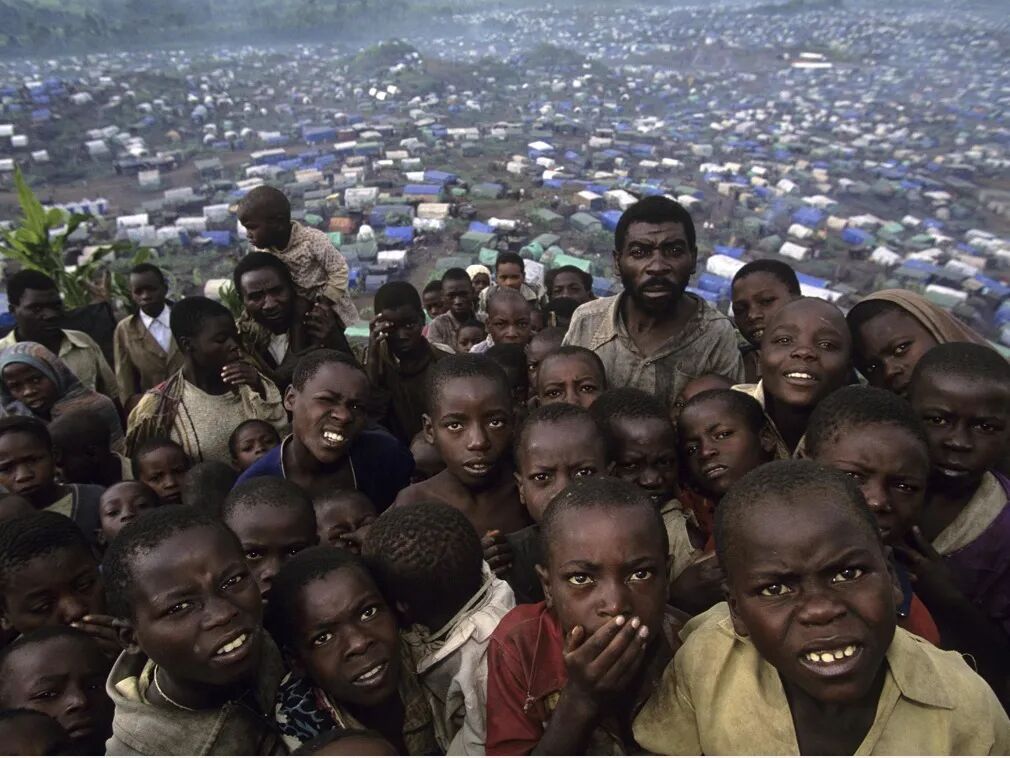
The Rwandan genocide caused the deaths of some 800,000 to 1 million people; a quarter of children were orphaned, and a third of households lost their male head.
Eighty years ago, the aggression and massacre carried out by Japanese militarism against the Chinese nation equally fits the precondition of totalitarianism that Arendt describes—namely, “the exclusion of the other from the human community”—a process that begins with systematic stigmatisation and de-personalisation propaganda. The systematic and planned nature of the Japanese invaders’ atrocities, and their wholesale deprivation of our compatriots’ forebears of “legal personality, moral personality, individuality”, is in essence also an extreme totalitarian practice of “reification”. All this confirms Arendt’s central warning: when modern technology (such as media propaganda, military organisation, and instruments of violence) is combined with a “de-humanising” ideology; when society abandons its hold on “humanity”; when power is no longer bound by morality and law—then any civilisation may slide into barbarism.
Likewise, the insulting epithets the Japanese invaders hurled at the Chinese nation, and Unit 731’s referring to our compatriots as “logs”, both confirm what Arendt meant when she said that “the danger of totalitarianism does not lie in the personal will of the dictator, but in a way of thinking that ‘reifies’ human beings—a mode of thought that may return in any age”. Arendt also reminds us: respect for and adherence to “humanity” is the last line of defence against violence and barbarism..

II. The “Banality of Evil”
If “The Origins of Totalitarianism” is an analysis of macro-historical structures, then “Eichmann in Jerusalem: A Report on the Banality of Evil”, published by Arendt in 1963, turns her thought toward the micro level of individual morality, proposing her most controversial and most profound concept—the “banality of evil”.
(I) Eichmann’s “Banality”: The Crime of Not Thinking
As a special correspondent for “The New Yorker”, Arendt observed first-hand the trial of the Nazi official Adolf Eichmann in Jerusalem. Eichmann was one of the principal executors of the Nazi “Final Solution”, responsible for shipping millions of Jews to the camps. Yet in Arendt’s observation, Eichmann was no fiendish devil but an utterly “banal” bureaucrat. His language was hackneyed, his thinking rigid; he repeatedly emphasised that he was merely “carrying out orders”, performing “the duties of a civil servant”. What he lacked was not intelligence but the capacity to “think”—the ability to see things from another’s standpoint and to make moral judgements.
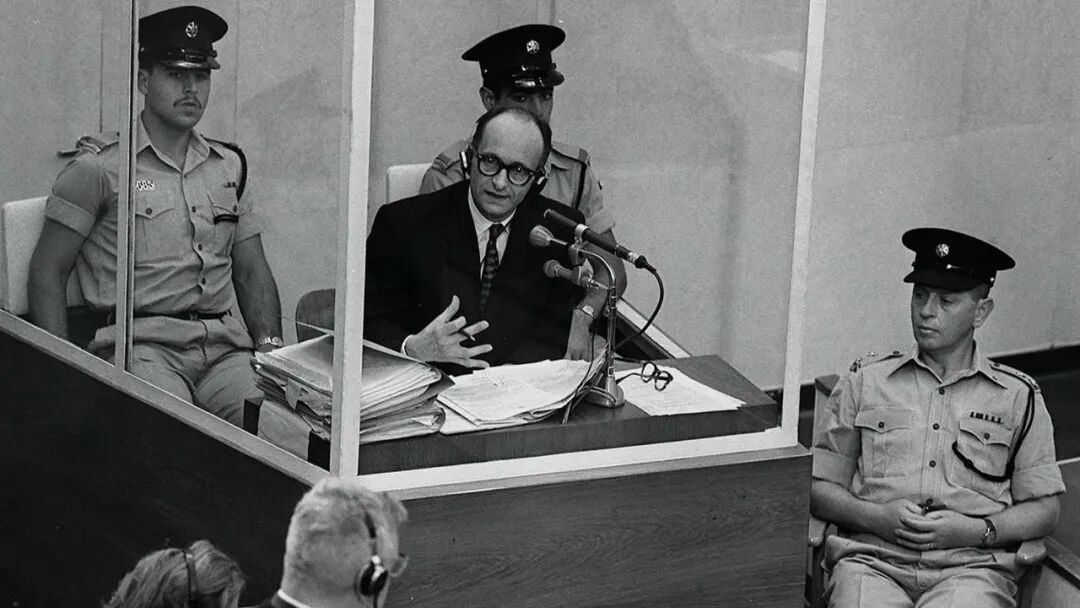
Arendt thus concluded that the monstrous crimes Eichmann committed sprang not from any profound evil intent or pathological psychology but from a sheer “inability to think”.
The “banality of evil” challenges the traditional notion that imagines “evil” as something radical, something demonic. Arendt argues that within the vast modern bureaucratic system, the most terrifying evil is committed precisely by those “ordinary people” who abandon thought, obey blindly, and regard themselves as a mere screw in a gigantic machine. Eichmann’s guilt lies in his complete surrender of the human capacity to judge, equating himself with a pure instrument of execution. Liu Qing, assessing Arendt, notes that her notion of the “banality of evil” is in truth a sharp interrogation of the problem of individual responsibility in modern society: “When an individual is integrated into a depersonalised system, does he still bear the moral obligation to refuse to do evil?”
This concept provoked fierce controversy, and many accused Arendt of exonerating Nazi war criminals. But Arendt’s aim was precisely the opposite: she sought to stress that even under enormous systemic pressure, the individual still bears an inescapable responsibility to think and to judge. Abandoning thought itself is already a moral culpability.
(II) The Bureaucratic System as a Hothouse of “Evil”
The emergence of the “banality of evil” cannot be separated from the soil in which it breeds—the modern bureaucratic system.
The sociologist Max Weber pointed out profoundly that bureaucracy is the most efficient form of organisation in modern society, characterised by clear hierarchy, depersonalisation, and rule-bound administration. Yet this efficient form of organisation harbours great danger. Within the bureaucratic system, responsibility is fragmented. Each person is responsible only for a single link in the whole process and cannot see the ultimate consequences of their actions. It is like a vast slaughterhouse assembly line: one person administers the electric shock, another the cutting, another the packaging; each merely completes their own “job”, and no one feels directly responsible for the eventual death.
This division and dilution of responsibility greatly weakens the individual’s moral sense and sense of guilt. Corporate scandals are often manifestations of the “banality of evil”.
Consider, for instance, the Volkswagen “emissions scandal” exposed in 2015. In order to meet sales targets and evade environmental regulations, Volkswagen engineers installed defeat devices in diesel engines so that they would display falsely low emissions during testing. The engineers involved were very likely not motivated by malice to pollute the environment or deceive consumers. Many of them probably merely thought they were solving a “technical problem”, carrying out their superiors’ orders, contributing to the company’s “collective honour” and market competitiveness. Within the company’s clearly hierarchical bureaucratic structure and its profit-maximising corporate culture, individual moral judgement was supplanted by technical considerations and organisational goals.
After the 2015 Volkswagen scandal broke, the US Congressman Collins rebutted many of the defences offered for “Volkswagen”, saying: “I utterly reject Volkswagen’s claim that this was the work of just a few ‘rogue engineers’. Either Volkswagen’s management was incompetent, or they were involved in a massive cover-up that continues to this day.” This remark is profoundly thought-provoking: the “groupthink” within large organisations and blind deference to authority become the crucial psychological mechanism leading to ethical disaster. Of a piece with the Volkswagen emissions scandal are the 2017 Mercedes-Benz emissions scandal, the 2021 Renault–Nissan emissions fraud, and others; Renault–Nissan was accused of installing “emissions-cheating devices” in vehicles as early as the 1990s. The harm wrought by this “banality of evil” that Arendt describes, under the modern bureaucratic system, is truly sobering.

Another classic psychological experiment is the “obedience experiment” conducted by Milgram in 1961. In the experiment, subjects were asked to play the role of “teacher”, administering progressively stronger electric shocks to a “student” (played by an actor) in the next room as punishment for wrong answers. Although the “student” would scream in pain, under the command of the authoritative experimenter most subjects would continue administering shocks, even up to lethal intensity. This experiment powerfully demonstrates how easily ordinary people, under pressure from authority, abandon their moral judgement and execute commands that harm others. It also furnishes the psychological foundation for Arendt’s “banality of evil”.
(III) Thinking: The Only Way to Resist the “Banality of Evil”
Faced with the threat of the “banality of evil”, Arendt’s prescription is “thinking”.
Here “thinking” does not mean abstruse philosophical speculation but a capacity for self-reflection that everyone should possess. It is a process of holding an inner dialogue with oneself. Before acting, we should pause and ask ourselves: if I were to do this, could I still live in peace with myself as the one who acted?
Arendt holds that thinking acts like a “fresh breeze”, dispelling the accepted clichés and rigid dogmas so that we may see things as they truly are. A person capable of thought, even if unable to construct a perfect moral code, can at least recognise absolute “evil” at the critical moment and say “no” to it. This refusal is itself an important political act. In Nazi Germany, those ordinary Germans who risked their lives to hide Jews may not have been philosophers, but they possessed this basic capacity for judgement; they could not persuade themselves to participate in collective guilt. Just as Denmark, during the Second World War, through nationwide non-violent resistance, succeeded in rescuing the vast majority of its Jews—this historical episode vividly illustrates how collective conscience and civic courage can resist institutional evil.
In the Chinese context, reflecting on the “banality of evil” is likewise of profound practical significance. Amidst rapid social change and formidable capacities for organisational mobilisation, the individual is easily swept into some collective current and thus abandons independent thought and judgement. Some of the cyber-violence incidents of recent years are a “banality of evil” of the digital age. Countless netizens, without full knowledge of the facts, merely stirred by a label or a sentiment, conduct “human-flesh searches” and venomous attacks on those involved. Each participant may feel they are merely “upholding justice”, merely forwarding a message or posting a comment—yet innumerable tiny, seemingly harmless “evils” accumulate into a potentially devastating blow against an individual.
Here I cite five tragedies caused by internet-fuelled cyber-violence: Liu Xuezhou, a teenager searching for his birth family, was defamed and cyber-bullied with labels such as “scheming” and “self-promoting” after publicly airing his conflict with his biological parents, and took his own life by medication in 2022; Zheng Linghua, 24, who shared her postgraduate admission letter with pink-dyed hair, was rumoured to be in a “May–December relationship” and a “bar hostess”, and died of depression in 2023; Shao Xiaobei, a gynecology director in Henan, subjected to sustained cyber-bullying over three medical disputes, jumped to her death in 2025; Ms Lu, who shared a name with the “stationery-shop owner who drove a girl to her death”, was abused, sent funeral wreaths, and saw her shop close with her family implicated; and the influencer “Guan Guan”, long rumoured by black fans to be “selling fakes” and “self-promoting”, ingested pesticide and died during a livestream in 2023. All these cases arose from rumour, misunderstanding, or malicious attack, highlighting the devastating harm cyber-violence inflicts on life and livelihood.
In such circumstances, cultivating citizens’ capacity to think, encouraging independent judgement, and refusing blind conformity and “taking sides” becomes especially important. This requires our educational system not merely to inculcate knowledge but to attend to nurturing students’ ability to think independently and to judge morally, teaching them how, in complex social situations, to hold a dialogue with their own conscience.

In July 2022, after being recommended for postgraduate study at East China Normal University, Zheng took her admission letter to the hospital to share the good news with her 84-year-old grandfather, bedridden at the time. To her, her grandfather was the person who loved her most in the world, and becoming his pride had been one of her motivations for taking the postgraduate exam. She filmed photos and videos and posted them to social media as a keepsake; speaking of her reason for dyeing her hair pink, she said she hoped to appear bright and vivid in her graduation photo. She thought it was just an ordinary share—until the next day, when her private messages were “bombarded”. She was shocked to discover that her photos had been stolen and spread across various platforms. These images and videos brought her great distress and all manner of unspeakable comments. Some even attacked her ailing grandfather, and all because she had dyed her hair red. The content was vile beyond description. On 23 January 2023, Zheng died of depression, after having struggled with the illness for over half a year. (Information excerpted from the internet)
III. The Active Life: Rediscovering the Meaning of Human Existence
Having expounded on totalitarianism, Arendt turned to an inquiry into healthy political life. In “The Human Condition”, published in 1958, she constructs a profoundly insightful theoretical framework aimed at restoring the dignity of political action and resisting modern society’s erosion of the public sphere.
(I) Three Human Activities: Labour, Work, and Action
Arendt divides the human “active life” (vita activa) into three fundamental activities: labour, work, and action. This division is the key to understanding her political thought.
1. Labour
Labour corresponds to the biological life-process of the human being; its purpose is to sustain life and the reproduction of the species. It is a cyclical, never-ending process, like eating and sleeping. The product of labour is the consumer good, which, once produced, is immediately consumed and leaves no durable trace upon the world.
In ancient Greece, labour was seen as a form of servitude, for it subjected man to natural necessity and was therefore excluded from the public sphere and confined to the household as the private realm. Arendt argues that one great danger of modern society is the triumph of the “animal labourans”. The whole society is organised into a gigantic cycle of production and consumption, with the pursuit of economic growth and material satisfaction becoming the highest goal, thereby marginalising those activities that are truly characteristic of the human.
2. Work
Work, by contrast, differs from labour: it is a creative activity whose products are durable artefacts that together constitute the “world” of our living. From tables and chairs, houses, to works of art and legal institutions, all are products of work. The character of work lies in its having a definite beginning and end, following the logic of instrumental reason—attaining an end through means. Work provides human life with stability and objectivity, creating a human home set against the shifting flux of nature.
The “maker” is the archetypal figure of the worker. Yet Arendt also warns of the limitations of the “maker’s” mentality. If the whole society is organised on the principles of utilitarianism and efficiency above all, then everything—including the human being itself—may be regarded as a means to some end, leading to the reification of the person.
3. Action
Action is the highest and most central human activity in Arendt’s thought. It is the only activity that occurs directly between human beings without the mediation of matter. It unfolds through speech and deed, manifesting one’s uniqueness and distinctness in the public sphere.
Arendt emphasises that action is the expression of the human “plurality”—that “men, and not Man, live on the earth and inhabit the world.” The essence of action lies in “beginning”: each person, as a unique newborn, has the capacity to begin something unprecedented, thereby breaking existing routines and automated processes. Action is thus the highest expression of freedom.
Action has two important characteristics: unpredictability and irreversibility. Because action occurs within a network of relations composed of plural subjects, any single action may set off a chain reaction whose ultimate outcome the agent cannot foresee or control. At the same time, once an action has occurred, it cannot be undone.
To meet these two difficulties, Arendt proposes two remedial faculties: forgiving and promising. Forgiveness releases us from the irretrievable injuries of the past, allowing a new beginning; promising, by establishing reliable “islands” within an uncertain future, makes possible the endurance of the political community. The signing of the American Declaration of Independence, for example, is a typical political action: a group of people, through shared speech and promise, inaugurated a wholly new political entity whose later development (the Civil War, the civil-rights movement) the original signers could not fully foresee—yet this “beginning” itself defined the fundamental principles of American politics.

Arendt’s distinction among the three activities is tightly bound up with her strict division between the public and the private spheres.
1. The Disappearance of the Public Sphere
In Arendt’s view, a healthy political community must preserve a vibrant public sphere. This is a space where citizens, freed from the interests and necessities of private life, meet as equal “actors of word and deed” to deliberate and decide on the affairs of the polity. In the ancient Greek city-state, the public sphere was a realm of freedom in which citizens pursued immortal glory by displaying exemplary words and deeds. Yet Arendt observes that, from the Roman Empire onward and especially in modern times, “the real public sphere is steadily shrinking”.
An important cause of the public sphere’s decline is the rise of the “social realm”. By the “social realm” is meant that the household’s economic management, originally part of the private sphere, was magnified to the level of the whole state and became the “national economy”. The state is no longer seen as the stage for citizens’ action but as a gigantic “household”, whose primary task becomes managing the life-process of its members and securing their welfare and safety. The rise of this “society” blurs the boundary between public and private. On the one hand, economic needs and personal emotions that belonged to the private sphere are drawn into public discussion, turning political debate into a contest of interests and an outlet for emotion; on the other, public power continuously penetrates private life, disciplining and managing it. In this regard, the concept of “biopolitics” proposed by the philosopher Foucault—the phenomenon whereby modern state power finely manages the life-process of populations (birth, death, health, reproduction, and so on)—coincides with Arendt’s analysis.
2. The Crisis of Public Space in Modern Society
In today’s society, Arendt’s diagnosis of the crisis of the public sphere appears especially urgent. On the one hand, consumerist culture holds sway, and people’s attention is generally drawn to the satisfaction of private life—the pursuit of material wealth, the enjoyment of entertainment, concern for personal health and appearance. Public affairs are deemed remote and unrelated to oneself, and citizens become passive consumers. On the other hand, although the rise of the internet and social media has seemingly created an unprecedented “public” platform for communication, its actual impact on the public sphere is deeply paradoxical.
Social media has, to a degree, facilitated the spread of information and the mobilisation of citizens. Yet it has also brought new problems. Algorithmic recommendation mechanisms create “information cocoons” and an “echo-chamber effect”, making people increasingly willing only to encounter voices that accord with their own views, exacerbating the extremism and antagonism of social groups. Public discussion is often dominated by emotive expression and personal attack, and rational deliberation becomes extraordinarily difficult—as one can see from today’s increasingly addictive short-video recommendation mechanisms. Moreover, personal privacy is massively commercialised and monitored in cyberspace, further blurring the boundary between public and private. As the philosopher Byung-Chul Han observes, the mode of power’s operation in the digital age is no longer simple repression but a more refined control achieved by inducing users to “surrender” their data and attention voluntarily.
In today’s China, the building of the public sphere likewise faces challenges. With the deepening development of the market economy, economic rationality and consumer logic have, to a great extent, shaped society’s value orientation. At the same time, how to construct a space for public discussion that can both accommodate plural voices and form rational consensus is an important question requiring continuous exploration in the modernisation of social governance. From the democratic consultation of residents’ committees to the building of online platforms for deliberative politics, and on to the rise of various public-welfare organisations and volunteer groups, all are worthwhile attempts to cultivate the public spirit and expand public participation. Revisiting Arendt’s emphasis on the public sphere helps us recognise that a healthy society requires not only an efficient economy and orderly social management but, more importantly, an open space in which citizens can participate in public affairs freely and as equals.

IV. Though Arendt’s Diagnosis of the Modern World Is Steeped in a Sense of Crisis
Though Arendt’s diagnosis of the modern world is steeped in a sense of crisis, she is no pessimist. Deep within her thought there flows a constant faith in the human capacity to “begin”, a faith concentrated in her reflections on “revolution”.
(I) Redefining Revolution: The Founding of Freedom
In “On Revolution”, published in 1963, Arendt compares the American and the French Revolutions and proposes her own distinctive theory of revolution. In her view, the true aim of modern revolution should not be to solve “social problems” (such as poverty and injustice) but to achieve the “founding of freedom”—that is, to establish a political space that guarantees citizens’ continuous participation in public affairs.
1. The “Forgetting” of the American Revolution
Arendt rates the American Revolution highly, holding it the only revolution in history to have successfully achieved the aim of “founding freedom”. The American founders were deeply influenced by classical republican thought; the “happiness” they pursued was not the satisfaction of private interest but what Thomas Jefferson called “public happiness”—the joy of participating in public life and jointly shaping the political community. The fruit of the American Revolution, the US Constitution, is not merely a document limiting government power; more importantly, it created an entirely new and durable structure of power: a political stage upon which “action” could occur.
Yet Arendt also notes with regret that the spirit of the American Revolution was gradually forgotten in later history. People came to understand “freedom” more as the negative liberty of being free from government interference, forgetting the positive liberty of participating in politics.
2. The “Tragedy” of the French Revolution
By contrast, Arendt regards the French Revolution as a tragedy.
The revolution’s leaders initially cherished the ideal of founding a free republic, but they were soon submerged by the swelling “social question”. Confronted with the poverty and suffering of the masses, the revolution’s aim shifted from “founding freedom” to “liberating necessity”. Pity replaced solidarity and became the revolution’s chief driving force. To solve the problem of poverty, the revolutionaries resorted to absolute, unrestrained violence—the Jacobin Reign of Terror—seeking to remake society through a unified “general will”, and in the end destroyed the very freedom the revolution had set out to pursue. Arendt holds that when politics is used to solve problems that essentially belong to the economic and vital spheres, it inevitably slides into violence and despotism.
This claim is highly controversial and is often misread as Arendt’s indifference to social justice. In fact, Arendt does not hold that poverty is unimportant; rather, she stresses the autonomy of the political sphere. She believes that attempting to solve, once and for all, through political means, the problem of necessity in human existence is a dangerous utopian fantasy that will in the end only destroy politics itself. Social and economic problems should be handled through technical, managerial, and other de-politicised means, while the distinctive task of politics is to sustain a common human world in which freedom becomes possible.
(II) The Council System: The Lost Treasure of Revolution
Amidst the passion and chaos of revolution, Arendt discovered a lost form of political organisation, the “council system”. From the Paris Commune of the French Revolution, to the Paris Commune of 1871, on to the Russian soviets of 1905 and 1917, and the Hungarian Revolution of 1956, this kind of grassroots organ of power, spontaneously organised by the people, recurs throughout history. Within the council system, people can participate directly in the process of decision-making, as on the ancient Greek agora, and experience the joy of being political actors.
Arendt regards the council system as the “lost treasure of revolution”, believing it offers a possible alternative to modern representative democracy and party politics. In her view, modern party politics has degenerated into a bureaucratised contest among interest groups; ordinary citizens are reduced to voters who periodically cast a ballot and are excluded from the political process for most of the time. The council system, by contrast, might construct a federal republic in which power arises from below, giving every citizen the chance to participate in speech and action within some level of the public sphere. This is an insight into “grassroots democracy”.
Today, Arendt’s esteem for the council system inspires us to explore more diverse modes of civic participation. The practice of “deliberative democracy” that has emerged in recent years around the globe—citizens’ assemblies, participatory budgeting, and the like—embodies this spirit. Through random selection and similar means, ordinary citizens are invited to engage in the in-depth discussion and decision-making of specific public policies (such as climate change and urban planning). Ireland, for example, in recent years used citizens’ assemblies to advance successfully referenda on same-sex marriage and abortion legislation, regarded as a successful case of deliberative democracy. These practices attempt, within the vast and complex modern society, to reopen small-scale, rational spaces of public deliberation where citizens’ voices can more directly shape public decisions.
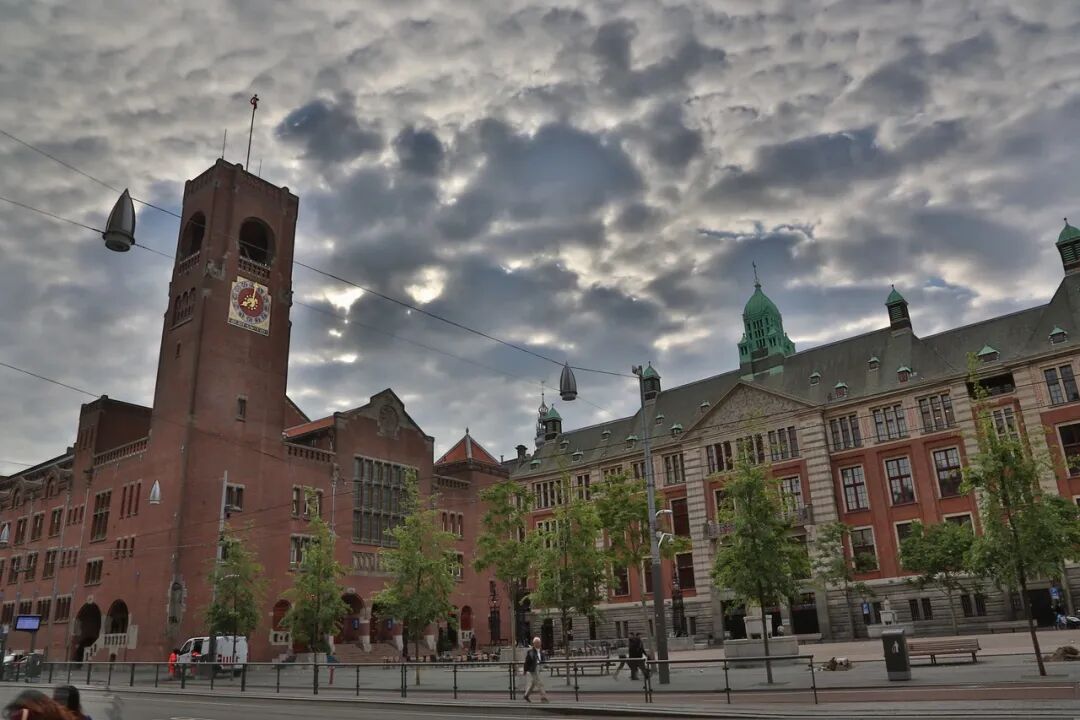
Running through all of Arendt’s thought is a profound sentiment of “love of the world” (amor mundi)—a cherishing of, and sense of responsibility toward, the plural, coexisting world that human beings have jointly created.
In her view, the essence of politics is to care for and preserve this world we jointly inhabit. This “love” is not a sentimental emotion but a resolve to face reality and assume responsibility.
In her later years Arendt turned her thinking toward the “life of the mind”, seeking to lay philosophical foundations for the three mental faculties of “thinking”, “willing”, and “judging”. She holds that “judging” is the bridge linking thinking and action—the capacity to make apt judgements about concrete, particular things in the absence of universal rules. This judgement is rooted in our common sense and “community sense” (sensus communis)—the ability to see the world from the standpoint of others. Only a person possessed of judgement can, in complex political situations, act responsibly, thereby preserving and renewing our common world.
In an age as fraught with uncertainty as ours, global challenges such as climate change, the nuclear threat, tariff wars, and the ethics of artificial intelligence all demand of us a “love of the world” that transcends national borders and ideology. These problems cannot be solved by any single nation or organisation; they require the joint action and commitment of all humanity. As Aldo Leopold, the environmental scientist called the “father of ecological ethics”, advocated through his “land ethic”, we should extend the bounds of the ethical community from humanity to the entire ecosystem, and treat our common home with a responsible and reverent attitude. This accords closely with the spirit of Arendt’s “love of the world”.

On the fiftieth anniversary of Hannah Arendt’s death, re-reading her essays, we feel not only the profundity of her thought but a powerful relevance to the present. Like a solitary sentinel, she stood upon the ruins of the twentieth century and pointed out for us the dark abyss to which modernity might lead, while guarding for us the faint light of human freedom and dignity.
For China in 2026 and beyond, Arendt’s intellectual legacy offers a vitally important mirror.
First, her analysis of the origins of totalitarianism warns us that we must remain vigilant against any ideology that seeks to simplify complex social problems or to “other” particular groups of people. In the course of pursuing national modernisation and social development, how to safeguard individual uniqueness and social plurality, and to prevent the ossification of the bureaucratic system and its erosion of personal space, remains a question requiring constant reflection. In this regard we have our own hard-won experience: from the pioneering trials of the Shenzhen Special Economic Zone to the continuous renewal of the “Fengqiao experience” in grassroots social governance, all embody, beneath the grand narrative, a respect for and an exploration of concrete situations and plural agents. It is precisely for this reason that Arendt’s thought appears ever more precious, its fragrance lasting through the ages.
Second, the concept of the “banality of evil” demands that every member of society, whatever their post, must shoulder the responsibility of independent thinking and moral judgement. In an increasingly fine-grained division of labour and an ever more organised social life, it is far from enough merely to be an “obedient good employee” or a “rule-abiding cog”. We need to cultivate a civic culture that combines personal responsibility with public concern.
Third, her cherishing of the “public sphere” reminds us that economic development and material abundance are not the whole of social well-being. Building a vibrant, rational public sphere in which citizens can effectively participate in the discussion and decision of public affairs is the fundamental guarantee of social stability and the enhancement of popular happiness.
Finally, Arendt’s faith in “action” and “beginning” gives us the courage and hope to face the challenges of the future. She tells us that history is not determined by irresistible laws of necessity, and that the future is always open. Every newborn person harbours the potential to inaugurate a new state of affairs. So long as we dare to think, to speak, to act, and to join with others in taking responsibility for the world we “love”, then even in a “dark time” there is always the possibility of working a miracle.

Fifty years ago, Hannah Arendt ceased her thinking; but fifty years on, her thought, with unprecedented force, invites us to begin thinking anew. Perhaps this is the finest commemoration of that great thinker…
订阅艺术评论
订阅即赠《2024中国当代艺术关键词》内部思考笔记 PDF
每周免费获取最新当代艺术批评与研究