Behind the prosperity of Chinese contemporary art, a tendency toward ‘pseudo-contemporary’ creation grows ever more visible. Such works often possess only the formal features of contemporary art — appropriation, collage, conceptualisation, symbolisation — yet lack genuine scholarly depth, social concern and sincere, individualised expression. They are more the product of capital’s operations, market preference and cultural speculation working in concert: a carefully designed shortcut to acquiring the label of ‘contemporary’ at minimal cost.
This essay focuses on the common patterns of such ‘pseudo-contemporary art’ — specifically those works driven by commercial taste, lacking any genuine avant-garde spirit, and merely chasing fashion in appearance. The works produced by these formulas are a double fraud of ‘semantic robbery’: they steal the name of ‘art’ and the value of ‘contemporaneity’ alike, yet cannot enter into an effective dialogue with contemporary society. By dissecting these creative routines, this essay hopes to pierce the surface of form and examine the scholarly laxity and speculative mentality prevalent in China’s contemporary art world today.
Symbols and Concepts
The core of these routines lies in the abuse, appropriation or superficial handling of various symbols (political, traditional, consumer) and philosophical concepts, so as to manufacture the illusion of ‘profundity’ or ‘critique’.
1. Reheating Red Leftovers: The Endless Replication of ‘Political Pop’
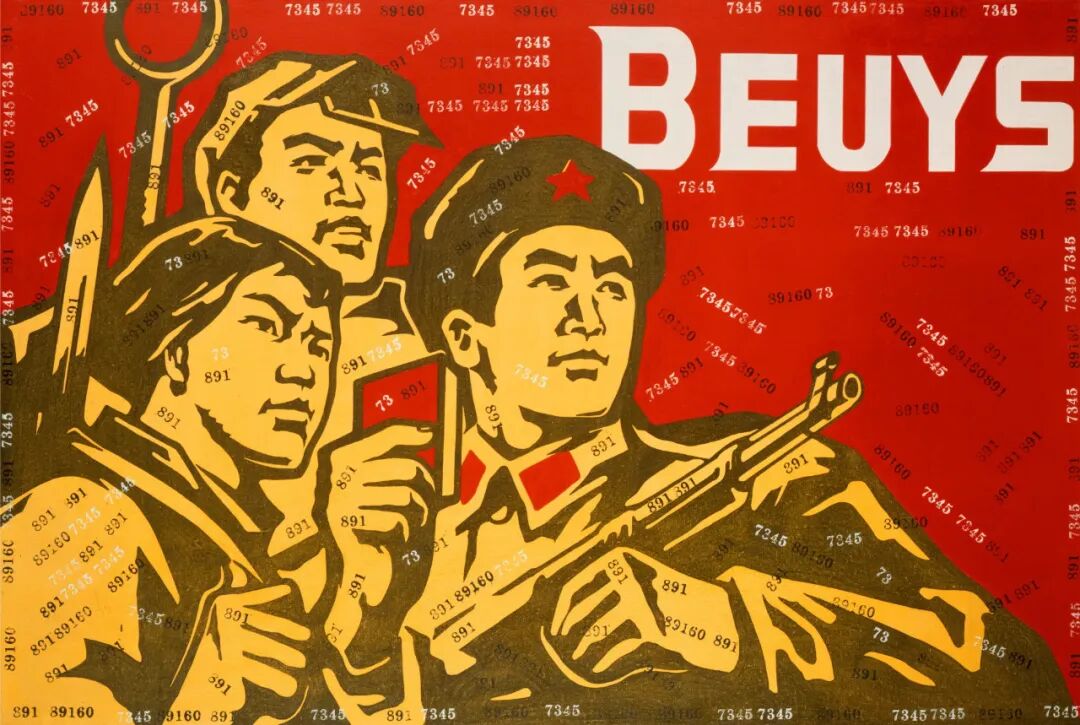
This is a rather old routine: a mode of creation that simply juxtaposes the political imagery of the revolutionary period (workers, peasants and soldiers, leader portraits, propaganda posters) with contemporary consumer symbols (Coca-Cola, luxury-brand logos). In its early stage this method was subversive and critical, but over the past fifteen years it has evolved into a highly recognisable, easily replicated visual recipe much favoured by the Western market.
It reduces complex historical and political issues to a flattened visual spectacle; its criticality has long been diluted through endless repetition, degenerating into a decorative, present-absent nostalgic spectacle. The artist ceases to genuinely intervene in present reality and instead consumes history safely and commercially.
It reduces complex historical and political issues to a flattened visual spectacle; its criticality has long been diluted through endless repetition, degenerating into a decorative, present-absent nostalgic spectacle. The artist ceases to genuinely intervene in present reality and instead consumes history safely and commercially.
2. Living Off the Ancestors’ Dividends: The Cheap Translation of Traditional Elements
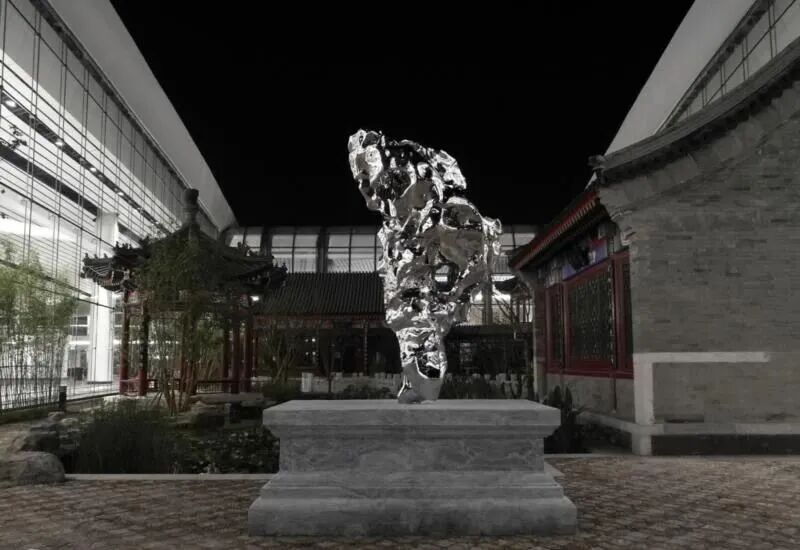
The superficial contemporary conversion of traditional Chinese cultural elements (ink painting, calligraphy, blue-and-white porcelain, Taihu stones, dragon-and-phoenix totems). For instance, making rockery stones from stainless steel, writing fake calligraphy in acrylic, or repainting ancient landscape paintings in gaudy fluorescent colours.
This kind of creation avoids the difficult labour of deeply studying the spiritual core of traditional culture and carrying out its contemporary transformation; it merely ‘borrows’ an empty shell of cultural identity. It caters to the spectacularised consumer demand for ‘Chineseness’ in a globalised context, yet the works themselves are often unrelated to the traditional spirit — a cultural opportunism.
This technique appears in the work of many artists. Zhan Wang’s *Artificial Rock* series, for instance, was original, yet the flood of later imitations turned the combination of modern materials such as stainless steel with traditional forms into a cheap formula. Countless artists began making Taihu stones, bonsai or guqin from stainless steel, plastic, glass, even electronic waste. This simple opposition of materials (traditional form versus modern material) was at first critical, but after being repeated ten thousand times it became craft-production devoid of intellectual tension. Qiu Zhijie called it ‘soft material made into hard objects, hard material made into soft objects’.
Xu Bing’s *Book from the Sky* and *Square Word Calligraphy* inspired countless followers, but many imitators learned only the form of ‘inventing characters’ without his profound reflection on language, culture and power.
Another example: to pander to the West’s shallow imaginings of a ‘rising China’ or ‘Oriental mysticism’, some artists make heavy use of typical national symbols such as pandas, dragons and the Great Wall. In their works these symbols often generate no new meaning and appear merely as identity labels. Such creation is an active ‘self-otherization’: like selling local specialities, the artist peddles the most stereotypical image of China to the international art world.
3. ‘Kawaii’-fied Violence and Pornography
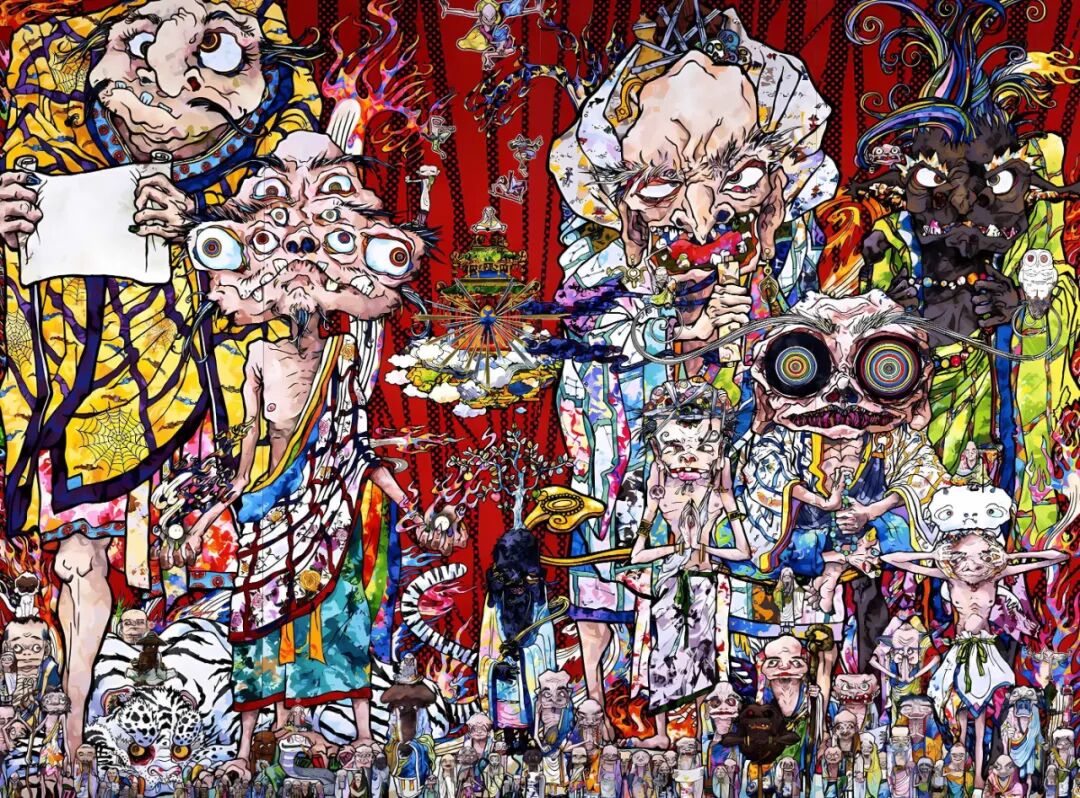
Under the influence of Japanese contemporary art (Takashi Murakami, Yoshitomo Nara, among others), a style that cartoonifies and infantilises themes of violence, pornography and cruelty has become widespread in China. A big-eyed girl holds a blood-dripping knife; beneath pastel colours lurk dark metaphors. This ‘cuteness-contrast’ was rapidly co-opted by commerce into a popular commodity that is both safe and a little rebellious, losing the force contemporary art ought to have. They typically wrap themes of violence, blood, pornography or cruelty in a cartoonish, cute, saccharine visual style. The pictures are brightly coloured and the figures tend toward the infantile, yet their content points to the dark world of adults.
Setting aside its origins, the long-popular big-head cynical realism later developed into this ‘cuteness-contrast’. At first appearance this contrast possessed a certain subversiveness, but it quickly became a strategy for grabbing attention and lowering critical risk. It gamifies and entertains serious social or human questions without limit, blindly dissolving their due weight and depth, ultimately degenerating into a visual consumer good that is both safe and stimulating. The cartoon-style paintings of some younger-generation artists show this tendency. The figures in their works are adorable yet juxtaposed with guns, blood and the like; once this device is divorced from concrete conceptual support, it easily becomes a shallow stylistic routine.
4. Appropriating Social-Media Memes
The rapid direct conversion of elements such as internet catchphrases, memes and viral social events into paintings, installations or video works. The creative cycle is short, the work rides the trend closely, and it has strong topicality.
This is art’s direct capitulation to ‘traffic’. The works themselves lack an independent artistic language and deep thought, serving merely as ‘second-hand passers-on’ of internet culture. Their value is attached to the hot topic itself; once the heat fades, the work’s meaning evaporates with it. This is an artistic speculation of the ‘short, flat, fast’ kind. In many exhibitions one frequently sees works titled after internet catchphrases or directly depicting internet images, but most remain at the level of illustrating the news, with no real thought or inquiry.
5. When the Art Falls Short, Philosophy Fills the Gap
In their wall texts and curatorial prefaces, artists frenziedly cite the abstruse concepts of Western postmodern philosophers such as Foucault, Deleuze, Baudrillard and Lacan. The prose is obscure and the logic is utter nonsense, yet the works themselves are disconnected from the theory or hardly tenable, having nothing to do with these grand theories. The text becomes a fig-leaf covering the paleness of the work, manufacturing a false academic threshold.
The text becomes a fig-leaf covering the hollowness of the work. The artist tries to ‘transplant’ philosophical concepts to forcibly empower the work, fabricating an ‘academic threshold’ so that viewers mistake ‘incomprehensibility’ for ‘profundity’. This reflects both intellectual laziness in creation and theoretical opportunism; the phenomenon is pervasive in the curatorial prefaces and wall texts of many concept-art exhibitions and has become an ‘incurable disease’ of the exhibition world.
6. Copying ‘Zen’ and ‘Minimalism’ by Rote
Imitating Japanese aesthetics or Western minimalism, artists produce works of blank space, natural materials and simple form, then label them with tags such as ‘Eastern Zen’, ’emptiness’ or ‘stillness’.
Genuine minimalism and Zen aesthetics are sustained by rigorous philosophical and spiritual systems, whereas such works often have only the surface, not the substance. They equate ‘few’ with ‘simple’ and ’empty’ with ‘blank’; the works lack spiritual depth and formal refinement, ultimately becoming ‘high-end’ decorative objects of petit-bourgeois sentiment. In some galleries and art fairs one commonly sees paintings of only a few lines, a couple of ink dots or a flat monochrome, paired with titles full of ‘Zen’, yet the pictures themselves lack inner spiritual tension and any orientation toward scholarly experiment.
Form and Medium
These routines emphasise visual spectacularisation, technical display and the constant replication of successful models, while neglecting the integration of form and content, technique and concept.
7. Flaunting Technical Material
An obsession with using novel, expensive or challenging materials (biological materials, high-tech synthetics, luxury-goods waste) for creation, where the choice of material has no necessary connection to the work’s core concept and serves merely to create a sensation.
Material in contemporary art should be the bearer of concept, yet here the material itself becomes the end. This approach reflects the artist’s poverty at the conceptual level, attempting to compensate for the absence of thought with the scarcity or novelty of matter.
8. The Worship of Scale: ‘Bigger Is Better’
A blind pursuit of gigantic dimensions, on the assumption that the larger the canvas or the bulkier the installation, the stronger the work’s ‘epic feel’ and ‘importance’.
A work’s value lies in the density of its spiritual energy, not its physical volume. Giant works can indeed generate visual impact in a museum space, but if the content is hollow, their enormous size only further exposes their inner weakness. This is the speculative act of substituting physical scale for artistic scale, and it caters especially to museums’ and commercial spaces’ demand for ‘museum-piece’ works.
9. Self-Plagiarism of Personal Symbols
The artist accidentally or deliberately creates a successful visual symbol early on (a certain figure, animal or shape), then repeats, copies and marginally tweaks it for decades thereafter.
This is the extreme expression of ‘branding’ artistic creation. The artist is no longer an explorer but a production-line worker for his own brand. Though this guarantees market recognisability and stability, it is unquestionably commercial shrewdness and artistic indolence.
12. The Cheap ‘Healing’ Aesthetic
Creating works of soft colour, cute imagery and gentle themes, usually starring adorable pets, plants or clouds, aimed at providing a relaxed, pleasurable, pressure-free viewing experience.
One of contemporary art’s core functions is to raise questions and provoke thought. Yet this ‘healing’ art abandons that function entirely, degenerating into a sophisticated psychological massage or a piece of home décor. It caters to the pervasive anxiety and escapist mentality of present society — a commercial strategy of actively relinquishing critical edge.
In the art-consumption market such works are all the rage. Many paintings and sculptures depicting plump, wide-eyed little animals, for instance, serve mainly to provide emotional comfort rather than artistic revelation.
Catering to Identity
These routines take market return and the catering to the ‘China imaginary’ of specific collector groups (Western collectors especially) as their primary goal; artistic creation degenerates into a cultural strategy and a commercial investment.
13. The Clumsy Echoes of Western Masters
Openly ‘paying homage to’ or ‘appropriating’ the style, composition or subject of Western modern or contemporary masters (Picasso, Bacon, Richter, Hockney), yet with excessively visible mimicry — direct appropriation, translation or even pixelation, almost without transformation or personal thought.
Study and borrowing are normal in art history, but this practice is not sincere dialogue but a ‘shortcut’. It tries, by clinging to the masters, to gild its own works and rapidly acquire legitimacy within art history.
14. The Performance of ‘Deep-Suffering’ Collective Memory
Pictures of gloomy tone in which the figures wear expressions of pain and numbness, used to perform a posture of grand historical reflection.
This mode of creation had important historical value in its early phase, but later it gradually evolved into a performance catering to the West’s imagining of China’s ‘trauma narrative’. The artist consumes the nation’s suffering, converting it into a saleable, exotic ‘scar aesthetics’, while turning a blind eye to the more complex and latent social problems of the present.
Zhang Xiaogang’s *Bloodline: Big Family* series opened an iconographic inquiry into ‘collective memory’, but its great success also spawned a host of formulaic imitators who reduced the personal experience of memory to a generic, sentimental visual sign.
15. The ‘Craft-Object’ Treatment
Works of supremely exquisite, fine craftsmanship with flawless technique, yet with stale or absent concepts. The work’s value lies mainly in its superb ‘handicraft’ and the time-cost expended.
This blurs the line between contemporary art and fine craft. It replaces ‘talent’ with ‘artisanry’ and uses the difficulty of making to conceal the poverty of thought. Such works are favoured by buyers chasing ‘collectible value’ and ‘preservation and appreciation’, because they offer a quantifiable, visible labour-value.
Some hyperrealist paintings, if they merely stop at the precise replication of reality or photographs without offering a new way of seeing or a conceptual dimension, may fall into this rut.
16. The Commercialisation of Art via Crossover Co-branding
Artists eagerly collaborate across boundaries with fashion brands, commercial real estate and consumer goods, printing their signature artistic symbols onto products or directly participating in commercial design.
The union of art and commerce is not itself forbidden territory, but when an artist’s main energy shifts from creation to commercial co-branding, the meaning of their artistic symbols is over-consumed and diluted. Art’s criticality and independence are annexed by commercial logic, and the artist is transformed from creator into ‘art-capitalist’ or brand ambassador.
Many established artists have launched co-branded goods; when such activity becomes the main part of their artistic practice, the seriousness of their creation is called into question.
17. ‘Exhibition-Friendly’ Installations
Creating installation works that are visually eye-catching, easy to photograph and suited to social-media dissemination. Such works are usually brightly coloured, novel in form and highly interactive — the typical setup of an ‘internet-famous exhibition’.
This is an art whose purpose is ‘checking in’. The core value of the work is no longer its artistic content but its potential as social currency to be disseminated. It degrades profound artistic experience into shallow entertainment consumption — art’s complete surrender to the entertainment industry. The various ‘immersive’ digital-art exhibitions that have sprung up in recent years are flooded with such works.
18. The Superficial Presentation of Ethnic/Regional Identity
Simply placing the distinctive symbols of one’s own ethnicity or region (costumes, totems, scenes of daily life) onto canvas or into installations, as a label of art’s ‘uniqueness’.
This is an identity-politics speculation. The artist does not deeply excavate the complex predicaments and inner contradictions that the culture faces in the course of modernisation, but merely displays and sells it as exotic flavour. It resembles the ‘cheap translation of traditional elements’ but places more weight on the exploitation of identity labels. Some paintings depicting the life of borderland ethnic minorities, if they stay merely at a curious display of exotic flavour without deep insight into actual circumstances, are open to this charge.
The Emptiness of Narrative
These routines manifest as a kind of ‘posture-first’ creation: the artist strikes a pose of critique, intervention and reflection, yet the work is ineffective and hollow in both action and thought.
19. Pseudo Social Intervention
The artist claims their work ‘intervenes’ in some social issue (environmental protection, demolition, labour), yet the mode of ‘intervention’ is merely to go on site, take a few photographs, record some video, gather some waste material and make it into an installation — without exerting any substantive influence on the event itself or offering a deeply observant perspective.
This is the instrumentalisation and aestheticisation of social issues. The artist’s posture of ‘intervention’ outweighs actual action; the social site is reduced to a ‘material library’ and a moral high ground for their creation. This safe ‘critique’ cannot truly move reality and may instead consume the seriousness of the issue itself.
20. The Mystification of Abstract Language
Creating abstract paintings with no formal logic, colour relationships or spiritual content, and explaining them with equivocal terms such as ‘ineffable’, ‘pure spirituality’ or ‘cosmic energy’.
Abstract art has its own rigorous language-system and developmental lineage. This pseudo-abstraction, however, uses ‘abstraction’ as a name to practise ‘random scribbling’. It exploits the public’s general estrangement from abstract art, packaging a lack of painterly ability as a profound philosophical posture. Some critics even consider certain ‘Sinicised’ abstract paintings to be ‘anti-modern’.
On the art market there exist many ‘lyrical abstract’ works that imitate the styles of Zao Wou-Ki and Chu Teh-Chun yet lack their spiritual resonance and pictorial structure; they are often saccharine in colour and slick in brushwork — typical decorative pseudo-abstraction.
21. The Mechanical Borrowing of Interdisciplinarity
Claiming that one’s creation combines sociology, anthropology, physics, biology and other disciplines, yet in the work merely borrowing a few scientific terms or diagrams without truly understanding or transforming the inner thought and methodology of those disciplines.
Interdisciplinarity is an important trend in contemporary art, but it demands of the artist a very high capacity for learning and synthesis. This pseudo-crossover merely ‘uses a tiger’s skin to banner its flag’ — adorning the façade of one’s art with the ‘profundity’ of other disciplines, a form of intellectual speculation. Some works, for example, may use visual elements such as brainwaves or gene maps, yet their exploration of this scientific content is shallower than a popular-science article.
22. The Tautology of ‘Critiquing Media within Media’
The artist uses one medium (painting, video) to ‘critique’ another (television, the internet), yet the mode of critique is extremely superficial — for instance, painting a phone-addicted ‘head-bowed’ figure, or editing together a few television-news clips.
This critique is tautological and offers no new insight. It merely points out a widely known phenomenon without deeply analysing the power structures, capital logic or psychological mechanisms behind it.
23. Condemning the Spectacle Within the Spectacle
The artist creates works of huge scale, gorgeous visuals and great expense, in order to ‘condemn’ the spectacularisation of consumer society.
This falls into the logic of the ‘spectacle’ described by Guy Debord. The artist tries to criticise the spectacle itself by manufacturing an even greater spectacle, which is logically self-dissolving. This critical posture is hypocritical and impotent, because the work itself becomes part of the very object it criticises and profits from it.
Some large-scale new-media installations use dazzling light-and-shadow effects to criticise urban light-pollution or consumerism, yet the works themselves become the ‘new spectacle’ that draws crowds to commercial urban spaces.
24. The Pictorial Trickery of Fable-Narrative and -ism-Narrative
Creating works with an obvious fable- or -ism flavour — for instance, using animals to allude to human society, or using one object to allude to women — where the allegory is too blunt and shallow, lacking polysemy and room for imagination.
A fine fable is open and complex. This pseudo-fable, by contrast, is a sermon: the artist presets a simple answer and translates it into images. It underestimates the public’s intelligence, deprives viewing of pleasure, and degenerates into a sophisticated ‘picture-reading’ — offering no breakthrough and proposing no new angle.
Conclusion
The twenty-four ‘pseudo-contemporary’ creative routines summarised above jointly reveal a core problem in Chinese contemporary art that warrants vigilance: the impoverishment of creative thought and the weakening of critical spirit. Under multiple pressures — the deep penetration of capital, the prevalence of market speculation, and the anxiety of identity under globalisation — much artistic creation has abandoned arduous and sincere individual exploration in favour of a ‘formulaic’ shortcut that seems efficient but is in truth hollow.
These routines not only render artworks homogenised and vulgar but fundamentally damage the scholarly character and long-term vitality of Chinese contemporary art. To emerge from this predicament requires not only that individual artists recover sincere exploration and critical courage, but also the cultivation of an independent, healthy art-critical ecology that dares to speak plainly, and the construction of a more mature system of collecting and patronage with a longer view.
The true value of art has never lain in whether it wears the guise of ‘contemporary’, but in whether it can, in a unique language, raise the genuine questions that truly belong to this age. To systematically expose these ‘pseudo-contemporary’ routines is precisely to call for the return of a long-absent artistic spirit — one fused of sincerity, thought and courage.
订阅艺术评论
订阅即赠《2024中国当代艺术关键词》内部思考笔记 PDF
每周免费获取最新当代艺术批评与研究