We stand at an unprecedented historical confluence.
At the start of 2026, looking back over the turbulent decades of Chinese contemporary art, we can clearly see that a coordinate system woven from four interlacing dimensions — tradition and contemporaneity, politics and market, society and the everyday, technology and medium — once profoundly shaped artists’ creation. Yet by now both the inner tensions and the external environment of this system have undergone fundamental change. The psychosocial reconfiguration of the post-pandemic era, the reversal and recomposition of globalisation, the exponential eruption of artificial intelligence and virtual-reality technologies, and the structural adjustment of the art market together constitute a novel and far more complex context. The old maps can no longer fully chart the future’s course, and yesterday’s successful paradigms may become tomorrow’s fetters.
This essay attempts to offer China’s contemporary artists in 2026 a framework for deep reflection and a compass for action oriented toward the future, focused on the deep logic that will determine art’s direction. Its purpose is not to supply a standard answer but to light a few possible lighthouses in the fog, helping artists build, amid the clamorous tides of the age, an internal, autonomous, forward-looking system of value-judgement, so that in the no-man’s-land of creation they may bravely open up their own route.
I. The Reconstruction of Identity: Establishing a Local Coordinate within Global Resonance
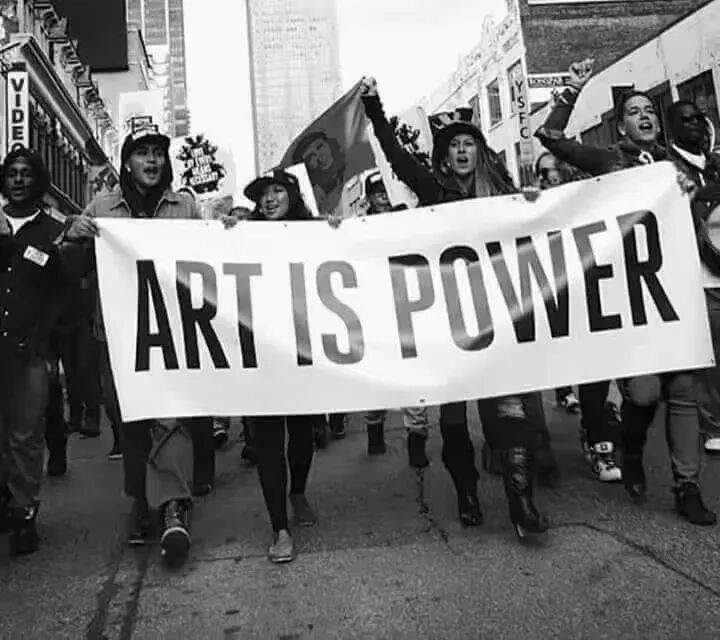
For a long time, the identity anxiety of Chinese contemporary art has hovered within the binary framework of ‘East and West’. In the heyday of globalisation this anxiety took the form of how to integrate into the international discourse-system; today, as globalisation meets resistance and a native consciousness re-emerges, the anxiety turns into how, amid the reshaping of the global cultural order, to redefine a ‘Chineseness’ that possesses both local depth and the capacity for worldwide dialogue.
Beyond the Superficial Appropriation of Cultural Symbols, Toward the Deep Excavation of Experience
Bidding Farewell to the Strategic Trap of ‘Self-Orientalising’
The recent course of contemporary art has shown that any attempt to essentialise or symbolise ‘Chineseness’ ends in the exhaustion of creation and the poverty of thought. Whether through the simple collage of traditional elements or the pandering to the West’s stereotyped imaginings of the East, this strategy of ‘self-Orientalising’ is essentially a cultural self-diminution and a market speculation.
Observing the art market over the past two years, global art trading is undergoing structural adjustment: the high-end market is shrinking, speculative frenzy has receded, and collectors’ attitudes grow ever more cautious and rational. This means that the creative model relying on exoticism and cultural spectacle is seeing its market lifespan rapidly shortened. In 2026 we need to recognise clearly that genuine cultural confidence comes not from pandering to external gazes but from a deep insight into, and sincere expression of, one’s own cultural roots and real circumstances.
Building a Local Narrative Based on Universal Issues
The way forward is to plant the roots of creation deep in the soil beneath our feet, starting from concrete, place-based, real individual life-experiences, to touch and explore those commonly human issues that can evoke global resonance — existence, memory, justice, ecological crisis, technological ethics. This is a deep practice of ‘glocalisation’. The artist’s work is no longer to show the world an abstract ‘China’, but through one concrete, minute narrative after another to reveal the unique visage and complex predicament of universal humanity as it appears within a specific socio-cultural texture.
This narrative capacity demands that the artist be both a keen place-based observer and a thinker with a broad philosophical horizon. The value of a work will no longer depend on whether it ‘looks very Chinese’, but on whether, from a unique local vantage, it can contribute an irreplaceable increment of thought to global conversation. This posture of ‘cultivating the local deeply while gazing at the starry sky’ will be the core path to establishing cultural subjectivity in the future.
II. The Revaluation of Value: Rebuilding Artistic Value Beyond the Institution and Capital
If the reconstruction of identity is self-positioning at the spiritual level, then the revaluation of value is the artist’s foundation for standing firm in the real world. Chinese contemporary artists long sought autonomy within the dual gravitational field of politics and market. Now the structure of this field is changing profoundly, offering both new possibilities and new challenges for artists to rebuild an independent coordinate-system of value.
(I) Awakening from the Dusk of the Market Myth
Reflections on Value in the Post-Bubble Era
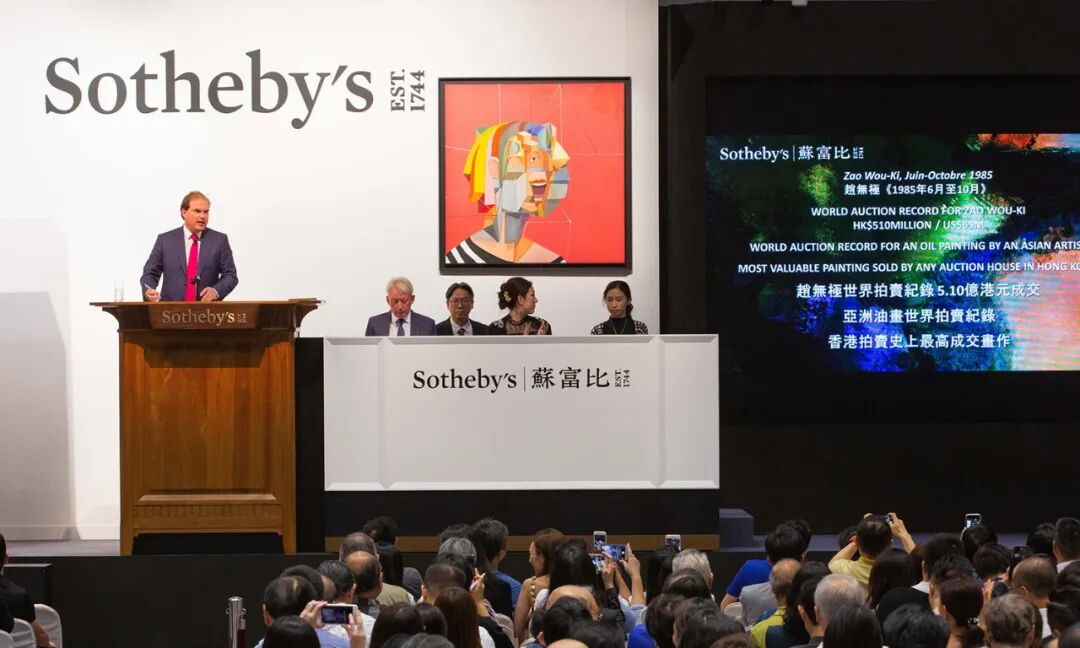
Art-market data from 2024 to 2025 clearly shows that the period of explosive growth previously experienced by the Chinese contemporary art market has ended, and the market has entered a calmer, more differentiated stage. Trading volumes of high-priced works have fallen, while the lower- and mid-priced segments show stronger resilience — behind this lies the generational shift of collectors and the pluralisation of aesthetic taste. For artists this trend is both an important warning and a precious opportunity. It warns us that the ‘successology’ which simply equates artistic value with hammer price has gone bankrupt. If artists continue to use market price as their sole creative compass, they will easily lose their way amid market fluctuations, fall into the ‘productive’ trap of endlessly repeating a successful style, and ultimately exhaust art’s vitality.
Establishing an Evaluation System That Transcends Commercial Logic
The true opportunity lies in this: the market’s cooling forces the entire ecosystem — artists, critics, curators, collectors — to reflect: what, in the end, is the value of art? Beyond price, by what yardstick should we measure a work? The depth of thought, the innovation of language, the degree of engagement with reality, the power to move the human soul — these intrinsic values long obscured by the market’s halo urgently await rediscovery and re-emphasis.
Individual artists need to take the initiative in building an internal, stable system of self-evaluation that transcends commercial logic. This means daring to undertake long-term experiments the market does not favour, daring to touch commercially ‘unsafe’ subjects, daring to hold fast to one’s artistic ideals in solitude — a steadfastness that, in the post-bubble era, will become the artist’s most precious quality.
The Potential of Decentralised Autonomous Organisations
At the same time, new technologies represented by blockchain and the DAO (Decentralised Autonomous Organisation) offer artists entirely new possibilities for escaping their over-dependence on the traditional gallery and auction-house system. Although the NFT market has gone through violent hype and correction, the technological logic behind it — using blockchain to provide digital assets with verifiable uniqueness and records of ownership — retains its revolutionary significance. More important still is the idea of the DAO, which offers artist communities a wholly new organisational framework of co-creation, co-building, co-governance and co-sharing.
Building an Autonomous Artistic Commune
In the context of 2026, artists can explore the establishment of blockchain-based autonomous artist organisations. In such an organisation, the initiation of art projects, the raising of funds, the judgement of works and the distribution of proceeds can all be decided by the democratic vote of community members, with a process that is open and transparent and records that cannot be tampered with. This not only lets artists regain control over their own works but, around shared artistic ideals, forms a cohesive, economically sustainable artistic commune. Admittedly, DAOs in China still face challenges such as unclear legal status and questionable governance efficacy, and their practice requires cautious exploration. Yet the future direction they represent — decentralisation and community autonomy — undoubtedly opens, for artists seeking a ‘third road’ beyond market and institution, a gate full of imagination.
III. The Turn of Practice: Intervening in the Fabric of the Everyday
Facing the decline of grand narrative and the structural adjustment of the market, the energy of art is shifting from manufacturing visual spectacle and expressing abstract concepts toward the more concrete social reality and daily life; art’s identity is thereby redefined as a critical practice of social intervention, everyday observation and interdisciplinary research.
(I) Discovering the Poetic and the Political in Micro-Narratives
Attending to the Post-Pandemic Social Psyche
The post-pandemic era has profoundly altered China’s social-psychological structure; a pervasive anxiety, uncertainty and longing for interpersonal connection have become the important spiritual ground-tone of our age. One of art’s most important functions at this moment is to become the sensor, the reflector and the healer of this collective emotion.
Future artistic creation needs a depth that turns inward, keenly capturing and presenting these subtle yet pervasive psychological states. This means turning from grand historical and political narratives toward the fine depiction of micro, everyday, individual life-experiences. A seemingly trivial everyday object, a forgotten family memory, the transformation of a community space — each may contain a poetic and political charge deeper than any abstract concept. By gazing upon these ‘neglected things’, art rebuilds an organic bond with the public based on emotional resonance.
Art as a Medium of Social Healing
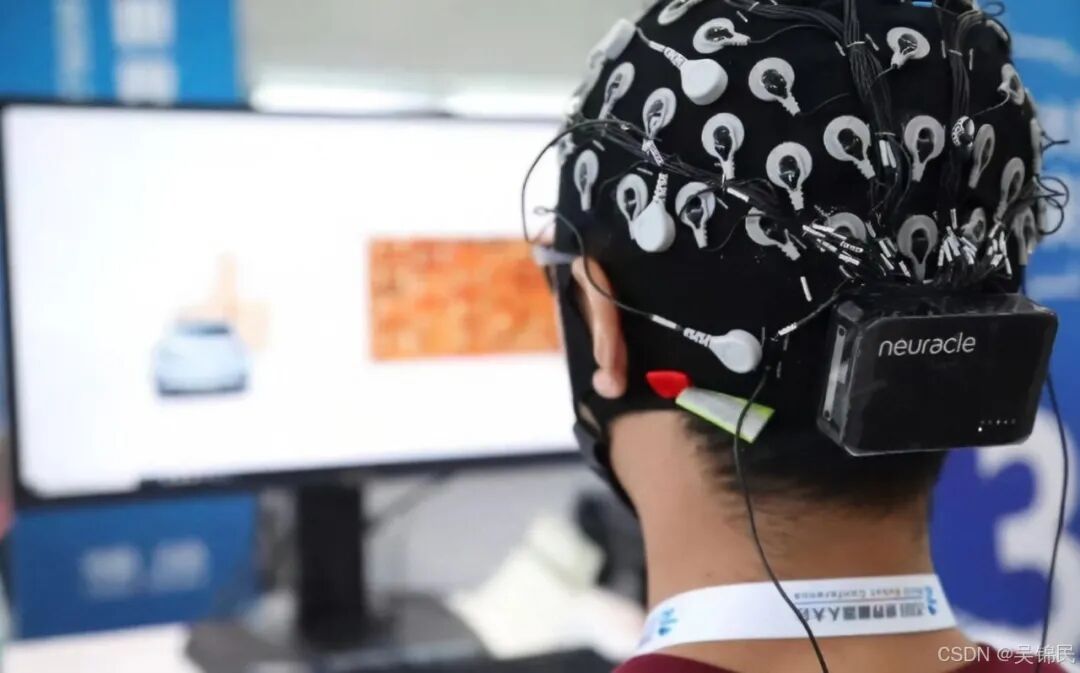
The emerging interdisciplinary field of neuroaesthetics is providing scientific grounding for art’s healing function. Through the methods of brain science, researchers have found that the experience of art can significantly affect emotion, cognition and even the plasticity of the brain. In China, neuroaesthetics is beginning to be applied in the adjunctive treatment of Parkinson’s disease, depression and the like, with initial results. This offers artists an entirely new perspective: art can be not only the critic of society but the healer of the soul. Future artists can more consciously employ elements such as colour, form, sound and space to explore art’s application in mental health, community-building and public education, letting art become a force that actively constructs social well-being.
Confronting the Challenges of Ecological Crisis and Digital Governance
We face two great systemic challenges: the deterioration of the ecological environment and the total penetration of digital technology.
These complex issues far exceed the knowledge scope of traditional artistic disciplines. The closed-door mode of creation is therefore no longer tenable, and interdisciplinary collaboration becomes a necessity. Artists need to leave the studio and actively enter into deep dialogue with experts from different fields — scientists, engineers, sociologists, environmentalists.
The Expansion of the Artist’s Role: From Creator to Researcher and Catalyst
In this interdisciplinary practice the artist’s role changes profoundly. The artist is no longer merely a creator of beauty but a researcher of problems, an organiser of dialogue and a catalyst of social experiment. An art project may no longer aim at a final ‘work’ but become a long-term, open, continuously growing research process. For example, an artist might collaborate with an ecologist to transform the abstract data of climate change into a perceptible experience through art; or work with programmers and ethicists to explore together the problem of bias in artificial-intelligence algorithms. Such practice not only greatly expands art’s linguistic boundaries and expressive power but, more importantly, lets art re-intervene in the key issues that shape our common future, becoming an effective force in driving social cognition and change.
IV. The Revolution of Medium: Reshaping Perception in Human–Machine Symbiosis
If the adjustments along the first three dimensions are more choices of concept and path, then the revolution of technology and medium reshapes, at the ontological level, the very definition of art, the subject of creation and our mode of perceiving the world. For China’s artists in 2026, how to understand and respond to this media revolution led by artificial intelligence (AI) and virtual reality (VR) is an unavoidable core subject.
(I) Artificial Intelligence: From Tool and Collaborator to the Generator of Ethical Issues
Beyond the Surface Application of ‘Technological Spectacle’
The rapid development of AI-generated-content (AIGC) technology in recent years has greatly lowered the technical threshold of visual-content creation. Yet by 2026, merely using AI as an efficient image-generation tool has lost its artistic forward-lookingness.
The real challenge is this: how can the artist move beyond marveling at AI’s output to deeply explore, reflect upon and even criticise the operating mechanisms, data-dependence, algorithmic bias and power-structures behind it. AI should not be seen merely as an extension of the brush but as an ‘other’ with which one can dialogue, contend and even co-create. The artist’s work may be the deeply insightful selection and editing of massive generated results; it may be designing a unique training dataset to ‘teach’ AI a new aesthetic logic; or it may be taking the ‘errors’ and ‘hallucinations’ that arise in AI’s generation as creative material, revealing the inner operating logic of machine intelligence.
Confronting the Fundamental Challenge to Authorship and Copyright
The deep involvement of AI is fundamentally shaking the human-centred view of authorship and its associated legal system of copyright. When a work is generated jointly by the artist’s prompts and the complex computations of an AI model, who is the author? Human, machine, or a human–machine hybrid? And how is its copyright to be defined? In 2023 the Beijing Internet Court issued a ruling recognising that AI-generated images satisfying ‘originality’ and ‘human intellectual input’ may receive copyright protection, with the user recognised as author. But this is only the beginning of legal exploration. Future artists will need not only to practise reflection on this question in their creation but may become active participants in building the relevant legal and ethical frameworks. Their creation itself is a contemporary inquiry into the ancient philosophical question of ‘what is creation’.
(II) Virtual and Immersive: Building New Paradigms of Perception and Social Space
The Experiential Revolution from Passive Viewing to Active Participation
Immersive technologies represented by virtual reality (VR) and augmented reality (AR) are transforming art from a two- or three-dimensional space based on ‘viewing’ into an ‘enterable’, multi-sensory, interactive field of experience. This completely changes the relationship between viewer and work.
The viewer is no longer a silent onlooker but a participant in the experience, even a co-creator of the shared narrative. For the artist, this means the centre of gravity of creation shifts from shaping a static ‘object’ to designing a dynamic ‘rule-set’ and ‘experience-flow’. How to guide the viewer’s attention, how to design meaningful interaction, how to cultivate emotional immersion in virtual space — these become the new artistic language.
The Virtual World as a ‘Meta-Space’ for Social Experiment
Going further, virtual space is not only a new artistic medium but can become a ‘meta-space’ for social experiment. Artists can construct wholly new social models, economic systems even utopian communities in the virtual world, inviting global users to enter and interact and explore. This practice transcends the boundaries of traditional art, fusing architecture, game design, sociology and behavioural economics, among other fields. It probes the complex relations — in an age of globalisation and digitalisation — between reality and virtuality, individual and community, freedom and rule, offering an experimental field for imagining and building a different future world.
Conclusion
At the historical juncture of 2026, looking back and ahead, we see Chinese contemporary art sailing upon a deep sea full of unknown and possibility. The old charts have faded, the new continent still lies afar. Amid the clamour of missing standards and conflicting voices, we need more than ever to establish an internal, firm compass of value, to withstand the winds and temptations of the external world. The standard that can guide the future is a triune core composed of sincerity, thought and linguistic innovation.
First, sincerity is the ethical bedrock of all art. This means creation must spring from the artist’s genuine life-insight and inner impulse to express, not from any form of speculation or pandering. In an age where ‘everything can be performed’, the sincerity that wells from the depth of the soul is the sole premise by which art can move the heart, and the starting point of all meaningful communication.
Second, thought is the core yardstick by which artistic value is measured. The essence of contemporary art is a practice of thought. An outstanding work will, in its unique way, pose a profound question about our age and the fundamental condition of humanity, or offer a novel perspective on the world. It challenges our mental habits, expands the boundaries of our cognition and provokes deeper reflection. This depth of thought is what fundamentally distinguishes art from entertainment and decoration.
Finally, linguistic innovation is the inexhaustible source of art’s vitality. Profound thought must combine with a unique artistic language to unleash its greatest energy. The artist must forever be a brave explorer, constantly probing the potential of the medium, challenging established aesthetic paradigms, and creating new modes of expression suited to the age. This innovation is not novelty for novelty’s sake, but a means to speak more precisely and more powerfully.
Sincerity, thought, innovation — the three are outward form and inner substance to one another, and none can be omitted. Together they constitute the kernel of artistic value, transcending the limits of nation, medium and market price. For every serious Chinese contemporary artist, in this age full of challenge and opportunity, only by firmly establishing such an autonomous standard of value deep in the heart can one calibrate one’s course amid the surging tides, guard the lighthouse of art called ‘meaning’, and finally reach that new continent belonging both to oneself and to the future.
订阅艺术评论
订阅即赠《2024中国当代艺术关键词》内部思考笔记 PDF
每周免费获取最新当代艺术批评与研究