In 2026, as the first ray of sunlight falls into the studio, new hope begins.
This essay maps out the hundred most central predicaments a contemporary artist may encounter, arranged across ten dimensions. There is no grand narrative here; these are essentially the real, everyday difficulties the profession of artist forces one to face, and together they reflect the collective predicament of the artist as a vocation in our time.
As a theorist, I know full well that, for an artist who has hit a wall, hollow consolation is meaningless, and an emotional resonance will not put bread on the table. So for the whole of 2026 I am willing to be a concrete companion and problem-solver. In the days to come, drawing on art theory, the rules of the trade, basic legal knowledge and commercial logic, and together with the cases and remedies around us, I will distil some wisdom for coping, taking these hundred questions apart one by one and offering workable, reference-grade solutions. Whatever the art academies never taught but an artist must nevertheless confront, we will go through it all. The trade is hard; only by watching out for one another can we find the right path.
The professional predicament of the artist is, in essence, the concentrated expression of multiple contradictions: between spiritual and material production, individual expression and social rules, traditional paradigms and technological change. In this light, strong inner support is not an empty spiritual slogan; it must be built upon a deep understanding of the trade’s laws, a clear positioning of one’s own situation, and a systematic grasp of solutions. Art has never been an easy road, and in 2026 especially it demands that we hold on to the original intention to create while also possessing the courage and the wisdom to stand up to reality. Perhaps you are being swept along by anxiety at this very moment, perhaps you have doubted countless times whether you are simply wasting your time — but believe that, so long as you remain on the road of perseverance, every ounce of effort you invest will come to fruition in due course. The artist is the professional group this society should most treasure. In 2026, let us carry these hundred questions with us and seek answers together, in the collision of theory and practice. May every love be tenderly treated; may every one of you who keeps creating plant the flower of your ideal in the soil of reality.
Dimension One: Survival and Bread (Economic Anxiety)
This is the most fundamental, the most embarrassing to speak of, yet the most widespread ache.
The studio rent black hole: the helplessness of studios around Beijing–Tianjin–Hebei and the Jiangsu–Zhejiang–Shanghai corridor being repeatedly demolished and their rents surging. The rift between full-time and part-time: teaching children to paint or delivering takeaway by day, making art by night — how does one balance “survival” with “one’s ideals”? The awkwardness of pricing one’s work: price it too high and it will not sell, too low and one is mocked by peers as “cheapening” oneself — how should a newcomer build a price system? Galleries that default on payment and the difficulty of collecting: the work has been sold, yet the gallery or agent has withheld the balance for over a year — what then? Anxiety over material costs: paints, canvases and sculptural materials keep rising in price, so one dare not let loose when creating. The absence of the five insurances and one housing fund: the freelance artist’s panic at lapsed social and medical insurance, and the fear of old age. The moral shame of “living off one’s parents”: at thirty still needing one’s parents to subsidise one’s practice — how to face the disappointed look in the family’s eyes? The sense of backroom dealing in applying for grants and residencies: feeling that every art fund and residency is “rigged” and an ordinary person stands no chance. Collectors’ “free-ride” mentality: friends or pseudo-collectors asking for a painting — “give me one to hang at home” — how to decline gracefully? The shifting of exhibition costs: many exhibitions not only pay the artist nothing but demand they frame and ship the work at their own expense, and even call this “pay-to-exhibit”.
Dimension Two: The Dimension-Reducing Strike of AI and Technology (The Panic of the Era)
A pain point particular to 2025–2026: AI is no longer a concept but a real, flesh-and-blood opponent.
The fear of Sora and Midjourney: an image AI generates in a minute is more perfect than the composition I spent a month painting — should I still paint at all? The dissolution of the meaning of “the handmade”: when technology can manufacture flawlessly, where exactly lies the value of the human trace? Anxiety over the threshold of digital art: if you cannot code or model, are you to be eliminated by the age? The impotence of copyright protection: one’s style is “fed” to an AI model and plagiarised, yet the law still lags in 2025. The bewilderment after the NFT bubble burst: what was once thought a lifeline is now a shambles — should one still touch Web3? The taming of taste by algorithms: to court the big-data recommendation, one unknowingly alters one’s own creative style. The sense of the physical exhibition’s demise: everyone now views shows online — will anyone still go to the physical gallery? The costliness of technical tools: graphics cards and software subscriptions grow ever more expensive, and the poor artist can no longer even afford the “tools”. Being accused of “looking like AI”: plainly hand-painted, yet the audience suspects it was AI-generated — how to prove one’s innocence? The ethical dilemma of human–machine collaboration: does using AI assistance count as cheating? Can it still be called original?
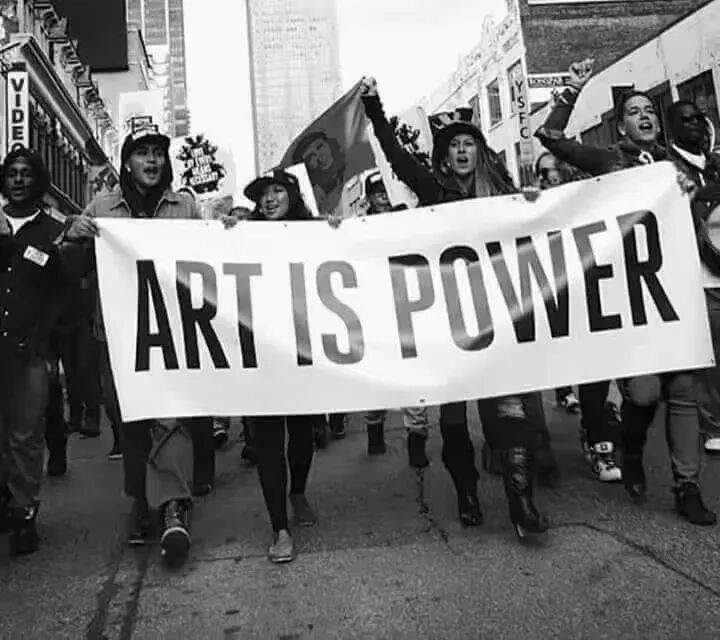
The “social finesse” and “clique culture” peculiar to China’s art circles.
The social anxiety of “working the circuit”: one must go to openings, wine glass in hand, wearing a false smile, or be forgotten — for the socially anxious this is torture. The curators’ hegemony of discourse: is currying favour with a famous curator the only way to exhibit? Galleries’ “enslaving” contracts: the tyrannical clauses in exclusive-representation agreements make signing one a contract of indenture. The art-academy pecking order: the Central Academy of Fine Arts and the China Academy of Art are riddled with factions, and those from non-academic or provincial backgrounds suffer invisible exclusion. Aversion to the drinking culture: talking art ends up as a contest of how much one can drink, and the harassment women artists face across the banquet table. Fatigue from futile networking: you add a thousand WeChat friends, yet fewer than three truly understand your paintings. The contempt and jealousy among peers: seeing someone less accomplished than you become famous — what do you do when your composure collapses? Critics’ “jargon”: you cannot make out what the critical essays are saying, and feel hostage to theory. The loneliness of being marginalised: if you are not in Beijing, Shanghai or Chengdu, there is a loneliness to persisting in a second- or third-tier city. The trap of resource exchange: promised “exposure”, you give works away for free, and in the end receive nothing.
Dimension Four: Traffic and Self-Media (Forced to Trade)
Without Douyin there is no traffic; with Douyin there is no dignity.
Data anxiety on Xiaohongshu: post your work and no one looks; post a selfie and it gets thousands of likes — am I an artist or an internet celebrity? The lack of short-video skills: you can paint, but cannot edit, cannot write a script, cannot speak to a camera. The label-shame of the “influencer artist”: with high traffic the academic crowd curses you as “too low”; with low traffic you cannot eat. The psychological hurdle of live-streaming your paintings: selling work live feels like peddling on a street corner, and you think you have lost the artist’s face. The homogenisation of content: chasing traffic by copying “immersive painting” videos, you lose your individuality. Malice in the comments: facing keyboard warriors’ “what rubbish is this” and “my grandson paints better” — how to build your psyche? The fatigue of maintaining a persona: you must play the online role of a “relaxed, wealthy, tasteful” artist. The instability of algorithms: a hit yesterday, throttled today — your mood is a roller coaster. Time fragmented: four hours a day scrolling the phone and answering DMs, no time for deep thought. Being taken in by MCN agencies: you sign with an influencer-incubation outfit, only to have your account taken and to lose both money and account.
Dimension Five: Creation and Bottleneck (Anxiety over Talent)
Back to the art itself, and the creator’s inner struggle.
The repetition of style: to sell well on the market you are forced to keep copying your own successful schema, and it makes you sick. The drying-up of inspiration: you sit before the canvas a whole day, mind a blank. The pressure to “over-interpret”: the work plainly means nothing of the sort, yet you must fabricate a philosophical theory to package it. The line between imitation and plagiarism: too deeply influenced by the masters, you cannot leap from the giants’ shadow. The limits of medium: you want to make large installations, want to make video, but technique and funds do not allow it, and you can only paint on the easel. The obsession with finish: you always feel the work is unfinished, and dare not show it. The myth of contemporaneity: what on earth is “contemporary”? Does painting something strange make it contemporary? The impotence of narrative: facing grand social reality, you feel your work is weightless, with no force at all. The split between academy and market: what the jurors like and what buyers like are entirely different matters — whom to heed? Project-based creation: you create for the exhibition, not for expression.
Dimension Six: Identity and Recognition (Who Am I)
The crisis of positioning within family and society.
Family’s incomprehension: parents tell everyone “my child is unemployed / a painter”. Discrimination in the matchmaking market: artist = unstable income + eccentric character + high risk of infidelity. The devaluation of credentials: you earn a doctorate in art, yet still cannot find a teaching post or sell a painting. The multiple predicaments of women artists: how to return to creating after childbirth? Is it fair to be tagged with “women’s art”? The charge of “not doing proper work”: making art is seen as evading social responsibility. The appendage to bourgeois taste: you feel you have become a tool-person decorating the rich’s walls. Age anxiety: “become famous while young” — past thirty-five and still unestablished, are you finished? The maladjustment of returnees: back from studying abroad, you find you cannot fit into the domestic circle and do not understand domestic rules. The art dream of the small-town test-taker: wanting to cross class, only to find the art world is even more class-frozen. Self-doubt: “do I even have talent? Am I just wasting my time?”
Dimension Seven: Physical and Mental Health (The Invisible Killer)
The artist’s occupational ailments and mental state.
Serious occupational ailments: cervical spondylosis, lumbar strain, inhaling dust into the lungs, declining eyesight. The reversal of day and night: long-term late-night creating disrupts the biological clock, and insomnia becomes the norm. Depression and bipolar disorder: using pain as a source of creation leads the mental state to deteriorate steadily. The fear of dying alone: alone in the studio for days without speaking, afraid that if something happens no one will know. Alcoholism and dependence: relying on alcohol or drugs to find inspiration or numb anxiety. Social avoidance: the more you create, the less you want to see people, losing basic social ability. The emotional roller coaster: the work sells and you are ecstatic; rejected and you want to die — moods extremely unstable. Neglect of environmental toxins: long-term contact with toxic materials such as turpentine, acrylic and resin. The torment of perfectionism: merciless to yourself, never satisfied. Lack of exercise: sub-health becomes the norm.
What the art-academy education never taught but society requires.
Zero basic legal knowledge: ignorant of copyright and contract law, when infringed you can only rant on your WeChat moments. A blind spot on tax: not knowing how to file, even unaware that selling a painting is taxable, facing legal risk. Poor financial management: spend recklessly when money comes, borrow when it does not, with no asset planning. Weak English and foreign-language ability: unable to read international information directly or apply for international residencies. A one-sided grasp of art history: knowing only Western masters, with a break in the native lineage. Weak writing: unable to produce a quality Artist Statement. Lack of cross-boundary thinking: eyes only on painting, blind to the crossover of technology, fashion and design. The information cocoon: attending only to one’s own circle at this moment, numb to changes in the world situation. Being taken in by pseudo-philosophy: easily brainwashed by some obscurantist theorists. Lack of business-negotiation skill: thin-skinned, embarrassed to talk money, always at a loss.
The concrete impact of the macro-environment.
Exhibitions pulled at the last minute: a problem of scale leads to the show being cancelled an hour before opening. Self-censorship of subject matter: before putting brush to paper you wonder “can this be painted? Will my account be banned?” The gentrification of art districts: the district gets hot, rents rise, the artists are driven out, and it turns into a commercial street. The conservatism of public taste: any slightly avant-garde work is reported by the public as “pornographic” or “horror”. The obstruction of international exchange: visas hard to obtain, shipping costs astronomical, the Chinese artist’s voice on the international stage grows fainter. The coldness of capital: when capital lifts you, you are a god; when it abandons you, you are garbage. The uncertainty of policy: support or restriction policies for the cultural industry shift frequently. Intellectual-property hooligans: the shakedowns of certain image-website outfits, or malicious pre-emptive trademark registration. Wretched exhibition conditions: unprofessional lighting, uneven walls, ruining the work’s effect. The “assorted-platter” curating: you take part in many group shows, yet there is no scholarly sorting, only walls hung full.
Dimension Ten: The Ultimate Questioning (The Dissolution of Meaning)
The sense of nihility when facing the world’s upheavals around 2026.
Powerlessness under war and turmoil: wars afar and hardship anear — can painting save anyone? The curse of “art is dead”: this is an age of entertainment unto death; does anyone still look at serious art? Anxiety over being remembered: will anyone remember you after death? Or will you be cleared away like rubbish? The loss of joy: turning a hobby into a profession, you not only failed to make money but lost even the joy of painting. Confusion over the definition of “success”: is it success to be rich, or success to enter the museum? Disconnection from the world: you feel you live in a vacuum, your work unrelated to real human suffering. The absence of faith: with no religion, you can only lean on art to fill the spiritual void, but art cannot hold. Swallowed by consumerism: resisting commerce yet craving it, you split in this tug-of-war. The break in transmission: unwilling to take apprentices or teach students, you feel the craft will be lost. Whither then: will you still go to the studio tomorrow? Still be an artist next year?
To borrow Pierre Bourdieu’s words:
The core contradiction of the artistic field lies in the eternal opposition between the principle of autonomy and the principle of heteronomy: the principle of autonomy demands that art obey its own internal logic, judged by pure aesthetic value; while the principle of heteronomy places art under the domination of external forces such as market and power, turning it into a utilitarian tool.
This shows that the artist’s predicament is not an accidental individual encounter but the inevitable product of the field’s structure, and the character of that structure determines that a solution is possible. So all the above problems can in fact be taken apart layer by layer, and a way out sought in theory and practice. The artist is a vocation that struggles against “the void”; at this level, “getting better and better” becomes especially important. Please follow Yiyishu: an individual’s strength may be limited, but I am willing to give my all, to be your companion and support on the road of art, offering it as writing and video so that you have one more reserve of confidence before difficulty. And precisely because of your perseverance, what we do can still be called “art” to this day; may every persistence be tenderly treated.
You must keep going!
订阅艺术评论
订阅即赠《2024中国当代艺术关键词》内部思考笔记 PDF
每周免费获取最新当代艺术批评与研究