I. A Question That Seems Unnecessary to Ask
Let me begin with a question that seems unnecessary to ask: how do you know that a painting has been painted “badly”?
Step into a studio, and on the wall hangs a half-finished painting. A life model sits three metres away; on the canvas the figure’s shoulders are off by two inches, the knees point in a direction that does not match the actual pose, and the left hand’s structure looks as though it has been lifted from another picture. Anyone with a year of drawing training can point out these mistakes. They are not style, not distortion, not deliberate simplification—they are simply wrong.
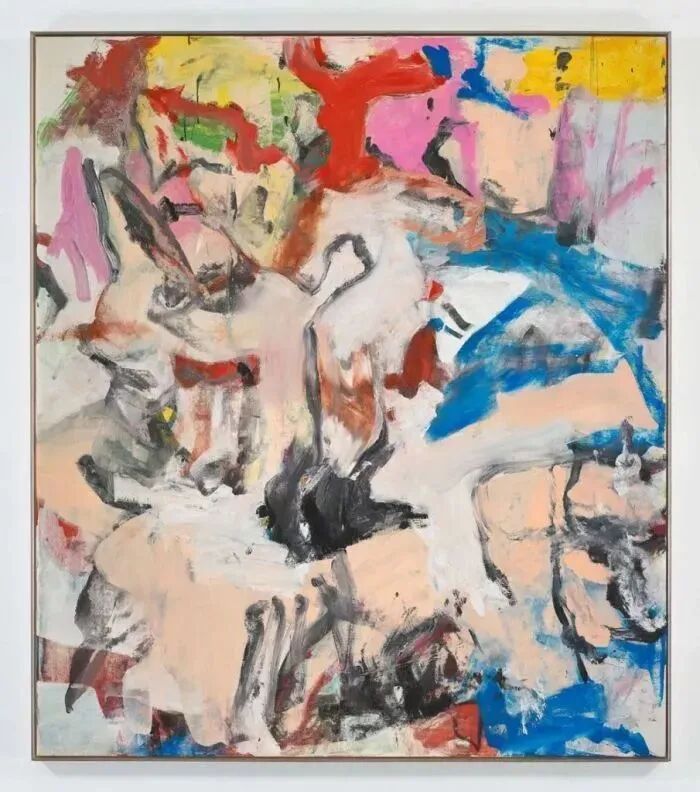
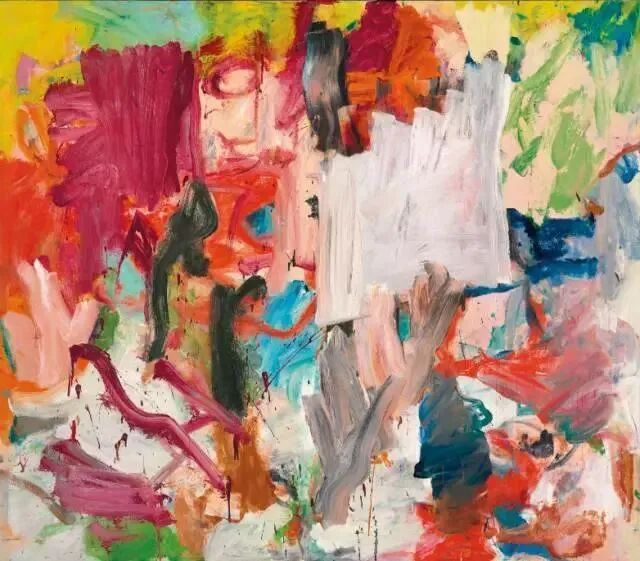
Or step into a museum gallery, where a de Kooning hangs on the wall. On that same canvas the proportions of the woman’s body are chaotic; the features look like wreckage churned up and fished out of the paint. Judged by anatomy, the relation between shoulders and pelvis would fail. Colours clash; lines run where they should not.
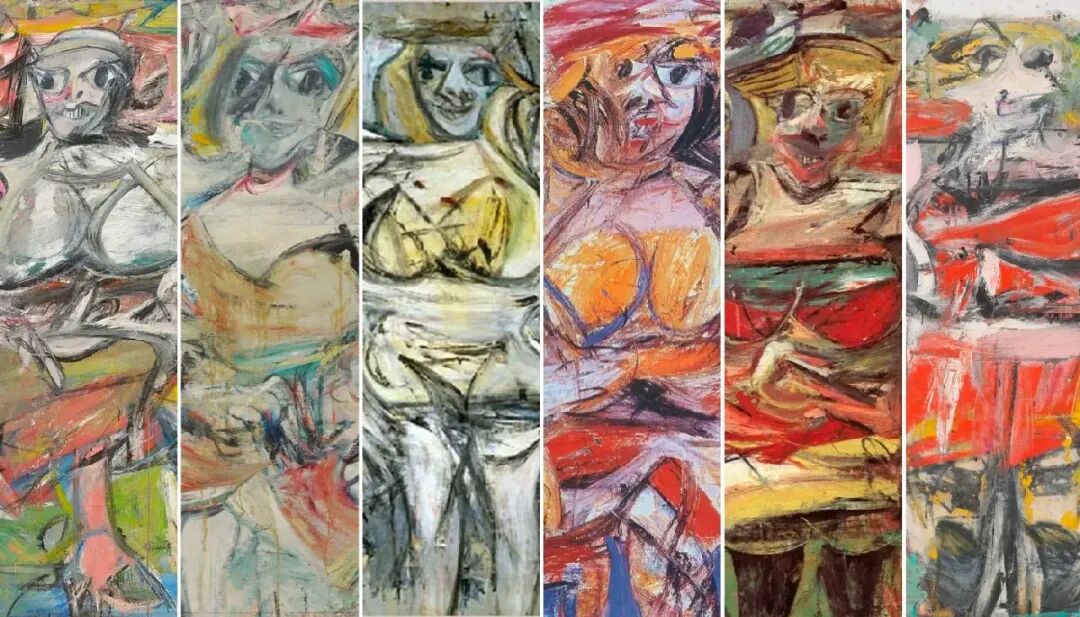
Would you say that de Kooning painted “badly”?
No. The critical vocabulary slots neatly into place: “ferocity”, “carnality”, “a bodily act of painting”. Those words fail completely before the half-finished studio piece. That painting would simply be called “deficient in basic technique”. So, the very same formal flaw: one is named freedom, the other judged incompetence. The difference is not on the canvas, but outside it.
This is the fracture that the term “bad painting” has carried from the very start. “Bad” is not some measurable property on the canvas. It is a judgement. Every judgement requires a standard. To call a painting bad is to say: I know what good should look like, and this painting is not that.
The question then becomes: who taught you what “good” should look like? How was that standard of “good” formed? Why can it be suspended in some hands, yet remains a threshold that must be crossed in others?
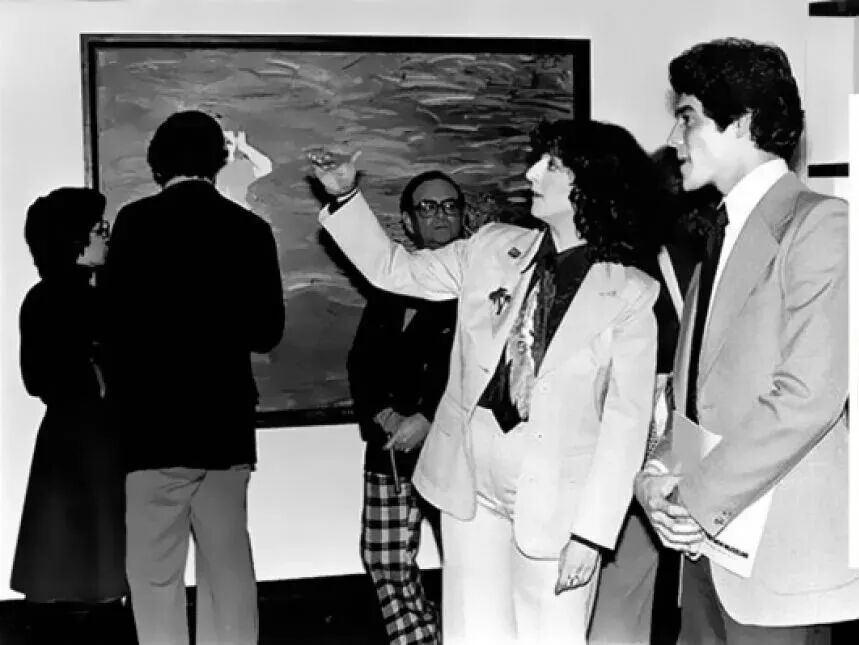
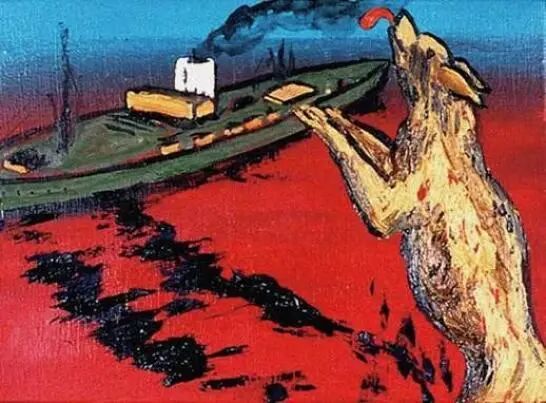
To trace it to the source. In January 1978, Marcia Tucker, director of the New Museum of Contemporary Art in New York, organised an exhibition titled “Bad Painting”. It ran from 14 January to 28 February; the catalogue ran to forty pages, with twenty-seven black-and-white plates, a lead essay by Tucker herself, and statements by the artists.
When Tucker used the word “bad” she kept it in quotation marks. In the press release she explained: “‘Bad’ painting is an ironic title about ‘good’ painting.” The works in the show, she wrote, “are characterised by the distortion of the figure, the mixing of art-historical and non-art sources, and absurd, irreverent content”. Not one of the artists she chose was unable to paint. They chose to paint “badly” on the premise that they could paint “well”.
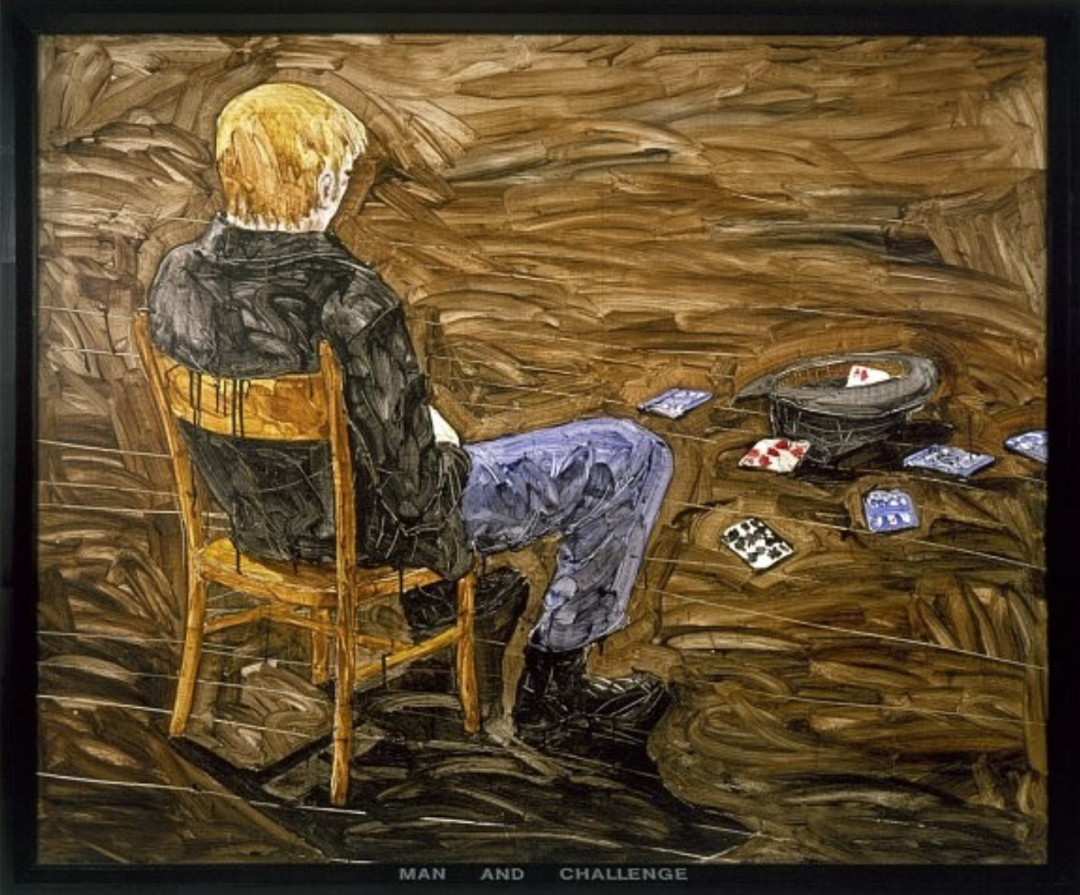
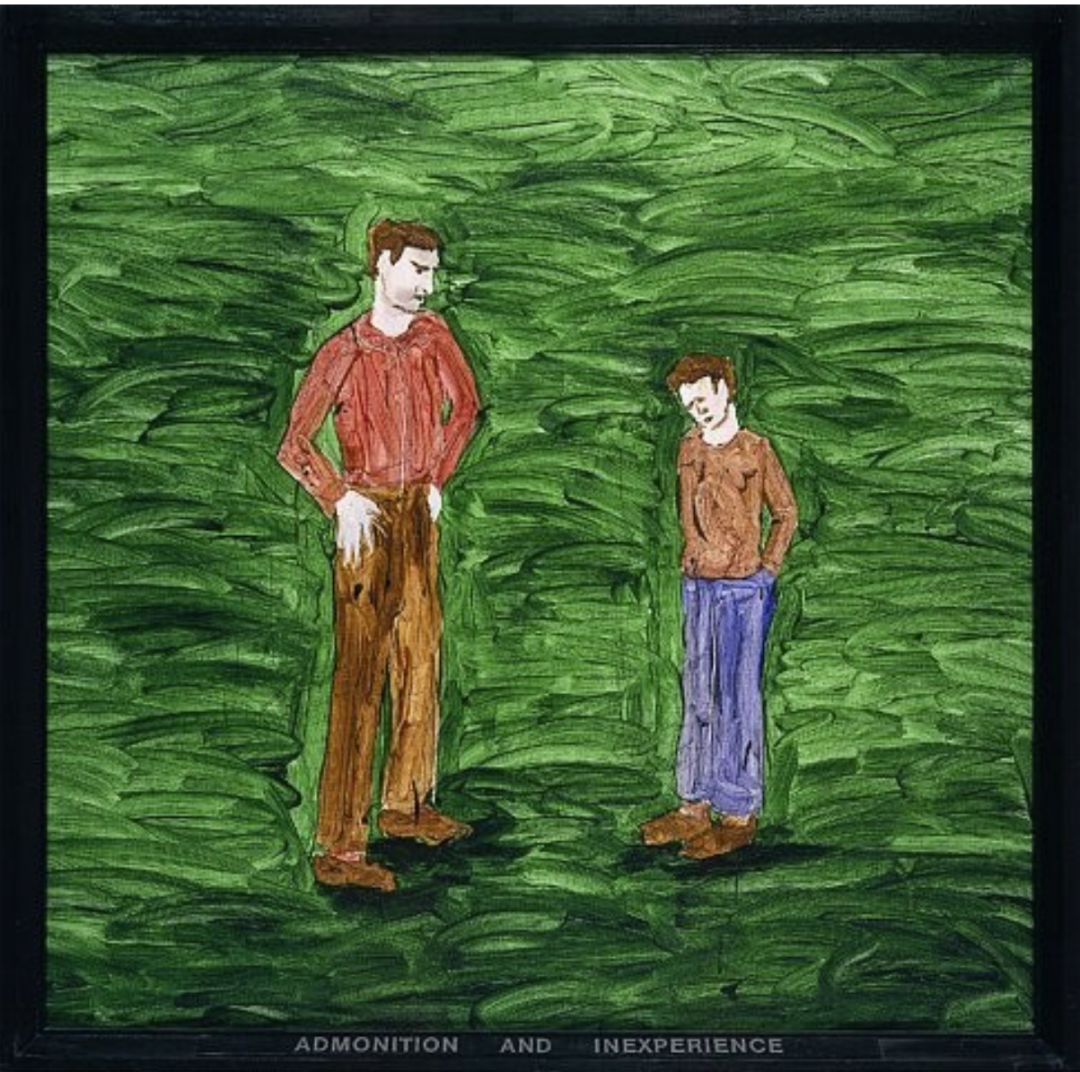
The American artist Neil Jenney made a group of works between 1969 and 1970 that he himself named “Bad Paintings”. The surfaces are crude, the brushwork sloppy. Yet Jenney described them this way: “a good concept badly painted.” “A good concept” and “badly painted” sit in the same sentence, and neither can be spared. If the concept is poor, painting it badly is merely bad. If it is not painted badly, then there is no “bad” to speak of. This verges on a deliberate, paradoxical performance.
Jenney later abandoned the series. He said he had two realisations: “First, even if I paint the worst possible paintings, they are not good enough. Second…” — and he never finished the second sentence. But the unfinished phrasing already says a great deal. There is an upper limit to painting “badly”. Pushed to a certain point, pushing further no longer yields “bad” but something else — perhaps genuine incompetence, perhaps another kind of “good”.
The “bad” in Tucker’s exhibition was an attack on a specific target: the “canonical” style represented by Minimalism and Photorealism. Tucker later described this attack as “a critical refusal of progress and artistic continuity”.
But here lies a paradox. The moment Tucker named these works “bad painting”, she was simultaneously establishing a new standard of “good” for them. Into the museum they went, theorised by curators, recorded in catalogues, archived by art history. The instant “bad” was named, the transformation into “good” had already begun.
II. “Bad” and “Ugly” Are Not the Same Thing
“Bad” and “ugly” are not the same thing.
The American critic Rachel Wetzler has written specifically on this in Art in America. She observes: “Bad painting and ugly painting are often conflated. In the catalogue of Tucker’s 1978 exhibition, whether ‘bad’ is fundamentally a matter of taste or of technique already slips categories. But they are not the same. Bad painting approaches the medium ironically, pursuing it through an attitude of carelessness, haste, and indifference.”
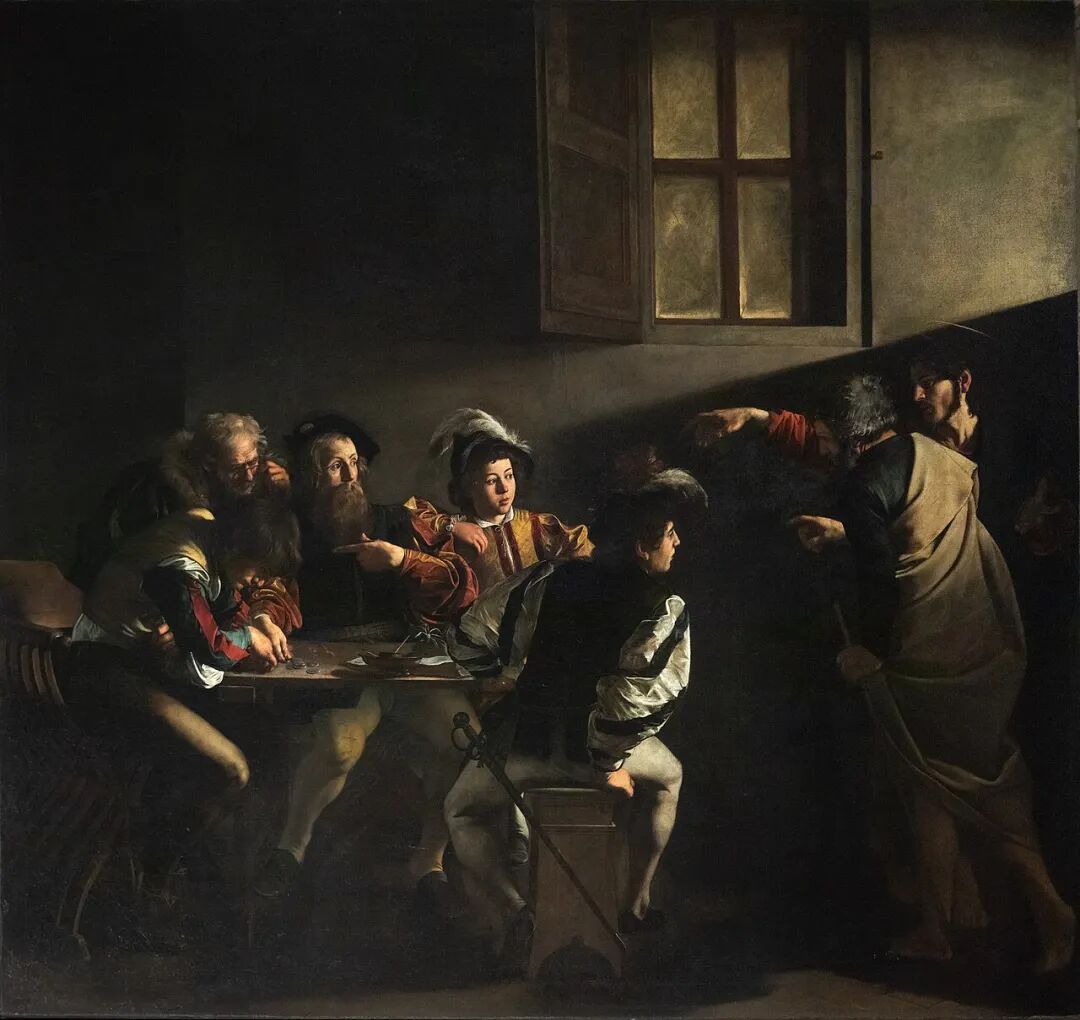
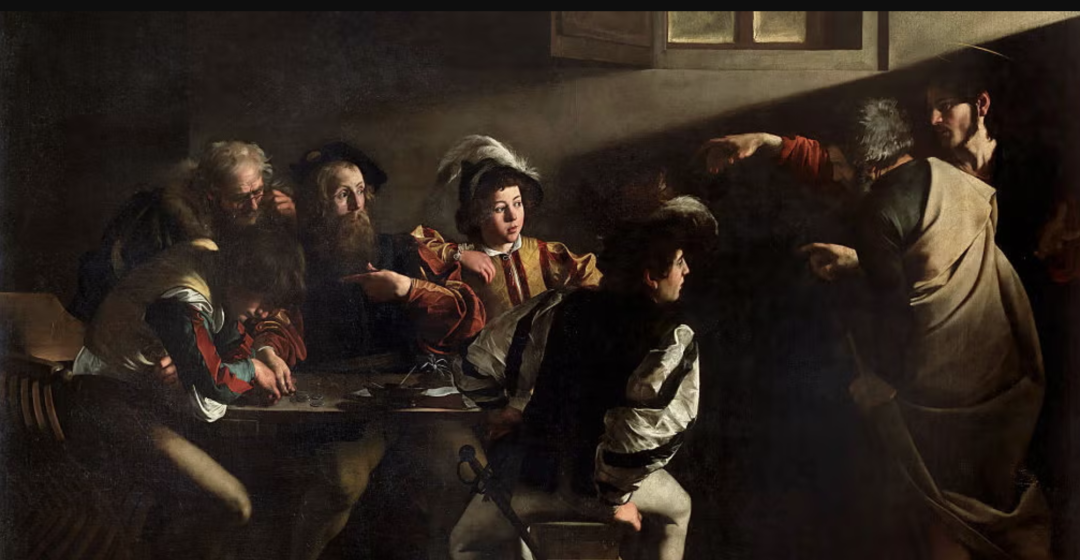
Ugliness is an aesthetic category. It can be a positive value. An “ugly painting” can fully comply with the norm; it merely chooses the expression of “ugly” that the norm permits. In Caravaggio’s The Calling of Saint Matthew, the shaft of light that splits the darkness illuminates the coarse face of a tax collector — a face that is ugly by classical standards of beauty, yet it obeys a different norm, one concerning “divine intervention”.
“Bad” is a judgemental category. It can only stand by relying on a norm that has been violated. A “bad painting” is not content with “ugly”; it must render the very norm of “good” itself suspect.
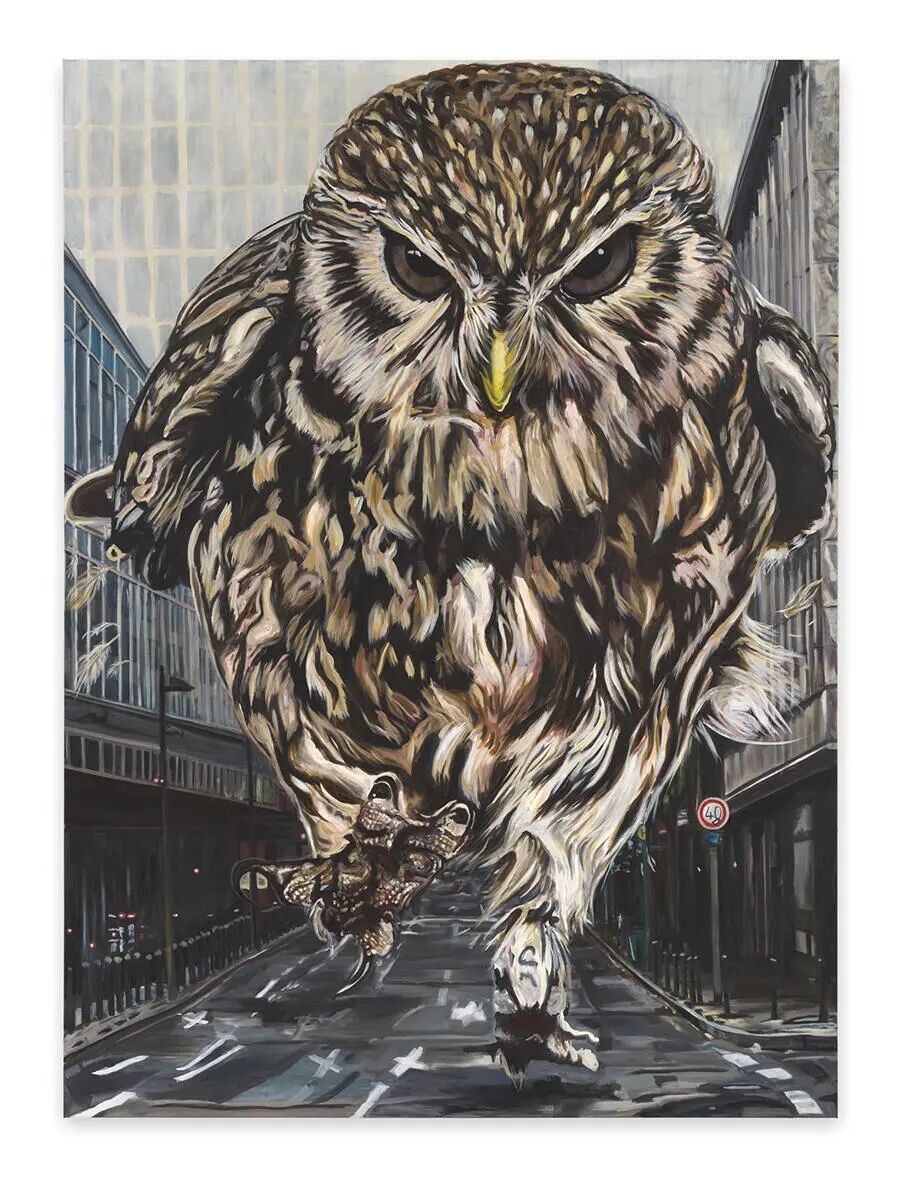
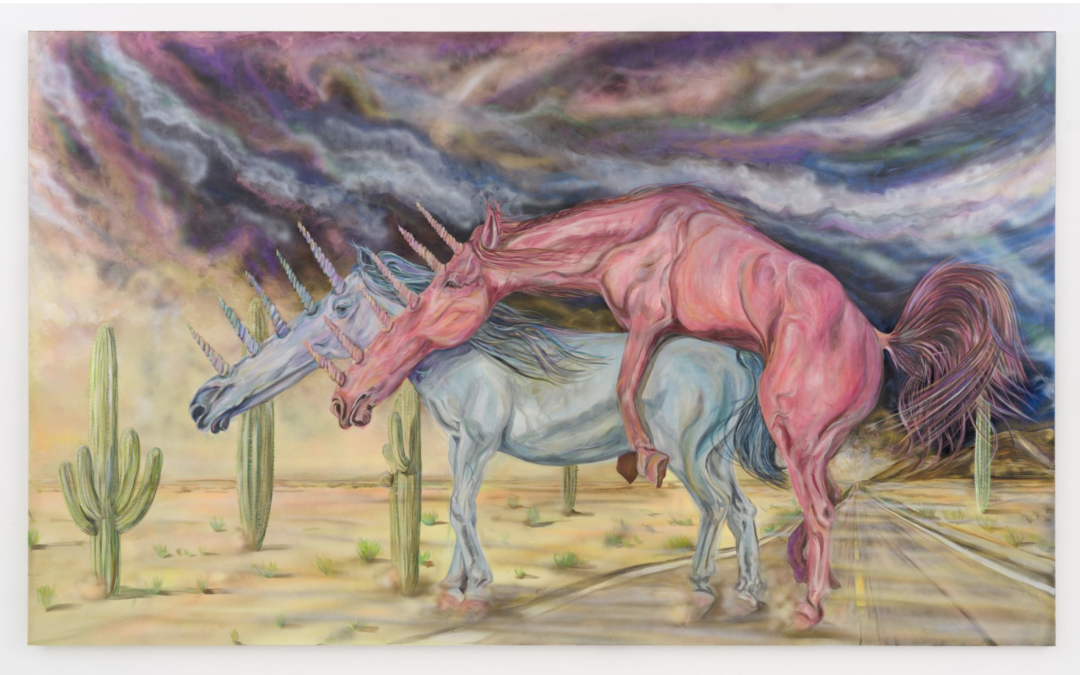
Confusing “ugly” and “bad” leads to lazy analysis. See fluorescent colour, cartoon monsters, graffiti collage, and one pronounces the degeneration of “bad painting”. The problem with such works is often not “bad” but that “ugly” has been commodified. “Ugly” in itself can be a serious aesthetic choice. The paintings of the American artist Jana Euler are ugly, but their ugliness “is a choice, and a deliberate one. Her paintings are plainly laboured, made slowly and precisely. Euler’s ugliness does not depend on negating the norm; it depends on a high mastery of it.” That is quite another matter from “bad”. “Bad” must have an object to attack. When that object disappears, “bad” loses its bearing.
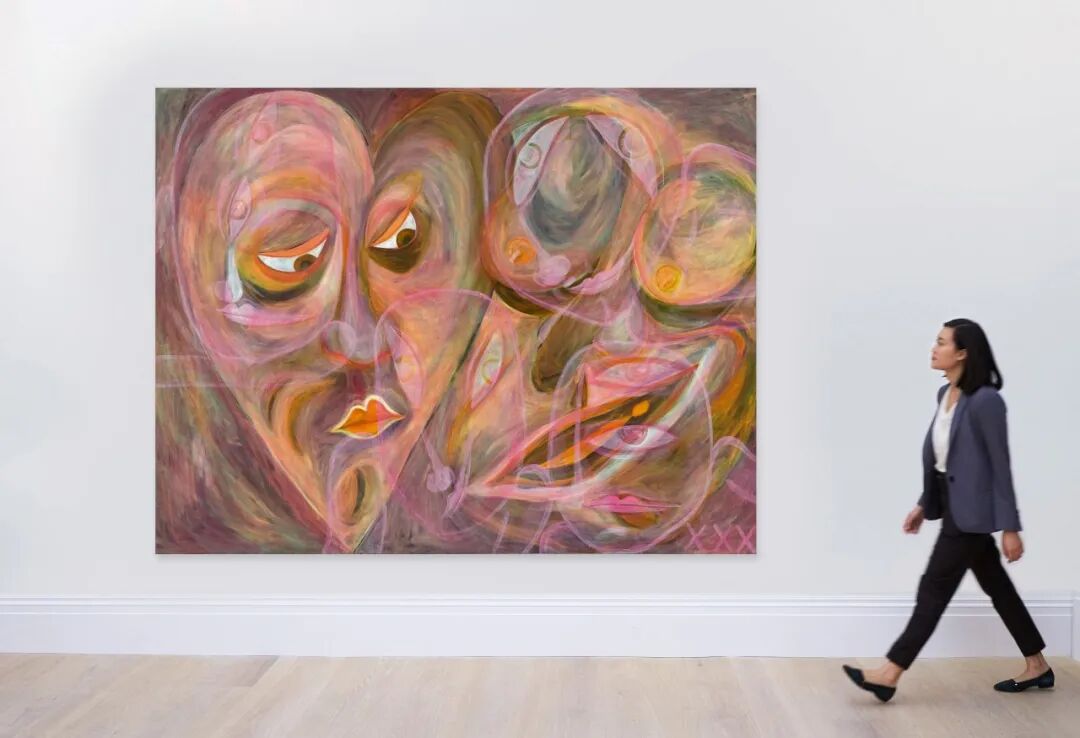
How is the standard of painting’s “good” and “bad” established?
This is not a question of aesthetic philosophy but of institution. No standard of painting grows naturally from the canvas; standards are established, maintained, and transmitted. The institutions that establish them include the art academies, exhibition juries, the gallery market, critical discourse, and the writing of art history.
Take China’s eight major art academies as an example. The entrance examination stipulates that “accurate bodily structure” is a prerequisite for assessment. The requirements for the drawing exam are that “the dynamic relation of the picture’s main subject accords with the sitter’s characteristics, and that proportional and basic structural relations match the sitter’s structure”. The standard for the eighth-grade exam even runs: “complete composition, accurate bodily structure, likeness to the sitter, deep and careful modelling, clear black-white-grey relations, and a sense of space and volume”.
There is nothing wrong with these requirements in themselves. Accuracy is a trainable, testable ability. The problem is that when “accuracy” is erected as a “prerequisite”, it trains an ability and at the same time lays down a prohibition: which errors may not be committed. A misplaced proportion is wrong. A structure that does not match is wrong. These “errors” are systematically expelled from the domain of “qualified painting”.
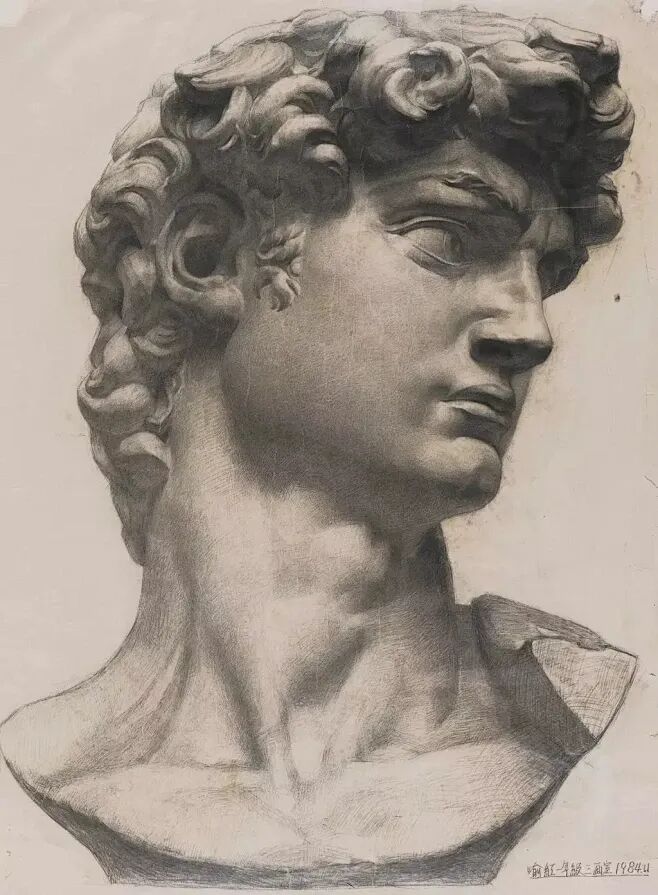
A student undergoes this training repeatedly across four undergraduate years. The teacher taps the canvas with a charcoal stick and says “this is wrong”. The student erases and starts again. After four years the hand is indeed steadier and the eye indeed sharper. But something else has also formed: a muscle memory of “what counts as right”. This memory is not about how to draw accurately, but about “inaccuracy is not permitted”. Then the student graduates. The first question he faces is not “what do I want to paint” but “I have been trained into someone who must draw correctly — can I still permit myself to be wrong?”
Bourdieu analysed this mechanism in Distinction. Aesthetic judgement is not some a priori, universal human capacity, but a social product tightly bound to class breeding and educational background. Those who possess cultural capital “participate in deciding what constitutes good taste”, while those with less cultural capital “accept the dominant class’s definition of taste as natural and legitimate”.
Take someone who has studied from the attached middle school of an art academy all the way to postgraduate level: after ten years of systematic representational training, his hand knows the turn of every bone. Then he chooses to “paint badly”, deliberately throwing proportions out of kilter, deliberately letting the line slip its control. The viewer sees a “free” artist “refusing the norm”. An untrained person paints in the same way. His proportions are off because he does not know what proportion is. The viewer sees an “amateur” “scribbling”. An awkward phenomenon appears: the same, or a similar, visual result elicits entirely different judgements.
Look closely, and when a trained person “deliberately paints badly”, his “bad” carries an implicit message: I know what “good” is, and I choose not to do it. This “I know” is cultural capital. It is not on the canvas but in the painter’s body, in every muscle memory accumulated over ten years in the studio. The untrained person’s “bad” carries no such message. His picture bears no trace of “I know what good is”, only the blank of “I do not know what good is”. When the trained person “paints badly”, the error is “produced”, marked by an intentional deviation. The untrained person’s error “happens”, marked by unintentional randomness.
Yet there is something the amateur’s “bad” possesses that the professional’s “bad” can no longer have. The professional’s “bad” is trapped in an inescapable dilemma: he always knows what he is doing. He can choose to paint badly, but the “choice” itself has already contaminated the purity of “bad”. The amateur’s “bad” happens; it is not manufactured.

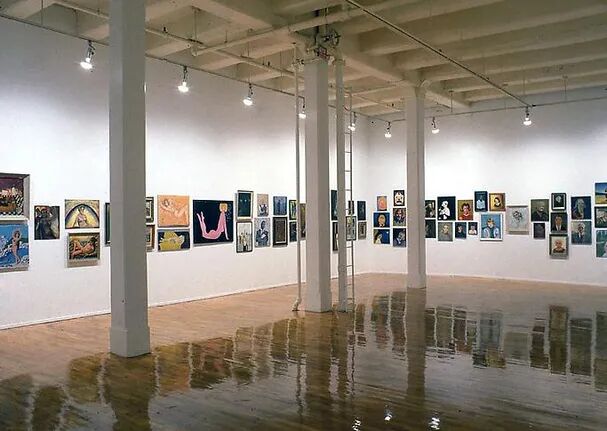
The American multimedia artist Jim Shaw staged this dilemma squarely in an exhibition he made in 1991. He gathered more than a hundred anonymous works by amateur painters from thrift stores and flea markets, none costing more than twenty dollars. Their “bad” lies precisely in the fact that they do not know what “good” is. A professional painter can look at them and imitate their rawness, their clumsiness. But he cannot imitate that “not knowing” itself. The moment he knows he is imitating “not knowing”, he already knows.
This is not to romanticise the amateur. The vast majority of amateur paintings are genuinely awful. But the question raised by Thrift Store Paintings is acute: once “bad” has been professionalised, has it not lost something essential?
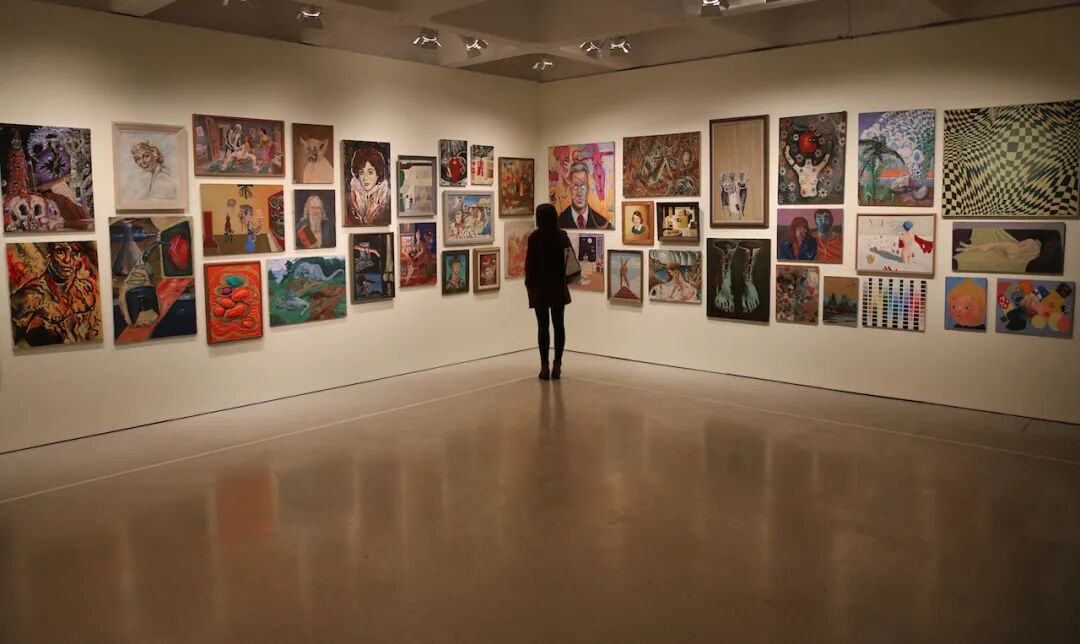
III. “Bad” in Chinese Contemporary Painting
What kind of “good” is the “bad” in Chinese contemporary painting actually confronting?
Yi Ying, in “‘Bad’ Painting · Bad Painting · Bad-paintingism”, proposes a framework of judgement different from the Western context. He argues that bad painting “is not form, nor style. Painting resides in the person; some things in one’s nature are not deliberately pursued — what you are in daily life is what you are in the painting”. A good painting is “rule-abiding academicism that represses or even dissolves individuality”; a bad painting is “rule-breaking, a wilful scrawl that maintains the most direct and continuous contact with individual life”.
The key to this framework is the conceptual distinction Yi Ying draws: a good painting is “formed form”, a bad painting is “formless form”. “Formless form” is the painter’s singular, personal invention. “Without the painter’s individuality, such formlessness is zero.”
Yi Ying uses Liu Qinghe as an example. Liu Qinghe is especially besotted with slender lines, a kind of line that does not appear this way in the formal language of traditional Chinese painting. His slender lines were forged in the practice of picture-story books (lianhuanhua); lifted out of that context and displaced into ink painting, they become his “formless form”. But this form “goes only so far. If Liu Qinghe’s students were to apply this form in their own paintings, it would have no artistic value”.
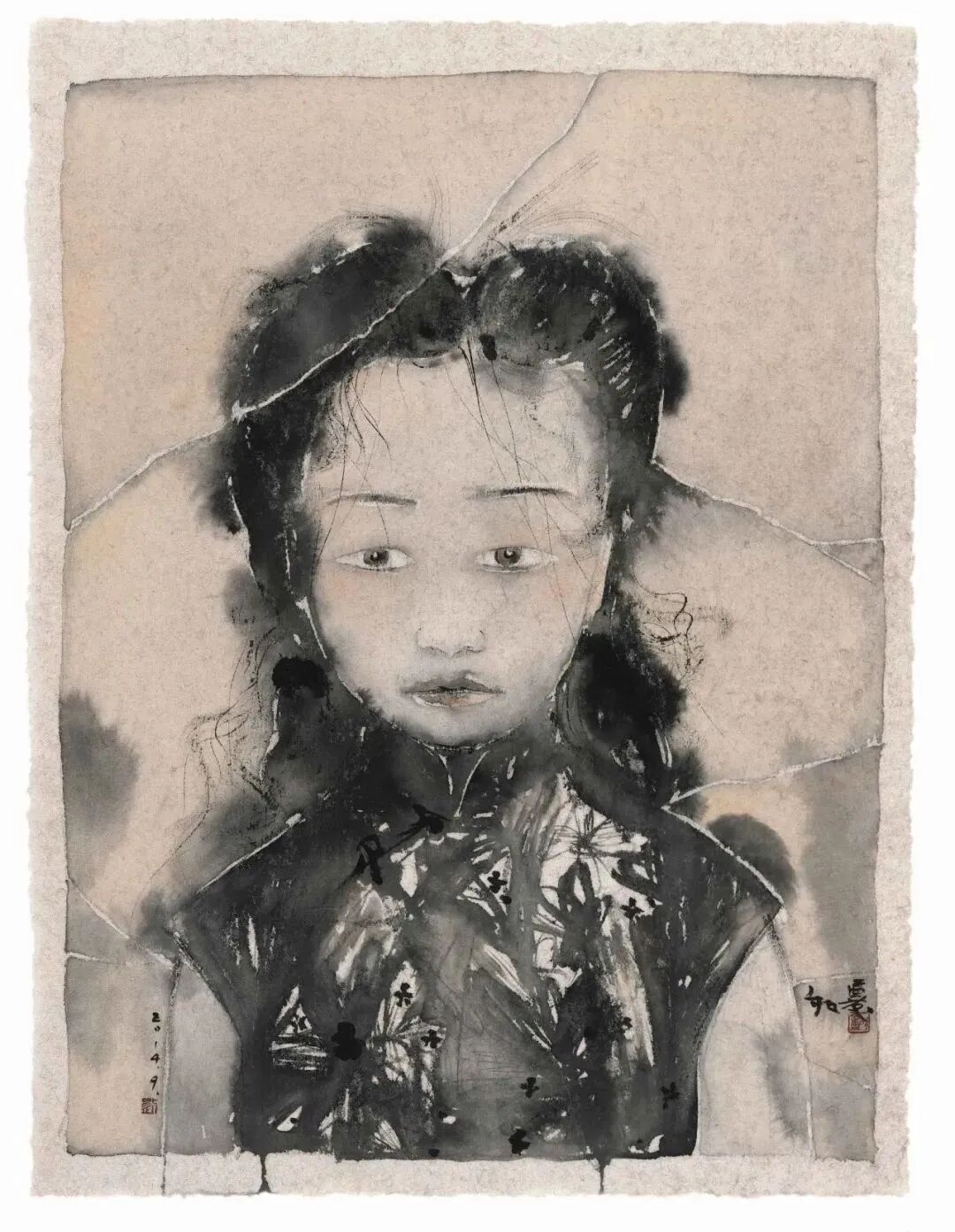
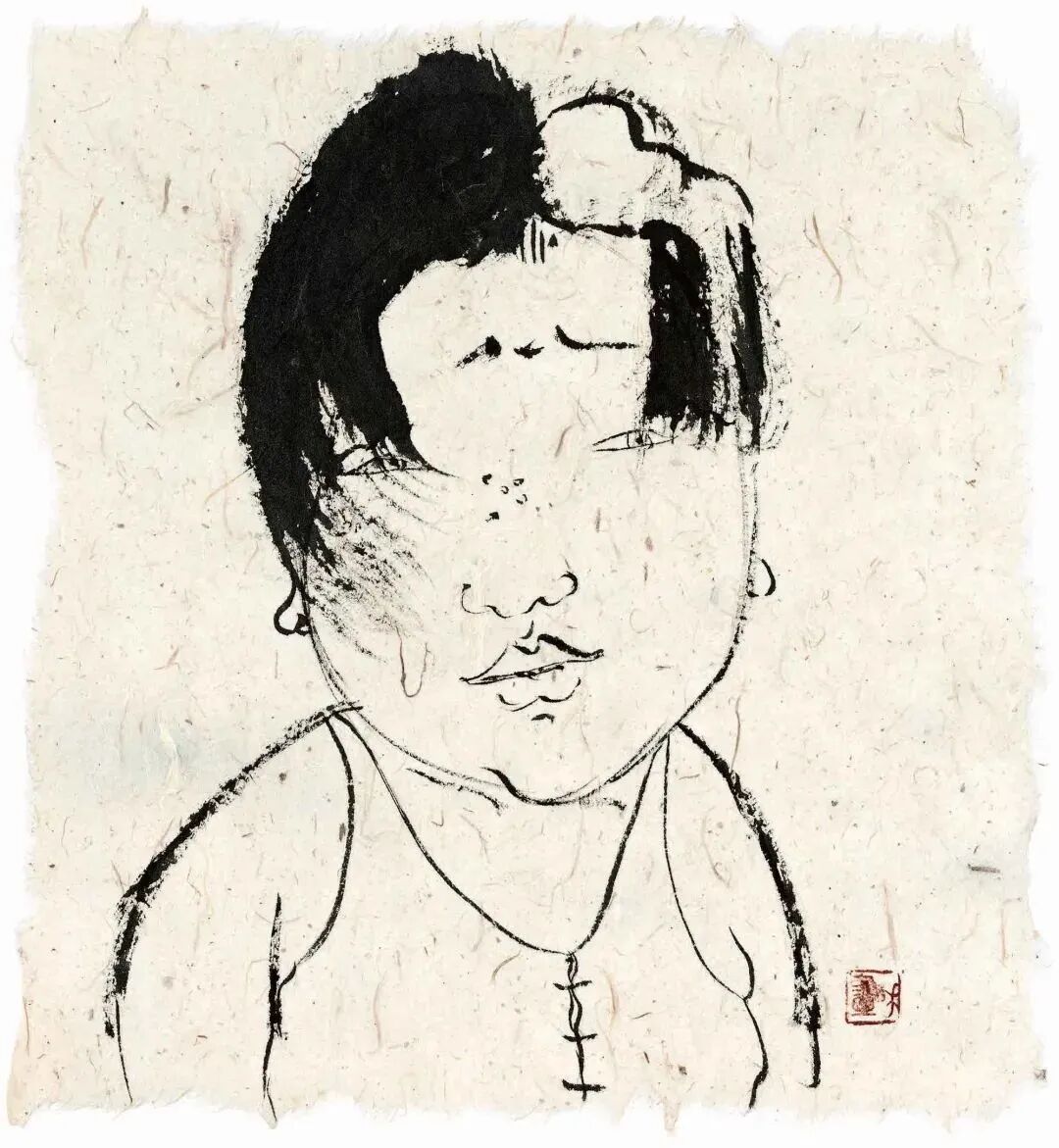
This is the core of Yi Ying’s “bad-paintingism”: “formless form” and “absolute individual validity”. Yi Ying’s verdict is pessimistic: the “bad paintings” of Li Jin, Liu Qinghe and others are merely “occasional singular cases, insufficient to become a trend of some form or style”.
This verdict poses a sharp challenge to the narrative of “bad painting’s co-optation”. If Chinese “bad painting” can only ever be a personalised “formless form”, then it is something entirely different from the Western Bad Painting that has a definite object of opposition. Western Bad Painting possesses a “bad” that can be named, taught, and reproduced — Tucker’s catalogue, critical essays, and art history are all building a transferable grammar for “bad”. Chinese “bad painting”, by Yi Ying’s judgement, cannot be taught. It belongs only to a specific painter, to his body, his training, his individuality; the moment it leaves that person it is nothing. This means the problem of Chinese “bad painting” is not “co-optation” but the fundamental impossibility of being co-opted. For it never possessed the conditions for co-optation to begin with; it has no “bad” grammar that could be institutionalised.
Yi Ying also points to a structural difference between China and the West on the question of “bad painting”. After the washing-through of modernism into postmodernism, the West’s stylisation and formalisation of oil painting have been almost entirely dissolved. Chinese oil painting, from the outset, followed a path entirely different from the West’s. In China, the academic “good” remains the dominant norm. This means the opponent confronted by Chinese “bad painting” is stronger and more entrenched. The painters in Tucker’s exhibition opposed a Minimalism already in decline, whereas Chinese “bad painting” faces an academy that is still expanding.
But here is a sharper question: if Chinese “bad painting” cannot be institutionalised, does it not precisely possess something Western Bad Painting has already lost — a “bad” that cannot be institutionalised? Is a force that cannot be discussed still a force that critical practice can handle?
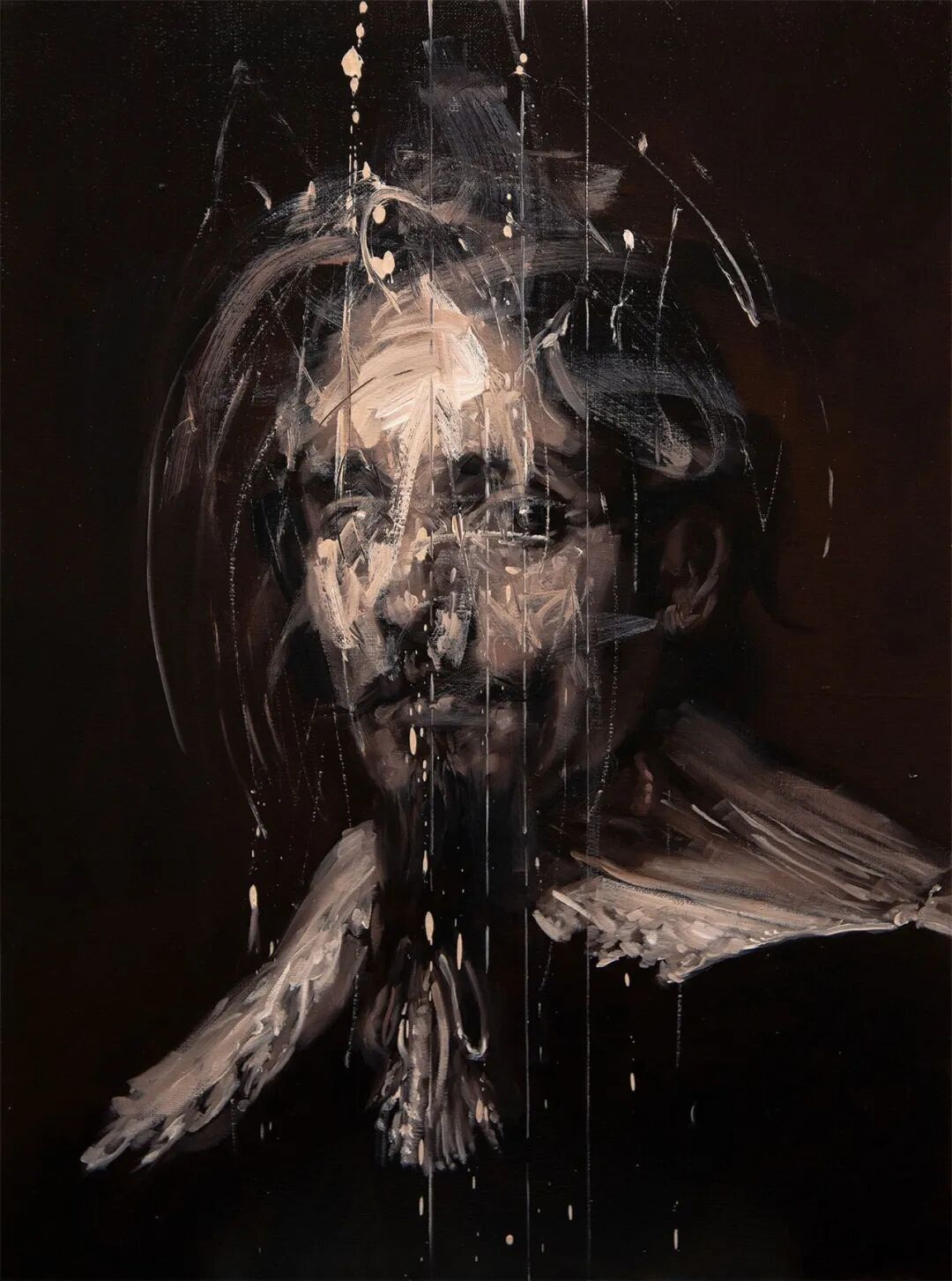
Something cuts through the “co-optation” narrative: the “second-order operation” proposed by the German artist Martin Kippenberger.
In 2018, the British art historian Matthew Bowman published an article in the Oxford Art Journal raising a core question: how do we distinguish “bad painting / good art” from “bad painting / bad art”? He invokes Arthur Danto’s analysis of “indiscernibles” to confront this impasse of judgement. Given two visually identical objects, how do we determine which is art and which a mere everyday thing? Danto says artworks exist within the atmosphere of an art world. Without the art world, there would be no artworks.
In 2008, the curator of MUMOK Vienna’s exhibition “Bad Painting/Good Art” “evaded the question of art-critical judgement by declaring that the concepts of ‘bad’ and ‘good’ should be regarded not merely as pure rhetoric, but that making evaluative distinctions is both undesirable and impossible”. The full title of the show was Bad Painting: Good Art, and its curator, Robert Fleck, held that bad is only rhetoric, not quality — the “bad” in “bad painting” is merely a style label, a historical discourse, not a genuine claim that the works are of low quality or technically failed; distinguishing good from bad is neither possible nor desirable. He argued that since bad painting already blurs the boundaries of “skilled/clumsy”, “intentional/unintentional”, and “art/non-art”, critics need not and cannot tell which paintings are “truly badly painted” and which are “deliberately badly painted”. In effect, the exhibition treated “bad” as a neutral stylistic noun: any rough, slapdash, anti-refined surface could be filed under the broad category of “bad painting” without further value judgement. It is precisely on this basis that Bowman, in his own article, sought to reclaim the sense of judgement within the category of “bad painting”.
His argument points to the German artist Martin Kippenberger. Kippenberger’s practice is not simply “painting badly”. He “imitates the practice of Neo-Expressionism in order to expose its shortcomings”. Kippenberger is not making “bad painting”; he is making “paintings about bad painting”.
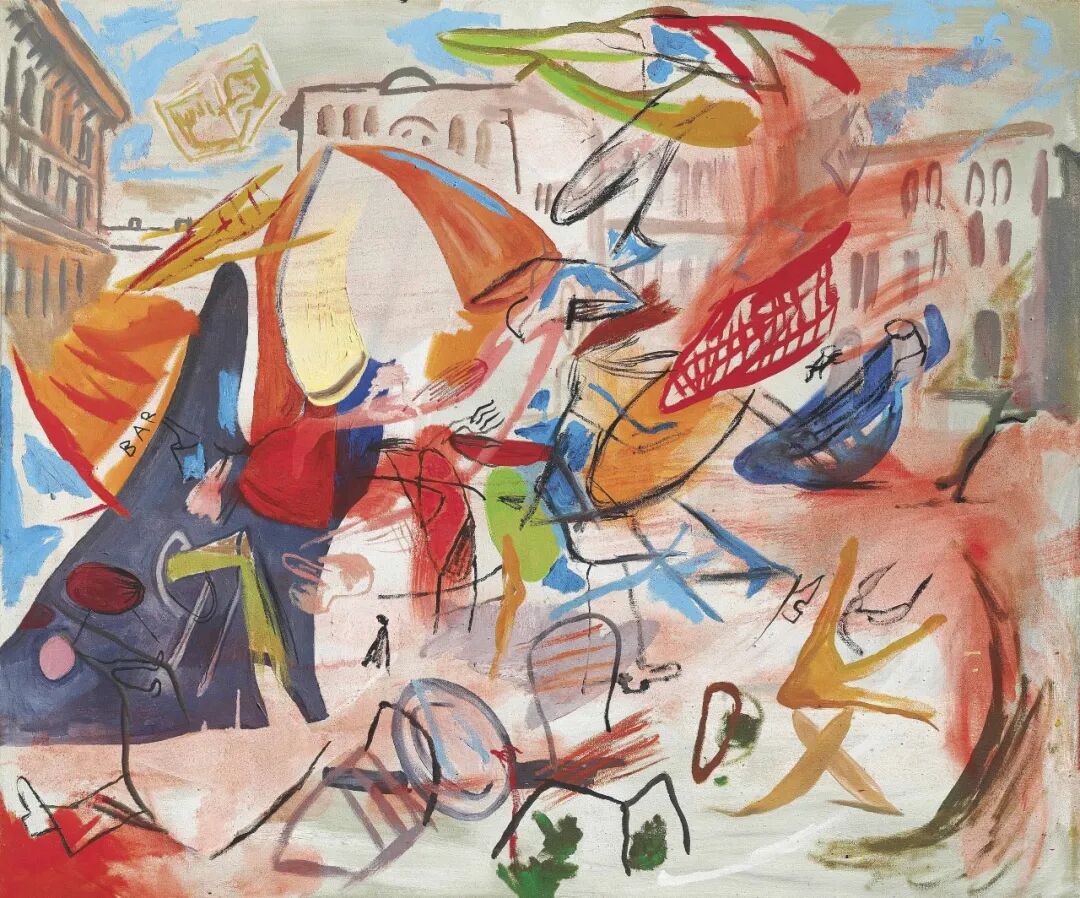
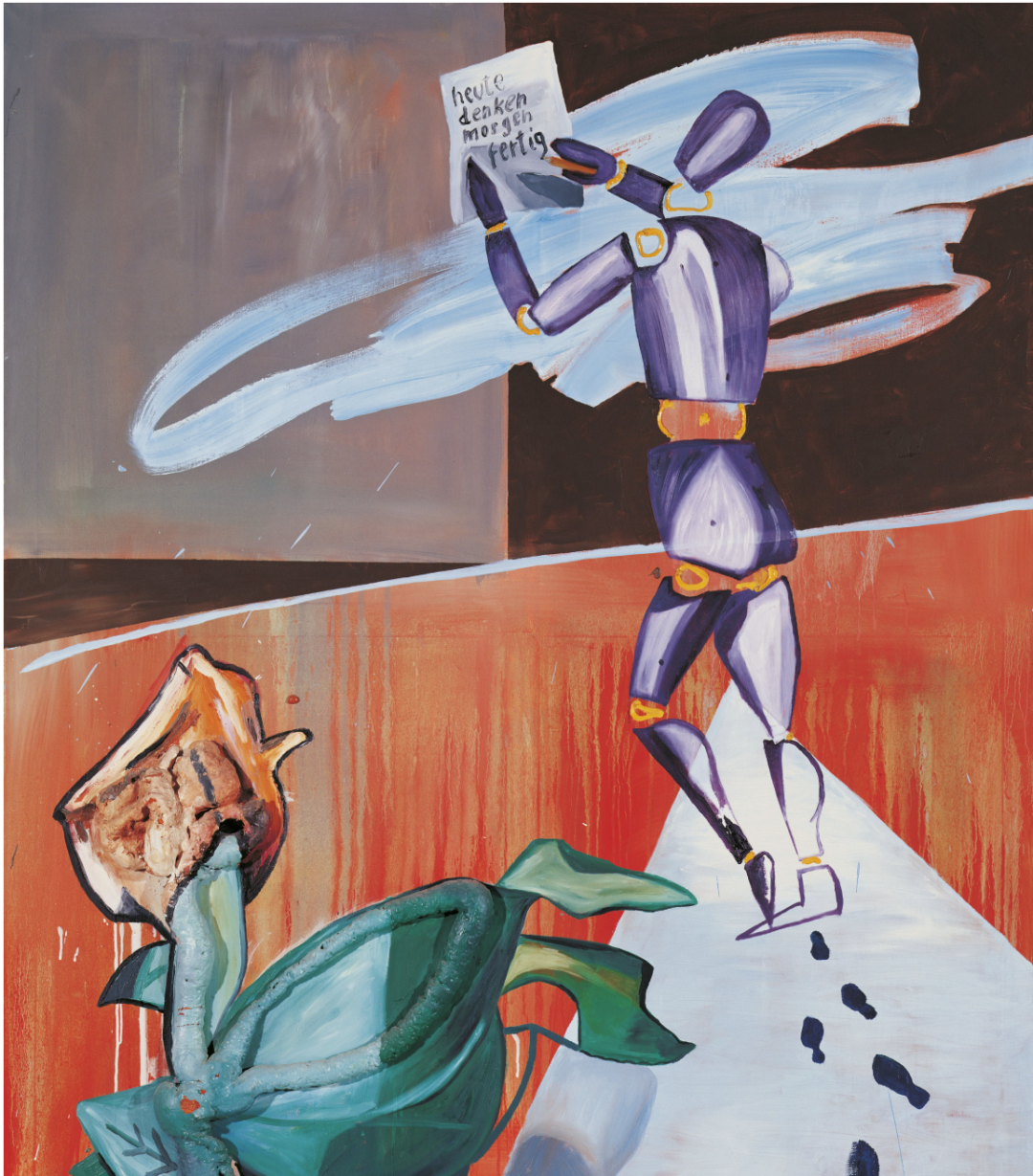
What truly made Kippenberger’s operation subversive, however, was something he did in his 1987 exhibition at Galerie Max Hetzler in Cologne, “Peter: The Russian Position”. The show presented forty-eight sculptures, and within it Kippenberger developed a strategy that the German critic Diedrich Diederichsen called “outsourcing failure (delegating ‘failure’ to assistants)”.
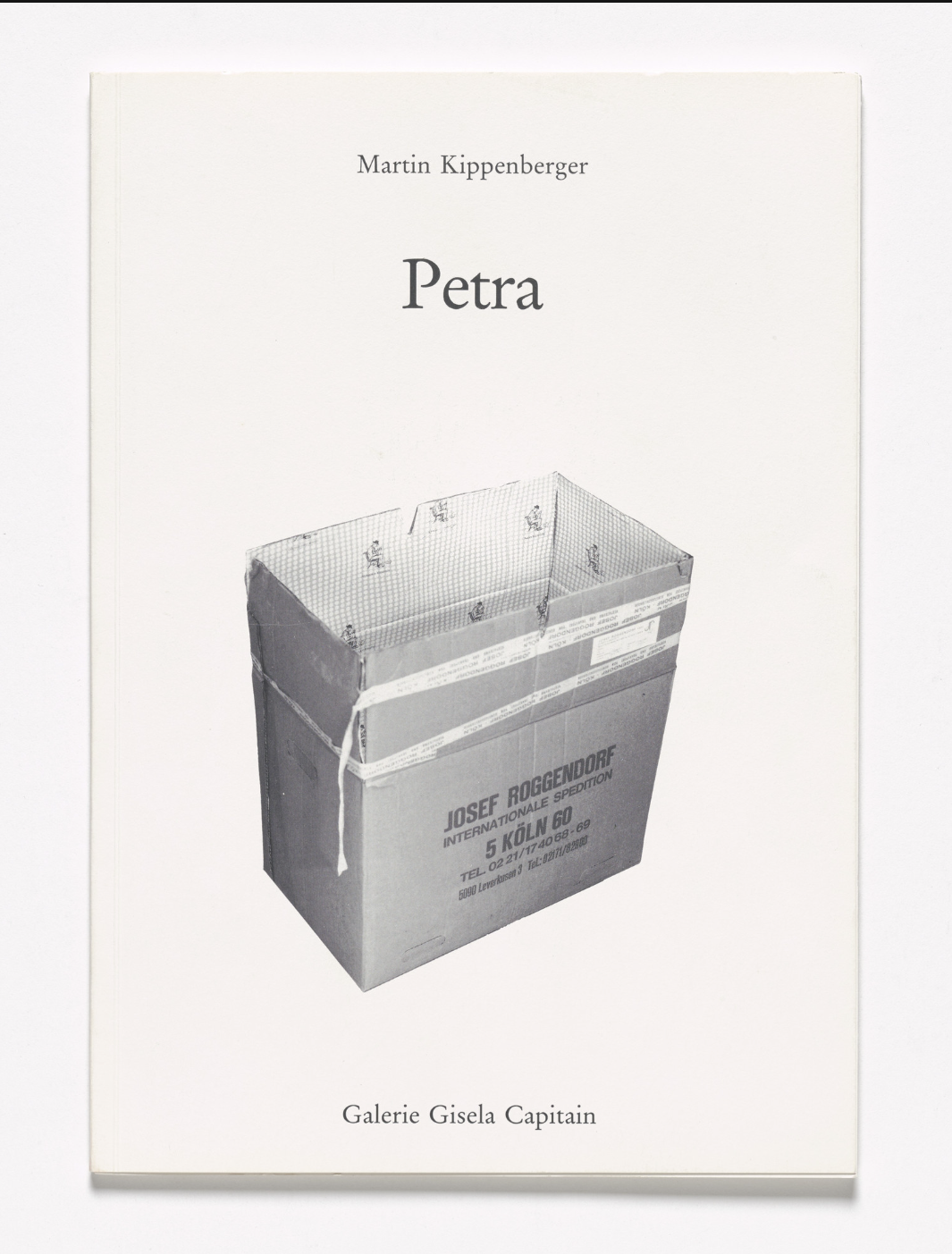
Kippenberger had his assistants “develop ideas and contribute personal styles. But their work was also to create deficiency and obstruction, to make mistakes, to misunderstand and to go off course”. His assistant, the artist Michael Krebber, was especially good at this task; known as a “ruthless observer of art and the art industry”, he was “adept at discovering the painful, forced, and affected parts in the smallest technical detail and the most unintentional gesture of a painting”.
What does this mean? If “failure” can be outsourced, then “failure” is no longer “evidence of the person”. It becomes another kind of “technique” — a technique for manufacturing failure. Kippenberger’s “bad” is not a negation of the norm but an institutionalised operation upon the very act of “negating the norm”. He uses the institutionalisation of “bad painting” itself as his material.
Bowman’s conclusion is that Kippenberger’s strategy “refuses any claim that all bad paintings should be treated equally, whether positively or negatively”. He forces critical distinction into a realm usually thought to resist high/low differentiation. Kippenberger does something more thorough than “making bad painting suspect”: he turns the very production process of “bad” into the content of the work. His paintings look like “bad painting”, but their “bad” is not his — it is manufactured by his assistants, and he merely organises and selects. This means Kippenberger fundamentally annuls the premise of “bad painting” as the “authentic expression of the individual artist”.
If Kippenberger’s “bad” can be outsourced, then what weight remains in the “choice” of those artists in Tucker’s exhibition who “chose to paint badly on the premise that they could paint well”?
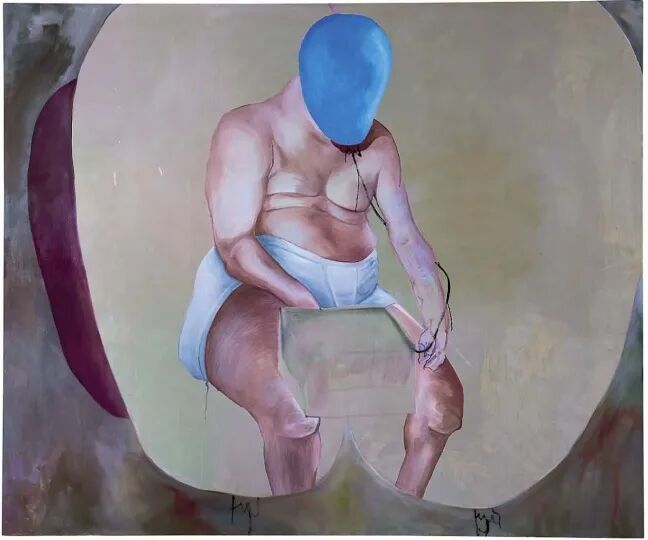
Going further: if “failure” can be outsourced, is the very framework of “individual expression” still valid? The 1978 bad painting of Tucker’s show presupposed an individual artist — “Jenney”, “Garabedian” — whose “bad” was powerful because it was understood as a choice made by a person confronting the norm. Kippenberger’s practice cancels this presupposition. His “bad” is not made by him but manufactured by his assistants; he merely organises and selects. This means the theoretical ground of “bad painting” is replaced by another relation: that between the organiser and the organised.
Kippenberger’s “bad” is not one person against the norm; it is a system producing “a performance of opposing the norm”.
If this logic holds, then the entire discussion of “bad painting” since Tucker’s exhibition needs to be re-examined. It rests on a premise that no longer holds: that there is an individual artist whose “bad” is his choice, and whose choice is his expression.
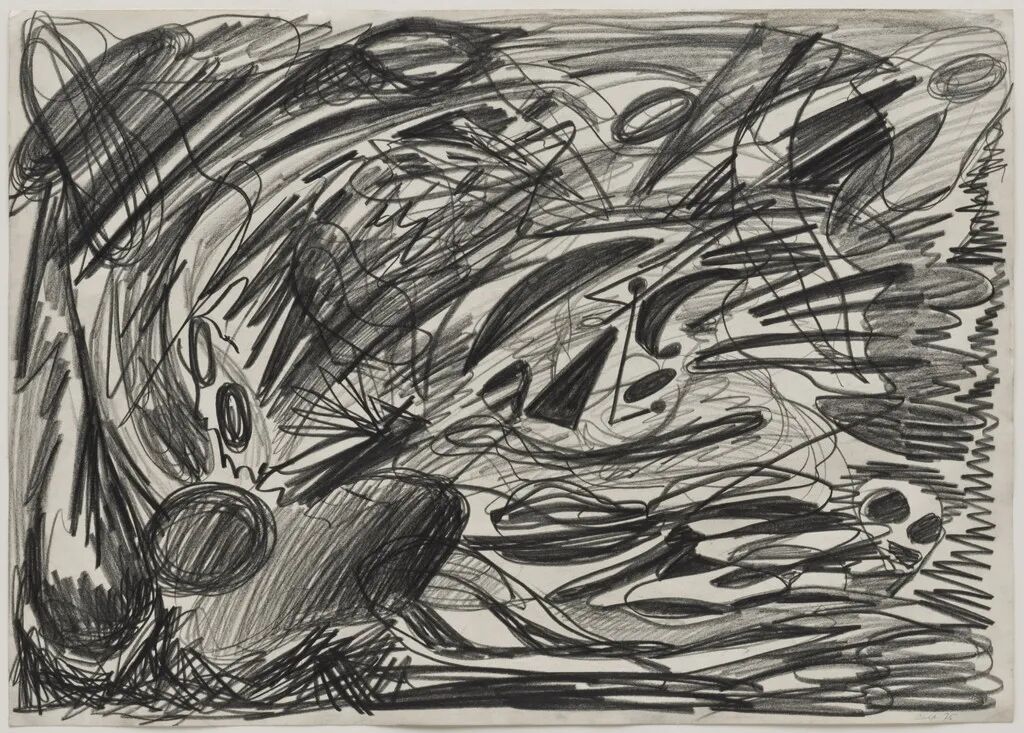
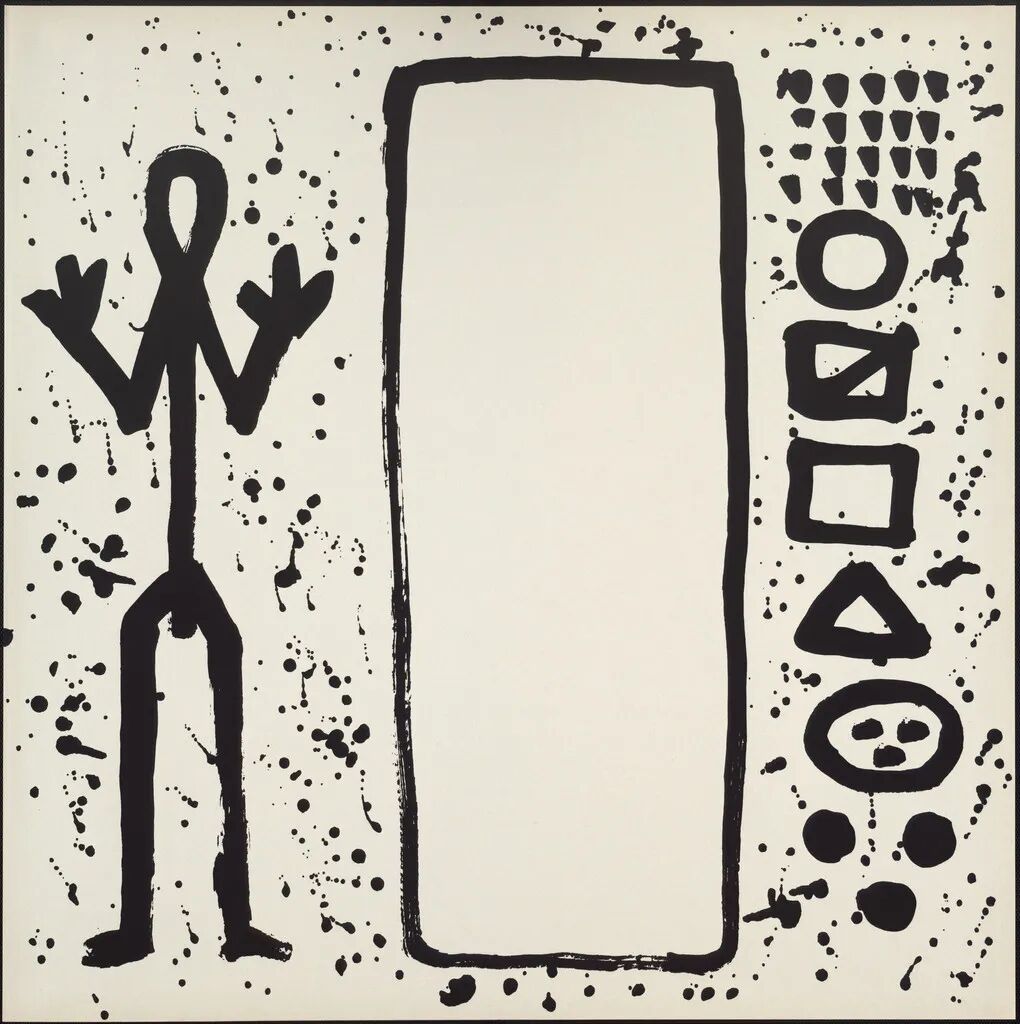
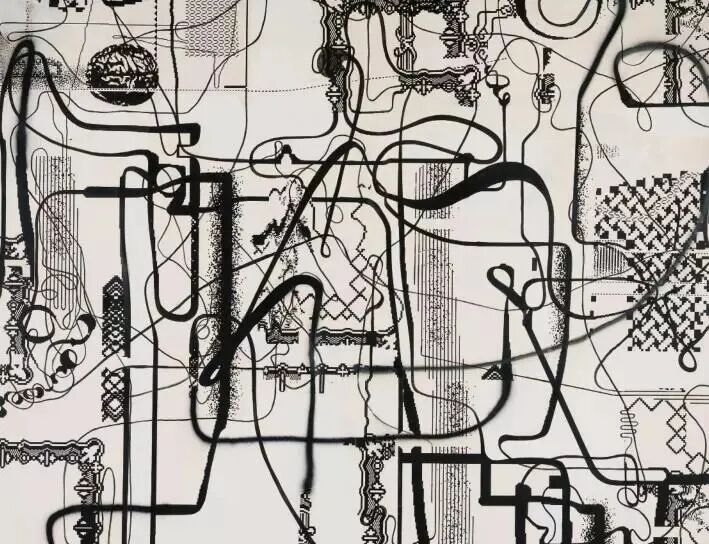
A. R. Penck, Untitled, from the portfolio Ur End Standart, 1972
IV. A Distinction That Can Cut Through the Whole Paradox
A distinction can cut through the whole paradox: the difference between bad and wrong.
“Wrong” is a technical judgement: it fails to meet some verifiable standard. A painting with faulty perspective can be redone with correct perspective. An error can be corrected, located, isolated. “Bad” is not an error that can be isolated and located. The “bad” of a “bad painting” permeates the whole picture. You cannot point and say “here it is wrong”; you can only say “this whole painting is bad”.
Neil Jenney said “a good concept badly painted” — “a good concept” and “badly painted” are two independent judgements. “Badly painted” is an error; “a good concept” is an intention. Only when both are present does “bad” hold. This means “bad” is not a judgement about the picture but a judgement about “the intention behind the picture”. This leads us to Danto’s problem of “indiscernibles”: two visually identical pictures, one “bad painting / good art”, the other “bad painting / bad art” — the difference is not on the canvas but beyond it.
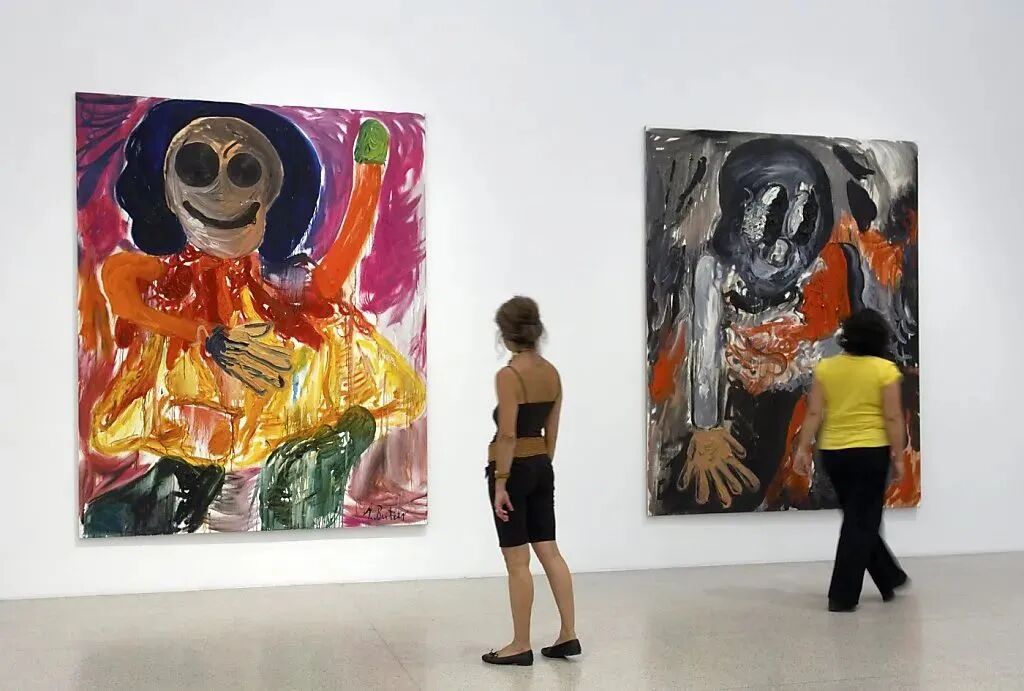
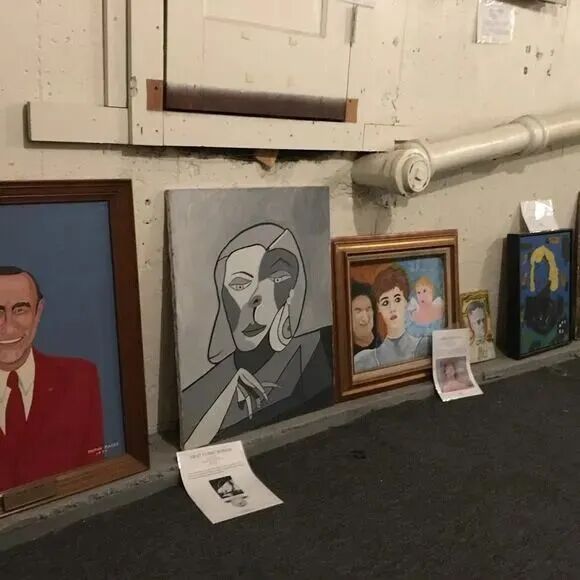
Yet “beyond the canvas” is precisely the hardest thing to judge. We cannot see intention, only the picture. We cannot verify context, only guess. Thus the judgement of “bad painting” always carries an epistemological uncertainty: we may mistake “bad art” for “bad painting”, or “bad painting” for “bad art”.
Quentin Bell (son of Clive Bell), in his 1989 book Bad Art, was aware of this predicament. He noted that “the concept of bad art, even if not entirely rejected, has at least been avoided”. But he also found that once “bad” is abolished, “good” loses the ability to speak its own name. He can only cautiously say “what we call good art”. Bell’s dilemma is this: a critic who no longer has the right to say “this is bad” also loses the ability to say “this is good”.
Bell was acutely aware of the errors made in past judgements, and he hesitated before offering any confident judgement. This hesitation is not merely a matter of personal temperament; it reflects a deeper structural predicament: when the distinction between “good” and “bad” no longer rests on a stable standard, the critic’s judgement loses its footing.
The phrase “paralysis of judgement” needs to be unpacked. Paralysis is not one state but three.
The first is the inability to judge. Faced with a painting, one does not know whether it is good or bad. This feeling usually arises when a work’s formal language is utterly unfamiliar and cannot be filed under any known coordinate. The consequence of being unable to judge is silence. The critic stands before a painting and is speechless. This silence may be honest (admitting one does not know) or lazy (abandoning the responsibility to judge).
The second is the failure of judgement. A judgement is made, but it is invalid in another context. You call a painting “bad” in one exhibition; in another, that same “bad” becomes “good”. The consequence of failed judgement is relativism. The same judgement holds in one context and not in another. In time the critic stops making judgements, because any judgement can be dissolved by another context.
The third is the excess of judgement. Every judgement can be overridden by another, and in the end none is stable. You may call a painting “bad”, and at once someone says “that was deliberate”. You say “it was deliberate”, and at once someone says “deliberateness is also a style”. You say “style is also a norm”, and at once someone says “norms exist to be broken”. This chain stretches infinitely; no judgement can come to rest. The consequence of judgement’s excess is inflation. Every judgement is overlaid by another, and in the end none is stable. Critical language becomes an infinite self-reference, losing its anchoring relation to the work.
These three consequences are politically entirely different. Silence can be resistance — a refusal to participate in an already defunct system of judgement. Relativism can be surrender — the abandonment of criticism’s public function. Inflation can be spectacle: criticism becomes a performance for consumption. He did not distinguish these consequences. It treats “paralysis of judgement” as a unified phenomenon, when in fact it contains three different political postures. Without this distinction, our judgement of the critical practice after “bad painting” loses a dimension.
Once “bad” becomes a recognisable brand asset, judgement falls into paralysis. What is paralysed is not the concept of “bad painting” but all value judgements about painting.
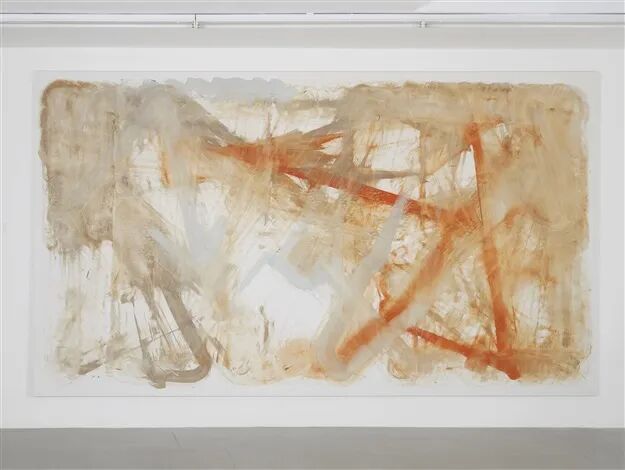
Virtual artist Reena Spaulings, Late Seascape 1, 2014
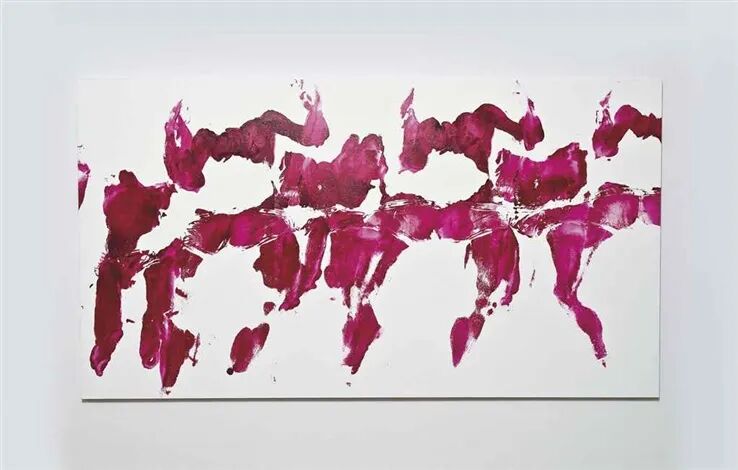
Virtual artist Reena Spaulings, Michael 13, 2011
A typical example: the art collective Bernadette Corporation produced the fictional artist Reena Spaulings, whose paintings are “technically and conceptually low-affect, and thus clearly aim lower than even the historical dialectic of ‘bad’ aimed”. The historical dialectic of “bad” has been successfully commodified. What Reena does is not to continue working within that dialectic. She uses “bad” itself as an already existing brand asset.
This is the complete shape of the bad-painting paradox: it need not become “good”; it only needs to become “recognisable bad”. Once “bad” acquires a recognisable appearance, a teachable grammar, a predictable effect, it detaches from its genuine tension with the norm and turns into a safe, consumable “bad gesture”.
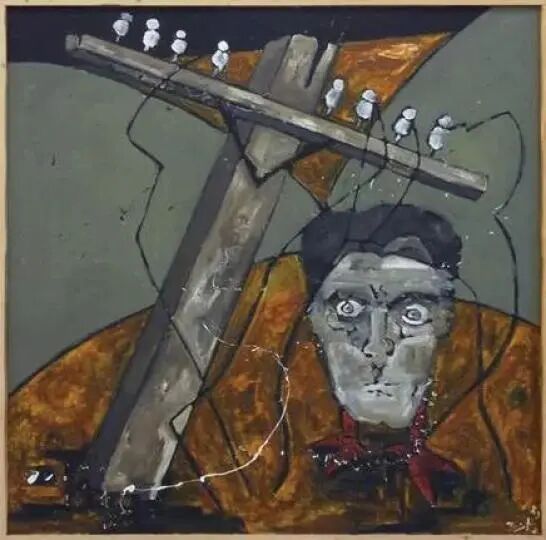
Werner Büttner, Bloss Keine Illusionen (Merely No Illusions), 1989
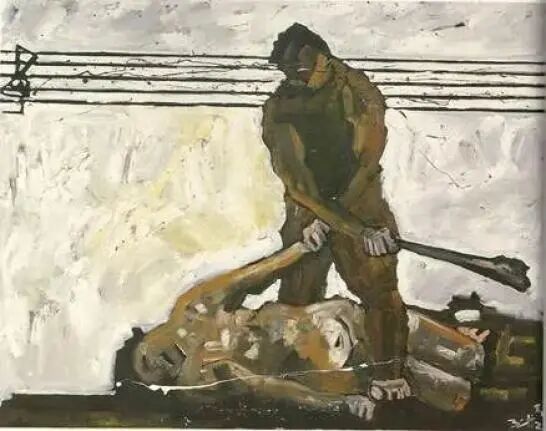
Werner Büttner, gd hermanos con musica (The Hermanos’ Sound of Music), 1984
V. A Genuine Failure
A genuine failure — say paint flowing where it was not meant to, a line straying from intent, a colour arriving at an unexpected effect — can be an event, not an image. An event has an irreversible temporal structure. It happens, it changes the state of things, it leaves a trace. You cannot “undo” paint’s accidental flow.
AI can generate an image that “looks as though failure had happened”. But that image did not “happen”. It is a state, not an event. You cannot find the trace of time upon it, because time was not drawn into its making.
But a question must be raised: how does the viewer judge whether time has been drawn in? A brushstroke on a canvas can be read as an “event” because the viewer has been trained to read time out of the stroke — speed, hesitation, repetition, covering. This training comes from a specific painting tradition. In a culture without such a tradition, the viewer may simply not notice the stroke’s “temporality”.
The challenge of AI is not whether it can generate images that “look like failure” but that it may alter how the viewer distributes attention. When image production becomes extremely cheap, fast, and varied, the viewer’s attention may no longer go to “how did this image come about” but only to “what does this image look like”. In that case, “eventhood” ceases to be the viewer’s concern.
This is a question of the ethics of looking. When the viewer no longer cares “who painted it, how it was painted, why it was painted this way”, on what can painting’s “eventhood” still rely?
The real problem of bad painting is not “bad or not” but “what does it oppose”. “Bad painting” is essentially a negative practice, defined by what it “opposes”. But negative practice has an inner fragility: once what it opposes disappears or is absorbed, it loses its bearing.
The 1978 bad-painting exhibition by the curator Marcia Tucker mentioned at the start had a clear opponent: the “progress narrative” represented by Minimalism and Conceptual art. Once that opponent was beaten back, bad painting faced a choice: find a new opponent, or become a gesture without an opponent. The great quantity of “bad painting” seen on today’s market is precisely the latter state.
But a question must be faced: does the premise of this “negative practice” itself hold?
de Kooning’s “bad” was not an opposition to Greenberg. When de Kooning painted those distorted bodies, Greenberg was defending him. de Kooning’s “bad” comes from a certain relation between his body and his materials — a relation that cannot be translated into “position” or “opposition”. His “bad” happens on the canvas, not in art-historical debate.
The “opposition–co-optation” framework explains a great deal, but it cannot explain those practices whose “bad” does not come from opposition. After de Kooning’s “bad” was accepted by art history, it was not “co-opted” into a safe “bad gesture”. It became part of the history of painting. It became a resource later painters could draw on. This is not “co-optation” but “transformation”. “Co-optation” presupposes a power relation in which the centre absorbs the periphery and annihilates its oppositional character. “Transformation” presupposes no power relation. It merely says: a practice is taken up by later practitioners in a new way.
If all “bad” is forced into the “opposition–co-optation” framework, then those instances of “bad” not driven by opposition become incomprehensible.
To adopt “necessity” as the ultimate standard of judgement, we must first take it apart. It has at least three layers of meaning, and these may conflict with one another.
The first is logical necessity. If form A is replaced by form B and the work’s meaning changes fundamentally, that is the most easily tested necessity. You need only ask: if this painting’s brushstrokes were replaced by another kind of stroke, could the work still say what it says? If the answer is “yes”, then the original form is not logically necessary.
The second is experiential necessity. Form A has an irreplaceable relation to the artist’s concrete experience. This layer of necessity is more private and harder for outsiders to judge. A painting may be logically necessary but not experientially so — its formal choice is logically right yet unrelated to the artist’s lived experience. A painting may be experientially necessary but not logically so: necessary for the artist as a person, but not for the problem the work addresses.
The third is historical necessity. At a particular historical moment, form A is the only possible form. This layer is the grandest and the most easily abused. The phrase “historical necessity” is often used to legitimise certain formal choices, but history itself has no voice; it is the interpreter who speaks.
These three necessities do not always appear together. A painting may possess logical necessity but not experiential necessity. A painting may possess experiential necessity but not historical necessity — necessary for the artist personally yet, for art history, mere repetition. A painting may possess historical necessity but not logical necessity: it plays a pivotal role in art history, yet the logic of its form is loose.
When the three necessities conflict, which should the artist obey? A painting may have a tighter formal option logically, yet that tighter option is unrelated to the artist’s lived experience. He chooses a logically looser form because that loose form carries what he has truly lived through. Here experiential necessity overrides logical necessity. Another case: a painting is experientially necessary for the artist as a person, but historical necessity does not hold — what he paints has been painted countless times in art history. Here experiential necessity overrides historical necessity. There is a yet harder case: a painting holds historically but neither logically nor experientially — it is historically important, yet its form is loose and the artist’s personal experience is absent.
As a standard of judgement, “necessity” is in fact incomplete. It provides a set of coordinates but does not state the conversion rates between them. This means anyone who uses “necessity” to judge a work must also state which kind of necessity they mean, and why this necessity takes priority over the other two.
Going further, when the three necessities conflict, judgement becomes an undecidable moment. No formula tells you when experiential necessity overrides historical necessity, or when historical overrides logical. This judgement can only be made by the person in the concrete situation — and he may get it wrong.
“Necessity” as a standard has its power not in being applied procedurally but in being used to interrogate. It is not a ruler but a question. Anyone who uses “necessity” to judge a work must also state which kind of necessity they mean, and why this necessity takes priority over the other two.
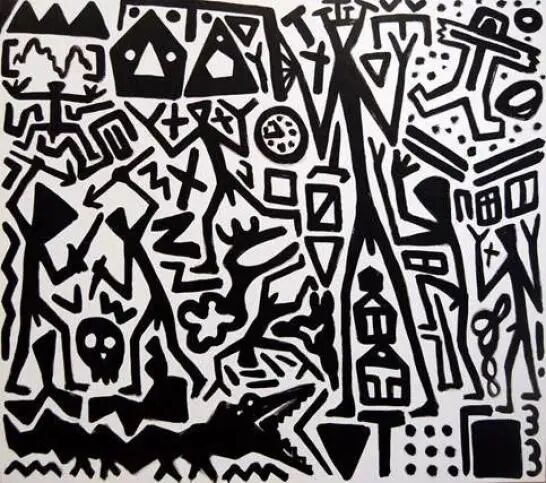
A. R. Penck, System Painting, 2007
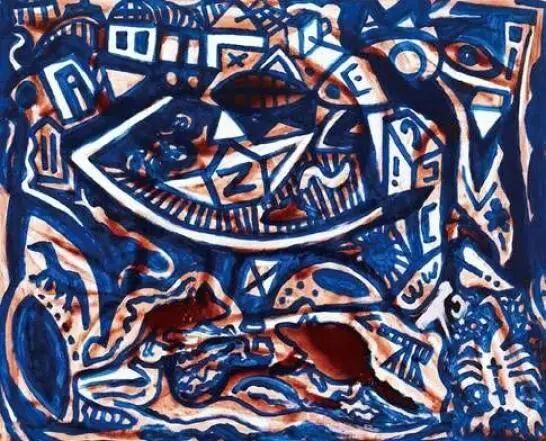
A. R. Penck, Landscape — Remote, 2011
VI. The “Good” Confronting a Young Chinese Painter
The “good” confronting a young Chinese painter is not only the “accuracy” taught by the academy but also the canonised genealogy of “bad painting” in Western contemporary art history. The former teaches him “you must paint correctly”; the latter teaches him “you may paint wrongly”. But these two injunctions contradict each other: if he paints wrongly, the academy says his basics are deficient; if he does not paint wrongly, the contemporary art world says he is not avant-garde enough.
This tension produces a peculiar condition: the “bad” of young Chinese painters is often not an opposition to academic norms but a submission to the Western genealogy of “bad painting”. He paints badly in order to look like the “bad painters” of Western contemporary art. This is a double alienation: he neither “dashes off a few careless strokes” within the Chinese painting tradition nor opposes Minimalism in the Western context. He seeks his place within a “bad painting” genealogy translated at second hand.
This position is itself unstable. He never knows whether his “bad” is resisting something or submitting to it. If he submits to the academy’s “good”, he is merely conservative. If he submits to the Western “bad painting”’s “bad”, he is only a second-hand imitator. If he submits to neither, he may be nothing at all.
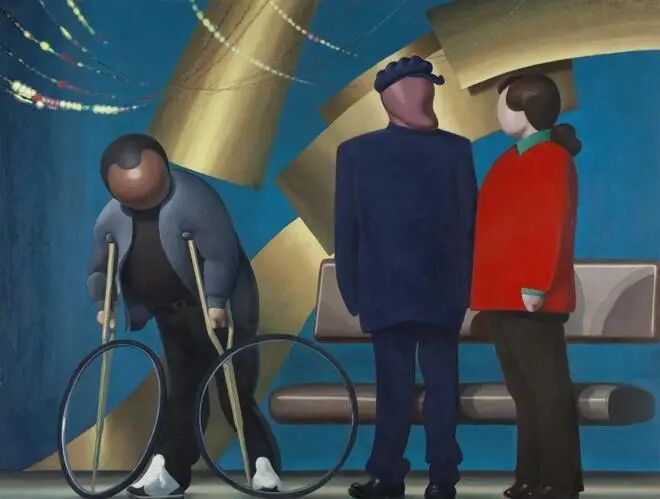
Mr Yi Ying writes in his essay that Chinese “bad painting” cannot be taught; it is “formless form”. This verdict acquires a new layer of meaning here. If Chinese “bad painting” cannot be institutionalised, then it precisely possesses a quality isomorphic with “something not known in advance”: it can occur only in a specific individual, cannot be taught, cannot be copied, cannot be turned into a style.
But Kippenberger’s “outsourcing failure” poses a sharp antithesis to this verdict. If “individuality” itself can be outsourced, then the claim “cannot be institutionalised” grows suspicious. Yi Ying says “without the painter’s individuality, such formlessness is zero”. Yet the “failures” manufactured by Kippenberger’s assistants are also “formless form”: they have no teachable grammar, they belong only to the concrete gesture a given assistant makes at a concrete moment. Yet they can be organised, scheduled, and folded into a larger plan. This suggests “cannot be institutionalised” may not be a resistance but an illusion. If “individuality” can be outsourced, then “formless form” can be outsourced too. What cannot be taught is not the same as what cannot be organised.
The essay discusses the “co-optation of bad painting” but does not discuss the relation between the “death of painting” narrative and “bad painting”.
Since the invention of photography in 1839, the narrative of “the death of painting” has recurred again and again. In the age of digital images it has grown more intense. Against this background, what is the function of “bad painting”?
One view is that “bad painting” is a response to the “death of painting” narrative. When painting is declared dead, “bad painting” says: no, painting is still alive, because there are still those willing to make mistakes on the canvas. By preserving the possibility of failure, “bad painting” proves that painting is not a finished programme but something that can still be done wrongly.
But another answer is crueller: “bad painting” precisely proves the “death of painting” narrative right. For if painting still had vitality, it would not need to prove it is alive by means of “bad”. “Bad” is painting’s last weapon, the only thing it can still do when besieged by digital images and AI.
The opposition between these two answers cannot be easily resolved. If the power of “bad painting” comes from the “death of painting” narrative, then once that narrative fails, what remains of “bad painting”? If its power does not depend on that narrative, then what does it depend on?
Back to the original question.
“Bad painting is not bad, good painting is not true.” The first half says: once something named “bad” enters art history, it is no longer “bad”. The second half says: beneath the accomplished “good” of something named “good”, there may be nothing at all.
But these two sentences themselves carry a danger. They are easily read as a new standard: “bad is good, good is bad.” Once this reading takes hold, they become another kind of formalism.
The real question is neither “bad” nor “good”. The real question is: why must a form appear exactly this way? If this form were replaced, what would remain of the work?
When a painter’s “bad” can be swapped for “good” without changing anything, his “bad” is not necessary. When a painter’s “good” can be swapped for “bad” without changing anything, his “good” is not necessary either.
Necessity does not depend on style. Richter’s blur in the Baader-Meinhof series is necessary, not because blur is “better” but because, before this particular subject, clarity would be dishonest. Tuymans’s “pallor” is necessary, not because pallor is “truer” but because, faced with the Holocaust, saturated language turns into an aestheticised violence.
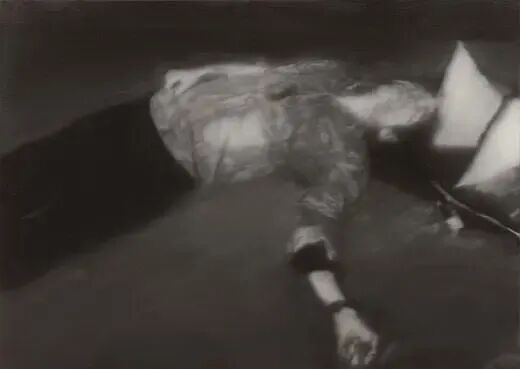
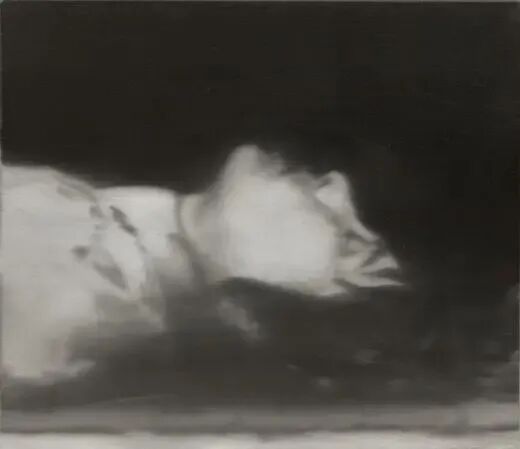
The ultimate question is not “is bad painting still bad”. The ultimate question is: once both “good” and “bad” have become learnable, reproducible, marketable forms, how is a painter to judge why he must paint this way?
This question has no answer. It can only be raised anew, again and again. For each time, what “must” refers to is different.
A painter can learn to paint “well”. He can also learn to paint “badly”. What he cannot learn is why he must paint this way rather than that. That “must” comes neither from the norm nor from anti-norm. It comes from a particular eye seeing a particular thing at a particular moment, and then choosing to leave it on the canvas.
That choice can be copied. But what cannot be copied is the moment of making that choice. That moment belongs to no style, no genealogy, nothing that can be traded on the market. It belongs only to the person standing before the canvas.
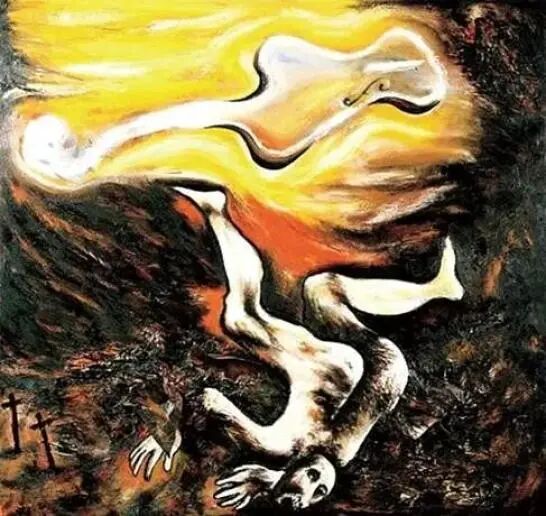
VII. This Essay Has Been Discussing “What Is Bad Painting”, “What Is Good Painting”
This essay has been discussing “what is bad painting” and “what is good painting”, but it has never asked “what is a painting”.
If the very definition of “painting” has grown unstable in contemporary art — if a photograph can be called a “painting”, a video can be called a “painting”, a pile of paint poured on canvas can also be called a “painting” — then the foundation of the “bad painting” discussion is insecure. For “bad painting” presupposes a domain of “painting”, and the boundaries of “painting” are blurred today.
This is a large problem that cannot be resolved within this essay. But the essay should at least acknowledge that, when it discusses “bad painting”, it relies on an implicit definition of “painting” — roughly, “the practice of making marks with pigment (or ink, or charcoal) on canvas (or paper, or board)”. This definition is narrow and excludes a great deal of contemporary painting practice. This essay does not acknowledge the limitations of that definition.
If the boundaries of “painting” are blurred, then the discussion of “bad painting” must accept a premise: its object is not “painting” as a whole but a specific region within painting — a region that still insists on making marks with pigment on canvas. In today’s artistic ecology this region is but a small island. Yet this island is precisely where the problem of “bad painting” is most acute, because its standards of “good” and “bad” are the most stable, its academic tradition the deepest, and its “bad” the hardest to institutionalise.
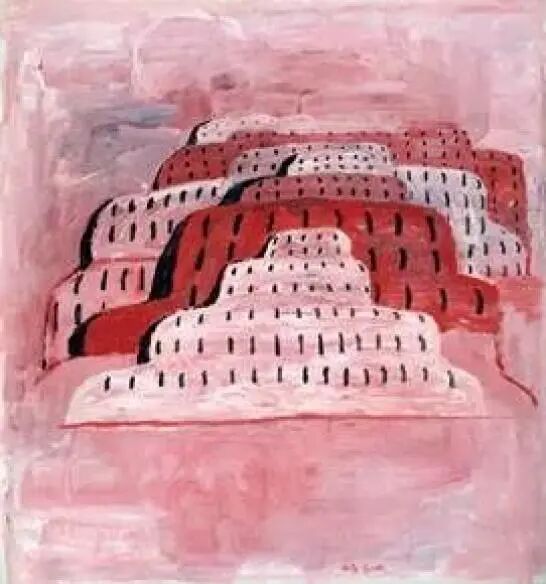
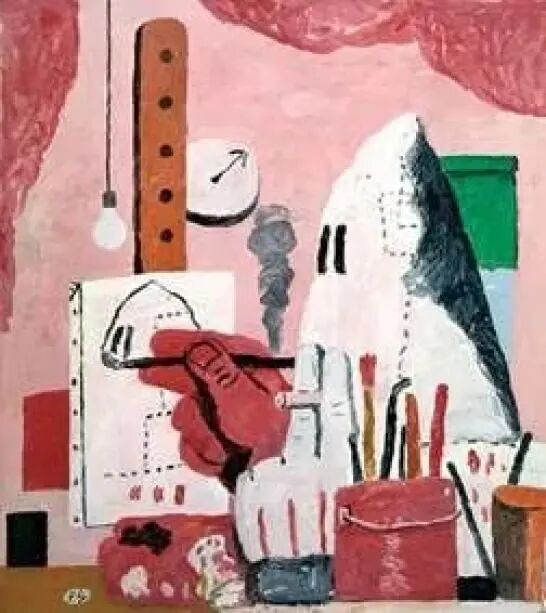
Up to this point, this essay still lacks a systematic theory of failure.
What types of failure are there? Technical failure — the painting is wrong. Intentional failure — what one wanted to paint was not painted. Relational failure — a disconnect between the work and the problem it addresses. Historical failure — the work does not hold up in art history. These failures differ in nature, consequence, and means of recognition. Technical failure can be corrected. Intentional failure may require reunderstanding the intention. Relational failure may require reunderstanding the problem. Historical failure may require reunderstanding history.
The foregoing treated “failure” as a unified thing. But the word “failure” covers too broad a range. One failure can be kept, another must be discarded. What distinguishes them is not failure itself but the relation between failure and the problem the work addresses. If failure exposes a new aspect of the problem, it is productive. If it merely deviates from the problem, it is consumptive. A technical failure may expose a new possibility of the material. An intentional failure may expose the very unclarity of the intention. A relational failure may expose the dislocation between work and problem.
The ability to recognise failure is not to recognise “whether this failure is good or bad” but to recognise “whether this failure is related to the problem”. This requires a sustained sense of the problem, a capacity to know what one is doing and why one is doing it.
Coda: What Remains of Painting after Bad Painting
What “bad painting” ultimately leaves behind is not a new painting style; what it truly shakes is the yardstick we most habitually use when talking about painting: why must a picture be painted “well”?
The question looks simple, but pursued in earnest it is not so simple. For “good” has never meant merely a pretty picture, skilled technique, or high finish. It contains a whole system of historically accumulated judgements: what is accurate, what is distorted; what is mature, what is childish; what is called control, what is called loss of control; what is called competence, what is called lack of basic training. A young painter enters the academy and on the surface learns how to paint better; in reality he is also learning an order of errors — which errors must be eliminated, which may be tolerated, and which, once they appear in the hand of a mature artist, suddenly acquire a new name.
Thus “bad” has never been an isolated property inside the picture. It always stands beside some kind of “good”. Without a yardstick there is no deviation; without a norm there is no error. And precisely for this reason, what is truly valuable in bad painting has never been “painting poorly” but that it exposes the norms that had been taken as natural law. It lets us see that the standards in the world of painting which seem to need no explanation were in fact once established, trained, and maintained.
This also explains why genuinely important bad painting is always more complex than mere clumsiness. When someone who cannot paint produces a bad picture, that is simply failure. It is only when a person who already knows the rules of painting deliberately damages the picture that a problem begins. Here “bad” is no longer merely a result but a moment of readjustment in the relation between artist and norm. He does not simply abandon technique; he decides which techniques should keep obeying and which should be disabled. Thus, for the first time, error is no longer only something to be corrected but may become a discovery.
But the matter does not end here. Once an error acquires a name in art history, it begins to change. Yesterday’s clumsiness can become language today; yesterday’s loss of control can become style today; yesterday’s rebellion can enter the academy’s curriculum tomorrow, even be learned precisely by young artists. What is most to be guarded against is not the market’s “co-optation” of bad painting — for no successful form in art history can avoid being disseminated; what is truly to be guarded against is something more hidden: once the artist has learned how to manufacture failure, failure begins to lose its meaning as failure.
This is also why so much “bad painting” today looks exhausted. Its problem is not that it is crudely painted, nor that it uses childlike modelling, slapdash lines, dirty colours, graffiti, or deliberately distorted images. The problem is that these things are no longer risks but merely familiar language. The artist can paint “unskilled-ness” with great skill, can stage an “accident” with great precision, can turn “I don’t care whether it’s painted well” into an extremely stable visual identity. It looks like breaking the norm, but in fact only swaps one norm for another. At this point “bad painting” poses the artist a harder question than “is it painted well or not”: have you actually driven your form to the point where it must be exactly thus?
“Must be exactly thus” does not mean the artist must candidly bare personal feeling, nor that every brushstroke must bear some sublime mission. A truly powerful painting can be cold, humorous, refined, fictional, imitative, even deliberately lying. What matters is not whether it looks sincere but whether its form has established an irreplaceable relation with the problem it addresses. If a form is removed and replaced by a more fashionable, prettier, or more “contemporary” treatment without the work losing anything, then that form may be mere style; if replacing the form makes what the work truly faces disappear, then only then does it begin to possess necessity.
Therefore roughness has no innate value, nor does refinement carry original sin. Failure can produce discovery or be merely failure; technique can obscure thought or become thought’s irreplaceable structure. So-called handcraft, human trace, chance, loss of control — none of these automatically earns a moral superiority merely by “being human”. In today’s age of AI, even the look of “not knowing how to paint” can be produced with skill; the truly difficult thing thus becomes something else: how the artist makes his painting confront, anew, a problem not yet solved by ready-made language.
This is also why painting still needs failure. Not because failure is nobler than success, but because a forever-correct picture ultimately finds little. What is truly special about painting may be precisely that it is not a programme that can be executed entirely according to plan. Pigment hesitates, covering leaves traces, forms change through revision, a stroke meant to vanish may reappear. The artist can of course control these processes, but control is not the same as cancelling resistance. Here we must distinguish two kinds of control: one eliminates resistance, pursuing perfection, smoothness, flawlessness, systematically excluding all material uncertainty; the other accommodates resistance, preserving it, even actively inviting it, letting the material’s recalcitrance become part of the work. The difference between these two controls is not one of “good technique” versus “poor technique” but of the artist’s “attitude toward uncertainty”.
The power of bad painting often comes from the latter, but its danger lies here too: when “accommodating resistance” becomes a learnable strategy, it has already turned into another technique of “eliminating resistance”, controlling even uncertainty itself.
Painting remains painting precisely because the painter’s intention must constantly fold back through material, time, body, and looking. What we call “bad” is sometimes exactly the trace left by this folding back.
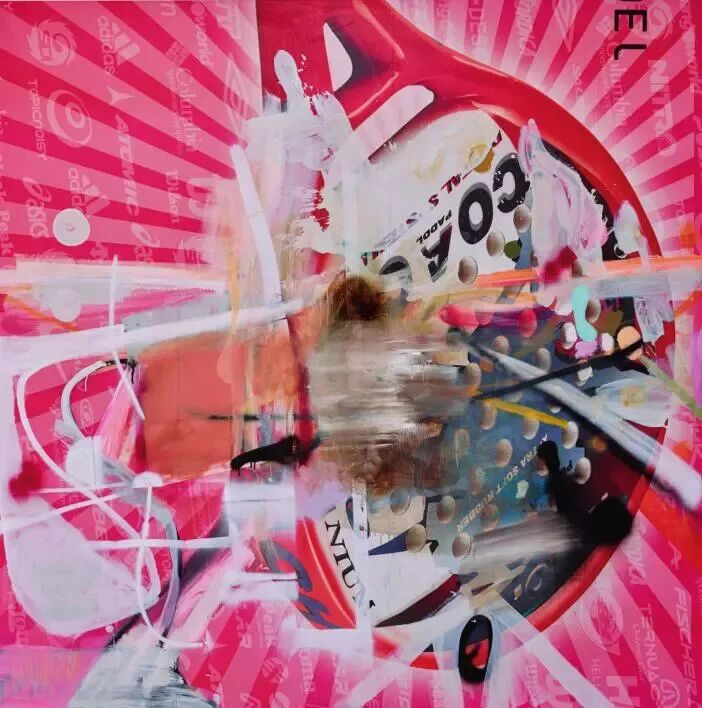
German artist Albert Oehlen, Ohne Titel (Untitled), 2016
The question thus returns once more to the artist himself.
Today there is no need to teach anyone how to paint “badly”, nor how to paint “well”. These languages are too easily learned. What is truly worth training is the ability to judge why one paints this way. Not the rationale in the wall text, but whether the form itself can bear that rationale; not “what do I want to express” but why precisely through this colour, this scale, this brushstroke, this error, this repetition; and again not whether the style is highly recognisable, but whether, even without the style’s name, the painting still has to exist in the way it does.
If an artist can ultimately only say “because this is my style”, then the problem has often only just begun. Style can prove that a person has achieved recognisability, but it cannot prove he is still discovering. The truly difficult thing is whether, once a person has mastered a language that lets the market, the academy, and the audience instantly recognise him, he still has the capacity to let that language fail when necessary.
Thus “bad painting is not bad” is not an attempt to rehabilitate bad painting, nor to establish a new “aesthetic of bad painting”. What it truly forces painting to confront is a more uncomfortable question: once all forms can be learned, all rebellion named, all errors stylised, can a picture still retain something not known in advance?
“Something not known in advance” is not only that the artist does not know what he will finally get. It also includes: the viewer does not know what he is seeing either. Only when the viewer faces a painting he cannot pin down with ready-made style labels, genealogical coordinates, or market prices does that painting truly retain a bit of “something not known in advance”. This means “not known in advance” is not only the artist’s condition of production but also the viewer’s condition of experience. The artist does not know what he is doing; the viewer does not know what he is looking at. This twofold uncertainty is precisely why painting is still worth making and seeing today.
But “twofold uncertainty” is not a value in itself. It yields value only under specific conditions: when the artist’s “not knowing” comes from exploring unknown territory, and when the viewer’s “not knowing” comes from suspending existing coordinates. If these two conditions do not hold, twofold uncertainty is merely another form of failed communication. Under what conditions is it positive? When the artist has a question but does not know its answer. When the viewer has an experience but does not know its name. Between these two “not knowings” there is a resonance: the artist seeks something not yet named; the viewer feels uneasy before something not yet named. This resonance is where the value of “twofold uncertainty” lies.
This, perhaps, is the reason painting is still worth continuing to make today.
Not because it can still produce prettier images than others, nor because it can prove the human hand more precious than the machine, but because on a finite stretch of canvas a person may still not know what he will finally get.
True painting, perhaps, is not turning “bad” into “good” but letting painting keep the capacity to recognise failure. Failure will always happen; the truly hard part is, after failure occurs, being able to recognise whether it has produced something new. This recognition itself cannot be pre-programmed. It can be trained, organised, even outsourced to assistants. But the one who bears the consequence of this recognition can only be the person standing before the canvas. That moment belongs to no style, no genealogy, nothing that can be traded on the market. It belongs only to the person standing before the canvas.
订阅艺术评论
订阅即赠《2024中国当代艺术关键词》内部思考笔记 PDF
每周免费获取最新当代艺术批评与研究