Introduction
Many artists have known this particular gap between expectation and reality: a brilliant idea flashes into the mind, you make the work in a rush of excitement, hang it on the wall, only to find a short while later that it has died like a firework—a single bright burst, then darkness. The problem is rarely the idea itself; rather, it remained only an idea, an isolated, clever seed that could not keep growing. A genuinely powerful artistic concept is never a moment of sudden inspiration. It is a system that can be sustained, extrapolated and endlessly unfolded. To understand how such a system is built, the best place to begin is with two founders who carried “the concept” to its furthest extreme: Yves Klein and Joseph Beuys.
I. Two Cornerstones
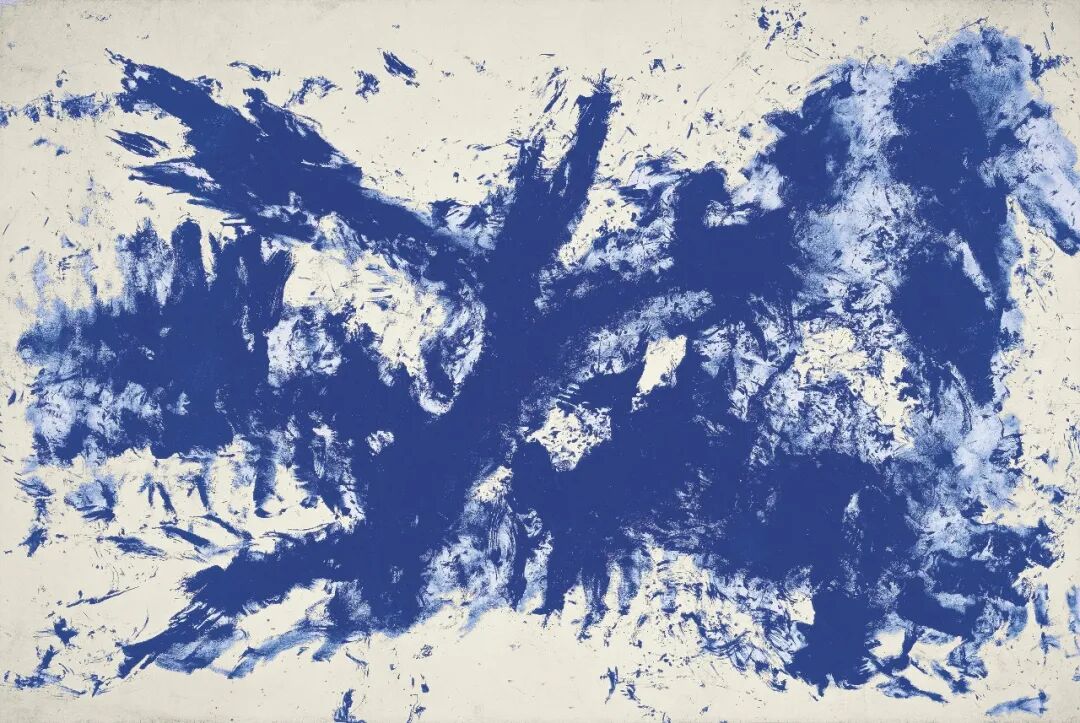
Klein’s “International Klein Blue” (IKB) was far more than “finding a nice shade of blue”. Its revolutionary force lay in a sequence of conceptual gestures so precise they verge on the obsessive. In 1956, Klein approached the Parisian colour merchant Édouard Adam, and together they used a synthetic resin called Rhodopas M60A to suspend pure ultramarine pigment, so that once dry the paint retained the visual intensity of a powder and a clarity untainted by impurities. This was the material foundation.
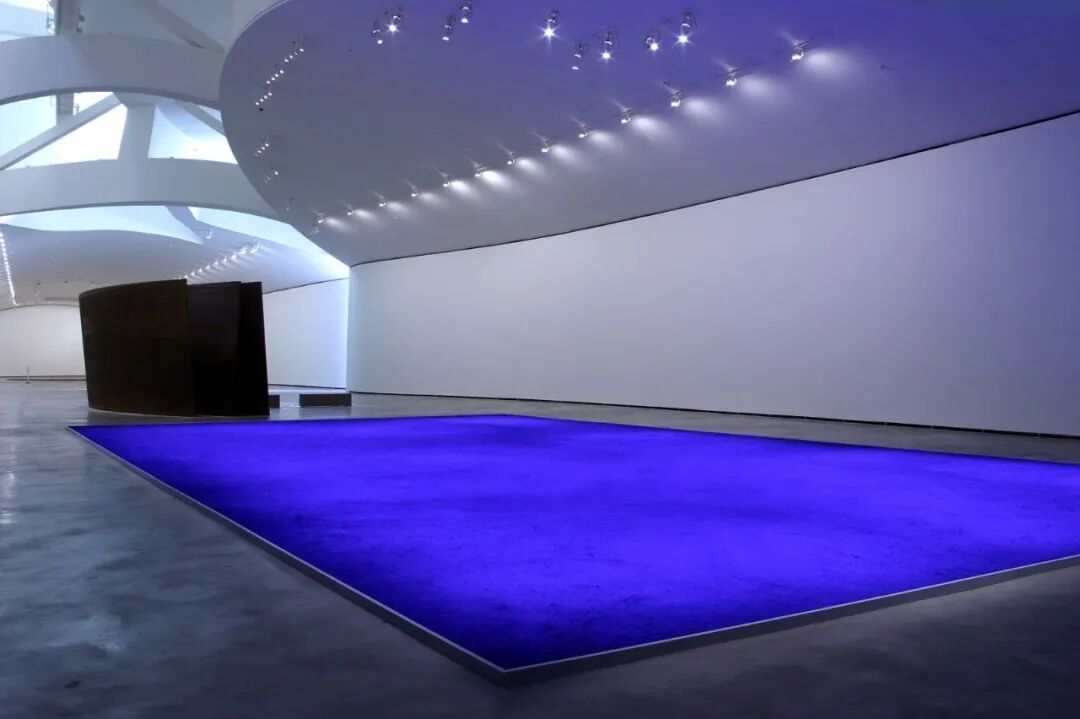
But the truly radical artistic act came four years later.
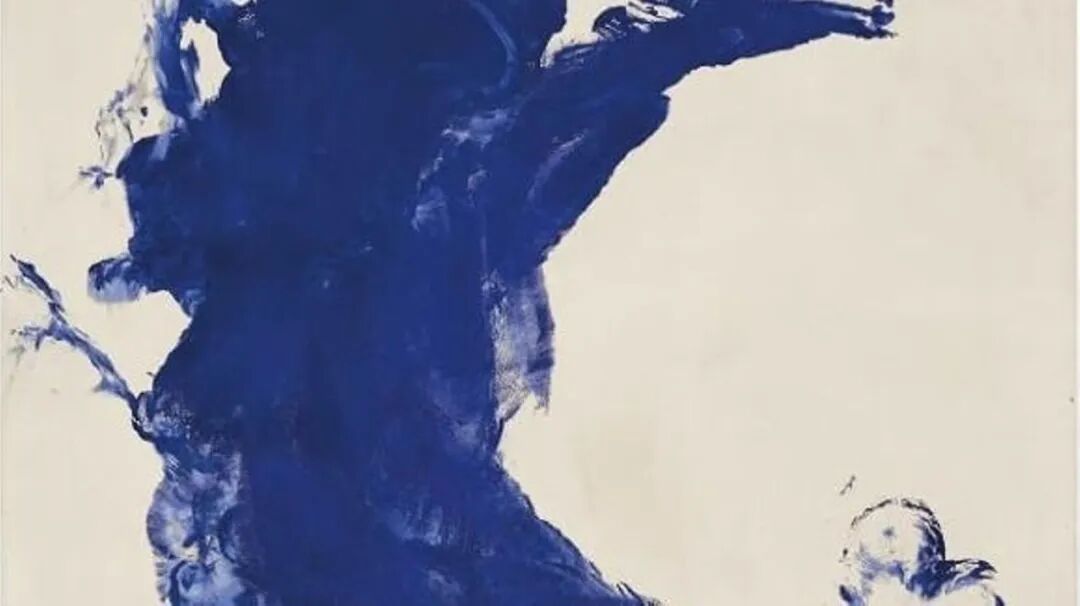
In 1960, Klein submitted to the French National Industrial Property Office a “Solo Envelope” numbered 63471, registering ownership of his pigment formula. The art historian Pierre Restany, in his 2004 book *Yves Klein: Heart of Fire*, analysed this episode: through a legal procedure, Klein turned an intangible colour experience—visible to anyone—into a named, owned private entity. Colour could henceforth be possessed; it could become the artist’s signature. IKB was no longer merely a blue; it became a sign pointing toward the void, the cosmos and pure perception. Whether in *Anthropometries*, in which nude models smeared with blue paint rolled across the canvas, or in the exhibition *The Void* at the Iris Clert Gallery, which “sold” zones of immaterial sensibility, or in the *Fire Paintings* scorched with a blowtorch, everything revolved around the same “immaterial” core. That blue was the singularity of this conceptual universe.
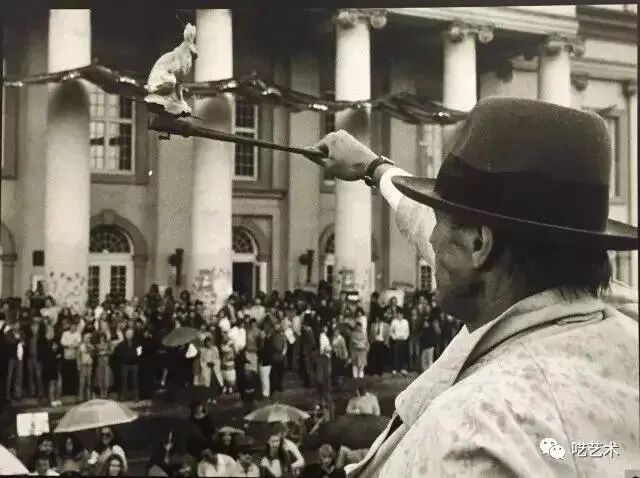
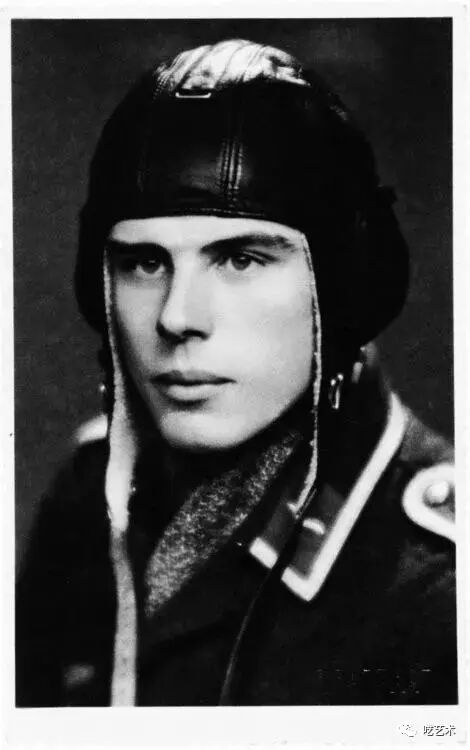
Where Klein was mesmerised by immateriality, Beuys drove his concepts deep into the soil of matter, myth and social reality. His two most habitual materials—fat and felt—derive from a private myth he told again and again: during the Second World War, in 1944, his plane was shot down over Crimea; a local Tatar nomadic tribe rescued him, smeared his body with animal fat to heal his wounds, and wrapped him in felt to keep him warm. The truth of this story has long been disputed in academia. The art historian Benjamin Buchloh, in his 1980 essay “Beuys: The Twilight of an Idol”, described it bluntly as “a complex mixture of fact and mnemonic material”—a myth woven to fashion an artistic identity. Yet as Thierry de Duve argued in *Kant after Duchamp* (1996), the efficacy of art does not always depend on the truth or falsity of empirical fact, but on the internal coherence and generative capacity of its signifying system. True or false, this “origin myth” became the starting point of Beuys’s entire system.
Fat and felt were thereby charged with metaphor: fat is the storage and transformation of energy, a medium between chaos and form; felt is the symbol of warmth, insulation and primordial sociality. His later, scandalising theory of “social sculpture”, his slogan “everyone is an artist”, his political actions, and even *I Like America and America Likes Me*—in which in 1974, in New York, he shared a room with a coyote—were all unfoldings of this material language across different dimensions. Set the two men side by side and the conclusion is clear: the artistic concepts they built were never isolated clever notions, but the materialisation of an internally coherent worldview. Klein’s blue is a portal to an immaterial universe; Beuys’s fat and felt are an energy source that activates the social organism. Their contribution lies not only in finding a core proposition, but in developing a method that can be reiterated across philosophy, material, action and text—the systematic method later artists must master if they are to forge personal intuition into universal concept. This is precisely what this essay sets out to examine.
Worth noting is that the two men stand precisely at the two extremes of conceptual art: one moved toward the void, turning colour into philosophy; the other rooted himself in the material, turning fat into social theory. Almost every systematic conceptual practice since has done nothing more than locate itself between these two poles. To see this pair of poles clearly is to see roughly half the map of conceptual art.
Of course, narrating the founders’ stories so neatly risks creating the illusion that concepts are the privilege of genius. The truth is quite the opposite: what is most worth learning from Klein and Beuys is not what they “thought of”, but how they “kept an idea from dying”. What follows is a concrete account of how to keep an idea alive. If this essay has its shortcomings, I welcome your criticism and correction.
Pulled apart, the methodology of the concept is really a cycle of six moves: dig the concept deeper, find its fissure, write it down, throw it into different dimensions to test it, let the work grow into a system, and finally write one’s own history by hand.
We will proceed chapter by chapter; each chapter can be used on its own, and together they form a path one can walk for a long time. By the way, why insist on “systematicity”? Because creation is a marathon, not a sprint. Most artists do not lack good ideas; what they lack is a method to keep an idea alive for three years or more, a method that lets their thinking truly stand firm. Systematicity is not about turning art into an assembly line; it gives you a skeleton that holds steady when confusion, bottleneck and the temptations of the market take their turns assailing you. With the skeleton in place, the flesh can take any shape.
II. Digging the Concept Deeper
When starting out, many artists mistake a novel visual sign, a distinctive material or an interesting form for a complete “concept”. That is usually only the tip of the iceberg. A living concept, like a geological formation, has complex stratification. Before acting, one must first become the archaeologist of one’s own concept, drilling downward to draw its complete geological map.
Imagine the initial spark you have caught is “dust”. The outermost layer is the phenomenal layer: what is it? In the plainest language, it is a collection of minute particles—fibres, flakes of skin, mineral specks—found in the home, the city or ruins… At this layer one strips away all emotion and extension, returning to the matter itself. In 1900, the phenomenological philosopher Edmund Husserl, in *Logical Investigations*, advocated “return to the things themselves”; to define the phenomenon clearly first is the cornerstone of all later thinking.
The next layer down is the perceptual layer: what does it make one think of? Dust may point to the feeling of being forgotten, of being overlooked, to the desolation of passing time, or to a quiet, still atmosphere. In 1958, Gaston Bachelard, in *The Poetics of Space*, analysed neglected spaces such as house corners and attics precisely as a deep excavation of such perceptual meaning; he wrote that those despised materials are exactly where human imagination and memory are most active.
Sinking further, we enter the ideational layer: what philosophical proposition or social issue lies hidden behind it? “Dust” can be pressed into questions such as: how is history written, what is erected as a monument and what is cast off as dust? Who decides what counts as clean and what as dirty? In the digital age, is the piling-up of information producing a new, invisible “digital dust”? At this point it may already be in dialogue with Foucault’s archaeology of knowledge and Benjamin’s theory of the “ragpicker” of historical fragments, becoming a philosophical probe.
Deeper still is the existential layer, which pulls the question back to the most fundamental condition of the human being: is the human self also a mote of dust in the long river of cosmic time? Does our longing for immortality stem precisely from the fear of eventually turning to dust? Astrophysics tells us the elements that make up the body are themselves born of stardust. Heidegger’s “being-towards-death” offers exactly the framework for this existential fragility and transience. Human vulnerability is the true point of origin of all contemporary artistic concepts.
The deepest and most crucial layer is the structural layer: how does this concept interact with such basic structures as power, history, the body, time and language? Who has the authority to define what counts as “dust” (that is, “rubbish”, “the useless”)? Is cleanliness itself a disciplinary exercise of power over space? The metabolism and shedding of the body make it a continuous producer of dust—how does this challenge our imagination of bodily integrity and purity? How do idioms like “dust settling” and “not a speck of dust” shape our cultural judgement of dust? After such an exploration, drilling from the surface to the structural layer, that thin initial “dust” has grown into a tangled little worldview connecting philosophy, sociology and anthropology. It will become the solid ground for all your subsequent creation.
This “geological exploration” sounds abstract, but in practice it is quite concrete. Take a sheet of paper, write the concept in the middle, then force yourself to ask five rounds of “why”, “so what”, “and then what”. With each round, you drop a layer deeper. Most people’s initial ideas stop at the phenomenal layer and take that for the bottom. A true artist keeps asking until the structural layer before beginning to act. This process need not be completed at once; often it accompanies the entire creative period, sinking repeatedly and slowly.
Another easily overlooked point: the existential layer. It is also the most personal and the most moving layer. Phenomenon, perception and idea can all be supplied by reading and research, but only you can answer the question of what condition of your existence as a human being this concept touches. A concept that has not even moved its own creator, however rigorous, cannot sustain a work. So when exploring, do not forget to ask honestly: what, in the end, does it have to do with me?

To keep this method from floating in the air, let us try it once more with “water”.
Phenomenal layer: water is H2O, transparent, flowing, able to carry things;
Perceptual layer: water is cool, soft, evoking breath and purification;
Ideational layer: water prompts the question of whether “purity is a privilege”—not everyone has clean water;
Existential layer: seventy per cent of the human body is water, and it will return to water in the end;
Structural layer: water leads to the distribution of resources, borders and irrigation, the body’s retention and loss of water, and so on.
The same drilling motion works just as well with a different concept; method matters more than example.
Having done this exploration, you gain an unexpected by-product: when others ask “what is this work trying to say”, you no longer hem and haw, but can speak layer by layer, from phenomenon to structure. This ability to articulate clearly is not a degeneration of artistic sensibility but a sign of its maturity. A concept that cannot withstand questioning is like a house without foundations—it collapses at the first gust of wind.

III. Every Good Concept Contains a “Fissure”
Having explored depth, the next step is to find the concept’s inner driving force. The most tensile and enduring concepts almost all harbour a core paradox, or inner contradiction. This is not a defect of the concept; it is precisely the engine that drives you to keep questioning and experimenting. It generates an energetic field between two seemingly opposed extremes.
Klein’s paradox is the tension between the intangible, ineffable void and the tangible, legally protected patent registration. He tried to capture the most immaterial, most spiritual experience by the most worldly, most bureaucratic means (registering a patent for his formula). This absurdity and philosophical tension force us to rethink the boundaries between matter and spirit, possession and experience, art and law.
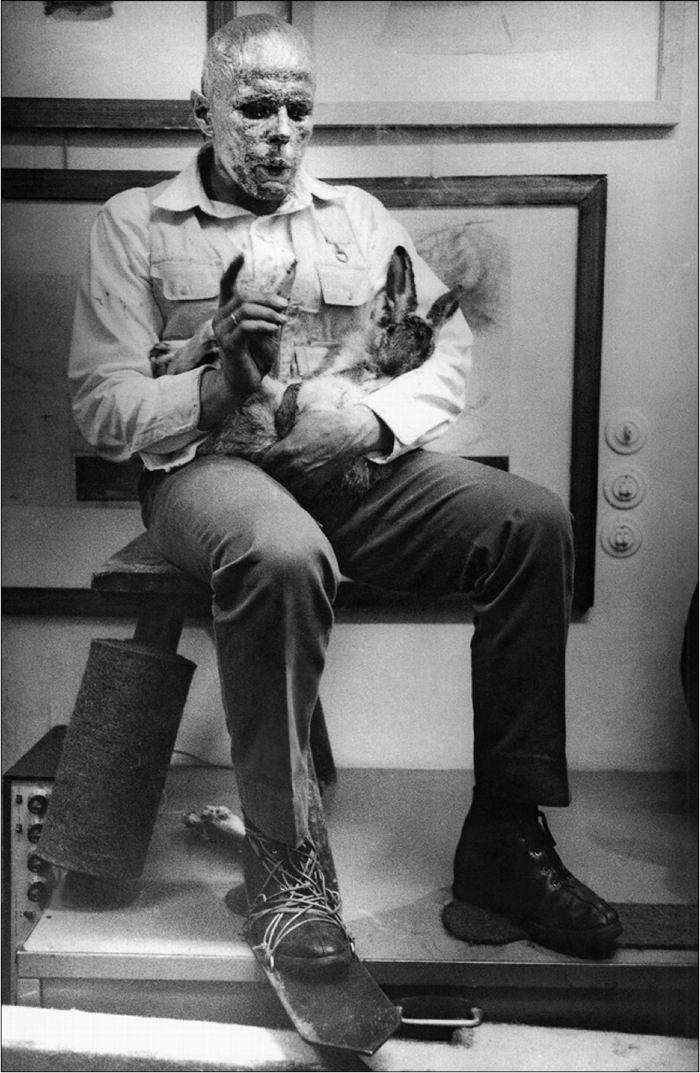
Beuys’s paradox lies in the enormous gap between crude, pre-modern primitive materials (fat and felt) and a highly precise, structurally complex socio-political theory (social sculpture). He used shamanic, mystical personal myth and raw materials to intervene in the most contemporary issues of democracy, education and the environment. He forcibly welded antiquity and present, intuition and reason, personal trauma and social healing—and that is exactly the source of his power.
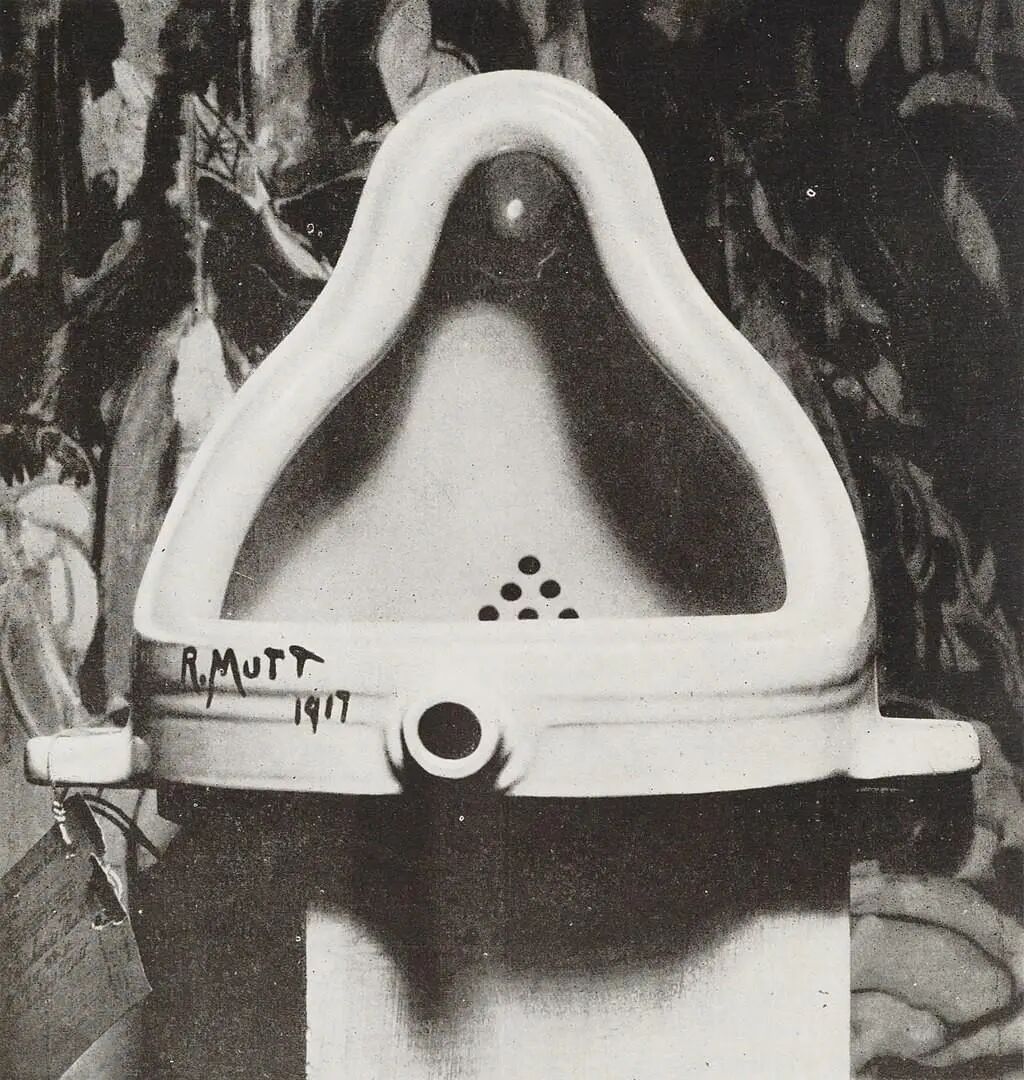
Duchamp’s paradox is the sharpest of all. As a pioneer of conceptual art, his “readymades” perfectly exemplify the power of paradox: the conflict between everyday industrial objects of no aesthetic value (urinal, bottle rack) and the supreme aura of artistic sacrality (the museum context, the artist’s signature). The 1917 *Fountain* posed a riddle that more than a century has not easily resolved: it keeps interrogating the definition of art, the role of the artist and the power of art institutions. Arthur Danto, in *After the End of Art* (1997), argued repeatedly that Duchamp turned art from a question of “what to look at” into the philosophical question of “what is art”.
So once you have explored your own concept, you must ask: what inner contradiction lurks within it? Is it order and chaos, eternity and transience, memory and forgetting, or nature and the artificial? This contradiction will be the fulcrum from which all your later works can draw force; it will keep supplying energy, allowing you to avoid simple self-repetition in your practice and instead keep probing and intensifying it from new angles.
There is a practical method for finding paradox: take a sheet of paper, write on the left the most “sublime” side of your concept, and on the right its most “worldly” or most “awkward” side, then draw a line between them. Good concepts are often born in the tug-of-war along that line. If you care about “freedom”, then freedom’s opposite—discipline, dependence, fear…—is precisely the material you should keep returning to. A paradox is not to be solved but to be nurtured; the less you try to “cure” it, the more nourishment it gives you.
One more warning: this contradiction must be something you genuinely feel, not something forced together to please the public. The reason many young artists’ works are “conceptually correct yet unmoving” is that their paradox is deduced, not lived. Audiences may not be able to put it into words, but they can smell it.
There is a rustic way to test whether a paradox is real: try telling it to a friend who knows nothing about art. If their eyes light up and they say “that’s interesting”, it is probably alive; if they nod politely and then ask “so what”, it is most likely still an empty conceptual shell. A paradox need not be grand; it need only be true. A small contradiction about your own immediate circumstances beats a hundred grand propositions borrowed from books.
Here is a contemporary example. Many politically engaged artists deliberately make their work exquisitely beautiful: velvety colour, cinematic composition, used to tell the most uncomfortable truths. The paradox here is the tug between “temptation” and “offence”: the more beautiful, the more one wants to approach; the closer one comes, the more it hurts. This “sugar-coating the pill” strategy is exactly how paradox lives today. It reminds us that paradox resides not only with the Old Masters; it happens every day on the workbench of everyone who creates seriously.
IV. Writing the Core into a Manifesto for Yourself
If “excavating the concept” is discovery and prospecting, then “establishing a conceptual constitution” is the legislation and consolidation of those findings. This step is ignored by the vast majority of artists, yet it is crucial. It requires you to turn chaotic, intuitive thinking into a set of clear, structured internal working principles. This “constitution” is not for external publicity; it is an operating manual and a standard of judgement written for yourself, helping you keep focus and make clear-headed decisions over a long creative career, building an art system that is highly recognisable and internally coherent. Wittgenstein said that the clarity of language determines the clarity of thought; to textualise the concept is in itself a deep clarification.
This private “conceptual operating manual” can contain several core parts:
First, the core proposition: state your central artistic claim powerfully in a single sentence; it should be the “highest programme” of all your work. Klein’s proposition might be “through pure colour, to liberate the human being from the bondage of matter and enter immaterial perception”; Beuys’s might be “the ultimate purpose of art is to shape a more creative and more humane social organism”. This sentence becomes the artist’s touchstone for judging whether a new idea belongs to their system.
Second, build a material dictionary: systematically list which materials, media, images and colours belong to the artist’s “legitimate vocabulary” (where “legitimate” can also be understood as objectively reasonable), and explain why. This is not merely a list but a glossary of meanings. For instance, an artist working with the concept of “dust” might include in their material dictionary dust from specific sources (libraries, abandoned factories), microscopic images, vacuum cleaners, cleaning tools, archive folders—and must answer: why is library dust worth depicting (the remains of knowledge)? Why can a vacuum cleaner become material (it is itself the incarnation of discipline and power)? Giuseppe Penone, a leading figure of Italian Arte Povera, built a material dictionary centred on natural objects such as trees, stones and vegetables, to counter the rigid aesthetics of industrialised society; the choice itself is a political and philosophical manifesto.
Third, a list of prohibitions: clearly write down which themes, materials, forms or methods you will never touch. Defining boundaries is as important as defining content; it helps you establish uniqueness and avoid fashionable clichés irrelevant to your core. A representative example: the famous “Vow of Chastity” of the Dogma 95 film movement launched by the Danish directors Lars von Trier and Thomas Vinterberg—a ban on non-diegetic music, non-location sound, artificial lighting and so on—is a radical list of prohibitions that itself constitutes the core of their aesthetic system.
Fourth, a philosophical genealogy: make clear who your intellectual ancestors are; they need not all be artists—they can be philosophers, scientists, anthropologists, writers or directors. Sorting out this genealogy places your work within the broader current of human intellectual history, providing theoretical depth and helping you find interlocutors. For example, an artist exploring body and technology might include in their genealogy Donna Haraway (cyborg theory), Merleau-Ponty (phenomenology of the body) and Paul Virilio (speed and politics). This is your personal “library of thought”. Art history today may not be able to resolve entirely the question of one’s “path hither”; it perhaps can only address part of the problem at the level of practice.
Fifth, a keyword star-map: unfold the core concept with about twenty keywords, drawn as a star-map that marks their hierarchy, subordination, opposition or association. For instance, “dust” might centre on “forgetting” and “time”, radiating outward to words such as “memory”, “matter”, “uselessness”, “entropy”, “purity”, “power”, “archive” and “microcosm”, while strong tensions may exist between “purity” and “forgetting”, or “power” and “uselessness”. This diagram is a visual map of your conceptual universe; it helps you discover latent connections between ideas and birth new series from them.
Beyond these five, there is one often underestimated: a failure list. Record the paths you have tried and found impassable, together with the thinking at the time. It serves two purposes: first, to stop you falling into the same pit again later; second, these “corpses” often reveal what you truly care about—the places where you keep hitting a wall are usually the hardest kernel of your concept. The “manifesto” need not be fixed in one sitting; it should grow with you. Take it out and revise it every six months, and you will be astonished at how your thinking has changed.
Some resent writing these things as “too rational”, fearing it kills the art. I think the opposite is true: textualising is not nailing inspiration into a coffin, but giving intuition a shore to return to. When creation falls into chaos, self-doubt or the temptations of the market, this “manifesto” pulls you back like a compass. It does not write “what you cannot do” but “who you essentially are”.
Beginners at writing a “manifesto” often make one mistake: they write it like a cover letter, all pretty words. The effective way is to be a little unflattering—include blunt truths such as “I’m actually not very good at telling stories”, “I get intimidated by large-scale exhibitions”, “I hate explaining my own work”. The more honest it is, the more this document can haul you back to the ground when you start floating.
The philosophical genealogy item is the easiest to turn into “showing off one’s learning”—listing a pile of names to seem cultured. But a truly useful genealogy is alive: it should be those people you have genuinely read and been changed by, or those who changed you. Even two or three is better than listing twenty names you have never opened. A genealogy is for conversing with you, not for propping up your facade.
V. The Next Move: How to Unfold a Concept Systematically?
Having established a solid conceptual core, the next task is to unfold it systematically. A common misconception is to “make more similar works”—simple linear replication (repetition) along a single dimension. This is a small trick that rapidly exhausts the concept’s vitality.
The method I consider effective is to place the same core question into different dimensions, repeatedly testing, refracting and translating it. Each shift of dimension refracts a wholly new aspect of the concept, like a prism; this is not repetition but “dreaming the same dream in different bodies”.
The six dimensions below are not for you to complete one by one, but to give you a map of “where else one can go”.
A concept need not employ all six, but when you feel there is nothing left to do, it is more often that you have forgotten one of these facets. A truly mature artist returns repeatedly to this map at different creative stages, and each time reads a new square.
The first dimension is the transformation of medium. Consciously carry the same concept across every medium within your reach: painting, sculpture, installation, performance, image, sound, text, digital networks… Each “translation” loses and gains information, and the gain is precisely the concept’s new growth point. Bruce Nauman’s career is the ultimate medium transformation: around cores such as the body, language and spatial control, he explored almost all of sculpture, neon, video, holography, performance and sound installation. The 1967 video *Walking in an Exaggerated Manner Around the Perimeter of a Square*, his later verbal games assembled from neon tubes, and his claustrophobic corridor installations all probe the same question of bodily discipline and psychological limit—only each medium reveals a distinct facet.
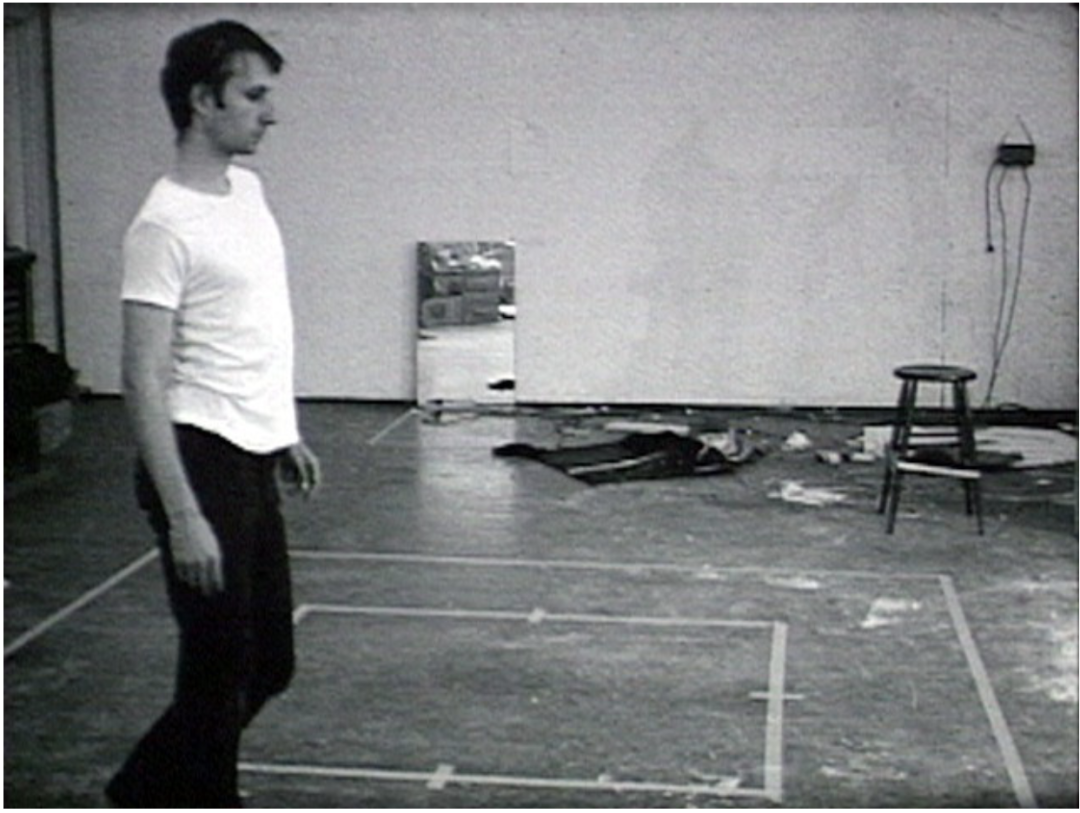
Bruce Nauman, Walking in an Exaggerated Manner Around the Perimeter of a Square
The beauty of medium transformation is also this: a “failure” in one medium is often a “discovery” in another. A relationship that simply cannot be explained on canvas might become clear in thirty seconds of sound; a meaning too blunt in sculpture gains measure when placed in performance. So do not fear crashing about between media; the rough scars left by those collisions are often where the concept grows most truthfully, and the most moving, even the most full of new possibility.
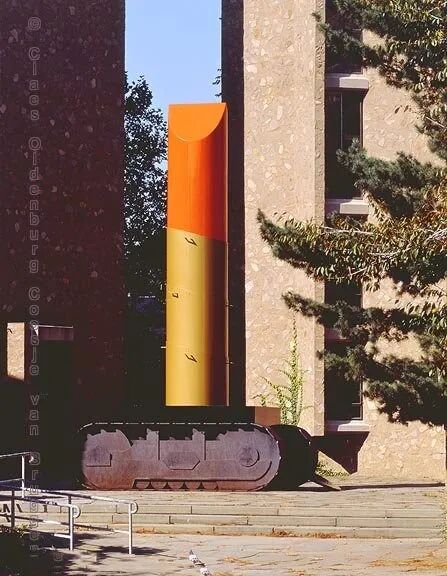
The second dimension is the deformation of scale. Stretching and compressing the same concept to extremes across scales often overturns perception. Miniaturisation reduces it to something seen only privately through a magnifying glass; maximisation enlarges it to the scale of public space, the city or even land art, forcing the concept into direct dialogue with publicity, politics and the natural environment. Such are Claes Oldenburg’s giant lipstick and clothespin sculptures. Infinite replication designs the work as a system that can be endlessly copied, each “original” merely an instance of the system—Andy Warhol’s Campbell’s Soup Cans, through industrial indiscriminate reproduction, directly simulated and criticised the logic of mass consumption. Vanishing to zero removes the work’s material existence, leaving only the trace of an action or documentation: Klein “sold the void”, and the collector bought not an object but a receipt for “having owned a zone of void”; Robert Barry in 1969 released colourless, odourless inert gas into the desert, the work dissipating in an instant, leaving only photographs and text. Klein’s IKB monochromes—from small canvases, to covering an entire wall, to painting an entire gallery, and finally abandoning the material vehicle altogether to “sell immaterial pictorial sensibility”—are the perfect case of scale deformation.
Scale is useful because it directly alters the viewer’s bodily situation: the macroscopic compels looking-up or loss, the microscopic tempts peeping and intimacy, while vanishing makes one doubt whether one really “saw” anything. With the same concept, change the bodily scale and the viewer’s emotional response changes entirely. This is also why many artists deliberately make “large, medium and small” versions of the same idea—not out of laziness, but to test the elastic limit of the concept.
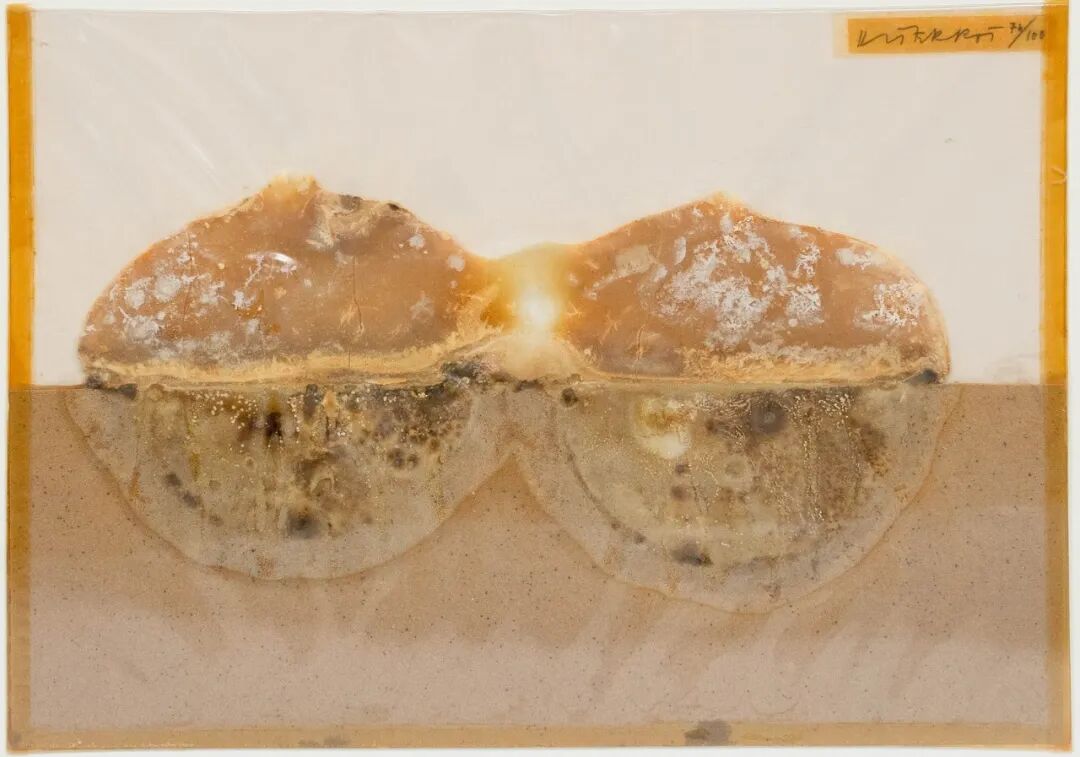
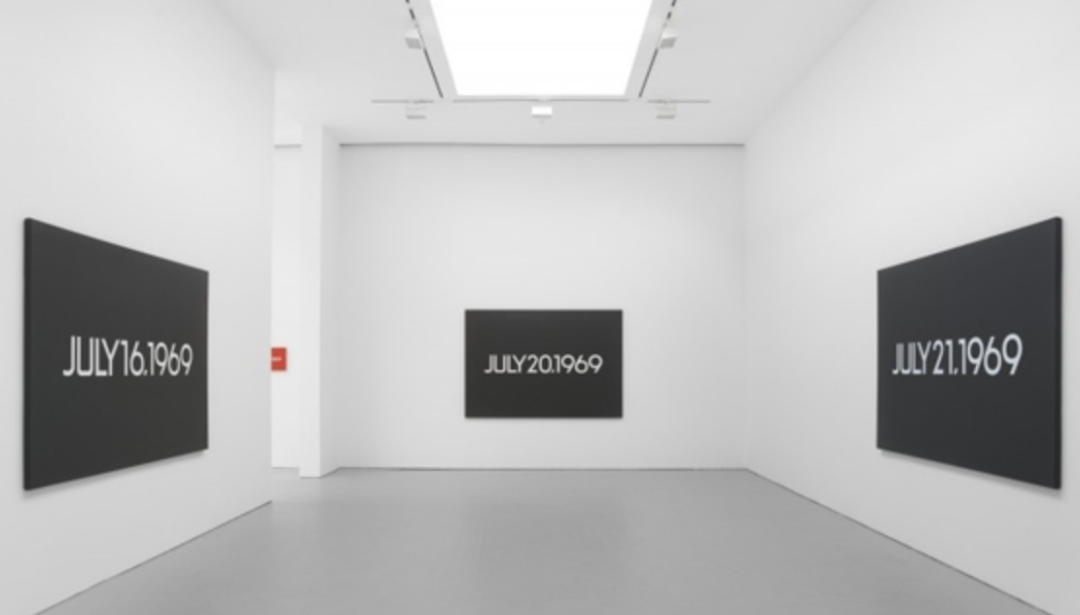
The third dimension is the intervention of time. Art is also the art of time. Instantaneity emphasises the fleetingness of “presence”; accumulation lets the work change form over time, when time itself becomes the chisel—as in Dieter Roth’s chocolate-and-cheese sculptures that rot and mould, Pierre Huyghe’s ecosystem installations in which the work grows, and Andy Warhol’s *Oxidation* series in which the canvas rusts. Historicity embeds the concept in an archival frame: Hanne Darboven wrote and calculated day after day, weaving personal time and historical time into a vast archive. Cyclicality repeats the same action at intervals and records the changes—On Kawara’s *Today* series, painted from 1966 until his death, presents with extreme calmness time’s most ruthless passing. The prophetic creates a work that cannot be fully understood in the present and must be sealed until some future moment to be opened, like a “time capsule” shot toward the future. Many of Beuys’s “actions” had strict temporal prescriptions—for instance, *How to Explain Pictures to a Dead Hare* in 1965 lasted three hours; this duration was not arbitrary but a necessary process of ritual.
The greatest benefit of inviting time into the work is that it works “in your absence”. You finish the installation, write the essay, fly to another city, and the work is still slowly ageing and accumulating meaning in the gallery. This “absent creation” is the most fascinating and most effortless part of conceptual art—you plant a seed of time, and leave the rest to its own growth.
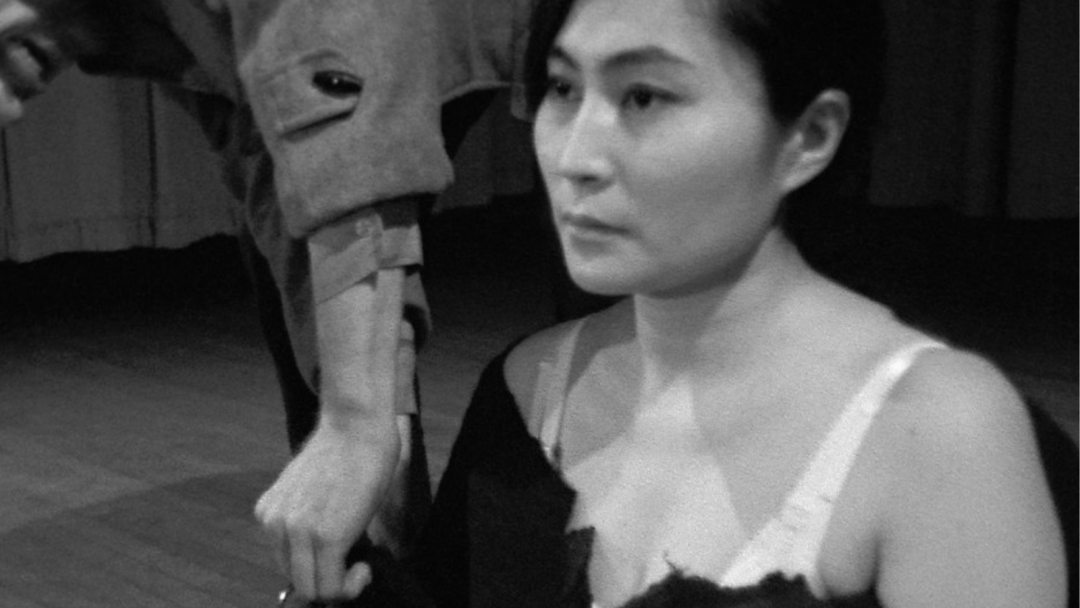
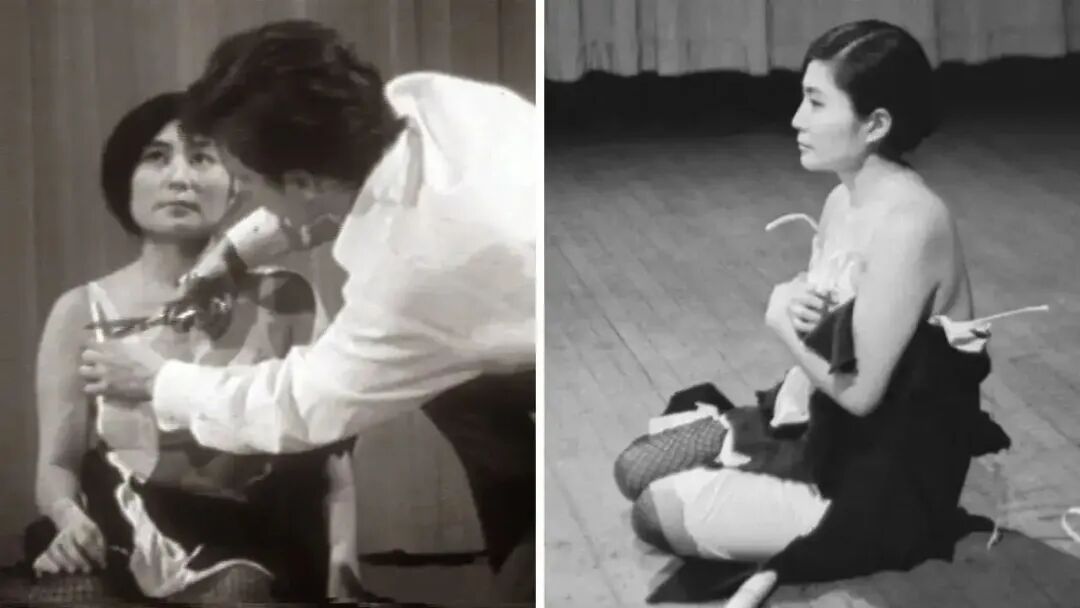
The fourth dimension is relation and the body. Since the late twentieth century, an important turn in contemporary art has been from attending to the “object” to attending to “relations”. How your concept interacts with others’ bodies and with the audience’s participation becomes a key dimension of unfolding. In 1964, Yoko Ono’s *Cut Piece* invited audience members onto the stage to cut the clothes from her body; without the audience’s action the work would not exist. From Klein’s *Anthropometries* and Beuys’s actions to Abramović’s endurance tests, the artist’s body has always been the most direct and radical medium. Felix Gonzalez-Torres’s pile of sweets weighed the same as the body of Ross, his partner who died of AIDS; viewers could take and eat them, symbolising the lover’s disappearance and implying immortality through sharing. Rirkrit Tiravanija often sets up a temporary kitchen in the gallery to cook Thai food for visitors; the core of the work is not the food but the sociability and temporary community generated in the sharing. Here we must introduce *Relational Aesthetics*, written in 1998 by the French curator Nicolas Bourriaud: he argues that the true material of contemporary art is no longer paint, wood or steel, but the social relations between people, and that the artist’s work is to “produce” a new model of relation.
The trap of the relational dimension is “pseudo-participation”: you install a piece, stick a note saying “please interact”, yet the audience has no idea how to move and can only stand there awkwardly. Genuine participation must be designed so that one is “compelled” or “naturally” drawn in—Yoko Ono’s scissors, Tiravanija’s spatula, both lower the threshold to zero. So when making relational work, ask yourself: is my design an invitation, or a command?
The fifth dimension is language and text.
In conceptual art, language is never an accessory; it is itself the core arena of creation. The act of naming is an artistic gesture—Klein, for instance, labelled every IKB monochrome “IKB plus a number”; this cold, scientific naming precisely reinforced his idea of extracting colour from emotion and turning it into an objective, patented entity. The artist’s text is itself part of the work: Joseph Kosuth, in his 1969 *Art after Philosophy*, explicitly proposed that the essence of art is the “idea of the idea”; Lawrence Weiner writes descriptive statements directly on the wall, and Jenny Holzer scrolls the aphorisms of *Truisms* on LED in public space—both prove that language alone can constitute powerful visual and conceptual art. The highest level of linguistic intervention is to invent an entire theoretical framework for one’s practice, as Beuys did: “social sculpture” and the “theory of warmth” are themselves his most important creations.
This prism of language is most easily underestimated, because it does not “look like art”. Yet it is precisely words that determine the frame with which the viewer enters your work in the first second. A good title leads one toward the abyss; a bad title fills the abyss in. So do not treat naming and writing as a bonus after installation; like paint, they are your material.
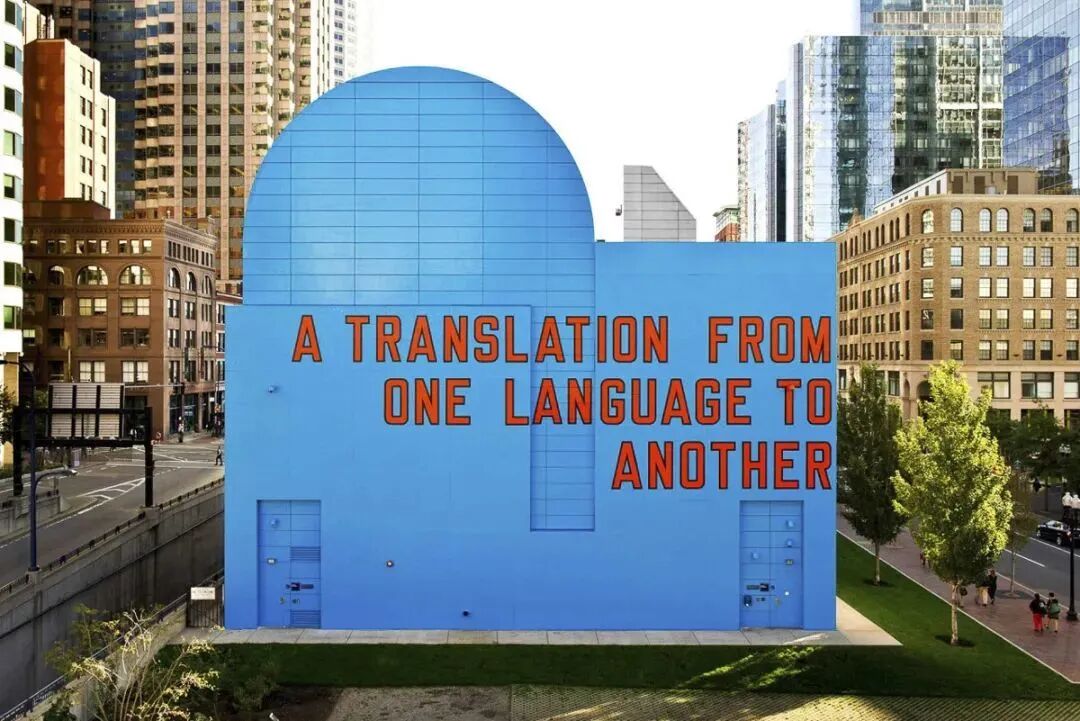
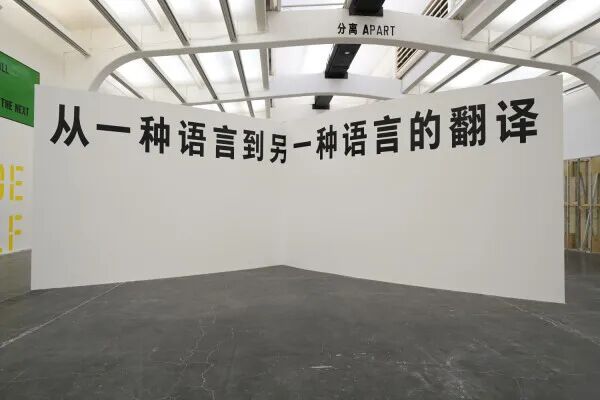
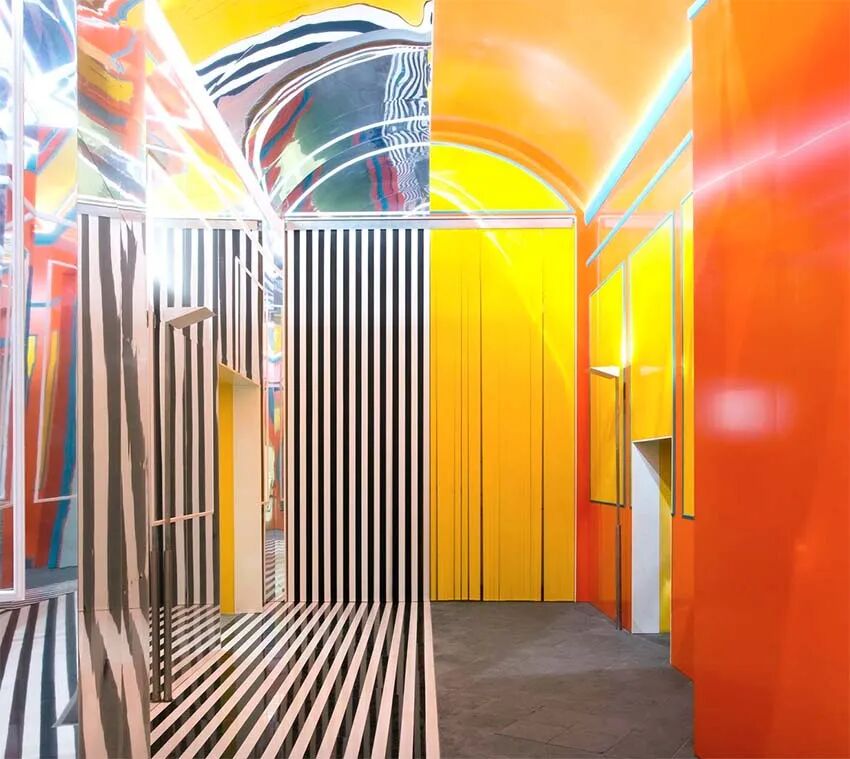
The sixth dimension is institution and context. No work exists in a vacuum. The same work placed in different physical, cultural and institutional contexts carries drastically different meanings. White-cube gallery versus chaotic city street, Western art institution versus one’s own cultural context, commercial space versus natural environment, online virtual space versus physical space—the modes of interpretation are entirely different. Since the late 1960s, Daniel Buren has insistently used his signature 8.7 cm-wide vertical stripes as a tool, yet his core is a critique of the “context” of display: he pastes the stripes onto museum walls, city billboards and the sails of boats; the stripes themselves are meaningless, their meaning lying in revealing and questioning the institutional power, commercial logic or publicity of the site. This conscious manipulation of context is itself a profound conceptual practice.
Many young artists suffer from “context blindness”: the same work feels earth-shaking hanging in their own studio but falls silent the moment it enters a museum. Or the reverse—fine on the street, yet false in the white cube. So when unfolding a concept, think clearly in advance about which “table” you intend to place the work on; the table determines how the guest reads it. Smart artists even custom-make works for a particular space, letting context itself become part of the concept.
Systematic extrapolation across these six dimensions is the next move for unfolding an artistic concept; working from one, two or even more of them, an artist can essentially build a rich, diverse and internally highly coherent ecosystem of works. Each work in the system is like a cut of the same diamond from a different angle, together refracting the most complete and brilliant halo of the concept in your mind.
Finally, a common misconception to warn against: the six dimensions are not six “assigned compositions” to be done and forgotten. They are six “ways of seeing”; as you walk the street, flip through books or scroll your phone, use these six ways of seeing at any moment to scan the things of life, and inspiration will leap out on its own. Among the art world, the true masters are not those who think of dimensions only when they sit before the canvas, but those who have grown this prism into their eyes.
VI. Works Are Not a Heap of Isolated Pieces
Having passed through the above stages, when through multidimensional unfolding you begin to create a series of works, a higher-level question emerges: what relation should these works form among themselves? A mature artist’s works should not be floating isolated individuals, but like a galaxy: each planet linked by some inner gravity, forming an ordered, recognisable universe. Establishing the “inner logic” of a series is the key step from “making good works” to “building an artistic system”.
The logic of a series falls roughly into three kinds:
Exhaustive logic revolves around a strictly delimited question or simple rule, attempting to exhaust all possibilities; the works are like a visual archive or classified encyclopaedia, each new piece not meant to surpass the previous one but to fill a gap in the system. Klein’s IKB monochrome series is exemplary: the question is merely “what can pure blue present as”, and the answer is a series differing in size and number yet essentially a repetition and display of the same core. The German photographers Bernd and Hilla Becher spent their lives photographing vanishing industrial architecture in an extremely objective, typological manner, arranging the photos in grids; the power of the entire series lies not in the beauty of any single photo but in the historical weight brought by its exhaustive, archival overall presentation.
Evolutionary logic treats creation as a sustained debate of ideas or the evolution of a living being; each new work is a response to, correction of or transcendence over the previous one, and the viewer seems to be reading the artist’s long visual essay. Gerhard Richter, for example, moved from photo-based “Capitalist Realism”, to blurry “photo-paintings”, to resplendent abstract squeegee works, and on to recent glass and digital pieces; each series seems to break with the last yet remains internally coherent, and his abstract painting is precisely an extreme response to the problem of “representation” in the photo-paintings.
Ecological logic approximates the construction of a complex installation universe or ecosystem, in which works are interdependent and mutually contextual; remove one and the overall meaning shifts. It demands of the artist a very strong capacity for system-building and multi-medium command. Matthew Barney’s *Cremaster* series comprises five films along with related sculpture, installation, photography and drawing, densely populated with self-referential symbols and myths; a prop in the film becomes an independent sculpture in the exhibition, and the sculpture’s form in turn explains the film’s plot. To understand the whole system, the viewer must shuttle and piece together across media like a detective.
Complementary to this is the establishment of a coherent naming system—a task often overlooked yet possessing a strong “brand effect”. Scientific/archival naming uses numbers, dates and coordinates to give works a calm, rational temperament: Klein’s IKB plus a number, Beuys’s habitual “action name plus place plus date”, On Kawara’s use of the completion date as title. Poetic/literary naming uses evocative titles to add a space of literary imagination—Anselm Kiefer, for instance, frequently cites German poetry and myth; his *Margarethe* directly invokes Celan’s Holocaust masterpiece *Death Fugue*. Descriptive/plain naming describes content or method directly in language, as with Lawrence Weiner, whose titles are the works themselves. There is also the approach that relies not on words but on highly consistent visual motifs to build a sense of family—Yayoi Kusama’s “polka dots”, “Infinity Nets” and “pumpkins” series. Whichever kind, the key is consistency: a naming system sustained throughout is an important tool for establishing order and marking territory in this chaotic art world, and together with the works it constitutes your unique artistic identity.
Naming has a further hidden function: it helps the viewer “claim kinship”. When someone remembers your naming grammar, the next time they encounter a work of similar format elsewhere they immediately react “this is by so-and-so”—this recognition is precisely the moment your artistic identity lands. So do not underestimate the title; it may be the shortest bridge between you and a stranger, the artist’s cheapest branding tool.
By the way, series logic is not an either/or. Many artists mix them within a large system: the main body advances by evolutionary logic, certain branches are closed off by exhaustive logic, and occasionally a large ecological-logic installation appears as a “hub”. The key is that each logic must be your active choice, not something you slide into because “you don’t know what to paint next”.
A small example to feel the power of a naming system: if you decide all your works shall be called “Untitled (year, month, day, city)”, looking back ten years later this long string of dates is itself a silent diary, more honest than any artist’s statement. Naming need not be astonishing, but it must “be you”—others see the format and know it is you.
Of course, a system is not the fuller the better. I have seen artists with series logic, naming system and archive all complete, yet whose works, as if pressed from a mould, have lost their vitality. A system is necessary, but it should be an “elastic cage”—one that catches your scatteredness yet leaves a crack for the accidental to slip through. Truly good works often grow right in that crack.
VII. Self-Historicisation
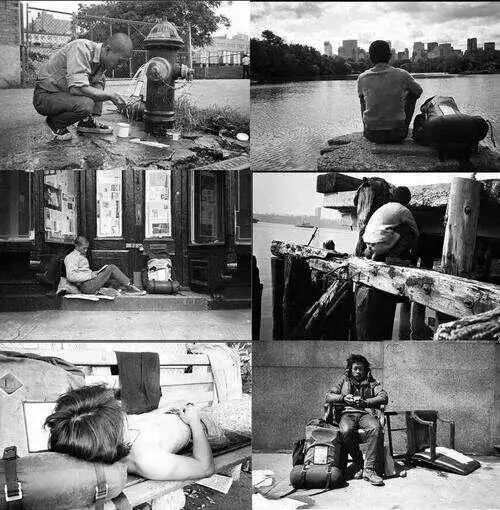
In today’s art ecology, the artist’s work long ago exceeded the creation of “objects”. You must also be the first historian, archivist and mythographer of your own work. “Self-historicisation” means consciously recording, organising, constructing and disseminating the archive and narrative of your own practice; the core of a concept’s legitimacy is this: before others write your history for you, seize the power of writing history yourself.
From the very first day of creating, the self in the role of artist should treat every trace of the creative process systematically, as a rigorous museum treats its collection. Process archives record “how it happened”: sketches and notes, material samples and failed experiments, production diaries and work photographs. On-site documents record “how it was viewed”: multi-stage records of installation, opening, interaction with the audience, deinstallation, along with visitor comments, media reviews and social-media discussion. Thought archives record “how one thought”: the books you read, the exhibitions you saw, personal essays and reflections, and important conversations with curators, critics and even friends. A clear, accurate, constantly updated personal chronology of your practice is the spine of your personal art history.
Building an archive is itself a conceptual practice; it manifests a historical self-awareness of one’s own work. I have studied a great many Western conceptual artists and found that most artists today value the archive, textualising and imaging it through websites, printed books and the like; some, such as Tacita Dean and Matthew Barney, even incorporate archival documents directly as part of the exhibition, blurring the boundary between process and result, document and work. On this point, to indicate its importance we may borrow a line from the art theorist Achille Mbembe’s discussion of “the power of the archive”: he says the archive is not merely a record of the past, but a form of power that actively constructs memory and shapes the future. The word “power” in it is especially thought-provoking.
If the archive is “historical source material”, the narrative is the “history book”. Beyond the objective archive, you must consciously excavate, distil and tell a “myth” about the origin of your own practice. This myth is not a fabricated lie but a poetic, symbolic distillation of your real experience and sources of thought; it must answer the most fundamental question: why you, and not someone else, are doing this? Beuys’s plane-crash story is among the most successful creation myths in art history. Historians have long disputed the truth of its details, but that does not matter; what matters is that it provides the entire system (fat, felt, trauma, healing, rebirth) with a persuasive and sacral origin, like a creation myth, granting all subsequent work a logical necessity.
To construct your own myth, answer honestly inward: how did your childhood, family, cultural identity or marginal experience give rise to your current core concept? Was there an “aha” moment of epiphany in your life? How did the geography, language and unique bodily experience of where you live seep unconsciously into your work? For instance, an artist from Taiwan might tie their creation myth to the island’s position, a complex historical memory, a mixed linguistic condition (Mandarin, Hokkien, Hakka, Japanese) and a special situation within the geopolitical order of globalisation. These are not imposed labels but the most authentic and powerful narrative resources that grow naturally from lived experience. This narrative is the most effective way for you to explain your work to curators, collectors, critics and audiences; it transforms you from an anonymous “art producer” into an “author” with a unique life story and irreplaceable creation.
But myth also has its danger: once you tell your story too neatly, it becomes a shell that traps you inside. Audiences and institutions both like a “stable persona”, yet for art to grow the persona must be breakable. So a good creation myth should leave a crack; it can grow and be rewritten by later experiences, rather than being a slogan welded onto the résumé. Were Beuys alive today, he would probably agree: myth should usually be a starting point, not an end.
In practical terms, the archive needs no sophisticated equipment. A mobile phone can film the process, record conversations and store sketches; a cloud drive or a hard disk can classify by year; or at worst, write it down in a notebook. Especially in today’s age of AI, archiving is very convenient. The key is to “save now”, not to backfill the archive after the work becomes a hit. Memory deceives; that day’s photos and notes do not. What many artists regret is not how little they did, but that those fragments from back then were not kept. Perhaps for people decades from now, studying your art today, a few passages among these fragments could become the key to opening your world of works or to being understood without distortion. Leave that to others; what we must do is preserve ourselves, and all our ideas and concepts, wholly and intact.
One more down-to-earth word about “myth”: it need not be a dramatic accident. A quiet, everyday origin is equally powerful—a basket of buttons left by an elder, the riverside path you walked as a child, a word in your mother tongue that cannot be translated. These small, yours-alone things often sustain an entire body of work better than grand trauma. So it seems now that the weight of a myth lies not in the size of the event but in how tightly it meshes with your core concept.
VIII. Joining the Conversation Already Underway
No creation happens in a vacuum. Every artist’s work unfolds, wittingly or unwittingly, within a vast network composed of art history, contemporary peers and critical discourse. A mature artist must be acutely aware of their coordinates in this network, consciously choosing “interlocutors” and “adversaries”—but this is not cutting one’s feet to fit the shoes; it is making the voice clearer and stronger. Creation, in a sense, is conversation: to find and join a conversation that began long ago and spans time and space.
Having built a system, answer three questions to establish your position in the ecology.
First, whom are you responding to? Which classic questions of art history does your work continue to pursue, and which predecessors opened the way for you or left issues worth probing deeply? For instance, a contemporary artist of abstract painting must realise they are responding to the long history from Malevich’s Suprematism and Rothko’s colour-field painting to Minimalism—whether to continue the pursuit of “purity” or to subvert it. This response is a complex relation of both inheriting from and struggling against the predecessors. From the standpoint of an art critic, the “first-level language”, “second-level language” and “third-level language” system mentioned by Zhu Qi is a commonly used standard. Of course, “a sudden clap of thunder from a clear sky” is naturally a good thing, but objectively speaking, every work has its “path hither”.
Second, whom are you opposing? In aesthetics, thought or politics, which mainstream tradition, popular trend or intellectual paradigm does your work criticise? As said earlier, a clear “adversary” often makes the stance sharper. The Minimalist artists of the 1960s, Donald Judd and Robert Morris, explicitly opposed the heroism, personal emotion and complex composition that then dominated Abstract Expressionism; using industrial materials, simple geometry and serial arrangement, they expressed an impersonal, anti-illusionistic objecthood, and their “opposition” formed the core of their manifesto.
Third, who are your contemporaries? Which other artists in the same field are working similar problems, and are you allies, competitors or parallel universes that can be cross-referenced? Knowing your contemporaries not only avoids repetition but helps form a “problem cluster”; when several important artists explore a given issue from different angles in the same period (for instance, the 1990s work around body, identity and AIDS), that issue gains greater visibility and a deeper level of discussion.
The best concepts draw their force not only from clarity of inner logic but also from openness of outer interpretation. It should not be an answer but a matrix capable of generating countless new questions. A concept too closed, with only one “correct” reading, has limited vitality. Put plainly, thinking through both the whence and the whither of a work is undoubtedly wise. So when unfolding a concept, consciously plant seeds of “ambiguity” in the work and design structures open to “misreading”. By “productive misreading” is meant that audiences, under different cultures, knowledges and experiences, produce readings unexpected by you yet equally meaningful—this is not a failure of communication but a proliferation of meaning. How, concretely? Use symbols of multiple cultural and historical connotations rather than single-meaning ones; let minimal form carry the most complex interpretation—a minimal cube may be read as a symbol of industrial civilisation, Plato’s Form, or a purely spatial relation; replace a complete, closed linear story with fragmented narrative, letting the viewer piece it together.
As early as 1962, the semiotician Umberto Eco argued that one characteristic of modern art is that it invites the audience to become a co-producer of meaning. A concrete example: a Chinese artist uses the image of the “dragon”; in traditional Chinese culture the dragon is a symbol of sacred authority and auspiciousness, yet in a Western exhibition it may be read as exotic or even an evil monster. If one can anticipate and exploit the misreading caused by this cultural difference, the work can provoke, in different contexts, complex discussions of cultural representation, stereotype and the postcolonial. This dialogue and friction born of misreading is precisely the key to the work’s continuing vitality.
In the end, the thing called conversation most fears two postures: one is shutting the door and pretending to be the centre of the universe, answering no one; the other is chatting with whoever comes along, only to lose oneself. The mature approach is to contend “selectively”: actively choose a few predecessors who truly overshadow you as opponents, choose a few contemporaries as companions, and let the rest of the noise go. For your voice to be loud, you must first know whom you are contending with.
When choosing contemporaries, do not fixate only on those like you. What truly stimulates you is often the “stranger” doing something entirely different yet colliding with you on the same fundamental problem. If you make video about memory, your interlocutor need not be another maker of memory video; it could be someone writing a family oral history. Cross-medium neighbours often pierce you more deeply than same-medium colleagues.
As for “misreading”, there is one further layer few mention: the artist too must learn to misread themselves. Do not take the initial interpretation as the only answer; revisit old works after an interval and allow yourself to read meanings you did not foresee at first. Once a work leaves the studio it no longer wholly belongs to you; the most faithful attitude toward your own work is to rediscover it continuously and humbly, rather than clinging to a set of instructions.
IX. Three New Variables of Today
Thus far the methodology of the concept has been essentially recounted. Yet one further point remains to be written: the change of the times. In the era of Klein and Beuys, the structure of the art world was relatively clear, and its rules (gallery, museum, critic, biennial) were stable. Today’s artists float in a more complex, fluid and fragmented ecology. A systematic methodology that cannot respond to today’s special context is merely “marking the boat for the lost sword”—empty talk on paper. So several new variables must be brought into the frame of thinking.
One inescapable variable is the decentralised context of publication.
The traditional “gallery—museum—art history” path is being thoroughly unsettled by the internet and social media. Your concept must consider: how does it exist on social media? This is by no means only posting photos of the work onto platforms such as Instagram, Xiaohongshu, Douyin and WeChat Channels for publicity; you can also consider whether the platforms’ own characteristics (square composition, short video, the like algorithm, the hashtag system) can become part of the creation—whether the work can be designed as an easily shared “meme”, or as a critique of the platform logic itself. This has already been done: practitioners of post-internet art such as Amalia Ulman, in her 2014 Instagram performance project *Excellences & Perfections*, took social media itself as the sole and final site of creation. Can it generate new forms in cyberspace? Can the concept extend into websites, apps, algorithmically generated projects, or works existing in VR and AR? NFTs and blockchain offer art, at the conceptual level, new possibilities concerning ownership, authenticity, decentralisation and the “uniqueness” of digital objects; you can use them to unfold a concept about value, reproduction and digital existence, or you can offer a critical refusal of this technology and the ideology behind it—the latter itself constituting a powerful conceptual stance.
Another variable: identity politics and globalisation.
Today no artist can claim their work “transcends identity” or is “pure form”. Your cultural identity, race, gender, class and geographic location are engraved deeply in your perception and expression, and become important dimensions of how the work is read. You must think actively and strategically: how does your place-based situatedness enter the work? Where do you come from, and how do your language, local history and collective memory become unique resources rather than “limitations” to be overcome? For artists situated in Taiwan or the broader Chinese cultural sphere, here is an extremely rich and tension-filled resource bank: a complex colonial and postcolonial condition, the experience of rapid modernisation, distinctive philosophical and aesthetic traditions (such as Daoism and ink painting), and a special position within global geopolitics. Combining these with universal contemporary issues often yields the most profound work. How is your concept read within global frameworks such as the Venice Biennale or documenta? How do you handle the gaze of the “Other”?… On these questions, the postcolonial theorist Homi Bhabha’s notions of “third space” and “hybridity” provide tools for thinking. Successful cross-cultural practice is often not selling “Oriental symbols” to the West, but creating, at the border between two or more cultures, a “third space” that cannot be fully defined by any single culture. Cai Guo-Qiang’s work is representative: he uses gunpowder, a material rich in Chinese cultural meaning, yet his conceptual concerns (dialogue with the cosmos, instant and eternity) and his formal means (explosion, installation) unfold within the global contemporary vocabulary, thereby constructing an artistic language that is both culturally rooted and capable of universal dialogue. Are you, in the end, adding bricks to this framework, or fundamentally questioning it? This is the fundamental positional choice the artist must make.
A further variable is the necessity of interdisciplinarity.
With knowledge highly differentiated and the world increasingly complex, today’s conceptual artist finds it harder and harder to circulate only within art. A truly penetrating concept must possess the capacity for deep dialogue with other fields of knowledge. Dialogue with science and technology: can your concept connect with biology (gene editing, ecology), physics (quantum, cosmology), artificial intelligence (algorithm, machine learning) or ecology (Anthropocene, climate)? This is ever more important, and it is also why, as said above, “art history cannot resolve everything about creation”. For example, Olafur Eliasson’s works are often produced in collaboration with scientists and engineers, their core being the transformation of the physical principles of light, water and fog into perceptible, thought-provoking experiences. Dialogue with the social sciences: in exploring urban space, Lefebvre’s theory of “the production of space” may be an important resource; in exploring the surveillance society, Foucault’s “panopticon” is unavoidable. Dialogue with other art forms: the unique wisdom of literature, music, dance, theatre and architecture in handling time, space, narrative and the body can greatly enrich the visual artist’s conceptual toolbox. Today’s artist must be a “researcher”; your concept must be supported by real knowledge, and your studio must in part become library and laboratory. This interdisciplinary research provides not only a solid intellectual foundation but also opens doors to wholly new issues and forms of expression.
Taken together, these three variables point to a more plain judgement: today’s artist can hardly hide any longer in the greenhouse of “pure art”. Your concept only truly lives in this age if it can be shared across networks, read at biennials and cited in laboratories. This is not compromise but the very ambition the “concept” in contemporary art should have had all along: it must enter reality, not only the museum.
Take the context of publication: today, a work with no presence at all online is easily ignored by art history; yet being swept along by traffic easily turns into pandering. Some smart artists have already made their choice: they are “amphibious”—making solid originals offline that withstand close looking, and lightweight versions online designed specially for a global audience: two faces of the same concept, neither replacing the other, each advertising the other.
On the dimension of identity, what is most to be avoided is “performing the marginal”. Some creators, to sell well in international exhibitions, deliberately dress their work up as more “exotic” and more “suffering” than it really is. Such a strategy may work in the short term but backfires in the long run: audiences eventually see through that performativity. Truly tenable place-based practice grows from your real situation; it is not a costume temporarily donned for an exhibition. The more honest you are about who you are, the better the work withstands cross-cultural scrutiny.
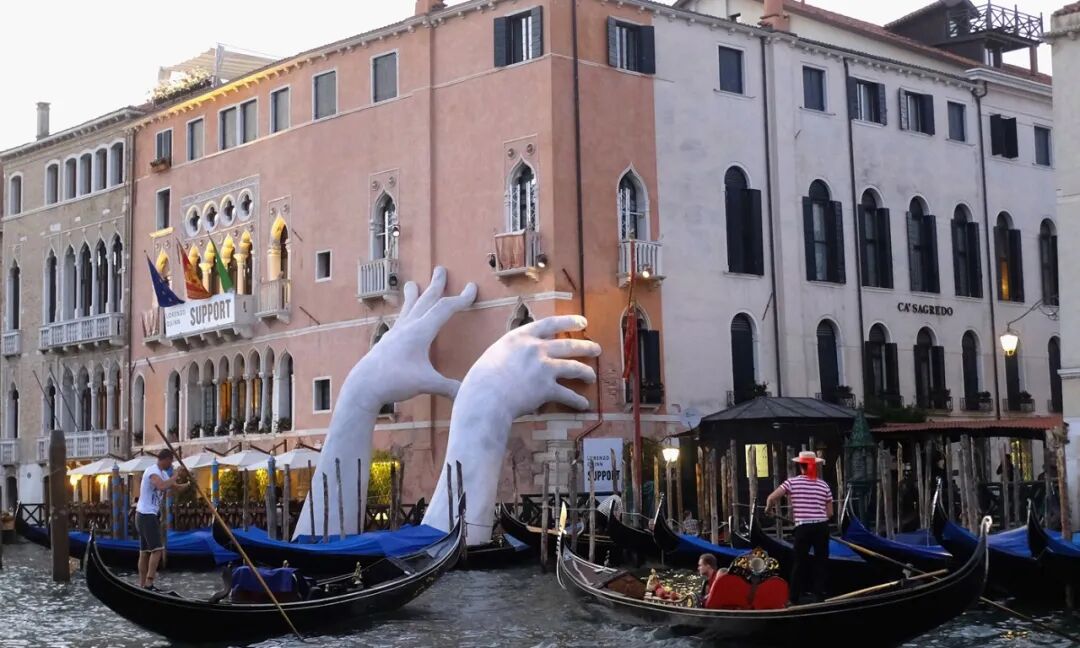
Stringing all this together, the contemporary artist who would systematically unfold their creative concept can in fact walk a clear, operable path. It is not a rigid method but a discipline of thought. First catch that spark with intuition, then drill downward like a geographer, from the phenomenal, perceptual, ideational and existential layers all the way to the structural layer, drawing the concept’s depth-map and finding its core paradox. Next textualise the core thinking and write an “artist’s manifesto” for yourself, setting out the core proposition, material dictionary, list of prohibitions, philosophical genealogy and keyword star-map. Then throw the same core concept systematically into the six prisms of medium transformation, scale deformation, temporal intervention, relation and body, language and text, and institution and context, to experiment and translate. Thereafter, in creating a series of works, establish a clear inner logic—exhaustive, evolutionary or ecological—and pair it with a coherent naming system. Having done all this, your concept is essentially formed; then from day one build a systematic creative archive, and consciously excavate and construct your unique creation myth. Next clarify your interlocutors (whom to respond to, whom to oppose, who your peers are), and consciously design openness into the work to stimulate productive misreading. Finally, consider all this within today’s special context: decentralised platforms of publication, identity politics and globalisation, interdisciplinary knowledge integration. Having completed this, return to the origin and keep asking: what possibilities of this concept have I not yet exhausted? What is its opposite? Where exactly does the boundary lie? This is the beginning of a cycle.
Think of this route as a map. Those who truly go far often suddenly plunge into some dimension, forget the planned route, and only years later discover they have circled out into a new continent. This is the value of this essay I wish to state: its point is not to make you cling doggedly to steps, but to give you an origin to which you can always return—when you lose your way, return to the primordial question of “what exactly is my core concept”.
Finally, a very plain piece of advice: treat this essay’s suggestions as scaffolding, and tear it down once your own method has grown. My insistence on writing about methodology is only this—all writing on “how to make concepts” ultimately aims to make you no longer need them. On that day, the concept will grow of its own from within your body, as natural as breathing.
What I wish to say in conclusion is that the contribution of Klein and Beuys lies not only in their having “thought of” a good concept, but in their having maintained toward their core concept a near-religious, lifelong fidelity. At the same time, they possessed sufficient intellectual flexibility and courage to keep pushing, extending and reshaping that concept, letting it grow, breathe and interact profoundly with the whole world like a living organism. In the end, to unfold a concept systematically is itself a discipline of thought mediated by art. It demands of the artist not only keen intuition but structured thinking, rigorous research spirit, and the strong will to carry an idea through to the end. This is perhaps the only method by which the contemporary artist walks out a genuinely self-owned artistic universe.
This essay was composed in haste; its crudeness and errors are unavoidable. Yet my sole intent is to offer, through a survey of theory and method, some help to fellow artists. The path of art is arduous; it is vital that we watch over and support one another, and together achieve good work. I am deeply grateful that you have taken the time to read to the end. Should there be anything amiss in these pages, I humbly beg my seniors and teachers to offer their correction and guidance. I would be most grateful.
订阅艺术评论
订阅即赠《2024中国当代艺术关键词》内部思考笔记 PDF
每周免费获取最新当代艺术批评与研究