I. The Videos of Artists Drinking and Dining That Keep Coming Up
My feed keeps throwing up videos of artists drinking and dining: a cluster of well-known figures in their fifties and sixties, passing the cups around, raising glass after glass to one another in celebration.
Artists drinking and dining is normal; so is a person of temperament working the jianghu. Only, do not take it too seriously — above all not with the so-called established heavyweights of contemporary art. When drinking and dining is all that is left, when the work is no longer made with any real seriousness, then they really have become nothing but wine sacks and rice bags. These people in their fifties and sixties are drinking inside another system, a “contemporary” jianghu built on unequal access to information, and dining on the dividends of the 1980s. Having done something in the past does not entitle you to eat off it for a lifetime. They do not work steadily and seriously, yet still imagine themselves to be somebody; but once the tide goes out and everyone is swimming naked, they are the first to drown.
The times have changed. Forty years ago, in the 1980s, contemporary art made a beginning — but only a beginning — before being crushed out of all recognition by the era that came crashing in upon it, alienated, deformed, forced to a forced climax; the contemporary art of today is close to a vacuum. Watching these so-called “celebrities” of the past now, they have solved nothing at all, and the sight of them raising their glasses to get drunk together looks more like the collective suicide of the independent consciousness of a bygone decade — pitiful, wretched, and insolent in their disregard for everyone else. Apart from the special channels and the present vacuum of the contemporary art market, nobody acknowledges them and nobody respects them. They wrote the history of contemporary art themselves; there is nothing wrong with blowing your own trumpet — except that it is only a morgue. A lie repeated a hundred times can pass as truth; how much more so when a whole crowd repeats it.
The courage of the past kept this crowd “erect” for many years: with something close to martyrdom they threw themselves into the transformations of the 1980s and 1990s, at a time when nobody knew anything about an art market, and that certainly deserves respect. It was only as the chances of sudden wealth and of going abroad gradually came into view that the smell changed; the “sexual dysfunction” has persisted to this day. I have thought about it carefully, and it really is an abnormal phenomenon: at every spring and autumn auction, at Basel and at the domestic fairs, these people’s paintings are a gallery’s life-saving charm. Whatever they paint, they are certain to attract attention and an abnormally high degree of market endorsement. Leaving traditional Chinese painting aside for the moment, contemporary art is worse still — the paintings of Zhou Chunya, Fang Lijun, Yue Minjun and others are permanently in the top ten by turnover. Seen from this angle, the Chinese contemporary art market today is sunk deep in a structural crisis: the cohort of 1980s artists marching under the banner of the “’85 New Wave”, trading on their historical halo and in collusion with capital, have together built an impregnable oligarchic barrier. They set themselves up as “pioneers of enlightenment”, yet have turned an art-historical opportunity into a privilege for life; their continued existence has become a tumour blocking generational renewal in Chinese art.
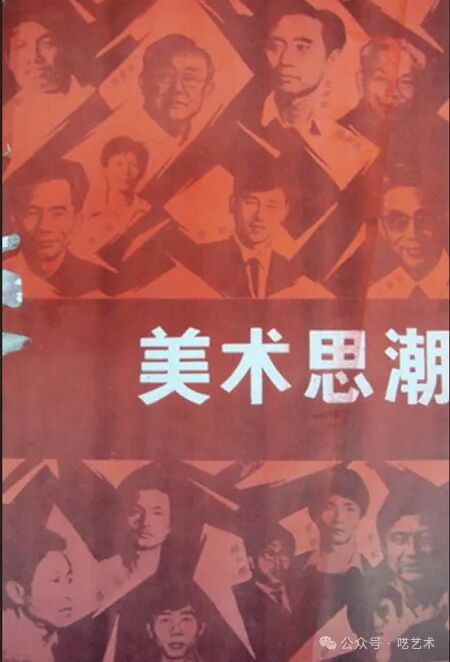
II. I Was Not Born in the 1980s, the So-Called “Golden Decade”
I was not born in the 1980s, the decade called the “golden ten years”, when market orientation and traffic orientation were not yet so deeply entrenched and everyone was willing to make art — an era in which ideals could bloom in the warmth of spring.
That cohort of contemporary art groups did indeed accomplish a cultural breakthrough in that particular historical moment. Any example that comes to mind is stirring: the Northern Art Group confronting ideological shackles with “rational painting”; the Stars Art Group breaking the museum’s monopoly through street exhibitions. Such actions took enormous courage at the time; a breakthrough is itself a form of progress. That glorious decade was also the moment when these fighters made art more democratic and made individual expression easier to realise. Yet the nearly forty years since have been forty years of seeing through people. Whether the 1980s were an act of fashion or of genuine ambition, art history should credit exactly as much as was actually made. An artist should keep producing; that is the artist’s job — all the more so for a contemporary artist. Once a work is made and enters circulation, it should no longer have anything to do with its maker. The work’s field of meaning, its text, its field of spiritual structure travel with the circulation system, can have a good effect on society, and can also make one famous. That is your contribution, and being rewarded for it is only right. But this historical contribution has been alienated into a permanent “moral indulgence”: their works are reheated leftovers at the auction houses, while market returns have become completely decoupled from present creative capacity, absurdly high. Many of the works have long since become tokens of capital, and what one mostly sees in exhibitions of recent years is the curatorial recombination of old work — exchanging historical debt for contemporary profit.
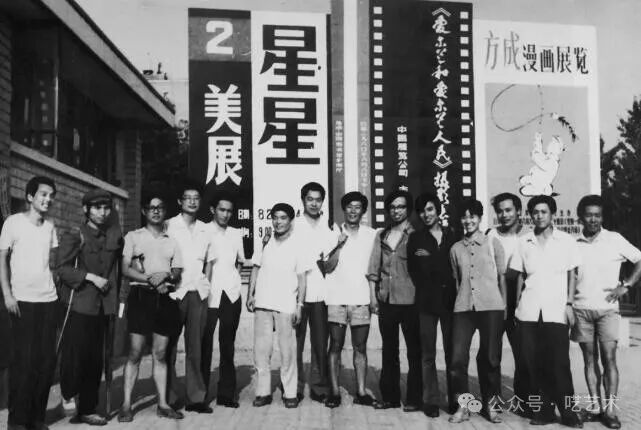
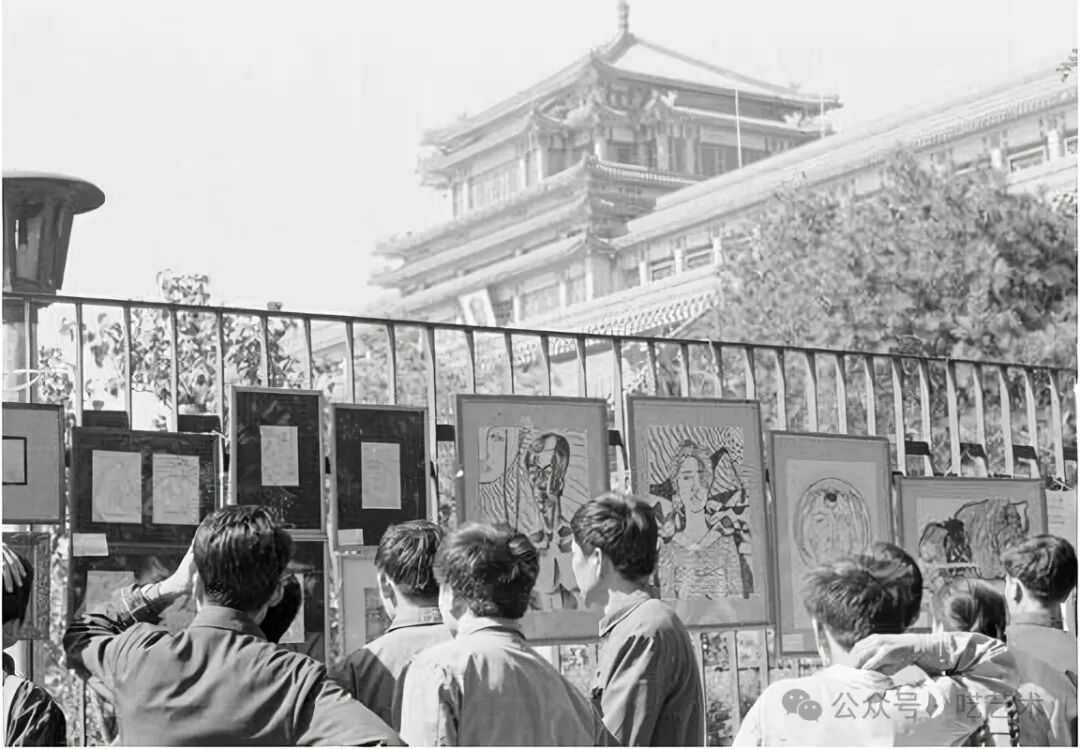
I found myself turning over the phrase “success and fame”, and pondered it for a long while: for an artist, what does it mean to have succeeded?
Strictly speaking, before there was an art market, an artist’s “success” was the product of different groups contesting the right to define “art”; the schools of that time were as brilliant as a galaxy of stars. There are two typical cases. The conceptual artist — Picasso, for instance — proposes a concept early on, succeeds quickly, and defines “art”: the art of that Cubist way of seeing — but runs out of steam later. The other is the experimental artist — Cézanne, for instance — who practises over a long period until a method gradually takes shape and success arrives, and who nevertheless keeps on painting; each of his paintings is an independent act of breaking through. What should art be? You have your position, and it holds — that was “success” in the past: success without an art market, in which every work stood for a fierce individual independence of mind. The ’85 Art Movement, for all its immaturity, for all the suspicion that it copied the West, was after all the site of an intense desire for independence: no blind following of the mainstream and of authority, no pandering to the market or to the tastes of the elite. It deserves to be known by generation after generation.
Once there is a market, the artist’s “success” changes flavour: it becomes the product of vested interests fighting over profit and over the right to speak. Paint whatever sells; paint whatever draws attention. Take the recent talk of the internet celebrity Zhao Xiaoli’s exhibition at Today Art Museum — identical female figures plus floral decoration, whose meaning can only be decorative pattern. That people like her makes its own kind of sense: after all, art history and connoisseurship hardly matter here. Her paintings pile up images of beautiful women, flowers, butterflies, hillsides; the clashing colour is rather pretty. Those who like her like prettiness, and it is all quite simple. No one is guilty. It is like drinking cola: cola is cola. You like drinking it, it quenches your thirst, it feels good — end of story. Whether it is “art” does not matter. The trouble is that Zhao Xiaoli has not grasped that her paintings are “cola”, and that however she paints they will never be “Maotai”; she is still dreaming the “Maotai” dream, squeezing her way into Today Art Museum, devising ways to push her prices up. There is nothing guilty about portraits of big-headed girls; the point is that you have to understand this: drinking cola is no disgrace. When Andy Warhol made his cola prints he said that “America started a great tradition, in which the richest and the poorest can basically buy the same things — cola, for example”. This is an unprecedented era; art can be democratic; cola does not taste better because you spend more on it. But Zhao Xiaoli cannot see it, and neither can many contemporary artists — even the established heavyweights — who are still thinking in the old way, using today’s material to chase yesterday’s “success”, using the product of a contest among vested interests over profit and the right to speak to contest the right to define “art”. Hence the emergence of any number of “art critics” and of institutions like Today Art Museum that are steadily losing their bottom line.
The difference is that young contemporary artists are still striving after these misaligned forms of success, while these contemporary-art heavyweights have long been sitting pretty on what they already have — misaligned or not, as long as there is fame and money. They set themselves up as “spokesmen”, using the past-tense endorsement of a system and of an academic vacuum to shore up the present vested interests. For example: in the 2023 global contemporary art market top 100, artists born in the 1950s and 1960s still took a 56% share, while Chinese artists born in the 1980s accounted for only 16.1% of international gallery representation. There are many young people now moving into middle age, but opportunity is a case of thousands of men and horses crossing a single-log bridge: they burn out their artistic lives scrabbling for that pitifully small number of chances. What one commonly sees instead is fairs, auction houses and galleries, in order to lower risk, packaging the heavyweight brand as a financial product and sending it under the hammer again and again. Generational turnover is hard. Even if these so-called heavyweights stop painting altogether, they can still live off “success and fame” for the rest of their limited lives, and call it by pretty names — “art is just what it is”, “I have already solved the ultimate question of avant-garde art” — further consolidating and monopolising academic power.
Worse still, the events staged under names like “commemorative exhibition” or “academic retrospective” are in fact devices for converting public cultural resources into instruments of personal brand appreciation, plundering on a grand scale and building a closed loop of resources. In short, the spirit of ’85 has today committed collective suicide. As artists, apart from a handful who are still searching, most of these so-called “elders” have lost their souls. As older people who once contributed to art they deserve respect; but they should stop calling themselves artists, and stop for ever having their “bravery of those years” on their lips. The rapid change of the times will puncture every cognitive cocoon; social development will dissolve every information inequality; the avant-garde and the independent will have the value that is properly theirs. I believe everything will return to reason.
The spirit of the ’85 art movement lies in whether you have kept up avant-garde practice, whether you have driven an independent avant-garde artistic consciousness deep into your bones and acted on it, whether you make work that is sincere, conscientious and civically aware — not in having done something nobody else had done and thereby catching a gust of fashion by accident, so as to feed off that trend’s dividend for life; nor in racking your brains to squeeze into the system, to squeeze into a university, and then, standing inside the dividend zone of the expert or the professor, performing the shameless, have-it-both-ways act of criticising the system — and ending up having done nothing at all and solved nothing at all.
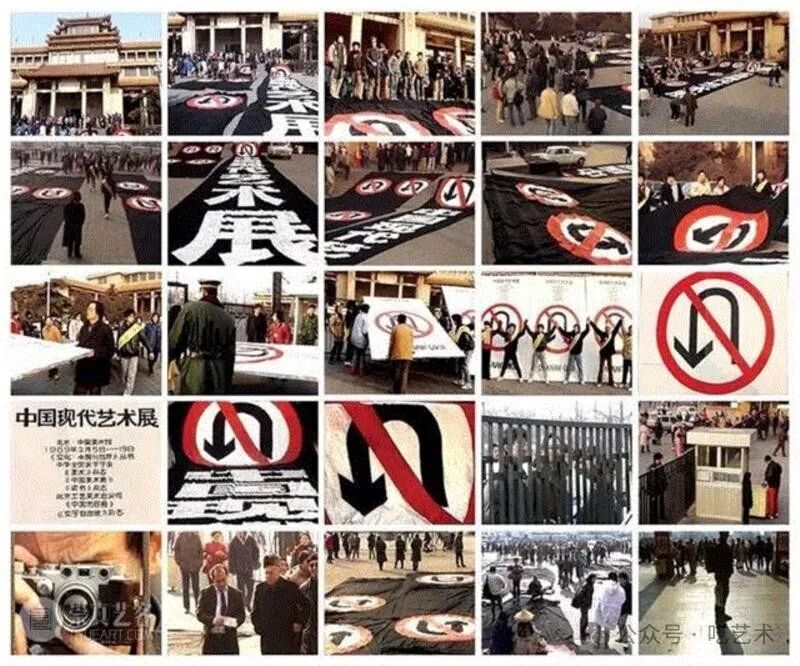
III. On These Art-World Heavyweights in Earnest
Let me speak in earnest about this cohort of heavyweights. To a large extent it is because of them that what my own generation — those born in the 1980s — is doing today, and what those born in the 1990s and 2000s are doing, and what the generation of the 2010s will do after them, can still be called “art”. Their striving proved one sentence: true art belongs always to those awakened ones who dare, in the present tense, to use every means available to create the future. Now that sentence is handed back to them.
The fatal weakness of the 1980s artists is that their methodology has long been disconnected from the times, long anachronistic, like a cultural relic. The Western modernist language that the Northern Art Group borrowed back then, for example, has long since degenerated into cliché in a globalised context. Wang Guangyi’s “Political Pop” still had deconstructive meaning in the 1990s, but in today’s image world ruled by algorithms, this kind of sign collage is nothing but kitsch visual fast food. What is sadder still is that they have abandoned even formal innovation: the “Westernised style” of the Stars school was originally a tool of breakthrough, but has now hardened into a stylistic patent from which any deviation is denounced as “betraying tradition”. In the so-called “Chinese contemporary art” exhibitions that appear everywhere today, the work of the “contemporary masters” on show is, for the most part, inevitably still that same cold leftover of contemporary art: mouldy ideological symbols and outmoded critical postures, kept in a fresh-keeping cabinet made of capital. Until new artistic force appears, the market has no one else to turn to, and so, as a market behaviour, their valuation game with the auction houses begins — like an opera troupe staging a grand show, with the sycophantic rhetoric of the critics, the “inbreeding” of the curatorial circle and the toadying of the media performing one perfect closed-loop spectacle after another. The subtlety of it lies in this: however bad an exhibition is, however plainly it is speculation, you wrap speculation in academic packaging, you exchange culture for capital, and any nutrient-free nodule of interest dressed in the garb of scholarship and art will in the end turn cancerous, binding bad assets fast and producing cancer cells that devour fresh artistic cells. These people’s “avant-garde art” has dissolved the avant-garde into itself, becoming the most cunning accomplice of the capitalist culture industry.
Equally, this creative inertia betrays the bad conscience of the vested interests and of some of their accomplices in the right to speak: they fear losing their market position, and so refuse any change that might shake their authority. The market helps artists become famous, but in it lies an invisible erosion: the wholesale flooding of modes of production, compromise, the collision between commodity character and experimental character, winner-takes-all. Art is no longer art; it has become a chip in the plunder of resources. Marx said that “the essence of commerce is plunder”; when art becomes a commercial product, a dissolution of the spirit of the self begins. If an artist wants to survive, he must become a chip of this capital, using a “universal language” to gamble for fame and for traffic, and the autonomy of art is necessarily affected. This is a dispiriting logic, and its point of balance is very hard to find. Bürger said that the autonomy of art must be continually reconstructed through critical practice; seen from the ecology of today, that is truly an immensely arduous process.
Set against the generational mobility of the international art ecosystem, the closed nature of the Chinese market looks all the more absurd. When the British YBA group rose in the 1990s, Damien Hirst, Tracey Emin and others struck directly at the traditional gallery system, restructuring the balance of power through independent exhibitions and media marketing. The art-world heavyweights in the Chinese market, by contrast, refuse to hand over the baton. Data show that 84% of galleries claim they want to sign new artists, yet those born in the 1960s still make up 61.2% of actual representation rosters. This “false openness” exposes the depth of the market’s corruption: the vested interests form a closed loop by manipulating criticism, curating and auctions, and young artists must either accept the status of “apprentice” or be utterly marginalised. Even when they do gain attention, they are regarded merely as “growth stocks”, and are harvested at low prices.
This essay speaks only to the matter at hand; it is not meant to offend any individual, nor is it a rant. Insulting people, flipping the table, playing to the crowd — none of that is a skill; what matters is construction. For the value of contemporary art is always a future value: all of art history, all of art theory and all of today’s famous names account for only 1% of art; its true value lies for ever in the unknown 99%, in that chaos and that unknowing. Contemporary art is always about innovation and about attending to society, not about consuming society. The cruelty of art history is that it never acknowledges seniority; it remembers only breakthrough and innovation. By the time Duchamp’s urinal had been rationally accepted by everyone, he had long since moved on through many further stages of artistic experiment. “Striving towards the future” should always be the artist’s bottom line; the market hegemony pursued by those once-and-for-all vested interests is overdue for deconstruction.
Contemporary art ought to be the revealer of truth, the scalpel of the spirit of the age. Those so-called heavyweights who rose in the 1980s long ago ground the cutting edge of critique down into a key to profit; those among them who have stopped advancing are no longer milestones of art history but tumours parasitising today’s Chinese art ecology. Only by slowly purging and removing them can we create the conditions for genuinely new and sharp forces to appear in contemporary art — cleansing the blood and delivering the contemporary avant-garde that belongs to this era.
How, then, to remove this tumour and correct this deformed ecology? Here are four measures, offered for your reference:
1. Binding Creativity Directly to the Market
In the auction market, establish a mechanism that compulsorily links the value of a work to present creative capacity: for living artists who have produced no new work within ten years, levy an art transaction tax higher than the normal rate, so as to restrict the capital-speculation character of their work;
2. Democratising Public Resources
Led by the relevant authorities, require institutions such as museums and biennials to allocate more than 50% of exhibition opportunities to artists under the age of 50, with costs supported by official funding or by grants from industry associations and foundations;
3. Supporting a Decentralised Market
Support blockchain art authentication and online auction platforms so as to break the pricing monopoly of traditional galleries;
4. A Revolution in the Academic System
For those artist “heavyweights” who hold the power of art discourse in universities, introduce a cross-disciplinary review mechanism with an annual assessment, so as to moderately weaken their academic hegemony.
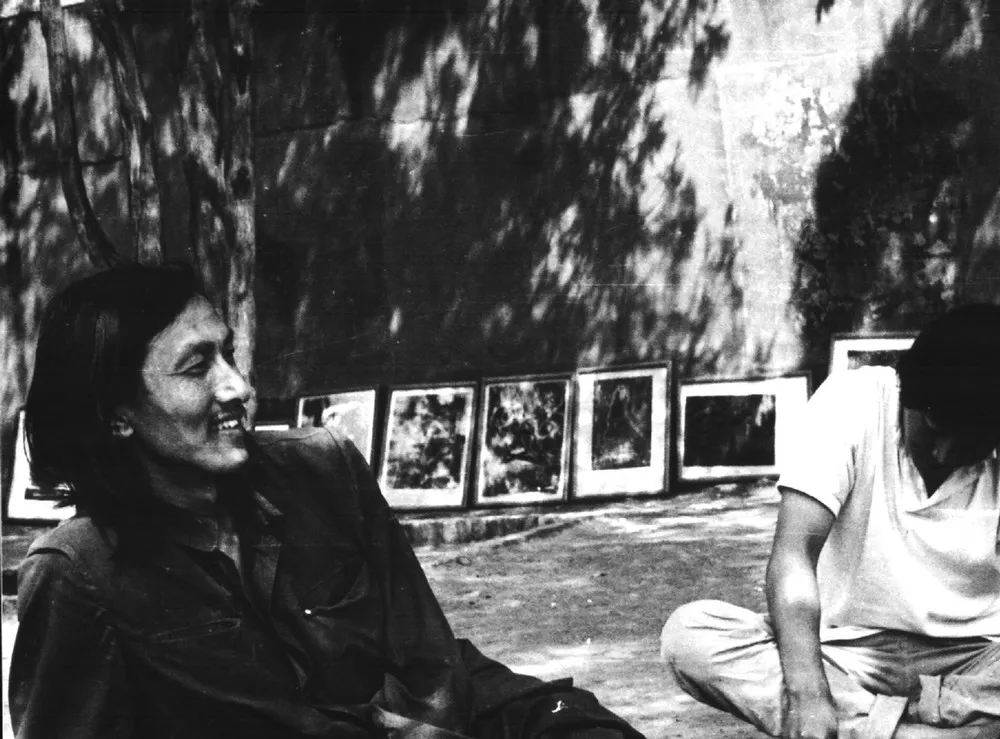
IV. A Sentence on the Wall of the Room Where Da Zhang Lived
On the wall of the room where Da Zhang of Datong lived before his death, there was a sentence:
“The final outcome of art — is the question of whether or not to preserve life. Because any discovery of the artist’s, once it is made use of by others, or even by himself, loses its meaning.”
He criticised the growing “refinement” and “docility” of Chinese contemporary art at the time, holding that art should be as destructive as “a mad dog biting”, rather than sinking into decoration that “nourishes the heart”. This critique extended into a vigilance against art being “made use of” — commercialisation, politicisation, even self-repetition. The “success” spoken of above was, for Da Zhang, closer to a victory. Nietzsche said that the death of one who has reached fulfilment is a victory.
On 1 January 2000, Da Zhang took his own life, like the curtain falling on a golden age.
I have often wanted to write something in his memory, but I am ashamed of my own inadequacy and can only mention him in scattered fragments. With his “death” he deconstructed every existing value and power — value understood as it applies to artists. Set against that, the ambiguity between art and power today leaves young people an art world that is foul and festering, a world of wine sacks and rice bags. If, ten years from now, the best-selling artist at contemporary art auctions is still Fang Lijun, then today’s young generation will truly have become a “generation that has gone to ruin”.
Let us spur one another on…
3 April 2025
Written at home
订阅艺术评论
订阅即赠《2024中国当代艺术关键词》内部思考笔记 PDF
每周免费获取最新当代艺术批评与研究