The original text:
I. I Asked DeepSeek a Question
I asked DeepSeek one question: if you had a single opportunity, what would you ask those of us who work in art?
The first question it asked was this: when AI can generate artworks in an infinite range of styles, what do you think will be the core uniqueness of the human creator? Put plainly: will artists be replaced by AI?
So the question perplexes not only us; AI itself is curious about it too.
After the New Year, as soon as DeepSeek appeared, people in a number of professions — editors, civil servants, teachers — began to lose their jobs.
So what is to become of artists?
I have a great many colleagues in the art world around me, and their attitudes towards AI divide into two kinds:
One is the optimists. They say, “Oh, it is fine — for the artist AI is only a tool; it will not replace artists.” Their reasoning is that today’s artists are not producing the so-called correct answer; what today’s artists produce is the uncertain answer, the answer that looks imprecise.
That sounds rather convoluted, but what it means is that a great deal of the contemporary art people cannot understand is essentially work made against the grain of popular taste — a form of exploration. If a work is legible to you, if it resembles its subject closely and looks accurate, then in their view there is no breakthrough in it at all.
So the optimists hold that AI’s function is to help you complete the accurate answer and make you more accurate; as a tool it can assist artists towards a more individualised presentation.
At first hearing this view sounds reasonable, but the trouble with it is that it ossifies the concept of the “artist”. After all, the definition and the sense of identity of the artist today are not those of the artist before AI existed. The artists of every era carry that era’s definition of the role and that era’s responsibilities.
In the book by the American writer Thomas Wartenberg, art can take on this many roles:
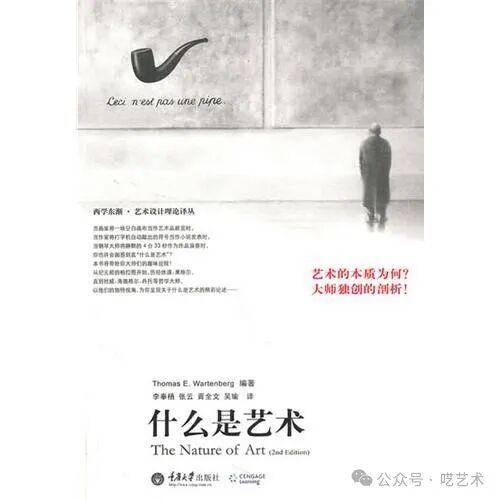
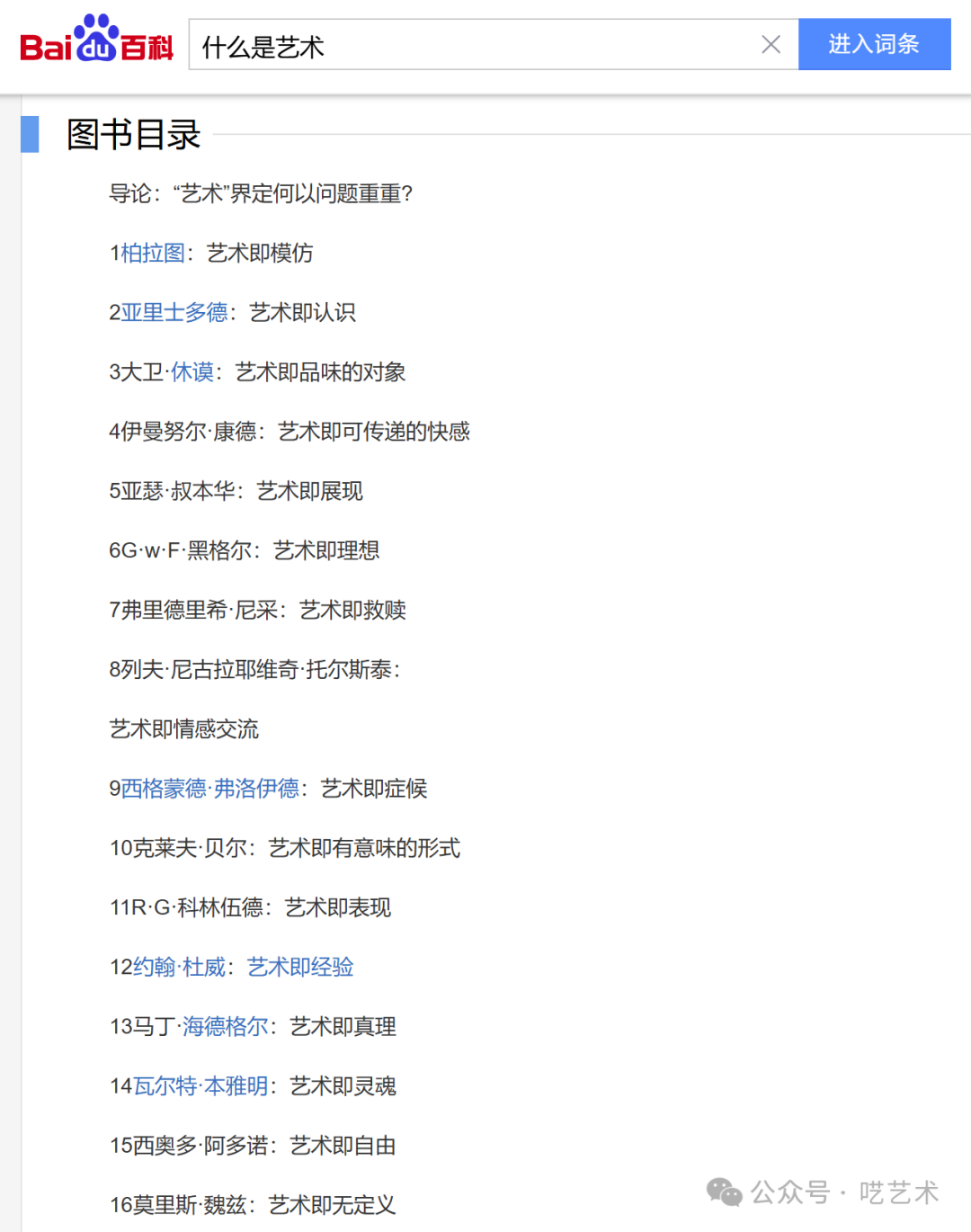
Why should so many roles arise?
In the end, the times have changed. The ultimate purpose of art is to serve human beings and to make society better, and so the roles it shoulders and the cultural responsibilities it carries are not the same from one era to the next.
Now that AI has changed this era once again, how are we to define art once again? To borrow a line from Norbert Wiener, the founder of cybernetics:
“The first industrial revolution was the devaluation of the human hand as a result of competition with machinery; the present industrial revolution lies in the devaluation of the human brain, at least in so far as the brain performs the simpler and more routine kinds of judgement. Of course, just as the skilled carpenter, the skilled mechanic and the skilled tailor — people who possessed a craft — survived the first industrial revolution to some degree, so the outstanding scientist and the outstanding administrator will likewise survive the second.
Yet once the second industrial revolution is complete, the person of average academic ability, or less, will have nothing left to sell that anyone would think worth paying money for.”
On this level, then, the identity and position assigned to the artist in the age of AI is absolutely not limited to that of the person with excellent technique. Wiener tells us that such people were what the first industrial revolution weeded out; the second industrial revolution weeded out simple creativity as well. If we compare this wave of artificial intelligence to a third industrial revolution, then, as he says, those of ordinary academic ability will be weeded out all the more surely.
That is to say: as technique within the discipline of art grows ever more advanced — if, as the optimists claim, AI is only a technical instrument that makes you more accurate in expressing yourself — then, living in an age of technique, artists will certainly no longer be the people who once occupied the role of “artist”. What confronts them is not simply the question of self-expression, because an art that relies solely on expressing personal emotion, simple thinking and visual tricks can no longer hold up the responsibilities that art ought to carry today.
So if we do not arrive at a good understanding and a good use of artificial intelligence, and go on treating AI as a tool or a medium, the future of “artist” as a profession is in fact a very dangerous one.
The other attitude is that of the pessimists. An artist put it in exactly these words: “From now on, nothing we do can keep pace with the development of artificial intelligence; since AI can do anything, there is no meaning left in what we artists do.”
I do not think this is alarmist talk.
More than fifty years ago Roland Barthes proposed the “death of the author”; he meant that the reader, or the text, takes the place of the author. Today the author is gradually becoming replaceable by AI programmes — above all through AI’s neural network algorithms and deep learning, and through the notion of swarm intelligence as well.
Neural network algorithms simulate human neurons, allowing what were once only simple concepts to extend gradually until concepts form patterns and associations with one another. Imagine what happens when it can contain an infinity of concepts: the storage capacity of the human brain and its power to process information will be no match for it.
With the arrival of DeepSeek what we feel most keenly is depth — that it has thought, that this deep exploration really works. Deep learning in fact depends on vast numbers of parameters: the capability of this kind of artificial intelligence consists in building and training large-scale neural network models, feeding the parameters into them and carrying out automatic feature learning. As for swarm intelligence, it means that where artificial intelligence cannot manage alone, it divides up the tasks among itself and cooperates.
Which is to say: faced with a given goal, artificial intelligence can exhaust every means to arrive at the goal you want, and this “convenience” is something no human being can keep up with.
Here lies the flaw in the pessimists’ understanding, and the chief flaw is the word “goal”. The goal of art’s development must be unknown; it is unceasing breakthrough. Every artist of today, and all the master figures, theories and concepts of the past, account for 1% of what the word “art” can mean, while the art that genuinely has value lies in the other 99%, out there in an unknown chaos.
This is why, as I said a moment ago, the value of art lies in breaking things open. None of us can clearly say what “the standard answer to that other 99%” is. Ask artificial intelligence and it does not know either. Perhaps AI can help you realise that 1% very quickly, but to step into the 99% you must destroy that 1% — breaking it open again and again, and building afresh.
There is absolutely no way for artificial intelligence to reach that 99%.
So the pessimists about AI are in fact precisely the people we used to call the involution crowd. Take what Benjamin called the aura of the work of art: he held that the work’s unique existence and the historical context in which it stands endow it with a special value. But in an age of AI, if you remain inside that 1%, if your work becomes material that is merely covered over, then you and your practice have no unique historical context. The “unique existence” Benjamin spoke of is today generated by an extreme involution driven by the deep learning of technique. When creating with AI, for instance: I generate an image with five words, you use six, he uses seven; he runs three AI programmes, the picture is dazzling, as if you had dug up buried treasure — yet in the end it is of no use at all. It is only a lost, endlessly deferred imitation. This determines that if artists today merely count on luck, relying on imitation under conditions of information asymmetry to feed off the dividends of a backward market, they may make some money for themselves, but our age of art will certainly grow worse and worse.
II. On Artificial Intelligence
Towards artificial intelligence, both the “optimists” and the “pessimists” strike an unhelpful extreme. What, then, is the right attitude?
Roland Barthes said something to this effect: the space of writing can be covered over, but it cannot be pierced.
Put simply, it is depth — but not the depth of AI: the depth of the human being himself.
Barthes belongs among the pessimists. In his day artificial intelligence was only beginning; what he described was the predicament of postmodern culture, namely that “the text is a tissue of quotations drawn from the innumerable centres of culture”. The inner meaning an author of an essay wishes to convey is nothing but a dictionary already compiled; the author no longer carries human sensibility — passion, character, impression — but only an inexhaustible dictionary. Through unending writing, life merely imitates books, and books are merely a tissue of signs, and so the imitation goes on without end.
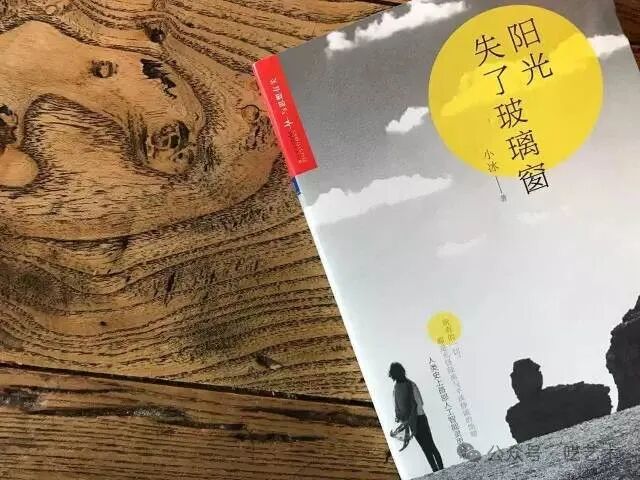
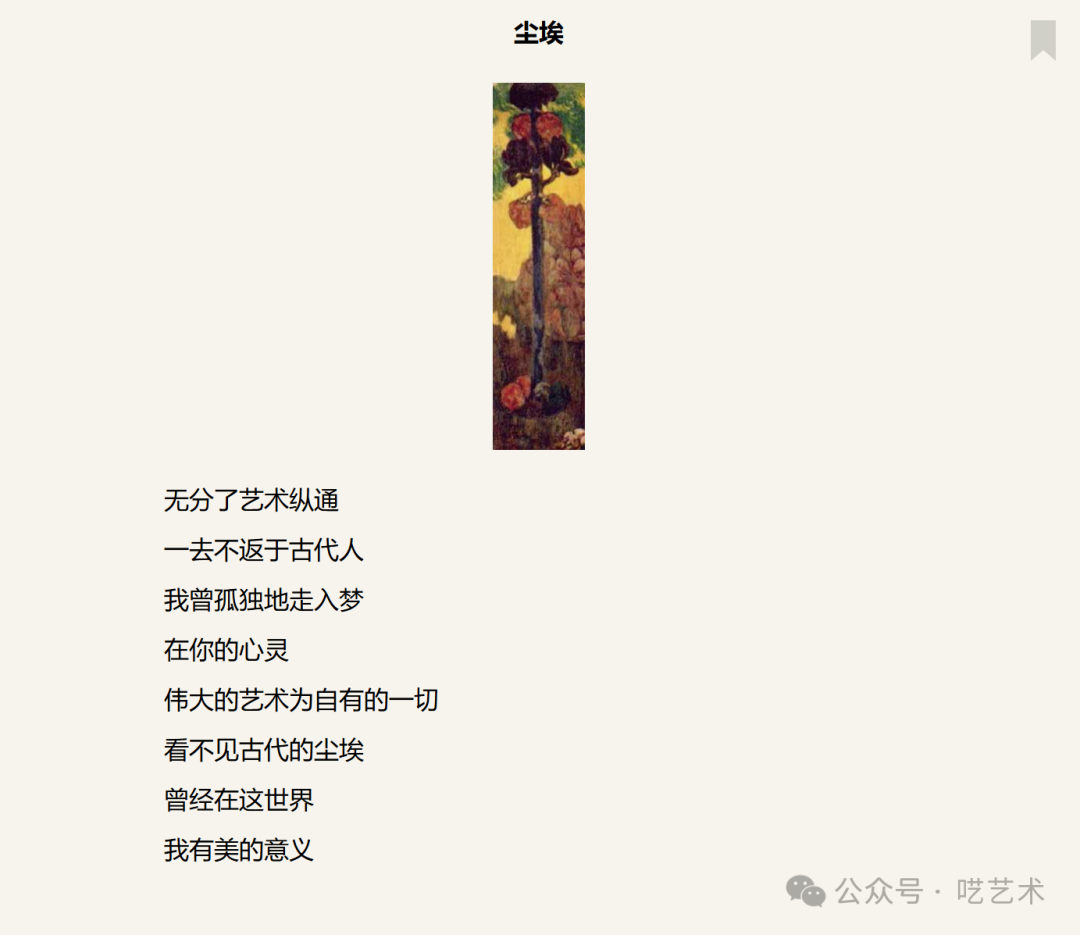
By that theory, artificial intelligence is far more efficient at such “imitation” than a human being. In 2021, for example, Hua Zhibing, the AI student of Tsinghua University — a virtual AI programme — studied every poetic work written by 519 poets since 1920 and, working from the inner structure of that poetry, produced tens of thousands of poems, and brought out a collection, The Sunlight Has Lost Its Glass Window. No poet alive can match the volume of this kind of “covering over”.
Then there is Xia Yubing, the AI student of the Experimental Art Department at the Central Academy of Fine Arts in 2019, who could paint a picture in three minutes, and Yuanlai, the AI student of the fashion design department, who created a large body of fashion work as well.
Look at the process by which it works and it is much like a human being’s: inspiration is drawn out into a mass of sketches, then, through a deep image-generating neural network, a design model for the garment is produced, and that sketch is turned into a high-quality work. Its inspiration is modular too, just as with Hua Zhibing and Xia Yubing — it is that line from the film Sheep Without a Shepherd: once you have seen more than a thousand films, there is nothing strange left in this world.
What I want to say is that the flaw in the “optimists” lies precisely in overlooking this truth: artificial intelligence is absolutely not merely a simple tool or medium. The “pessimists” do acknowledge this truth, but they overlook that line of Barthes, that the space of writing can be covered over but cannot be pierced. For if art were flat — if the art we see today were simply what it appears to be — then art would be reduced to a sign that flatters the senses, and it might well be close to finished.
So art certainly is not flat; it can be pierced. What artificial intelligence achieves is only covering over — and that it does with great success in the world as we already have it. This is what I want to say: as an artist, you cannot out-cover AI. The first thing an artist must do is to pierce art, to keep digging towards depth rather than confining himself to the surface.
III. What Is the Surface
What is the surface? What is depth?
In short, the “surface” is what belongs to other people: other people’s language, other people’s strategies, other people’s systems of thought, and even other people’s structures, styles and colour. One might say it is everything that art history is able to resolve.
When we began, as children, to learn these things called art, we began with the image structures built up out of images, the narrative structures built up out of words, and the social and spiritual structures behind them. The examinations we sat were decided, too, by the modular standard answers contained inside those structures.
As I said earlier, Xiaobing, the AI that writes poetry, may not be dealing with images at all; within the more ordered system of language it learns the diction, style, imagery and structure of poetry. In acquiring and learning surface-level information we no longer hold the advantage. Which is to say that every artwork today is like an iceberg on the sea’s surface: beneath the waterline there ought to be a mass of ice many times the volume of the part above, and that is what may be called one’s own depth.
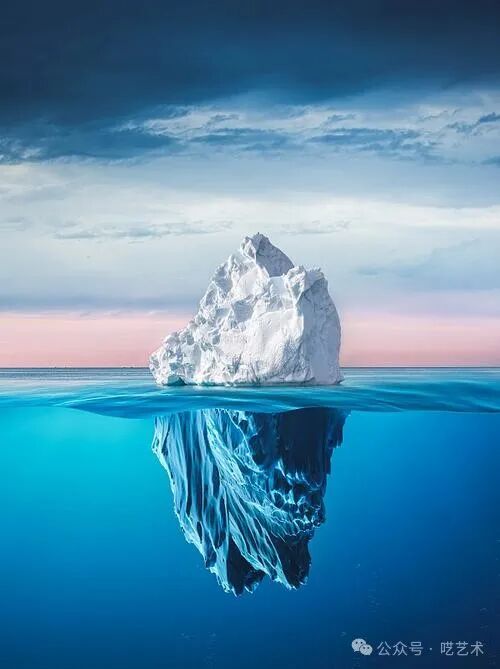
Art history belongs to other people, and so does every theory of art. The making of an artwork today is not something art history can ever settle completely, nor can it be sustained and organised by any single existing theoretical system. What supports that great mass of ice beneath the waterline — that is the depth of the work.
This depth is, first of all, myself. Bear in mind that all knowledge and all systems run like horses through your own head: however many books you read, however much art history you study, however many art stars you look at, what you have mastered is only the surface strategies of others. Those strategies should be looked at, but not looked at endlessly; having seen a great deal does not make you superior. The point, I think, is to look until you arrive at independent thinking of your own, and then to put that to work in your own work.
IV. How, Then, Is Depth to Be Built
Next, how is depth to be built? That is, it answers the question DeepSeek asked at the very start of this video: in an age when AI seems capable of anything, where does your uniqueness as human artists lie? How are artists to keep from being replaced by artificial intelligence?
Let me state the conclusion first. How to “pierce” one’s existing practice and develop further into depth within the context of contemporary art is indeed a very complicated question, but it does have rules that can be followed.
Briefly, I have summed it up as seven kinds of thinking, and I will discuss them here in a preliminary way.
The seven kinds of thinking are in fact seven dimensions of one’s own work. The first three are the work’s basic dimensions: presentational-technical thinking (medium), abstract thinking and experimental thinking. The latter four are the work’s expansive dimensions: critical thinking, symbolic thinking, interdisciplinary thinking and multi-dimensional conceptual thinking. AI can take your place in the basics — or rather, other people using AI can very quickly do it better than you — but the expansive dimensions are your own decisive weapon.
First, presentational-technical thinking, or medium thinking. How to present? In what language to present? How might this means of presentation be replaced, or withdrawn? Duchamp’s urinal, for example, was originally sent in to cause trouble; yet once the urinal work was destroyed, a proposition came into being — that is, the object was withdrawn and a concept was produced. From this angle, AI is in fact a sharp instrument for helping us present our own ideas; the problem is that you must have ideas first. In a work, material properties and conceptual expression together constitute a rich metaphorical system: the material character of the medium is no longer a mere vehicle but has become an important component of the expression of meaning — for example the fragility of ceramic, the gaze of the body, the perishing of natural materials, the historical imprint of discarded objects, the sweetness and dissolution of candy. All these material properties are tightly bound to the concept the artist wishes to convey, forming metaphors on several levels. How you, as an artist, endow the medium with “non-instrumental” value, so that the material itself acquires the capacity to speak and takes part in the production of meaning — there is a real discipline in this, but in the end it is not difficult. I will write a dedicated essay on it later.
Second, abstract thinking: what the concrete object is does not matter; what matters is your own set of abstract experience. We Chinese have interpreted this kind of thinking as the “Dao”; Westerners have interpreted it as “absolute spirit”, or as “abstraction”. What matters is that abstract thinking is the foundation on which a personal style is formed; it shows that you hold a view of objects and of the world that is your own — and of course it is not as superficial as painting that has merely detached itself from figuration. This AI cannot replace. Whatever form the art takes, you will find that with a strongly stylised artist, even with the work’s label covered over, you can still tell that it is his; behind that lies a set of abstract thinking belonging to him alone. How is abstract thinking cultivated? There are several methods, and the process of it really is most interesting. I will not go into the details here.
Third, experimental thinking. As I said at the beginning, the artists who genuinely contribute to the development of art are in fact doing the wrong thing, constantly tearing down and starting over; the direction they head in lies within that 99% of the unrepresentable I spoke of a moment ago. This is really the basis on which you are judged to be an artist at all: you must have the courage to hold that “failure is the result”. But how, concretely, does one experiment? What lies behind it is by no means as simple as personal artistic expression; it is necessarily a re-examination across disciplines, across perspectives and across techniques, and there is a set of concrete means for it. To set it out clearly would in effect be to write a history of contemporary art. But the experiment made laterally does have its patterns and methods.
In the presentational-technical thinking (medium thinking), abstract thinking and experimental thinking above, AI is in fact a tool in every case. To have these three kinds of thinking only means you have learned to make a work belonging to the category of contemporary art; it cannot yet be called a breakthrough. If you remain at the level of presentational technique, or set store by abstract thinking to the exclusion of everything else, or learn to break through by conceptualising, the day will come when you cannot keep up with artificial intelligence. What follows, though, is a different matter.
Fourth, symbolic thinking: how does one form a symbol of one’s own? In today’s commercialised environment this is genuinely needed. The semiotic method is simple: it is really a repeated iconic signifier, continually indicating cause and effect, until at last it matches the cultural symbolism agreed for it.
To put it simply: Fang Lijun repeats the big head over and over in his paintings, endowing that big head with meaning through a particular handling, and within the picture the big head serves to express a widespread condition of speechlessness among Chinese people in the 1990s. How, then, does one find the signifier for such a symbol? It is bound up with the artist’s private experience — the contradictions one has lived through, the pain of the era, one’s own particular history — and it requires a deep dissection of oneself. In the end you will find that art ought increasingly to become a mirror of an imperfect life: to give those imperfect factors a formal transformation and refinement, and then to construct a context, through, for example, constant directional repetition. In short, its set of methods is a mature one. I will talk about the details another time.
Fifth, critical thinking. This is truly a very important kind of artistic thinking, used to counter the laziness and the alienation of thought; it is a vaccine we give ourselves. The most important core value of Chinese contemporary art lies precisely here, because it has to do with the ultimate direction of the work and with its documentary significance. Contemporary art, to a certain extent, is more about the “contemporary” than about the “art”; and the “contemporary” in it is, as Agamben says, a matter of gazing into the darkness of one’s own time — true contemporaneity lies there. From this angle, art possessed of critical thinking is precisely the lamp that lights that darkness.
Speaking of “critical thinking”, DeepSeek said something excellent: “Clear-eyed critique is the deepest tenderness towards this land.” When an artist turns the blade of thought towards the deep structures of culture, art at that point necessarily becomes the blade that pierces both his own cognitive cocoon and that of the viewer. Contemporary art takes up social transformation, while traditional art takes up the eternal questions of life — though of course the boundary between the two was thrown wide open long ago.
The lively vitality that traditional Chinese painting pursued in fact stems from the brevity of human life experience. As for contemporary art, its fundamental ground tone likewise rests on the artist’s thinking about the problems of contemporary society. How to think? How to build critical thinking? The methodological systems and the theoretical systems have long been fully developed; I will not go into them here.
The sixth is interdisciplinary thinking. Most of the pessimists about AI I spoke of earlier in fact lack interdisciplinary thinking, partly because they do not understand AI. I asked DeepSeek how artists can avoid being replaced by AI, and one item in its reply was that “artists must learn to use AI in order not to be replaced”. It is right; but what I want to say is that it is not only a matter of using it — what matters more is to study it in depth, to find its fissures, its incapacities and its self-contradictions, even its negative aspects. AI is only one element of social life; the depth of a work is really the depth of its interdisciplinarity and the depth of its thinking, and this is something AI can never take from a human being, however many years it develops. A good work of contemporary art in fact sets out from art, passes through a variety of disciplines, and returns at last to art itself.
The seventh is multi-dimensional conceptual thinking: from two dimensions to four, from present to past, from individual to collective, from whole to fragment, from East to West, from being to nothingness, from behaviour to consciousness, and so on. It is tightly bound up with the symbolic thinking, critical thinking and interdisciplinary thinking mentioned above; it is a way of thinking that coordinates the piercing of the bottlenecks in one’s practice.
What lies behind it is in fact the very core of contemporary art: what it calls the “contemporary” is a dynamic construction. It will not tell you what the right thing is; it develops unceasingly, even at the cost of breaking and piercing, even at the cost of blood. Here is the flaw in what the optimists claimed at the outset, that “AI is only a tool and will not replace artists”. If the art you intend to make is fixed and unchanging, if it stays inside your own limited cognitive cocoon, then AI is indeed a tool: it can assist you and help you do it better and better. But contemporary art is itself a dynamic construction in constant development; the contemporary society it turns around is itself in constant development, and these seven kinds of thinking are evolving as well. So those of us who work in art need a clear-eyed understanding of AI.
V. The Development of AI Also Has Several Stages
The development of artificial intelligence also has several stages.
AI at present has already passed through rule-based learning, machine learning and deep learning. The appearance of DeepSeek shows that artificial intelligence has reached the stage of deep learning, and that it can be put to use across different scenarios — the number of people who lost their jobs after the New Year makes the point well enough. One technical report on artificial intelligence notes that our AI today is still only at the stage of artificial narrow intelligence, or ANI, meaning a system optimised for tasks in a single domain: cooking a meal, diagnosing an illness, driving a car, writing copy, generating code. That is the AI we use and see at present. It can already learn in depth, but it still only does what you tell it to do. After this, that will no longer be so.
The next stage is artificial general intelligence, or AGI. Ask it to create a work, for instance, and it can give you a cross-disciplinary creation; the depth and complexity it achieves in a work are beyond the reach of even us artists. It possesses human-level cognitive capacity across multiple domains. Little by little, it begins to learn how to pierce.
The third stage is that of superintelligence — artificial superintelligence, or ASI — which can surpass all human cognitive capacity, reaching a level of intelligence that self-iterates at exponential speed. It can put forward new theories, new artistic movements for example, and can do a great deal of work on values, definitions and innovation. Should it fall out of alignment with our values and run out of control, the scenes we saw in the film The Terminator could well come to pass.
Of course, this need not be read as preparing for a rainy day; for now it is only theory.
This brings to mind a word we kept repeating a few years ago, “involution”. Consider: in the past, out of ten people only one could paint, and that one was an artist beyond dispute. Later, all ten could paint, but only one produced work with an innovative language of its own, and he was the artist. Now innovation is easy — a few words fed to artificial intelligence will generate a work — and with AI’s assistance all ten have what looks like an innovative language of their own, yet only one has both an innovative presentational language and a depth of thought that is his own, and that one is the artist. In the future, perhaps all ten will have depth of thought, and what they compete over may well be the seven kinds of thinking I have described.
This raises a question: among those ten people, must you be the single one at the apex of the pyramid in order to count as an artist? That is the last thing I want to raise. AI has brought about the democratisation of art; it has brought it about that everyone can be an artist. Making a painting now is, one might say, extremely easy, and so art today is flowering everywhere.
Look at a coral reef in the sea: each polyp can grow a complete system of its own. At this point there is no involution in art; pyramidal competition and involution are obsolete. To hold fast to your own polyp — that is the way.
The times are changing, art is changing, artificial intelligence is changing. So there is no need to worry about being eliminated, and still less any need to worry about being replaced by AI. AI can never stand at the apex of the pyramid and eliminate artists on a large scale from above.
In truth, after all this talk, it comes down to a single sentence: the times have changed, so the artist’s thinking must change; the artist must grow, and must let himself take part completely in this transformation of the age. To borrow that line of Foucault, one writes in order to become someone different — and perhaps making art is the same: in order to bring about the self that differs from yesterday’s, to explore the depth of art and to increase the weight of the artist’s own participation in the work. That is the best defence of art.
Thank you for listening to the end. Please follow me; we will go on talking another time.
订阅艺术评论
订阅即赠《2024中国当代艺术关键词》内部思考笔记 PDF
每周免费获取最新当代艺术批评与研究