In the contemporary art of postwar Japan, some artists chose to explore purely aesthetic form, while others took art to be a sharp instrument for intervening in society and interrogating history. Among them, the Japanese artist Yoshiko Shimada (Yoshiko Shimada), born in 1959, is unquestionably an outstanding representative of the latter camp. Hailed as “Japan’s foremost female anti-war artist,” this title succinctly captures the unwavering trajectory of her practice since the late 1980s. Her printmaking, photography, performance and curatorial practice operate like one precise scalpel after another, continually cutting open the layered scars of modern Japanese history and confronting those corners obscured, distorted or forgotten by the dominant narrative.
At the heart of Yoshiko Shimada’s art lies a profound reckoning with war, and with the Second World War in particular; she unceasingly explores the intricate relations between gender, power, nation and memory, focusing above all on women’s dual and contradictory roles as both victims and collaborators in war. Her work is not merely a mourning of the past but a stern interrogation of the continuities of cultural mentality and historical memory in present-day Japanese society.
This essay offers a systematic account of Yoshiko Shimada’s artistic career, an in-depth explication of the anti-war thought behind her work, and a synthesis of her distinctive artistic strategies, in the hope of providing strategic insights for other contemporary artists committed to promoting peace through art.
I. Beginnings
Shimada’s artistic path was not, from the outset, charged with overt political colour. Her early education was conventional, which makes the radical turn she later undertook all the more profound and significant. To understand her starting point is the key to understanding why and how she became a pioneer of anti-war art.
(1) From Traditional Printmaking to a Conceptual Turn
1. Early Artistic Training and Formal Exploration
Yoshiko Shimada graduated in 1984 from the renowned Tama Art University in Japan, majoring in printmaking. During her studies she received systematic and rigorous technical training in the medium. As a reproductive medium, printmaking inherently carries the potential for dissemination and replication—a property that Shimada would later cleverly transform and deploy in her political work. In early-1980s Japan, the dominant mood of the art world was shaped by the optimism of rapid economic growth; the commercial gallery system flourished, and much artistic production inclined toward the decorative, the commercial, or an inward-looking personal expression. Shimada’s early work, to a degree, reflected this zeitgeist, concentrating on the refinement of technique and form.
Yet even in these early works we can already discern a restless sign. Her appropriation and juxtaposition of images had begun to show a tendency to deconstruct established meanings. As the art historian Hajime Kajiwara observed in his 2002 essay “Images of War, Gestures of Peace: The Art of Yoshiko Shimada,” “Although Shimada’s early engravings were not radical in subject matter, they already betrayed, at the level of technique, an interest in recomposing ready-made images—foreshadowing the method of appropriating historical photographs and propaganda posters she would later adopt.” For instance, she might juxtapose figures from classical painting with modern industrial products, producing a distanced and absurd visual effect. This disturbance of the order of images, though not yet directly political, was already a conceptual practice.
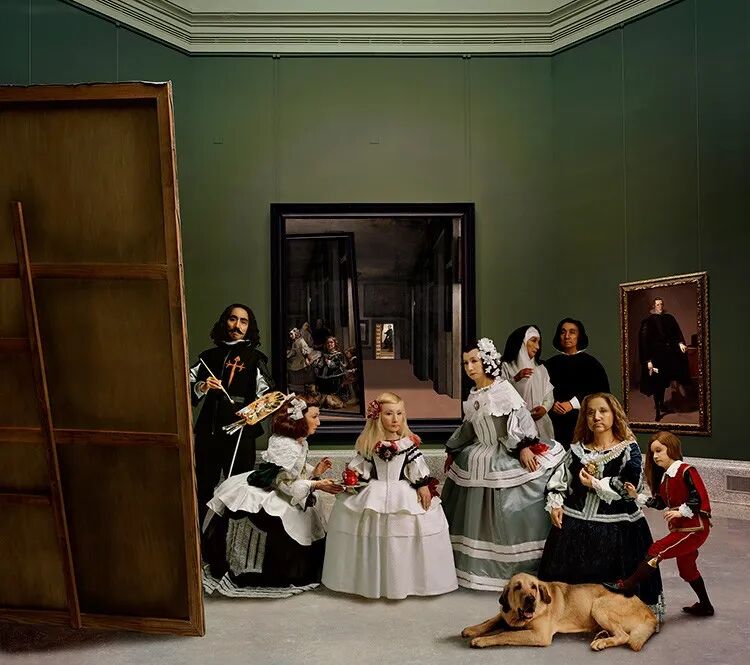
Some of her Japanese contemporaries were pursuing similar explorations. Yasumasa Morimura, for example, began in the mid-1980s to insert his own face into the female figures of canonical Western paintings, examining questions of identity, cultural appropriation and gender performance. His Portrait (Van Gogh) (1985) and the later series in which he impersonates Frida Kahlo both demonstrate the strategy of deconstructing authority through “transformations.” Although Morimura’s point of departure lay more in the mythologies of East–West cultural relations and personal identity, his methods of appropriation and impersonation enter into an interesting dialogue, at the level of strategy, with Shimada’s later work.
2. The Baptism of Feminist Thought and the Fundamental Shift in Artistic Direction
In 1980s Japan, despite enormous economic achievement, society remained quite conservative at the socio-cultural level, especially regarding gender equality. It was only after second-wave feminism had reverberated through Europe and America for decades that its influence gradually seeped into Japanese society.
For Yoshiko Shimada, the real turning point came in the late 1980s and early 1990s. On the one hand, through reading and exchange she engaged deeply with Western feminist theory, in particular the debate sparked by Linda Nochlin’s landmark 1971 essay “Why Have There Been No Great Women Artists?” concerning gender bias in the writing of art history. Nochlin’s argument—that the absence of women artists stemmed not from a lack of talent but from institutional obstacles and socio-cultural repression—profoundly moved Shimada.
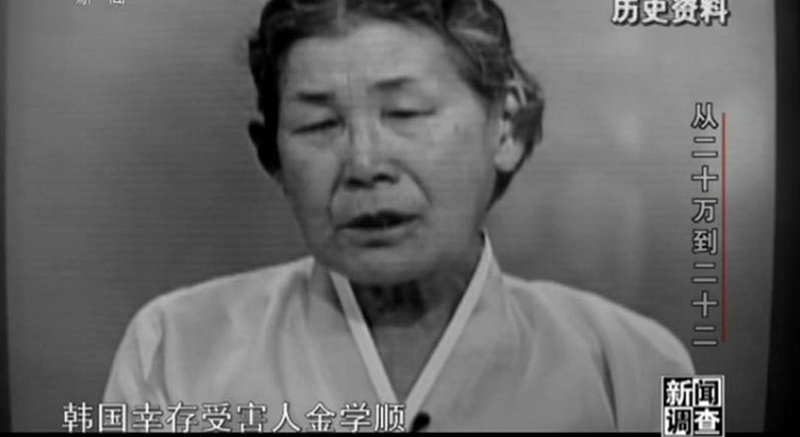
On the other hand, social events within Japan also catalysed her awakening. The death of Emperor Hirohito in 1989 triggered widespread debate and controversy in Japanese society over war responsibility and the role of the imperial system. Then, in the early 1990s, former “comfort women” survivors such as Korea’s Kim Hak-sun gave public testimony for the first time in 1991, breaking a silence that had lasted half a century. These historical “echoes” led Shimada to shift her gaze from pure artistic form to more urgent social and historical questions. She realised that, as a woman artist, she could not remain silent on issues concerning women’s dignity, the history of the nation and the trauma of war.


The activities of the American feminist art collective the Guerrilla Girls, from 1985 onward, also provided an important reference for Shimada. Wearing gorilla masks, they used humorous yet sharp posters and data to expose gender and racial inequality in the art world. Their strategy—”letting the facts and figures speak”—and their anonymous, collective mode of resistance demonstrated how art could become an effective instrument of social mobilisation. Shimada’s transformation was precisely the product of joining this critical spirit with Japan’s own historical context. No longer content with the indirect, elegant expression of printmaking, she began to seek a more direct and hard-hitting artistic language; performance and installation gradually became central media in her practice.
The scholar Midori Yoshimoto, in her monograph Entering Performance Art: Japanese Women Artists in New York, analyses this transition in detail: “Yoshiko Shimada’s artistic career is a clear transition from modernist aesthetics to postmodern political practice. She came to realise that, in addressing weighty issues such as war responsibility and gender violence, the artist’s personal emotional expression alone is insufficient; one must develop a set of conceptual strategies capable of revealing power structures and the process by which historical narrative is constructed.”
Shimada of this period moved as if from a closed studio into a broad and contested public sphere. Her art was no longer merely about the creation of “beauty” but a form of knowledge production, a writing of history, a political act. Her own body, the images she appropriated, the exhibitions she curated—all became sites of interrogation and dialogue. This shift not only defined the course of her art over the following three decades but made her an undeniable, lucid and courageous voice in Japanese contemporary art. Her awakening differs from Yayoi Kusama’s path of healing personal psychic trauma through art, and from Yoko Ono’s conceptual art themed on peace and love. What is distinctive about Shimada is that she tightly bound a feminist personal perspective to a critical historical study of the nation’s grand narrative, forging an artistic practice of exceptional penetrative force.
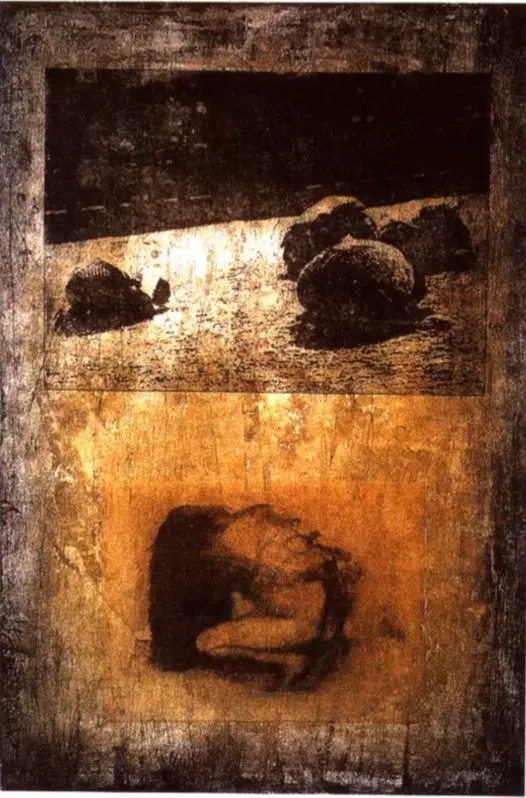
Yoshiko Shimada, Self-Torture, 1982 (work note: the artist juxtaposes a photograph of a Japanese woman kneeling in worship before the imperial residence with a photograph of an Asian woman bound and forced to her knees. The kneeling postures of the women in the two images are similar, yet their nature is utterly different: one is a voluntary submission to imperial rule, praying for and anxious about the “war fortune” of the Japanese empire, while the other is a forced kneeling, under violence, full of pain and humiliation. When the two photographs are placed side by side, viewers discern, from the contrast between these slices taken from different times and spaces, something far from ordinary. Both are women; yet the reasons they assume this posture, and the divergent fates behind seemingly identical gestures, reveal a stark disparity).
II. The Core of Anti-war Thought: Deconstructing the “Holy War” Narrative and Re-examining the Female Role
Shimada’s anti-war thought is no vacant pacifist slogan but a systematic critique grounded in rigorous historical research and profound feminist insight. The core of her work is to deconstruct the “holy war” narrative about the Second World War that the Japanese state long constructed, and to overturn its singular, passive portrayal of the female role. Through art she compels the viewer to confront the complexity and cruelty of history, especially those female experiences doubly repressed by nationalism and patriarchy.
(1) The Sustained Inquiry into the “Comfort Women” Issue
The “comfort women” issue is the most well-known and most contested theme in Shimada’s practice. Her engagement with it is not born of simple sympathy but treats it as an exemplary case for dissecting the intersection of Japanese militarism, colonialism and patriarchal violence. Her work moves beyond a sentimental portrayal of victims to a profound critique of the institutional evil behind it and of the indifference of contemporary society.
1. Mother and Child
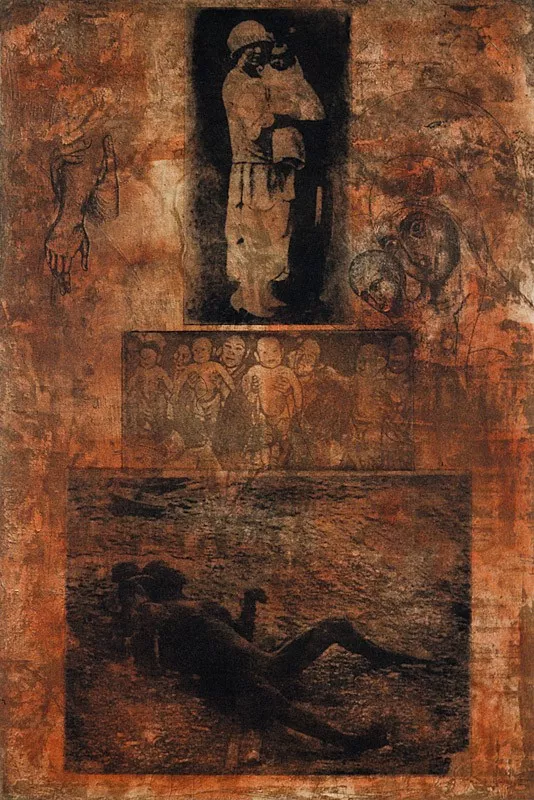
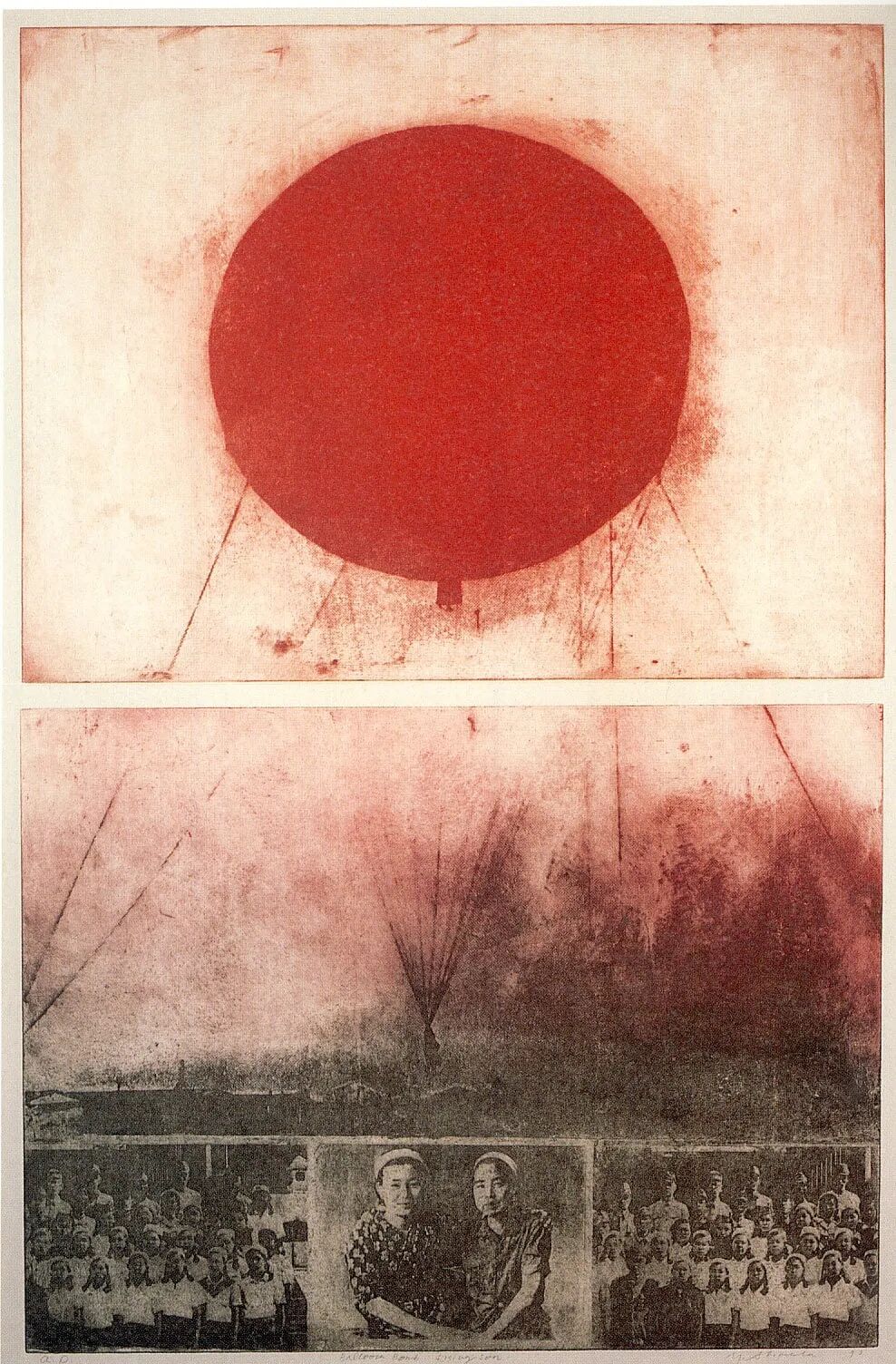
After the death of the Shōwa Emperor in 1989, Yoshiko Shimada began to make photocollages from photographs—published in wartime newspapers and magazines—of Japanese women supporting the war of aggression in various ways, producing works about violence, war, women, Japanese history and nationalism. She viewed traditional feminism with a critical eye, and through it reminded Japanese women of their responsibility to reflect on their own roles in the war.
Shimada wrote: “My work deals with images of women from the Second World War, drawn mainly from newspaper photographs. Why the Second World War? Why women? Because we have evaded this question for too long. As Japan attempts to become a ‘world leader’ politically and economically, it is important to re-examine our recent past and the mentality of that time. Unfortunately, the older generation tries to ignore the past, while the young know nothing of it. Moreover, Japanese artists avoid such self-reflection because they firmly believe that art should not engage with politics. Consequently their work is highly refined aesthetically and technically, but lacks reality and content. For me, art is a tool of self-reflection and expression. To understand who I am (an Asian, a Japanese, a woman), it is inevitable to study modern Japanese history and the role of women, and what we did to the peoples of Asia.”
In the course of her investigation, Shimada came to realise that Japanese women were not wholly the silent victims of a male-dominated militarism; many of them were also willing, in the name of the Emperor, to sacrifice themselves and others. Yet after the war their activities were never called into question, and war responsibility was never seriously discussed. Shimada warns that, failing such awareness, the system and the mindset remain unchanged, Japanese women cannot truly know themselves or others, and will be manipulated again and again.
2. Looking for a Past House (1993): The Interweaving of Individual Memory and Public History
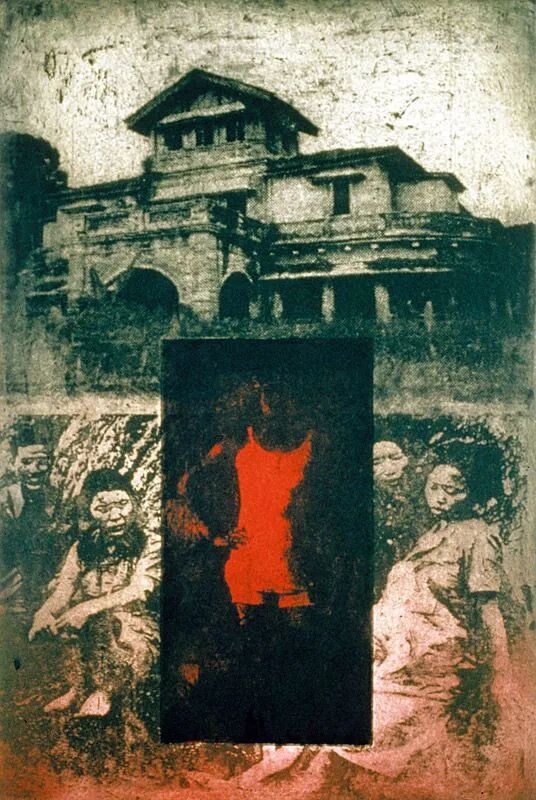
Looking for a Past House turns toward an exploration of individual memory and micro-history. In this performance-and-photography work, Shimada travelled to Korea to visit the former sites of “comfort stations.” Dressed in a white dress that symbolised purity and mourning, she stood silently before these places—now ordinary dwellings or ruins—or performed simple ritual gestures.
What these photographs record is not merely physical space but a dislocation of time and an overlap of memory. The artist’s own presence—the body of a contemporary Japanese woman—creates a strong tension with that erased, violence-saturated history. Her action is a “substitutional” mourning: on behalf of the victims who can never return to their homeland, and on behalf of the perpetrators who chose to forget, she completes a long-overdue “presence.”
The art historian Kim Yeon-ja, in her 2008 essay “The Body as a Battlefield of Memory: Historical Re-enactment in East Asian Women’s Art,” analyses this as follows: “Shimada’s performance is not a simple re-enactment but a practice of ‘postmemory.’ As a descendant who did not personally experience the trauma, she internalises the burden of public history as a personal responsibility through bodily intervention. Her presence is both a ‘reactivation’ of the historical site and a reflection on her own national identity. This shares the spirit of the work of Doris Salcedo, who often uses the personal belongings of victims (furniture, clothing) to make installations, letting the material itself bear the weight of memory, whereas Shimada uses her own body as the medium that carries memory.”
Through this work, Shimada poses an important question: as the witnesses of history gradually pass away, how should we later generations receive and transmit memory? Her answer is through active, bodily inquiry and intervention, refusing to let history degenerate into the cold words of a textbook.
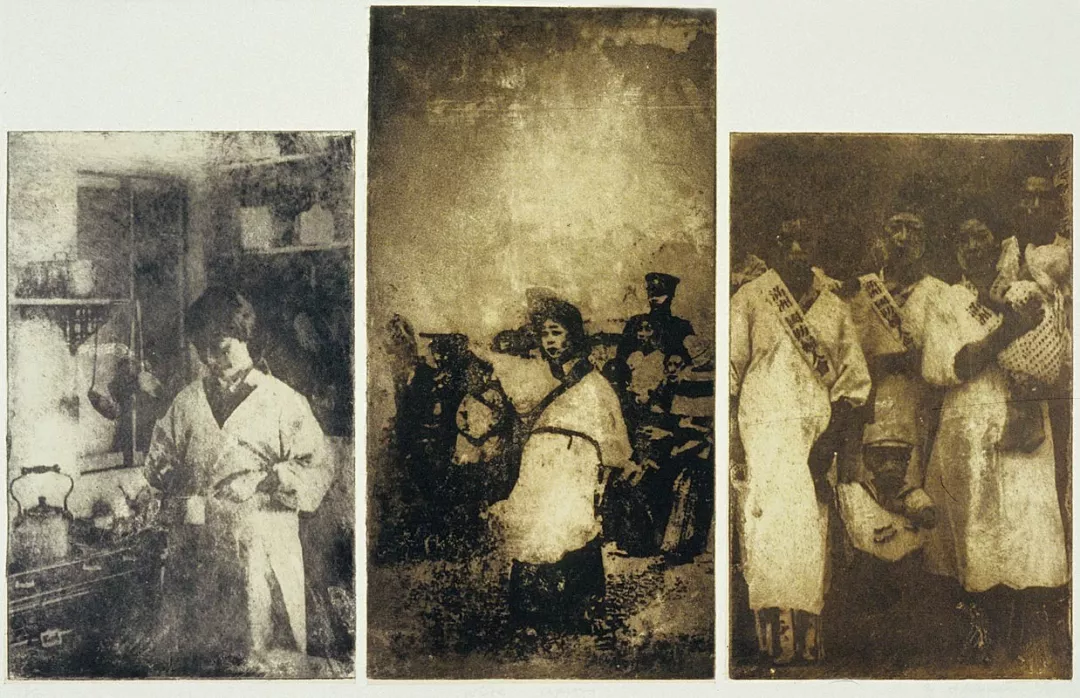
(2) Revealing the Complexity of Women as War Collaborators
What is profound about Shimada is that she does not simply cast women as pure, innocent victims. She keenly recognised that, under the frenzied propaganda of militarism, large numbers of Japanese women were also active supporters and collaborators of the war. To confront this less “glorious” history is a crucial strand of her anti-war thought, and also the part most prone to misunderstanding and attack.
1. Black Boxes + White Cubes (2002–2004)
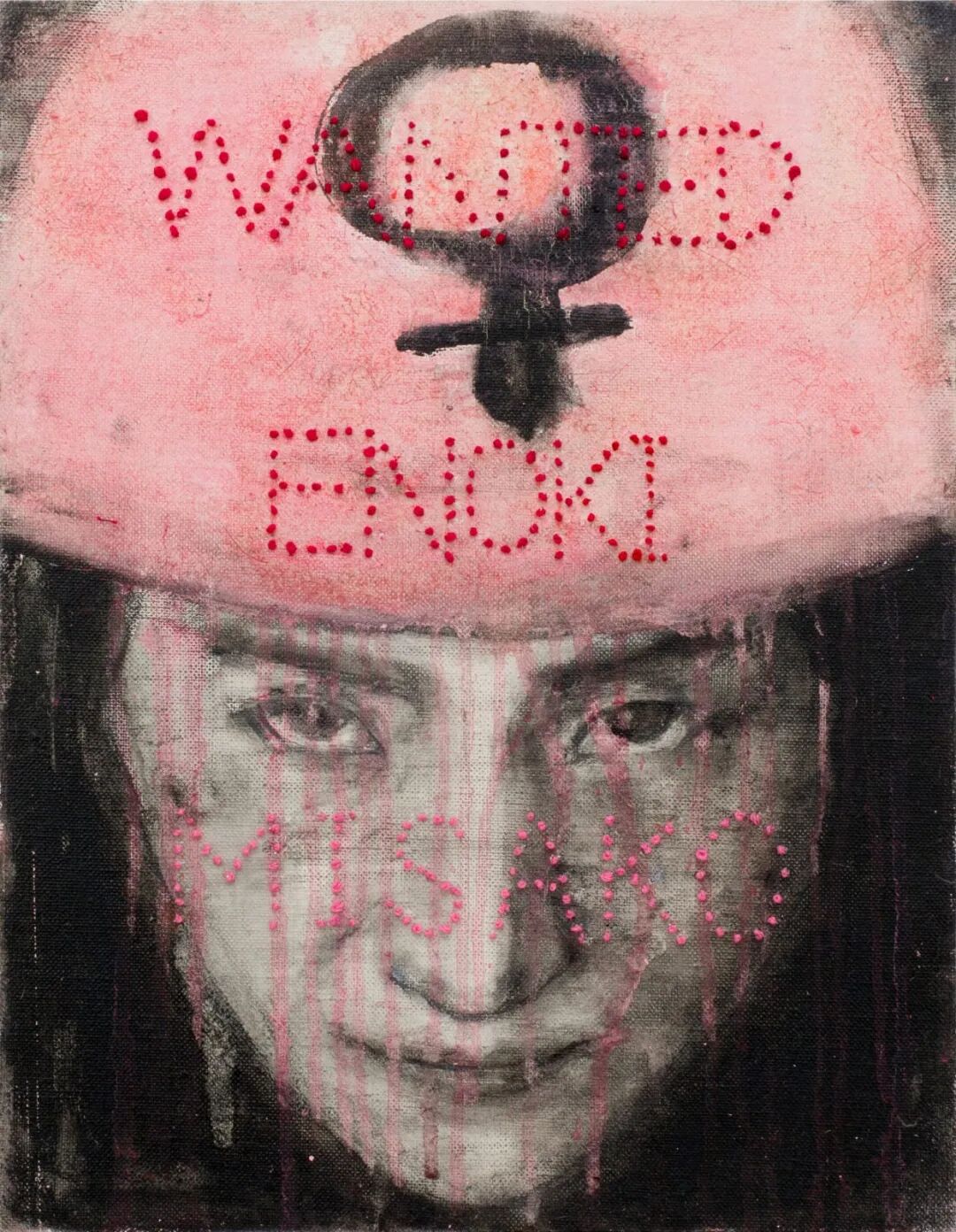
In a print series of the 1990s she appropriated the official portraits of Emperor Hirohito and his consort, deconstructing the myth of imperial authority through collage and textual tampering. Misako Enoki · Red Knot can be seen as an extension of this line of thinking—placing the face of an individual woman alongside “feminine symbols” and “war labels” to reveal how state power mobilised women into the war through gendered discourse (such as “patriotic women” and “rear supporters”), only to erase their status as victims after the war.
The “piercing” action of the red bead-studding metaphorises the violent tampering of war with women’s bodies and memory, echoing the “comfort women” issue she has long addressed—women objectified as “tools” in war, their suffering systematically obscured by structures of power.
2. Critiquing the Persistence of the “Good Wife, Wise Mother” Ideology
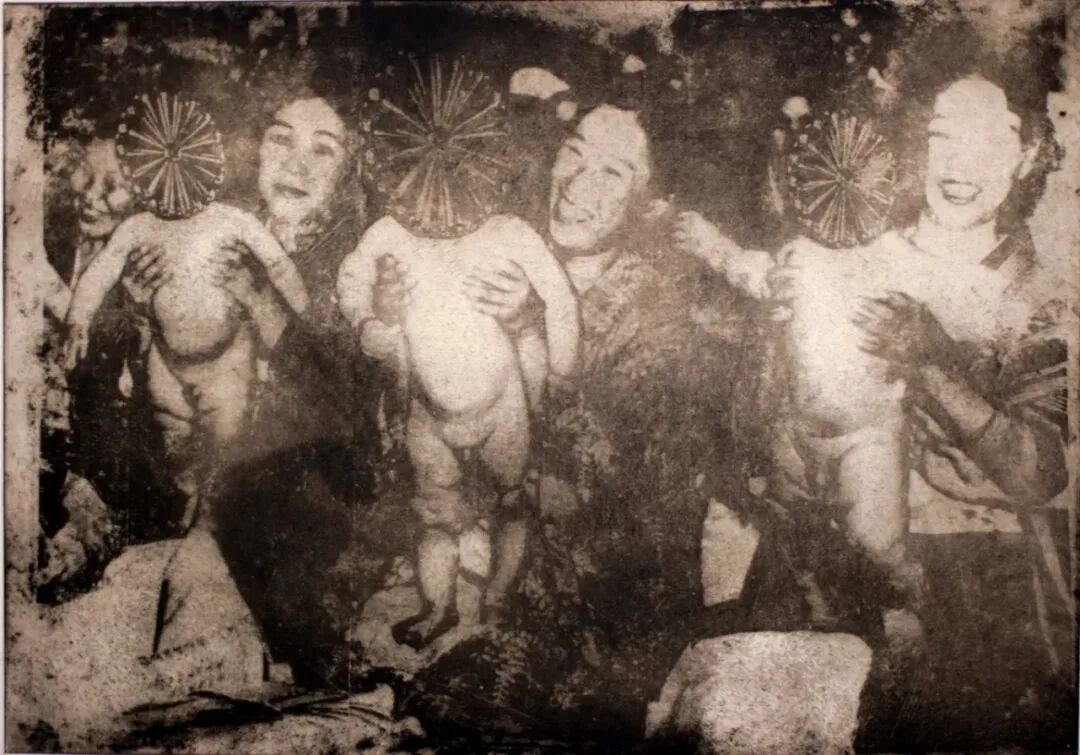
In the image we see several women holding infants, the babies in varied postures, while the women’s faces are obscured by patterns resembling sunrays. During the Second World War, Japan promoted “bearing many children,” turning childbirth into a means of strengthening the nation and supplying manpower for the war. These images of women holding babies likely metaphorise the cohort of Japanese women then swept up by this state ideology; they became instruments of reproduction beneath the war machine.
The obscuring of the women’s faces may, on the one hand, suggest that under such a social atmosphere individual consciousness was subsumed by the state’s war will, and the women lost self-expression and independent personhood; on the other hand, it prompts viewers to reflect on these women’s real predicament and inner world in wartime—appearing to participate in activities such as the “Baby Contest,” they were in fact governed by war and social norms, indirect victims of the conflict.
Made in 1992, a considerable time after the end of the Second World War, Shimada’s decision to look back and create works relating to wartime Japanese social phenomena constitutes a reflection on and re-examination of that history. At the time, attitudes toward the history of the war within Japanese society were contested; some sought to glorify or downplay war crimes, while she, through artistic creation, revealed the deep impact of war on ordinary Japanese people, especially women, critiquing war’s distortion of human nature and its destruction of social values.
Shimada holds that the wartime mobilisation of women exploited and reinforced Japan’s traditional “good wife, wise mother” ideology. Women were taught to serve the nation and the family first, their personal worth relegated to a secondary place. During the war this ideology was radicalised into the “virtue” of “bearing children for the nation, sending husbands to the front.” Shimada’s work reveals precisely how this seemingly “gentle” traditional division of gender roles was, under specific historical conditions, seamlessly transformed into a component of the violent machinery that supported the war.
By confronting the history of women as collaborators, Shimada’s anti-war thought reaches a deeper stratum. She does not intend to condemn these individual women but to critique the powerful ideological system—jointly constructed by nationalism and patriarchy—that pushed them into the position of collaborators. This critique also extends to the present, warning that any rhetoric demanding the individual’s unconditional sacrifice and devotion in the name of “nation” or “collective” may harbour dangerous seeds.
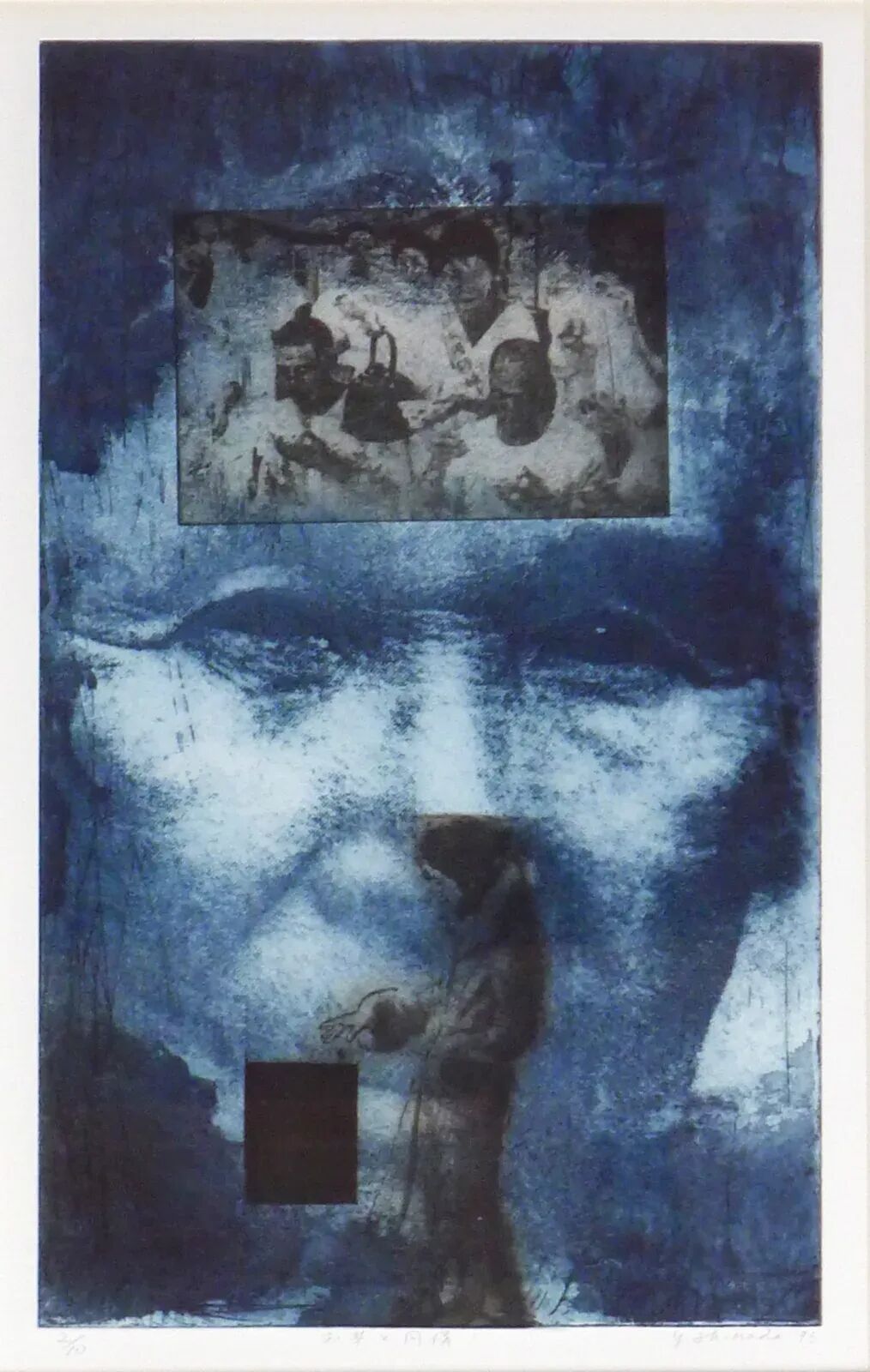
(3) Critiquing the Myths of the Imperial System and Nationalism
Within the spectrum of Shimada’s anti-war critique, the direct challenge to the imperial system and the national myth is the most radical and audacious part. In Japan, the Emperor was deified before and during the war as a “living god,” the supreme symbol of national unity and the national spirit, and “dying for the Emperor” was the soldier’s highest honour. After the war, though the Emperor was “pulled down from the altar,” his status as “symbol of the state” remains sensitive. To criticise the imperial system openly—especially in works of art—requires enormous courage.
1. Appropriating Imperial Imagery: A Visual Guerrilla War to Subvert Authority
One of Shimada’s most frequently used strategies is to appropriate the official photographs and portraits of the Japanese imperial family. In her print series Untitled (1990s), she manipulates the official group portrait of Emperor Hirohito and the Empress, sometimes collaging her own face or that of an ordinary woman onto the Empress’s position, and sometimes adding ironic texts or symbols to the image.
This act is subversive on multiple levels. First, it breaks the sacrosanct and inviolable character of imperial imagery. In the everyday life of ordinary people, the image of imperial family members always appears in a carefully retouched manner, full of majesty and distance. Through rough collage bearing obvious traces of the hand, Shimada strips away this sacred halo, reducing it to an ordinary image that can be touched, altered, even “parodied” by ordinary people. Visually, this achieves a “demotion” of authority.
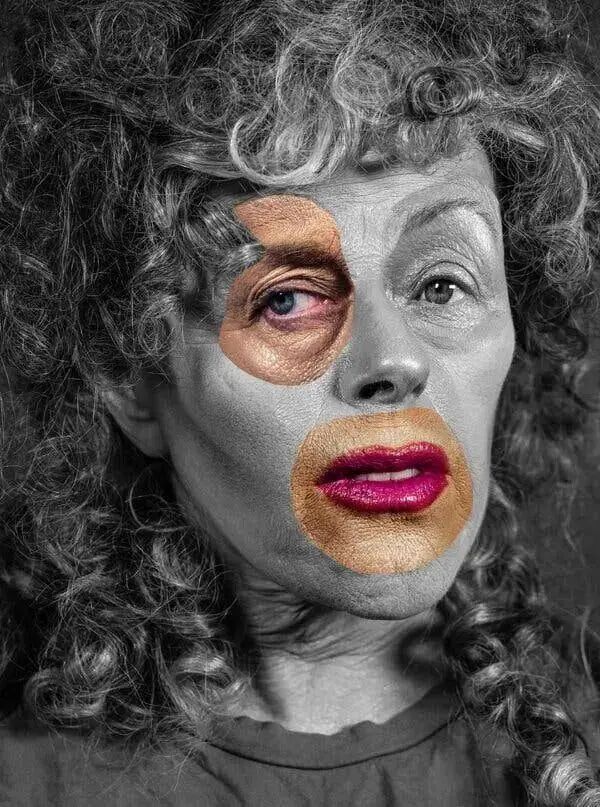
Second, inserting the figure of an ordinary woman, or even the artist herself, into an imperial portrait is a direct challenge to patriarchy and the ideology of bloodline. The perpetuation of the imperial house depends on strict patrilineal descent and the control of women’s bodies (with the production of a male heir as the primary task). Shimada’s “intrusion” symbolises the assault launched by an alien, irregular female body upon this closed, rigidly hierarchical system. This bears resemblance to the approach of the American artist Cindy Sherman in her History Portraits series. Through impersonating the protagonists of male and female portrait paintings from different historical periods, Sherman revealed how identity and gender are constructed and performed in the history of art. Shimada, however, focuses this strategy on the concrete power symbol of the Japanese imperial house, making its political orientation more explicit.
In the co-authored book War Baby / Love Child: Mixed Race Asian American Art, the historian Laura Kina, though primarily discussing mixed-race identity, offers an analysis of Shimada’s work that applies equally here. She notes: “Shimada’s appropriative practice is a typical postmodern deconstructive strategy, yet its purpose is not merely to play with the game of signifier and signified. Her aim is very clear: through visual ‘tampering,’ to shake the foundation supporting Japanese nationalist identity—the myth of the national polity centred on the Emperor, seemingly eternal and unchanging.”
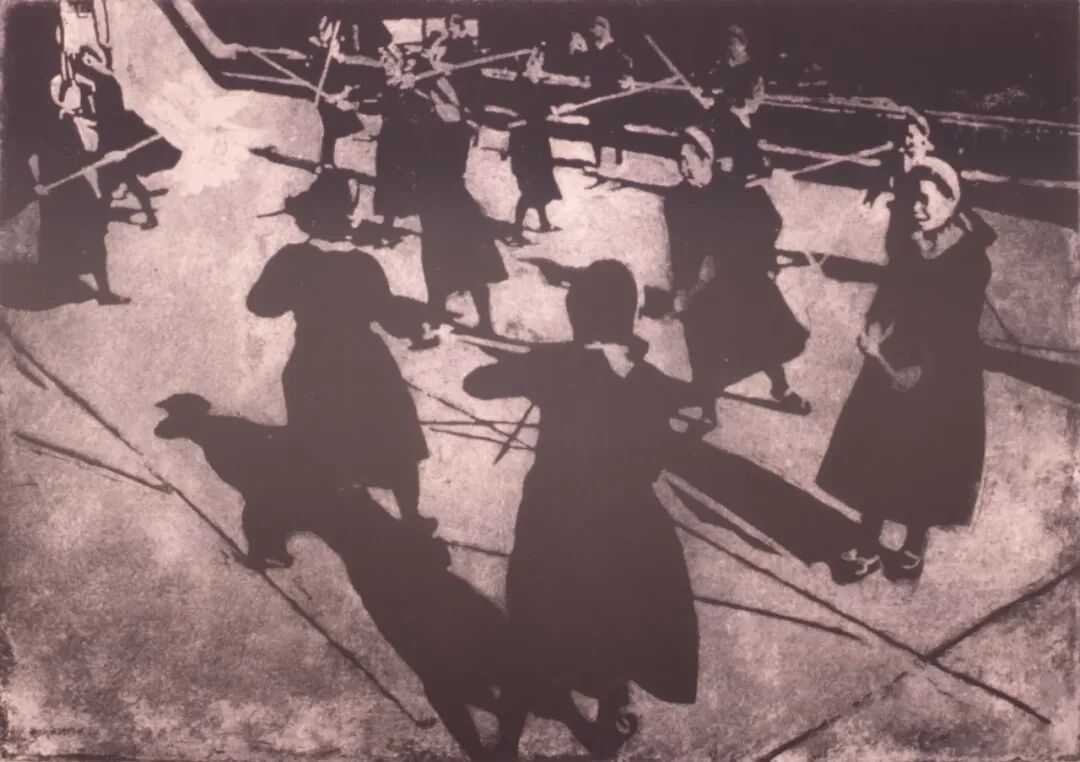
2. Deconstructing the “Unbroken Imperial Line” and the Imagining of the National Community
Shimada’s work is precisely an attempt to burst this “imagined” bubble. By revealing the cruel truth of war, especially women’s complex predicaments within it, she shows that this so-called “harmonious” community was in fact built upon internal (against women) oppression and external (against the colonised) violence. Her artistic practice can be described as a “reverse imagining”—that is, by presenting the fragmented memories excluded, repressed and forgotten by the community, she deconstructs that grand, unified myth of the nation.
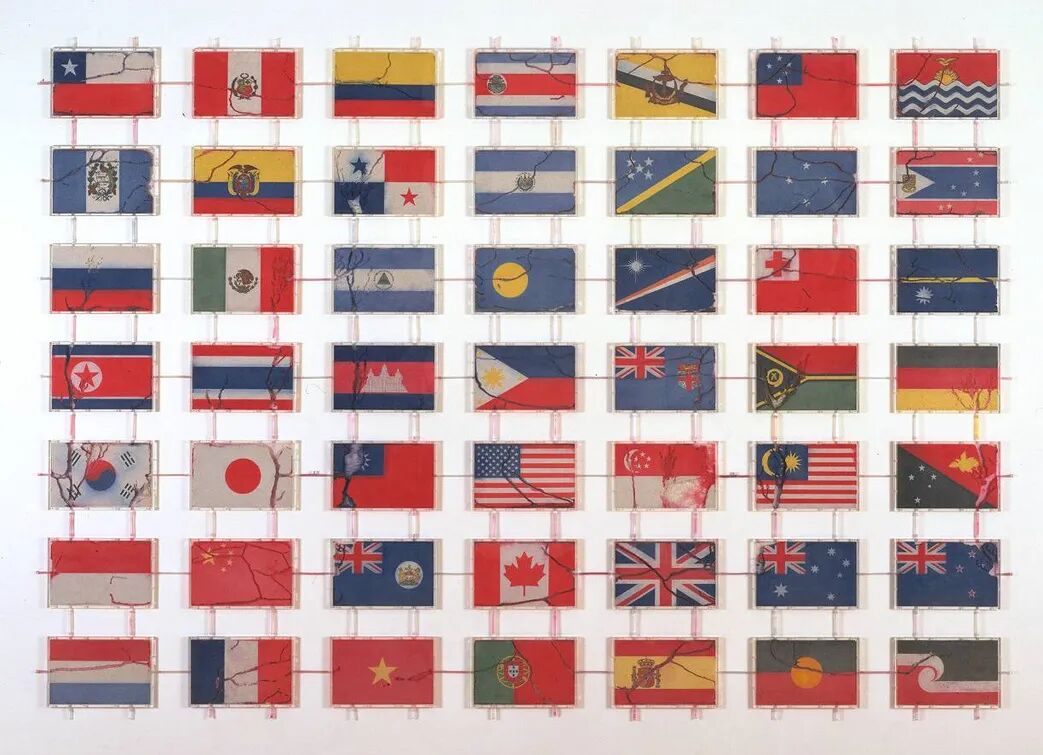
The celebrated installation World Flag Ant Farm (1990) by the Japanese artist Yukinori Yanagi offers another case of deconstructing national symbols. Yanagi made the national flags of countries around the world from coloured sand, connected them, and released ants among them. The ants roam and forage, gradually eroding and mixing the boundaries between the different flags. The work suggests, in a more poetic and biological manner, the artificiality of national borders and the dissolution of the nation-state concept in the process of globalisation. Compared with Yanagi’s macro perspective, Shimada’s point of entry is more concrete and personal; approaching from a feminist angle, she reveals the concrete harm the national myth inflicts on individuals, especially female individuals.
In summary, Shimada’s anti-war thought is an organic whole composed of multiple layers. It begins with an inquiry into “comfort women” as an extreme form of violence, expands to an exploration of the complexity of the “collaborator” role within Japanese women, and finally points directly at the imperial system and the nationalist myth that lie at the core of militarist ideology. With an uncompromising posture, she demands that Japanese society undertake a thorough, unsparing self-examination—and her art is the sharpest instrument for realising that examination.
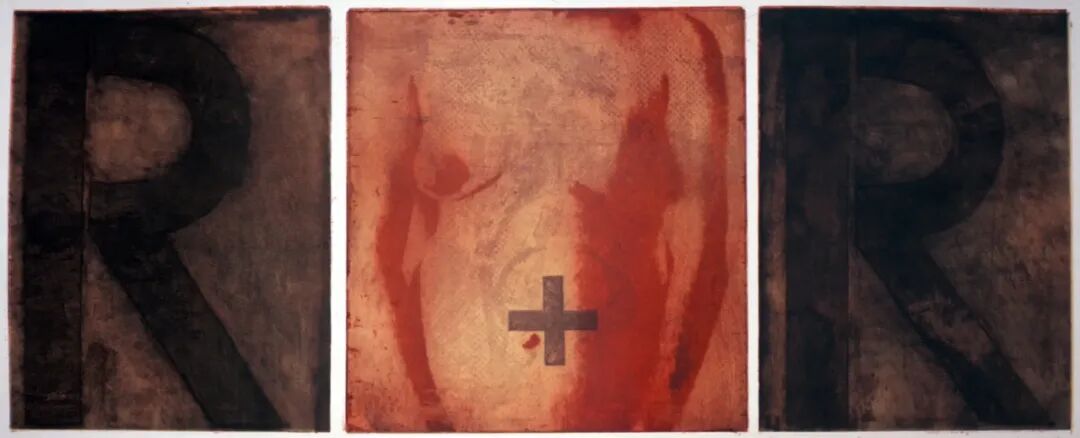
III. Anti-war Strategies in Artistic Practice: Appropriation, Performance and Transnational Dialogue
The reason Shimada’s art possesses such formidable critical force lies not only in her choice of highly challenging themes but in the subtle and effective artistic strategies she developed to match them. She deploys the language of postmodern art—appropriation, collage, performance—with fluency, yet transcends mere formal play, transforming it into a sharp instrument for historical intervention and political utterance. At the same time, the transnational collaboration and dialogue she actively champions carry her art beyond Japan’s borders, resonating in a far broader field.
(1) The Strategy of Appropriation: Using Their Own Method Against Them
Appropriation is one of the most central weapons in Shimada’s artistic arsenal. Rather than originate wholly new images, she “borrows” existing ones that carry specific historical and ideological information, and through recombination, collage and tampering overturns their original meaning, creating new, critical significance. This is a cultural guerrilla war of “using their own method against them.”
1. The Selectivity and Targeting of Appropriated Objects
The objects Shimada appropriates fall mainly into three categories:
The first are wartime propaganda posters, billboards and news photographs; the second are the official portraits of the Japanese imperial family; the third are traditional Japanese art forms such as ukiyo-e. None of these objects is neutral; they are themselves vehicles of power discourse.
Regarding the appropriation of ukiyo-e, Shimada focuses on how, after the Meiji Restoration, it was used as a tool to propagandise the First Sino-Japanese War (the Jiawu War) and the Russo-Japanese War. Many ukiyo-e artists produced large numbers of “war pictures” depicting the Japanese army as valiant and invincible while the Qing or Russian armies were no match for them. Shimada selects details of these “war pictures” and combines them with photographs of victims or symbols of violence. For instance, over the background of an ukiyo-e depicting Japanese soldiers charging into battle, she might overprint the portrait of a “comfort woman.” Such a practice not only reveals how a traditional art form served militarism but also challenges the purifying, depoliticising view that regards ukiyo-e merely as “traditional Japanese beauty.”
2. Critical Intervention in the Manner of Appropriation
Shimada’s appropriation is not, like that of Richard Prince, a “re-photography” of ready-made images with almost no alteration, which raises questions of originality and authorship. Shimada’s intervention is active and conspicuous. She frequently employs rough cutting, incongruous collage, handwritten text, and the corrosion and scratch effects peculiar to printmaking.
These “imperfect” traces are themselves a statement. They destroy the integrity and authority of the original image, leaving “evidence” of the artist’s critical intervention. As the art theorist Craig Owens argues in The Allegorical Impulse: Toward a Theory of Postmodernism, appropriative art often possesses an “allegorical” quality: it superimposes one image or text upon another, generating new, multi-layered readings. Shimada’s work is precisely such; every collage, every scratch, tells a story of the original image’s repression.
For example, in treating the portrait of Emperor Hirohito, the printmaking corrosion marks she deliberately preserves seem like the erosion of time and historical guilt upon that sacred face. This material handling endows the work with a tactile quality and a historical weight, lifting its critical force beyond mere image juxtaposition.
(2) Performance Art: The Body as Site, Reshaping Empathy and Witness
As her practice deepened, Shimada gradually realised that static images are sometimes inadequate to bear the weight of historical trauma, and struggle to build a genuine emotional connection between viewer and history. Performance thus became another important means of expression for her. She treats her own body, and the bodies of her collaborators, as the “archive” and “monument” of history; through presence and action in specific spaces she evokes forgotten memory and invites the viewer to become a new “witness.”
1. Collaborative Body Narratives
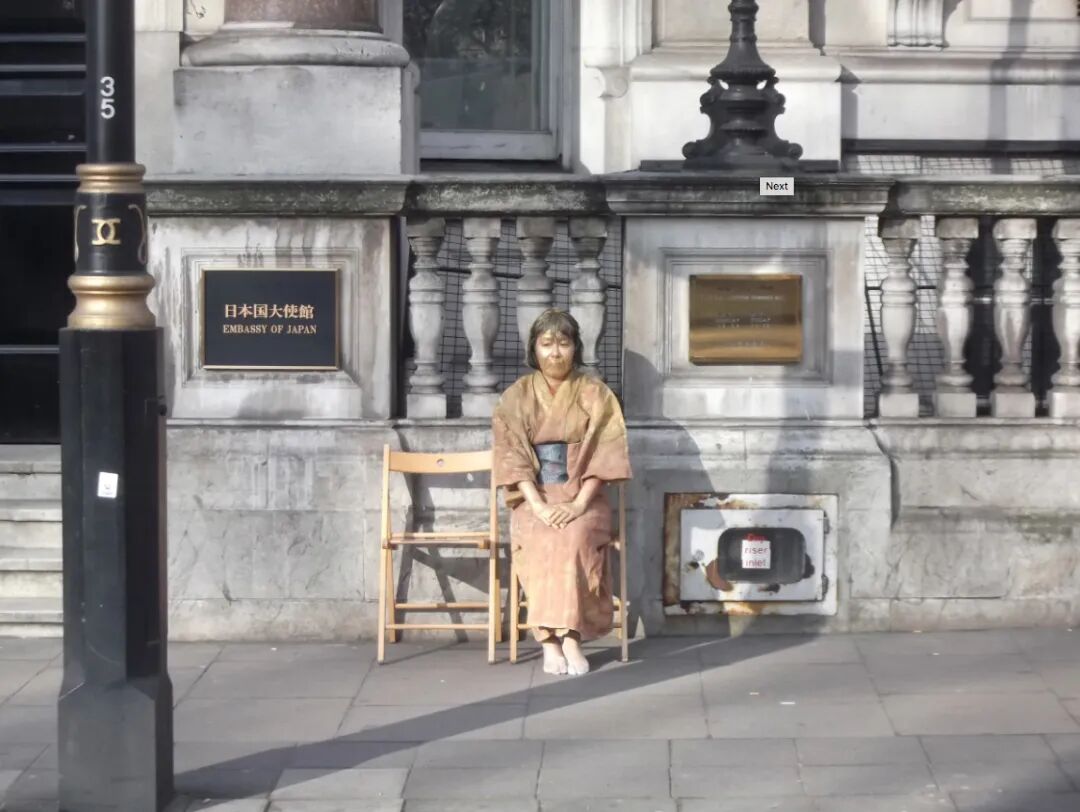
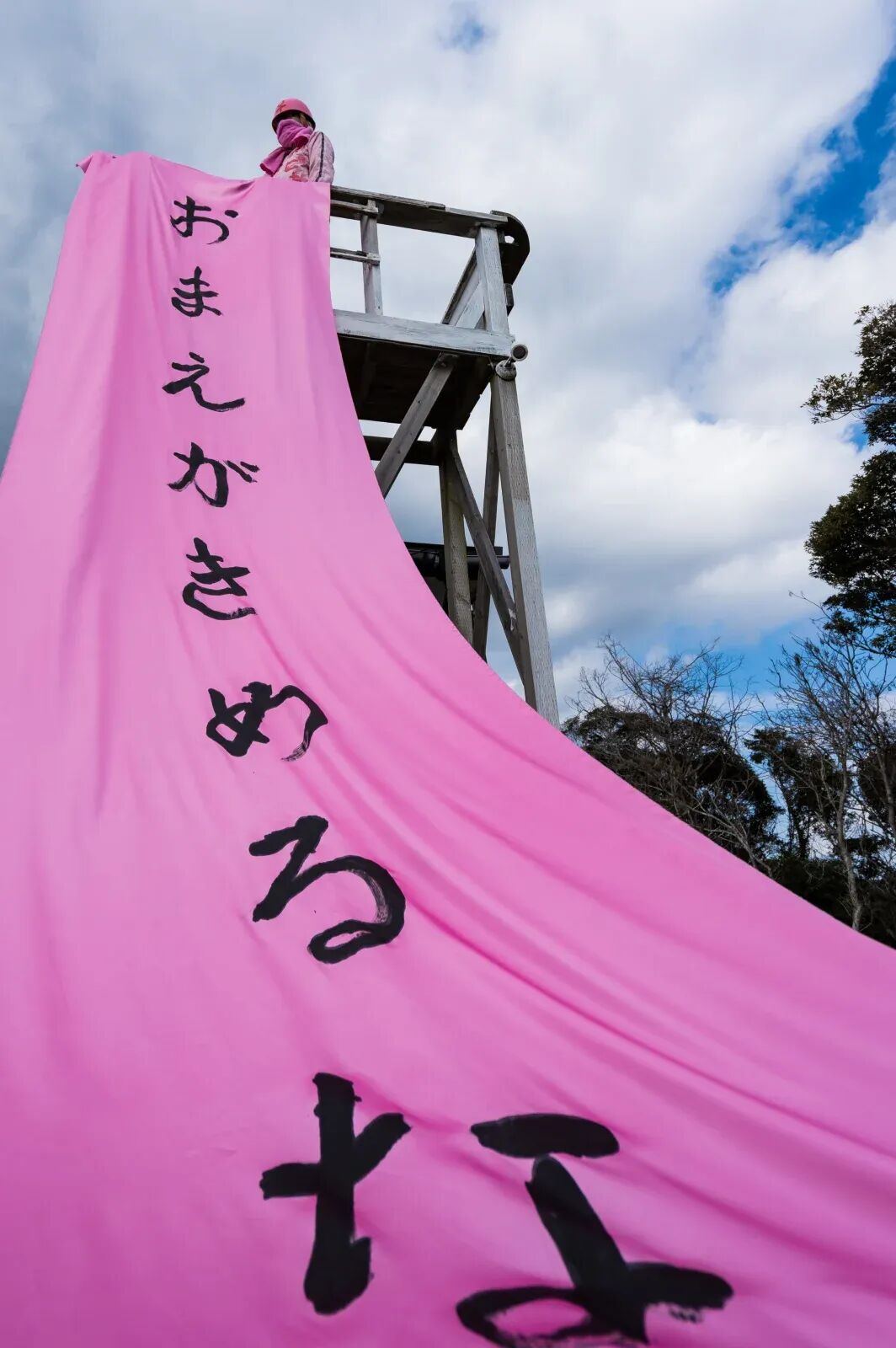
The power of this work lies in this: it opposes the “vulnerability of the body” to the “rigidity of Japan’s state narrative,” using art’s “dissonant note” to break the silence of historical revisionism, ultimately pointing to a central question: When power seeks to erase trauma, how can art become the guardian and respondent of memory?
The subversiveness of this work lies in the allocation of roles: as a Japanese woman, Shimada did not choose to play the victim but actively assumed the role of agent of the “perpetrator.” This choice is in itself a profound political statement. It refuses the simplistic narrative that casts Japanese women wholly as victims of war, and confronts Japan’s collective responsibility as a perpetrator nation.
The concept of “haptic performance” proposed by the performance scholar Rebecca Schneider in Performing Remains: The Politics of Presence and Absence can well explain the power of this work. She argues that certain performance works, through the body’s proximity, touch and interaction, can produce in the viewer a “tactility” that transcends the visual, as if experienced firsthand.
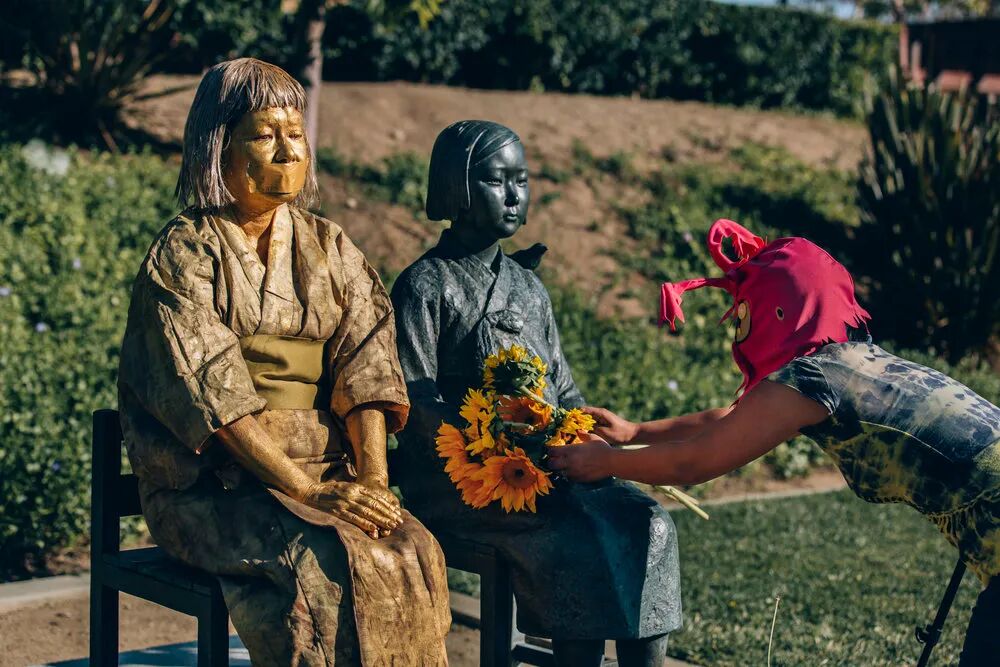
2. The Body as Political Manifesto and Historical Archive
In Shimada’s performance, the body is no longer private and natural but a highly politicised and historicised site. Her body, as the body of a contemporary Japanese woman, bears the multiple imprints of nationality, gender and history. When she appears at a specific historical site (such as the former “comfort station” in Looking for a Past House), or plays a specific historical role, her body becomes a living “connecting point” linking past and present, individual and collective, memory and forgetting.
Through performance, Shimada “liberates” history from books and archives, making it a “living history” that can be perceived, experienced and collectively witnessed. The viewer is no longer a detached onlooker but is invited into the memory-theatre constructed by the artist’s body, becoming a new link in the chain of history.
(3) Transnational Dialogue: Crossing Borders to Build a Solidarity of Memory
Shimada knows full well that the question of war memory and historical responsibility was never a matter internal to a single nation. It is essentially transnational. Hence a crucial part of her anti-war strategy is to actively initiate and participate in cross-border artistic collaboration and dialogue. Through art she seeks to build a “solidarity of memory”—composed of artists, scholars and activists—that transcends the narrow perspective of nationalism.
1. Collaboration and Exchange with Asian Artists
Shimada realised early on that to truly reflect on Japan’s war responsibility she must listen to the voices of the invaded countries. She has travelled many times to Korea, the Philippines, China and elsewhere to hold in-depth exchanges with local artists, historians and survivors. These exchanges have not only supplied her practice with first-hand material and an emotional foundation but spurred her constantly to reflect on and adjust her own perspective.
2. Speaking in the Western Context
Shimada does not only dialogue within Asia; she has actively brought her work to exhibitions in Western countries such as Europe and America. This gives her critique a broader international dimension. In the West, memory of the Second World War tends to centre on the European theatre and the Nazi Holocaust, and understanding of the complexity of the Asian theatre—especially Japanese colonialism and war crimes—is relatively limited.
When exhibited, for instance, at the New York Public Library or major art museums, Shimada’s work offers Western audiences an unofficial, internally Japanese critical perspective. This is crucial for breaking certain Western stereotypes of Japan (such as cherry blossoms, bushidō, high technology). Her work reveals a more complex, internally contradictory and self-critical contemporary Japan.
At the same time, being shown in the Western context enables her work to enter into dialogue with broader postcolonial theory, feminist art and trauma studies. For example, her work can be discussed alongside that of the Palestinian artist Mona Hatoum. Hatoum often transforms everyday objects to convey experiences of exile, violence and the entrapped body. Both artists, from a female perspective, explore the profound impact of grand political conflict on individual life and the body.
Through this means, Shimada has succeeded in transforming seemingly “regional” historical issues such as the “comfort women” question into a universal human-rights issue concerning war, gender violence, memory and justice. What she constructs is a global network of dialogue. Within this network, art is no longer confined by borders but becomes a bridge connecting different cultures and different historical experiences, jointly resisting the erosion of forgetting and official lies.
IV. Influence
Shimada’s artistic practice occupies an important place not only in the history of postwar Japanese art but, through its uncompromising critical spirit and distinctive artistic strategies, provides later artists with valuable intellectual resources and a guide to action. Her influence is manifest in the transformation of Japan’s artistic ecology, in resonances with global issues, and in the many possible paths she has opened for art’s intervention in society.
(1) A Profound Influence on Japanese Contemporary Art
Shimada’s persistence and courage have opened a path for those who came after. She proved that, even in a highly commercialised art environment, serious, critical artistic creation still has room to survive and to speak. Her work has entered important public collections such as the Tokyo Photographic Art Museum and the New York Public Library—an affirmation in itself of its artistic value and historical importance, and an encouragement for museums and curators to pay greater attention to such work.
Before Shimada, Japanese women artists more often created from the angle of personal experience, bodily perception or material aesthetics—as in Atsuko Tanaka’s Electric Dress (1956), which in an avant-garde manner explored the relations between body, technology and the city. Shimada, by combining a feminist perspective with grand historical and political critique, vastly expanded the content and reach of Japanese feminist art.
She attends not only to women as “objects of the gaze” or “oppressed individuals” but goes further to interrogate women’s complex roles within power structures such as the nation and war, including their aspect as collaborators. This profound self-reflection influenced later women artists. For example, in her photographic series Mother’s (2000–2005) and Hiroshima (2007–), Miyako Ishiuchi photographs the lipstick and underwear left by her mother and the clothing left behind by victims of the Hiroshima atomic bombing, touching the grand themes of war, death and the female body in an extremely delicate and private manner. Ishiuchi’s lens, like the tool of an archaeologist, excavates from microscopic objects the stories of individual lives submerged by the torrent of history. This method of retelling history from a female perspective forms a powerful echo with Shimada’s explorations.
(2) Resonance and Dialogue on the Global Art Stage
The reason Shimada’s art has gained recognition worldwide is that the themes she explores—the trauma of war and its illegitimacy, right-wing violence, the politics of historical memory, gender oppression—possess a strong universality. Her work provides a frame of reference for artists and audiences everywhere to think through their own historical and social contexts.
In today’s globalised world, how to deal with the legacy of colonial history and how to confront historical trauma are challenges shared by many countries and regions. Shimada’s work has become an important case of visual art in the fields of postcolonial studies and trauma theory. Although she makes greater use of real historical images, through collage and recombination she equally calls into question the “objectivity” of official narrative and constructs an artist’s critical “counter-archive.”
Shimada’s art is a quintessential activist art. Its ultimate aim is not entry into the museum but to produce real influence in society, provoke discussion and drive change. This practice provides artists worldwide devoted to social justice with a powerful spiritual impetus and a methodological reference.
(3) Lessons for Future Artists: A Methodology of Critical Art
In summing up Shimada’s artistic career, we can distil an effective methodology of critical art that other artists may draw upon. This is not merely strategy but an attitude and a stance.
1. Rooted in rigorous research: behind every work of Shimada’s lies extensive reading of historical documents, fieldwork and interviews with those involved. Her art is not the product of fantasy but a visual essay built upon a solid factual foundation. The lesson for the artist is that profound critical power springs from profound understanding. To intervene in society effectively, the artist must first become an untiring researcher.
2. Deploy artistic language strategically: Shimada was not confined to a single medium. According to the needs of the theme she flexibly chose printmaking, photography, performance, installation or curatorial work. Her use of postmodern devices such as appropriation and collage always served her political aim rather than lapsing into formal play. This teaches the artist to master and strategically wield diverse artistic languages, finding the “tactics” best able to convey concept and provoke thought.
3. Daring to occupy the “uncomfortable” position: whether playing a soldier or confronting the history of women collaborators, Shimada never shies away from embarrassing, uneasy or even painful subjects. She knows well that true reflection must begin with facing one’s own imperfections and history’s stains. For the artist who wishes to engage in social critique, this is a vital ethical posture: the courage to self-criticise, the courage to make both oneself and one’s audience feel “uncomfortable”—for it is precisely within this discomfort that change becomes possible.
4. Building border-crossing solidarity: Shimada’s transnational collaboration and dialogue show that, when facing global challenges, any isolated struggle is feeble. Art can become a powerful medium for building understanding and solidarity that transcend nationality, race and culture. This teaches the artist to situate their own practice actively within a broader field of dialogue, cooperating with actors in other spheres (scholars, journalists, lawyers) to form a combined force.
Across more than three decades of creative practice, Shimada has shown us how art can do more than merely reflect reality—how it can actively shape and intervene in it. Her work is like a prism, refracting the dim light of history, and like a searchlight, illuminating the corners obscured by the narratives of power. She teaches us that, before vast historical injustice and institutional violence, silence is not an option. Through wisdom, courage and unremitting effort, art is entirely capable of becoming a powerful lever that pries at history, interrogates the present and shapes the future.
订阅艺术评论
订阅即赠《2024中国当代艺术关键词》内部思考笔记 PDF
每周免费获取最新当代艺术批评与研究