I. Merely Living Is but One Form of Life
Merely living is but one form of life. Life should take many forms — the life of art, the life of faith, the life of plants and dust, and indeed the life of all things.
To study mere living is easily to fall into nihility, for the decline of the organs is unavoidable and all resistance is but attunement to law. To sort out the laws within a limited compass, clear and well ordered, is at best a clarification of chemical substances. The clamorous cries, contradictions and entanglements — the entanglement of love, the struggling of the body — art may dispense to “living” a kind of consolation, or bring a fame and fortune that seems proud yet is in truth base. But that is at most a struggle lodged between the ideal self and the real self. To break free of this struggle, the artist must study life, not mere living.
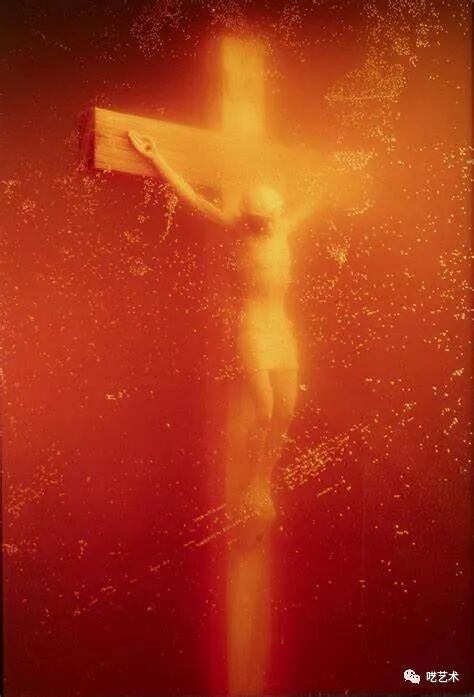
A good artist is like Jesus, crucified upon the cross: the living life ends, yet the life of art endures. So seen, a good artist will also live well, but that no longer matters; what matters is that he stands on the plane of life and wins a place for the work he has done.
An artist should be thus. Whether classical art, modern art, contemporary art or total art, the artists who are praised — their works all stand at a proud vantage, for the common crowd, viewing this art from the plane of “living” as though viewing “life”, must inevitably look up to “life”.
Andres Serrano’s experimental photographic work Piss Christ
II. If One Studies Life in Earnest
If one studies life in earnest, many of the troubles of living fall away. Take loneliness: only among the living can one cast off loneliness, so one racks one’s brains to seek one’s kind, to build cliques, form relations and close the circle — and thus class appears, and the vested interests. Yet even so, those who are not vested interests still feel lonely, even nursing the illusion of being “a talent unrecognised”. But the one who studies life finds all things are living beings; even living alone, each day he breathes together with the lives of all things, and naturally has no cause to pay the bill of “loneliness”.
I keep a dog, and this dog has taught me something. From the moment it opens its eyes in the morning it begins to scavenge everything edible on the ground — some of it beyond my comprehension: vegetable leaves, screws, shards of glass, even the faeces of other dogs. I should not blame it, for it is a living thing; faeces may be to it what desire is to man, and a vegetable leaf what lust is to man. Man cannot abide the dog, nor the dog man; each has its own logic and law of living. That I forbid it the faeces, for instance, is only because I fear it would upset my logic by bringing the faeces’s bacteria into the house. I laugh when I watch it, simply because it seems so like me; I have projected my ideals of living onto it, and from its own vantage it is no longer itself. The true dog is unconstrained: faeces cannot be eaten, and if it eats them once it will likely fall ill, but if it survives it learns this is not food and will not eat again. This is the law of living, and also the trouble of living, for in the world of man’s living one must always remake the living laws of other creatures to conform to one’s own. Yet these contradictions and conflicts are at most only living. The dog does not merely live; the dog also has life — only it lacks the power to strive for it, and is thus reduced to a mere beast.
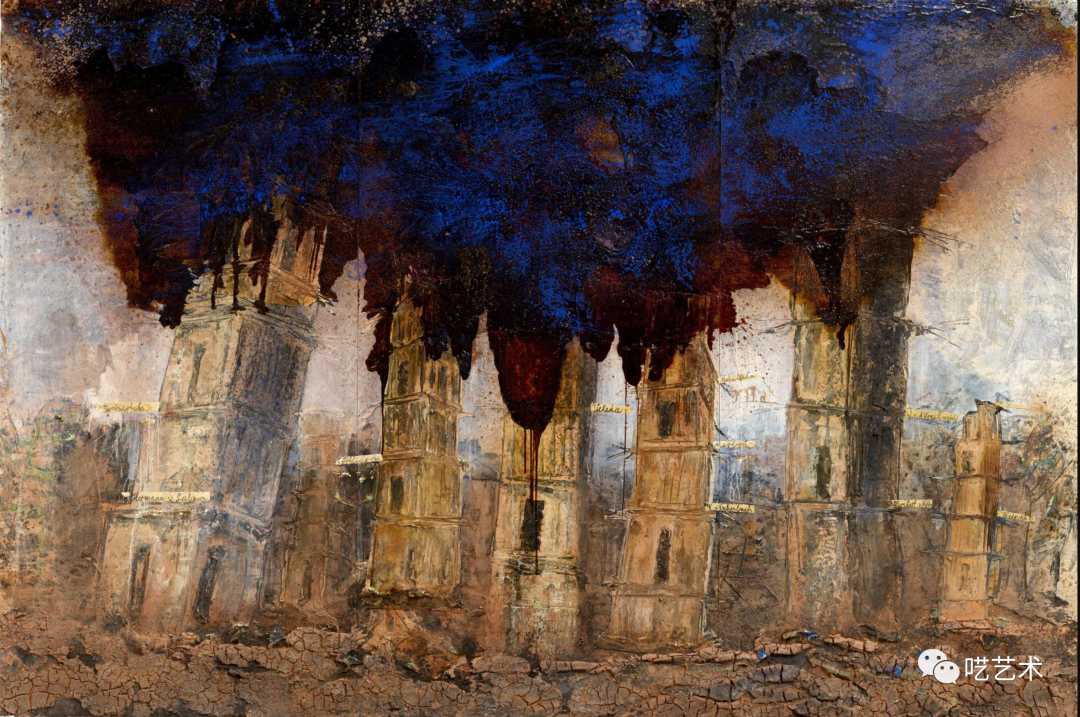
Anselm Kiefer’s work Walhalla
From the plane of “living”, the realm of beasts is base. Man has life, so man should pursue life, not merely scavenge for food. Or rather, among mankind a portion must necessarily pursue life — artists, pastors, monks, teachers… All such roles inadvertently touch the plane of “life”; some call this “the Way”, which I think is an irresponsible formulation. Man should study life and present all its fruits to the public through the construction of perception, rather than sink into a nihilistic metaphysics. In this sense the artist should be the more synthesising figure, for in the world of “living” art’s logic is narrower than doctrine, philosophy, speech or writing — it is confined to the senses. Yet behind the senses, in order to excavate your psychological depth, it can encompass everything; all disciplines may be put to its use, and all this lies within the sphere of life.
Therefore the artist should attend to “life”, not merely “living”.
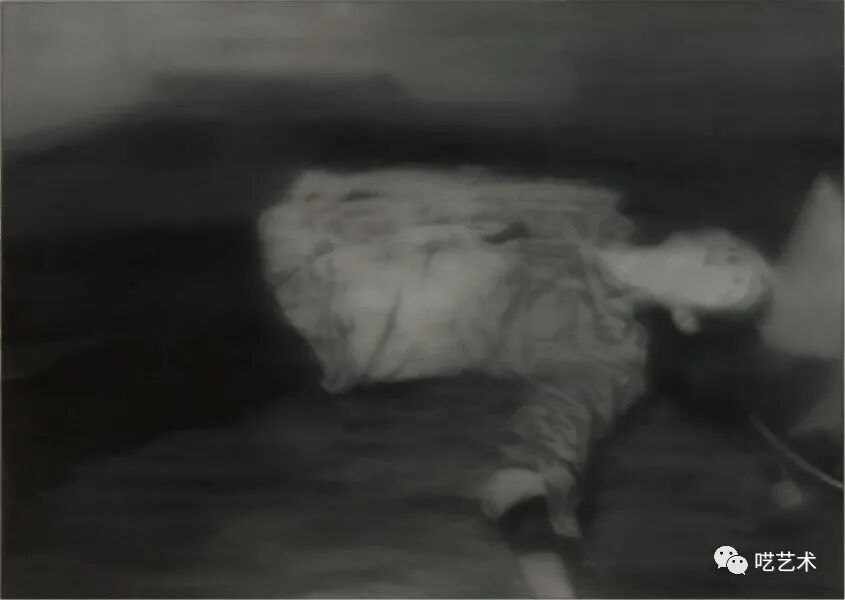
Gerhard Richter’s work Man Shot Down
The art pursued from the plane of living is largely the enjoying of the fruits of a modernised society. Yet this fruit is itself a kind of murder; to sink and lose oneself in “means”, to prop up a seemingly original art on nothing but the experience of means, is in truth the artist’s self-intoxication.
Take the easel painter: the fruit he enjoys is mostly to find a foreign artist to “benchmark” against, to paint in his manner, then study the further painterly elements touched by the artists before and after him, and gradually apply them to his own work. A diverse fusion of languages together with the habitual intrusion of his own elements can make him appear to “found his own school”. The more energetic researcher ranges further across time, reaching back even to antiquity, and his artistic aspect will necessarily be the more distinctive.
Yet at root such work is still a third-tier language, or even further down — not an original, first-tier artistic language. That is to say, the social fruits of modernity leave no time for creation, for creation is for the sake of change and change for the sake of convenience, yet the convenience of modern society makes creation all the harder; for those professionals who attend to life, its fruits appear all the more illusory.
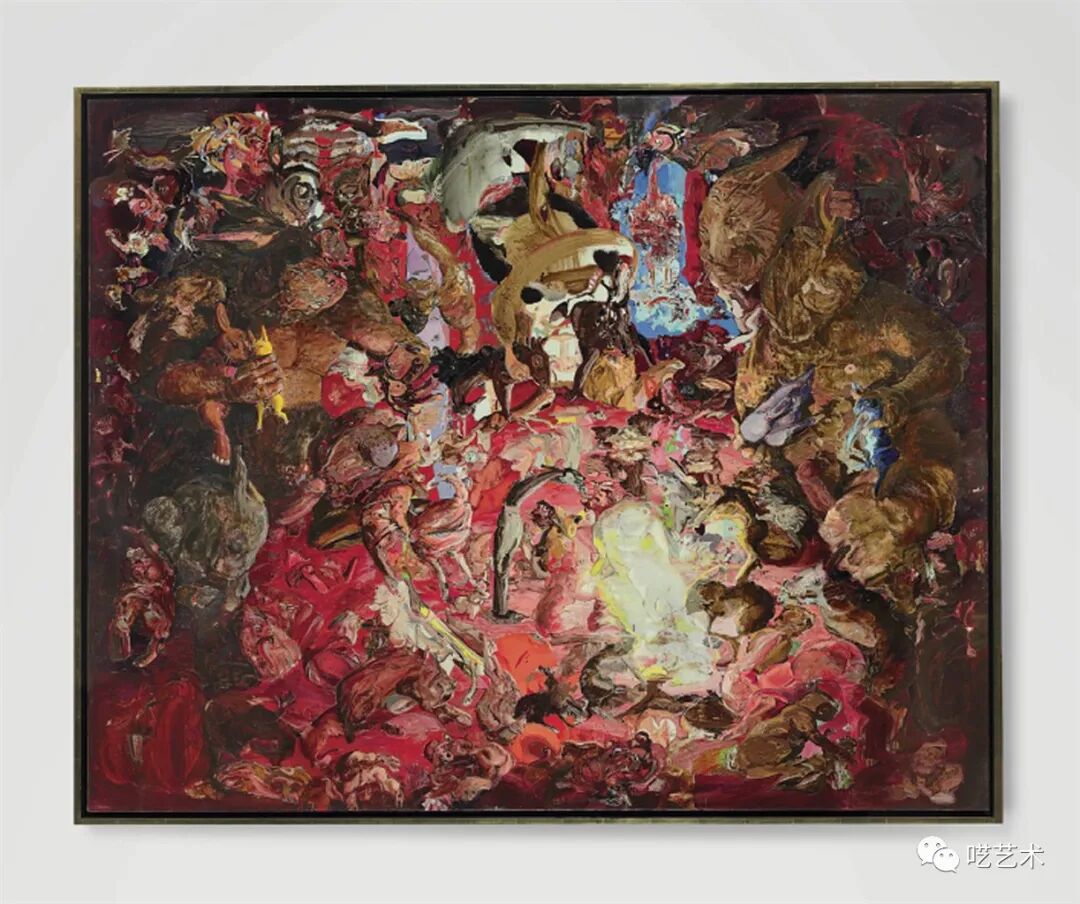
Cecily Brown’s oil painting Untitled
It is hard for the artist to be himself, and in today’s market it is far more efficient to be a hanger-on of a mature sign-system, or a variant of some niche painter, than to be oneself — one may even reap many of the benefits of the “living” plane and become vested. Once such vested interests multiply, what many see is an art sunk in the abuse of means, flaunting its self-devouring by any means necessary; this solemn self-devouring is rendered by commercial consumption into a pleasure on the aesthetic and spectacular plane, becoming a mass pageant called “contemporary”, felt not only in the museum but in so-called contemporary fashion and everyday taste, as the artist habitually “dresses up” in the wreckage of all other cultures.
The artist is too “clever” on the plane of living, adept at this “dressing up”, and inevitably falls into tools and experience. A work made on the strength of some experience, however perfect, must lose its soul. Education is the product of scale and uniformity; the vanity fair and the love of life and fear of death belong to the plane of living, yet easily lapse into nihility. This raises a question: what, after all, is life?
Njideka Akunyili Crosby’s work
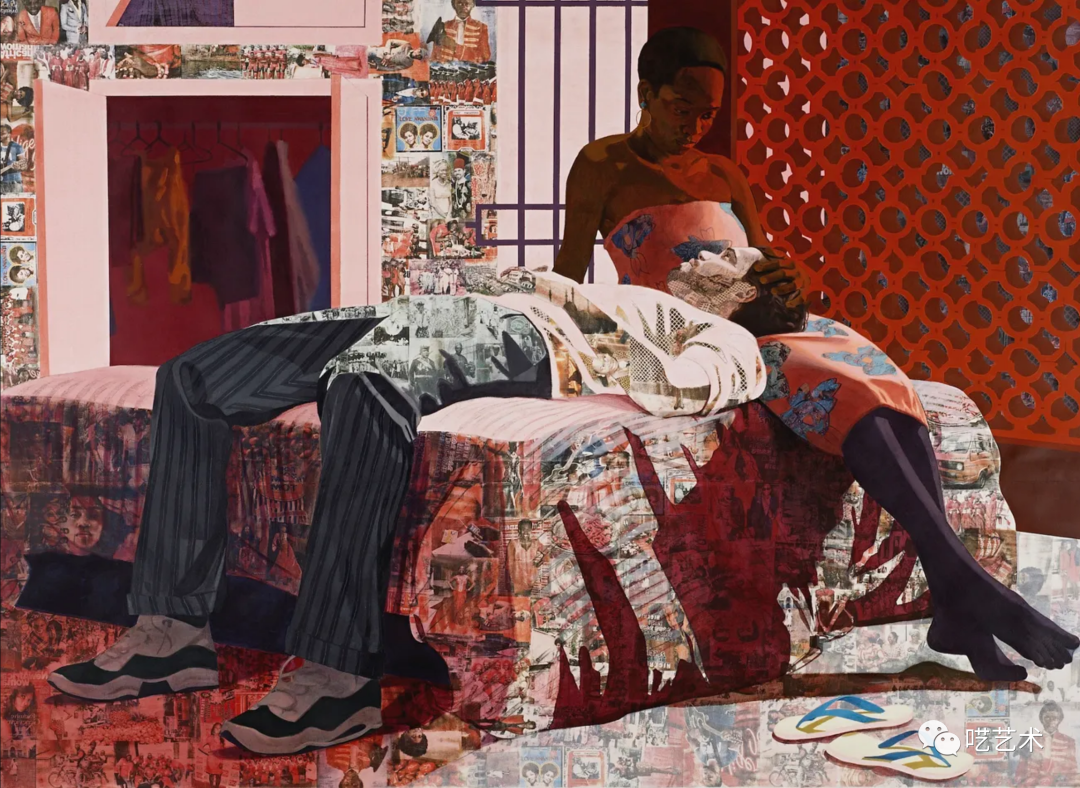
III. The Meaning of Life Includes Transmission and Fulfilment
The meaning of life includes transmission and fulfilment.
Now transmission is the ultimate aim of life, and this has been verified in both man and beast. For the animal, transmission means strengthening the herd, organising mating, perpetuating its skills; but man’s transmission is not only the continuation of a family line, it is more the transmission of a human spirit that crosses races. And the precondition for a spirit to form is necessarily conflict — say, a supernatural force that governs mankind, which man must reconcile with. The relation between man and God, for instance, has formed an independent discipline, which in the end serves man himself, not the deity. How to perpetuate this discipline, to make the human world better and to withstand the inevitable with greater confidence, has become the purpose of today’s humanities, and the place where man’s involvement in the plane of “life” acquires its ultimate meaning.
Artist Miquel Barceló’s depiction of life
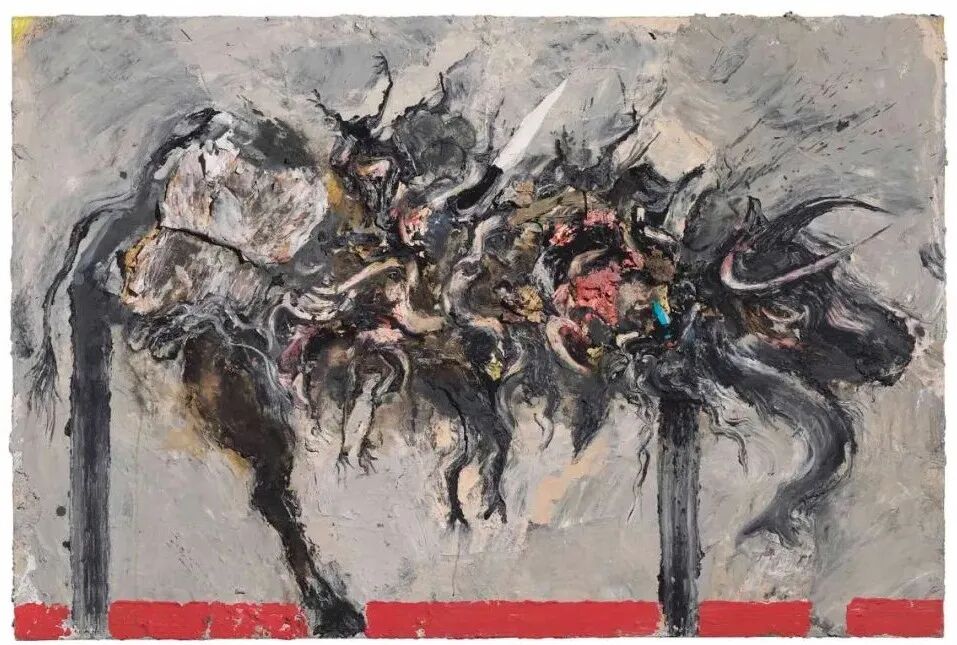
Transmission is in truth only the fulfilment of the next generation, whereas fulfilment is the fulfilment of all living individuals, and even the non-living. Studying, literacy, making money, pleasure — these fall outside the sphere of “fulfilment”, yet they are what most people cling to, and hence the saying that life is meaningless.
Life is in itself meaningless; its meaning lies wholly in the interval between transmission and fulfilment, like the two faces of a mountain summit. To climb the summit, the path bristling with thorns, rough and precipitous, is fulfilment — fulfilling oneself and fulfilling others. We work, care for kin, keep friends company; in this process we become one with existence and gradually learn “who I am” — a marvellous feeling. Having reached the summit, to walk down the slope, sharing the beauty and experience of fulfilling others along the way, is the meaning of transmission. With transmission, with the next generation, with a future, do the lineages we continue — of art history, of humanistic spirit — acquire meaning. This is the meaning of life.
Human life is indeed in itself meaningless; the joys, angers, sorrows and pleasures of the plane of living are all chemical reactions. From another angle: when we see a dog trying to please its master and grieving at its master’s grief, that grief is not merely a chemical reaction — it is the dog, within its limited capacity, fulfilling its master, and this lies within the sphere of life. In intimacy, if one only enjoys the living part — pleasure, possession, orgasm — it is hard to become a true intimacy; but once the part of life is touched, with transmission and with fulfilment, there forms an illusion of “love”, and this has meaning. Therefore only after it has happened, when a feeling truly forms, is there meaning on the plane of life.
Sean Scully’s work
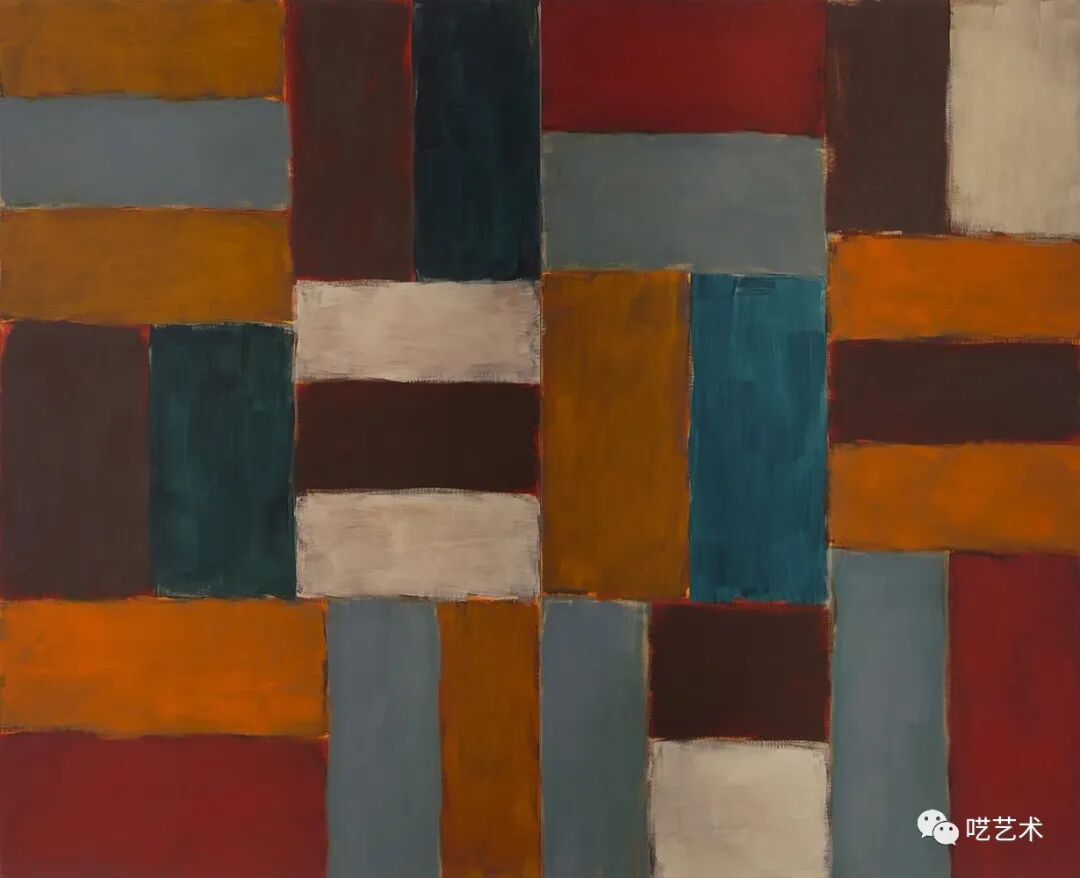
Theory is useless; all writing that reveals to you the truth of life, this essay included, is useless. For to become yourself you must necessarily possess life; to possess life you must necessarily seek occurrence, and thereby experience life. And the occasion of occurrence is fulfilment and transmission: Only when fulfilment and transmission occur does your life have meaning, only then are you yourself.
And what role does the artist play in all this? He can pull you out of the mire of living and let you possess a materialisation of your own part, if only a simple visual stimulus. Art can help you form self-identity, whether positive or negative: art always plays a fulfilling role.
Take the artist fulfilling himself: the self at that moment is his trouble on the “living” side. For in the world of “living” you are no different from others, all like pigs in a slaughterhouse awaiting death’s butchering. Whether the waiting is painful or pleasurable then becomes all-important. But this is after all not the meaning of the plane of “life”. Every living thing must first live, and only then have life; and the sole feeling of having life is transmission and fulfilment. The continuation of the life of art is both a fulfilment of oneself and a fulfilment of others — fulfilling others to face the troubles of living with equanimity.
Mark Bradford’s work
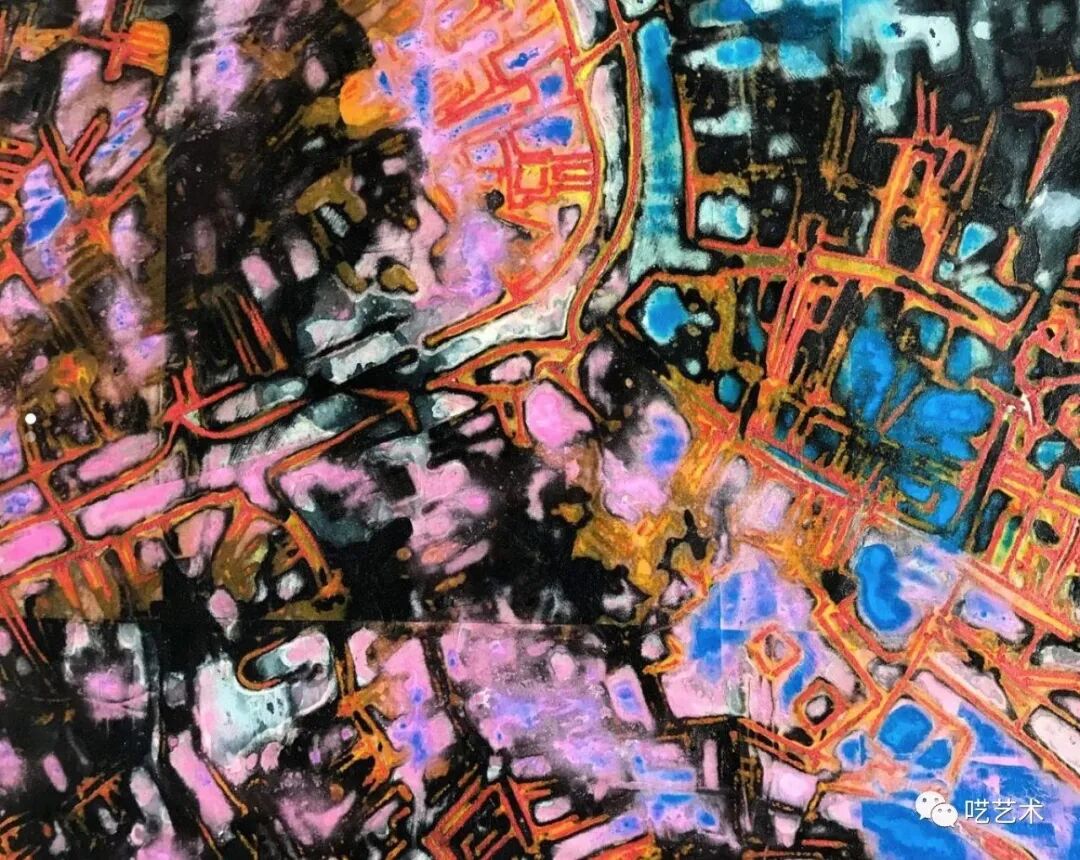
Therefore there exists in the world no life lacking transmission and fulfilment. Whether our work, our nature, the basest morality — the law — or the bizarre vanity fair and elite circles, there must be an active or passive fulfilment, and this is the higher part of art. Art that can fulfil all humanity is necessarily more than simple sensory feeling, yet art’s original establishment relied precisely on feeling — let us set aside the logic here. Today’s society has developed to the point where a single feeling cannot make art, just as a single emotion cannot sustain a person’s life; everyone’s living is necessarily a process of complex emotion and cognition intermingled, confused, denied and discarded. Hence living is painful, and overcoming these complex emotions is equally meaningless: God sent you into this world not to suffer pointlessly, but certainly to become yourself and possess your own life.
The law of survival is meaningless, for it is far from life and can only let you suppress, simply and skilfully, the pain of living. You strive to live not to suppress pain and make yourself more comfortable, but to become yourself — even a self that is in pain on the plane of life is worth pursuing. The pain of the plane of life is charcoal burning of itself; when the wind comes it burns fiercer, it can illuminate others and bring them warmth — it is fulfilling others, and thus no longer lonely. At such a time art should be an embrace, for it is the warmth of mutual fulfilment. Whether classical art, modern art or today’s contemporary art and total art, the stage in which it was bound by social change and theory is past; that no single framework of art theory can encompass all artistic forms has become consensus, just as “art expresses society” can no longer cover this ever-expanding, blood-engorged society: Seen today, however vast an artist’s vision, he cannot stand atop the thinking of all humanity; the reason is not primarily social development but, most of all, the loss of meaning.
Anselm Kiefer’s work
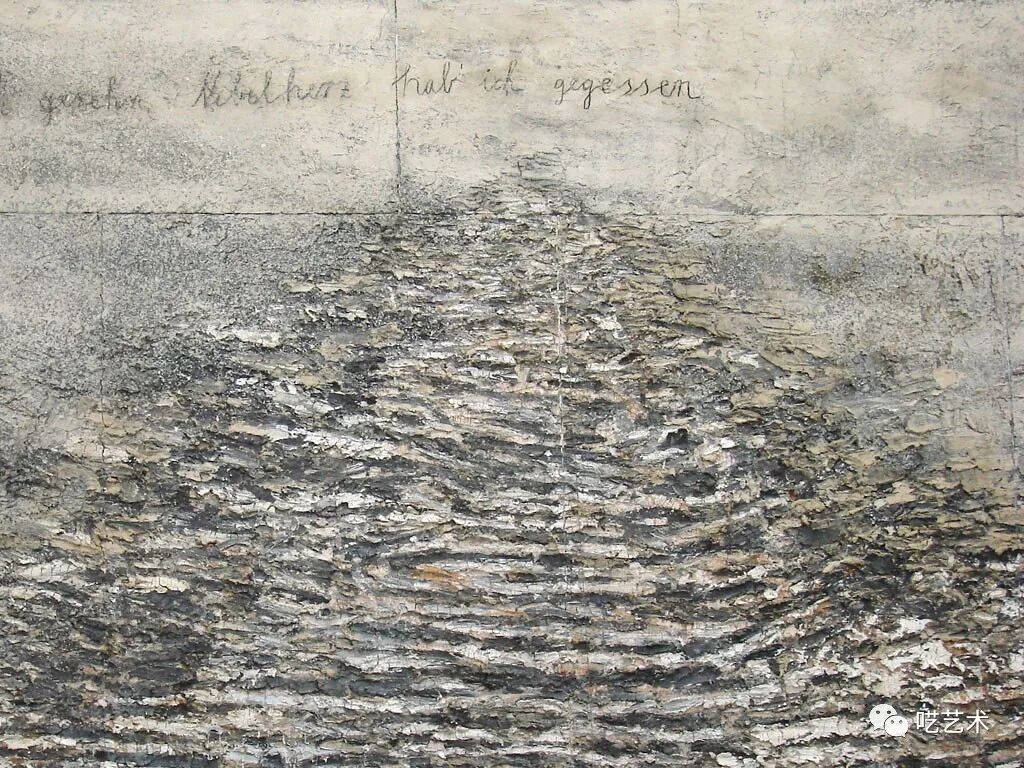
Man without god, without the flesh, can still live on by relying on technology; therefore all art that expresses society becomes spectacularised art — this is already settled. The society man feels is not the real society, and even the real society is one that will be backward tomorrow. From a metaphysical vantage the concept of art is again hard to define, so “expressing society through art” is a superfluous, meaningless proposition. As said earlier: the artist should attend to life, should return to man himself, to express the man of the plane of life, and around the proposition of “transmission and fulfilment” reflect on what we still ought to do and can yet do. This must be a vast proposition, but it must be delimited. To speak anew of art’s role today, its first role is that of a prophet, telling everyone: You must live on the plane of life; you must become yourself.
Therefore art must in the end return to man. All art that leaves “man” behind is like the venom of a snake: when humanity, trudging wearily into the variegated contemporary society, is parched with thirst and gulps down a cup of “water” feeling an unprecedented refreshment, it is not far from spiritual death. “Amusing ourselves to death” is also an old proposition — but how does man resolve it? The only answer is to return to the plane of human life and become yourself. Then art about man becomes an antidote that can recover and prolong man’s spiritual life.
Mark Bradford’s work
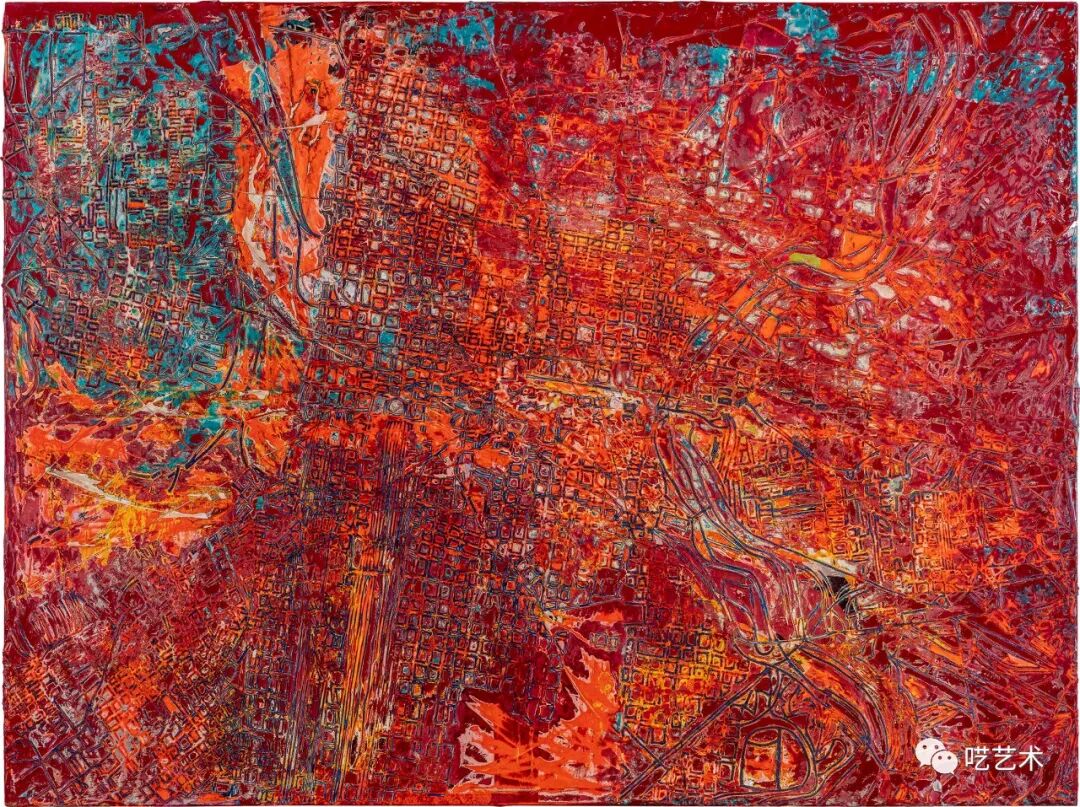
IV. Beyond Doubt
Beyond doubt, many artists are already doing this. But this system is chaotic. Art should hint that you become yourself, let you feel your own life, let your living touch the plane of life — that is, the plane of transmission and fulfilment.
As said earlier, transmission is also a kind of fulfilment. Since art’s return to man naturally opens up more fields to explore, the art of the future should return to man himself, excavating human psychological depth ever more finely, through the power of the field perceived by the limited eye, ear, nose, tongue, body and mind, and the cultural elements behind the work. Therefore both audience and artist should fulfil one another in this work of excavating psychological depth — to excavate psychological depth is to excavate the depth of life and the depth of social relations, letting man live more comfortably within the web of social relations precisely because he has become himself; this is the better completion of transmission and fulfilment. What can we do to fulfil others? What can we do? What can we leave to the next generation? On the plane of life, technology is utterly meaningless; it is but a means of suppressing man’s own pain on the living plane, like the survival rules of social conceptions and the vanity fair. The sphere of transmission and fulfilment in art — American superrealism, say, which excavates the depth of looking — is precisely through excavation and construction that it deconstructs, re-presents, sutures and reassembles human psychological cognition. Hence “the author is dead” is also a subject discussed for years: today the solitary artist no longer exists; only when artist and audience fulfil one another together can a work of art be created.
Before the superrealist painter Chuck Close’s self-portrait, people dwell with relish on its technique
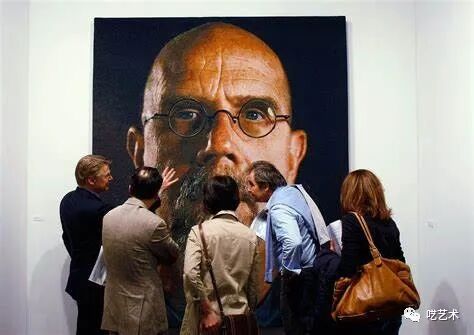
In this process of fulfilment the audience contributes its psychological cognition, and art’s demand for such cognition grows ever higher. For art to express the existential value of the plane of life, it cannot merely satisfy the psychological senses of the living plane — a painting that is pretty, a painting with a medieval flavour, a painting with a classical beauty. Everything possesses the quality of visual pleasure, but that is not art; satisfying the survival attributes of a special circle or a niche taste is not art; being bound by ideology or individualism is not art — that is only the use of artistic expression to realise a special social aim, which is the business of another discipline. The art we discuss today is likewise not a zombie rising from the mortuary of art history. Therefore art has in itself no value; it is a fictive consciousness. Only when it has occurred, together with the audience, enabling the audience to complete the psychological process sought on the plane of life, can it be called a contemporary work of art today. Without audience, without society, without the moving of all living beings, the mere expression of personality or self-marketing is in essence nothing but an imitative behavioural event.
Therefore today we should return to clean art,[/b] such as art that heals autistic children, art that expresses the gap between rich and poor, art that excavates human senses — and some important artists have contributed outstanding works, reminding man to live on the cognitive plane of pain. Yet pain is only a very small branch within the sphere of life’s fulfilment.
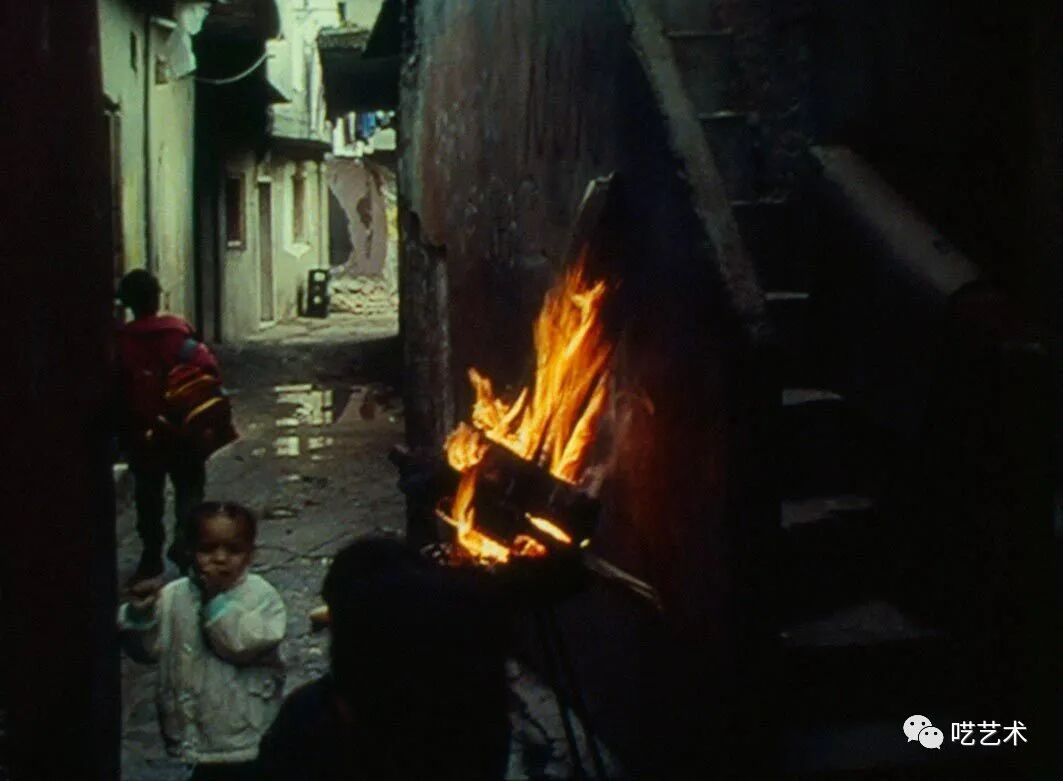
Today’s social development can hardly attend to each person’s individuality; it is like a flood or a beast, changing with each passing day, and blindly chasing society or clinging to its rules is meaningless. Therefore you must become yourself; whether artist or audience, you rely on a developing society to realise yourself, and the precondition of realising yourself is mutual fulfilment.
To fulfil the taste of a special elite class, to fulfil the needs of the broader common class, and to fulfil the needs of humanity across ages — all three belong to the sphere of fulfilling acts. Yet good art is necessarily trans-era, and this is an answer to the millennia-old question: who am I? In today’s society, a high degree only proves you are good at exams; great wealth only proves you have learned the rules of commerce while also learning to manoeuvre; your own power only proves you are adept at reading people and plotting strategy. In the end these cannot answer “who am I”, for they easily make you lose the consciousness that on the plane of life you still have a self, and you sink into the mire of living beyond rescue. Art becomes a tool that can peel open the shell of standardised society, pulling you from the accustomed mire so you no longer turn a blind eye to all around you. It can be a tool of self-consciousness, helping you perceive more of the joys and sorrows of the plane of life — which must be the fulfilment of others’ joys and sorrows, the self that has seen all living beings. Therefore art should be an embrace; whatever its form of presentation, in the end it is still a fictive friend, teacher and prophet keeping you company, letting you become a better self.
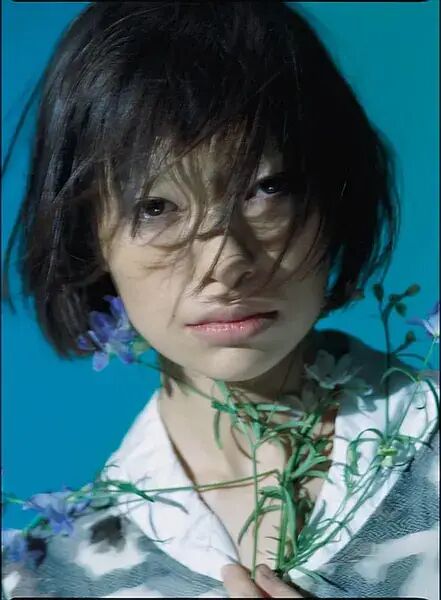
Araki Nobuyoshi’s photographic work
V. We Must Guard Against Art Becoming a Heap of Useless Passion
We must guard against art becoming a heap of useless passion, for it is itself a fictive product — neither material nor spiritual, neither subordinate to politics or racism, nor an expression of elite taste. The bases of politics and economy cannot determine art, so what we have discussed in the past is only a phenomenon, a matter for sociology. Compared with the rapidity of social development, art should rather be the flood and the beast; it should, with utmost confidence, disperse all obstacles and walk at the very front. Its principle must not be a lapse into nihility, but the excavation of man himself and all that constitutes the human, exploring human psychological depth by every means of new art. Just as, to prove the existence of air, we expound the theories of biology and medicine and study water sources — many insights that have become “truth” today developed in such exploration — so art too is air, the air of spirit; you need to breathe art to prove the existence of life, not merely live or cling to the rules of living. This should be the direction in which today’s artists strive.
This direction needs to be clear, and the artist needs to keep reflecting: “who am I” has today become a paradoxical question. When a person loses himself, he looks at the success stories around him and seems to find himself, but that is not the true self, only an idealised sensory existence. Likewise, without the internet we today easily lose identity, lose connection, and thereby lose self-identity. Inevitably, today’s mode of existence still harbours great problems, and people grow ever more accustomed to living within them — as if one person being sick, the other ninety-nine would shun him, but if a hundred are sick, it becomes the norm. Many of today’s accustomed discomforts need resolving; numerous states adopt religion to numb this discomfort, but that must have side effects. Here art can become an excellent substitute. At the same time one must know that the exhibition hall, the museum and the art market cannot bring you art — some say calligraphy has shed its practical function and entered a stage of display, but one should realise this display is equally meaningless. To the audience, a work of another’s taste perceived on the “living” plane is inferior to a work of active fulfilment on the plane of life; therefore “beauty” has failed, and all the artistic functions that suppress your pain on the living plane have failed. Art is not merely suppression or anaesthesia, for those are the work of the living plane, whereas art exists on the plane of human life.
Therefore anywhere there is life is a museum.[/b] Lakes, mountains, rivers, deserts… the earth is a vast canvas, not merely a workbench. Everyone is not only an artist but can become oil paint, appearing on society’s canvas in his own colour rather than an assigned one. The development of any field is transcendent, and so is art; if it is to develop there will surely be many new experiments, and these experiments themselves rely on us as individuals of life — that is, on your ability to become yourself. This too is the function of the museum; after all, forcing people to appreciate is immoral.
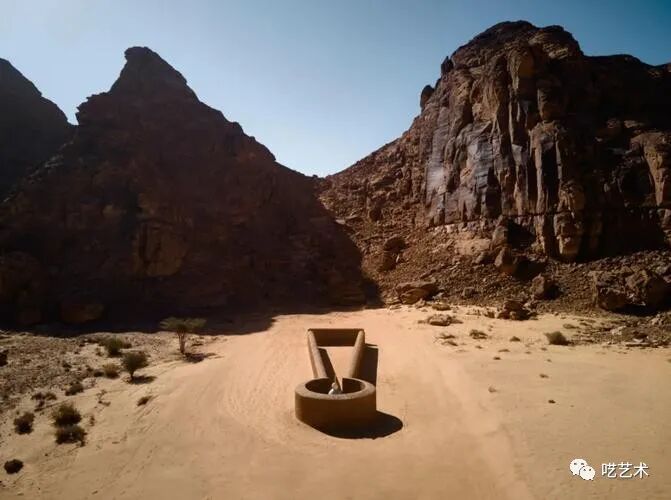
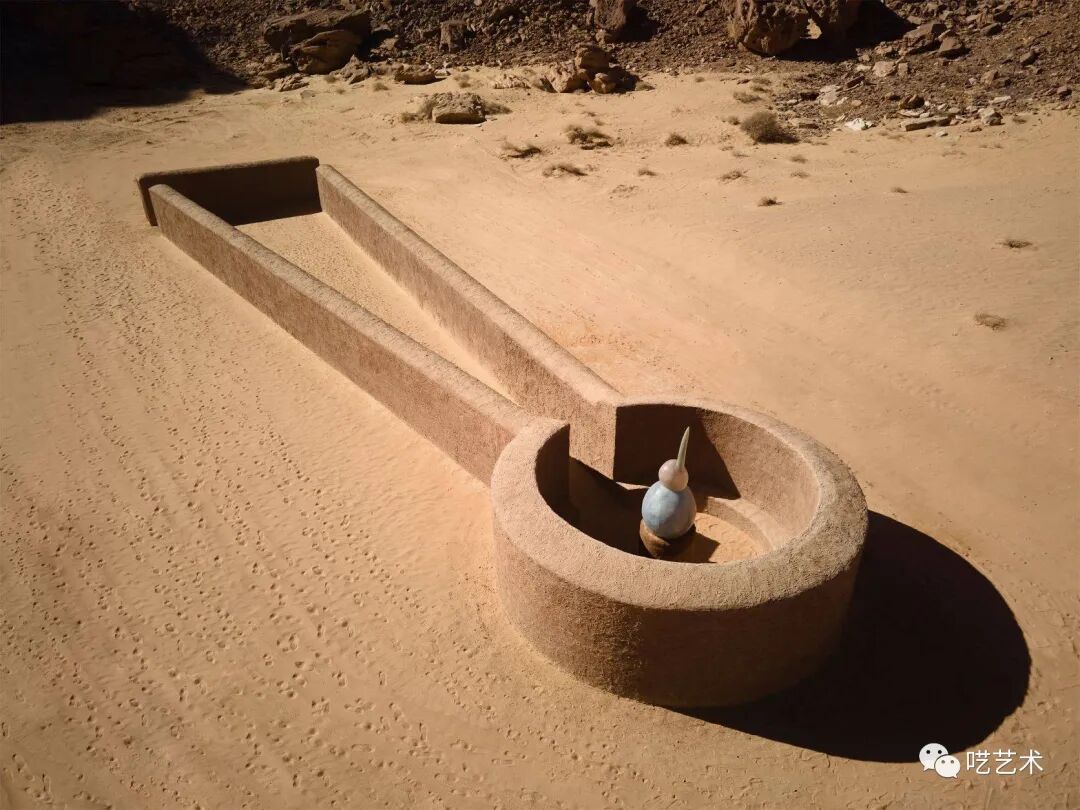
Alicja Kwade’s land art work (exhibited at Desert X AlUla 2022)
VI. “Becoming Yourself” Has No Obvious Criterion
“Becoming yourself” has no obvious criterion.
Is being different from others being oneself? Is an inner replication and pursuit being oneself? Is success in the vanity fair, with smooth manoeuvring, being oneself? Is conforming to another’s standard being oneself? Through the ages there has been no absolute answer; even if handed to psychology, it is not fixated on developing this millennia-old subject since ancient Greece.
This essay still limits itself to an inquiry within the field of art. In the field of art I cannot answer what “yourself” is or how to become “yourself”, but there is one definite delimitation: what is not “yourself”.
This touches on the question of loneliness. If you utterly detach from the social network, that is not being yourself but only a creature of the living plane, and though you may thereby obtain absolute loneliness, such loneliness is meaningless for life and cannot return to man. Even the writer by Walden Pond could not refuse to write — is writing a kind of loneliness? Not so; it is seeking a listener called “paper”, who knows these words will be read before long and thus offers the future self an expectant view, as a running man believes there is a finish line and a trophy. The artist is similar, yet not entirely: the artist must converse with art history. As said earlier, first, to benchmark against someone, the premise is that you like his work — whether classical art, modern art or contemporary art, you should approach him as closely as possible and repeat him, yet cannot form a complete repetition, because you are not he.
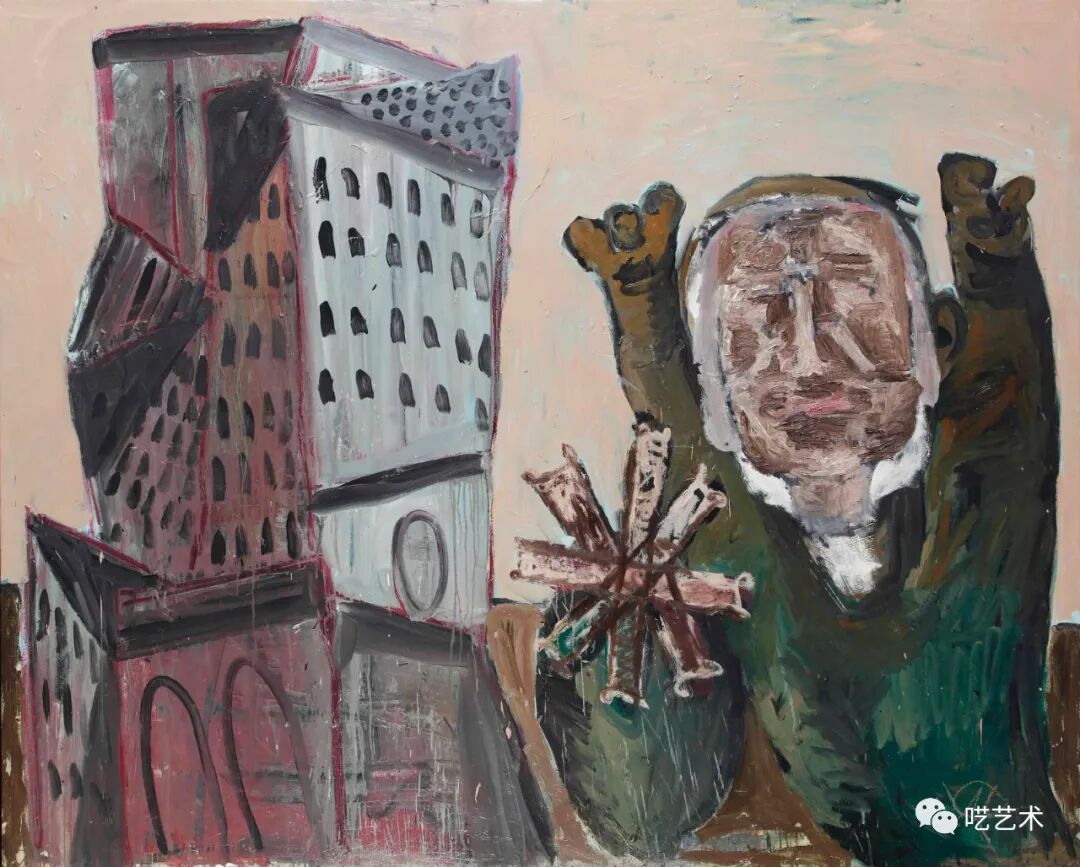
Markus Lüpertz’s oil painting Untitled
Second, the artist must seek the artistic lineage traversed in art history by the artist he benchmarks against; tracing this lineage ten years back, thirty years, fifty years, all elements liable to influence it can be absorbed according to taste. In this regard, planar easel painting may be the more applicable. These are the requisite studies for becoming a professional artist. Third, past exegeses of personal style also fall back into “art-framework theory” — that is, enclosing all styles within one unified framework of art theory — which is unscientific.
The periods of art history differ, the stages of social development differ, so the art of the former and the art of the latter cannot be the same art — especially as today’s concept of total art further accelerates the chaos of art, and the more chaotic it is, the more impatient theorists want to impose order, which is certainly something to guard against. As for the formation of personal style, it is not that forming a personal style means successfully becoming yourself; only within this relative sphere does your differentiation — through sign, image, story, identity, field — become known, temporarily propping up your identity as “artist”. But this identity does not come from nowhere; whatever the artist, he necessarily stands beneath the hierarchical grading of art-historical languages — Roman art is a first-tier language, ancient Greek a second-tier, and some elements become third-tier around the Renaissance. An artist can benchmark against a linguistically mature artist at the Nth tier; if talent, insight, comprehension and diligence can help him keep rising tier by tier, the closer to the first tier, the more it means originality. Today’s art has no absolute originality, only relative; the degree of originality of an artist’s work represents the degree of his “becoming himself” — that is, it is quite certain whence you came, but the path you now walk cannot be copied or matched by others, even the determination of your provenance being hard to achieve.
Georges Rouault’s work depicting Jesus
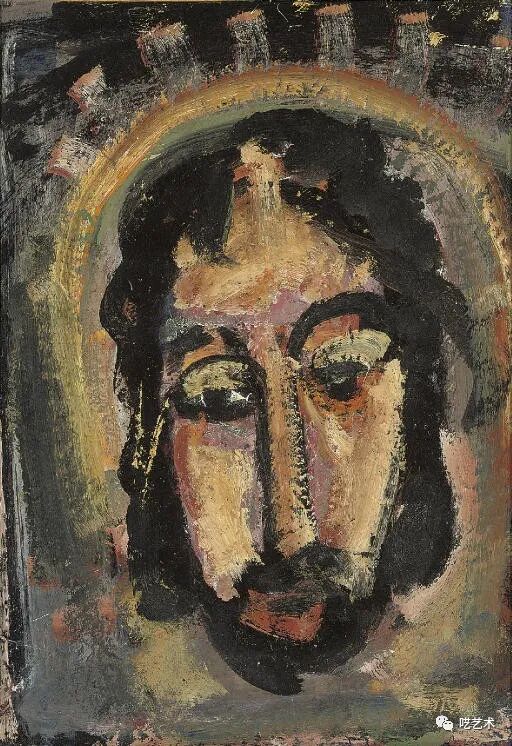
How to realise “becoming yourself” differs by field of art, and need not be elaborated here. One further point: for the artist to achieve “becoming yourself” — that is, becoming the artist himself, with his own original capacity — is only the beginning of his truly becoming an artist. For the artist, the “yourself” of “you” might be you alone, the city you inhabit, the special groups you have seen, your race or nation, or the human family you belong to… Laozi’s and the Buddha’s selves had seen all under heaven and earth; the key to their “seeing” was still “fulfilment” — fulfilling the sufferings of others, fulfilling the doubts of all things in heaven and earth, even granting a methodology of lasting fulfilment.
As for art, a methodology of “fulfilment” is ancient, and the contemporary methodology has also been discussed for years; I shall devote a separate piece to the methodology of “fulfilment” in contemporary art. Second, what hinders the artist from becoming himself also includes reflection on theories of artistic development: whatever the art, the region of meaningful existence must lie in the contemporary and the future. Contemporary art is not merely a stance, not something called contemporary only by negating the classical; binary opposition is a mentality that hinders development and creation. All history is contemporary history, for history itself is useless; only its effect upon the “contemporary”, together with the special form it assumes before the established facts wrought by the past, can make it known as history itself. Yet we can hardly contact true history; a wholly objective “innocent eye” does not exist. So with art: all art history is contemporary history, yet the contemporary cannot become history, for the former “contemporary” is the contemporary itself while the latter’s “contemporary” is the present and the future. The meaning of art lies in the end after occurrence, in the constant emergence of new “selves”; on the basis of a theory of artistic life, having clearly delimited art’s direction of development and criteria of value, we may believe art can truly bear the value of the “contemporary” and let man become man.
Written on 17 January 2023
订阅艺术评论
订阅即赠《2024中国当代艺术关键词》内部思考笔记 PDF
每周免费获取最新当代艺术批评与研究