This essay is intended for academic exchange only; for the full disclaimer, please refer to the end of the article.
I. No Privacy: the Self Is but a Marionette of Social Expectations
We are walking on ground covered by cameras, algorithms and silent protocols. Street corners, hospitals, shopping malls, even the peephole outside the bedroom door, may all become terminals for data collection. In this age that appears so convenient, we are gradually losing the most basic capacities that make us human: the right to be forgotten, the right to say no, the right to think in the darkness of not being recorded.
The ‘Big Brother’ foreseen by George Orwell may no longer need to appear in the face of the state; it has morphed into a softer, omnipresent mechanism of control—one without high walls or chains, yet from which escape proves impossible. This is the ‘surveillance society’ in which we live: a world that makes ‘seeing’ a core power, a world that redefines individual value through ‘data.’ It seems gentle, yet it is in fact cold; it invokes security and efficiency, yet step by step it hollows out human dignity and freedom.
The modern philosopher Michel Foucault, in Discipline and Punish, proposed the concept of ‘panopticism.’ He observed that the power of modern society is no longer direct violence in the traditional sense, but rather the internalisation of discipline through the awareness of being potentially watched, inducing willing submission. This theory persists today in an even more extreme technological form: AI algorithms no longer merely observe but predict; surveillance devices no longer simply record movement but read expressions, recognise gait, infer emotion. The human being is no longer a self-defining existence, but a measurable unit defined by the other.
In an illegal surveillance case uncovered in China in 2024, tech criminals gained control of more than 180,000 cameras, commercialising and selling live footage from hospital wards, care homes and laboratories under the advertising slogan ‘see the world without leaving home.’ This is not merely a violation of privacy rights, but a naked, marketised violence of looking. Within such a structure, the human body—especially the body of the weak—is reduced to an object of visual consumption. They never consented, yet they are watched; they never spoke, yet their images are already uploaded to the cloud and circulate across thousands of screens.
More alarming still, such voyeurism is not confined to underground grey markets. Every social media platform we use, every facial-recognition clock-in, every uploaded health report, hands over the trajectories of our bodies, behaviours and thoughts to be orchestrated by others into algorithmic models. A research institute noted in a 2024 dataset that certain platforms are engaged in ‘mass user surveillance,’ their data repurposed for precision advertising and identity manipulation, producing a dual crisis of identity theft and opinion engineering.
Against this backdrop, the ‘chilling effect’ grows ever more pronounced. The public’s inclination toward self-censorship in expression intensifies; individuals’ utterances on social networks grow ever more conformist, cautious, even silent. Surveillance does not directly ‘gag’ speech, but it renders speaking dangerous—or at the very least costly. In such an environment, freedom of speech is never formally abolished, yet it fails, invisibly.
And when surveillance penetrates further into the affective realm, its harm exceeds what the level of speech can contain. In certain applications of facial-recognition technology to ‘emotion recognition,’ for instance, human expressions are decomposed into neurological indicators, and the fluctuations of anxiety, fear and joy are reduced to data variables. Whether a company hires you may depend not only on the résumé you submit, but on whether you blink frequently while waiting for the interview, whether you tremble slightly. This ‘mind-reading’ form of surveillance violates privacy and, more profoundly, threatens the psychological integrity of the person.
Michel Foucault once remarked that the deterrent force of modern surveillance lies not in its actually watching you, but in your not knowing when you are watched. This very uncertainty is the core of discipline. In the digital age, deterrence is no longer a façade but a state of being—a mode of existence perpetually enveloped by algorithms and circulated through data loops. A person may never encounter genuine state censorship in their lifetime, yet every click, every location update, every choice of word has already been plotted into an analysable map within the vast data model.

It is not only behaviour that is monitored; more fundamentally, desire itself becomes an object to be shaped. Tech giants are no longer content to ‘record’ users—they would ‘predict’ them, and thereby ‘guide’ them. The news you see, the products, the film recommendations, the ordering of your social feed—none of these are random arrangements, but a highly personalised ‘space of domestication.’ Within the illusion of ‘showing you what you will like,’ you gradually lose the freedom to explore and choose, entering an information cocoon that appears free yet is in fact closed. Zuboff calls this ‘surveillance capitalism,’ and its ultimate vision may be that human desire itself will be driven by code.
Surveillance brings yet another structural harm: the digitisation and amplification of social discrimination. As early as 2023, an American organisation reported that AI surveillance systems at airports, on streets and within government systems display pervasive algorithmic bias, with error rates for people of colour, women and non-mainstream groups running more than twice those for white people. In a society that relies on automated systems to identify ‘risky populations,’ such bias is not mere statistical error but the reproduction of systemic injustice. A person’s skin colour, gender and age are no longer simply physiological traits, but triggering conditions for algorithmic ‘risk labels.’
At the same time, the notion of the ‘digital identity’ gradually devours the complexity of the human being. In credit approval, health insurance, border control, recruitment systems and the like, a person is increasingly abstracted into a ‘score’: credit score, health score, risk index. This population classification, conducted in the name of technological neutrality, is reducing ‘person’ to ‘thing,’ personality to number. This process of dehumanisation is precisely what we call ‘the alienation of the human being.’
More unsettling still, as technology costs fall and devices proliferate, surveillance is being ‘domesticated’ and ‘civilianised.’ In China, smart locks and peepholes are widely used, recording, storing and transmitting images without neighbours’ knowledge, and in some cases are remotely manipulated by criminals. This unofficial, non-violent technological intrusion is silently altering the most basic structures of trust between people.
From Bentham’s ‘panopticon’ to Foucault’s ‘disciplinary society,’ and on to the ubiquitous, all-permeating ‘liquid surveillance’ of today’s digital environment, we can discern a ‘structure of looking’ born of the collusion between technology and power taking shape. The terror of this structure lies not merely in its actually ‘seeing’ you, but in its forcing you to accept the normality of being seen, and thereupon to ‘perform,’ to ‘polish’ and to ‘self-format’ of your own accord.
This is especially evident in the ‘livestreaming society’: people have grown accustomed to externalising, even actively exposing, their private lives in exchange for attention, likes and virtual currency—the very mechanism of the ‘society of the simulacrum’ that Baudrillard described, echoed in reality. Here surveillance is not merely ‘the eye of the other’ but ‘the mirror of the self.’ I become my own guard; I begin to construct the self according to ‘the way others look.’
And in this process, ‘consent’—a legal concept once bearing ethical foundations—has gradually degenerated into an empty form. On social platforms and smart applications, every ‘I have read and agree’ button in fact constitutes no genuine authorisation.
From the deprivation of individual freedom to the objectification of the body; from the collapse of social trust to the intensification of algorithmic bias; from the shrinking of the space for speech to the generalisation of the ‘subject-as-watched’—the crisis of the surveillance society is far more than damaged privacy. It is redefining the existential structure of the ‘human,’ reshaping the modes of interaction of ‘society,’ and rearranging the ethical boundaries of the ‘future.’
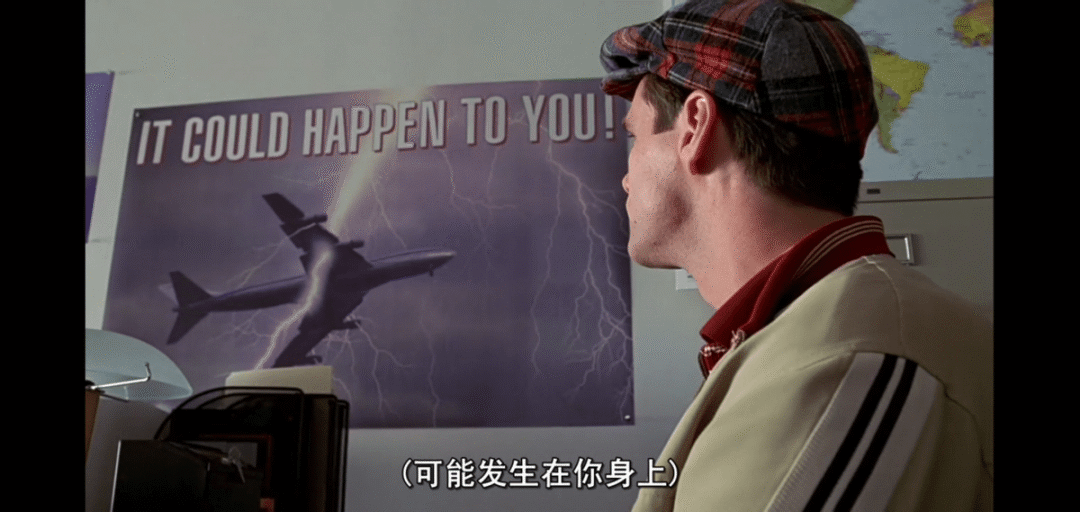
In an age where ‘seeing’ has become a power, a tool, a capital and a habit, each of us is unavoidably exposed to countless invisible gazes. The question is: do we still possess the capacity to resist? Do we still have a will not to be watched? Do we still remember that human dignity lies not in being ‘visible’ but in being ‘respected’?
Confronting the complex theme of the ‘surveillance society,’ a number of contemporary artists have demonstrated a profound seriousness and criticality. They have not only innovated ceaselessly in form and medium, but, at the level of narrative construction and intervention in social reality, have furnished us with plural and profound pathways of thought and references for action. Together they reveal that surveillance is not a purely technical problem, but a fundamental issue concerning power, ethics, identity, freedom and the relation between the individual and society.
II. Contemporary Artists with a Sense of Responsibility
1. Julia Scher
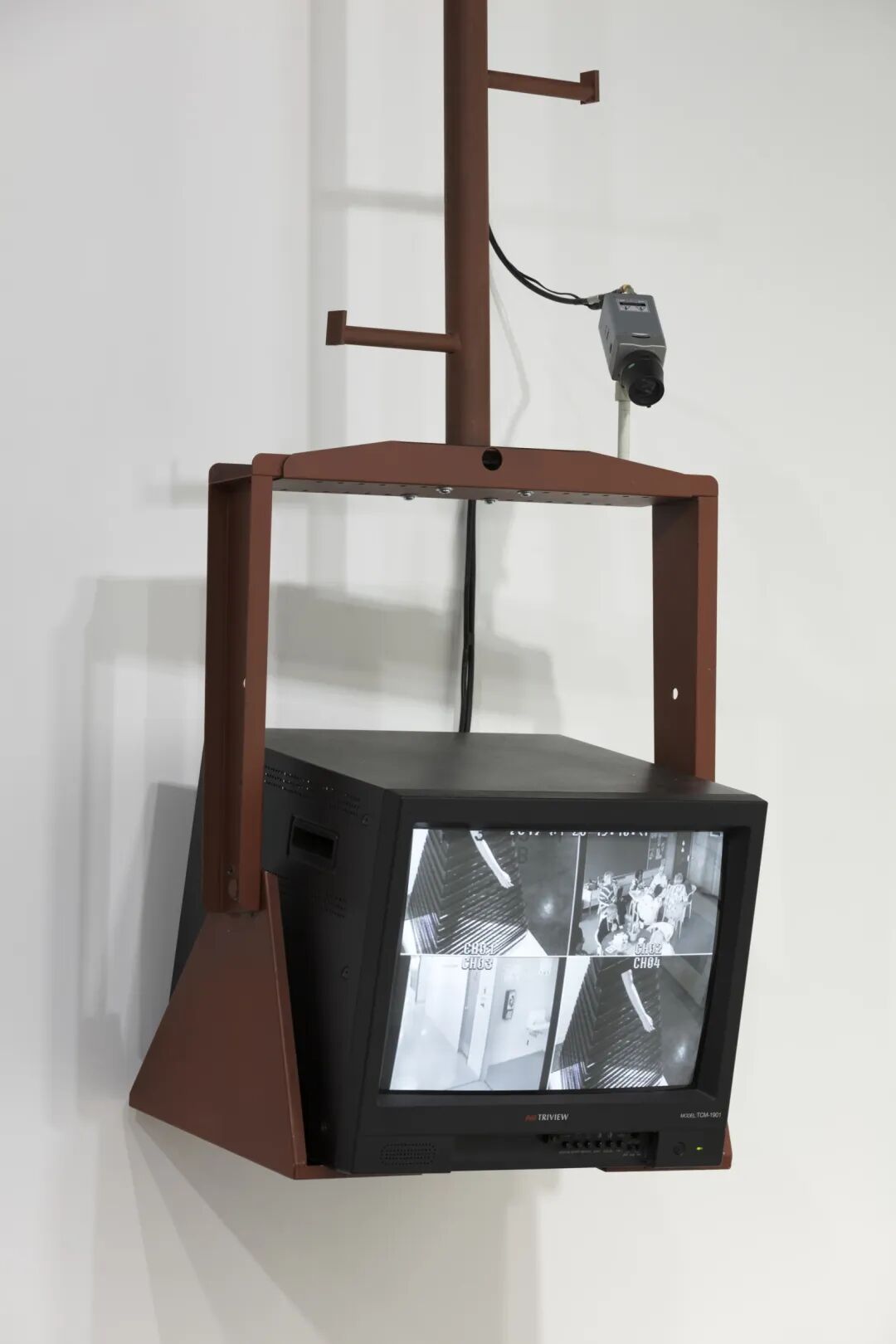
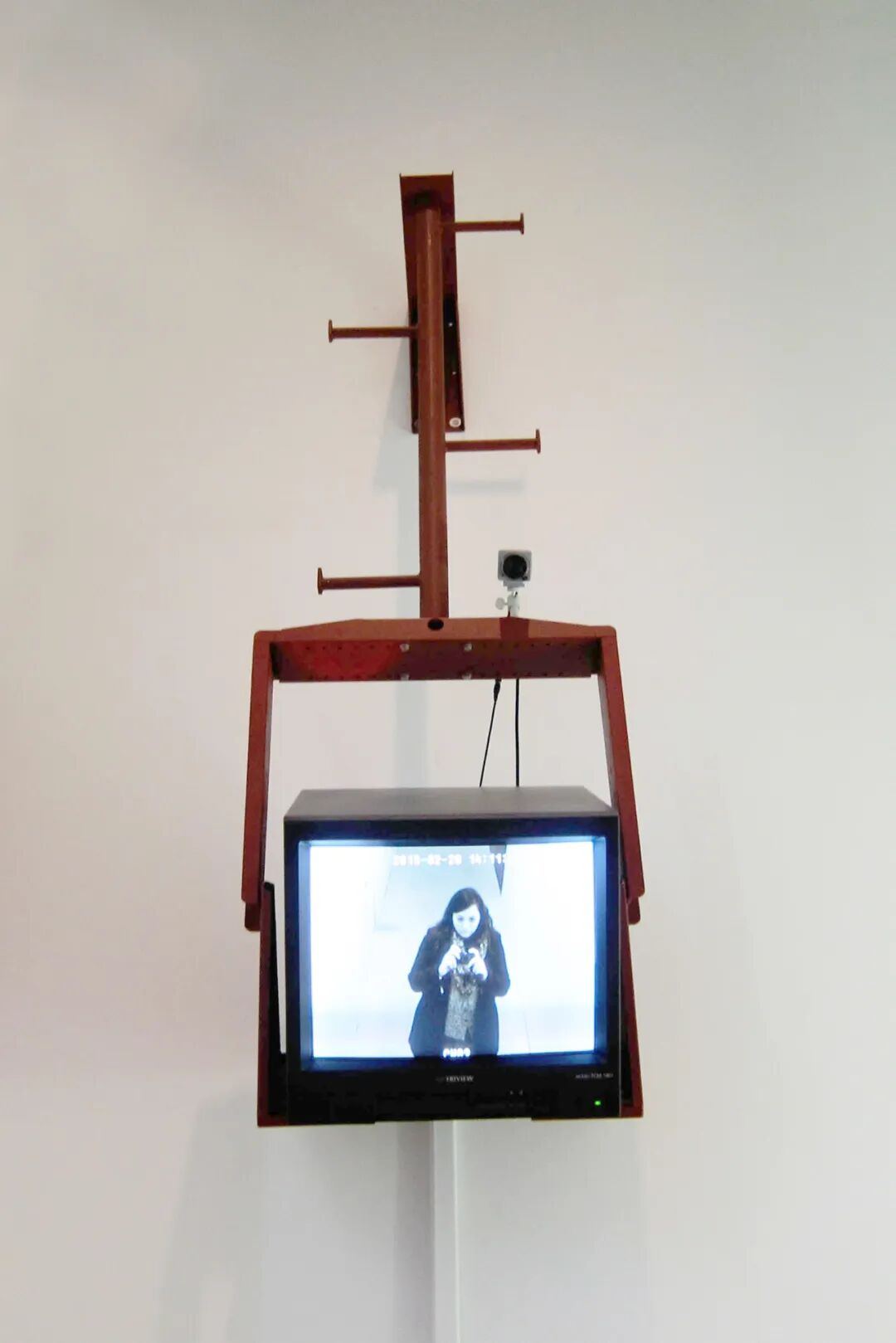
Julia Scher’s 1993 work—monitors, brackets, black-and-white live cameras with 16mm lenses, two media players, and so on—| Mothers Under Surveillance blends the live broadcast of the exhibition space with two pre-recorded videos of elderly people being followed while attending ‘adult day care.’ By adding dates and time stamps, these images are presented as signs of ‘reality.’ In the 1990s, Julia Scher began exploring the potential of observation devices by installing cameras and audio-surveillance systems in art spaces. These installations sought to expose the mechanisms of control, power and manipulation behind the technology. Live transmission, the artist’s voice emanating from the audio system, an electronic aesthetic and the participation of institutional security personnel together created an atmosphere of monitoring and control, leading viewers to believe they were being watched. Scher’s work attends not only to the surveillance apparatus itself but to the impact of these technologies on private and public spheres. She often depicts ‘surveillance and punishment’ through pornographic or farcical exaggeration, revealing the conflict between desire and control in society.
Representative works:
Mothers Under Surveillance / Monitored Mother (1993)
Surveillance Bed III (1994)
Predictive Engineering (1993)
‘Julia Security’ (a pseudo-brand project)
Since 1990, Julia Scher has systematically made surveillance the central theme of her artistic practice, and is regarded as one of the earliest explorers of the field. Her work keenly apprehends the tendency of surveillance technology to diffuse from specific military and intelligence domains into public and private life at large. Her core motivation lies in exposing and deconstructing the penetration of power, the logic of control and the psychological effects thereby engendered that surveillance harbours behind it.
Scher is concerned not only with surveillance technology itself but with how technology reshapes social relations, individual cognition and gender politics. She foresees a future in which the demand for ‘security’ is endlessly inflated and exploited by commercial and governmental bodies to rationalise ubiquitous monitoring. In Mothers Under Surveillance, by juxtaposing live footage of gallery visitors with pre-recorded images of elderly women being tracked, she forces viewers to experience the circuit of ‘looking is control,’ transmuting them in an instant from watcher to watched, and thus to feel the unease inherent in the power relations of surveillance. The work also touches on the surveillance of vulnerable groups, intimating that power is more readily exercised upon particular populations.
Artistic strategies:
Scher’s artistic strategies are highly original and critical. She frequently adopts the forms of installation art and interactive experience:
1. Situational intervention and feedback loops: As in Mothers Under Surveillance, she places viewers directly inside the surveillance system, making them aware through real-time feedback of their position within the power relation. This ‘surveillance feedback loop’ is her signature device, breaking the safe distance of looking.
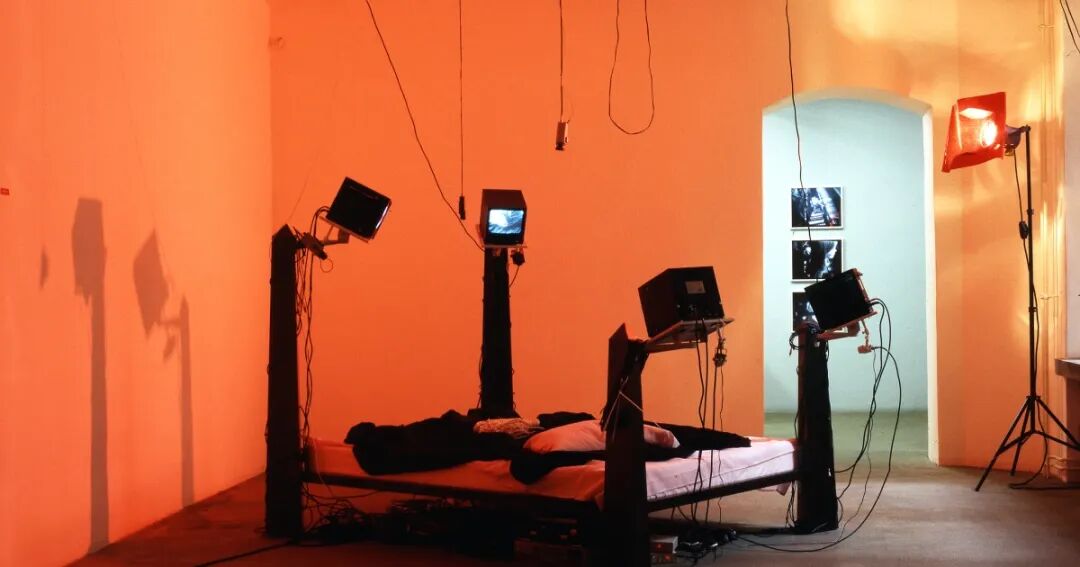
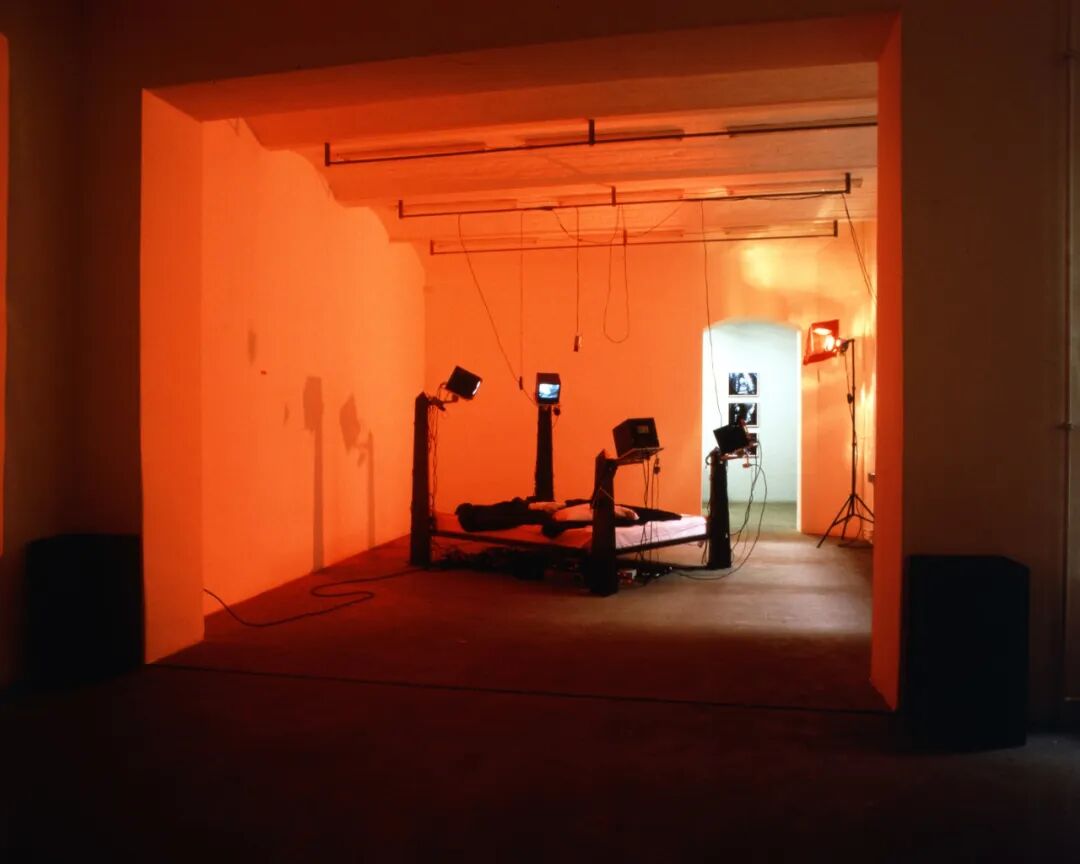
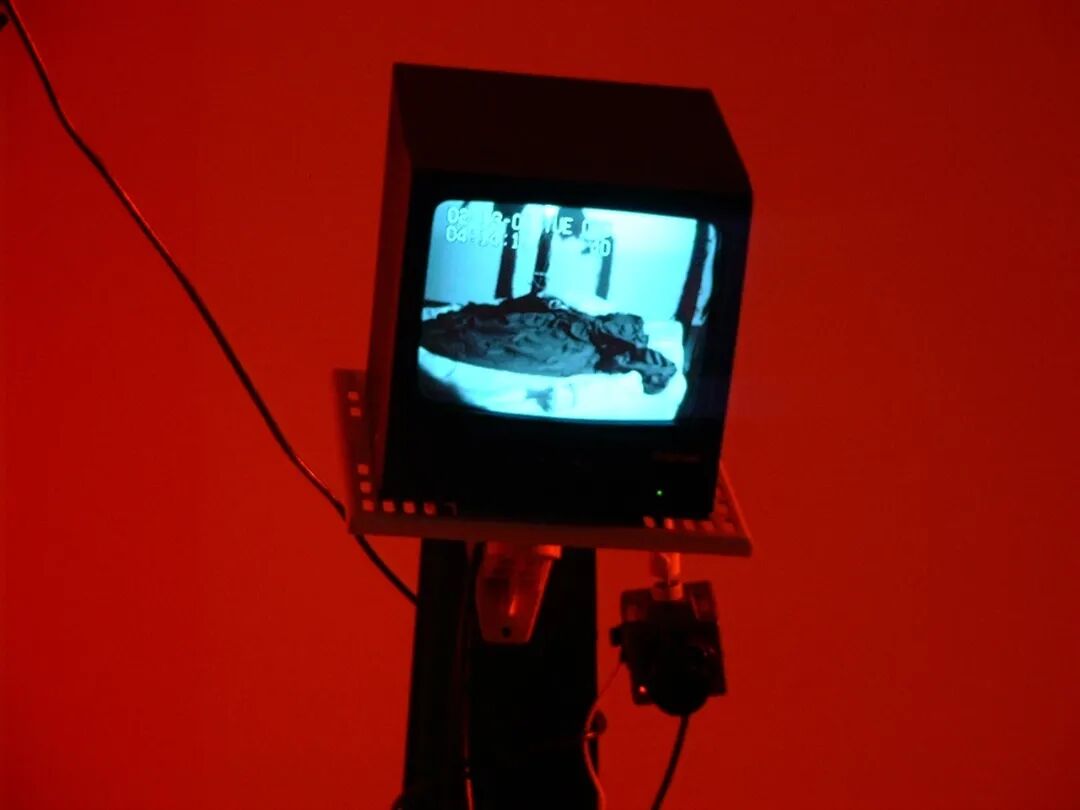
Since the early 1980s, Julia Scher has been concerned with questions of personal identity in the context of power, such as surveillance and control. In this modified Surveillance Bed, her interest in fetishism and exhibitionism is especially marked—characteristic of her work. In this sense the piece embodies one of the most personal aspects of her broader oeuvre. She once formulated her underlying interest thus: ‘Power and its abuse is my most important subject—how power is abused to harm people.’ The bed comprises four cameras and video monitors, each connected to a bedpost. The cameras record what happens on the bed. Live video images are randomly mixed with pre-recorded video images on the monitors. Thus the bed represents not only an image as installation, but also depicts an image of the activities that unfold upon it over time.
2. Intrusion into the private sphere: Surveillance Bed III (above) implants cameras and monitors into the bed—that symbol of utmost intimacy—so that viewers lying upon it see themselves filmed from multiple angles, and can even operate the cameras. This design blurs the boundary between victim and perpetrator (even where the self is concerned), forcefully questioning the sense of security of the private sphere under technological penetration, and underscoring the individual’s vulnerability before surveillance.
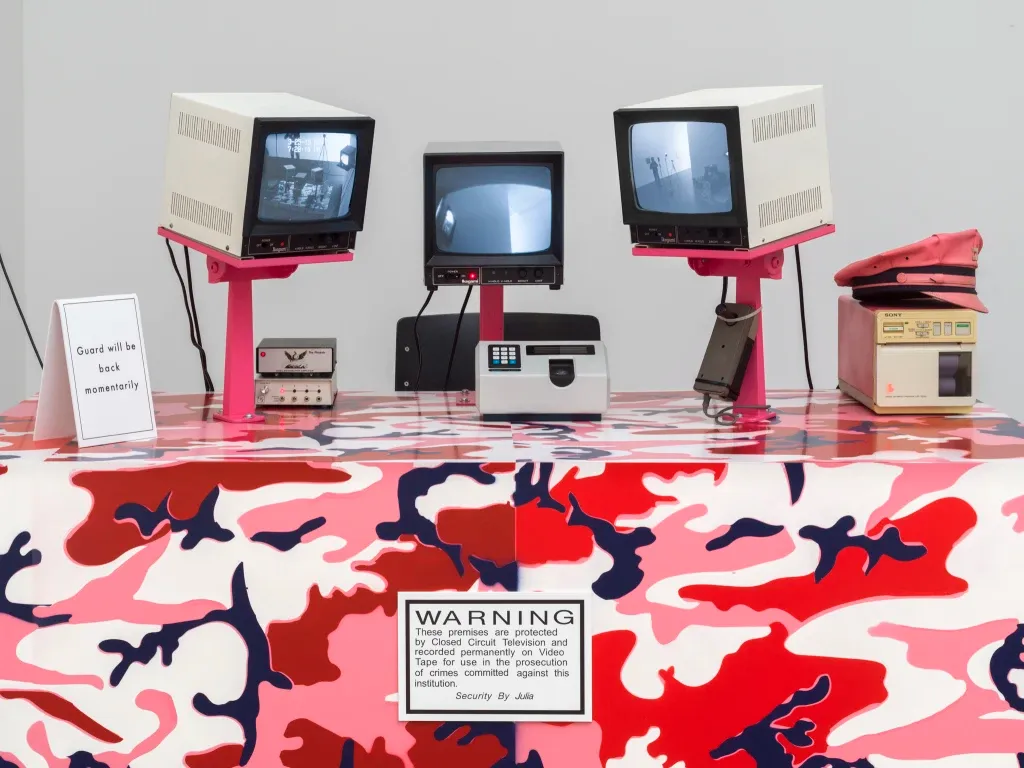
3. Irony and disguise: She often deploys soft pink tones, seemingly ‘friendly’ user interfaces, or an invented security-service brand named ‘Julia Security’ (above) within her installations. This strategy forms a strong irony against the cold, authoritarian essence of surveillance, suggesting that monitoring tends to appear mild and harmless—even as a provider of ‘security’—and is thus more readily accepted and internalised by society and the individual. This fusion of ‘danger, eroticism and humour’ is a key means by which she deconstructs the solemnity of surveillance.
4. Mixed media: Her work fuses live video, pre-recorded imagery, sculptural installation, text and performance elements, creating multi-layered sensory and psychological experiences.
Background and influence:
Scher’s work emerged in the late 1980s and early 1990s, a pivotal moment when surveillance technology began to be civilianised and commercialised and gradually seeped into the social fabric. Her work is of foundational significance: it not only anticipated the expansion of surveillance technology (from the state to the commercial and individual levels) but, more importantly, raised the surveillance theme from a purely technical discussion to the complex registers of critique of power, psychological analysis, sociological observation and gender politics. Her exploration of the link between surveillance, gender and vulnerability is especially profound. Scher’s practice influenced a subsequent generation of artists concerned with technology, power and the body; her work has been widely exhibited and studied, becoming a key case for understanding early surveillance art. She exposed the invisible power brought by electronics and prophesied the interwoven control of technology and gender, paving the way for later artists such as Zach Blas to explore technology and the politics of the body.
2. Trevor Paglen
Representative work: the Limit Telephotography series
A photographic and research project concerning ‘black sites,’ drone warfare, spy satellites and AI vision systems.
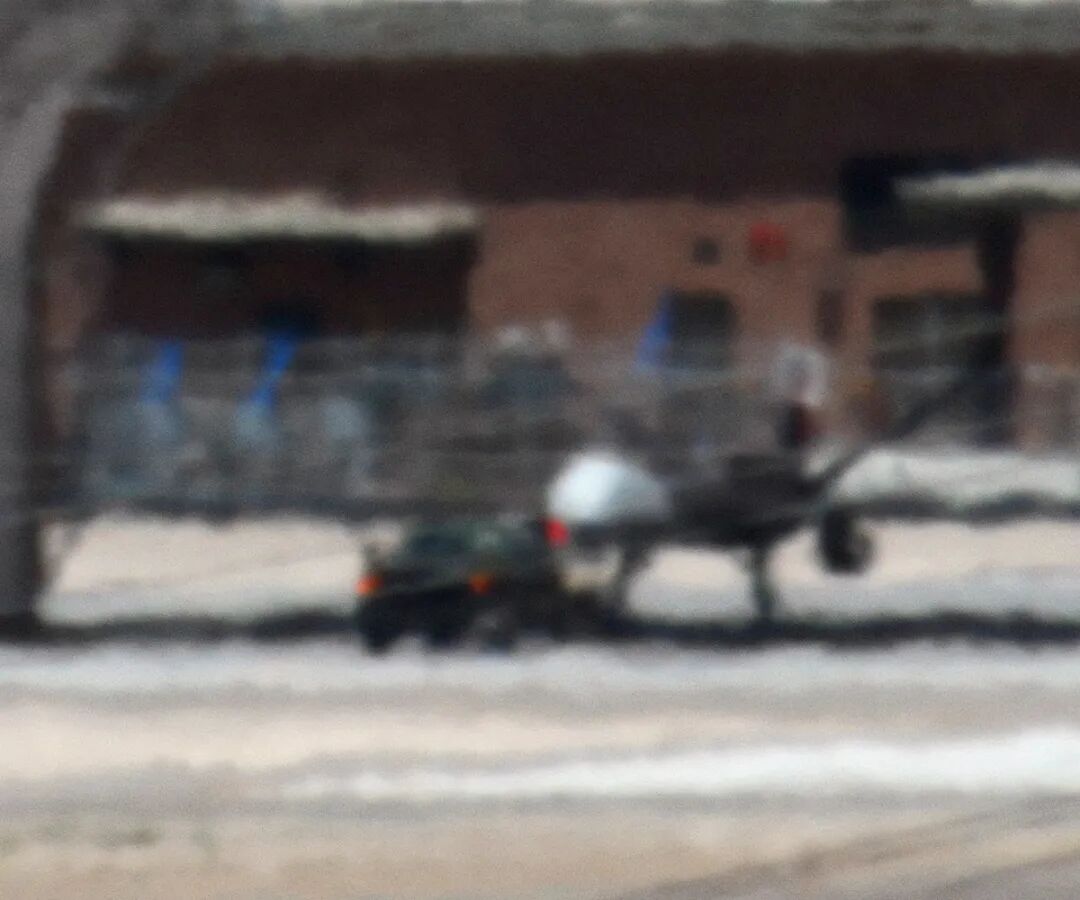
Trevor Paglen, telephoto work Reaper Drone, Indian Springs, Nevada; distance ~2 miles, 2010, C-Print, 30 × 36 inches
Trevor Paglen’s artistic practice is singular: he fuses the multiple identities of investigative journalist, geographer, engineer and artist, devoting himself to exposing the military, intelligence and government surveillance installations deliberately hidden by state power, and to visualising the ‘invisible infrastructure of power.’ His core motivation lies in challenging the opacity of state power and awakening the public to the vast surveillance apparatus operating beyond everyday view—to cognise and reflect upon it. He holds that ‘looking itself is a political act,’ and attempts through artistic means to break the blockade of official narratives and reveal the physical existence and operational logic of the ‘deep state.’ He is concerned not only with physical installations but with the algorithmic logic, data collection and power intentions behind surveillance, and with how these systems shape our worldview and political reality. He once said: ‘I want to photograph the forces that shape our era, even when they are invisible.’
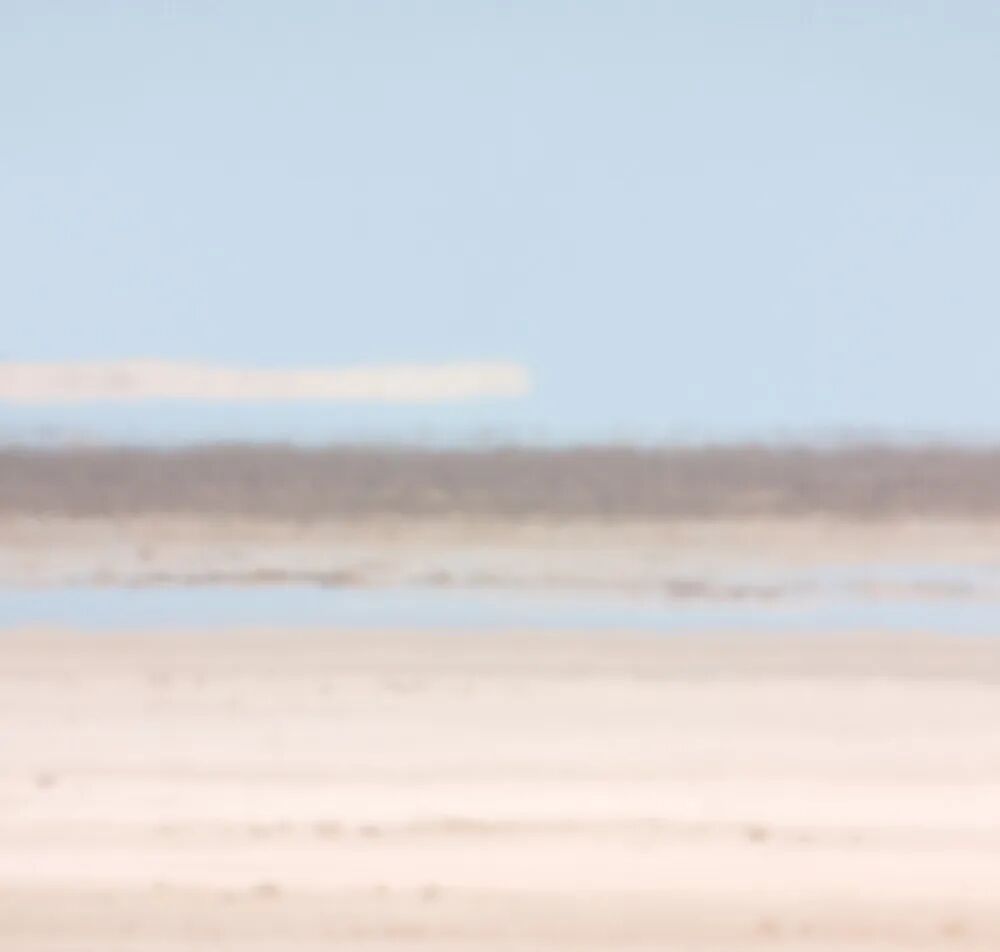
Trevor Paglen, telephoto work Chemical and Biological Weapons Test Site, Dugway, Utah; distance ~42 miles; 2006, 2007, 11:17 a.m., C-Print, 40 × 40 inches.
Artistic strategies:
Paglen’s artistic expression is characterised by rigorous research, a distinctive visual language and an interdisciplinary method:
1. Limit telephotography and the metaphor of visual limitation: In the Limit Telephotography series, he uses astronomer-grade high-magnification telescopes and photographic techniques to shoot, from dozens or even hundreds of kilometres away, American secret military bases, intelligence-agency sites and satellite-surveillance installations that are closed to the public. These photographs often display a hazy, blurred, grainy quality, as if phantasmal scenes projected from a distant time and space.
This visual effect is itself deeply symbolic: on the one hand it hints at the extreme secrecy of these facilities, their physical inaccessibility and the deliberate occlusion of state power; on the other it precisely reflects ordinary citizens’ cognitive limits and difficulty of access regarding the deep operations of the state apparatus. This ‘limit of seeing’ is in itself a powerful political statement.
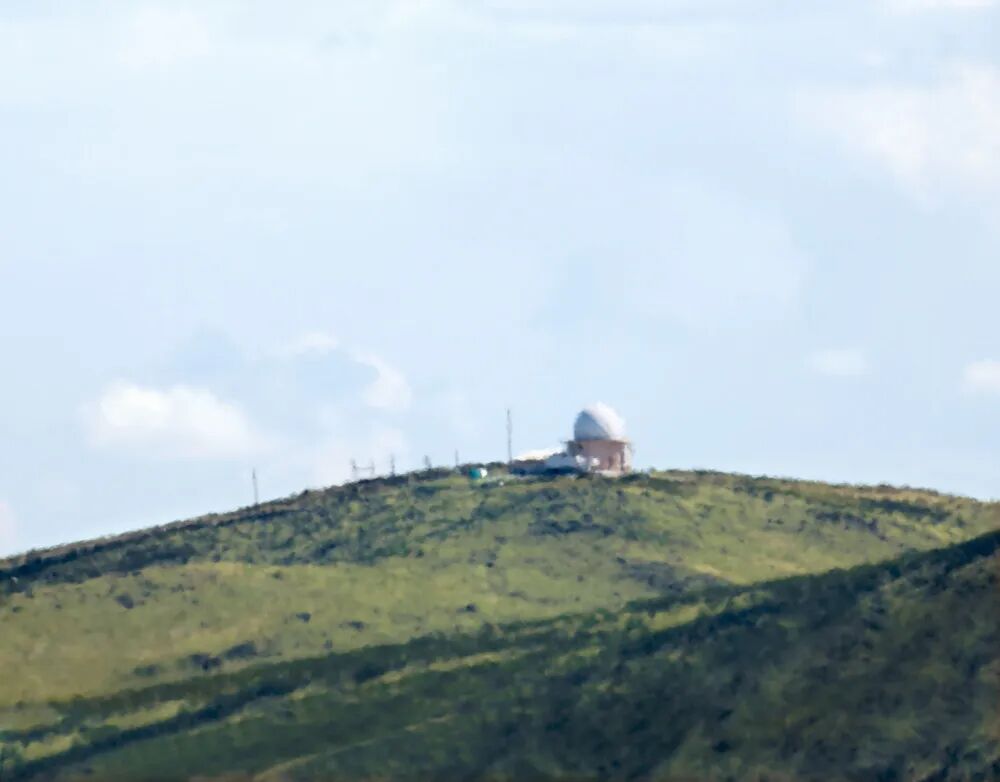
Trevor Paglen, telephoto work NRO Ground Station (ADF-SW), Jornada del Muerto, New Mexico; distance ~16 miles, 2012, C-Print, 37½ × 48¼ inches.
2. The materialisation of data and geography: He does not merely photograph images; he also studies flight data, budget documents and corporate contracts to track and locate those secret surveillance networks and ‘black sites.’ He has photographed the trails left by drones in the night sky, or the traces of military satellites crossing the stars, transforming abstract data and clandestine actions into perceptible visual evidence.
3. A critique of algorithmic vision: Paglen also researches AI vision systems in depth—for instance photographing the bizarre, biased categorisations within image databases used to train AI recognition (such as labelling people as ‘monsters’ or ‘non-human’), exposing the ideologies and latent discrimination hidden behind the algorithm. He makes viewers aware that we are monitored not only by humans but by the machine’s ‘eye,’ which scrutinises and classifies us according to its own peculiar logic.
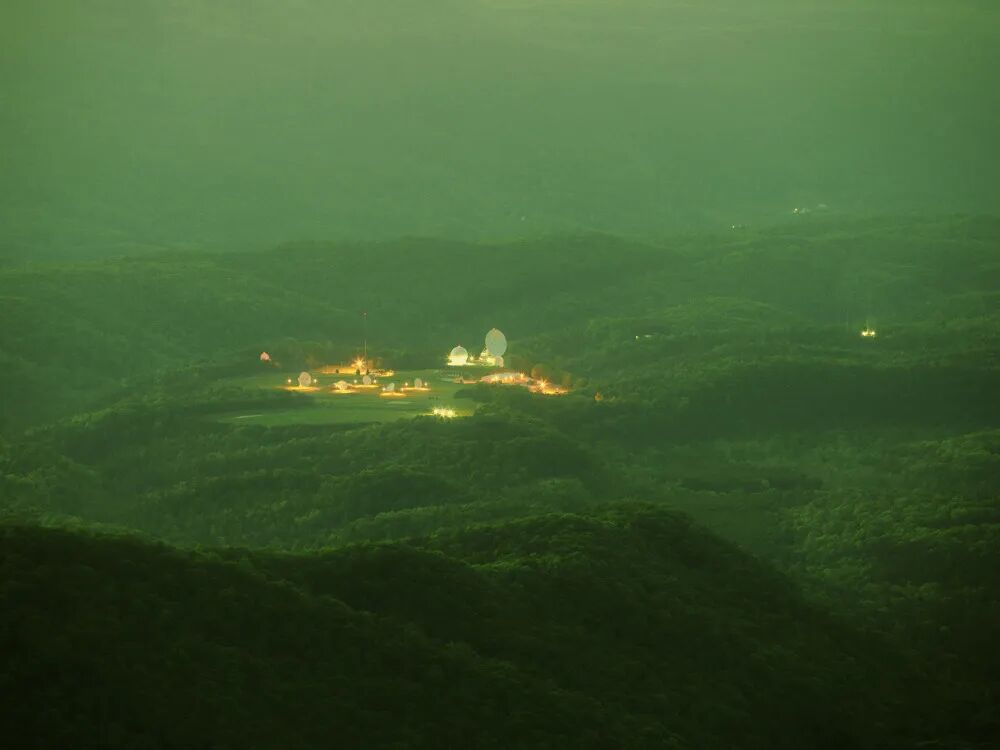
Trevor Paglen, telephoto work They Watch the Moon, 2010, C-Print, 36 × 48 inches
Background and influence:
Paglen’s work is active in the post-9/11 era, a period in which the global national-security agenda overrode individual rights and surveillance technology developed by leaps and bounds, penetrating every level of society. His practice is renowned for its direct challenge to state-level surveillance and the military classification system, greatly expanding the boundaries and depth of art’s intervention into socio-political issues. Paglen’s work has drawn wide attention not only in the art world but, owing to the rigour of his investigation and the sensitivity of his revelations, the recognition of journalism and academia. He received the MacArthur ‘Genius Grant’; his work is held in major museum collections; and he has sparked broad public discussion of state surveillance, military transparency and data privacy. He makes people realise that those secret operations and surveillance networks, seemingly remote and confined to news reports, in fact possess concrete physical forms and geographic coordinates—key components of the contemporary landscape of power. His work has inspired more artists and researchers to attend to the visual information deliberately marginalised and hidden by power.
3. Hasan Elahi
Representative work: Thousand Little Brothers (also translated as Tracking Transience)
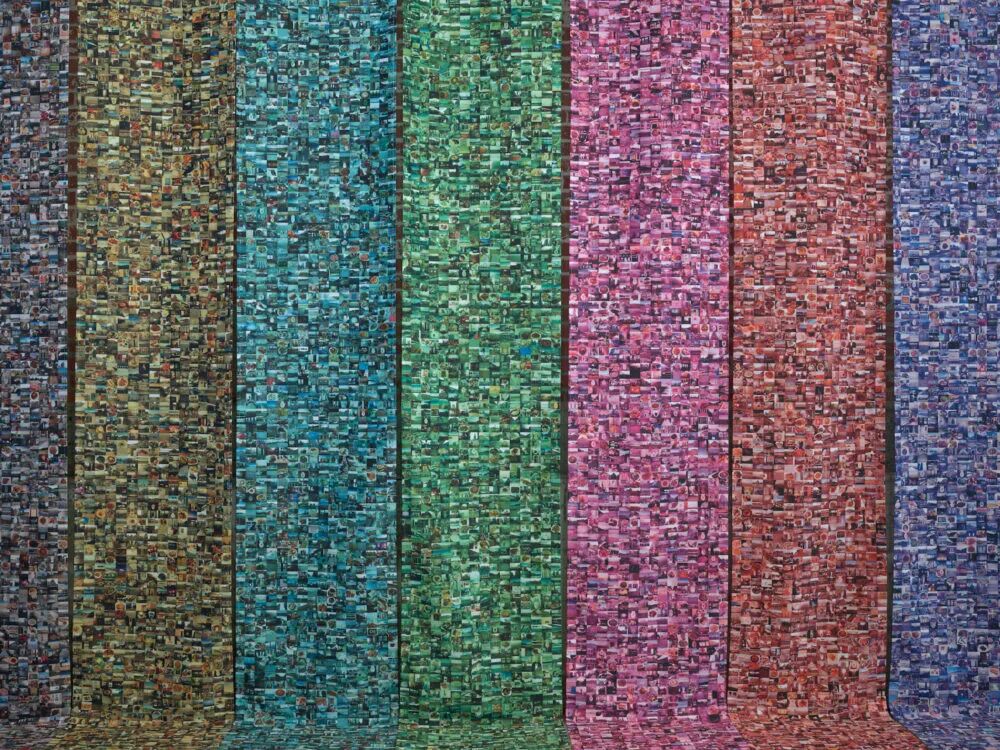
Hasan Elahi’s practice is tightly bound to a highly dramatic personal experience. After the 9/11 attacks, wrongly reported as a terrorist, he was subjected to months of intense investigation and continuous surveillance by the FBI. Although ultimately cleared, the episode left him with a profound experience of the absurdity of the state surveillance apparatus, the asymmetry of power and the individual’s helplessness before the mighty state machine. His core motivation lies in responding, in a radical and provocative manner, to such groundless suspicion and relentless scrutiny, and in reflecting through artistic practice upon privacy, transparency, civil rights and the complex question of how the individual is to conduct themselves in the age of surveillance. Rather than simply refusing or evading monitoring, he adopted a strategy of ‘over-compliance,’ seeking thereby to dissolve the one-directional nature and oppressiveness of surveillance.
Hasan Elahi says: ‘By making public every aspect and every small detail of my life, I actually maintain a very private and anonymous life. We are all producing data. Our phones are tracking every piece of information about us. So when you are in public with insufficient information, that is actually sometimes more of a red flag than having too much information.’
In 2002, Hasan Elahi was wrongly identified as a potential terrorist, prompting a six-month FBI investigation. In response, he began a long-term project titled Tracking Transience (2002–present), publishing records of his daily activities to the internet so the FBI could monitor him more easily. By transforming what is ordinarily a secret, coercive act of surveillance into a public and voluntary one, the project ironically accepts the erosion of American civil liberties—especially the increased surveillance of immigrants, people of colour and Muslims after 9/11.
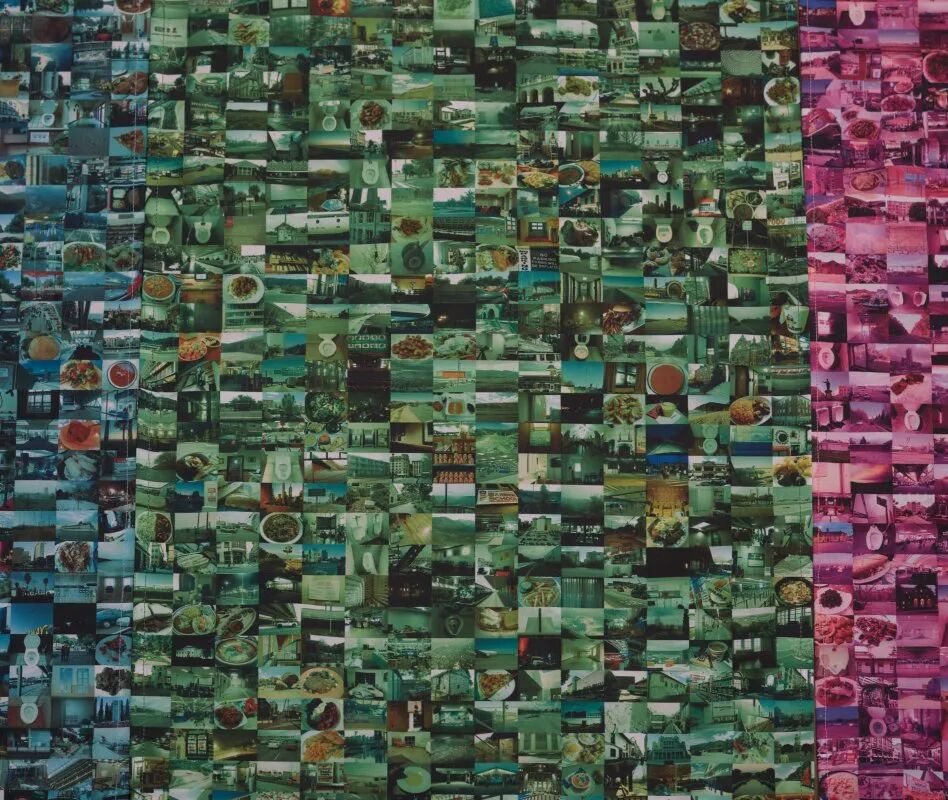
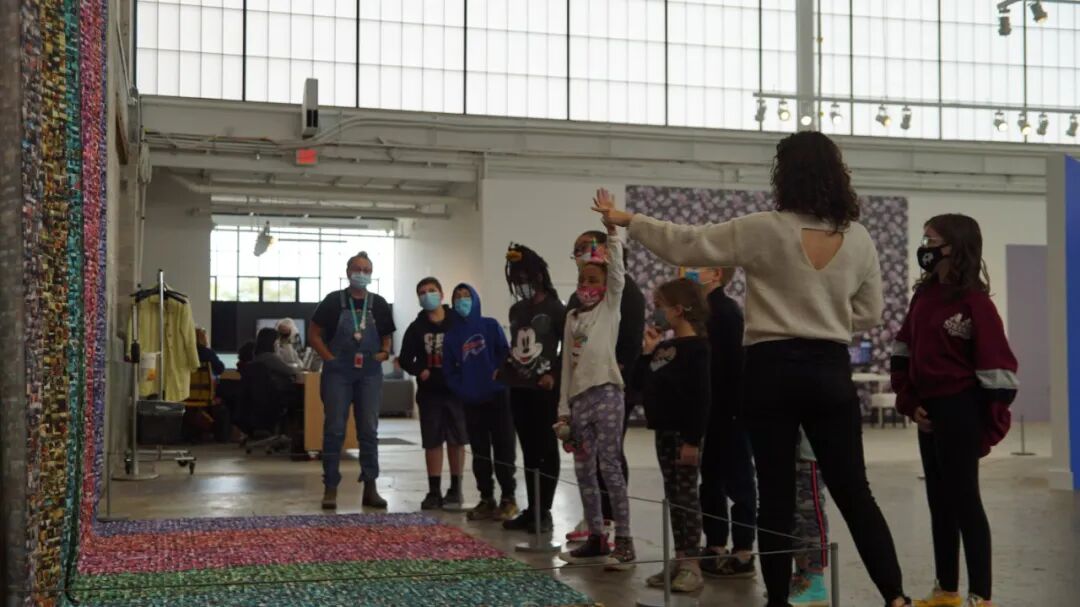
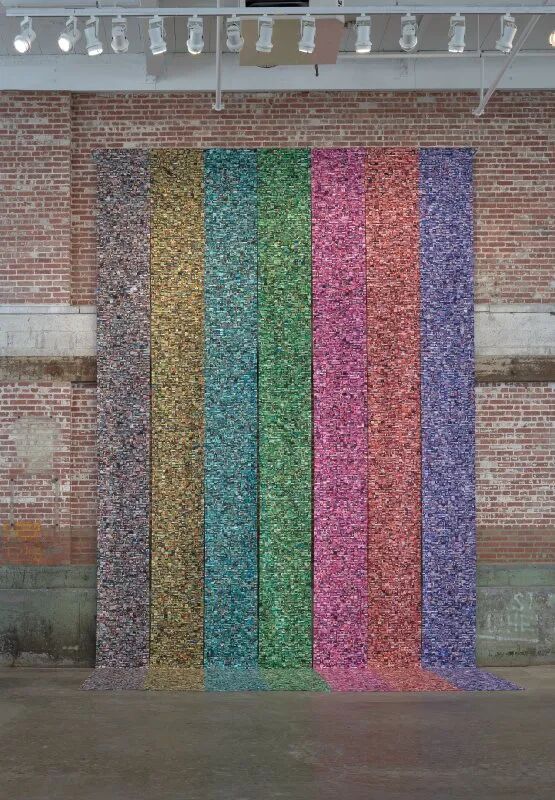
Thousand Little Brothers comprises nearly 32,000 photographs within Tracking Transience. They are printed on seven canvas banners which, together, stand nearly 28 feet high and nearly 15 feet wide, giving concrete form to the scale of big data. The photographs are overlaid with the colour-bar pattern American television stations use to test the emergency broadcast system, signalling that surveillance constitutes a nationwide emergency. According to Elahi, who lives near Washington, D.C., the stripes also refer to the abstract painting of the 1960s Washington Colour School—especially the striped canvases of Gene Davis (represented in the Albright-Knox collection), who avoided manifesting his politics in his art.
Artistic strategies:
Elahi’s artistic expression manifests chiefly as a sustained performance art and data practice, whose core strategy is the extremisation of ‘sousveillance’ (reverse surveillance) or ‘self-surveillance’:
1. Total self-exposure: From 2002, in his best-known project Thousand Little Brothers, Elahi began publishing nearly in real time, on his personal website, every movement and detail of his life. Carrying GPS trackers, cameras, mobile phones and the like, he uploaded to the network the massive data of his personal life—where he went, what he ate, flight information, spending records, bank balances, even photographs of public toilets—in exhaustive detail. This data was fully open to the FBI (and any member of the public interested).
2. Flooding the monitor with ‘excess information’: This extreme strategy of ‘self-transparency’ is both a playful rebellion against the FBI’s baseless suspicion and a clever tactic. By actively supplying massive, trivial, unfiltered personal data, he attempts to inundate and confound the monitors with ‘excess information,’ making truly valuable intelligence difficult to extract, and thereby, to a degree, challenging the efficacy and efficiency of the surveillance system.
3. Inverting the power relation and parody: The title ‘Thousand Little Brothers’ is plainly a parody of and rebuttal to the omniscient ‘Big Brother’ depicted by George Orwell in Nineteen Eighty-Four. If ‘Big Brother’ represents the one-directional, top-down eye of power, then ‘Thousand Little Brothers’ suggests the resistance to or deconstruction of this centralised power structure through the active exposure and mutual watching of countless individuals. Elahi experimentally inverts the power relation of surveillance, transforming himself from passive monitored subject into active data-provider and self-performer.
4. Questioning the paradox of ‘transparent existence’: His performance art profoundly questions whether, in the information age, ‘transparency’ necessarily equates to ‘safety’ or ‘innocence.’ If state power demands that the individual become transparent for the sake of ‘security,’ can the individual actively choose total transparency, and thereby dissolve the oppressiveness of surveillance—even reclaim a measure of control over their own data?
Elahi’s practice began in the post-9/11 era, when the global war on terror was intense, national security was prioritised and civil liberties and privacy rights faced unprecedented challenge. Taking his singular personal experience as a point of departure, his work responds very directly to the social anxiety of a particular historical period. Elahi’s art is not only a radical response to personal misfortune but a profound allegory of the strategies of individual survival in the age of surveillance. It has triggered complex debate on the boundaries of privacy, data ownership, civil disobedience, and how the individual contests the ubiquitous surveillance system amid ever-strengthening algorithmic governance. His work has been widely reported and discussed, exerting influence not only in art but in sociology, law and science-and-technology studies, becoming a classic case for examining ‘sousveillance’ and ‘data activism.’ Through a near-absurd posture of ‘embracing’ surveillance, he exposes its absurdity, the asymmetry of power and the possibility of the individual seeking agency within it.
4. Xu Bing
Representative work: Dragonfly Eyes (2016)
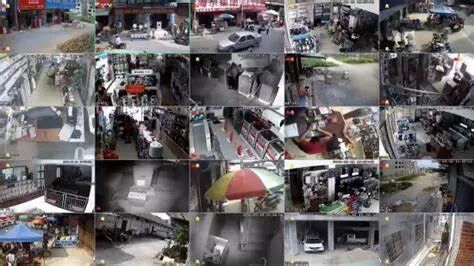
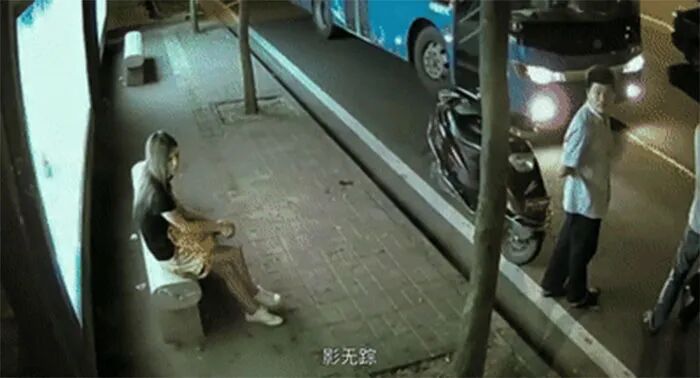
Dragonfly Eyes is an 81-minute art-film completed by the Chinese contemporary artist Xu Bing in 2017. The entire film is edited from surveillance footage obtained through public channels, with no filming. Its content tells a ‘kindred-spirits’ style love story: the protagonist Qingting (Dragonfly) is sent to a temple to become a nun, later leaves because she detests the temple’s commercialisation, and finds work on a dairy farm. The technician Kefan falls in love with her and, in standing up for her, commits an offence that sends him to prison. After his release Kefan searches for Qingting, believes the internet celebrity Xiaoxiao to be her, and—once Xiaoxiao disappears—decides to undergo plastic surgery to resemble Qingting, turning her past into his own future and achieving a kind of continuity. On the surface ‘Dragonfly Eyes’ appears to be the eyes of the protagonist, but at a deeper level it leans toward the surveillance camera: cameras blanket the streets like the compound eyes of a dragonfly, seeing both the warmth between ordinary people and the cold fickleness of the world. These fragmented images, reorganised and artistically worked, construct on screen a heterogeneous space where the texture of reality and illusory narrative interpenetrate, letting viewers glimpse, in the fissure between authentic record and artistic reconstruction, an allegory of existence in modern society.
The Chinese contemporary artist Xu Bing is renowned worldwide for his profound reflection upon writing, language and cultural signs and their relation to power and cognition. In Dragonfly Eyes, he turns his singular artistic gaze upon the increasingly ubiquitous public-surveillance image as a special ‘medium,’ his core motivation being to explore the intricate relations—in the age of pervasive monitoring—between virtual and real, individual narrative and technological rationality, public record and private emotion. Xu Bing is concerned with how, when the massive, objective images of surveillance saturate our lives, they invisibly shape our perception of the world, and how individual experience is re-orchestrated and even dissolved within the torrent of technology. He has observed that the surveillance lens ‘expands people’s imagination of the real and the virtual,’ and profoundly reveals that in the surveillance society the state in which ‘the human being relates to the world through the lens’ is at once universal and potentially alienating.
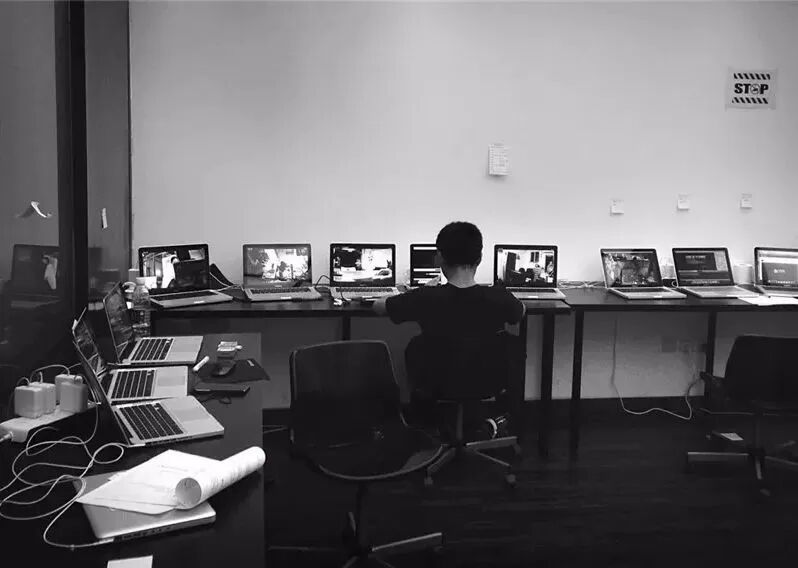
The artistic strategies of Dragonfly Eyes are highly experimental and conceptual, embodying the consistent ‘methodology’ that characterises Xu Bing’s work:
1. Ultimate ‘borrowism’ and medium-transformation: This 81-minute narrative feature draws all its images from public-surveillance clips openly obtained from the internet by the artist and his team. Over several years they collected, selected, classified and edited from a vast, uneven body of surveillance video. This mode of creation wholly subverts the traditional film-production process—no cinematographer, no actors, no conventional set. The surveillance image, originally an instrumental medium for recording, evidence-gathering and order-maintenance, is thoroughly transformed in Xu Bing’s hands into the material and language of artistic creation.
2. Reconstruction of fictional narrative and real fragments: Though the footage is authentic and objectively recorded, Xu Bing, through careful editing and the addition of invented characters, voiceover, sound effects and plot (an absurd story of love, identity, unemployment, plastic surgery, monasticism and existence, with the heroine named ‘Dragonfly’), reorganises and links these cold, objective, fragmented realities, endowing them with entirely new emotion, narrative logic and meaning. This treatment blurs the boundary between documentary and fiction, forcing viewers to reflect on what the ‘real’ we see actually is.
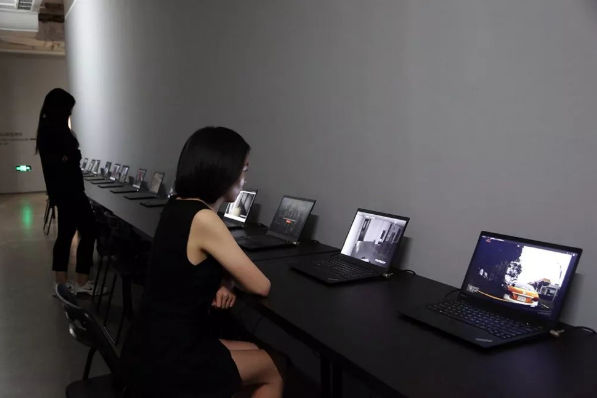
3. ‘Scattered perspective’ as social observation: Like the ‘scattered perspective’ of traditional Chinese painting, the work has no single focal centre; rather, through the myriad anonymous ‘dragonfly eyes’ (surveillance cameras) it captures the full panorama of living beings, displaying the richness, absurdity and unpredictability of social life in contemporary China and, indeed, under globalisation. This vantage also reflects the reality that Asia accounts for an extremely high proportion of the world’s surveillance equipment.
4. Exposing the potential devouring of individual narrative by technological rationality: Under the surveillance lens the individual is often an unwitting ‘actor’; their joys and sorrows, their daily trivialities, may without their knowledge become material in another’s narrative. Through this ultimate ‘reuse,’ Xu Bing exposes how technological rationality (the surveillance system’s pursuit of objectivity, comprehensiveness, efficiency) potentially overrides and devours the unique experience and emotional narrative of the individual.
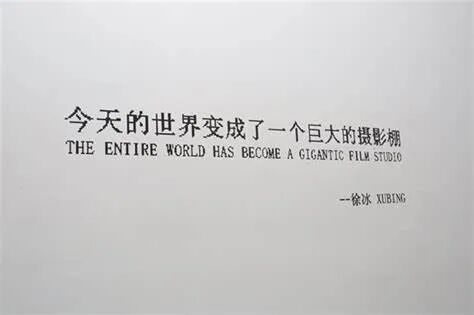
Dragonfly Eyes was created against the backdrop of a global surge in surveillance cameras and the rapid development of big-data and AI technologies. Monitoring of public spaces and even parts of private space has become the norm, and the resulting mass of video data has furnished the artist with unprecedented creative material, while also raising new questions of privacy, ethics and the power of looking. With its singular method and profound conceptualism, Xu Bing’s work has become one of the important artistic practices in recent years for discussing surveillance, the image and the relations of contemporary society. It has not only provoked wide discussion in art circles but attracted attention at film festivals, for it challenges the boundaries of film as an art form. The work sparked profound debate on the ethics of using surveillance imagery: do these images, employed in artistic creation without the subjects’ consent, violate their rights? Such debate is itself part of the work’s criticality. By reconstructing an existing medium, Xu Bing poses to us a series of urgent, reflective propositions of the age concerning the real and the fictional, technology and humanity, looking and being looked at.
5. Dima Yarovinsky
Representative work: I Agree
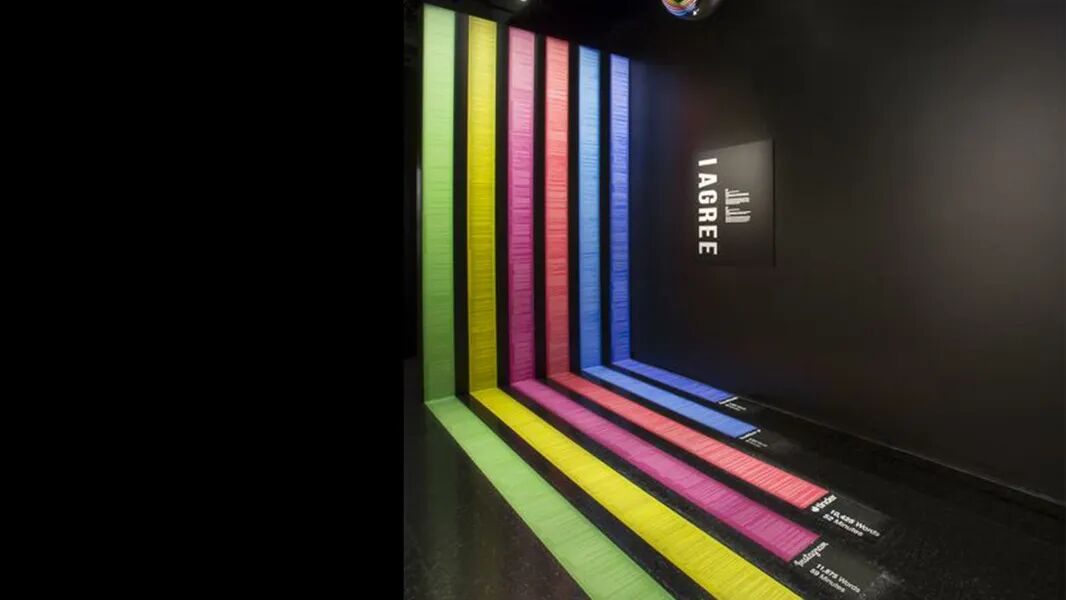
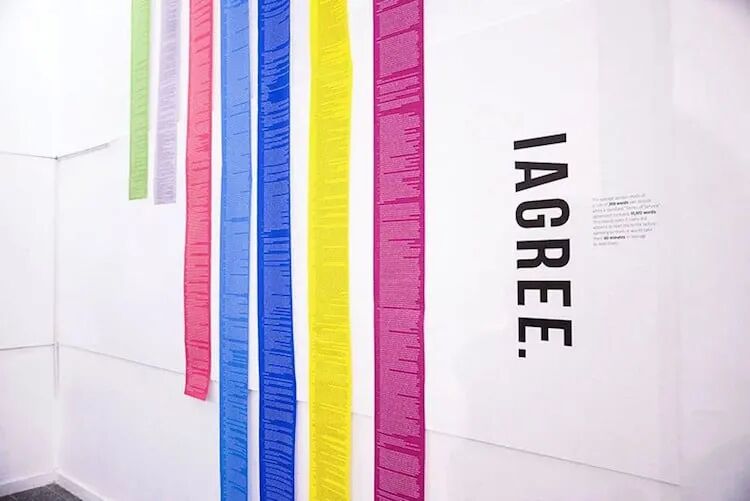
Dima Yarovinsky’s I Agree confronts, in an extremely direct and ironic manner, the predicament users face regarding personal privacy in the digital age—the so-called ‘consent trap.’ Its core motivation lies in exposing and criticising the vast information asymmetry and power asymmetry between users and tech companies. The artist observes that, although various applications and service agreements are packed with clauses on data collection and use, the overwhelming majority of users never actually read these long, abstruse texts, but habitually tick ‘I agree’ merely to use the service. This ‘consent’ is, to a great extent, blind and coerced; the user unknowingly surrenders vast personal-data rights. Yarovinsky hopes his work will awaken public attention to this prevalent phenomenon and prompt people to reflect on the privacy price paid even as they enjoy digital convenience.
Artistic strategies:
The artistic strategy of I Agree is characterised by its simplicity, directness and powerful visual impact:
1. Materialisation and visualisation: The artist printed in full the terms of service and privacy policies of several mainstream applications (Instagram, Tinder, Snapchat, Facebook, Twitter, etc.) onto standard A4 paper, and connected these sheets into enormous scrolls stretching tens or even hundreds of metres.
2. The oppressive weight of scale: These densely packed texts, replete with legal jargon and technical detail, are presented to the viewer in a physical, overwhelmingly massive form. When viewers see these scrolls cascading like waterfalls or covering the entire gallery floor, they immediately grasp the arduousness and impossibility of reading the clauses. This visual ‘impossible task’ directly echoes the predicament users face in reality.
3. Irony and warning: The irony of the work is self-evident. It intuitively shows that the ‘consent’ mechanism so carefully designed by tech companies resembles a legal disclaimer more than genuine ‘informed consent.’ Before the work, viewers cannot help but recall the countless moments they clicked ‘I agree,’ and may thereby arrive at a new understanding of the consequences of such acts. Like a visual alarm bell, the piece reminds people to attend to the power relations hidden behind the ‘fine print’ we so readily ignore.
4. The potential for interaction and reflection: Although the work itself is a static display, it effectively stimulates the viewer’s desire to interact (if only symbolically, by attempting to read a small portion) and to reflect deeply. It transforms an abstract legal and ethical problem of the digital age into a perceptible, impressive physical object.
Background and influence:
Yarovinsky created I Agree in an era when digital technology pervades daily life and personal data has become the core asset of tech companies. The advent of regulations such as the EU’s General Data Protection Regulation (GDPR) likewise reflects a growing global concern for data privacy and user rights. With its clear concept and highly transmissible visual form, the work swiftly won wide attention and discussion, especially on social media. It is regarded as a powerful critique of the ‘culture of consent’ in the digital age, effectively revealing how, behind the spread of digital services, individual privacy rights are systematically eroded within seemingly legitimate frameworks. The work’s influence lies in its successfully magnifying, through art, a problem ordinary users encounter daily yet habitually ignore, and pushing it into public view, thereby inspiring further debate on data ethics, corporate responsibility and individual digital literacy. It reminds us that, even as we enjoy digital convenience, we must be more vigilant and actively claim our digital rights, rather than passively falling into one elaborately designed ‘consent trap’ after another.
6. Tony Oursler
Representative work: the ‘Digital Portraits’ series, works concerning facial recognition, surveillance and digital identity
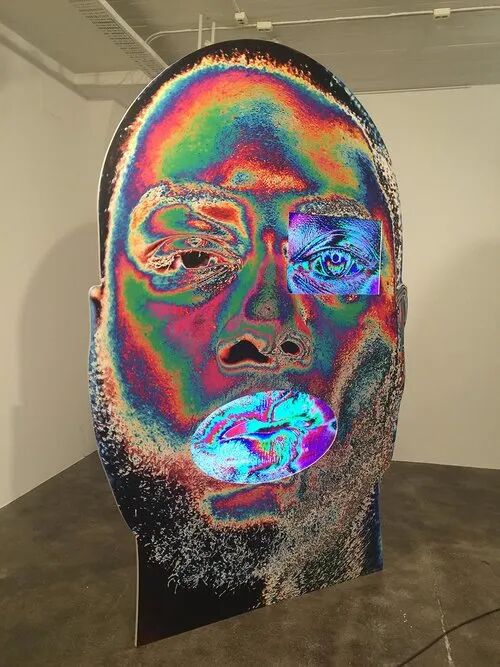
Tony Oursler is a pioneer of contemporary video installation art, whose work has long attended to the profound impact of mass media and technological development upon human psychology, emotion and identity. In addressing the theme of the ‘surveillance society,’ his core motivation lies in exploring how, in an age where digital media and surveillance technology (especially facial recognition, data-tracking and the like) are omnipresent, individual identity is deconstructed, reconstructed and even ‘alienated.’ He is concerned with how technology permeates and shapes our modes of perception, emotional expression and even the subconscious. Oursler’s work often reveals an anxiety, alienation and fluidity of identity under the envelopment of technology. Through his distinctive ‘digital portraits’ he seeks to capture and present these states of the individual—distorted, deformed or ‘computed’ by the algorithm—beneath surveillance and the digital gaze.
Artistic strategies:
Oursler’s artistic strategy is highly recognisable; his signature device is to project moving images (usually close-ups of the human face—eyes, mouth and so on) precisely onto various irregular sculptures, everyday objects (spheres, pillows, dolls, simple geometric blocks) or walls, creating a ‘living being’ or ‘possessed object’ that is at once grotesque and engrossing:
1. The ‘anthropomorphism’ of projection sculpture: He liberates the image from the traditional two-dimensional screen, endowing it with three-dimensional physical form. The projected facial image, combined with the form of the object that bears it, produces a strange ‘digital ghost’ that seems to breathe and feel. These ‘creatures’ often murmur to themselves, their gazes wandering, their expressions exaggerated, displaying various extreme emotional states.
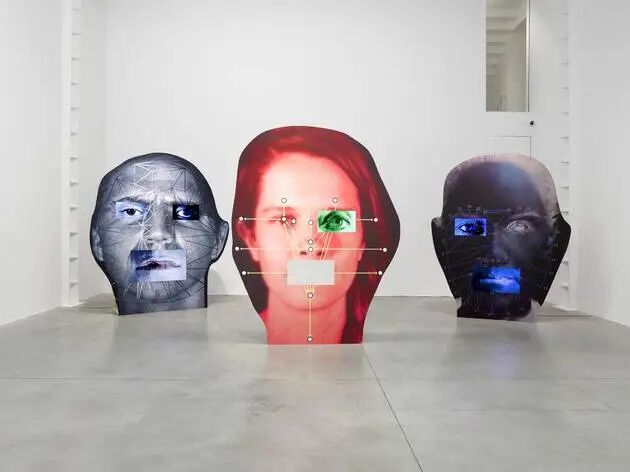
2. Facial recognition and the fragmentation of identity: In his surveillance-related works, Oursler may analyse the algorithmic logic of facial-recognition software, or directly deploy related technological elements, to explore the fragility of identity in the digital age. He might, for instance, capture the viewer’s face and process it in real time, mixing, distorting or combining it with other data to form a fluid, ‘synthetic’ portrait, thereby prompting reflection on the uniqueness of identity, its computability and the violence of surveillance (identity theft, misrecognition). The work reveals how biometric technology may reduce individual singularity to quantifiable data points.
3. The construction of a psychological theatre: Oursler’s installations often create an intimate, disquieting psychological theatre. Confronted with these technologically ‘activated’ ‘heads’ or ‘objects’ that seem to say something, viewers readily feel empathy or discomfort, and thereby reflect on their own state of existence within the technological environment.
4. A critique of the medium itself: By projecting images onto non-traditional carriers, Oursler also deconstructs the image-medium itself. He challenges our habitual way of looking and suggests the omnipresence of the digital image—its ability to adhere to any surface—which resembles, in its effect, the diffuseness of surveillance technology.
Background and influence:
Oursler began exploring video art in the late 1970s; his practice spans the decades of rapid development in personal computing, the internet, social media and artificial intelligence. His concern with the surveillance society is the natural extension of his sustained reflection on the relation between technology and humanity. His work profoundly captures the ‘schizophrenic’ condition of the digital age—on the one hand we depend on technology, on the other we fear its potential control and alienation. Oursler’s ‘projection sculpture’ has significantly influenced later new-media art; his integration of image, sculpture, sound and performance has expanded the boundaries of installation. On the surveillance theme, his contribution lies in revealing, from a unique visual and psychological angle, the deep penetration and latent violence of surveillance technology (especially biometric technologies such as facial recognition) upon individual identity and emotional expression—not merely remaining at the level of physical-space monitoring. He makes us ponder: when our faces and expressions become data analysable and exploitable by the algorithm, what remains of our humanity?
7. Niklas Roy
Representative work: My Little Piece of Privacy
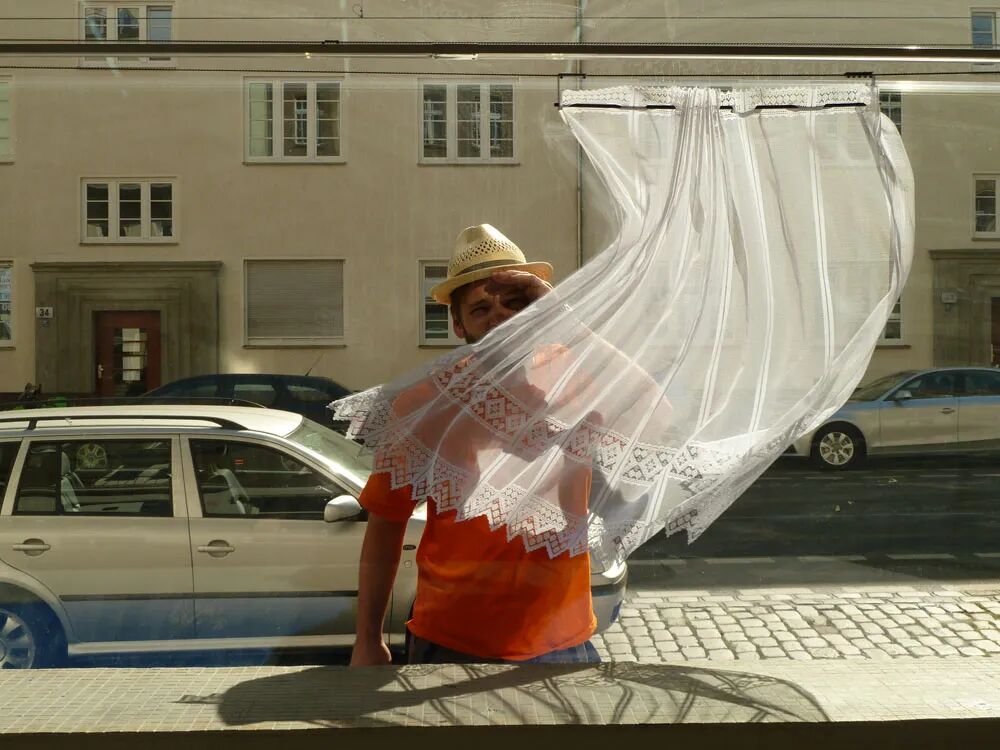
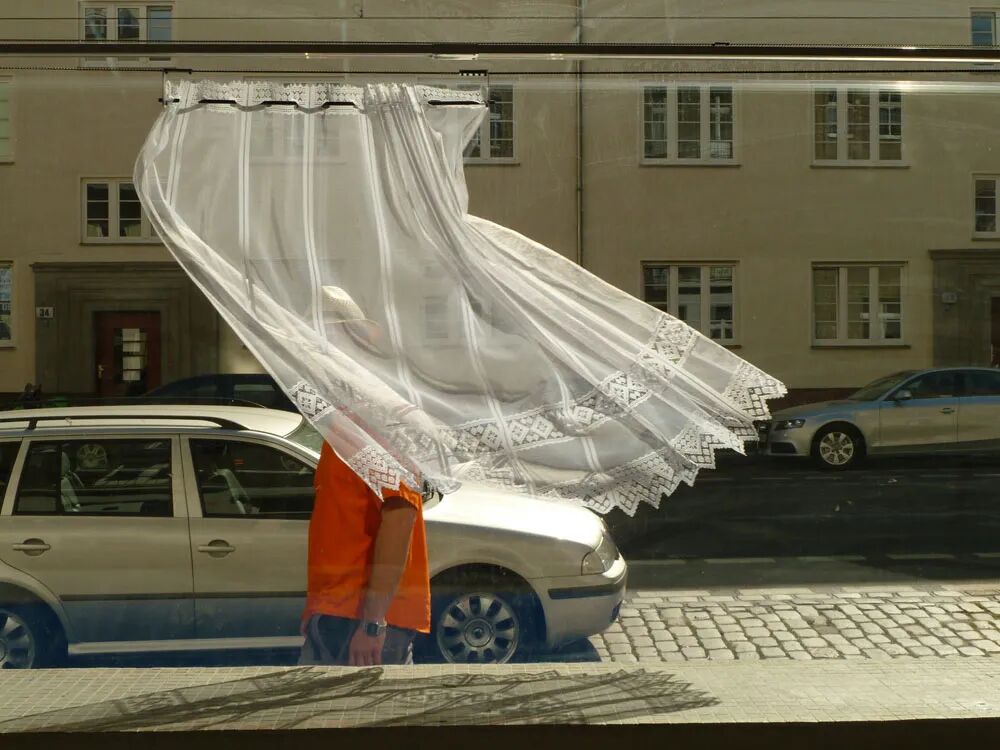
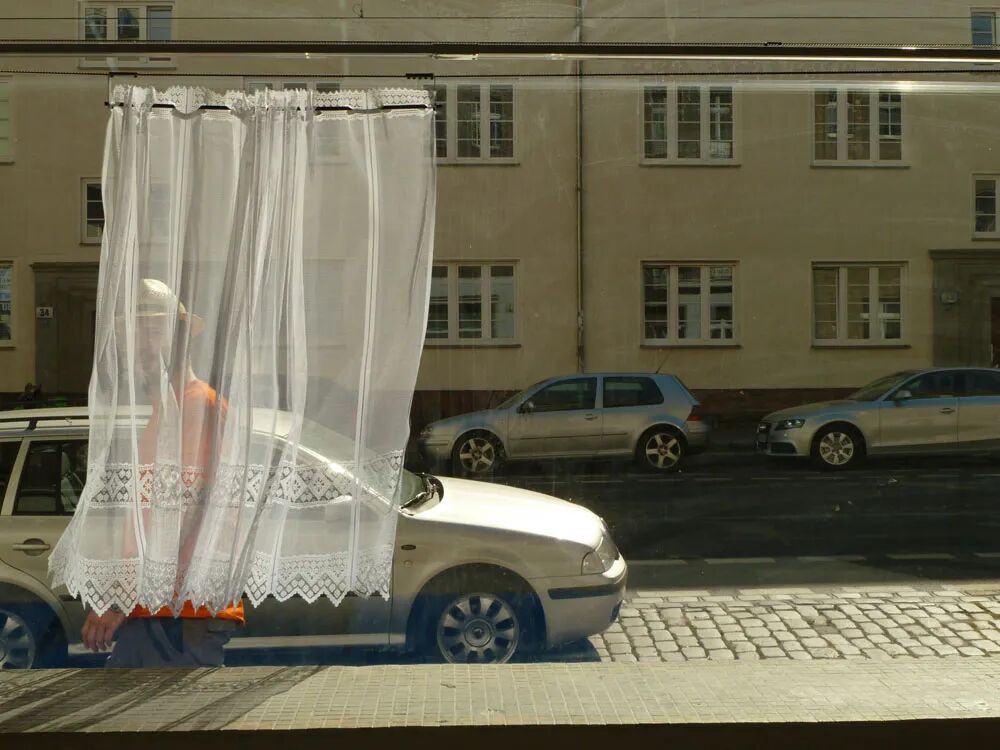
Niklas Roy, My Little Piece of Privacy
Niklas Roy is a German artist whose work often fuses art, technology and humour, addressing contemporary social issues in a manner that seems light yet is in fact thought-provoking. In My Little Piece of Privacy, he turns his gaze to the absurd relation between ubiquitous surveillance and the individual’s futile pursuit of privacy. His core motivation lies in reflecting on how limited—even self-comforting and ironic, like a piece of performance art—the individual’s effort to protect privacy through simple physical means may be in a society where surveillance technology is highly developed and ever more widespread. Roy does not offer an effective counter-surveillance solution; rather, through a slightly mocking manner, he reveals a certain helplessness of the individual before the powerful surveillance system, and how ‘privacy’ may, in particular circumstances, evolve into a consumed, watched ‘performance.’
Artistic strategies:
Roy’s artistic expression often bears interactivity, the playfulness of mechanical devices and conceptual wit:
1. Absurd mechanical devices: My Little Piece of Privacy typically takes the form of a small, movable mechanical apparatus. For instance, he once devised a little curtain or barrier mounted above the head or on a specific object; when a nearby surveillance camera is detected, the device activates automatically, attempting physically to isolate the artist himself or the protected object from the camera’s line of sight.
2. Humour and self-mockery: This ‘hiding the silver only to point to where it lies’ style of privacy protection is itself full of humour. The tiny curtain appears insignificant before the vast, invisible surveillance network, and its protective effect is plainly symbolic. This disproportionate confrontation, together with the device’s somewhat clumsy operation, carries a self-mocking tone, as if to say: ‘Look, this is all the effort I can muster for my “little privacy” in the age of surveillance.’
3. The exposure of a paradox: The work cleverly reveals a paradox: the very act of trying to protect privacy may, by its singularity and abnormality, attract more attention and scrutiny. When a miniature curtain is suddenly raised in a monitored environment, it itself becomes a new spectacle, an event worth recording and discussing. This suggests that, in certain cases, the over-emphasis on or clumsy protection of privacy may in fact dissolve privacy itself.
4. Interaction and participation: Some of Roy’s works allow viewers to interact, or place themselves in analogous situations, thereby personally experiencing this effort to seek privacy and the frustration it meets.
Background and influence:
Niklas Roy works against a backdrop in which surveillance technology grows ever smaller, networked and ubiquitous—from public-space CCTV to the cameras of personal electronic devices, monitoring is everywhere. Meanwhile public anxiety over privacy leakage intensifies, and discussions and attempts at counter-surveillance proliferate. With his distinctive humour and keen insight into technological culture, Roy’s work stands apart among the many solemn critiques of surveillance. His influence lies in his refusal of direct confrontation or bleak despair; instead, by ‘using four ounces to deflect a thousand pounds,’ he creates seemingly useless yet ingenious ‘contrivances’ that provoke reflection on surveillance, privacy, individual behaviour and the relation between technology and life. He makes us reconsider, in the surveillance society, our fixation on privacy, the patterns of our privacy-protecting behaviour, and the extent to which these are effective or merely postures and self-consolation. His work also indirectly criticises the consumer logic of ‘privacy as commodity,’ revealing the essence of individual self-display and being-watched in the technological age.
8. Wu Junhao
Representative work: Entanglement of Light
Analysis of the work and core motivation:
Wu Junhao is a Chinese artist concerned with the realities of contemporary society, whose work often deploys new-media technology and installation to explore the individual’s condition within particular social structures and technological environments. In works touching on the ‘surveillance society,’ such as Entanglement of Light, his core motivation lies in probing the profound influence of public surveillance systems upon individual behaviour, psychological state and patterns of interpersonal interaction. His focus is on how, when the individual realises they may at any moment be under the surveillance camera’s ‘gaze,’ public space evolves into a potential ‘theatre,’ and whether individual behaviour thereupon changes, adjusts or even ‘performs’ unconsciously. The artist seeks to reveal how surveillance technology reshapes our understanding of the public–private boundary, and the latent pressure and alienation it may bring to civil liberty and the individual spirit beneath the façade of ‘security.’
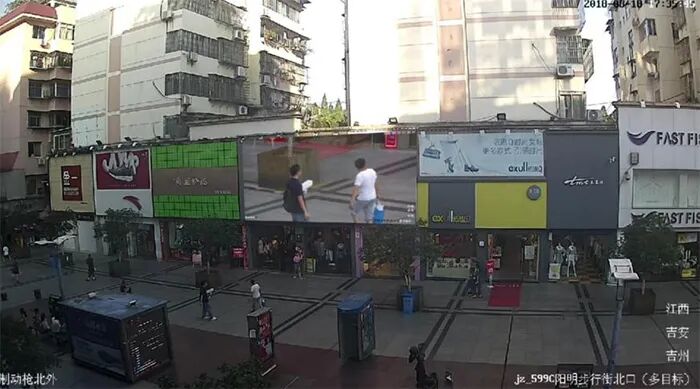
Artistic strategies:
Wu Junhao’s artistic strategies typically display the following characteristics:
1. Situational re-enactment and sensory experience: He often constructs specific installation environments, integrating surveillance cameras, screens, light and other elements, letting viewers personally experience the feeling of being monitored or of participating in monitoring. In There Are Gods Three Feet Above the Head (a title that itself hints at an invisible, omniscient ‘eye’), for instance, cleverly placed cameras and real-time feedback imagery may make viewers aware that every move is recorded and displayed, thereby arousing awe or unease toward the ‘gods’—that is, the ubiquitous surveillance system.
2. Exploring the ‘theatricalised’ relation: His work emphasises the ‘theatricalised’ relation between public space and individual behaviour under the surveillance lens. When aware of being watched, the individual’s conduct may cease to be entirely natural, acquiring a degree of self-scrutiny and ‘performance,’ as if performing for an invisible audience. By capturing and amplifying this subtle psychological and behavioural shift, the artist reveals how surveillance reshapes the logic of social behaviour.
3. A dialectical reflection on ‘security’ and ‘freedom’: The work often leads viewers to ponder the complex tension between the seemingly opposed concepts of ‘security’ and ‘freedom.’ Surveillance systems often exist in the name of providing security—but does their over-expansion come at the cost of individual freedom and privacy? Through his work the artist questions the simplification of this binary and challenges the absolute legitimacy accorded to surveillance under traditional power narratives.
4. The symbolism of media such as ‘light’: In works like Entanglement of Light, ‘light’ is both the physical vehicle of surveillance technology (infrared, camera fill-light) and a possible bearer of symbolic meaning—enlightenment and exposure, guidance and bondage. The use of light may underscore the penetrative and omnipresent character of surveillance.
Background and influence:
Wu Junhao’s practice reflects the real backdrop of the large-scale deployment of public-security surveillance systems in the urbanisation processes of China and the globe. With the promotion of concepts such as ‘smart city’ and ‘safe city,’ the density of surveillance cameras in urban public space has risen sharply; while this improves the efficiency of public-order administration, it has also aroused wide public concern over privacy rights, data security and social control. Wu Junhao’s artistic practice is precisely a reflection upon and response to surveillance culture against this backdrop. With keen insight into local social reality and a speculative artistic language, his work offers an important artistic perspective for understanding the relation between technology and the human being in contemporary Chinese society. Its influence lies in his re-problematising a phenomenon ever more common in daily life yet often taken for granted or ignored—public surveillance—guiding viewers to examine the power relations and the latent shaping-force upon individual lifeways harboured behind seemingly ‘normal’ technological apparatuses. His work helps raise public sensitivity to and critical thinking about the surveillance theme.
9. Zach Blas
Representative works: Facial Weaponization Suite (2011–2014), Contra-Internet: Jubilee 2033 (2018) (broader in theme, yet also touching on network control and identity)
Facial Weaponization Suite, making-of film
(No subtitles; for the subtitled version, reply ‘Blas’ in the background.)
Analysis of the work and core motivation:
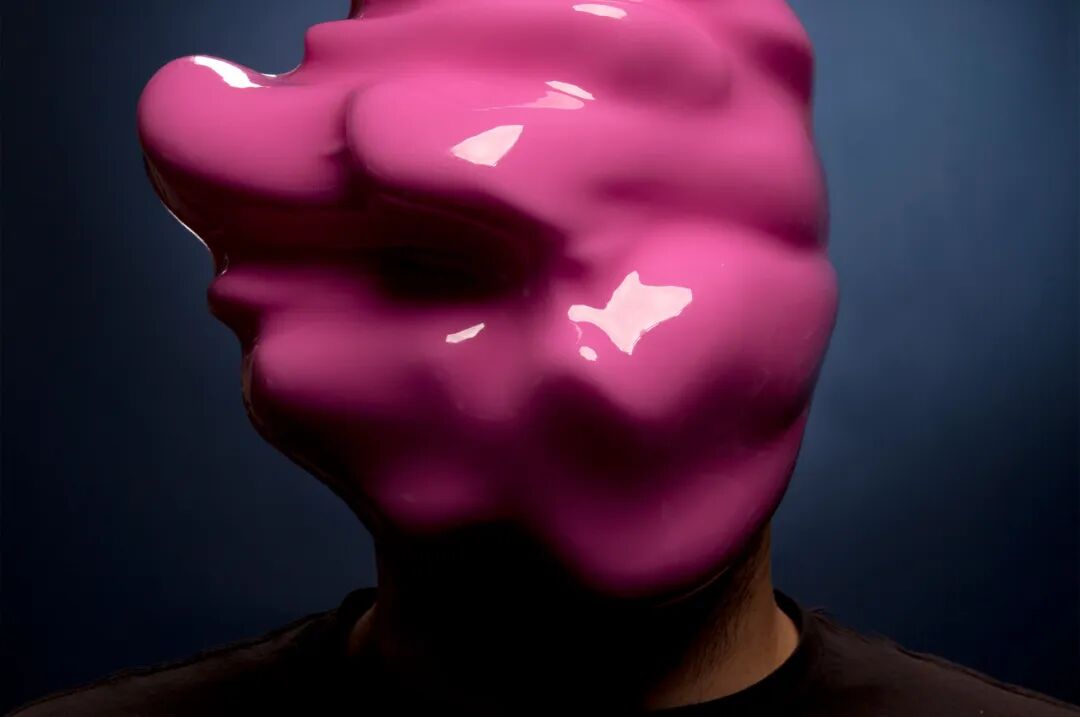
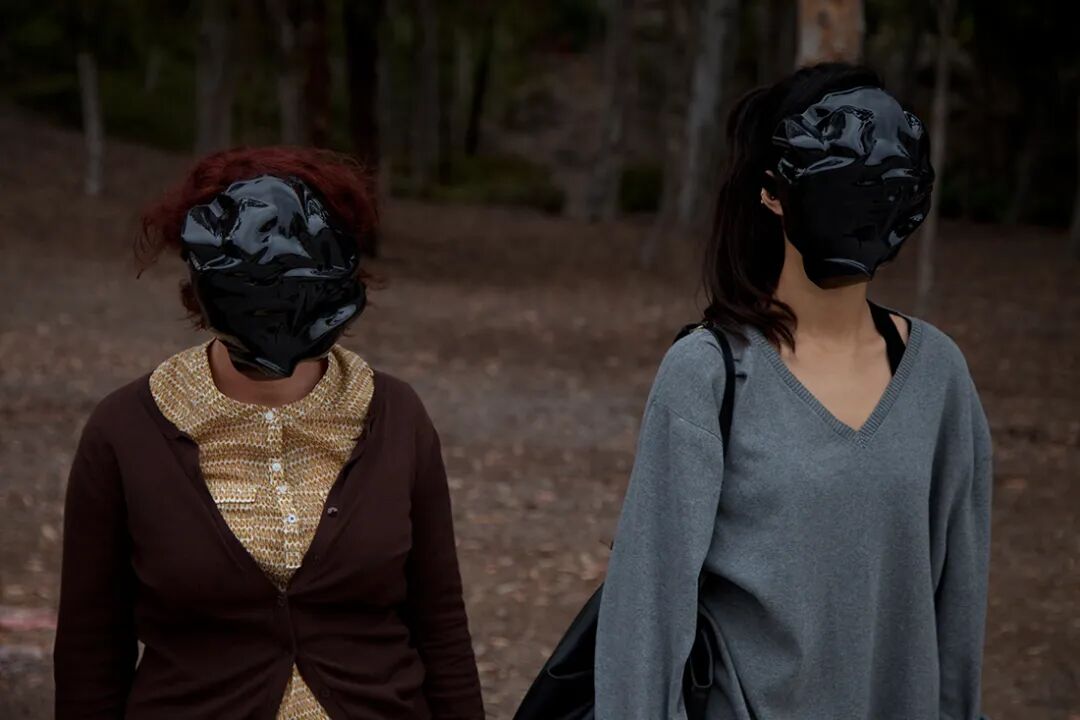
Zach Blas is an artist, filmmaker and writer whose work probes the complex relations between technology (especially digital and biometric technology) and power, social control, identity politics and inequality. Approaching from queer theory, feminism and postcolonial theory, he criticises the normalising, standardising and exclusionary logic embedded in technology. In works such as Facial Weaponization Suite that respond directly to the surveillance society, his core motivation lies in exposing and resisting the abuse of biometric technology (especially facial recognition) and its latent violence against the individual—particularly minorities and marginalised groups. Blas holds that facial-recognition technology is not merely a surveillance tool but a ‘colonisation’ of the body and a coercive determination of identity; it reinforces existing power structures and may lead to the discrimination and persecution of particular populations. He devotes himself, through artistic practice, to ‘weaponising’ oppressed identities and developing strategies of resistance against surveillance and algorithmic governance.
Strategies:
Blas’s artistic strategies bear a strong activist colour, theoretical depth and provocativeness:
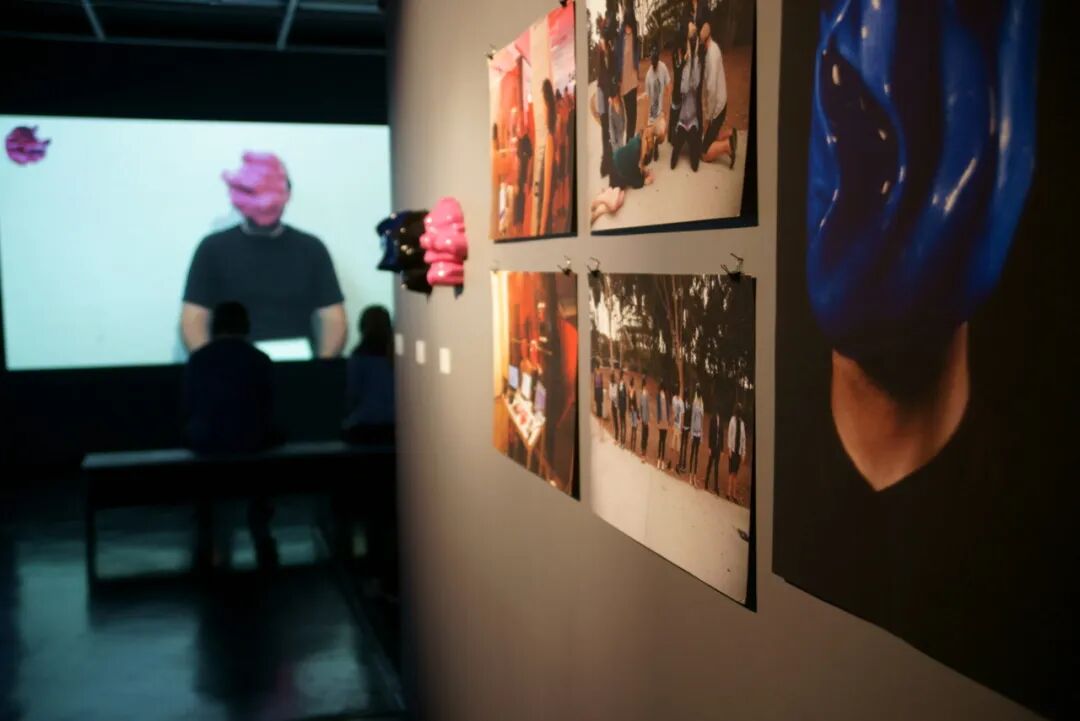
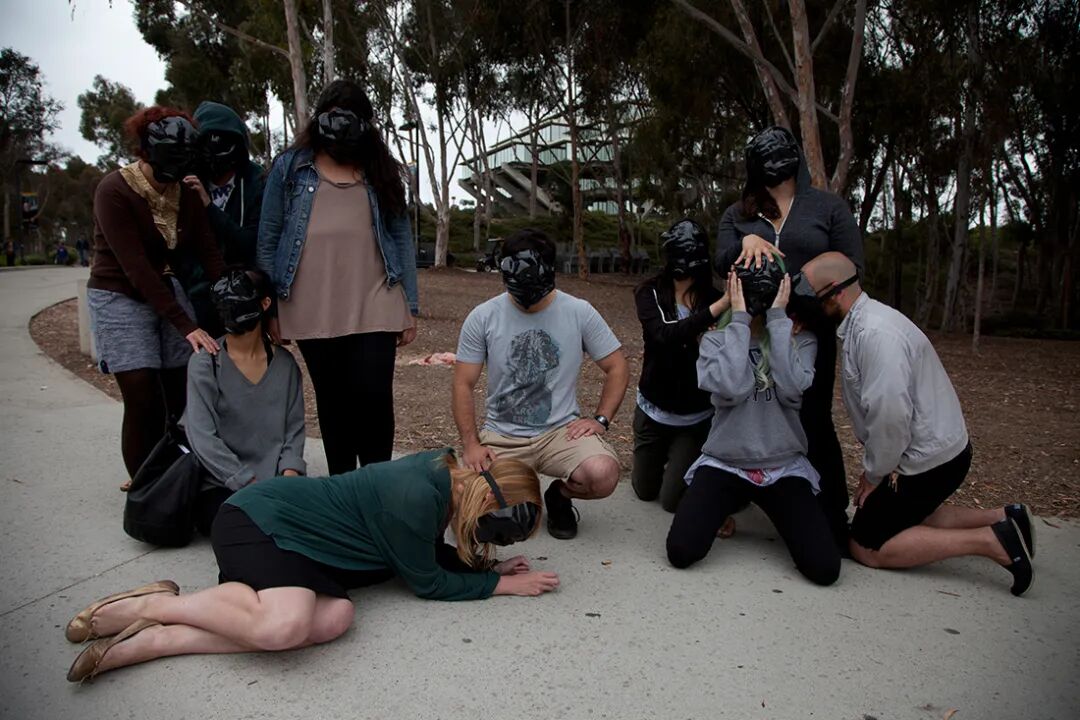
1. Collective resistance and anonymisation: Facial Weaponization Suite comprises a series of ‘collective masks.’ These masks are not for hiding individual identity; rather, they are formed by aggregating, distorting and deforming the facial data of multiple participants (usually members of a specific community, such as queer groups). Wearing these dehumanised, grotesque masks aims to interfere with and combat facial-recognition algorithms, preventing accurate identification and tracking of the individual. This strategy emphasises the importance of collective action in resisting ubiquitous surveillance, and achieves a certain anonymity by creating an ‘unreadable’ face.
2. Queering and abnormalising: Blas often deploys the subversive strategies of queer theory, using ‘queerness’ as a means to resist normalising power. The grotesque form of the masks is itself a challenge to the standard facial model, intimating a refusal of the identity-sameness the algorithm seeks to impose.
3. Performance and workshops: The making of Facial Weaponization Suite is usually accompanied by workshops and performances. In the workshops, participants jointly discuss the problems brought by biometric technology and take part in the data-collection and fabrication of the masks. The subsequent performances then demonstrate the ‘use’ of these masks in public space, emphasising the participatory and activist nature of the art.
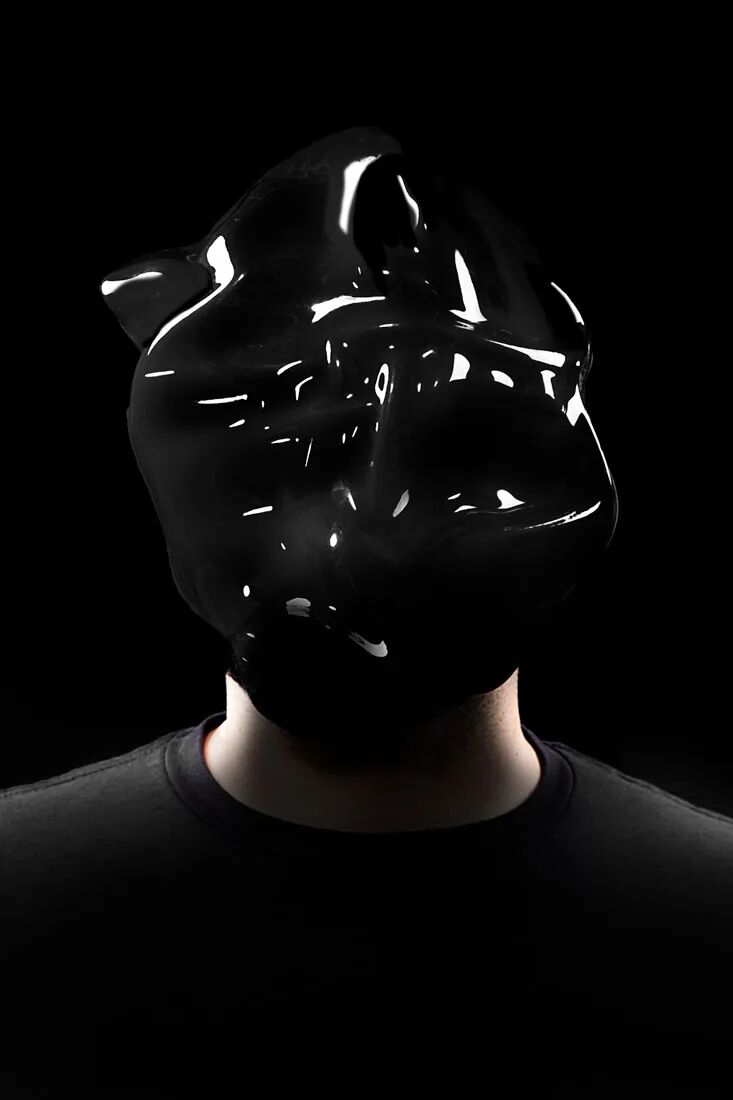
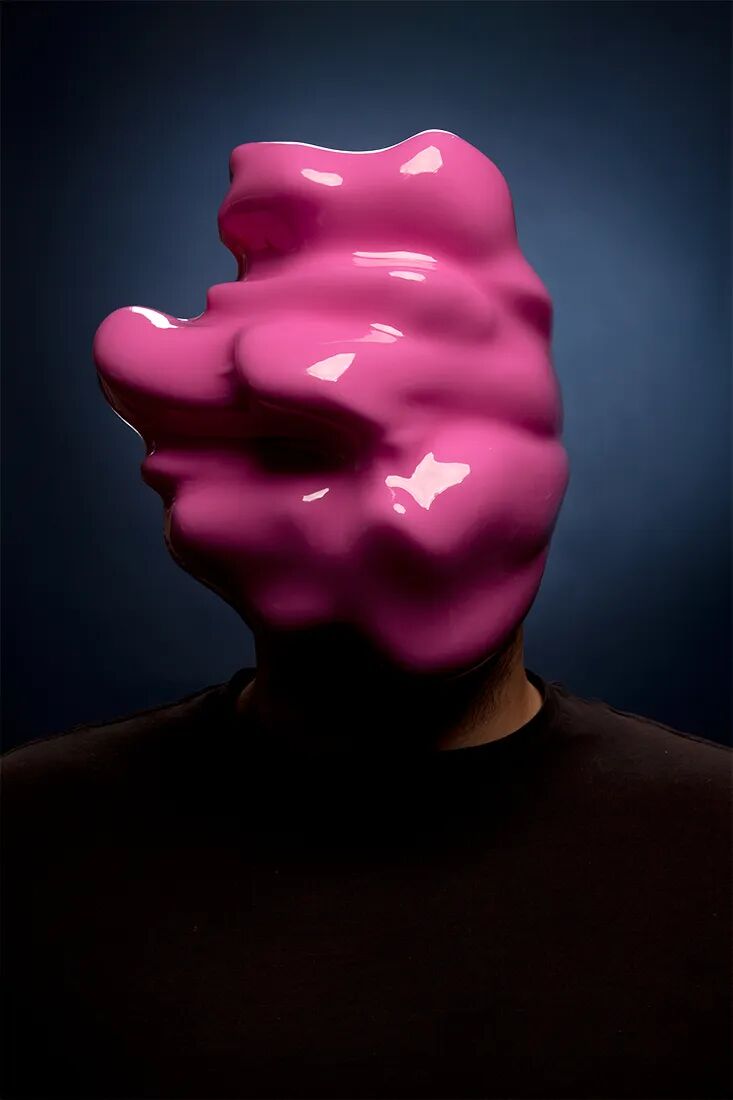
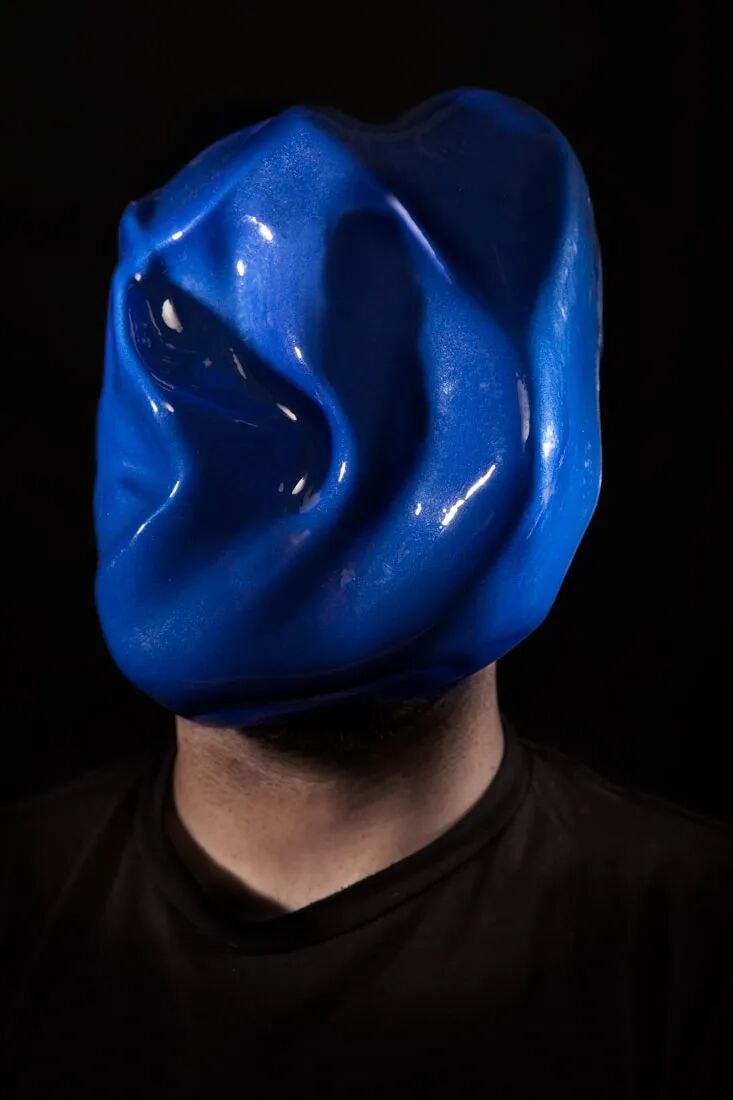
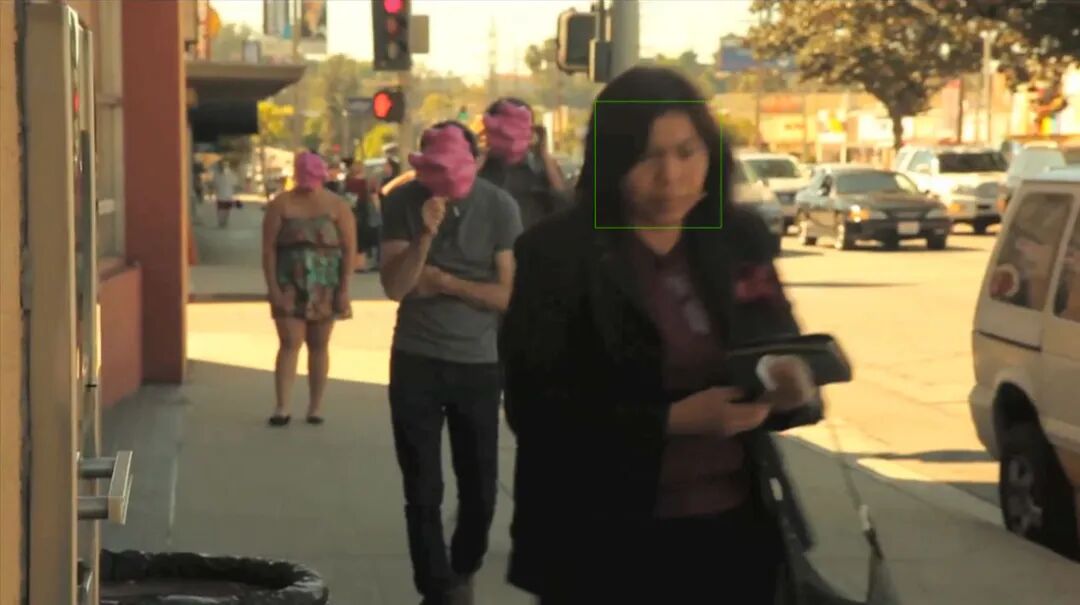
4. Critical writing and theory-building: Blas not only makes artworks but also undertakes extensive theoretical writing and research; his artistic practice is tightly bound to his scholarly thinking. He writes to analyse the political economy behind surveillance technology, algorithmic bias and the possibilities of resistance strategies.
Background and influence:
Zach Blas creates at a moment when facial-recognition technology is moving from the laboratory to mass application and spreading rapidly across security, finance, social media and other fields. Simultaneously, anxieties over this technology’s violation of privacy, its algorithmic bias (lower recognition rates for people of colour and women) and its use for social control and oppression are intensifying. With his deep insight into the politics of biometric technology and his radical posture of resistance, Blas’s work has exerted significant influence in both contemporary art and technology critique. He not only exposes the latent harms of surveillance technology but, more importantly, attempts through art to construct concrete, empowering tools and strategies of resistance. His practice has inspired other artists and activists to consider how to use technology and art to challenge unjust power structures, and provides a forceful case for applying queer theory and cyborg theory in contemporary technology critique. His work surpasses mere critique, manifesting a positive, generative posture of resistance.
10. Adam Harvey
Representative works: ‘CV Dazzle’ (computer-vision camouflage), ‘HyperFace’ (super-face), ‘MegaPixels: A Critical Analysis of Facial-Recognition Datasets’ (e.g. the improper labelling of individuals in training datasets)
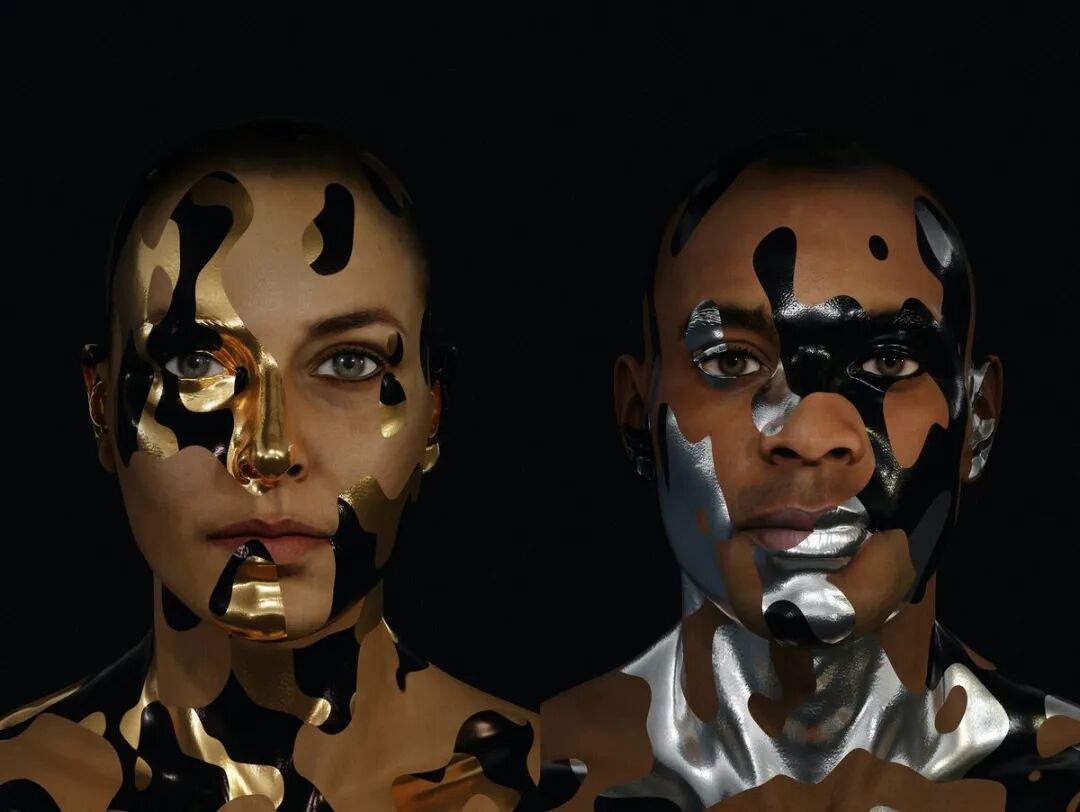
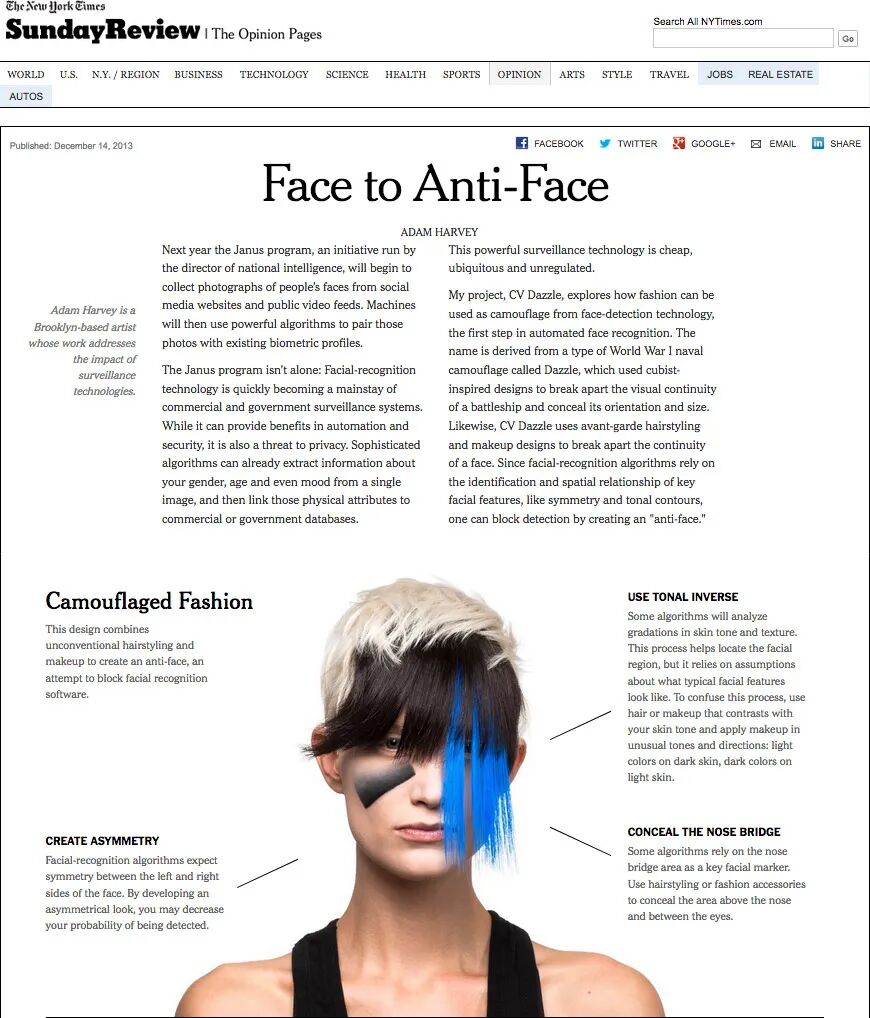
Adam Harvey is an artist and researcher whose work focuses on computer vision, facial recognition, data surveillance and their social impact. His core motivation lies in exposing the operating mechanisms, latent biases and abuse-risks behind these technologies, and in exploring the possibility of countering surveillance and protecting personal privacy through technical and design means. Harvey is deeply concerned with ‘how machines look at humans’ and how this looking is exploited by power. He does not stop at critique but devotes himself to developing ‘counter-surveillance’ strategies and tools that ordinary people can understand and use, emphasising individual agency and technological autonomy. Through his projects he hopes to raise public awareness of how surveillance technology operates and to inspire reflection on a fairer, more transparent technological future.

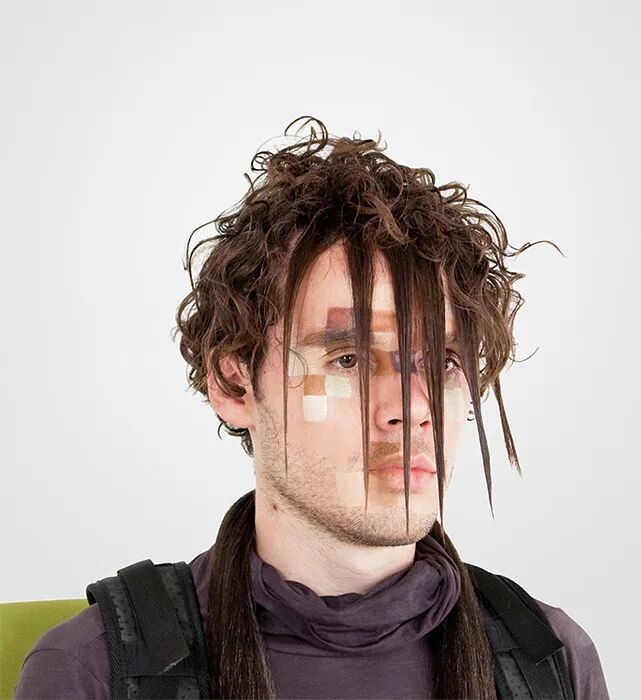
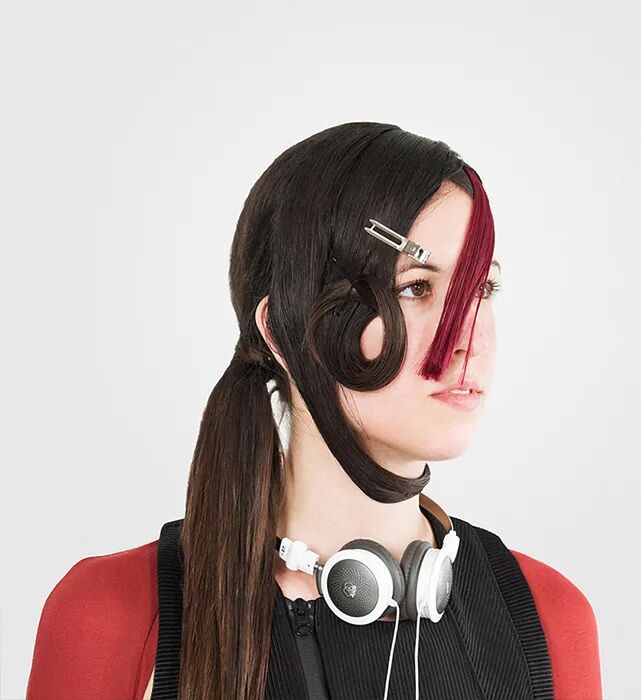
Computer-vision camouflage: it disrupts computer-vision algorithms’ recognition of the human face through facial make-up; though the look is wild, it is said to work well.
Artistic strategies:
Harvey’s artistic strategies are typically a combination of research orientation, technical intervention and pragmatism:
1. Technical countermeasures and strategy development: ‘CV Dazzle’ is among his best-known projects. It is not a single artwork but a strategy that uses specific make-up and hairstyle patterns (inspired by the ‘dazzle camouflage’ of First World War warships) to confuse and interfere with facial-recognition algorithms. By creating, in key areas of the face, contrasts, occlusions or geometric shapes the algorithm cannot easily parse, it lowers the accuracy of facial recognition. This strategy has a certain practicality and has been widely discussed and imitated.


2. Adversarial design: The ‘HyperFace’ project is another countermeasure. It prints, onto clothing or textiles, large numbers of carefully designed patterns that facial-recognition algorithms readily read as ‘faces’ (though they may be only abstract combinations of eyes, noses, mouths). When the target person wears such clothing, it generates around them a great deal of ‘fake face’ noise, making it hard for the algorithm to lock accurately onto the real target amid the many ‘potential faces.’ This is an adversarial design of ‘using multitude to defeat the few.’
3. Data investigation and visualisation: In projects such as ‘MegaPixels,’ Harvey investigates in depth the large image datasets used to train facial-recognition models (such as the celebrity-face datasets or the more controversial street-capture datasets used by NIST, IARPA, IBM, Microsoft, Google and others), exposing the copyright problems, privacy violations and improper labelling of individuals within them (for example, marking people as ‘terrorist suspects’ based on appearance, or sorting them by racial and gender stereotypes). He presents these findings visually, enabling the public to grasp intuitively the sources of algorithmic bias.
4. Open source and education: Harvey often shares his research results and developed tools in open-source form, and actively participates in workshops and lectures to disseminate knowledge of computer vision and counter-surveillance to the public.
Adam Harvey’s work is closely bound to the rapid development and wide application of computer-vision technology (especially deep-learning-driven facial recognition). While these technologies bring convenience, they also raise serious concerns over mass surveillance, algorithmic bias, identity control and privacy violation. With his deep understanding of technical detail and creative counter-strategies, Harvey’s work has exerted significant influence across art, design, technology and activism. He is regarded as a representative figure in the fields of ‘adversarial design’ and ‘critical engineering.’ His projects have not only inspired other artists and designers to explore the possibilities of technical resistance but offered ordinary members of the public some (albeit possibly limited) ideas and tools for protecting their own privacy. More importantly, his work promotes public discussion of algorithmic transparency, data ethics and responsible technology development. He makes us aware that technology is not neutral; its design and application carry specific values and power relations, and the individual and society can intervene creatively to influence the direction of technological development.
11. Laura Poitras
Representative work: Citizenfour (2014) (documentary)
Risk (2016) (documentary, on Julian Assange)
My Country, My Country (2006) (one of an Iraq War trilogy), as well as some installation works, such as a surveillance-related installation shown at the Whitney Biennial.
Citizenfour (2014) (documentary), trailer
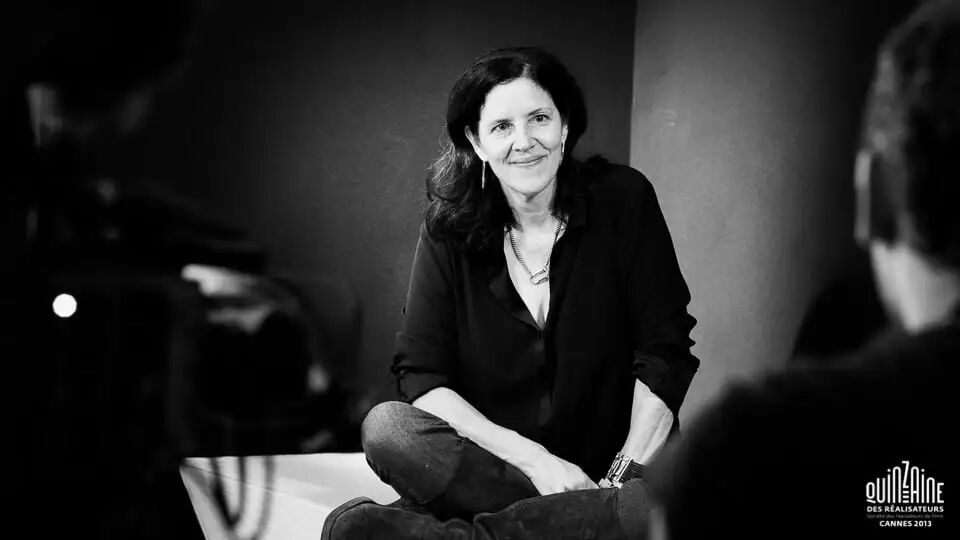
Laura Poitras is an award-winning documentary director and journalist whose work is renowned for its in-depth investigation and courageous exposure of such major issues as state power, war, surveillance and civil liberties. Her core motivation lies in using the power of the image to pursue truth, challenge official narratives and give a platform to those in a weak position within asymmetrical power relations (whistle-blowers, war victims). On the theme of the ‘surveillance society,’ her work—especially Citizenfour—arises directly from a deep anxiety over and strong critique of the large-scale, secret surveillance programmes implemented globally by the United States and its allies after 9/11. She holds that this unconstrained surveillance power gravely erodes the foundations of democracy and the basic human rights of the individual.
Risk, trailer
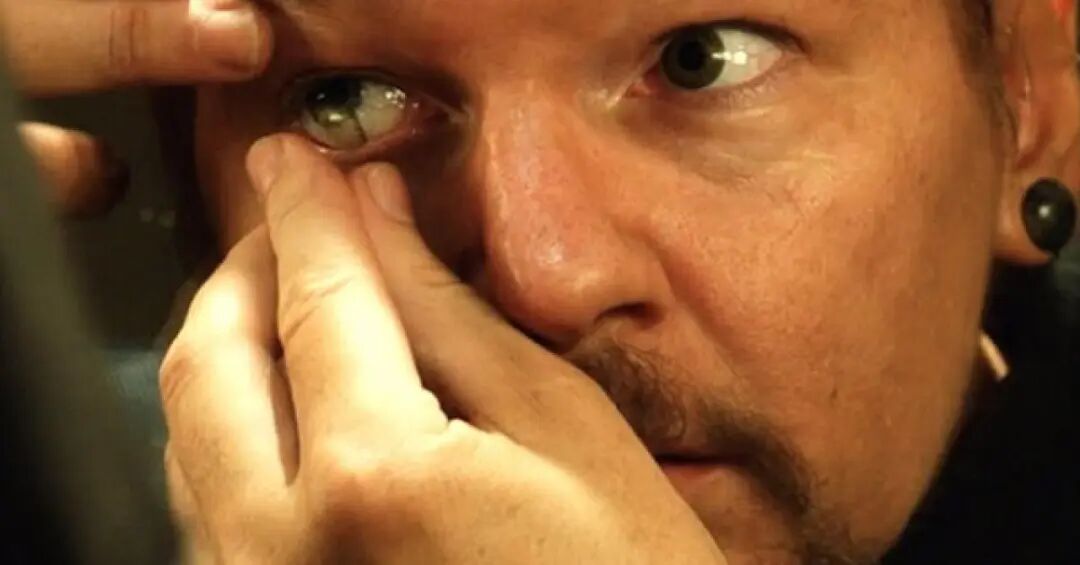
Risk (2016), shot over six years, is a character study entangled with a high-stakes election year and its contested aftermath. Julian Assange was trapped inside a small building for five years; even though the legal perils he faced threatened to undermine the organisation he led and the movement he inspired, he was not deterred. In capturing this story, the director Laura Poitras found herself caught between the motives and contradictions of Assange and his inner circle.—Real Art Ways
Artistic strategies:
Poitras’s artistic expression is realised chiefly through the documentary medium; her strategies combine journalistic rigour with artistic insight:
1. In-depth investigation and first-hand record: Her work is often based on long-term, deep research. While filming Citizenfour, she was among the few journalists and directors who personally contacted and recorded Edward Snowden as he exposed the NSA’s mass-surveillance programme in Hong Kong. The film draws viewers, in a near-real-time, suspenseful manner, into the heart of the event, showing the immense risk and pressure borne by the whistle-blower.
2. Her documentaries often adopt the style of direct cinema or cinéma vérité, minimising the director’s sense of intervention and letting events and people speak for themselves. Through a calm, objective camera language, the film’s authenticity and persuasiveness are enhanced.
3. A systematic critique of power structures: Poitras’s work does not merely focus on individual stories but strives to reveal the systemic abuse of power and institutional problems behind these individuals’ experiences. Through her presentation of surveillance technology, legal loopholes and the operating methods of intelligence agencies, she constructs a holistic critique of the state surveillance apparatus.
4. The fusion of the documentary and the artistic: Although her work is strongly journalistic and documentary, Poitras also attends to narrative rhythm, visual composition and sound design, so that her films, while conveying information, also possess high artistic appeal and intellectual depth. Some of her works are also exhibited as installation art in art spaces such as museums, further expanding the dimensions of her expression.
5. Ethical self-awareness and the acceptance of risk: Her work often engages highly sensitive and dangerous subjects, demanding not only superb professional skill but a strong ethical awareness and the courage to bear personal risk.
Background and influence:
Laura Poitras’s work, especially Citizenfour, appeared at a moment when global awareness of and discussion about mass surveillance reached its peak. The Snowden affair profoundly changed the public’s understanding of privacy and state power in the digital age. Her documentary not only won numerous international awards including the Academy Award for Best Documentary Feature, but, more importantly, presented to a global audience, as never before, the operational details of the state’s highest-level surveillance and the difficult plight of the whistle-blower, exerting a tremendous and far-reaching influence on public cognition and policy debate. Poitras’s work is regarded as a model of contemporary investigative journalism and political documentary; with her sustained courage and deep insight she holds fast to the stance of supervising and criticising power. Her work transcends the bounds of traditional art, becoming an important instrument of social mobilisation and public education that inspires more people to attend to and participate in the defence of civil rights and digital freedom. She demonstrates the immense energy that the image, as both art and record, can unleash in revealing truth and confronting power.
12. Ge Yulu
Representative work: ‘Ge Yulu’ (performance art: privately naming an unnamed Beijing street, later included in official maps, 2017), as well as other performance-art projects involving bodily intervention, public space and the challenging of rules.
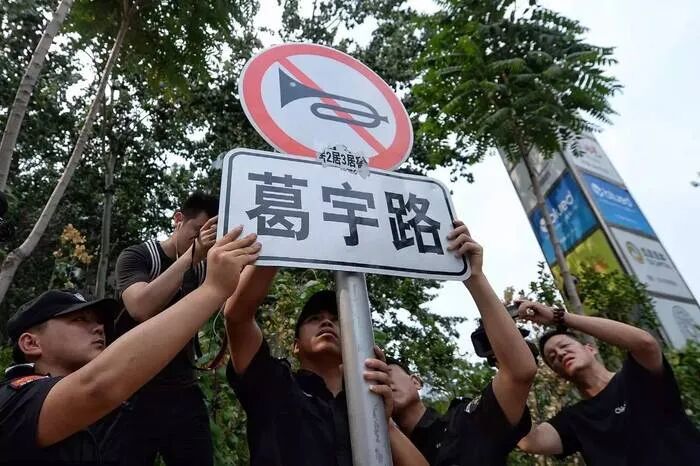
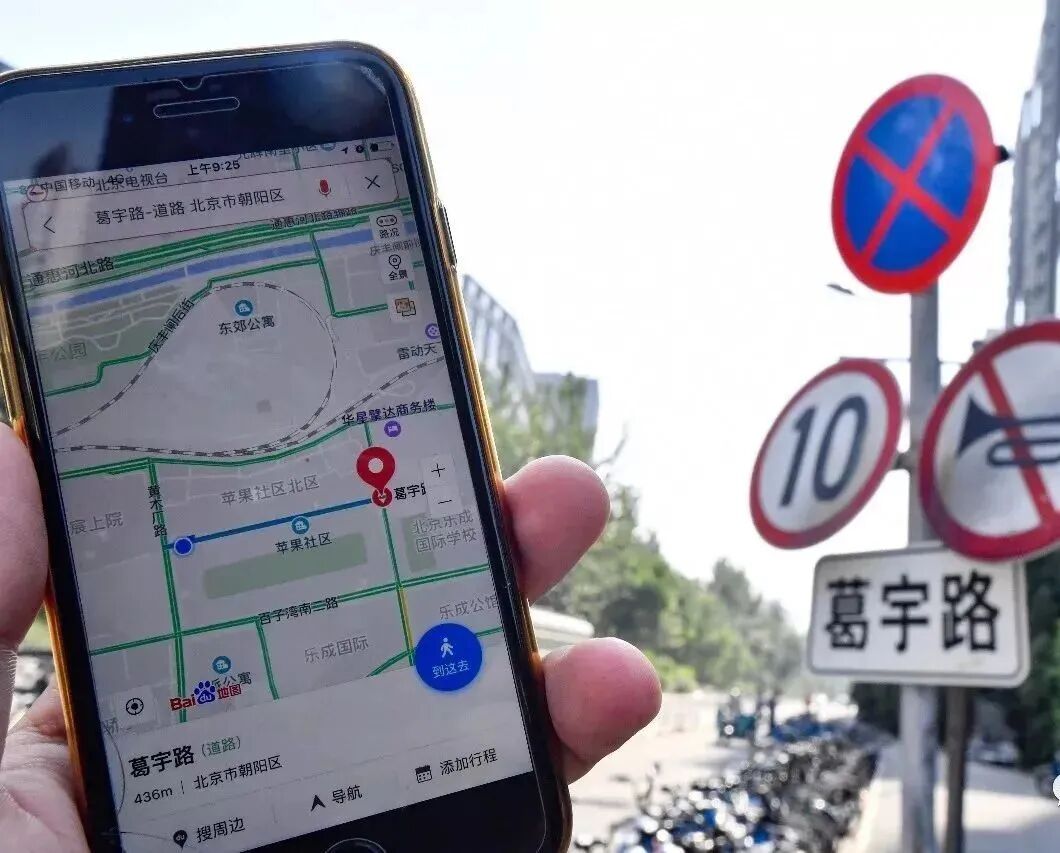
Ge Yulu is a Chinese contemporary artist adept at performance and conceptual art, whose work often intervenes in public space and existing social-rule systems through humour, mockery and even a touch of ‘provocation,’ prompting reflection on urban management, the operation of power, individual identity and the boundary between art and life. Although not all his works take ‘surveillance’ as their sole theme, his famous ‘Ge Yulu’ incident and some of his practices touch on how, in a highly disciplinarian and potentially monitored social environment, the individual can assert subjectivity and challenge established order through creative ‘action,’ and in the process interact with various management systems (including surveillance in the broad sense—urban information systems such as cartography and place-name administration).
His core motivation may lie in exploring the individual’s sense of existence within the vast, anonymous urban machine and bureaucratic system, and in questioning and ‘teasing’ through artistic action those rules and powers that seem beyond doubt—and, in this process, blurring the boundary between monitor and monitored, manager and managed, practising a broad ‘counter-surveillance’ or ‘guerrilla’ philosophy of existence.
Ge Yulu’s artistic strategies display the following distinctive characteristics:
1. Direct bodily intervention and activism: His works often take the artist’s body as the principal medium, accomplished through some seemingly ‘outrageous’ or ‘non-conformist’ action in public space—for instance, personally making and installing a street sign, then observing how things develop.
2. Exploiting system loopholes and the ambiguous zones of rules: The success of the ‘Ge Yulu’ incident lay partly in his clever exploitation of possible loopholes or grey areas in the then map-information collection and place-name administration systems. Rather than directly confronting the system, he interacted with it in an ‘embedded’ or ‘parasitic’ manner.
3. Concept before form: His work emphasises the generation and dissemination of concept; the physical form (such as the sign itself) is the vehicle of the concept, while the entire event’s unfolding, media coverage, public discussion and official response all become integral parts of the work. This embodies what he calls ‘the gaze upon the predicament’—bringing a certain social difficulty or absurdity into relief through artistic action.
4. The balance of humour and provocation: Ge Yulu’s work often carries a black humour and mild provocativeness. He does something ‘outrageous’ in a seemingly ‘dead-serious’ manner; this very disparity constitutes the tension of the work.
5. A broad understanding of ‘surveillance’: If we understand ‘surveillance’ as the recording, disciplining and managing of space, information and behaviour, then Ge Yulu’s performance art can be seen as a ‘reverse operation’ or ‘perturbation’ of this broad surveillance. Through actively ‘marking’ and ‘naming,’ he, to a degree, participates in and even rewrites the official ‘surveillance’ record (such as the map).
Background and influence:
Ge Yulu’s performance practice unfolded against the backdrop of China’s rapid urbanisation, increasingly refined urban management and highly developed internet information dissemination. Owing to its singularity and topicality, the ‘Ge Yulu’ incident triggered phenomenal-level spread and discussion on social media, and drew the attention of mainstream media and relevant administrative bodies. The incident not only made Ge Yulu himself famous; more importantly, in a vivid and controversial manner, it inspired broad public reflection on the right to name cities, the use of public space, the relation between the individual and the urban-management system, and even the intervention of art in society. His work is regarded as a highly representative case among China’s younger generation of artists, showing how they respond to complex social reality with flexibility, wit and criticality. With his singular practice, Ge Yulu points directly at the potential dissolution of subjectivity by technology and rules, and, in a ‘using four ounces to deflect a thousand pounds’ manner, opens up space for individual expression and action within seemingly rigid systems. His work reminds us that, even in a highly disciplinarian society, the individual’s creativity and ‘guerrilla’ wisdom can still produce unexpected ripples.
13. Marcus DeSieno
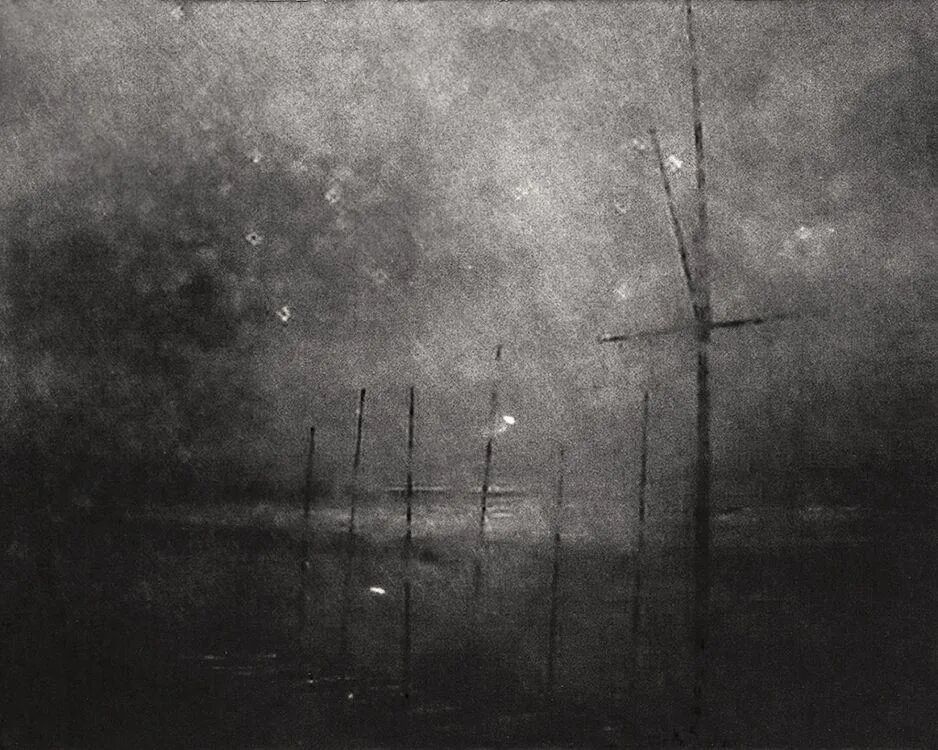
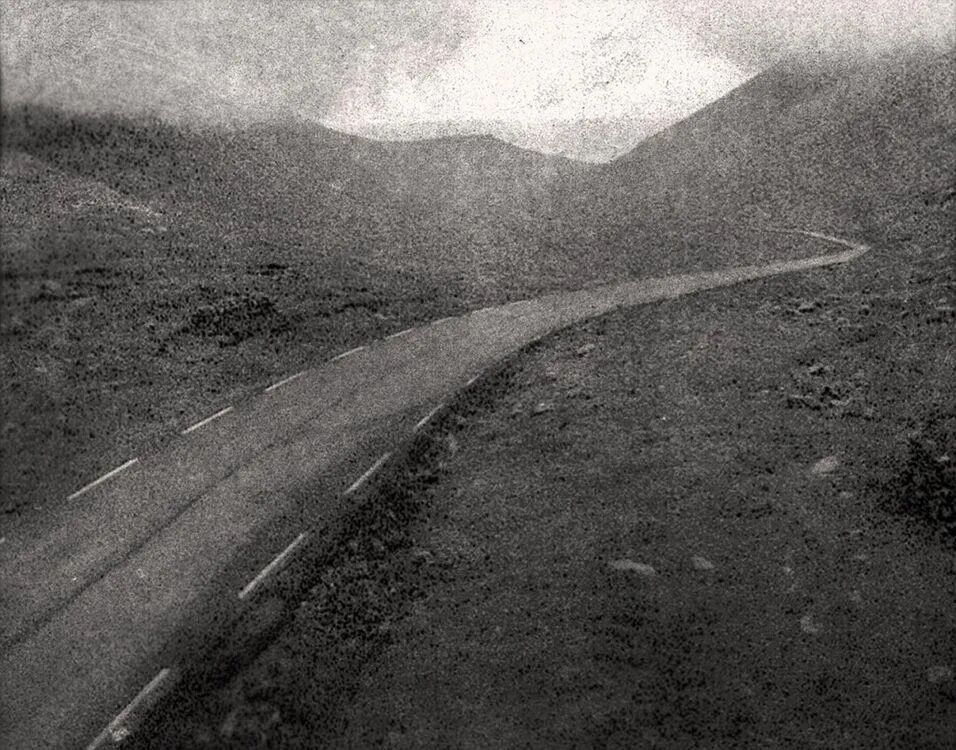
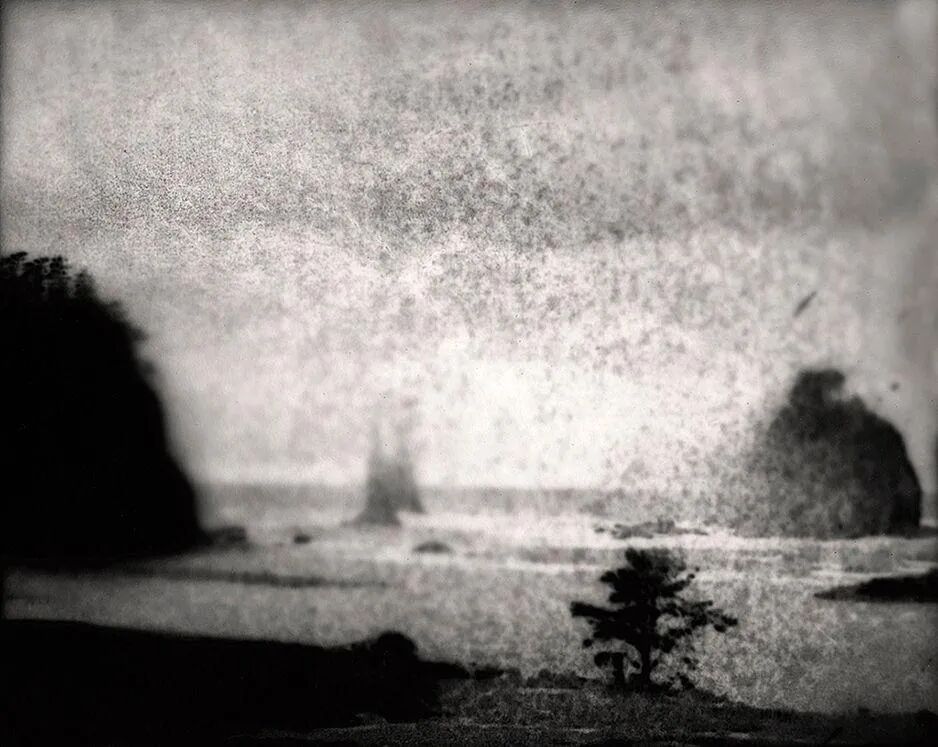
Representative works: Surveillance Landscapes (2017), Cosmos (possibly a work on the cosmos or data using similar techniques), Parasitic Webcam Project
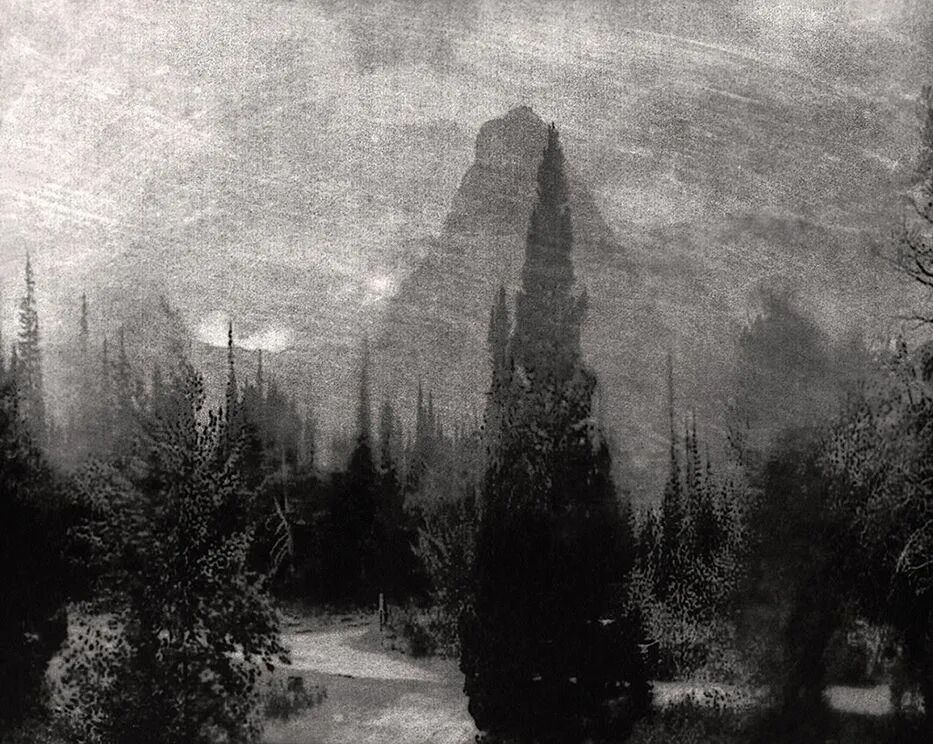
Surveillance Landscapes (2017)
Artist’s statement: To make this work, I technically accessed surveillance cameras, public webcams and CCTV feeds in pursuit of ‘classical,’ picturesque landscapes. The resulting visual products are detached from their automated origins and lead to an investigation of land, borders and power. The very act of investigating a place through these photographic systems implies a dominant relation between human and place. Ultimately, I hope to subvert these social-control programmes through my blurred, melancholic images—images discovered while exploiting the mechanisms of power-technics within our surveillance society.
Marcus DeSieno is an American artist and photographer whose practice centres on exploring the relations between photography, technology (especially surveillance technology and networks) and power, privacy and cognition. In his representative Surveillance Landscapes series, the core motivation is to obtain images through an unconventional technical means—‘breaching’ or exploiting unprotected or vulnerable public webcams around the world—and to use them as material for landscape photography. Through this he seeks to reveal problems at several levels:
First, the ambiguity and vulnerability of public and private space in the network age;
Second, how the surveillance camera, as an omnipresent ‘eye,’ alters our perception and experience of space, even to a degree ‘colonising’ our visual cognition;
Third, by transforming these instrumental images—usually for security or recording—into artworks with classical aesthetic import, he explores the power of looking, the appropriation of the image, and the ‘aestheticisation’ or ‘spectacularisation’ of surveillance itself.
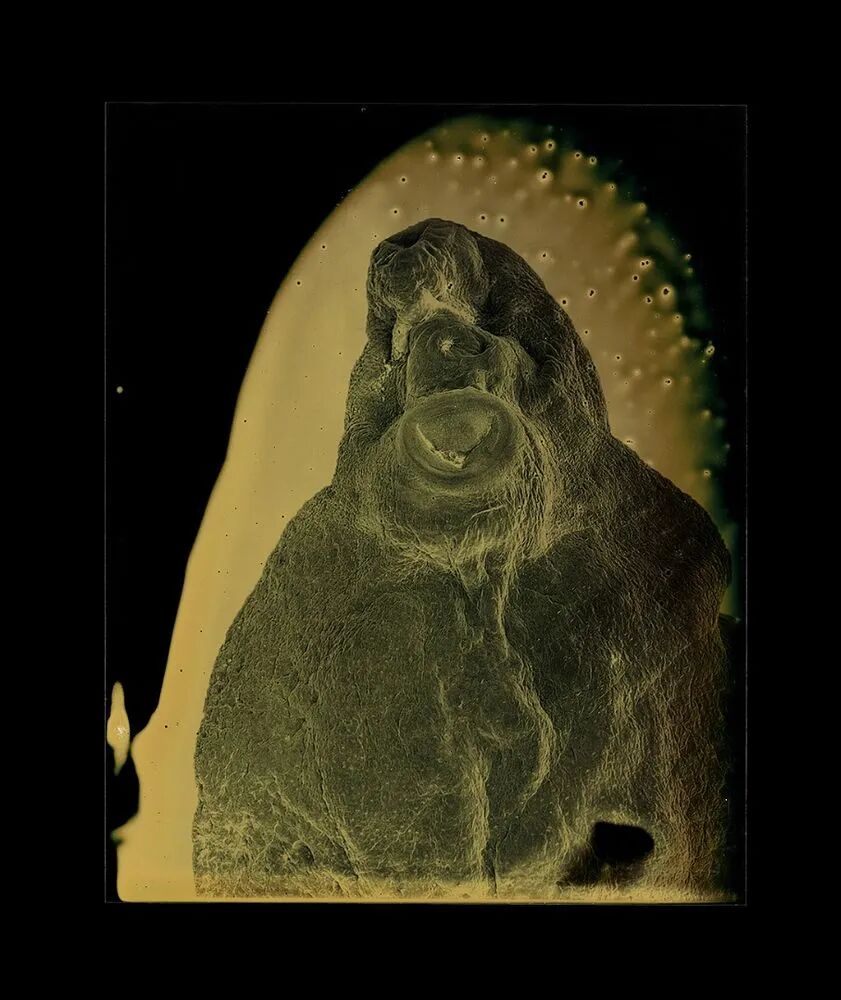
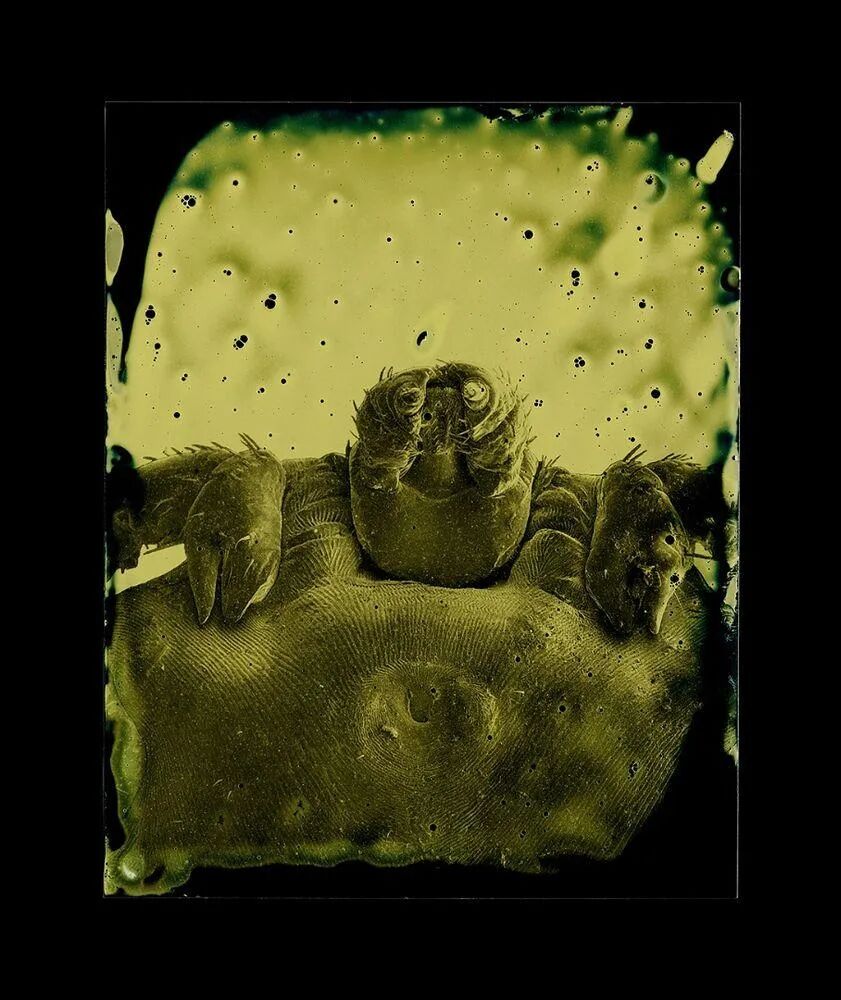
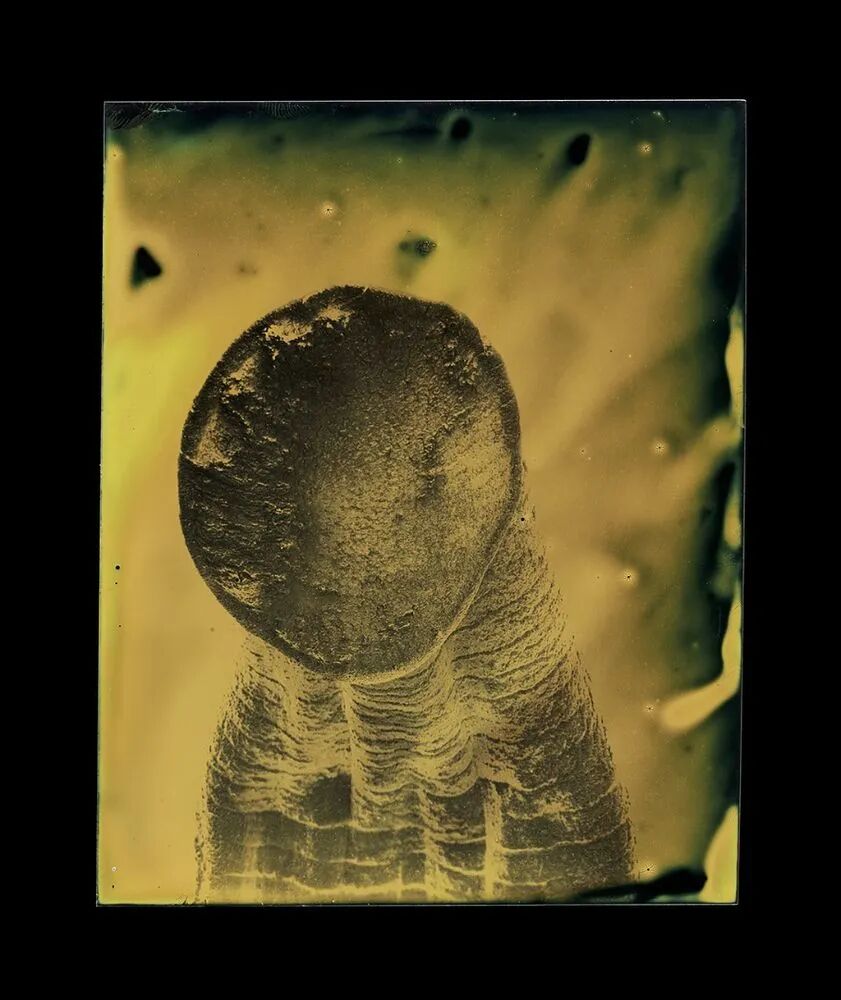
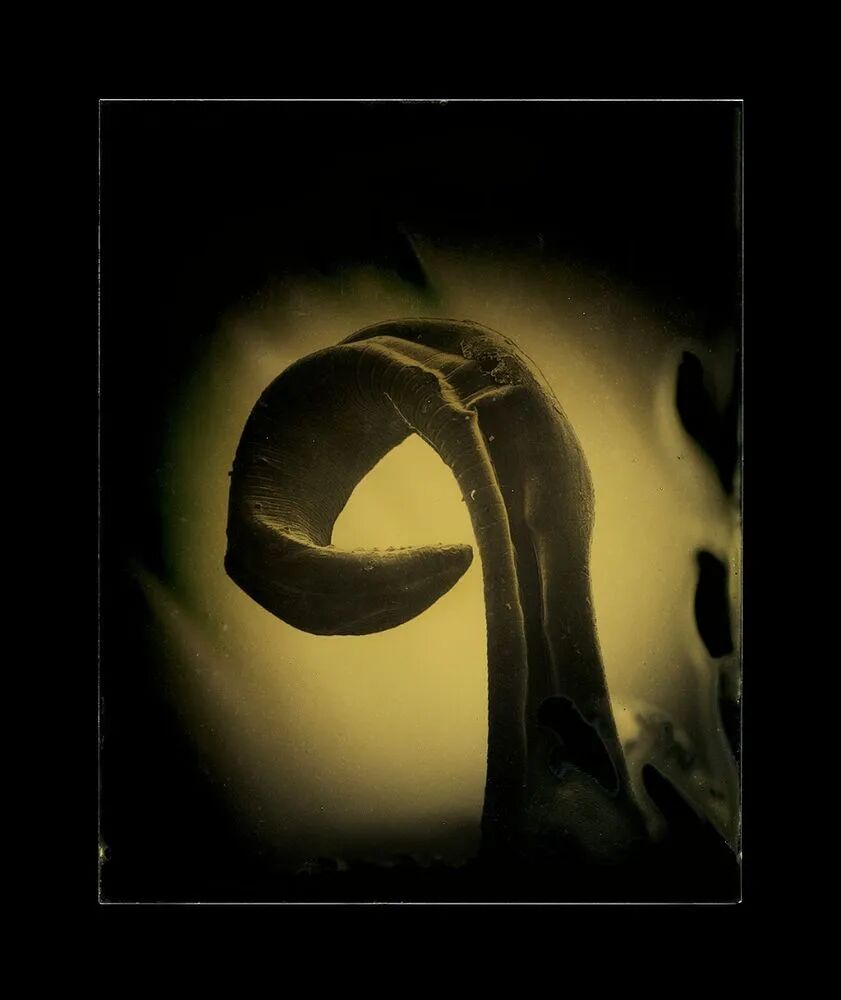
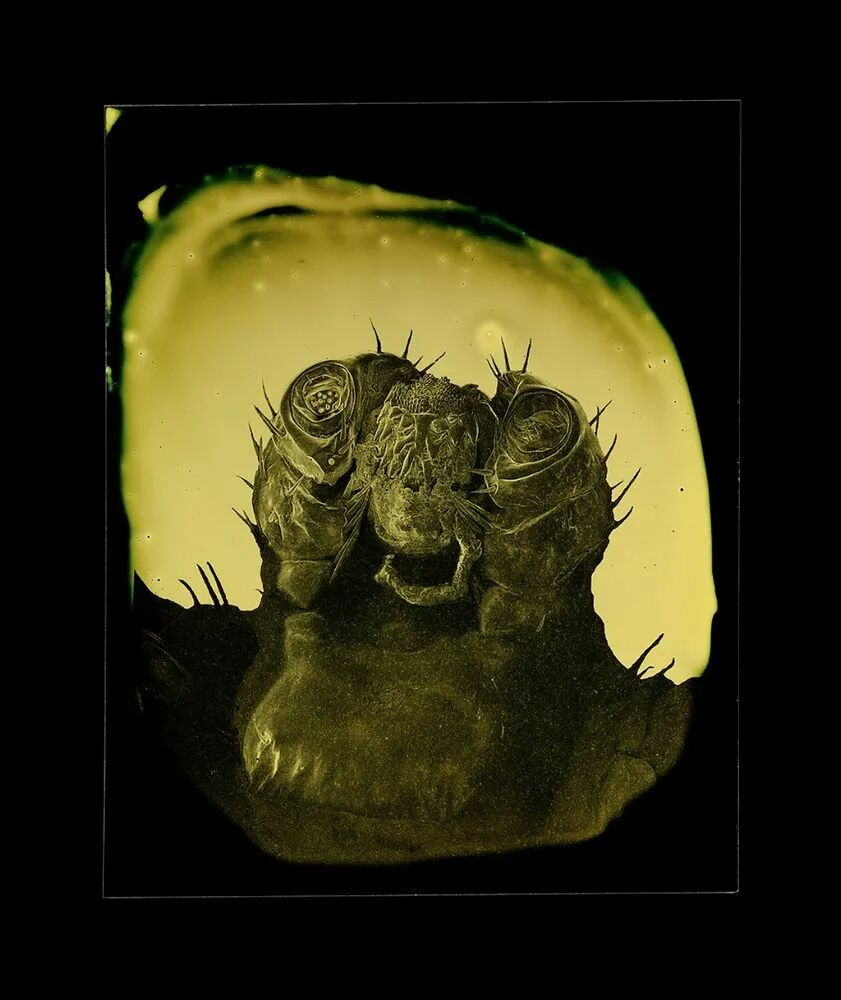
Parasitic Webcam Project
Artistic strategies:
DeSieno’s artistic strategies blend the deployment of technical means, the borrowing of traditional photographic aesthetics and a conceptual critique:
1. Technical intrusion and the singularity of image-acquisition: By writing specific software scripts or using existing network tools, he scans and accesses public webcams (IP cameras) with no password protection or using default passwords. These cameras may be located anywhere in the world, capturing streets, parks, buildings, natural scenery and various scenes. This method of image-acquisition itself carries a certain ‘intrusiveness’ and reveals technical vulnerabilities.
2. The appropriation and irony of classical aesthetics: DeSieno takes these surveillance images—obtained through irregular channels, usually low-resolution and rough—and, through post-processing (converting to black-and-white, adding grain, creating a hazy atmosphere, and so on), renders them with the classical aesthetic features of nineteenth- or early-twentieth-century landscape photography (in the manner of Ansel Adams). This aesthetic ‘elevation’ forms a tension and irony with the ‘low’ or ‘intrusive’ origin of the images. On the one hand it lends these everyday surveillance frames a defamiliarised, epic visual feel; on the other it may be hinting at how surveillance itself is ‘beautified’ or ‘normalised.’
3. Reflection on the power of ‘looking’: Through this method the artist makes public (in the form of artworks) images that originally only a few—such as the camera’s owner or manager—could see; this in itself is a redistribution and discussion of the power of ‘looking.’ At the same time, while appreciating these ‘landscapes,’ viewers may also become aware of the watched subjects hidden behind the images and the latent privacy issues.
4. Exposing the ‘totem of power’: He regards the ubiquitous camera as a contemporary ‘totem of power’—not merely a recording tool but a symbol of the gaze of power. By aestheticising the images these totems produce, he seeks to make people more deeply aware of the existence of this gaze and its impact on our lives.
Background and influence:
DeSieno works against the backdrop of the rapid development of Internet-of-Things (IoT) technology and the mass deployment of networked cameras in public and private space. Yet many such devices have weak security protections, leaving hidden dangers of hacking and privacy leakage. With his distinctive technical point of entry and controversial means of image-acquisition, his work has sparked debate on network security, digital privacy, surveillance ethics and the boundaries of artistic creation. His practice not only reveals the pervasive existence of technical vulnerabilities but forces people to ask: as our lives are ever more exposed under various ‘network eyes,’ how are we to define the boundary between public and private? Who has the right to look? Whose looking is legitimate? His work challenges the notions of traditional landscape photography, binding it tightly to the technological reality and power relations of contemporary society, and offers us a new perspective for reflecting on the visual culture of the surveillance age.
14. Banksy
Representative work: One Nation Under CCTV (2008) (street graffiti), along with other graffiti works scattered in various places on the themes of surveillance, power and rebellion.
Note: The CCTV in Banksy’s work stands for Closed Circuit Television (surveillance system).
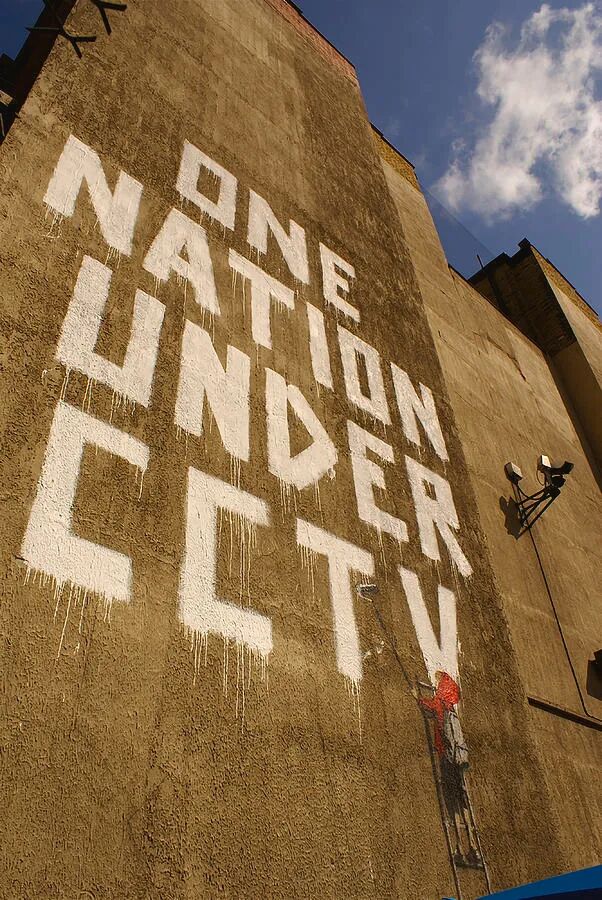
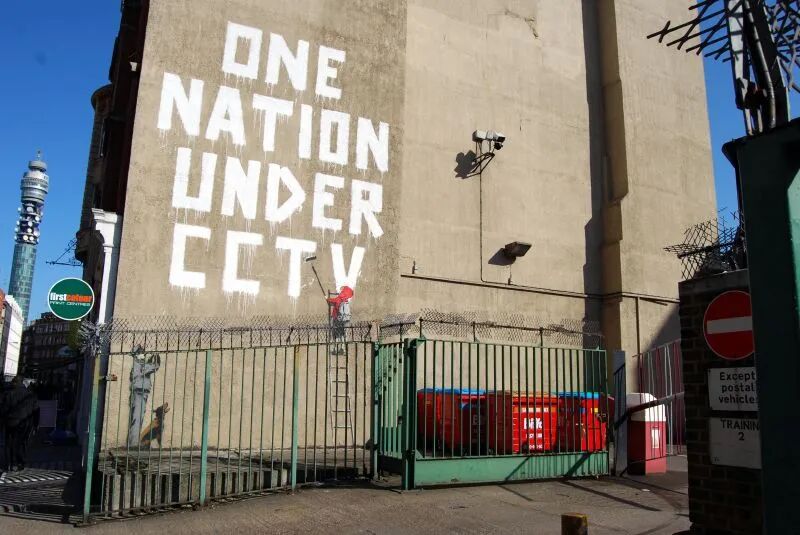
The artwork ‘One Nation Under CCTV’ was created by the artist Banksy in 2008. This graffiti belongs to the conceptual-art and street-art movements, renowned for its bold statement against surveillance. The piece depicts a child painting the large white, regular-script words ‘ONE NATION UNDER CCTV’ on a wall. Set against an urban environment, the scene includes various elements—surveillance cameras, fences, ladders—that supplement information about social monitoring. The figure of the child in red clothing adds a striking visual focus, juxtaposing innocence with rebellion. The work embodies Banksy’s signature style of using street art to comment on contemporary social issues.
Banksy is among the world’s most famous and most enigmatic street artists, his work known for its caustic satire and subversive commentary on political, social and cultural phenomena. In One Nation Under CCTV—a large graffiti work in central London (later removed)—his core motivation lies in directly criticising what was then considered the world’s densest CCTV surveillance network in Britain, and the erosion of civil liberties and social atmosphere by such ubiquitous monitoring. Through his signature stencil-graffiti method, Banksy issues the public a warning about the expansion of state surveillance power in a manner at once direct and rich in black humour. He is concerned with how power (especially state power) uses surveillance to maintain order and control dissent, and with the helplessness and sense of violation ordinary citizens feel under this ‘panoptic surveillance.’
Expressive strategies:
Banksy’s artistic strategies are highly public and subversive; their core lies in the immediacy, anonymity and critical edge of street art:
1. Intervention in public space and visual impact: He chooses to create on the walls of urban public space, so that the work can be seen directly by the widest public, thereby generating strong visual impact and social topic. Graffiti itself is a challenge to the ‘legitimate’ use of urban space, bearing a natural rebelliousness.
2. Stencil graffiti and signature style: Banksy usually employs pre-made stencils for rapid spraying, enabling him to complete complex images in a short time while remaining anonymous. His imagery is simple, high-contrast, and highly recognisable and transmissible.
3. The combination of direct slogans and symbolic imagery: In One Nation Under CCTV, a detective-like figure in a trench coat and bowler hat (symbolising secret police or watcher) films with a camera, while beside him a child, head tilted back, rolls the giant slogan ‘ONE NATION UNDER CCTV’ onto the wall with a paint roller. Another, better-known version shows a policeman and a child filming each other beneath a CCTV camera. This combination of image and text points straight to the theme.
4. Black humour and satire: The scene of the policeman and cyclist (or child) filming each other, together with the slogan ‘One Nation Under CCTV’—a parody of ‘One Nation Under God’ (the nation under God, often used in the American Pledge of Allegiance)—is full of black humour and satire. It not only deconstructs the solemnity and one-directional nature of surveillance power (hinting that citizens too may gaze back or record power) but suggests that surveillance in Britain has become an all-pervasive ‘new normal’ akin to a creed.
5. The choice of specific sites: Banksy often chooses locations related to the work’s theme, to enhance its site-specificity and critical force. That One Nation Under CCTV was created in London—a city known for its high-density surveillance—makes its target unmistakable.
Background and influence:
Banksy created this work at a time when Britain’s large-scale deployment of CCTV was highly controversial, and the balance between its crime-prevention efficacy and its violation of citizens’ privacy was widely debated. With his acute social insight and distinctive artistic language, Banksy successfully transformed this complex social issue into a deeply resonant visual symbol. His work transcends the walls of traditional art museums, dialogues directly with the public, and has triggered extensive media coverage and sustained social attention. Although the legality of street graffiti is disputed and his works often face erasure, Banksy’s influence only grows. He is regarded as one of the most influential political artists of our time; his works not only fetch high prices on the art market but, more importantly, inspire critical thinking worldwide on consumerism, war, poverty, environment and state power. On the surveillance theme, Banksy shows us, in his singular way, how art can intervene in public discussion and challenge power through a ‘guerrilla,’ populist manner.
15. Paolo Cirio
Representative works: Iris (2021), Attention (2020) (on the online attention economy and algorithmic manipulation), Obscurity (2016) (helping cyberbullying victims remove their personal information from search-engine results)
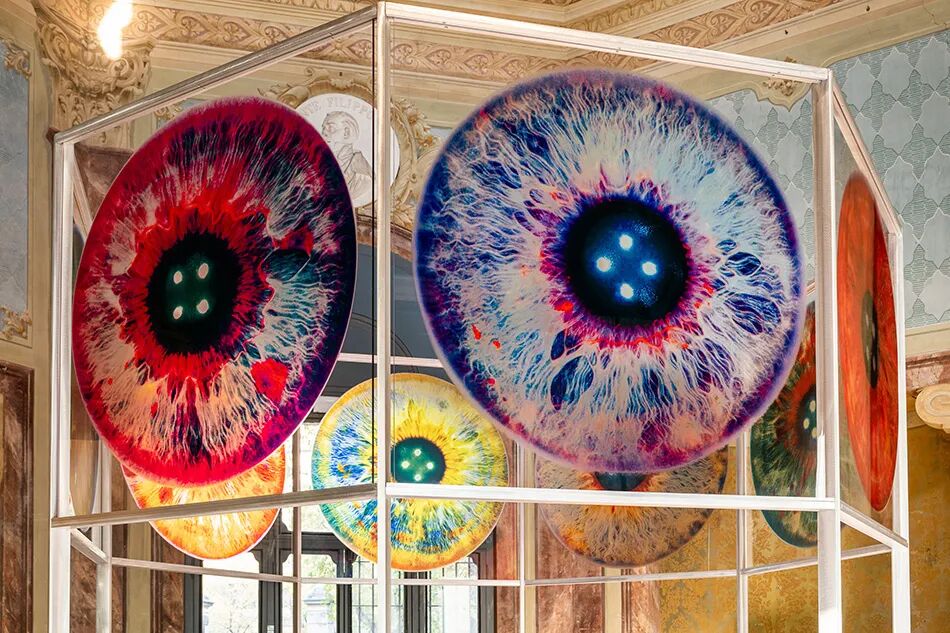
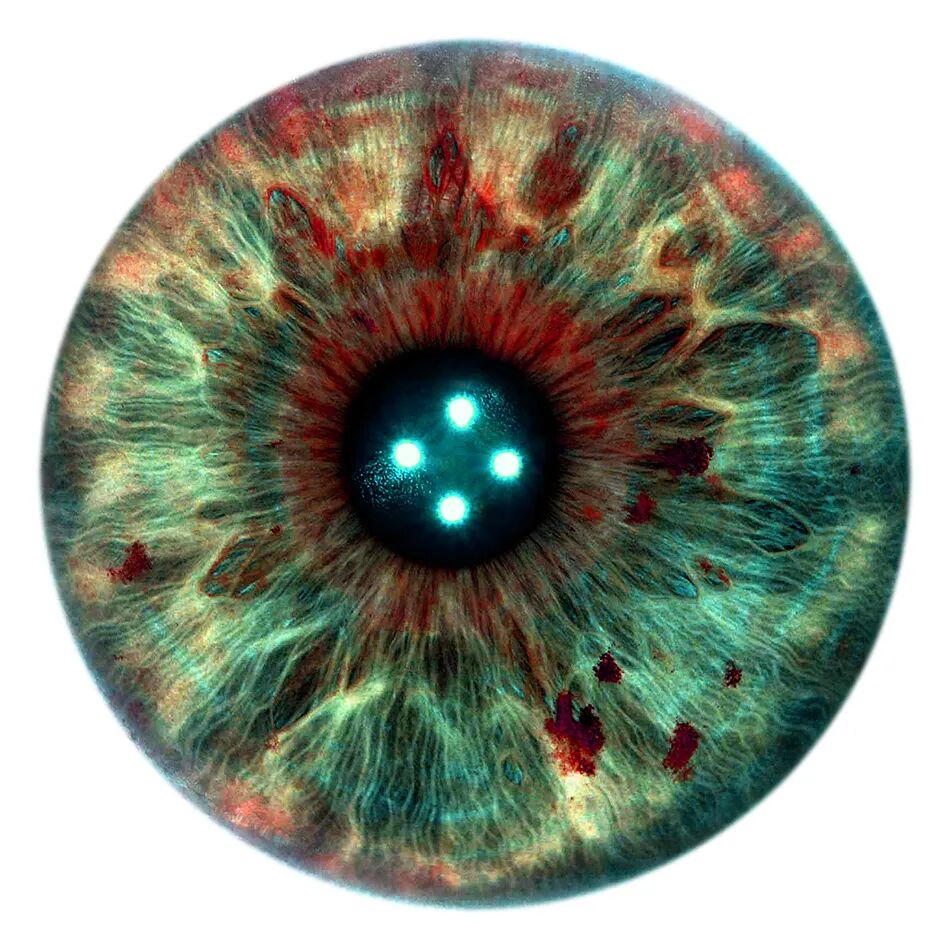
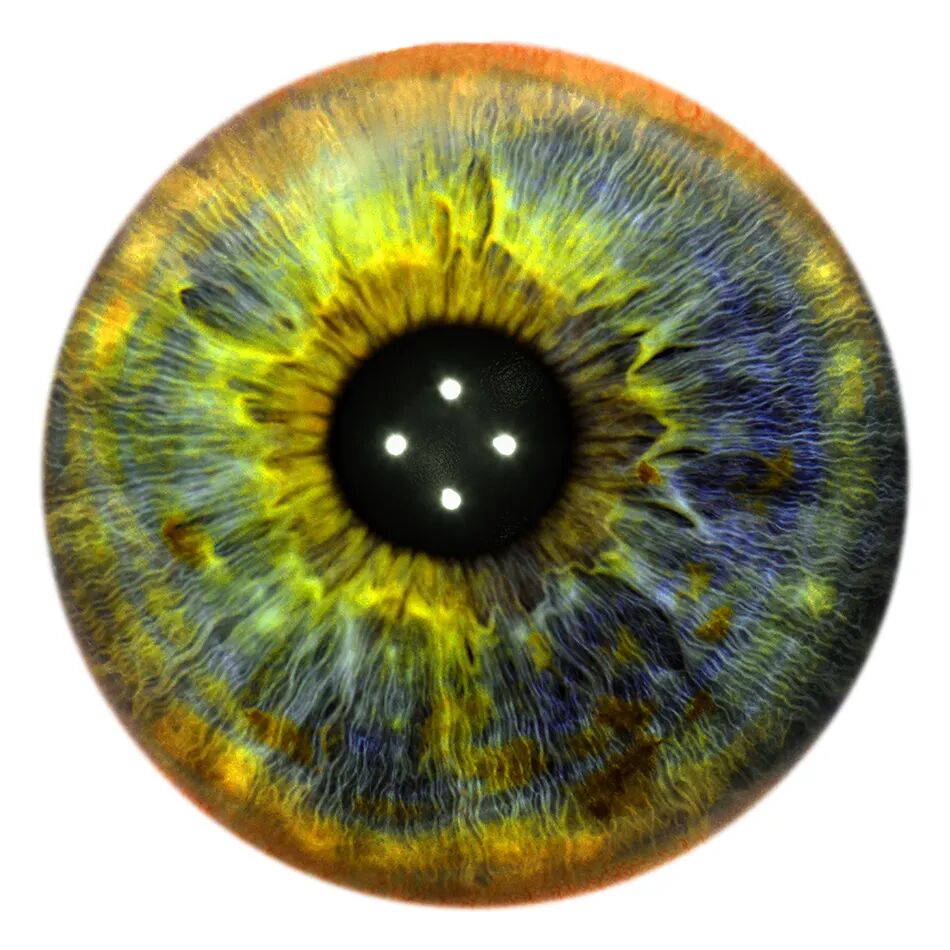
This work is the artist’s research into the biometric technology used to analyse the human iris. Iris recognition identifies the individual by scanning the iris; it is the most accurate of biometric technologies, even more so than fingerprint and facial recognition. The technology is often used by government agencies that require special identification of individuals such as immigrants, prisoners and impoverished communities. In India, for instance, the government has scanned and recorded the irises of over one billion people. In this artwork, the artist uses iris photographs taken from scientific research to develop the technique, then alters the colours and details of the photos to study an attack that confuses iris recognition. The installation features a panoptic tower bearing eight modified iris photographs, evoking a conscious state of visibility in which the acts of watching and being watched are potentials within everyone’s reach.
Paolo Cirio is an Italian conceptual artist, hacker and activist whose work has long sought to expose and criticise the hidden power structures, social-control logics and violations of individual rights behind digital technology, internet platforms and AI systems. His core motivation lies in intervening in and disrupting these systems through artistic practice, challenging the monopoly of tech capital and data hegemony, and exploring technology’s potential to advance social justice and individual empowerment. On surveillance, he attends not only to the monitoring of physical space but penetrates multiple levels—biometric technology (Iris, Captured), algorithmic governance (Attention), data privacy (Obscurity). He strives to make seemingly abstract and technical problems visible and discussable through concrete artistic projects, and to stir the public’s critical awareness and will to act.
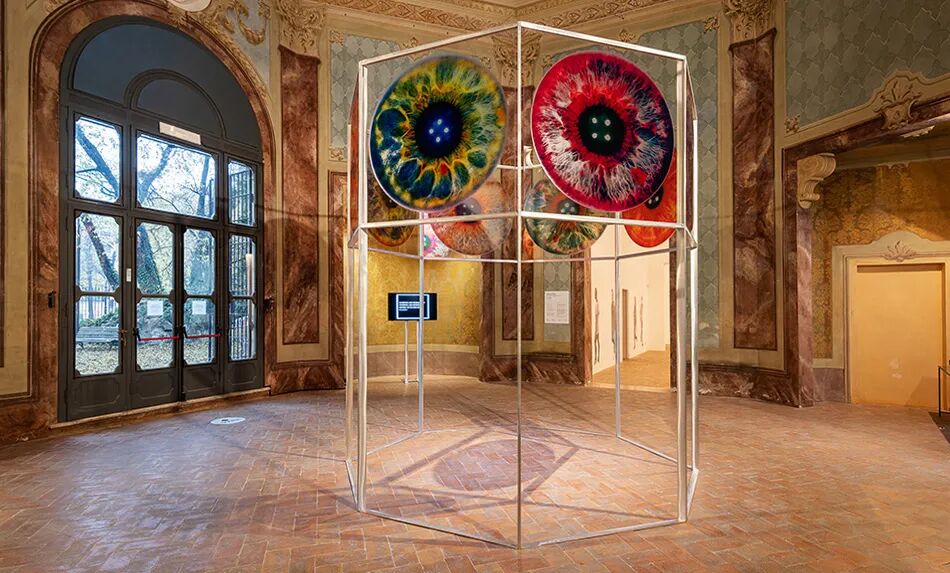
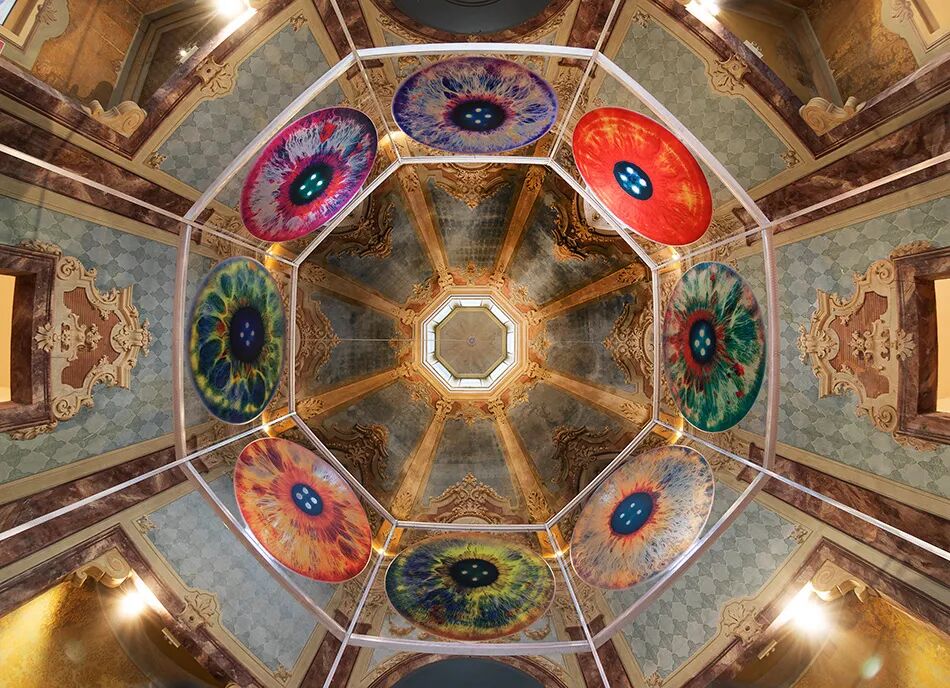
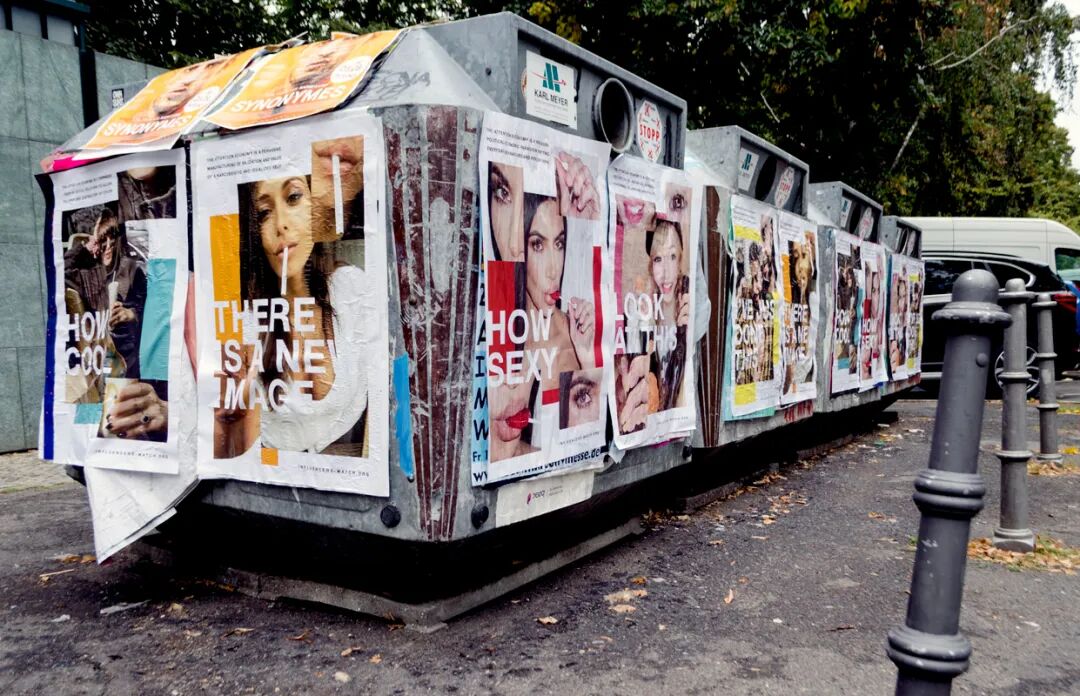
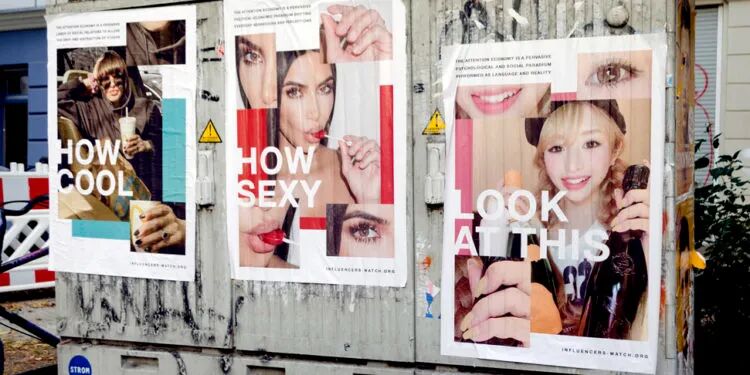
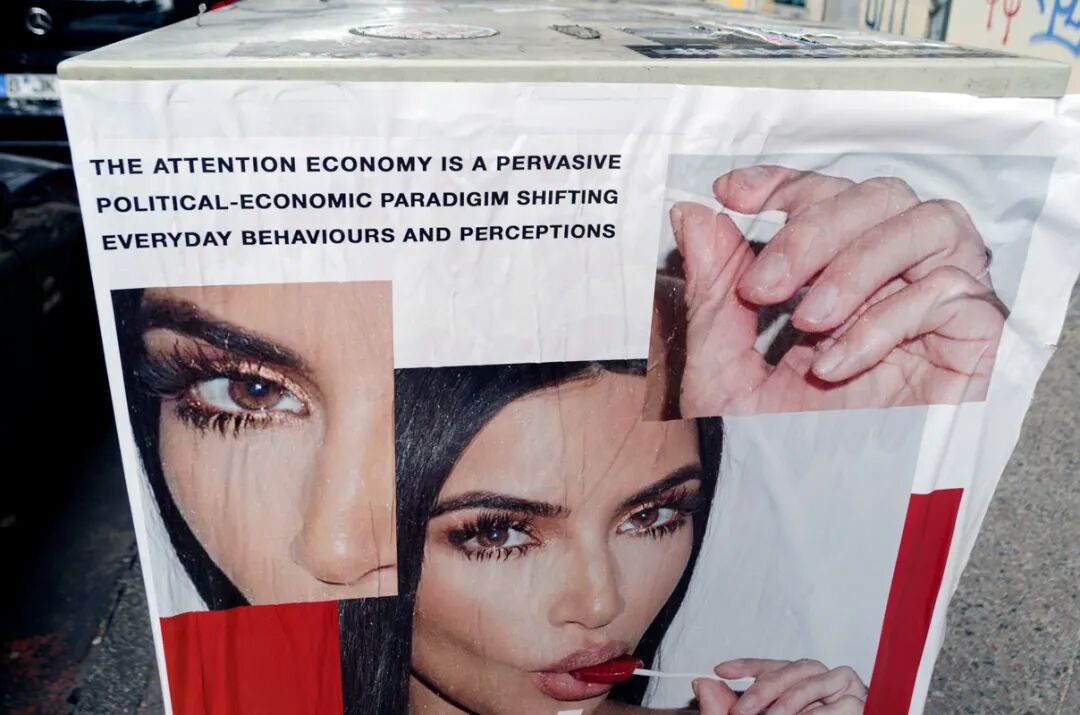
This series of images draws on celebrities and micro-influencers as evidence of deceptive advertising, illustrating the visual means used to capture attention. False advertising manufactured through algorithm and attention.
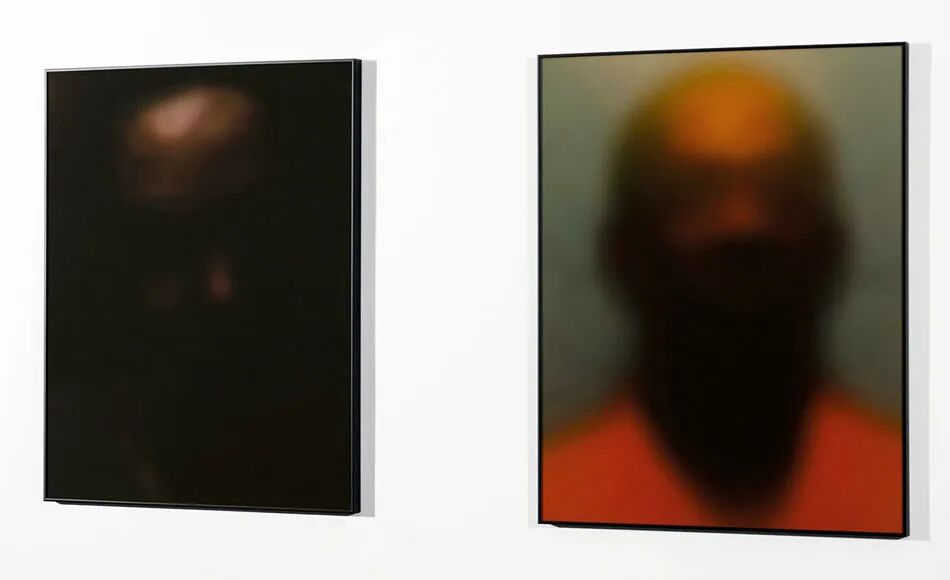
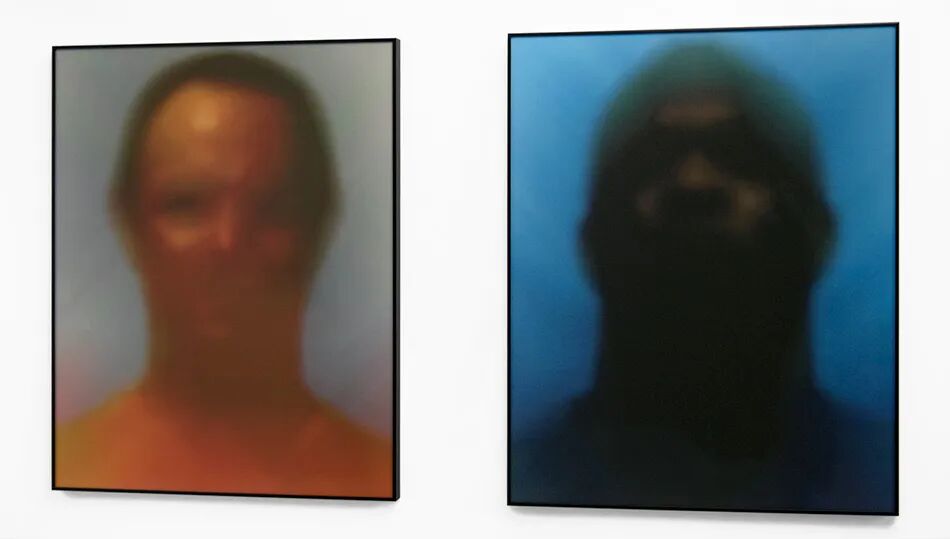
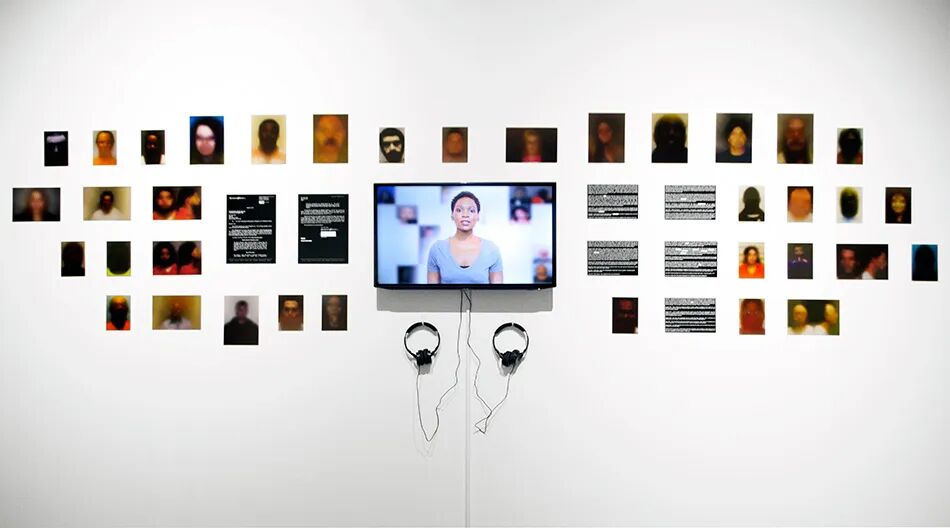
This artwork comprises over 15 million facial photographs of people arrested in the United States. By cloning six mugshot websites, blurring the images and altering the metadata, it obfuscates these sites’ criminal records. A participatory function lets people judge the arrested individuals by deciding whether to keep or delete the records on the mugshot sites. The artwork drew legal threats from the mugshot-site owners and the support of victims of mugshot extortion. The artist explores the emotional foundations of information ethics and the unappealing reputations exposed on the internet. Beyond reporting on mass incarceration, social experiments and performative hacking, the artist also devised an internet privacy policy that, through adaptation, advocates the legal right to remove personal information from search engines.
Artistic strategies:
Cirio’s artistic strategies display a distinct critical spirit, activist colour and conceptual provocativeness:
1. Technical intervention and system ‘abuse’: He often exploits existing technical vulnerabilities, public data or legal grey areas to ‘creatively abuse’ or ‘reverse-engineer’ large tech platforms or power systems. In the Captured project, for instance, he collected thousands of publicly available photographs of French police enforcing order during protests, used facial-recognition software to identify some of the officers, and exhibited their ‘portraits’ (blurred images generated by the algorithm) online—thus responding to the police’s use of facial recognition on demonstrators, forging a ‘turning their own method back upon them’ form of confrontation.
2. Combining fictional scenarios with real critique: In the large installation Iris, he symbolically ‘sabotages’ the biometric system with eight differently coloured iris photographs, and proposes a fictional solution—‘contact lenses capable of interfering with iris-recognition technology.’ This strategy, blending concrete installation and fictional narrative, both reveals the threat of biometric surveillance in reality and explores the possibility of resistance in an imaginative way.
3. Data activism and the development of empowerment tools: The Obscurity project is more practical; he developed a set of tools and strategies to help individuals subjected to cyberbullying or unfair treatment remove or ‘obscure’ their negative personal information from prominent positions in search engines, thereby reclaiming, to a degree, control over their digital reputation. This manifests his intention to empower vulnerable groups through art and technology.
4. Provocativeness and probing the legal boundary: Some of Cirio’s projects (such as his early manipulations of Google’s and Facebook’s data) often skirt the boundaries of law and ethics, sparking fierce debate on data ownership, privacy rights and the artist’s freedom of creation. This provocativeness is itself part of his artistic strategy, intended to expose the irrationality of the system.
Background and influence:
Paolo Cirio works against the backdrop of an era in which global digital surveillance, data capitalism and algorithmic governance are intensifying. With his direct challenge to technological power and controversial actions, his work has won wide attention in international contemporary art, hacker culture and digital-rights circles. He is regarded as a representative figure of ‘critical digital art’ or ‘hacker art.’ His influence lies in his not only exposing the mechanisms of digital surveillance and data exploitation but attempting, through concrete artistic action, to intervene, to change, to empower. His practice blurs the boundaries between artist, hacker, researcher and activist, showing us how art can become a potent instrument of social critique and political intervention. His works often provoke legal and ethical debate, which in itself advances society’s deeper reflection on the relevant issues. Cirio’s work inspires people to understand and challenge, more actively, the invisible forces that shape our digital lives.
16. Eva & Franco Mattes
Representative works: My Little Big Data (2019), Emily’s Video (2012), Let Them Watch (2016), and early works such as ‘Vaticano.org’ (a fabricated Vatican website), which challenge the authenticity and authority of online information.
My Little Big Data (2019), stills and exhibition view
The work is a 24-minute video essay, a DIY investigation of personal data analysis to create our ‘portrait.’ It is the result of a year-long collaboration with data investigator Vladan Joler, to whom we supplied thirteen years of private email metadata and several months of browsing history. Online, every move we make leaves an invisible trace in data. Analysed together, these traces can reveal very intimate details about us. Like the famous portal into John Malkovich’s head in Spike Jonze’s film, this video is a portal into our minds.
Eva & Franco Mattes (also known as 0100101110101101.ORG) are an Italian artist duo active in net art since the mid-1990s. Their work is renowned for its deep insight into and provocative intervention in internet culture, digital life, information dissemination and the ethical predicaments of the network age. In My Little Big Data, their core motivation lies in revealing how, in the digital age, the individual unconsciously and continuously produces vast personal data; how this data is collected, stored, analysed and exploited; and the profound impact of this ‘datafied existence’ upon individual privacy, identity and the collective unconscious. They are concerned with how, in seemingly convenient and free digital life, we are ‘monitored’ and ‘domesticated’ unknowingly, and how this invisible control is realised through internet infrastructure and commercial logic.
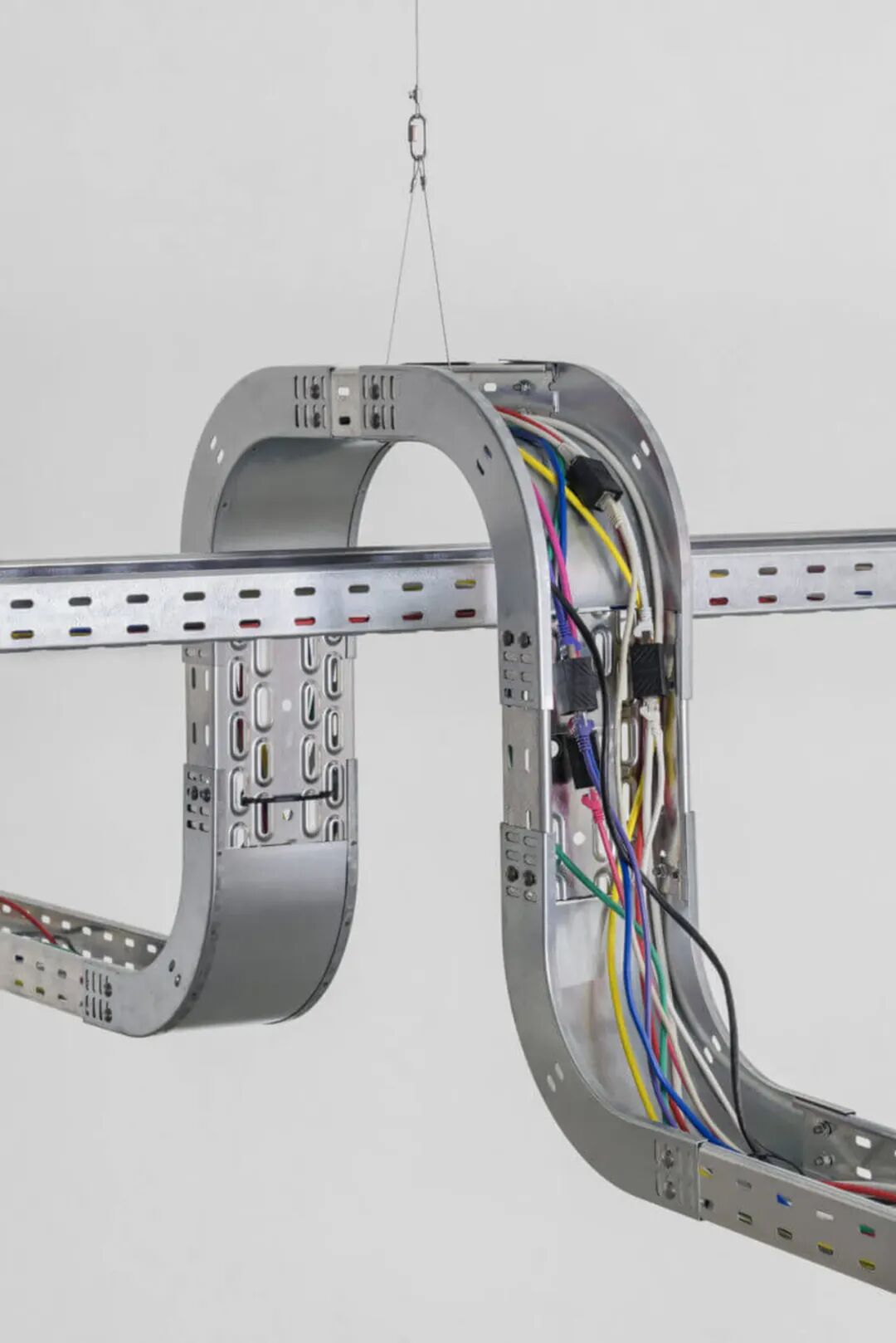
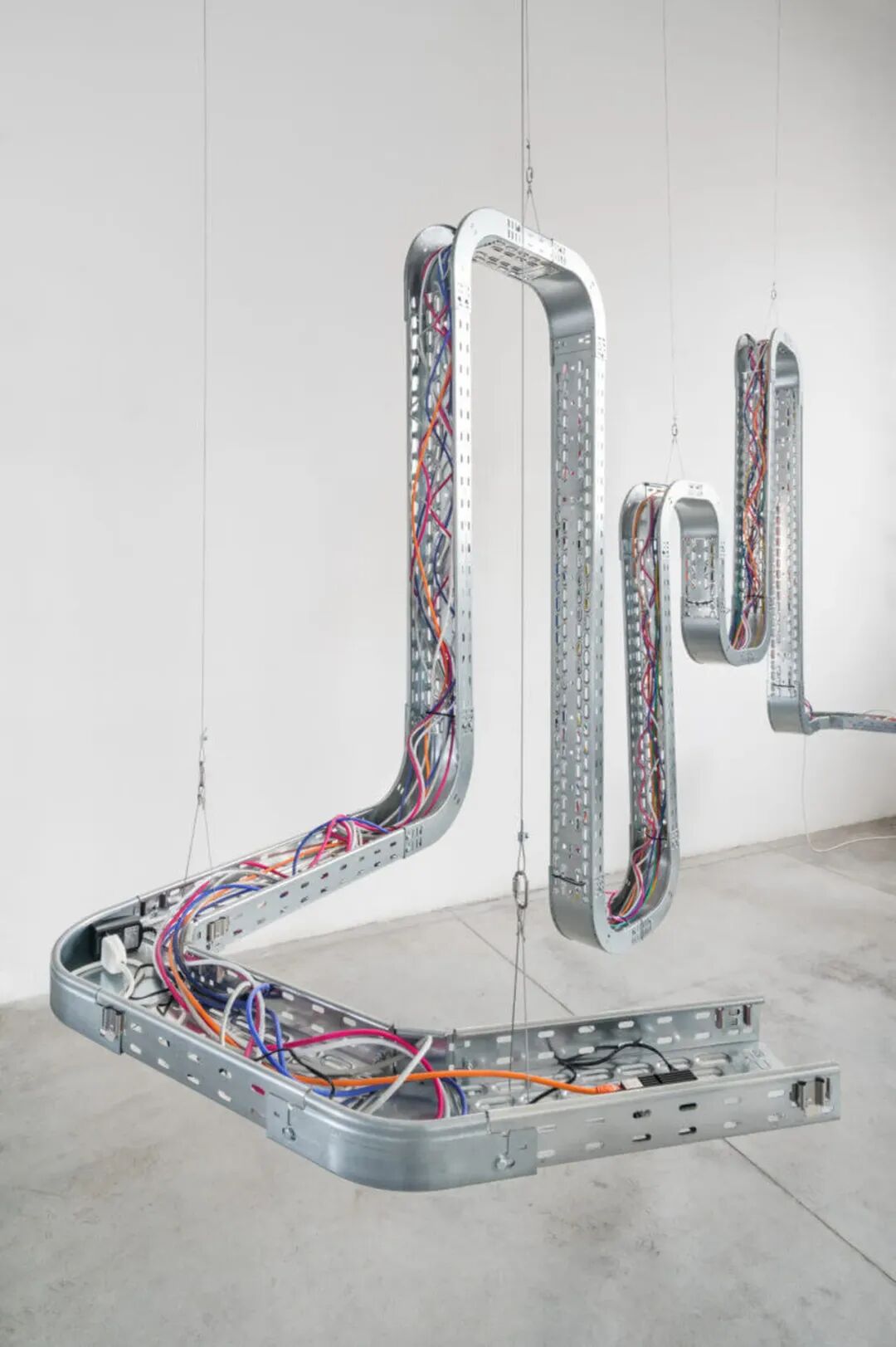
My Little Big Data (2019), stills and exhibition view
Artistic strategies:
The Mattes’ artistic strategies often bear a conceptual subversiveness, a self-reflexive critique of the medium and a probing of the viewer’s ethical bottom line:
1. Extreme data exposure and self-scrutiny: In the My Little Big Data exhibition, the artists made public the massive personal data they had accumulated over the preceding thirteen years (roughly 2006–2019)—emails, browsing records, chat logs, photographs. Printed out or otherwise displayed, these let viewers ‘peek’ at the complete traces of the artists’ private lives as data. This extreme self-exposure forces artists and viewers alike to reflect on the value, vulnerability and commodified reality of personal data today.
2. Physical installations as metaphor for invisible structures: In the exhibition they also used physical installations—server racks, bundles of network cables, cable trays. These elements symbolise the physical infrastructure, usually hidden, that underpins the internet’s operation. By moving these ‘backstage’ elements to the ‘front stage,’ the artists intimate that digital surveillance and information control are not nebulous but depend on concrete, visible (if often overlooked) material carriers and power structures. These installations metaphorise the invisible control exercised by internet infrastructure over individual life.
3. An inquiry into the ‘collective unconscious’: By displaying the triviality, repetition and patterning of personal data, the work also raises the question of how surveillance is internalised and accepted within the digital-age ‘collective unconscious.’ Have we grown accustomed to trading privacy for digital convenience? How was this habit formed?
4. Challenging the ethics of looking: Many of their works—including Emily’s Video (commissioning others to watch a video purportedly from the dark web that may be extremely disturbing, and recording the viewers’ reactions)—challenge the viewer’s looking-ethics and prurient psychology. In My Little Big Data, viewers, while ‘legitimately’ peeping at the artists’ privacy, may also reflect on their own participation in the ‘data carnival’ of the digital age.
Background and influence:
Eva & Franco Mattes’s practice spans the internet’s evolution from early utopian imaginings to today’s domination by large platforms and data capital. Their work keenly captures the social, cultural and ethical transformations brought by digital technology. My Little Big Data was created against the backdrop of maturing big-data, AI and IoT technologies and personal data becoming a core commercial resource; it directly responds to the public’s widespread anxiety over data-privacy leakage and algorithmic manipulation. With their sustained, controversial practice, the Mattes occupy an important place in net art and new-media art. Their influence lies in their continual, radical testing of the boundaries of the internet, the limits of power and the public’s moral comfort zone. Their work forces us to confront the truths of digital life we would rather not face or can scarcely perceive, and to pose a profound counter-question about the unconscious penetration of the ‘digital surveillance society’ and the individual’s situation within it. They are among the most clear-eyed ‘troublemakers’ and ‘reflectors’ of the digital age.
17. Zhang Qing
Representative works: the solo exhibition Boundaries (2016), the video installation Becoming a Peak in Profile, 886 Boylston Street, Don’t Be Too Strange
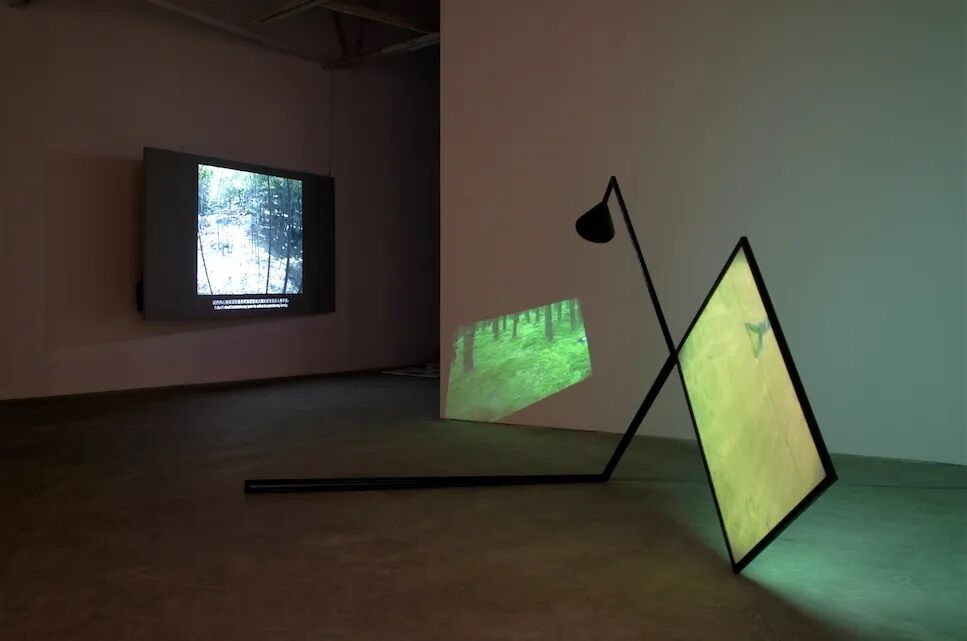
Zhang Qing is a Chinese contemporary artist who often works in video and installation, attending to the experience and predicament of the individual within particular social systems and power relations. In his solo exhibition Boundaries, through a series of works he engages the surveillance theme; his core motivation lies in examining how, under ever-intensifying systemic surveillance (including camera-monitoring of physical space, information censorship, the invisible monitoring of social norms), the boundaries of citizens’ rights are defined, eroded or conceded by the individual.
He is concerned not only with surveillance technology itself but with its impact, once fused with power, upon individual psychology, behavioural patterns and the structure of social trust. Zhang Qing seeks, through art, to construct a philosophical paradigm for the surveillance theme, reflecting on how, in the ‘new normal’ of ubiquitous monitoring, the individual cognises the self, interacts with others and society, and how this relation of ‘looking’ and ‘being looked at’ shapes our experience of existence.
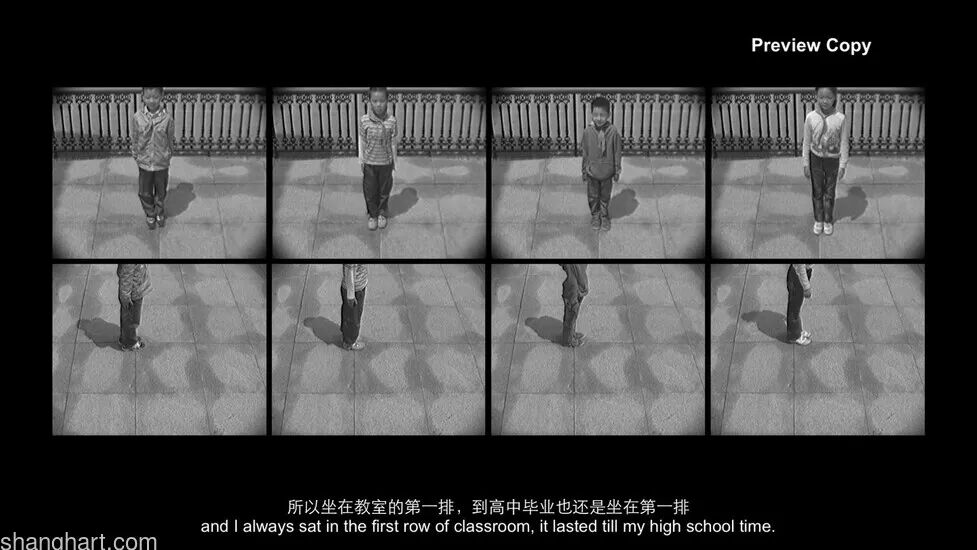
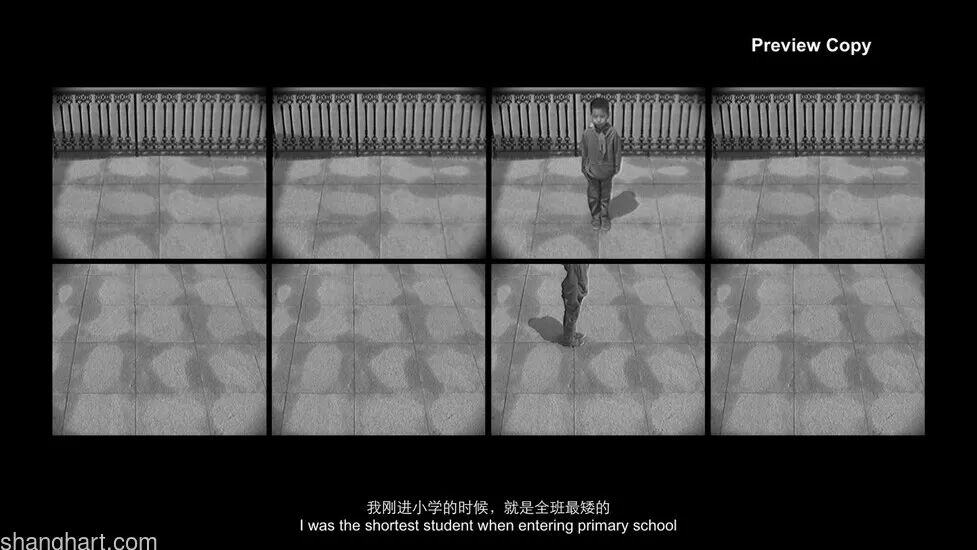
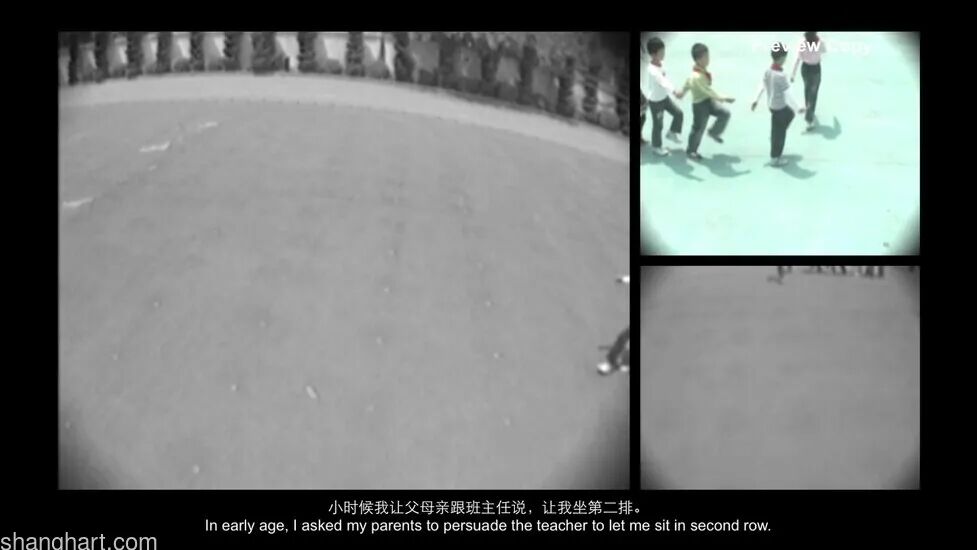
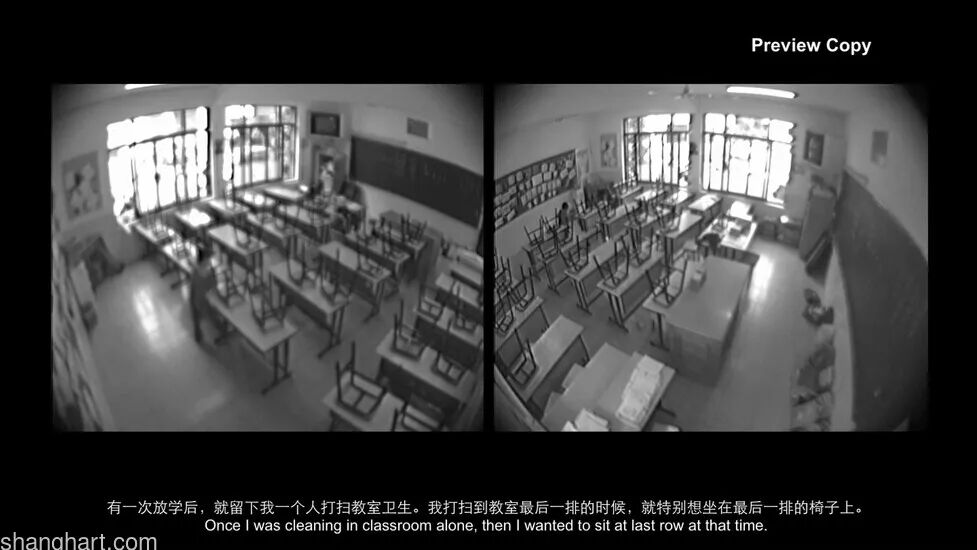
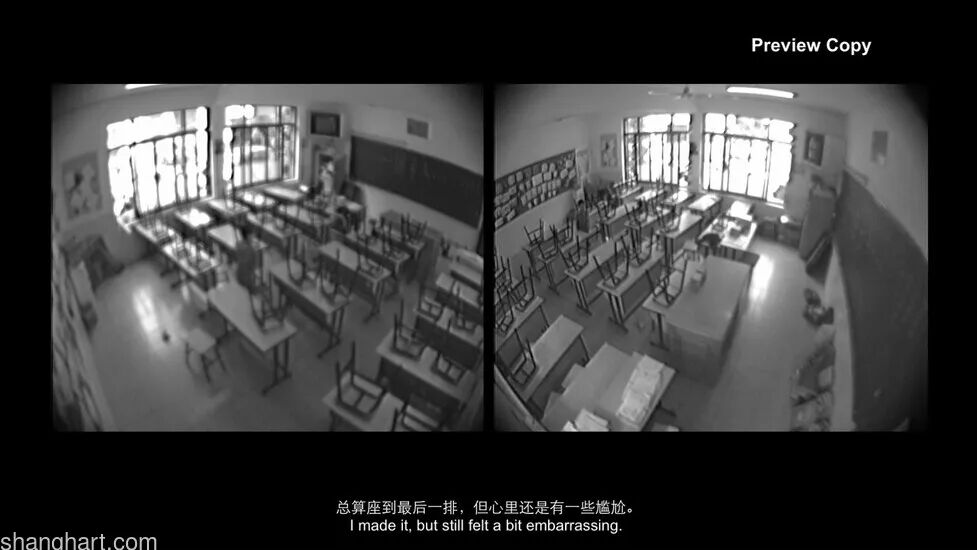
Concerning six short people excavating their inner, subtle relation between their own height and society. These words had long remained unspoken in their hearts.
Made in 2014, single-channel video, surveillance footage, 11 minutes 51 seconds
Our subconscious observation of and speculation about those around us who do not match the ‘mainstream’ is itself a form of psychological surveillance.
Artistic strategies:
Zhang Qing’s artistic strategies typically display conceptual depth and narrative metaphoricity:
1. Narrative from the surveillance vantage: In the video installation Becoming a Peak in Profile, the artist may adopt a surveillance-camera-like perspective or exploit the texture of surveillance footage to tell a story of the self-abased or marginalised. This vantage itself carries a scrutinising, recording, potentially judgemental import; as viewers watch the story, they may also feel the discomfort brought by this ‘arranged’ mode of looking, and thereby reflect on how the surveillance perspective shapes our cognition and judgement of others.
2. Exploring specific spaces and systemic rules: Works such as 886 Boylston Street (possibly a concrete, symbolically charged address) may, through observation and re-presentation of a particular place or event, explore how, under the surveillance and rules of a specific system (urban management, commercial institutions, network platforms), individual rights are regulated and limited, or how the individual actively or passively self-adjusts to accommodate these rules. This touches on the tension between the concession of civil rights and systemic surveillance.
3. Irony and the shift of perspective: The work Don’t Be Too Strange, by description, uses the infant’s perspective to satirise the absurdity of surveillance in the adult world. This shift of perspective is clever: the baby’s gaze is innocent and unbiased; when they ‘watch’ the complex, sometimes absurd, surveillance behaviours and rules of the adult world, the resulting contrast more sharply reveals the irrationality of reality. This is a satirical strategy of ‘seeing the great in the small’ and ‘setting simplicity against complexity.’
4. Installation and the construction of spatial feeling: As an installation artist, Zhang Qing attends to the resonance between exhibition space and content, reinforcing, through specific spatial layout, lighting and sound design, the experience of concepts such as ‘boundary,’ ‘monitoring’ and ‘limitation’ that the work conveys.
Background and influence:
The context of Zhang Qing’s work is closely tied to the reality of Chinese society, where, alongside rapid economic development, social management and surveillance technology are increasingly refined and comprehensive. His work responds, in a relatively introspective and philosophically speculative manner, to the new situations and challenges the individual faces in this social transformation. Although public information on Zhang Qing and his work is relatively limited, the systematic reflection on the surveillance theme presented in his Boundaries solo exhibition shows his keen observation and deep understanding of issues in this field. His influence may be felt chiefly within the context of Chinese contemporary art, offering local artists a personalised, speculative case for how to approach the global theme of surveillance. His work reminds us to attend to those invisible ‘boundaries’ drawn by surveillance that may be overlooked in daily life, and to their latent impact on our spiritual world. He attempts, through art, to construct a philosophical framework for reflecting on the normalised-surveillance society.
18. Teresa Dillon
Representative work: Under a Crescent Moon, I was Strong (2016) (large cardboard CCTV camera installation)
Teresa Dillon is an artist, researcher and curator whose work often spans art, technology, social science and urban studies, attending to civic participation, community-building and the role of technology in public space. In her installation Under a Crescent Moon, I was Strong, her core motivation lies in making the usually passively accepted, even overlooked, surveillance technology (the CCTV camera) highly visible, in a striking yet slightly mocking manner, thereby provoking public reflection on the complex relation between surveillance and community in modern civil society. Dillon is concerned with how, when surveillance becomes a normal component of the urban landscape, it affects people’s behaviour, perception and mutual trust in public space. She seeks, through her work, to break people’s numbness toward surveillance and prompt them actively to reflect on their dual role as both surveilled object and potential surveillant, and on how this role affects community cohesion and individual agency.
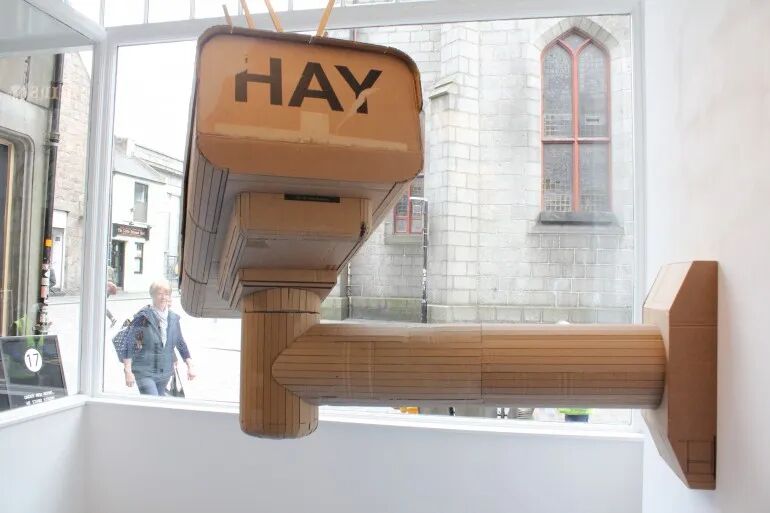
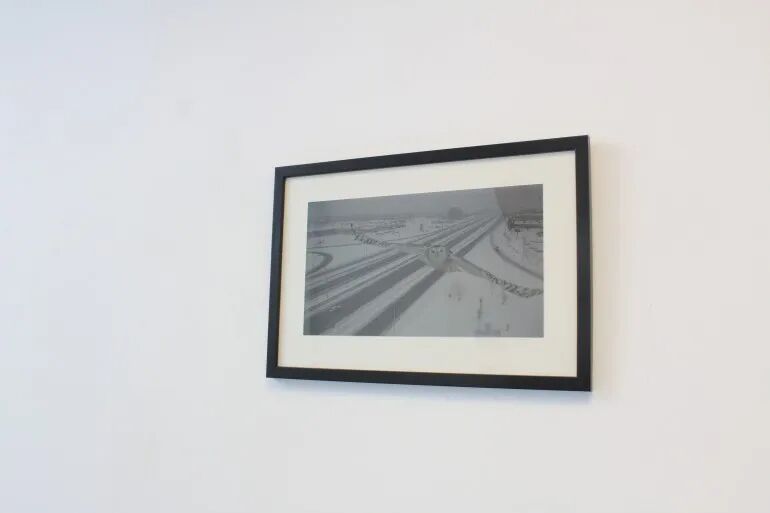
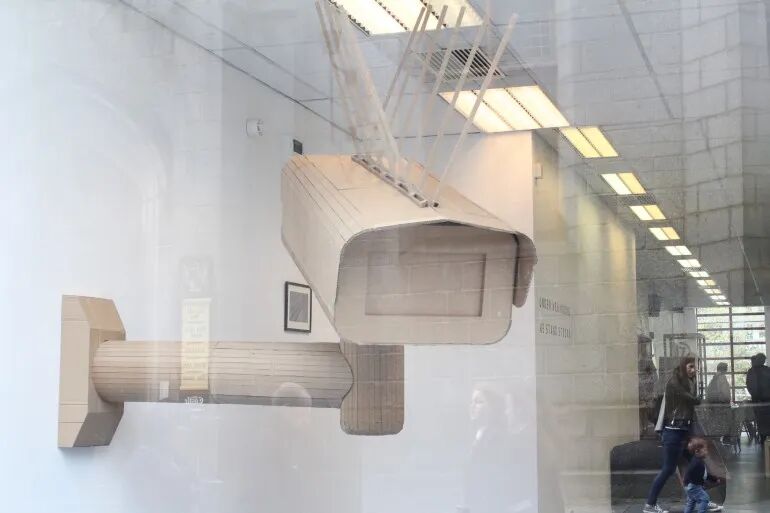
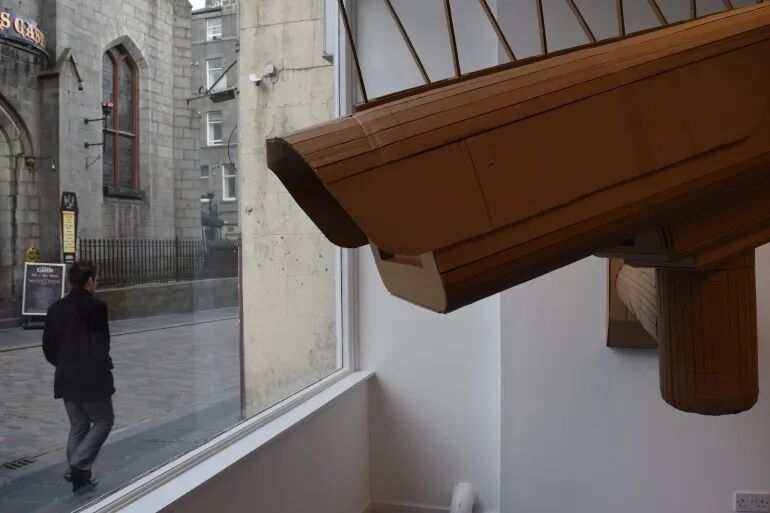
Artist’s statement: I was commissioned to make Under a Crescent Moon, I was Strong (2016), which draws on the snowy owl image that swept popularity in 2016. Usually millions of pounds are spent trying to keep birds away from such cameras. Thus a tension exists in this image between the symbol of the owl and the celebration of the CCTV camera. The installation enlarges the scale of the camera, highlighting the bird-deterrent as a figure of hostile architecture—structures designed to repel birds or anything that disrupts the city’s commercial norms. Low-profile solutions such as ultraviolet gel are also used. Birds see in ultraviolet, so they perceive the gel as fire, which disrupts their flight patterns.
Artistic strategies:
Dillon’s artistic strategies often display participation, site-specificity and critique:
1. The enlargement and materialisation of the symbol: The work’s core is one or more oversized CCTV camera models made of cardboard. This deliberate magnification of the surveillance symbol and use of cheap material (cardboard) is itself ironic. The giant cardboard camera is at once jarring and fragile; visually it emphasises the presence of surveillance, while its non-functionality and temporariness also intimate a questioning of that presence.
2. Making the invisible visible: Surveillance cameras are usually designed to be as inconspicuous as possible, so they function ‘without being noticed.’ Dillon’s work does the opposite: through exaggerated form and scale, it forcibly pushes this ‘invisible eye’ to the centre of public view, compelling passers-by to notice its presence and ponder what it means.
3. Stimulating reflection on the dual role: The work does more than make people aware they are ‘monitored’; more importantly, it prompts them to consider their complex role in the surveillance society. In some cases citizens may support surveillance in hope of security (becoming its ‘beneficiaries’ or ‘supporters’); in others they may resist it for fear of privacy leakage or power abuse (becoming its ‘victims’ or ‘resisters’). Dillon’s work aims to activate this thinking about agency and responsibility.
4. Dialogue within a community context: By exhibiting such works in public space (streets, community centres), Dillon seeks to spark, in a concrete community context, dialogue on surveillance, security, trust and public life. The work becomes a temporary ‘trigger,’ encouraging residents and passers-by to communicate and reflect on these issues.
Background and influence:
Teresa Dillon created this work against the backdrop of the continuous expansion of global urban surveillance systems and the rising discussion of the ‘smart city.’ On the one hand, technology is invested with high hopes for improving urban-management efficiency and public safety; on the other, anxieties over data privacy, algorithmic bias and social equity follow in its wake. With her distinctive mode of intervention, Dillon’s work offers the public a relatively relaxed yet no less critical vantage from which to examine this complex reality. Its influence may be felt chiefly in promoting community participation and the social function of public art. By presenting a serious social issue in a creative, interactive installation form, it lowers the threshold for public discussion and encourages people to reflect, from their own experience, on how technology affects their daily lives and community relations. Such work helps cultivate citizens’ critical media literacy and advance the exploration of more humane, civic-participatory models of technological governance.
19. Jill Magid
Representative works: Evidence Locker (2004) (a video work using the urban surveillance system), The Proposal (2018) (a film on the archive and legacy of the Mexican architect Luis Barragán—a complex project also touching on visibility and invisibility, possession and control)
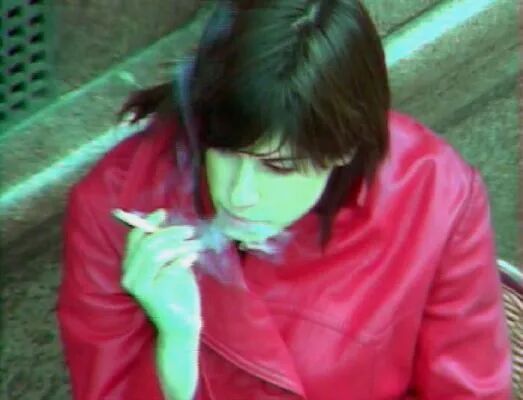
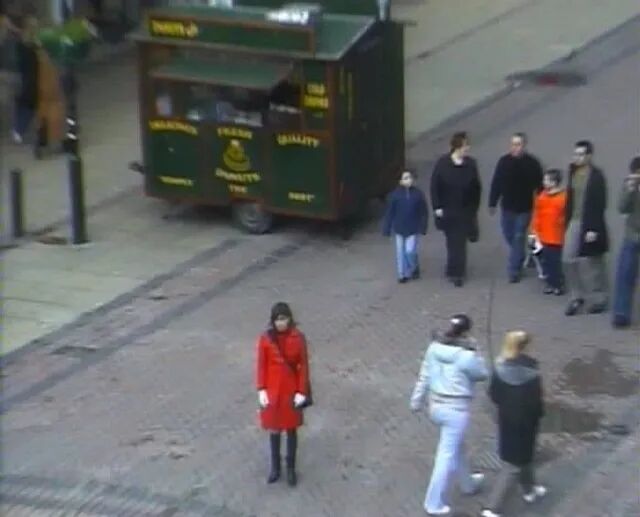
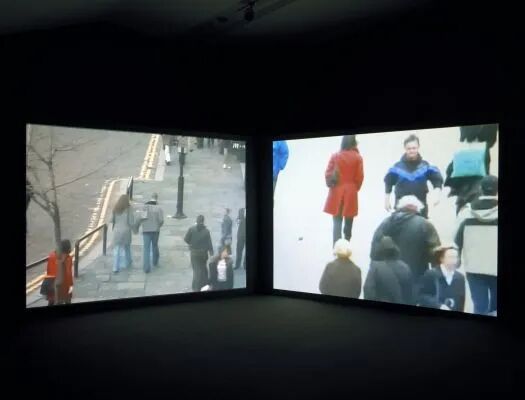
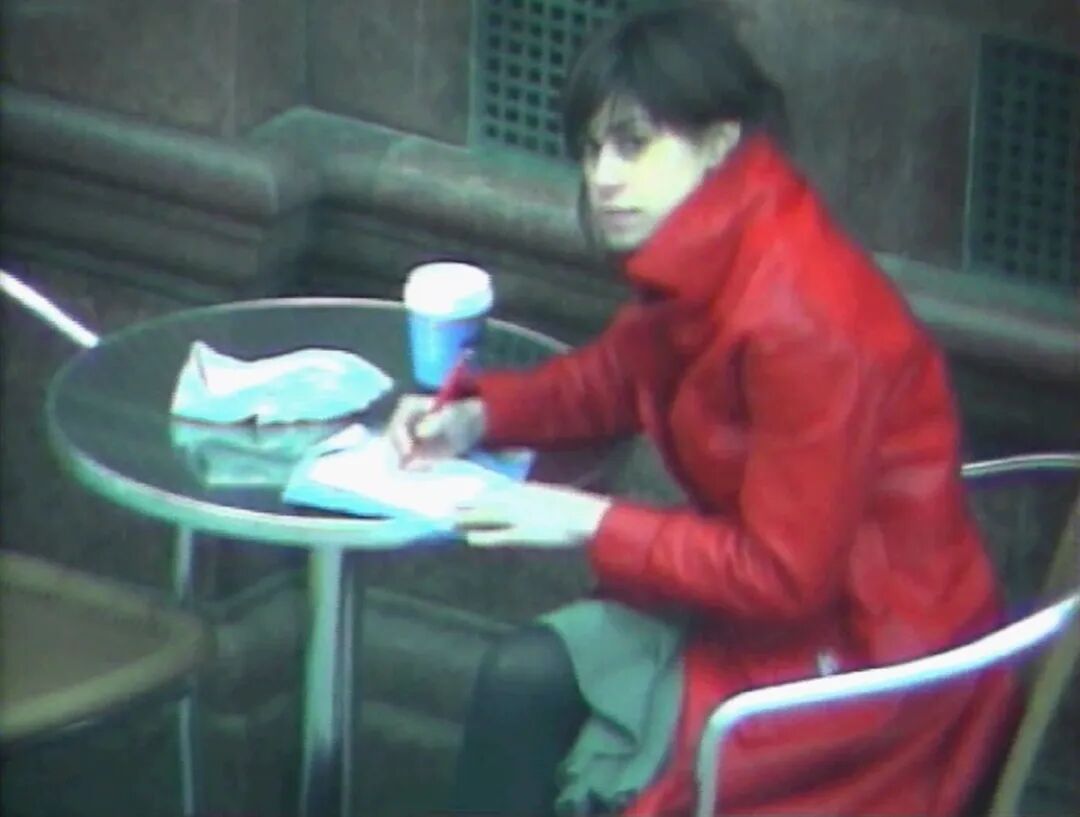
In 2004, Jill Magid spent thirty-one days in Liverpool, during which she formed a close relationship with Citywatch—the Merseyside Police and Liverpool City Council—whose function is citywide video surveillance, the largest such system in England. The video was staged and edited by the artist and shot by the police using public surveillance cameras in the city centre. Wearing a bright red trench coat, she would call the on-duty officers, specify exactly where she was, and ask them to film her in particular poses and places, even guiding her through the city with her eyes closed, as the video shows. Unless requested as evidence, CCTV footage obtained from the system is stored for thirty-one days and then deleted. To access this footage, Magid had to submit thirty-one subject-access request forms—the legal documents required to outline to the police the details of how and when the ‘incident’ occurred. Magid chose to fill in these forms as if they were letters to a lover, expressing her feelings and thoughts. These letters are an intimate portrait of the relationship between herself, the police and the city.
Jill Magid is an American conceptual artist renowned for her deep intervention in and complex negotiation with systems of power (government agencies, police, intelligence services, surveillance networks, even art-history and heritage-management systems). Her core motivation lies in exploring the relation between the individual and these powerful, often closed and opaque systems, and in seeking within these relations the possibility of poetry, intimacy, control and even ‘love.’ On the surveillance theme, as in Evidence Locker, she does not simply criticise surveillance’s intrusiveness; rather, in a more ambivalent and personalised manner, she ‘embraces’ or ‘exploits’ the surveillance system, transforming it into a tool and medium of artistic creation. She is concerned with the character of the surveillance image, the power of looking, the recorded body and the subtle change of individual subjectivity in the process of being ‘captured’ by the system. Through reimagining and recontextualising the surveillance image, she reveals the pervasive state of being watched before the camera and how this state affects the individual’s perception of self and space.
Expressive strategies:
Magid’s artistic strategies are highly distinctive, often fusing performance, writing, image, sculpture and legal contract as media; their core lies in the ‘intimate contact’ with and ‘game of rules’ against the power system:
1. Systemic intervention and co-operation/exploitation: In Evidence Locker, she co-operated with (or exploited the rules of) the Liverpool urban surveillance system, asking the system operators to track and record her with city cameras at specific times and places. She wore bright red so as to be clearly identifiable in frame. These ‘legally’ obtained surveillance clips she then edited and assembled, adding poetic voiceover or music, transforming them into video artworks of narrative and emotional tension.
2. Transforming surveillance into personal narrative: Through this means Magid converts the originally cold, objective, security-purposed surveillance image into a medium bearing personal experience, emotion and bodily presence. She seems to be ‘in love’ with the surveillance system, temporarily turning it from an oppressive instrument of power into a recorder and collaborator that ‘serves’ her.
3. Negotiating and inverting the power of ‘looking’: By actively requesting to be filmed and holding a degree of (artistic) control over the shooting process and the final image, she, to a degree, negotiates and even inverts the power asymmetry within the surveillance relation. The monitored is no longer a passive object but an active participant and producer of meaning.
4. Law and contract as artistic medium: In some of her projects, the contracts, agreements or permits signed with the relevant institutions themselves become part of the work, revealing the rules by which power operates and the complex process through which the artist negotiates within them.
5. The coexistence of poetry and critique: Although her mode of intervention appears ‘cooperative,’ the work still harbours profound reflection on and latent critique of the essence of surveillance. That persistent, omnipresent feeling of ‘being seen,’ even under the artist’s active ‘direction,’ still lets viewers sense the oppressiveness of surveillance and its potential limitation of individual freedom.
Background and influence:
Jill Magid’s work is active in the post-9/11 era, a period of unprecedented expansion of state-security and surveillance power. With her distinctive posture of intervention and subtle grasp of the internal operating logic of power systems, her work has drawn wide attention and discussion in contemporary art. She offers a way of interacting with surveillance power different from direct confrontation or simple critique. Her influence lies in her revealing that power is not monolithic; even within seemingly asymmetrical relations, the individual may still, through wisdom, creativity and sustained effort, find space to intervene, negotiate and express. Her work blurs the boundaries between art and life, individual and institution, co-operation and subversion, offering us a complex and illuminating perspective for reflecting on how the individual maintains agency and criticality in an increasingly systematised and surveilled society. She lets us see that even the mightiest surveillance systems may, under the artist’s skilful intervention, expose their own logic, limits and even a certain possibility of ‘humanisation.’
III. Strategies for Artistic Intervention in this Theme—from Exposure, through Experience, to Critique
Confronting the all-permeating surveillance system, contemporary artists do not merely linger in emotional complaint or simplistic, illustrative critique; they have developed diverse, profound strategies of intervention. These strategies aim not only to expose the operating mechanisms and effects of surveillance but to stimulate the public’s critical thinking and even to explore the possibility of individual and collective resistance. Taken together, the artists’ strategies can be summarised in the following aspects, which intertwine to constitute the critical value of art in the age of surveillance.
A major characteristic of the surveillance system is the concealment of its operation. Many surveillance facilities (such as the secret bases Paglen photographed) and data-processing procedures (such as algorithmic decision-making) are invisible ‘black boxes’ to the public. One of the artists’ primary strategies is to visualise these concealed operations of power through various means, turning them into objects the public can perceive and discuss.
Investigation and documentary: Through deep investigation and extreme photography, Trevor Paglen exposes state-level secret surveillance facilities to public view. Laura Poitras’s documentaries reveal the inner workings of intelligence agencies through factual means. This fact-based exposure carries powerful impact.
The visualisation of data and information: Artists use data obtained from open channels, leaked information, or data flows tracked through technical means, transforming them into visible images, diagrams or installations. For instance, some artists mark the distribution of cameras across a city on a map, intuitively displaying the density of surveillance.
Symbol and metaphor: Julia Scher implants surveillance devices into intimate objects such as the bed, symbolically revealing the fall of privacy. Xu Bing constructs narrative from fragments of surveillance imagery, metaphorising the cutting and reassembly of individual experience by technological rationality.
Through these means, artists break the ‘invisibility’ of surveillance, transforming it from an abstract concept into a concrete, perceptible reality, and providing the cognitive foundation for the public to understand and criticise the surveillance society.
To let viewers more deeply understand the psychological impact and power dynamics of surveillance, many artists choose to create participatory experiential environments, making the viewer not merely a bystander but a direct experiencer of the surveillance relation.
Role-reversal and situational immersion: Julia Scher’s Mothers Under Surveillance lets viewers, while watching others, also be watched, experiencing the doubleness of surveillance. Toni Dimitrov, in his work Total Surveillance, places viewers inside a camera-filled installation, making them at once ‘the watched’ and ‘the watcher of others.’ Such design aims to expose the power-essence of surveillance and the individual’s complex role within it.
Interactive installations and instant feedback: Many interactive installations capture the viewer’s image, voice or behavioural data in real time and feed it back in some manner. The viewer’s image, for instance, may be distorted, enlarged, overlaid with other images, or trigger certain sounds or lighting effects. This instant feedback intensifies the sense of being monitored and prompts reflection on how one’s own data is being used.
Simulation and gamification: Some artists let viewers, through game-like means, experience the behavioural choices and consequences under particular surveillance rules—for example, simulating life under a credit-scoring system, or interaction within a virtual community strictly governed by algorithms.
Through participatory experience, art transforms the abstract theme of surveillance into felt sensation, arousing the viewer’s emotional resonance and critical reflection, and prompting them to ponder their own position and responsibility in the surveillance society.
Faced with technology-driven surveillance, some artists choose to ‘use technology against technology,’ exploring the possibility of countering, evading or even subverting surveillance through technical means.
‘Sousveillance’: Hasan Elahi’s Thousand Little Brothers is a typical sousveillance practice, challenging and parodying the power-logic of surveillance through the active, excessive exposure of personal information.
Interference and camouflage techniques: Zach Blas’s Facial Weaponization Suite and Adam Harvey’s ‘CV Dazzle’ and ‘HyperFace’ projects all disrupt facial-recognition algorithms and protect individual anonymity through specially designed masks, make-up or patterns. These projects are not only artistic creation but hold a certain potential as practical tools.
The promotion of data-encryption and privacy-protection tools: Some artists collaborate with technical activists to develop and disseminate tools and techniques that strengthen personal-data protection, popularising them through art exhibitions, workshops and the like.
Hacktivism and information disclosure: Although contested in law and ethics, some artists or art collectives obtain and disclose, through hacker-like means, evidence of certain institutions’ improper surveillance, as a form of radical protest.
The technical-countermeasure strategy embodies the activist dimension of art: it does not stop at critique but attempts to supply concrete critical tools and methods. Though the efficacy and universality of these methods may be limited, their symbolic significance and heuristic value cannot be overlooked.
The surveillance system is often accompanied by an official, rationalising narrative (security, efficiency). By deconstructing these dominant narratives and constructing alternative, critical ones, artists challenge the legitimacy basis of surveillance.
Appropriation and recontextualisation: Xu Bing’s Dragonfly Eyes appropriates vast amounts of public surveillance footage, stripping it from its original ‘evidence’ context and endowing it with an entirely new, fictional narrative, thereby exposing the ‘objectivity’ disguise of the surveillance image and the potential manipulation of individual experience by technology.
Fiction and allegory: Some artists use invented storylines, futuristic scenarios or allegorical expression to allude to and criticise real surveillance problems. This approach can touch sensitive issues more flexibly and prompt deeper reflection in the viewer.
Interdisciplinary research and theory-production: Many artists concerned with surveillance accompany their practice with deep theoretical research, drawing on sociology, philosophy, communication studies, law and other fields, and weaving these reflections into the interpretation of their work and public discussion, thereby raising the theoretical depth of artistic critique. Trevor Paglen’s work, for instance, is built upon meticulous research into the military, geography and techno-politics.
Humour, satire and absurdity: Niklas Roy’s work often deploys humour and absurdity to reveal the individual’s helplessness before surveillance and the futility of resistance; this ‘tears-amid-laughter’ critique sometimes pierces more deeply than direct accusation. Dima Yarovinsky’s I Agree, through a near-absurd visual presentation, also satirises the hypocrisy of ‘consent.’
Through reconstructing narrative, art not only challenges the power-discourse of surveillance but offers the public new perspectives and frameworks for understanding the surveillance society, sparking broader social dialogue and cultural reflection.
Interrogating the boundary of ‘consent’: Dima Yarovinsky’s work directly questions the validity of ‘consent’ in the digital age. Xu Bing’s use of public surveillance footage also sparked discussion on portrait rights, privacy rights and the ethics of creation.
Attending to vulnerable groups and algorithmic bias: Artists’ work notices the differentiated impact of surveillance on different social groups—for instance Julia Scher’s attention to elderly women, and Zach Blas’s critique of racial and gender bias in biometric technology.
Reaffirming human subjectivity and dignity: Faced with the trend of surveillance to datafy and instrumentalise the human being, many artworks reaffirm the subject-position and intrinsic value of the person by emphasising the uniqueness and irreducible character of human emotion and experience. Though Tony Oursler’s digital portraits display technology’s alienation of the human, they also strive to capture and convey complex human feeling.
These strategies are not isolated from one another but are often synthesised by artists in concrete creative practice. Through these plural paths, contemporary art transforms the complex social issue of surveillance into an art-form that can be perceived, experienced and reflected upon; it not only deepens our understanding of the surveillance society but offers precious illumination for how we might, in the technological age, safeguard human freedom and dignity.
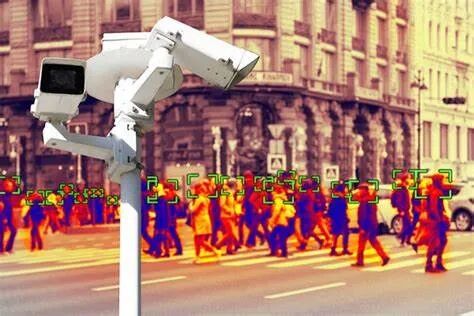
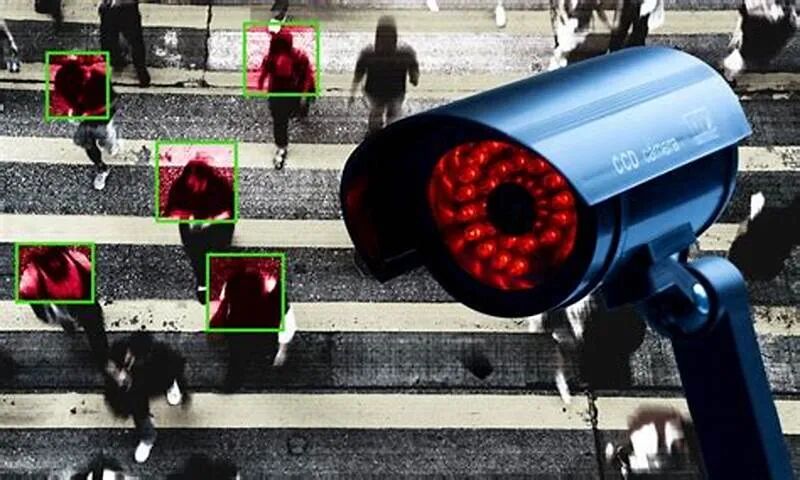
We are in an unprecedented age of ‘surveillance capitalism,’ in which technological development has endowed the ‘gaze’ with boundless reach. From the state apparatus to commercial giants, down to every smart device in our daily lives, countless ‘eyes’ are weaving an ever denser net of surveillance in the name of security, efficiency and convenience. As this essay has analysed in depth, this net is not only profoundly changing our external world but quietly reshaping our inner domain.
The core crisis of the surveillance society lies in its systematic instrumentalisation and objectification of the human being. In the torrent of big data, the living individual is abstracted into strings of data-labels that can be analysed, predicted, guided and even manipulated. Human behaviour, emotion, thought, even subconscious desire, may be extracted as ‘behavioural surplus value’ and become the cold parameters of the algorithmic model. This instrumentalising tendency fundamentally dissolves the individual’s autonomy, uniqueness and intrinsic value. We seem to be sliding toward a future dominated by technological rationality, where the space for human free will and independent judgement is ever compressed, replaced by elaborately designed ‘choice architectures’ and algorithmically ‘optimised’ life-paths.
The demand for public security versus the protection of individual rights; the convenience brought by technological development versus the retreat of privacy boundaries; the drive of commercial interest versus the maintenance of social trust; the lag of legal regulation versus the prominence of ethical predicaments—these constitute the deepening, severe contradictions of the surveillance society, ensnaring each of us so that none can stand apart. The ‘panopticon’ described by Foucault is realised in the digital age in a more concealed, more pervasive manner, its disciplinary force even internalised as the individual’s self-censorship and behavioural adjustment.
Against this backdrop, the value of contemporary art is especially manifest in its effort to push surveillance from ‘background order’ to ‘foreground critique.’ With keen insight, rich imagination and diverse media, artists play the roles of ‘whistle-blower,’ questioner and reflector. They:
Expose the invisible: like Trevor Paglen, they bring hidden surveillance facilities and operations of power into the light of day.
Question the ‘normalised’: like Julia Scher, they challenge the surveillance logic and privacy concessions we have grown accustomed to.
Create empathic experience: through participatory installations, they let us viscerally feel the pressure of being monitored and the relations of power.
Explore the possibility of resistance: like Hasan Elahi and Zach Blas, they conduct sousveillance and ‘weaponised’ resistance through action or technology; even if such resistance seems faint before the vast surveillance system, it ignites the spark of thought.
Reconstruct narrative: like Xu Bing, they deconstruct the myth of the surveillance image’s ‘objectivity,’ endowing it with new critical import.
Interrogate ethical boundaries: like Dima Yarovinsky, they point directly at the digital-age ‘consent trap’ and the passive surrender of individual rights.
These artistic practices are not mere mirror-reflections of reality but active interventions in it. They force us to halt and examine the technologies we use daily without noticing, to reflect on the price possibly paid behind the ‘convenience’ and ‘security’ we accept without thought.
Ultimately, contemporary art throws that fundamental question back to each of us, and to society as a whole: when we gaze into the surveillance lens, are we defending security or sacrificing freedom? Between security and freedom, is there a balance-point that can be judiciously held? Are we willing, for the sake of so-called ‘absolute security’ or ‘ultimate convenience,’ to abandon those core values that define our humanity—privacy, autonomy, dignity and the capacity for critical thought?
The answer is not a simple yes or no. Surveillance technology itself may be neutral, yet its design, application and regulation are deeply imprinted with the power structures, commercial logic and social value-orientations of a particular age. To unravel the predicament of the ‘surveillance society’ requires not only the critique of art but the improvement of law, the ethical self-awareness of technology, the raising of citizens’ digital literacy, and society-wide, sustained, deep public discussion of the relation between freedom and security.
The critique of contemporary art is like solitary lamps lit in the dark night; they may not immediately dispel all the gloom, but they illuminate the way forward, reminding us to stay constantly vigilant, to keep questioning, and bravely to define and guard the boundaries of our autonomy as human beings.
For once we abandon this questioning and guarding, we may, unknowingly, pass from the gazing subject of surveillance to its utterly objectified victim, and finally lose ourselves in the transparent cage woven by technology. The value of art lies precisely in its ceaseless reminder: the abyss is also gazing back at us, and we must choose whether to look back with clear eyes or close them and let it devour us.
订阅艺术评论
订阅即赠《2024中国当代艺术关键词》内部思考笔记 PDF
每周免费获取最新当代艺术批评与研究