Introduction
Summoning Benjamin in an Age of “State of Emergency”
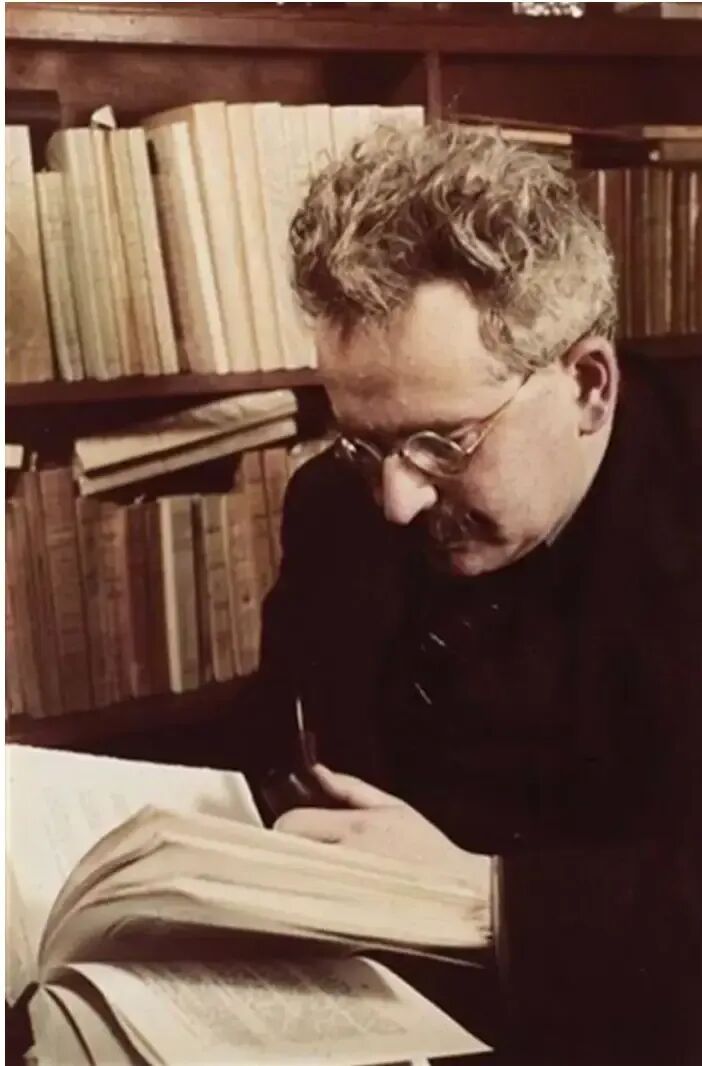
At ten o’clock on the night of 26 September 1940, Benjamin took his own life in a border hotel in Spain. In the final moments of his life, he set down in the ‘Theses on the Philosophy of History’ a verdict that stands as a sort of eternal warning:
‘The storm that we call progress — it is what propels us toward the future, piling before our eyes one ruin after another, reaching to the heavens, and yet it remains, in its place, utterly unchanged.’
These are his words left to the present day; this passage captures with precision the paradox of modernity, and foretells with profundity the predicament in which we find ourselves today.
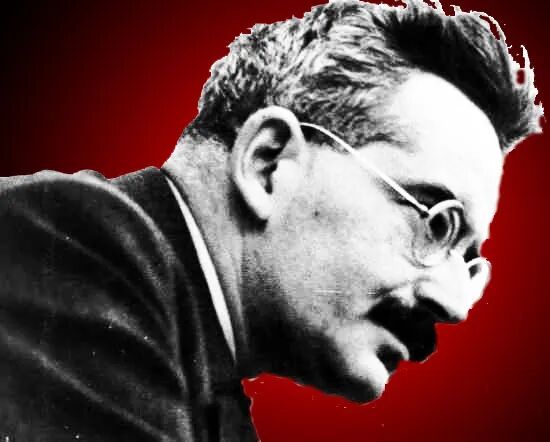
We live in an age driven by the logic of ‘progress,’ an age constructed by technological acceleration, information overload and consumerism. And yet, in this never-ceasing storm of rushing toward the future, the ruins of history pile up behind us at an unprecedented pace, while a deep, structural crisis seems to ‘remain utterly unchanged.’
Benjamin once asserted: ‘The threat to tradition does not lie merely in the possibility that it might be forgotten, but in the fact that it is itself becoming a tool arbitrarily manipulated in the hands of the ruling class. In every era, people must anew dedicate themselves to rescuing tradition from the conformist forces that seek to subdue it.’ This is precisely the starting point for our commemoration of Benjamin today. For the age we inhabit is exactly one in which the ‘state of emergency’ diagnosed by Benjamin has become the norm.
To commemorate Benjamin is by no means to enshrine him in the temple of academia, nor to convert the fragments of his thought into fashionable labels circulating in the cultural-capital market. Concepts such as ‘aura,’ ‘flâneur’ and ‘arcades’ have long since become ornaments readily at hand for humanist intellectuals and art critics — yet this consumerist appropriation betrays precisely the most subversive revolutionary core of Benjamin’s thought. True commemoration is a summons: it is, in our own ‘dangerous moment,’ to reactivate his historical materialism charged with messianic redemptive impulse, to deploy his archaeological method of seeking truth among the ruins of history like a ‘ragpicker,’ and to learn his resolute posture of clearing the way for the birth of the new, like a ‘destructive character.’
For our own age today, this summons is especially urgent. In a mere few decades we have traversed the several centuries of modernisation that the West required, experiencing, at an unprecedented scale and speed, all the splendour and trauma of modernity that Benjamin spent his life dissecting. The glass curtain walls of skyscrapers coexist with the crumbling walls of old neighbourhoods; the spectacle of consumer society is born alongside the rupture of historical memory; boundless longing for the future stands in sharp contrast with collective amnesia toward the past. In a context so compressed, so accelerated and so contradictory, Benjamin’s thought is no longer a remote, alien theory, but a scalpel capable of piercing precisely the texture of our reality.
This essay therefore aims to move beyond a superficial, label-driven understanding of Benjamin’s thought, to penetrate to the core of his philosophical thinking, and to systematically survey his original contributions in the fields of the philosophy of history, aesthetics, the philosophy of language and cultural critique — and, in the end, to attempt an answer to this question: in China today, what kind of ‘enlightenment’ can we actually draw from Benjamin? And how can we transform our commemoration of him into a critical, interventionist, future-oriented intellectual act?
I. Constellation and Ruins
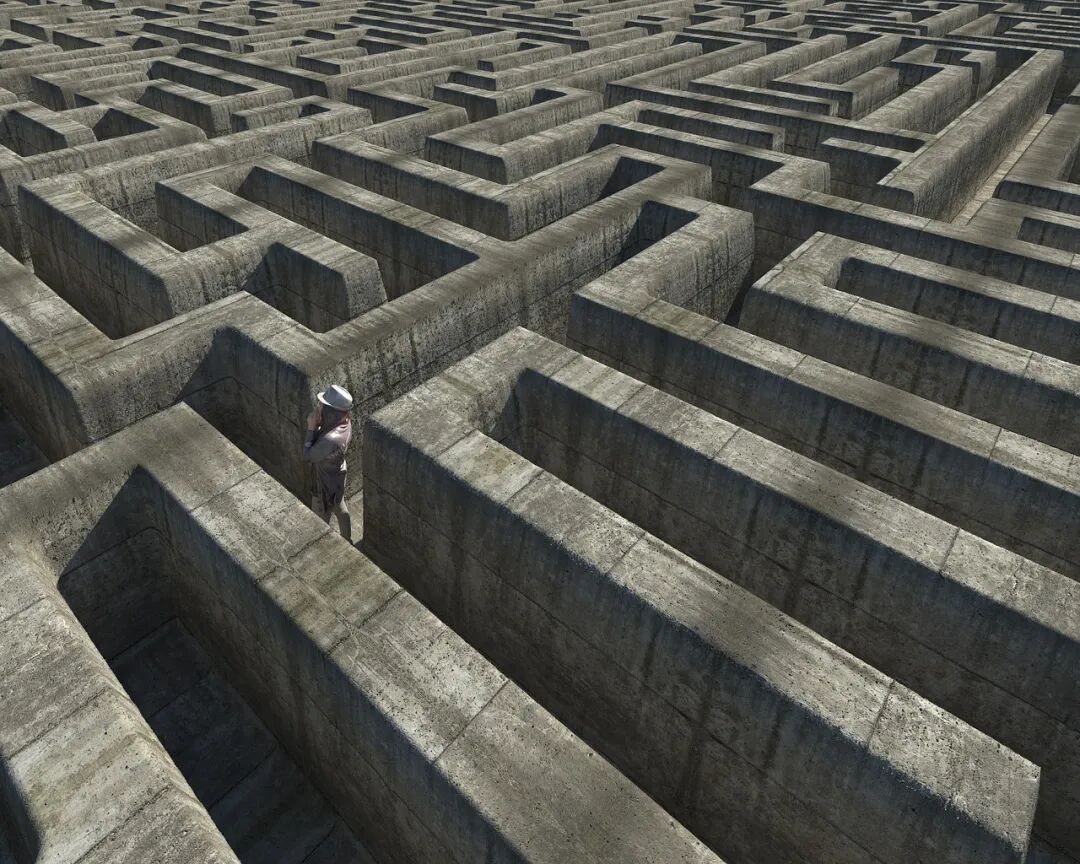
Benjamin’s thought is a labyrinth worth exploring, full of divergent paths, hidden passages and unfinished arcades. And yet running through this labyrinth are a few clear and profound core threads. They form the foundation of the edifice of his thought; only by understanding these deep philosophical presuppositions can we truly grasp the cutting edge of his cultural critique.
(I) Historical Materialism: The Pause of Time
Benjamin’s reflection on history is both the starting point and the ultimate destination of his entire system of thought. In a singular manner he fuses the messianic theology of Judaism with Marx’s historical materialism, forging a profoundly subversive philosophy of history whose core lies in a thoroughgoing critique of the notion of ‘progress.’
Critique of “Empty, Homogeneous” Time: Refuting the Progressivist Historiographical View
The chief enemy of Benjamin’s philosophy of history is nineteenth-century historicism and its vulgarised variant within Social Democratic theory. This historiographical view conceives history as a linear, automatically advancing process, with time imagined as an ‘empty, homogeneous’ sequence that can be divided evenly. Within this conception, ‘progress’ becomes an inevitable, almost natural law. Benjamin launched a fierce attack upon it, holding that this view of progress is ‘an anaesthetic adapted to the interests of the ruling class.’ In the ‘Theses on the Philosophy of History’ he writes: ‘Historicism is content to establish causal connections between various moments in history. But no fact is historically established merely because it has causal precedence. It only becomes historical afterwards, through events that may be separated from it by thousands of years.’
The danger of this view of progress lies in the fact that it not only glosses over the catastrophic essence of history; more importantly, by promising a distant, inevitably arriving future, it paralyses the revolutionary will of the present. The Social Democrats entrusted the task of revolution to the automatic passage of time; as Benjamin satirised, they assigned to the working class the role of a ‘saviour,’ yet this saviour was told to patiently await the natural arrival of history’s train. Benjamin observed: ‘Nothing has corrupted the German working class so much as the name of Social Democracy. It made them forget hatred and the spirit of sacrifice, for both of these arise from the image of enslaved ancestors, not from the ideal of liberated descendants.’
The “Constellation” as Historical Composition: Past and Present Flashing Forth in the Dangerous Moment
In opposition to a linear, continuous conception of history, Benjamin proposes a ‘constellation’-like method of historical composition. Borrowed from astronomy, the concept means that the truth of history does not reside in the causal chain of events, but in the constellation-like image formed when ‘past’ and ‘present’ collide and flash forth instantaneously in a certain ‘dangerous moment.’ He offers a brilliant exposition of this methodology in the preface to ‘The Origin of German Tragic Drama’:
‘Ideas in relation to objects are like constellations in relation to stars. … Phenomena are not incorporated into ideas. Ideas do not dwell in phenomena. Phenomena, as elements, dwell in ideas. Ideas are the virtual, objective exposition of phenomena.’
The historian is not a neutral, objective recorder; he is an active constructor. His task is to discern such a ‘constellation’ among the ruins of history. This ‘constellation’ is not a simple restoration of the past, but a ‘dialectical image’ in which ‘that-which-has-been’ and ‘the present-day awareness’ flash together into a constellation like lightning. In the ‘Arcades Project’ Benjamin writes: ‘The dialectical image is an image in which the that-which-has-been and the present-day awareness flash together into a constellation. In other words: the image is dialectics at a standstill.’ This historical image possesses a ‘shock’ effect: it can blast open the continuity of history, exposing the ruptures and catastrophes covered over by the narrative of progress.
In traditional Judaism, the ‘Messiah’ (meaning ‘the Anointed One’) is the redeemer sent by God, who will descend at a certain determinate moment in the future, bring the ‘age of exile’ to an end, and establish a just, peaceful ‘Messianic kingdom.’ This is a ultimate redemption within linear time, dependent on transcendent divine power, and oriented toward the ‘end’ of history.
Benjamin, however, thoroughly overturns this framework: he strips the Messiah of its ‘personification’ (no longer a concrete ‘saviour’) and its ‘futurity’ (no longer the end of history), transforming it into a critically immanent mechanism of ‘rupture in time’. For him, the ‘Messiah’ is not a ‘redemption that is yet to come,’ but a ‘moment of liberation that may erupt in the present’; its core function is not to ‘complete history’ but to ‘break the oppressive cycle of existing history.’
The moment at which the ‘constellation’ flashes forth is the ‘Messianic moment’ or ‘now-time.’ This is a time ‘filled’ with messianic power; it is not a transitional point leading to the future, but in itself constitutes a ‘pause’ of time. In this moment the continuum of history is blasted open, and the unfulfilled hopes of the oppressed of the past gain the possibility of being ‘redeemed.’
Thus, in Benjamin’s thought, revolution is not the accelerator of historical development, but the ‘emergency brake.’ In the ‘Theses on the Philosophy of History’ he writes: ‘Marx says that revolutions are the locomotive of world history. But perhaps it is quite otherwise. Perhaps revolutions are the human race’s grasp for the emergency brake.’ The task of revolution is not to create a wholly new future, but to realise the promises contained in the past, to prevent the continuation of catastrophe. This is a profoundly anti-utopian idea, which grounds hope in the memory and responsibility of the past, rather than in the illusory promises of the future.
Vindicating the Vanquished: The Task of the Historical Materialist
This conception of history necessarily leads to a distinctive political ethics. Benjamin notes that traditional historicism always empathises with the victors. He writes: ‘The historical materialist, however, proceeds contrary to this. He regards empathy with the victor as a talent conferred upon all rulers. … Every ruler is the heir of those who conquered before him. Hence, empathy with the victors always benefits the rulers.’ The task of the historical materialist, then, is to stand on the side of history’s vanquished and oppressed, and to ‘brush history against the grain.’
The historian must become a guardian of memory; what he records is not the glorious deeds of emperors and generals, but the sufferings of the nameless victims crushed by the wheel of historical progress. Benjamin writes with deep feeling: ‘The past carries with it a temporal index that points to redemption. There is a secret agreement between the generations of the past and our own. We have been expected. Like every generation before us, we have been endowed with a weak messianic power, to which the past lays claim.’ Thus, to commemorate Benjamin first means to take up this responsibility toward history: to listen to history’s silence, to salvage the forgotten memories, and to vindicate those vanquished who have been silenced in official history.
In his 1928 doctoral dissertation ‘The Origin of German Tragic Drama,’ through a study of the seventeenth-century German Baroque ‘mourning play’ (Trauerspiel), Benjamin develops a profound theory of ‘allegory.’ This is not merely an analysis of a literary genre, but a founding of his own philosophical worldview, and constitutes one of his most profound diagnoses of modern culture.
The Opposition of Symbol and Allegory: From a Harmonious Whole to Shattered Ruins
Benjamin sets allegory in opposition to the ‘symbol’ championed by Romanticism. In Romantic aesthetics, the symbol is seen as the perfect unity of particular and universal, moment and eternity, matter and spirit. It hints at a harmonious, organic universe suffused with sacred meaning.
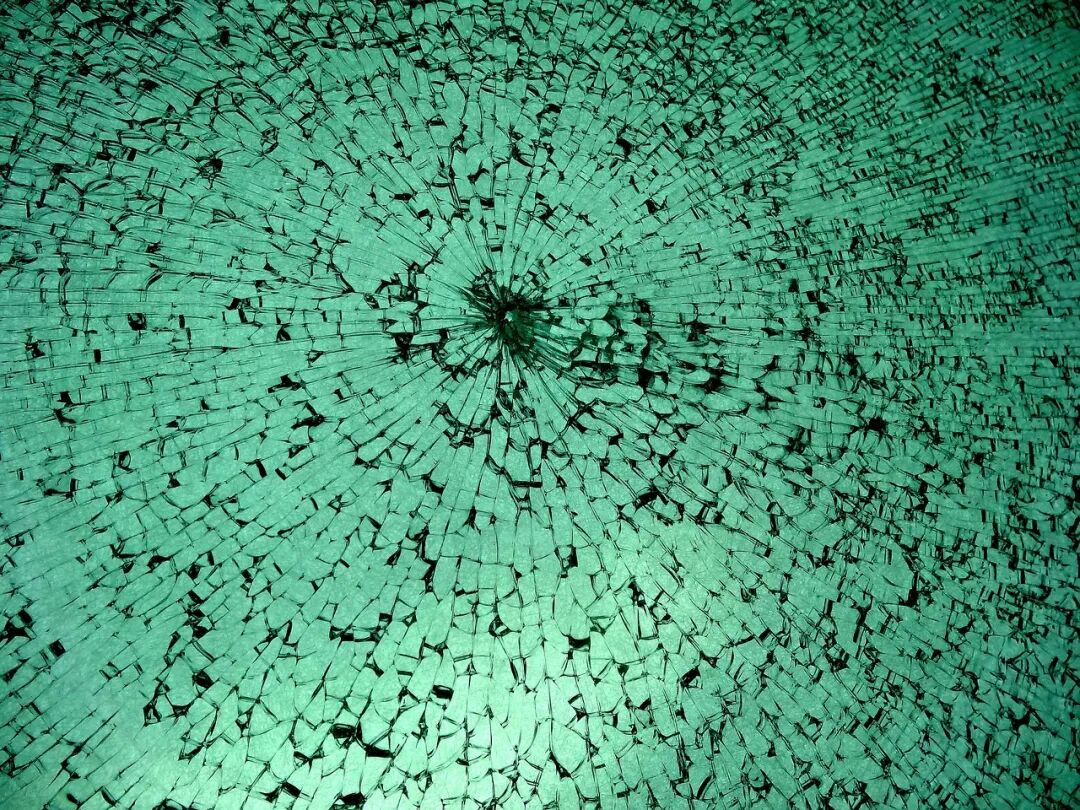
Allegory, in Benjamin’s view, is exactly the reverse. The world of allegory is a fractured, fallen, desacralised world. Under the gaze of allegory, things lose their organic life and intrinsic meaning, becoming isolated, petrified ‘things,’ signs to which meaning may be arbitrarily assigned.
Benjamin writes: ‘In allegory, the observer is confronted with a frozen, primordial landscape … The essence of allegory is that it presents the course of history as the course of nature.’ That is to say, allegory reveals that the essence of history is not a sacred history of redemption, but a ‘history of suffering’ as full of decay, death and rot as the natural world. Hence the form of allegory is necessarily fragmentary, piled-up, non-organic. As he notes in the book: ‘The ambition of the allegorist is to transform a random heap of things into an encyclopedia.’
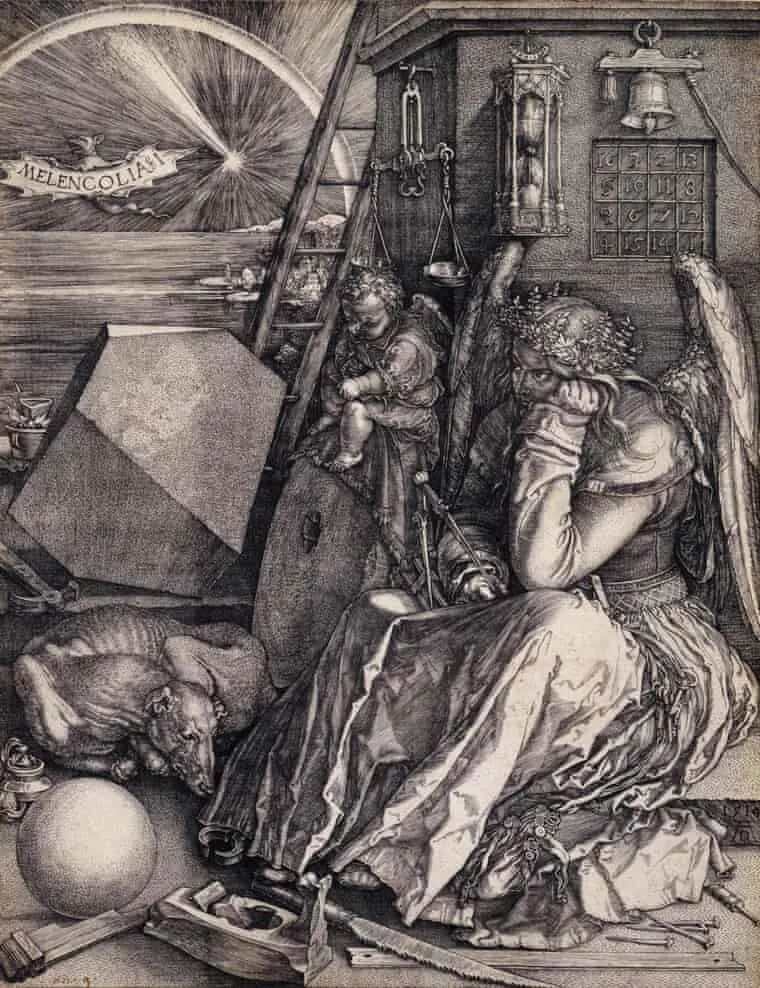
Correspondent to the allegorical worldview is a ‘melancholy’ disposition. The melancholy allegorist gazes upon this broken world with a profound, mourning look. He is obsessed with ruins, wreckage, skulls — every image that symbolises transience and death. Benjamin invokes Dürer’s engraving ‘Melencolia I’ to expound this disposition: the brooding angel in the image, surrounded by all manner of scientific instruments and tools, has lapsed into a paralysed state of contemplation.
Benjamin holds that this melancholy is not a pathological psychology, but a profound mode of cognition. It stems from the deep estrangement between the subject and the world he inhabits. He writes: ‘The nature of melancholy lies in its betrayal of the world, in order to gain knowledge of the world.’ By renouncing the immediate, naive experience of the world, the melancholic attains, on the contrary, a deeper insight into the truth of the world.
This insight is: the world is a vast allegory composed of meaningless ‘things,’ and the human being is the solitary interpreter cast into this world.
The Aesthetics of Ruins: Wreckage as Historical Landscape in Baroque Tragedy
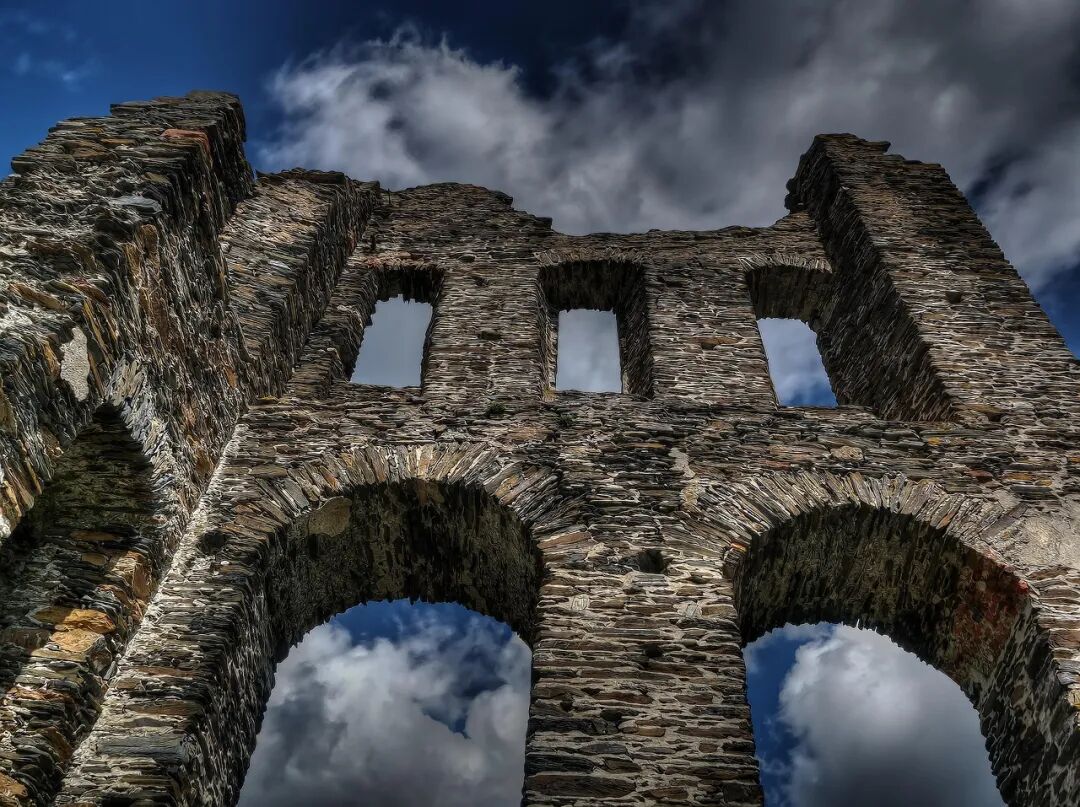
In the German mourning play, the ruin is not merely a backdrop; it is itself the protagonist. The ruins of palaces, the wreckage of history, constitute the fundamental stage of the Trauerspiel. Benjamin notes: ‘In the Baroque, the concept of the ruin is greatly deepened. It is no longer merely a symbol of decay, but an allegory of the fact that human history has been destined for decay since the very moment of creation.’
This fascination with ruins runs through the whole of Benjamin’s thought. Whether the Parisian arcades of the nineteenth century or the crumbling walls of the modern metropolis, in Benjamin’s eyes all are ruins charged with allegorical meaning. Ruins reveal the discontinuity and violent essence of history; they shatter the illusion of progress, laying bare before our eyes the destructive force of time. Contemplation of ruins thus becomes an important mode of critique. As analysed by Ken’ichi Mishima in ‘Benjamin: Destruction, Collecting, Memory,’ Benjamin’s thought consistently circles around ‘fragment’ and ‘ruin’ — these are at once the objects of his study and the core of his methodology.
From Mourning Play to Modernity: The Resurrection of Allegory as a Form of Critique
The profound significance of Benjamin’s ‘salvage’ of allegory lies in his re-establishing this aesthetic category, denigrated by Classicism and Romanticism, as a form of critique most capable of grasping the experience of modernity. He holds that Baudelaire’s poetry is a modern allegory. The Paris of Baudelaire is full of commodities, crowds, refuse and abandoned objects; these ‘wreckages’ of modern life are endowed by the poet with new, shocking allegorical meaning.
Benjamin writes: ‘In Baudelaire, allegory for the first time loses all the idyllic colouring it had in the Baroque. It becomes the emblem of modernity.’ The commodity, as the most central ‘thing’ of modern society, is itself an allegory: its use-value is replaced by abstract exchange-value; it promises happiness yet brings an insatiable desire. It is a modern ‘fetish,’ replete with mysterious meaning that demands interpretation. The analysis of allegory thus provides us with a key to anatomise modern culture, and especially the culture of consumer society.

Benjamin’s reflections on language are intimately bound up with his theological and philosophy-of-history thought. Amid the ruins of the ‘Tower of Babel’ of human language, he seeks the echo of a primal, sacred ‘pure language.’
Adamite Naming: Language as the Essential Medium of All Things
In his early essay ‘On Language as Such and on the Language of Man,’ Benjamin proposes a theological view of language. He holds that, before the Fall, Adam’s language was not an arbitrary sign, but the direct embodiment of the spiritual essence of things. Adam’s ‘naming’ was a creative act that brought the being of things to completion. In this primal state, no rift existed between language and the world.
Yet the Fall of humanity brought about the fall of language: language declined from sacred ‘naming’ into a secular instrument of ‘communication,’ into arbitrary signs.
‘The Task of the Translator’: Seeking the Fragments of ‘Pure Language’ in the Tower of Babel
In the profoundly insightful yet extremely recondite essay ‘The Task of the Translator,’ Benjamin sets forth his singular theory of translation. He argues: the ultimate aim of translation is not simply to convey the original work’s ‘information’ or ‘content.’ ‘The most fundamental starting point of any translation of a literary work lies not in conveying information; the vitality of a great literary work resides not in its information but in its unique linguistic form.’
Then what is the translator’s task?
Benjamin holds that true translation aims at something higher — namely, an intimation of ‘pure language.’ All the national languages, though different from one another, point in their respective ways toward a common, latent ‘pure language,’ the sum of all modes of intending meaning. A good translation does not seek to make itself resemble the original, but through its own language renders the original’s language ‘transparent,’ so that the shared ‘pure language’ behind it can ‘shine’ forth. He writes: ‘The task of the translator is to find the resonance of the original’s language and to shape it into a re-creation in the language of the translation.’
The ‘Survival’ of Translation: The Rebirth and Transformation of the Original in the Translation
Translation, then, is not a replica of the original, but the ‘continuation’ and ‘survival’ of the original’s life. Benjamin holds that a great work does not exhaust its full meaning at the moment of its birth; its meaning grows and changes continuously through the transmission of history and through translation. Translation is the ‘rebirth’ of the original once it enters another linguistic and cultural environment. He writes: ‘Translation grants the original not a life of duration but a survival of far greater duration.’
This view of translation is consistent with his philosophy of history. Just as the historian does not restore a past ‘as it actually was’ but lets the past ‘flash forth’ in the constellation of the ‘now,’ so too the translator does not copy a fixed original, but releases and transforms the original’s potential within his own language. This is a profound ‘non-instrumentalist’ view of language, which regards language itself — rather than the content it conveys — as the ultimate bearer of meaning.
II. The Labyrinth of Modernity: A Field Investigation of Benjamin’s Cultural Critique
Benjamin’s philosophical thought is no castle in the air; it runs consistently through his meticulous analysis of concrete phenomena of modern culture. Like a detective and archaeologist, he delves into the arcades of nineteenth-century Paris, lingers over the verse of Baudelaire, and scrutinises the visual revolution brought by photography and film — seeking to read, from these modern ‘ruins’ and ‘fragments,’ the destiny of our own age.
(I) The Disappearance of the ‘Aura’: Art and Politics in the Age of Mechanical Reproduction
‘The Work of Art in the Age of Mechanical Reproduction’ is the most widely circulated and influential of Benjamin’s essays. In it, with a dialectical and prophetic approach, he analyses the revolutionary impact that modern technology has brought upon the essence of art.
The Definition of the ‘Aura’: Cult Value, the Sense of Distance and Uniqueness
Benjamin proposes the celebrated concept of the ‘aura,’ to describe the unique sense of ‘here and now’ presence possessed by traditional works of art. He defines it as: ‘the unique appearance of a distance, however close it may be.’ This ‘aura’ derives from the artwork’s ‘authenticity’ — that is, its unique existence in time and space, and all the historical traces it carries.
The ‘aura’ of traditional art is closely bound up with its ‘cult value.’ Artworks were originally born within religious ritual; they were magical, sacred objects, for whom existence itself mattered more than being ‘looked at.’
Photography and Film: The Subversion of Artistic Tradition by Mechanical Reproduction
The advent of mechanical-reproduction technologies such as photography and film fundamentally shook the traditional foundations of art. In principle a reproduction can appear anywhere; it strips the artwork from its specific time, space and tradition, thereby bringing about the ‘decline’ of the ‘aura.’ Benjamin observes: ‘In the age of mechanical reproduction, the aura of the work of art is in eclipse.’
In Benjamin’s view, this eclipse carries a double meaning. On one hand, it is a loss: art loses its mysterious, unique halo. But on the other, it is a liberation — art is freed from its dependence on ‘cult value.’ He holds that this change is intimately related to the growing importance of the masses in contemporary life. The masses harbour a strong desire to ‘bring things “closer” spatially and humanly,’ and to ‘overcome the uniqueness of every thing through the acceptance of its reproduction.’
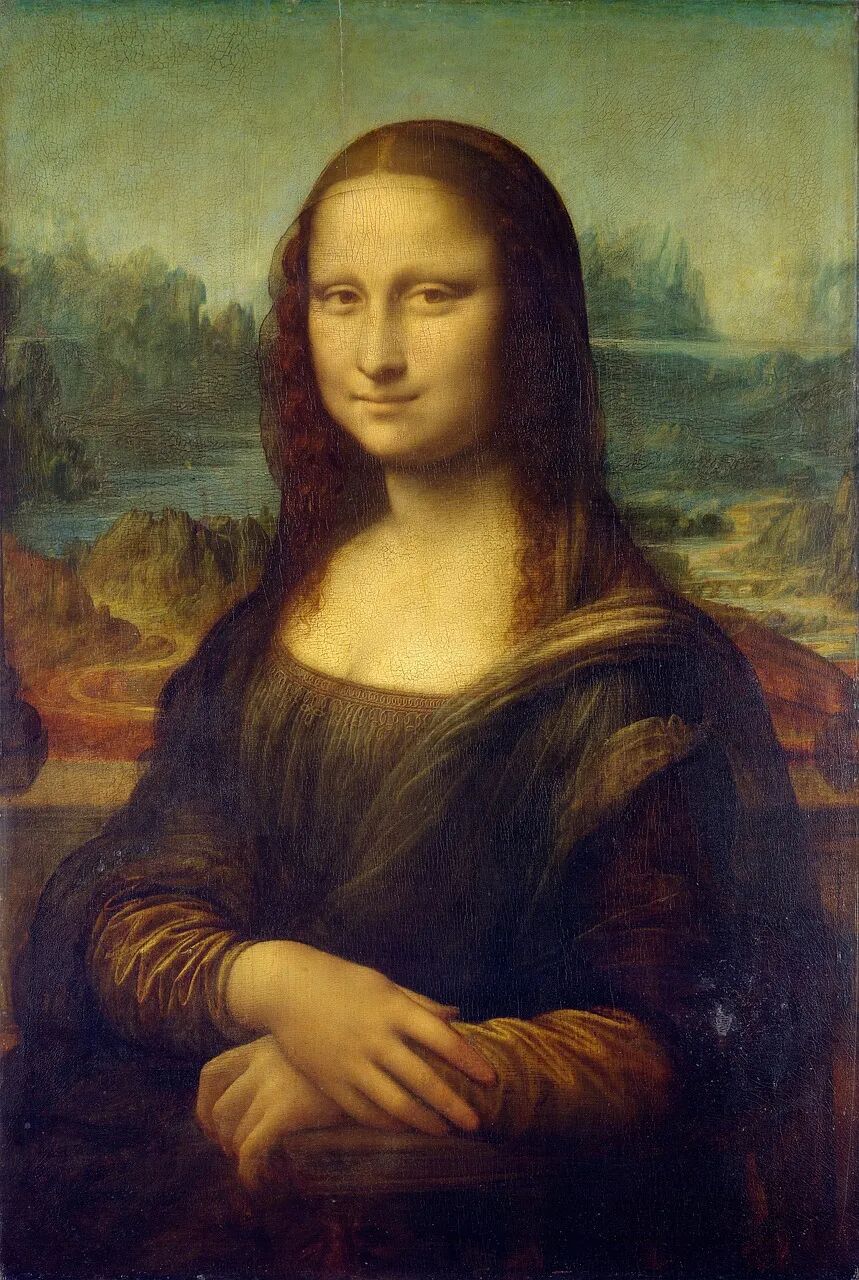
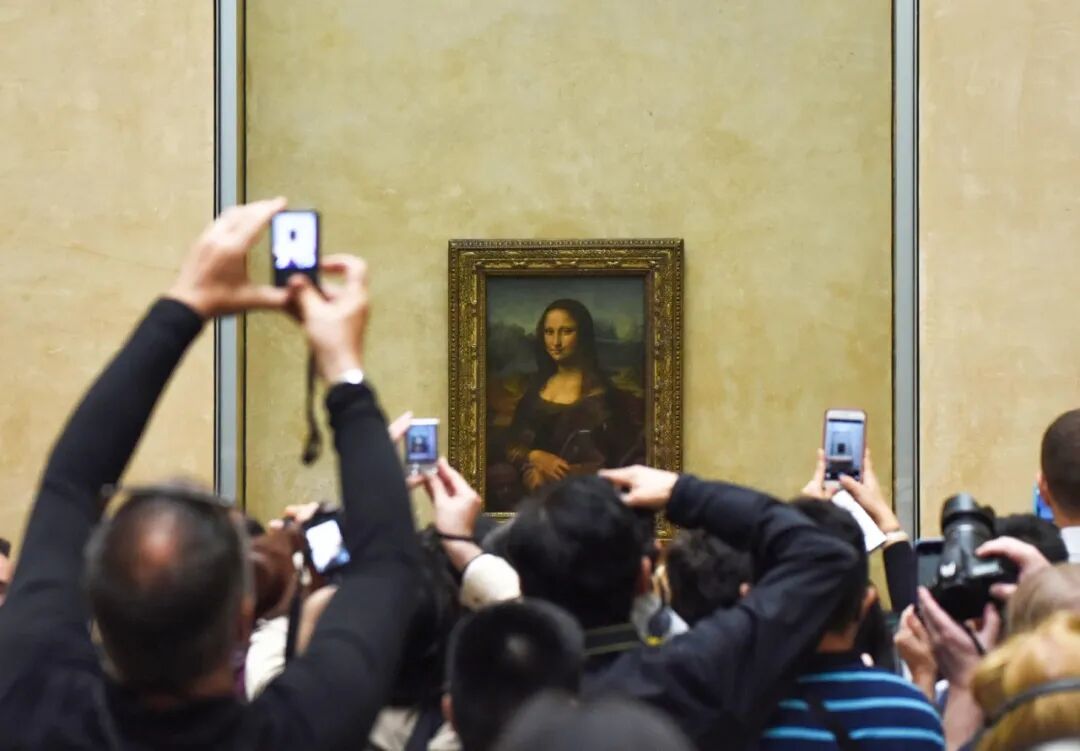
With the disappearance of the ‘aura,’ the function of art also undergoes a fundamental transformation: from ‘cult value’ to ‘exhibition value.’ In photography and film, the value of the artwork no longer depends on its unique original, but on its capacity to be massively reproduced and widely disseminated. Art is no longer the privilege of a small elite, but a part of mass culture.
This shift also changes the perceptual mode of the masses. Film, with its rapid editing, shifting angles and close-ups, assails the spectator with a ‘shock’-like impact. The spectator no longer engages in the contemplative ‘absorbed attention’ that he brought to the traditional painting, but receives art in a state of ‘distraction.’
Benjamin holds that, though this new perceptual mode may seem superficial, it harbours new possibilities: it cultivates a critical, testing attitude.
Politicised Art and Aestheticised Politics
The transformation of art’s function ultimately brought it into an unprecedentedly close connection with politics. Art stepped out of the myth of its ‘autonomy’ and intervened directly in real political struggle. At the end of the essay, Benjamin advances a famous thesis concerning the divergent aesthetic-political strategies of fascism and communism.
He points out that fascism seeks to ‘aestheticise’ politics. Through mass rallies, military parades and propaganda films, it packages the brutal realities of politics into a spectacular aesthetic spectacle, thereby anaesthetising the critical consciousness of the masses, and ultimately finds its highest aesthetic expression in war. Benjamin writes: ‘Fascism expects war to provide the artistic gratification of a sense-perception altered by technology … Human self-alienation has reached the point where it can experience its own destruction as an aesthetic pleasure of the first order. This is the situation of politics that fascism is rendering aesthetic.’
In contrast, the communist response is to ‘politicise’ art. This means that art should abandon its false autonomy and become a weapon of class struggle, used to organise the masses and awaken their political consciousness. This thesis remains, to this day, a classic that cannot be bypassed in any discussion of the relation between art and politics.
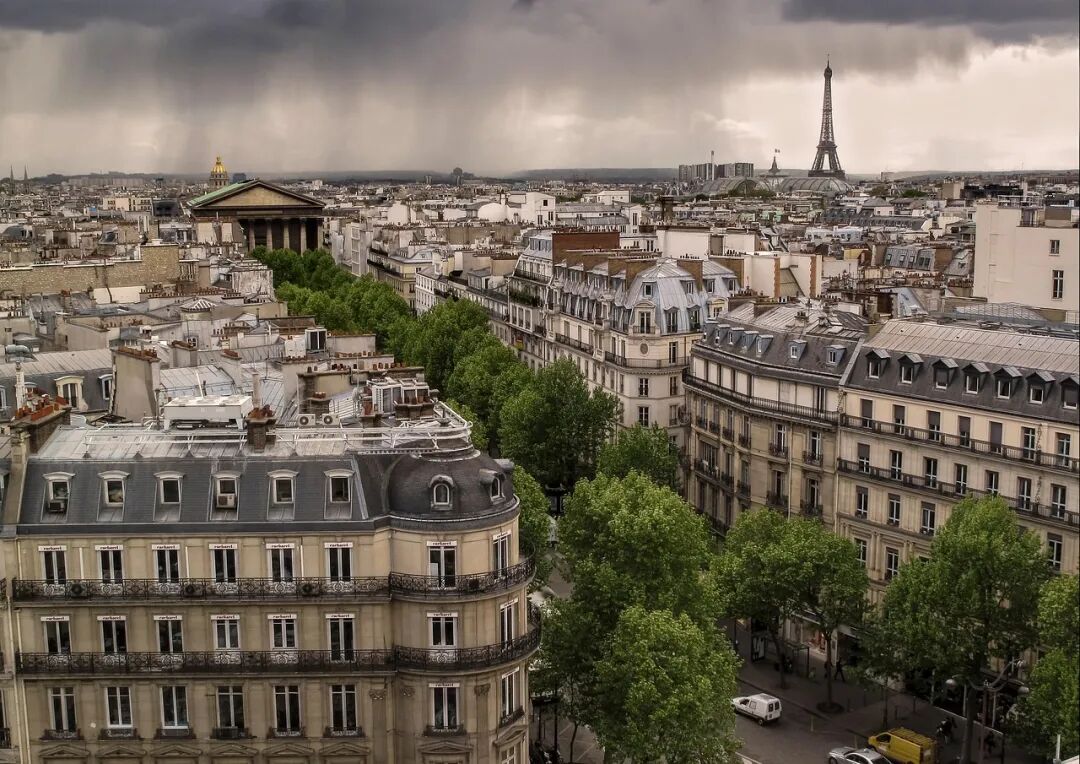
Benjamin’s unfinished magnum opus, the ‘Arcades Project,’ is a cultural corpus on nineteenth-century Paris. He sought, through a ‘constellation’-like assembling of the fragmentary details of this ‘capital of modernity’ — its architecture, fashion, technology, literature and social life — to reveal the essence of modern capitalism. And the central figure within this labyrinthine urban landscape is the ‘flâneur.’
The Arcades as the ‘Collective Dream’ of the Nineteenth Century
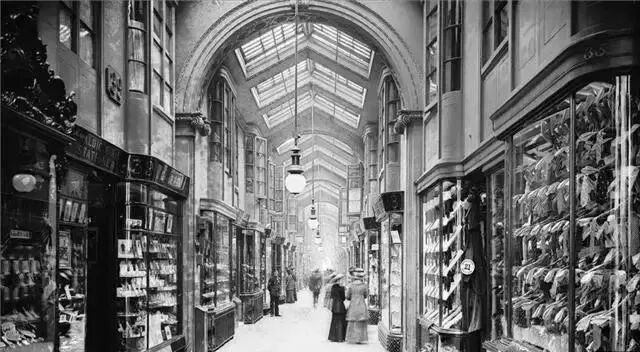
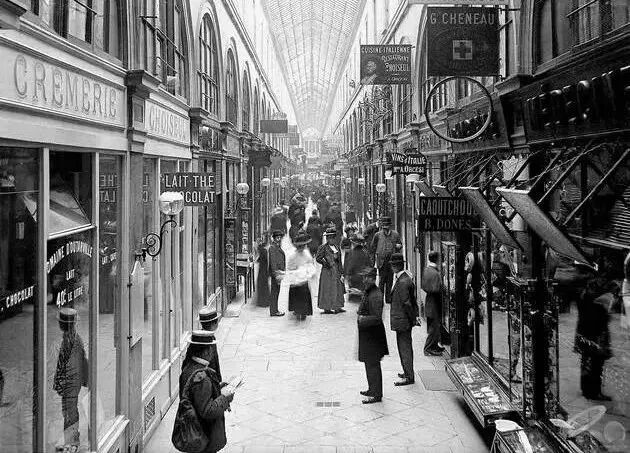
The Parisian arcades are commercial galleries built of glass and iron in the early nineteenth century, the precursors of the modern shopping mall. In Benjamin’s eyes, the arcade is a miniature universe ‘that is itself a small world,’ a ‘collective dream’ of modern capitalism. Here converge a dazzling array of commodities; flickering gas lamps create a dreamlike atmosphere, and the glass roof blurs the boundary between interior and exterior.
The arcade is the temple of commodity fetishism. Here the commodity sheds its use-value and presents itself to the consumer in the form of a pure, seductive sign. In ‘Capital,’ Marx writes: ‘The mystery of the commodity-form consists simply in the fact that it reflects the social character of men’s labour as objective characteristics of the products of labour themselves, as the social properties of these things, and thus also reflects the relations of producers to the total labour of society as a social relation between objects existing outside the producers.’ It is precisely as a text for deciphering this secret of the commodity that Benjamin takes Paris.
The Figure of the Flâneur: The Lonely Detective and Ragpicker amid the Crowd
The flâneur is a phantom of the arcades. He is an idle, well-to-do stroller who maintains an aristocratic detachment amid the ceaseless flow of the crowd. He takes the city streets as his home and the crowd as his veil. With an aesthetic attitude, he observes and interprets the urban landscape, the expressions of the crowd, the display of commodities. Benjamin compares the flâneur to ‘a botanist on the asphalt,’ collecting and classifying the various ‘plants’ of city life.
At the same time, the flâneur is also a detective, reading hidden secrets from the city’s faintest traces. He is also a ‘ragpicker,’ discovering among the waste of modern life the fragments of truth abandoned by the history of progress. Yet, with Haussmann’s renovation of Paris and the rise of the department store in the second half of the nineteenth century, the arcades declined, the flâneur’s living space was squeezed, and he finally vanished into the boundless sea of people of the modern metropolis.
The Poverty of Experience: The Rupture from ‘Experience’ to ‘Sensation’
Modern urban life has profoundly altered the structure of human experience. Benjamin distinguishes two different kinds of experience: one is the traditional, collective, communicable ‘experience,’ transmitted from generation to generation through stories, rites and traditions; the other is the modern, individual, ephemeral ‘sensation.’
In the modern metropolis, the individual is constantly assailed by various ‘shocks’: crowded crowds, speeding vehicles, glaring neon lights, rapidly shifting fashions. These ‘sensations’ are isolated and fragmentary, incapable of being integrated into a coherent, meaningful ‘experience.’ This gives rise to what Benjamin calls the ‘poverty of experience.’ People possess ever more ‘sensations,’ yet ever less genuine ‘experience.’
Baudelaire’s Poetry: The Lyric Poet’s Self-Defence amid the Shock of Modernity
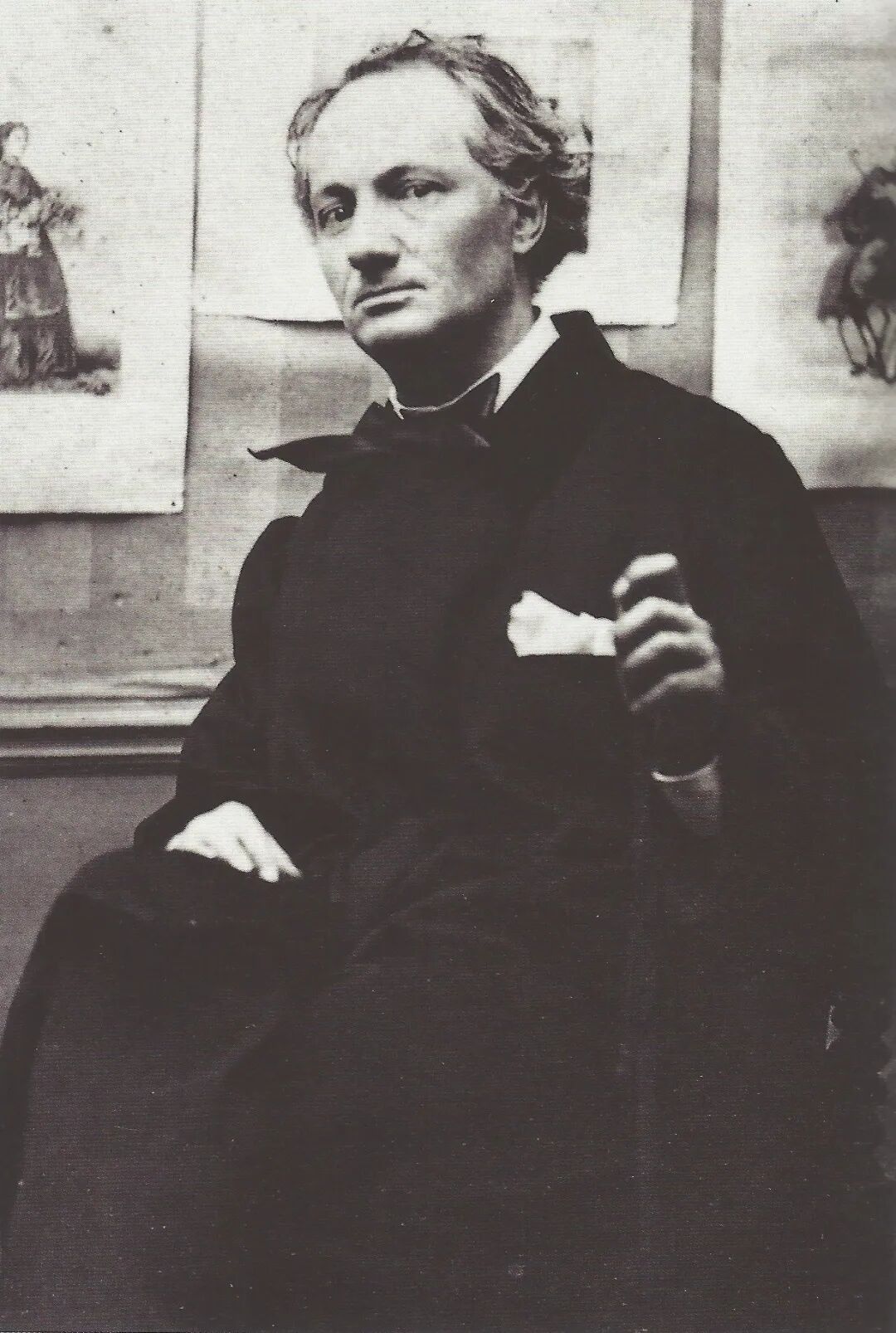
Benjamin holds that Charles Baudelaire’s poetry, ‘Les Fleurs du mal’ (The Flowers of Evil), captures this ‘shock’ experience of modernity most profoundly. The lyric poet in Baudelaire is no longer the Romantic singer in harmonious resonance with nature, but a modern who feels deep estrangement and shock amid the urban crowd. Through its fragmented imagery, ugly subjects and obsession with artificial beauty, his poetry becomes a faithful record of modern urban experience.
Benjamin holds that Baudelaire’s creative work is a ‘self-defence’ against the ‘shock’ of modernity. By transforming the experience of shock into artistic form, the poet masters and dissolves it to a certain degree. Yet this defence has its price: the sacrifice of the ‘aura’ of traditional art. Baudelaire’s poetry no longer possesses the harmonious, contemplative halo of traditional art, but is full of rupture and conflict.
(III) The Art of Memory: The Collector, the Storyteller and the Redemption of History
Confronted with the poverty of experience and the rupture of historical memory, Benjamin seeks a possibility of ‘redemption.’ He pins his hope on seemingly marginal figures and acts — the collector, the storyteller, and the Proustian ‘involuntary memory.’
The Collector as Allegorist
Benjamin himself was a fanatical bibliophile. For him, collecting is not mere possession, but an act of rescue and of granting things a new life. The collector liberates objects from their everyday functional use and places them within a wholly new order created by his own individual will. In the essay ‘Unpacking My Library’ he writes: ‘For the collector, the most important thing is to free an item from the slavery of its functionality.’
Through the re-arrangement and re-combination of objects, the collector creates new ‘constellations,’ thereby revealing the forgotten histories and meanings of things. In this sense, the collector is an ‘allegorist’ who, by manipulating the fragments of ‘things,’ resists the forgetting brought about by the ceaseless renewal of commodities in consumer society.
In his famous essay ‘The Storyteller,’ Benjamin mourns the disappearance of an ancient art form. The traditional storyteller — the sailor returned from distant voyages, the peasant rooted in his native soil — told tales that sprang from a collective, oral ‘experience.’ Within these stories lay practical wisdom and the counsel of life, offering listeners guidance for their own.
Yet in modern society, ‘information’ has replaced the ‘story.’ Print media such as newspapers and novels mean that experience no longer needs to be transmitted orally. Information pursues ‘novelty’ and ‘verifiability’; the moment it is understood, it has already exhausted itself, and cannot, like the story, settle into wisdom. Benjamin writes: ‘The art of storytelling is coming to an end. … It is like a slow disease whose symptoms are manifold.’ This disappearance is precisely the deepest symptom of the ‘poverty of experience’ in modern society.
‘Involuntary Memory’: The Proustian Strategy of Redemption
If ‘experience’ is already lost, is memory still possible? In his analysis of Marcel Proust, Benjamin finds another possibility of redemption: ‘involuntary memory.’ Unlike conscious, will-governed ‘voluntary memory,’ ‘involuntary memory’ is triggered by some chance sensation (such as the taste of a madeleine cake), and can bring the whole of a forgotten past back into the present in an instant, in a vivid, ‘auratic’ way.
Benjamin holds that the entire endeavour of Proust’s magnum opus ‘In Search of Lost Time’ is to capture these precious instants of ‘involuntary memory.’ This is a heroic effort against the passing of time and the poverty of experience. In this sense, Proust mobilised his whole life to salvage those forgotten instants. This redemption of memory bears a striking resemblance to the ‘redemption’ of history in Benjamin’s philosophy of history: both seek, in the ruins of time, to combat forgetting and reconstruct meaning through an instantaneous ‘flash.’

III. The ‘Constellation’ of Today: The Resonance of Benjamin’s Thought in the Chinese Context
Projecting the framework of Benjamin’s thought onto the reality of contemporary China, we discover a striking, even unsettling, correspondence. In the past few decades of modernisation, China has, in a highly compressed and extremely accelerated manner, staged almost the entire repertoire of modernity that Benjamin spent his life analysing — from the construction and disappearance of the ‘aura,’ to the full arrival of consumerism, to the rupture and reconstruction of historical memory. Benjamin’s thought furnishes us with an incomparable diagnostic instrument for understanding our own predicament.
(I) The ‘Aura’ in China: Variations from Red Classics to the Spectacle of Consumption
Benjamin’s theory of the ‘aura’ and its decline provides a highly explanatory framework for understanding the functional shifts of Chinese art across different historical periods.
The ‘Cult Value’ and Political Ritual of the Red Classics
Around the founding of the People’s Republic, the core function of art was utilitarian. The ‘red classics’ — represented by ‘Rent Collection Courtyard’ — possessed a strong ‘cult value.’ They were not objects for individual aesthetic appreciation, but, as part of political ritual, served to consolidate collective will and mould the socialist new man. The ‘aura’ of these works derived from their ‘authentic’ connection with revolutionary history and its leaders; repeatedly viewed and performed within specific political rituals, their meaning was sacred and beyond question.
The ‘De-auratisation’ of the 1980s: Art Moving toward the Awakening of the ‘Human’
The 1980s, after the Reform and Opening-up, were a period of ‘de-auratisation’ for Chinese contemporary art. The avant-garde movements represented by the ‘Stars Art Exhibition’ and the ‘85 New Wave’ had as their core demand precisely the liberation of art from its political instrumentality, and the restoration of its right to individual expression.
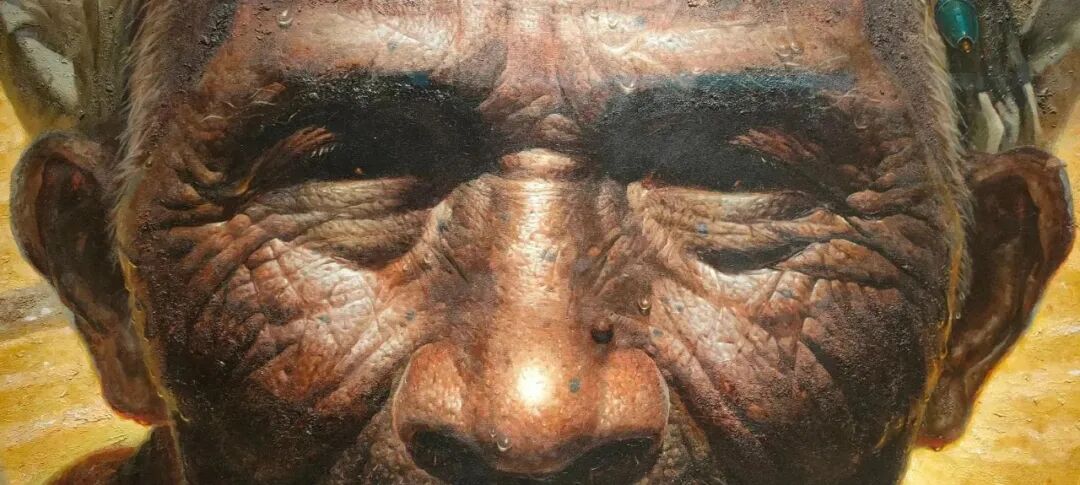
Consider, for instance, Luo Zhongli’s oil painting ‘Father’: rendered in a hyperrealist manner, it depicts the figure of an aged peasant weathered by the vicissitudes of life. The enormous shock this painting provoked at the time lay precisely in its placing an ordinary, humble individual upon the grand canvas that, in the past, only a leader could occupy. This was a return of the value of the ‘human,’ and the beginning of art’s ‘aura’ shifting from the political to the secular world.
The ‘Pseudo-Aura’ of the Consumer Age: The Art Market, the Influencer Economy and ‘Check-in’ Culture
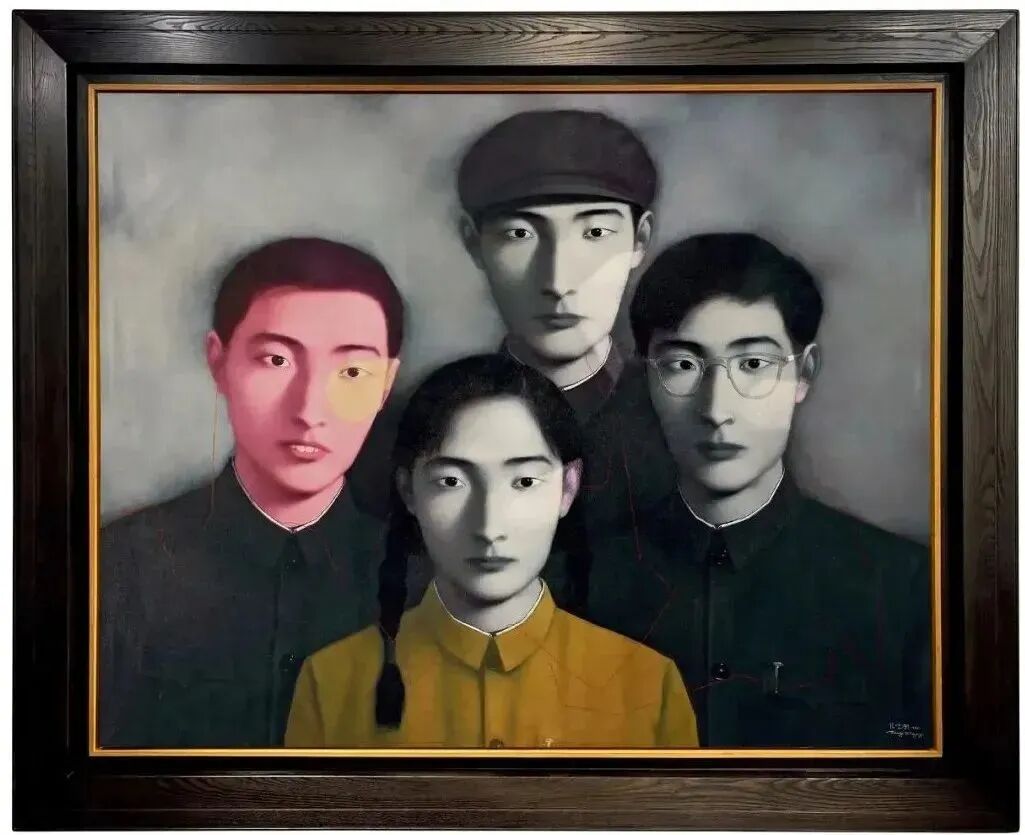
Entering the twenty-first century, with the abrupt expansion of the art market and the full penetration of consumer culture, a new ‘pseudo-aura’ has emerged. The value of artworks is increasingly defined by their price at auction. Zhang Xiaogang’s ‘Bloodline: The Big Family’ series, with its formulaic imagery and record-breaking prices, has become the emblem of this period. When viewers face these works in the museum, what they may feel is no longer merely the power of the art itself, but the ‘halo’ brought by its price tag.
This ‘pseudo-aura’ also permeates the whole of consumer culture. In the age of social media, ‘checking in’ has become a ubiquitous cultural behaviour. People flock to influencer-favoured restaurants, tourist sites, even art exhibitions — not to experience the content itself, but to take a photograph that can be posted on social media, thereby proving their ‘presence.’ This act is precisely a farcical mimicry and thorough dissolution of Benjamin’s concept of the ‘aura.’ The uniqueness of the ‘here and now’ is replaced by the desire to reproduce and circulate, and exhibition value wholly overwhelms the value of experience.
Anxiety in the Age of Digital Reproduction: How Chinese Contemporary Art Faces the Crisis of ‘Authenticity’
Today, as digital technology and artificial intelligence become ever more widespread, the questions Benjamin raised nearly a century ago grow yet sharper. The concepts of ‘authenticity’ and ‘originality’ face unprecedented challenges. AI painting can generate endless images in varied styles; virtual-reality technology can create immersive artistic experiences. In such a situation, what is the artist’s role? Wherein lies the value of art?
Some Chinese contemporary artists are responding to this challenge. Lu Yang, for instance, frequently employs digital media such as 3D animation, game engines and virtual idols to explore the boundaries of technology, religion and the body; her work is saturated with anxiety and reflection on identity in the digital age. Xu Zhen, through the brand ‘MadeIn Company,’ parodies the production and circulation mechanisms of art in the consumer age, directly problematising ‘authenticity’ and ‘originality.’ These practices suggest that, in an age where the ‘aura’ has thoroughly vanished, the critical function of art may reside precisely in the ceaseless interrogation of reproduction, the virtual and authenticity.

(II) The Chinese Flâneur: Between ‘Ruins’ and ‘New Skylines’
The figure of the ‘flâneur’ in Benjamin provides us with a unique perspective for observing and understanding China’s violent process of urbanisation. In Chinese cities, some buildings, demolished and rebuilt for reasons of planning, produce a bizarre landscape composed of ‘ruins’ and ‘new skylines.’
The ‘Ragpicker’ atop the Ruins of Demolition: Memory and Forgetting in the Process of Urbanisation
In most Chinese cities, demolition sites have become an everyday spectacle. Like the ‘ragpicker’ in Benjamin, artists salvage from these urban ruins the fragments of memory abandoned by the logic of rapid development. Wang Jiuliang’s documentary ‘Beijing Besieged by Waste’ records the reality of Beijing being surrounded by enormous landfill sites; these ‘wastes’ excreted by the city are another, genuine face beneath the glittering exterior of modernity. The performance artist He Yunchang’s work ‘One Meter of Democracy’ had twenty-five participants vote on whether to cut a wound into his body; the wound was not a mere incision, but was implanted with gravel after being opened, then sutured to form a permanent scar. This fusion of ‘body and matter’ carries the work beyond immediate pain, making it an enduring metaphor for the relation between individual and collective. He Yunchang says: ‘My flesh and blood are inside the stone; fragments of stone are inside my body — this is our relation to the system.’ In an ‘allegorical’ mode, this action probes the vulnerable position of the individual within collective decision-making, which bears no small resemblance to the fate of individuals in urban demolition.

The ‘Flâneur’ in the Shopping Mall: The Displacement of Public Space by Spaces of Consumption
Coexisting with the ruins of demolition are the giant shopping malls that spring up from the ground. Like the arcades in Benjamin, these spaces are the ‘collective dream’ of consumerism. With their constant temperature, dazzling goods and carefully designed vistas, they offer citizens a dreamlike space in which to escape reality. Yet these seemingly open commercial spaces are displacing the genuine public spaces of the traditional square and park.
As the scholar Wang Ning writes in his book: ‘The thematic design of consumer spaces is not mere cultural innovation, but a strategy by which capital, through the production of signs, packages consumption as “cultural experience.” This strategy transforms the shopping mall from a traditional site of commodity exchange into a “utopia of sign-consumption,” whose essence is the alienation of public space into an instrument of capital’s self-expansion.’ Within the shopping mall, people are consumers, not citizens; every act is disciplined by the logic of consumption.
Social Media and the ‘Poverty of Experience’: Information Overload and the Fragmentation of Attention
If the nineteenth-century newspaper brought the replacement of the ‘story’ by ‘information,’ then today’s social media pushes this process to its extreme. We live in an age of information explosion, where short videos, trending searches and news feeds continuously assail our senses in a ‘shocking’ manner.
Our attention is sliced into countless fragments, and a profound, coherent ‘experience’ becomes ever less possible. As Byung-Chul Han observes in ‘The Burnout Society,’ contemporary society is an ‘achievement society’ in which everyone becomes a self-exploiting ‘achievement-subject,’ giving rise to a pervasive exhaustion and depletion of spirit — precisely the extreme contemporary manifestation of Benjamin’s ‘poverty of experience.’
Artistic Intervention: How Contemporary Artists ‘Map’ and ‘Pierce’ Urban Space
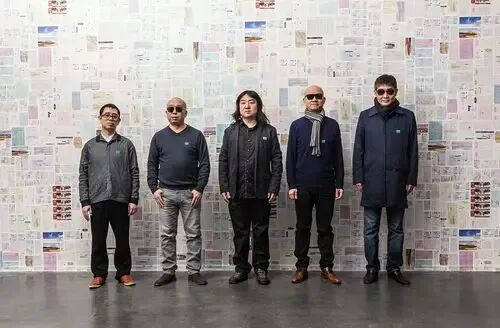
Faced with this situation, some Chinese contemporary artists seek, through their practice, to re-‘map’ and ‘pierce’ the urban space defined by consumption and power. Cao Fei’s video work ‘Whose Utopia’ records the real lives and dreams of workers in a lighting factory, cutting between the tedious production line and the dreamlike scenes of workers playing ballet dancers, thus revealing the individual emotions and desires behind ‘Made in China.’ The artist collective ‘Polit-Sheer-Form’ (members include Hong Hao, Xiao Yu, Song Dong and others) does not reside together over the long term, but organises periodic ‘group travels’ and ‘workshops.’ For instance, they have travelled to the revolutionary holy site of Yan’an, to factory workshops, to the countryside, generating creative concepts through shared observation and discussion. This ‘mobile collective life’ is closer to Benjamin’s ‘idler’ (flâneur) — it is not a traditional, commune-like cohabitation. They seek, in an age of extreme individualism, to re-explore the meaning of ‘collectivity.’ Their practice — for example, in the 2020 exhibition ‘Unity Is Strength’ at the Pingshan Art Museum in Shenzhen — re-creates the space of the ‘tube-shaped apartment building’ (water room, canteen, bathhouse), implanting the memory of collectivism into the context of contemporary art. Though this spatial transformation is not a direct cleansing, through the appropriation of architectural signs it indirectly probes the disappearance of collective life, and is precisely a microscopic intervention into, and reflection upon, present social relations.
(III) The Historical ‘State of Emergency’: The Contemporary Mission of Commemorating Benjamin
To commemorate Benjamin ultimately returns us to his core concern: history and politics. In an age that instrumentalises history and trivialises politics into entertainment, Benjamin’s thought opens up the possibility of a radical political practice charged with ethical responsibility.
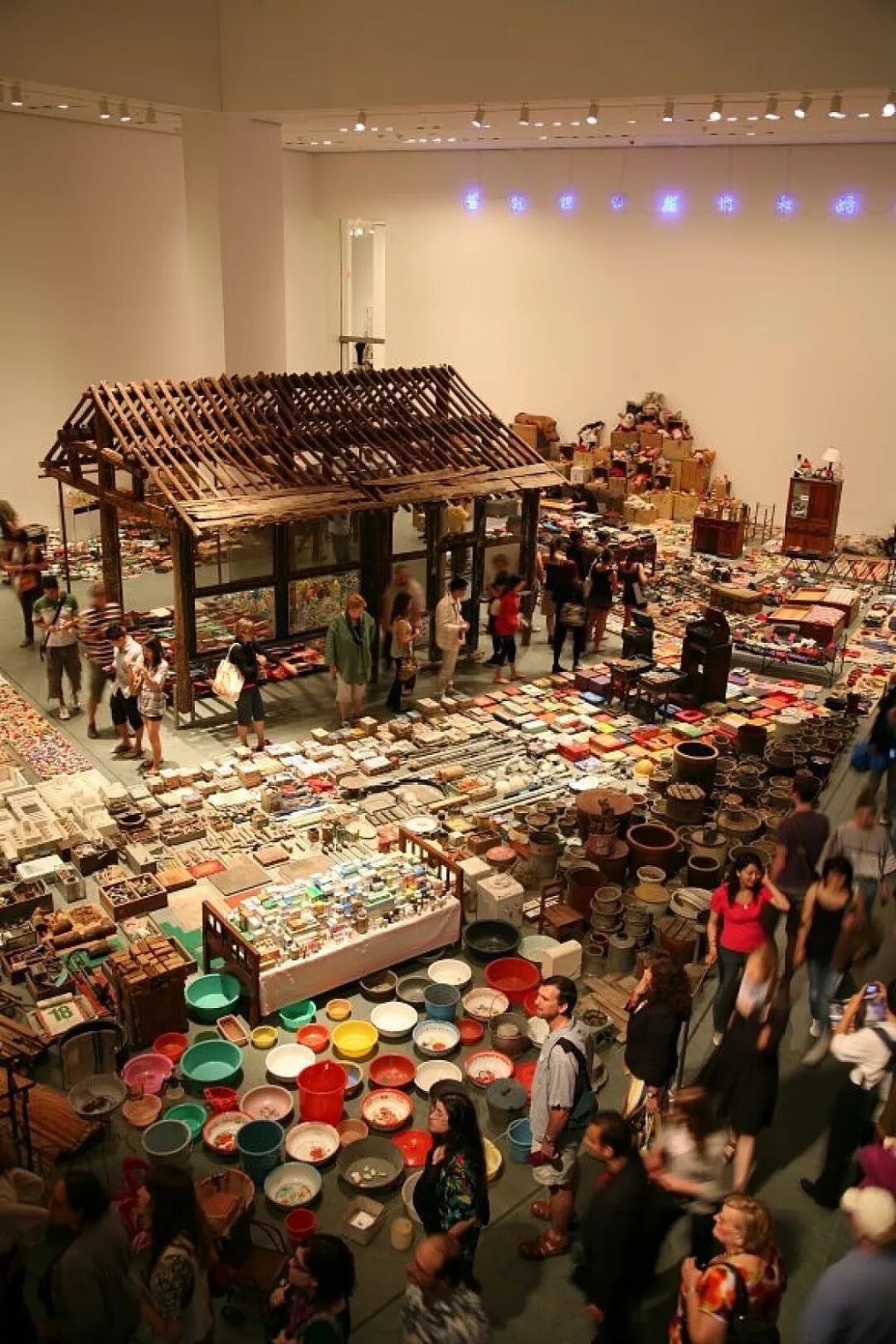
Benjamin’s obsession with ‘things’ offers us a distinctive method of critique within consumer society. In an age of ever-renewed commodities and throwaway use, the artist can become a ‘collector’ and ‘ragpicker,’ attending to the ‘things’ and ‘matters’ ignored and discarded by the mainstream. The installation ‘Waste Not’ by the artist Song Dong lays out and displays all the everyday objects his mother accumulated over decades — from toothpaste tubes to old shoes — composing a deeply moving personal and material history. Precisely through cherishing ‘waste,’ this work resists the logic of forgetting of consumerism, and thereby commemorates and understands the life-journey of an ordinary Chinese person.
Benjamin’s theory of translation also offers us profound inspiration for reflecting on China’s cultural position within globalisation. For a long time, the relation between Chinese contemporary art and the West has often been reduced to a model of ‘catching up’ or ‘confrontation.’ Benjamin’s theory reminds us that ‘translation’ is not simple imitation or opposition, but a creative transformation. The task of Chinese contemporary art is neither to deploy ‘Chinese-characteristic’ signs to gratify Western imaginings, nor simply to replicate Western artistic paradigms, but to use its own singular experience and language to ‘translate’ and rewrite the grand text of ‘modernity’ — a text of Western origin that has become a global problem. Through this ‘translation,’ a new, more complex ‘pure language’ capable of accommodating difference and contradiction may flash forth, thereby contributing a unique wisdom to global contemporary culture.
Conclusion:
Benjamin as the ‘Destructive Character,’ Opening a Future upon Today’s Ruins
How should we commemorate Benjamin today?
The answer to this question cannot, in the end, rest at the level of academic discussion and conceptual analysis. Benjamin’s legacy is not a closed theoretical system ready for direct application, but a singular intellectual posture — a mode of thinking that, atop the ruins of history, combines critique and redemption, despair and hope in a strange synthesis.
He teaches us that history is not a broad highway to the future, but a ruin that must be continuously explored and interpreted. He also reminds us that, in the age of mechanical reproduction and consumerism, the disappearance of the ‘aura’ is both crisis and opportunity, opening the way for the politicisation of art. He shows us the gaze of the ‘flâneur,’ and how, in the labyrinth of the modern metropolis, it discovers the symptoms of the age in the most insignificant everyday details. He also endows concepts such as ‘allegory,’ ‘collecting’ and ‘translation’ with wholly new critical potential, teaching us how to reconstruct meaning in a broken world.
To commemorate Benjamin means to confront the ‘state of emergency’ in which we ourselves stand — which means confronting the social ruptures brought by high-speed development, the total penetration of consumerism into the spiritual world, and the suppression of individual memory by grand narratives. It also means we must guard against any form of blind, optimistic progressivism, whether it issues from the contemporary narrative of the so-called ‘rise of a great power’ or from the myth of ‘consumption upgrading’ in the commercial market; toward all this we must maintain a ‘melancholy’ sobriety, recognising the enormous price paid behind it, so as to face more rationally the actual power and the visual ‘ostentation’ of today.

And yet Benjamin’s thought does not, in the end, lead to despair. Deep within his thought there always burns a faint yet tenacious ‘messianic’ hope — a hope that lies not in a distant utopia, but in the possibility of a revolutionary ‘pause’ contained in every ‘now-time,’ in our ability to dredge up, from the ruins of history, the unfulfilled hopes of the oppressed.
The finest commemoration of Benjamin, then, is perhaps to strive to become the ‘destructive character’ he describes. This figure ‘knows only one slogan: make way. He does only one thing: he clears a path for himself.’ He destroys, not for destruction’s sake, and still less to construct a pre-designed new world, but simply ‘to create possibilities for the things that are on their way.’ Today this means we must have the courage to clear away the clichés that clog the path of our intellectual development, whether they come from commercial advertising or from rigid academic theory. We must have the courage to confront those unpleasant ruins of reality, and to seek within them the fragments of truth.
Seen from the perspective of the art worker, this is precisely the mission that today’s contemporary artist can and should assume. In today’s global art ecology, defined and swept along by traffic and capital, the contemporary art practitioner can refuse to become a follower of trends and a producer of luxury goods, and choose instead to be the ‘flâneur,’ the ‘ragpicker’ and the ‘destructive character’ of this age — preserving an enclave of memory for our noisy, forgetful era, opening a fissure of critical, free reflection in our increasingly rigid present, and perhaps opening, for a present that seems to have no alternative, the possibility of a different future. This is perhaps the finest commemoration of Benjamin, and the most important responsibility that art can bear today.
订阅艺术评论
订阅即赠《2024中国当代艺术关键词》内部思考笔记 PDF
每周免费获取最新当代艺术批评与研究