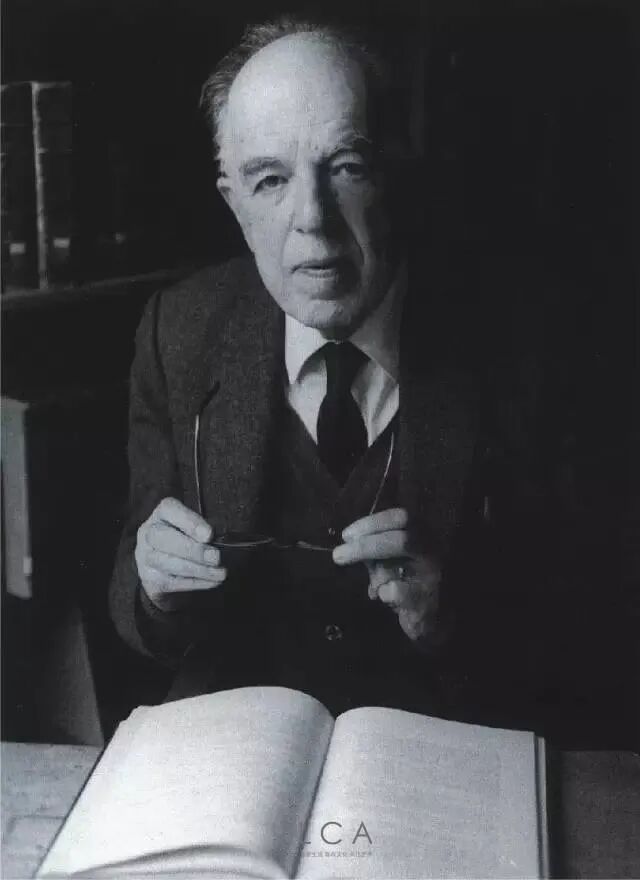
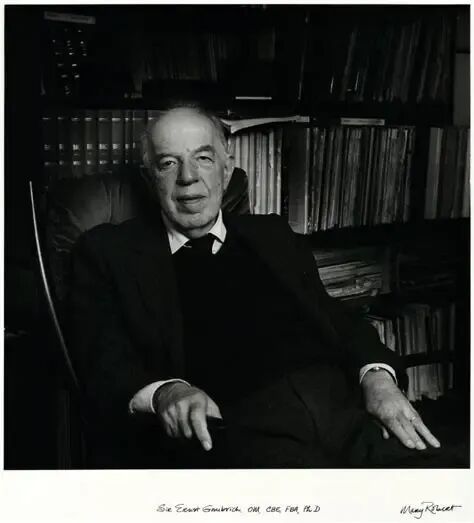
Ernst Gombrich, one of the greatest art historians of the twentieth century, shaped several generations’ understanding of art with his vast learning, lucid logic and elegant prose. His monumental *The Story of Art*, with an unrivalled clarity and wisdom, has led countless people into the temple of art, and remains to this day a paradigm in the field that is hard to surpass. Yet in today’s cultural context, so utterly different from the one in which he wrote, we cannot help but ask: is Gombrich outdated? Can a body of thought grounded in the Western classical tradition, emphasising reason and order and prizing psychological empiricism, answer a world dominated by conceptual art, digital imagery and postmodern relativism?
To address this question, we must first clarify the age we live in. The years of 2026 and beyond will be an age of ever-greater saturating images, in which social media and artificial intelligence produce and disseminate images at an unprecedented speed, overturning our ways of seeing, thinking and our aesthetic experience. It is also an age of the “inflation” of theoretical terms: the interpretation of contemporary art is often wrapped in abstruse, jargon-laden theory, yet little of it is actually usable, which deepens the gulf between art and the public, prevents any general uplift in the understanding of art, and leads shows to be taken down the moment sensory satisfaction is absent. At the same time, it is an age rife with “-isms”: the standards of “beauty” and “ugliness”, “good” and “bad” grow blurred, and the slogan “anything can be art”, from an avant-garde posture, has gradually degenerated into a cynical bewilderment.
Upon this ocean thick with theoretical fog and floating icebergs of aestheticisation, Gombrich’s thought appears precious. To commemorate him is not to treat him as a conservative, old-fashioned scholar nostalgic for the past, but to recognise that the rationalism, humanism and critical thinking he upheld all his life are precisely the intellectual resources most scarce and most needed in our present. He devoted his life to opposing all forms of vagueness, hollowness and intellectual laziness — whether the Hegelian grand narrative of the “spirit of the age”, or the Freudian over-sexualised interpretation, or the obscurantism fashionable in contemporary art criticism. This encyclopaedic old man seems always to have reminded us: before a complex artistic phenomenon, the first question is not “what -ism does it belong to?” but “what problem was this artist trying to solve? How did he make use of and revise the tradition he inherited?”
The most precious legacy Gombrich left us is not a fixed set of conclusions, but a prudent, lucid, truth-seeking scholarly attitude and method of thinking. Amid the clamour that “anything can be art”, he reminds us that art still concerns craft, tradition, order and the pursuit of meaning; in a day when images can be infinitely copied and manipulated, he warns us that seeing is an intellectual activity that demands training and reflection. Added to his definition of the nature of art history, his deep insight into the psychology of pictorial representation, and his defence of a shared human sense of order and of humanist values, all this is invaluable and cannot be ignored. On another level: I was born on 3 November thirty-seven years ago, and Mr Gombrich died on 3 November more than twenty years ago; it seems as if some hidden coincidence in the continuity tells me of the responsibility borne by a worker in art theory — a way of thinking one should uphold and disseminate, that is, to think as he did: with clarity against vagueness, with evidence against empty talk, and with a deep faith in the human mind and tradition, against the restlessness and emptiness of the present age.
I.
The cornerstone of Gombrich’s system of art-historical thought begins with an assertion that seems simple yet is profoundly subversive — the opening sentence of *The Story of Art*:
“There is, in fact, no such thing as art; there are only artists.”
Far from being a modest pleasantry, this claim is his resolute challenge to the Hegelian spectre that has dominated art-historical research since the nineteenth century. It constitutes the logical starting point of all Gombrich’s thought: to pull the focus of research back from the abstract, metaphysical concept of “spirit” to the concrete, empirical practical activity of “human beings”.
(i) Settling Accounts with the “Spirit of the Age”: from Abstract Collective Will to Concrete Individual Choice
Since Hegel, a powerful intellectual tradition has appeared, which treats art as the objectified expression of the “spirit of the age”. In this conception of history, the work of art is no longer the product of an artist’s individual choice and creation, but the necessary manifestation of the collective spirit of an age, a nation, a civilisation at a specific historical stage. Whether it is the “artistic will” (Kunstwollen) proposed by Alois Riegl, or Wilhelm Worringer’s attempt to explain stylistic change through the “urge to abstraction” and the “urge to empathy”, all draw, more or less, on this dividend of ideas. Art history is written as a grand narrative of successive grand “-isms” and styles, while the individual artist is seen as a tool passively, unconsciously executing the commands of the spirit of the age.
Gombrich offered the most severe criticism of this. In several collections such as *Art and the Humanities*, he repeatedly denounced this mode of thought as a “myth of collectivism” and an “intellectual shortcut”. He held that attributing the rigidity of Egyptian art to a so-called “Egyptian spirit”, or the sublimity of Gothic architecture to a “medieval spirit”, is not an explanation at all but mere tautological description. It replaces the analysis of concrete problems with another, grander abstract concept that itself demands explanation. This practice abandons the historian’s responsibility to pursue causal relations, reducing complex historical phenomena to a mysterious, unanalysable collective will.
Gombrich insisted that the art historian must resist the temptation to personify collectives (such as “the age”, “the nation”). In *Ideals and Idols* he stated plainly that an age has no “spirit”; only the men and women who lived in it, with their different thoughts and aims. The causes of the formation and change of artistic style should not be sought in the “spirit of the age” up in the clouds, but explored in the “workshop” down on the ground. The art historian should attend to the concrete artist, who, under specific social circumstances and conditions of patronage, facing the artistic tradition and technical means he has inherited, tried to solve what concrete “problem”.
Having rejected the “spirit of the age”, Gombrich offered a wholly new explanatory model for the evolution of art history, namely “making and matching”. This model no longer sees art history as a drama of styles but as a technical history of artists continually solving problems. No artist creates on a blank sheet; he always inherits a set of formulae, techniques and representational devices handed down by his predecessors, which Gombrich calls “schema”. The artist’s task is to apply and revise these schemata so that they can “match” the reality he wishes to represent or the idea he wishes to express.
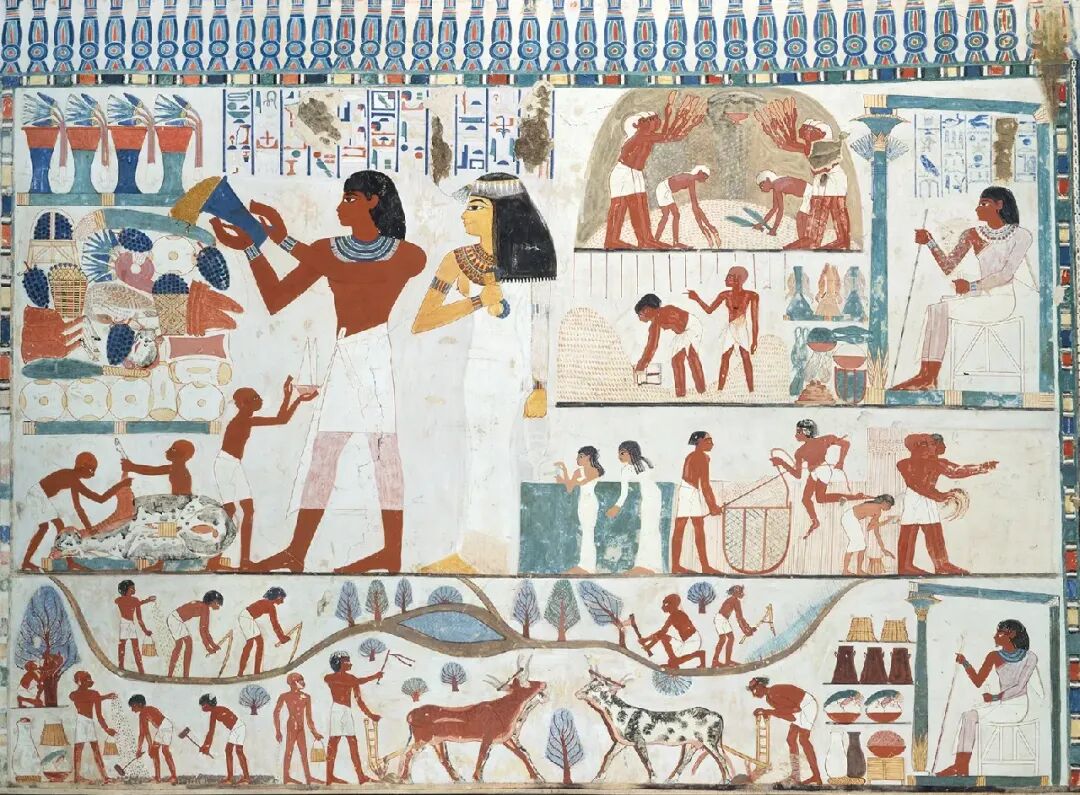
Take the evolution of ancient Greek art as an example. The traditional explanation might attribute it to the Greeks’ “spirit of loving freedom”. Gombrich, in *The Story of Art* and *Art and Illusion*, offers a more persuasive explanation. He argues that the reason ancient Egyptian artists adopted a rigid, conceptual frontality is that their artistic function was “making” rather than “matching” — that is, to create a magical, eternal bodily substitute, not to record an accidental visual instant.
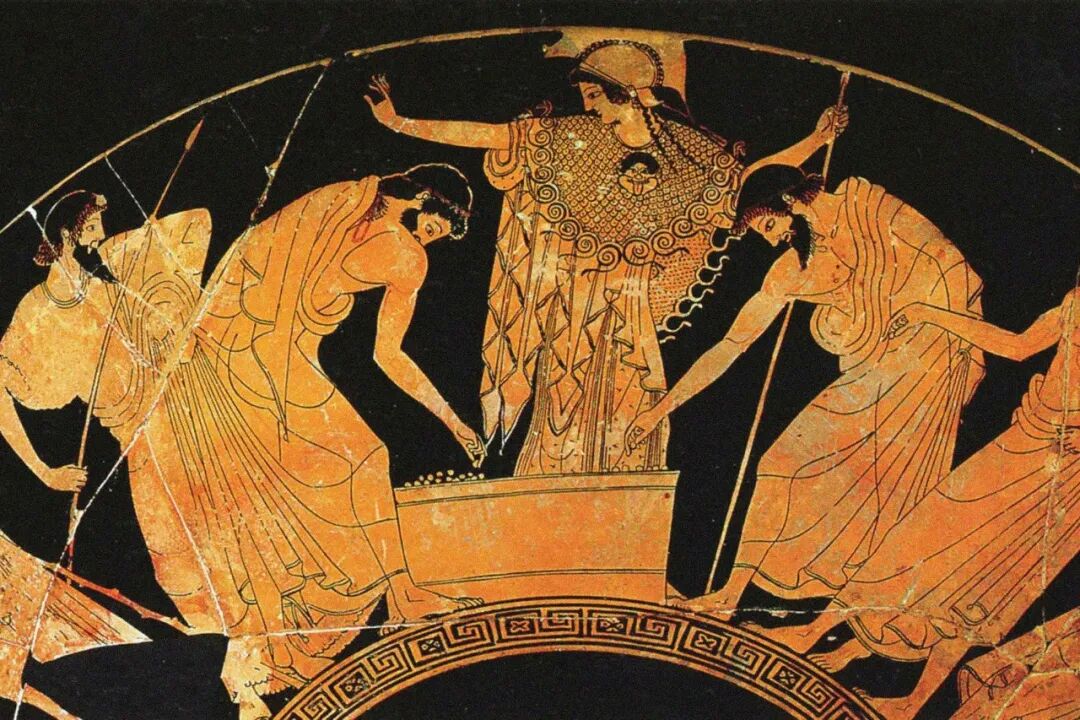
The ancient Greek artists, meanwhile, faced a new task: how to tell the stories of heroes from the Homeric epics, which demanded that they express emotion and movement. So they began to revise the Egyptian schema, using “foreshortening” to render depth, and anatomical observation to render the twisting of the body, thereby step by step freeing vivid forms from the rigid formulae. This process was not the mysterious emergence of a “free spirit”, but the cumulative result of generations of artists, in solving the concrete technical problem of “how to represent a three-dimensional, dynamic human body on a two-dimensional plane”, continually experimenting and accumulating.
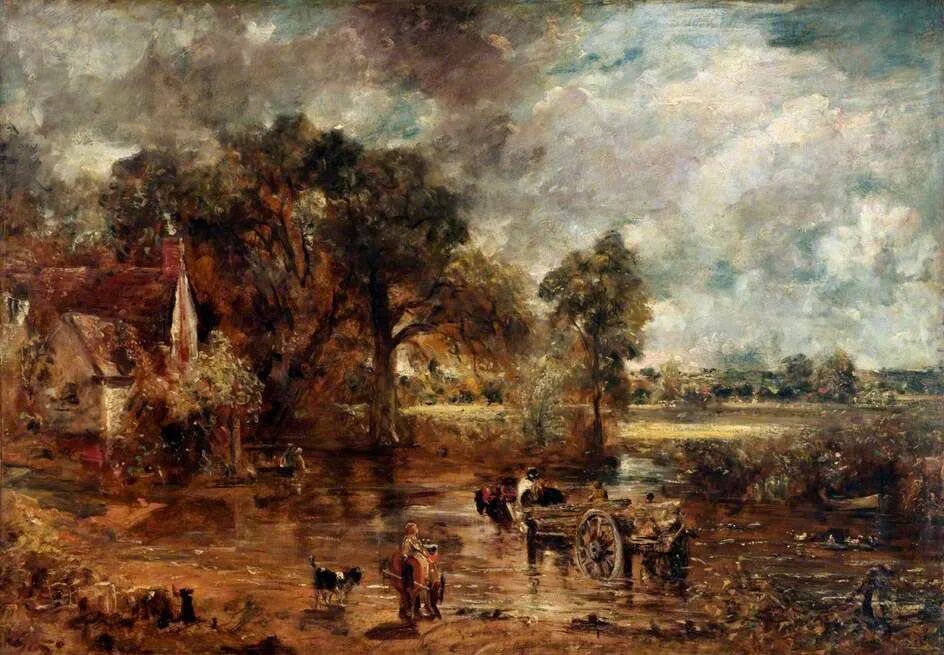
Likewise, his explanation of Impressionism follows this logic. He held that Constable and others, through direct observation of outdoor light and colour, had already begun to revise the formulaic, brownish tonalities of classical landscape painting. The Impressionist painters, Monet among them, pushed this exploration to its extreme. The problem they faced was: how to capture on the canvas, at a specific moment, the fleeting visual impression made by light on the surfaces of objects? To solve this, they developed the technique of rapid, broken brushstrokes and juxtaposed colour. This did not spring from some vague feeling about “modern life”, but was a technical solution to a very concrete painterly problem. The success of this solution in turn posed a new problem for later painters such as Cézanne: how to restore the solid structural sense of classical painting while retaining the Impressionists’ truth to light and colour. Thus art history flows on like a river, in a chain of “problem — solution — new problem”.

This core idea of Gombrich has real significance for how we understand and evaluate contemporary art today. The contemporary art world is crammed with grand labels and “-isms”, anxious not to fall behind in catering to such conceptual tags as “postmodernism”, “globalisation”, “the Anthropocene”. Critics and curators readily class an artist’s work under some current, and explain it as a response to a certain “condition of the age” — myself included; for many years my art-critical work on contemporary art became a kind of cross-disciplinary exposition of art. Reflecting anew today, this very practice is a variant of the “spirit of the age” mode of thinking that Gombrich warned against.
Following Gombrich’s line of thought, when we face a contemporary artwork we should restrain the impulse to stick on labels. We should ask: what “schema” is this artist (say, one who creates with artificial intelligence) trying to inherit? (It might run from Duchamp’s idea of the readymade, through Nam June Paik’s video art, to the tradition of net art.) What concrete artistic problem is he or she trying to solve with AI as a new technical means? (Is it about the death of authorship? About the human–machine relation? Or about a change in the logic of image production?) What concrete advance or revision does his or her solution represent, compared with earlier artists (say, one who works with photography)? And so on.
Although past problems cannot solve the future, the value of art still lies in the next work. But this “logic of the workshop” may rescue us from the messy, hollow grand discourses about “contemporaneity”, letting us enter the artist’s workplace in a more prudent, more concrete way, solving problems through “context”. It reminds us that, even today when “anything can be art”, serious artistic creation remains an intellectual and technical activity that faces tradition and solves problems — always a continuation of context. This also gives us a criterion of judgement: a good contemporary artwork lies not in whether it fits some fashionable theory, but in whether it proposes a forceful, illuminating solution to some problem in the artistic tradition or in the broader cultural tradition of humanity. It need not be fashionable, but it must be useful. We are used to shedding tradition with great courage and thus becoming “homeless”, yet find it hard to rebuild a primary language of ideas. Today, in commemorating Gombrich, we must above all take up again his down-to-earth, anti-essentialist, artist-centred method of art history.
II.
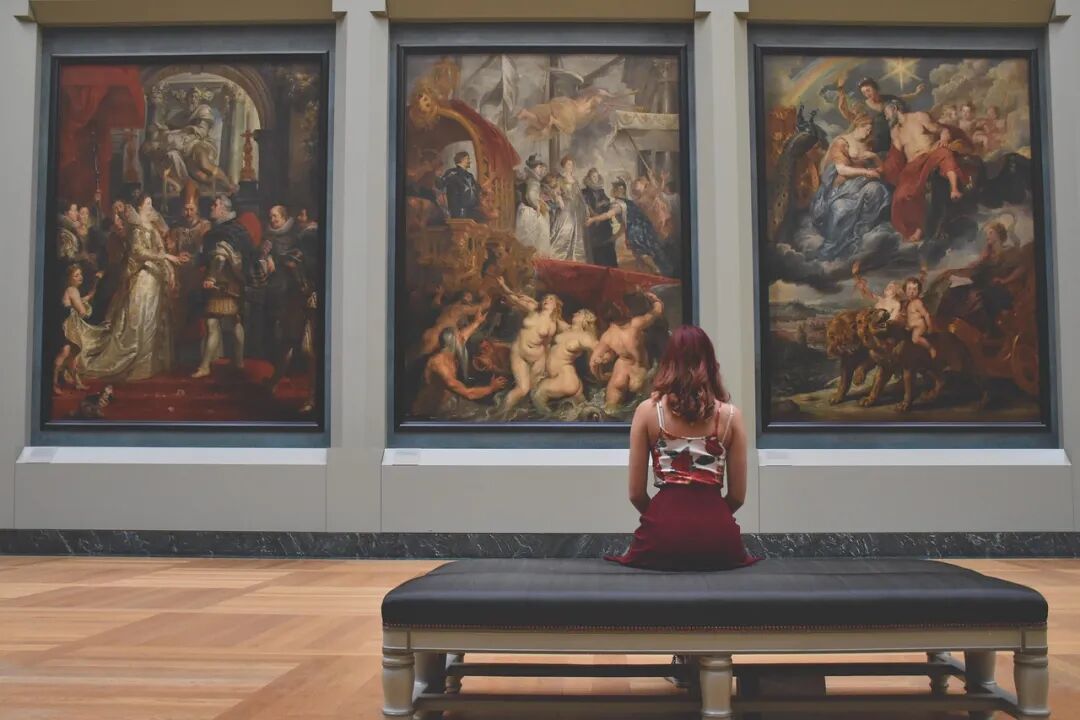
If “there are only artists” constitutes the starting point of Gombrich’s art-historical research, then his profound analysis of the act of “seeing” itself is the most original and revolutionary part of his system. In *Art and Illusion: A Study in the Psychology of Pictorial Representation* and *The Image and the Eye*, Gombrich systematically drew on Gestalt psychology, perceptual psychology and information theory to overturn thoroughly the traditional notion, held since Plato, that “seeing” is a passive, mirror-like reflection of reality. He argued eloquently that seeing is an active, constructive mental activity, and that the creation and reading of images is a complex interaction between artist and viewer based on formulae and expectations.
(i) The “Innocent Eye”
One of the central opponents of Gombrich’s thought is the myth of the “innocent eye”. This myth holds that an ideal artist should be like a pure mirror or a photographic plate, discarding all preconceptions and faithfully recording the light and colour projected onto his retina. This notion reached its peak in nineteenth-century naturalism, especially in certain theories of Impressionism.
Gombrich pointed out that this “innocent eye” simply does not exist. None of our acts of seeing is a passive reception, but an active quest and classification. Our perceptual system, in order to function effectively in a complex world, must rely on a set of presupposed “frames of expectation” and “classificatory systems”. When we see a blurred distant view, our brain actively interprets it as “mountains” or “clouds”, a process that depends on our past experience and knowledge. We do not first see and then interpret; at the very instant of seeing, interpretation has already occurred.
Gombrich called this pre-existing framework of knowledge, in the sphere of art, the “schema”. The artist, facing nature, does not start from zero, but from the representational “paradigm” or “schema” he has learned and inherited from tradition. For example, a medieval painter depicting a city might not sketch from life, but use a general schema for “city” (say, a ring of walls around a few towers), then add one or two landmark buildings to distinguish it. Artistic progress does not arise because the artist sees “more truly”, but because he continually “revises” the existing schema with his observation, so that it can contain more and more accurate information. The reason Constable’s landscapes appear so “real” is not that he possessed an “innocent eye”; on the contrary, it is that he had a rich knowledge of the forms of clouds and trees and the changes of light and shadow, and guided by this knowledge boldly revised the traditional schema of Dutch landscape painting. Hence art history is “a history in which schemata are continuously created, applied and revised”.
(ii) “The Beholder’s Share”
Since the creation of images depends on schemata, the reading of images likewise cannot do without the viewer’s active participation. Gombrich called the psychological effort the viewer expends in interpreting an image “the beholder’s share”. However “realistic” a painting may be, it cannot contain all the information of the real world. It is necessarily elliptical, allusive. It is precisely the viewer who, drawing on his own knowledge, experience and expectations, fills in these “blanks”, interpreting those colour patches and lines on a two-dimensional plane as a vivid, three-dimensional scene.
This is especially evident in cartoons and stick-figure drawings. The reason a sketch of a few strokes can make us recognise a particular person is not that it resembles that person physically, but that it successfully captures the most crucial, distinguishing feature (say, a large nose) and triggers the “schema” we already have in our mind of that person. In Gombrich’s *Meditations on a Hobby Horse* we read that central metaphor: a simple stick can “stand for” a horse in a child’s game, because it satisfies the core “function” of “riding”, without needing any visual resemblance to a horse. This shows that the essence of representation is “functional substitution”, not “formal imitation”.
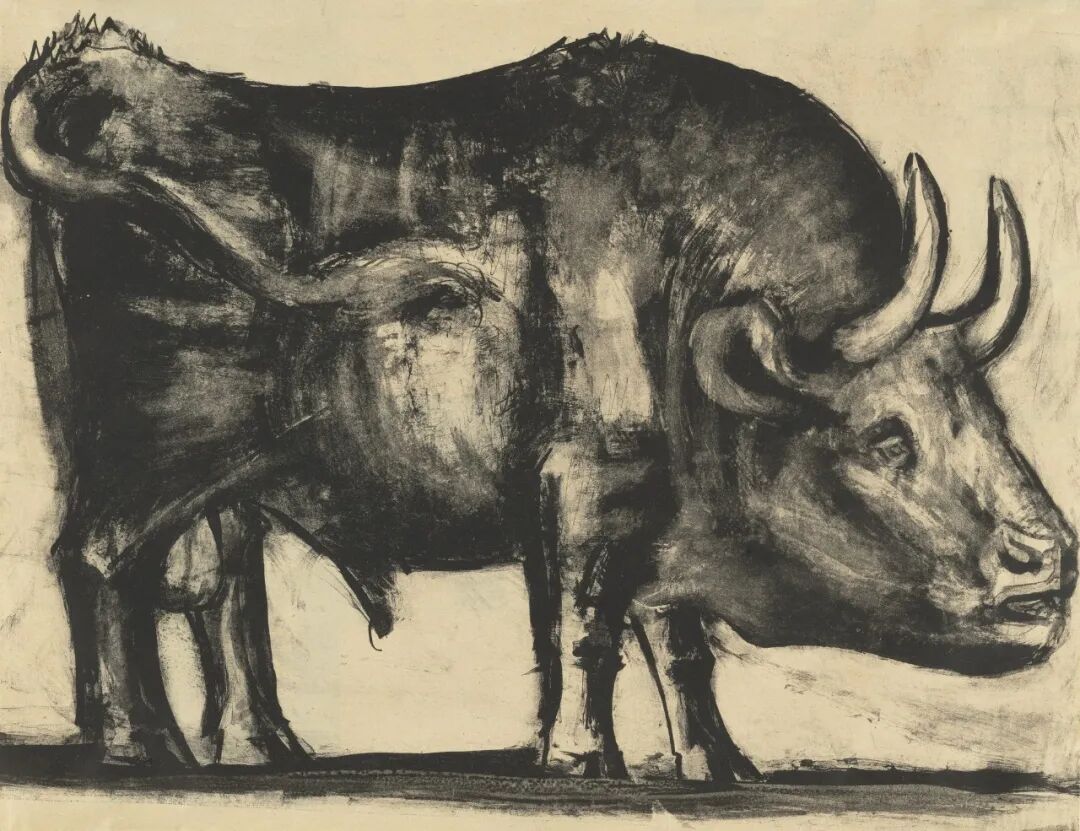
Thus there exists a tacit “collusion” between artist and viewer. The artist relies on a shared set of cultural codes and habits of seeing; he “bets” that the viewer can read his hints and actively participate in the construction of meaning. When Picasso combined a bicycle seat and a handlebar into a sculpture titled *Bull’s Head*, he exploited precisely our capacity to associate these two forms. And when we admire Rembrandt’s etchings, our brain automatically “sees” those interwoven, broken lines as textured robes and emotionally charged faces. This conversion from “seeing” to “reading” is precisely the embodiment of “the beholder’s share”.
(iii) “Critical Seeing” for Today
Gombrich’s psychological theory of seeing has an unprecedented urgency and relevance in today’s age, flooded as it is with digital images. Every day, through phone screens and social media, we consume hundreds and thousands of images that have been carefully selected, retouched, even AI-generated. These images shape our desires, ideas and cognition of the world with an unprecedented efficiency.
First, Gombrich’s theory is the most powerful “antidote” for the digital age. It reminds us that any image — whether a news photograph, an advertisement, or an influencer’s selfie — is not a transparent reflection of reality. All are “made” on the basis of specific “schemata” and “formulae”, for the purpose of “matching” a specific communicative effect. When we see a perfect travel photo, we should realise that behind it may lurk a visual schema of the “ideal holiday”, which omits the crowds, the bad weather and the fatigue of the journey. When we see a portrait of a non-existent person generated by AI, Gombrich’s theory helps us understand that AI succeeds precisely because it has learned and mastered the countless “schemata” of human portrait photography. All images are a “purposeful collusion” that demands our vigilance.
Second, the theory of “the beholder’s share” demands that we take on a greater “responsibility of seeing” today. In traditional art, artist and viewer share a relatively stable set of cultural codes. But in today’s globalised, fragmented world, the maker and the viewer of an image may come from entirely different cultural backgrounds, which makes misreading and manipulation unusually easy. An image that is ironic in one context may be read as hate speech in another. Therefore cultivating a “critical capacity for seeing” becomes vital. This means that, when viewing any image, we should actively think: who made this image? What visual schemata and devices did he or she use? What emotion or belief does this image want me to feel? And what presuppositions and expectations did I myself project in reading it?
Gombrich’s entire enterprise of art history is in fact a long education in visual literacy about “how to see”. He taught us that seeing is not a passive consumption but an active, trainable intellectual and emotional activity. Looking back at the academic peak Mr Gombrich left behind, the truly important point is to disseminate his prudent, erudite, reflexively spirited “way of seeing” as a general civic literacy, so as to resist the shallowness and manipulation of the digital-image age.
III. In the Later Phase of Gombrich’s Thought
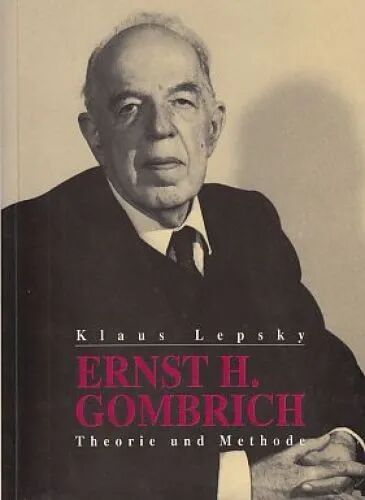
In the later phase of Gombrich’s thought, as contemporary art moved ever more towards conceptualisation and nihilism, and the humanities themselves came under the impact of postmodern currents, the centre of gravity of his research turned ever more visibly towards a defence of shared human psychological needs and humanist values. In another theoretical magnum opus, *The Sense of Order: A Study in the Psychology of Decorative Art*, and in the polemical collection *Ideals and Idols*, he expressed explicitly his anxiety about value relativism, and sought a firm foundation for art and humanistic research that transcended fashion and dogma.
(i) The Psychology of Ornament
*The Sense of Order* can be read as the companion volume to *Art and Illusion*. If the latter deals with the problem of “matching” in representational art, the former tries to explore the psychological roots behind non-representational decorative art. Gombrich held that the universal presence and enduring appeal of decorative art spring from a deep, cross-cultural psychological need of humankind: the pursuit of “order”.
Facing a world full of change and chance, the human mind is innately inclined to seek and create patterns, rhythms and structures. This need for a “sense of order” is evident in our preference for symmetry, repetition, rhythm and clear geometric form. Decorative art — whether the intricate arabesques of Islamic architecture, the interlaced patterns of Celtic manuscripts, or the continuous motifs on Chinese porcelain — satisfies and sublimates this psychological need. By creating a predictable, regular visual environment, they afford us a sense of stability and pleasure.
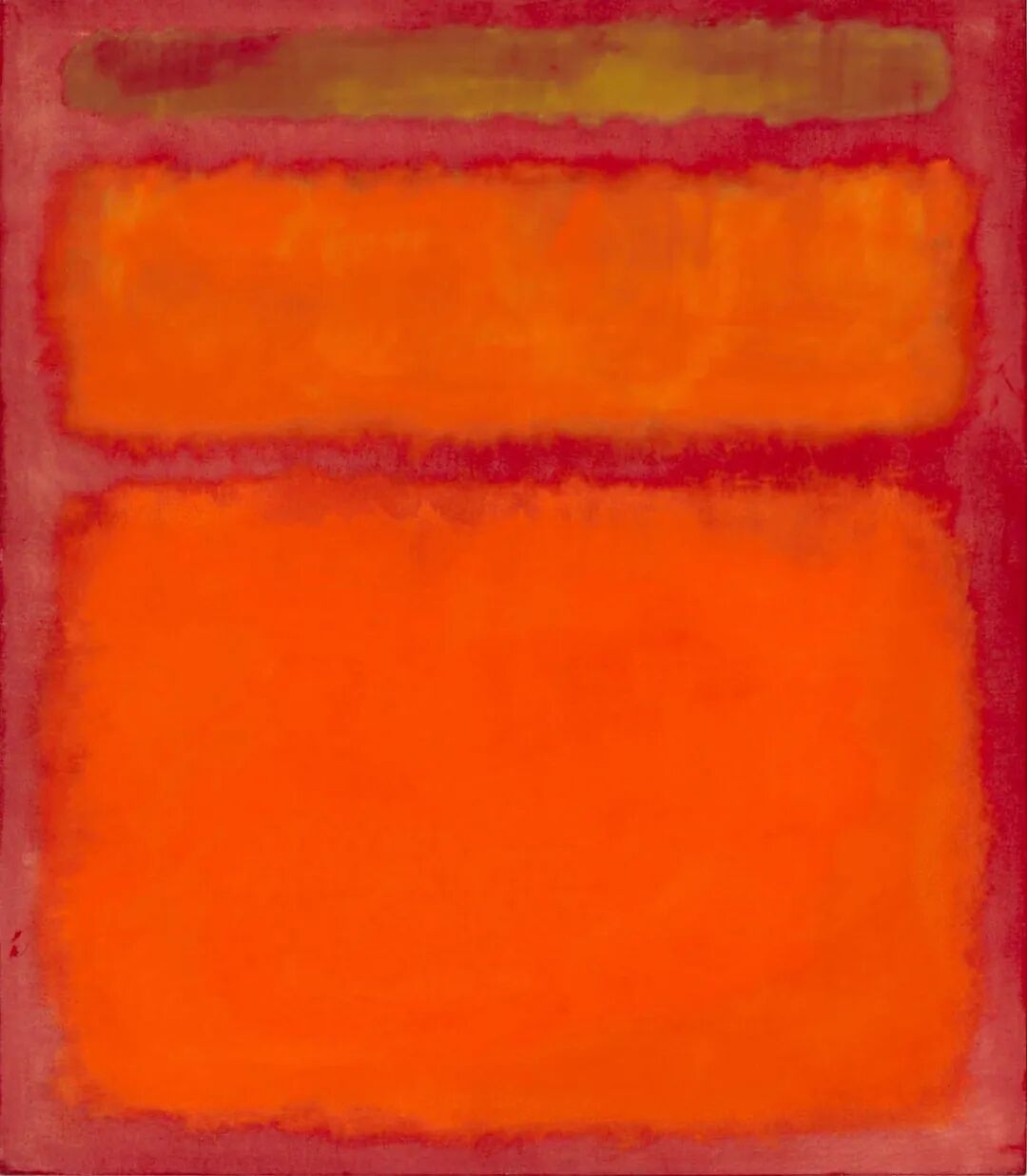
This argument of Gombrich’s has profound theoretical significance. It shows that even without representational content, artistic form itself can resonate with our deep psychological structures. This provides us, in evaluating abstract art and design, with a frame of reference that transcends “pure form” or “personal taste”. A good abstract work or design perhaps succeeds precisely because it creates a complex, vital visual structure that can stimulate our “sense of order”. This theory also constitutes his latent critique of certain contemporary art practices. When a work is content merely to present chaos, chance and disorder, it may abandon one of art’s oldest and most fundamental functions: to provide a home for the human mind’s need for order.
(ii) Ideals and Idols
*Ideals and Idols* is Gombrich’s manifesto as a humanist combatant. In it, he turns his spear against the “idolatry” that, as he sees it, is corroding the health of the humanities: the uncritical blind faith in all manner of fashionable theories (such as psychoanalysis, structuralism, Marxism), the fascination with obscure terminology, and ultimately the value relativism that leads to “anything goes”.
Gombrich firmly believed that the core value of the humanities lies in the pursuit of “truth”, even if that truth is provisional and corrigible. Borrowing the idea of “falsificationism” from his friend, the philosopher of science Karl Popper, he held that the value of a theory lies not in its ability to explain everything, but in its capacity to make clear, testable and refutable predictions. He criticised many popular humanistic theories as “universal ointments” that can explain any phenomenon — and precisely for that reason have lost any real cognitive value.
He defended the humanist “ideals” forcefully: these ideals include clear thinking, lucid language, respect for evidence, openness of mind and a prudent attitude towards tradition. He argued: tradition is not a dead dogma that binds us, but the crystallisation of the wisdom of generation upon generation, the starting point we must dialogue with in any innovation. The task of the artist and the scholar is not to worship tradition as an “idol”, but, in dialogue with and criticism of tradition, to separate the true from the false and seek out the “ideals” that can illuminate our present.
This stance put him at odds with many mainstream postmodern and post-structuralist thinkers of the late twentieth century. When Foucault declared “the death of man”, and Derrida set about deconstructing the West’s logocentrism, Gombrich still held fast to the Enlightenment conviction — the belief in the power of reason and the dignity of the individual as a moral subject. He was not unaware of the crisis of modernity, but he believed that the remedy for crisis was not to abandon reason, but to exercise it better and more prudently.

(iii) Where Does the Value Lie Today?
Gombrich’s adherence to “order” and “value” is especially important, even somewhat untimely, in today’s contemporary cultural environment so often tagged with “deconstruction”, “decentring” and “anti-narrative” — and precisely because it is untimely, it is precious.
First, when contemporary art is often characterised by radical concept and casual form, Gombrich’s “sense of order” reminds us not to dismiss formal rigour lightly as outdated “formalism”. The human psychological need for formal order is real. However radical a work may be in concept, if its formal presentation is crude and casual, the affective power it can produce is bound to be limited. Conversely, many great contemporary artists — such as the Minimalist Donald Judd or the conceptual artist Sol LeWitt — base their work precisely on an extremely rigorous, almost mathematical inner order. Their practice proves that conceptual depth and formal order are by no means mutually exclusive.
Second, Gombrich’s distinction between “ideals and idols” provides the sharpest weapon for criticising the “theory fetishism” of the contemporary art world and academia. Today, the prefaces of many exhibitions and critical essays are stuffed with intimidating terms borrowed from Continental philosophy, whose function is often not to illuminate the work but to complicate the simple work, or to confer a spurious profundity on the mediocre. Gombrich would unsparingly denounce such behaviour as a kind of intellectual dishonesty. He advocated the courage to ask the “emperor’s new clothes” question: strip away the theoretical trappings, and what exactly does this work itself show us? Does it offer a unique visual experience or a profound emotional insight?
Finally, his defence of tradition and value offers a precious balance in an age that over-praises “rupture” and “subversion”. He reminds us: any genuine innovation can occur only in dialogue with tradition. “Innovation” that wholly ignores tradition often merely repeats errors the predecessors long ago committed.
This is especially important in contemporary art education. When many art academies abandon systematic training in traditional skills such as painting and sculpture, and directly urge students into “conceptual expression”, Gombrich’s warning merits deep thought. For, as he showed, the great tradition of art history is itself a vast treasury full of wisdom, skill and solutions; to abandon it outright is no different from sending young artists into the complex contemporary world “bare-handed”.

How then should we commemorate Gombrich today? The answer is absolutely not to enshrine his thought as a new dogma, for that is precisely the idolatry he opposed all his life. Gombrich was not a conservative old man of limited taste who rejected contemporary art. In the final edition of *The Story of Art* he also tried to understand and analyse the work of figures such as David Hockney and Frank Stella. What he opposed was not contemporary art itself, but the bad, dishonest, anti-rational modes of argument that surround it.
This means that, as viewers of art, we should strive to become the “active” viewers Gombrich spoke of. Facing contemporary art, we should not lightly give up because of its surface obscurity, nor blindly accept the theoretical labels supplied by curators or critics. We should, as Gombrich did, try to enter the artist’s “workshop”, to understand the concrete problem he or she was trying to solve, to analyse his or her complex relation with tradition. Facing the ocean of images in mass media and on the internet, we should stay vigilant, applying his theories of “schema” and “the beholder’s share” to discern the rhetoric and manipulation behind images, becoming visually literate, active “readers” of images rather than passive consumers.
This means that, as creators, critics, curators or educators of art, we should take Gombrich’s adherence to clarity and reason as a professional ethic. We should strive to speak complex thought in clear language, resisting the seduction of academic jargon. We should respect tradition, not in order to imitate blindly, but to draw wisdom and strength from it. We should believe that art, however its forms may change, has as its core mission still to deepen our understanding of the world and of human nature, and to provide a home for that eternal “sense of order” in the human heart.
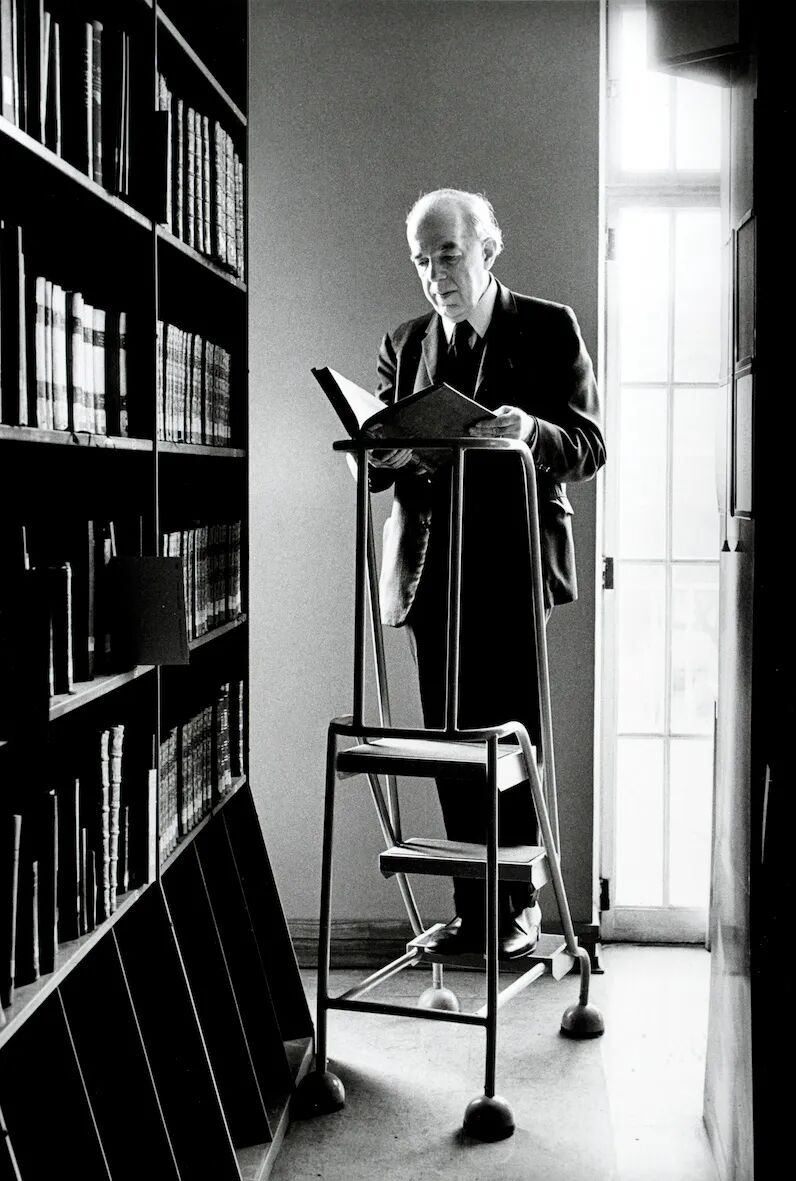
In his later years Gombrich felt anxious about the “anti-art” tendency in the art world. In the postscript to the 1994 edition of *The Story of Art* he confessed: “to record, analyse and teach such ‘anti-art’ in all seriousness is somewhat awkward to me… yet I cannot foresee how far the child’s notion must travel before the distinction between art and other non-art is blurred.” This perhaps exposes the historical limitation of his thought; he may have underestimated the profound logic of the conceptual-art tradition since Duchamp. Yet even if we disagree with his specific conclusions, the way he poses the question remains profound. What he worried about was art’s abandonment of its pursuit of being a human excellence with standards and values, sinking into a game of “anything goes”.
Today, as we commemorate this great art historian, we may perhaps answer his worry thus: yes, the distinction between art and other non-art may have blurred, but the distinction between meaningful and meaningless art, between sincere exploration and false gesture, between works that enrich our perceptiveness and works that merely consume our attention — these distinctions still exist. And Gombrich’s entire oeuvre is precisely the best guide to teaching us how to make these vital distinctions. This is the value he holds, today and eternally.
订阅艺术评论
订阅即赠《2024中国当代艺术关键词》内部思考笔记 PDF
每周免费获取最新当代艺术批评与研究