In China, just how hard is it for a girl to grow up safe and sound?
I remember, long ago, when I was still a boy, asking online: why do some people fixate on underage girls? I recall someone answering that it is like eating a strawberry — a ripe, sweet, plump strawberry may yield only a tactile, physical pleasure, whereas an unripe strawberry, one hovering on the edge of maturity, can yield not only physical but also a psychological, imaginative pleasure. In his own words: “Think of how that strawberry will one day be enjoyed by one man — but I was the first to enjoy her, before she ripened. Deep down, that still gives me a sense of superiority.”
I never understood how such people think, yet in the years that followed I grew up unafraid. Having passed thirty, I have seen the experiences of children like these every year. Look at the relevant figures: between 2013 and 2016, there were 1,401 cases of child sexual abuse reported in the domestic media, with more than 2,568 victims — and that counts only the cases that made it into the open; a great many more were never exposed. From 2013 to 2016, the country’s courts concluded 10,782 trials for child molestation, an average of more than seven child-molestation trials a day. It is a heart-rending figure, and every time I am inevitably drawn back to that online answer: must a strawberry be picked while still small?
The case of Bao Yuming, vice-president of ZTE, has been the subject of endless heated discussion of late. One detail caught my attention: this man in his forties would snuggle against the legs of a fourteen-year-old girl and, like a child, call out, “Mummy, I’m your baby.”

I read that almost tear-inducing report about a child whose entire world consisted of her stepfather. I think of my sister and the children in my own family; fortunately they are lucky, but there is no cause for celebration, for, judging by the figures above, right now, as I write this, countless girls are living inside a nightmare. The only thing I want to do is to raise some questions. These things must be done sooner or later; we all need to ask ourselves whether we have taught the children around us to protect themselves properly, whether we have given them the right sex education — rather than leaving them, like the fourteen-year-old in the report, to feel “deeply ashamed” at having someone “use their body against them”. If only we had been aware early on, this tragedy might have been averted. We cannot eliminate the deviant impulses of others, nor can we stay at a girl’s side every moment of the eighteen years before she grows up; the boys around her, every adult man she meets, the male relatives close to her — any of them could subject her to such a nightmare. What we can do is help the saplings mature and grow strong, and speak out about the environment around us, so that these undeveloped saplings may grow up as healthy as possible.
It had been less than a hundred days since the case of Professor Yao Shunxi of the Central Academy of Fine Arts, who molested a female student, when the Bao Yuming case emerged; his nominal daughter had already attempted suicide more than once. In the dozen-odd days that followed, several more cases of minors being sexually assaulted surfaced online. One could say it is almost impossible to prevent such behaviour entirely — it is merely a matter of “the probability of being lucky.”
I. Why do such near-perverted people keep appearing?
I think of Bao Yuming, who had risen to vice-president of a listed company; when he felt sexual desire, there can hardly have been a shortage of young women around him. To take a step back, he had more than enough money to pay for special services, to keep a mistress, or to arrange a casual hook-up. Why would a physically whole, intellectually able middle-aged man set his sights on a fourteen-year-old girl?
At root, medicine explains this inclination as paedophilia. Paedophilia is defined in various ways; the traditional definition largely confines it to sexual contact between an adult and a child to whom he is not closely related. When a man within a family molests his underage daughter or adopted daughter, that is incest or intra-familial child molestation. Such individuals frequently experience sexual arousal fantasies, impulses, or acts, usually sustained for more than six months — yet not everyone diagnosed with paedophilia goes on to offend against children. From fantasy, to sexual touching, to penetration is still a process. One might call this an invisible time bomb planted at our very side.
Such invisible time bombs are not few. A certain country once conducted a study in which 5–10 per cent of 1,200 randomly selected men admitted to such thoughts, or to having sexually assaulted a child at some point in their lives. Moreover, sexual abuse is directed predominantly at girls. Another survey found that between a quarter and a third of all women in that country were sexually abused or molested in childhood. And most such abuse is perpetrated by someone known to the victim.
What is sexual contact? Why do our children give these people the opportunity?
There is a kind of case in which a child actively seeks the caresses of the person who violates them — and who knows whether that person’s mind is sound? When a child seeks hugs and cuddles and feels affection and fondness for the abuser, that becomes what the abuser calls “seduction”. Bao Yuming has said that his child was willing; clearly he treats his daughter as a willing participant, reading the child through the lens of “initiative”. One can imagine that, at first, this kindly and erudite stepfather became a pillar of support, and embraces, cuddles, and other forms of contact were bound to follow. When an adult repeatedly experiences intense sexual urges or fantasies about engaging in sexual contact with a pre-pubescent individual, a story like that of Lolita can begin to unfold.

A child’s own initiative in making contact is one factor. Another is that this type of paedophile wishes to control and dominate another person, and thus longs for an ideal childhood — innocence, unconditional love, simplicity. Some research therefore suggests that paedophiles are most often shy, insecure, passive adult men who approach children because only in a relationship with a child can they experience a sense of control.
Such insecure men must, in their life experience, have known a period of insecurity in emotional relationships and a lack of adult love. They can easily control a child — giving gifts, offering praise, sharing secrets — thereby winning the child’s affection. One might say these are things we cannot refuse; who would turn away someone who dotes on our child? When the wife of Bao Yuming’s adopted daughter first met him and saw how friendly he was towards his own child, it was undoubtedly a point in his favour in a woman’s eyes. Yet in a foreign case, a man named Joseph who likewise sexually abused his own daughter said that his abuse of her fulfilled the sexual impulses he had been unable to act out with his own mother; driven to rape his daughter because he urgently wanted to taste the forbidden fruit, his compulsion became an addiction he did not know how to stop, and his daughter thus became his sex slave for twenty-four years.

In truth this is just a form of self-brainwashing; this Joseph, like Bao Yuming, knew perfectly well what he was doing and planned his actions. It is only that they believe themselves out of control. Moreover, this kind of paedophilia is not a physiological illness — a man of sound mind can still sink into the abyss of paedophilia for the sake of his own sexual taste. Whatever his testosterone level, a man’s experiences are varied; any man whose frustrations have gone unrelieved may become such a time bomb — especially the impotent or the sexually cold, whose object of fantasy is a child, and who face no demands or judgement from a frightened, tormented child. Many such elements combine to bring the ordeal about in the end.
A third reason is that many of these perverted paedophiles also display antisocial and aggressive behaviour. Such people often rationalise their conduct, believing they are “loving” the child, or imparting some important sexual experience. In his later self-defence, Bao Yuming displayed precisely this trait. These people almost never consider the psychological harm inflicted on the child, while the child is often drawn in without resistance, inwardly frightened and unwilling, and later comes to feel that she herself is to blame for what happened.
Imagine that, had Bao Yuming not beaten his daughter, she might in her confused mind have gradually rationalised such behaviour. A similar case occurred abroad: Tony, frustrated at work, progressed with his twelve-year-old daughter from light kisses and some touching to fervent caresses, and finally to mutual masturbation. Ten years on, the daughter had become almost a sexual partner to this beast of a father. In other words, a child’s passage from total ignorance to tacit acceptance of such conduct in some measure fosters the tragedy. The cause here must be laid at the door of absent sex education. I very much agree with what Sun Xuemei said: if one day sex education for our children becomes as ordinary as eating and drinking, perhaps many tragedies would never happen.

An ordinary person feels a desire to protect a child on seeing one; a paedophile feels sexual desire. Some research suggests a physiological difference between paedophiles and ordinary people — their brain white matter is not the same. Grey matter forms the brain; white matter transmits signals between regions of grey matter. A paedophile’s experience can produce this physiological difference. As noted, some are single for years, some impotent or sexually incapable, some unable to satisfy their sexual desire through normal channels; these people know their behaviour is wrong and suffer for it, yet cannot suppress their inner pursuit of pleasure. They are generally over thirty.
Therefore there are only two things we can do. First, we must take children’s sex education seriously, because we cannot be at a child’s side every moment; the most effective protection is to let children protect themselves. In many impoverished areas, even in third-tier cities, sex education is utterly absent. How to conduct sex education requires not only catching up but also serious, scientific effort, and I shall not dwell on it here.
Beyond sex education, we must also nurture an optimistic character in children. First let them know what is unreasonable; second, cultivate the habit of speaking up the moment they see something unreasonable. As said above, a child’s sense of things can easily be rationalised by the abuser into something acceptable. At the same time, girls should be taught that friendliness towards others has its limits — a hug at most — and certain romantic or sexual scenes on television should be screened to some degree. One might also equip one’s child with a guardian watch that can locate them and call the family at any time.
Second, we must effectively scrutinise the people around our children. Why is someone that age still unmarried? Why divorced again? Why does someone perpetually thwarted in love dote so excessively on one’s own child? Such questions are not so much a lack of trust in others as a reasonable form of protection for one’s own child — especially a daughter. After all, in China, for a girl to grow up healthy and safe is all too difficult,
Third, as a suggestion, where possible, an individual’s emotional and marital history should also serve as an important criterion in vetting teachers or others who work with children. According to one study, in child sexual-abuse cases the perpetrator–victim relationship was teacher–student in 33.8 per cent, online acquaintance in 18.57 per cent, other daily-life contacts such as gatekeepers and school staff in 15.23 per cent, neighbours (neighbours, fellow villagers, etc.) in 14.75 per cent, and relatives including father–daughter, stepfather–daughter, adoptive father and other kin in 11.9 per cent. Teacher–student perpetrators accounted for the largest share of those abusing underage girls, so this indicator should be treated as a key vetting factor. This is only a suggestion; exactly how to implement it remains open to discussion.
In truth all the words above spring from a protective instinct. I believe sex is the most primal driving force of all human behaviour, but please spare the children — especially the girls. At university I had a very pretty female classmate who did not date for all four years. When I asked why, she said she had been forcibly kissed in junior high, and that this left her unable to have a normal romantic relationship through senior high and university. How much worse, then, for those violated at an even younger age. Whatever the psychology, I hold that those who prey on minors deserve severe punishment. Yet the deeper reason is that harsh sentences may only serve as a deterrent; making our society better is the ultimate aim.
So, as I write this, there are many puzzles and paradoxes I cannot resolve — at least, I cannot make sense of them. Put yourself in the little girl’s place: one day an adult touches her bottom; she feels ashamed but does not understand what happened, and is too ashamed even to tell her parents. And in fact there is no way to prove she was violated. And so the adult grows bolder, and the behaviour escalates step by step…
Such things are all too plausible; one might say the Chinese legal system struggles to address these borderline acts of violating girls.

II. Borderline violations of girls, and what to do when there is no evidence?
In the Bao Yuming case, the police’s first acceptance of the report — setting aside whether the police were derelict — was, purely in terms of evidence collection, genuinely difficult work. Many borderline behaviours contribute to the eventual tragedy.
It is not only hooligans who sexually harass, nor only sleazy middle-aged men who sexually assault children. Cameras are not everywhere. The so-called moral restraint “locks up the gentleman but not the villain”. One could say much corruption is ruined upon those borderline “reasonable” acts. For instance, a girl being forcibly kissed or molested is the matter of an instant, yet its effect lasts many years or a lifetime. Even if we found that man who forced the kiss and punished him in every way, the lost pain could not be made good.
I do not know how better to supervise such borderline behaviour, since installing cameras in every corner is hardly realistic. All I can say is that, for the sake of a girl’s growth, the least we can do is minimise secondary harm to her — for instance, by not gossiping, by standing by her, by not growing despondent.
One problem here is that, under China’s *Opinions on the Lawful Punishment of Crimes of Sexual Assault against Minors*, “where a person with special duties towards a female minor who has reached the age of fourteen exploits his position of advantage or the victim’s helpless isolation to coerce the minor into submission and engages in sexual relations with her, he shall be convicted and punished for rape.” What counts as “coercion”, what as “exploiting one’s advantage”, is not only unprovable but also hard to define. Even borderline acts can easily be exonerated. This truly merits repeated deliberation.
The conviction of borderline acts remains a focal point of dispute, still explained in terms of hooliganism and indecency. How one explains it is not the most important thing; what matters most is that the child can grow up bravely. Even if misfortune truly strikes and such an experience enters her life, she must know that life must still look forward and be full of sunlight. Some things lie beyond her control, but once they have happened she must speak out boldly — for herself and for all girls — and together expose these bastards, so that more girls may grow up in peace.

III. When a girl unfortunately suffers molestation or sexual assault, what should she do?
In truth this too is a paradox.
First, the child does not know it is sexual assault; she thinks it is a game. She has no thought of speaking out, and apart from the guardian at her side she has no channel through which to do so. What if the guardian is the paedophile?
Second, even if she does speak out, evidence is hard to gather; as in the Bao Yuming case, the child’s first report to the police ended in obvious confusion. The Bao Yuming case even took on the character of child abuse.
Third, even if a case is filed, China’s *Criminal Law*, *Marriage Law* and *Law on the Protection of Minors* are too thin and unsystematic in their provisions on child abuse and the molestation of minors, and afford children inadequate protection. At the same time, the *Criminal Law* classifies such victims’ cases as private prosecution — meaning that abused or sexually assaulted children, out of fear, sheer ignorance, or ties of blood, often fail to bring an effective indictment.
I agree with something Amartya Sen once said: the problem of justice requires a framework — that is, attention to actual life and reality, not merely abstract institutions and rules. “To treat the institution itself as the embodiment of fairness only traps us in a kind of institutional fundamentalism.”
The truly urgent problem is this: adults are unwilling and do not know how to intervene in the sexual assault of girls; and the children are too ashamed to revisit what happened and have no idea how to voice an accusation properly.
To keep girls away from sexual predators, the law is the most powerful protection. Yet on the one hand these child-abusing offenders are sentenced too lightly, and on the other, however careful the precautions, such people will find their chance. Statistics show that 54 per cent of sexual-violence offenders reoffend — an average recidivism rate of 39 per cent within one year and 67 per cent within three, with the rate even higher for offences against children. The psychological trauma of sexual abuse is often hard to heal on its own; some children, after assault, become depressed and withdrawn, compulsive and irritable, solitary and cold, and may even turn to self-abandonment, self-harm or even suicide. Add the secondary harm, the pressure of public comment and social opinion, and these girls remain sunk in that shadow — the consequences are almost too dreadful to contemplate.
Some say that for every case of a girl’s sexual assault that is exposed, seven more have occurred. Even as I write this, another girl under fourteen has been sexually assaulted in Hunan; a few days ago the Bao Yuming case was exposed by a media outlet, and a month ago a fifty-five-year-old village primary-school teacher in Guangxi was reported to have sexually assaulted young girls repeatedly…

What should a girl do?
To borrow the words of Louise Hay: every moment of life is a new beginning. They are people who have had such experiences and gone on to live better lives; at any time, one should love oneself, accept oneself, and find the value of life — that is the true meaning of existence.
This is what a girl must do first: after doing the things below, let it truly pass. Truly begin to love yourself.
1. This is only a very, very small thing in life. First be sure it is an assault; then find someone nearby whom you can trust and confide in, and tell them — it could be family, a teacher, or a friend. But tell only one person; two people can support each other. Do not tell someone weak-willed and unreliable.
2. Call 110 to report it. Before the police arrive, do not bathe, do not clean up the scene, and try to use the toilet as little as possible, so as to preserve evidence. Face it squarely; once you have reported it, you are no different from any other girl — carry no psychological burden. The following are also some online channels for complaints and reports:
3. Established institutions usually gather evidence in a single visit; simply face it normally, and they should not need to collect evidence a second time. After that, leave everything to the public security authorities. You and your companion should undergo a full medical examination to help collect legally valid specimens — also a necessary act of self-care — including blood tests, syphilis and hepatitis antigen tests, and HIV screening.
4. Whatever the outcome, remember that these are only a small matter in life. Your parents, relatives, teachers and friends are your psychological defences; you should tell your parents gradually. In later interrogations, a legal guardian must be present. Believe me: every normal, humane parent will not blame you — this is not your fault at all. Always remember that you are no different from any other girl.
5. Most people online are normal and have a conscience; if you feel distressed, you can also leave a message online to unburden yourself.
Finally, I cite Article 20, paragraph 3, of the *Criminal Law*: where a person takes defensive action against an ongoing assault, murder, robbery, rape, kidnapping, or any other violent crime that seriously endangers personal safety, and thereby causes death or injury to the unlawful assailant, this does not constitute excessive defence and incurs no criminal liability. In other words, if someone violates you — molests you, acts like a hooligan, or causes any consequence that makes you uncomfortable — after reading this essay you should cry for help loudly, and strike back boldly and without hesitation. Only as a last resort should you physically fight the perpetrator.
What should parents do?
1. The shackles of “face” and traditional notions will only make things worse. As parents, the only thing to do is avoid secondary harm — and resolve all problems in one go as far as possible.
2. Next, encourage the child and build up her psychology — for instance with Louise Hay’s *You Can Heal Your Life* and Melissa Moore’s *Rebuilding Love*. Never display pessimism or despondency; all the blame lies nowhere near the child, who should not bear more suffering.
3. Read relevant books, such as Hu Ping’s *Understanding Childhood Innocence: Preventing Sexual Abuse*, and take action in terms of both skill and awareness. Sex education must be thorough, preventing trouble before it arises.
4. It is worth adopting a few small tricks. For instance, put a small card with your name and phone number in the child’s schoolbag, and teach the child, when in a lift, to stand as close as possible to the control panel, so that if anything happens she can slap every floor button and escape the moment the doors open.
What should the legislature do?
1. Adopt a mandatory-reporting stance on crimes against minors. Upon discovering abuse, one must report it; this is already being rolled out gradually, and I suggest it be extended nationwide next. This would thoroughly dispel the idea, among relevant institutions, of shifting responsibility onto one another on account of difficulty gathering evidence.
2. Adopt a “one-stop” case-handling and evidence-collection mechanism, bringing all technical means to bear at once, so as to completely avoid the endless second and third rounds of questioning the victim.
3. Although the relevant rescue institutions face various awkward predicaments, and many victimised girls do not realise their rights have been violated, this resistance must nonetheless be overcome. Even scattered acts of assistance — giving these children intellectual support and psychological therapy — will, as the saying goes, “leave an echo if never forgotten.”
4. At present the relevant institutions also bar such child-sex offenders from further employment. But I think this is not enough; a database should be established, and qualifying offenders publicised to a degree, using public opinion to deter criminals.
5. Public security organs generally file cases according to severity. Here I strongly urge that, where minors are concerned, they must always give the green light — nip any sign in the bud, and never again allow the sort of inaction seen in the Bao Yuming case. For the child’s first instinct is to call 110; you are representing the state in caring for them. Officers who refuse to file a case for a child and thereby cause consequences should be severely punished.
IV. The Embarrassment of Rescue
Justice is always ideal, and so the progress of many public-interest activities is limited. What can be rescued online is only a tiny number of sympathetic, activist individuals forming immature, ad-hoc groups. China still lacks a truly mature rescue and supervision system in this regard, and therefore lacks the mature, authoritative effect that comes with real discursive power.
Many girls, after being violated, are simply left to drop the matter, because such rescue inevitably involves strangers questioning them again and again. Repeated hymen examinations, even the public display of blood-stained underwear; endlessly recounting to the authorities or media the process and details of the assault; camera crews barging straight into the victim’s home to report the details at length — most victims are thus subjected to secondary harm. Judging whether a child has been sexually assaulted by the hymen is a major misconception in China today. Such behaviour is indeed deeply immature. It is perfectly normal for a girl to resent it. Too often, the child’s interest cannot be maximised.
One might say justice is a basket into which anything can be stuffed. Posting an article online is justice; condemning such borderline behaviour, even doxxing, is also justice. Sometimes the line is hard to hold: once a violation is made public, even exploited by commercial interests, it gradually becomes a new and greater harm.
For example,
1. Traditional attitudes hold that such an act makes one “dirty”; therefore, since one is already dirty, there is nothing left to care about, and the instinct to gawk and rubberneck only grows.
2. Without timely professional psychological treatment and intervention, many victims of minors’ sexual abuse may at first show fear, depression, substance abuse and the like, and may develop a range of problems in adulthood, living all their lives in the shadow cast by the assault — as if a glass bottle holding a devil were suddenly uncorked. At the same time, without timely cross-departmental, multi-disciplinary psychological treatment and intervention, many victims may at first show fear, depression, substance abuse and so on, and may develop a range of problems in adulthood, living all their lives in the shadow of the assault. This is true of the public at large; within her own family a child is even more vulnerable to prolonged cold violence, even to rumours and ridicule from those around her, and, more seriously, to the emergence of other acts of provocation and imitation.
3. China, after all, is a patriarchal society, and the interpretive environment surrounding such violations has surely not changed; the victimised child finds it “reasonable”, pressuring, even something she would rather not recall — and that in itself is the greatest embarrassment. Online, many minors expose their own sexual behaviour, voluntary or coerced alike, seemingly having formed a notion of sexual openness, as if not having had sex marks one out as different — something “novel”. We rescue them out of our own wishful thinking, yet they find it thrilling and reasonable; perhaps nothing is more awkward than this.
Some say that the day a raped person can speak openly of her victimisation as readily as someone cheated out of tens of thousands of yuan, our environment may truly have changed. Yet this change of environment is too far off and too weighty; it requires gradual permeation, bit by bit, so that the public no longer feels shame about it: it should be only a very small episode in life. In a sense, perhaps a change of mindset is the greatest help we can offer these victimised children.
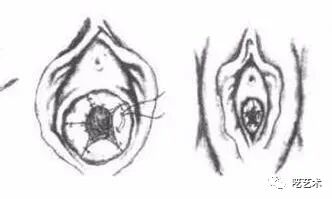
Judging whether a child has been sexually assaulted by the hymen is a foolish practice. Yet many victims in the interior are precisely sent for hymen examinations. Records show a past case in a rural primary school in Huanggang Township, Tongbai County, Nanyang City, Henan Province, where a fifty-three-year-old teacher was found to have sexually assaulted multiple girl pupils. After the incident, these girls, not yet twelve, were taken, before the eyes of onlookers, to the gynaecology clinic of a local traditional Chinese medicine hospital for examination. One parent described the scene: “During the exam inside, the parents cried, and the children cried too.” Because the parents distrusted the result, the local police brought in a forensic examiner from Nanyang City to re-examine. Repeated medical examinations also played out in the Wanning, Hainan, minors’-sexual-assault case. Because the two hymen examinations yielded different results, one parent even publicly displayed a child’s blood-stained underwear to the media. Such a practice of judging whether a minor has been sexually assaulted by the hymen is almost utterly worthless. It not only makes the child feel a sense of shame about her chastity and worry about how she will ever marry, but endlessly magnifies the wrong, so that what was not her fault becomes her responsibility. A doctor once encountered a case in which, after being sexually assaulted, a child repeatedly clamoured to have hymen-repair surgery. For the children singled out by these demonic sex offenders, this may only be the beginning of the “secondary harm” they endure. After repeatedly narrating the assault to police and media, children generally grow more anxious.
In gathering evidence for sexual-assault cases, harming the child little or not at all should be the measure of success; failed cases are truly embarrassing. Hong Kong is relatively mature: the child’s interview is recorded in full, and the recording itself carries legal weight as evidence. The child is not questioned repeatedly, nor required to testify in court. Behind this practice lies the judicial principle that, in minors’ sexual-assault cases, a minor victim’s statement obtained through professional methods may also be legally recognised. The trauma of sexual assault is not the birthmark or fingerprint of an individual or family; even the most grievous pain harbours the strength and hope of recovery. Yet the public opinion stirred up by media exposure brings many victimised children yet more unforeseen trouble in their lives. This is another problem we face.

This section is dedicated to Mr Bao Yuming and to the gentlemen involved in other cases of girls’ sexual assault within China.
Online, a user named Frank described how prisons in other countries treat those convicted of sexually assaulting minors:
Although paedophile offenders are rarely sentenced to death in law, once imprisoned, sex offenders — especially those whose victims were minors — sit at the very bottom of the prison food chain, and some inmates spontaneously administer “vigilante punishment” to them. In Cook County, Illinois, a man named Dixon was imprisoned for raping a one-year-old child; for the thirty days since his imprisonment he was “punished” by other inmates daily. On the thirtieth day, when the guard opened his cell, he was startled by the scene: the floor was covered in blood and faeces, and Dixon himself was curled up beside the toilet, barely alive. The guard quickly understood what had happened, called only for medical staff to deal with it, and did not intervene further — for this was Dixon “getting what he deserved.”
Dixon’s anus was damaged, and his back was pierced by sharpened screws; medical staff stitched his wounds and gave him five days to recover. But after those five days the “punishment” resumed: the inmates removed his stitches and subjected him to a fresh round of beating and sexual assault. Dixon had no clean trousers to wear; wherever he sat, he left a patch of blood.
In fact, the collective “punishment” of those who assault minor children has become an unwritten rule in American prisons, with California the state where it is most practised. Guards will even show the relevant reports to inmates before the offender is admitted, signalling that it is time for them to do something. When it comes to beating such offenders, every inmate rolls up his sleeves, and is even annoyed at being unable to push into the crowd.
The head of the corrective services department of Australia’s public service association stated plainly: “Australia, after all, has no death penalty, no chemical castration — at most life imprisonment. He might be released after a few years. Who can guarantee such a pervert won’t harm society again on release? On this question, it seems the law itself cannot punish paedophiles enough.” Some serious offenders do not mind having their sentence lengthened for killing a rapist; one life sentence or two makes no difference, and it even raises their standing among inmates, making them “heroes” in prison. That even prisoners guilty of heinous crimes cannot forgive rapists and paedophiles shows just how hatred-worthy their deeds are.
Whether or not it accords with the rules, people cannot help applauding when they hear of such treatment in prison. For their crimes are truly unforgivable; if the law cannot punish them, then let those who can do the punishing.
I sincerely hope that the moment anyone thinks of preying on a child for sexual pleasure, the thought of these fates or punishments will weigh on them. Whatever the case, if only you would truly spare the children, then all our efforts, however great, would be worth it. In truth we are still far from that — so far as to seem almost out of reach.

Are there really so many “adopted baby daughters”? Image: *Nanfeng Window*.
Every girl who grows up safe and sound should feel fortunate, for the misfortunes unfolding around us, already happened, and yet to come, are too many. Rawls once expounded on the good, saying that the “good” is what is needed by a person, across a complete life, as a free and equal member of society engaged in normal and adequate cooperation — and this includes the bases of freedom and opportunity, income and wealth, and self-respect. Often, those who prey on underage girls are lacking precisely in that last item. Perhaps between sexual perversion and normal sexual need there is a gap that could be bridged, but the absence of “self-respect” widens that gap until it can no longer be closed, and they seek self-gratification in the thrill of tasting the forbidden fruit. The greatest reason such people are unforgivable is their selfishness: lacking self-respect is their own affair, but violating an underage girl is a grave intrusion upon another’s life. To gratify oneself with another’s pain unquestionably deserves hell. In truth, a disaster is not many people victimised at once, but one person victimised again and again.The victimisation of underage girls keeps repeating and is on the rise; this should be recognised as a disaster unfolding at the side of every one of us.
Justice should be a right belonging to everyone. For example, when a person commits the crime of sexually assaulting a child and the judge sentences him to eight years’ fixed-term imprisonment, that is justice. But an emperor could sentence him to eight years, or to one, or pardon him — that is power. The sexual assault of girls should be constrained by justice; at the same time, without purity, kindness and truth there is naturally no justice — and this is the primary measure of whether a social system has value. If the sexual assault of children is not taken seriously, until the day one’s own child suffers such a fate, the so-called system will have lost the meaning and value it could be relied upon for. Be that as it may, children should never be violated. Finally, I recall someone quoting a line from the film *Silenced*: “We fight all the way not to change the world, but so the world cannot change us.”
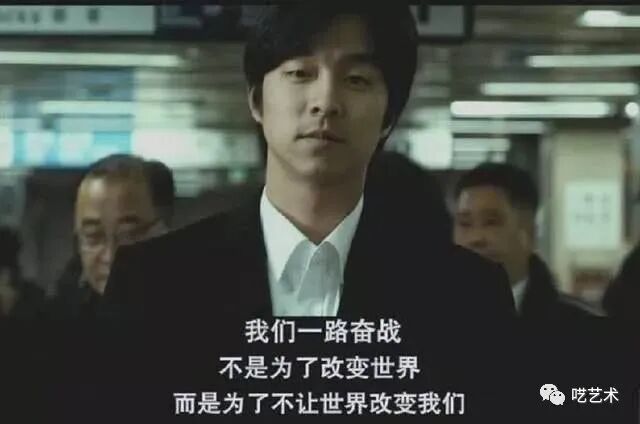
I thank all who have worked to protect children from sexual assault. Above all, I hope that every underage girl on this land of ours may possess the right to grow up truly safe and happy!!
18 April 2020, 09:42:57
订阅艺术评论
订阅即赠《2024中国当代艺术关键词》内部思考笔记 PDF
每周免费获取最新当代艺术批评与研究