Preface,
Every day our world renders countless people homeless—refugees.
Refugee data for the world’s major regions in 2025:
Region | Refugees/Asylum-seekers (millions) | IDPs (millions) | People needing aid (millions) | Notes
Syria | 6 | 7.2 | 33 (incl. neighbouring countries) | 14 million total displaced; 507,672 returned
Ukraine | 6.8 | – | 12.7 | 46% women, 32% children
Afghanistan | – | 2.9 | 0.5 | needing resettlement (500,000)
South Sudan | 2.3 | – | 9 | hosting 500,000 refugees, mostly from Sudan
Sudan | – | 11 | 16 | 8 million displaced by war
Myanmar | 1.3 | – | 19.9 | Rohingya majority; 6.3 million children need aid
DRC | 1.1 (abroad) | 6.7 | 11 | 500,000 newly displaced; 41,000 fled to Uganda
The “Refugee Crisis” is undoubtedly one of the most severe challenges the world has confronted since the turn of the twenty-first century. It is not merely a matter of conflict and displacement across geographic borders, but a profound interrogation of humanity, politics, culture and ethics. As news photographs of overcrowded boats, exhausted faces and makeshift camps ceaselessly assail the public eye, the term comes to bear the tragedy of countless uprooted individuals and the anxiety of an international community unable to order its response. This essay sets out to analyse the deeper meaning of the “Refugee Crisis,” to examine its multiple urgencies in today’s society, and above all to attend to how contemporary artists have responded to this question of our age through their singular work—revealing the force and the possibility that art holds within it.
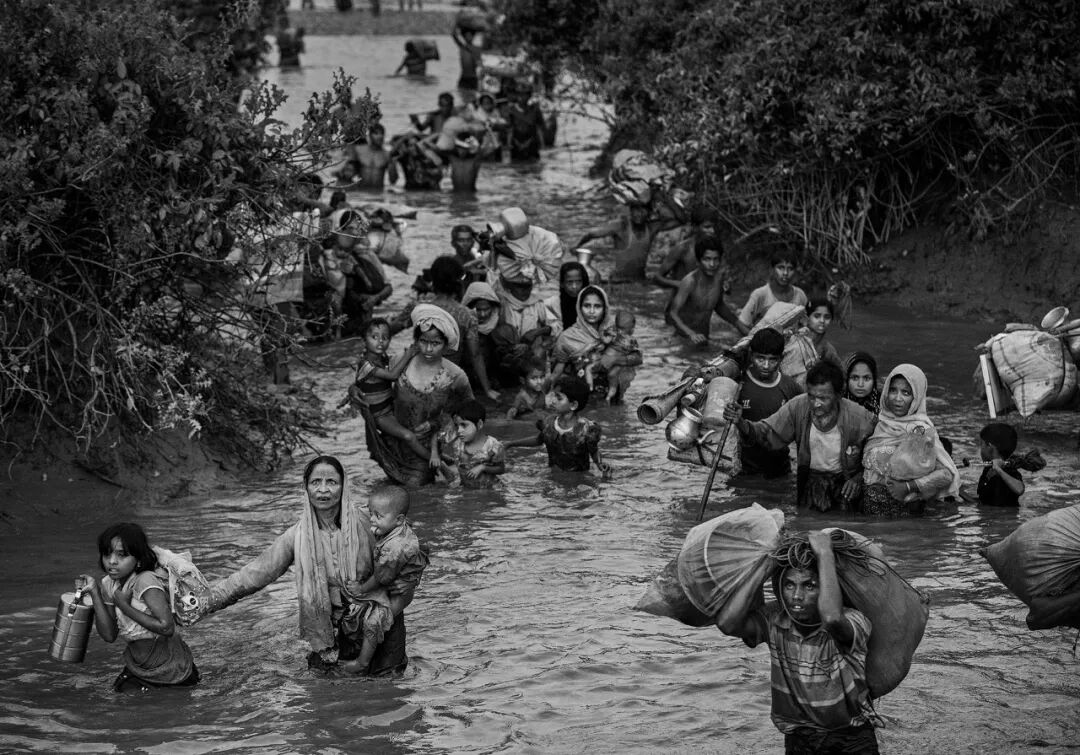
What is the “Refugee Crisis”?
To understand the “Refugee Crisis,” one must first be clear about the definition of a “refugee.” According to the 1951 UN Convention Relating to the Status of Refugees and its 1967 Protocol, a refugee is “someone who, owing to a well-founded fear of being persecuted for reasons of race, religion, nationality, membership of a particular social group or political opinion, is outside the country of his nationality and is unable or, owing to such fear, is unwilling to avail himself of the protection of that country; or who, not having a nationality and being outside the country of his former habitual residence as a result of such events, is unable or, owing to such fear, is unwilling to return to it.”
The “Refugee Crisis,” by contrast, usually refers to the complex situation arising when war, violent conflict, mass human-rights violations, and natural disasters (increasingly including those caused by climate change) force large populations to leave their homes and cross borders in search of international protection—at a scale and speed that exceed the normal capacity of the international community, or of particular host countries and regions, to respond and absorb them—thereby giving rise to a manifold of humanitarian, social, economic and political predicaments.
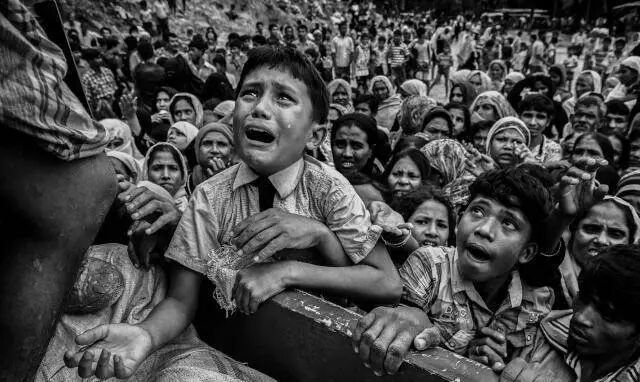
Today, the question of the “Refugee Crisis” carries an urgency without precedent, manifest in the following respects:
A test of the baseline of humanitarianism: Mass displacement directly challenges the most basic humanitarian conscience of human society. Millions of men, women, the elderly and children—including vast numbers of unaccompanied minors—face, on the road and in the camps, the threats of hunger, disease, violence, trafficking and sexual exploitation. Their fundamental human rights are gravely violated and their physical survival left unprotected. To ignore or fail to act upon such suffering is to corrode the shared moral foundation of the international community. How, then, to deliver humanitarian aid effectively and safeguard refugees’ basic rights is an obligation the international community can no longer defer.
A threat to global and regional peace and stability: Refugee flows are frequently the direct consequence of regional conflict and instability, yet they in turn exacerbate tensions in both countries of origin and countries of asylum. A mass influx can alter the demographic structure of host states, intensify competition for resources, generate public-order problems, and even become a latent channel for terrorist infiltration (even if this connection is often exaggerated and abused). In some instances the refugee question ignites diplomatic friction between states and perturbs peace and stability at the regional, even global, level. The refugee flow produced by the Syrian crisis, for example, has profoundly reshaped Europe’s political ecology and its integration process.
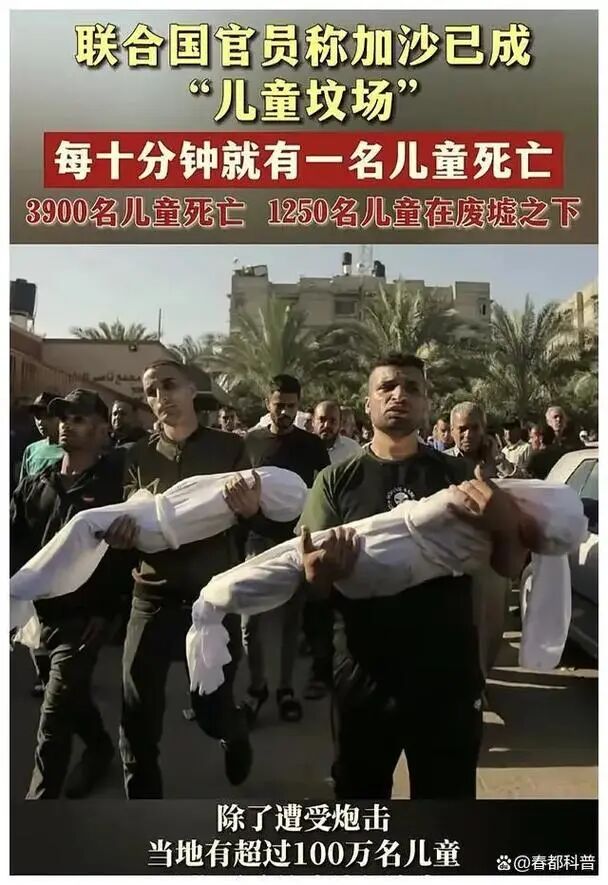
A shock and a challenge to the existing international governance system: The present international refugee-protection regime—including the UNHCR and the relevant international conventions—proves inadequate when confronted with refugee flows of unprecedented scale and bewilderingly complex causes. States diverge, even contradict one another, on reception, burden-sharing and border management, and no unified and effective coordination mechanism exists. The tension between “state sovereignty first” and “humanitarian intervention,” together with the imbalance between developed and developing countries in bearing responsibility, leaves global refugee governance gravely challenged. To reform and improve the global refugee-governance system is an urgent necessity in facing the crisis.
Pressure on economic and socially sustainable development: For host countries—above all the developing neighbours that receive the vast majority of the world’s refugees—the short-term task of settling and assisting refugees demands enormous fiscal outlay and places a heavy burden on local infrastructure, education, health care and other public services. In the longer term, how to help refugees integrate and achieve self-reliance, averting the formation of a “lost generation,” bears directly on socially sustainable development. For countries of origin, the brain drain and the destruction of productive capacity likewise obstruct post-war reconstruction and development.
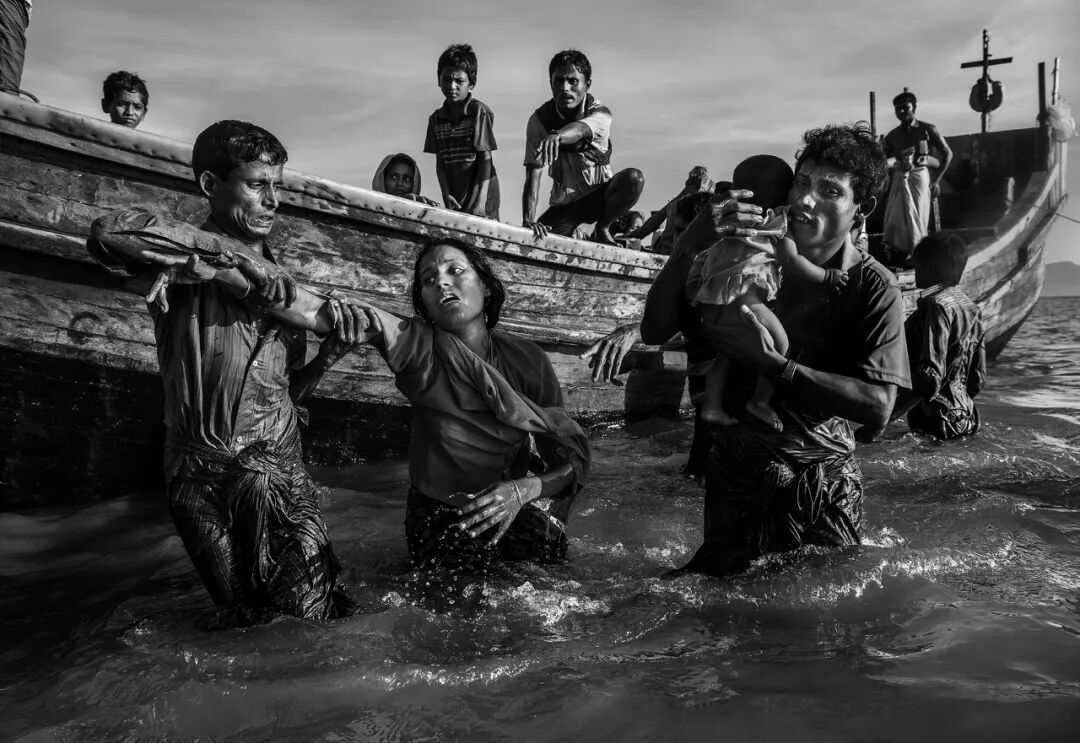
A catalyst for populism, xenophobia and social fracture: Worldwide, the refugee crisis is entangled with the rise of populism and xenophobic sentiment. Certain political forces exploit public anxiety and fear around the refugee question to incite hatred and discrimination, “othering,” “problematising” and even “criminalising” refugees in order to harvest political capital. This not only aggravates the difficulty of refugee integration but also deepens social antagonism within host countries and erodes the foundations of a pluralist, inclusive society. It is therefore all the more urgent to discuss the refugee question with objectivity and reason, and to resist stigmatisation and misinformation.
A warning from emerging drivers such as climate change: Beyond traditional conflict and persecution, climate change is ever more decisively becoming a major factor in displacement. Rising sea levels, extreme weather events, land degradation and water scarcity are rendering some regions uninhabitable, and the resulting “climate refugees” may multiply dramatically over the coming decades. This trend sounds a new alarm for the international community and urgently calls for climate adaptation and mitigation to be joined with humanitarian aid and development planning, so that population movement is met from a longer perspective.
The urgency of the “Refugee Crisis,” then, lies not only in the survival and dignity of hundreds of millions of people but in its profound reach into global peace, security, development, governance and the shared values of humanity. To ignore it, or to defer a response, will only make the problem more intractable and the cost more severe.
I. Recent News Events
(As of early 2025, based on general trend reporting)
Given the intensely time-sensitive nature of news, what follows is an overview of the refugee-crisis-related flashpoints likely to persist or recur into early 2025, rather than a detailed reportage of specific incidents:
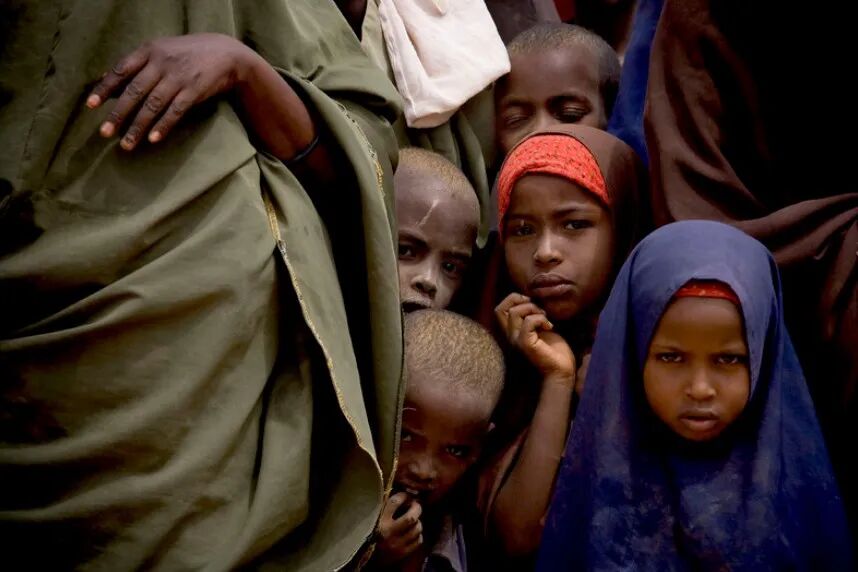
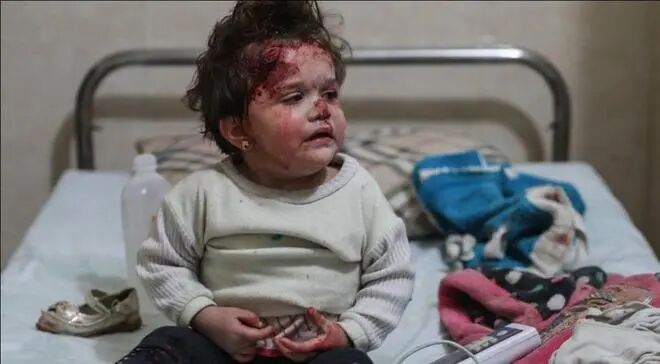
Persistent conflict and displacement:
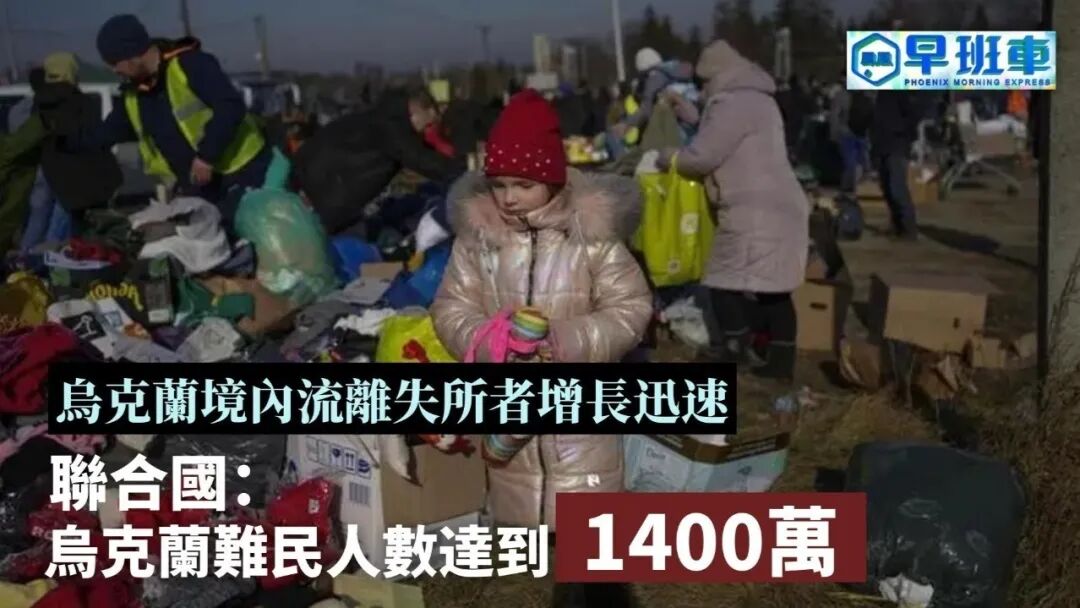
Aftermath of the Ukraine crisis: Although the phase of large-scale fighting may shift, the question of refugees and internally displaced persons in Ukraine and its borderlands will remain a news flashpoint. The rebuilding of homes, the return of refugees, and the long-term resettlement and integration of those still stranded abroad will stay in view.
Conflict in Africa: Armed conflict, ethnic violence and terrorism in Sudan, Ethiopia, the Democratic Republic of the Congo, the Sahel and elsewhere continue to drive mass displacement. The wretched conditions of camps in these regions and the chronic shortfall of humanitarian funding are frequent news.
Instability in the Middle East: The situations in Syria, Yemen and Afghanistan remain fragile, with large numbers of refugees and IDPs living in distress. Any new move in the manoeuvring of regional powers or in external intervention may spark fresh humanitarian concern.
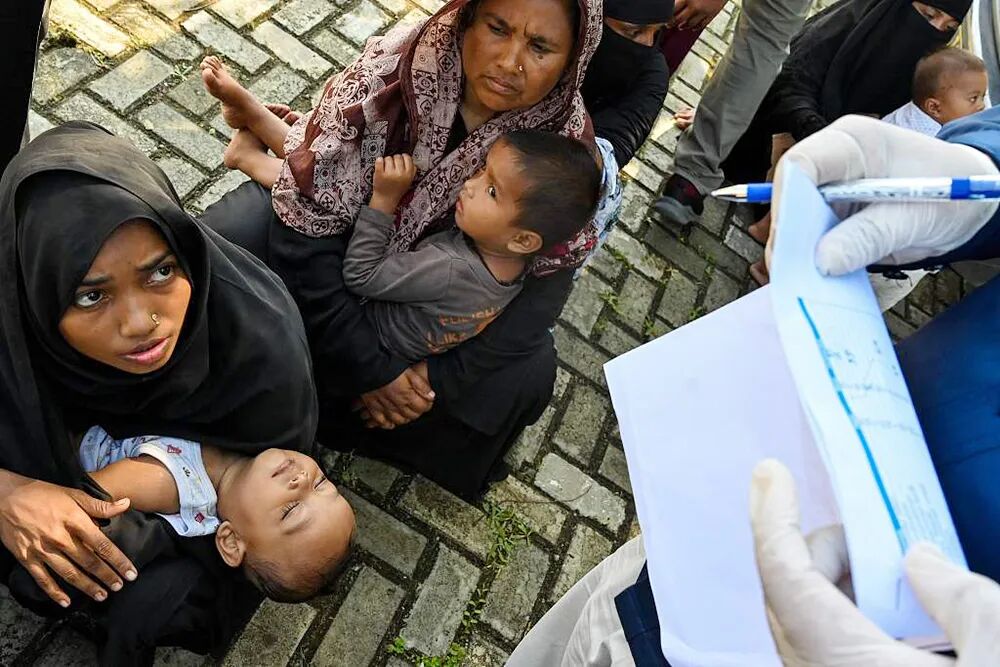
The Rohingya crisis in Myanmar: The plight of Rohingya refugees in Bangladesh and elsewhere remains severe; the prospect of return to Rakhine State is dim; the security and living conditions of the camps, and the international diplomatic effort around the issue, will be points of continuing coverage.
2. The predicament along major migration routes:
The Mediterranean route: Still one of the main and exceedingly dangerous routes by which refugees and migrants attempt to reach Europe. Capsized vessels, obstructed rescue operations, the buck-passing of coastal states, and the legal predicament of NGO rescue ships are perennial headlines. Divergences among EU states over border control, asylum processing and the sharing of responsibility, together with policy adjustments, will stay in focus.
The US–Mexico border: Migrants and asylum-seekers from Central and South America and beyond keep streaming toward the US–Mexico border. The swing of US border policy, humanitarian crises (such as detention-centre conditions and family separations), migrant caravans, and the cooperation and friction between the two countries on migration management are all media focal points.
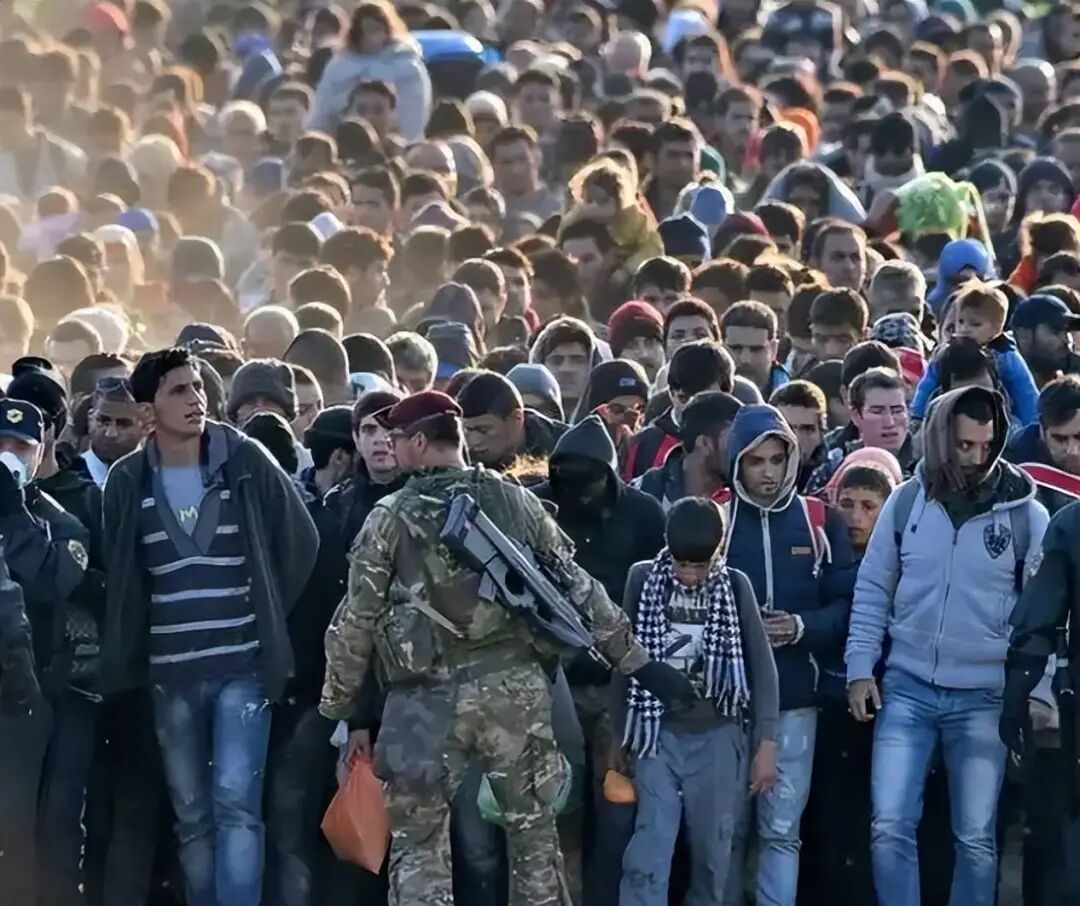
The Balkan route and the eastern EU border: Though past its peak, refugees still attempt these routes into Western and Northern Europe; border violence, “pushbacks,” and the humanitarian conditions along the way draw attention.
Tightening of asylum policies worldwide: Many Western states, under domestic pressure, lean toward tighter asylum policy—raising the threshold of application, accelerating deportations, or seeking to “offshore” asylum processing (as in the continuing controversy over the UK’s Rwanda plan). The legality, humanitarian impact and practical effect of such policies will keep generating debate and coverage.
International cooperation and burden-sharing: The UN and other international bodies keep calling for stronger cooperation and burden-sharing, yet divisions persist between developed and developing countries and among EU member states. Progress and challenges in implementing the Global Compact on Refugees will be noted.
Litigation and human-rights monitoring: Human-rights lawsuits against states’ refugee policies, and investigation reports by international human-rights organisations on the treatment of refugees, surface from time to time as news.
The growing link between climate change and displacement: As climate impacts intensify, the displacement of populations by drought, floods and rising seas will draw increasing attention. How the international community defines and protects “climate refugees,” and how climate action is joined with humanitarian aid, becomes an emerging point of debate.
Refugee integration and social exclusion: In states receiving larger numbers, social news about refugees’ integration, employment, education, cultural conflict, anti-refugee sentiment and xenophobic violence will keep appearing. How to foster social harmony and plural coexistence is a long-term challenge.
Together, these developments sketch a complex and daunting global picture of refugees, underscoring how protracted and arduous any resolution must be.
II. Committed Contemporary Artists—Artists and Works on the Theme of the “Refugee Crisis”
Contemporary art, with its keen insight and diverse modes of expression, has become a vital force for intervening in the question of the “Refugee Crisis” and provoking public reflection. Many artists have visited the camps first-hand, or drawn on their own experience, to make deeply moving work. Each in his or her own way—documenting, metaphorising, acting, reflecting—they build together a polyphonic artistic narrative of the “Refugee Crisis.”
The nineteen artists mentioned below are: Richard Mosse (Ireland), Banksy (UK), Shirin Neshat (Iran/US), Behrouz Boochani (Kurdish/New Zealand), Tiffany Chung (Vietnam/US), Bouchra Khalili (Morocco/France), Jason deCaires Taylor (UK), Idris Khan (UK), Walid Siti (Iraqi Kurdish/UK), Mark Quinn (UK), Maryam Najd (Iran/Belgium), JR (France), Christoph Büchel (Switzerland), Mohamed Hafez (Syria/US), Anish Kapoor (India/UK), Adrian Paci (Albania/Italy), Caleb Duarte (US), Jin Zhipeng (China).
1. Richard Mosse (Ireland)
Core idea: the dehumanising gaze and the ethics of looking
With his radically experimental and provocative imaging techniques, Richard Mosse places humanitarian crisis within an unsettling visual context, forcing viewers to reflect on the act of looking itself and its ethical limits. He does not merely record suffering; through his choice of medium he reveals the complex structures of power and perception beneath the crisis.
Key works: Heat Maps (2016–2017) and Incoming (2014–2017)
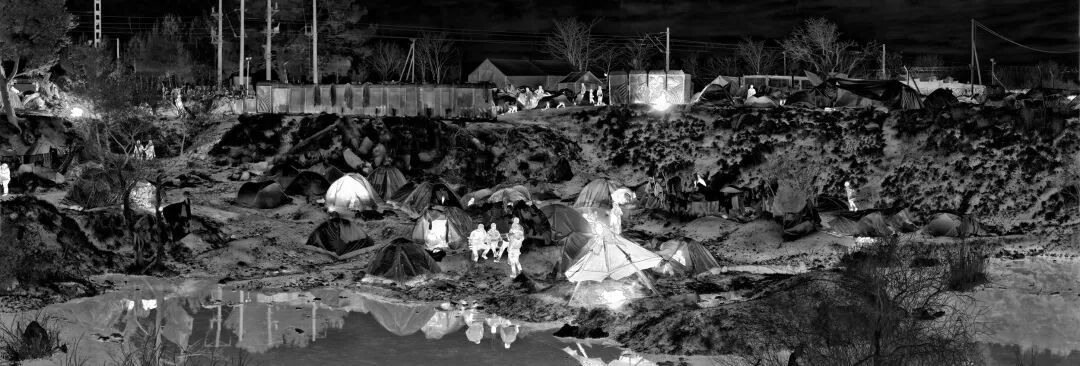
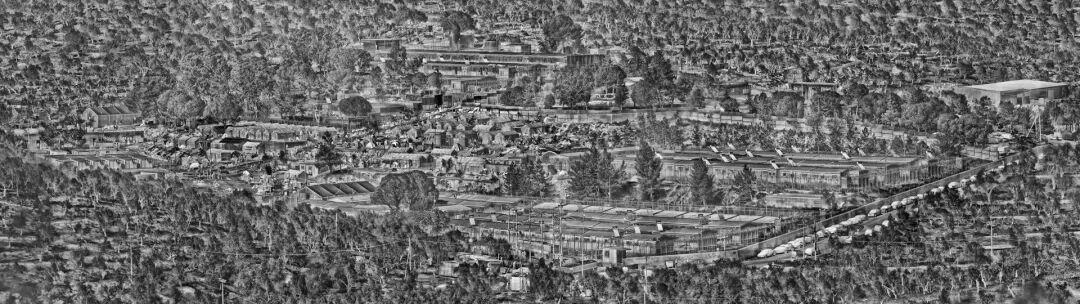
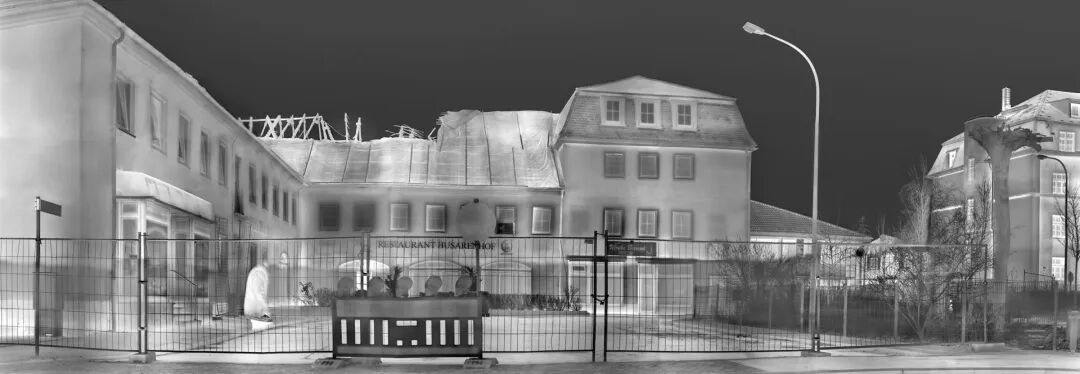
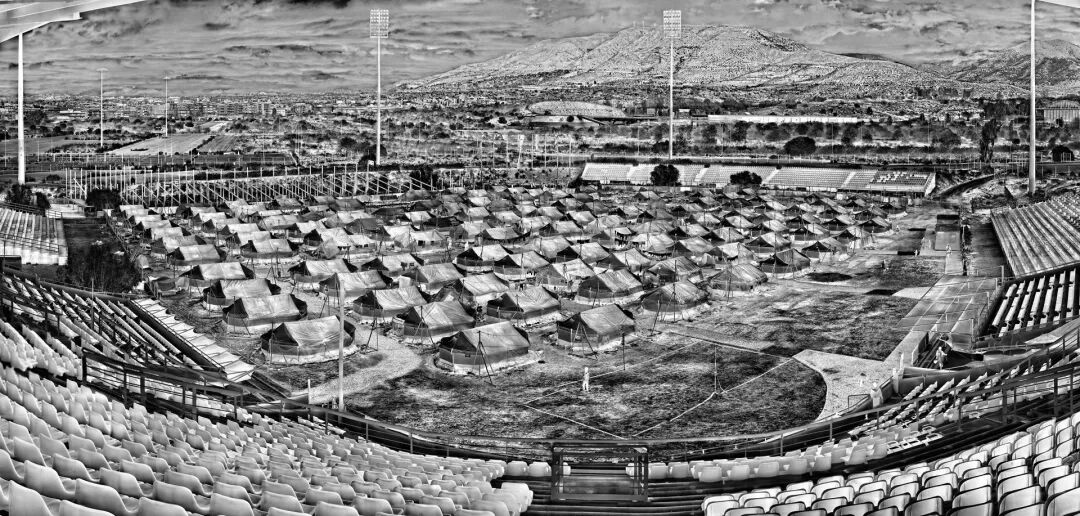
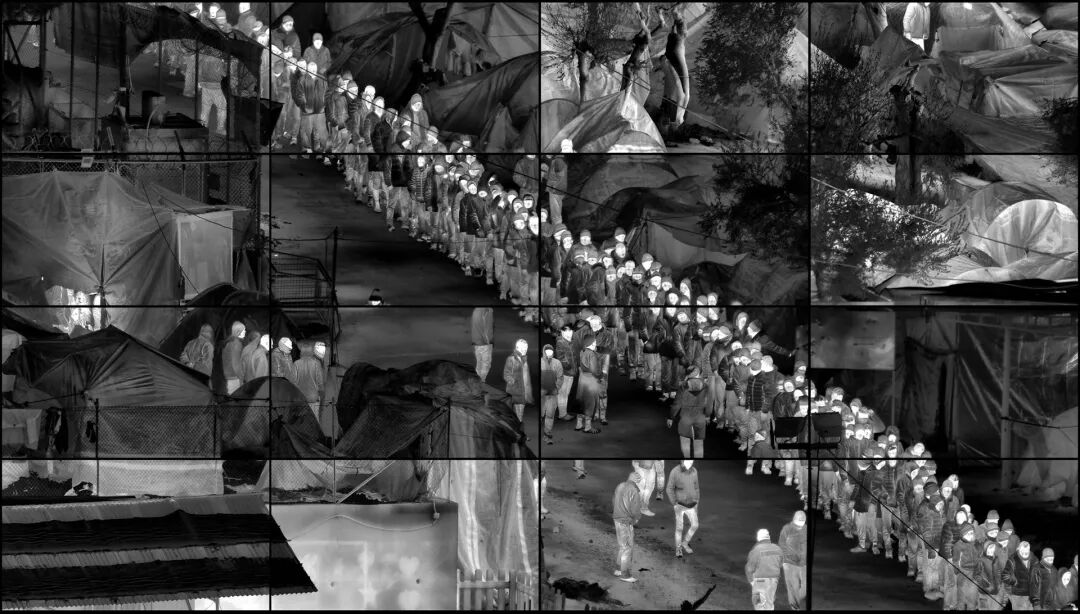
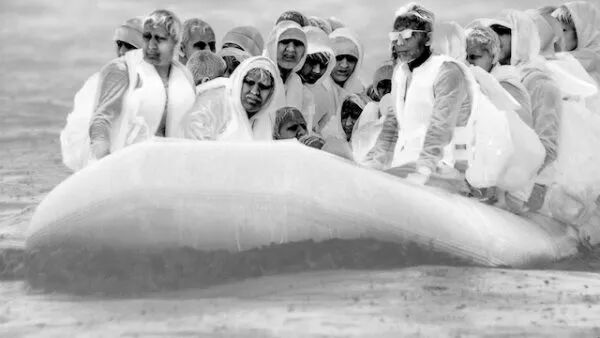
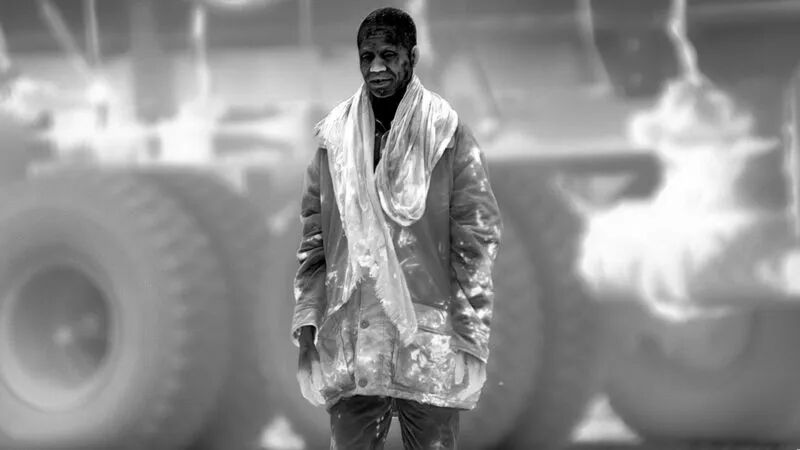
In both Heat Maps and Incoming, Mosse adopts a highly contested instrument—a military-grade thermal-imaging camera. Typically used for border surveillance, military reconnaissance and search-and-rescue, it can detect human body heat at great distance (up to 30 kilometres) and render living beings as thermal signals. The technology’s martial pedigree and surveillant character already inject the work with a sharp critical charge.
Idomeni, 2016.
When Mosse turns this camera upon refugees migrating through Europe, the Middle East and North Africa, the individuals before the lens no longer appear as the flesh-and-blood bodies we are used to, but are transformed into glowing, blurred, ghostlike silhouettes.
This visual mode first strips away the capture of individual facial expression and detail that traditional documentary photography pursues, and thus in a sense “dehumanises” its subjects. Yet this “dehumanisation” is no coldness on the artist’s part; rather it is a precise metaphor for the predicament of refugees within contemporary geopolitics and systems of surveillance—they are routinely reduced to numbers, problems or threats, their individuality and humanity dissolved within the grand narrative. These luminous outlines are at once proof of the heat of life and a fragile portrait of bodies with nowhere to hide beneath the cold technology of monitoring.
Moria, 2016.
Bautzen, 2016.
Helliniko Olympic Arena, 2016.
Moriagrid (Moria grid), 2016.
The three-screen video installation Incoming pushes this experience to its limit. Coupled with a sound field of tremendous impact and oppressive force by the composer Ben Frost, the viewer is placed within an immersive environment. On the giant screens, lives constituted of thermal signals move, gather and struggle, and the viewer seems stationed in a high-tech surveillance room, forced to “confront” these recorded lives in a manner at once detached and intensely focused. The experience is unsettling; it challenges the viewer’s habitual comfort zone of looking and provokes profound reflection on “how do we look upon the suffering of others?” and “in whose hands does this power of looking reside?”
Richard Mosse, Incoming (still), 2014–17
Mosse’s work thus surpasses mere event-recording. It probes the following core questions:
The ethics and power of looking: Who has the right to look? In what manner? Does such looking further exacerbate the vulnerability of those looked upon? The use of military technology hints at the grip of state apparatuses and institutions of power over the fate of the individual.
The politics of the medium: No medium is neutral. The use of a thermal-imaging camera carries within it the history and functionality of the military and surveillant spheres, endowing the work with an innate criticality.
The definition and boundary of the human: Under extreme duress and high-tech surveillance, what is the definition of a human being? When the individual is reduced to a thermal signal, how do we perceive his or her dignity and worth as a “person”?
The limits of documentary photography: Mosse’s work blurs the boundary between documentary photography and conceptual art. He does not pursue objective representation; rather, through a highly stylised and conceptual method, he provokes deeper reflection on reality. He challenges the modes of “empathy” and “witnessing” in traditional documentary photography, alerting us to the possible exploitiveness of the act of looking.
Through his singular practice, Richard Mosse elevates the humanitarian question of the refugee crisis to a philosophical plane concerning the politics of the image, the ethics of technology and reflection upon human nature. His work offers no answers; it ignites a chain of unsettling interrogations, compelling us to examine the role we ourselves play in this global tragedy, and the ways in which we perceive and comprehend it.
2. Banksy (UK)
Core idea: satirical intervention and the art of action
Banksy, the British street artist famed for his anonymity and elusiveness, has long been one of the most subversive and socially critical figures in contemporary art. With his signature stencil graffiti, installations and occasional “prank”-like interventions, he trains his sights precisely on social injustice, political hypocrisy, consumerism and the absurdity of war and conflict. On the global question of the refugee crisis, Banksy’s work not only sustains his habitual biting satire but at moments turns art directly into action, manifesting a strong sense of social responsibility and humanitarian concern.
Representative works and actions:
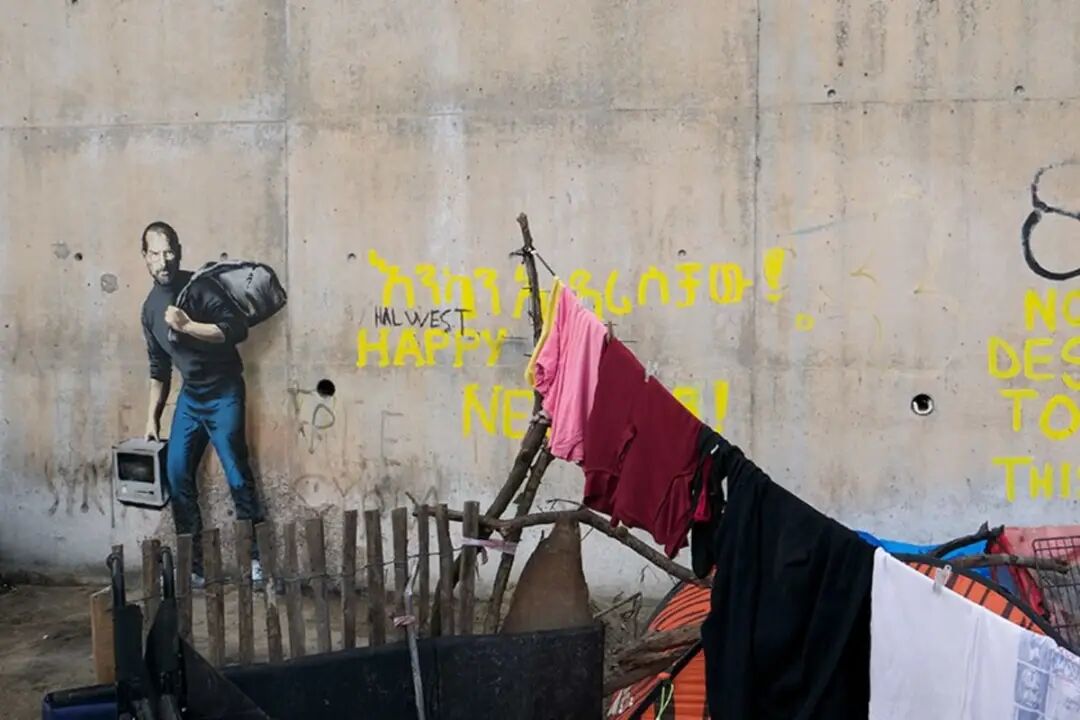
The “Jungle” camp graffiti series in Calais (2015): In the infamous “Jungle” camp in Calais, France, Banksy left a series of thought-provoking graffiti works. The most talked-about is The Son of a Migrant from Syria. The piece depicts Steve Jobs, co-founder of Apple (whose biological father, Abdulfattah Jandali, was a Syrian immigrant), shouldering an early Apple computer and carrying a makeshift knapsack.
The Son of a Migrant from Syria
The work’s ingenuity lies in its use of a widely known success story to rebut, head-on, the exclusionary rhetoric and stigmatising propaganda then prevalent toward refugees and migrants in European society. Through the figure of Jobs, Banksy reminds the world that immigrants and refugees are not merely a burden on society; they possess immense potential and can make outstanding contributions to the societies that receive them. With a simplicity that is nonetheless highly persuasive, the graffiti challenges narrow nationalism and xenophobia.
The Raft of the Medusa
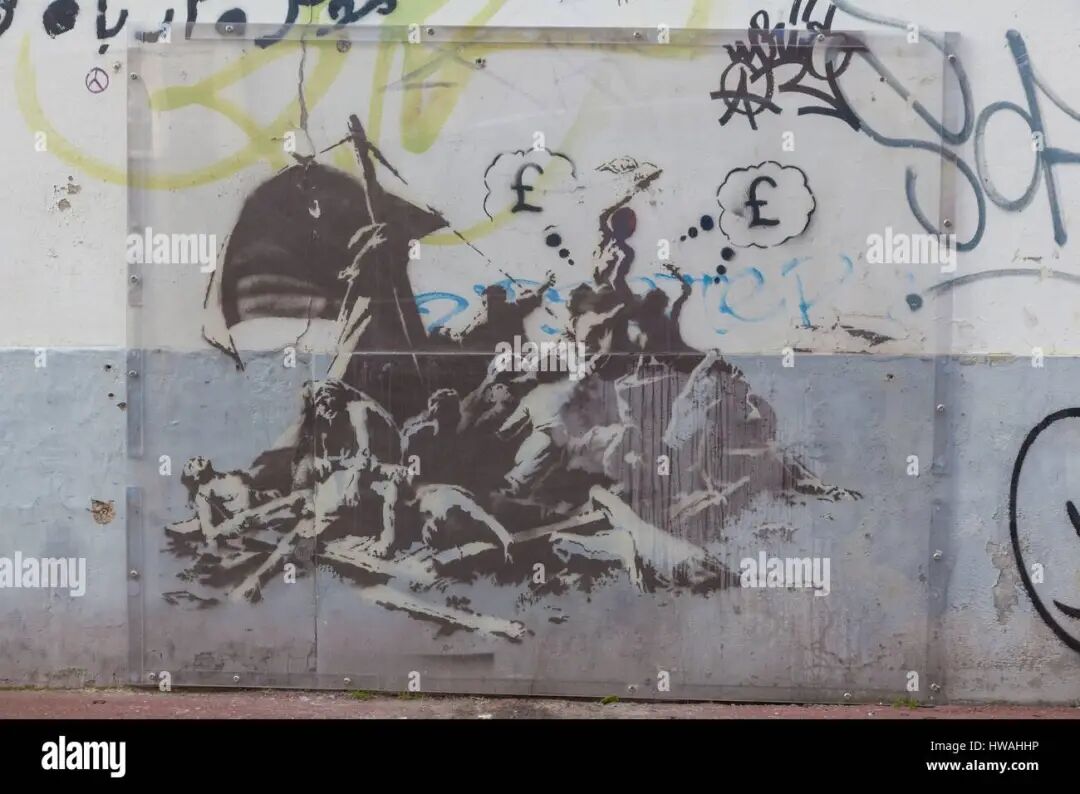
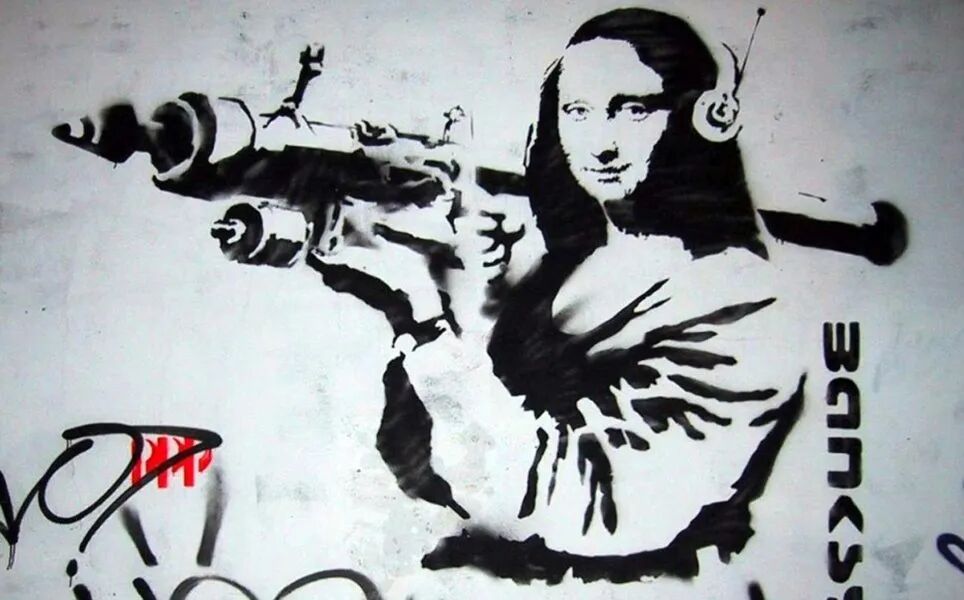
Around the same time he also produced a graffiti work based on the masterpiece The Raft of the Medusa by the French Romantic painter Théodore Géricault, replacing the figures struggling for survival on the open sea with silhouettes of refugees signalling for help toward a luxury cruise ship on the horizon, thereby satirising the indifference of the developed world to refugee suffering and its failure to rescue. Another work, Refugee Mona Lisa, appropriates Leonardo da Vinci’s classic masterpiece to invest it with new critical meaning.
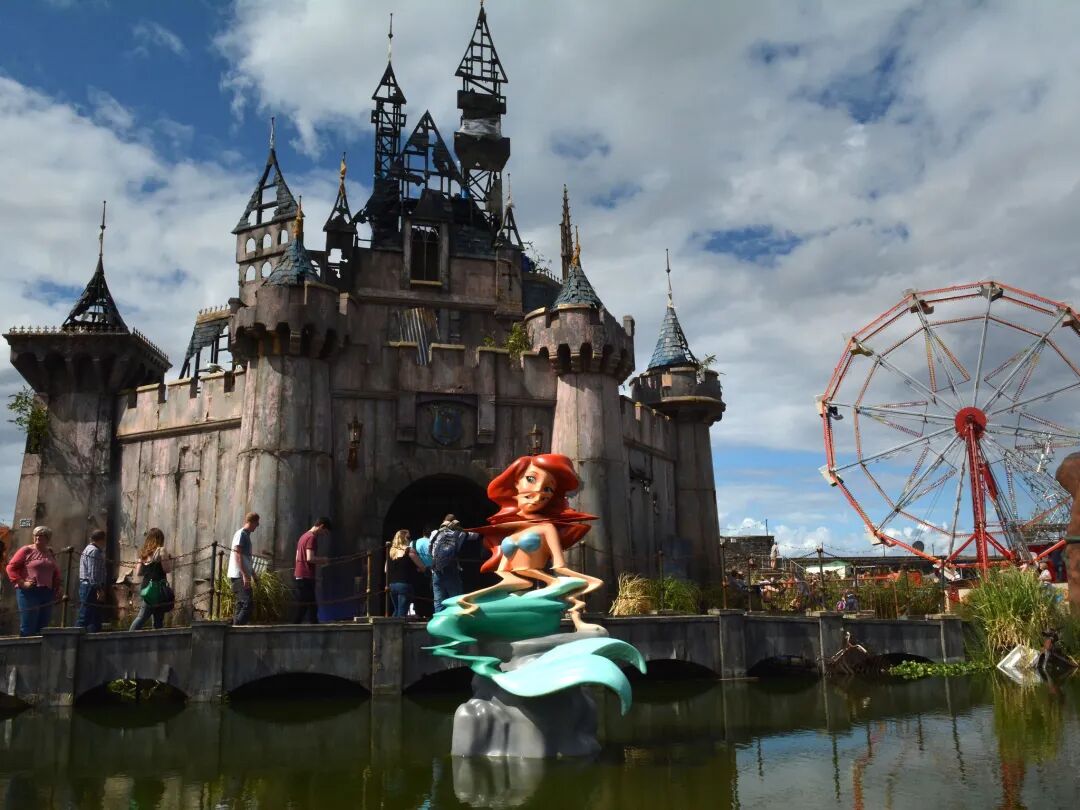
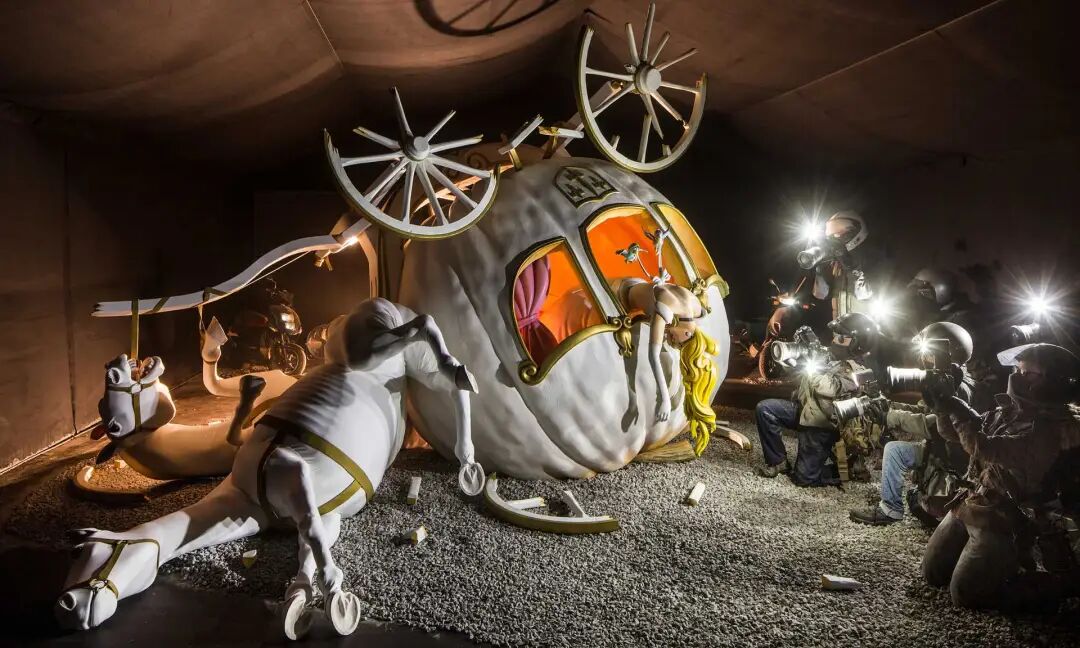
“Dismaland,” the anti-utopian theme park (2015): The short-lived large-scale art project “Dismaland” that Banksy curated (literally “Bitterton”), a sardonic parody of Disneyland conceived as a dystopian theme park. Among its black-humoured, critically charged “attractions” stood an installation that responded directly to the refugee crisis: in a pool, several overcrowded toy boats carried densely packed, faceless refugee figures, some of the vessels already capsized. In the unsettling guise of a “game,” the work delivers a stinging satire of consumer culture’s numbness and detachment in the face of real-world catastrophe, and of the way mainstream society so often spectacle-ises, entertains itself with, or simply averts its gaze from distant suffering.
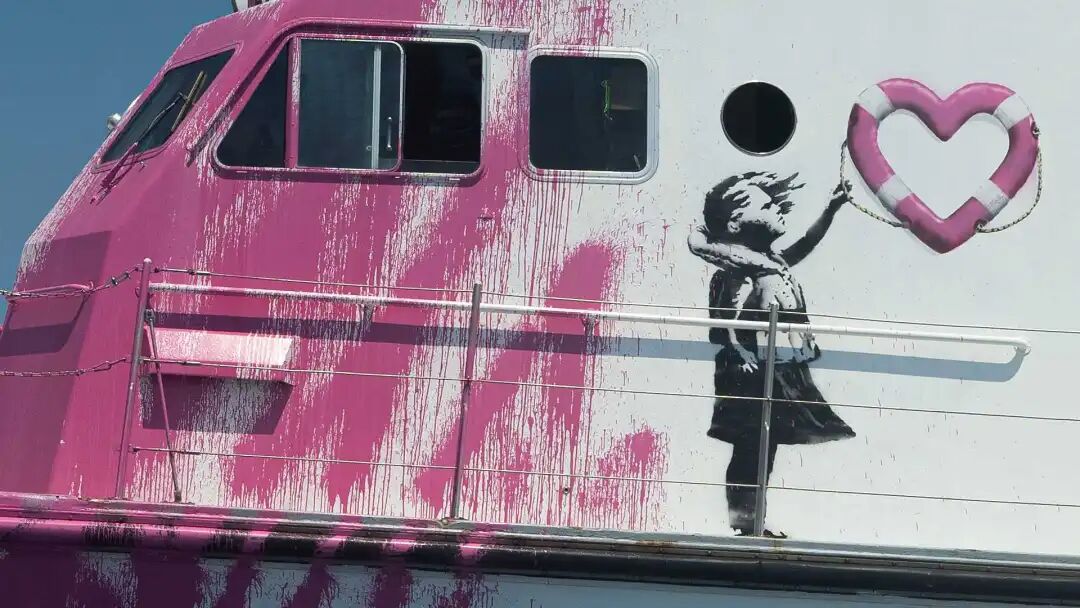
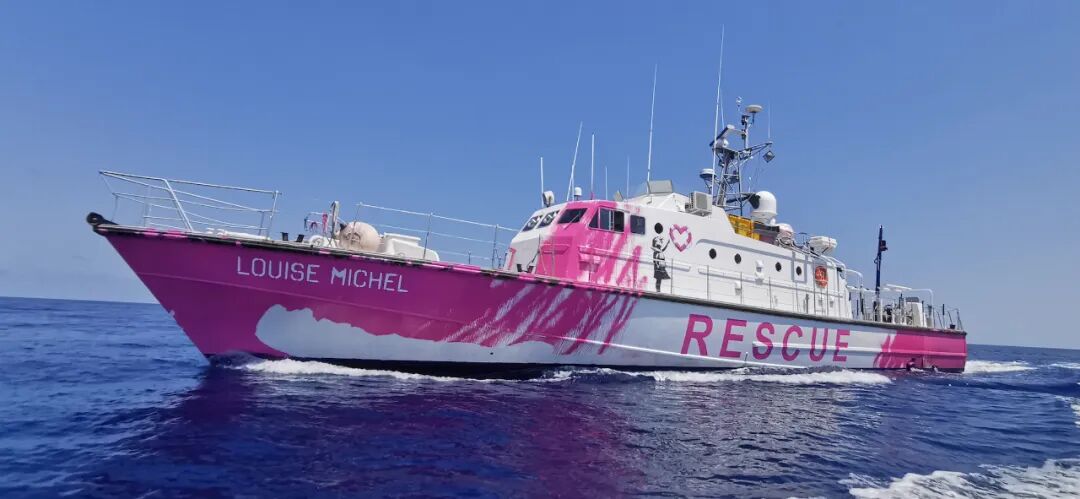
The Mediterranean rescue vessel “Louise Michel” (2020–present): Banksy’s intervention did not stop at symbolic artistic expression. In 2020 he turned art directly into action, funding the purchase and painting of a former French naval patrol boat, christening it the “Louise Michel” (after the nineteenth-century French anarchist heroine) to carry out refugee search-and-rescue in the Mediterranean. The hull was painted bright pink and adorned with Banksy’s signature motif—a girl in a life jacket clutching a heart-shaped life ring (a variant of his celebrated work Girl with Balloon). The act itself was a powerful piece of “performance art,” transcending the bounds of gallery and street to participate directly in humanitarian rescue. Banksy demonstrated in deed that art can do more than criticise and reflect—it can become a tool for changing reality and saving lives. The gesture also sparked broad debate on the artist’s social responsibility and on artistic activism.
Graffiti in the Gaza Strip: Banksy has also repeatedly slipped into the Palestinian Gaza Strip to make work, using graffiti to expose the humanitarian plight of local people under blockade and conflict. On one rubble-strewn wall, for instance, he painted a giant kitten toying with scrap metal, captioning it: “The locals told me that if I painted a picture of a kitten, people might be interested in what is happening here.” With this he satirised the outside world’s indifference to Gaza’s real suffering and the social-media age’s obsessive addiction to entertainment. His Gaza works such as Girl with Balloon are likewise often read as an expression of longing for freedom and as a satire on the double standards of Western societies over the Israeli–Palestinian question.
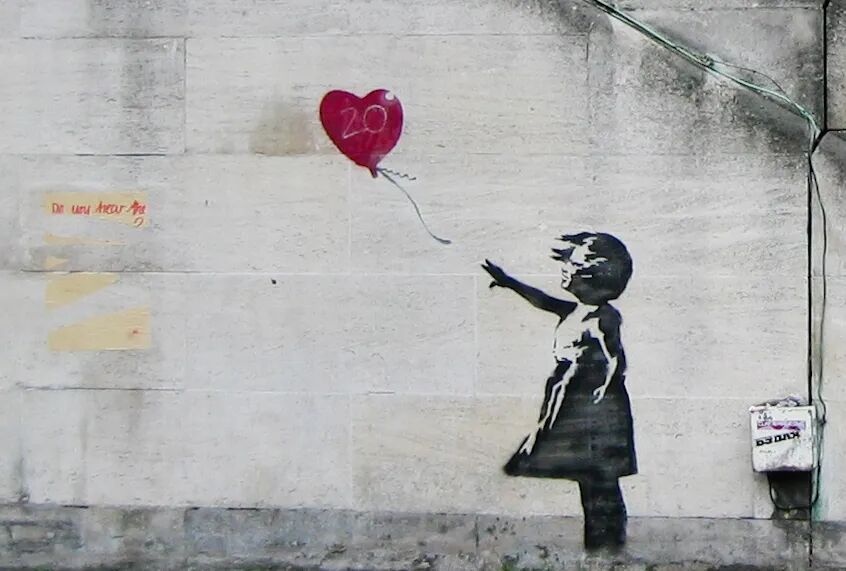
Banksy’s work on the refugee crisis fully displays the keen insight and social conscience of an “art terrorist” (his own self-description). He excels at deploying an accessible visual language, appropriating canonical cultural symbols, and combining them with unexpected actions, to present complex political and social problems to the public with maximum impact and reach. His work goes straight to the heart, compelling us to confront the brutal realities that mainstream society deliberately conceals or prettifies. Banksy’s art is at once trenchant social commentary, a cry full of human warmth, and an embodiment of the steadfast belief that action can change the world.
3. Shirin Neshat (Iran/US)
Core idea: the poetics of exile and the myth of identity
Shirin Neshat is an internationally renowned Iranian-American artist celebrated for photographic and moving-image work of poetic force and cultural depth. Although the core of her practice circles such grand themes as exile, gender (especially the condition of women within Islamic culture), religion, power and cultural identity, rather than directly and reductively fixating on the “refugee crisis” as such, her profound engagement with such central motifs as “forced departure from one’s homeland,” “the loss and reconstruction of identity,” and “the bearing and rupture of cultural memory” resonates deeply with many of the spiritual predicaments and struggles refugees undergo.
Neshat’s own life is bound up tightly with “exile.” She left Iran in her youth to study in the United States, and after the Islamic Revolution was, for political reasons, unable to return for a long period, becoming in effect a cultural exile. This personal experience is unquestionably imprinted deeply upon her art.
The relationship between her work and the theme:
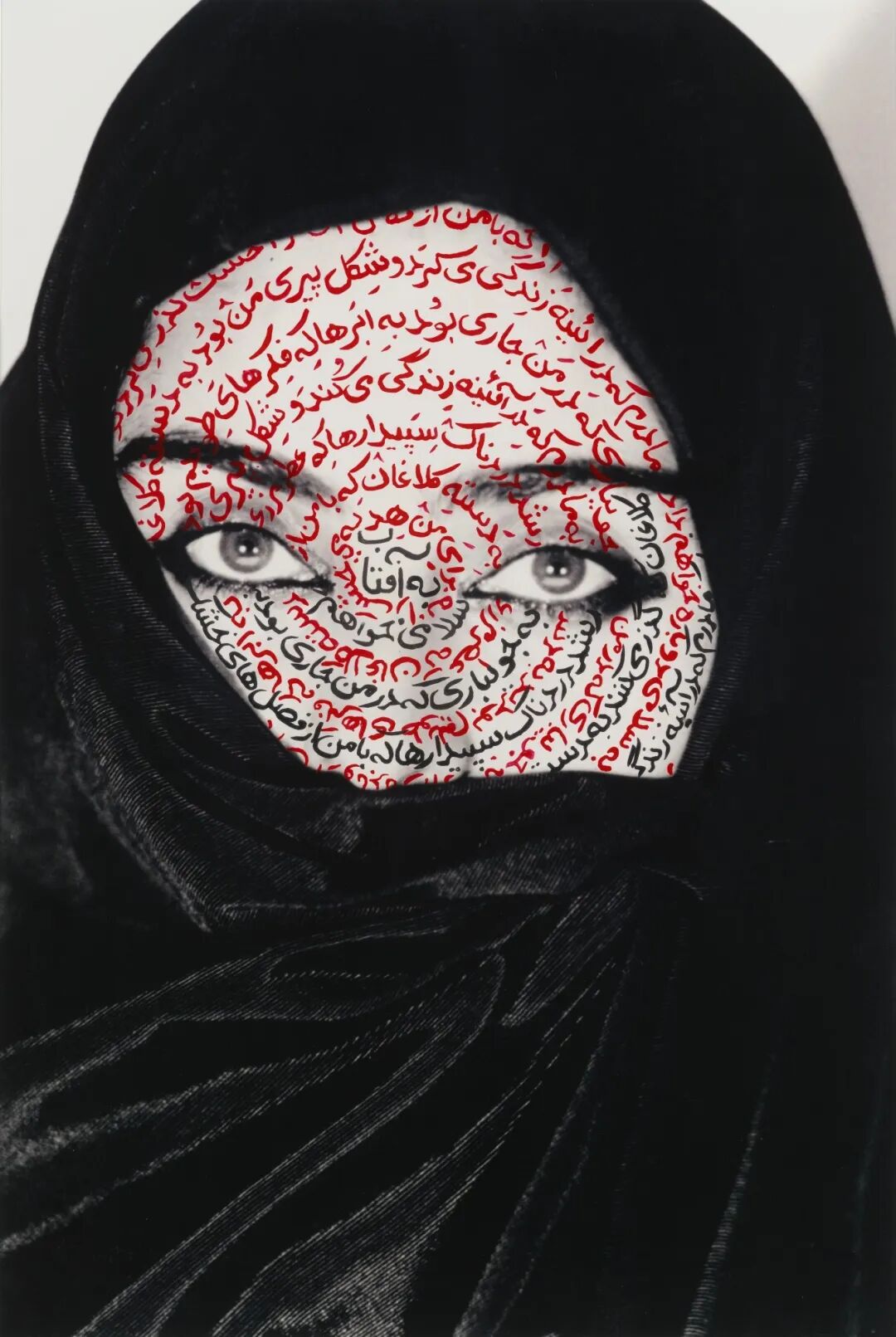
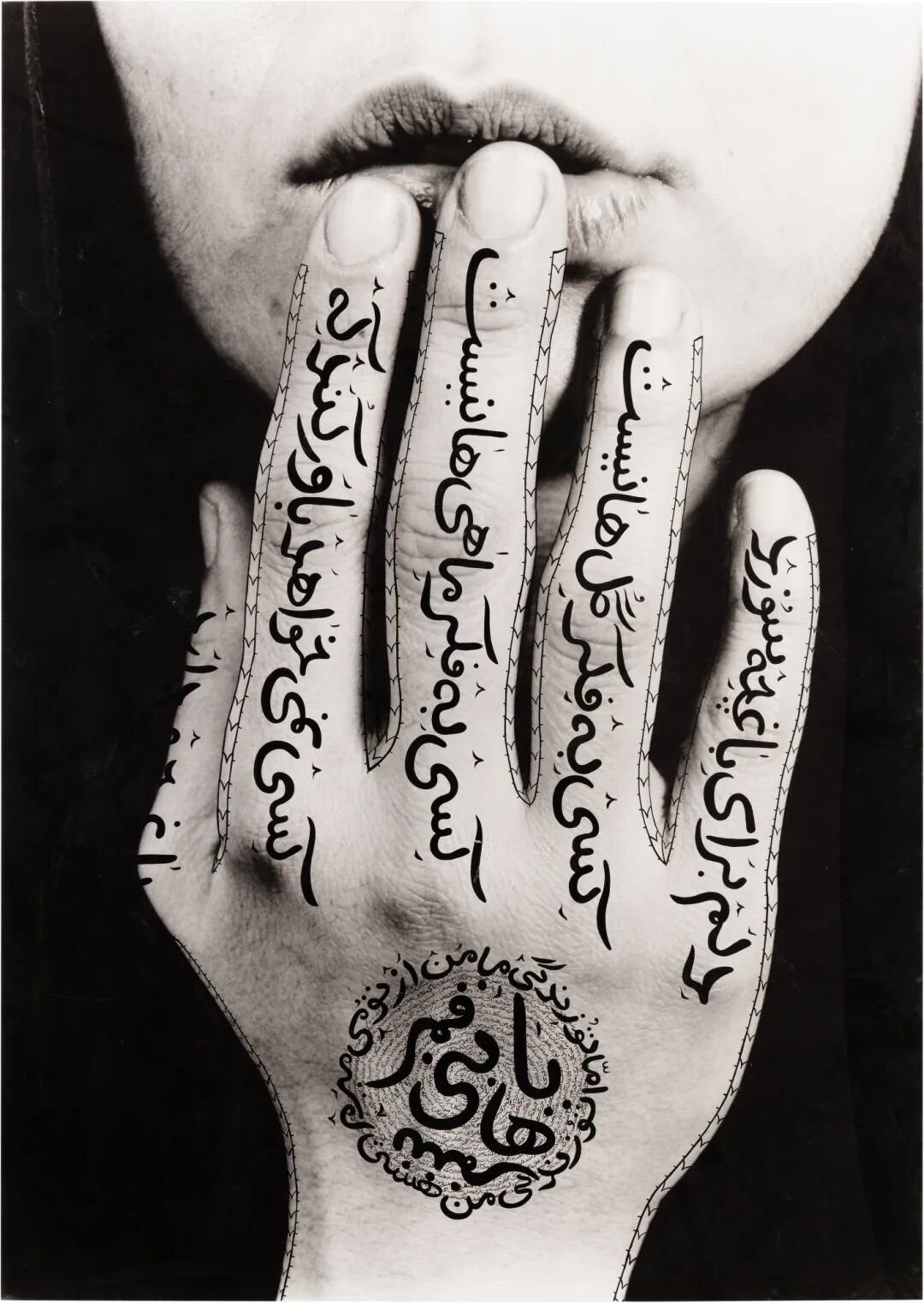
The Women of Allah series (1993–1997), photography: This is the series that made Neshat’s name. In these black-and-white photographs the artist frequently models herself, clad in the traditional Iranian woman’s black chador, her bared skin (face, hands, feet) inscribed with Persian calligraphy quoting verses by Iranian women poets or contemporary writers. These verses often explore love, desire, sacrifice, faith and violence. Though the works address directly the complex situation of women within Islamic culture, the meanings they carry—“occluded identity,” “the struggle between tradition and modernity,” “silencing and the desire to speak”—can be extended to the broader community of exiles and refugees, who in a new cultural environment likewise confront the blurring of an original identity, the difficulty of cultural expression, and the predicament of being “invisible” within the mainstream. The chador is at once protection and constraint, at once a symbol of cultural identity and a possible source of estrangement—akin to the double effect a refugee’s cultural background may produce when he or she seeks asylum on foreign soil.
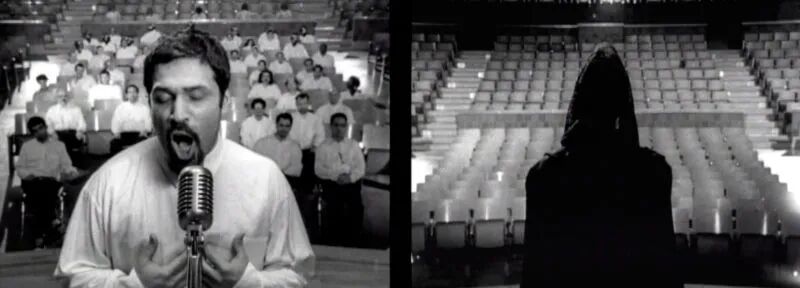
Moving-image installations such as Turbulent (1998), Rapture (1999), and the feature film Women Without Men (2009): Neshat’s film work is famed for its high visual symbolism, its tense binary structures (male/female, tradition/modernity, public/private space) and its powerfully affective music and sound design. Through dual-screen projection, Turbulent and Rapture respectively present a man performing in public and a woman chanting in a private or marginal space, hinting at the differential of expression under a gendered structure of power. Rooted though they are in an Iranian cultural context, their exploration of “marginalised groups,” “suppressed voices” and “the search for transcendence within constraint” echoes, across distance, the efforts of refugees who strive to rebuild a life and make themselves heard in an unfamiliar, often hostile environment.
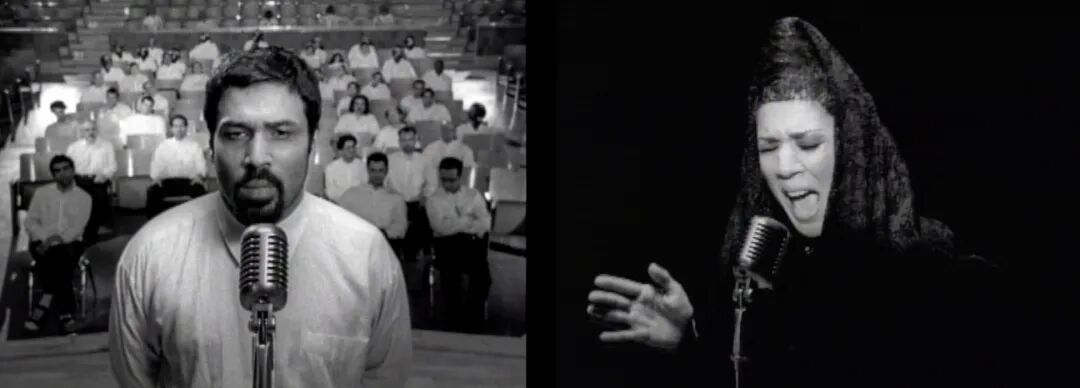
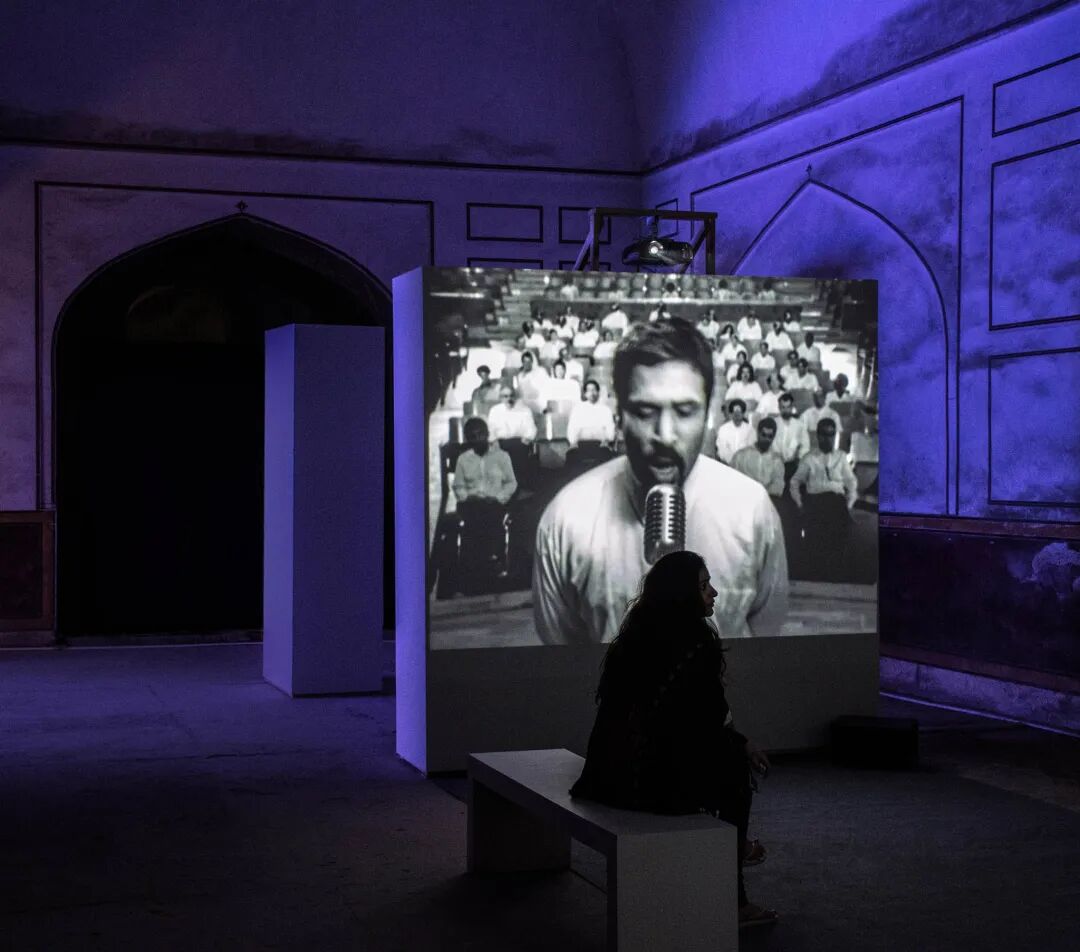
The film Women Without Men adapts the eponymous novel by the Iranian woman writer Shahrnush Parsipur, telling of four women who, against the backdrop of the 1953 Iranian coup, flee their former lives to seek utopian freedom in a symbolic “orchard.” Its depiction of “escape,” “quest,” “the building of a new community” and the eventual disillusionment of ideals touches profoundly on the complex psychology and lived reality of exiles and refugees as they leave home and search for a new one. Their longing for and loss of “home,” and their redefinition of identity, are emotional experiences shared by many who have been forcibly displaced.
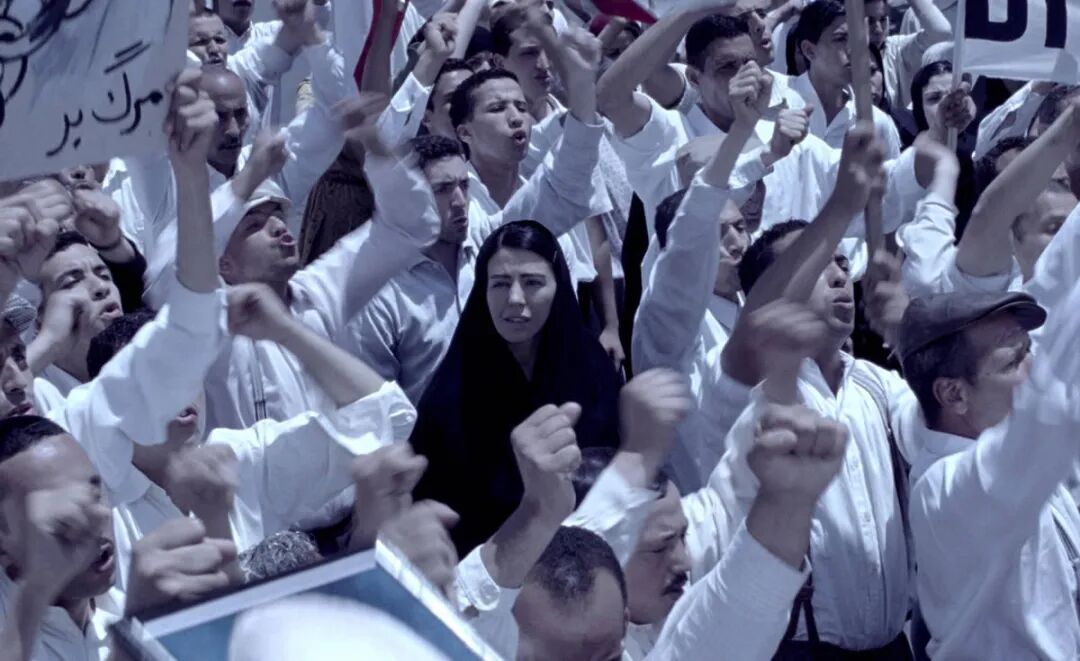
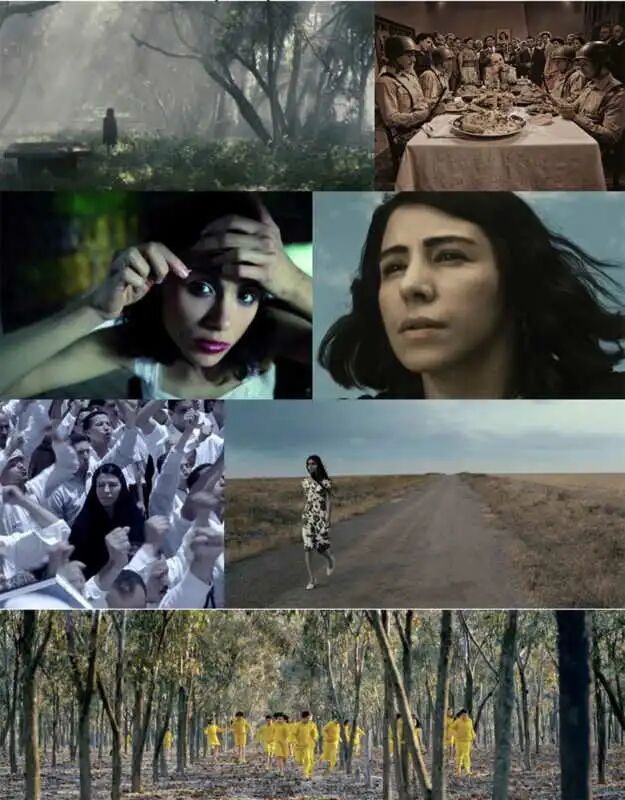
On “homeland” and “memory”: Neshat’s work is suffused with a nostalgia for a lost homeland and a fixation on cultural memory. Whether the calligraphy-covered body or the recurrent Iranian traditional music, poetry and landscapes of her films, all testify to the artist’s complex bond with her matrix culture—at once estranged from it and unable to sever it. This search for “roots” and the anxiety of maintaining a cultural identity in a state of diaspora is a central problem faced by all who leave home, refugees included. Their material home may be lost, yet the rebuilding of a spiritual home, and the question of how to lodge one’s cultural memory in new soil, is a long and painful process.
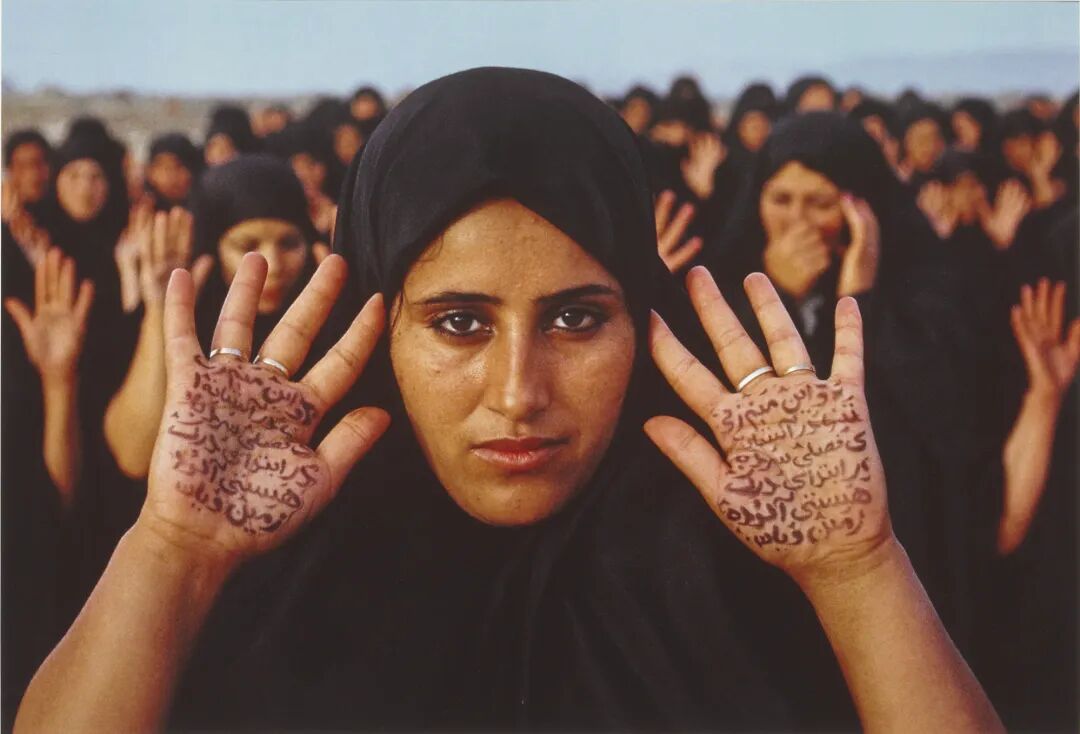
Although Shirin Neshat’s work does not apply the label “refugee” directly, it touches, in a more universal and poetic register, upon the perennial themes of human experience—displacement, identity, cultural loss and the remaking of memory.
Her art offers us a perspective of force and compassion for understanding the profound spiritual trauma and cultural struggle that refugees endure beyond their material plight. Her practice proves that even the most locally specific expression can, through its deep insight into human nature, acquire a universal significance that crosses borders, resonating with the souls of the ever-growing “homeless” of the globalised age.
4. Behrouz Boochani (Kurdish/New Zealand)
Core idea: writing as resistance, words as testimony
Behrouz Boochani is a Kurdish journalist, writer, filmmaker and human-rights defender. He is not an “artist” in the conventional sense, yet his experience and his writing—above all his book No Friend But the Mountains: Writing from Manus Prison (2018), composed during more than six years of incarceration in Australia’s offshore detention centre on Manus Island, Papua New Guinea—have transcended the merely literary to become a powerful act of resistance and a profound indictment of a brutal migration policy. His case throws into relief the resilience of the human spirit under conditions of extreme deprivation and dehumanisation, and the possibility of defending dignity and seeking justice through creative expression.
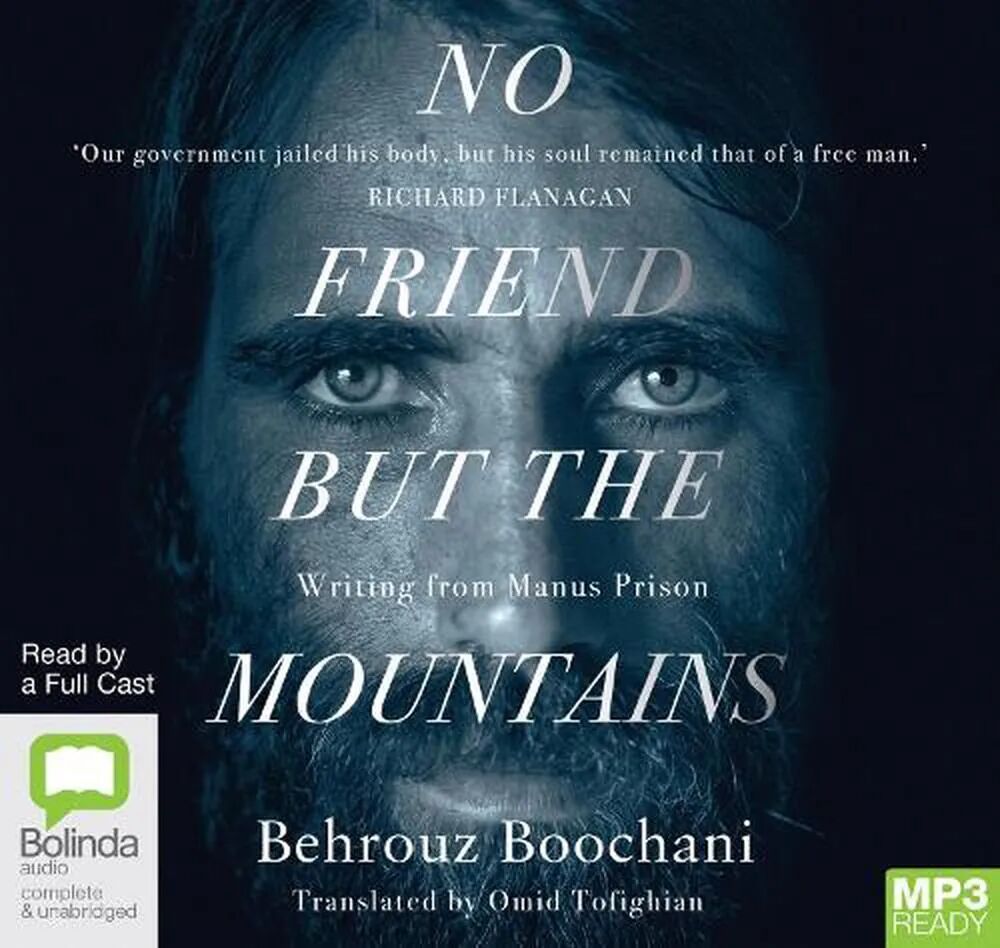
No Friend But the Mountains: an epic born in captivity
The singularity of this work lies first in the process of its making. Because the detention centre strictly limited detainees’ communication and writing implements, Boochani composed the entire book on a mobile phone smuggled in, dispatching the chapters piecemeal as fragmentary Persian text messages (WhatsApp) to his translator and collaborator Omid Tofighian in Australia. The process itself was fraught with risk and difficulty; each transmission might have been the last. This manner of “dancing in chains” endows the very birth of the text with dramatic tension and the character of resistance.
Content and critical force:
A systematic critique of the offshore-detention policy: The book records, in the first person, the author’s journey from his attempt to reach Australia by boat to seek asylum, through interception and forcible transfer to the Manus Island detention centre, and on to years of incarceration. With a calm yet incisive pen, Boochani exposes the inhuman nature of the “offshore detention” policy pursued by the Australian government. He depicts the centre as a deliberately engineered site of “systematic torture,” one that seeks to crush detainees’ will and dignity through deprivation of liberty, manufactured uncertainty, wretched living conditions, scarcity of medical care and unrelenting psychological torment. The book describes with penetration the internal power structures of the centre, the indifference of bureaucracy, and the tensions among detainees born of despair.
Philosophical reflection and the “kyriarchal prison”: Boochani does not rest at a documentary account of his ordeal; he situates his experience within a broader framework of philosophical and political theory. He terms the Manus Island detention centre a “kyriarchal prison,” in which multiple structures of oppression (colonialism, patriarchy, state violence and the like) are interwoven to act upon the incarcerated individual. He analyses how this system sustains its rule by manufacturing fear and division.
Literariness and poetic expression: For all the extremity of his conditions, No Friend But the Mountains is no mere indictment; it possesses a high literariness and poetic charge. Boochani folds Kurdish oral tradition, mythic elements and philosophical reflection into his narrative, so that the text, even as it unveils cruel reality, reveals a deep cultural sediment and the radiance of humanity. His descriptions of the natural environment (albeit an island of confinement), his probing of the individual interior, and his longing for freedom, justice and love all endow the work with an artistic value beyond reportage.
The act of writing as resistance: Boochani has stated plainly that writing itself is an act of resistance. In an environment bent on silencing them and erasing their identities, to persist in recording, thinking and expressing is in itself a challenge to the system of oppression. Through writing he gave voice not only to himself but to the thousands of asylum-seekers who shared his fate, transforming their suffering into testimony of historical significance.
Influence and significance:
After the publication of *No Friend But the Mountains*, the book aroused an enormous international response and garnered numerous honours, including the Victorian Premier’s Prize for Literature—Australia’s most significant literary award. The work’s success won Boochani his personal freedom (he later obtained refugee status in New Zealand); more importantly, it dramatically raised public awareness of the cruelty of Australia’s offshore detention policy and galvanised related social movements and legal challenges.
Boochani’s case proves that even in the darkest and most hopeless circumstances, art and literature can remain a powerful weapon for the individual to defend dignity, resist oppression and seek liberation. His very act of writing is an assertion of vitality, a transcendence of the condition of the ‘dispossessed’. His story and his words offer us a singular and precious vantage point from which to understand the inner worlds and resisting spirit of those marginalised and silenced within the refugee crisis. Through his lived experience he demonstrates that, even when one has ‘no friend but the mountains’, words can cross barbed wire, thought can outleap the cage, and the light of humanity is ultimately difficult to extinguish entirely.
5. Tiffany Chung (Vietnam/United States)
Core idea: charting the geography of trauma and a poetic archaeology of history
Tiffany Chung is a contemporary artist known for her rigorous research methods, meticulous handcraft and deep humanistic concern. Her work repeatedly focuses on the far-reaching impact of war, conflict, migration, urban transformation and geopolitics upon individual and collective human experience. Rather than simply presenting the surface of disaster, she operates like a historian and archaeologist, mining the personal memories and geographies of trauma obscured by grand narratives, and transforming them through a distinctive visual language into artworks open to multiple readings.
Representative work: The Syria Project (2012–ongoing) and related works
The Syria Project is an ongoing multimedia research-based art project by Tiffany Chung that fully embodies her working character.
Research-driven practice and data visualisation: At the core of this project lies the extensive gathering of data on the Syrian conflict, documentary research, analysis of news reports and possible oral-history interviews (though direct access to conflict zones may be difficult for the artist, she widely collects both primary and secondary sources). She attends to the evolution of the conflict, shifts in the territories controlled by different armed factions, the specific routes of displacement, the distribution and scale of refugee camps, and the geographic hotspots of humanitarian crisis. These complex data are then ‘translated’ and ‘re-presented’ by her in a singular manner.
The warmth and detail of hand-drawn maps: Among Chung’s most celebrated techniques is her exquisite hand-drawn cartography. These are not maps in the conventional sense, pursuing geographic precision, but rather ‘maps of emotion’ or ‘maps of trauma’. Upon them she meticulously marks, with lines, symbols, notations and handwriting in different colours, the trajectories of military operations, destroyed villages, refugees’ escape routes, the locations of checkpoints, sites of violence, and so on. These dense markings resemble the accumulated scars left upon the land. Unlike the cold, machine-generated GIS data maps, Chung’s hand-drawn maps are saturated with human warmth and the trace of the hand. Every point and every line condenses the artist’s concentration and emotional investment, enabling the viewer to feel the heavy weight of lives borne behind the data.
The fusion of cold data and poetic expression: Her work often juxtaposes seemingly objective, cold data (numbers of casualties, of the displaced, proportions of damaged buildings, and the like) with highly poetic and symbolic visual elements. For instance, she may stitch the migrants’ routes onto a map, where the density of the stitching and the shifts in colour hint at the hardship of the journey and the fluctuations of feeling. She may also combine fragments of satellite imagery and news photographs with hand-drawn elements within light-box installations—as in works such as *Finding Hart Piles in the Rubble* (2014), where the urban devastation wrought by the Syrian civil war is rendered poetically, revealing the suffering and struggle of refugees. This fusion lends the work both the rigour of documentary research and the affective power of artistic expression.
Revealing the geography of individual trauma behind the grand narrative: Chung’s labour is, in a sense, the drawing of a ‘geography of trauma’. Through a careful ordering of spatial and geographic information, she seeks to reveal how grand geopolitical conflict inscribes indelible effects upon concrete places and upon concrete individual lives. Her maps are not merely representations of space, but sedimentations of time and carriers of memory. They record the loss of home, the disintegration of communities, and the helplessness and resilience of the individual within the torrent of history.
A sustained interrogation of history and the refashioning of the archive: Chung’s work also reflects an interest in historical writing and archival construction. Through her artistic practice she fashions an alternative ‘archive’, one that attends far more to the marginal narratives and individual experiences neglected by official history. Her projects are typically ongoing, reflecting her commitment to the long-term tracking and deep study of these complex issues.
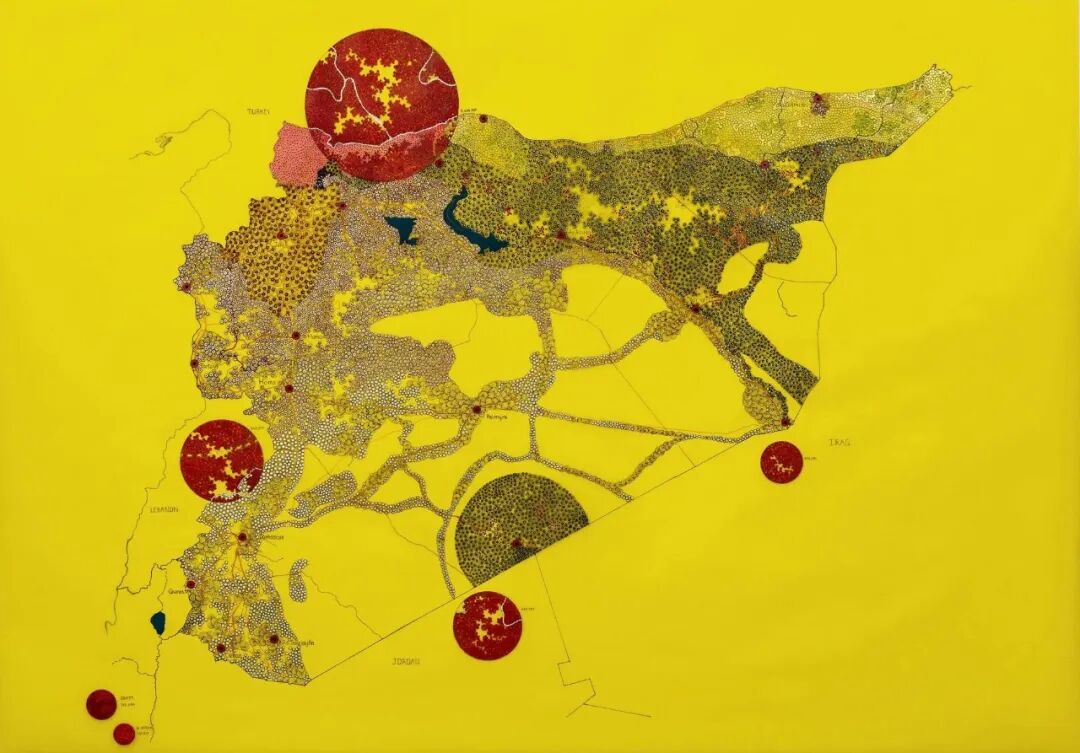
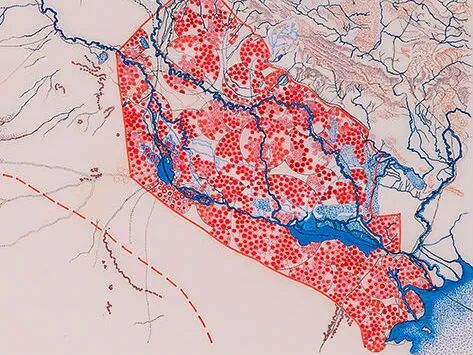
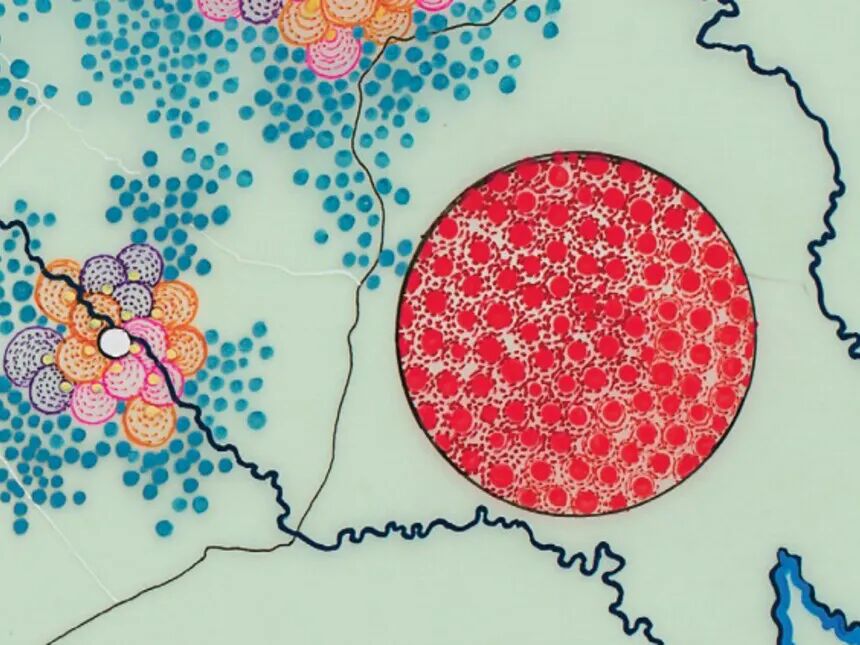
Chung’s artistic practice offers us a singular path toward understanding and responding to complex humanitarian catastrophes such as the refugee crisis. She combines the rigour of scholarly research with the sensitivity of artistic creation, probing, in a manner almost of ‘forensic archaeology’, the folds of history and the texture of trauma.
Her work reminds us that behind every cold statistic of conflict and displacement lie countless living individual lives and their broken stories of home. Through her humane ‘mapping’, those lands shrouded in the fog of war, and those voices drowned out by the grand narrative, are enabled to be seen, heard and remembered anew.
6. Bouchra Khalili (Morocco/France)
Core idea: giving voice and trajectory to the ‘invisible’, redrawing the map of resistance
Bouchra Khalili is an artist who has attracted sustained attention in the international contemporary art world for her profound interrogation of migration, citizenship, the politics of borders and the forms of resistance adopted by individuals in transnational movement. Her work often focuses on those groups marginalised and ‘invisibilised’ by the dominant narrative—above all migrants without legal status and asylum seekers. Rather than ‘representing’ their suffering from a position of condescension, she employs refined collaboration and listening to grant them the subjectivity to tell their own stories, presenting their arduous journeys and inner dignity to the viewer through a minimal yet potent visual language.
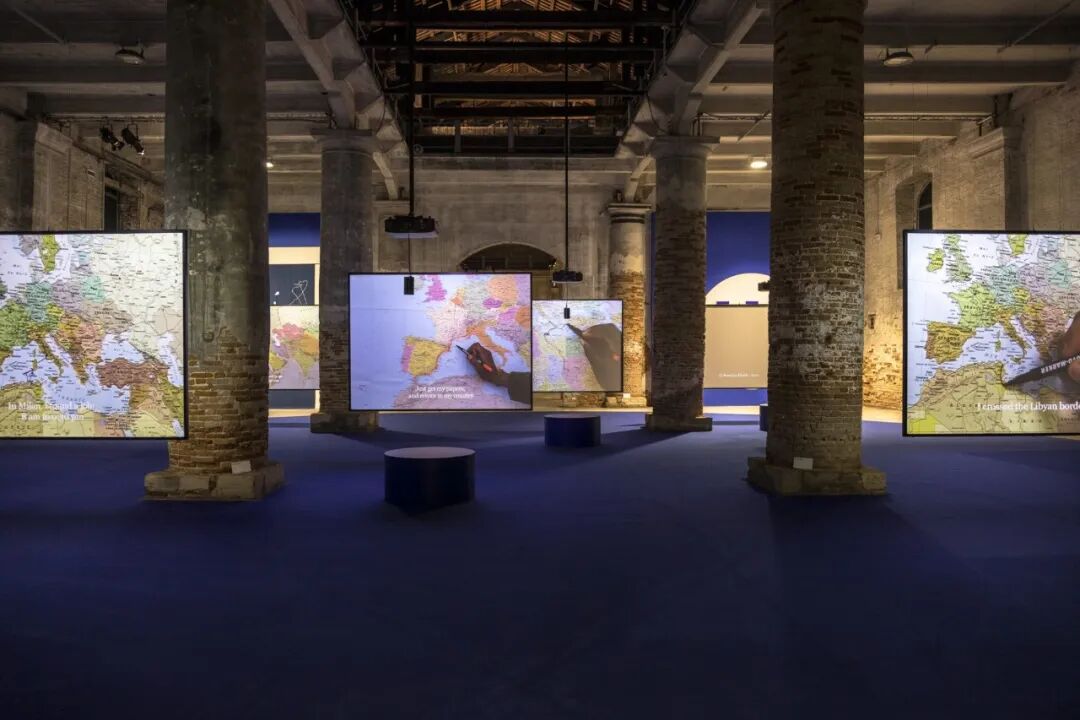
The Mapping Journey Project, 2008–11 (installation view, *Foreigners Everywhere*, 60th Venice Biennale, 2024). Photo: Marco Zorzanello. Courtesy La Biennale di Venezia.
Representative work: The Mapping Journey Project (2008–2011)
The Mapping Journey Project is among Khalili’s most representative series, concentrating her methods and core concerns.
Collaborative generation of narrative: In this project Khalili invited eight undocumented migrants or refugees from different countries and backgrounds to draw by hand, with an ordinary marker pen, upon standard geographic maps (of the Mediterranean region, of Europe, and so on), the long and perilous journey by which they smuggled themselves from home to Europe. As they drew, the artist filmed the map, the moving pen-tip and the drawer’s hand, while the drawer narrated in their mother tongue (Arabic, Punjabi, Albanian, and others, with English subtitles) the key junctures of that journey, the difficulties encountered, their inner feelings and their hopes for the future.
A minimal and restrained visual language: The work’s presentation is extremely restrained and condensed. In the video the viewer barely sees the drawers’ faces; the camera stays fixed upon the pen roaming between continents and oceans on the map, and upon the hand that grips it, pausing and then steadying. This ‘absent presence’ only intensifies the force of the narration. By stripping away sentimental visual elements and direct emotional exposure, Khalili directs the viewer’s attention to the life-trajectory gradually made visible on the map, and to the oral voice, replete with the particulars of individual experience, that accompanies it.
The resonance of voice and trajectory: Sound plays a vital role in Khalili’s work. The drawers’ narration in their mother tongues preserves the raw texture and emotional warmth of their accounts. Even without understanding the languages, the viewer can sense the speaker’s emotion in the cadences and shifts of tempo. And the winding, border-crossing line on the map becomes the visual counterpart of these oral stories—a life-epic ‘written’ by body and will upon the earth’s surface. The resonance of voice and trajectory endows these ‘illegal’ journeys, originally unacknowledged and unrecorded, with a form that can be seen, heard and felt.
Conferring dignity and subjectivity: Through this method Khalili successfully transforms the passive ‘filmed object’ into the active ‘narrating subject’. They are no longer objects of pity or scrutiny, but tellers of their own stories and witnesses of history. The artist recedes behind the scenes, ceding the stage entirely to these ‘map-drawers’. This respect for individual dignity and this empowerment of subjectivity ranks among the most commendable qualities of Khalili’s work.
Redrawing the ‘map of resistance’: These ‘maps’ drawn from individual lived experience are in truth a challenge to and a refashioning of official geography and political borders. They reveal that beneath national sovereignty and tight border control there persist countless individual-will-driven, illegal yet vibrant transnational flows. These trajectories are themselves a form of ‘resistance’ to the existing order of power. Khalili’s work thus carries a strong charge of political critique, compelling us to reflect upon rigid migration policy, an unequal global order, and the exclusivity inherent in the very concept of ‘citizenship’.
Universality and the poetic: Though each journey is full of concrete, personal detail, The Mapping Journey Project as a whole touches upon universal themes in human experience—migration, hope, despair, endurance and the eternal pursuit of a better life. In an almost poetic manner, Khalili transforms these arduous individual epics into a profound reflection upon the human condition.
Through her singular practice, Bouchra Khalili offers us a precious means of listening to and understanding the stories of the ‘undocumented’. Her work not only records the reality of large-scale population movement under contemporary globalisation; more importantly, in a manner full of respect and humaneness, it lets us glimpse the extraordinary courage and unyielding will of those individual lives erased by official narrative. Her art is a faint yet steadfast lamp lit, amid the layers of borders and walls of power, for those ‘invisible travellers’.
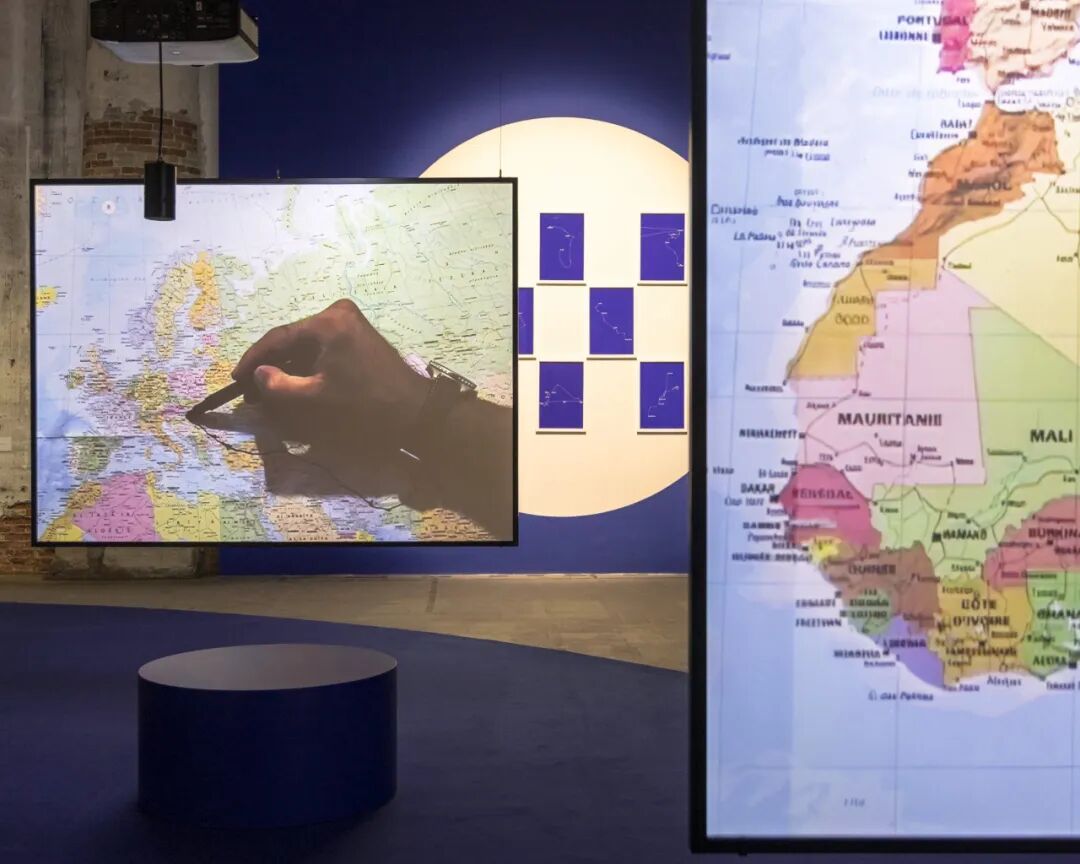
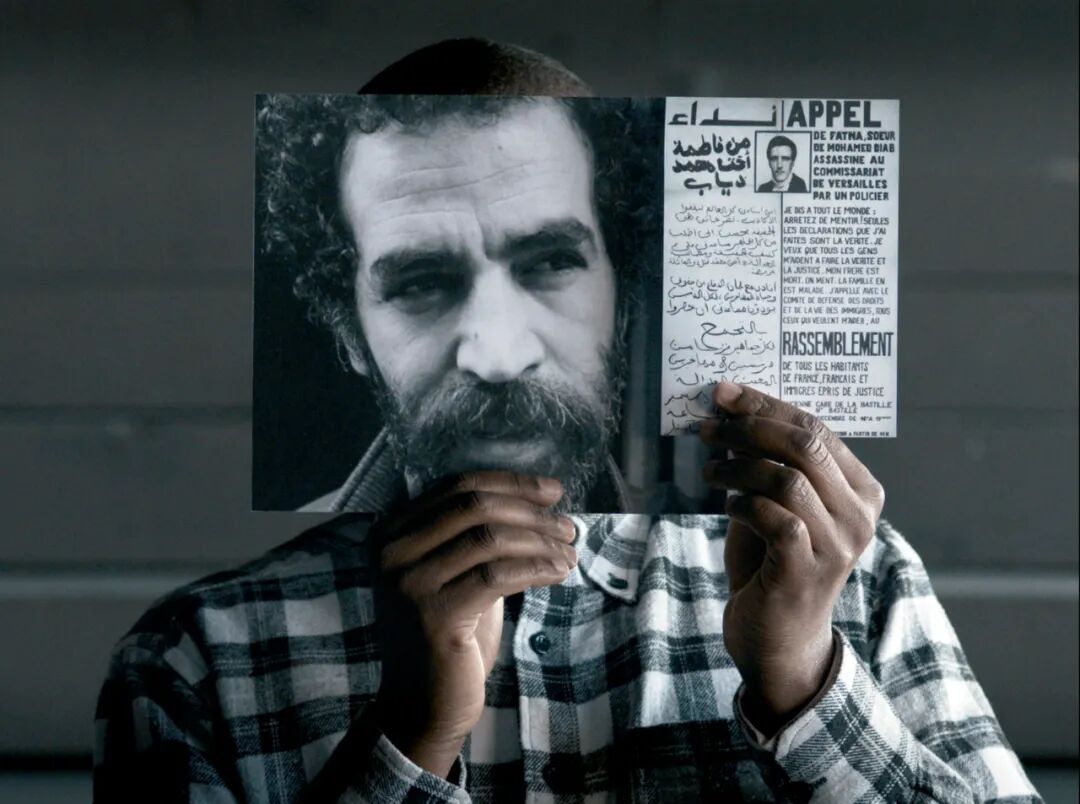
The Tempest Society, 2017, digital video, colour, sound, 58 min 54 sec. © Bouchra Khalili. Courtesy the artist and mor charpentier, Paris
7. Jason deCaires Taylor (United Kingdom)
Core idea: underwater monuments and an ecological warning
Jason deCaires Taylor is a British artist renowned worldwide for his pioneering underwater sculpture parks. His works are typically placed on the seabed, where over time they merge with the marine ecosystem to form unique artificial reefs. While many of his pieces lean more toward marine conservation and ecological themes, he has also turned this distinctive form to urgent social and humanitarian concerns, including the refugee crisis. Taylor’s practice combines the monumentality of sculpture, the site-specificity of installation and the life-cycle of ecological art, creating visual and emotional experiences that are at once staggering and thought-provoking.
Representative works: Raft of Lampedusa and The Rubicon
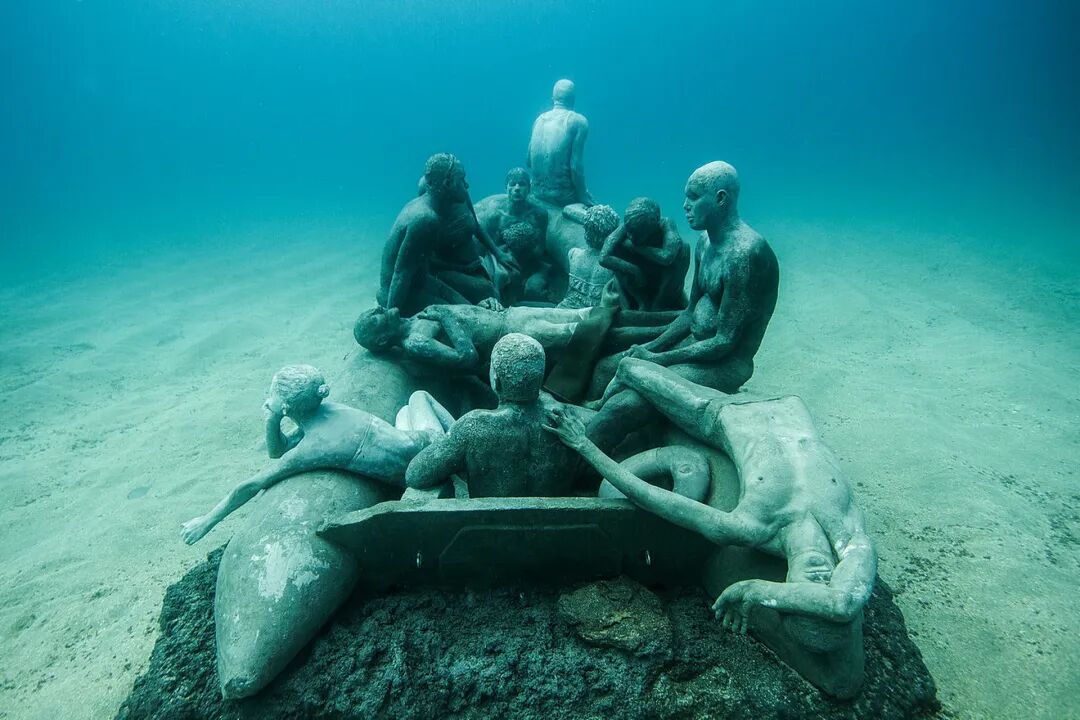
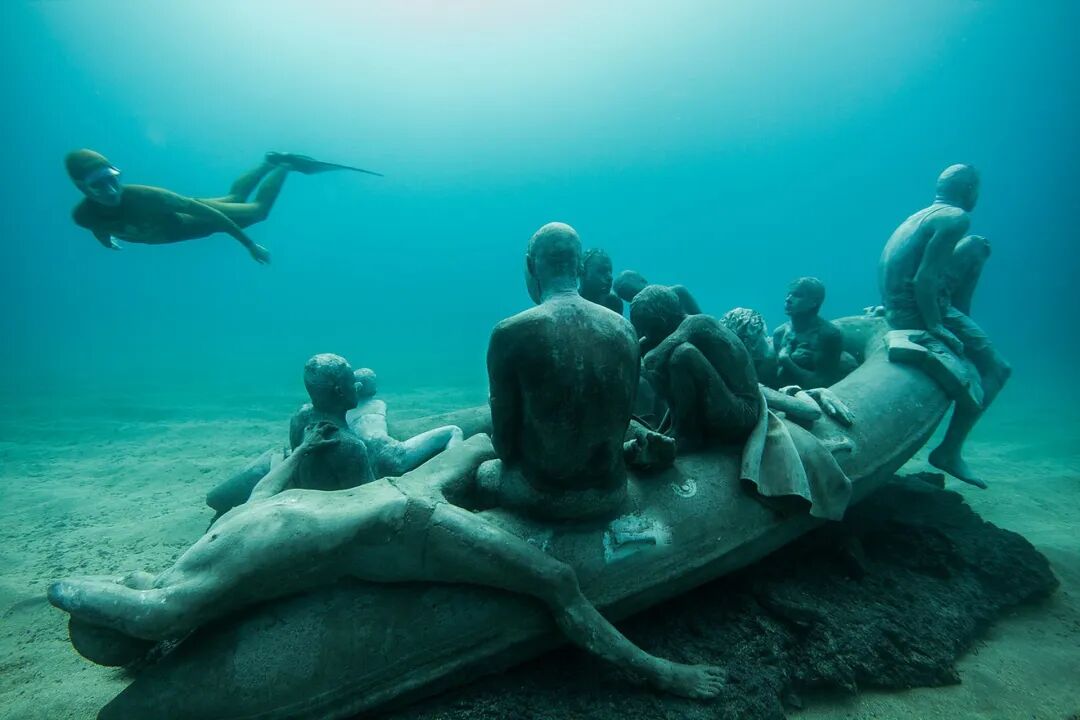
Raft of Lampedusa
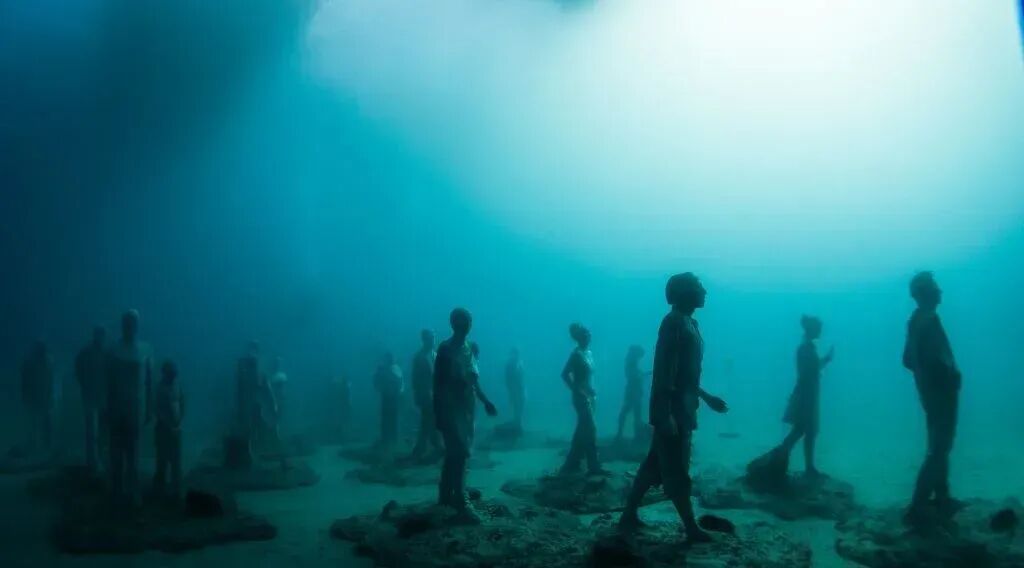
This work is among Taylor’s most direct and best-known responses to the refugee crisis, its inspiration drawn directly from the masterpiece *The Raft of the Medusa* by the French Romantic painter Théodore Géricault. Géricault’s original depicts the tragic struggle for survival on a raft by the survivors of the 1816 wreck of the French naval frigate Méduse. Taylor deftly appropriates this canonical image, relocating it within the context of the contemporary Mediterranean refugee crisis. His underwater sculptural group re-enacts the scene of an overcrowded refugee vessel sinking, its figures varied, their expressions charged with despair, fear and a lingering will to survive. The models for these figures are often real refugees or local residents.
The sculpture is permanently fixed in the waters off Lanzarote, Spain (as part of Museo Atlántico, Europe’s first underwater museum).
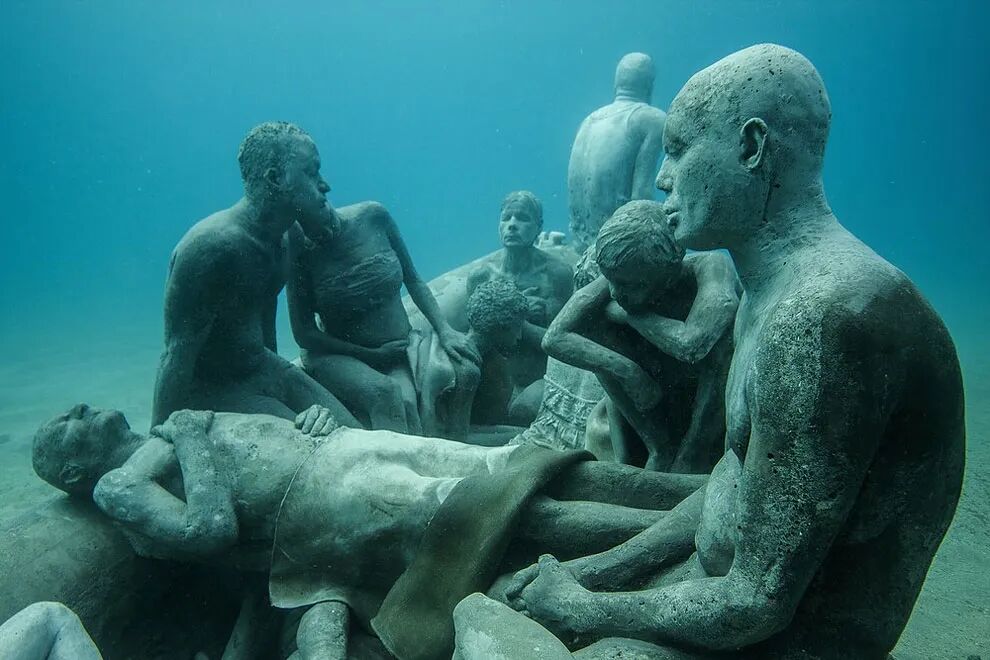
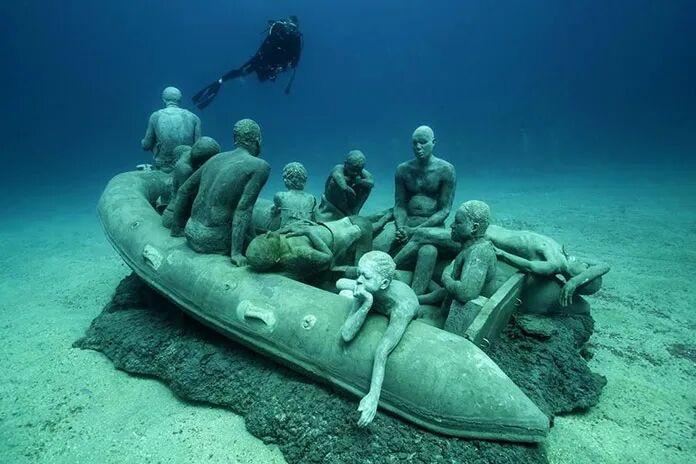
The profundity of this work lies in the following:
Historical echo and contemporary tragedy: Through its dialogue with *The Raft of the Medusa*, Taylor connects the contemporary refugee tragedy with human suffering in history, underscoring the universality and cyclical recurrence of such stories of survival against all odds. It implies that, though eras change, the tragedy of humans risking all in despair and sacrificed through indifference continues to unfold.
The symbolism of the underwater environment: Submerging the sculpture to the seabed is itself richly symbolic. The ocean is both the channel of refugees’ flight and the grave that swallows countless lives. The silence and gloom underwater, contrasted with the possible noise and chaos above the surface, creates an eternal, suffocating atmosphere of tragedy. Light passing through the water plays upon the sculpture, producing shifting, unpredictable effects, as if ghostly figures were telling wordless stories.
The fragility of life and the sea’s embrace / engulfment: The sculpture’s material (typically pH-neutral ecological concrete) is over time colonised, eroded and altered by marine organisms, eventually becoming part of an artificial reef. This process symbolises both the fragility and transience of life and the eventual embrace (or engulfment) of human tragedy by nature (the sea). It also poses a question: will these departed lives be remembered, or, like the sculpture sunk to the seabed, be gradually forgotten, leaving only a blurred outline?
An interrogation of social responsibility: The work means to alert us to the Mediterranean as a ‘road of death’ and to the default of international responsibility in confronting the refugee crisis. It forces the viewer to ask whether we are all spectators of this tragedy, and what we might do to prevent such catastrophes from recurring.
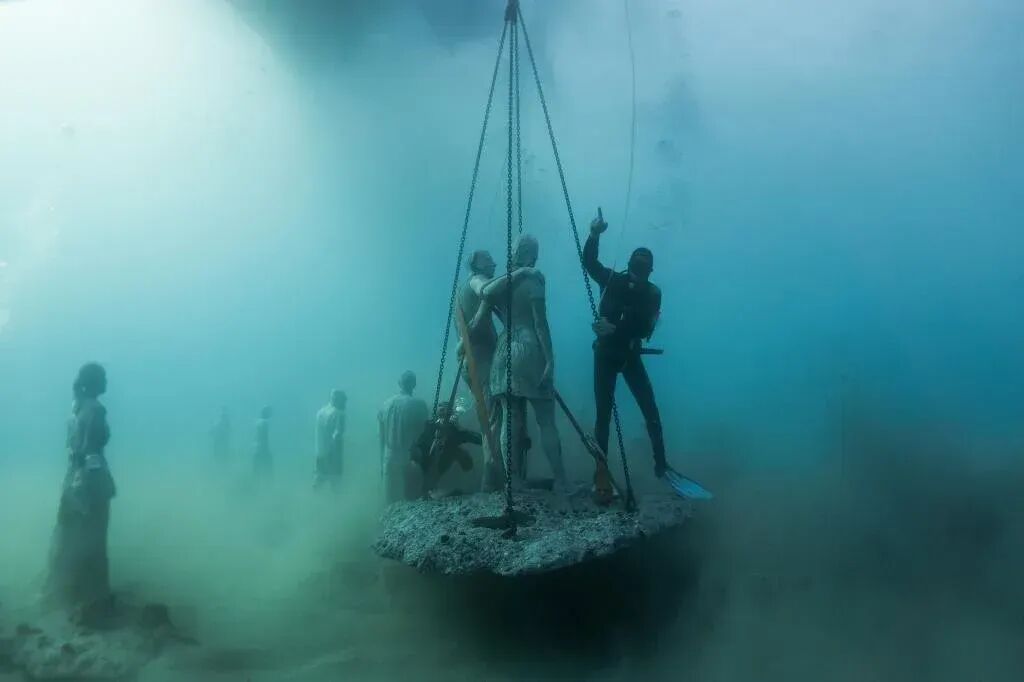
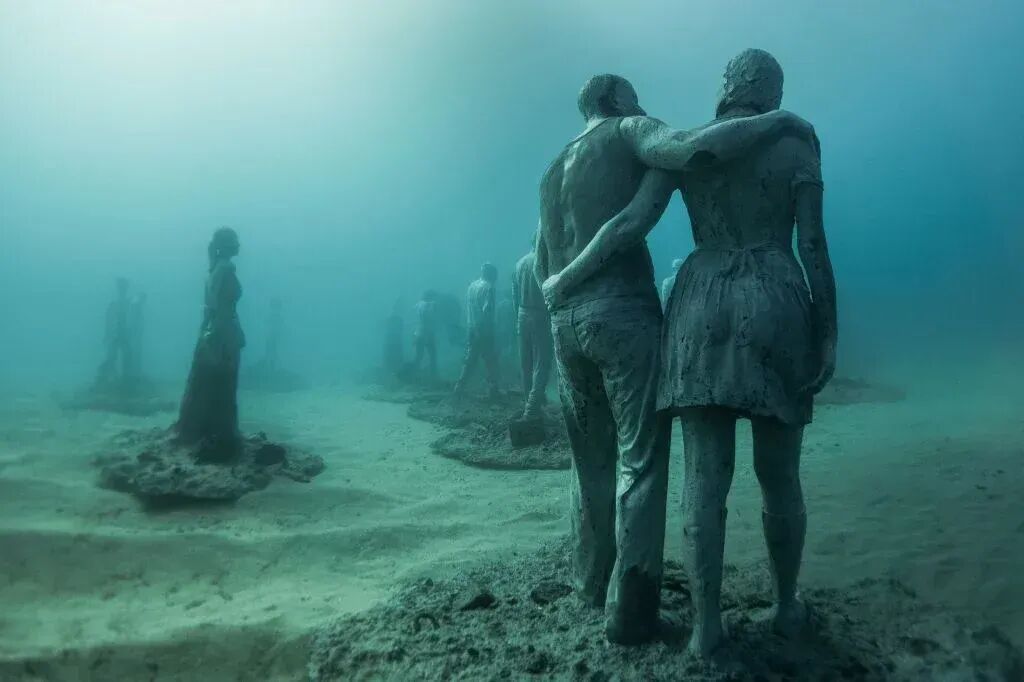
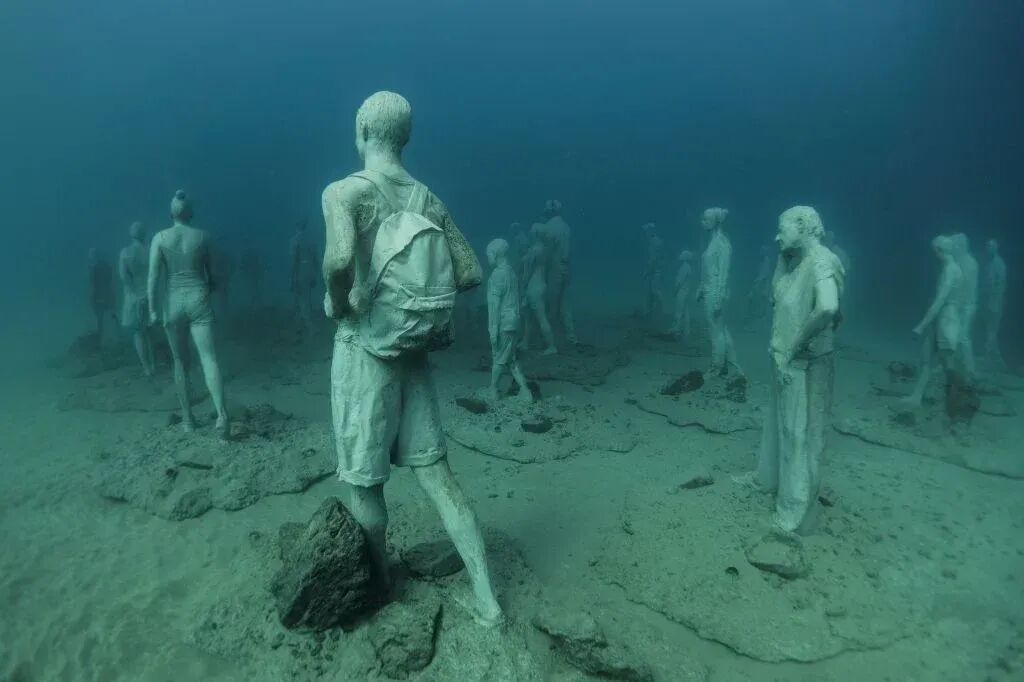
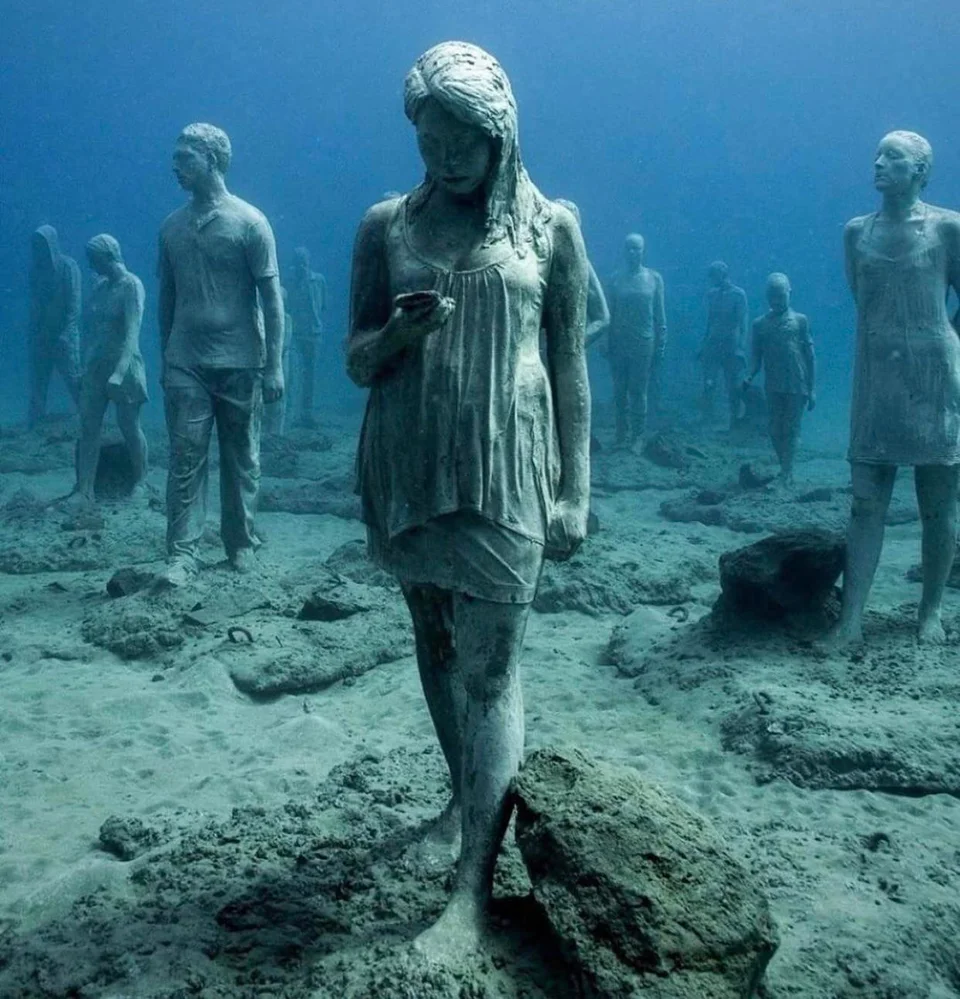
The Rubicon: Also located in Lanzarote’s underwater museum, this work depicts a group of expressionless people in everyday clothes, holding mobile phones or tablets, walking blindly toward an underwater ‘wall of borders’. Though its immediate subject is modern humans’ obsession with technology and their alienation from the real world, the imagery of ‘crossing borders’ and ‘blind marching’ readily evokes the plight of refugees desperately attempting to cross national frontiers with an uncertain future. The motif of the wall also hints at Europe’s tightening border policy and its exclusion of refugees.
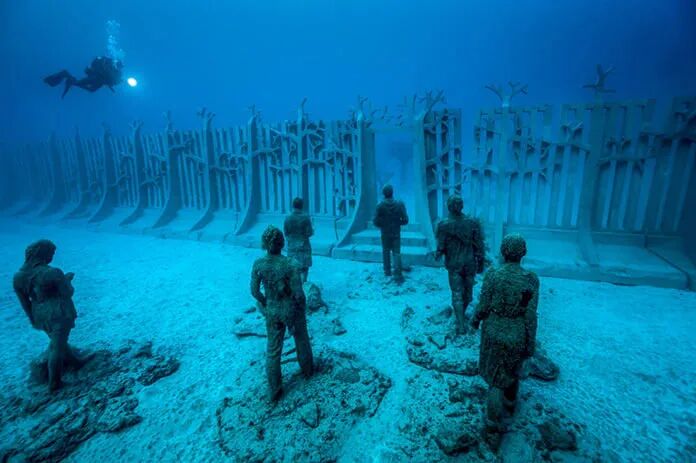
This, the first underwater art museum in European and Atlantic waters, covers a 50 × 50 metre seabed and lies 14 metres below the surface. With the astonishing life-size sculptural group *The Rubicon*, Taylor illuminates these azure waters—35 men, women and children ‘march toward a door, a point of no return, or an entrance to another world’. This permanent ecological art installation welcomes snorkellers and divers of every level to explore.
Jason deCaires Taylor’s practice intervenes in the refugee-crisis debate in a unique and forceful way. He fuses the traditional language of sculpture with a specific marine environment, creating ‘underwater monuments’ of multiple symbolic meanings and profound emotional force. His work is not only a lament for the dead but a warning to the living, calling on people to confront this humanitarian disaster and assume their due social responsibility. By sinking art to the seabed, he also deftly sidesteps certain controversies over the politics of monuments on land, while endowing the work with a life-force that coexists with nature and continually evolves, making it a site that persistently provokes reflection and dialogue.
9. Idris Khan (United Kingdom)
Core idea: layered memory and vanishing speech
Idris Khan is a British artist known for his distinctive ‘layering’ method. His work frequently involves the repeated superimposition, scanning and digital processing of existing texts, musical scores, photographs or paintings, producing a visual effect that is at once blurred and dense, abstract yet charged with concrete information. This method itself implies the accumulation of memory, the rewriting of history and the attrition and deformation of information in the process of transmission. When addressing humanitarian themes, Khan’s approach can effectively convey the depth of trauma, the pain of aphasia, and the traces of the individual gradually fading within the grand narrative.
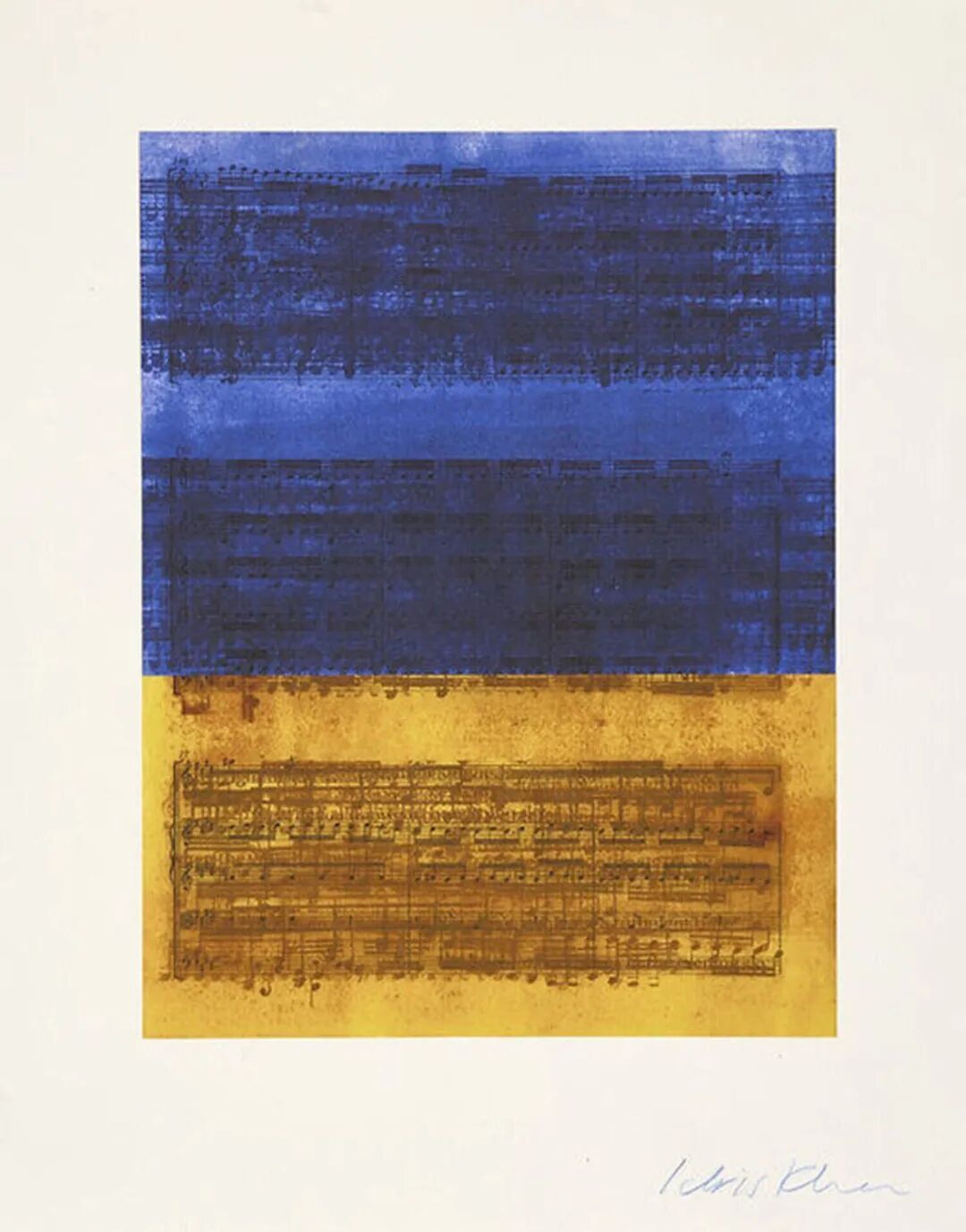
Representative work: I Thought We Had More Time…
This work, created in aid of Ukrainian refugees, may take a different concrete form depending on the exhibition or project (it might, for instance, be a layered composition based on specific texts or images, or a direct donation or participation in a charity auction). Yet we can infer its likely point of entry and mode of expression from Idris Khan’s consistent ideas and methods:
The superimposition of texts and the dissipation / reconstruction of meaning: If the work involves text, Khan might select poetry, news reports, personal testimony or historical documents relating to the Ukraine crisis. By digitally overlaying the words and paragraphs of these texts countless times, the legibility of the original text gradually diminishes, eventually forming a dense, nearly illegible abstract pattern. This visual effect can symbolise:
Information overload and numbness: In a large-scale humanitarian crisis the public is often inundated by a flood of news reports and statistics, which can in turn induce numbness and perceptual fatigue toward individual suffering. The layered text resembles an endless yet indigestible torrent of information.
The trauma of aphasia: The trauma brought by war and displacement is often unspeakable. The layered words resemble countless painful memories and individual narratives that are repressed, interrupted, impossible to articulate clearly.
The complexity of history and multiple voices: Superimposition may also hint at the multiple facets of historical events and the interweaving of different voices—no single, absolute truth, but a constitution by countless fragmented memories and accounts.
The passage of time and the blurring of memory: The very title ‘I Thought We Had More Time…’ is suffused with regret for time gone and shock at sudden disaster. The layered images or words resemble memories gradually blurred under the erosion of time.
The superimposition of images and the dissolution of identity: If the work is image-based (photographs of refugees, scenes of destroyed homes, for example), Khan’s layering may blur individual faces or dissolve the details of scenes. This can metaphorise:
The defocusing of the individual: In a mass refugee flow, the individual is often seen merely as part of a vast group, and their unique identity and face easily overlooked.
The shattering of home and the overlay of memory: For the displaced, memory of home may be layered—both a beautiful past and a reality destroyed by war.
Emotional density beneath abstract form: Though the final presentation may be abstract in visual form, because it derives from concrete raw material charged with emotion and information, Khan’s work often possesses an inner emotional density and spiritual force. Even unable to decipher the specific words or images, the viewer can sense the heaviness, sorrow or urgency contained within.
A call to action: When such a work is used in charity projects aiding refugees, it transcends mere artistic expression and becomes a catalyst for action. The artwork’s value is converted into practical support for the sufferers. The title ‘I Thought We Had More Time…’ also functions as a warning, urging people to cherish peace and to extend timely help to those in crisis.
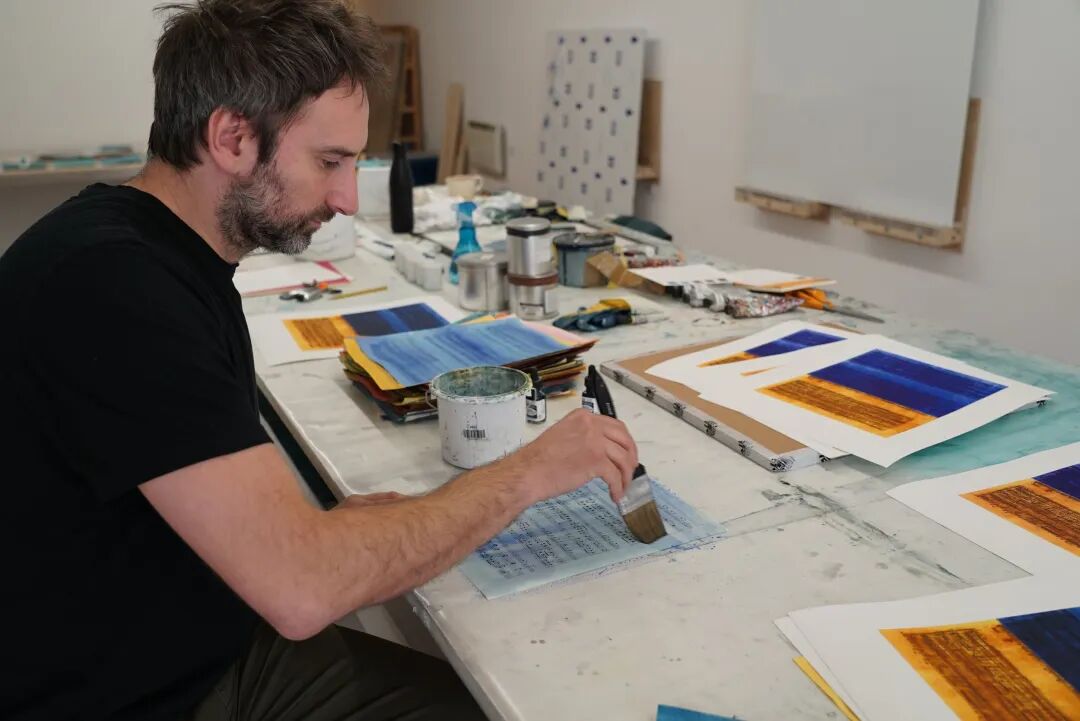
Idris Khan’s artistic language is introspective, delicate and also full of force. Through ‘compressing’ and ‘recomposing’ information and memory, he creates a unique visual poetics. In responding to issues such as the Ukraine refugee crisis, his work can move beyond direct documentation or sentimentality, provoking, in a more universal and philosophical register, profound reflection upon time, memory, trauma and the fragile existence of humans within the torrent of history. His work reminds us that every neglected voice and every forgotten instant may leave an indelible mark within the layering of history.
10. Walid Siti (Iraqi-Kurdish / United Kingdom)
Core idea: the imprint of exile and the resilience of culture
Walid Siti is an artist born in Iraqi Kurdistan, whose career is deeply shaped by his personal experience—life under the Saddam Hussein regime, the suffering of the Kurdish people, and his later exile in Britain. His work often revolves around themes of homeland, exile, identity, memory, conflict, and the fragility and resilience of cultural heritage. Working across media including painting, drawing, installation and sculpture, his visual language frequently fuses abstract geometric forms, symbolic signs, and allusions to the natural landscape and architectural elements of his native region.
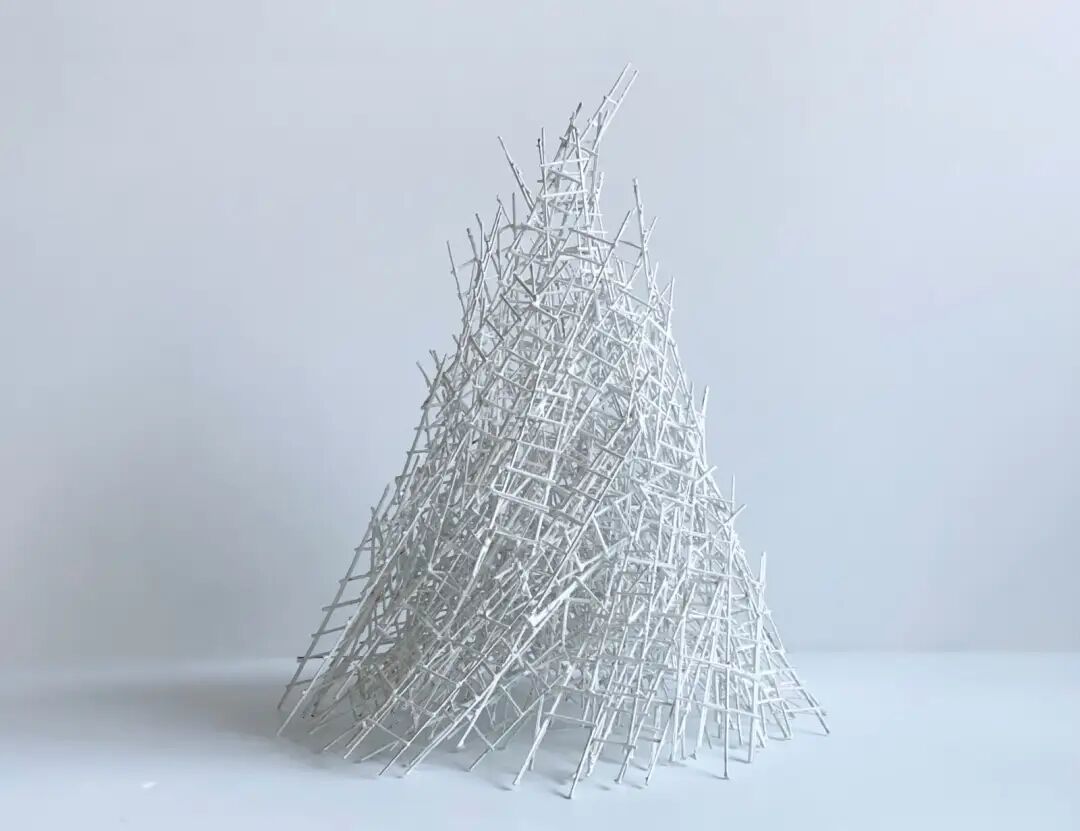
Although *Collective Dream* is a general theme or series name within his oeuvre, we can extract from his overall practice the core expressions related to refugee and exile experience:
Scorched earth, ruins and landscapes of trauma: Some of Siti’s works directly or indirectly depict the destruction war and conflict have wrought upon his homeland. He may employ symbolically charged materials such as the scorched earth of Iraq, or re-present, through painting and drawing, destroyed villages, barren land and broken architecture. These ‘landscapes of trauma’ are not merely records of physical destruction but metaphors for the displacement of lives and the psychic trauma it causes. They are both the immediate cause forcing refugees to leave home and an indelible imprint deep within them.
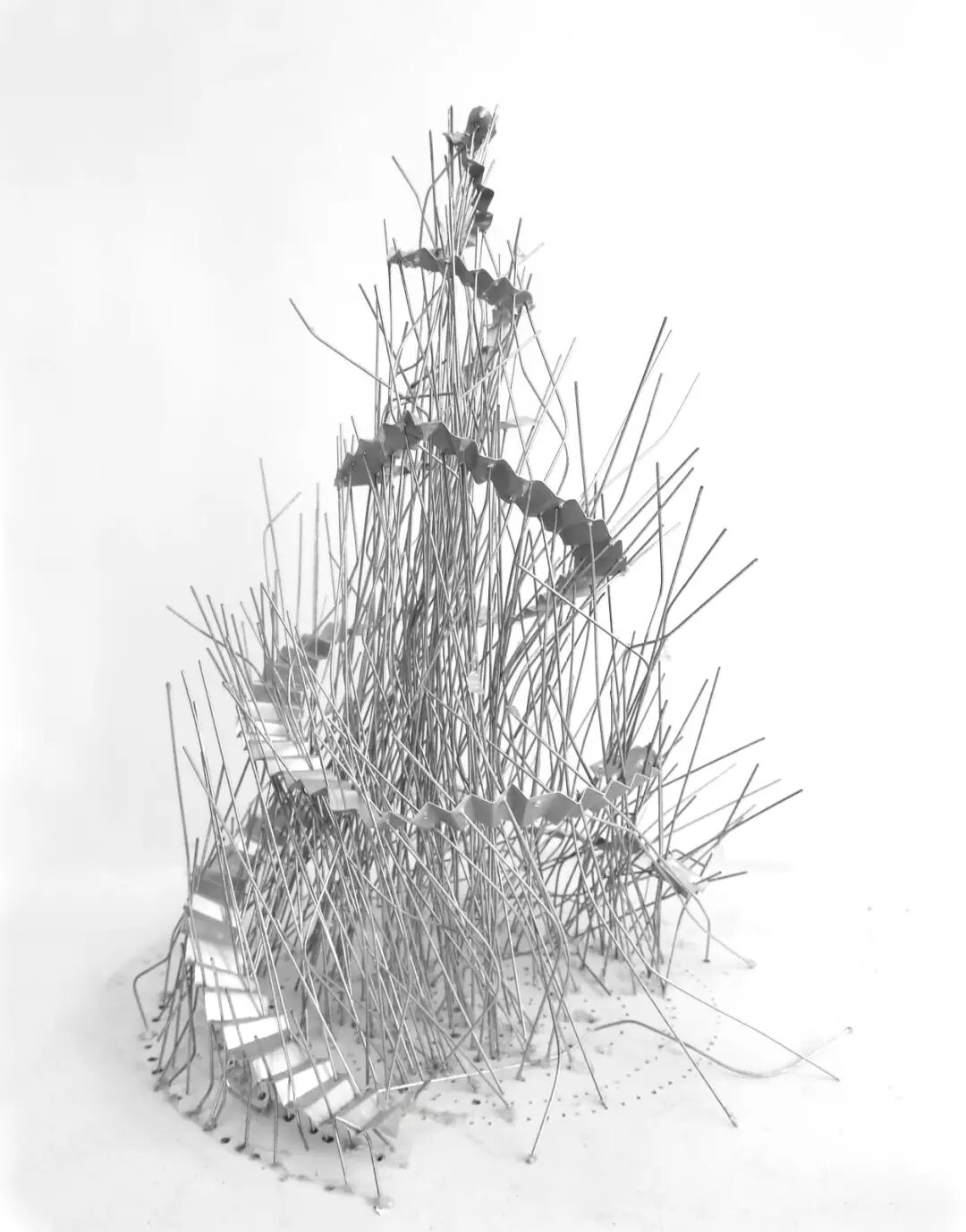
Fragile Construction II, 2021, copper wire, aluminium and acrylic on MDF, 55 × 40 × 40 cm
Symbolic mountains and fortresses: The mountainous terrain of Kurdistan often appears in Siti’s work; these mountains are both a geographic reality and bearers of rich cultural and historical symbolism. For the Kurds, the mountains are at once a symbol of refuge and resistance (the Kurdish proverb ‘no friend but the mountains’ is widely known) and a witness to isolation and suffering. In his work these mountains may be rendered as towering, solid fortress-forms, symbolising cultural tenacity and the guarding of identity; or they may appear as fractured, unstable structures, hinting at the vulnerability and insecurity of the exiled condition.
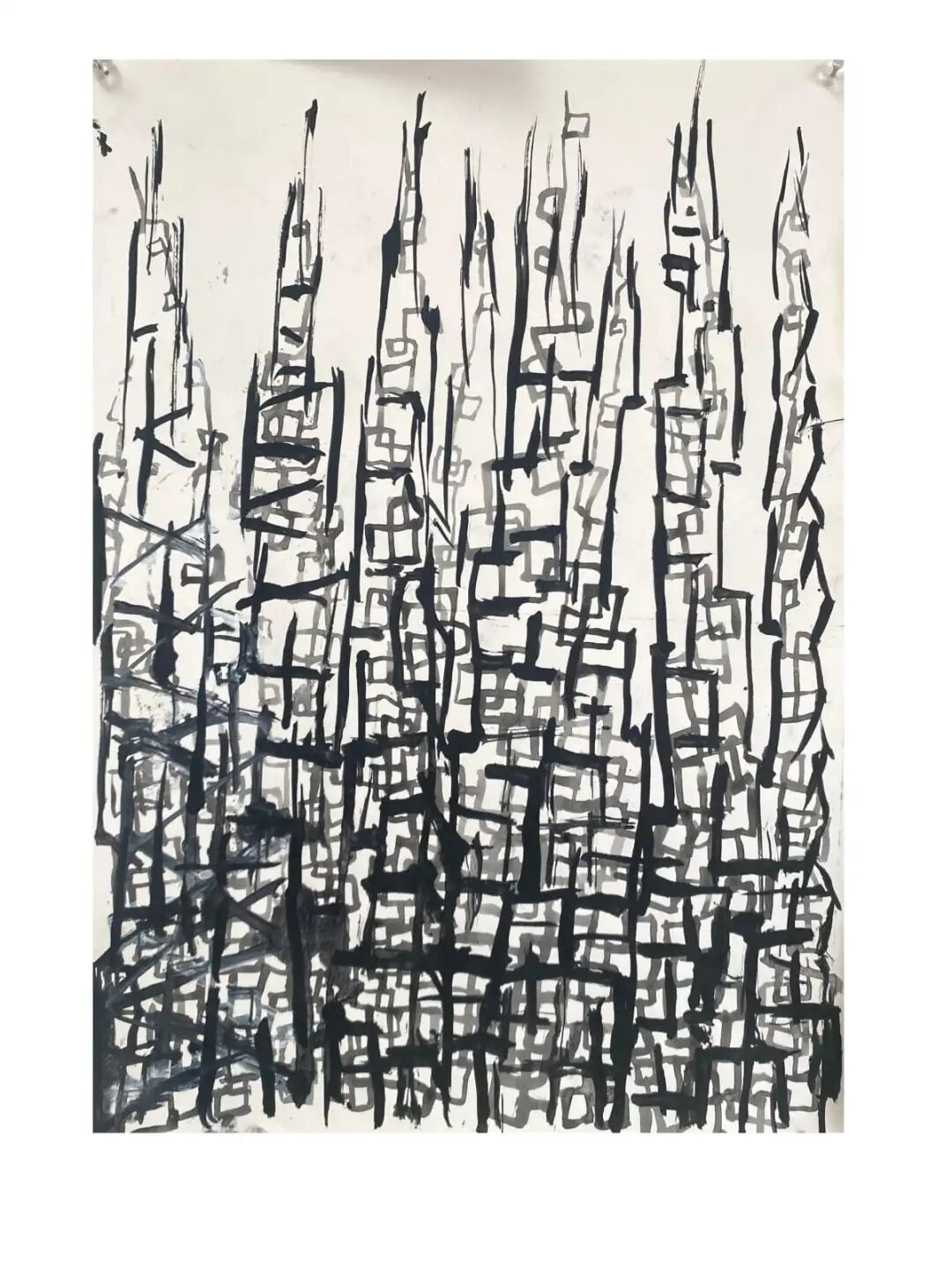
The interweaving of heritage, tradition and migration: Siti’s work often joins elements of Kurdish cultural heritage (traditional patterns, architectural signs, ancient legends, and so on) with the themes of exile and migration. He seeks, amid displacement, to maintain and reconstruct through art a connection with his matrix culture. This very effort reflects the shared desire of many refugees and exiles, in foreign lands, to preserve their cultural identity and resist cultural assimilation or amnesia.
Integrating the oral history of exiles: In some projects Siti may weave the oral histories or personal narratives of exiles into his creation. This may take the form of embedding textual fragments within the work, or of visually translating their stories as inspiration. This approach lends the work the warmth of individual experience and the force of historical witness, allowing those personal voices drowned by the grand political narrative to be heard.
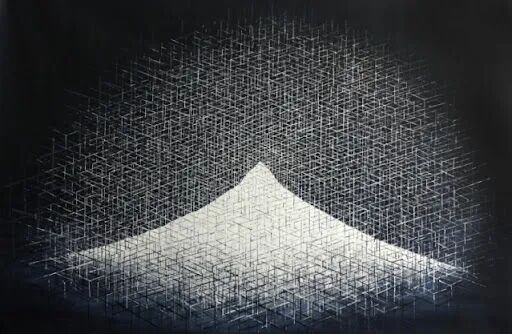
Deep feeling beneath an abstract language: Even in seemingly abstract works, Siti often conveys, through the tension of line, the chiaroscuro of colour and the symbolic charge of form, the complex emotions tied to exile—loss, nostalgia, uncertainty, and a faint hope for the future. His geometric structures sometimes appear at once solid and precarious, precisely capturing the exiles’ contradictory situation in identity and in survival.
The multiple meanings of ‘Trials’: The title of the series or theme, *Trials*, carries multiple meanings. It can denote the various sufferings and ordeals the Kurdish people have endured in history; it can refer to the challenges and struggles the artist personally faced in exile and in the process of creation; and it can be extended to signify the severe ‘trials’ that all refugees and displaced persons must undergo on the road to security and the rebuilding of life.
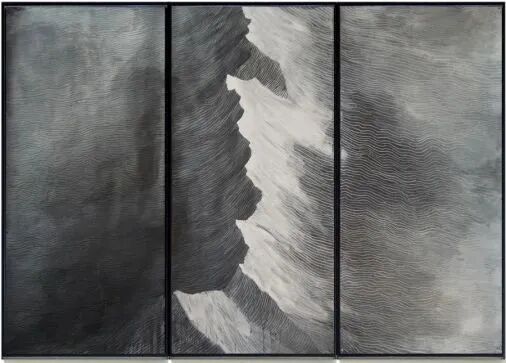
Walid Siti’s art is a profound interweaving of personal memory, national history and the experience of exile. In a visual language at once restrained and full of force, he explores how, against the backdrop of conflict and displacement, the individual bears the weight of history, seeks anchorage for identity amid broken memories of home, and how cultural tradition displays its stubborn vitality in uprootedness. His work is not only a witness to the suffering of the Kurdish people but also offers us a perspective full of compassion and respect for understanding the inner world of the broader community of refugees and exiles.
11. Mark Quinn (United Kingdom)
Core idea: the metaphor of matter and shared humanity
Mark Quinn is an artist of the British contemporary art world known for his boldness, his controversial stance and his frequent use of non-traditional materials. His work often explores grand themes such as life, death, identity, the body, and the intersection of science and art. In intervening in social and political issues, Quinn excels at deploying material substances of strong symbolic import, prompting the viewer to immediate feeling and deep reflection on the issue through the properties of the matter itself and the cultural connotations it carries.
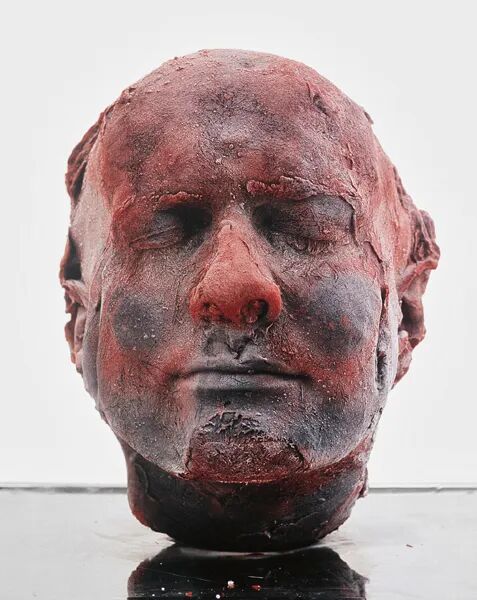
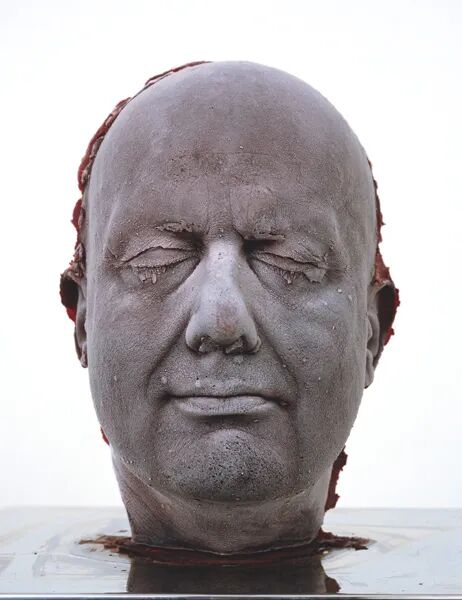
The making of *Self*: Quinn first took a mould of his own head, then extracted ten pints of blood from his body, poured it into the mould, froze it and carved it, sculpting another self. Quinn felt that for him ‘it was a bit like making a freak. The head is full of the liquid of life, but it never really comes alive.’
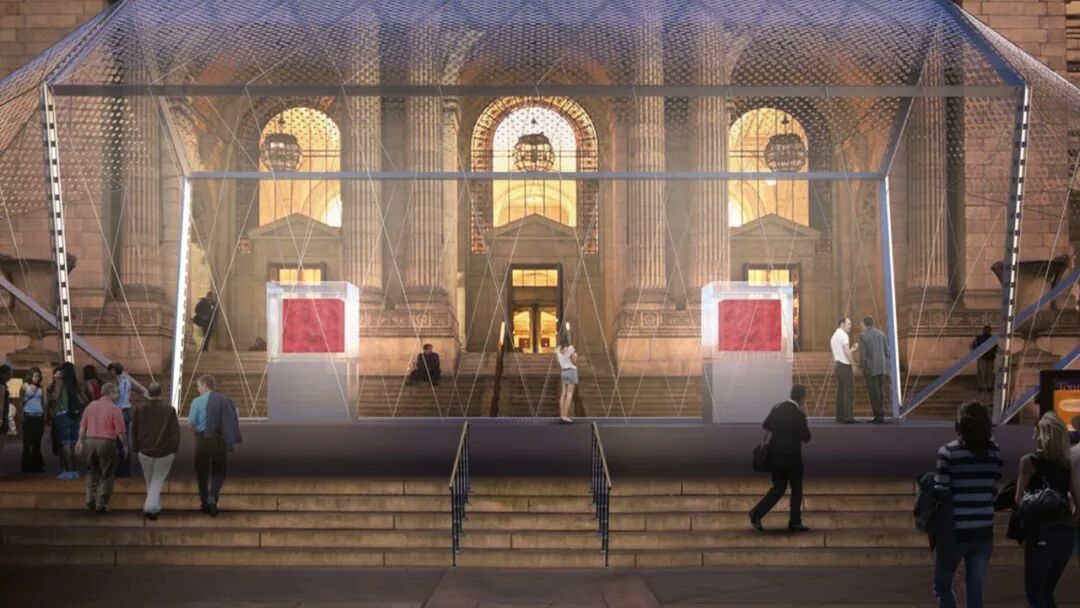
Representative work: Our Blood (an ongoing project begun in 2019)
*Our Blood* is a deeply shocking and conceptual work by Mark Quinn created in response to the global refugee crisis.
The extremity of the work’s constitution and material choice: The core constituent of this work is real blood. Quinn plans to collect blood samples from thousands of people around the world, including refugees and asylum seekers as well as celebrities, activists and ordinary members of the public. After processing, these samples are to be frozen and preserved, and possibly exhibited in the form of some sculpture or installation.
The work comprises two enormous frozen cubes of blood, each containing the blood of over 2,500 donors. Although Quinn deliberately separates the blood of refugees and non-refugees into the two cubes, without precise medical or scientific instruments one cannot visually distinguish which cube is composed of refugees’ blood and which of non-refugees’. The blood of more than 5,000 people is mixed together, indistinguishable. Upon the blood-formed cubes one cannot discern any person’s identity, skin colour, appearance or sex. Beneath the surface, we are no different.
The choice of blood as creative material is in itself of great impact and symbolic significance:
The essence of life and its sharedness: Blood is the bearer of life, the physiological constitution common to all humans. By gathering the blood of people of different identities and backgrounds (refugees and non-refugees especially), Quinn emphasises that at the most fundamental physiological level humans are equal and life is shared. It dissolves the artificial barriers arising from nationality, race, social status and the like.
Vulnerability and sacrifice: Blood also symbolises the fragility and transience of life. In the context of the refugee crisis it points directly to those individuals who bleed and perish on the road of flight, whose lives are threatened.
A metaphor of connection and solidarity: Gathering the blood of thousands upon thousands also symbolises a potential connection, solidarity and collective responsibility. It suggests that the fate of refugees is bound up with each of us, and that their suffering demands the shared attention and burden of all humanity.
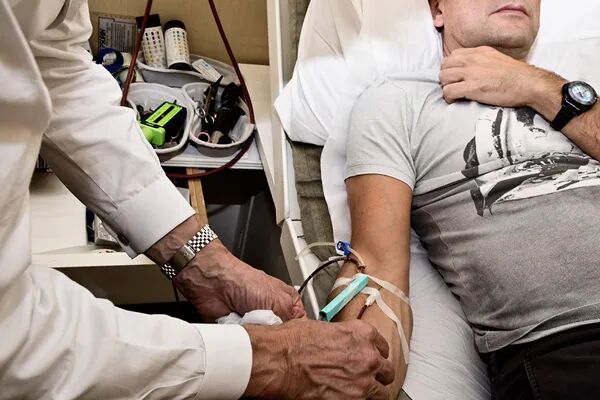
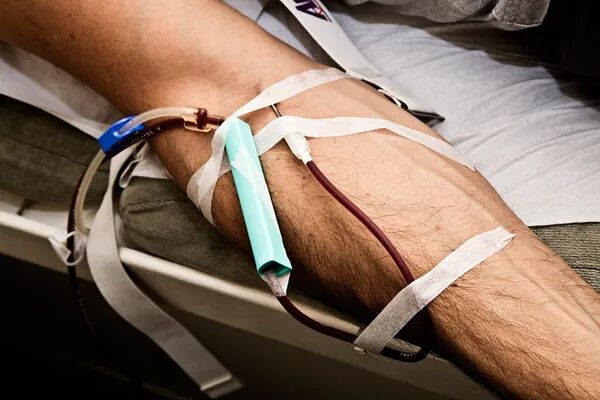
The participatory and social nature of the creative process: *Our Blood* is not merely a static artwork; its very process of creation is intensely participatory and social. The collection of blood requires the consent and participation of donors, and this process itself may provoke discussion and interaction around the refugee question, humanitarian aid and individual social responsibility. Inviting celebrities to donate blood can also effectively harness their influence to raise public awareness of the refugee crisis.
A rebuttal to ‘othering’: Refugees are frequently ‘othered’, seen as a distant group different from ‘us’. By placing refugees’ blood alongside that of people from all walks of life, Quinn powerfully rebuts this tendency to ‘other’. It reminds us that refugees are not abstract numbers or problems, but individuals possessed of living lives like our own.
Ethical considerations and controversy: The use of human material (blood especially) in artistic creation inevitably provokes ethical debate and controversy—concerning, for example, informed consent in blood donation, the storage and handling of samples, and the potential discomfort the exhibition may occasion. Yet this controversial character may itself be intentional on the artist’s part, aimed at provoking deeper social reflection by challenging convention.
The social function of art and its potential for action: The *Our Blood* project is also frequently combined with charitable fundraising, intended to provide practical support for refugee-aid agencies. This carries the work beyond mere symbolic expression into the sphere of direct social action.
Mark Quinn’s *Our Blood*, through its extreme material choice and profound conceptual design, condenses the refugee crisis—this complex socio-political issue—into one of the most basic and most shared substances of life. In an almost primal, instinctive manner it touches the viewer’s perception of life, equality and the common destiny of humanity. The work reminds us that beneath all labels and divisions the blood flowing in our veins is the same, and our shared humanity is what most needs to be seen and defended in this crisis. It is a manifesto of solidarity and a powerful challenge to indifference and separation.
12. Maryam Najd (Iran/Belgium)
Core idea: the poetics of borders and the stitching of lost homes
Maryam Najd is an artist born in Iran and now living in Belgium. Her work is deeply informed by her personal experience and by her attention to questions of borders, migration, identity and belonging in contemporary society. Her pieces often employ textiles, sewing, maps and the like, exploring in a delicate and poetic manner how, amid displacement and cross-cultural contexts, the individual perceives and negotiates the meaning of ‘home’, and how they seek connection and solace amid broken memory and reality.
Representative work: Mediterranean Blanket
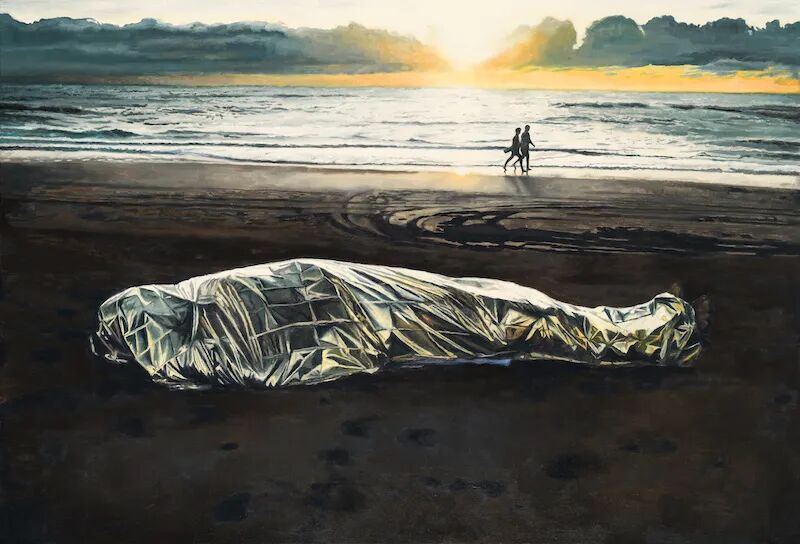
*Mediterranean Blanket* is a significant work by Najd responding directly to the Mediterranean refugee crisis. Its core material is the gold or silver thermal emergency blanket (emergency survival blankets) commonly used in refugee rescue operations.
The symbolism of the material: This emergency blanket itself carries rich symbolic meaning:
Fragile protection: They are the articles by which refugees, on the perilous crossing of the Mediterranean and afterwards in makeshift shelters, keep warm and gain a modicum of protection. Yet this protection is so thin and fragile that it can hardly withstand real storms or bitter cold, nor compensate for the immense trauma of lost home.
Hope and despair of life: The gold or silver reflective surface may, in sunlight, glitter with the light of hope; but more often it wraps bodies wearied, frightened, even at the point of death. They are witnesses to life struggling to survive in extremity.
A sign within media imagery: In news coverage of the refugee crisis these shining blankets have become almost an iconic visual sign, representing the humanitarian tragedy along this Mediterranean migration route.
The act of stitching and its meaning: Najd cuts, joins and stitches these collected emergency blankets, finally forming a giant ‘blanket’ or tapestry-like installation. This very act of ‘stitching’ carries multiple metaphors:
Connecting broken lives: Each blanket may carry the story and bodily warmth of one or more refugees. Stitching them together symbolises an attempt to connect these broken, dispersed individual life-experiences into a collective map of memory.
The desire for healing and mending: Sewing itself is a traditional female craft imbued with a sense of healing. Within the work this act can be read as a mending of trauma, a consolation for loss, and a yearning for reconciliation.
Reconstructing the image of ‘home’: The blanket itself carries connotations of warmth, shelter and home. By ‘weaving’ a new ‘blanket’ out of these emergency blankets that symbolise rootless displacement, the artist seems to be attempting, for those who have lost their homes, to reconstruct a symbolic, if fragile, ‘shelter’.
An exploration of borders and the lost home: The title *Mediterranean Blanket* directly names both its geographic region and its core concern. The Mediterranean is at once a passage connecting different continents and a border fraught with danger and death. Through its use of the special substance of the emergency blanket, the work profoundly explores, in the process of crossing borders, the individual’s sense of loss of ‘home’, desperate thirst for security, and the drifting instability of identity.
Visual contradiction: The work may present, visually, a contradictory beauty. Those industrial materials originally meant for emergency use, cheap as they are, through the artist’s careful handling and combination, may yield a shimmering, weightless, even somewhat ornate visual effect. This visual allure, contrasted with the heavy tragedy borne behind the material, all the more provokes the viewer to reflection upon the relation between ‘appearance and reality’, ‘beauty and suffering’.
Maryam Najd’s *Mediterranean Blanket* intervenes, with a femininely delicate tenderness, in the violently cruel issue of the Mediterranean refugee crisis. Rather than depicting scenes of misery directly, she directs the viewer’s attention, through the skilful use and poetic transformation of material substances charged with special memory and emotion, toward the individual feelings and emotional needs so often neglected in the crisis. Her work is like a silent elegy, sung for the lives lost upon the Mediterranean and the broken homes, while in a posture of ‘stitching’ it expresses a stubborn faith in connection, healing and the rebuilding of hope.
13. JR (France)
Core idea: public intervention through giant portraiture and the universal connection of humanity
JR is a French artist and activist known for his large-scale, often illicitly pasted black-and-white portrait photographs on urban buildings or specific sites around the world. The core of his practice lies in breaking social barriers through the public intervention of art, granting visibility and dignity to marginalised groups, and provoking a global dialogue on identity, community, freedom and human rights. JR’s work is often intensely social and participatory; he is not merely a photographer but an organiser of communities and a disseminator of stories.
Creative practice on refugee and migration themes:
JR has long attended to migration and refugee issues, and through his unique artistic methods presents these groups—so often stigmatised or treated as a ‘problem’—to the public eye in a manner full of force and warmth.
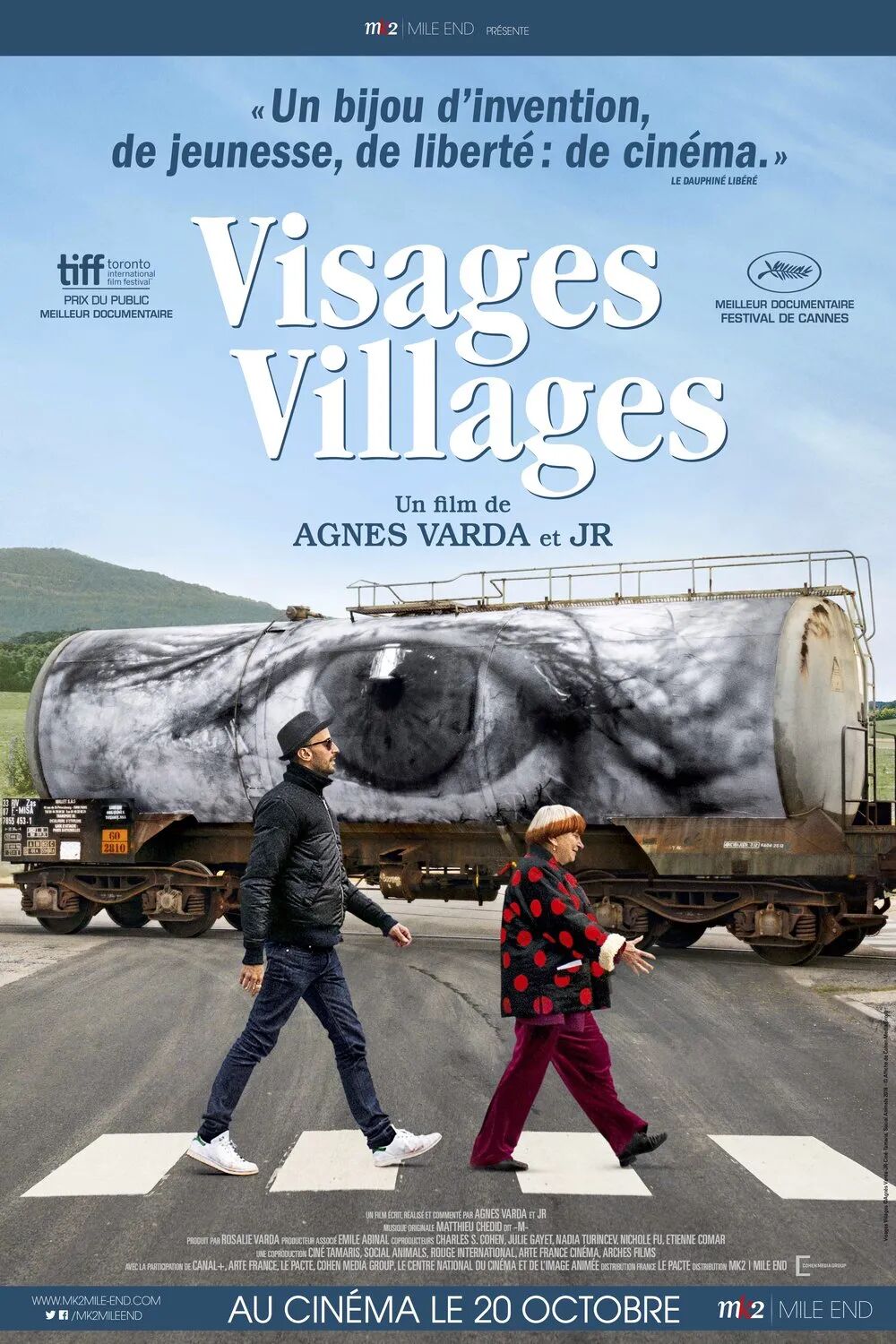
Faces Places (Visages Villages, 2017, a documentary co-made with Agnès Varda): Though this film is not specifically about the refugee crisis, it embodies JR’s consistent method—going deep into communities, interacting with ordinary people, and pasting their enlarged portraits in environments related to their lives. This attention to ‘ordinary people’ and respect for their individual stories is of one lineage with his approach to migrant and refugee subjects.
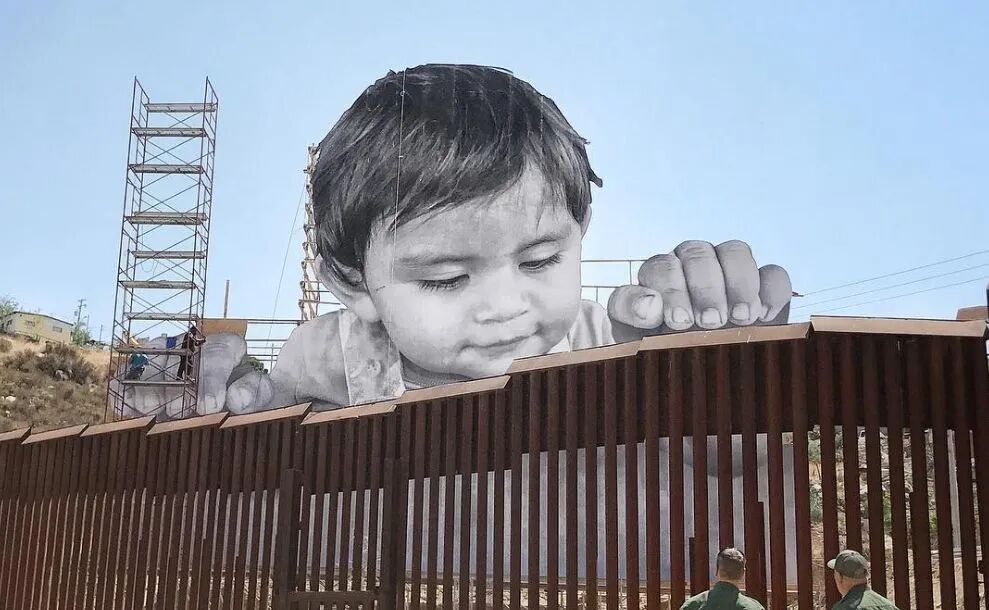
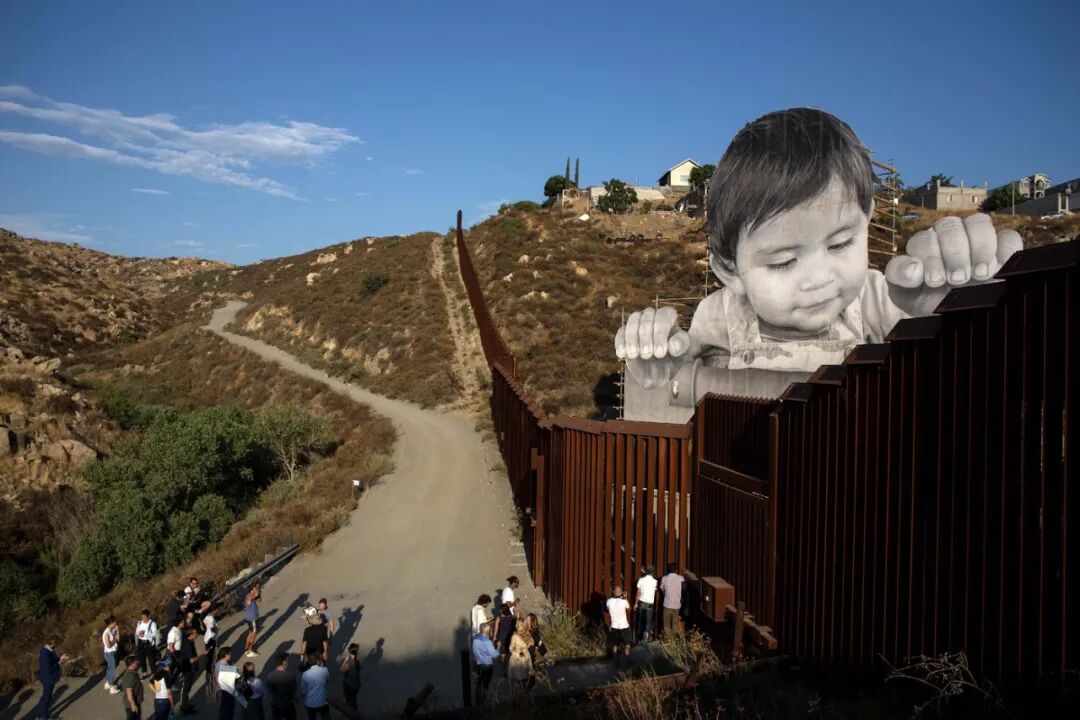
US–Mexico border projects, such as Giant (Kikito, 2017) and The Picnic (2017):
Giant (Kikito): In 2017, on the Mexican side of the US–Mexico border at Tecate, JR erected a giant black-and-white photographic installation of a boy named Kikito, standing 70 feet tall. The little boy curiously ‘looks down’ from the Mexican side upon the border wall on the American side. This image of an innocent child forms a strong visual and emotional contrast with the cold border wall, symbol of division and hostility. In a gentle yet forceful way the work interrogates the legitimacy and inhumanity of borders, reminding us that behind all political rhetoric and conflict lie countless ordinary families and children who long for peace and a better life.
The Picnic: Shortly after the *Giant* installation was shown, JR organised a unique ‘transnational picnic’ along the US–Mexico border line. He laid long tablecloths on both sides of the border wall, printed with a pair of giant eyes (commonly read as the eyes of the ‘Dreamers’—undocumented immigrants brought to the United States as children). Families from the US and from Mexico ‘shared’ this picnic simultaneously on either side of the wall, passing food and music where possible. This performance art is full of symbolic meaning: it seeks, through the most basic human acts of sharing and exchange, to dissolve temporarily that physical and psychological boundary, emphasising the cultural ties and shared humanity between the peoples of the two countries.
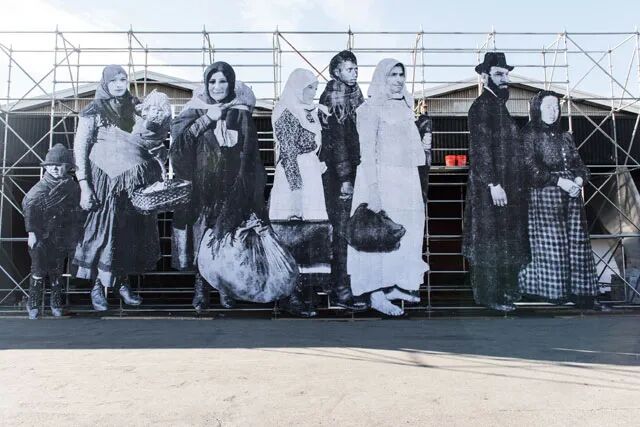
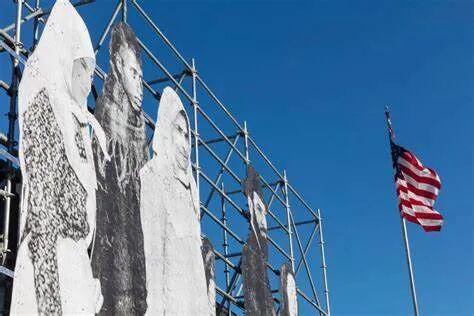
So Close (for instance, the installation on Ellis Island, New York, 2014): On Ellis Island in New York—historically the gateway through which millions of immigrants entered the United States—JR created a series of site-specific installations within the abandoned hospital complex. He enlarged old photographs of historical immigrants and pasted them upon the mottled walls, broken windows and empty rooms of the hospital, letting the ‘ghosts’ of those past migrants enter into dialogue with the present space. These works evoke memory of America’s immigrant history and implicitly point to the challenges faced by contemporary migrants and refugees, and to society’s acceptance of or exclusion of them. The title *So Close* hints at the resemblance between history and the present, and at the close relation between those seemingly distant immigrant stories and our real lives.
Other public-art projects concerned with migration and refugees: JR’s footsteps span the globe. He has pasted the portraits of thousands of ordinary citizens on the exterior of the Panthéon in Paris, and on either side of the Israeli and Palestinian separation wall he pasted enormous juxtaposed portraits of ordinary people from both sides (the *Face2Face* project, 2007), attempting through humour and the display of humanity to dissolve conflict. Though their themes differ, these projects share a core: through the publicity and participation of art, to challenge prejudice, promote understanding, and confer dignity upon marginalised groups.
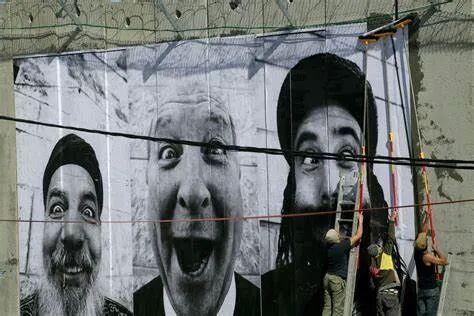
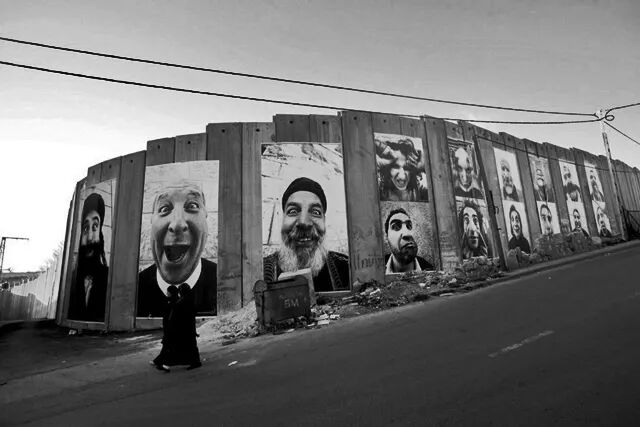
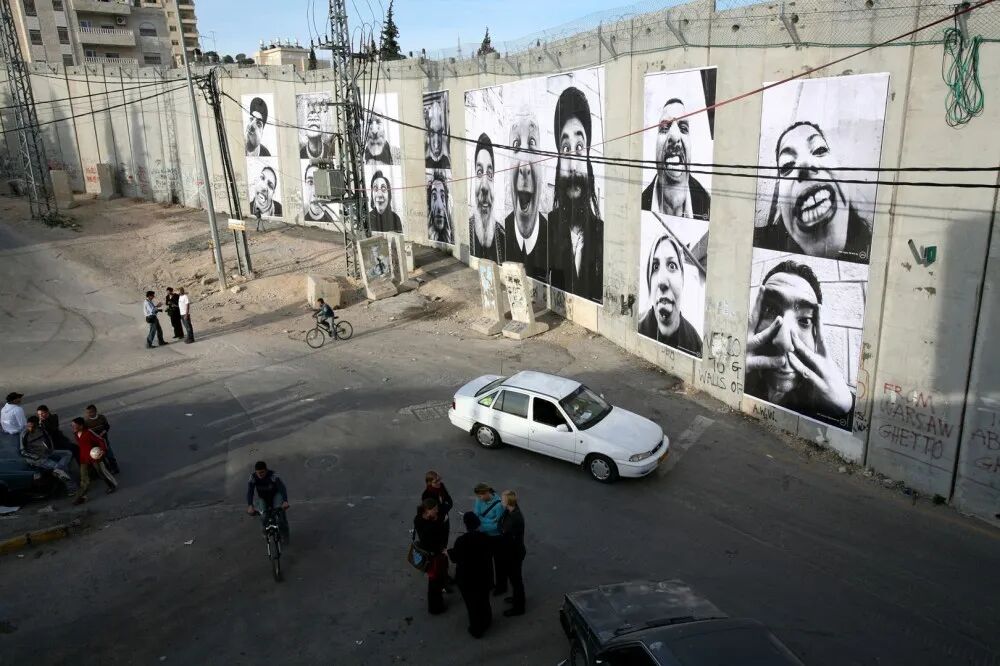
JR’s artistic practice is marked by the following salient features:
Publicness and intervention: His works are shown in public space, interacting directly with the urban environment and daily life, forcing the public to confront them.
Participation and collaboration: Many of his projects depend on the participation and cooperation of local community residents, so that the creative process itself becomes a practice of community-building and dialogue.
Conferring visibility and dignity: He turns his lens upon groups so often neglected or misunderstood by society, and through enlarging their portraits confers upon them unprecedented visibility and individual dignity.
Universal humanity and emotional connection: Though his work often touches sensitive political and social issues, he leans more toward excavating and displaying the emotions and experiences common to humanity (hope, fear, love, family, for instance), thereby building emotional connections that cross differences of culture and identity.
With its distinctive visual impact and profound humanistic care, JR’s art has aroused wide attention and discussion across the globe. He uses an apparently simple, direct yet highly creative means to wield art as a powerful tool for promoting social dialogue, challenging injustice and connecting people—above all on the contested and complex issue of migration and refugees, where he demonstrates the enormous potential of art’s intervention in reality.
14. Christoph Büchel (Switzerland)
Core idea: institutional critique and the brutal appropriation of reality
Christoph Büchel is a Swiss artist known for his highly controversial, concept-driven large-scale installations and site-specific projects. His work often directly appropriates objects, situations or social systems from the real world, revealing the hidden structures of power, political contradictions, economic logics and cultural conflicts of contemporary society through their recombination, recontextualisation or extreme presentation. Büchel’s art is frequently provocative and critical, meant to force the viewer to confront uncomfortable truths and to call into question established perceptions and values.
Representative work: Barca Nostra (2019 Venice Biennale)
*Barca Nostra* (meaning ‘our boat’) is a work of great impact and controversy exhibited by Büchel at the 58th Venice Biennale, and his most direct and striking response to the Mediterranean refugee crisis.
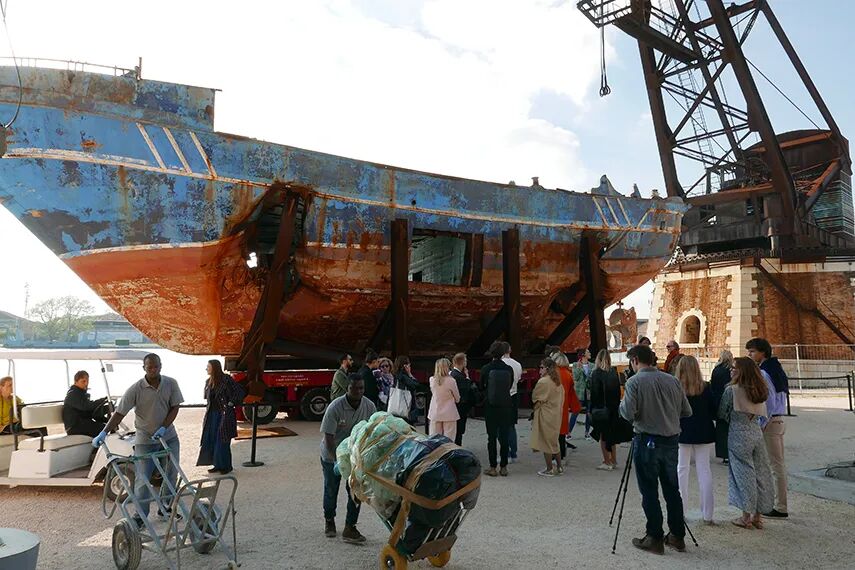
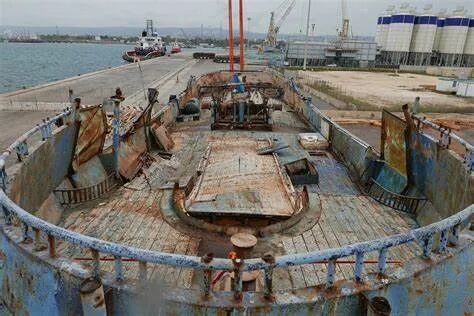
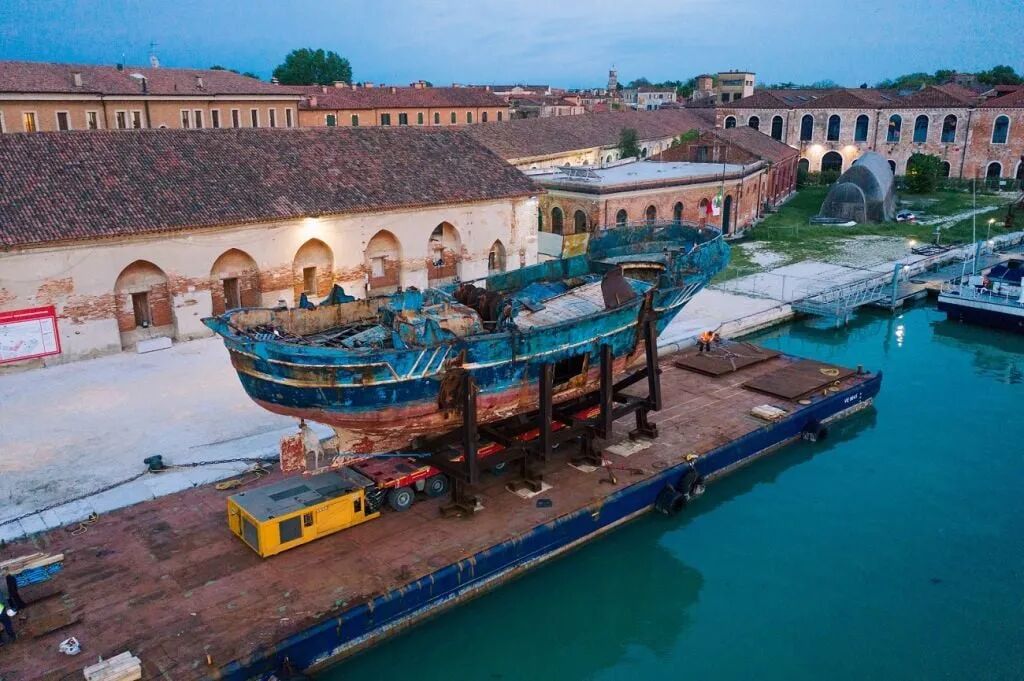
The constitution of the work—a brutal ‘readymade’: The principal body of this work is not a sculpture or painting original to the artist, but the actual wreck of a fishing boat that sank off the coast of Libya on 18 April 2015, killing some 700 to 1,100 refugees attempting to smuggle themselves to Europe. The severely overloaded vessel sank rapidly after colliding with a Portuguese cargo ship come to rescue, becoming one of the deadliest maritime disasters in the recent history of the Mediterranean. The Italian government later spent a huge sum to salvage the rusted, scarred boat, originally intended for investigation and possible judicial procedure. Büchel successfully persuaded the Italian authorities to transport this wreck—over 20 metres long and weighing several tonnes—intact to Venice, and to exhibit it as an ‘artwork’ in the open waters of the Arsenale, one of the Biennale’s core exhibition areas. The hull still bears the great holes left by sinking and salvage, the twisted metal structure, and the traces of deep-sea corrosion.
The work’s intent and multiple readings:
A monument to death and material evidence of tragedy: *Barca Nostra* is first of all a staggering ‘monument to death’. It does not hint at tragedy through symbol or metaphor, but lays bare before the audience of a world-top art event the direct material evidence of tragedy—that ‘boat of death’ which carried hundreds of departed lives. This directness brings unparalleled visual and emotional impact, forcing people to confront the cruel reality of the Mediterranean refugee question.
A silent accusation of European migration policy: Naming the boat ‘our boat’ carries strong ironic force. It seems to ask: should the lives lost on this boat also be regarded as part of ‘us’ (Europeans, the international community)? Are we also responsible for their deaths? The work thus becomes a silent accusation against the European states’ buck-passing on migration and refugee issues, policy failure, and inadequate humanitarian rescue.
A challenge to the art institution and the ‘society of the spectacle’: Placing such a ‘readymade’ bearing immense tragedy within the glamorous, commercially charged art arena of the Venice Biennale is itself a challenge to the ‘society of the spectacle’ and the art institution that Büchel criticises. It provokes a series of complex questions: ‘What is art?’, ‘How does art intervene in reality?’, and ‘Does art have an ethical boundary when it consumes tragedy?’
A warning against collective amnesia: Through this work the artist hopes to combat the numbness and forgetting the public may develop toward the ongoing refugee tragedy. The boat is like a spectre, reminding people of the countless lives vanished in the deep Mediterranean, and of this humanitarian crisis that continues still.
The controversy and ethical debate it provoked: The exhibition of *Barca Nostra* aroused enormous controversy at the time.
Supporters hold: This is a work of great force and courage; in the most direct manner it brings cruel reality into the temple of art, forcing reflection, and possesses significant value as social critique and as a memorial warning.
Critics hold: The work is suspected of ‘consuming suffering’, turning real tragedy into spectacle and aestheticising it, even potentially inflicting secondary harm upon the victims and their families. Some question whether it truly respects the dead, and whether the artist’s role within it is appropriate. The initial lack of detailed contextual explanation beside the work was also criticised, leaving some uninformed viewers possibly unable to grasp its heavy historical and humanitarian import.
Christoph Büchel’s *Barca Nostra* is unquestionably one of the most controversial and provocative artworks on the refugee-crisis issue in recent years. In an extreme manner it blurs the boundaries between art and reality, commemoration and spectacle, mourning and exploitation. Whatever one’s judgement of it, the work has successfully pushed the dire plight of Mediterranean refugees, in a way impossible to ignore, to the centre of international public opinion, and forced the art world and the public into fierce yet necessary debate on the social responsibility of art, its ethical boundaries, and how to confront and remember large-scale humanitarian disaster. It is like a prism, refracting the complex mentality and deep contradictions of contemporary society when faced with the suffering of the ‘other’.
15. Mohamed Hafez (Syria/United States)
Core idea: the miniature home and the nostalgia of exile
Mohamed Hafez is an architect and artist born in Damascus, Syria, who later emigrated to the United States. His artistic creation, in the distinctive form of ‘miniature models’, profoundly and delicately re-presents the Syrian urban landscapes and domestic interiors destroyed by war and conflict, thereby exploring home, memory, loss, nostalgia and the mental state of exiles amid displacement. Hafez’s works are often placed within open suitcases, picture frames or other everyday objects; these ‘containers’ themselves symbolise the few remaining fragments of memory and the infinite attachment to home that refugees are forced to carry with them.
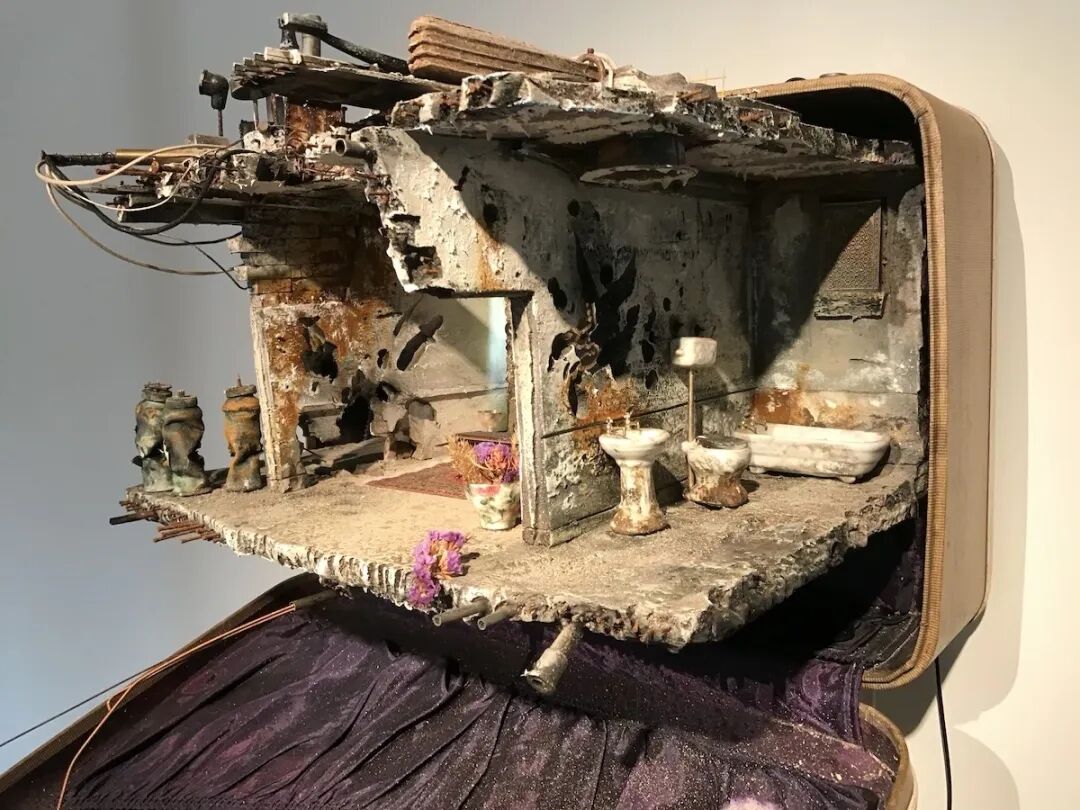
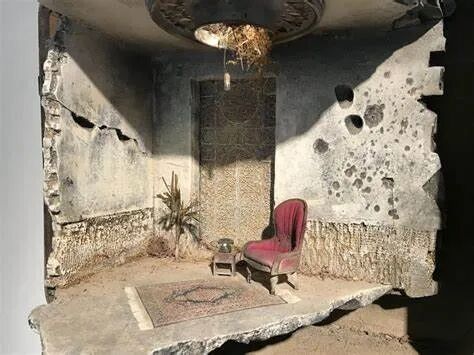
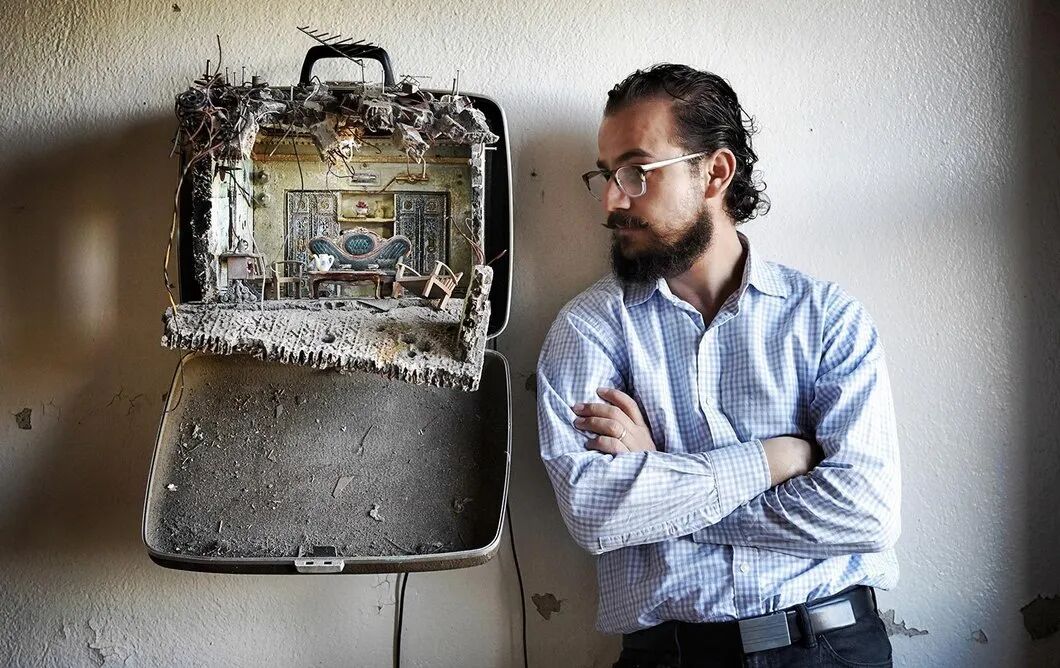
Representative work: the Refugee Suitcases series and related miniature installations
The impact of the miniature landscape: With his exquisite architectural-modelling skill, Hafez re-creates, at a tiny scale (inside a suitcase, for instance), bombed-out apartment blocks, walls riddled with bullet holes, furniture scattered among rubble, abandoned toys and empty rooms. Though small in scale, these miniature scenes are powerfully shocking in the verisimilitude of their detail and the atmosphere they conjure. They are like so many frozen instants of tragedy, presenting the devastating impact of war upon ordinary daily life to the viewer in a tangible way. This ‘miniaturising’ method, conversely, can guide the viewer to observe and savour the details more closely, thereby producing a stronger sense of immersion and emotional resonance. The viewer seems able, through these little ‘windows’, to glimpse a world once full of life and now laid waste.
The symbolic meaning of the suitcase: Placing these miniature remnants of home within a suitcase is a highly ingenious design in Hafez’s work. The suitcase is a symbol of travel and migration; for refugees it is often all the possessions they can carry when fleeing home. In this context Hafez’s suitcase is no longer merely a container for clothes and daily necessities, but an ’emotional ark’ bearing broken memory, lost identity and endless longing for home. Opening the suitcase is like opening an exile’s inner world, full of recollection of happy times past and lament for the cruel reality of the present.
The materialisation of memory and the condensation of emotion: Hafez’s work can be seen as an attempt to materialise memory. Through the careful re-presentation of architectural detail (traditional Arab tracery window-panes, potted plants on balconies, graffiti on walls, and so on), he seeks to capture and preserve the cultural texture and living breath that vanish swiftly in war. These miniature models condense the exiles’ complex emotions toward home—both grief for the destroyed home and nostalgia for once-tender everyday life, alongside persistence in a faint hope for the future.
Resonance between personal experience and collective trauma: Hafez’s creative inspiration derives in part from his anguish, as a Syrian expatriate, at his homeland’s immersion in war, and from his deep concern for the fate of compatriots forced to flee. Though he himself did not come to the United States as a refugee, his work successfully connects personal feeling with collective trauma, providing an outlet of emotion and a channel of identity for the broader community of Syrian exiles and indeed all who have lost homes to war and conflict.
Hints of hope and resilience: Though the tone of the work is mostly sorrowful and heavy, Hafez sometimes subtly inserts elements symbolising hope and the resilience of life amid the ruins—a tuft of green growing stubbornly from the rubble, or a thread of faint light entering a dark room. These details hint that even in the most hopeless circumstances the radiance of humanity and the yearning for the future are difficult to extinguish entirely.
A bridge for cross-cultural dialogue: When exhibited in the United States and other Western countries, Hafez’s work also plays a role in promoting cross-cultural understanding and dialogue. In an intuitive and emotionally impactful manner it helps Western audiences grasp the true face of distant conflicts and the immense suffering borne by refugee communities, thereby dissolving prejudice and fostering empathy.
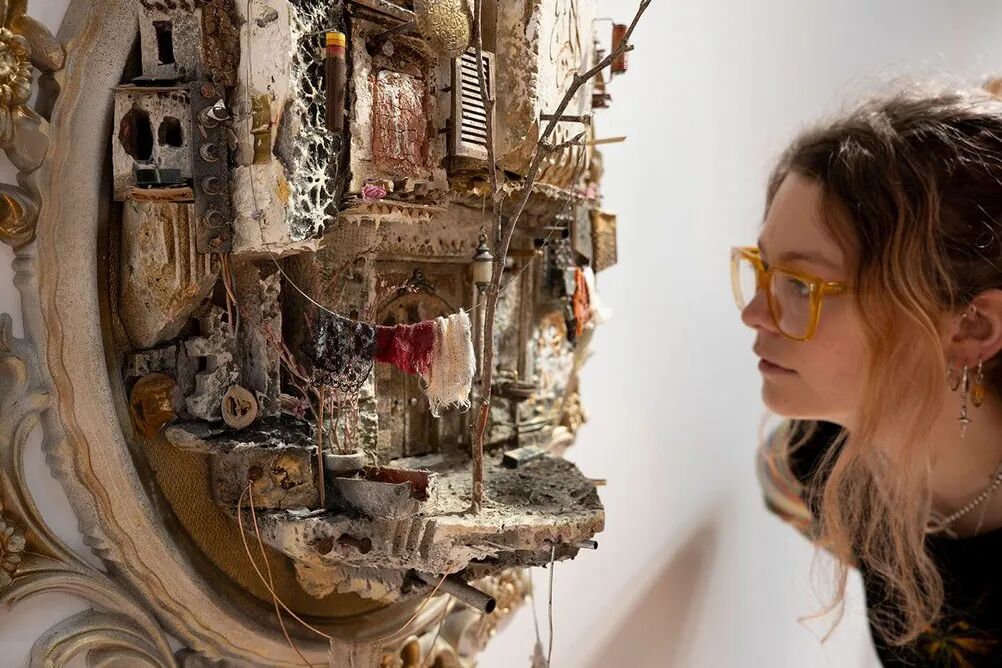
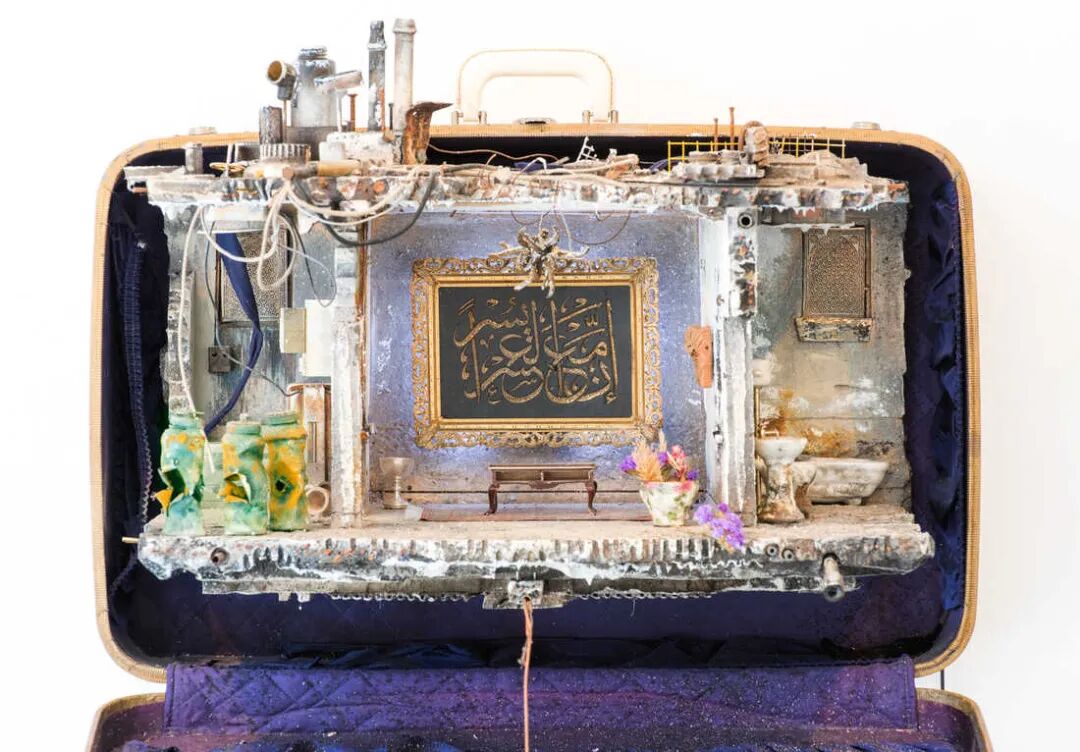
With its unique perspective and exquisite craft, Mohamed Hafez’s miniature art presents us with another profound expression of war trauma and the experience of exile. His works are like so many miniature ‘theatres of memory’, condensing within inches the thought of homeland, the suffering of displacement, and the light of humanity. They remind us that behind every cold war statistic lie countless destroyed homes and altered destinies, and that art can become a powerful medium for bearing these memories, transmitting these feelings, and ultimately calling for peace and reconciliation.
16. Anish Kapoor (India/United Kingdom)
Core idea: a poetics of the void and a cry for social justice
Anish Kapoor is among the most influential and internationally renowned artists in contemporary sculpture. He is known for his profound exploration of matter, form, space and perceptual experience; his work often deploys highly polished metal, deep voids, intense monochrome and captivating light-and-shadow effects, creating fields that are at once minimalist in aesthetic character and saturated with mystery and spirituality. Though many of Kapoor’s classic works lean more toward metaphysical philosophical speculation and a challenge to the experience of looking itself, as a public figure with a strong sense of social responsibility he has repeatedly, through his artistic creation and public action, spoken out on urgent socio-political issues—among them a deep concern for the refugee crisis.
Creation and action on the refugee issue:
Kapoor’s intervention in the refugee issue often manifests his effort to combine abstract artistic language with concrete social care, and his determination to use his influence in the art world to advance humanitarian causes.
Participation in the Migrate Art project and charity auctions: Migrate Art is an organisation dedicated to supporting globally displaced persons through art. Anish Kapoor actively participated in the project and donated his work for auction; the funds raised (it was reported, for instance, that his work fetched £121,000) went directly to charities aiding refugees. This action itself is an important gesture, signalling the artist’s practical concern for and willingness to support the refugee predicament. It effectively converts the symbolic and market value of art into direct contribution to the humanitarian cause.
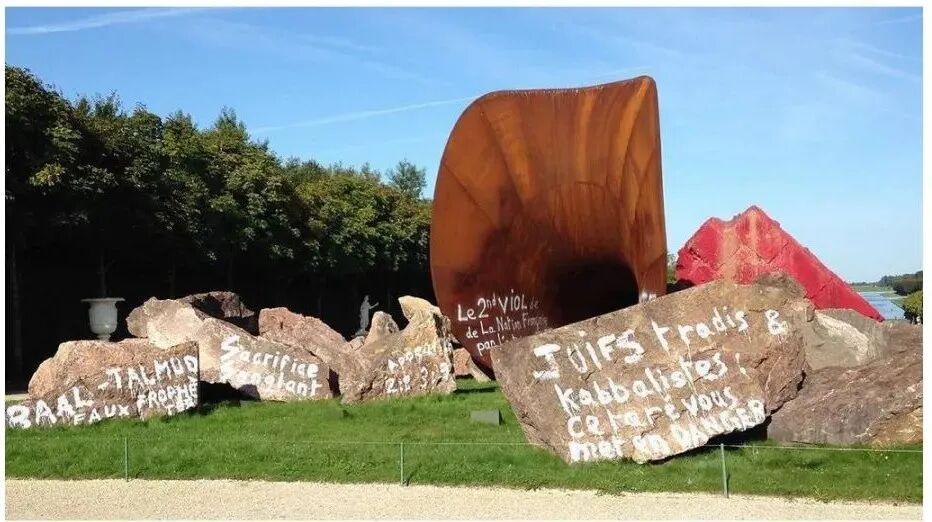
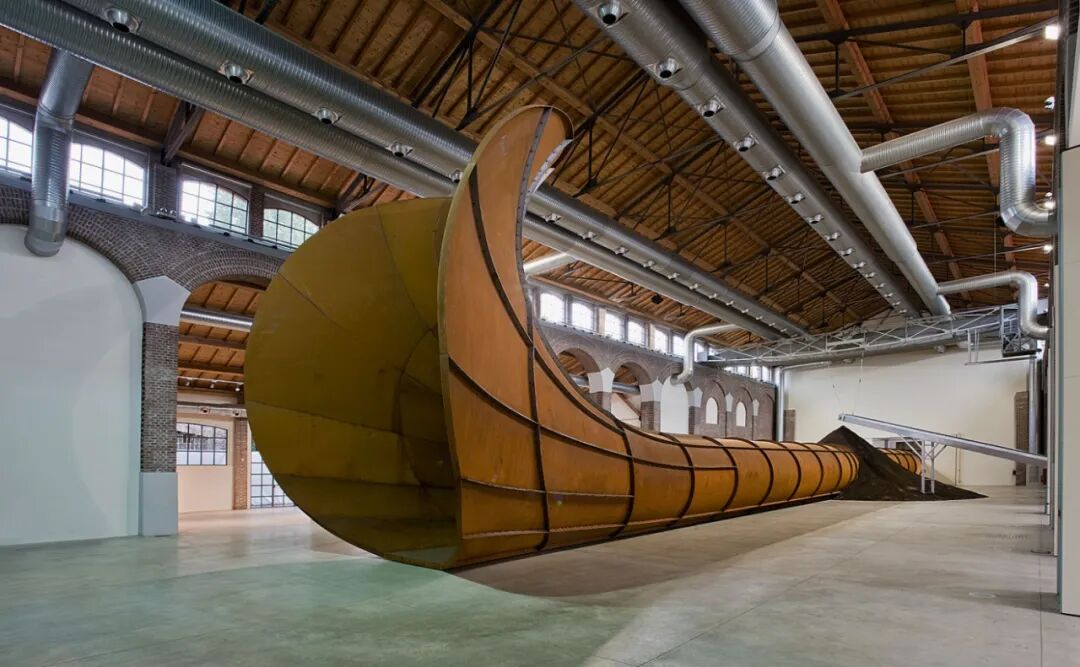
Dirty Corner (2011/2015)
Its controversial exhibition at the Palace of Versailles and its extended significance: Although the large steel-structure installation *Dirty Corner* was not originally created directly in response to the refugee crisis, the enormous controversy and deliberate vandalism it provoked when shown at the Palace of Versailles in France in 2015, together with Kapoor’s response, can to some extent be read in connection with the tense atmosphere and xenophobic sentiment surrounding the refugee and migration question in European society at the time. The work is gigantic in form, its opening like a deep, dark cave or horn, and was interpreted by some (including the artist himself in certain contexts) as symbolic of female genitalia, hence nicknamed ‘the Queen’s vagina’. Exhibited at the Palace of Versailles—a symbol of French history and power—the work was provocative in itself. It quickly met with fierce opposition from right-wing conservative forces and antisemites, and was repeatedly maliciously defaced.
Kapoor insisted on preserving these graffiti as part of the work, considering them exposures of the latent violence, intolerance and xenophobia within French society. Against the backdrop of the intensifying European refugee crisis and the rise of the far right, this intolerance toward and attack upon the ‘other’—whether the ‘otherness’ of the artwork or the stigmatised refugee community—acquired a broader socio-political metaphor. Through this incident Kapoor linked the fate of the artwork to wider questions of social exclusion and violence, provoking profound discussion on freedom of speech, cultural conflict, and how to face social division.
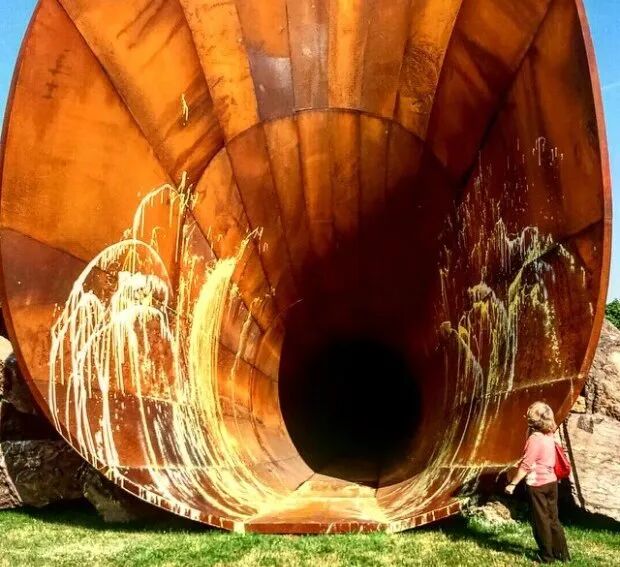
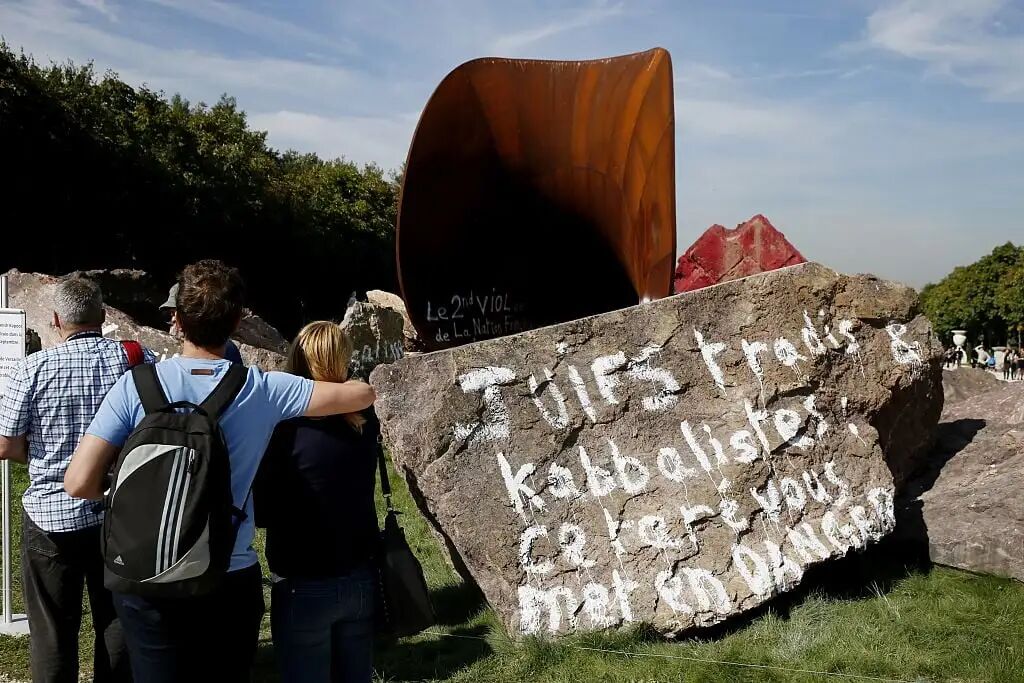
Speaking out through public platforms: As an internationally renowned artist, Kapoor also frequently uses various public platforms (media interviews, public speeches, social media, and so on) to express his views on the refugee question, the state of human rights and social injustice, calling on the international community to take more active action to protect vulnerable groups, displaying his sense of responsibility as a public intellectual.
The universal associations of ‘void’ and ‘shelter’ in the work: The recurring ‘void’ motif in Kapoor’s work—those bottomless depressions, the infinite spaces created by mirror reflection, or the dark cavities that swallow light—carries multiple philosophical and aesthetic meanings, yet in specific contexts can be extended to experiences related to displacement and the search for asylum. The ‘void’, for example, can symbolise the emptiness after losing home, the loss of identity, and the uncertainty of the future; while those concave or cavernous forms with a sense of enclosure and shelter may evoke the instinctive longing for safety and refuge. This universal association allows his abstract art, too, to resonate emotionally with certain situations of refugees.
Anish Kapoor’s attention to the refugee issue is manifested more in his social action and humanitarian gestures as an influential public figure, and in the extended readings and critical reflection his work can provoke in specific socio-political contexts. By combining his artistic creation with charitable causes, and by bravely facing and responding to the social controversies his work incites, he demonstrates how a contemporary artist, confronted with a global humanitarian crisis, can deploy his resources and influence to advocate social justice and humanistic care. His practice reminds us that the power of art lies not only in creating beautiful form, but in its capacity to stimulate thought, challenge prejudice, and ultimately propel positive social change.
17. Adrian Paci (Albania/Italy)
Core idea: fluid identity and suspended belonging
Adrian Paci is an artist born in Albania who later emigrated to Italy. His career is deeply shaped by his personal experience of migration from Albania, a communist state, to Italy, a Western capitalist society. Consequently his work often revolves around themes of the fluidity of identity, the absence of belonging, the memory of home, and the existential conditions and psychological predicaments the individual faces amid political, economic and social transition. With poetic and symbolic film, painting, sculpture and installation, Paci delicately captures the subtle emotions and existential tensions of those in a state of ‘transition’ or ‘suspension’—experiences that coincide in many ways with those of refugees and displaced persons seeking asylum and integration into a new society.
Representative works: Centro di Permanenza Temporanea (2007) and The Column (2013)
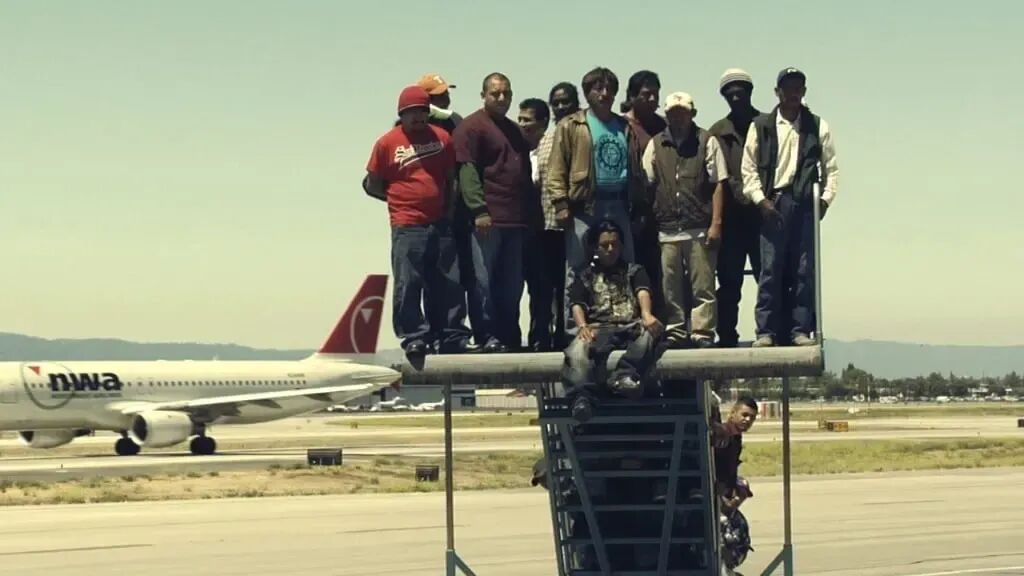
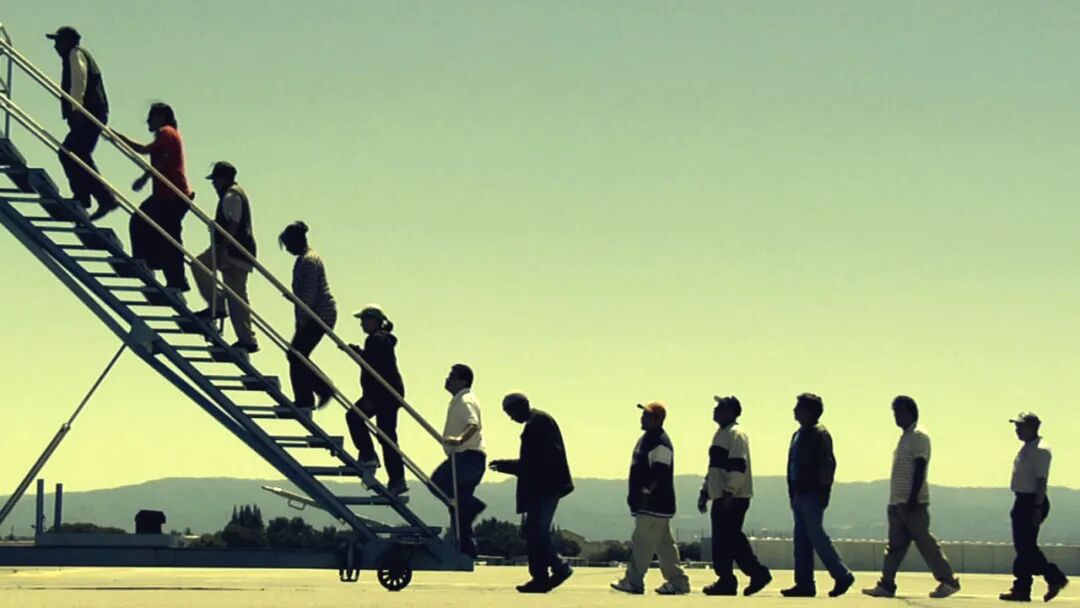
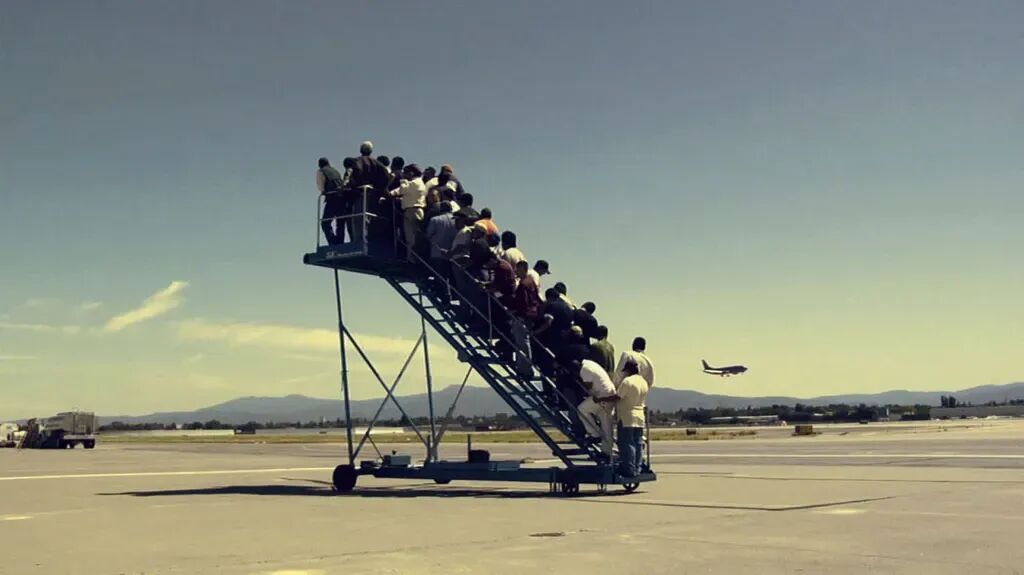
Centro di Permanenza Temporanea: The title of this video work points directly to the sites in Italy and other European states used to temporarily house and screen illegal immigrants and asylum seekers. The imagery is highly symbolic and visually striking: upon an airport gangway stand men and women of different skin colours and ages, their expressions varied—bewildered, weary, hopeful. Yet this gangway connects to no aircraft; it stands alone on the tarmac like a modern Tower of Babel, a ‘suspended’ space unable to reach any destination. The work subtly captures several core predicaments faced by migrant and refugee communities:
A state of suspension: They are in a state of ‘in-between’—already departed from homeland yet not yet rooted in a new home; identity unclear, future unknown. The gangway symbolises journey and transition, but a gangway without a plane hints at the indefinite prolongation of this transition and the uncertainty of its goal.
The anxiety of waiting: The people in the image seem to wait endlessly—waiting for the confirmation of identity, waiting for the sentencing of fate, waiting for a place that may be called ‘home’. This long, anxious waiting is the true portrait of many asylum seekers in reception centres or refugee camps.
The interweaving of hope and despair: Difficult as their situation is, some in the image still look up at the sky, as if expecting something. This hope, interwoven with the cruelty of reality and the uncertainty of the future, constitutes their complex and contradictory psychology.
A group portrait of individuals: The artist does not single out one individual but presents a group portrait, emphasising the universality of this state of ‘suspension’ and the reality of large-scale population movement against the backdrop of globalisation.
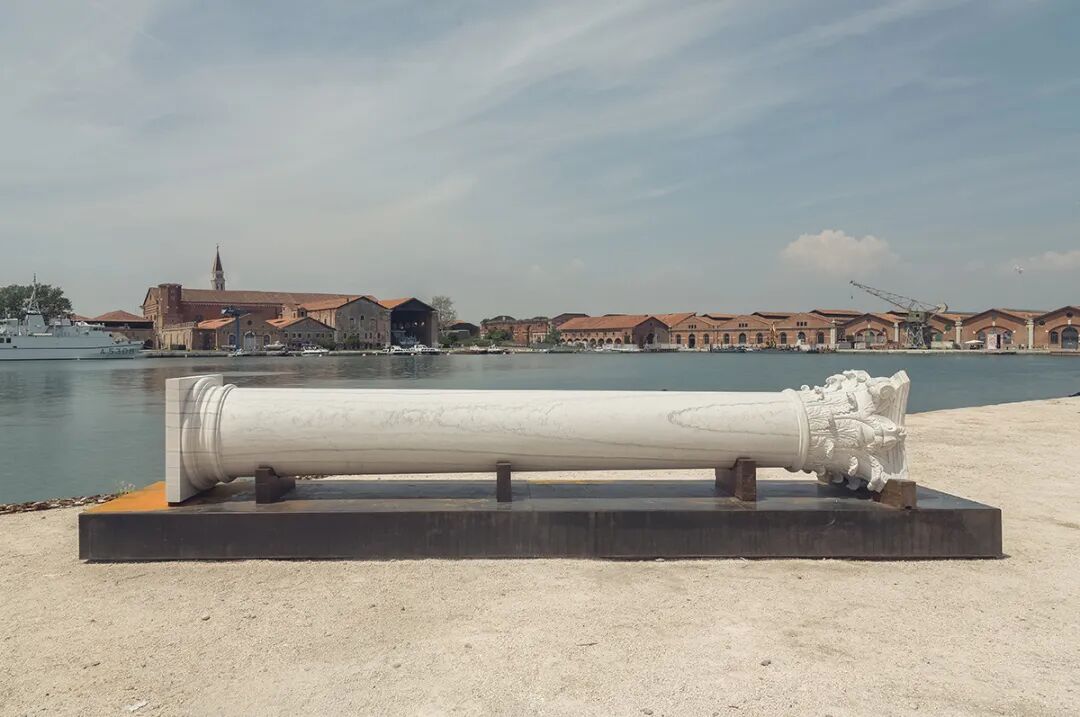
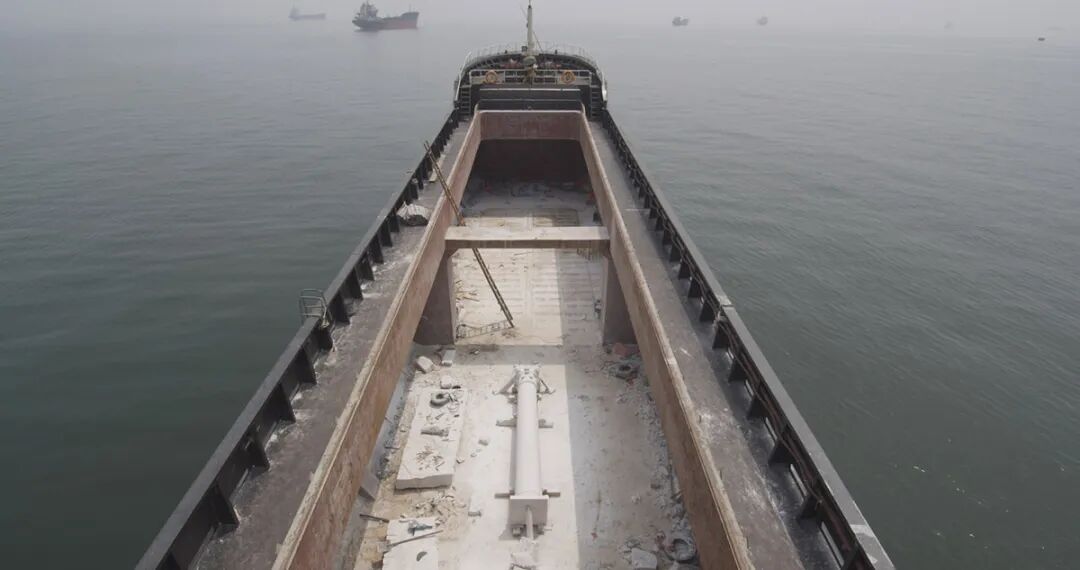
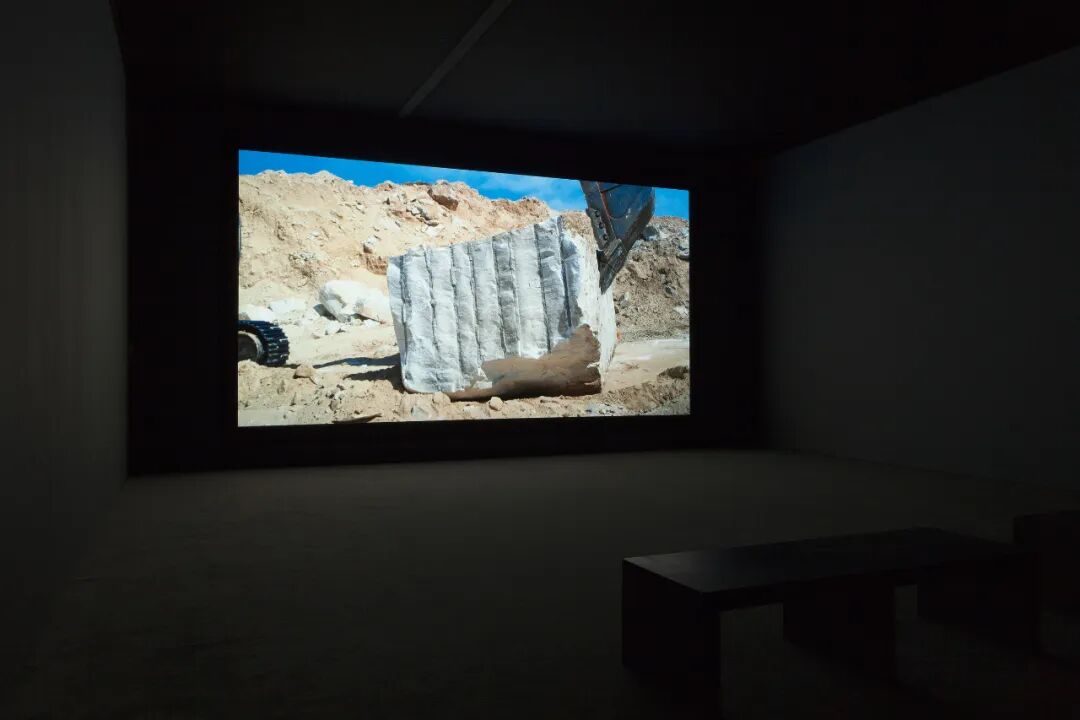
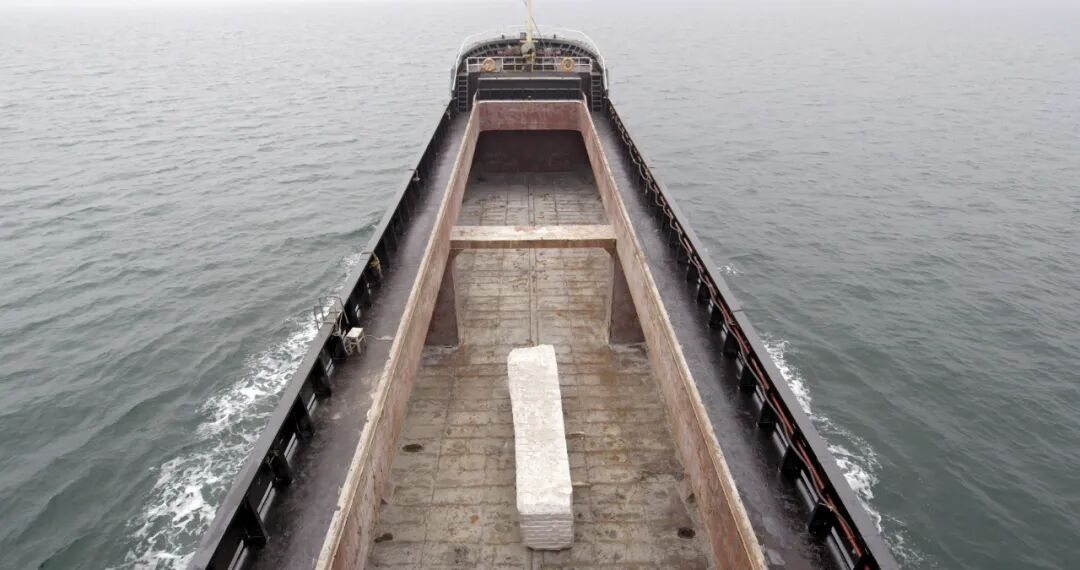
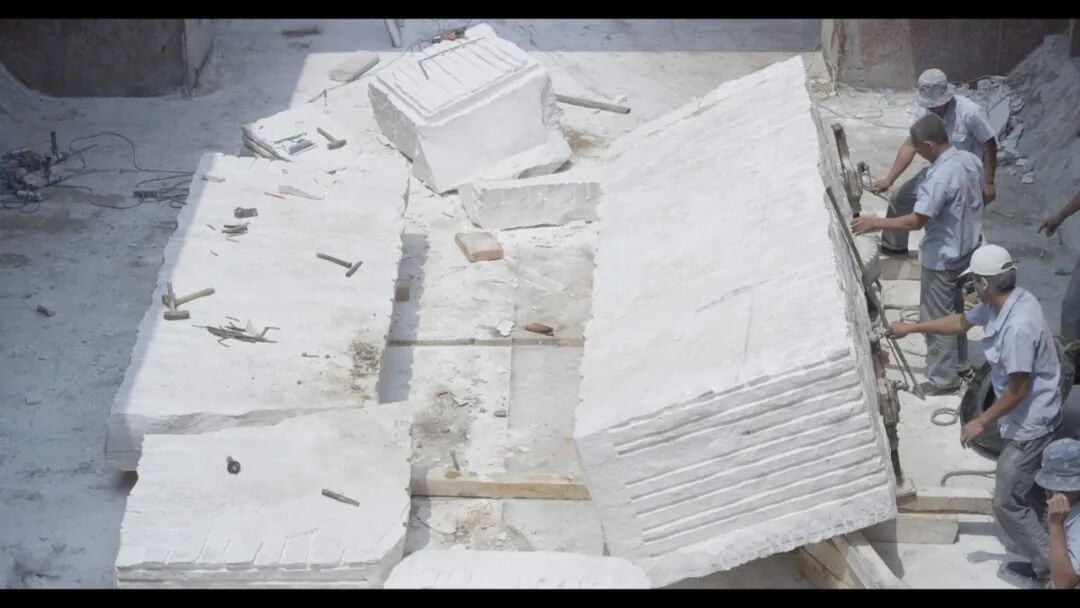
The Column: This video work records the entire process by which a giant block of marble is quarried in China and then, aboard a cargo ship, carved by a group of Chinese craftsmen during the long sea voyage into a classical Roman column. When the ship finally arrives at a European port, the exquisite column is completed. Though the work does not directly depict refugees, its themes of labour, migration, globalisation, and the production and circulation of cultural signs can be extended to reflection upon the situation of contemporary migrants and labourers:
Mobile labour and the creation of value: The Chinese craftsmen perform intensive labour aboard the drifting cargo ship; their skill and sweat ultimately condense into a work of high cultural value (the Roman column being a symbol of Western classical civilisation). This can metaphorise how, in the contemporary globalised economy, cheap labour from developing countries creates value for developed countries while in a mobile and unstable condition.
The travel and transformation of cultural signs: A stone from the East, shaped at sea into a Western cultural sign—the process itself is full of the flavour of cultural exchange, appropriation and transformation. It may also hint at how, in cross-cultural migration, migrants’ original cultural identity is reshaped or collides with a new cultural environment.
‘Rootless’ creation: This column is created upon the ‘rootless’ ocean; it belongs to no specific land but is a product of the globalised process of production and circulation. This echoes how many migrants and refugees, after losing their original home, find their identity and creativity often in a state of ‘rootlessness’ or ‘multiple rootedness’.
With its deep humanistic care and poetic visual language, Adrian Paci’s art captures the lived experience of the individual amid mobility and uncertainty in contemporary society. Though his work often springs from personal experience, he successfully raises it to a universal reflection upon the broader human condition. As the refugee crisis grows ever graver, Paci’s sustained exploration of themes such as ‘temporariness’, ‘the sense of suspension’, and ‘the fluidity and reconstruction of identity’ provides us with a precious and profound vantage point for understanding the inner worlds of those forced to leave home and to seek belonging with difficulty in foreign lands. His art reminds us that beneath the grand political and economic narratives, every mobile life carries its unique history, emotion and eternal longing for ‘home’.
18. Caleb Duarte (United States)
Core idea: symbolic shelter and the empowerment of the marginal
Caleb Duarte is an American artist whose practice is closely bound up with social intervention, community collaboration, and attention to the situation of migrants, borders and marginalised groups. He does not create in isolation within a traditional studio, but often goes deep into specific communities (especially those of migrants and asylum seekers in difficulty), working together with them, and through performance, temporary installation, sculpture, painting and other media explores and expresses the challenges they face, their inner desires and their potential agency. Duarte’s art is strongly participatory and empowering; through artistic intervention he seeks to provide a platform of expression for marginalised voices and to construct symbolic spaces of shelter.
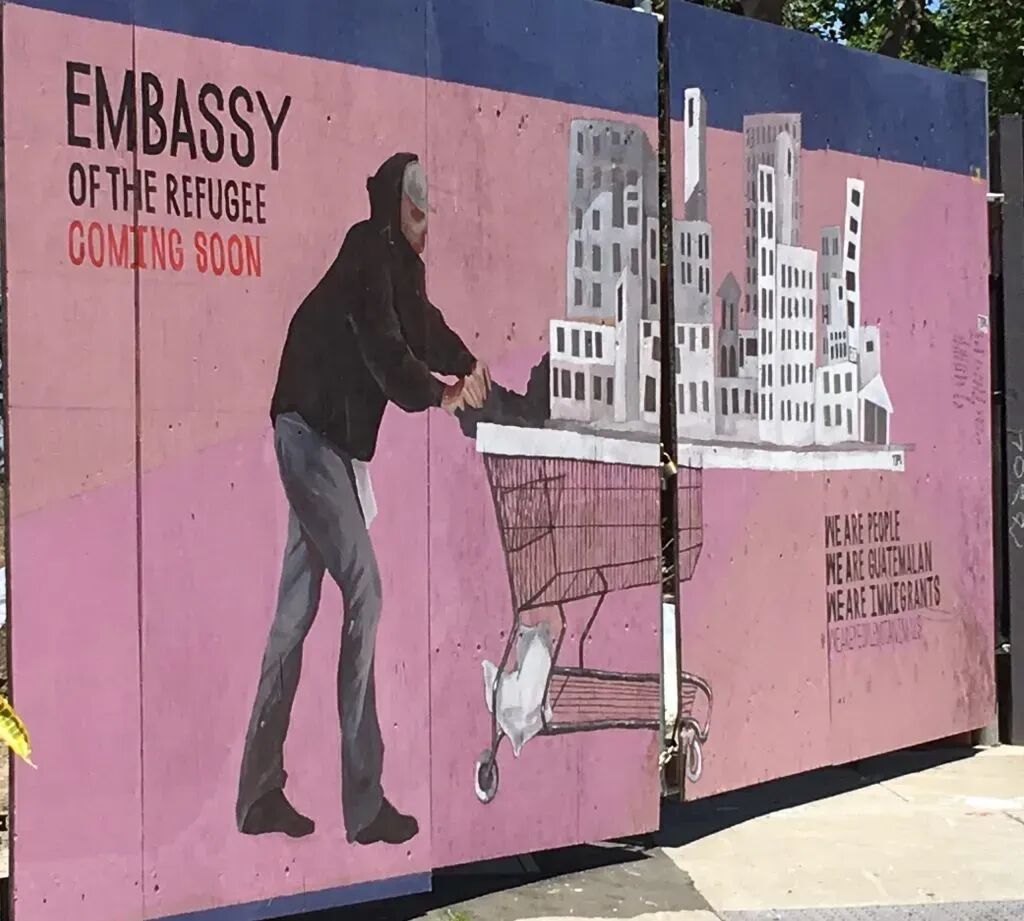
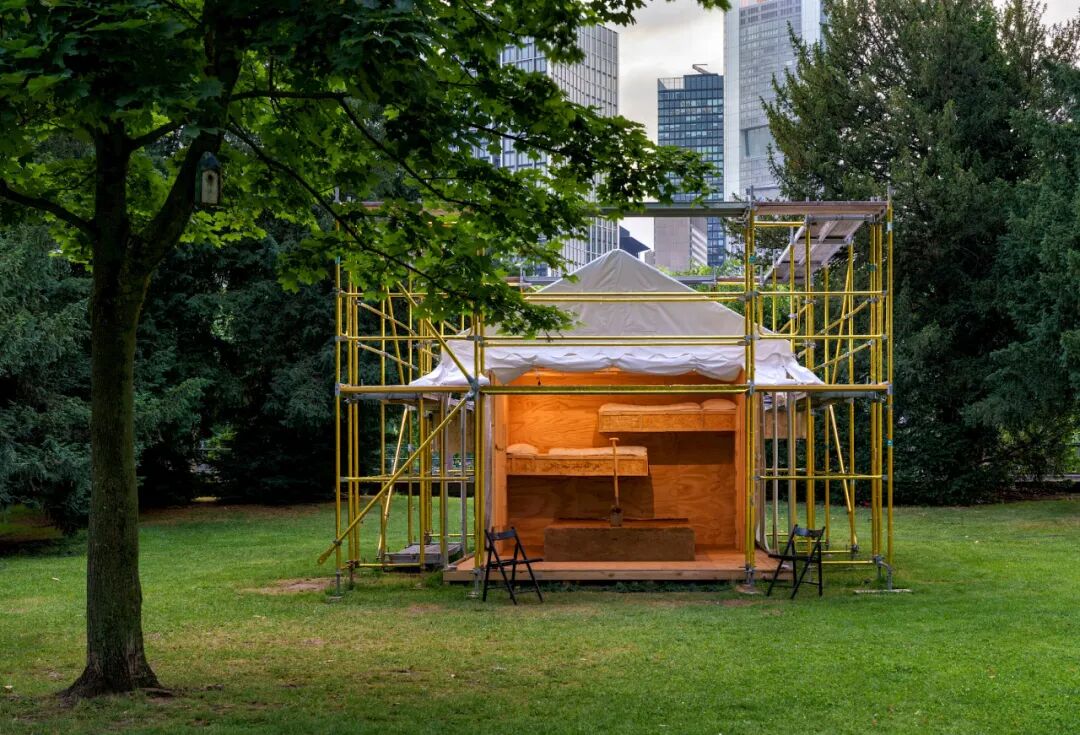
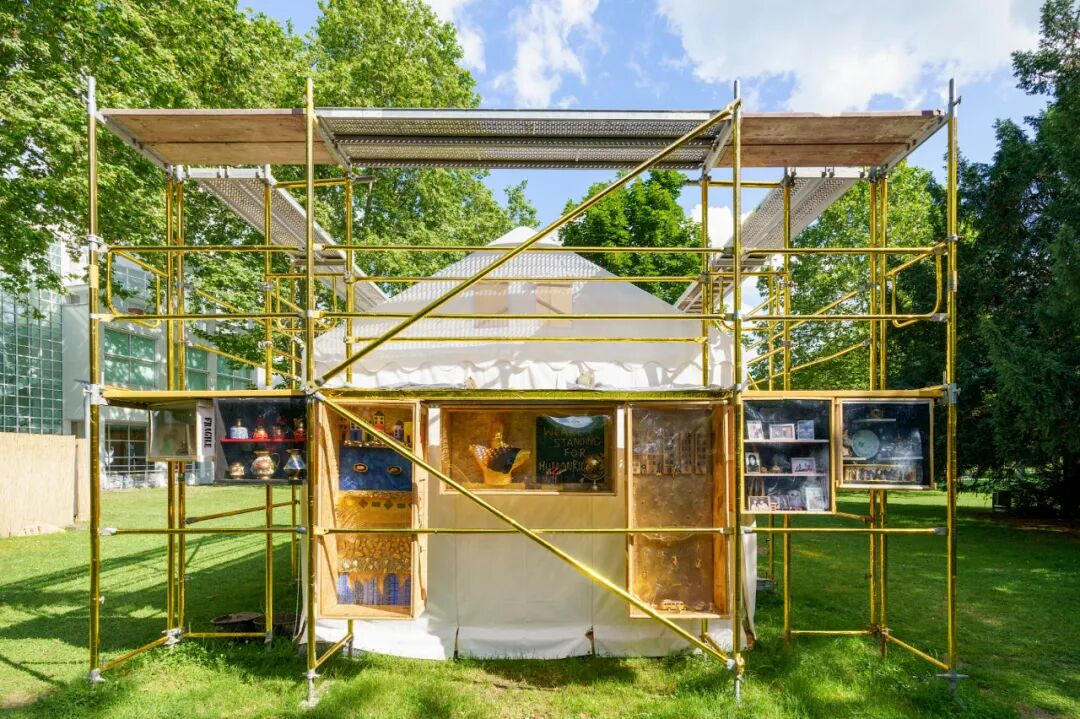
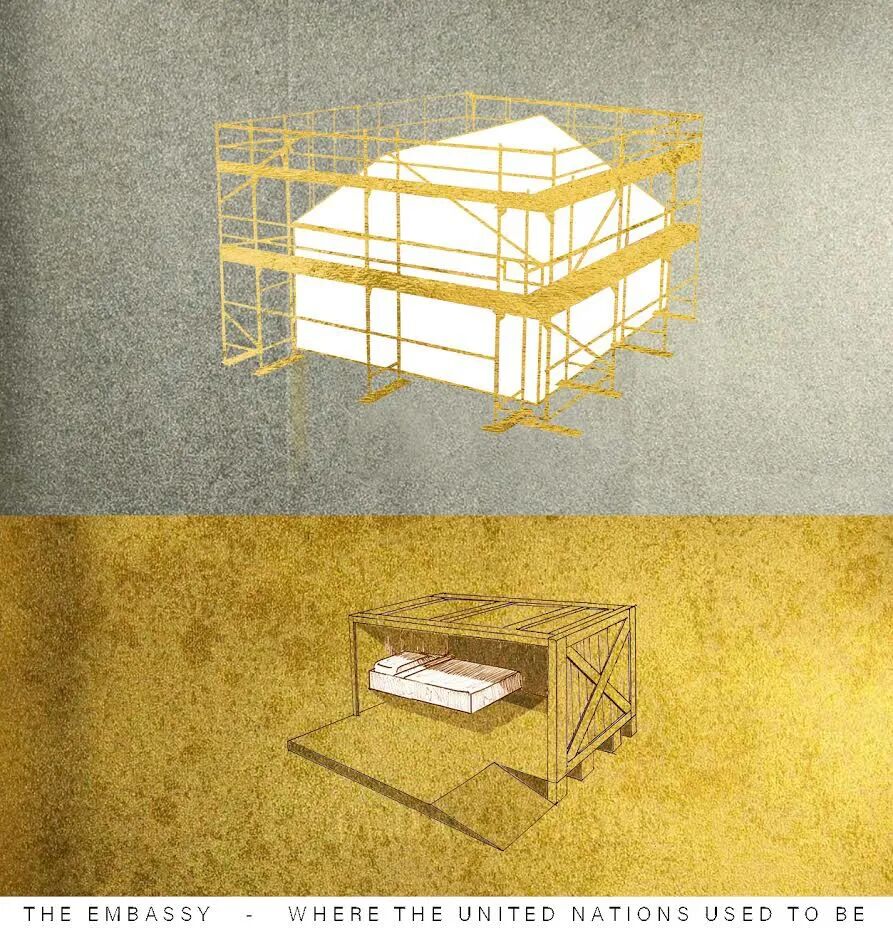
Representative work: Embassy of the Refugee and related community collaboration projects
*Embassy of the Refugee* is an ongoing project by Duarte that responds, in a highly conceptual and activist manner, to the identity predicament faced by global refugees and displaced persons and the difficulty of seeking asylum.
The symbolism and subversiveness of the ’embassy’: An ’embassy’ is normally an extension of state sovereignty upon foreign territory, a place where citizens seek their own state’s protection and services. For refugees without nationality or unable to obtain their state’s protection, however, the ’embassy’ is a remote, even exclusionary, concept. By appropriating and subverting the sign of the ’embassy’, Duarte attempts, for those refugees and displaced persons ‘with no state to rely on’, to construct a symbolic, mobile ’embassy’ of their own. This ’embassy’ is not a physical building but more a conceptual presence, realised through a series of performances, temporary installations and community-participation activities. For example, he may collaborate with migrant communities to erect, in border regions, near refugee camps or in urban public space, temporary, symbolically charged ’embassy’ structures from simple materials (wood, cloth, earth, and the like).
Collaboration with migrant / refugee communities: Duarte’s creative process depends heavily on collaboration with specific communities. He spends time in deep exchange and interaction with local migrants and asylum seekers (he has, for instance, worked with Guatemalan Maya students and families living in the US–Mexico border region), learning their stories, predicaments and wishes. Artistic creation itself becomes a shared practice; participants are not merely passive ‘depicted objects’ but active ‘co-creators’. This collaborative process is empowering in itself, providing a platform for those groups so often silenced in society to express themselves, share experience and build connection.
The transience and force of performance and temporary installation: Many manifestations of *Embassy of the Refugee* are brief and ephemeral—performances at specific sites, for example, or installations built from temporary materials that may soon be dismantled or vanish. This transience precisely echoes the instability and temporariness of refugees’ and displaced persons’ conditions of survival. Yet within these fleeting artistic actions lies a powerful symbolic force. At a specific time and place they create for participants and viewers an ‘alternative space’ of shared imagination, expression and feeling—a field where one may temporarily transcend real predicament and reaffirm individual dignity and collective identity.
Reconceiving the concept of ‘shelter’: Through projects such as *Embassy of the Refugee*, Duarte attempts to challenge and expand our understanding of ‘shelter’ (asylum/shelter). Shelter is not merely a physical safe house, but should be a spiritual sense of belonging, a recognition of identity, and respect in cultural terms. His artistic practice is an attempt, through symbolic means, to construct this broader ‘shelter’.
Art as a catalyst for social dialogue: Duarte’s works and projects also aim to spark wider social attention and dialogue, prompting the public to reflect upon important issues such as migration policy, border control, the protection of human rights and social inclusivity. He takes art out of the gallery and into the community, to the sites where problems occur, making it a bridge that connects different groups and promotes mutual understanding.
Caleb Duarte’s artistic practice embodies a deep humanistic care and a strong spirit of social intervention. Through his distinctive mode of collaboration and symbolic artistic language, he gives voice to the ‘nameless’ and ‘homeless’ who grow ever more numerous in the contemporary world. His *Embassy of the Refugee* project is not only an artistic response to the refugee predicament but a hopeful social experiment, attempting, amid the hard barriers of reality, to open up a ‘spiritual territory’ where those excluded lives may temporarily dwell, be seen and be heard. His art reminds us that even in the most difficult circumstances creativity and solidarity remain vital forces by which humanity sustains dignity and seeks change.
19. Jin Zhipeng (China)
Core idea: an allegorical exploration of the predicament of existence and a reflection on reality
Jin Zhipeng is a Chinese contemporary artist known for the strong visual impact and profound allegory of his work. He excels at using deformation, symbol and surreal means to construct an artistic world at once strange and familiar, thereby exploring the universal predicaments facing human society—including the struggle for survival, the cruelty of war, the alienation of power and the crisis of modern civilisation. Jin’s practice typically proceeds through traditional media such as painting and sculpture, yet the ideas and emotions it expresses are thoroughly contemporary and thought-provoking. His works do not depict reality directly, but through distorted figures and metaphorical scenes evoke the viewer’s reflection upon the deeper problems of reality.
Among Jin Zhipeng’s recent works, two kinds are highly representative: allegorical oil paintings and irregular sculptures, which together constitute the artist’s distinctive response to the human condition and deep social problems.
Oil paintings: visual allegories of suffering and alienation
Jin Zhipeng’s oil paintings *The Right of the Heretic*, *Fleeing Home* and *Returning Home* reveal, through their vivid colour, distorted figures and tension-filled composition, the artist’s profound insight into the human condition.
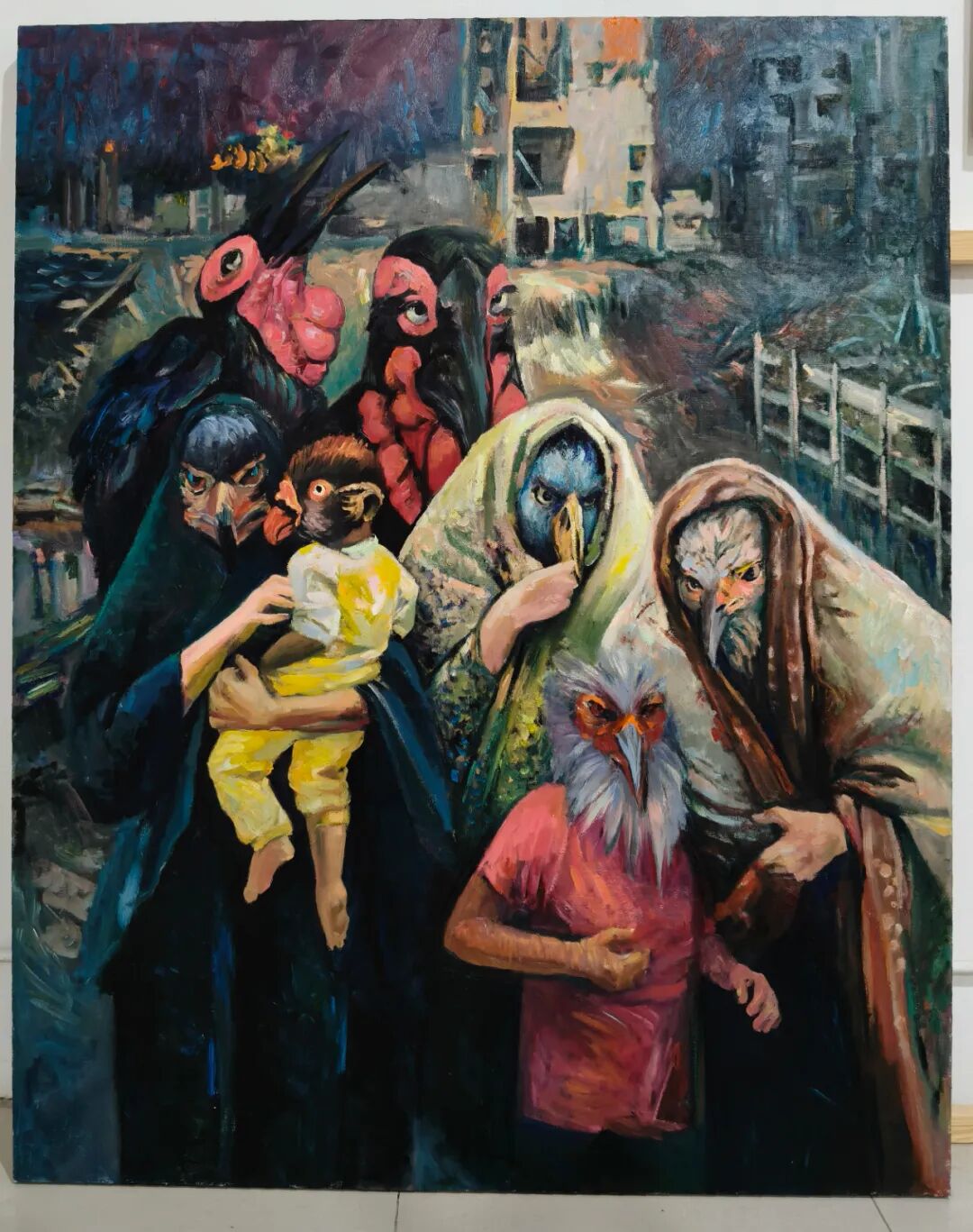
Fleeing Home—symbolic shelter and a group portrait of suffering: This painting presents a group of anthropomorphic bird figures—some in the posture of gamecocks, some in the guise of owls or eagles—draped in robes, one of them cradling a baby with blurred features and avian traits. The background is broken architecture and indistinct ruins, hinting at a world steeped in trauma. These figures may symbolise people seeking shelter before suffering; they are refugees, displaced persons, and also groups struggling at society’s margins. The bird imagery endows the work with a primitive, instinctive force, while also perhaps hinting at the dehumanisation or animal struggle of humans in specific situations. The posture of cradling the infant reveals protection of fragile life and a thread of hope for survival in extremity, yet the overall atmosphere remains heavy and oppressive.
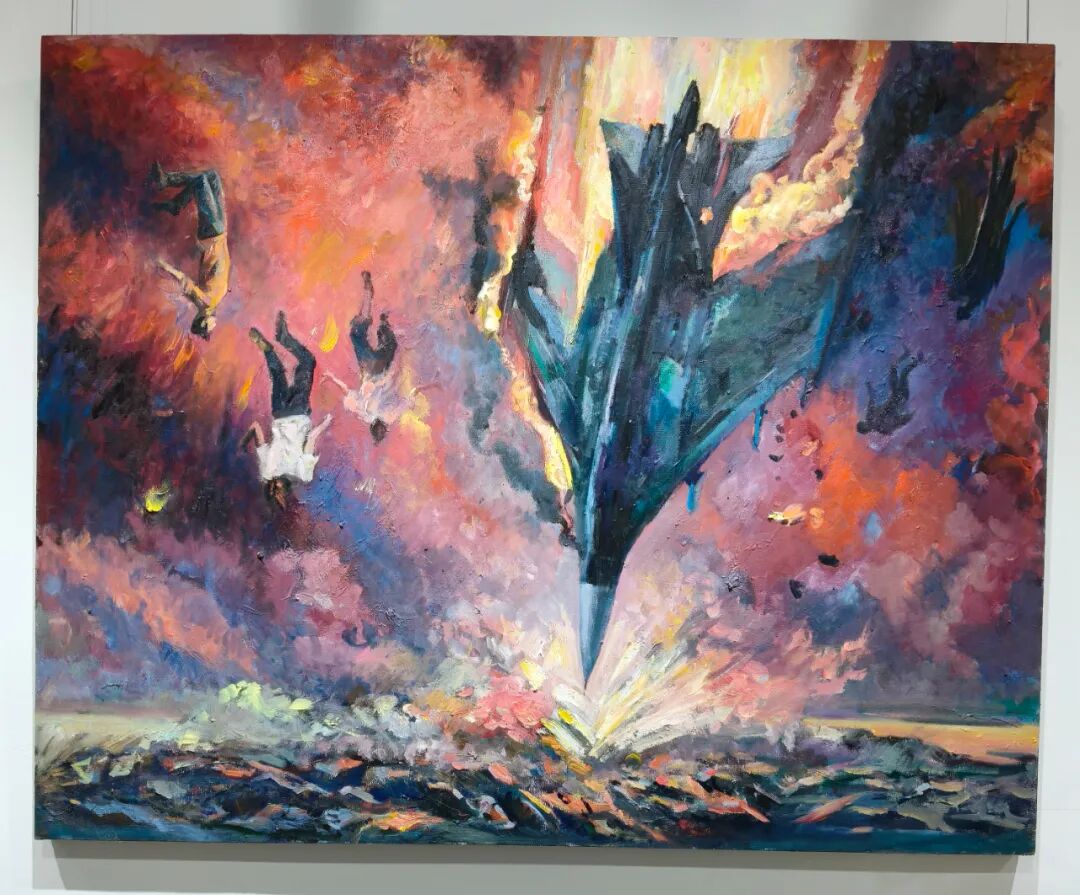
Returning Home—a sublime threnody of war and destruction: With explosive colour and dynamic composition, this work depicts the instant of a plane crashing, accompanied by human figures falling from the sky. The picture is full of flame-like orange, red and purple, creating a scene at once sublime and destructive. The plane disintegrates in its fall, symbolising the collapse of technology and civilisation, while those helpless falling bodies point directly to the fragility and vanishing of individual life in war and disaster. The painting is a fierce indictment of the cruelty of modern war, and a profound warning about the possible self-destruction of human society in technological development. Titled ‘Returning Home’, it echoes Edward Said’s words: ‘The exile is a permanent outsider, wandering between two worlds yet belonging to neither.‘
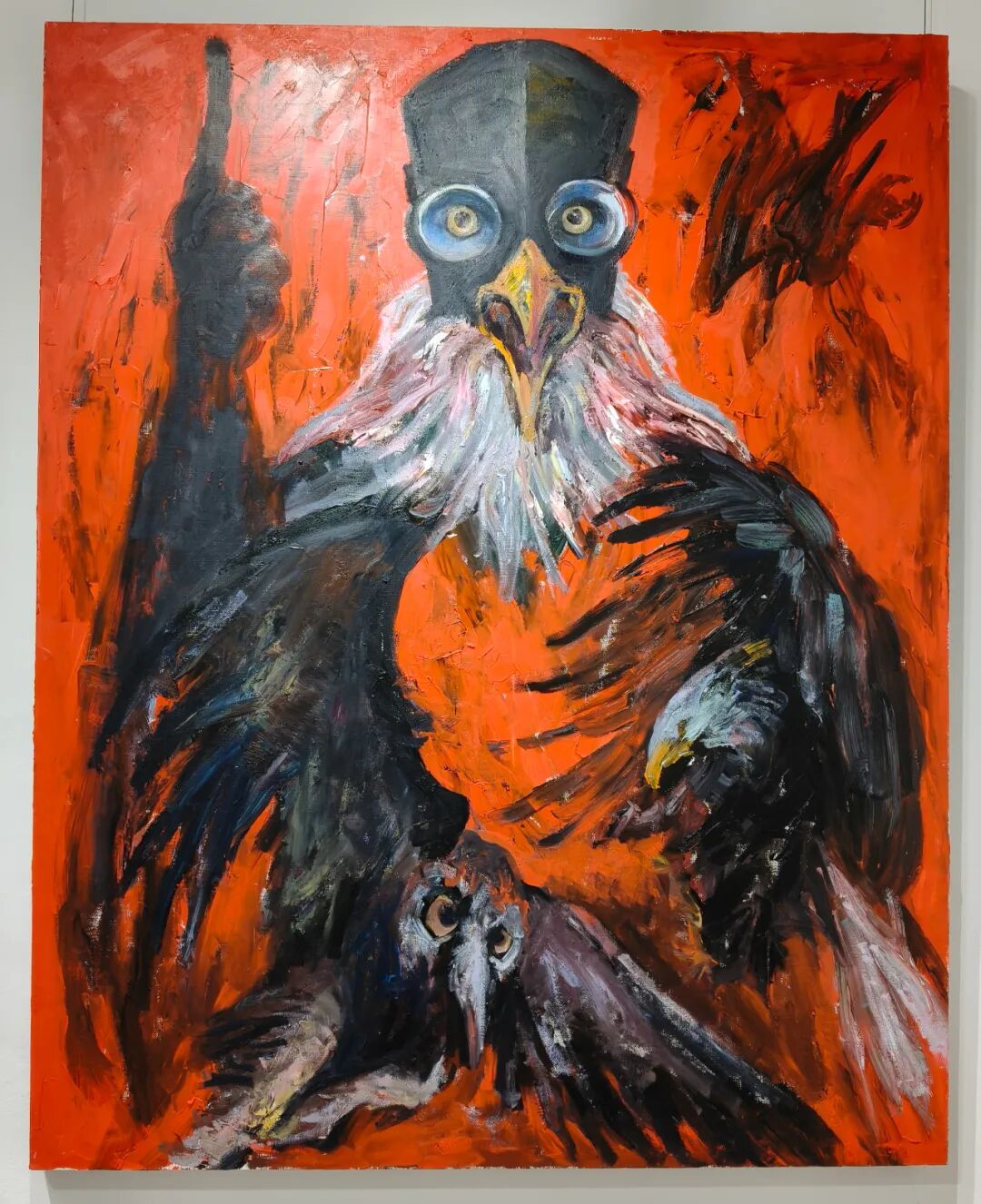
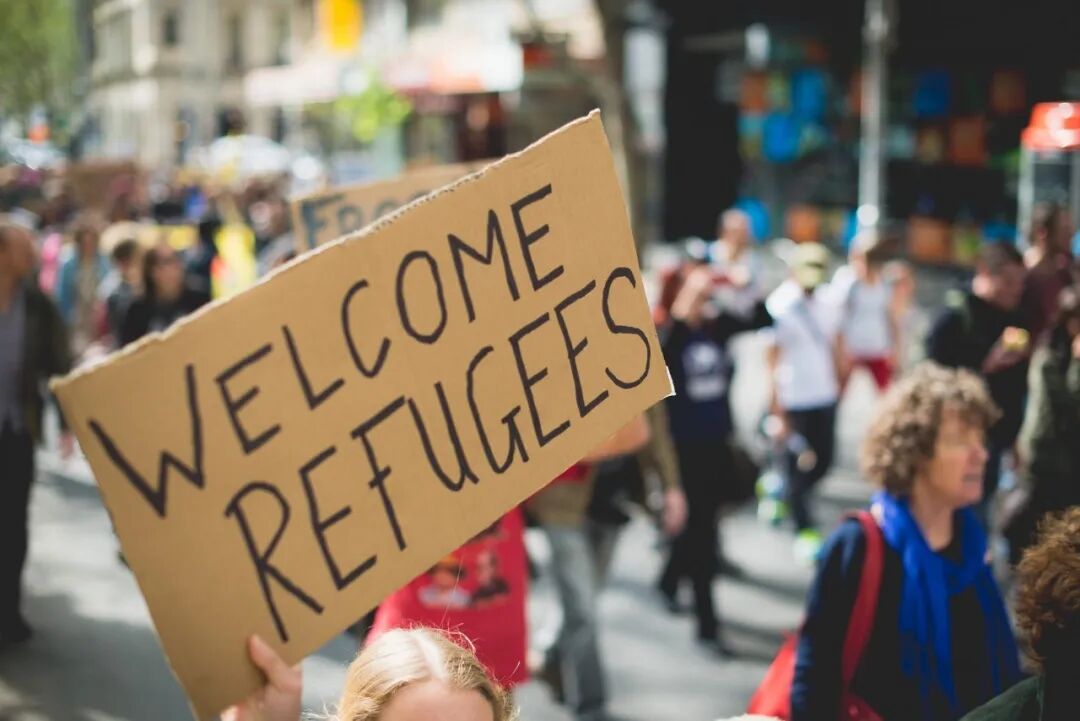
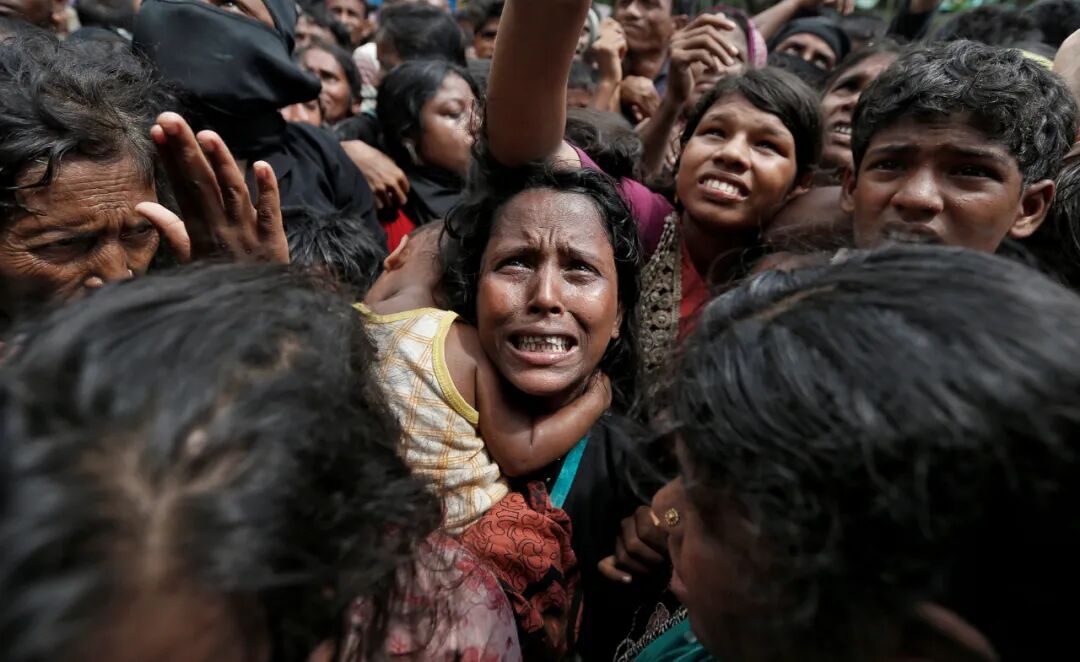
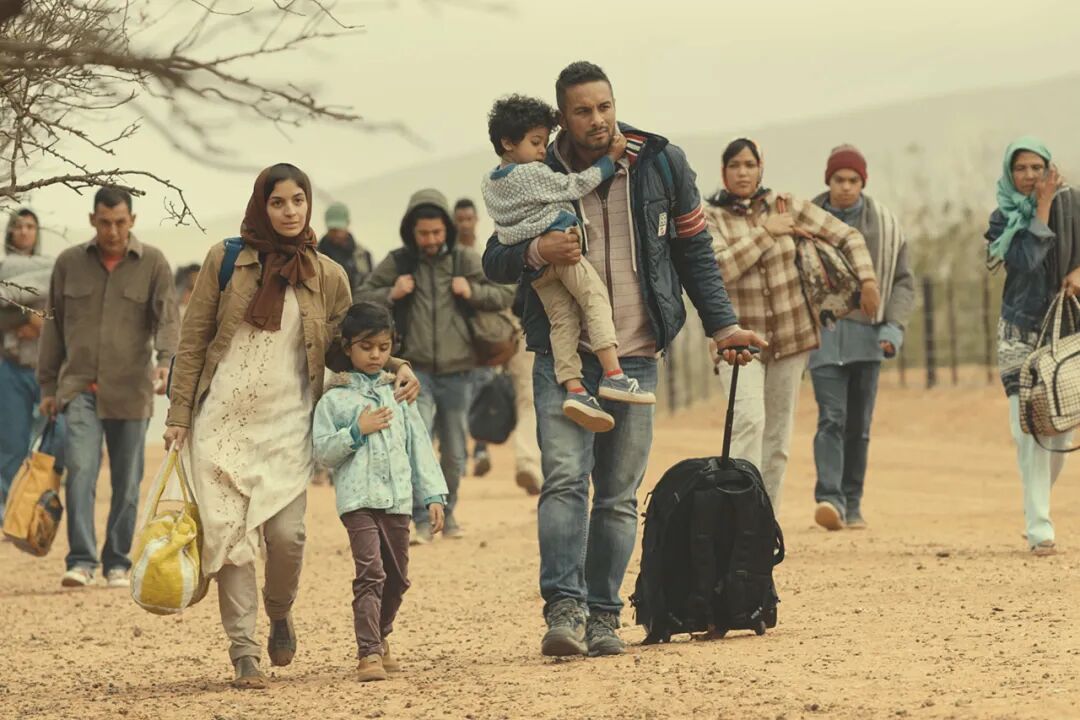
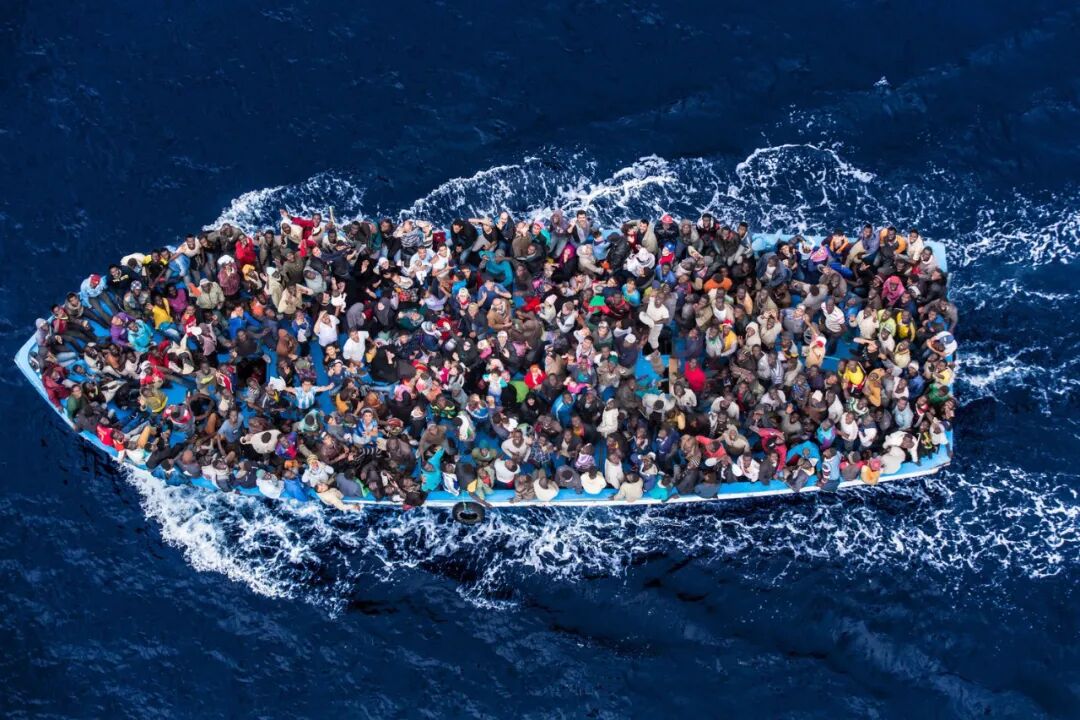
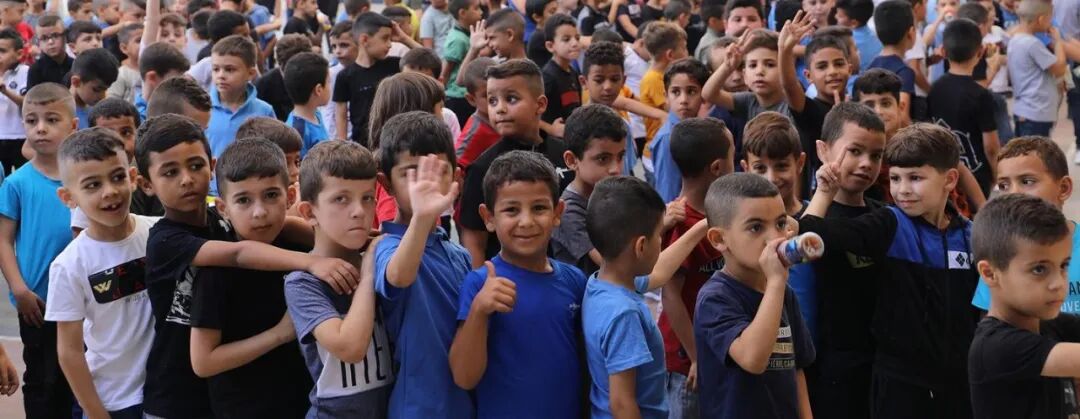
订阅艺术评论
订阅即赠《2024中国当代艺术关键词》内部思考笔记 PDF
每周免费获取最新当代艺术批评与研究