Original title: “Leng Jun’s Contribution to Realist Oil Painting”
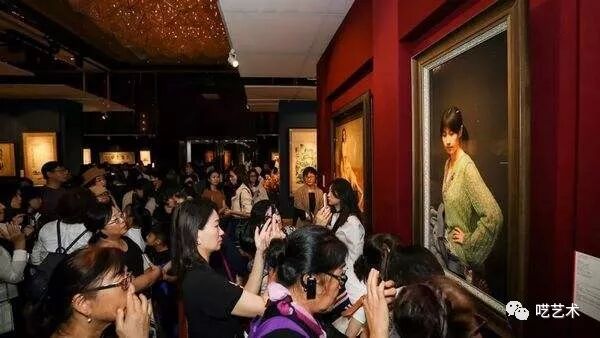
On the evening of 16 November, the hammer fell on China Guardian’s 2019 autumn sale, the “Twentieth-Century and Contemporary Art Evening Sale,” at the Guardian Art Center. Forty lots were offered in the session. Among them, Leng Jun’s Portrait of Xiao Jiang opened at 30 million yuan, and the price quickly shot up to 50 million. The contest then came down to two telephone bidders; after a round of fierce bidding, the hammer finally fell at 61 million yuan to the telephone bid of Lin Lin, senior manager of Guardian’s modern and contemporary art department. With the buyer’s premium the total came to 70.15 million yuan — a personal auction record set once again at China Guardian, following the spring sale.
The high price fetched by Leng Jun’s work has excited a great many realist painters, as though they had swallowed an aphrodisiac. But an aphrodisiac cannot be taken indefinitely: it damages the pituitary gland, and leaves you unable to tell the difference between the direction in which art is developing and a crude popular taste. What is more, I doubt very much that Leng Jun’s photo-paintings will fetch high prices again. There is no need for any big-data study of the market: this can happen once, perhaps twice, but there will be no third time, no fourth.
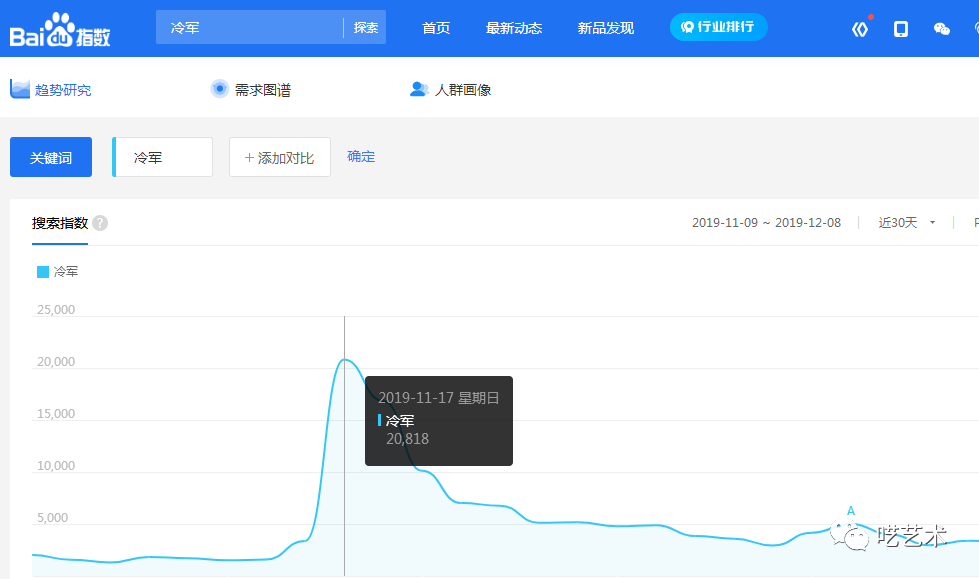
On 17 November 2019, the Baidu keyword “Leng Jun” was searched 20,818 times in a single day, several times the usual volume.
Oil painting is an imported species in China. The older generation of realist oil painters revered Soviet-style “realism,” which younger and middle-aged artists — those who had absorbed the newer Western currents — regarded as obsolete; these painters in turn rushed to emulate Western art after modernism: Gauguin and Van Gogh of Impressionism, Picasso and Matisse of Cubism and Fauvism, Kandinsky and Klee of abstraction, and even Close of super-realism. Yet to this day not one Chinese oil painter has produced a contribution or breakthrough at a high aesthetic level in Impressionism, super-realism or abstraction. The only truly “distinctive” thing they have produced is a corner-cutting “invention”: oil paintings made by copying photographic images.At first glance, works of this kind leave the impression of a painter with consummate technique, particularly in the command of texture.
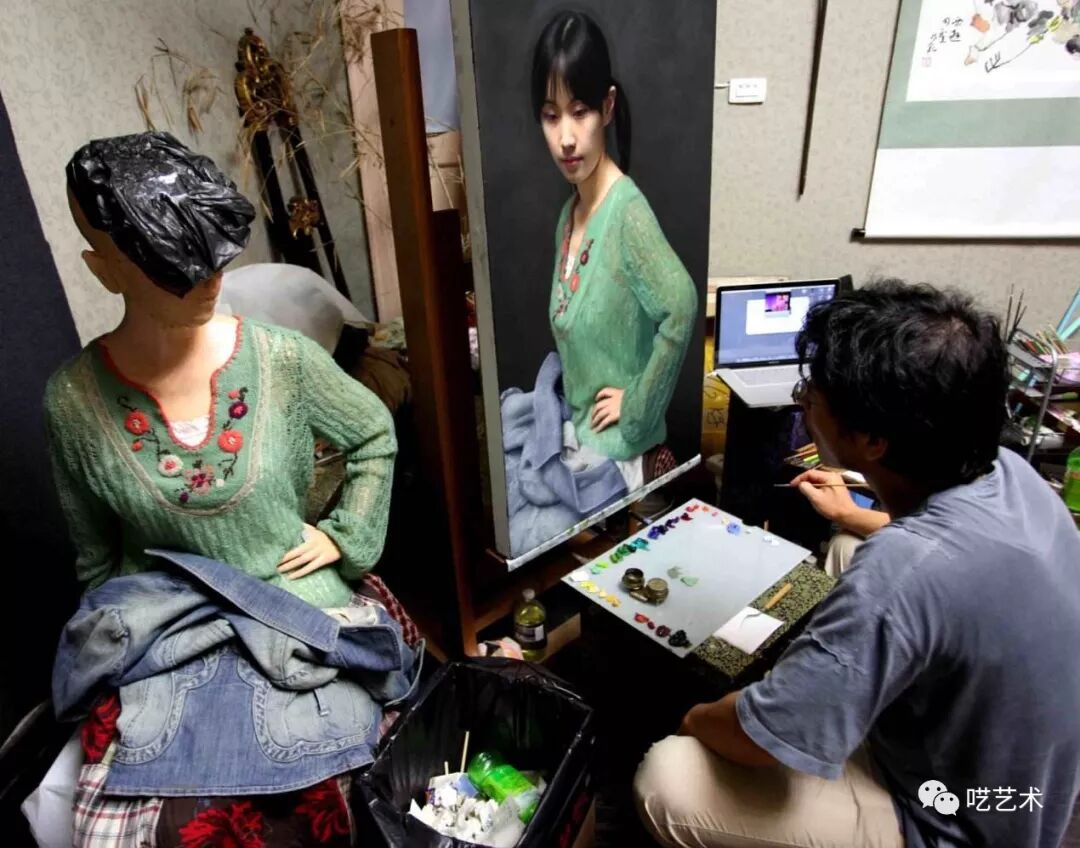
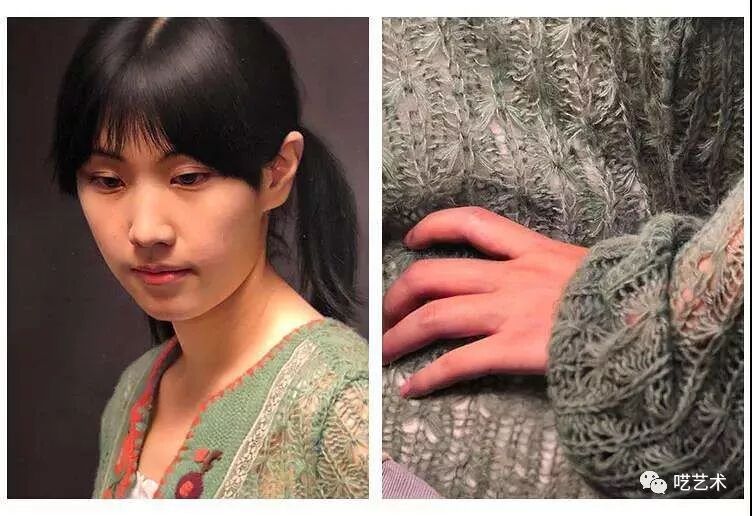
Since the birth of Impressionism, almost no one in the West has tried to substitute painting from photographs for art itself, because working from a photograph cannot yield anything other than another photograph: it turns the image into a shackle that binds painting. Dependence on photographs or on ready-made scenes is passive, and the single-minded pursuit of a photographic effect in painting costs the painter the ability to mine subject matter from life, reduces him to following the fixed colours of nature, and extinguishes the author’s creative consciousness.
The oil paintings from the National Exhibition of Fine Arts lately circulating online illustrate the problem perfectly. Exhibiting artists typically take a few photographs and reproduce them in a half-present fashion; judges and viewers with no understanding of art take in at a glance the “realist virtuosity that hits you in the face,” and cannot bring themselves to keep the work out. This too accords with China’s particular conditions: “become famous first, make your contribution later.” Once selected a few times, one first becomes a member of the Artists’ Association, acquires a market price, and thereby seems to have become a “professional artist.”
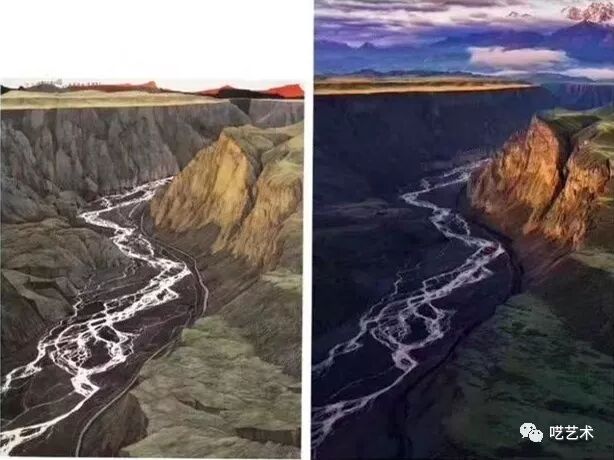
Left: a work selected for the 2019 National Exhibition of Fine Arts by a painter surnamed Cui.
Right: said to be a high-definition mobile-phone wallpaper image.
Early collecting of mainland work by Hong Kong and Taiwan collectors was based largely upon realist painting. The Western fondness for Soviet-style Political Pop meant that they paid little attention to Chinese realist painting, concentrating instead on artists such as Fang Lijun. Around 1995, realist painting in Taiwan was depressed and had thrown up few painters, so the focus of attention for realist painting shifted to the mainland.
That is how the earliest batch of realist painters came to be elevated. Some of them came out of Claude Yvel’s first realist training class in 1988. Its more than twenty participants — Hu Jiancheng, Yang Feiyun, Wei Ershen, Zheng Yi, Pang Maokun, Xia Xing, Wei Rong, Gong Lilong, Tao Shihu and others — are all now well-known first-rank figures in Chinese oil painting. Leng Jun was a member of the second class.
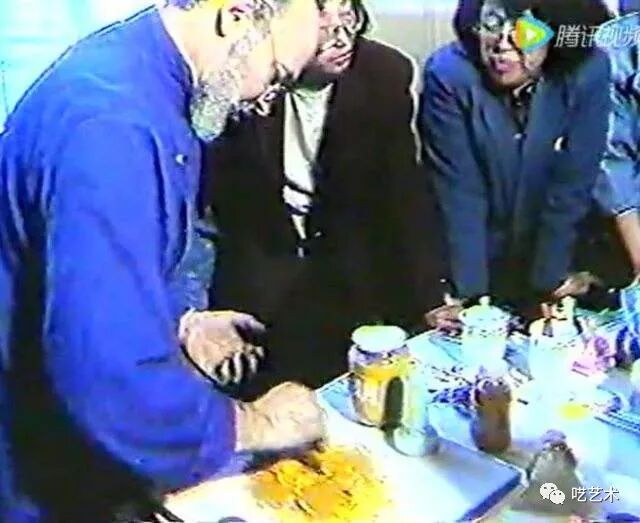
Leng Jun’s painting is a mechanical kind of painting. To achieve depth of detail, he adopts a prolonged, multi-layered method, repeatedly carrying the procedure forward from one local passage to the entire surface. His painting accords with the Western classical notion of eliminating the brushstroke, erasing every trace of the individual part painted. To reach that effect, the colour must be thinner with each application and more transparent with each layer, so as to permit extremely fine rendering and gradual advance. In his pictures, every detail is repeatedly adjusted and re-adjusted, and at the end he carries out a comprehensive glaze using paint with a very low pigment content and the subtlest transparency. It cannot be denied that he has innovated somewhat in oil technique; he also selects subject matter that he assembles and fabricates himself, rendering a “strange” subject in a super-realist manner. The clash between the two generates an illusion of “artistry” that leads many to mistake it for a “postmodern” element.
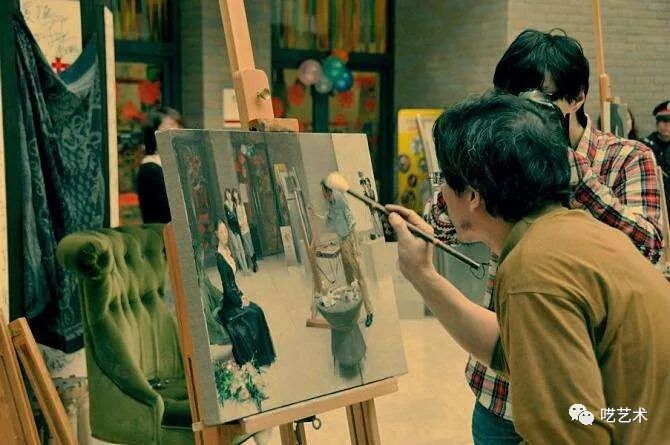
Ignorance is forgivable; but once you know, and still call this a contribution, there is no forgiving it.
First: realist painting does not paint merely an “image”; it is the result of humanity’s recording of its own value. Western classical realist painting was built upon a scientific and cultural system — this is what it means for “man” to be born a person of his time: a civilised, enlightened being with science and culture as his foundation.
The second stage of Western classical art, the Renaissance, began to concern itself with “man” himself, so that the scientific system of “man” gradually became complete — perspective, anatomy and the rest. This scientific system was not merely a set of painting techniques; it was also the foundation of Western architecture, design, industry, defence, engineering, drafting and the whole of its science and culture.
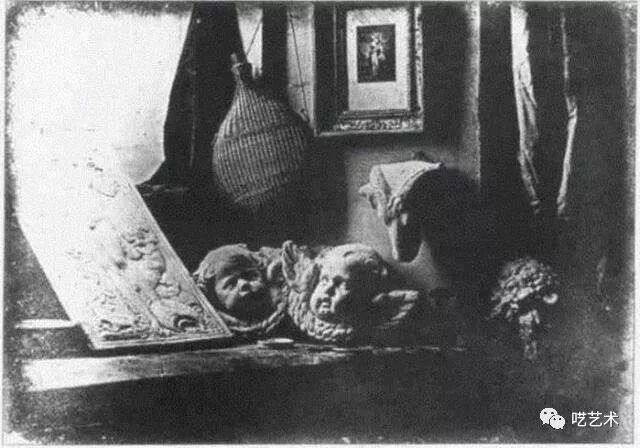
It is the same function — recording “value” through recording reality. In the late 1830s a Frenchman named Daguerre invented a device that recorded the scenery of the world automatically, without brush or pigment — in other words, the camera. On 19 August 1839 the French Academy of Sciences and the Academy of Fine Arts purchased the patent for Daguerre’s photographic method and made the process public, declaring the birth of photography. It was a subversive contribution, and as it developed — digital, high-definition, macro — the camera’s grip on the recording function became unbreakable. Even big data and VI systems can now reconstruct a scene that has been described.
Photography took the recording function away from painting. Many Chinese people still comment on an artist’s work by saying it is “painted like a photograph” — a terrifying verdict, since if a painting looks like a photograph, one might as well simply take a photograph. But oil painting was not replaced by photography. Modernism, beginning with Cézanne, was a subversion of the classical, opening a path that continually touches essence and challenges the essence of art. As Yang Feiyun puts it, it is a good thing that photography has taken away painting’s recording function: it lets painting return more clearly and more directly to what painting itself is.
In my view, the appreciation of painting should be returned to the part that belongs to painting itself. To have a technology perfectly capable of producing the artwork, and still to cling today to what could already be done more than a hundred years ago, treasuring it as a precious thing — that is a reality at once ridiculous and pitiable. Once photography appeared, painting that leans upon photographs ought to be handed back to photography itself.
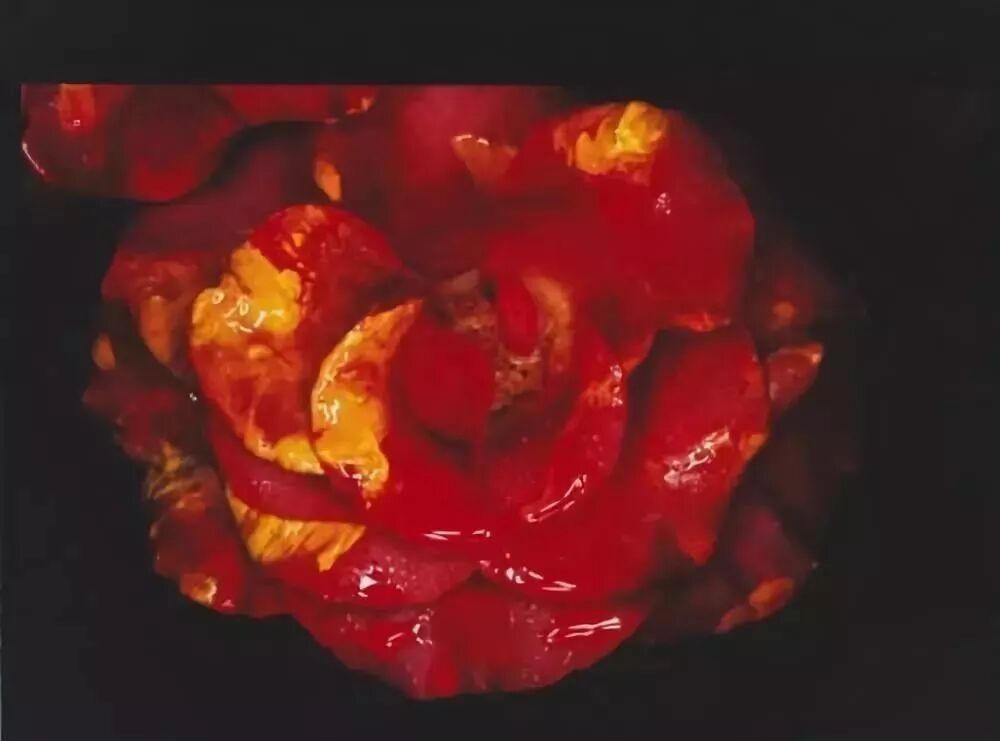
Second, some say Leng Jun has revolutionised the technique of oil painting. But in truth, technique is not part of what painting itself is.
In the early nineteenth century, the Western art world after Cézanne set out upon a path of innovation that continually touched the essence of art. Yet in the late 1860s, in the United States — nominally the core of the world’s art — there appeared a group of super-realist artists: Close, Andrea, Hanson and others. Why, on a road of modern art that opposed the classical realist scientific system wholesale, should a group of super-realist artists have appeared again?
Their super-realism is called hyperrealism in English, and by some photorealism. It is evidently built upon the foundation of the photo. But they did not mechanically imitate nature; they proposed to rely on science and technology to produce a new kind of conceptual work, and to think afresh about realist painting.
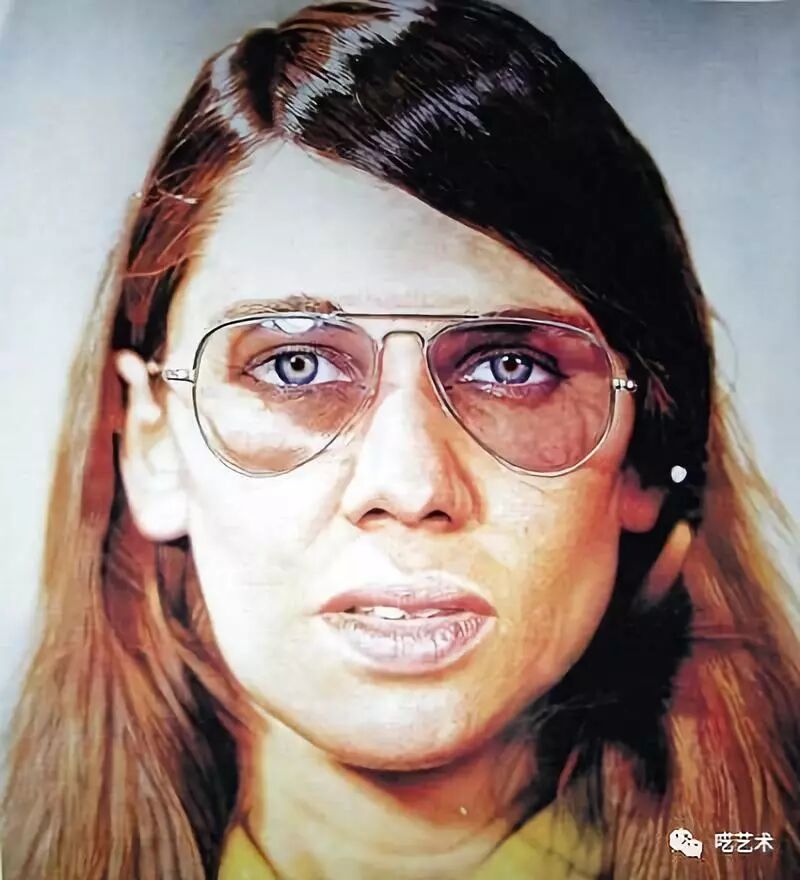
The formation of this super-realist current had, in fact, deep sources.
America entered industrial society comparatively early. After its north–south civil war, the popular ideals and idols of America’s agrarian civilisation were widely called into question; firm religious faith and a nostalgic national mentality died away gradually with the progress of industrialisation. The disappearance of old ideals and idols required new ideals and idols to supplement and replace them.Thus the new industrial capitalists took the place of God or of whatever had anchored the spirit, becoming the representatives of popular ideals and idols in America’s new culture. The harmonious traditional agrarian society turned into a capitalist society of brutal competition.
As the degree of economic monopoly steadily rose, Americans increasingly felt that what ruled them had become an “invisible iron hand.” And so a group of conscious thinkers, writers and artists began to struggle and reflect within consciousness itself. An instrumentalised society seemed capable of anything, and the development of social technology destroyed the harmony of the American countryside. Thus, in painting, the pursuit of a photographic instrumentalisation of realism was not a simple work of naive realism, but a reflection upon tragedy. This, then, is what people usually call “super-realism” — a course of action that answered the needs of America’s development.
Photography can capture a speck of rust, every pore of its subject; with fill light or certain tonal adjustments, it can also produce photographs possessed of the quality of classical art. These American super-realist painters, besides transcribing photographs, were largely concerned to display on canvas everything observed by their own eyes: colours and local structural features that a photograph cannot render, together with the author’s own understanding and analysis of the object depicted. Some go further still, painting one by one even the minute local colour variations that photographs cannot capture. Their works are all enormous, and so carry an indescribable coolness: they come from the camera, they paint as the camera would see, and yet they differ from the camera. In these works, do the tools and technologies that shattered America’s traditional pastoral harmony still have any reason to exist? This is the ultimate question posed by super-realism.
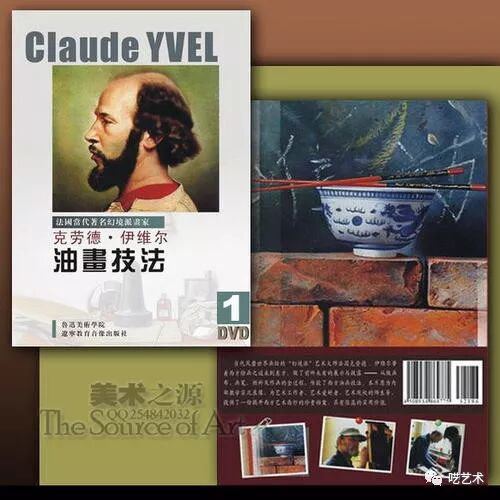
At the end of the nineteenth century, America saw a group of painters who depicted still life with super-realist technique. Between the 1970s and the 1980s, France saw the emergence of the “illusionist school,” so called because these paintings reach a state of uncanny mastery and produce an illusion. Its ultimate aim is “to guide the viewer through the picture, so that one believes that the painting as matter and pigment has vanished, that apart from the visible image in the picture nothing else still exists, and that man and art can merge into each other”. Illusionist painting has no style: the person gives way to the object, and the technique is nothing more than classical realist oil technique brought to perfection. Claude Yvel is the representative figure of this school. As a participant in the second Yvel training class, Leng Jun inherited these ideas — from his early assembled still lifes to the later portrait series, applying super-realist means and Claude Yvel’s technique, even perfecting it further. This has been mistaken for a contribution to art history; some even say he is a man who will “enter art history.”
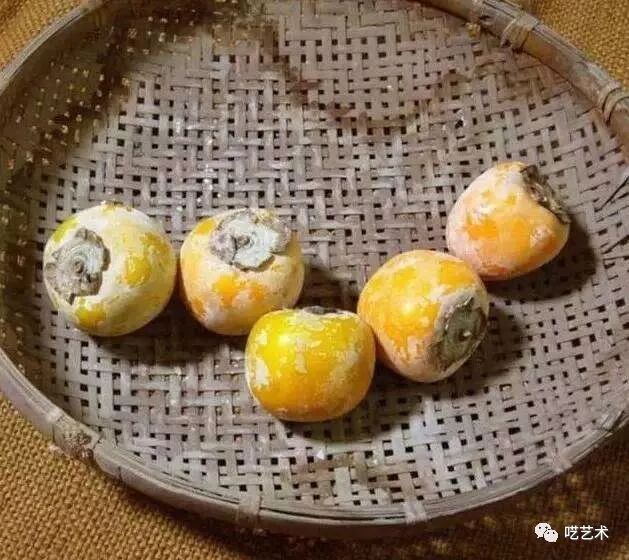
Chinese artists copy this super-realism, even this illusionism, taking it for art’s very body and making extreme realism their proudest accomplishment — which is really nothing but a gambler’s mentality. What is more, in Chinese contemporary art after the 1980s, every manner of style has flooded the scene, and small fiefdoms have drawn followers into their own cliques and factions in the jianghu of art. Within that jianghu, those who paint from photographs have the Soviet-school realist art of the decades on either side of the founding of the nation — textualised and centralised — as their foundation, and with audiences also the advantage of being simple and easy to grasp, hence easy to accept. Thus the jianghu of photorealism grows ever more frenzied. The market’s ardent enthusiasm for photorealist oil painting no longer pays for any contribution at the level of art’s essence or aesthetics.
We must therefore be vigilant about Chinese realist oil painting, into which capital has injected an anaesthetic. If it does nothing but paint photographs, art truly has no reason to exist at all; and capital’s injection, needless to say, will likewise end in a hollow celebration.
Finally, the sale of Leng Jun’s photo-paintings for more than sixty million is really no good thing: it brings a false hope to today’s academy education built upon realism, the belief that realism — or even super-realism — must surely have a way out. And so ever greater numbers of young people, carrying this mirage, enter the field of repetitive super-realist art. Before super-realist painting lies a spell: whatever is painted with super-realist technique can be endowed with meaning, and so long as it is lifelike, any object whatsoever can be tied to “contemporary” or to “concept.” This conveniently supplies the younger generation with a reason not to think about the essence of art or the system of their time.
The true artist is chosen by his time; he does not cling by good fortune to some opportunistic conclusion. An artist who enters art history needs a genuine, expansive contribution of his own at the aesthetic level of the work, and must also intervene in his time and society, raising his art to the level of culture, you have to think about the system of your time and the essence of art, to think about the meaning and condition of the human being in today’s fast-paced society, rather than simply coming to rest upon some bygone period-bound artistic language system of the West. Many of China’s official institutions, its artists’ associations and painting academies remain stuck either in ossified antiquarianism or in a commentarial system borrowed from Euro-American values. Under the stimulus of a photographic oil painting sold for seventy million, where should China’s younger generation of artists turn if they are truly to make a contribution that expands aesthetics and the essence of art?
I hope that true artists, along with art professionals and collectors, will keep their heads, and spend their money and energy on art that is worth what it costs!
订阅艺术评论
订阅即赠《2024中国当代艺术关键词》内部思考笔记 PDF
每周免费获取最新当代艺术批评与研究