I. A Line from Chan Master Farong
I came upon a line from Chan Master Farong: “Precisely when you use the mind, precisely you do not use it; not using the mind, precisely you use it; in constant use, precisely there is none.”
Joined with today’s art, it strikes me ever more as an incomplete saying — helpless, paradoxical, full of sorrow and resignation. Ten years ago, when I had just entered the art world, Arthur Danto died; I walked into an art world no longer linear, dazzling and bizarre, sustained by reverence for culture and a fresh, strange longing. Ten years on, Hans Belting has also died, as if drawing a ceremonial full stop to that longing of mine — especially in this solemn post-pandemic era, where “death” has become an event, so that the event-ised label and fragmented reading can essentially replace a person; however great his achievements, he is usually misunderstood by such “labels”. Yet I still think of the high-spirited self of ten years ago, and after these ten years I realise that only because predecessors like Belting existed can what I do still be called “art’ — and that is not an art of the end, for Belting himself did not think so in his lifetime.
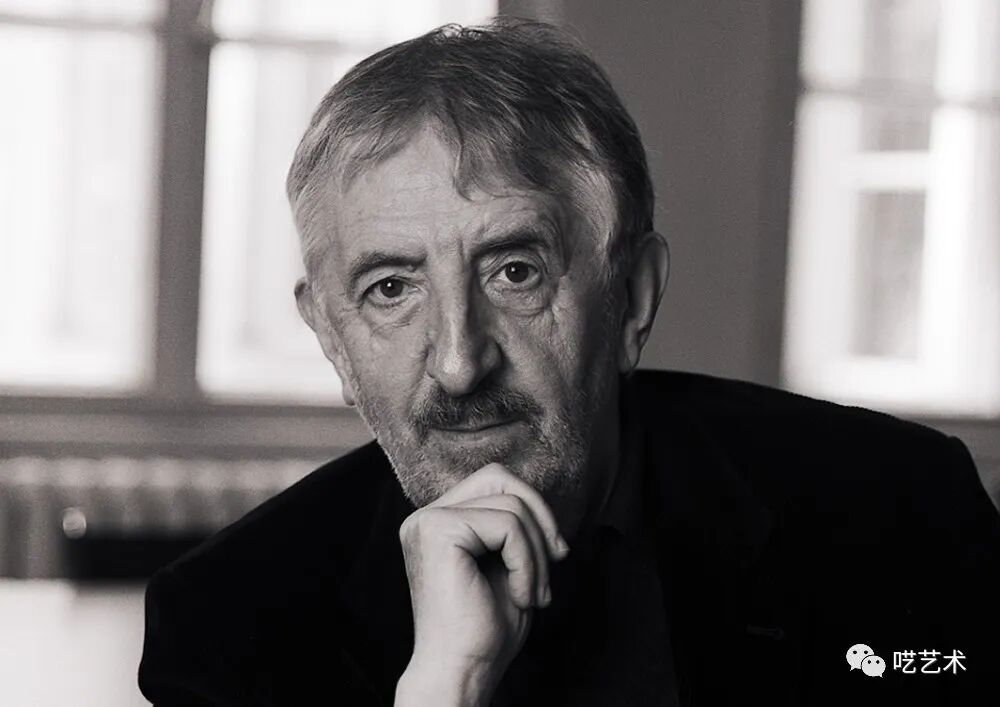
I am not greatly able to summarise his life, but I must write something in tribute. From last year to this, many art workers who contributed to art and contemporary cultural value have passed away; though the flood of internet information fragments catches one unawares, the history of art will remember them. Art is always a fiction, and thus the so-called art market is also a fiction, like the illusion of money — yet value is real. In art one can glimpse a clear society, and make the real society better, strengthening society as if with a vaccination; this is the value of art today, and the working principle I hold as my standard, and the origin of that principle lies with Hans Belting.
I never met him; studying his books at school was like an elegant old man sitting before me, leisurely telling me what I should do. “End” does not mean apocalypse; the older sense of “end” is to unveil or remove the veil, even to signal a transition. He clarified the turn of an artistic era, drawing a full stop to the old rule of “advancing through advancing” that kept the game going without interruption — as he said, the old script was interrupted, the new one long since staged, yet the audience still holds the old programme and misreads it. It is only that today we are willing to live inside that “misreading”: European art history once set down a standard, attempting to confine ideas and thought within a frame, as if bent on clothing this fictional culture in a kind of truth. Thus, when we blindly adopt this “truth” to judge art, we still fall into that linear, elitist thinking, compromising before the vast art history, as if that had become the art world’s quick and safe rule of survival.
It was with immense courage that Mr Belting broke this rule; he leapt out of the unified framework that Western art history had long maintained, shook off traditional, centralised thinking, and dared to negate that gigantic beast of art history. His courage came from new art and from this era; from “The End of Art History” to “global art”, he continually renewed his judgement of art’s value, constantly re-examining himself and confronting the various artistic practices of the present. He made clear that the age in which art was “framed” had ended, and an era characterised by openness and uncertainty had arrived — an era that does not submit to art history.
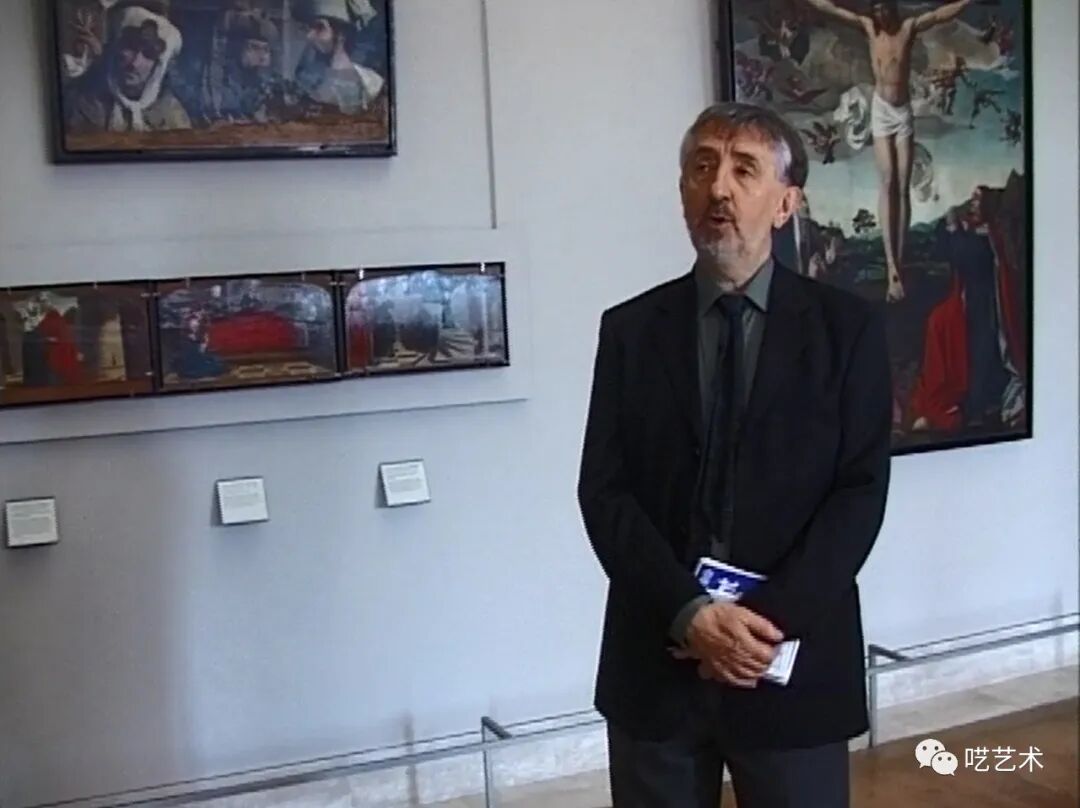
Inside the Louvre
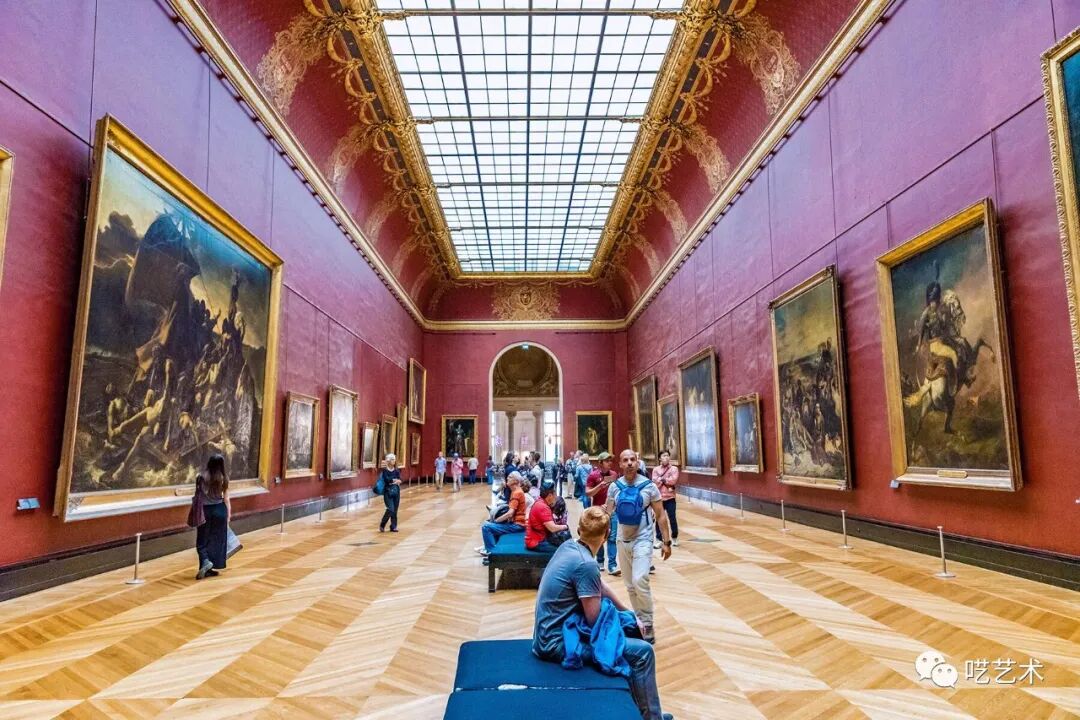
This is the “end” he spoke of — stepping out from the traditional veil: just what is our own? Multimedia art? Trend art? Or some other art? Behind it still lies the power of culture. For many years, “culture” has been what people revere, observe, and continually struggle against. Art bound to culture returns to the old Hegelian path of art history; art detached from culture, surviving independently, easily drifts into nihility. Nihility is the predicament of today’s art. On this Hans Belting said that artists and philosophers are the makers of culture, and the way they convey culture is to let seeing finally become a union of knowledge and understanding. Yet he also expressed his helplessness: today we produce our own culture less and less, and instead develop ever better technologies to reproduce the culture of others. At the same time, as cultivation is lost, people no longer have patience for the cultivation of cultural duty, but look to an entertainment culture. They seek surprise rather than instruction, hoping some marvel will be sparked so they can take part without having to understand anything. And so, under the slogan of “reinvention”, artists replay art history as entertainment and with no respect.
Mr Belting was born in 1935; setting aside the brilliance of his prose, his words always carried an elder’s gravity and seriousness, and he took a negative attitude towards “entertainment” — yet this is an indisputable fact. Culture seeks to occupy art; the contemporary art museum exists not to present art but to present an ever-expanding world — and is this still art? He spoke of past art as a privileged sub-concept beneath culture, exempt from social pressure and with no duty to bear other cultural responsibilities; yet today’s art, when ideologised or politicised, is sorely troubled, and as Belting said, “culture uses its last reserves to keep itself effective”, it can only rely on art to display this deformed “entertainment”-ification. But this is ultimately a good thing: art has acquired every possible function, with neither experts nor amateurs. Mr Belting erected a utopia of artistic democracy; others who uttered such startling pronouncements include Baudrillard, Boris Groys, and Francis Fukuyama.
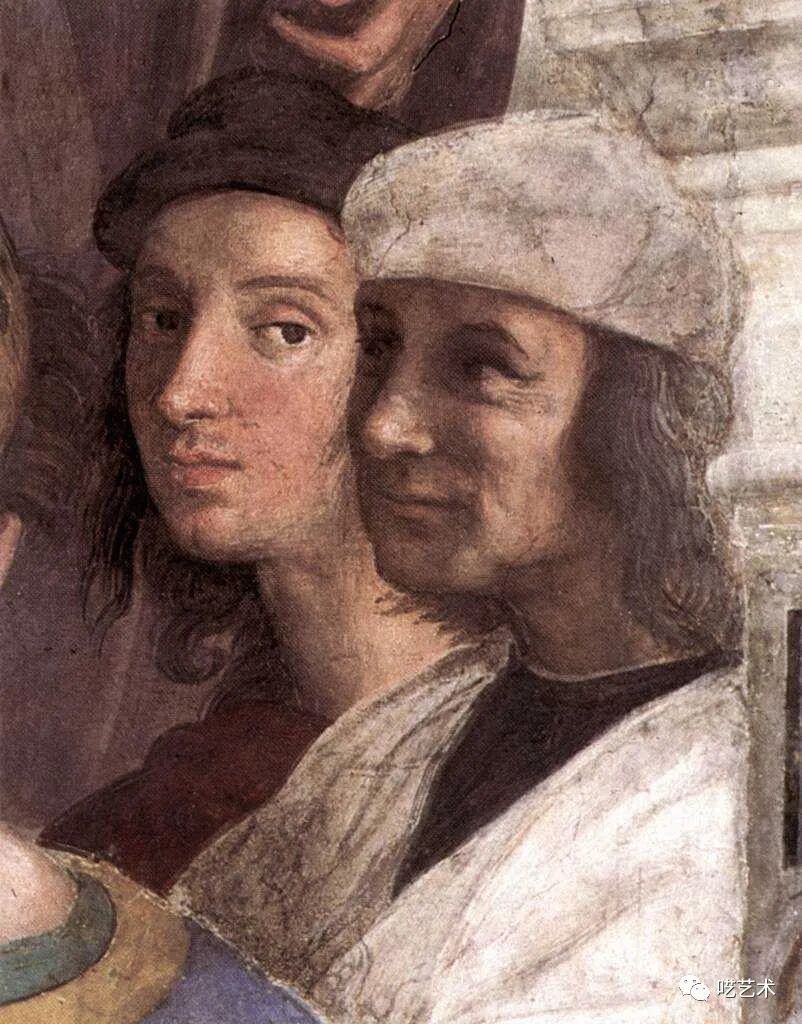
In the final analysis, the work of art theory today has become so vast as to defy any starting point. At an art symposium not long ago, a well-known domestic art critic still called a female artist who had painted for seven years “amateur”, which reminded me of something Belting said: the artist’s own theory has taken the place once held by art theory, general art theory is absent, and the artist has the right to construct a personal theory and give it expression in his work. Whether describing a phenomenon or advancing a view, Belting’s pronouncement is like telling you “you will die”, letting you accept death peacefully — he does not tell you how to live better. By contrast, domestic theorists or art critics still living inside this misunderstanding of the “frame” act as accomplices of the frame, murdering all innovation; they will not tell you “you will die”, still less how to live better, but instead use a past law of meaning to sentence the future of the living artist before their eyes, condemning the artist to spiritual death. From this angle, today’s concepts and forms can all too easily become complicit accomplices, making us ever more nostalgic for “autonomy”, for the time when we could be ourselves. Mr Belting did not say it outright, but perhaps the “end” contains a mourning for “autonomy”.
The end of art history is everywhere, unavoidable; that the theorist’s work can no longer proceed is already fact. The swollen, chaotic contemporary art history needs more Mr Beltings, for we need not only someone to tell us that life is finite but someone to tell us how to live better. And as a theorist myself, my own cognitive starting point of the past ten years was also based on Hans Belting; he inspired in me the openness of the artistic era, and only then did I spend great energy studying sociology, religion and political science. Though Preziosi says “all art history is the theory of history”, I too want to return to the contemporary — is not the end point of all the humanities “to see all beings”? In my own writing I often say “art is an embrace”, wishing to return it to the human itself, but this at best is only an ideal, not yet a way to resolve the problem of writing. The vast art history is written as a linear progression dominated by stylistic narrative, yet this mode cannot give idealised ancient art the most objective appraisal; with the avant-garde a second mode emerged, commenting on art-historical phenomena from the individual’s perspective, but this too has problems — from refusing to be accepted by art history to being co-opted by art-historical writing, the avant-garde is reduced to a position of either being ended or being possessed. Mr Belting proposed the concept of a “third art history”, hoping to gather ancient and modern art into a common narrative, complementing the artistic practices after modernism. But modern art has already become history, and the convenience of art-historical narrative breeds a cognitive laziness; Mr Belting warned us to shake off this laziness, but he did not say what to do after shaking it off — after all, human life is finite, and some things must inevitably be left for our generation to do.
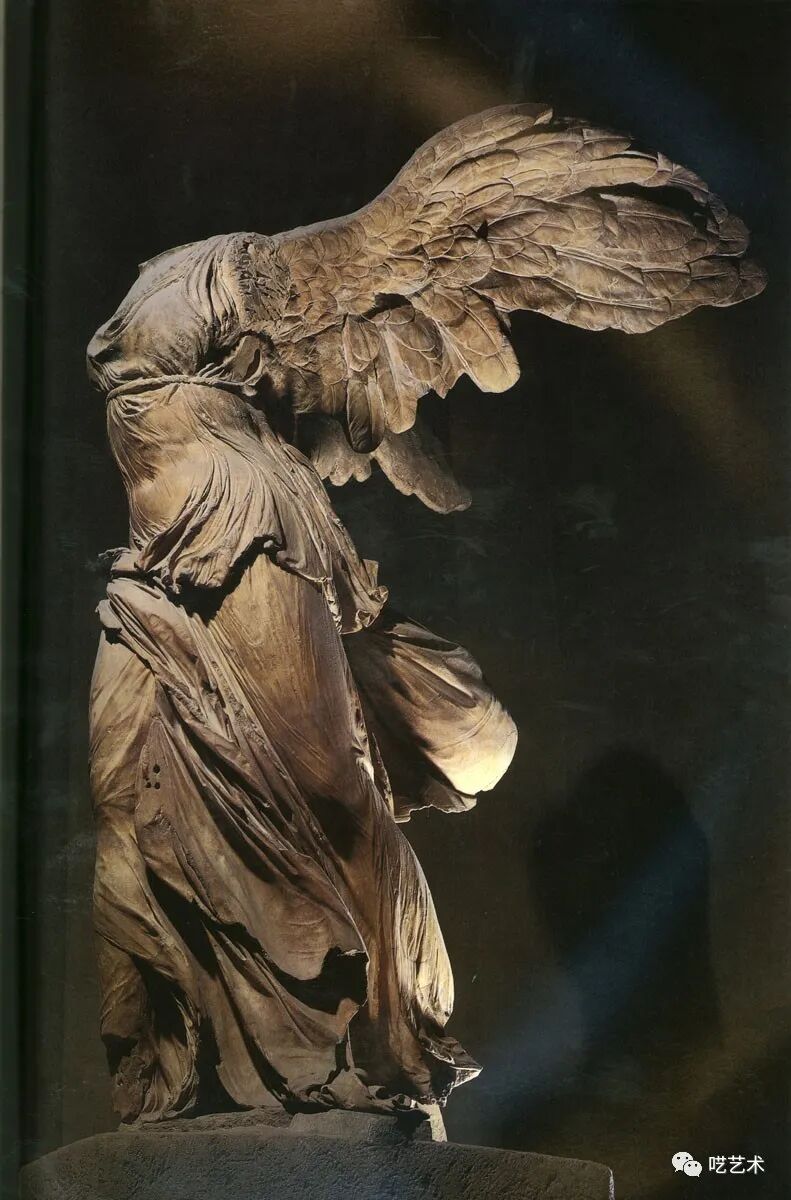
*Winged Victory of Samothrace*, ancient Greek sculpture, in the Louvre, Paris
II. Mr Belting Had Ideals
Mr Belting had ideals; he proposed the concept of “global art”. He understood today’s predicament: today’s artwork depends more on its collector than on the artist alone. Thus only works that enter art history can be certified as “art”, and whether they enter art history — and thence the public eye and the market — depends on the gallerist’s market strategy. The fictional concept of “art” is like a grand drama that begins only when gallerists, curators, art critics, collectors, media and all the other roles assemble. Therefore, behind this power lies more political and ideological intervention. When Western scholars discussed the end of art history, African scholars said their art history was only just beginning; the writing of art history and theory is a chaotic, ambiguous, even muddled undertaking — and in this one can also see Mr Belting’s ideal, though he did not solve every problem. Belting held that the primary feature of contemporary art is its “globality” — a good original intention, perhaps; whether or not it becomes a new discursive hegemony, one cannot ignore Mr Belting’s universalist heart. If art is a plant, Hans Belting was nothing less than a storm — not to destroy art but to let it be reborn; growing through rebirth inevitably adds weight to life.
In 1995 Hans Belting published *The End of Art History — A Ten-Year Revision*, confirming the accuracy of the prediction he had made twelve years earlier. In the intervening period, art’s bizarre profusion and rampant excess made it utterly break free of the frame, and mass culture and the consumer age have lent today’s art an even more crisis-laden, self-reflective quality. In the book he says that autonomous art seeks an autonomous art history, one unpolluted by other histories and bearing its own meaning. But these no longer exist today; the age of art history and the age of the museum ended together. From his writing one sees that he once tentatively sought an escape for art, yet the task was as arduous as the scripture pilgrimage to the West, requiring utter, absolute devotion and a breadth of thought.
Thus, more than his achievements, I admire Mr Belting’s perseverance and courage; he enacted the demeanour a modern scholar should have — broadening his vision and ceaselessly reflecting. Much of his work is admirable: he devoted himself to the study of the function of images in European society and the relation between image and the development of painting, building connections between medieval studies and modernity, between the Byzantine world and Western art, including between visual theory in the Arab world and the birth of perspectival image in the Renaissance, doing much work in the field of figural culture. His vision was vast — from Byzantine icons to the triumph of “art-cult” as a feature of Western modernity, to a critique of art history’s macro-narrative mode; in his writing one sees the outstanding wisdom behind such broad erudition. At the same time he constantly reflected, revised, and raised profoundly insightful questions. Mr Belting was not perfect, yet he was worthy of the name “art historian”; though he was the first to propose the “end of art history”, this inevitably influenced a whole generation. Today’s society cannot produce art historians, yet the vanity fair can; theorists’ transmission and construction of art have lost their standard today, and everything is merely “relative”. By this standard, Hans Belting deserves respect and remembrance, precisely because he understood art’s open character rather than an absolute “relative”. After all, in today’s art no single principle can become a universal law, yet this will not ultimately hinder art’s transmission — from one artist to another, from one group to another, from one era to another, a standard of value is transmitted and must inevitably be re-evaluated and re-judged. Thus, once art is defined by any closed concept, it causes the new standard of artistic value to become the reason for the old standard’s end. This is why, in the early 1990s, startling pronouncements such as “Chinese painting has reached a dead end” appeared out of nowhere; people had no time to ponder their right or wrong before cheering them, because at last the closed frame of the past had been broken, and once “end” was proposed by Belting in the West it too became a fashion.
For Chinese society, “art” has always been a special period; “art’s abnormality” is the normal state of Chinese contemporary art history, bound up with its peculiar social form and historical environment. Therefore this self-reflective, autonomous spirit never truly existed; a managed art history bred a standard of back-room manipulation. If an artist wants to survive easily, he can only instrumentalise himself and then embrace that standard. For instance, the overlap of critic and curator roles has reduced Chinese contemporary art criticism to blatant marketing copy; the silence or absence of theorists only lets “entertainment” slip in through the gap. Chinese contemporary art is a state of mass production accompanied by mass consumption, yet this so-called “mass consumption” accounts for less than 5 per cent of the entire art market share. Artworks can be bought with money, but as Mr Belting said, art’s true cultural value still lies within the work. At this point, freeing art production from the grip of art consumption so it may realise its own cultural claims naturally becomes the responsibility of us theorists. In this sense, the passing of Hans Belting is undoubtedly a loss. Perhaps what we mourn in Mr Belting is above all that era of autonomous art history, that rational spirit of constant self-reflection.
Eliot wrote that to declare an end is also to begin, and the end is where we started. Today’s art does not substitute criticism for cognition. Moreover, in the postmodern context even the meaning of language has been deconstructed, and the subversion and critique one commonly sees today are often reduced to a posture. For the departed Mr Belting, all we can ultimately have is memory. When we try to describe it, only smoothed-out sentences remain, and a little dregs sifted out by the structure of language. Even so, setting aside the fleeting fame before and after death, I would rather carry forward those pure parts, and let the changes of a departed life become the breath of future work and artistic life.
This essay is dedicated to the memory of the eminent German art historian Mr Hans Belting!
Written by Daxiong on 13 January 2023
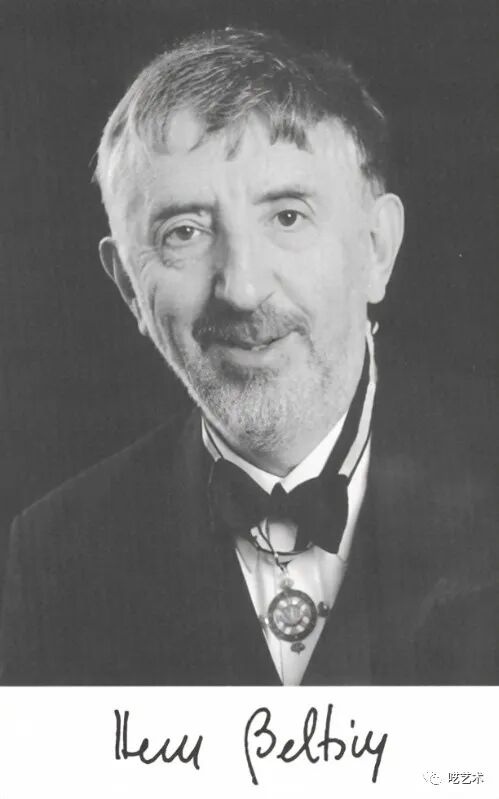
Hans Belting: German art historian.
Born in 1935 in Andernach, Germany; he studied art history, archaeology and history at Mainz and the University of Rome. He received his doctorate in art history in 1959. Additionally, as a visiting scholar at Harvard he studied at the Dumbarton Oaks Research Library and Collection in Washington, D.C., alongside Ernst Gütschig. He became associate professor of art history at the University of Hamburg in 1996, professor of art history at Heidelberg University from 1970 to 1980, professor of art history at the Ludwig Maximilian University of Munich in 1980, visiting professor at Harvard in 1984, and Meyer Schapiro Visiting Professor at Columbia University in New York from 1989 to 1990. Since 1992 he was professor of art history and media theory at the Karlsruhe University of Arts and Design in Germany. In 2000, together with twenty-four doctoral colleagues from art history, literary criticism, philosophy, neurology and psychology, he founded the interdisciplinary anthropology and image-studies project: the Image Media Institute.
He was a member of the Medieval Academy of America, the American Academy of Arts and Sciences, the Berlin Institute for Advanced Study, and the Orden Pour le Mérite für Wissenschaften und Künste. In 2002–03 he was appointed European Chair at the Collège de France in Paris; in August 2002 he was Getty Visiting Professor in Buenos Aires; from 2000 to 2002 he was honorary chair of Heidelberg University in Germany and chair of the Karlsruhe anthropology project. He died in Berlin on 10 January 2023.
订阅艺术评论
订阅即赠《2024中国当代艺术关键词》内部思考笔记 PDF
每周免费获取最新当代艺术批评与研究