Preface
I. Once the Body Has Left, What Does the Garment Say?
In the long river of human civilisation, the two functions of “covering the body” and “warding off the cold” have always been regarded as the most original and self-evident ontological starting points of clothing. This assumption is almost a commonsensical consensus: does not the very existence of clothing serve to wrap the flesh and keep out the wind and chill?
Things are by no means so simple.
Since modernity, this “second skin” that wraps the body has embarked upon a long and complex metamorphosis of meaning. The French thinker Roland Barthes, in his work The Fashion System, brought “dress” within the analytical framework of structuralist linguistics, revealing how it is constructed, within the modern media context, as a chain serving the myth of consumption. In Barthes’s view, clothing had long ceased to be a mere “thing” and had become instead a “sign” bearing meaning; its value no longer derives from the material itself but from the imagination, identity and desire it can signify. It is precisely thus that the gaze directed at clothing shifted from the fashion runway to the white-cube space of the museum, where a more radical ontological rupture quietly took place.
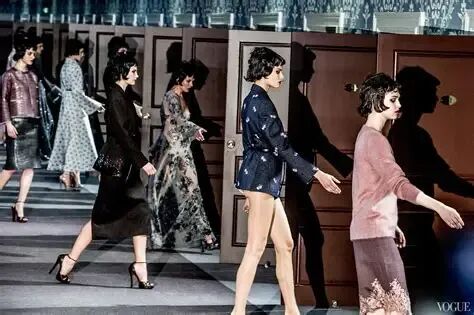
From the second half of the twentieth century onward, a particular creative tendency emerged among contemporary artists: they became fascinated by a singular form of expression—the “empty garments” from which the human body has been withdrawn. Hung high in the exhibition hall, piled in a corner of the floor, or cast in hardened sculptural form, these works occupy the viewer’s visual field in a nearly uncanny way. These woven things, robbed of body heat and kinetic support, are no longer merely the fashion signs of Barthes’s account. Shedding their practical attributes as “tools,” they become independent, tension-laden “presences.”
This presence is accomplished precisely through the most extreme “absence”: once the body—that self-evident “signified”—is emptied out, the garment as “signifier” no longer stably points to a determinate social identity. It begins to breed infinite ambiguity, becoming a phenomenological container bearing memory, trauma, power and being. The logical starting point of this essay rests precisely on this.
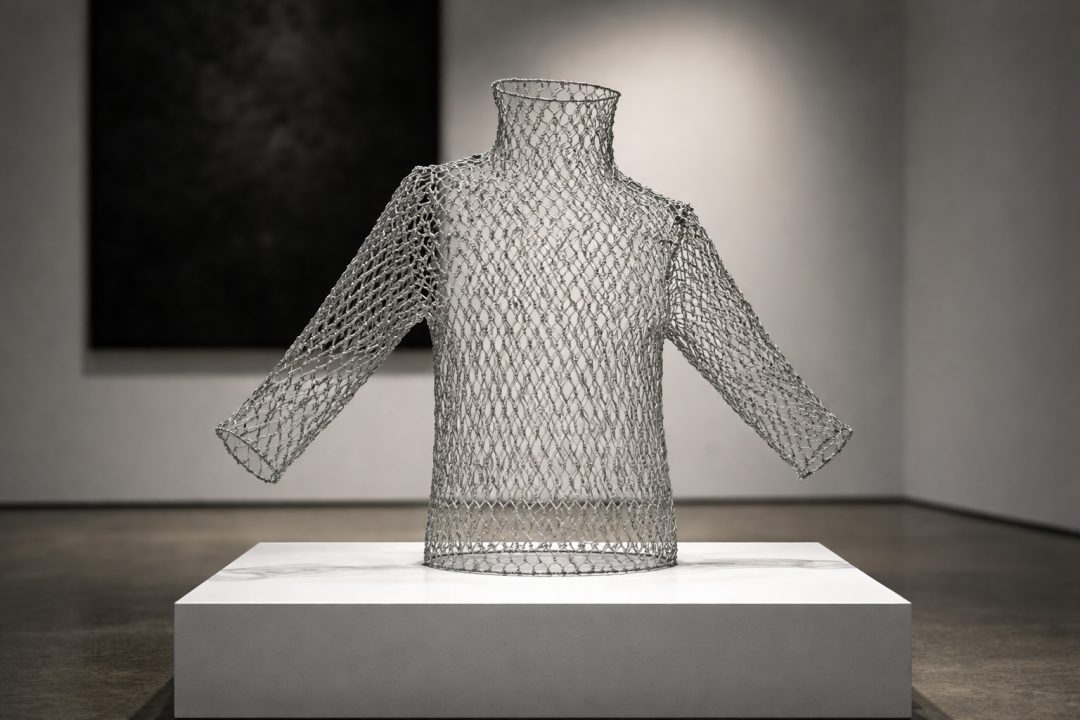
Bai Jing, Knitting Sweaters, one from the series | object installation primarily in aluminium wire
| 71 × 85 × 25 cm (height × width × depth) | created in 2026
The “empty garment” artwork constitutes a distinct visual and conceptual lineage. No longer a representational image “of the person,” it is the material relic of “a person once present”—indeed an indexical sign. Like a cicada’s cast shell, it preserves with precision the traces of the human being’s original living form, while its hollowness announces the departure, absence, or deliberate withdrawal of the “life” that was “human.”
The “hauntology” (hantologie) proposed by the French philosopher Jacques Derrida (雅克·德里达) offers a highly suggestive theoretical entry point for understanding this phenomenon. Borrowing the image of the father’s ghost appearing at the opening of Shakespeare’s Hamlet, Derrida explains the “ghost”: what has been declared dead does not truly vanish, but is transformed into a “ghost” (Spectre, also rendered as “the returned soul”), which lingers in the present, speaks, and demands justice. What the ghost points to is neither a real flesh nor a pure nothingness; neither living nor dead, neither present nor absent, neither visible nor invisible, it is the “phenomenal body of spirit”—a being without substance yet with effect, departed yet still at work. Derrida argues that contemporary culture is haunted by things that “were once present”: the dead, the repressed, return ceaselessly in ghostly form, disturbing our linear perception of time. An old overcoat suspended in a museum summons not merely the body that once wore it, but the specific era, the specific history, the specific temperature that body inhabited. This empty garment is a ghost—it blurs the boundary between past and present, between presence and absence.
The rise of “empty garment” art marks a major shift in the ontology of clothing: from a body-covering thing subordinate to the body, to a subject-ghost capable of speaking independently. No longer in the service of the body, it begins to scrutinise and interrogate that once-existent body, and the entire socio-cultural system that shaped it.
The core allure of “empty garment” art springs from its inner paradox: it is a “presence” premised on “absence.” Confronted with an empty piece of clothing, our perception is not directed at the garment’s material or cut, but is irresistibly drawn to that vast “void.” The imagination cannot help but fill the vacancy, reconstructing the body once lodged within. This withdrawn “body,” precisely by virtue of its physical non-presence, acquires a more powerful, more pure spiritual existence.
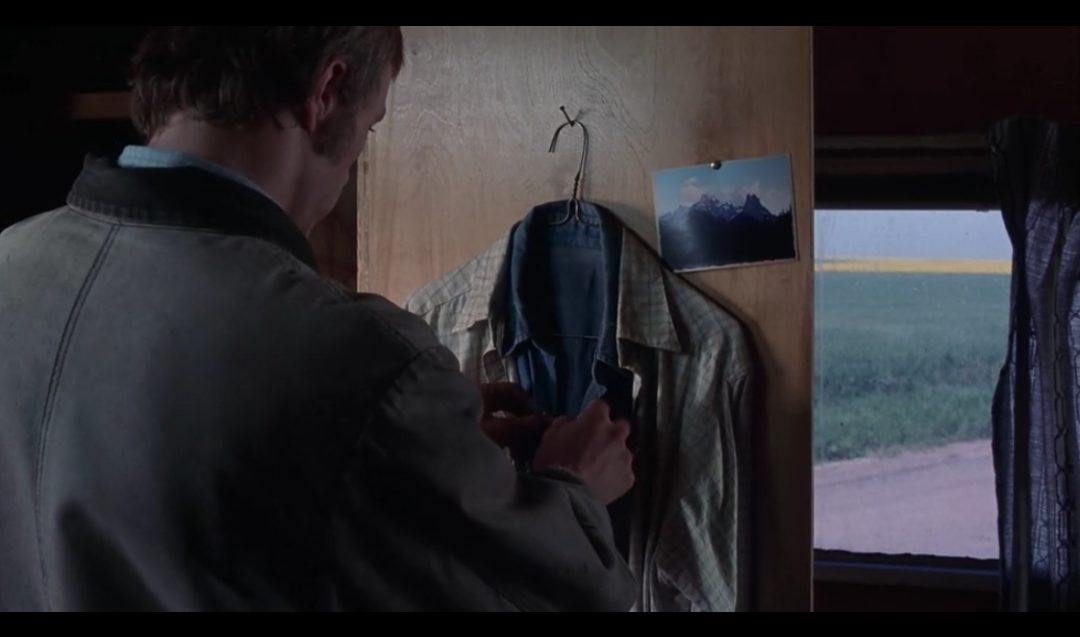
Final scene of the film Brokeback Mountain: Jack wraps Ennis’s jacket around his own, as if holding twenty years of longing for Ennis.
This process resonates intriguingly with phenomenology’s account of human perception. The philosopher Husserl stressed that our consciousness is always “consciousness of something,” and that this has “intentionality.” Merleau-Ponty advanced further the theory of the “body schema,” arguing that the body is not an object but the very manner in which I perceive the world. When we look at an empty garment, our intentional consciousness penetrates it, pointing toward the “intended” absent body. The garment becomes a phenomenological “bracket”: it suspends the body’s substantial existence, yet allows the body’s “essence” or “idea” to appear more clearly.
The pure spiritual form presented by the “empty garment” also manifests in its critical dimension toward body politics. When a uniform is stripped of the human body and displayed on its own, it is transformed from a functional article of clothing into a pure sign of power. The absence of the body makes the structure of power itself unprecedentedly visible.
II. Defining the Concept
It should be noted that in this essay “empty garment” specifically denotes a particular artistic form satisfying the following three core elements:
First, the absence of and the summoning by the body. The core representational object of the work is the garment itself, deprived of bodily support, its inner space hollow. Yet this physical “emptiness” does not point to a nihilistic end, but to a positive, productive “void.” This void becomes a powerful magnetic field, drawing the viewer’s imagination to fill it. The completion of an “empty garment” artwork depends on the dynamic tension between “the garment” (physical presence) and “the imagined body” (psychological presence).
Second, the self-awareness of materiality. “Empty garment” art emphasises the independent existence of clothing as “thing”; its material attributes—texture, weight, form—become essential components of conceptual expression. Artists often break our everyday perception of clothing through the unconventional use or translation of materials.
Third, the occupation of three-dimensional space and sculptural presence. “Empty garment” art is essentially spatial and sculptural. It is not a two-dimensional image on a plane, but a three-dimensional entity occupying real physical space. Whether a shirt hung in the air or piles of clothing heaped on the floor, all enter into a direct physical relation with the exhibition space, the light, and the viewer’s body.
This essay situates the practice of “empty garment” art within the macro-narrative of contemporary art history since the twentieth century, tracing its evolution from the readymade, Pop art and Arte Povera to conceptual art, identity politics and feminist art, and attempts a micro-history of the “empty garment” motif—seeking to secure a foothold of “legitimacy” for this matrix symbol within the discipline of contemporary art, and to offer fellow artists drawn to the theme some guidance in theory, method and strategy. I welcome corrections on the essay’s shortcomings.
This chapter enters from the phenomenological perspective, exploring how the “empty garment” becomes a material container for individual memory, perception and trauma. With Merleau-Ponty’s bodily phenomenology, we can analyse how clothing materialises the body’s “having-been-present.” Further, we examine how the “empty garment,” in the context of collective trauma, is transformed into a silent archive, bearing witness to a “traumatic Real” that cannot be put into words.
Section One: Odour, Temperature and Movement—the Materialisation of Merleau-Ponty’s “Body Schema”
The French phenomenologist Merleau-Ponty, in his Phenomenology of Perception, overturned the Cartesian tradition of subject–object dualism and proposed the revolutionary notion of the “body-subject.” In his view, the body is not an objective “object” manipulated by consciousness; the body is “I” itself, the manner and medium through which “I” perceive the world and exist within it. Merleau-Ponty uses the concept of “body schema” to describe this reflective, dynamic unity between body and world. The “body schema” is not our objective knowledge of our own body, but a latent, acquired coordination between the body’s parts and between the body and external space.
Applying this insight to the “empty garment,” clothing—especially intimate old garments—is no longer a passive swatch of cloth, but the most direct and faithful material imprint of the “body schema.” It does not merely wrap the body; in day-to-day wear it is “tamed” and “shaped” by the body, becoming an extension of the body itself. A jacket worn for years records, in the creases at its elbows, the habitual angle of the arm’s bending; the collar of an old sweater still faintly retains the wearer’s bodily odour and the warmth of the neck. These traces are not conscious records, but the unintended inscription of the body’s “living” in the world upon matter.
An “empty garment” is a miniature archive bearing a specific “body schema.” It materialises the subject’s movement, body heat, odour and even the history of the body’s interaction with its environment. Once the original body departs, the garment becomes a veritable “relic of the body.” Through its creases, stains, odour and deformation, it tells of the mode of existence of a singular body. The viewer’s perception is roused: through these material traces we seem able to “feel” the weight, temperature and movement of the absent body.
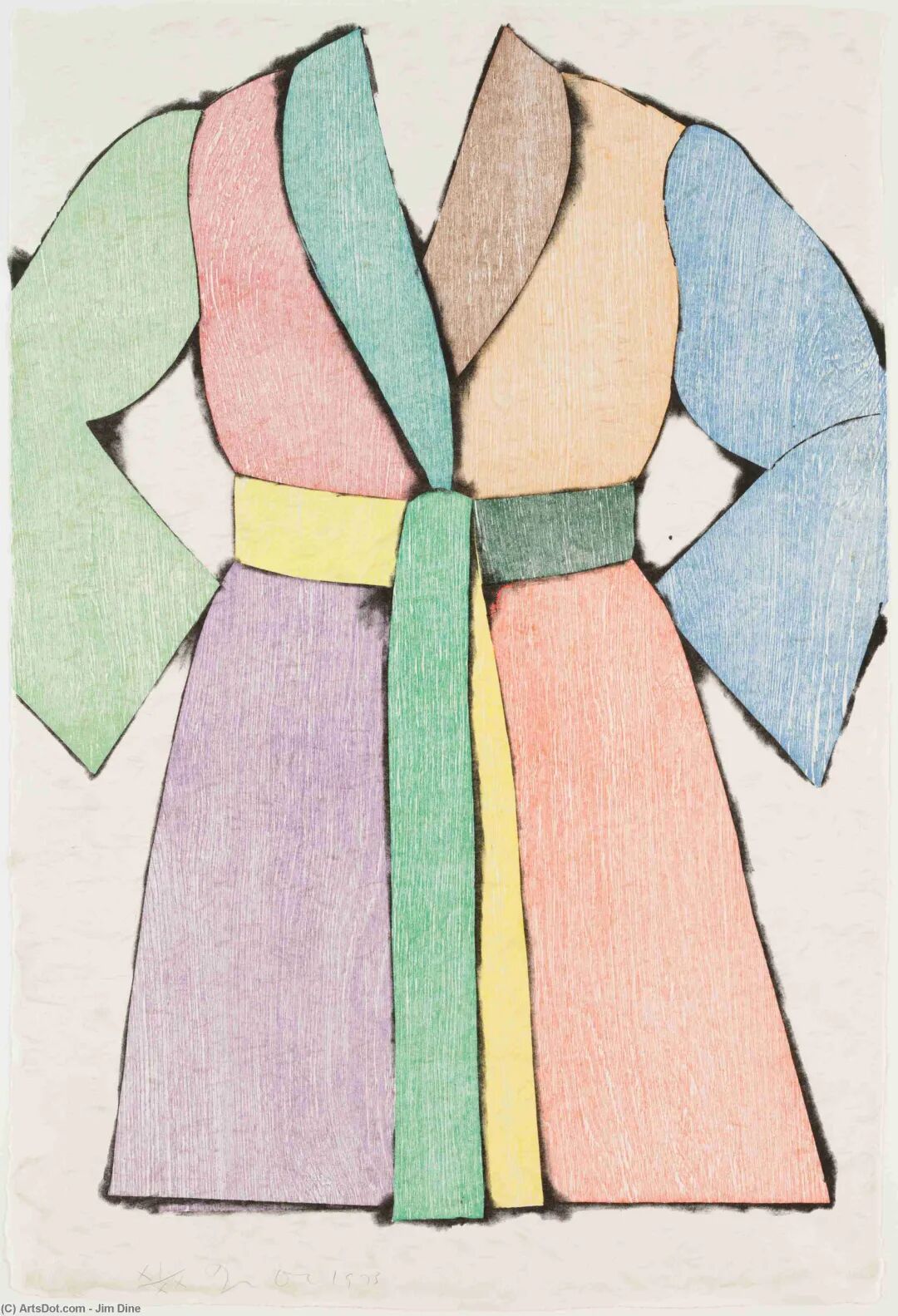
American artist Jim Dine (吉姆·戴恩), Woodcut Bathrobe | created 1975 | woodcut and lithograph | excerpted from Harper Montgomery in Deborah Wye, Artists and Prints: Masterworks from The Museum of Modern Art, New York: The Museum of Modern Art, 2004, p. 160
Since the 1960s, the American artist Jim Dine has created a great many works on the theme of the “bathrobe.” Invariably “empty,” these robes are depicted frontally, laid flat or hung, like a shell awaiting being worn or just discarded. Dine’s bathrobes are not a simple replication of mass consumer culture, but a phenomenological exploration of self-identity.
As an extremely private item of clothing, the bathrobe is worn only at home, in solitude. It wraps the naked body closely, a transitional state between full nakedness and social dress. That Dine chose the bathrobe as the “signature” motif of his art already points to a reference to the artist’s own existence. He has said plainly that these bathrobes are his “self-portraits.” They are absent self-portraits: on the canvas or in the gallery there is only the robe, while the artist himself—the body that should be within—is forever absent.
From Merleau-Ponty’s phenomenological standpoint, Dine’s bathrobes also materialise his “body schema.” In painting, he often uses coarse, heavy brushwork, with paint piled layer upon layer, as if simulating the rough cotton texture of the robe and the creases and body heat left by the body moving within it. These robes are not smooth, perfect commodity images, but organic forms full of “human warmth.” They seem just taken off, still bearing the artist’s residual body heat. This intense materiality continually summons the absent body. Viewing these works, one can almost “feel” the bodily sensation of putting on the robe. Dine’s bathrobe series, precisely by depicting an empty shell, opens—alongside Pop art’s consumer imagery—a phenomenological path toward the subject’s inner perception and identity anxiety.
If Jim Dine’s bathrobes point to an inward, ongoing inquiry into individual identity, then the work of the Cuban-American artist Felix Gonzalez-Torres (菲利克斯·冈萨雷斯-托雷斯) extends the phenomenological dimension of the “empty garment” to the most intimate relation between people—love, desire and death. In his 1991 billboard Untitled, the artist shows a photograph of an empty bed. The bed has clearly just been slept in; the sheets and pillows are tangled together, and both pillows bear the clear indentations of bodies that have lain there.
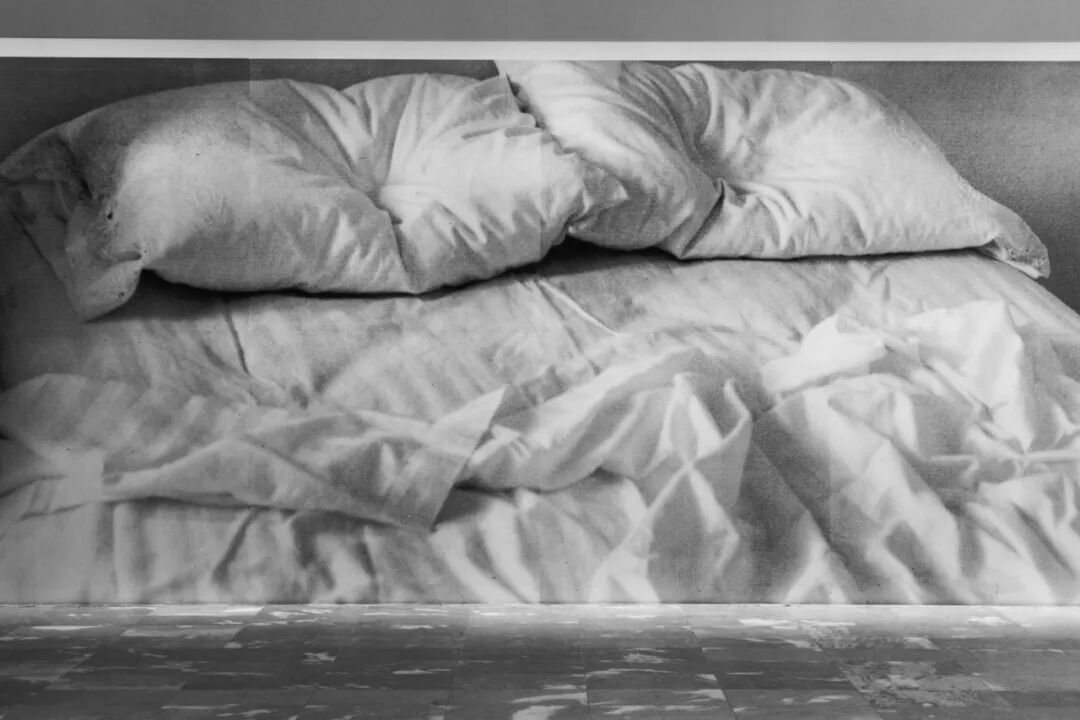
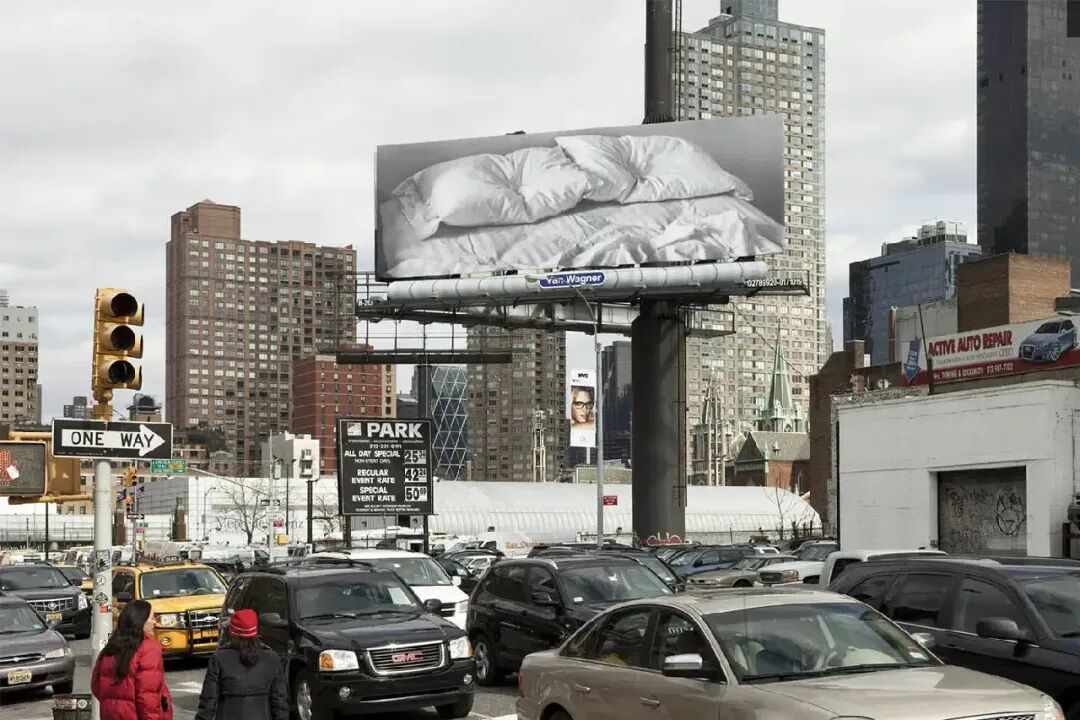
The power of this image comes entirely from the residue of the “body schema” in Merleau-Ponty’s sense. What we see is not a bed, but “the trace of a body sleeping in the bed.” The dimples on the two pillows are negative moulds of two heads—direct records of weight, pressure and temperature. The crumpled sheets are the movement-imprint of two bodies turning and embracing in sleep. The whole image is full of “the lingering warmth of the bed”—the breath of an intimacy just enacted; the absence of the body casts a heavy sense of loss over this tenderness. This empty bed is at once a memorial to erotic love and a premonition of death. Gonzalez-Torres’s partner Ross Laycock (罗斯·雷考克) died of AIDS-related complications in 1991, and this empty bed became the artist’s eternal elegy for him.
This work pushes the phenomenological potential of the “empty garment”—or “garment-like” emptiness—to its limit, appealing to the viewer’s most instinctive bodily experience. Gonzalez-Torres exploits this shared bodily perception to convey an emotion at once utterly personal and universally legible: the entanglement of desire and the agony of loss. Here matter (the sheets) is no longer a cold object, but a faithful bearer of love and memory. When the lover’s body finally dissipates, the creases and depressions of this matter become the sole, and most agonising, proof of his “having-been-present.”
Section Two: The Real of Trauma—the Holocaust, Collective Death and the Archive of the Nameless
Having explored how the “empty garment” bears individualised, phenomenological bodily memory, we must turn our gaze to collective trauma. Confronted with extreme violence engendered by modernity—the Holocaust, genocide—art’s capacity to represent suffers an unprecedented crisis. Adorno’s famous dictum “to write poetry after Auschwitz is barbaric” sharply points to the failure of traditional aesthetic forms before the unspeakable horror.
Within this impasse, the critic Hal Foster (哈尔·福斯特), drawing on Lacan’s psychoanalytic theory, proposed the key concept of the “traumatic Real.” Foster holds that trauma is a violent intrusion of the “Real” that pierces the subject’s (individual or collective) structuring, leaving a void that cannot be symbolised. Art about trauma should not aim to “represent” the traumatic event itself, but to “index” that traumatic void, to “present” the rupture and absence produced by trauma.
It is precisely in this sense that “empty garment” art becomes one of the most effective and ethically self-aware media for handling the “traumatic Real.” A garment stripped from a concentration-camp victim does not “depict” any scene of the Holocaust, yet with an irrefutable materiality it points directly to that vast “Real” void, saturated with death and violence. This garment is a pure indexical sign—its very existence is iron proof of trauma. Compared with paintings or photographs that depict violence directly, the “empty garment,” by presenting “the victim’s absence,” transmutes the cruelty of violence into a suffocating void.
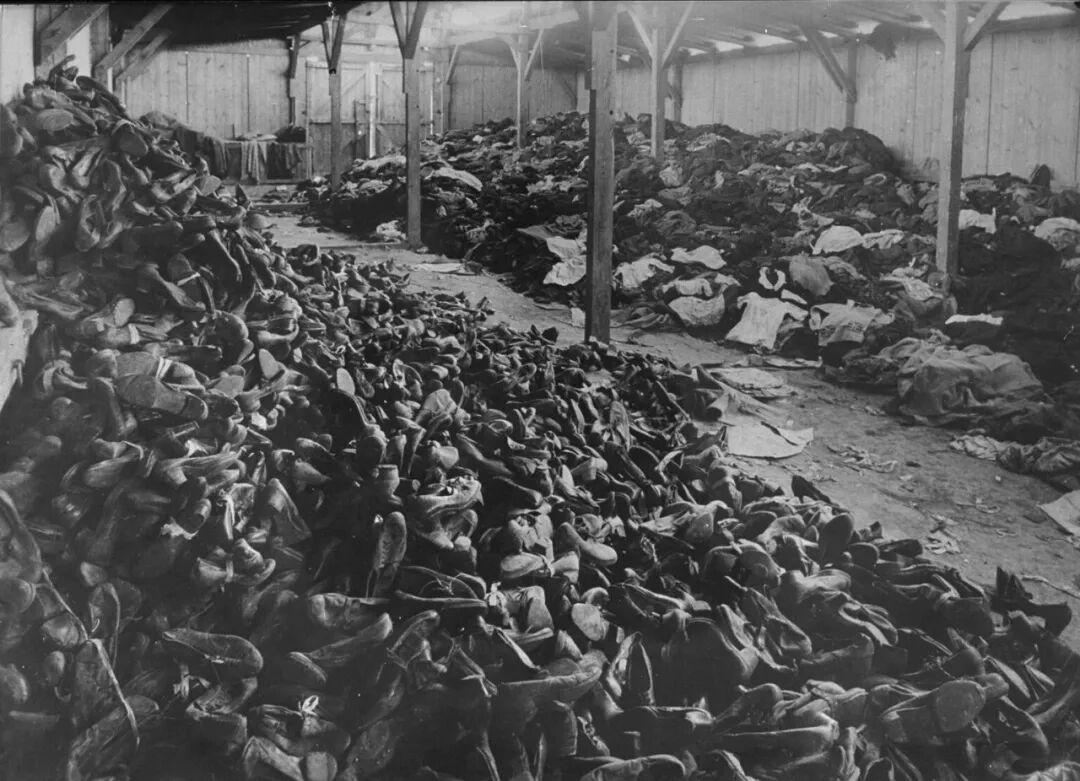
Shoes and clothing seized from prisoners and deportees gassed on arrival, at an Auschwitz warehouse, still photograph, from the Soviet film Auschwitz Liberated, First Front Line, shot after January 1945 (film copy held by the Paris Comité d’histoire de la guerre mondiale; reproduction, United States Holocaust Memorial Museum, Washington)
The French artist Christian Boltanski (克里斯蒂安·波尔坦斯基) is the foremost master of using the “empty garment” to address collective trauma. Born in Paris in 1944 to a Jewish father, he spent his childhood under the shadow of the Second World War and the Holocaust. In his monumental 2010 installation Personnes (No One), tens of thousands of second-hand garments are laid flat across a vast, cold space like a factory floor or a railway platform. At the centre, a huge grab crane ceaselessly scoops up random handfuls of clothing, lifts them into the air, then mercilessly releases them to scatter. The process repeats without end, accompanied by enormous mechanical noise.
Boltanski’s pile of clothing first provokes a “mathematical sublime.” Before the unimaginable mass of garments, our imagination is defeated in its attempt to grasp the whole. This sublimity born of “quantity” rapidly turns into a spiritual suffocation, for we know clearly that each garment corresponds to a once-living life. Yet here all individuality is erased. Mingled together, they become an anonymous, cold mass. This transformation from “one” to “countless” is precisely the defining character of industrialised, systemic extermination such as the Holocaust: the reduction of living human beings to “things” that can be counted, processed and destroyed.
Boltanski’s installation is a terrifying allegory of “anonymisation.” It forces us to confront the dehumanising coldness of modern bureaucratic systems in the execution of collective violence. Walking through it, one feels placed in a vast graveyard, treading not on cloth but on countless vanished lives. These garments are at once the sole proof of each individual’s “having-been-present” and the tragic witness to their final stripping of identity, their reduction to the nameless.
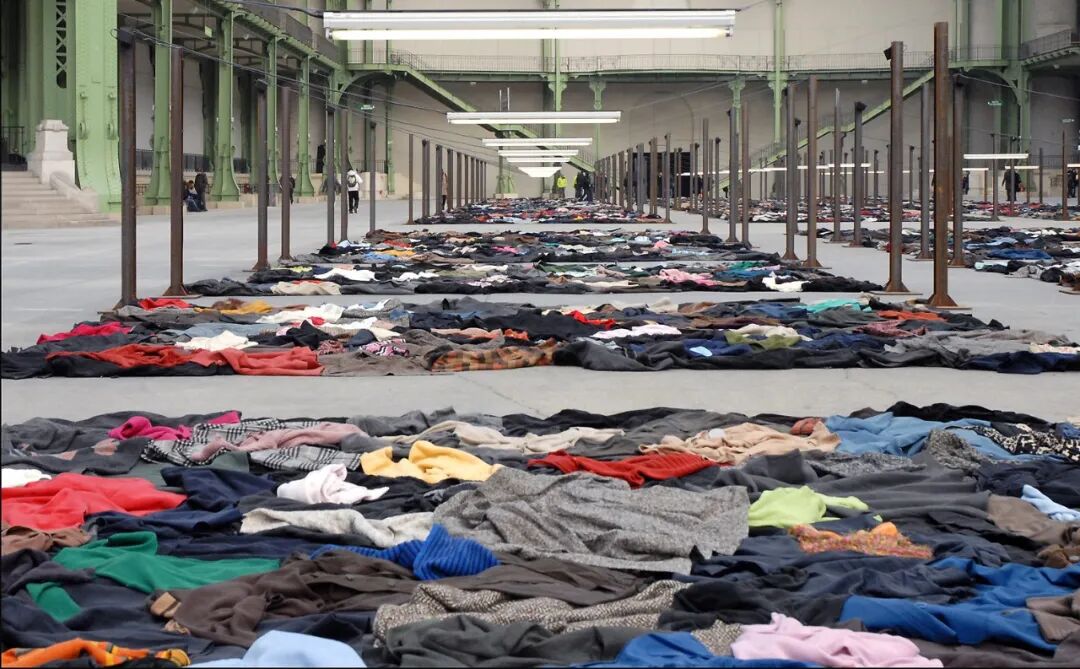
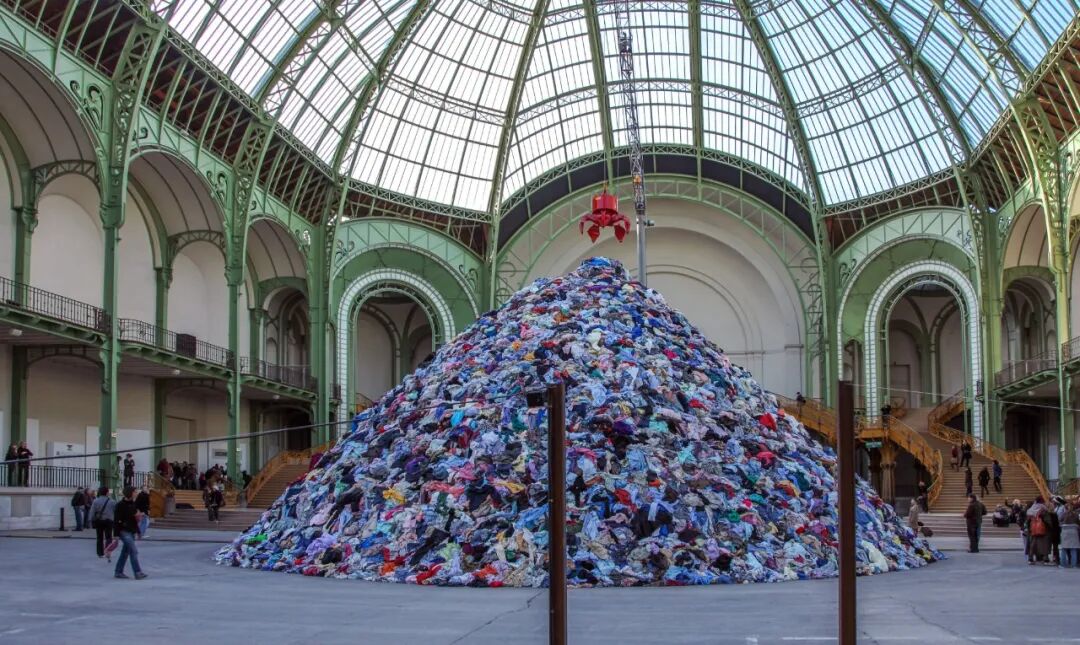
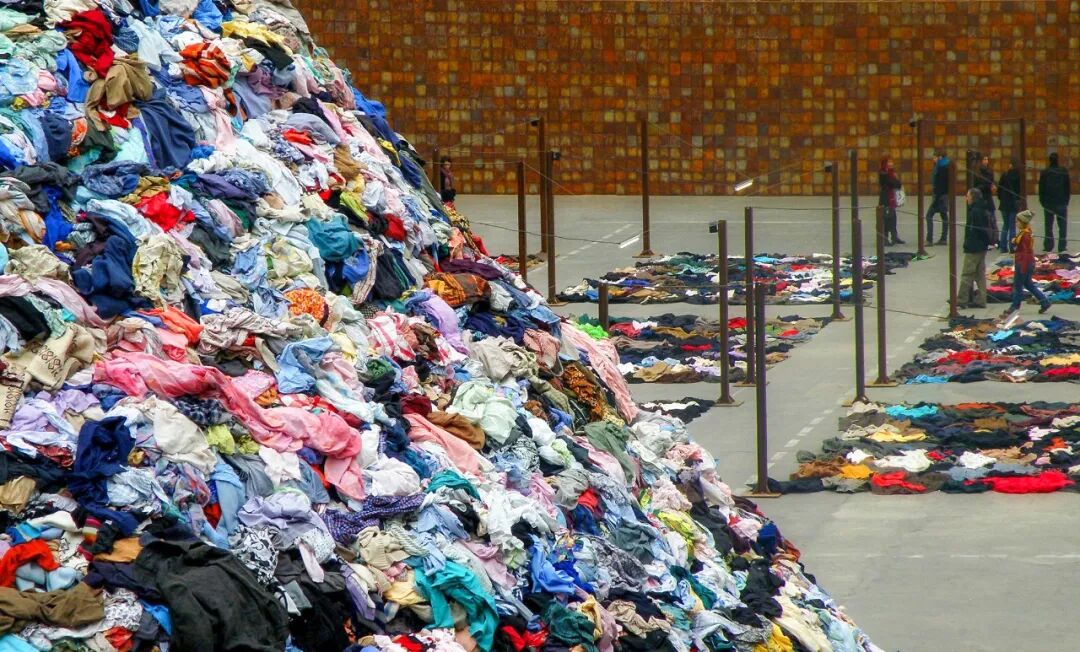
Christian Boltanski, Personnes, 2010, Grand Palais, Paris, Monumenta 3 (photo: tangi bertin, CC BY-SA 2.0)
If Boltanski’s work points to a trauma with clear historical coordinates (the Holocaust), then the Colombian artist Doris Salcedo (多里斯·萨尔塞多) addresses a more sustained, more everyday political violence: in her homeland Colombia, decades of civil war have produced vast numbers of “the disappeared.” These disappeared are often kidnapped, killed and secretly buried by the military or paramilitary groups, without formal charges or trial.
In her series titled Untitled (1989–1990), Salcedo takes white cotton shirts, carefully laundered, ironed and folded, then stacks them in layers and pours cement through and into them. The final form is a pile of pristine white shirts pierced and imprisoned by grey, hard concrete blocks, some with a jarring reinforcing bar protruding.
The force of this work comes from the extreme, violent opposition between materials. The shirt is soft, organic, close to the skin; it symbolises the individual, the everyday, the fragility of life. Concrete and rebar are hard, inorganic, cold; they represent the state machine and irresistible violence. When concrete brutally invades, seeps into and solidifies among the shirt’s fibres, we witness a silent murder. State violence, in its most material form, crushes, devours and ultimately “buries alive” the individual’s existence. Those solitary garments embedded in concrete are the disappeared’s bodily substitutes. Imprisoned by violence, unable to move or breathe, their soft living texture forms a heartbreaking contrast with the hard oppressing force.
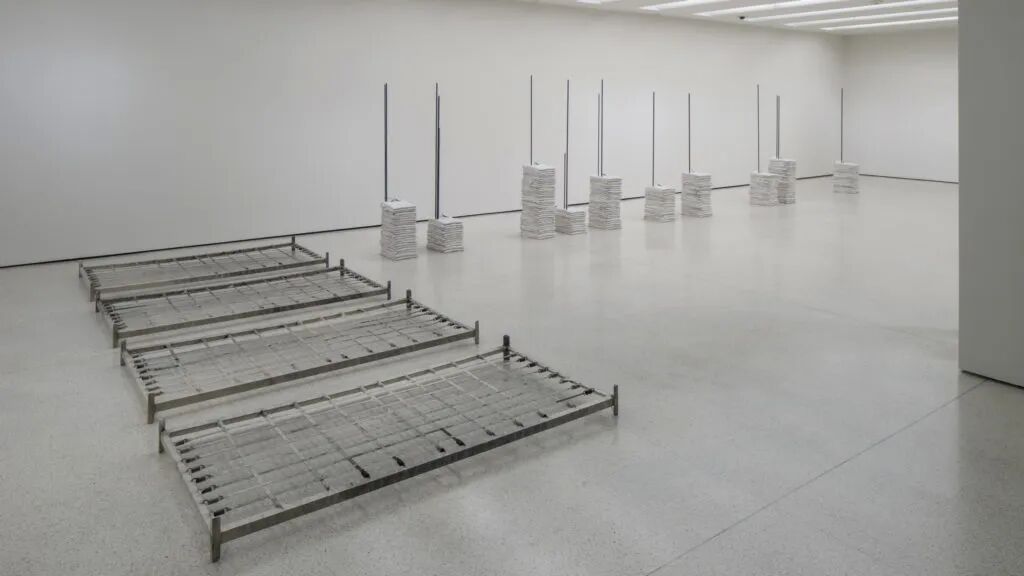
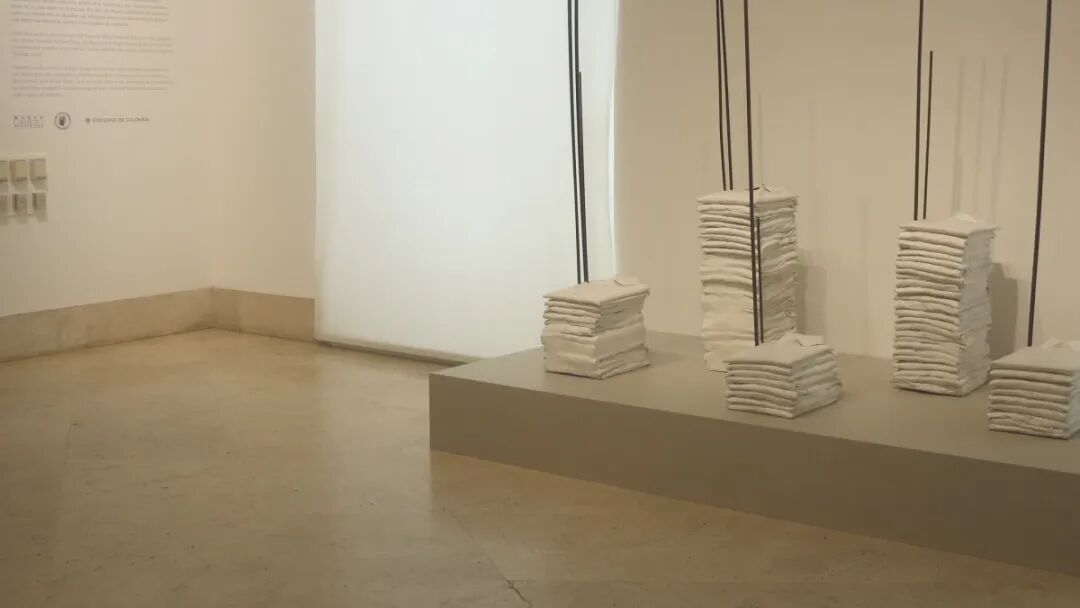
Colombian artist Doris Salcedo (多里斯·萨尔塞多), Untitled, 1989–1990
Section Three: Personal Myth, Healing and Material Shamanism
Having examined the heavy aspect of the “empty garment” as an archive of collective trauma, this section turns to how artists, through their use of specific garments and materials, construct personal myths and pursue self-healing. In these practices, clothing transcends a mere memory-bearer and is endowed with a mysterious, shamanic power.
The German artist Joseph Beuys (约瑟夫·博伊斯) is one of the most influential artists of the late twentieth century. To understand the felt and fat that recur in Beuys’s art, one must return to a core “personal myth” he constructed for himself. Beuys claimed that during the Second World War, as a Luftwaffe pilot, his plane was shot down over the Crimean peninsula. Severely wounded, he was rescued by local Tatar nomads. The Tatars smeared his body with animal fat and wrapped him in thick felt to keep him warm, ultimately saving his life.
In this myth, fat and felt are endowed with symbolic significance surpassing their material attributes. Fat is fluid, organic, high-energy—representing life force, warmth and spiritual energy. Felt is a non-woven material pressed from animal fibres; dense, insulating, able to absorb and retain heat—representing protection, envelopment, isolation and healing.
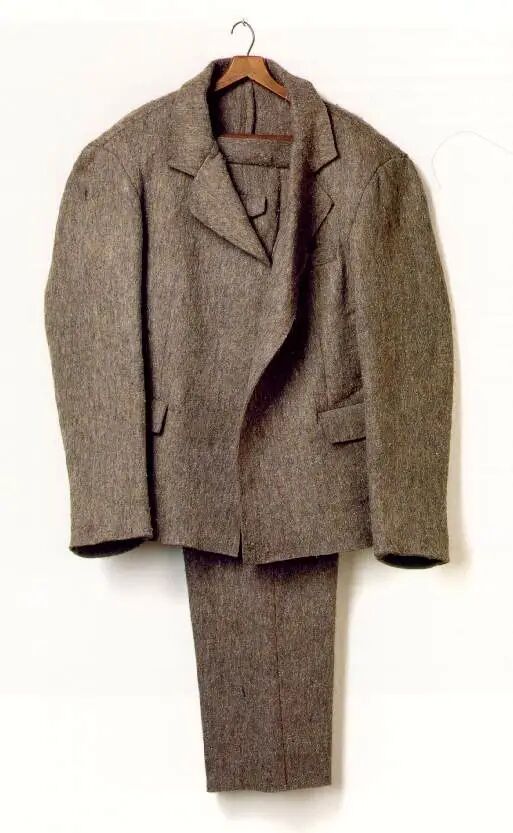
Felt Suit (1970) is the most economical embodiment of this idea. The work is an ordinary suit made of thick grey industrial felt, hung on a coat hanger. The suit is the marker of modern Western male social identity, representing reason, order, bureaucracy and social norms. That Beuys makes it from felt—a primal, organically charged material—completes a profound symbolic transfer.
Felt Suit is first a symbol of individual healing. It echoes directly Beuys’s personal myth of rescue by felt-wrapping. This empty suit is like a refuge or protective shell awaiting entry. It invites the viewer to imagine putting it on, to feel the felt’s warmth and envelopment. This warmth is not merely physical, but psychological and spiritual. It means to ward off the “frost” outside—the frost that refers both to the physical world’s cold and, more, to the “cold of the soul” brought by the rationalisation and bureaucratisation of modern society.
Beuys extended this individual-level healing into his grand idea of “social sculpture.” He held that post-war German society—indeed the entire Western world—was, like his own wounded body then, an organism that had suffered grave trauma and awaited healing. Felt Suit is thus not merely a warm protective shell for the individual; it is a metaphor, a proposal addressed to society as a whole. It calls on people to shed that cold “institutional suit” symbolising social discipline and instead don the “felt suit” charged with life-energy and warmth, reactivating society’s creative and spiritual potential.
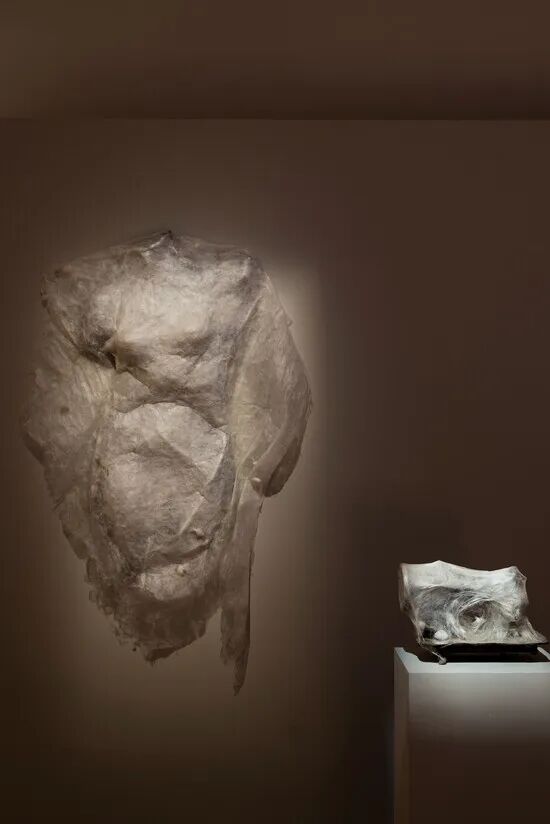
The practice of the Chinese artist Liang Shaoji develops, from Eastern philosophy and a natural worldview, a unique material poetics of life, time and emptiness. Since 1989, Liang has taken the “silkworm” as his principal medium and collaborator. His work too produces the form of the “empty garment.” For instance, he has placed silkworms on a Chinese-style jacket or a pair of shoes; over weeks or months the garments are entirely covered by a layer of fine yet tenacious silk. When the silkworms complete their life cycle, the work appears as an empty garment wrapped in a white silk web.
Liang’s “empty garment” does not point to an “absent human body” but to a “present natural life-process.” The core of the work is not the garment serving as base, but that layer of silk—the crystallisation of countless tiny lives labouring continuously over time. Each thread records the silkworm’s breathing, wriggling and the expenditure of life-energy. What this empty garment bears is not the memory or trauma of a particular human subject, but nature’s most primordial, cyclical life-process: birth, growth, labour, death, metamorphosis.
Beyond Beuys’s healing myth in felt and Liang’s Eastern-void healing in silk, other artists extend this lineage, expanding the empty garment from memory-bearer to healing medium, making clothing a ritual site for lodging trauma, repairing the self and reconstructing the spiritual world. In 1972, the artist Heidi Bucher (海蒂·布赫) used latex to take rubbings of garments and body contours, forming thin, empty skins; The Wrap corresponds to clothing’s disciplining envelopment of the body, while Bodyshell corresponds to the “second skin” peeled off. Both works take as their core form the garment-shell emptied of the person—essentially three-dimensional, peelable empty garments. This empty-garment shell is at once the concrete trace of social identity and gender constraint and the vehicle by which the artist shakes off her fetters and completes a spiritual moult. The “emptiness” of the empty garment is no longer a lack, but a space of liberation and healing, transforming clothing from bodily appendage into a ritual shell of self-healing and redemption.
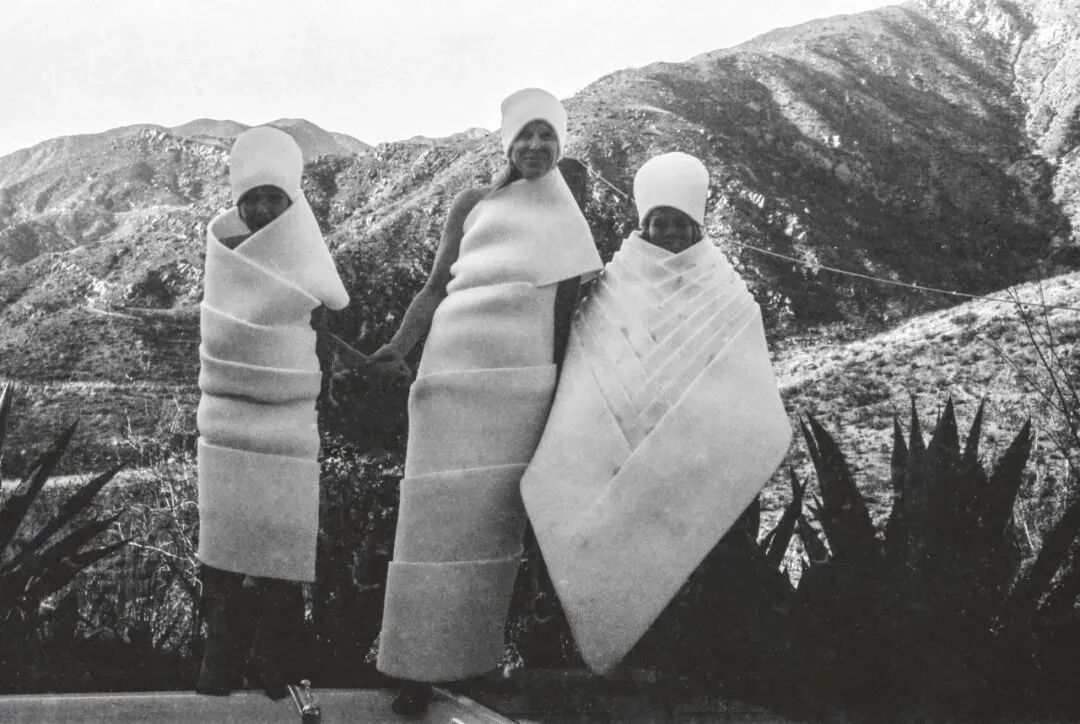
Photographic record of Heidi Bucher’s The Wrap performance, Hollywood Hills, California, 1972, with her sons Indigo and Mayo.
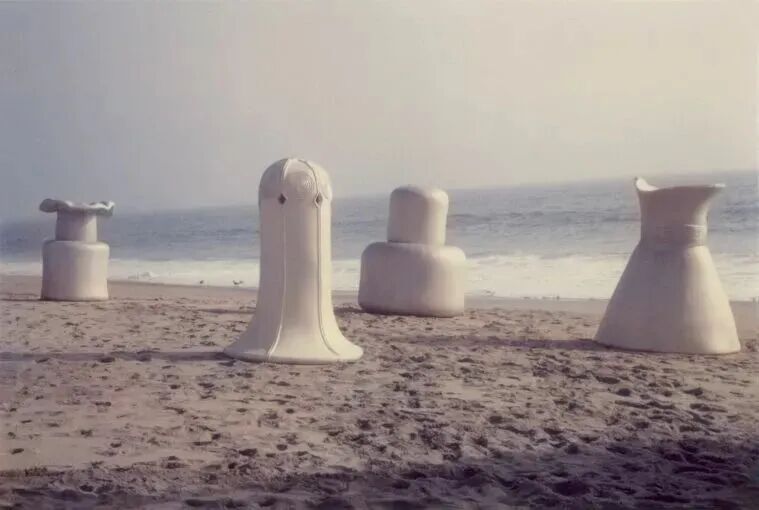
Film still from Heidi Bucher’s Bodyshell, Venice Beach, California, 1972. © Heidi Bucher Estate.
Heidi Bucher’s Hatching of the Floor Dragonfly is also a representative work of self-healing “empty garment.” Using latex and mother-of-pearl pigment as core media, it transfers garments into a pearlescent empty-garment shell, completing—through the “skinning” method—a deep healing concerning self-liberation. It extends the artist’s core idea that “the room is a shell, is skin,” transforming the bodily constraint under social discipline into a tangible material trace; the empty garment is no longer a symbol of absence, but a spiritual container bearing trauma and completing metamorphosis.
Creatively, the work uses the metamorphosis of the dragonfly as a metaphor, echoing the insect’s breaking free from its confining form and being reborn. Bucher transfers everyday garments into latex skins; once peeled, they form a rigid, standing empty-garment shell whose creases and texture replicate the bodily memory constrained by gender norms and social roles—as the daughter of an architect, wife of an artist and a mother, she was long bound by multiple identities, and the empty-garment shell is the concretisation of these “repressed, wounded, neglected” identity shells. In the making, the latex’s envelopment corresponds to past spiritual constraint, while the peeling is an active sorting-through of trauma, extracting the disciplined self from its identity shackles and completing a psychological “breaking of the shell.”
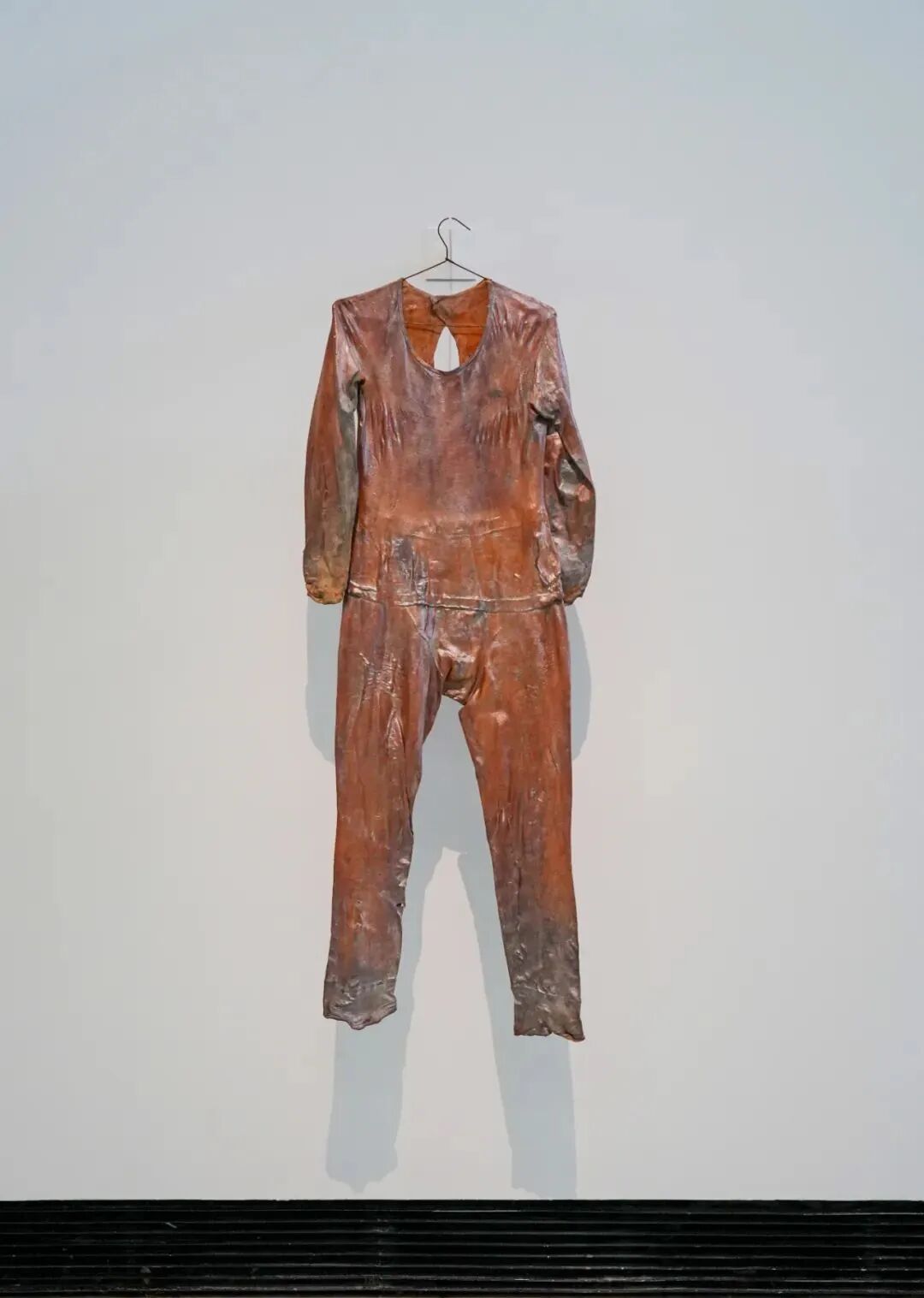
Heidi Bucher, Hatching of the Floor Dragonfly | fabric, latex and mother-of-pearl pigment | 1983 (photographed at the Red Brick Art Museum, 2023)
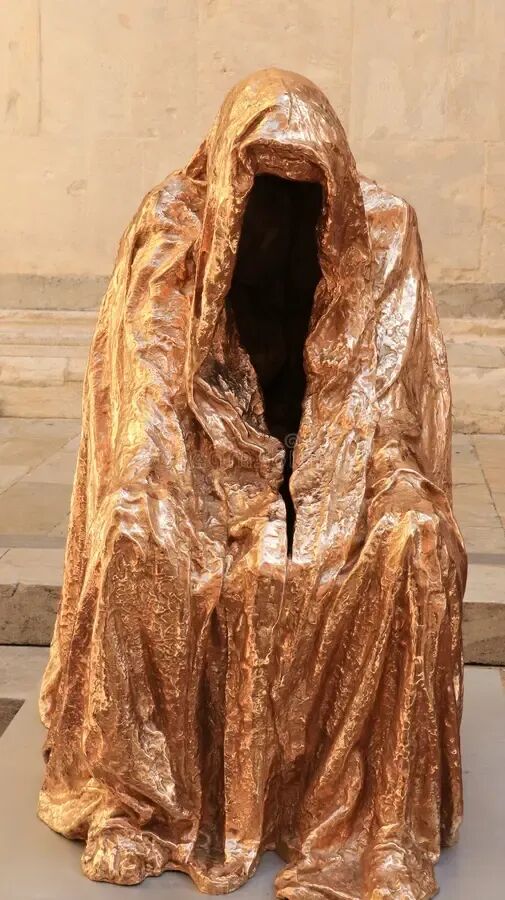
Anna Chromý’s (安娜·高美) Cloak of Conscience takes the form of a hollow, bodiless marble cloak—a vehicle of self-healing through which the artist confronts her own trauma and completes a spiritual redemption. This empty cloak is a sculptural realisation of the “empty garment”; the body’s absence precisely leaves room for inner pain. Chromý personally endured severe physical trauma and spiritual struggle, carrying within her struggle, guilt and the pain of living; she pours all this invisible spiritual burden into the cold yet solemn empty cloak.
The cloak, originally a symbol of shelter and concealment, here becomes her psychological refuge and spiritual container, transforming unspeakable trauma into a tangible, gazeable material form. Its hollow structure is not nothingness, but the acceptance, bearing and slow release of trauma. Titling the work “conscience” marks the artist’s dialogue with herself and with past trauma, achieving inner reconciliation and purification in the silence of sculpture.
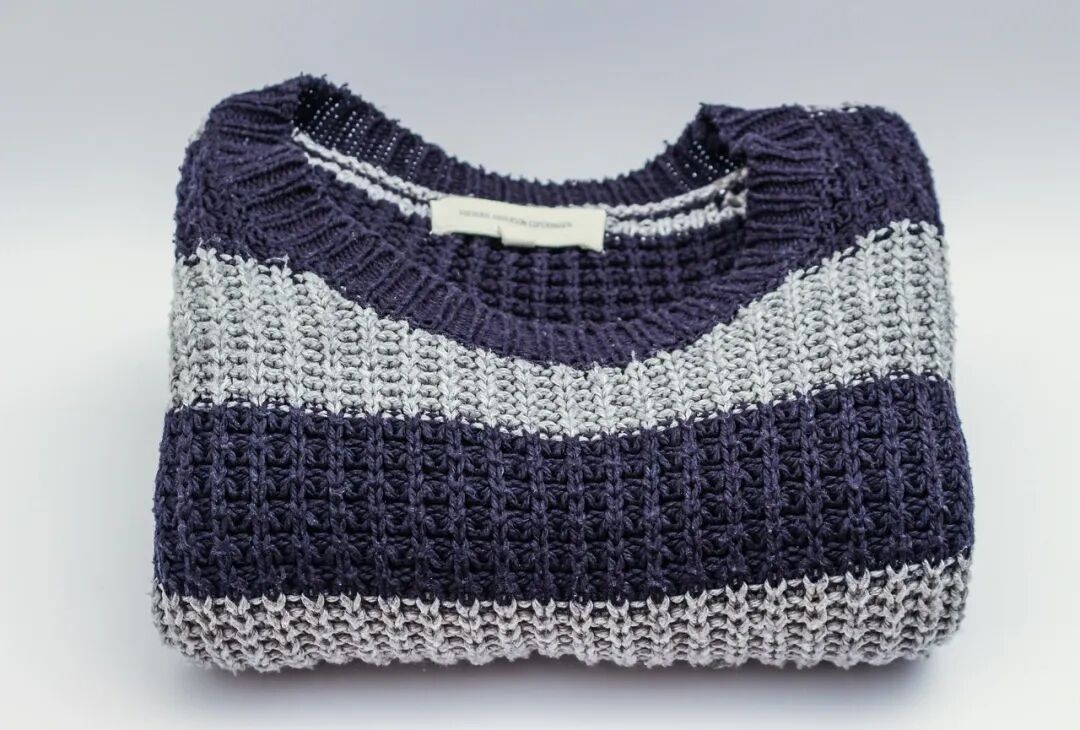
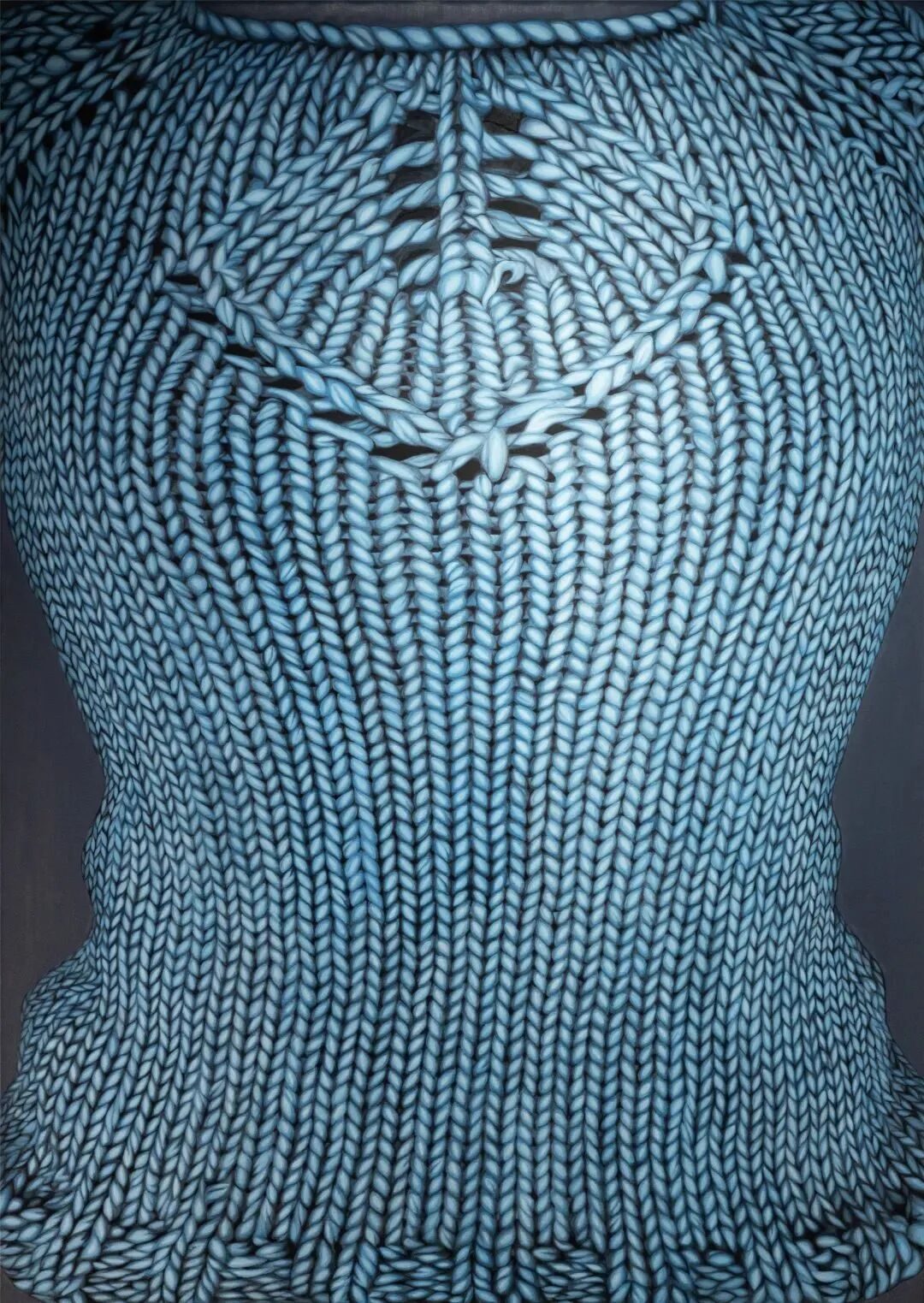
The Chinese artist Chen Shu’s Sweater Series uses bodiless, hollow sweaters as its vehicle. The sweater, as a soft fabric that wraps the body, carries the affective attributes of warmth, maternal love and intimacy, becoming—like Beuys’s felt suit and Liang Shaoji’s silk heavenly robe—a healing medium bearing spiritual consolation.
The artist deliberately conceals the human body, letting the sweater leave the flesh to become an independent emotional container, lodging women’s inner loneliness, softness and emotional trauma within its creases and texture. The blank form of the hollow sweater is a spiritual space left for the self’s emotions, accomplishing an inward soothing and repair through gentle fabric—continuing the core lineage of empty-garment art from trauma-bearing to self-healing. Unlike the artist Bai Jing, Chen Shu preserves the sweater’s visual “warmth” and healing quality.
Chapter Two: The Shell of Power
If Chapter One examined, from the phenomenological perspective, how the “empty garment” serves as a container for individual bodily experience and memory, then this chapter shifts the lens, introducing Michel Foucault’s (米歇尔·福柯) biopolitics and theory of discipline to regard the “empty garment” as a “shell of power”—above all, how clothing such as “uniforms” becomes the most visible sign by which modern society classifies, transforms and controls the individual.
Section One: Foucault’s Grid—the “Uniform” as the Most Visible Sign of Disciplinary Technique
The French thinker Michel Foucault, in Discipline and Punish, offers a subversive analysis of modern techniques of power. Foucault shows that since the eighteenth century the operation of power underwent a fundamental shift—from the “sovereign power” of the old monarchy, which displayed deterrence through public, violent punishment, to a more subtle “disciplinary power” aimed at producing “docile bodies.” This new power weaves an omnipresent micro-network of power through a series of inconspicuous institutions and techniques—the school timetable, military drill, the factory assembly line.
Within this vast disciplinary grid, the “uniform” plays a crucial role. The uniform, from its etymology (uni-form, single form), reveals its core function: erasing individual difference, creating uniform form. When a person dons a uniform—soldier, student, policeman or prisoner—their personal identity, class background and individual traits are largely effaced, replaced by a standardised collective identity defined by that uniform. The uniform accomplishes, visually, the first classification and homogenisation of the body. It is a discourse of power that, without words, declares the wearer’s belonging, rank and expected norms of behaviour.
When artists choose the “empty uniform” as their subject, they in effect present the invisible disciplinary technique Foucault describes in a highly condensed material form. The disciplined body within the uniform is emptied out; what we see is no longer “an obedient soldier” or “a disciplined student” but the disciplinary mechanism itself. That empty uniform becomes a pure sign of power—of classification, control and homogenisation.
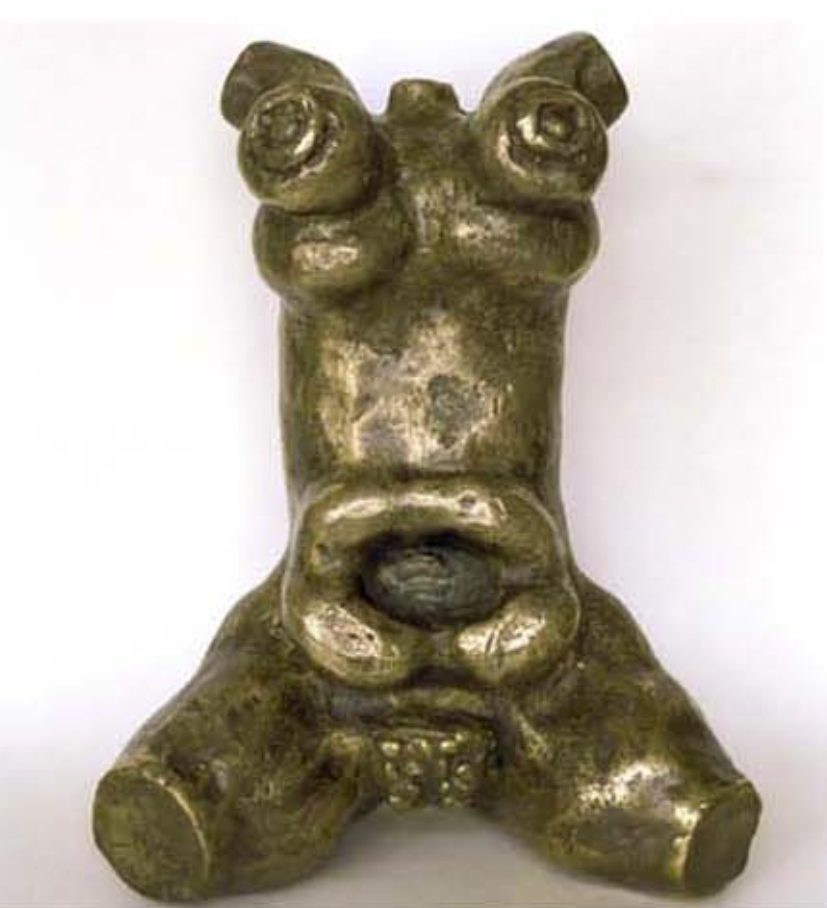
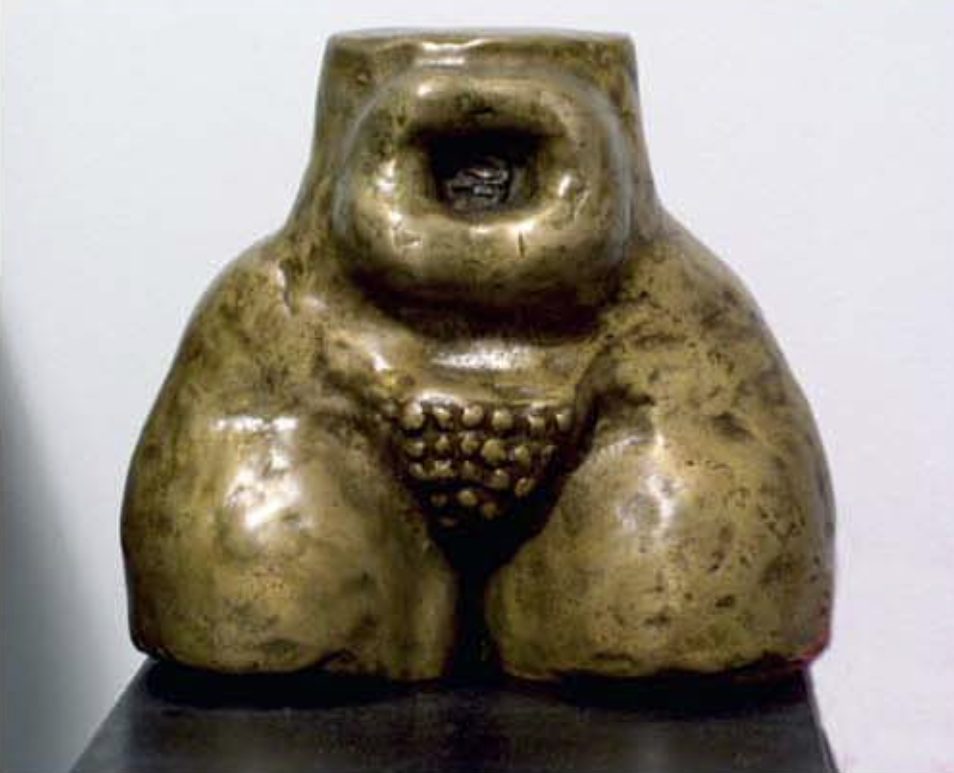
The Soviet artist Vladimir Yankilevsky (弗拉基米尔·扬基列夫斯基), continuing his Torso series, bronze torso of a woman, 1980
A direct illustration of Foucault’s theory is the Soviet artist Vladimir Yankilevsky’s Torso series—a typical specimen of individual alienation under totalitarianism. These cold, hard “metal empty suits” are like a fusion of torture instrument and armour; having lost clothing’s protective function, they become a power-shell that imprisons and reifies the body. One cannot but say this series is an extreme realisation of Foucault’s disciplinary theory in the totalitarian context, symbolising the state machine’s total crushing of the individual’s life-force.
The South Korean artist Choi Xooang’s (崔秀昂) Untitled (Headless Uniform Figure) series presents, in hyperreal sculpture, headless empty school uniforms and empty suits. He precisely replicates the garments’ creases, seams and texture, letting the empty uniforms stand rigid—pointing directly at South Korea’s intensely competitive exam-driven education and entrenched class stratification. The school uniform is the “military garb” of the “exam war”; the suit is the success label after discipline. The sequence of empty uniforms, from school uniform to suit, fully presents the individual’s long self-discipline from childhood and the ultimate alienated condition of the hollowed-out soul.
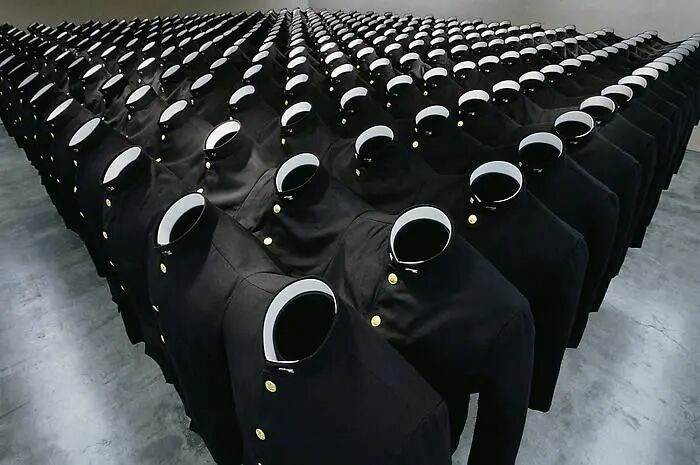
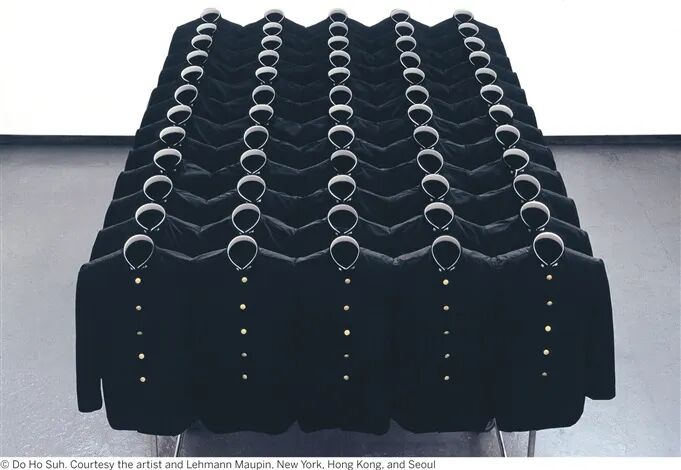
The Korean-American artist Do Ho Suh’s High School Uni-Form (1997) arranges 300 empty Korean high-school uniforms in a strict grid, like soldiers standing by in formation. The hollow uniforms erase individual difference, transforming education’s disciplining of teenage individuality into a visualisable field; Some/One (2001) assembles tens of thousands of military dog tags into a hollow giant robe, dissolving individual identity entirely into the collective sign of power—the empty garment becomes a visual fossil of the disciplinary society. This work will be analysed in detail below.
From school uniform to suit runs an apparently clear social ladder of ascent, yet behind it lies a long and painful process of self-discipline that sacrifices the individual’s richness. Through hyperreal “materialisation” and “hollowing” of these uniforms, Kang Hyung-koo (姜亨九) profoundly criticises this dehumanising social reality. Those rigid empty uniforms are the precise portrait of the modern individual—hollowed of soul, stripped of self, reduced at last to nothing but a social-identity label—in this endless competition.
Section Two: The Erosion of Ideology—the Deconstruction of the “Political Totem” in Chinese Contemporary Art
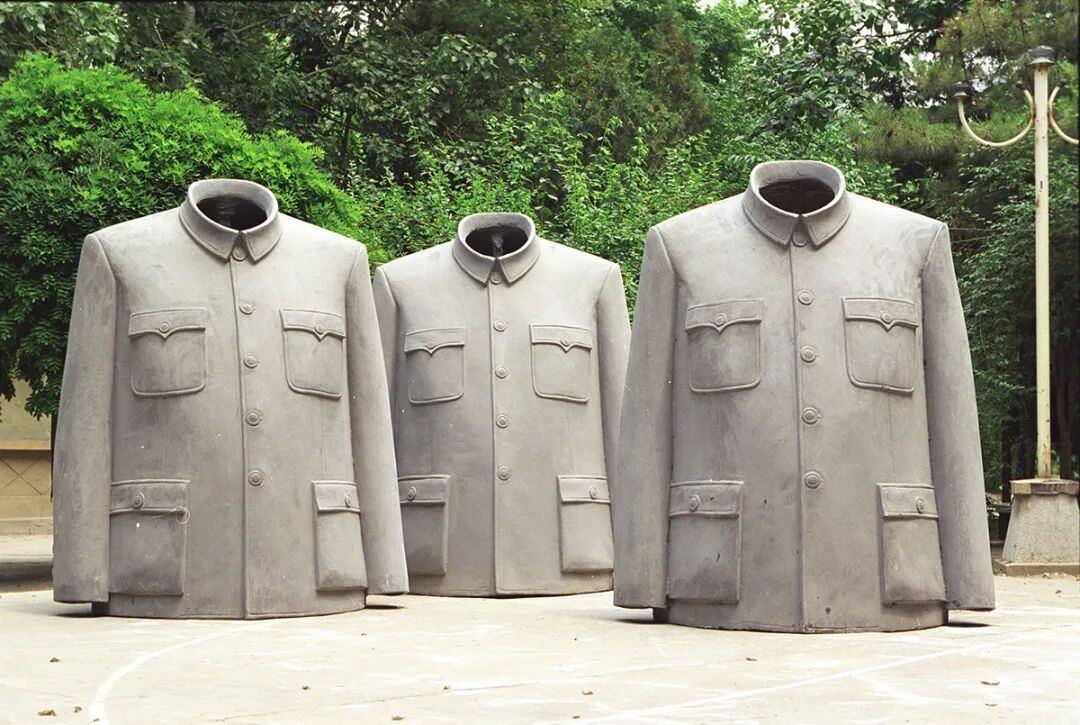
In China’s historical trajectory through the twentieth century, clothing assumed a political and ideological role far exceeding its material function. It was not merely a garment, but a symbol of an era, a totem of collective identity. Thus, when Chinese contemporary artists began, after Reform and Opening, to reflect on this history, the “empty” Zhongshan suit naturally became a recurrent, highly charged core image.
The Zhongshan suit’s very birth is bound up with China’s modern revolution. It is held to have been designed by Sun Yat-sen (孙中山), synthesising Western military uniform with Chinese dress; its cut was invested with revolutionary political meaning: the four pockets represent the four virtues of propriety, righteousness, honesty and shame; the five front buttons represent the separation of the five powers; the three cuff buttons represent the Three Principles of the People.
After the founding of the People’s Republic of China in 1949, the Zhongshan suit’s political significance was further strengthened and popularised. It became the standard dress of revolutionary cadres and indeed of male citizens nationwide, symbolising plain living and equality of official and commoner. During the “Cultural Revolution,” this tendency reached its peak—blue, grey and green Zhongshan suits and military-style jackets nearly unified the national visual landscape, forming a veritable “visual hegemony.” It flattened individual sartorial choice, drawing all into a uniform collective identity centred on “revolution.” At this time the Zhongshan suit was a powerful “signifier” pointing to a “signified” of an ideological system concerning class struggle, collectivism and the cult of the leader.
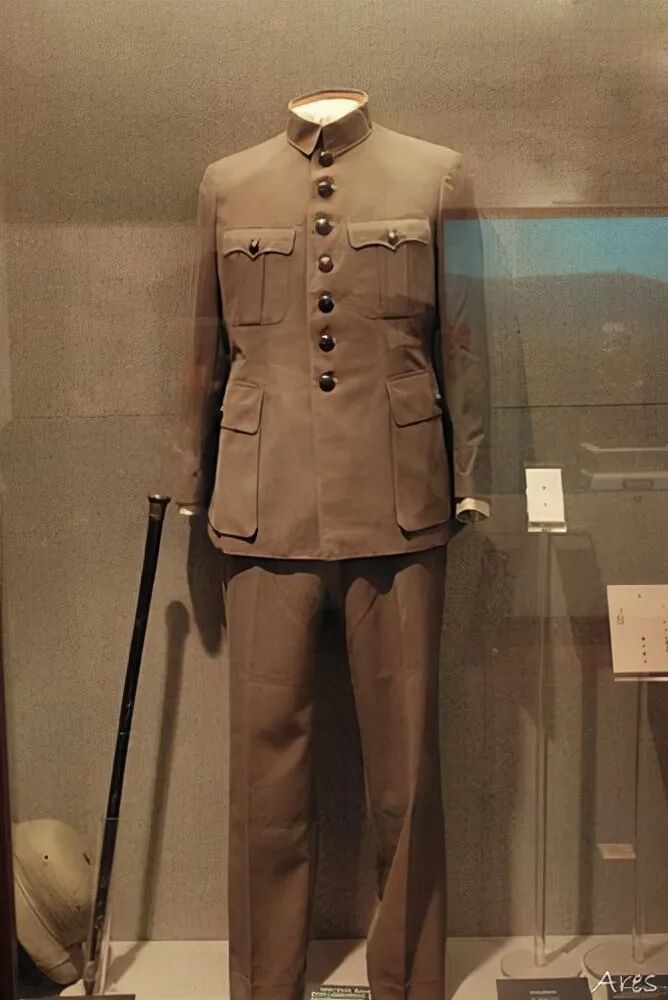
Yet with the end of the “Cultural Revolution” and the onset of Reform and Opening, Chinese society began a violent economic and cultural transformation. Western suits, jeans and T-shirts poured in, swiftly displacing the Zhongshan suit. This once-ubiquitous political totem rapidly withdrew from daily life, becoming a sign of the past carrying specific historical memory. Precisely against this historical backdrop did contemporary artists begin to re-examine this heavy “shell,” seeking through art to explore the erosion and suspension of the ideological “signified” that once filled it.
The sculptor Sui Jianguo’s (隋建国) 1997 sculpture Legacy Mantle (Yibo) is a pioneering work on this theme. The work is a Zhongshan suit, enlarged, hollowed out and cast in bronze. This gigantic bronze Zhongshan suit stands silently in the gallery, radiating a solemnity and weight akin to ancient bronze ritual vessels.
The title “Legacy Mantle” (Yibo) derives from Chan (Zen) Buddhism, originally denoting the robe and bowl a master transmits to his disciple, symbolising the transmission of thought, learning or craft. That Sui borrows this term carries a certain irony. What he explores is precisely the present condition of that revolutionary ideology once transmitted as a “spiritual legacy” from generation to generation.
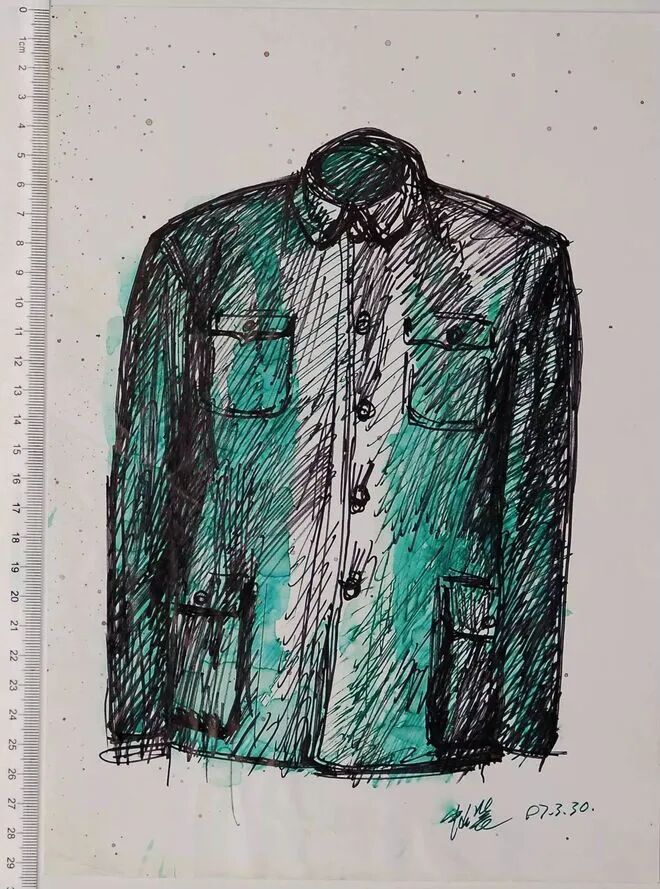
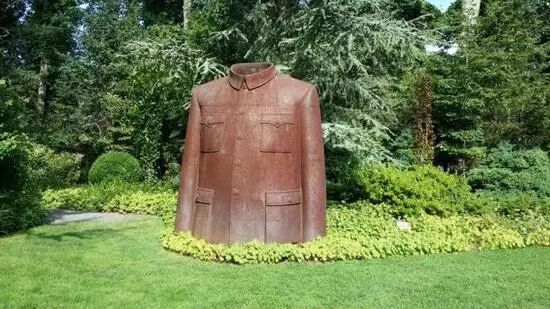
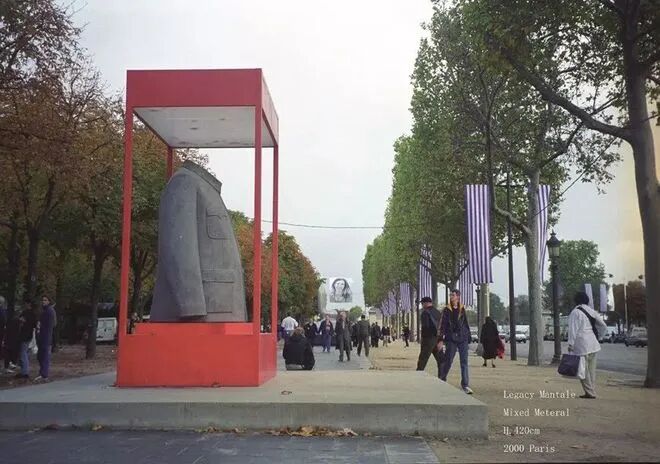
Sui Jianguo’s work Legacy Mantle showing in Paris, 2000
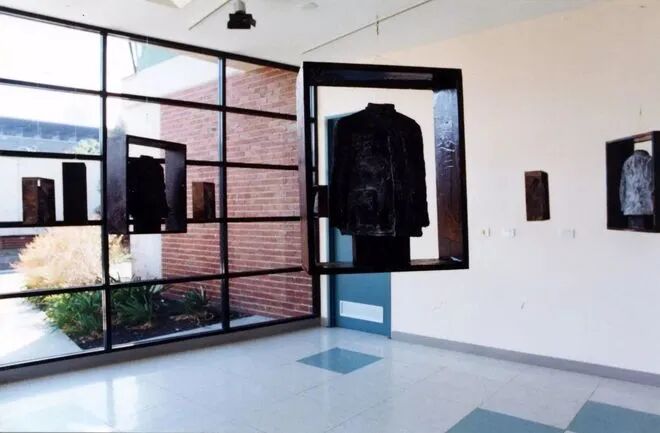
The choice of material—“bronze”—is crucial. In Chinese culture bronze is bound up with power, history and eternity (as in the Shang and Zhou bronze ding). That Sui casts a garment that should be soft in this “immortal” material on the one hand grants this ideological shell a monumental historical status, acknowledging the enormous weight it once held; on the other, bronze’s heaviness, hardness and coldness precisely convey the immense pressure and confinement this ideology exerted on the individual. Like a heavy, inescapable mould, it prescribed people’s thought and behaviour.
Most crucial is the “emptiness” inside this bronze shell. Approaching the work, the viewer can clearly see that its interior is void. This “emptiness” points directly to the erosion of collective faith. The fiery revolutionary ideal and collectivist spirit that once supported this shell have now dissipated like smoke. What remains is but a rigid, heavy historical relic stripped of inner life. Sui’s Legacy Mantle thus becomes a powerful allegory of a vacuum of belief. In an utterly material way it presents an era’s spiritual transition: when the grand revolutionary narrative recedes, what we find ourselves inheriting is perhaps only a heavy yet hollow “legacy mantle.”
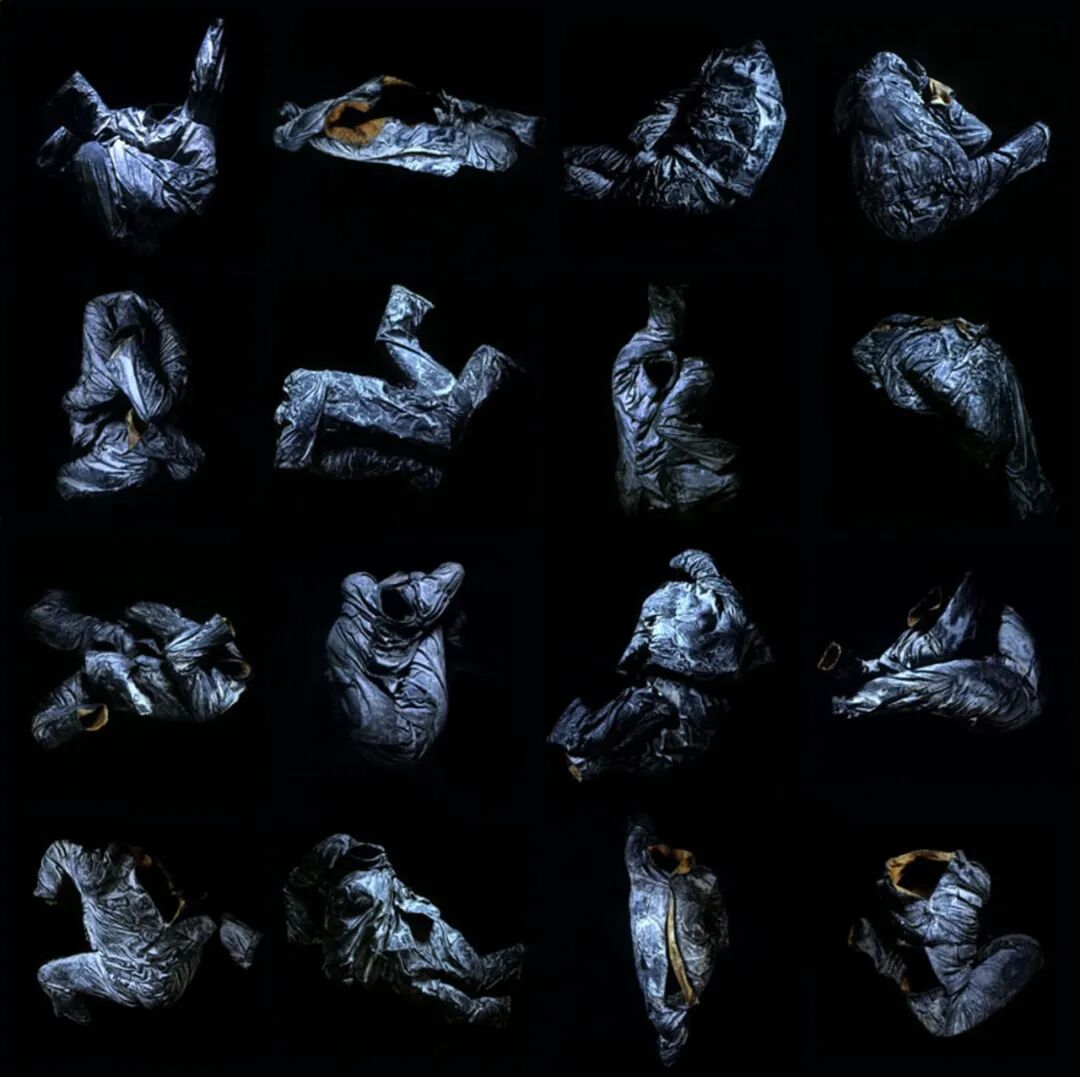
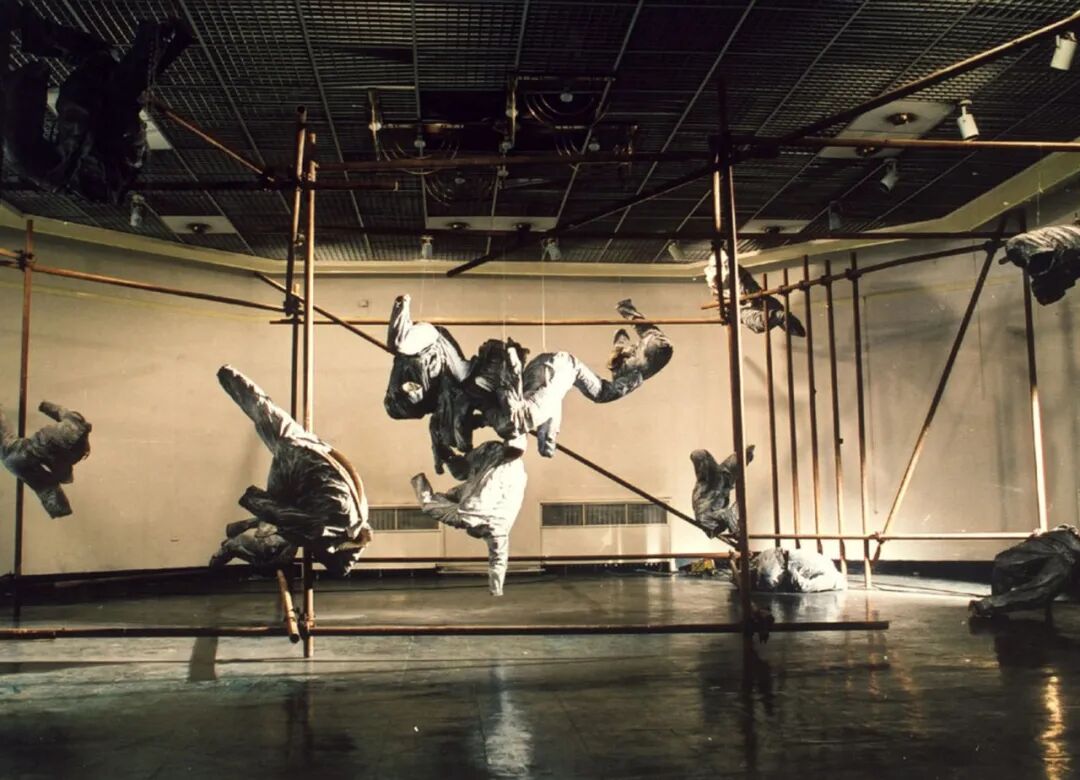
Unlike Sui Jianguo’s weight rendered in bronze, the important sculptor Zhan Wang deconstructs the Zhongshan suit with entirely different materials and methods, in a more modernist key. His Zhongshan Suit series was created in late 1993, formally exhibited in April 1994, eighteen pieces in total, installed on site with loess and scaffolding, titled “Konglingkong—Temptation Series” (Empty Spirit Empty—Temptation Series). Each piece differs in posture but must assume a super-normal gesture; what is finally presented is the empty shell of the Zhongshan suit, and this super-normal distortion happens exactly to contradict the solemn, serious style of the Zhongshan suit that prevailed for a century. It seems a game, yet what it expresses behind the game is actually the author’s attention to and experience of human desire and distorted psychology—like the cicada’s shed shell we see, seeming to struggle yet already a light, empty husk. Through the playful yet contradictory handling of the solemn and the nihilistic, the work corresponds to the mutual transformation of weight and lightness deep in our hearts (excerpted from Zhan Wang’s official website).
From Sui’s bronze to Zhan’s stainless steel / fibreglass, this shift in material itself constitutes a profound visual deconstruction of the era. If Sui’s bronze Legacy Mantle still speaks of that history’s “real oppression,” its heavy materiality still evoking the bodily memory of that era’s collectivist pressure, then Zhan’s work thoroughly “dematerialises” the Zhongshan suit. Stainless steel and fibreglass are light, smooth, with an industrialised perfect surface. This materiality wholly dissolves the Zhongshan suit’s original cotton texture and its associated revolutionary connotation of “plain living.”
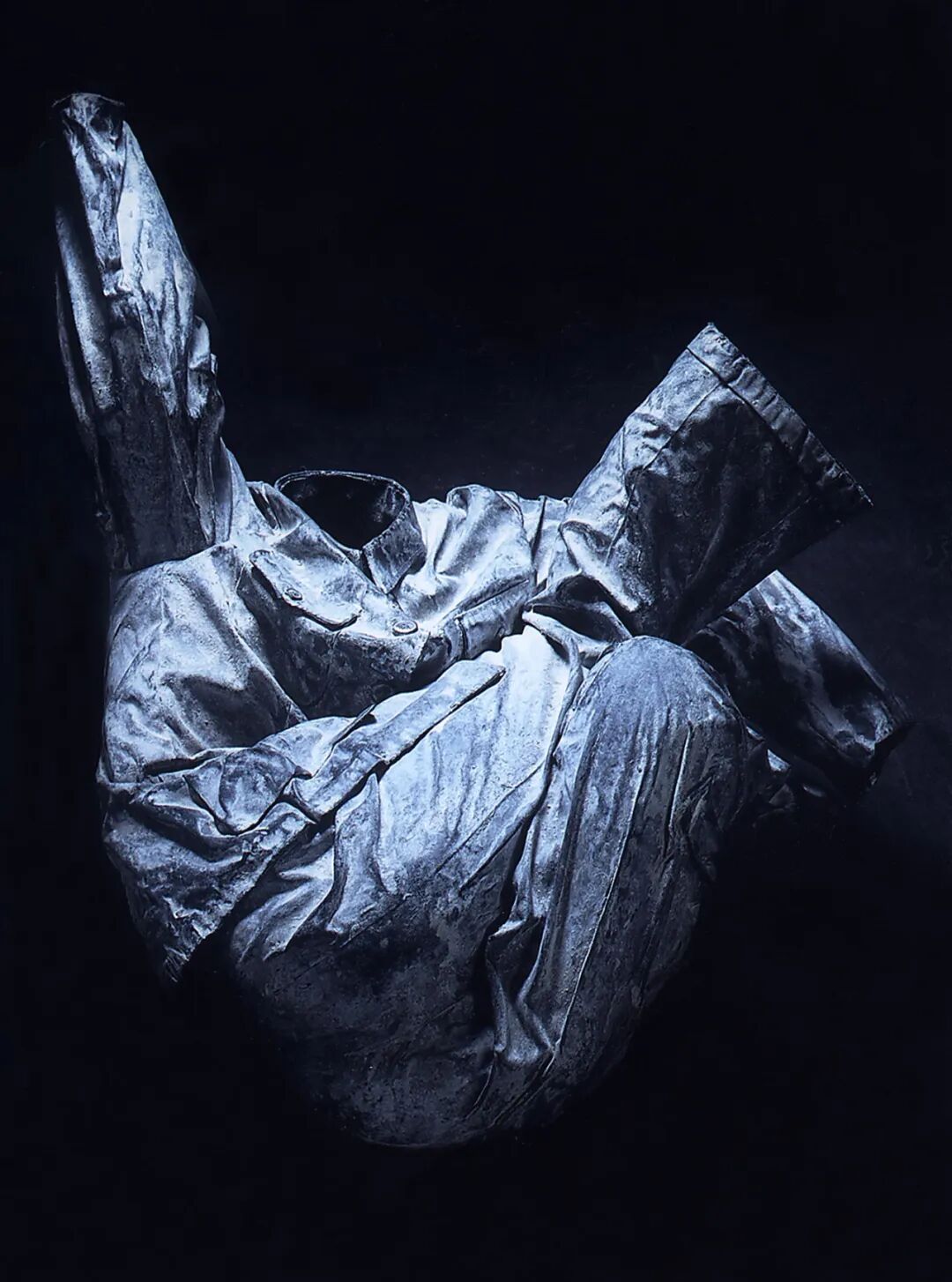
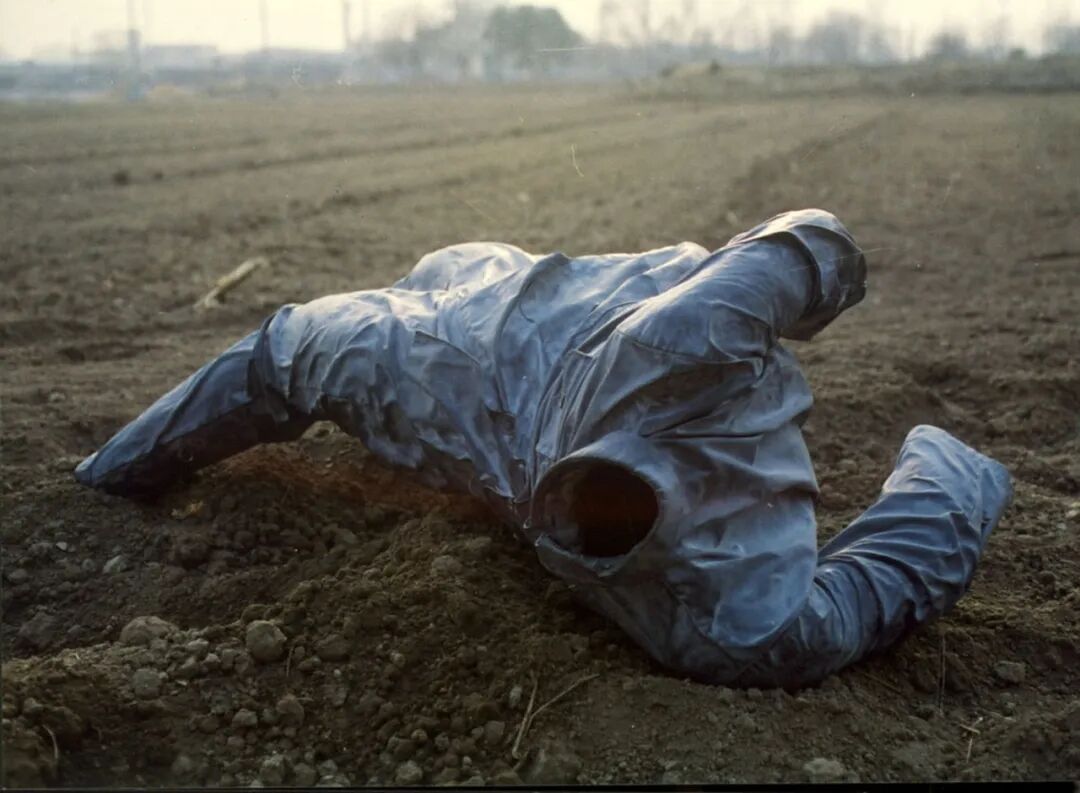
The renowned art historian Wu Hung (巫鸿), analysing such works, noted that we may draw on semiotics. In semiotics a sign comprises a “signifier” (form / shell) and a “signified” (concept / content). In the Mao era, the Zhongshan suit as “signifier” and the “revolutionary ideology” it signified maintained a strong, stable linkage.
Zhan’s work forcibly separates this signifier from signified through artistic means. He fully preserves the Zhongshan suit’s “signifier”—its outer form, pockets, buttons, all visual elements. But by using stainless steel, a wholly heterogeneous, post-industrial material, and hollowing out its interior, he thoroughly severs the signifier’s link to its original “signified.” Revolution, struggle, collectivism—all content is extracted. The Zhongshan suit thus becomes a “suspended signifier.” It still points to a history, but that history’s true content and emotional warmth have grown blurred, elusive.
This hollow, glittering signifier in turn constitutes a deeper critique. It reveals how, amid the tides of consumerism and historical amnesia, grand historical signs are hollowed out, commodified, transformed into a harmless spectacle. The viewer seeing their own figure before Zhan’s Zhongshan Suit makes for a highly symbolic interactive experience: what relation do we, individuals living in the present, bear to that grand historical shell? Are we shaped by it, or do we merely regard it as a remote and strange backdrop to reflect on ourselves? Zhan’s “empty garment” art, precisely with its light, smooth surface, throws these weighty questions of historical memory and identity at us.
Section Three: The Punctum of Identity Politics—Race, Class, the Symptom of Globalised Consumption
In discussing the “empty garment” as shell of power, beyond the macro-level discipline of state machinery and ideology we must also attend to its role in the more concrete field of identity politics. In contemporary art the “empty garment” is often deployed as a “punctum”—a concept Roland Barthes (罗兰·巴特) proposes in Camera Lucida, denoting a detail in a photograph that suddenly pierces you, provoking a personal emotion and reflection exceeding the image’s general meaning—to touch upon sensitive issues of race, class and globalised consumption.
The African-American artist David Hammons (大卫·哈蒙斯), known for his witty, sharp and poetic conceptual art, focused throughout on America’s racial politics and the existential reality of the African-American community. His 1993 work In the Hood is among his most representative.
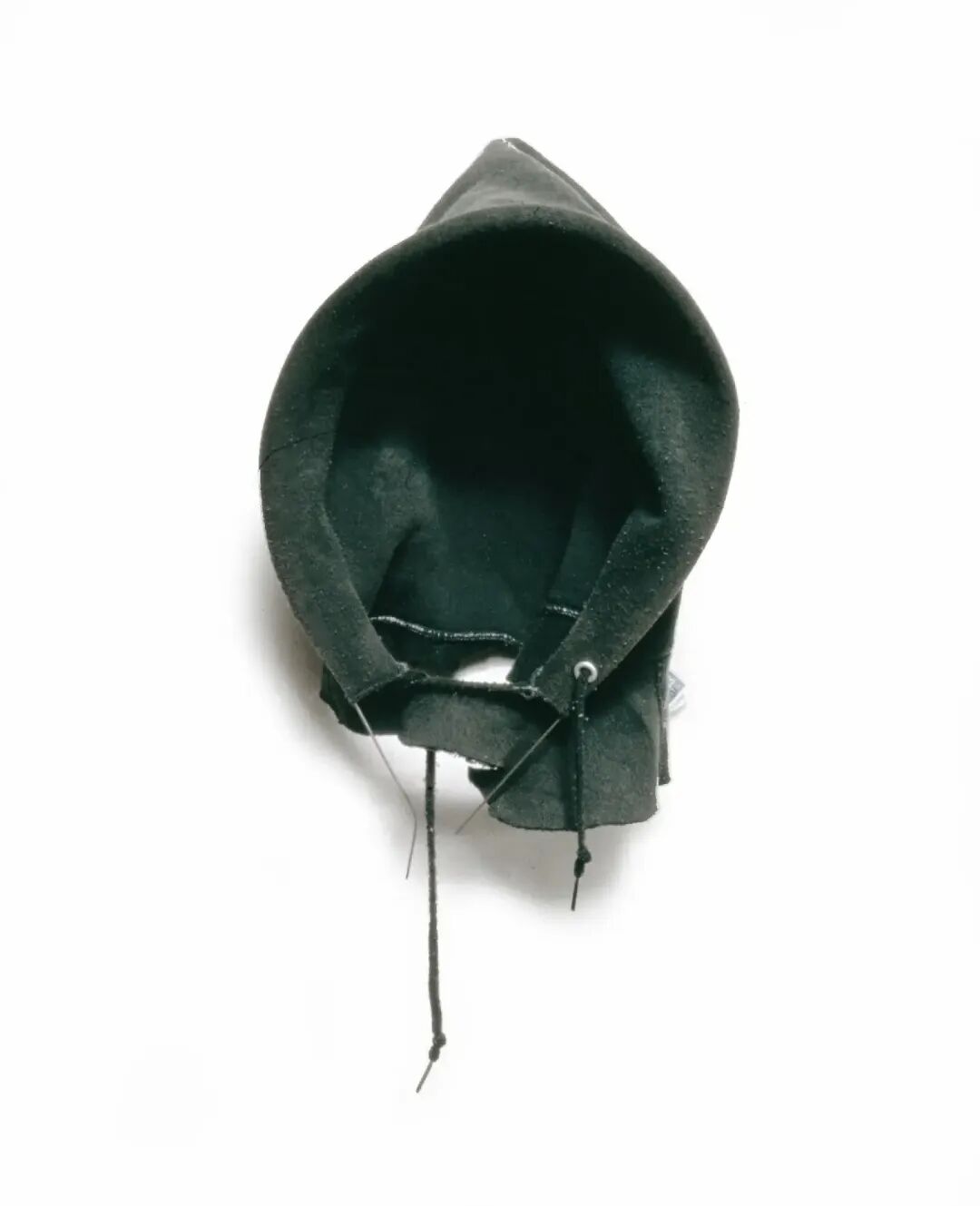
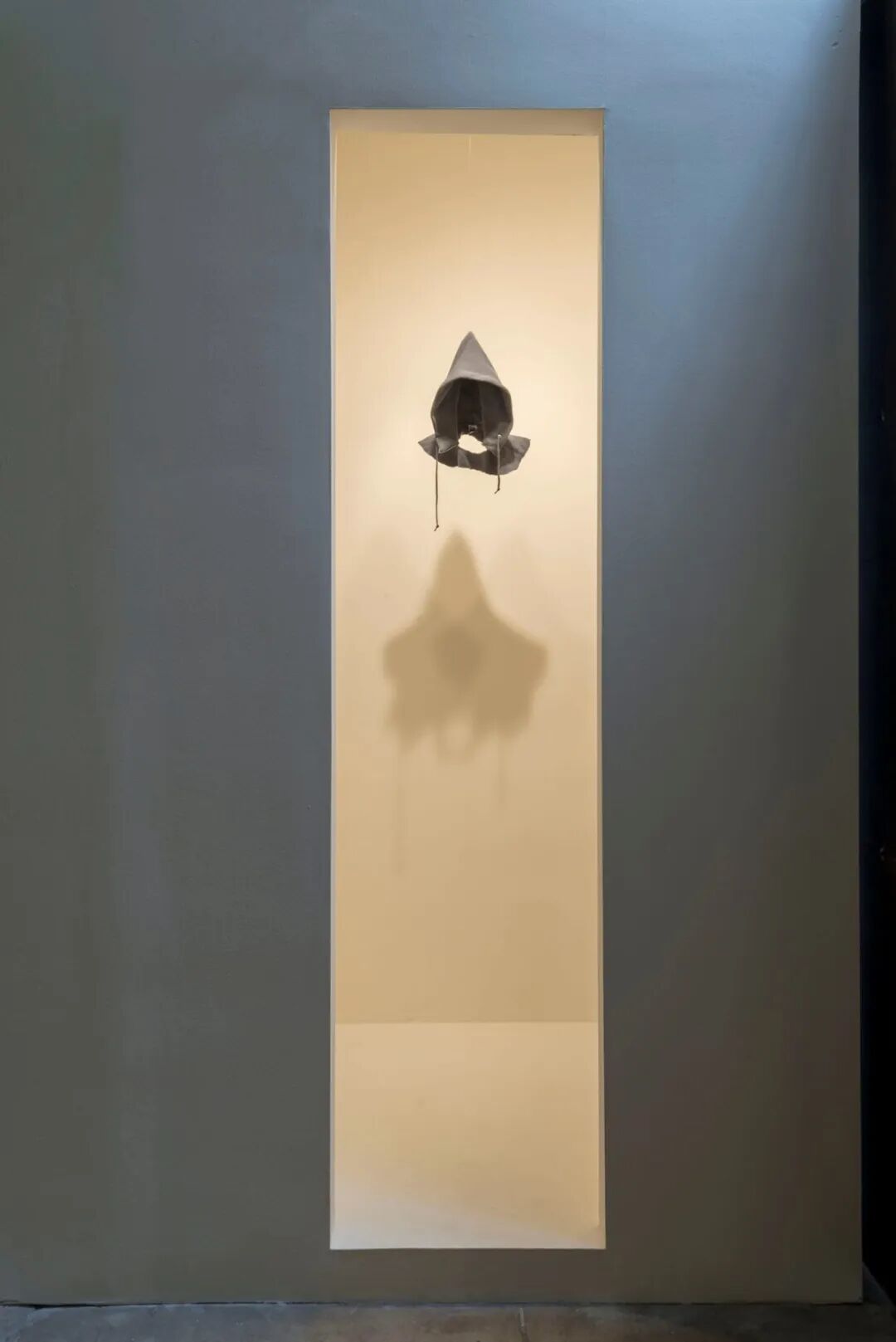
The form is extremely simple: the hood cut from an ordinary hooded sweatshirt, fixed in shape with wire and nailed directly to the wall. It is like a headless outline left behind, or a trophy put on display. The reason this seemingly plain “empty garment” fragment carries such enormous impact lies entirely in the heavy, complex racial connotations the “hooded sweatshirt” bears in American society.
From the late twentieth century to now, the hooded sweatshirt (especially when worn by a young African-American male) has often been linked by mainstream society with crime, violence and threat. This stereotype makes young Black men in hoodies easy targets of police over-enforcement and unwarranted community fear and discrimination. In 2012, the unarmed seventeen-year-old African-American Trayvon Martin (特雷沃恩·马丁) was shot dead by a neighbourhood watch volunteer for wearing a hoodie—an event that detonated the political symbolism of the “hoodie,” making it an emblem of resistance against racial discrimination and police violence.
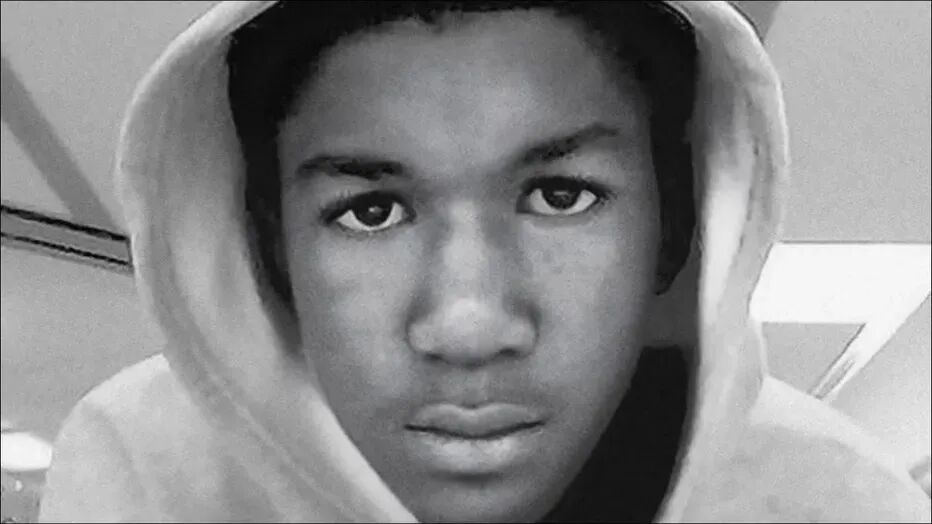
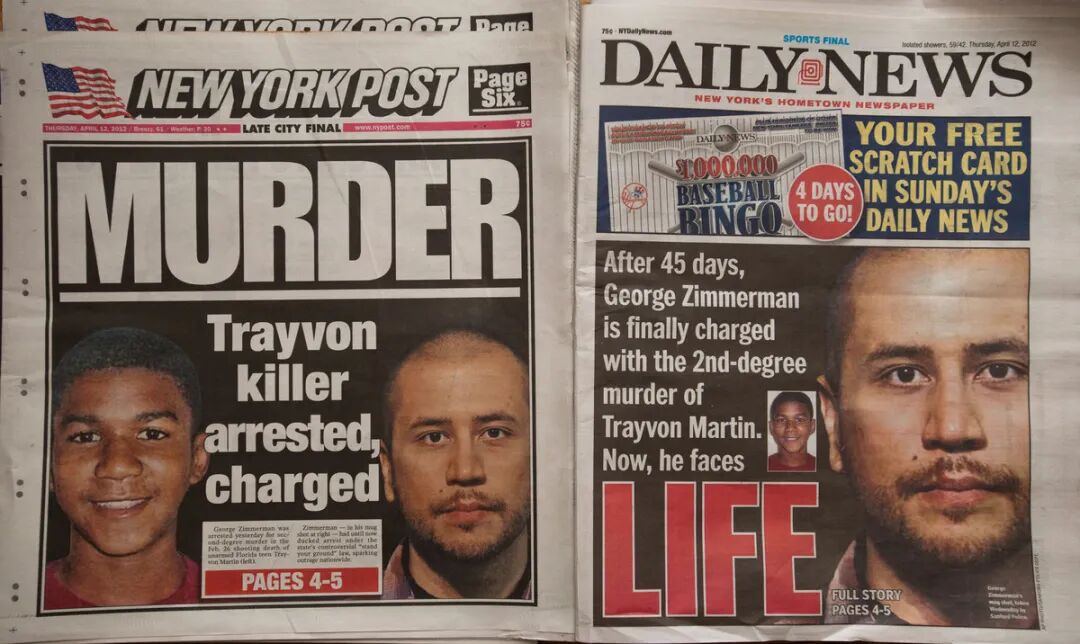
In 2012, the unarmed seventeen-year-old African-American Trayvon Martin (特雷沃恩·马丁) was shot dead by a US neighbourhood watch volunteer for wearing a hoodie
Hammons’s In the Hood was made before the Martin case, yet with startling prescience it captures the core of this sign. Hung alone on the museum’s white wall, this empty hood instantly becomes an unsettling ghost. The absence of the head—an African-American youth’s head—that should be within the hood points directly to the “disappearance” of life wrought by systemic violence. This empty hood is the portrait of that potential victim, the ghost of an anonymous individual presumptively “guilty” by racial bias.
The manner of Hammons’s hanging is also highly provocative. It is at once like an African tribal mask hung up for display, ironically mocking the white art system’s voyeuristic consumption of the exotic; and like a relic left after a lynching, evoking America’s dark history of lynching Black people. With the most economical artistic language, the work transforms an everyday garment into a powerful sign bearing the trauma-history and present predicament of an entire people.
In the lineage of Chinese contemporary art, the ceramic artist Liu Jianhua offers us a unique specimen for examining globalised consumption, cultural signs and the state of individual existence. Liu chose the “qipao”—a garment of high Chinese cultural legibility—and moulded and fired it in traditional blue-and-white porcelain. What results is a series of white, smooth porcelain qipao, hung or placed in the gallery.
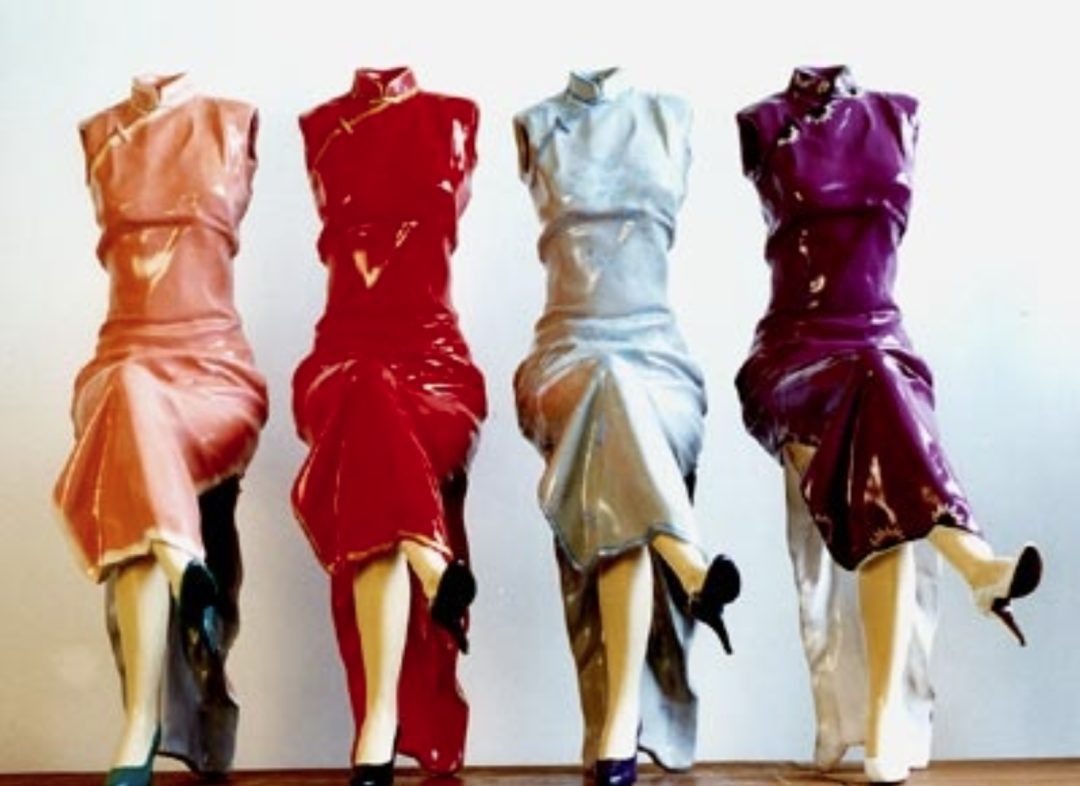
Liu Jianhua (刘建华), Addicted to Memory, polychrome series | sculpture, ceramic, mixed media | 1998
As a cultural sign, the qipao’s connotations are complex and shifting. Born in early-twentieth-century Shanghai from a fusion of Manchu traditional dress and Western tailoring, it was once the symbol of the modern Chinese urban woman’s elegance, independence and liberation. Yet in today’s globalised context the qipao’s image is largely gazed at and consumed by an “Orientalist” eye, becoming an exotic “Chinoiserie” sign satisfying Western imaginings. That Liu reshapes the qipao in white porcelain, this shift of medium, opens rich interpretive possibility. Ceramic (especially blue-and-white) is a glorious representative of ancient Chinese civilisation, steeped in historical and cultural sediment. Using this “national-treasure” grade material to make a qipao is itself a revisiting and emphasis of cultural identity. But this combination is not simple revival. The artist renders the qipao pure white, stripping all its resplendent colour and pattern, presenting a pure, abstract, near-“ideal-type” form. This white porcelain qipao seems the manifestation of the qipao sign’s “soul” or “essence.”
Yet the core attribute of this seemingly perfect “soul-shell” is its “fragility.” Porcelain, however hard and smooth its surface, is inwardly extremely fragile, easily broken. Through the tremendous tension between “hard” and “fragile,” Liu reveals the hollowing-out of cultural signs in consumer society. The qipao’s beautiful shell masks the anxiety and uncertainty of cultural identity in modern society. That empty, beautiful yet cold and fragile white porcelain qipao becomes a spiritual epitome of an era: an era wrapped in a glittering sign-shell yet full of inner fragility and insecurity.
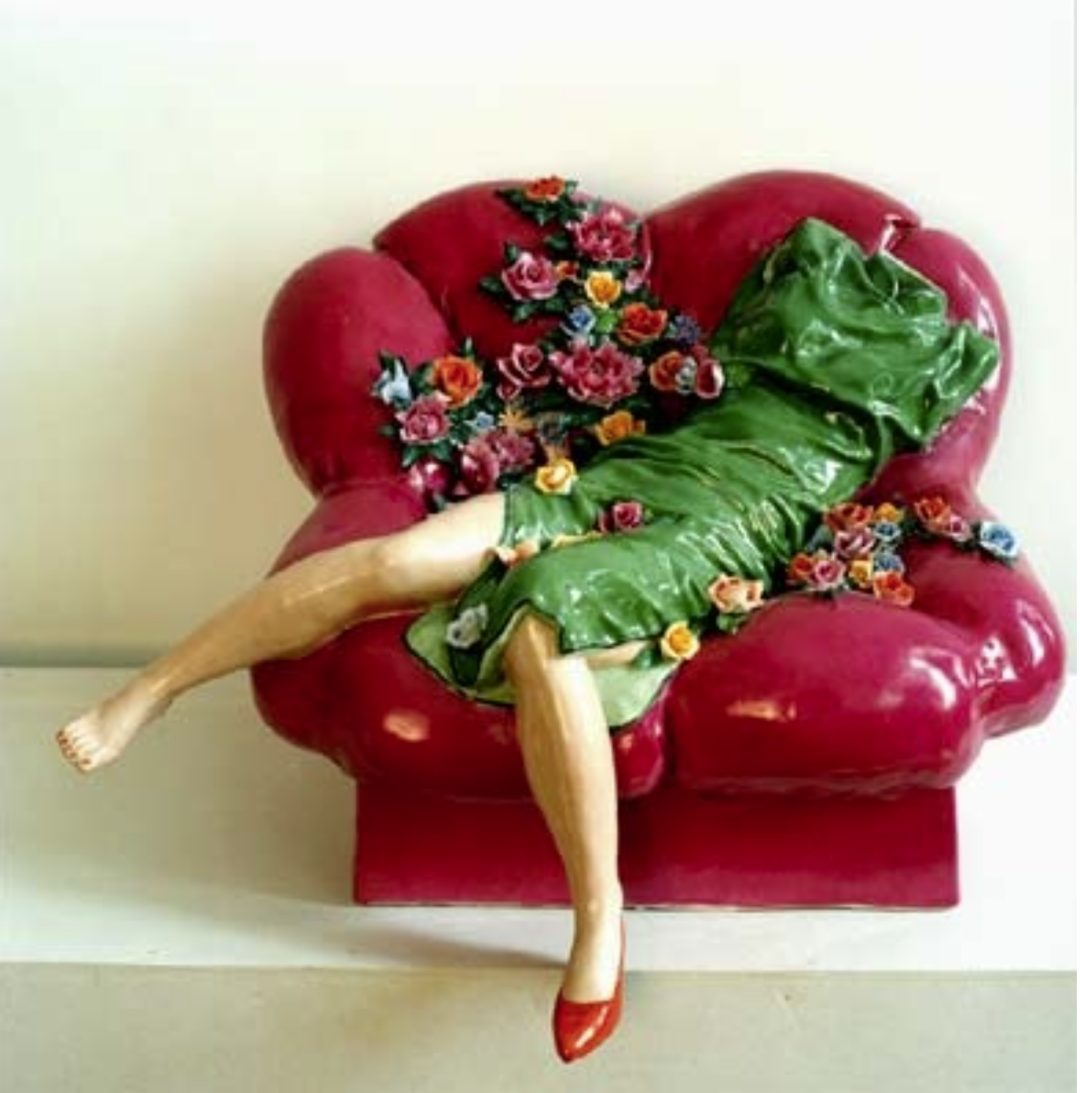
Liu Jianhua (刘建华), Addicted to Memory, polychrome series | sculpture, ceramic, mixed media | 1998
Chapter Three: Entanglement and Discipline—the Micro-politics of Feminist Empty Garments
This chapter explores the development of “empty garment” art in the feminist lineage. From Louise Bourgeois’s (路易丝·布尔乔亚) psychological enclosure to Lin Tianmiao’s resistant entanglement, to Yin Xiuzhen’s urban narrative and Bai Jing’s materialisation of labour, women artists connect private experience with public politics through the “empty garment” motif, revealing the micro-mechanisms of gender discipline and emotional labour.
Section One: Psychological Archive, Entanglement—from Bourgeois to Lin Tianmiao
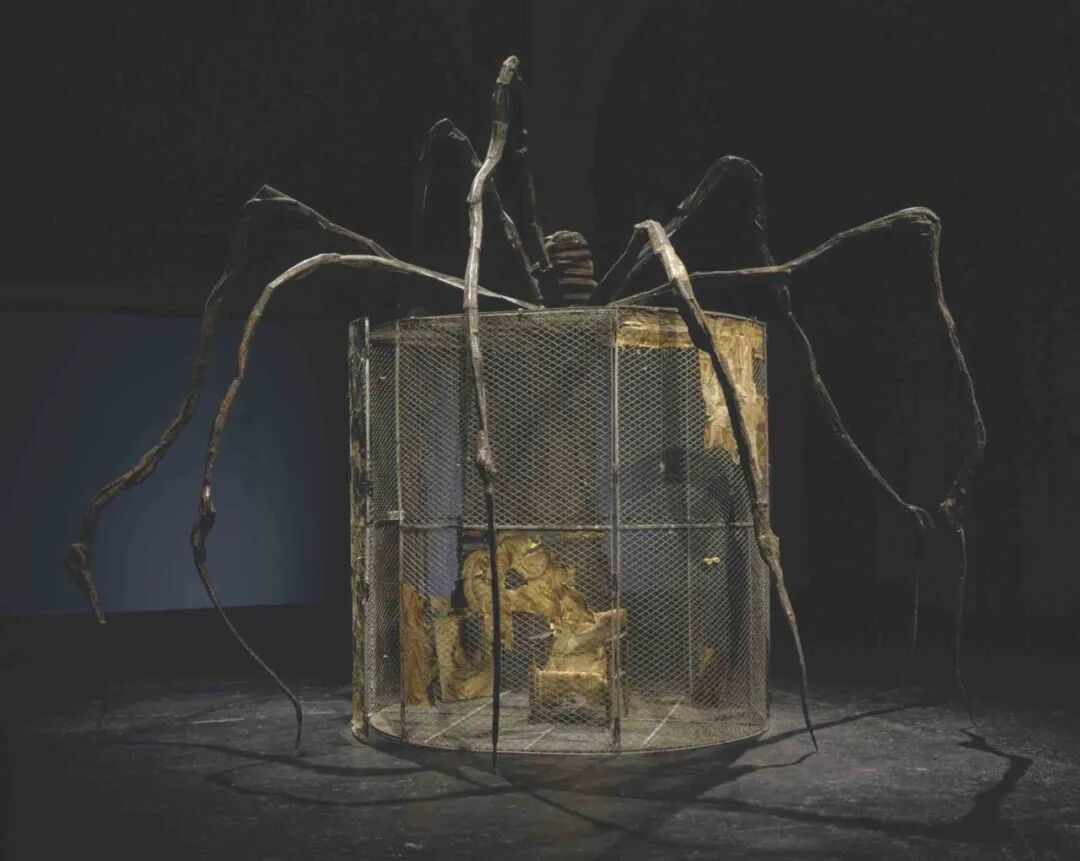
The French-American artist Louise Bourgeois (路易丝·布尔乔亚), in her late Cells series, made extensive use of her own and her mother’s old clothing. These garments are hung, stacked, or imprisoned in cage-like environments. For Bourgeois, clothing is a relic of memory, a time machine to childhood trauma. Her core gestures are “enclosure” and “display,” building a psychological theatre through the appropriation and contextualisation of readymades.
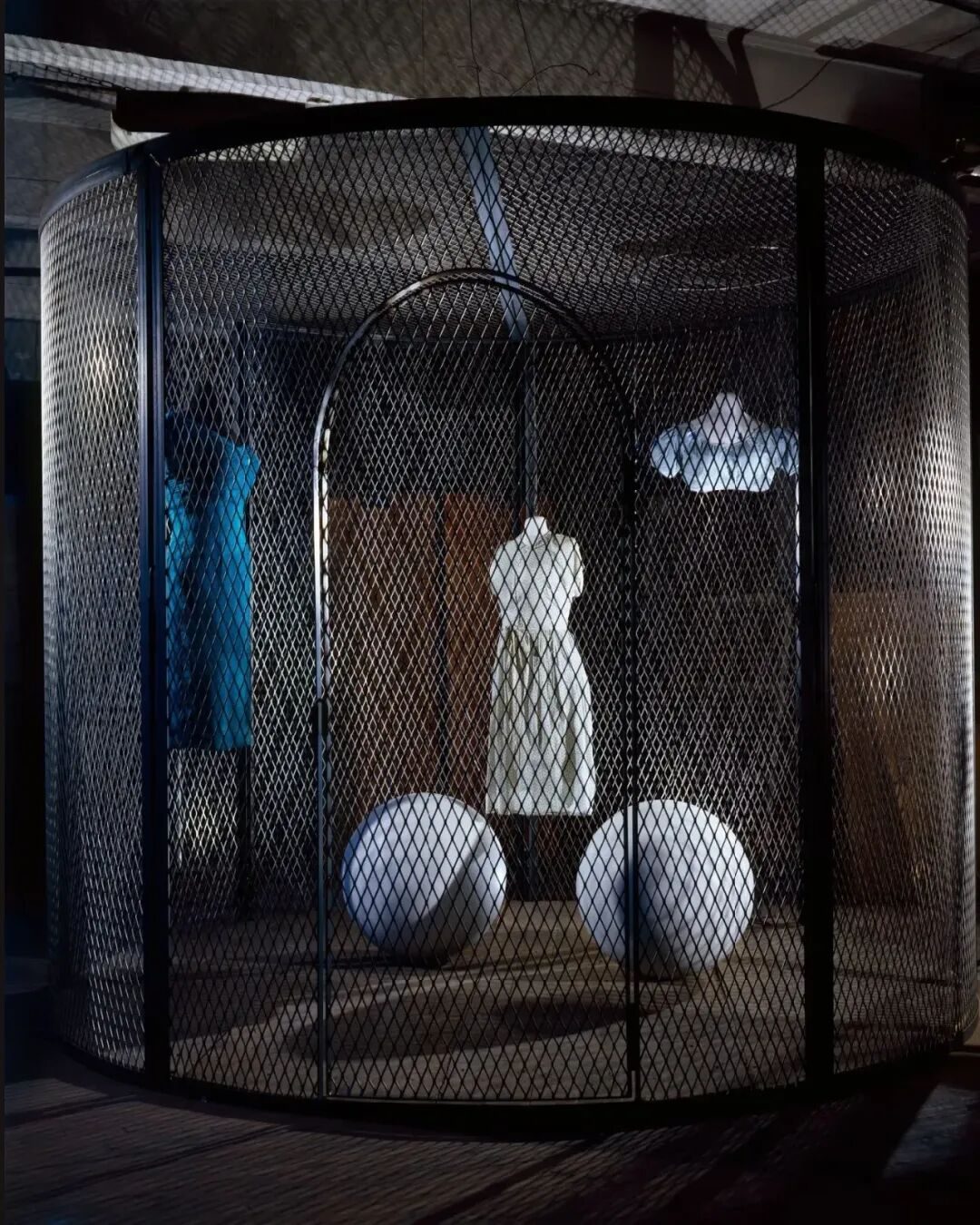
In works such as Spider, Bourgeois juxtaposes clothing with gigantic spider forms, hinting at the complex relation of maternity, protection and bondage. These enclosed “empty garments” are no longer anyone’s ghost, but the materialised witness of power-struggles within the family. Through their silent presence they speak of the repression and trauma women suffered under the patriarchal family.
The Chinese artist Lin Tianmiao, among the most important contemporary Chinese women artists, is known for her signature gesture of “entanglement.” In works such as The Proliferation of Thread she uses white cotton or silk thread to wrap, densely and repeatedly, thousands of everyday objects (including clothing, bicycles, beds) until the objects’ original appearance is covered, transformed into a new form at once familiar and strange.
Lin’s act of “entanglement” carries strong psychological and cultural-critical significance. It can be read both as a psychological healing process marked by compulsive repetition and as a symbolic re-enactment of the various invisible “ritual proprieties” (lijiao) that bind in traditional Chinese culture. White cotton thread is at once gentle wrapping and suffocating bandage. In Lin’s method there is always an “already-existing thing” as the core to be wrapped. Her work is to “cover,” “wrap” and “reprocess” upon an already-existing form.
This entanglement reveals the paradox of women’s labour: it is at once creation (building structure from nothing) and bondage (tightly binding the object). Through transforming traditional “needlework”—a marginalised labour—into a compulsive, even implicitly violent conceptual expression, Lin questions the gendered division of labour and bodily discipline.
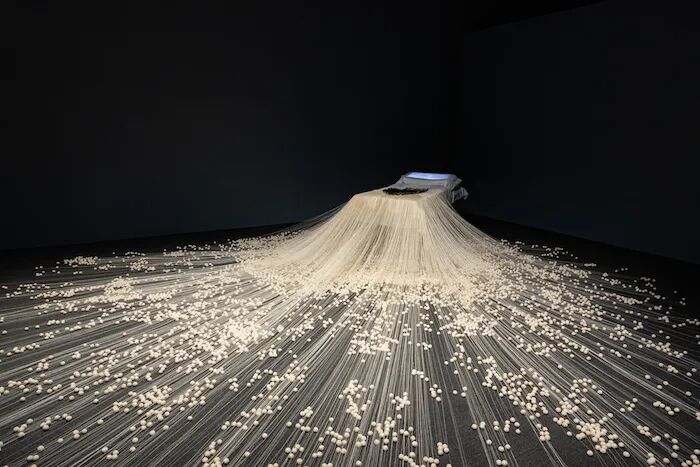
Lin Tianmiao (林天苗), The Proliferation of Thread, 1995, installation: wooden bedboard, wooden table legs, steel plate, short-wood supports, screws, wooden pillow frame, mattress, pillow, monitor equipment, USB drive (video), 60,000 needles, 25,000 white cotton thread balls, rice paper, etc., 20–70 sq m (site-adjustable)
Section Two: The Micro-history of the City
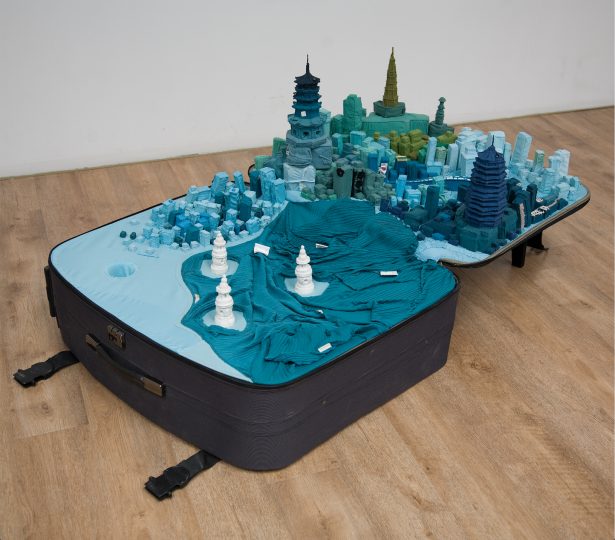
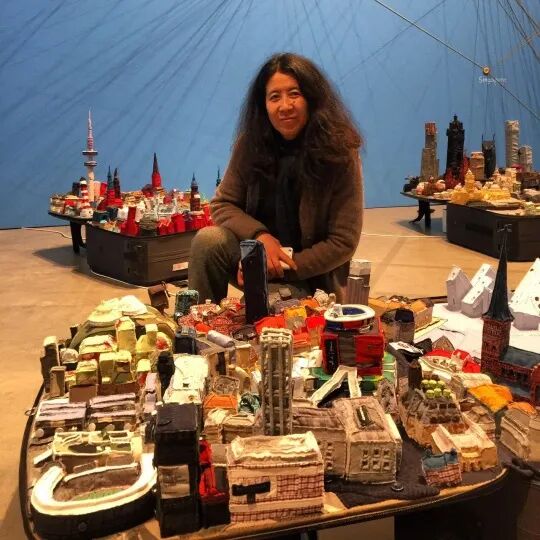
The Chinese artist Yin Xiuzhen’s Portable City series marks an important leap for feminist “empty garment” art in handling the relation of personal to public, micro to macro. Beginning in the early twenty-first century, its core idea is to take old garments collected from local residents worldwide and, through sewing, splicing and shaping, make them into miniature models of urban landmarks, finally placing these soft architectures inside suitcases.
The phenomenological function of old clothing as “second skin” operates here again. Every T-shirt, shirt, pair of trousers once wrapped tightly a unique body, steeped in the owner’s odour and sweat, recording the trajectory of their daily life. Yin’s needle and thread, like the historian’s pen, stitches these scattered, heterogeneous, body-warm narrative fragments into the fabric of the city.
The French historian Michel de Certeau (米歇尔·德·塞托), in The Practice of Everyday Life, distinguishes “strategy” from “tactic.” The grand urban plan and the raising of landmarks are unquestionably the top-down “strategy” of power, attempting to define a city’s image and write an official, unified history. What Yin does is precisely a “tactical” appropriation and subversion. Through ordinary people’s everyday “tactics” (wearing, discarding garments), she gathers the countless individual “small histories” obscured by grand history. Her needle and thread, like the “ragpicker” in Walter Benjamin’s (瓦尔特·本雅明) writing, salvages and reassembles forgotten memory amid the ruins of modernity (discarded old garments).
These cities made of soft fabric are no longer cold, hard symbols of power, but a memory-community full of creases, fissures and warmth. The suitcase as vehicle deepens the work’s critical dimension. The suitcase is among the most typical signs of the globalised era, symbolising travel, migration, commerce, consumption and the mobility of identity. But in Yin’s hands, what the suitcase encloses is a city made of garments from a specific region’s residents, full of local memory. The tension between this “globalised container” and “localised content” forms a cunning paradox. It seems to suggest that even in an age of global flow, true identity and cultural memory remain rooted in concrete, place-based life-experience.
Section Three: Cold Hardness, Tender Warmth
Among the post-’80s generation of artists—especially the practice of the Chinese artist Bai Jing—she is no longer content to use the “empty garment” as a container of memory or a symbol of identity, but through more radical material translation and conceptual purification forges it into a theoretical lens that precisely maps the micro-operation of contemporary society’s power and invisible labour exploitation.
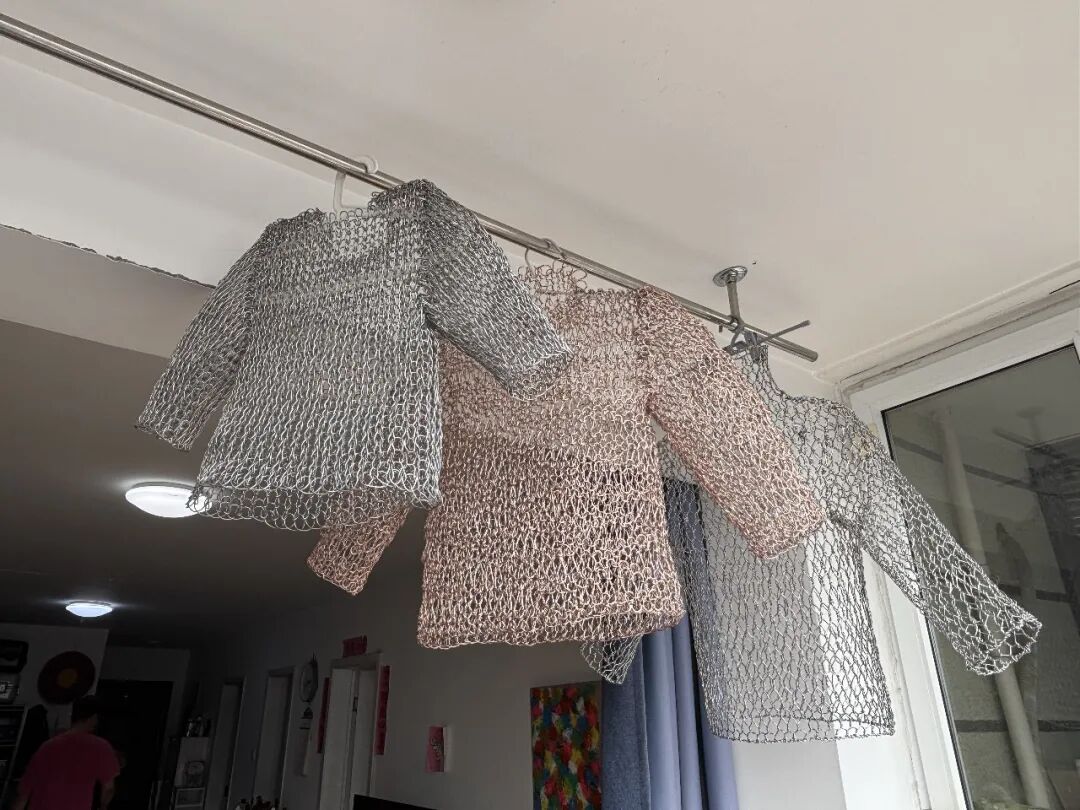
The most revolutionary step in Bai Jing’s practice lies in her “violent substitution” of creative material. She resolutely abandons the soft, organic wool traditionally used in knitting, choosing instead cold, hard, inorganic industrial aluminium wire. This seemingly simple material swap is in fact a profound conceptual translation: it utterly subverts the cultural meaning of “knitting a sweater,” transforming an “empty garment” from a potential sign of warmth into a philosophical entity full of inner contradiction and critical tension.
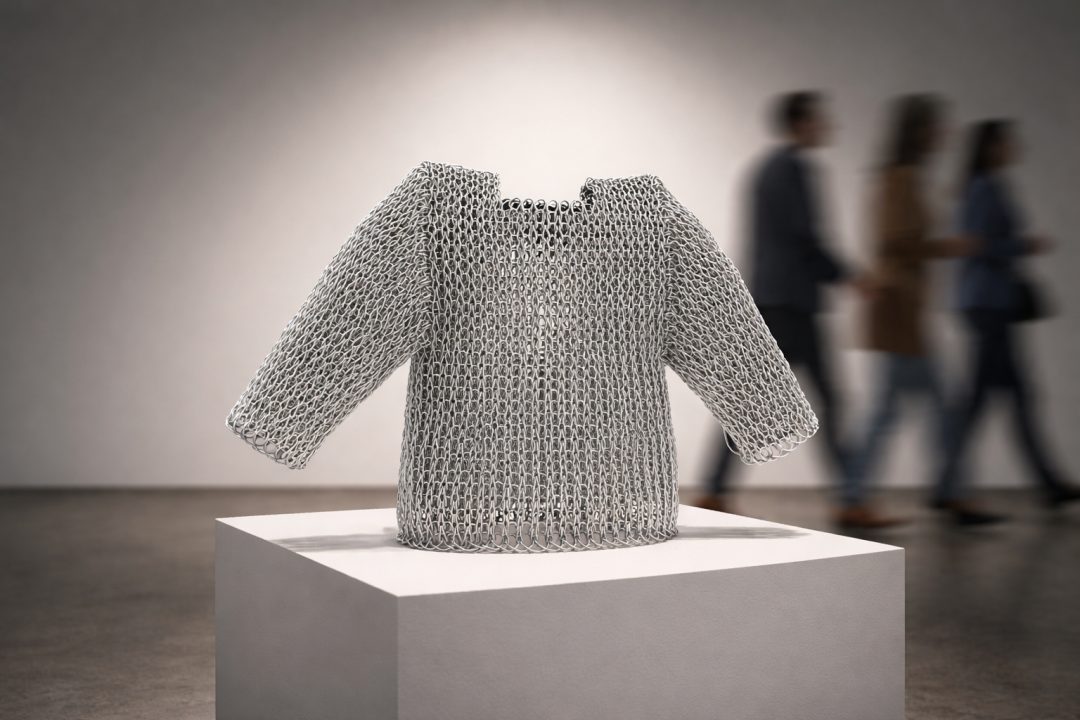
Bai Jing (白晶), Knitting Sweaters, no. 2, children’s wear | object installation primarily in aluminium wire
| 67 × 41 × 16 cm (height × width × depth) | created in 2026
Wool as a material has physical attributes and cultural associations that are highly unified. It derives from animal or plant, organic and natural. To the touch it is soft, light; in function it is used to make clothing, its core value being “warmth”—warding off the cold, giving the body envelopment and comfort. Culturally, wool is bound up with family, maternal love, women’s deft hands, selfless devotion—a string of warm imaginings.
Industrial aluminium wire stands at the opposite pole from all this. It derives from the industrial production line, inorganic and artificial. To the touch cold, hard, with no elasticity; in function usually deployed in construction, electricity or industry, with no kinship to the human body. Culturally, aluminium wire represents modern industrial civilisation, reason, order, coldness and affectlessness.
When Bai Jing decides to “knit a sweater” in aluminium wire, she is in effect performing a “violent transplant of matter.” She forcibly grafts an industrial material, insulated from “body” and “emotion,” onto a behaviour and form traditionally symbolic of extreme intimacy and warmth. The act of knitting is no longer light or pleasurable, but becomes a gruelling physical confrontation. The cold aluminium wire is hard to bend in the hand; each stitch requires enormous force, even bringing bodily pain. This process precisely translates the “loving labour” inherent in sweater-knitting into an “alienated labour” full of resistance, pain and self-exhaustion.
Bai Jing’s material translation lifts her work beyond mere formalist exploration, precisely cutting into the core issue of contemporary sociology and feminist theory—emotional labour. This concept, proposed by the American sociologist Arlie Hochschild (霍克希尔德), denotes the management and regulation of one’s inner feelings in order to display a particular emotional state in public. Especially in the East Asian familial context deeply influenced by Confucianism, women are expected to perform a massive, unpaid emotional labour routinely taken for granted.
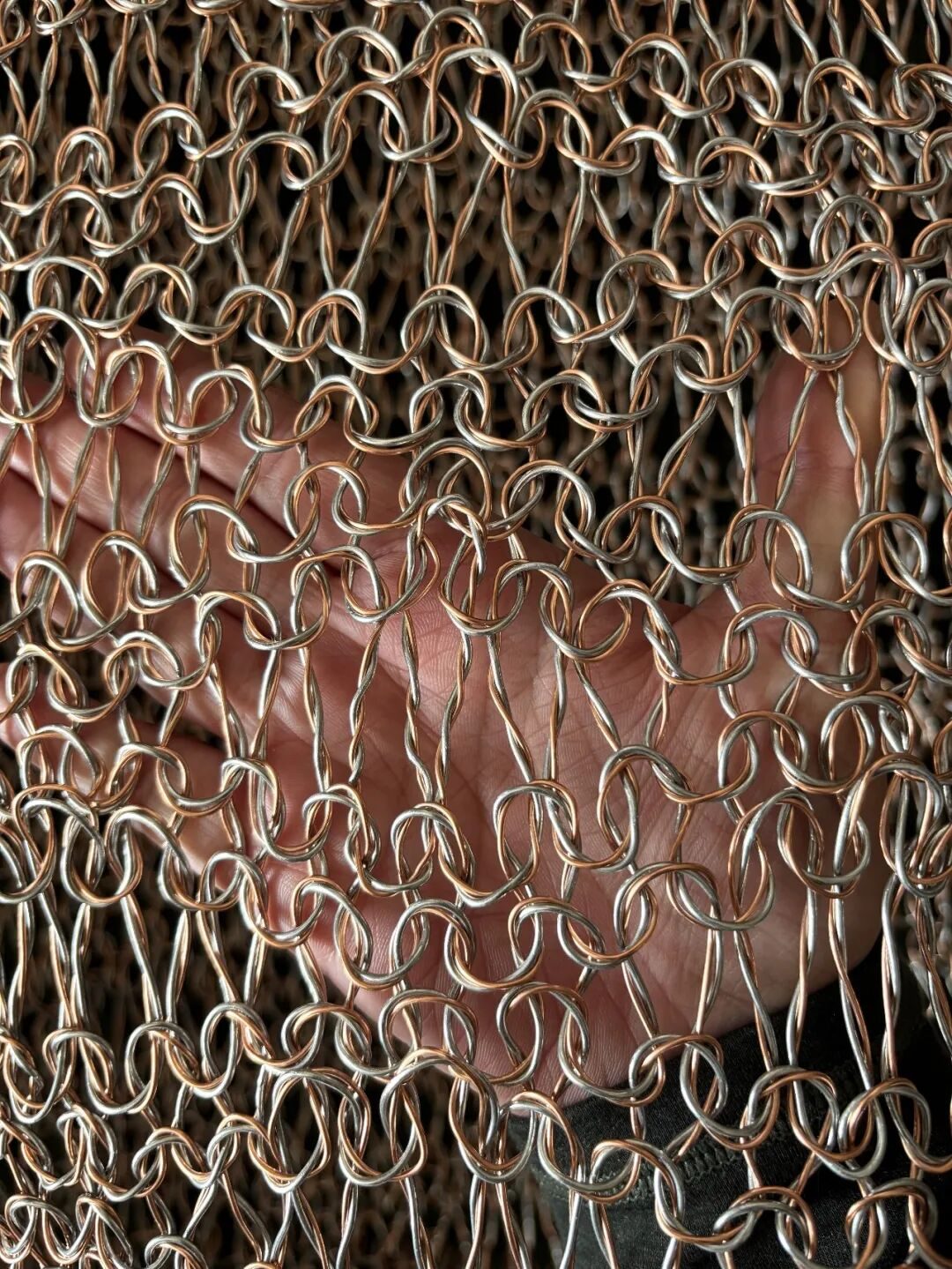
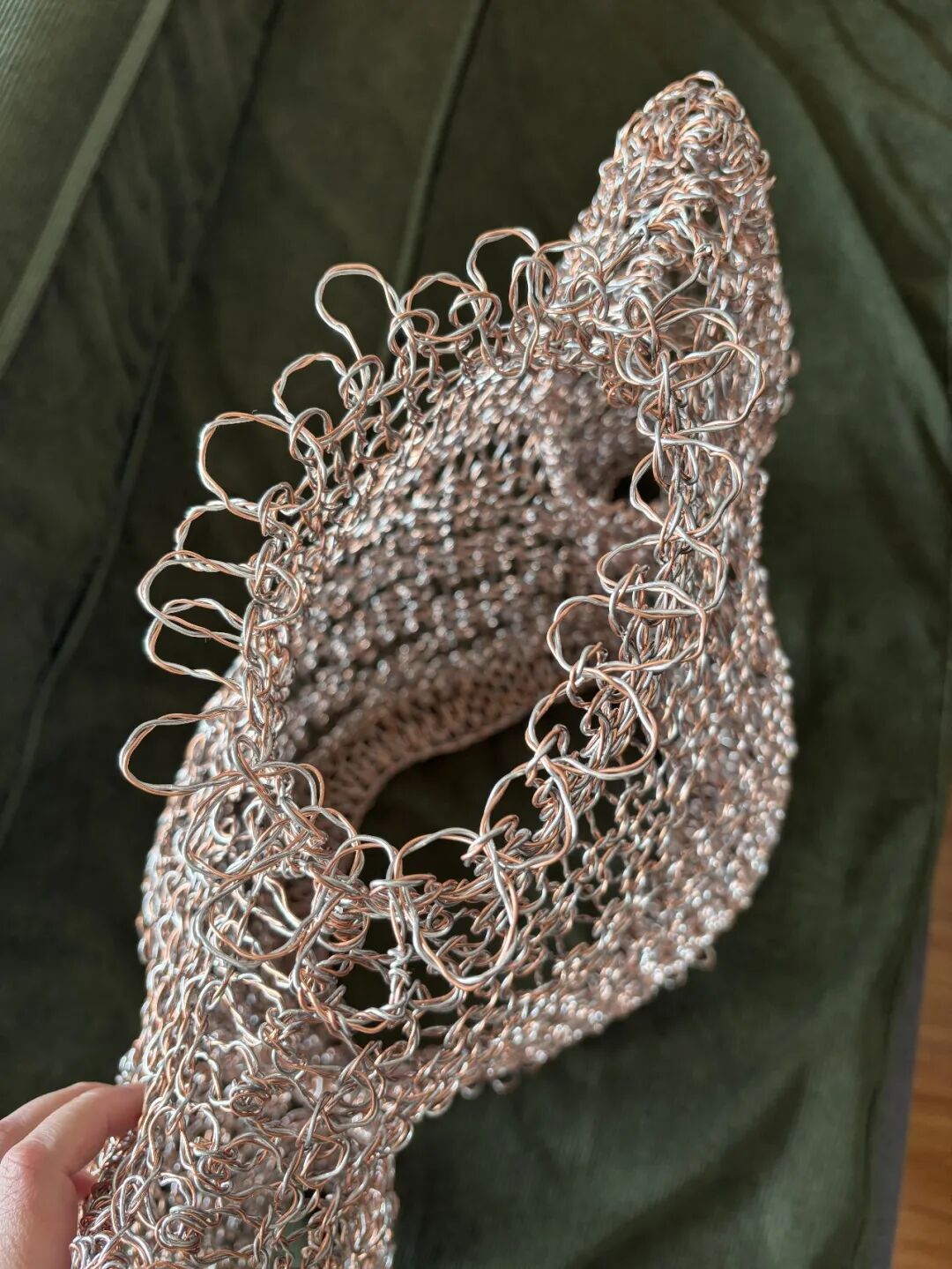
Bai Jing’s aluminium-wire sweater is the stunning “visual manifestation” of this invisible emotional labour. The seemingly tender act of “knitting a sweater” symbolises the endless love and care women are expected to give. Yet the arduous process of accomplishing this act in cold, hard aluminium wire precisely simulates the inner essence of “emotional labour”: a “labour” requiring enormous willpower, resisting one’s true feelings, full of friction and expenditure—even when this “profession” is the unpaid “wife” or “mother.”
When this aluminium-wire sweater is finally “knitted” and hung empty in the gallery, it becomes the thoroughly materialised “relic” of emotional labour. Its “sweater” form is society’s expectation of the female role, the “tender” script she is required to play. And its cold metallic substance is the real psychological state of the female subject, consumed, worn, “petrified” behind this long performance. The garment’s “emptiness” here gains an entirely new, deeper meaning: it is not only the absence of the body, but the absence of the “true self” hollowed out and suspended amid endless emotional labour.
Bai Jing’s practice of “knitting sweaters” in aluminium wire is profound not only in the conceptual subversion brought by material translation, but also in the complete, rigorous system of “disciplinary technique” metaphors constituted by her creative act, process and final form. As the knitting continues and the aluminium wire is hooked stitch by stitch, gradually forming a sheet of metallic fabric, this fabric of countless metal grids is the most direct, most everyday visual model of Foucaultian micro-power.
The American artist Petah Coyne’s (佩塔·科因) “empty garments,” influenced by personal memory, literature, Catholic theology and historical art such as European Baroque sculpture, explore the distinction between abundance and decay, beauty and the grotesque. Her bridal-gown and dress installations from the 1990s onward are core feminist practices of empty-garment art. Especially her most representative Bridal Series and Untitled #781, using specially formulated wax, silk fabric, pearls and ribbon as core materials, hand-shape empty, bodiless bridal gowns and dresses, thoroughly extracting the garment’s wearable function and making the empty garment an independent spiritual vehicle.
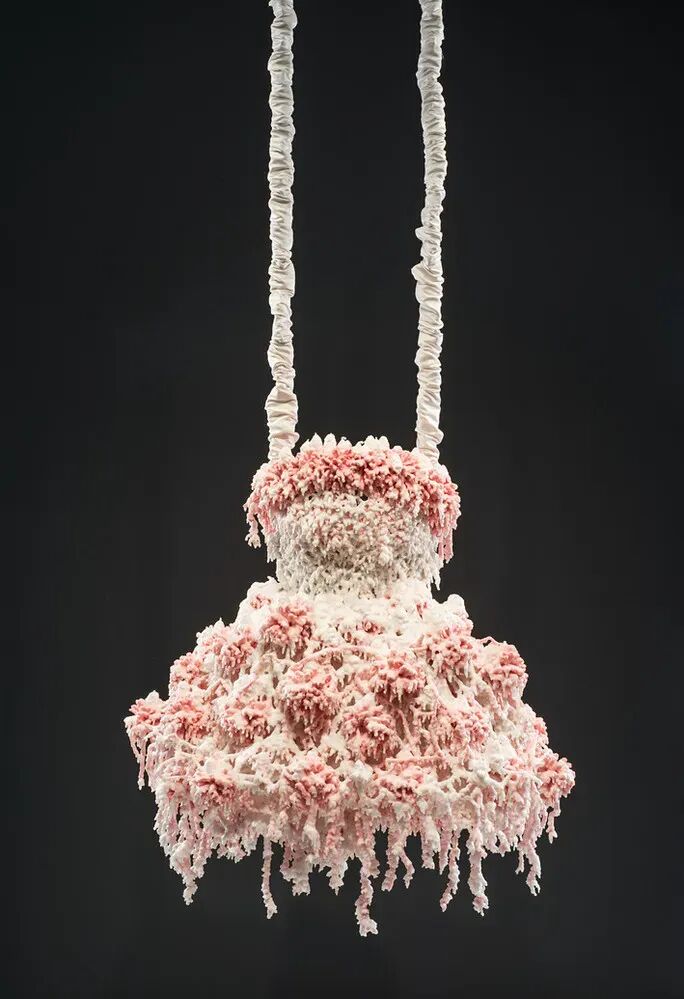
This Untitled#781 is part of a series of white-and-pink wax sculptures resembling Rococo chandeliers, fluffy skirts or dresses. It reflects Coyne’s girlhood imaginings of female identity: beautiful and luxuriously festive, as if “floating in the air.”
These empty gowns, originally overt signs of the marriage institution and women’s social discipline, have their worldly expectations of women’s discipline, hidden trauma and individual life-memory sealed within the empty garment’s creases through Coyne’s heavy waxed texture and ornate decoration. The body’s absence instead sharply magnifies women’s true predicament within the patriarchal structure; the empty garment is no longer the body’s appendage, but a container bearing women’s collective and individual life-experience.
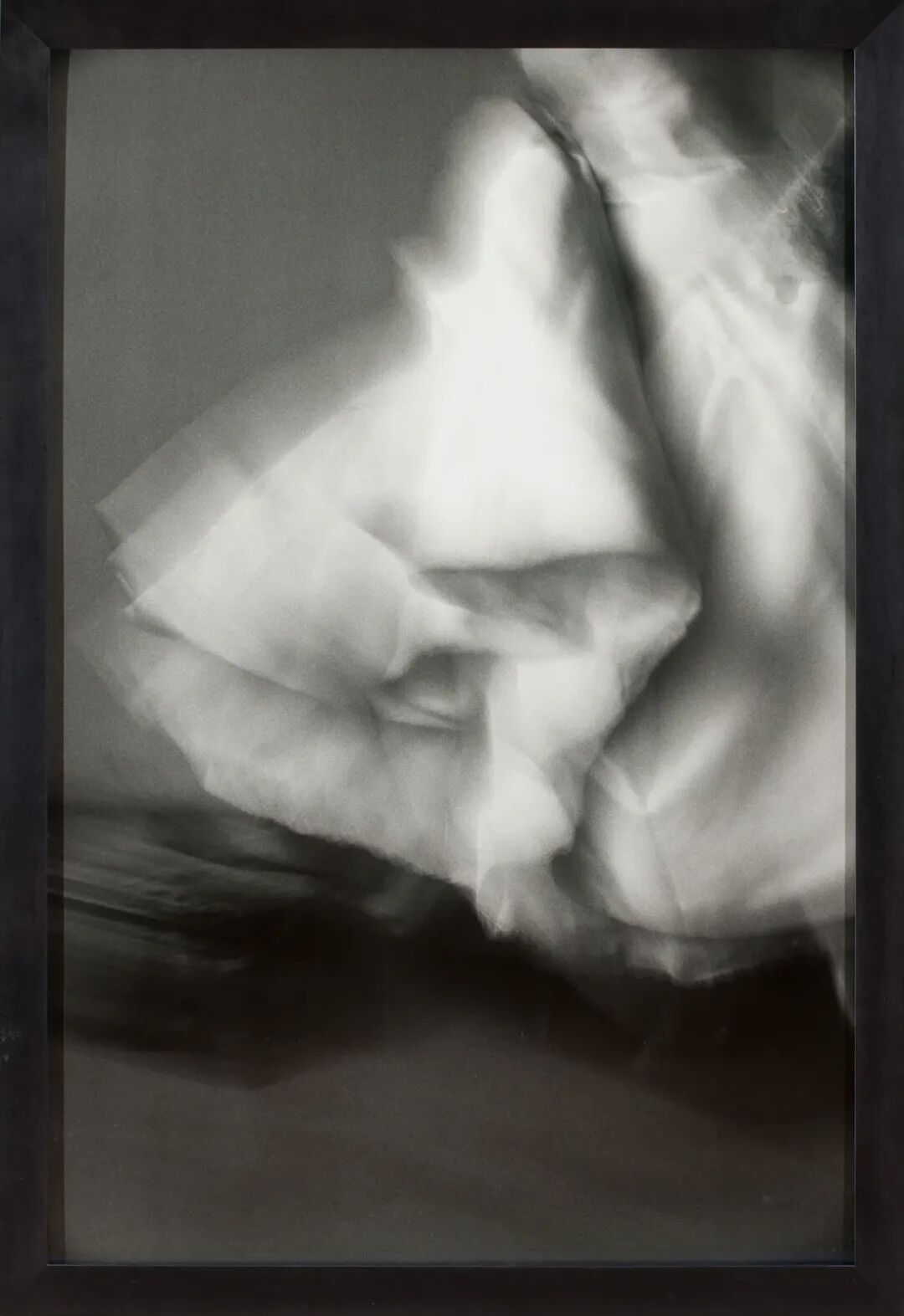
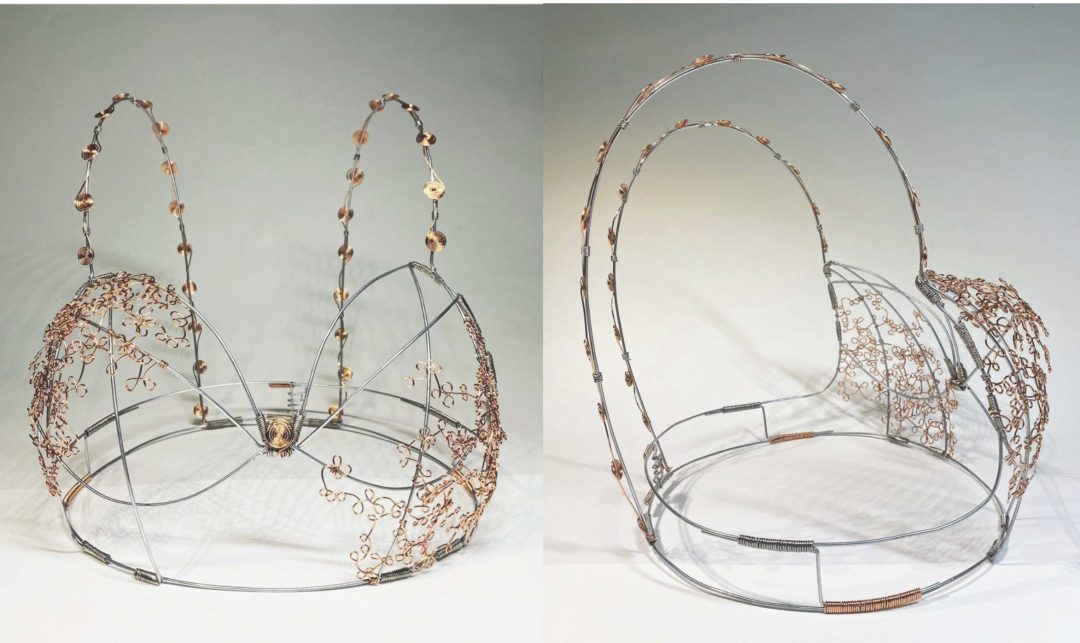
The Korean-American New York artist Katie Baek’s underwire sculptures in metal wire are a typical practice of empty-garment art in the narrative of the female body. This 2024 steel-wire bra, built from 16-gauge industrial wire with fine copper wire wound to replicate the delicate texture of lace, is entirely detached from the human body, presented as an independent empty garment in the gallery.
She deliberately uses cold, industrial metal to replicate intimate, soft women’s underwear, endowing this empty garment with intense visual and conceptual tension by nature. Underwear is itself an intimate sign disciplining the female body and shaping worldly aesthetic standards; when it is withdrawn from the flesh and exists independently as a metal skeleton, the originally hidden bodily constraint is thoroughly visualised. The empty garment’s “emptiness” is not the simple absence of the body, but the transformation of women’s disciplined everyday predicament—from an invisible, intimate sensation into a tangible, gazeable material entity—completing a deep interrogation of the female body’s boundaries and power.
Chapter Four: Ownerless Garments of the “Posthuman Era” under Fluid Identity
Entering the twenty-first century, the tide of globalisation has reshaped the human existential landscape with unprecedented depth and breadth. The cross-border flow of capital, information, technology and people, on the one hand, fosters the tighter “global village” imagination, and on the other intensifies the dispersion, dislocation and anxiety of individual identity.
Against this macro-backdrop the narrative focus of “empty garment” art also quietly shifts. It is no longer merely a container of personal memory, a shell of social power or a battlefield of gender politics, but ever more keenly captures how identity itself, in the context of global fluidity, becomes like an overcoat one can put on or take off at will. Further, with the visual practice of biotechnology, artificial intelligence and cyborg theory, a portion of avant-garde “empty garment” art even begins actively to expel and refuse the human body, prophesying the advent of a “posthuman” era.
Section One: Identity Dislocation and the Nostalgia Container in the Nomadic Context
Globalisation is essentially a process of compressing space and time. One direct consequence of this “disembedding” is that large-scale transnational migration becomes the norm. Yet when the body moves through different cultural, linguistic and geographic environments, where is the spirit’s “anchor” to be placed? In this context, clothing—that “second skin” wrapping the body, most marked by the personal—assumes a dramatic double role: both a disguise and amulet helping the individual blend into the new environment, and a mobile archive carrying native-memory, cultural genes and personal history, a nostalgia-container one can carry at all times.
When the body is in constant flow, fixed dwellings are replaced by temporary stations, stable communal ties by fluid weak connections. Then the garment closest to the body becomes a paradoxical “spatial anchor.” On the one hand it marks the wearer’s effort to fit into the new environment; on the other, its inner odour and worn traces constantly awaken memory of “elsewhere.”
The aforementioned Korean-American artist Do Ho Suh (徐道获) is unquestionably among the most important artists to capture and poetically present this theme of globalised fluid identity. He is known worldwide for his signature 1:1 architectural replicas and garment-sculptures sewn from translucent silk or polyester fibre. These works, in an extremely light, fragile yet poetic manner, explore the complex entanglement of memory, identity and belonging when an individual survives across cultural spaces. The key to understanding his work is Do’s personal experience. Born in 1962 in Seoul, Korea, he grew up in a traditional family, his father a painter. After absorbing traditional Eastern aesthetics, he went to Yale University in the US for advanced study, and has since long worked and lived between New York, London and Seoul. This sustained transnational “nomadic” life gives him an intimate experience of cultural displacement, spatial transformation and the fluidity of identity.
Consider Some/One (2001). This work is strung from hundreds upon thousands of stainless-steel Korean military dog tags, finally forming a hollow sculpture shaped like an ancient emperor’s dragon robe. Each dog tag represents an anonymous individual, yet aggregated they constitute an outer robe symbolising supreme collective power. This “empty garment” of cold metallic sheen is interiorly void; its grand exterior contrasts sharply with its inner void. The work profoundly criticises the reality of the individual worn away and homogenised within the state machine and collectivism.
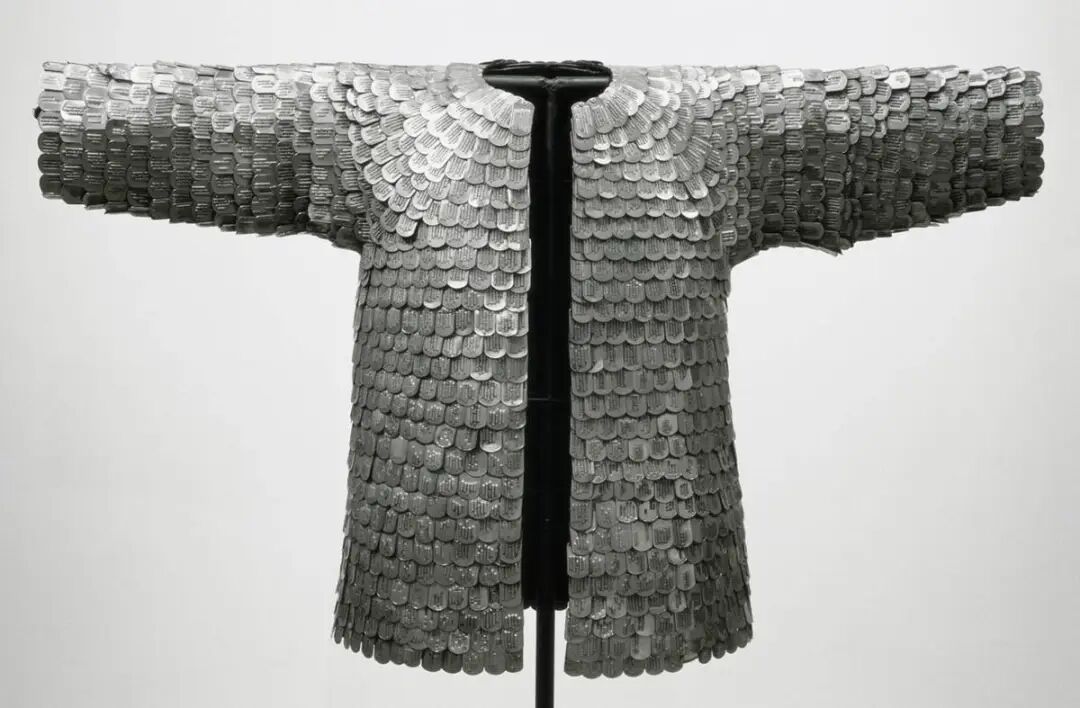
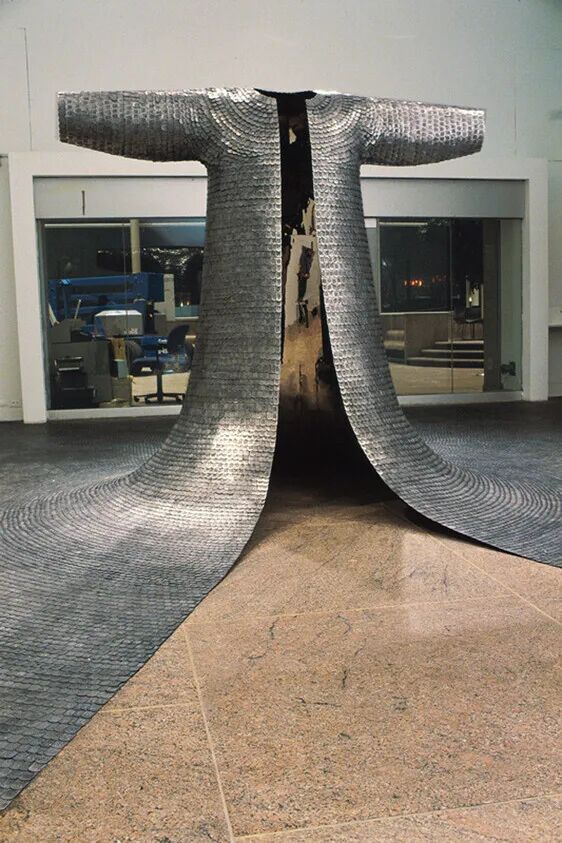
Do Ho Suh (徐道获), Some/One (Some Among Us / One) | Material: stainless-steel military dog tags, metal, resin | 2001
Section Two: Ownerless Garments of the Posthuman Era
If Do Ho Suh’s “empty garment” still looks back with feeling and tries to grasp the departed human body and its attached cultural memory, then along another current of contemporary art a more subversive group of artists begins actively, even violently, to expel the human body. The “empty garments” they create are no longer containers prepared for some ideal or real human body; their form, material and scale utterly depart from human ergonomics. These garments refuse from the outset to be worn; their very existence is a thorough subversion of the traditional, human-body-centred conception of clothing. Behind this turn lies the strong reverberation, in art, of posthumanist thought since the late twentieth century.
Traditionally, the fundamental law of clothing design is built around the human body. Yet since the late twentieth century, especially at the intersection of conceptual art and avant-garde fashion, a current of “anti-anthropocentric” clothing design has emerged. These works no longer take pride in serving the human body, but take pleasure in challenging, distorting or even ignoring human anatomy. The philosophical root of this shift can be traced to the concept of the “body without organs” proposed by Gilles Deleuze (吉尔·德勒兹) and Félix Guattari (菲利克斯·加塔利). Inspired by this, some artists and designers begin to regard clothing itself as a “body without organs” that can exist independently of the human body. This “garment” is no longer a void shell awaiting filling by the body, but a living entity with its own logic, desire and form.
The critical edge of this radical “empty garment” practice points first at the deeply rooted patriarchal visual mechanism behind the fashion industry. For centuries, mainstream fashion—especially women’s wear—has continually produced and reinforced an idealised, gazeable female body-paradigm. When a garment utterly refuses entry by a standard human body, it fundamentally dismantles this power-relation of “looking” and “being looked at.”
The Korean artist Lee Bul’s (李昢) stands at the very forefront of her era in exploring the posthuman body and feminist critique through the “empty garment.” Since the 1990s she has built, with sculptures and installations full of futurism and technology yet hybridising biological form and mechanical elements, a fascinating yet unsettling posthuman world. Many of her works—especially those hollow sculptures on the “Cyborg” theme—can be seen as perfect exemplars of the posthuman era’s “ownerless garments.”
Lee Bul’s Cyborg series, such as Cyborg W1–W4 (1998), presents highly stylised human shells hung in the air. Made of smooth white silicone, fibreglass and polyurethane, these “shells” possess exaggerated female bodily curves: huge breasts and buttocks, yet at the same time incomplete, lacking heads and parts of limbs, with complex mechanical structures exposed at the joints. Clearly these “empty garments” are designed for no real woman. They are more like the abandoned shells of future bio-cyborgs from science fiction films or Japanese anime.
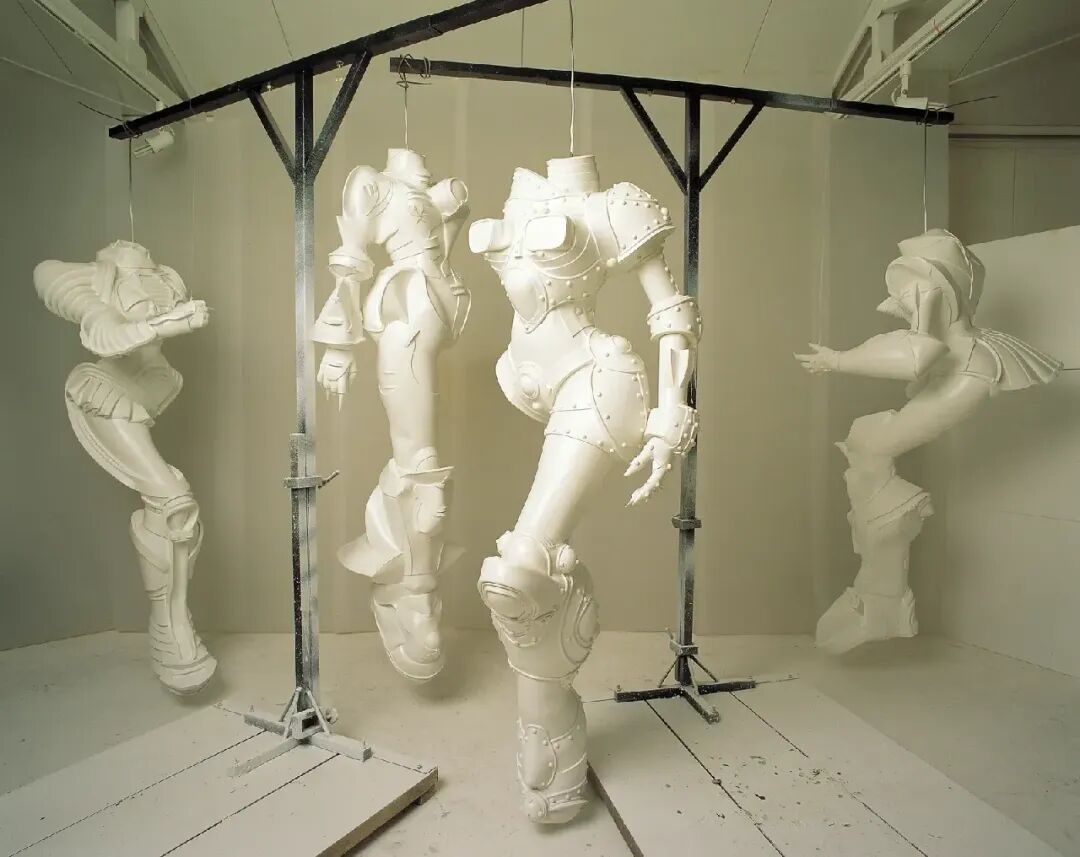
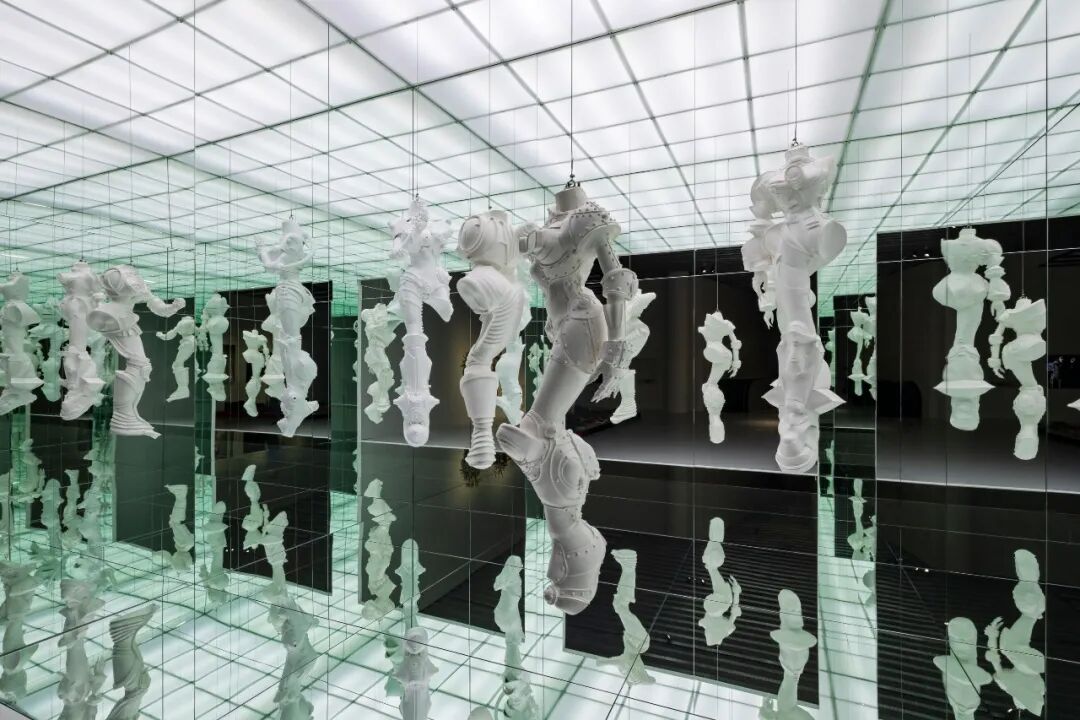
The subversiveness of these works lies first in their parody and deconstruction of the “perfect” body. Lee Bul appropriates the popular-culture objectification of the female body (e.g. the “huge-breast” setting in anime), yet through “fragmentation” and “mechanical exposure” makes it strange and uncanny. This handling echoes the core idea of feminist theorist Donna Haraway (唐娜·哈拉维) in her famous manifesto A Cyborg Manifesto. Haraway regards the cyborg (a hybrid of organism and machine) as a powerful metaphor for breaking traditional dualisms (such as man/woman, human/machine, nature/culture). Lee Bul’s cyborg empty garments are precisely the material form of this “imagined being.” They are empty because the new life-form that transcends traditional gender definition—which they herald—has not yet (or will never) truly been born. This emptiness is a void oriented toward the future, full of possibility.
More importantly, through their materials and forms these works forcefully criticise patriarchal society’s gaze at and discipline of the female body. Those smooth, cold, industrial-product-like surfaces parody the commodification of the female body in consumer society. And those fragmented limbs and exposed mechanical interiors are like a violent rebellion, refusing to be seen as a complete, harmonious, consumable visual object. They are no longer soft, compliant flesh awaiting possession, but hard, cold mechanical bodies with latent aggression. They are truly “ownerless garments,” for they refuse any form of “master”—whether the body that would wear them or the gaze that would behold them.
Section Three: The Transgression of Conceptual Fashion—Clothing as an Autonomous Object
“Empty garment” exploration is not confined to the traditional field of contemporary art. In the fashion world, seemingly separate from it, especially at its most experimental and conceptual frontier, a revolution in the ontology of clothing has long since quietly unfolded. From the 1980s and ’90s, conceptual designers represented by Martin Margiela (马丁·马吉拉), Rei Kawakubo (川久保玲) and Hussein Chalayan (侯赛因·卡拉扬) consciously challenged clothing’s traditional status as bodily appendage. Through deconstructive tailoring, unconventional materials and anti-functional garment forms, they liberated clothing from the practicality of “being worn” and gradually granted it an independent, autonomous object-status.
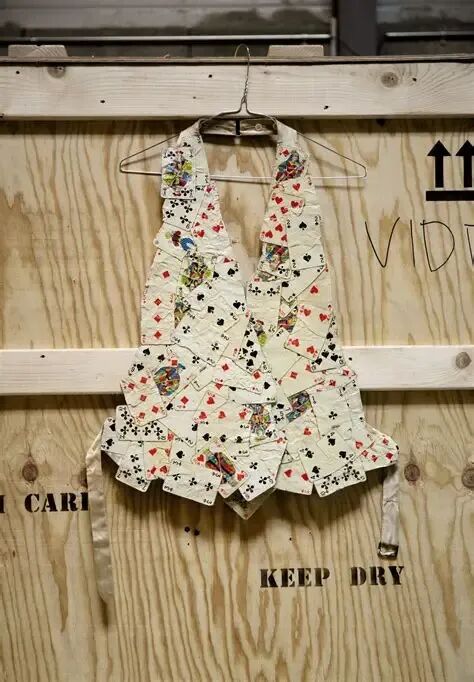
The Belgian designer Martin Margiela (马丁·马吉拉) is unquestionably a pioneer. He himself never appears in public, vigorously erasing the designer’s personal trace as “star,” so that attention centres wholly on the clothing itself. His design is known for radically deconstructive methods—exposing the lining, seams and labels originally hidden within the garment. In his famous “Stockman” series (Spring/Summer 1997) he directly took the linen smock from the tailor’s mannequin as inspiration, making it into a wearable waistcoat.
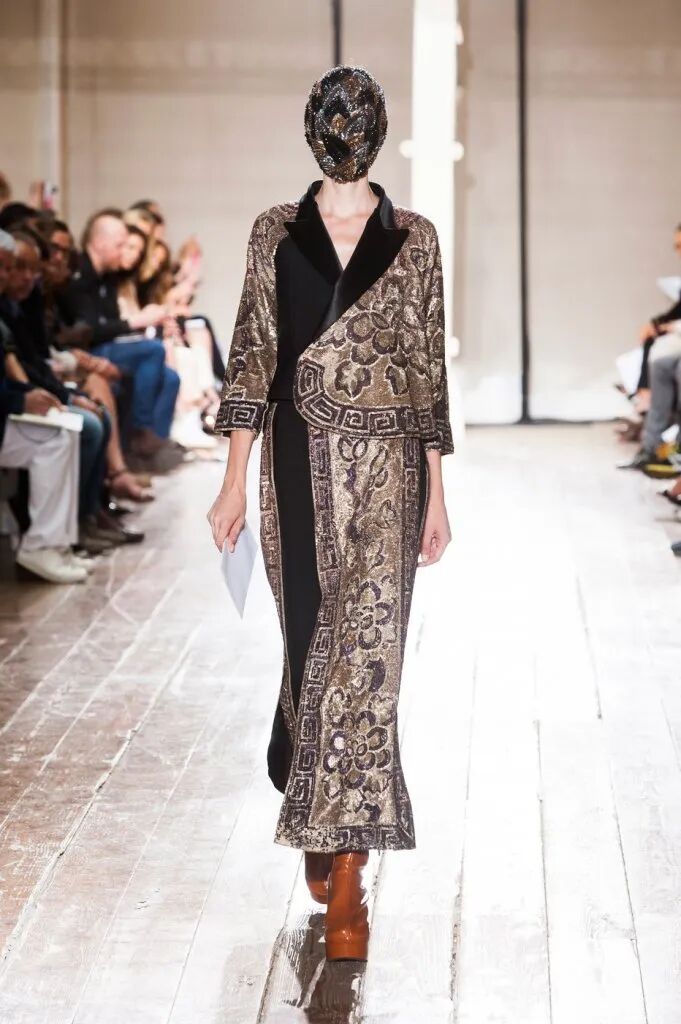
Margiela’s runway is an extension of his concept. He often has models cover their faces with cloth or long hair, or simply uses empty hangers on the conveyor to display the clothing. This deliberate erasure of the “person” aims precisely to let the clothing speak for itself. When a body is absent or anonymised, the viewer’s gaze is compelled to focus on the garment’s cut, structure, fabric texture and the concept behind it. Margiela’s “empty garment” aesthetic is a profound reaction against the fashion industry’s “celebrity effect” and “body worship.” By creating a context of the “invisible person,” he makes clothing no longer a tool setting off star or model, but the sole protagonist on stage.
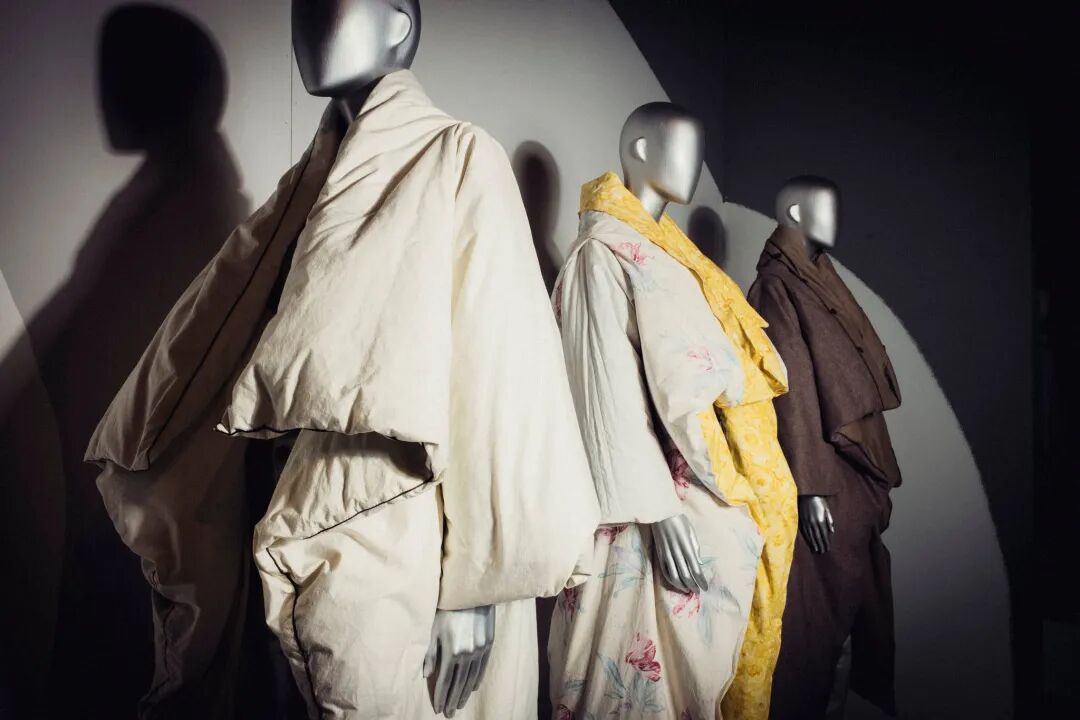
The Japanese designer Rei Kawakubo (川久保玲) liberates the object by actively “attacking” the human form. In her shocking Spring/Summer 1997 series “Body Meets Dress, Dress Meets Body”—colloquially the “Lumps” series—Kawakubo padded the backs, hips and shoulders of tight-fitting dresses with huge, irregular down-filled lumps. This made the models wearing them look like bizarre creatures whose bodies had mutated.
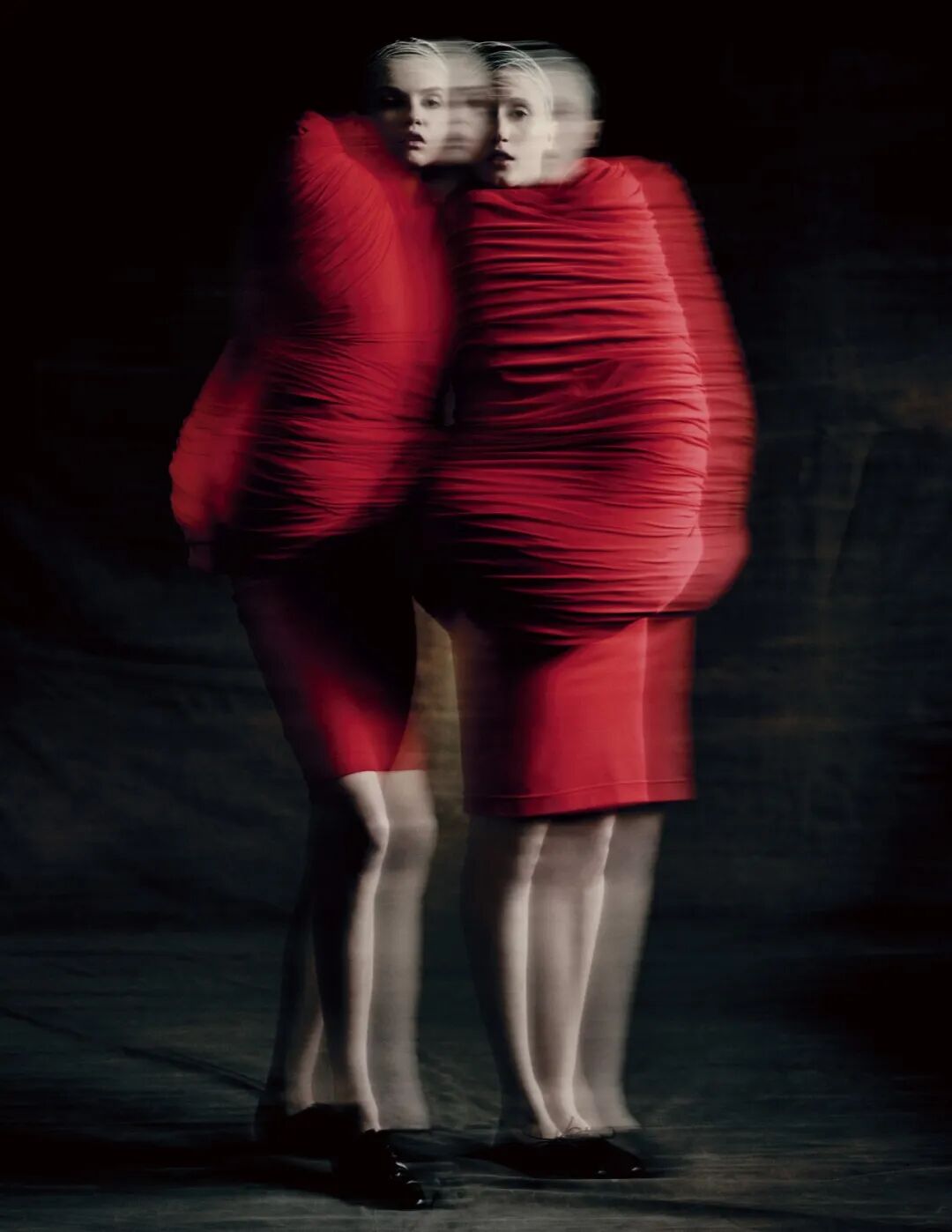
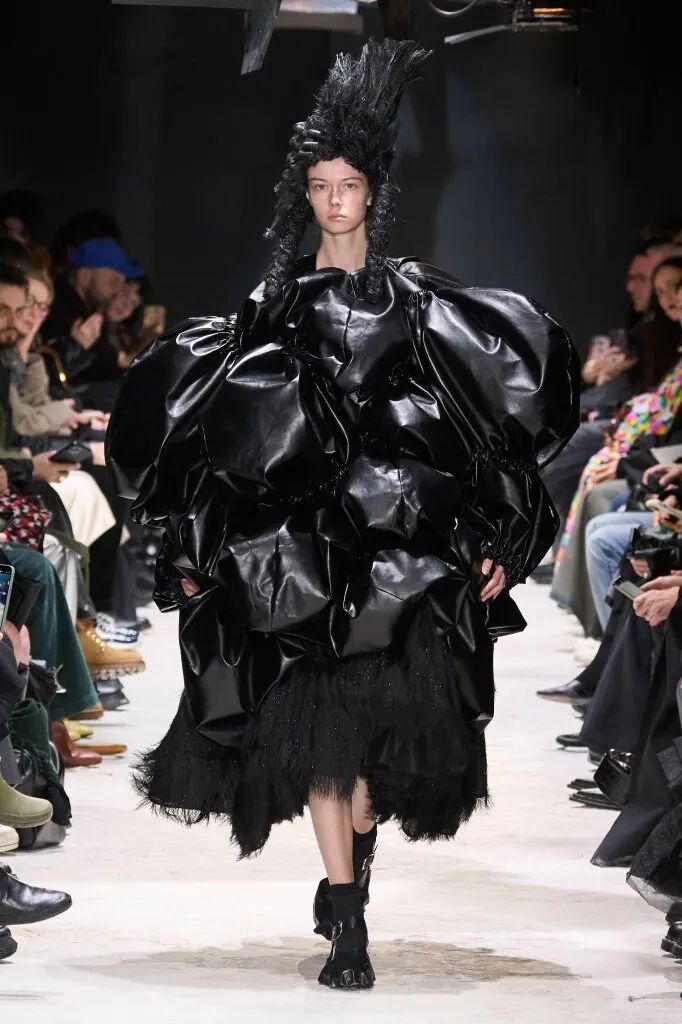
These “lump” garments utterly destroy traditional fashion’s elegant imagination of the female body-curve. They are neither sexy nor beautiful, even unsettling. They are not made to wrap or beautify an existing body, but actively, violently create an entirely new, never-before-seen body-outline. Here clothing is no longer the passive “second skin” but an active, aggressive “parasite.” It has its own will, wanting to transform the human body into a vessel conforming to its own form. Even when these “empty garments” are taken off and laid in the gallery, the lumps within still support their strange structure. Their inner “emptiness” is occupied by those fillings, hinting that a non-human, alien “body” has already generated within.
Another great contribution of conceptual fashion to the art history of the “empty garment” lies in its successful blurring of the “object’s” identity across different fields (commercial and artistic space). Just as Marcel Duchamp (马塞尔·杜尚) named a urinal Fountain and signed it, lifting it from everyday functional object to artwork, the shift of field also strips these garments of their commodity-attribute and practical function. In the museum context no one cares whether the garment fits, is comfortable or how much it costs. Attention is directed to its pure visual form.
At this moment this “empty garment” is no longer a piece of clothing but a pure sculptural work. Its “emptiness” means not merely the absence of the human body, but the suspension of its use-value. This suspension allows it to leap from the category of “thing” to that of “artwork.” This offers us an important occasion to understand the “empty garment” from the perspective of “Object-Oriented Ontology” (OOO). The OOO philosopher Graham Harman (格雷厄姆·哈曼) argues that the world consists of various independent objects, which—whether human, stone or garment—possess their own irreducible, mysterious reality. For Harman, only when we suspend a thing’s functionality (what it can do for us) can we glimpse the thing’s own subtle, profound existence. Conceptual fashion’s “empty garment” in the museum is the perfect illustration of this philosophy. They are no longer garments “serving us,” but garments that merely “are what they are.”
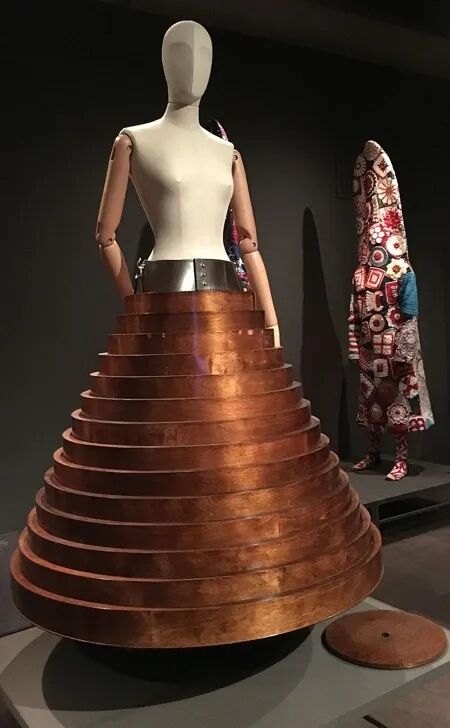
Hussein Chalayan, Coffee Table Skirt: a round wooden coffee table directly becomes a skirt; when the model leaves, it can revert to a table. With the body absent, it is furniture; with the body present, it is clothing.
Conclusion: The Future—toward an Object-Oriented Ontology of the “Empty Garment”
Tracing and sorting the genealogy of the “empty garment” as it winds through contemporary art history: from post-war European artists’ materialisation of traumatic memory, to Chinese contemporary art’s deconstruction of collective power-signs, to global women artists’ weaving of micro body-politics, and finally to the new generation’s radical imagination of a posthuman future. Through the essay’s full survey, a clear micro-history of intellectual evolution gradually emerges.
Surveying the shifts of contemporary art since the second half of the twentieth century, we can summarise the evolution of “empty garment” art roughly into three mutually progressive stages.
The first stage may be summarised as “garments that represent the person.” At this stage the empty garment appears mainly as a substitute portrait or identity-sign. Jim Dine’s Bathrobe series, with its repeatedly depicted robe-outline, is in fact an absent presence of the artist’s self-image. Zhan Wang’s Zhongshan Suit and Sui Jianguo’s Legacy Mantle likewise lock their core reference onto a generation, an ideology and a receding era represented by that specific garment. At this stage, though the garment is foregrounded, the final interpretive authority over its meaning still rests in the hands of the “person.”
The second stage is “garments that record the person.” At this stage the garment is no longer merely “representing” a static identity, but has become a material archive “recording” the human being’s dynamic life-experience. Under Merleau-Ponty’s “body schema” framework, old garments are seen as the direct imprint of the body perceiving the world, recording the subject’s odour, temperature and movement. The garment-imprint on Felix Gonzalez-Torres’s empty bed is the tenderest yet cruellest record of a lover’s body dissolving away. Christian Boltanski’s mountain of second-hand clothing becomes the cold archive of countless anonymous dead in the Holocaust. Bai Jing’s “sweater” knitted in industrial aluminium wire records, in a hard, cold fossil-form, the invisible “emotional labour” of the East Asian context. At this stage the garment gains the identity of historical witness and memory-bearer; its “thingness” begins to awaken.
The third stage—the most forward-looking—is “garments that gaze at the person.” At this stage the subject–object relation between person and garment is fundamentally reversed. No longer does the person speak through the garment; the garment itself begins to “speak” to the person, even to interrogate and judge. Lee Bul’s cyborg empty garments, with their non-human, fragmented mechanical forms, coldly gaze at us creatures of flesh and blood, questioning the future definition of the human body. Kawakubo’s “lump” dresses, with their strange outlines, gaze at the fashion industry and mass taste, mocking our stale standards of “beauty.” At this stage the garment thoroughly shakes off its status as human appendage, gaining its own dignity and will. Their “emptiness” no longer serves to summon the person’s return, but to declare the person’s non-necessity.
The evolution through these three stages ultimately leads us to a hugely important domain in contemporary thought: new materialism and Object-Oriented Ontology. Thinkers represented by Jane Bennett (简·本内特) attempt to challenge the long-standing subject–object dualism in Western philosophy, arguing that “things” themselves possess intrinsic vitality, agency and creativity.
Looking back at the whole history of “empty garment” art from this angle, we arrive at a deeper theoretical insight: those “empty garments” hung in the gallery, scattered on the floor or recast in hard metal are no longer passive objects dependent on humans, but “non-human actors” possessing their own “vitality.”
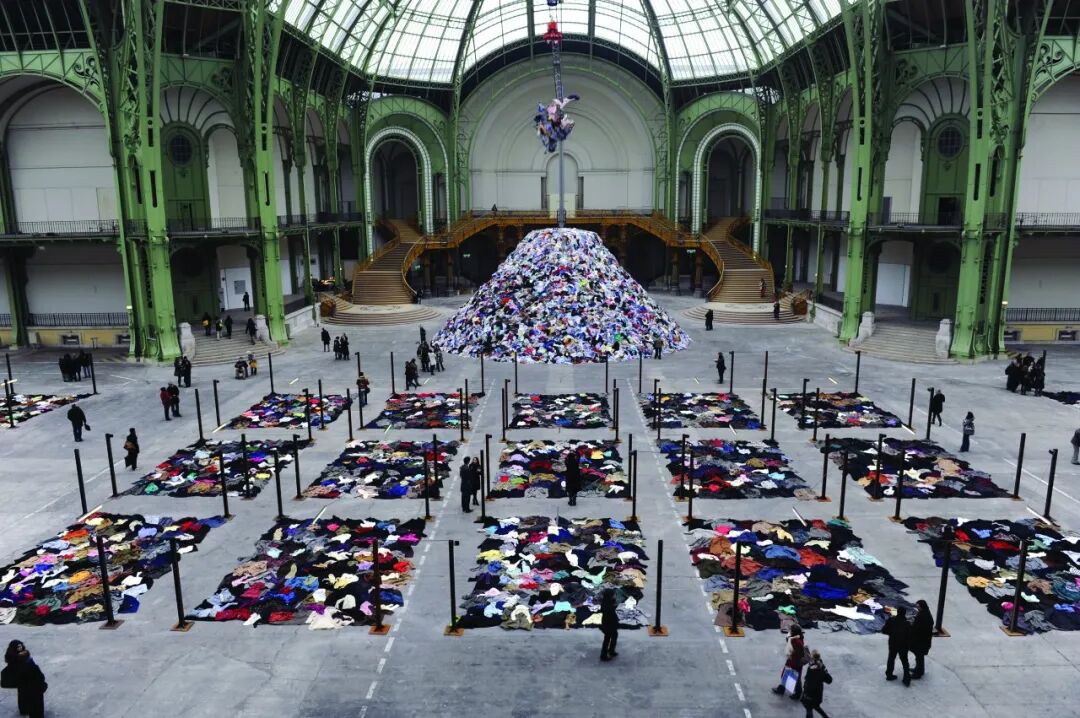
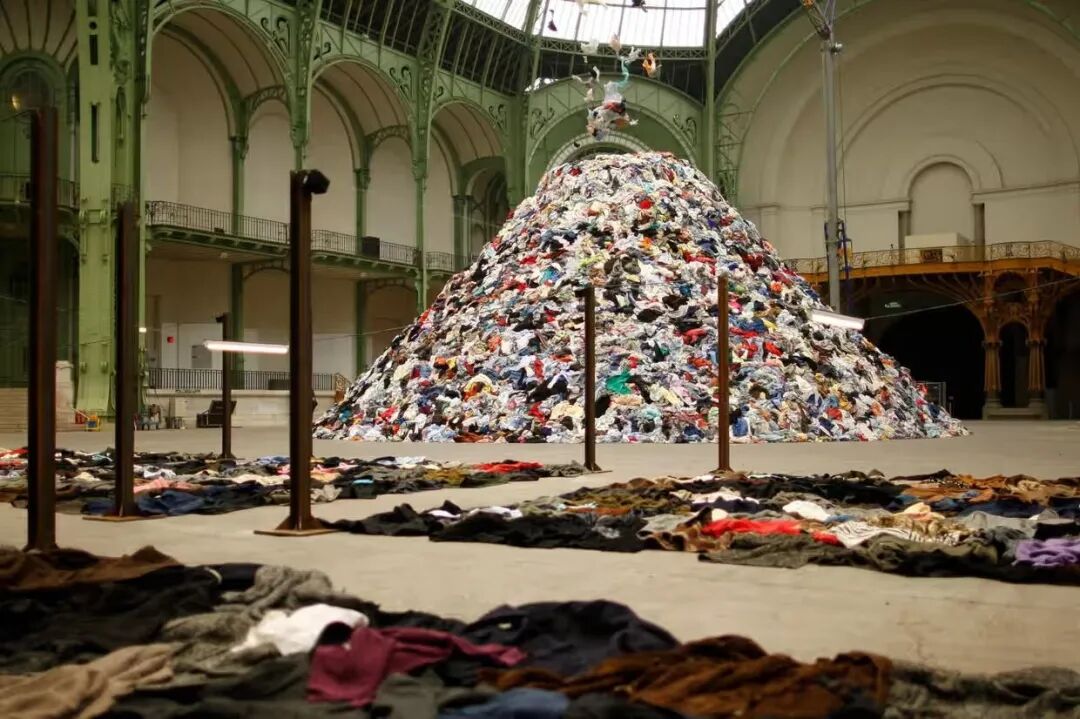
Returning to the above: in 2010, when Boltanski piled 50 tonnes of second-hand clothing in the Grand Palais, Paris, to create Personnes, the force this pile of garments generated was far beyond what “symbol” or “metaphor” could encompass. The mixed odour of old garments rushing at one, the physical oppression of its gigantic volume, the merciless motion of the mechanical grab that randomly seizes and drops—together constitute a powerful material event. Here the garments no longer merely “represent” the dead; they themselves become an awe-inspiring actor of enormous energy.
When we stand before an outstanding “empty garment” artwork, what we experience is no longer merely remembrance of an absent person or critique of a social phenomenon, but a direct encounter with “thing.” This “thing,” with its unique material, form, weight, odour and historical trace, shows us a world independent of human will. It is silent, yet not speechless; empty, yet able to fill the entire space’s psychological perception.
Today, we live in an era of unprecedented fusion of the material and digital worlds. Virtual-reality and augmented-reality technologies mature by the day; the “digital skin” and virtual-avatar “clothing” become important components of people’s construction of online identity. In such an increasingly “dematerialised” future, will the “empty garment” motif—which insists on stubborn materiality—lose its critical edge? Perhaps the answer lies precisely in its insistence on “materiality.” As more and more identity-expression and social interaction occurs in virtual space, as our “second skin” becomes lines of code freely editable, a real-world old garment—with its worn traces, faint odour—will possess a “realness” and “historical sense” unprecedentedly precious. It may become a “gravitational anchor” against the lightness of the virtual world.
Ultimately, whether in the physical world or the digital realm, the core allure of the “empty garment” springs from its profound paradox: it is “full” because “empty,” “present” because “absent.” It is a silent container, yet can hold the noisiest history, the most private memory and the most radical future imagination. From Joseph Beuys’s shamanic Felt Suit onward, through the successive explorations of countless followers, the “empty garment” has proven the powerful vitality of a theoretical apparatus. In the future it will continue, as the most faithful ghost and mirror of human existence, to hover in the long corridor of art history, constantly asking us: when all appearances fade and we have doffed all our shells, what finally remains?
订阅艺术评论
订阅即赠《2024中国当代艺术关键词》内部思考笔记 PDF
每周免费获取最新当代艺术批评与研究