On 14 March 2026, Jürgen Habermas died at the age of ninety-six.
The last giant of the Frankfurt School has extinguished his lamp. The world’s intelligentsia mourns, yet what prevails is a more pervasive aphasia: in an age when algorithms manufacture antagonism, trending topics displace reflection, and quarrels drown out dialogue, what we have lost is not merely a philosopher but something closer to the last remaining roadmap for “how not to slide into barbarism”.
Throughout his life Habermas fought two things: the silent oppression of power, and the distortion of reason itself. When the latter so often became an accomplice of the former, he stubbornly held that the way out lay not in abandoning reason but in completing it — completing it through “dialogue”.
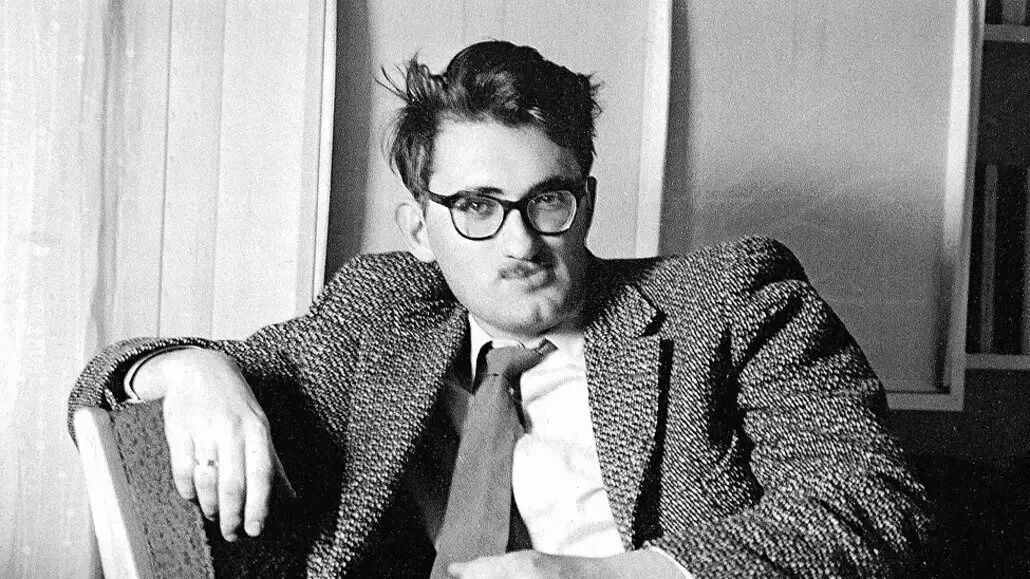
Today, trapped as we are in information cocoons, islands of opinion and the mire of emotion, returning to Habermas is close to an act of self-rescue. As early as sixty years ago he prophesied the “refeudalisation of the public sphere”, diagnosing the spiritual pathology behind every online flame war of our present. The “communicative rationality” and “ideal speech situation” he offers are no utopia; they are the last tools by which, in this broken world, we can still recognise one another and avert spiritual isolation.
What follows is his testament to this clamorous world.
Preface: The Last Standard-Bearer of Modernity
Jürgen Habermas passed away peacefully at his home in Starnberg on 14 March 2026, aged ninety-six. The departure of this central figure of the second generation of the Frankfurt School marks the definitive close of that ambitious twentieth-century epoch which sought, through philosophy, to grasp the destiny of modern human society as a whole. The tradition of critical theory that began with Adorno and Horkheimer and reached its summit with Habermas has finally turned its last page.
Habermas’s life all but completely spans the history of human thought from the latter half of the twentieth century to the first twenty-five years of the twenty-first. Born on 18 June 1929 into a middle-class family in Düsseldorf, he lived through the rise and fall of the Nazi regime as a youth. In his later years he often recalled that he belonged to a “politically late-maturing generation”, and it was precisely this “lateness” that drove him, in the postwar period, to confront Germany’s historical guilt and the question of democratic reconstruction with an almost obsessive inquisitiveness. In one interview he confessed: “The adolescence of our generation was overlaid by politics, and it was precisely this overlay that robbed us of a normal process of political socialisation.” This profound awareness of political trauma became the hidden drive behind all his later theoretical work.
If Adorno and Horkheimer represent the first generation of critical theorists’ pessimistic insight into the dialectic of enlightenment — how instrumental reason turns back into a new barbarism — then Habermas represents a heroic turn within critical theory itself. He rejected the cultural pessimism that wholly demonises reason, choosing instead to rebuild the possibility of human dialogue amid the ruins of reason. As he wrote in *The Theory of Communicative Action*: “Reason itself should not be held responsible for the crimes committed in its name; on the contrary, it is the betrayal of reason that is the source of those crimes.” This sentence may be taken as the core manifesto of his life’s intellectual labour. When postmodernists in the late twentieth century loudly proclaimed “the end of reason”, Habermas maintained an almost stubborn posture, insisting that modernity is an “unfinished project”.
For contemporary art, Habermas’s significance is especially singular and profound. In an age when art is wholly devoured by the logic of capital and creative work is degraded into financial instruments, at a moment when avant-garde art incessantly deconstructs itself until it loses all critical force, Habermas supplies a final set of coordinates. He reminds us that art is not an isolated domain of aesthetic autonomy but an important medium linking the lifeworld and the system, communicating private feeling and public reason. When curators are reduced to project managers, museums to commercial spaces, and artists to brand operators, Habermas’s theory of the mediating role of aesthetic experience becomes a kind of hope for rebuilding the publicity of art upon the ruins.

I. The Utopia of the Coffeehouse
In 1962, at the age of just thirty-three, Habermas published the foundational work of his scholarly career, *The Structural Transformation of the Public Sphere*. Originally his habilitation thesis completed under Adorno’s supervision, it unexpectedly became one of the most important texts of twentieth-century social theory. With an almost archaeological gaze, Habermas traces in the book the birth, flourishing and decline of the specific historical formation he calls the “bourgeois public sphere”. At the very opening of the work he gives a classic definition: “The bourgeois public sphere may be conceived above all as the sphere of private individuals assembled into a public; but they soon demanded that this public sphere controlled from above confront the public power itself, in order to discuss with it matters of general interest — the rules of exchange in the sphere of commodity exchange and social labour that were essentially private yet possessed public relevance.”
This definition sketches, with great economy, the core features of the public sphere.
First, it is a sphere composed of private individuals, not an official institution. Second, these private individuals gather together to form a new subjective formation, the “public”. Third, the very emergence of the public carries an adversarial political intent — namely, “to confront the public power”. Fourth, the subject of discussion is private affairs of a public nature, and this seemingly paradoxical formulation reveals precisely the essence of the public sphere: it is the mediating link between private interest and public power. Habermas observes that the emergence of such a public sphere was a unique invention of modern society, born in England and France at the turn of the seventeenth and eighteenth centuries and assuming a distinctive developmental form in eighteenth-century Germany.
At the historical level, Habermas describes in detail the various institutional conditions under which the public sphere took shape. The appearance of new social spaces — coffeehouses, salons, table societies — provided the physical venues for the gathering of private individuals. He writes in the book: “By the end of the seventeenth century London already had several thousand coffeehouses, which became centres of political discussion, commercial negotiation and literary criticism. It was in these spaces that private individuals began to assemble in a new way — no longer treating one another according to rank, but participating in public affairs as equal discussants.” This description is not romanticised nostalgia but an exact grasp of a specific historical formation. In these coffeehouses, aristocrats and commoners, merchants and men of letters, lawyers and teachers could sit at one table and debate matters of literature, politics and economics. This practice of discussion across the boundaries of rank was in itself a subversion of the feudal order.

Yet Habermas did not idealise the public sphere as a perfectly equal space. He clearly saw that the bourgeois public sphere was exclusionary from the very start. Women, the proletariat and non-white races were systematically excluded from it. He candidly admits in the book: “The bourgeois public sphere’s claim to represent the universal interest — its claim to speak for the general good — is itself an ideology. In the name of the universal, it enacts the particular.” This critical self-reflection distinguishes Habermas’s theory of the public sphere from any simplistic liberal-utopian narrative from the outset.
Another form of the public sphere, alongside the coffeehouse, is the salon.
Habermas’s analysis of the French salon is especially subtle. He points out that the salon was originally a product of aristocratic society but gradually transformed, over the course of the eighteenth century, into a crucial component of the bourgeois public sphere. In the salon, literary criticism and political discussion were interwoven, and private taste and public judgement shaped one another. He writes: “The particularity of the salon lies in the way it combined the social forms of aristocratic society with the critical spirit of the bourgeoisie, producing a unique mode of communication. Here, the discussion of literary works became a training ground for testing public reason, while the cultivation of artistic judgement prepared the subjective conditions for political critique.” This analysis profoundly reveals the intrinsic link between aesthetic judgement and political reason, and carries important implications for understanding the public function of contemporary art.
Complementing the coffeehouse and the salon was the rise of the press. Habermas stresses that print media constituted the core technical condition for the formation of the public sphere. Early newspapers were chiefly carriers of commercial information, serving the trading activities of merchants. But with the appearance of literary journals and political review magazines, the press gradually turned into an instrument for the expression of public opinion. He writes: “When newspapers began to carry readers’ letters, review essays and literary criticism, they were transformed from mere carriers of information into a medium of public opinion. This transformation is the key juncture in the formation of the public sphere.” The advent of the press allowed public discussion to transcend the limits of physical space, giving rise to the so-called “reading public”. An absent public began to form — a public bound into an imagined community by reading the same newspaper and discussing the same article.
Habermas’s description of the bourgeois public sphere is not merely historical narrative but also the construction of a normative ideal. His so-called “ideal type” of the public sphere contains several core elements: openness of access, equality of participants, validity of argumentation, and criticality toward public power. These elements constitute a normative standard for assessing any institutional arrangement that calls itself a public sphere. He states plainly in the book: “The principle of publicity of the public sphere demands that no one be excluded; that all participants enjoy equal opportunity to speak; that it is the strength of argument rather than the standing of persons that decides the outcome of discussion; and that the aim of discussion is to form public opinion so as to supervise public power.” These four principles — openness, equality, priority of reason, and criticality — became the normative framework that later discussion of the public sphere could not bypass.
It is worth noting that, in constructing this normative ideal, Habermas preserved a constant sensitivity to historical particularity. He did not regard the bourgeois public sphere as an eternally fixed ideal but situated it within a specific historical stage, acknowledging its limitations while extracting from it a normatively significant content. This methodological self-awareness distinguishes his theory both from simple empiricist description and from abstract normativist construction. As many later commentators have observed, the core value of Habermas’s theory of the public sphere lies precisely in the perspective of “immanent critique” it supplies — that is, the extraction of normative potential from historical forms, in order to criticise actual conditions.

II. The Alienation of the Media and the Degradation of the Public
If the rise of the bourgeois public sphere constitutes the first half of Habermas’s narrative, then its second half is a story of decline. This decline is not a simple disappearance but a profound structural deformation. Habermas uses a key concept to describe this deformation: the “refeudalisation of the public sphere”. Borrowed from the features of medieval feudal society, the concept describes the process by which, in modern society, the boundary between public power and private interest is once again blurred.
The core mechanism of the public sphere’s decline lies in the transformation of its media forms. From the late nineteenth to the early twentieth century, the rise of the mass press radically altered the operating logic of the public sphere. Habermas analyses this shift in detail. He points out that early newspapers were founded and run chiefly by independent men of letters and intellectuals, addressed to a public capable of critique. Oriented toward argument, these papers encouraged readers to participate in public discussion. But as the capital behind the press concentrated, newspapers gradually turned into profit-seeking commercial enterprises. The criterion for selecting news shifted from public importance to commercial appeal, and serious political discussion was displaced by sensational scandal reporting. He writes: “When the press begins to measure itself by circulation rather than quality, the very nature of the public sphere undergoes a fundamental change. The reader is no longer a member of the public but is treated as part of a consuming mass.”
This change intensified further in the age of electronic media in the latter half of the twentieth century. The advent of broadcasting, television and other electronic media profoundly altered the nature of public communication. In the preface to the 1990 edition of *The Structural Transformation of the Public Sphere*, Habermas observes: “Electronic media have created a new type of publicity, but this publicity is no longer dialogical; it is presentational.” The broadcast model of radio and television is one-directional: audiences can only passively receive information and cannot participate directly in discussion as they could in a salon or coffeehouse. This one-way mode of transmission fundamentally dissolves the dialogic structure on which the public sphere depends.
Habermas further analyses the impact of this change on the subjectivity of the public. He distinguishes two types of public: a critical public and a consuming public. The critical public is an active subject — it participates in public discussion, forms public opinion and supervises public power. The consuming public, by contrast, is a passive object, treated by the media as consumers whose “opinion” is manufactured through technical means such as opinion polls rather than formed through genuine public discussion. He sharply observes: “When the public becomes a consuming mass, public opinion becomes a managed product. Opinion polls, market research, advertising — these technical devices manufacture a false publicity that serves the manipulation of power and capital rather than the self-expression of the public.”
This analysis acquires startling prescience in the age of contemporary social media. In a 2025 paper published in the *Journal of European Social Theory*, the scholar Markus Schmidt notes: “Habermas’s analysis of the transformation of the public sphere in the 1960s precisely anticipated what we see on digital media platforms today. The mechanism of algorithmic recommendation locks users inside information cocoons; likes and shares displace argument and debate; emotional mobilisation displaces rational exchange. Today’s social media platforms are not the realisation of the public sphere but its dissolution.” Drawing further on Habermas’s conceptual framework, Schmidt analyses how platforms such as Twitter and Facebook convert public discussion into an attention economy and public opinion into tradable data commodities. His core argument is: “When attention becomes the platform’s core currency, any serious public discussion that demands time, patience and cognitive effort will be systematically downgraded by the algorithm. This is not merely a technical problem but a structural one.”
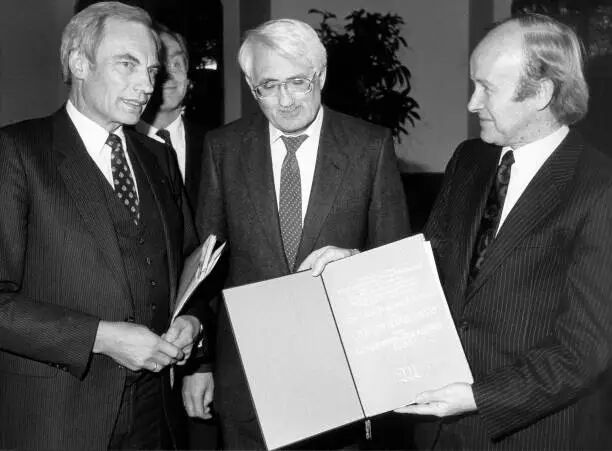
Another key diagnosis of the public sphere’s decline concerns the collusion between public power and private interest. Habermas points out that, under the so-called welfare-state democracy, the boundary between state and society has grown increasingly blurred. On the one hand, state power reaches into every corner of private life, drawing traditionally private matters — healthcare, education, housing — within the scope of state governance. On the other, private interest groups penetrate the public decision-making process through lobbying, party funding and media control. The result of this two-way encroachment is the disintegration of the public sphere. He writes: “When private interests can directly purchase political influence, and when state power can directly intervene in private affairs, the public sphere as an intermediate zone loses the space in which to exist. This is the refeudalisation of the public sphere.”
This diagnosis carries deep implications for understanding the contemporary crisis of democracy. When money can legally purchase influence through political donations, when governments violate citizens’ privacy in the name of national security, the function of the public sphere as a mechanism of checks on power is fundamentally dissolved. In his later years Habermas repeatedly voiced his anxiety over this trend. In a 2013 interview with *Der Spiegel* he observed: “When democracy is reduced to a vassal of capital, when politicians are reduced to the puppets of lobbyists, the public sphere becomes an empty ritual space. Elections are still held, parliaments still convene, but genuine democratic decision-making has been removed to a back room beyond the public’s reach.”
It must be emphasised that Habermas’s analysis of the decline of the public sphere is not a nostalgic cultural pessimism. He is not simply calling for a return to the golden age of the eighteenth-century coffeehouse. On the contrary, he stresses the dialectical relation between normative principles and institutional arrangements. The basic principles of the public sphere — openness, equality, priority of reason, criticality — possess universal normative significance and can be realised, under different technical conditions and historical environments, in different institutional forms. The crux of the matter is whether the institutional arrangements of contemporary society are conducive to the realisation of these normative principles. In *Between Facts and Norms* he writes: “The normative principles of the public sphere do not depend upon any particular technical medium. The crucial point is that the use of any media technology must serve the purpose of public communication rather than the manipulative purposes of power or capital.”
This insight supplies an important theoretical framework for assessing contemporary digital media. Has the internet realised Habermas’s ideal of the public sphere, or has it produced still more thoroughgoing fragmentation and manipulation? This question has become the central issue of contemporary theories of digital democracy. In a 2024 article in *New Media & Society*, the scholar Anna Weber notes: “The advent of the internet initially aroused enormous democratic hopes. Many believed that its decentralised network structure would break the monopoly of traditional media and give everyone a chance to be heard. But three decades on, what we see is another reality. The filter bubbles manufactured by algorithms, the opinion storms whipped up by bot accounts, the paid troll commentary churned out by hired armies — all of this shows that technology in itself cannot guarantee democracy. The crucial thing is who controls the technology, and what purposes it serves.”
The core question Habermas posed in *The Structural Transformation of the Public Sphere* has acquired new urgency in our time. In an information environment dominated by platform capitalism, is public discussion still possible? How can democracy survive in an age of the attention economy? These questions still have no settled answers, but the theoretical framework Habermas provides is undoubtedly the most valuable intellectual resource we have for thinking through them.

III. The Possibility of the Public Sphere in the Internet Age
Since the 1990s, the rise of the internet has brought wholly new challenges and opportunities to the theory of the public sphere. Habermas himself took a cautiously optimistic stance toward this new technology. In numerous interviews he pointed out that the internet holds the potential to realise the ideal of the public sphere, but the realisation of that potential depends on concrete institutional arrangements and technical design. He emphasised: “Technology itself is neutral; the crucial thing is how social forces shape the way it is used. The internet can be a platform for public discussion, or it can be a tool of surveillance and manipulation. Everything depends on how we construct the institutions and norms surrounding the technology.”
Habermas’s reflections on the publicity of the internet are concentrated in his late writings on the “digital public sphere”. In a 2018 lecture he observed: “Digital technology has created unprecedented possibilities of communication. Anyone can express opinions, participate in discussion and organise action anywhere in the world. This decentralised structure of transmission does indeed hold the potential to break the monopoly of traditional media. At the same time, however, digital technology also furnishes unprecedented technical means for precise surveillance and targeted manipulation. We stand at a crossroads.”
Habermas’s own attitude toward the digital public sphere underwent a complex evolution in his later years. Initially, he was relatively optimistic about the internet. In a 2006 interview he said: “The internet has created a new form of public communication that holds the potential to break the monopoly of traditional media. But I also see that discussion on the internet often lacks quality, with emotional venting displacing rational argument — and that is worrying.” By the 2010s, with the rise of platform capitalism and the proliferation of disinformation, his anxieties deepened. In a 2015 lecture he observed: “When social media become the principal platform for public discussion, and the core logic of social media is to maximise user engagement rather than the quality of discussion, the public sphere faces a profound crisis.”
Yet Habermas never abandoned his belief in the potential of the public sphere. His core insight is that the public sphere is not a fixed institutional structure but the process of realising a normative principle — a principle that can be realised in different ways under different technical environments. In *Between Facts and Norms* he writes: “The normative core of the public sphere consists in the fact that private individuals can assemble in their capacity as a public, discuss affairs touching their common interests, and form public opinion so as to influence political decision-making. This normative core can be realised in different institutional environments; the crucial thing is whether institutional arrangements exist that safeguard open, equal and rational discussion.”
This insight provides important theoretical guidance for contemporary theories of digital democracy. It reminds us that the crux of the matter is not the technology itself but the institutional design surrounding it. How should platforms’ data collection and use be regulated? How can the transparency and accountability of algorithmic decisions be guaranteed? How can users’ privacy be protected from commercial and state surveillance? How can high-quality public discussion be promoted rather than obstructed? All these questions must be answered within the normative framework of Habermas’s theory of the public sphere.

I. The Paradigm Shift from the Philosophy of the Subject to the Philosophy of Intersubjectivity
In the late 1970s and early 1980s, Habermas completed a constructive turn in his theoretical system, the landmark achievement of which is the two-volume magnum opus *The Theory of Communicative Action*, published in 1981. This work is widely regarded as the Everest of twentieth-century social theory, its theoretical ambition and systematic scope comparable to Weber’s *Economy and Society* and Parsons’s *The Social System*. In the book Habermas accomplishes a profound philosophical paradigm shift — from the traditional “philosophy of the subject” to a “philosophy of intersubjectivity”, or, more precisely, from a “philosophy of consciousness” to a “philosophy of language”.
The theoretical motive for this turn comes from Habermas’s diagnosis of the predicament of modern philosophy. He points out that the modern philosophical tradition since Descartes has always taken the “subject” as philosophy’s Archimedean point. Whether Descartes’s “I think, therefore I am”, Kant’s transcendental subject, or Hegel’s absolute spirit, all are essentially variants of the philosophy of the subject. The core difficulty of this philosophical paradigm is that it cannot truly explain how communication between subjects is possible. The philosophy of the subject presupposes an isolated cognitive subject, and then attempts, starting from that subject’s interiority, to derive the objectivity of the external world and the existence of the other. But as Husserl’s failure proves, this attempt can never escape the predicament of solipsism. Habermas writes in the book: “The fundamental problem of the philosophy of the subject is that it posits the subject as a being that precedes communication, and then attempts to explain how communication between subjects is possible. But this very presupposition is the source of the problem.”
Habermas’s linguistic turn is not a simple repetition of the analytic-philosophical turn of the early twentieth century. The analytic turn focused chiefly on the logical structure of language, seeking to resolve or dissolve philosophical problems through linguistic analysis. Habermas’s linguistic turn, by contrast, repositions philosophy’s point of departure at the ontological level. He no longer takes the solitary cognitive subject as philosophy’s starting point but takes linguistic communication as the primordial fact of human existence. In the first volume of *The Theory of Communicative Action* he states plainly: “The mode of being of human beings is linguistic communication. We do not first exist as isolated beings and only then communicate; on the contrary, it is in linguistic communication that we become the beings that we are. Language is not a tool for expressing pre-existing inner thoughts; it is the mode of our being.”
This turn carries profound philosophical implications. If the mode of human being is linguistic communication, then reason cannot be the private property of an individual cognitive subject but must necessarily be the intersubjective consensus formed in the process of communication. Habermas names this new conception of reason “communicative rationality”, distinguishing it from traditional “instrumental reason” or “subject-centred reason”. In the book he gives a classic formulation of communicative rationality: “Communicative rationality means that reason is no longer the cognitive capacity of an individual subject but is embodied in those communicative actions that seek to reach mutual understanding through argumentation. The force of reason is not an oppressive coercion but a coercion without force — the force possessed by the better argument.” This passage succinctly summarises the core of Habermas’s conception of reason: reason is transformed from a cognitive attribute into a communicative one, from an individual capacity into an intersubjective consensus, from an oppressive force into a force of persuasion.
To support this philosophical turn, Habermas developed the methodological instrument of “universal pragmatics”. The core task of universal pragmatics is to identify and reconstruct the universal conditions that make linguistic communication possible. Habermas drew on Austin’s and Searle’s speech-act theory but subjected it to critical reconstruction. He distinguishes two modes of language use: strategic and communicative. In strategic use, the speaker employs language as a tool for influencing the behaviour of others, treating the hearer as an object of action rather than a partner in communication. In communicative use, by contrast, the speaker is oriented toward reaching understanding and establishes a genuine dialogic relation with the hearer. Habermas stresses that communicative use is the original mode of language use and strategic use is derivative. In the first volume of *The Theory of Communicative Action* he writes: “The original function of language is to reach understanding, not to influence behaviour. When we reach understanding in language, we are engaging in genuine communication.”
Habermas further analyses the “validity claims” that any successful speech act must presuppose. He points out that whenever a speaker performs a speech act, he implicitly raises three validity claims. The first is the “claim to truth” — that what the speaker says is true, corresponding to the objective world he speaks about. The second is the “claim to rightness” — that what the speaker says is normatively correct, conforming to existing social norms and values. The third is the “claim to truthfulness” — that the speaker expresses his genuine inner state rather than disguise or deception. These three validity claims correspond respectively to three worlds: the objective world, the social world and the subjective world. Successful communication requires that all three validity claims be simultaneously fulfilled or presupposed as fulfilled.
This theoretical framework carries profound implications for social theory. It means that any genuine communication presupposes an ideal communicative situation in which all participants have equal opportunity to speak, the right to call any statement into question, and the freedom to express their attitudes and desires. Habermas calls this idealised presupposition the “ideal speech situation”. In *The Theory of Communicative Action* he gives a classic German definition: “Ideal nennen wir eine Sprechsituation, in der die Kommunikationen nicht nur nicht durch äußere kontingente Einwirkungen, sondern auch nicht durch Zwänge behindert wird, die aus der Struktur der Kommunikation selbst sich ergeben.” The Chinese rendering of this passage is: “We call a speech situation ideal when communication is impeded neither by external contingent influences nor by the compulsions that arise from the structure of communication itself.”
The ideal speech situation is not an empirical description but a normative presupposition. Its function is to supply a normative standard for criticising the distortions of actual communication. Habermas stresses that any actual communication presupposes the validity of the ideal speech situation, even though this presupposition is never fully realised. The existence of this presupposition provides an immanent critical standard for criticising actual ideological distortions and manipulations of power. When a speaker points out that a certain discourse is deceptive, that a certain discussion is manipulated, he is appealing to the normative standard of the ideal speech situation. It is precisely this immanent critical potential that distinguishes Habermas’s theory from any simple descriptive social theory.
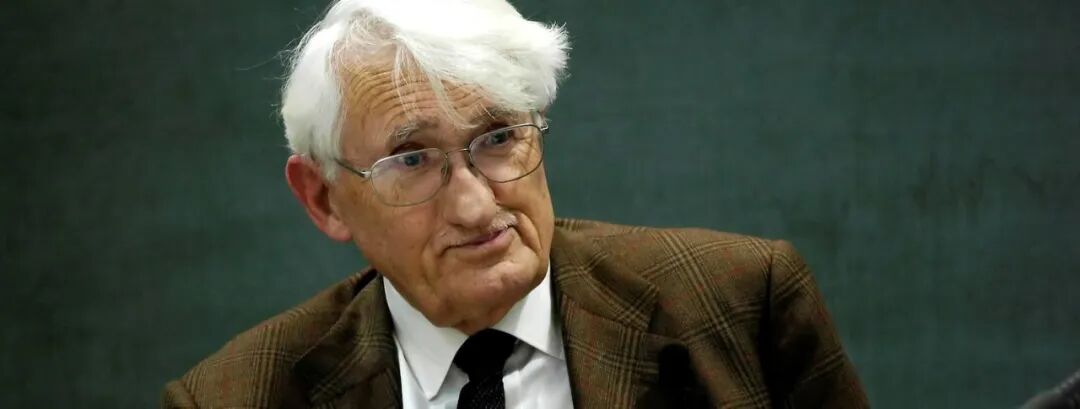
II. The Cognitive Landscape of the Three Pillars of Reason
Building on his linguistic turn, Habermas reconstructed the framework of the theory of social rationality. He drew on Weber’s account of rationalisation but subjected it to critical reconstruction. Weber defined the core feature of modernity as “disenchantment” and “rationalisation”, predicting that rationalisation would lead to a “loss of meaning” and an “iron cage of freedom”. Habermas holds that Weber’s diagnosis rests on a crucial error — the equation of reason with instrumental reason, that is, means–ends rationality. This narrow conception of reason cannot grasp the complex cultural differentiation of modernity.
Habermas proposes that reason should be understood as a composite structure comprising three basic types of reason. He systematically sets out these three types in the first volume of *The Theory of Communicative Action*. The first is “cognitive-instrumental reason”, directed toward the objective world, pursuing knowledge of natural laws and effective control over instruments; its core standard is validity. The second is “moral-practical reason”, directed toward the social world, pursuing the justification of normative rightness and the construction of a just social order; its core standard is rightness. The third is “aesthetic-expressive reason”, directed toward the subjective world, pursuing the expression of subjective experience and the exploration of self-understanding; its core standard is truthfulness. These three types of reason correspond respectively to three different relations to the world and three different validity claims.
These three types of reason are not arbitrarily divided but correspond to the process of functional differentiation in modern society. In pre-modern society these types of reason were not yet differentiated; myth, religion and tradition discharged cognitive, normative and expressive functions in an undifferentiated manner. With the unfolding of modernity, these three functions gradually differentiated into independent “cultural value spheres”: science–technology, law–morality, and art–literature. Borrowing Weber’s concept, Habermas calls this process the “differentiation of cultural value spheres”. He writes in the book: “The core feature of modernity is the differentiation of cultural value spheres. Science, morality and art each develop their own independent logic and standards; their specialised, institutionalised development renders these spheres independent of one another and no longer subject to the unified domination of a religious-metaphysical worldview.”
This differentiation is at once an achievement and a crisis. As achievement, it means the liberation of cognitive, normative and expressive potentials. Science can freely pursue truth, unbound by religious dogma; morality can independently justify norms, without recourse to theological authority; art can autonomously explore expression, without serving didactic ends. But as crisis, it means the estrangement and conflict among the cultural value spheres. The expansion of the scientific worldview threatens the legitimacy of moral meaning and aesthetic experience, and the rupture between expert culture and everyday life makes it difficult for ordinary people to integrate the meaning resources of the different spheres.
Habermas’s diagnosis of this predicament constitutes the core tension of his theoretical work. On the one hand, he affirms the achievement of modernity’s rational differentiation, opposing any form of archaism or nostalgia and refusing to return to pre-modern unity. On the other, he seeks to rebuild the possibility of integration from within modernity — an integration achieved not by restoring metaphysical unity but through the communicative practice of the everyday lifeworld. In the second volume of *The Theory of Communicative Action* he writes: “The problem of modernity lies not in rational differentiation itself but in the fact that rational differentiation detaches itself from the context of the everyday lifeworld and becomes an independent, self-referential systemic logic. The solution is not to return to pre-modern unity but to rebuild the mediating relation between the everyday lifeworld and the cultural value spheres.”
This theoretical framework carries important implications for understanding the place of contemporary art. Within the logic of modernity’s cultural differentiation, art is accorded an independent status, with autonomous evaluative standards and an autonomous operational logic. This autonomy enables art to shake off the domination of religion and politics and freely explore aesthetic forms and expressive possibilities. But at the same time, art’s autonomy also brings with it the problem of the “separation of art and life”. When art becomes a domain of expert culture, it loses its organic connection with the everyday lifeworld and becomes an isolated kingdom of aesthetic autonomy. In several passages Habermas notes that an important function of avant-garde art is precisely to attempt to break down the boundary between art and life and rebuild art’s social function. But he also warns that if this attempt takes a simplistic form — for instance, by directly incorporating everyday objects into art, or abolishing any distinction between art and life — it may lead to the loss of art’s critical potential.
In *The Philosophical Discourse of Modernity*, Habermas offers a profound analysis of the debate between Adorno and Benjamin on artistic autonomy. Adorno insists on artistic autonomy, holding that art’s power lies precisely in its distance from the real world, and that art achieves its critique of reality through the autonomy of form. Benjamin, by contrast, stresses art’s social function, arguing that art should break through the barrier of autonomy and enter everyday life. Habermas holds that both positions have their validity but also their one-sidedness. The correct path is to establish a dialectical tension between autonomy and social function — preserving art’s critical distance while keeping open its channel of connection to life.
III. The Dual Structure of Lifeworld and System
The core theoretical contribution of *The Theory of Communicative Action* is its proposal of a dual social-structure analytic framework of “lifeworld” and “system”. Integrating the theoretical resources of phenomenology, functionalism and Marxism, this framework provides a powerful conceptual instrument for analysing the crisis of integration in modern society.
The concept of the “lifeworld” derives from Husserl’s phenomenology and, mediated through Schutz’s social phenomenology, was transformed by Habermas into a core category of social theory. In Habermas’s usage, the lifeworld refers to the background world of people’s everyday life, composed of shared cultural traditions, social norms and personal identities. It is the “horizon” of our action and communication, the background condition within which all our understanding of existence unfolds. In the second volume of *The Theory of Communicative Action* he gives a classic definition: “The lifeworld is the flowing background resource of the participants in communicative action; it supplies actors with the structures of cultural tradition, social norm and personal identity, making understanding and the coordination of action possible.”
The lifeworld has three structural components: culture, society and personality. Culture refers to the shared stock of knowledge that enables participants to interpret the world. Society refers to the legitimate order that secures interpersonal relations and group belonging. Personality refers to the distinctive capacities and competencies that enable the subject to speak and act. These three components correspond respectively to three reproductive functions: cultural reproduction (the transmission and renewal of meaning), social integration (the maintenance and renewal of order), and personal socialisation (the formation and development of identity). Habermas stresses that the reproduction of the lifeworld is accomplished through communicative action — that is, through the communicative process of coordinating action on the basis of understanding.
The concept of the “system” derives from Parsons’s functionalist sociology and, through Habermas’s critical reconstruction, became a tool for describing the institutionalised structure of modern society. The system refers to those institutionalised spheres that operate in a self-regulating manner, including the economic system (mediated by money) and the administrative system (mediated by power). The core features of the system are its self-referentiality and closure; it operates according to its own logic and requires no conscious understanding or coordination on the part of participants.
The distinction between lifeworld and system turns on the difference in their modes of integration. The lifeworld achieves integration through communicative action — that is, by coordinating action through intersubjectively achieved understanding. The system achieves integration through systemic media — that is, by coordinating action through non-linguistic media such as money and power. In traditional society the system was embedded within the lifeworld, and economic and political activity proceeded within the cultural and social-normative framework of the lifeworld. But with the unfolding of modernity, the system gradually detached itself from the control of the lifeworld and acquired a logic of autonomous operation.
Habermas uses the term “rationalisation” to describe the development of the lifeworld in modernity. The rationalisation of the lifeworld means that cultural traditions are no longer regarded as unquestionable authorities but are subjected to reflexive scrutiny; that social norms are no longer simply accepted but demand rational justification; and that personal identity is no longer given by birth but must be constructed through self-reflection. This rationalisation has an emancipatory significance: it means that the subject acquires autonomy and reflexive capacity. But at the same time, the rationalisation of the lifeworld also brings a certain fragility: the lifeworld loses the certainty and security that tradition provided and becomes a fluid resource that must be continually produced and reproduced through communicative action.
Habermas uses the term “uncoupling” to describe the differentiation of system from lifeworld. The uncoupling of the system means that the economic and administrative systems have developed self-regulating mechanisms and no longer depend on the communicative coordination of the lifeworld. Money and power become independent media of integration, operating according to their own logic. This uncoupling has a double significance. On the one hand, it enables economic and administrative activity to attain higher efficiency and complexity, capable of handling the complex social functions that the traditional lifeworld could not manage. On the other, it also brings the risk that the system will escape the control of the lifeworld.
The crisis-diagnosis of Habermas’s social theory is concentrated in the core concept of the “colonisation of the lifeworld”. He points out that, in modern capitalist society, systemic media (money and power) intrude upon the lifeworld, displacing the communicative coordination based on understanding. The money-logic and market relations of the economic system seep into spheres traditionally regulated by the lifeworld — education, healthcare, law, art. The bureaucratic logic and operations of power of the administrative system seep into spheres traditionally integrated by the lifeworld — family, community, culture. This colonisation leads to the alienation and distortion of the lifeworld.
In the second volume of *The Theory of Communicative Action*, Habermas gives a classic German formulation, whose Chinese gist is: the lifeworld becomes the substrate of the social system, and this system overlays the lifeworld with its own structure. The rationalisation of the lifeworld first makes the differentiation of the system possible, but the subsequently autonomised system then imposes its commands upon the lifeworld.
The colonisation of the lifeworld manifests in several forms. At the cultural level, it appears as the exhaustion of meaning-resources and the disintegration of cultural tradition. Tradition can no longer spontaneously transmit meaning but becomes a cultural resource requiring expert management. Cultural products are commodified, artistic creation submits to market logic, and the production of knowledge submits to the demands of capital and power. At the social level, it appears as a crisis of social integration. Traditional community bonds and moral norms are dissolved, replaced by money-relations and legal regulation. Interpersonal relations are instrumentalised, and social solidarity is displaced by contractual relations. At the individual level, it appears as an identity crisis and as psychopathology. The subject loses stable resources of identity and falls into a deficit of meaning and existential anxiety.
Habermas especially stresses that his theory of colonisation is not a simple nostalgia or anti-modernism. He does not advocate a return to the pre-modern lifeworld, nor does he deny the functional advantages brought by systemic differentiation. His critique is directed at the “excessive” intrusion of the system into the lifeworld — that is, the overstepping by systemic logic of its proper bounds, invading those spheres that should be regulated by the lifeworld’s communicative coordination. He writes: “The problem lies not in systemic differentiation itself but in the transgression of systemic logic. What we need is not a return to pre-modern unity but a rebuilding of the balanced relation between lifeworld and system.”

IV. The Consensus Theory of Truth and the Normative Construction of the Ideal Speech Situation
On the basis of the theory of communicative action, Habermas developed a distinctive theory of truth, the “consensus theory of truth”. Its central claim is that truth is not a relation of correspondence between consciousness and object but the product of discursive consensus. For a statement to be true means that it could win the rational assent of all possible participants in an ideal speech situation. This definition transforms truth from the inner state of a cognitive subject into the consensual relation between communicating subjects.
Habermas’s consensus theory of truth rests on a special theory of argumentation. He distinguishes two types of discourse: discourse and argumentation. Discourse is the basic form of everyday communication, in which participants mutually recognise or call into question validity claims. Argumentation is a special form of discourse, occurring when the validity of discourse is called into question and participants attempt, by adducing reasons, to uphold or revise the original validity claim. In *Truth and Justification* Habermas writes: “Argumentation is that type of discourse in which the thematic validity of discourse is problematised and participants attempt, by adducing better arguments, to restore the contested validity claim.”
Habermas analyses several rules of argumentation, which constitute the concrete content of the ideal speech situation. These rules are: first, all possible participants should enjoy equal rights to participate in discourse; second, all participants should enjoy equal rights to adduce and to call into question arguments; third, no one may, by internal or external compulsion, prevent others from exercising the above rights; and fourth, all participants should be oriented toward reaching understanding rather than toward strategic success. These rules constitute the normative framework of rational discourse; they describe no actual discourse-situation but function as a critical standard measuring the degree of distortion in real discourse.
The concept of the ideal speech situation is often misunderstood as a utopian ideal state. Critics hold that such an ideal state cannot be realised in reality and therefore has no practical normative significance. Habermas responds that the ideal speech situation is not an empirical description but a counterfactual presupposition. Any genuine discursive communication necessarily presupposes the validity of this ideal state. When we engage in discourse, we are always counterfactually presupposing that our discursive partners can understand us, that our arguments have the potential to persuade others, and that the discursive process is free of compulsive interference. The existence of this presupposition is what gives the ideal speech situation its normative significance.
Habermas further distinguishes two modes of applying the ideal speech situation. The first is a justificatory application: when we defend a truth-claim, we are asserting that, were we to enter the ideal speech situation, this claim could win the assent of all participants. The second is a critical application: when we criticise actual distortions of communication, we are appealing to the standard of the ideal speech situation. The ideal speech situation provides a standard of “immanent critique” — we need not import norms from without but criticise from the presuppositions inherent in communicative practice itself.
The consensus theory of truth has provoked extensive philosophical debate. One central controversy concerns the relation between consensus and truth. Critics point out that many erroneous consensuses in history prove that consensus cannot guarantee truth — the geocentric theory, for instance, was a widespread consensus in the Middle Ages, yet we now know it to be false. Habermas’s response is that the consensus spoken of in the consensus theory of truth is not any actually achieved consensus but the consensus attainable in an ideal speech situation. The ideal speech situation excludes distorting factors such as power, deception and bias, guaranteeing the rational quality of the consensus. The consensus theory of truth therefore does not vouch for the truth of any actual consensus but for the truth of the consensus possible under ideal conditions.
Another class of criticism comes from relativism. Critics argue that if truth depends on consensus, then different communicational communities might reach different consensuses, which would lead to the relativisation of truth. Habermas’s response invokes his argument for the universality of language. He points out that any participant in discourse presupposes a universal community of communication, a community comprising all beings capable of participating in rational discourse. When we make a truth-claim, we are issuing an appeal to this universal community. Therefore the “consensus” in the consensus theory of truth is not the actual consensus of any particular community but the possible consensus of the universal community of communication.
Habermas’s consensus theory of truth is closely bound up with his discourse ethics. The core principle of discourse ethics is: “Only those norms can claim validity that could meet with the assent of all possibly affected persons as participants in rational discourse.” This principle, known as the “discourse principle”, is the normative foundation of Habermas’s moral and political theory. The discourse principle requires that the legitimacy of any social norm be grounded in rational discourse — that is, in the rational assent of all possibly affected persons. This principle provides a normative standard for criticising any unjust social arrangement: if the interests and views of certain persons are systematically excluded from discourse, then the corresponding norm is illegitimate.

I. The Century-Long Great Debate with Postmodernism
In 1980, upon receiving the Adorno Prize in Frankfurt, Habermas delivered a famous lecture entitled “Modernity: An Unfinished Project”. This lecture became one of the most important documents in the philosophical history of the late twentieth century and marked the beginning of Habermas’s full confrontation with postmodern currents of thought. In the lecture he states his thesis at the outset: “Modernity no longer wishes to take the standard of its orientation from the models of other epochs; it must create its normativity out of itself.”
This lecture was aimed directly at the postmodern current of thought represented by Lyotard, Foucault, Derrida and others. The core claim of postmodernism is that the grand narratives of modernity have collapsed, that the universalist claims of Enlightenment reason are oppressive, and that we must abandon the pursuit of totality and universality and embrace difference, fragment and heterogeneity. In *The Postmodern Condition*, Lyotard gives a famous definition: “The postmodern is incredulity toward metanarratives.” He declares that the grand narratives of the Enlightenment concerning human emancipation and the triumph of reason have lost their credibility, and that we live among the “ruins of narrative”.
Habermas responded to this firmly. In *The Philosophical Discourse of Modernity* he systematically criticises the theoretical foundations of postmodernism. He first analyses the intellectual genealogy of postmodernism, tracing it back to Nietzsche’s critique of reason. Nietzsche opened a path of radical questioning of reason, a path that passed through Heidegger’s existentialism and ultimately developed into Foucault’s theory of power and Derrida’s deconstruction. Habermas holds that the common feature of this line of thought is to regard reason as a disguise of power and the Enlightenment as a mechanism of oppression.
In Chapters Nine and Ten of *The Philosophical Discourse of Modernity*, Habermas concentrates his critique on Foucault’s theory of power. He points out that, in criticising Enlightenment reason, Foucault falls into a profound predicament. On the one hand, Foucault regards power as an omnipresent dominating force, revealing that knowledge, truth and morality are all products of the operation of power. On the other, Foucault tries to maintain a critical stance, criticising the disciplinary mechanisms and power-domination of modern society. But the problem is: if truth and morality are both products of power, how can Foucault’s own critical stance attain a normative foundation? Habermas observes that Foucault falls into a “performative contradiction”: in criticising the Enlightenment, he cannot but rely on the Enlightenment’s normative resources.
On Derrida, too, Habermas offers a deep analysis and critique in *The Philosophical Discourse of Modernity*. Derrida’s deconstruction attempts to break the “logocentrism” of Western philosophy, exposing the indeterminacy of meaning and the undecidability of texts. Habermas acknowledges the critical significance of deconstruction’s assault on rigid patterns of thought, but he also points out that, in negating any determinate norm, deconstruction loses the normative foundation of critique. If all meaning is indeterminate, if any normative claim can be deconstructed, how can we possibly criticise any unjust social arrangement?
Habermas’s debate with postmodernism reached its climax in the 1980s. The core question of this debate may be summarised as: can we, or should we, hold fast to the normative legacy of modernity? Postmodernists hold that modernity’s universalist claims have gone bankrupt, that Enlightenment reason has been exposed as an instrument of oppression, and that we must abandon the pursuit of universality, totality and necessity and embrace difference, fragment and contingency. Habermas, by contrast, insists that the normative legacy of modernity — democracy, the rule of law, human rights, rational discourse — retains irreplaceable value, and that we should seek, from within modernity, the resources to overcome its ills rather than abandon modernity altogether.
In *The Philosophical Discourse of Modernity* Habermas writes: “The unfinished project of the Enlightenment is not to be abandoned but to be completed. The critical force of reason should be used to criticise the distortions of reason, not to deny reason itself. The predicament of modernity arises from the instrumentalisation of reason, not from rationalisation as such. The solution is neither a return to pre-modern traditionalism nor a lapse into postmodern irrationalism, but the advancement of the communicativisation of reason — the replacement of subject-centred instrumental reason by intersubjective communicative reason.”
This century-long great debate lasted for decades and touched upon almost every important theme in the history of philosophy. In 1998, Habermas and Derrida held a historic dialogue in Paris, which achieved, to a certain degree, a reconciliation between the two philosophers. In the dialogue Derrida stated that his deconstruction was not a thoroughgoing negation of reason but a critique of its rigidified forms. Habermas, too, acknowledged that postmodernism’s critique of modernity’s ills carries profound significance, and that the crucial question is where we should go after the critique.
After the events of 9/11, Habermas’s critique of postmodernism acquired new practical significance. The rise of terrorism and fundamentalism proved how real the threat of irrationalism and anti-Enlightenment thought truly is. In his 2001 acceptance speech for the German Book Peace Prize, Habermas again emphasised the irreplaceability of Enlightenment reason. He warned: “When we face the threat of religious fundamentalism and irrationalism, to abandon the legacy of the Enlightenment is to lay down our arms and surrender. What we need is the self-critique and self-transcendence of reason, not a wholesale negation of reason.”

II. Reason as the Precondition of Emancipation
Habermas’s defence of reason is grounded in a profound philosophical argument. He distinguishes two concepts of reason: instrumental reason and communicative reason. Instrumental reason is success-oriented reason, concerned with how most effectively to realise given ends. Communicative reason is understanding-oriented reason, concerned with how to reach consensus among subjects. The predicament of modernity lies not in reason itself but in the suppression of communicative reason by instrumental reason.
Habermas points out that the original promise of Enlightenment reason was emancipation. The Enlightenment thinkers believed that reason could liberate humanity from ignorance, superstition and despotism and realise autonomy and freedom. But this reason underwent a deformation in the course of history. Instrumental reason gradually came to dominate, becoming a tool for dominating nature and society. Reason was transformed from an emancipatory force into a new dominating force. This is precisely the core diagnosis of Adorno and Horkheimer in *Dialectic of Enlightenment*. Yet unlike the pessimism of Adorno and Horkheimer, Habermas holds that this deformation is not the necessary fate of reason but the result of a particular historical form of reason. If we can distinguish instrumental from communicative reason, if we can revive the potential of communicative reason, the emancipatory promise of the Enlightenment remains realisable.
In *The Theory of Communicative Action* Habermas gives a classic formulation: “The critical force of reason lies in its ability to reveal that those social arrangements which are taken for ‘natural’ or ‘necessary’ are in fact historical and mutable. Reason enables us to call tradition into question, to criticise authority, to imagine alternatives. This critical force is the precondition of emancipation. If we abandon reason, we abandon the very possibility of emancipation.”
This argument carries profound political implications. Many contemporary social critiques — ranging from postmodernism to certain forms of feminism and postcolonialism — tend to criticise the universalist claims of Enlightenment reason, holding that this universalism is a disguise of Eurocentrism and androcentrism. Habermas acknowledges the partial validity of this critique: Enlightenment reason was indeed once used to justify colonialism and gender oppression. But he also points out that criticising these distorted forms of reason requires recourse to reason’s own normative resources. When we criticise the injustice of colonialism, we are appealing to a norm of reason: colonial rule deprived the colonised of their autonomy and of their right to participate in discourse. If we wholly abandon the universalist claims of reason, if we admit that all values are local and relative, we lose the normative foundation for criticising any unjust arrangement.
In *The Inclusion of the Other*, Habermas further develops this argument. He proposes the core principle of “discourse ethics”: “Only those norms can claim validity that could meet with the assent of all possibly affected persons as participants in rational discourse.” This principle is not some special Western value but a structural presupposition inherent in any rational-discursive practice itself. Whenever we engage in any genuine discourse, we are presupposing the equality of our discursive partners, the non-compulsion of the discursive process, and the priority of the force of argument. These presuppositions are not accidental cultural products but the structural conditions of rational discourse itself.
This argument carries important implications for the multicultural challenges of our time. In today’s globalised world, conflicts among different cultures, religions and value-systems grow ever sharper. A simple cultural relativism seems able to respect difference and embrace plurality, yet it cannot resolve value-conflicts or provide a foundation for cross-cultural principles of justice. Habermas’s communicative reason offers an alternative path: we need not assume some transcendental universal value-system; we need only acknowledge that any norm claiming legitimacy must be able to withstand discursive testing. This discursive testing does not impose some special value-system upon others but creates the dialogic conditions in which all voices can be heard and all arguments considered.

III. The Normative Core and Historical Limits of Modernity
Habermas’s theory of modernity is built on a twofold grasp of the “normative core of modernity” and the “historical distortions of modernity”. The normative core of modernity includes: the autonomous subject, rational reflection, universal rights, democratic participation, and the critique of the public sphere. These normative potentials are the legacy of the Enlightenment and constitute the emancipatory force of modernity. But at the same time, in its historical unfolding modernity has produced profound distortions: the domination of instrumental reason, the colonisation of the lifeworld, the structural hardening of inequality, and the deformation of the public sphere. Habermas’s theoretical task is to distinguish the normative potential of modernity from its historical distortions, defending the potential even as he criticises the distortions.
In *The Philosophical Discourse of Modernity* he writes: “The critique of modernity should not discard modernity itself. To distinguish modernity’s normative potential from its historical distortions is the core task of critical theory. We need an immanent critique that, starting from modernity’s own normative commitments, criticises its historical forms. This critique does not negate modernity but advances its unfinished project.”
This stance distinguishes Habermas from two extreme positions. One is conservative traditionalism, which holds that modernity has failed and that we should return to pre-modern traditions and authorities. Habermas firmly opposes this stance, holding that traditionalism ignores the emancipatory achievements of modernity and, in the name of anti-rationalism, restores oppressive authority. The other is radical postmodernism, which holds that modernity has ended and that we should embrace fragmentation, relativism and difference. Habermas equally opposes this stance, holding that, in negating universal norms, postmodernism also loses the normative foundation of critique and may ultimately slide into nihilism or irrationalism.
Habermas’s stance is one of “immanent critique”. By immanent critique is meant a critique that starts from the object’s own normative commitments and reveals the contradiction between the object and its commitments. When we criticise modernity, we do not proceed from some external, transcendent standpoint but from modernity’s own normative commitments. We ask: modernity promised universal human rights, yet in actual historical reality how were those rights systematically denied? Modernity promised democratic participation, yet how do actual political institutions exclude the majority from decision-making? Modernity promised rational discourse, yet how is the actual public sphere distorted by power and capital? This immanent critique does not seek to negate modernity but to realise its normative commitments.
Habermas especially stresses that the normative potential of modernity has not yet been fully realised, and that modernity is therefore an “unfinished project”. He enumerates several of modernity’s “unfinished projects”: the principle of human rights has not yet been realised on a global scale; democratic participation has not yet been extended to every sphere of economic and social life; the public sphere has not yet been liberated from the domination of capital and power; the promise of legal equality has not yet been translated into the reality of factual equality; and rational discourse has not yet become the dominant mechanism of social integration. These “unfinished projects” are not proofs of modernity’s failure but its critical standards and future orientation.
In the twenty-first century, Habermas’s theory of modernity faces new challenges. Globalisation, digitalisation, ecological crisis, terrorism, the rise of populism — do these new phenomena already exceed the explanatory scope of Habermas’s theoretical framework? Some scholars hold that Habermas’s theory of modernity retains powerful explanatory force and normative strength. In a 2024 paper published in the journal *Political Theory*, the scholar John Smith notes: “Habermas’s theory of modernity is not a theory of historical stages but a normative framework. The normative commitments of modernity — autonomy, reflection, participation, discourse — carry critical significance in any age. When we face the threat of populism, what we need is to defend rather than abandon these normative commitments.”
I. Identity Construction Beyond Nationalism
Habermas’s political-philosophical reflections always revolve around the question of integration in modern society. In an age of collapsing traditional authority, pluralistic differentiation of values and shaken national identity, how is social integration possible? His core answer is “constitutional patriotism”. This concept was first proposed by the German political scientist Dolf Sternberger in 1979, but it was Habermas’s elaboration and application of it in the 1980s that truly gave it wide influence.
The core claim of constitutional patriotism is that the collective identity of a modern democratic society should not be built upon a common bloodline, culture, history or race but upon a shared loyalty to constitutional principles. In a 1986 article published in the weekly *Die Zeit* entitled “A Kind of Compensation”, Habermas first proposed the concept of constitutional patriotism against the background of the historians’ debate. In this article he sharply criticised the conservative historians who sought to downplay Nazi crimes and rebuild German national identity, and stated: “The only form of patriotism is constitutional patriotism. Only through constitutional principles — democracy, the rule of law, human rights — can we build an identity that does not sever us from the Western world.”
The proposal of constitutional patriotism has a profound German context. Postwar Germany faced a peculiar identity dilemma. On the one hand, Nazi crimes deprived traditional national identity of its legitimacy; on the other, democratic reconstruction required some collective identity as its support. Habermas’s constitutional patriotism offers a solution: Germans need not deny their history, but through loyalty to constitutional principles they can build a reflexive, post-national identity. This identity is not built upon the substantial question of “who we are” but upon the procedural question of “what we jointly commit to”.

Constitutional patriotism soon transcended the German context and became an important theoretical resource for thinking about collective identity in the age of European integration and globalisation. In the process of European integration, Habermas actively advocated a “post-national identity”. In *The Postnational Constellation* he argues that the nation-state is no longer the sole or principal vehicle of political identity, and that European citizenship should be built upon shared political values — democracy, human rights, the rule of law — rather than upon a shared culture or history. In the 1990s he repeatedly delivered speeches and published articles calling upon the peoples of Europe to transcend national identity and build a European-wide constitutional patriotism.
In 2003, against the background of the Iraq War launched by the United States, Habermas and Derrida jointly published an article in the *Frankfurter Allgemeine Zeitung* calling on Europe to build a common identity so as to balance American hegemonic unilateralism. In the article Habermas states: “Europe’s core identity is built upon its Enlightenment heritage — secularism, the rule of law, human rights, democracy. These values are not Europe’s monopoly, but Europe has a responsibility to defend them, especially at this moment when the United States is moving toward unilateralism.” The article sparked wide discussion and was regarded as the theoretical manifesto of Europe’s post-national identity construction.
In his essay “Constitutional Patriotism in Europe” Habermas further elaborates his claims. He distinguishes two kinds of patriotism: national patriotism and constitutional patriotism. National patriotism is built upon a substantial identity of blood, culture and history; it stresses “who we are” and is marked by exclusivity and affectivity. Constitutional patriotism is built upon a procedural identity of constitutional principles; it stresses “what we commit to” and is marked by inclusivity and reflexivity. Habermas holds that, in an age of globalisation and migration, the exclusivity of national patriotism is increasingly problematic, whereas the inclusivity of constitutional patriotism has clear advantages.
Constitutional patriotism also faces several criticisms. One criticism holds that constitutional patriotism is too abstract and formalised to provide deep identity-resources and emotional belonging. It is difficult for people to feel toward a legal document — a constitution — the deep emotional attachment they feel toward a nation. Another criticism holds that constitutional patriotism ignores the normative role of cultural tradition and in fact presupposes some unstated cultural background. Habermas responds to these criticisms. He concedes that the actual operation of constitutional principles does indeed depend on shared cultural traditions and historical backgrounds. But he also points out that the advantage of constitutional patriotism lies precisely in its reflexivity and inclusivity. It allows us to treat our own traditions critically, excluding those traditional elements that conflict with constitutional principles. It also allows us to admit new members into the community, provided they commit to observing the constitutional principles.
II. The Theoretical Construction of Deliberative Democracy
Constitutional patriotism provides the normative foundation of collective identity, while deliberative democracy provides the institutional framework of democratic decision-making. Habermas’s theory of deliberative democracy is his most important theoretical achievement in applying communicative reason to the political sphere, and is also one of the most important currents in contemporary democratic theory.
Traditional democratic theory may be roughly divided into two types: aggregative democracy and participatory democracy. Aggregative democracy (represented by Schumpeter) regards democracy as an institutional arrangement of elite competition, in which the citizen’s role is to vote for leaders in periodic elections, while the substantive content of policy is decided by elites. Participatory democracy (represented by Rousseau) stresses the citizen’s direct participation in decision-making and the direct expression of the popular will. Habermas’s deliberative democracy seeks to transcend the opposition between these two models and propose a new democratic model.
The core claim of deliberative democracy is that the legitimacy of democracy derives from the process of rational discourse among citizens rather than from simple vote-aggregation or the expression of will. Habermas proposes the famous “two-track” model of democracy. In this model, the political system is divided into two spheres: the public sphere and the formal political system. The public sphere is an informal, decentralised, weakly institutionalised network of citizen communication — the site where citizens express opinions and form public opinion. The formal political system is the apparatus of legislative, executive and judicial power — the site where binding decisions are made. The democratic process is the process by which public opinion is transformed, through institutional channels, into political will.
In *Between Facts and Norms* Habermas gives the classic formulation of deliberative democracy: “The core of the democratic process lies in the fact that the exercise of political power must be traceable to the discursive process of citizens. The decisions of legislative bodies must be able to win the support of discursive argumentation in the public sphere. Democracy is not simple majority rule but a process of the discursive formation of will, in which all citizens possibly affected have the opportunity to participate and to persuade others by the force of the better argument.”
The key concept of deliberative democracy is “discursive will-formation”. Unlike simple interest-aggregation or will-expression, discursive will-formation emphasises the process by which citizens reach consensus through rational argumentation. In this process, citizens do not simply assert their interests or express their preferences but attempt to persuade others to accept their position, while remaining open to the arguments of others. Preferences are not given but formed in the discursive process. Consensus is not the result of compromise but of rational persuasion.
Habermas especially stresses that deliberative democracy is not a utopian ideal-model but a combination of normative standard and realistic description. He concedes that the actual political process is full of interest-struggles, power-conflicts and strategic manipulation. But the normative standard of deliberative democracy provides us with a criterion for criticising actual distortions. When we criticise the influence of interest-groups on politics, the manipulation of the media, the absence of citizen participation, we are appealing to the normative standard of deliberative democracy. Deliberative democracy is not a description of reality but an orientation for criticising and improving it.
Deliberative democracy theory has exerted wide influence in our time and become an important theoretical resource for political-theory research and the reform of democratic institutions. Many countries have begun to experiment with various institutional innovations of deliberative democracy, such as citizens’ juries, deliberative polls and participatory budgeting. In a 2023 paper published in the *European Review of Political Theory*, the scholar Li Qiang analyses the application of deliberative democracy in China’s grassroots legislative-outreach practice. He notes: “The practice of China’s grassroots legislative-outreach points embodies, to a certain extent, the core principles of deliberative democracy: citizen participation, expression of opinion, rational discussion, consensus formation. Although the specific institutional design differs from Habermas’s ideal model, its normative orientation is convergent with it.”
III. The Post-National Structure of Global Governance
Habermas’s political-philosophical reflections are not confined to the level of the nation-state. With the deepening of globalisation, the nation-state has increasingly become an inadequate framework for solving transnational problems. Climate change, financial risk, the migration crisis, terrorism, pandemics — all these problems exceed the boundaries of the nation-state and require coordination and cooperation on a global scale. From the 1990s Habermas began to think systematically about global governance and proposed the concept of the “post-national constellation”.
Habermas’s theory of global governance is built on a critical reflection upon the notion of national-state sovereignty. He distinguishes two ways of understanding sovereignty: sovereignty as the state’s absolute right of control over its territory and population, and sovereignty as the people’s right of self-legislation. The modern international legal system is built upon the first conception of sovereignty, treating the state as the supreme subject of power subject to no external constraint. This conception of sovereignty faces profound challenges in the age of globalisation: when transnational problems require global coordination, state sovereignty becomes an obstacle; when human-rights violations occur within a state, the principle of sovereignty blocks external intervention.
Habermas proposes that we shift from the first conception of sovereignty to the second. Sovereignty is not the property of the state but the right of the people. The people have the right to legislate for themselves through a democratic process, but this right should not be understood as absolute domination over territory and population but as the right to participate in global discourse. In the age of globalisation, the sovereignty of the people needs to be realised on a global scale.
In *The Postnational Constellation* Habermas writes: “The nation-state was once the optimal vehicle of democracy, because on a relatively homogeneous cultural basis it provided the framework for civic identity and political integration. But in the age of globalisation the nation-state increasingly becomes an obstacle to democracy rather than its vehicle. Transnational problems require transnational democracy; global problems require global democracy. We must extend democratic institutions from the level of the nation-state to the global level.”
Habermas concretely proposes several institutional recommendations for global governance. First, reform the United Nations and build more democratic and effective international institutions. He advocates reform of the Security Council to make it more representative, and strengthening the power of the UN General Assembly so that it becomes, in a certain sense, a “world parliament”. Second, promote the constitutionalisation of international law, transforming international law from an interstate contract into a constitution of world citizens. He advocates incorporating human rights into the core of international law so that they become the basic norm binding all states. Third, build a transnational public sphere and cultivate a global civic identity. He stresses that global democracy requires not only institutional construction but also a transformation of civic consciousness and cultural identity.
Habermas pays special attention to the process of European integration. He regards Europe as a laboratory for global governance. If Europe can build effective democratic institutions above the level of the nation-state, this will provide experience and an exemplar for global governance. In numerous works and articles he calls for the further integration of Europe, advocating greater powers for the European Parliament, the development of a European public sphere, and the establishment of a European constitution and European citizenship. He takes a critical attitude toward the present state of the EU, holding that its current institutional design is excessively technocratic and lacks democratic legitimacy.

During the 2003 Iraq War, Habermas published a series of articles criticising American unilateralism. In an article in the *Frankfurter Allgemeine Zeitung* he wrote: “The Iraq War launched by the United States is a grave violation of international law. This war not only violates the UN Charter but also undermines the basic principles of the postwar international order. American unilateralism threatens the prospects of global governance and returns international relations to the logic of power politics.” He called upon Europe to unite and play a balancing role within the framework of the United Nations, defending multilateralism and international law.
Habermas’s theory of global governance also faces criticism. One criticism holds that global democracy lacks the necessary cultural foundations and forces of social integration. The democracy of the nation-state is built upon a shared culture, history and language, whereas it is difficult for global citizens to form a similar collective identity. Another criticism holds that the institutional design of global governance is too utopian to be feasible in realpolitik. International anarchy, great-power hegemony and conflicts of interest all make the ideal of global democracy hard to realise.
Habermas responds to these criticisms. He concedes that the path to global democracy is long and arduous, but he stresses that a normative ideal need not be immediately realised; it can function as a critical standard and a reform-orientation. In *The Inclusion of the Other* he writes: “Global democracy is not a blueprint that can be realised at once but a regulative ideal. It tells us in what direction we should strive, and helps us judge which institutional arrangements are closer to the ideal and which need reform. The power of a normative ideal lies not in whether it can be immediately realised but in whether it can guide us to change reality.”

I. The Mediating Role of Aesthetic Experience
Although Habermas’s social theory centres on communicative reason and the public sphere, he never neglected the distinctive place of art and aesthetic experience within the structure of modernity. In the first volume of *The Theory of Communicative Action* he explicitly distinguishes three types of reason — cognitive-instrumental, moral-practical and aesthetic-expressive — and points out that these three types of reason correspond respectively to three different cultural value spheres: science, law–morality and art. This very distinction is itself a profound grasp of the differential character of modern culture.
The autonomisation of art is one of the core features of modernity. In pre-modern society, art was subordinated to religious, political or utilitarian purposes and possessed no independent evaluative standards or institutional space. Only in modern society did art acquire an independent status and develop the autonomous claim of “art for art’s sake”. On the one hand, this autonomisation is an achievement of modern emancipation — it freed art from the domination of religious dogma and political power, enabling it to explore aesthetic forms and expressive possibilities freely; but on the other, art’s autonomisation also brought about the separation of art from life, as art became a domain of expert culture and lost its organic connection with the everyday lifeworld.
Habermas’s attitude toward artistic autonomy is dialectical. On the one hand, he affirms the autonomisation of art as an important component of modernity’s rational differentiation. Art possesses independent evaluative standards and a developmental logic of its own, and should not be eroded by political instrumentalisation or commercialisation. On the other, he worries that the excessive autonomy of art will lead to a complete rupture between art and the lifeworld, causing art to lose its social function. In *The Philosophical Discourse of Modernity* he writes: “The danger of art lies in this: when it cuts itself off entirely from the lifeworld and becomes a wholly self-referential expert game, it loses its critical force. Art’s social function consists precisely in its ability, in a unique way, to connect the lifeworld with the cultural value spheres and to translate the achievements of expert culture into the experience of everyday life.”
This dialectical attitude distinguishes Habermas from two extreme positions. One is Adorno’s position, which stresses the absolute autonomy of art and holds that art’s power lies precisely in its distance from the real world, its criticality residing in the negativity of its form. Habermas acknowledges the importance of Adorno’s theory, but points out that when art becomes wholly an autonomous formal game it loses any connection with the lifeworld and thereby loses its social significance. The other is the position that simply negates artistic autonomy, maintaining that art should serve political or social ends directly. Habermas equally opposes this position, holding that such instrumentalisation would destroy art’s critical potential.
Habermas proposes the concept of the “mediating role” of aesthetic experience, attempting to build a bridge between artistic autonomy and social function. By mediating role is meant that art can connect the specialised cultural values — truth, goodness, beauty — with the experience of the everyday lifeworld. Through aesthetic experience, artworks enable the individuals of the everyday lifeworld to access specialised cultural values and gain cognitive, moral and aesthetic enlightenment. In *The Theory of Communicative Action* he observes: “Art possesses a unique mediating function: it can connect the highly differentiated expert culture with the meaning-needs of everyday life. Aesthetic experience is not isolated; it can become a bridge connecting cognitive, moral and aesthetic values.”
This theory carries important implications for understanding the place of contemporary art. In a context where contemporary art is dominated by market logic, artworks increasingly become investment goods and status symbols, aesthetic experience is commodified, and art’s critical function is dissolved. Habermas’s mediation theory reminds us that the social significance of art lies not in its market price or status-marker function but in the unique aesthetic experience it can provide — an experience with the multiple dimensions of cognitive enlightenment, moral reflection and aesthetic satisfaction. When art is wholly reduced to a commodity, it loses this mediating function.
II. The Dialectical Relation Between Avant-Garde Art and the Lifeworld
Habermas’s reflections on the avant-garde art movement are concentrated in his intervention into the debate between modernist and postmodernist art. In his 1980 lecture “Modernity: An Unfinished Project”, he discusses specifically the modernist–postmodernist debate in architecture and urban planning, and these remarks can be extended to an understanding of the avant-garde art movement as a whole.
Habermas distinguishes three attitudes toward modernity.
The first is “young conservatism”, which uses aesthetic modernity as a weapon against modernity itself; its representatives are Nietzsche and his successors (Heidegger, Derrida, Foucault). This attitude regards aesthetic experience as a supra-rational, pre-rational domain of existence and uses it to resist the rationalisation of modernity.
The second is “old conservatism”, which opposes the cultural modernism of modernity and advocates a return to pre-modern tradition and authority. Its representatives are the followers of the early Wittgenstein and the political philosopher Leo Strauss and his school.
The third is the position Habermas himself advocates — “not abandoning the project of modernity” but advancing rationalisation from within modernity.
Habermas holds that there are two tendencies within contemporary avant-garde art. One tendency is to continue the radical experiments of aesthetic modernity, breaking down the boundary between art and life and incorporating everyday life itself into the category of art. This tendency is embodied in Dadaism, Pop Art and Conceptual Art, and continues to develop in contemporary installation art, performance art and socially-engaged art. The other tendency is to seek a new connection between art and the lifeworld, attempting to restore art’s social function.
Habermas takes a critical attitude toward the first tendency. In *The Philosophical Discourse of Modernity* he points out that, when avant-garde art attempts to break down the boundary between art and life entirely, it may fall into a paradox: it tries to abolish the distinction between art and life, yet it is precisely this distinction that endows art with critical force. When everyday objects are directly incorporated into art, when art no longer requires any skill or formal creation, art loses its distinctiveness and critical distance. He writes: “The subversive experiments of Dadaism, in breaking the autonomy of art, also abolished any meaningful distinction between art and life. When everything can be art, the very concept of art dissolves.”
Habermas takes a more positive attitude toward the second tendency. He applauds those artistic practices that attempt to rebuild the connection between art and the lifeworld, and those artworks that can translate specialised aesthetic experience into everyday illumination. But he also points out that this connection should not come at the cost of sacrificing art’s autonomy. Art needs to preserve a certain critical distance in order to reflect upon and criticise the lifeworld.
Habermas’s view of art carries important implications for understanding the predicament of contemporary art.
Contemporary art faces a double predicament: on the one hand, market-dominated commodification, in which art becomes an investment good and a status symbol; on the other, concept-dominated hollowing-out, in which art is degraded into an illustration of theory and political correctness. These two predicaments together lead to a decline in art’s aesthetic quality and a loss of its social function. Habermas’s theory reminds us that the true value of art lies in its ability to provide a unique aesthetic experience — an experience that differs from the experience of everyday life yet can inspire reflection upon it.
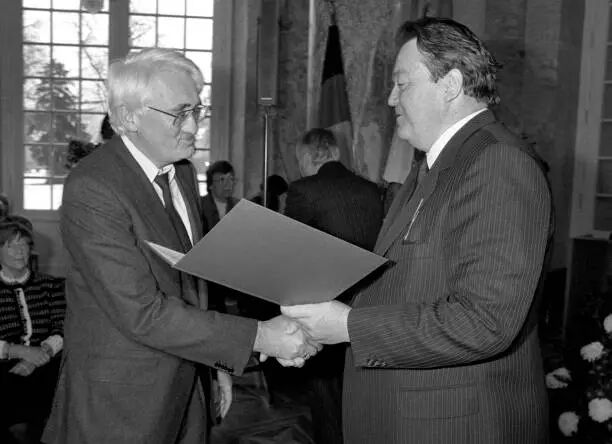
III. The Museum as Public Sphere
Habermas’s theory of the public sphere provides an important theoretical framework for understanding the social function of the museum. Museums, and art museums in particular, may be regarded as an important component of the public sphere. They are sites where citizens gather, discuss and receive aesthetic education — spaces connecting private aesthetic experience with public cultural discussion.
In Habermas’s theory of the public sphere, the public sphere is a space in which a public composed of private individuals conducts discussion and critique. The core function of this space is to form public opinion and supervise public power. As a component of the public sphere, the museum undertakes several important social functions: first, to collect and exhibit artworks, providing a public resource of aesthetic experience; second, to organise exhibitions and public programmes, creating topics for public discussion; third, to conduct art education and public education, cultivating the public’s aesthetic and critical capacities; and fourth, as a public space, to provide a venue for the gathering and exchange of citizens.
Yet contemporary museums face a profound crisis of publicity. On the one hand, museums are increasingly eroded by market logic. The influence of sponsors, box-office pressures and consumerist orientations make museums increasingly resemble commercial rather than public institutions. On the other, museums also face the challenge of democratisation. Traditionally, the museum was a temple of elite culture, its audience chiefly the highly educated. How to make museums more inclusive and more pluralistic has become a central issue in contemporary museum practice.
Habermas’s theory of the public sphere provides a normative standard for assessing the publicity of museums. The basic principles of the public sphere — openness, equality, priority of reason, criticality — can be applied to museum practice. Openness requires that museums be open to all citizens, without exclusion by class, race or gender. Equality requires that, in exhibiting and interpreting artworks, museums respect plural voices and perspectives. Priority of reason requires that museums become genuine spaces of discourse, encouraging audiences to participate in discussion and critique. Criticality requires that museums not be satisfied with simple display but provide opportunities for critical reflection.
Habermas’s theory of the mediating role of aesthetic experience provides important inspiration for the curatorial practice of art museums. If the social function of art lies in connecting specialised aesthetic values with the everyday lifeworld, then the core task of the art museum is to create the opportunity for this connection. Exhibitions should not be mere knowledge-games within professional circles but should communicate to the public the aesthetic value and humanistic significance of artworks. This requires curators to possess both professional competence and an awareness of public communication, able to present artworks in a language and form intelligible to the public.

I. Non-Metaphysical Kantianism
Habermas’s philosophical contribution may be located, within the context of twentieth-century philosophical history, as a “non-metaphysical Kantianism”. This formulation accurately captures Habermas’s distinctive position between the metaphysical tradition and the post-metaphysical age.
The core contribution of Kant’s philosophy lies in his proceeding not from the object of cognition but from the subject of cognition, asking how the conditions of cognition are possible. Kant’s “transcendental turn” opened a new direction for modern philosophy. But Kant’s transcendental subject is a solitary cognitive subject, and his “I think” is an abstract entity detached from historical and social context. Habermas preserves Kant’s core insight — asking how the conditions are possible — but shifts the focus of the inquiry from the transcendental subject to the intersubjective process of communication.
In *Postmetaphysical Thinking* Habermas writes: “Kant’s transcendental turn remains an important achievement, but it requires an intersubjective correction. We no longer ask how a solitary subject cognises an object, but ask: how is understanding between subjects possible? How is communicative action possible? This inquiry leads us not to the inner structure of the transcendental subject but to the universal structure of linguistic communication.”
This turn carries profound philosophical implications. It means that reason is no longer an individual’s cognitive capacity but a structural property of the intersubjective communicative process. Truth is no longer a correspondence between consciousness and object but the product of intersubjective consensus. Norms are no longer an individual’s commands of will but the rational consensus of the discursive process. These core claims constitute the basic content of Habermas’s “non-metaphysical Kantianism”.
By “non-metaphysical” is meant that Habermas rejects any metaphysical foundationalism. He does not assume any trans-historical, eternal, absolute truth or value. He stresses that any truth-claim, any normative claim, must be able to withstand discursive testing. This testing is conducted in concrete historical and social contexts and requires no metaphysical guarantee. This stance is called “contextualist” or “historicist”, but Habermas rejects simple relativism. He points out that, although concrete truths and norms are historical, the rules of discursive testing themselves possess universality.
By “Kantianism” is meant that Habermas preserves the core spirit of Kant’s philosophy: asking how the conditions are possible, insisting on the claim to universality, emphasising the normative role of reason. But he abandons the metaphysical premises of Kant’s philosophy: the transcendental subject, the thing-in-itself, the categorical imperative. This reconstruction gives Habermas’s theory both the universality and normativity of Kantian philosophy while avoiding its metaphysical burden.
This “non-metaphysical Kantianism” occupies a distinctive position in contemporary philosophy. It is distinct from the mainstream of Anglo-American analytic philosophy, which often adopts a naturalist or pragmatist stance and abandons normative claims. It is also distinct from the postmodernist current of continental philosophy, which often adopts a relativist or deconstructionist stance and questions universalist claims. Habermas’s theory maintains a difficult balance between normative claims and historical consciousness.
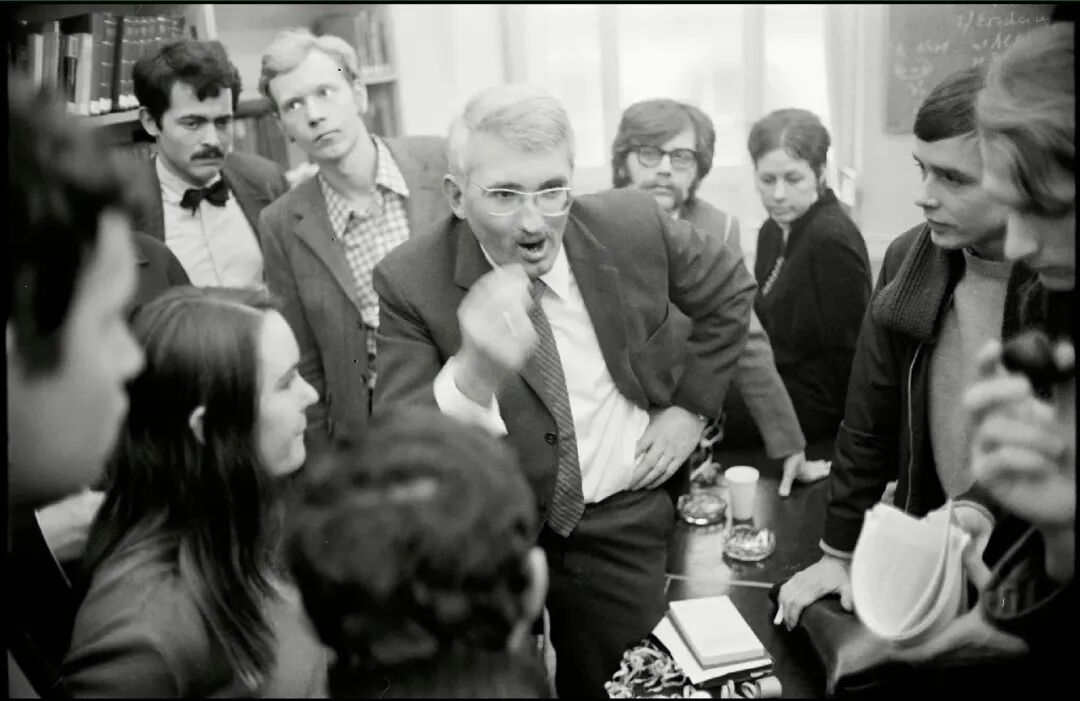
II. The Hope of Proceduralism
The path Habermas leaves to later generations is a path of “proceduralist rationalism”. This formulation succinctly captures the core feature of Habermas’s theory and the way out he points to for modernity.
By “proceduralism” is meant that Habermas no longer commits to any substantial system of truth or value. He does not tell us what is true, what is right, what is beautiful; he tells us how to search for truth, rightness and beauty. What he offers is a set of procedures, a set of rules, a set of methods. The core of this procedure is rational discourse: through an equal, non-coercive, understanding-oriented discursive process, to form consensus concerning truth and norms.
This proceduralism manifests in the political sphere as a proceduralist theory of democracy. The legitimacy of democracy derives not from any substantial consensus of values — such as national identity, religious belief, cultural tradition — but from the fairness of the democratic procedure. So long as the democratic procedure is fair, inclusive and rational, its resulting outcomes possess legitimacy. This theory makes the integration of a plural society possible: in a society of value-pluralism, we may be unable to reach consensus on substantive issues, yet we can reach consensus on procedural rules.
This proceduralism manifests in the moral sphere as discourse ethics. The legitimacy of a norm derives not from any transcendent authority — such as God, nature or tradition — but from the assent of all possibly affected persons in the discursive process. The core principle of discourse ethics is: only those norms can claim validity that could meet with the assent of all possibly affected persons as participants in rational discourse. This principle provides a normative standard for criticising any unjust social arrangement.
By “rationalism” is meant that Habermas always holds fast to his belief in reason. In an age when postmodernism declares “the end of reason”, when postcolonialism criticises “Enlightenment reason as Eurocentrism”, and when various forms of irrationalism hold sway, Habermas insists unwaveringly on the irreplaceability of reason. He acknowledges reason’s historical distortions and actual abuses, but maintains that rational critique must use the resources of reason, and that protest against injustice must appeal to just norms.
This rationalism is not a blind optimism. Habermas is fully aware of the crises and predicaments of modernity: the domination of instrumental reason, the colonisation of the lifeworld, the distortion of the public sphere, the crisis of democracy, the challenge of global governance. He never promises the inevitable victory of reason, never paints the bright prospect of a utopia. What he offers is a “rationalism of hope”: if dialogue still continues, if the public sphere is not wholly closed, if people are still willing to resolve conflict and difference through discourse, then humanity still has the hope of avoiding barbarism.
In a late interview, when asked whether, faced with so many crises and so much darkness in the contemporary world, he still remained optimistic, Habermas replied: “I am not an optimist, nor a pessimist; I am one who perseveres. I believe that so long as we are still arguing, still in dialogue, still trying to persuade one another, humanity has hope. The force of reason lies not in its inevitable victory but in the fact that it gives us the weapons to criticise and change reality.”
This hope of proceduralism may be precisely the most precious legacy Habermas leaves us. In an age full of uncertainty and crisis, he teaches us not to expect a saviour, not to indulge in nostalgia, not to lapse into nihilism. What we must do is guard the space of dialogue, defend the rules of discourse, advance the rationalisation of the public sphere, and extend democracy and the rule of law on a global scale. This is a difficult, endless road — but it is the only road by which humanity can avoid barbarism.

On 14 March 2026, when Jürgen Habermas passed away at his home in Starnberg, the ambitious philosophical age of the twentieth century seemed finally to close its last page. This colossus of the Frankfurt School, this philosopher who spanned nearly a century, stood like a beacon guarding the faint light of the Enlightenment in an age when reason faced unprecedented questioning.
Looking back over Habermas’s life, what we see is an untiring intellectual struggle. From the pioneering study of the bourgeois public sphere in *The Structural Transformation of the Public Sphere* (1962), to the construction of a grand social-theory system in *The Theory of Communicative Action* (1981); from the century-long debate with postmodern currents in *The Philosophical Discourse of Modernity* (1985), to the profound reconstruction of democratic theory in *Between Facts and Norms* (1992) — he was always extending the boundaries of critical theory, always defending the normative legacy of modernity. His writing career lasted over sixty years, his works spanning philosophy, sociology, political theory, legal theory and more, marking him as one of the most creative thinkers of the twentieth century.
For contemporary art, Habermas’s legacy carries special significance. In an age when art is dominated by the logic of capital, creative work is degraded into investment goods and museums are reduced to commercial spaces, his theory reminds us that the social function of art lies not in market value or status-marker but in the unique aesthetic experience it can provide — an experience with the mediating function of connecting expert culture and the everyday lifeworld. When contemporary art loses its direction in the carnival of deconstruction, Habermas supplies the final coordinates: art need not abandon autonomy to acquire social meaning, but art must rebuild its connection with the lifeworld if it is to gain critical force. As an important component of the public sphere, the museum should not become a vassal of capital and power but should become a space for citizens’ aesthetic education and public discussion.
The path Habermas leaves later generations is not a shortcut to some ultimate truth but a difficult, endless road of dialogue. This road asks us to lay down our fanatical prejudices, walk into the public square, and affirm one another’s existence through equal exchange. It asks us to acknowledge that truth is not given in advance but generated in dialogue; that norms are not transcendent authorities but formed in discourse; and that democracy is not a boon bestowed by elites but a practice of citizens.
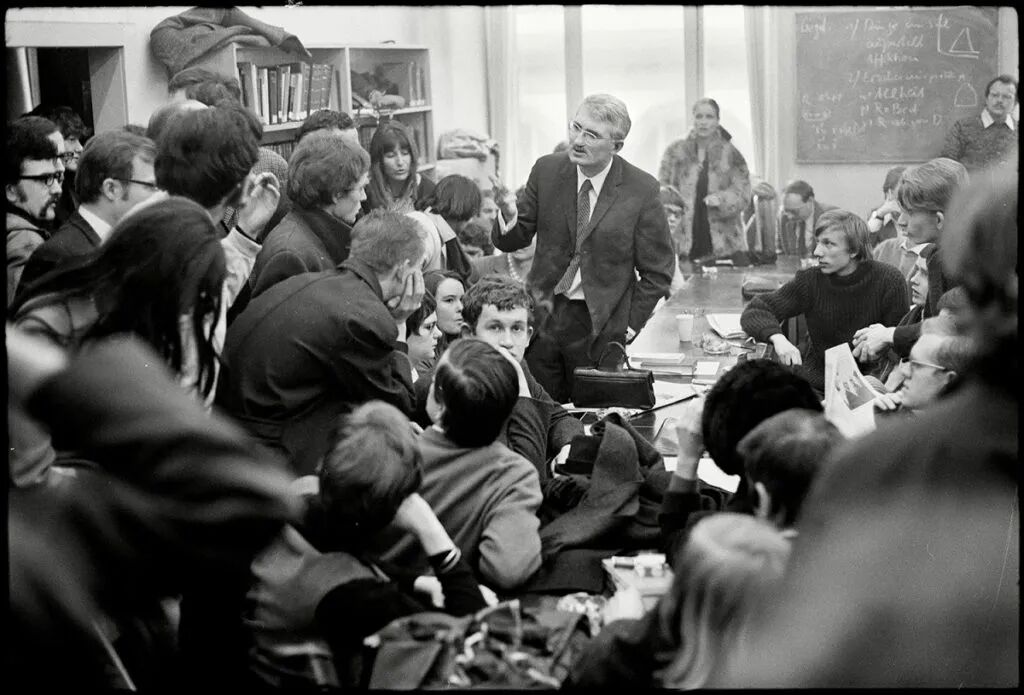
This road offers no guarantee of success. The public sphere may be wholly colonised, discourse wholly distorted, democracy reduced to an empty ritual, and humanity may slide into barbarism. Habermas never concealed these possibilities. But he also tells us that so long as dialogue continues, so long as the spark of reason is not extinguished, humanity still has the hope of avoiding barbarism. In *The Philosophical Discourse of Modernity* he writes: “Reason itself should not be held responsible for the crimes committed in its name. On the contrary, it is the betrayal of reason that is the source of those crimes. The unfinished project of the Enlightenment is not to be abandoned but to be completed.”
This passage may be regarded as the core manifesto of Habermas’s life’s intellectual labour. He never promised the advent of a utopia, yet he provided the normative tools to criticise and change reality. He never guaranteed the inevitable victory of reason, yet he defended its irreplaceability. He is a night-watchman of reason, who, amid the mists of postmodernism and the clamour of populism, always guarded that faint light called the Enlightenment.
The project of modernity is far from complete. When this philosopher falls silent, the ensuing silence should not be the terminus of nothingness but the starting point from which each of us begins a new dialogue. The curtain falls, but the echo of reason in the public theatre will resound through every argument we make, every work we create, every cry we raise — forever.
As Habermas practised throughout his life: the dignity of reason lies not in its ability to supply answers to all questions, but in the fact that it gives us the strength to keep questioning, keep communicating, and go on living together in this wounded world.
With this essay,
we commemorate the philosopher Mr Jürgen Habermas!
订阅艺术评论
订阅即赠《2024中国当代艺术关键词》内部思考笔记 PDF
每周免费获取最新当代艺术批评与研究