I.
I want to write something about education. The impulse comes from a wish, as it were, to write something each day, sitting down to discourse with myself once freed from the pollution of traffic and profit — which is itself a fine thing; at least, compared with a “me” who now merely scrapes by within worldly conceptions and the inexhaustible energy of an unknown “me” buried in the vast iceberg beneath the surface, the “me” of the present life will probably no longer be lonely or helpless.
In writing, I try to think of no purpose whatsoever, with no utilitarian motive and no professional compulsion — which is itself a strange feeling, for today’s present life is probably different from the “present life” of the past. In today’s utterly deconstructed, empty spiritual world, matter occupies the place that should have been spirit’s: like America’s Derrida — that was probably a political conspiracy, an attempt to dismantle other nations’ rooted spirit. I say this though I have not fathomed its profundity, defining rashly without true understanding.
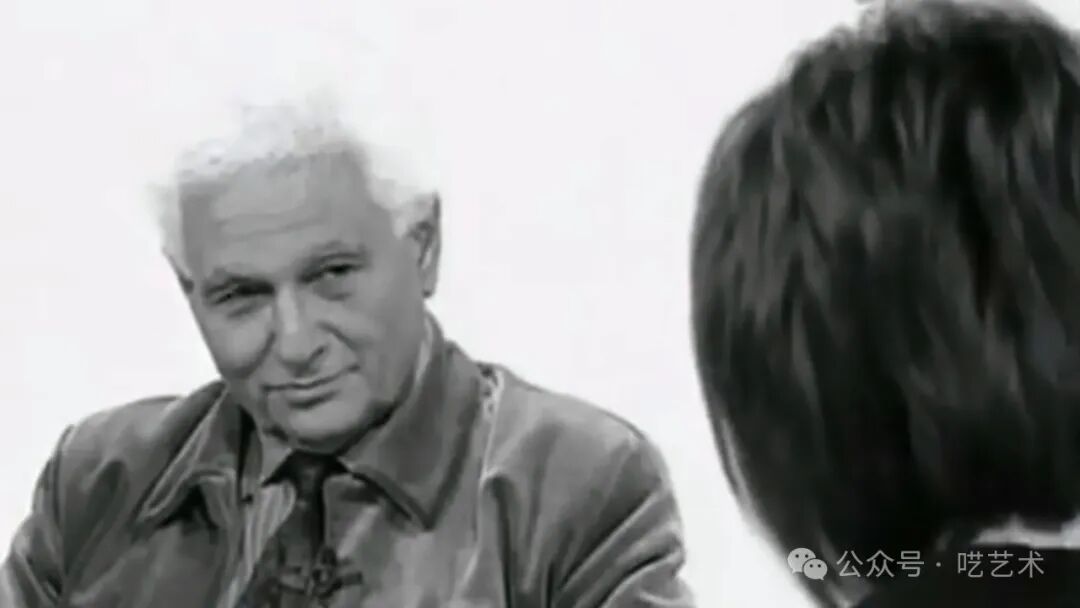
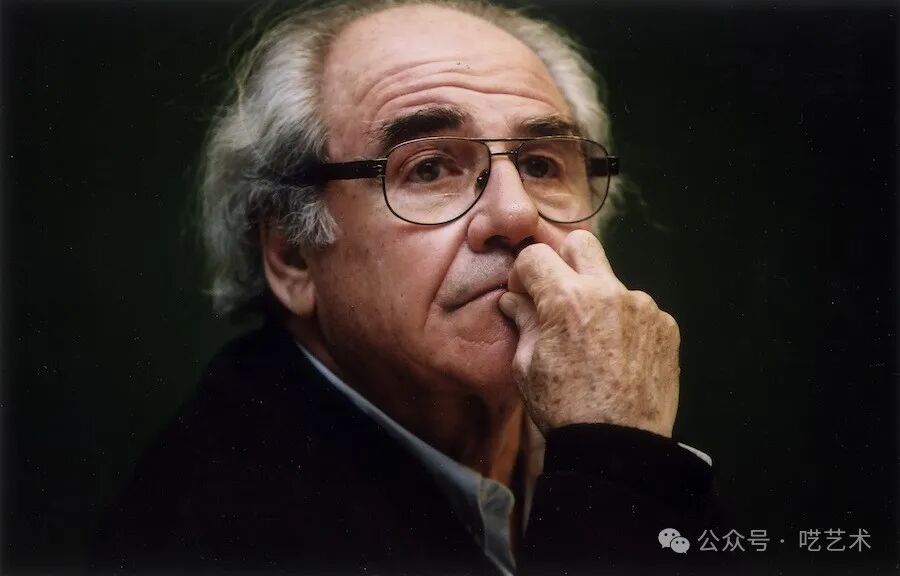
Jacques Derrida
But reality remains thus: spiritual emptiness, consumerism and routinised metrics become man’s guiding code, so man is generally unhappy, for the success I seek and the self within are almost not one. Take marriage: weighing the pros and cons, one chooses the good-looking, the highly educated, the well-off — in real marriage, “who you are” does not matter; “who is yours” is what matters. Or take the secondary-school pupil, fed into production like a part on a factory line and turned out uniform and en masse: “who I am” does not matter; even if I love Chinese literature most, if my total score ranks second from bottom in the class I will certainly be scolded — and the scolders are mostly incompetent, lacking the capacity to regard others with tolerance and attentive understanding. Parents of my age, even those a little older, mostly have no time to heed who their own child is, only estimating the score — that is, whether the product churned out by the factory called education is up to standard.
In truth many factors determine a child’s good or bad grades — innate and acquired. The innate: congenital essence, body, spirit, constitution and so on. The acquired: the self-righteousness of educators, the helplessness of a non-democratic environment, society’s loss of rooted conviction and slide into consumerism, even the hypothalamic stimulation of short videos, the strangers met on the road, and so on and so forth. A child grows amid variables, yet what he receives is necessarily a fixed education, so the child can never be happy. This is what I wanted to write: Chinese children who live inside scores are generally pitiable — never awakened, only driven onto the shelf like ducks. I once saw an article titled “In the Past Thirty Years, Not One Top Exam Scorer Has Become an Industry Leader” — I do not know if the claim is true, but it is indeed pitiable: pitiable that “who I am” does not matter, that I cannot even be myself, yet must meet that fine standard — “who is me” is what matters.

The question is, if I meet that “good student” standard, can I really rest easy for ever?
It seems not. The “good” of primary school was probably good temper, good character, good grades — parents pleased, teachers pleased; that score and ranking were the pinnacle of life then. Naturally one must do the same through junior and senior high, especially senior high. This leads to three terrible results:
First, the student is no longer a “person”, but ever more a useless machine.
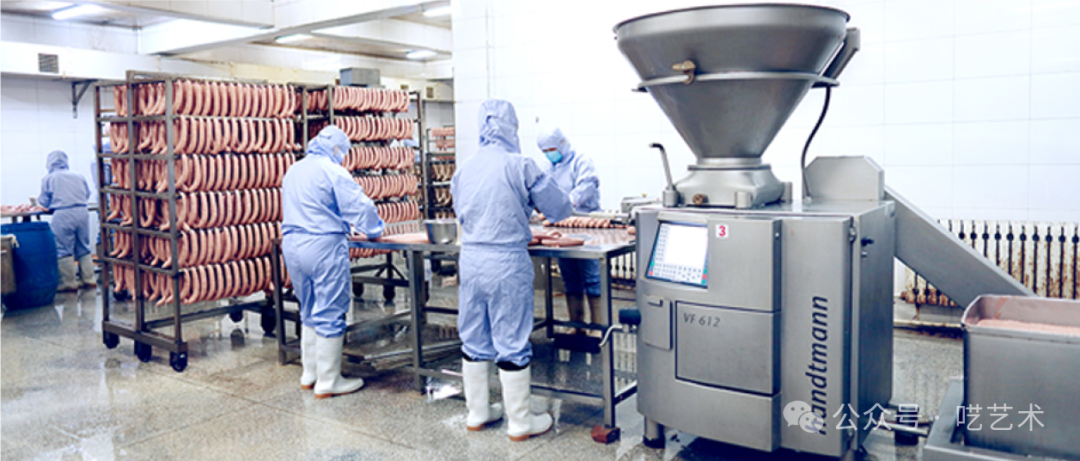
To test different students with uniform standardised scores is like judging a fish by whether it can climb a tree, or a gecko by whether it can fly; fish and gecko must both be fools. Thus rankings arise; in a society empty of spirit and lost of conviction, the materialised vanity of ranking fills that conviction. Similarly, entering university, entering postgraduate study, sitting the doctoral exam, publishing papers — all seem to have become indicators of materialised vanity. Each person is different, yet the path to walk is identical. Countless children become “exam-takers”, just as countless marriages become transactions; in the end I am not I, only drifting with the current, living off the dividends of that system, even proud of out-competing others — postgraduates looking down on undergraduates, and so on. Suddenly I recall the various discriminations and indifferences seen in today’s society, which seem no different from machines;
Second, the student loses the chance to be a “person”, loses the chance to be awakened.
Education is one person awakening another, yet today’s education has lost its original intent amid such materialised social conceptions. To awaken a child is in fact like looking up to, observing closely and nurturing a great tree: you must circle it, watch carefully the direction it truly wants to grow, and help it grow — not merely place it, like roadside grass, into a clean, expensive pile of grass, which remains a pile of grass even if it belongs to a top-tier school’s lawn. I mean both sides are needed: for what makes me me is, on the one hand, my gifted mission — my strengths and achievements that define me (note: personal achievement here, not the uniform, quantified standard scores or degrees), and on the other hand my relations with others, including with my parents, with institutions (schools), with society, and so on.
Pitiable is that none of today’s schools offers any effective guidance, for in essence it remains an authoritarian state apparatus: teachers sit high above, beyond question; students sit in neat rows, kidnapped by so-called “morality” and “school rules”, swayed by the material vanity of social conceptions — ranking. There are neither teachers who can awaken students nor a cohort that can refine their values. A student only gets an A, or places near the top, like a factory’s qualified product dubbed “Grade-A meat”; all “Grade-A meat” certainly did not become Grade-A through being awakened. The children lose the standard of becoming “persons” and become products; the so-called 985 is merely a gathering place of “Grade-A meat”, where the loss of self is accompanied by an unrealistic sense of superiority;
Third, in meeting the standard of “good”, one loses one’s tactile sense.
Take the ban on early romance, an education I always received: at the age in senior high when love first stirs, I did not court, I did not even like anyone. The purity of schooldays I missed — which is also why I have always wanted to preserve purity. Yet in preserving purity I ended up misconstruing the “purity” of what I took love to be, so that at thirty-six I am still unmarried, already a freak in my family and in worldly opinion.
Beyond this there is work. I always thought of myself as the obedient child, but after graduation I was assigned a tenured post doing things wholly unrelated to my interests and major; I resigned at the cost of my family’s sorrow and my own destitution, then drifted north, only to meet the same cold looks from those psychiatric patients (HR) who had swallowed the same social prescription, picking and choosing — his ability inferior to yours, yet for the sake of that one uniform standard he can, in a single thought, tell you that you are no good. I later became such an HR myself, but I would not readily negate people. I am certain the consequences of obedience are unthinkable: whoever it is, a careless word can change another’s direction or life — is that not absurd? [/b] Imagine twenty students before you, each with different ability, character and gift, yet education teaches them all the same things by the same method. A school that over-emphasises grades condemns a child to a mediocre, incompetent life, for it only teaches you to obey.
II. This Education Is in Fact Industrialised Education
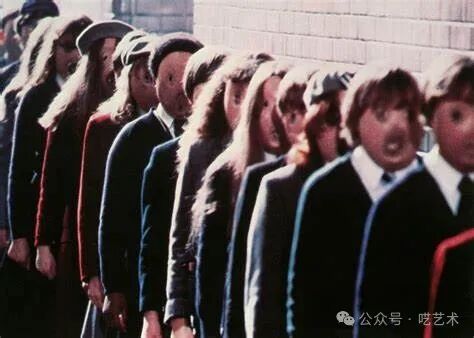
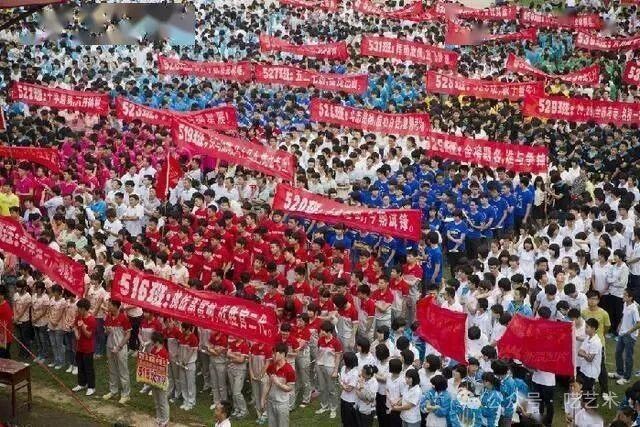
This education is in fact industrialised education. China’s education today still lacks advancement and remains in industrialised mass production. Yet the mass-produced child fits the needs of social development less and less, and this industrialised, material social environment satisfies the child’s own developmental needs less and less. The child is unhappy and pitiable. Perhaps the only happiness is a happiness goaded by vanity.
This gives rise to several points to question:
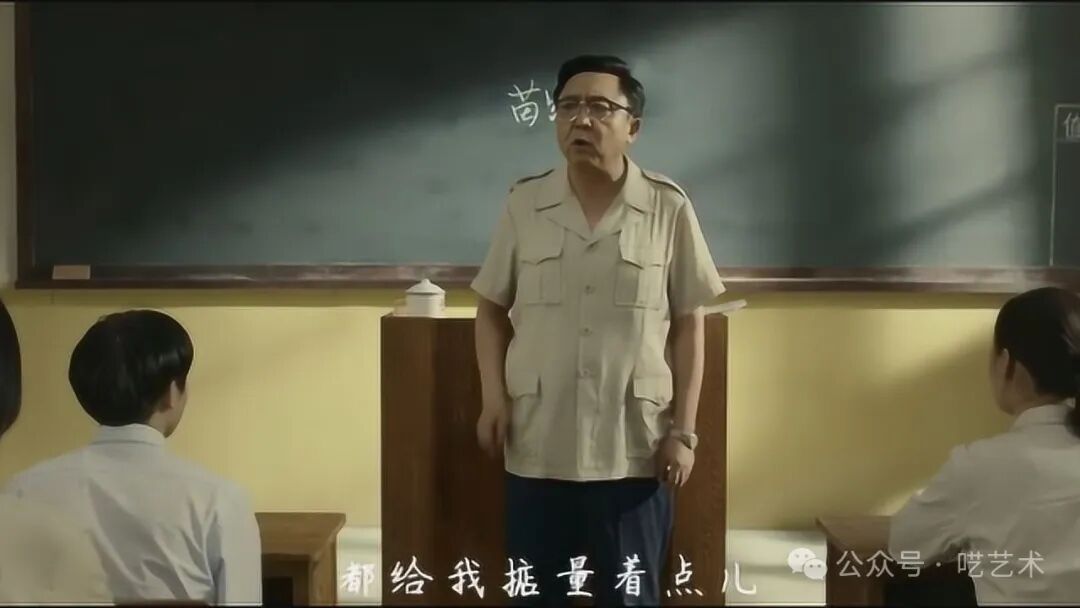
First, is the teacher necessarily an authority? [/b]
School teachers, university professors, indeed all titled faculty — it is common knowledge that there is an unofficial promotion system: publish papers. Yet today’s papers all but shatter the dignity of learning and knowledge, with fragmentary patched-together sentences and second-hand rewrites, listed in journals to no effect.
I have a deep feeling: when I want to study “aesthetics”, you cannot swipe up anything useful on short-video platforms such as Douyin; searching journals and papers on academic platforms such as CNKI, the sporadic, fragmented articles yield half the result for double the effort and are almost useless — yet it is the authors behind these articles who are stacked up to become our next generation’s teachers, which is truly terrifying. All I can do is consult master’s and doctoral theses, glean a rough thread from them, trace their references, and then pore over the classics. But even so I can hardly attain systematic understanding or creative thinking — which, of course, also has something to do with insufficient talent.
I am unwilling to evade hard thinking; I want to understand the cause, process and effect of everything, and from it attempt to probe the ultimate mystery. So in my field — art history — I usually no longer obey, for I do not know whose word to heed; some questions remain unclear, like constipation, and all I can do is regulate the triple burner. But teachers generally are not thus: papers, titles, degrees, knowledge and true knowledge should have no connection. You have read ten books, I only five — are you my teacher? No! One becomes my teacher only by awakening me, not by racing others’ knowledge through my brain. Reading many books is useless; publishing papers may be an output, but it is hard to guarantee every paper yields a valuable conclusion, and this relates to the promotion system. So before true knowledge, publishing papers is useless and degrees are useless; perhaps they are a temporary goal, but should not become the capital of a uniform mould or a source of vanity — at most a dividend of a deformed education system.
True knowledge requires practice, and before practice the spirit to break through the iceberg, not a lucky perch atop the mountain. The iceberg you see is a conclusion, but the greater part of ice beneath the water is the cause of the conclusion, closer to the bottom; hence the closer to the bottom, the nearer to true knowledge. This requires a compassionate heart and the courage to behold all living beings, for all disciplines ultimately serve man, and only so can they awaken man. The teacher should be one who teaches you to become yourself. Jaspers said: education is a tree shaking another tree, a cloud chasing another cloud, a soul awakening another soul. I think this is probably fulfilment, and the premise of fulfilment should be equality, not a lofty authority. Why did he not say education is a person shaking a tree? Why not say education is Jesus awakening every soul? Precisely because school and church are different. How can I fulfil you? I must first love you, embrace you, appreciate you, let you become you — not tower above you so you admire my dignity. Perhaps that one step of height of the podium is to make the student long for and revere his own future; perhaps the future self is wiser than this year’s self, and this requires the one waiting for him in the future — our teacher.
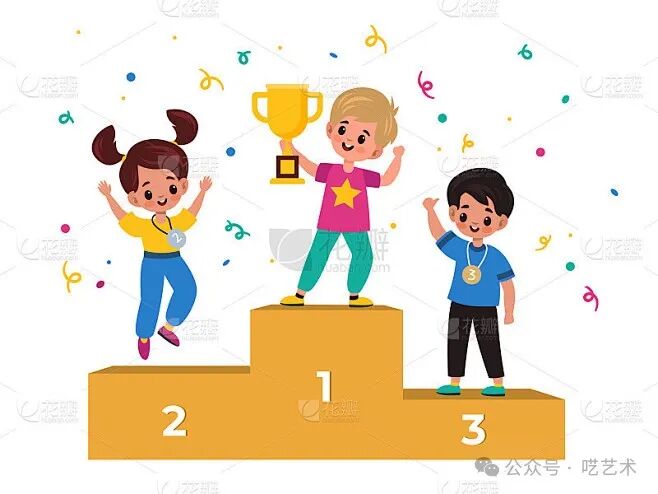
Second, is the “good student” of the school necessarily a good student?
My feeling is that a person’s history of growth is his history of rebellion.
Some say the school will not teach you how to make money, only how to work for others, and thus deny the school’s education. The logic here is: if the school taught you how to make money, you would probably gain a foothold early in this economic society after graduation — which means who you are does not matter; any education that gives you a foothold is good education. If reality is thus, then reality is problematic; without acknowledging this, nothing can be discussed.
Ask yourself: if you are better than others, wherein lies the betterness? Are you better because you have more money? Money may satisfy a shallow bodily need and an inner sense of security, but it is certainly not a value. For the end of all values is to make society better. In fact, the essence of being good or not is still one’s authentic happiness — necessarily love arising from emotion and a clear self-identity in reality, that is, the gifted mission. To learn the capacity to love is to learn the capacity to fulfil others; it is an inner kindness and a soft power. To discover one’s gifted mission is another kind of strength: truly having loved oneself, treating kindly each of one’s differences, not readily catering to authority, not impatiently stuffing oneself into the factory line’s product so as to merge into society through “spiritual death”.
Such happiness then becomes a person’s most basic standard of excellence. Such a standard probably conflicts with the so-called “good student” standard of schools. I cannot say good grades must lead to “spiritual death”, but a relentless pursuit of grades does make one lose oneself and further lose the capacity to love, for in seeking first place I cannot fulfil you so that you also take first. I might even readily abandon my gifted mission for first place, because parents and teachers both demand it. Therefore the “good student” turned out by schools is certainly not a good student.
Third, who is the teacher? [/b]
Marx spoke of “the social period of labour pains”, a period of maladjustment and suffering brought to society by adjustments and changes in system, economic structure and the like. China’s education is also changing and has recognised the problems of this industrialised education, but the challenge of reform is great, for its root cause remains the grave problems in social conceptions brought by spiritual emptiness. At the very least, if the child is not in pain and can learn deeply, that is a great advance.
At present it is truly difficult: some teachers are low in calibre, superficial, without true knowledge; parents too are not of high calibre, even harbouring strong utilitarian thinking, holding that the child’s deep study of these things is useless since they are not examined. In the end this is a problem of society’s overall conceptions: what parents consider must be good grades, entry to a good university, a good job, a secure footing. What teachers consider must be a class with decent overall grades and especially outstanding top students — nothing more.
Among all the factors they consider, the one thing never considered is whether the child is happy, still less the above-mentioned capacity to love and to discover the gifted mission. The textbook compilers further set what lies within the syllabus and what beyond it. Dewey said education is the continuous reconstruction of experience; perhaps the compilers will keep revising the syllabus, but what they want is a group, a product of the state apparatus’s will — not the awakening of every child to genuine thought, creativity and emotion. From the state’s angle this is not wrong, but from the child’s growth it is almost destruction.
III. In Ancient Greece There Was a Master Craftsman, Daedalus
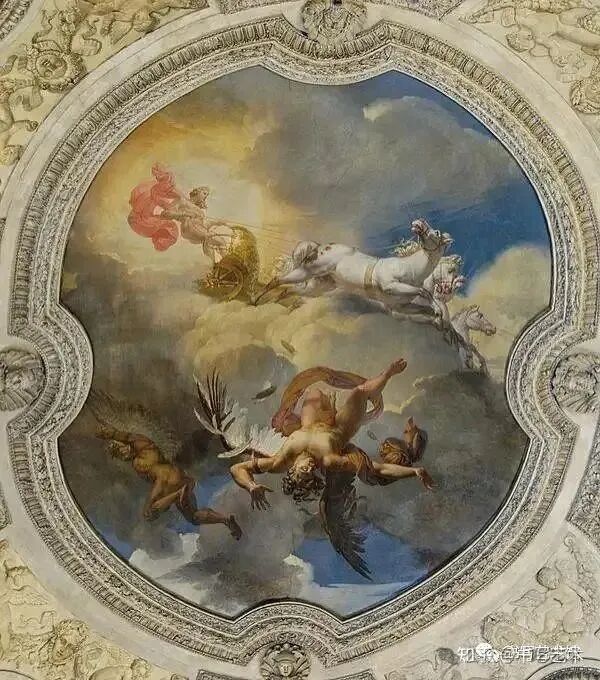
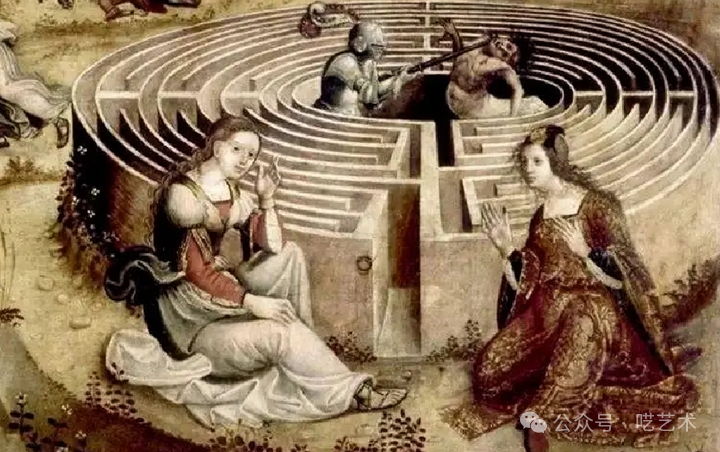
In ancient Greece there was a master craftsman, Daedalus, who designed a labyrinth for the king of Crete to imprison the king’s son — for the lad was a half-man, half-bull monster. Yet after the labyrinth was built the king shut Daedalus, his son Icarus, and the king’s son all inside it.
The king’s son naturally could not get out; Daedalus the craftsman and Icarus made wings of beeswax and feathers, and he bade his son put them on, warning him: fly not too low, lest the sea’s moisture weigh the wings down and the sea swallow you; nor too high, lest the sun melt the beeswax and you lose support and fall from the sky. Icarus flew in the heavens, higher and higher, wishing to fly toward the sun and surpass mankind, and at last he plunged into the water and died.
This is the story of Icarus, an example elders use to educate children: do as I say, or you will drown. This material empiricism makes people stop thinking; even today’s social media arouses herd mentality. Only, had Icarus not flown so high, no one would remember him.
Though this is only a story, what I mean to say is that we commemorate Icarus today because he is a hero who made the attempt — even if an unconscious attempt, which is precisely his meaning and the meaning of education. After all, education is a tree shaking another tree; man’s consciousness of learning and growth will sooner or later become spontaneous, and this temporary passivity will one day wholly pass. One Icarus flew so high and died; a second, a third will learn to improve the technique and fly higher — this is the true original intent of education, not that you should cower in the safe zone, obeying parents and teachers even to the point of accomplishing nothing. This is probably the original intent of the saying “your history of growth is your history of rebellion”.
As stated above, growth means the capacity to “love” and the capacity to pursue one’s gifted mission — two worrying capacities. Only if “love” happens to fall within the obedient sphere and the pursued gifted mission coincides with the exam’s scope might one remain “intact” once, becoming the so-called elite. Beyond this, there is not even the occasion for “love” to occur, let alone the gifted mission.
Therefore the path of education is probably very hard.[/b] A child, braving hardships and perils, surviving against the odds, sits the gaokao and enters university, only then gaining the confidence of being a “person”. Such a view is probably a misunderstanding by “man” of himself, for life affords many things to do and many meanings. To thus annihilate and misjudge man’s positioning is indeed a great devastation of “man” himself.
A state without private interest is happy. Today’s education is the result of industrial privatisation; from childhood a child is fed various private interests instilled upon him, and the child’s complete development can hardly become real. This recalls Marx on human development: he said man’s development is in a comprehensive manner, as a complete human being, possessing his full essence. Marx’s premise is that man must first be a complete human being, and only then occupy himself comprehensively — not that man, as a one-dimensional passive being, satisfies some standard at the cost of losing himself. What today’s education system plunders is precisely each child’s chance for all-round development. I do not wish to dwell on “alienation” here, for it has already become reality.
In that story of the feathers, today we are flying in the sky from birth, thankful we no longer live in Daedalus’s labyrinth — this is the necessity of the age, so returning to the labyrinth, even to the moment before it was built, is impossible. What must be recognised is that the resolution of all today’s problems must take root in the highly developed social environment of the present, rather than naively proposing some -ism and being impractical. From Hegel’s “alienation”, Marx’s “alienation of labour”, Marcuse’s “technological alienation”, to Habermas’s “communicative alienation”, this social environment of lost self easily shapes children’s values at the cost of losing the self. Only what we must do today is not to return to before “alienation” arose — for “alienation” first appeared in the Bible, and short of time travel there is no way back — all we can do is take alienation as our soil and seek out a “new” path to make man whole.
After all, to cling stubbornly to the present state only multiplies problems. The root cause of “alienation” is consumerism; only when human society reaches a stage of product surplus does it enter a consumer society. I shall not mention conspiracy theories here; whoever manufactured consumerism, once our living environment becomes one where commodities are everywhere, the commodity becomes the bearer of signs and man himself becomes the bearer of commodities — so man’s so-called all-round development, his values, his career success, and the formal things of personal thought and taste, must all be expressed through the consumption and possession of concrete commodities. Thus the purpose of life becomes consumption: to exist for consumption, to consume for consumption’s sake. For man himself, to accept anything and have desires surge is easy, but to know where to stop is hard.
Capital is not only a social relation of production; more importantly, by virtue of this specific social relation of production it constructs for itself a social institution and operational logic of self-valorisation, thus forming the deductive logic of “capital valorisation — re-valorisation”. In today’s highly technologised society people will use every means to satisfy capital’s profit-seeking nature — take selling a product: marketing will use every conceivable method, via every medium, at any cost, to turn the product into money through consumption, and then plough the money back into marketing. This mode of consumer economy, generating vast products to satisfy so-called “false needs”, irreversibly harms resources, environment and social harmony; more importantly, its harm to people’s living conceptions and spiritual orientation is incalculable. In continuously satisfying consumer desire people drift into spiritual emptiness. The meaning, purpose and value of human existence are wholly replaced by consumption, so man loses autonomy and slides into a state of nihility. The only way out is ever more consumption, and material exchange becomes the mode by which emotion forms between people.
One can imagine how great an impact this nihilistic state has on children. Little do they know that the conceptions we take for granted, the values we daily strict-observe and pursue, the vanity with which we luck into class mobility, the satisfaction we form in consumption — the price of these, our loss of self, will in the end be paid by the next generation. Since flying too high can melt the beeswax, in this consumer society where self-existence can alone be proven, no one will any longer attempt height, but only self-satisfaction and self-indulgence. Future children will prize indulgence, which is not bad in itself; only, in indulgence, the strong self-consciousness always remains. One should know that from “pleasing oneself alone” to “pleasing oneself alone is not as good as pleasing all together”, the educational road in between will probably take many more years.
IV. Therefore
Therefore, if today we say anew that my child is better than yours, what makes him better is certainly no longer these mould-like standards. The standard is precisely the capacity to learn to “love” and the capacity for deep study and learning — with, of course, the precondition of a sound body. These three are the path of development future education should adopt. The environment of future education will surely be shaped by digital technology; children will grow up in a thoroughly commercialised and technologised society. The only weapon against the encroachment of consumerism is to learn the capacity to “love” — precisely the responsibility the humanities should bear.
In a consumer society, “emotional learning” is a paradox: how to teach a child to learn to “love”? The most direct teachers are the parents, then the living environment the child inhabits. And the only way to stay invincible in a technologised society, free of involution and able to keep oneself, is the capacity for deep learning — that is, to fulfil one’s gifted mission to the full. Teaching a child to learn to “love” is the good medicine that lets the child stay invincible in a consumerised society; this is why it is said that a fortunate person is healed by childhood all their life, an unfortunate person spends their life healing childhood. How to teach a child to learn to “love” — I shall only offer a few simple suggestions.
First, “love” must be a skill of future society.
The child’s relation to society is in fact the child’s relation to people; especially in future society, Baudrillard once proposed the simulacrum — a copy with no original, hyperreal, massively reproduced yet without objective origin or fixed meaning, an image or sign he called the “simulacrum”. What I mean is that once future human relations are materialised, all manner of “simulacra” of “love” will endlessly emerge; everything becomes a strategy, a scheme or a pre-designed module, and taking another who approaches you in the name of “love” as “love” — the essence of such acceptance is the absence of the inner “source” of love. As the first lesson of education, one should plant the seed of “love” in the child’s heart, not mechanical competition; competition, rivalry and hegemony are certainly a strong-man mentality, whereas “love” is like water, a gentle power — as the saying goes, “water benefits all things and contends with none”. Today’s society is a “striving-for-strength” society; to grow accustomed to living in “simulacra” is dangerous, for conveniences on every side make people unwilling to think hard, and all behaviour becomes mechanical “striving for strength”, whereas the attribute of “love” is the affective. What, concretely, is love? Let me now borrow past theories to explain.
First, “love” is recognition.
This is Honneth’s view: he holds that love is “self-existence in the other”, seeking in the other one’s own certainty. Then to teach the child to attend to others, to recognise their good and bad, whatever the motive, so that there is always another in your eye — from loving one person, to loving a kind of person, to loving many, to loving a field, a cause — when others find their certainty in you they will surely not reject you, and thus produce their certainty about you. This should be the first component of “love”.
Second, love is exploration.
Since Plato, deep within each person there exists a world of immortal, perfect forms or ideas, which he called the “Republic”; later Fromm said love is a process requiring the individual’s effort to develop his whole personality; Badiou takes love as a procedure of truth-production, holding it the stairway to the eternal. I accept this theory, but its practical part is that “love” is certainly worth exploring — which also relates to the above necessity that a child deeply develop his gifted mission: not only deeply studying the field he likes, but also deeply understanding this society and the people around us, for living is not merely for scoring 100, but for making others and the world better. Then starting from observing and helping a person, the seed of “love” in the child’s heart slowly sprouts. One should know that we each come into this world with faults and weaknesses, and the depth between people lies not in your merits but more in whether each other’s faults and weaknesses can be present or healed before the other — which connects with love as recognition: you must recognise not only the other’s good but also learn to recognise their bad. Only with these two capacities of “love” can one avoid numbness in an information-rich society.
Third, love is caring for the other in a way the other can understand.
Here one cannot avoid Noddings’s “ethic of care”, whose core is her saying that “one must personally participate in concrete situations, hence there must be a wide-angle education guiding all students to care for themselves, for those around them, for humanity, for plants, animals, the environment, and so on” — beyond doubt, practice is paramount. What needs noting is that care knows no strong or weak; when you care for another, the two must be equal and mutually fulfilled; without respect, care loses all meaning, and so do love and education. The mark of this equality is to care for the other in a way the other can understand.
Finally, a supplement: a common view of the Frankfurt School is that love is the symbiotic state the individual breaks.[/b] This is the point I most endorse. For the goal toward which future internet technology and social environment strive is to shorten the distance between people, forcing all into a symbiotic state; then if one insists on keeping the individual unbroken, one will surely feel at a loss. This requires that in the future technologised society man must embrace society with an open mind; therefore, in Chinese society today and tomorrow, “love” must be an indispensable strength.
Second, how to excavate one’s own gifted mission need not be elaborated here. On the surface, love is fulfilling others, while excavating one’s gifted mission and deep learning is fulfilling oneself; in truth one must distinguish “who I am”. Only with a sound constitution, in a good environment, recognised by those around me, do I know who I am. If you are unclear who you are, look at the people and things around you now. After all, the first lesson of education is not to teach selfishness; yet my generation, and all the generations older than me, received a first lesson teaching us how to crush classmates in grades so as to rank at the top — is this not worth reflecting on?
V. Finally, I Want to Speak of the Teacher
Finally I want to speak of the teacher. A child’s heart is a plot of soil: whatever is sown grows. What we give, the child reaps.
I truly cannot bear to see my child toiling late into the night over endless homework; such a child sows only utilitarianism, passivity and vanity. School education is necessary but by no means all. A child’s true teachers are all who love him, first the parents; the child’s relation to the world is in fact the child’s relation to the parents. The child’s first grasp of “love” probably comes from the parents’ sense of responsibility, and only then their affection. For the child does not understand what love is, taking a harmonious family, three meals a day, clear order and neat arrangement as love — which is in fact responsibility.
Some research says marriages sustained by love have a higher divorce rate than those sustained by responsibility, so many try to conceptualise and strategise “love” — which is quite unnecessary. As Plato said, love is man’s highest ideal; it can be the motive of responsibility, but is by no means responsibility itself. This is what I mean: whether parents are affectionate or not does not matter; what matters is shouldering responsibility for the child — which is why many say that with the bond of a child, a family becomes a family. Taking responsibility as the root, from below upward, gradually touching or approaching the plane of love, such family life is often firm and deeply happy; conversely, taking “love” as the root, being too idealised and all affective, the family will surely brim with danger. Responsibility is the parents’ root; the practice of responsibility is the process in which love gradually arises, and love is the family’s ideal.
Second, for the child, lived practice is the second-best teacher — this should be the modern translation of the saying “the poor child becomes the master of the house early”. Playing in earth and sand, rolling on the ground, stirring up trouble everywhere were the memories of childhood; for children to come, technological convenience may ever more deprive them of spirit, and materialised social conceptions may gradually drain their vitality. Data on children’s problems in recent years show that the inner and outer environments which extinguish innate nature truly inflict irreversible harm. Perhaps letting the child err a few more times, do household chores a few more times, do a few more things he wants — this would greatly benefit the soundness of his character. For all theory that has not occurred is useless.

As the saying goes, the world is yours and ours, but in the final analysis it is theirs. They never doubt their expectation of the future; they are the image of our ideals and our hope. May we strive to guard this hope in our hearts.
订阅艺术评论
订阅即赠《2024中国当代艺术关键词》内部思考笔记 PDF
每周免费获取最新当代艺术批评与研究